
Analysis of performance and plasma stress markers of elite female football players during an official FIFA tournament
123
0
0
Texto
(2) UNIVERSITY OF PORTO. . Faculty of Sport. . . Analysis of performance and plasma stress markers of elite female football players during an official FIFA tournament . Academic dissertation presented to the. . Faculty of Sport, University of Porto, with the. . purpose of obtaining a Master degree in. . High Performance Sport Training under the. . law 74/2006 from March 24th.. . Advisor: Susana Cristina Araújo Póvoas,. . PhD. . Co-Advisors: António Alexandre Moreira. . Ribeiro. . Fernando Magalhães Pinto Pereira, PhD. de. Ascensão,. PhD. . Júlio Alejandro Henriques da Costa Porto, September 2015. II . and. José.
(3) Cataloguing. Costa, J. (2015). Analysis of performance and plasma stress markers of elite female football players during an official FIFA tournament. Porto: J. Costa. Dissertation in High Performance Sport Training presented to the Faculty of Sport, University of Porto.. KEY WORDS: FEMALE FOOTBALL, ELITE PLAYERS, PERFORMANCE, OXIDATIVE STRESS.. III .
(4) “A única moeda verdadeiramente boa e pela qual convém trocar todas as restantes é a sabedoria.” By Platão (427 – 347 a.c). IV .
(5) Dedications. I dedicate all this work to my parents, Júlio Costa and Silvia Henriques, and sisters, Mariana Costa e Claúdia Costa, the encouragement and support in all my choices and decisions. To Joana, my main source of inspiration. To you, the "infinite" support and patience, I dedicate all this work.. V .
(6) VI .
(7) Acknowledgments . The limited space of this section doesn’t allow me to thank, as it should to all the people who helped me directly and indirectly along my masters in high performance sports training. I appreciate all their support and effort to fulfill my goals and accomplish more this stage of my academic formation. Thus, I will just leave a few words with deep sense of meaning and gratefully acknowledged. To my advisor professor Susana Cristina Araújo Póvoas I express my deep appreciation for the guidance and unconditional support. This cooperation raised my scientific knowledge, undoubtedly very stimulated my desire to want always know more, and the constant will to do better. To my co-advisor professor António Alexandre Moreira Ribeiro de Ascensão my sincere thanks for orientation in this Project. Thank you for your professionalism and for your sincere friendship and full availability that always revealed to me. As a result, your support was instrumental in the preparation of this thesis. I also appreciate the opportunity you gave to me to integrate in this project and I acknowledge with gratitude, not only the confidence placed in me from the beginning, but also the sense of responsibility that I instilled in all stages of this research. To my co-advisor professor José Fernando Magalhães Pinto Pereira for the precious collaboration. This exceptional working environment was an endless stimulus to develop my scientific skills. To the professor André Filipe Teixeira e Seabra and Rute Marina Santos the unconditional support offered during the preparation of this project, it was essential to make it more enriching. To the professor João Brito de Oliveira Fernandes, I thank for all the patience, interest and passion (contagious) by scientific research. Throughout the availability and shared scientific competence. VII .
(8) To the coordinator of the master in high performance sports training, professor José Augusto Rodrigues Santos, I appreciate the opportunity and the privilege to integrate this master, which contributed greatly to the enrichment of my academic and scientific training. To the doctor Patrícia Alves Martins (librarian at FADEUP), I appreciate the fundamental and indispensable help. Without this precious help, the work would not have the same quality. Thank you very much. To the all my family, for the constant support. My parents and sisters, whom I thank every day unconditionally the constant effort they have done. The education they gave me is the basis of my conduct, thanks again. To my friend and co-worker as a coach in the women's national championship football at Boavista Futebol Clube, André Filipe (Ché), a big and strong hug by the several outbursts and understanding. To my friends, a BIG Thank YOU for your friendship, companionship and help. This values are very important factors in achieving this thesis and that allowed me each day were viewed with particular motivation. To the parents of Joana, who during all this my academic record supported me. Thanks for the endless outpourings and the sharing of good (and less good) times. To Joana, my main source of inspiration. You were (and you will be) my motivation, awareness and understanding to every moment of my life. To you, the "infinite" support and patience, I dedicate all this work.. VIII .
(9) . IX .
(10) Table of contents. Cataloguing. III. Dedications. V. Acknowledgments. VII. List of figures. XIII. List of tables. XV. Resumo. XVII. Abstract. XIX. List of abbreviations. XXI. Chapter I. 1. Literature review. 1. 1. Introduction. 3. 1.1. Activity profile and physiological demands in female elite football matches. 6. 1.2. Changes in activity profile and performance induced by the match 1.2.1. Temporary and permanent fatigue. 11 11. 1.2.1.1. Physiological mechanisms responsible for the onset of fatigue 12 1.3. Recovery Profile. 16. 1.4. Oxidative stress and damage. 18. 1.4.1. Definition and concepts. 18. 1.4.2. Importance in the regulation of cellular metabolism. 20. 1.4.3. Possible influence on performance. 21. 1.4.4. Changes induced by intermittent effort – Football. 23. Chapter II. 26. Structure and Aims. 26. 2. Structure of the thesis. 28. X .
(11) 3. Aims. 28. Chapter III. 30. Methods & materials. 30. 4. Participants. 32. 5. Experimental design. 33. 5.1. Blood sampling and preparations. 35. 5.2. Biochemical assays. 36. 6. Statistical Analyses. 36. Chapter IV. 39. Results. 39. 7. Results. 41. Chapter V. 63. Discussion. 63. 8. Discussion. 65. 8.1. Study strengths and limitations. 71. 8.2. Future studies. 72. Chapter VI. 75. Conclusions. 75. 9. Main findings. 77. References. 81. XI .
(12)
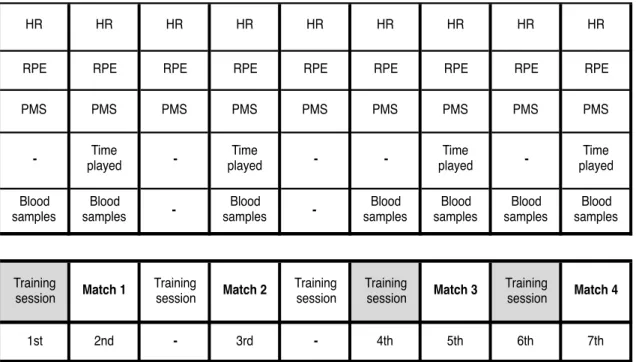
(13) List of figures. FIGURE 1 - SCHEMATIC TIME. DESCRIPTION SUMMARIZING THE EXPERIMENTAL PROTOCOL.. POINTS FOR THE EVALUATION OF SELECTED BIOCHEMICAL AND PHYSICAL. PARAMETERS BEFORE (BASELINE CONDITIONS). (N = 48),. DURING THE TRAINING. SESSIONS (N = 48) AND AFTER THE MATCHES (N = 13) THROUGHOUT THE OFFICIAL TOURNAMENT.. BLOOD SAMPLES WERE COLLECTED AT SELECTED TIME POINTS AND. PERCEIVED MUSCLE SORENESS. (PMS) AND RATE OF PERCEIVED EXERTION (RPE). WERE EVALUATED IN ALL TRAINING SESSIONS AND MATCHES.. ADDITIONALLY,. HEART RATE (HR) WAS MONITORED DURING ALL TRAINING SESSIONS. ................ 33. FIGURE 2 - INDIVIDUAL. CHANGES IN CREATINE KINASE. INTERNATIONAL OFFICIAL FOOTBALL TOURNAMENT TEAMS);. (CK). VALUES DURING AN. (N =13, IN HIGH AND LOW RANK. M1, MATCH 1; M2, MATCH 2; M3, MATCH 3; M4, MATCH 4; TS1,. TRAINING SESSION 1; TS2, TRAINING SESSION 2. ............................................ 50 FIGURE 3 - AVERAGE. CHANGES IN CREATINE KINASE. INTERNATIONAL OFFICIAL FOOTBALL TOURNAMENT TEAMS);. (CK). VALUES DURING AN. (N =13, IN HIGH AND LOW RANK. M1, MATCH 1; M2, MATCH 2; M3, MATCH 3; M4, MATCH 4; TS1,. TRAINING SESSION 1; TS2, TRAINING SESSION 2. ............................................ 51 FIGURE 4 - INDIVIDUAL CHANGES IN C – REACTIVE PROTEIN (CRP) VALUES DURING AN INTERNATIONAL OFFICIAL FOOTBALL TOURNAMENT TEAMS);. (N =13, IN HIGH AND LOW RANK. M1, MATCH 1; M2, MATCH 2; M3, MATCH 3; M4, MATCH 4; TS1,. TRAINING SESSION 1; TS2, TRAINING SESSION 2. ............................................ 52 FIGURE 5 - AVERAGE. CHANGES IN. C–. REACTIVE PROTEIN. INTERNATIONAL OFFICIAL FOOTBALL TOURNAMENT TEAMS);. (CRP). VALUES DURING AN. (N =13, IN HIGH AND LOW RANK. M1, MATCH 1; M2, MATCH 2; M3, MATCH 3; M4, MATCH 4; TS1,. TRAINING SESSION 1; TS2, TRAINING SESSION 2. ............................................ 53 FIGURE 6 - INDIVIDUAL CHANGES IN TOTAL ANTIOXIDANT STATUS (TAS) VALUES DURING AN INTERNATIONAL OFFICIAL FOOTBALL TOURNAMENT RANK TEAMS);. (N =13,. IN HIGH AND LOW. M1, MATCH 1; M2, MATCH 2; M3, MATCH 3; M4, MATCH 4; TS1,. TRAINING SESSION 1; TS2, TRAINING SESSION 2. ............................................ 54. XIII .
(14) FIGURE 7 - AVERAGE CHANGES IN TOTAL ANTIOXIDANT STATUS (TAS) VALUES DURING AN INTERNATIONAL OFFICIAL FOOTBALL TOURNAMENT RANK TEAMS);. (N =13,. IN HIGH AND LOW. M1, MATCH 1; M2, MATCH 2; M3, MATCH 3; M4, MATCH 4; TS1,. TRAINING SESSION 1; TS2, TRAINING SESSION 2. ............................................ 55 FIGURE 8 - INDIVIDUAL CHANGES IN URIC ACID (UA) VALUES DURING AN INTERNATIONAL OFFICIAL FOOTBALL TOURNAMENT. (N =13,. IN HIGH AND LOW RANK TEAMS);. M1,. MATCH 1; M2, MATCH 2; M3, MATCH 3; M4, MATCH 4; TS1, TRAINING SESSION 1; TS2, TRAINING SESSION 2.......................................................................... 56 FIGURE 9 - AVERAGE CHANGES IN URIC ACID (UA) VALUES DURING AN INTERNATIONAL OFFICIAL FOOTBALL TOURNAMENT. (N =13,. IN HIGH AND LOW RANK TEAMS);. M1,. MATCH 1; M2, MATCH 2; M3, MATCH 3; M4, MATCH 4; TS1, TRAINING SESSION 1; TS2, TRAINING SESSION 2.......................................................................... 57 FIGURE 10 - CHANGES. IN CREATINE KINASE. (CK). LEVELS AFTER THE TRAINING. SESSIONS DURING AN INTERNATIONAL OFFICIAL FOOTBALL TOURNAMENT. (N = 13;. N = 35). TS1, TRAINING SESSION 1; TS2, TRAINING SESSION 2. ....................... 58 FIGURE 11 - CHANGES IN C – REACTIVE PROTEIN (CRP) LEVELS AFTER THE TRAINING SESSIONS DURING AN INTERNATIONAL OFFICIAL FOOTBALL TOURNAMENT. (N = 13;. N = 35). TS1, TRAINING SESSION 1; TS2, TRAINING SESSION 2. ....................... 59 FIGURE 12 - CHANGES. IN TOTAL ANTIOXIDANT STATUS. (TAS). LEVELS AFTER THE. TRAINING SESSIONS DURING AN INTERNATIONAL OFFICIAL FOOTBALL TOURNAMENT. (N = 13; N = 35). TS1, TRAINING SESSION 1; TS2, TRAINING SESSION 2........... 60 FIGURE 13 - CHANGES. IN IN URIC ACID. (UA). LEVELS AFTER THE TRAINING SESSIONS. DURING AN INTERNATIONAL OFFICIAL FOOTBALL TOURNAMENT. (N = 13; N = 35).. TS1, TRAINING SESSION 1; TS2, TRAINING SESSION 2. .................................... 61 . . XIV .
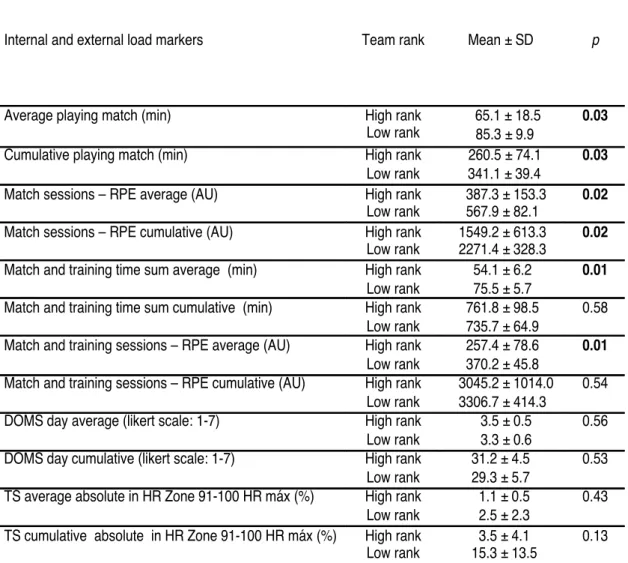
(15) List of tables. TABLE 1 - PERFORMANCE. INDICATORS OF PLAYERS OF HIGH AND LOW RANK TEAMS. DURING ALL THE MATCHES OF THE INTERNATIONAL OFFICIAL ELITE FEMALE FOOTBALL TOURNAMENT.. VALUES. ARE MEANS. ± SD (HIGH. RANK:. N = 6;. LOW. RANK: N = 7). ................................................................................................ 41. TABLE 2 - INTERNAL. AND EXTERNAL LOAD MARKERS DURING ALL MATCHES AND THE. EVALUATED TRAINING SESSIONS DURING THE TOURNAMENT IN PLAYERS FROM HIGH AND LOW RANK TEAMS.. VALUES ARE MEANS ± SD (HIGH RANK: N = 6; LOW RANK:. N = 7). ......................................................................................................... 42 TABLE 3 - BIOCHEMICAL MARKERS PROFILE DURING ALL MATCHES AND THE EVALUATED TRAINING SESSIONS, IN AN INTERNATIONAL OFFICIAL ELITE FEMALE FOOTBALL TOURNAMENT, IN HIGH AND LOW RANK TEAM PLAYERS.. VALUES ARE MEANS ± SD,. AND P VALUES FOR EFFECT SIZE. (HIGH RANK: N = 6; LOW RANK: N = 7).. TABLE 4 - BIOCHEMICAL. MARKERS PROFILE AFTER THREE MOMENTS. ........... 43 (BASELINE,. TRAINING SESSION ONE AND TRAINING SESSION TWO) DURING AN INTERNATIONAL OFFICIAL FOOTBALL TOURNAMENT, IN PLAYERS WITH ALL EVALUATIONS AND IN PLAYERS WITH SOME EVALUATIONS.. VALUES ARE MEANS ± SD, AND P VALUES FOR. EFFECT SIZE. (ALL EVALUATIONS: N = 13; SOME EVALUATIONS: N = 35). ............ 45. TABLE 5 - BIOCHEMICAL. MARKERS PROFILE DURING THE ALL MATCHES AND THE. EVALUATED TRAINING SESSIONS, IN AN INTERNATIONAL OFFICIAL ELITE FEMALE FOOTBALL TOURNAMENT, IN HIGH AND LOW RANK TEAMS. P VALUE FOR ANALYSIS OF VARIANCE. VALUES ARE F-TEST AND. (ANOVA) AND OF CO-VARIANCE (ANCOVA). MODELS OF DIFFERENT BIOCHEMICAL MARKERS ACCORDING TO TIME AND TEAM RANK. (HIGH RANK TEAM: N = 6; LOW RANK TEAM: N = 7).. TABLE 6 - BIOCHEMICAL (BASELINE,. ................................ 46. MARKERS PROFILE, AFTER THREE MOMENTS EVALUATED. TRAINING SESSION ONE AND TRAINING SESSION TWO) DURING AN. INTERNATIONAL OFFICIAL FOOTBALL TOURNAMENT. VALUE FOR ANALYSIS OF VARIANCE. (ANOVA). VALUES. ARE. F-TEST. AND OF CO-VARIANCE. AND P. (ANCOVA). MODELS OF DIFFERENT BIOCHEMICAL MARKERS ACCORDING TO TIME AND GROUPS.. (ALL EVALUATIONS PLAYERS: N = 13, SOME EVALUATIONS PLAYERS: N = 35). .... 48 XV .
(16) . XVI .
(17) Resumo . Sumário: O Futebol feminino é um desporto que mais tem crescido no mundo. Até a data, o estudo do impacto de vários jogos consecutivos separados por períodos de 24 a 48h de recuperação em marcadores plasmáticos do estado redox, de lesão muscular e inflamação em jogadoras de elite é limitado. Objetico: Analisar os marcadores de performance e de stress plasmático, em jogadoras de elite feminino, durante quatro jogos consecutivos de futebol (separados por um-dois dias de recuperação) e duas sessões de treino, durante 8 dias num torneio internacional feminino da FIFA. Métodos: De um total de quarenta e oito atletas de três equipas nacionais, treze jogadoras femininas de elite jogaram quatro jogos oficiais consecutivos. As jogadoras foram divididas em equipas de elevado ranking (N=7) e de baixo ranking (N=6), de acordo com a FIFA, e avaliados em sete pontos no tempo, ou seja, quatro jogos e duas sessões de treino (24 a 48h de recuperação antes e pós-jogo). As análises também foram realizadas em jogadoras com algumas avaliações (N=35), ou seja, avaliadas em três pontos no tempo (sessões de treino), vs. as jogadoras com todas as avaliações (N=13), ou seja, avaliadas em todos os sete pontos no tempo. Plasma creatina quinase (CK), proteína Creativa (CRP), capacidade total de antioxidante (TAS), ácido úrico (UA) e marcadores de carga externa e interna foram analisados durante o torneio. Resultados: As jogadoras da equipa de baixo ranking apresentaram valores mais elevados nos marcadores de carga interna e externa (p≤0.03) e apresentaram valores mais elevados nos marcadores de performance (p≤0.04). As jogadoras da equipa de elevado ranking e as jogadoras com algumas avaliações apresentaram melhores resultados nos marcadores bioquímicos (p≤0.01). Conclusão: Durante quatro jogos consecutivos de futebol (separados por um-dois dias de recuperação) e duas sessões de treino, durante 8 dias num torneio, resultaram no aumento dos marcadores plásmaticos de stress. PALAVRAS-CHAVE:. FUTEBOL. FEMININO,. PERFORMANCE, STRESS OXIDATIVO. XVII . JOGADORAS. DE. ELITE,.
(18) . XVIII .
(19) Abstract. Background: Female football is one of the fastest growing sports in the world. So far, limited scientific data exist on the impact of several consecutive football matches, separated by a 24 to 48h recovery period on plasma markers of redox state, muscle damage and inflammation in elite female players. Aim: To analyse the performance and the plasma stress markers of elite female football players during four consecutive football matches (separated by one-two days of recovery) and two training sessions played within an eight-days international female FIFA tournament. Methods: Thirteen elite female football players, from a total of forty-eight participants from three national teams played four official consecutives matches. The players were divided into high rank (N=7) and low rank (N=6) team players, according to FIFA, and evaluated at seven time points, i.e., four matches and two training sessions (24 to 48h before and post-match). Analyses were also performed in the players with some evaluations (N=35), i.e., evaluated at three time points (training sessions), vs. the players with all evaluations (N=13), i.e., evaluated at all seven time points. Plasma creatine kinase (CK), C-reactive protein (CRP), total antioxidant status (TAS) and uric acid (UA) and external and internal load markers were analysed throughout the tournement. Results: Lower rank team players showed higher internal and external load markers values (p≤0.03) and showed higher performance markers values (p≤0.04). High rank team and the players with some evaluations showed better and significant differences in biochemical markers (p≤0.01). Conclusion: Performing four consecutive football matches (with a 24 to 48h recovery period) and two training sessions within an eight days tournament results in an increase of plasma stress markers.. KEY WORDS: FEMALE FOOTBALL, ELITE PLAYERS, PERFORMANCE, OXIDATIVE STRESS.. XIX .
(20) XX .
(21) List of abbreviations. ATP. Adenosine Triphosphate;. Bpm. Beats per minute;. CK Creatine Kinase; CMJ. Countermovement Jump;. CRP. C- reative protein;. DNA. Deoxyribonucleic Acid;. DOMS. Delayed onset muscle soreness;. FIFA. Fédération Internationale de Football Association;. g. Gram;. GPS. Global Positioning System;. GLUT4. Glucose Transporter Type 4;. GPx. Glutathione Peroxidase;. GR. Glutathione reductase;. GSH. Reduced Glutathione;. GSSG. Oxidized Glutathione;. h. Hour;. H+. Hydrogen ion;. HIR. High Intensity Running;. HR. Hearth Rate;. HRmax. Max Hearth Rate;. HO•. Hydroxyl Radical;. XXI .
(22) H2O2. Hydrogen Peroxide;. HOCL. Hypochlorous Acid;. Kg. Kilogram;. Km. Kilometre;. KATP. Potassium Channel;. LT. Lactate Threshold;. mg. Miligrame;. min. Minutes;. ml. Milliliter;. mM. Millimolar;. mmHg. Millimeters of mercury;. nM. Nanomolar;. O2-. Superoxide Anion;. OH-. Hydroxide;. pH. “Power of Hydrogen”;. PMS. Perceived Muscle Soreness. RNA. Ribonucleic Acid;. ROS. Reactive Oxygens Species;. RPE. Rate of perceived exertion;. RONS. Reactive Oxygen and Nitrogen Species;. SD. Standard deviation;. SOD. Superoxide Dismutase;. TL. Training load; XXII .
(23) TS. Training session;. TAS. Total antioxidant status;. UA. Uric acid;. VO2. Oxygen Consumption;. VO2max. Maximal Oxygen Consumption.. . XXIII .
(24) XXIV .
(25) Chapter I Literature review. 1 .
(26) 2 .
(27) 1.. Introduction. During the last two decades women's football has become one of the most popular women's sports worldwide (Andersson et al., 2008). According to the Fédération Internationale de Football Association (FIFA), more than four million female players are registered in football associations (Thomas et al., 2012). The elite players are constantly being exposed to multiple high physiological demands due to elevated number of training sessions and matches played in national and international competitions held several times during a week (King & Duffield, 2009). During these competitions, players are required to compete and train repeatedly with very short recovery periods. A competitive football season includes one or two matches per week in addition to an average of three to four training sessions. In women competitive football tournaments, matches are played even more frequently allowing only one to two days of recovery between matches (Andersson, Bohn, et al., 2010), being therefore even more challenging for musculoskeletal, nervous, immune and metabolic systems, and thus causing performance impairments (Reilly & Ekblom, 2005). Some early studies focused on alterations in performance of participants in consecutive matches (Andersson, Bohn, et al., 2010; Andersson, Karlsen, et al., 2010a, 2010b; Andersson et al., 2008; Andersson, Randers, et al., 2010). Additionally, changes in performance have also been studied in combination with other biological markers, e.g., inflammation, muscle damage and oxidative stress (Brites et al., 1999; Cazzola et al., 2003; Fisher-Wellman & Bloomer, 2009; Gravina et al., 2012). It has been suggested that, for instance, that increased oxidative stress and muscle damage are related to muscle fatigue in some exercise and/or muscle fiber stimulation-induced contraction models (Reid, 2001). Despite recent concepts argue that oxidative stress acts as a cellular compartmentalization regulator of redox-dependent mechanisms within the several subcellular domains including nuclei, endoplasmic reticulum and. 3 .
(28) mitochondria (Go & Jones, 2011; Jones & Go, 2010) oxidative stress is classically defined as an (un)balance between the production of reactive oxygen species (ROS) and the capacity of the antioxidant defence systems to neutralize these molecules. Moreover, it is highly remarkable that ROS have a high potential as signalling molecules within the cells as they regulate and can switch (on/off) several mechanisms that are redox-dependent (Betteridge, 2000; Gutteridge, 1995; Gutteridge & Halliwell, 1992). This include some transcription factors such as HSF1, NFkB and AP-1 (Ascensão et al., 2008), which are potentially involved in the up-regulation of cellular defense against deleterious stress conditions, including muscle damage. Although the levels of ROS can be measured directly, they can also be estimated by measuring the by-products resulting from their interaction with other molecules in the cells with which they have biochemical affinity. These include markers of lipid peroxidation, deoxyribonucleic acid (DNA) and protein oxidation (Gutteridge & Halliwell, 1992). As mentioned, players’ performance impairment and physical fatigue can be related to the possible alterations in muscle, heart and liver tissue as well as in blood markers of oxidative stress and damage. A considerable amount of studies have examined the concomitant variations in performance and oxidative stress and damage markers in elite football players after a football match (Andersson et al., 2008; Ascensão et al., 2008; Atli et al., 2013; Banfi et al., 2006; Bangsbo et al., 2006; Brites et al., 1999; Cazzola et al., 2003; FisherWellman & Bloomer, 2009; Gravina et al., 2012; Ispirlidis et al., 2008; Lazarim et al., 2009; Margaritelis et al., 2014; Mohr et al., 2005; Silva et al., 2013; Silva et al., 2014; Thorlund et al., 2009; Zoppi et al., 2006). In most of these studies, increased levels of serum/plasma oxidative damage as well as increased muscle damage were found. However, to our best knowledge, the redox-related alterations induced by consecutive competitive international football matches during an elite level female tournament have not been explored so far. Whether consecutive football matches induce cumulative alterations in plasma redox. 4 .
(29) environment thus possibly compromising performance or may act as a powerful signalling stimulus for muscle performance repair and recovery between matches. is. unknown.. Given. that. the. effectiveness. of. antioxidant. supplementation in participants in general, and particularly in football players is still a matter of debate, with most of the recommendations arguing that it is wasteful or even harmful for performance, it is possible that the results of the present study may also yield new, although indirect, information regarding the further understanding of this complex issue (Andersson, Karlsen, et al., 2010b). Therefore, given the potential relationship between oxi-reduction balance with performance documented in football players, we aimed to analyse the performance and the plasma stress markers of elite female football players during four consecutive football matches (separated by one-two days of recovery) and two training sessions played within an eight-days international female FIFA tournament.. 5 .
(30) 1.1.. Activity profile and physiological demands in female elite football. matches. During international female and male football tournaments, such as FIFA Women’s World Cup or the Olympic matches, only two days of recovery are allowed between matches compared to four to five days of recovery in male football tournaments (Andersson, 2010). Thus, during these competitions the players have to compete and train repeatedly, with very short recovery periods. Therefore, knowledge about the physical and physiological demands during these specific periods is of paramount importance to define and to optimize strategies to improve player´s physical capacities and this to minimize performance impairment (Bangsbo et al., 2006; Brink et al., 2011; Dupont et al., 2010). In each training session and match, high physical demands are impose on players by performing several repetitions of technical skills and drills. These repetitions recruit several muscle groups simultaneously, in particular during sudden changes of direction, as well as during the rapid acceleration and deceleration movements such as in explosive jumps, in physical contacts between players. Consequently, this effort originates potential decreases in player's performance, in a particular action or set of motor actions (Reilly & Ekblom, 2005). It is important to point that decrement in performance occurs more markedly when the players must compete and train repeatedly with very short recovery periods (Dupont et al., 2010). Football training and match-play impose a range of demands on the players, who must own or acquire the necessary capabilities to cope with the specific physical loads of the match. In football, each player is unique (Bangsbo, 1994), but as a team, the priority in competition preparation is to warranty the individual strengths of each player to collectively form an efficient competitive unit (Reilly, 2005). Hence, the optimisation of all of the multifactorial components of football-specific including speed, acceleration and deceleration, muscle strength, agility, and flexibility – is an essential feature of the preparation. 6 .
(31) of players and teams. Essentially, physical and physiological profiling should be regarded as a means of monitoring players, whereas training should focus mostly on technical skills and engagement in team work (Reilly et al., 2000). Actually, elite players mostly differ from amateurs in terms of skill performance, muscle strength, sprinting speed, and high-intensity intermittent running performance (Cometti et al., 2001 ; Mohr et al., 2003; Rosch et al., 2000; Rostgaard et al., 2008). It is well established that football is characterized by prolonged intermittent exercise, combining brief periods of maximal or near maximal efforts with highly complex and unpredictable movement patterns (Castellano et al., 2011; Di Salvo et al., 2007; Mohr et al., 2003). The cardiovascular workload during a female football match is relatively high and also variable between players and player positions (Andersson, 2010). Heart rate (HR) profile during matches showed that the mean heart rate is ~85% of HRmax (average range 161-177 bpm). During the match, players may reach near maximum HR values several times (≈97% HRmax; average range 171-205 bpm) indicating high intensity (Andersson, 2010). In female players, an average blood lactate value of approximately 5 mM·L-1 has been reported at the end of the match (Davis & Brewer, 1993; Krustrup et al., 2010). However, in female and male football players, somewhat higher lactate values can be found after an intense work period during the matches (Krustrup et al., 2006). Both the mean heart rate and blood lactate levels reported in female players are within the same range of values reported in males (Bangsbo, 1994). In male players, a average heart rates are around 85% of maximal values, and maximum HR rates are close to maximal (Bangsbo et al., 2007). The average blood lactate concentrations of 2-10 mM·L-1 have been observed during football male matches, with individual values above 12 mM·L-1 (Bangsbo, 1994; Ekblom, 1986; Krustrup et al., 2005). These findings indicate that the rate of muscle lactate production is high during match-play (Bangsbo et al., 2007).. 7 .
(32) Match time-motion analysis is a suitable method to characterize the activity profile and thus, the physical demands of the football match (Bangsbo et al., 2007; Bangsbo et al., 1991; Carling et al., 2008; Stolen et al., 2005a). It provides information about total distance covered, distance covered in different intensities, and actions. It also allows the characterization of work and rest periods, the number of physical contacts, the ball time possession and the number of shares (headers, tackles) that the players perform in the match (Nicholas et al., 2000). Time-motion studies have shown that elite female players perform highintensity running periods 120 to 150 times during a match, interspersed on average by 2 to 3 seconds of active training (Thomas et al., 2012). Although sprinting and high-intensity actions represent only 8% to 12% of the running distance covered, these capabilities are critical for football performance (Buchheit et al., 2010). Within these decisive portion of movement performed during a match, it is likely that maximal-sprints represent particularly critical moments. Also, sprinting (horizontal) and jumping power (vertical) are involved in ball possession and repossession, defence play, corner kicks, and attacks on goal and should be considered critical (Thomas et al., 2012). Most of the total distance is covered at low intensity (walking, jogging) (Bangsbo et al., 2006). Andersson (2010), emphasizes that the distance covered in high intensity running (HIR), which includes running speeds over 15 km/h and sprinting (>25 km/h), is a better indicator of the physical stress during a match. In fact, explosive events and match-specific skill involvements are also important markers of physical match performance (Datson et al., 2014). According to same authors, these skills (including passing, dribbling, tackling and trapping) have been identified in 76 ± 30 events per match, and specifically 11 ± 1 headers and 16 ± 1 tackles with players also undertaking between 1,350 and 1,650 changes of activity. The amount of high-speed running and sprinting performed by the player’s is higher in top competition standards. In fact, toplevel female players perform 28% more high-speed running and 24% more. 8 .
(33) sprinting than moderate-level players (Datson et al., 2014). Competition level is also important as female players performe more repeated sprint bouts during international matches than in national league matches (Datson et al., 2014). Female players complete more high-speed running (13%) and sprinting (14%) when playing an international match than in a national match (Andersson, Randers, et al., 2010). There are several studies showing that total distance covered, in female players, during a match reaches 10-11 km, with an energy expenditure of 1500 kcal during active play (Andersson, 2010). The offensive and defensive midfielders are the players who cover the longest distances compared to the defenders and forward players (Gregson et al., 2010). Similarly, Bangsbo et al. (2006), found, in male players, that midfield players performed as many tackles and headers than defenders and attackers. According to the same authors, the attackers covered a total distance at a high intensity, similar to the fullbacks and midfield players, but sprinted more than the midfield players and defenders. Furthermore, Mohr et al. (2003), showed in female players, that the attackers had a more marked decline in sprinting distance than the defenders and midfield players. The knowledge of the specific demands of different playing positions is essential to ensure specificity of training and potential talent identification of female players (Datson et al., 2014; Di Salvo et al., 2007; Mohr et al., 2003; Reilly et al., 2000). The increasing availability of technology, such as global positioning system (GPS) tracking systems and heart rate monitors, has led to growing interest in activity patterns, physical loading, and fatigue development during football training. According to Datson et al. (2014), a GPS technology confirmed, in female players, that midfielders covered over 1,000 m more than attackers (9.64 vs. 8.51 km) and 600 m more than defenders (9.64 vs. 9.01 km). In the same study, the authors also reported high differences in hit top speeds between the players. Namely, with the central defenders performing less highspeed running (1.26 ± 0.11 km) than both midfielders and attackers (1.65 ± 0.11. 9 .
(34) and 1.63 ± 0.10 km, respectively). Finally, Datson et al. (2014), refer that attackers complete higher amounts of sprinting (>25 km·︎h-1) (0.52 ± 0.03 km) than both midfielders and defenders (0.43 ± 0.04 and 0.33 ± 0.05 km, respectively) (%). However, the GPS units remain quite bulky and require the participant to carry them during the course of the performance analysed. This limits their use because when official matches are played, regulations do not allow players to wear anything other than the standard clothing needed in each specific sport. Due to the restraints on the equipment that can be carried by the players, video analysis still represents the most viable alternative since it allows the measurement of movement patterns on the field of all participants in the match, referees included (Castagna et al., 2004). PROZONE has introduced a computerised tracking system able to analyse movement patterns in many sports and has focused most of its activity on quantifying not only motion characteristics but also work rate ratios of professional football players during actual matches. This technique provides the advantage of being applicable in official competitions and could help in the analysis of elite performance in football (Bradley et al., 2011; Bradley, Carling, et al., 2013; Bradley, LagoPenas, et al., 2013; Bradley et al., 2014; Bradley & Noakes, 2013). The possibility of using a computerised tracking system could provide sports scientists with a new tool to analyse what actually happens in elite performers. Althought, players spend large periods of the match with “off-the-ball” low-intensity aerobic activities, adjusting their position according to the situation of the match. Additionally, explosive bursts of activity other than running, including jumping, kicking, tackling, turning, accelerating and decelerating, changing pace, and sustaining forceful contractions to maintain balance and control of the ball against defensive pressure, exacerbate the physical strain imposed on the players and contribute to making football highly physiologically demanding (Iaia et al., 2009; Stolen et al., 2005b).. 10 .
(35) 1.2.. Changes in activity profile and performance induced by the match. A relevant question when planning training is when fatigue occurs during a football match and what are its major causes (Bangsbo et al., 2006). In fact, football players seem to experience fatigue or impaired performance during various phases in a match, mainly after short-term intense periods in both halves (temporary fatigue), and towards the end of the match and after it ends (permanent fatigue) (Mohr et al., 2005).. 1.2.1. Temporary and permanent fatigue . In recent decades, numerous studies have been published reporting that the amount of sprinting, high-intensity running and distance covered are lower in the second half than in the first half of a match (Andersson, Randers, et al., 2010; Bangsbo et al., 2006; Bangsbo et al., 1991; Buchheit et al., 2010; Di Salvo et al., 2007; Ekblom, 1986; Iaia et al., 2009; Mohr et al., 2003, 2005; Thomas & Reilly, 1976). According to Mohr et al. (2005), this may indicate that performance is inhibited in the second half and that fatigue occurs towards the end of a match. The players also experience temporary fatigue during a match. In fact, a study performed with football male players showed that the amount of high-intensity running in the 5-min period immediately after the most intense 5 min period recorded during the match is lower than the average of the entire match (Mohr et al., 2003). This decrement in performance after a period of intense exercise could have been a result of the natural variation in the intensity in matches due to tactical or psychological factors (Krustrup et al., 2006; Mohr et al., 2003). However, in another study players performed a repeated sprint test immediately after a short-term intense period during the match and at the end of each half (Mohr et al., 2003). It was shown that after intense periods in the first half, the players sprint ability was significantly reduced, whereas at the end of. 11 .
(36) the first half the ability to perform repeated sprints was recovered. These study results suggest that football players experience fatigue temporarily during the match (Krustrup et al., 2006; Mohr et al., 2005). According to Datson et al. (2014), in female players the total distance covered has been shown to be consistent between halves (5.23 ± 0.09 vs. 5.21 ± 0.08 km; effect size 0.2). However, significant reductions in high-speed running (0.68 ± 0.06 vs. 0.62 ± 0.04 km; effect size 1.2) and sprinting (0.20 ± 0.03 vs. 0.17 ± 0.02 km; effect size 1.0) occured. The same authors also found that some alterations in matchspecific skill involvements have been shown between halves, with the number of tackles being greater in the first half than in the second. Another study by Helgerud et al. (2001), showed that the players who presented higher fatigue levels during the match are those who exhibited a significant decrease in the total number of short passes, as well as in the total number of short passes successfully done. The extent to which fatigue occurs among football players during elite competitive matches could be assessed by comparing the performance of substitute players, who only participate in parts of the second half, with the performance of players taking part in the entire match (Mohr et al., 2003). It was observed that substitutes who came on in the second half sprinted and ran at a higher intensity (63 and 25% more, respectively) than players who played the entire match. Thus, the decrease in exercise intensity and sprint performance in the final phase of matches is independent of gender, indicating that most players use their physical potential during a match.. 1.2.1.1.. Physiological mechanisms responsible for the onset of. fatigue . The magnitude and the development of fatigue, depends on the duration and intensity of activity and muscle contraction types involved during the match. 12 .
(37) (Thorlund et al., 2009). Thus, since football is an intermittent sport, with activities changing every second, involving explosive muscle actions, like jumping, physical contacts between players and sprints (Mohr et al., 2003), it becomes important to know the onset of fatigue during matches, and consequently, the alterations in the performance of the players should likewise be related to both the metabolic and neuromuscular/mechanical features (Krustrup et al., 2006). Blood samples collected in elite players during football matches have shown that blood lactate concentrations decrease when approaching the end of the match (Bangsbo, 1994; Mohr et al., 2003). This seems to result from the reduction in the intensity of the match and change the type of substrate used in the final phase of the match. According to several authors, average blood lactate concentrations during the matches range from 3–6 mM, with individual values above 12 mM (Bangsbo, 1994; Ekblom, 1986; Mohr et al., 2003). Such values suggest that the anaerobic energy system is highly taxed during intense periods of the match (Mohr et al., 2005). In the same study, muscle lactate and pH during a football match increased fourfold compared with resting values after intense periods in both halves (Mohr et al., 2005) indicating markedly elevated levels of muscle acidosis after these intense sequences (Krustrup et al., 2005). A moderate but significant correlation (r=0.41, p<0.05) was found between muscle lactate and decreased sprinting performance after an intense period. Thus, it could be suggested that temporary fatigue during a match may be related to high muscle lactate concentrations and/or muscle acidosis (Fitts, 1994). According to the same author, it is also important to note that during exercise, potassium is released from the intracellular to the extracellular space of human skeletal muscle and further into the blood stream. In fact, at the point of exhaustion after intense short-term exercise (~5 min), the interstitial potassium concentration is elevated to around 12 mM (Mohr, Nordsborg, et al., 2004; Nielsen et al., 2004; Nordsborg et al., 2003). According to in vitro studies, this concentration is high enough to depolarize the muscle membrane and reduce the potential strength (Cairns & Dulhunty, 1995). On the other hand, part 13 .
(38) of the potassium temporarily lost from the muscle during intense exercise has been proposed to occur through the KATP channels located in the sarcolemma, which tend to open when intramuscular pH declines (Davies, 1990). Thus, football players may experience temporary fatigue as a consequence of accumulation of extracellular potassium and concomitant electrical disturbances in the muscle cell (Mohr et al., 2005). The development of fatigue that occurs temporarily during a match, may also be related to low muscle creatine phosphate concentrations, since performance in intense intermittent exercise has been showing to be elevated after a period of creatine supplementation (Bangsbo et al., 2006). In addition, it has been shown that after intense periods in elite football match, the decrease of phosphocreatine is significantly related to sprint capacity of the players (Krustrup et al., 2006). Some studies indicate that lowered muscle glycogen contributes to the development of fatigue during long-term intermittent exercise (Balsom et al., 1999; Bangsbo et al., 1991). In a study by Saltin (1973), the muscle glycogen stores were almost depleted at half time when the pre-match levels were low (~200 mM•kg-1 dry weight). In opposition, when the players started the match with normal muscle glycogen concentrations (~400 mM•kg-1 dry weight), the values were still rather high at half time, but below 50 mM•kg-1 dry weight at the end of the match. Other researchers using muscle biopsies before and after a match found that glycogen concentrations were ~200 mM•kg-1 dry weight after the match (Jacobs et al., 1982). This indicates that muscle glycogen storages are not always fully depleted during a match, at least in some muscle fibres. Accordingly, Mohr et al. (2005), showed that after the match, about half of the type I and type IIa fibres were almost or completely depleted of muscle glycogen. Thus, fatigue at the end of football matches may be caused by glycogen depletion of individual muscle fibres. Hypoglycaemia has also been suggested to cause fatigue during longterm exercise (Fitts, 1994). Nevertheless, blood glucose concentrations do not 14 .
(39) reach critical values during a football match (Bangsbo, 1994; Ekblom, 1986; Mohr et al., 2003). Other factors such as dehydration and hyperthermia are responsible for the development of fatigue in the later stages of a football match (Reilly, 1997). Core body temperature has been reported to rise to over 39ºC during the course of a match (Ekblom, 1986). The rise in core temperature is influenced by the intensity of exercise as well as by environmental temperature, with both ambient dry bulb temperature and relative humidity being relevant. Globe temperature should also be taken into consideration, as matches are played outdoors and solar radiation is a relevant factor. In environmental temperatures in the range 20 – 25ºC, Ekblom (1986) observed mean rectal temperatures of 39.5ºC for players in the Swedish top division, whereas values recorded for players from the lower divisions were 39.2 – 39.4ºC. During exercise corresponding to an average intensity of 75% VO2máx, as is seen during a football match, players may lose sweat at a rate approaching two litres per hour (Reilly & Ekblom, 2005). The same authors, also indicated that physical performance capability is impaired when water losses exceed 1% of body mass, it is important that the player starts the match already euhydrated and that the fluid deficit is minimized. In summary, the intensity of exercise in elite football female and male players decreases temporarily in some periods during the match. These critical parts of the match may occur after the short periods of high intensity (temporary fatigue) in the initial phase of the second part and during the final moments of the match. Thus, the contribution of the physiological mechanisms responsible for the onset of fatigue appear to change during different periods of the match. The so called temporary fatigue can be related to ion homeostasis disruption in skeletal muscle. The decrease of performance of the players in the last phase of the match maybe related to the depletion of muscle glycogen in the individual fibres as well as the increase in thermic stress and dehydration conditions.. 15 .
(40) 1.3.. Recovery Profile. . A common problem for participants competing in these tournaments is that the time available for full physiological recovery between matches is limited, and thus physical performance might be reduced (Rowsell et al., 2009). Indeed, recent studies have demonstrated that residual fatigue accumulated over successive matches can adversely affect team-sport performance (Ronglan et al., 2006; Spencer et al., 2005). Thus, participants who participate in multi-day tournaments might benefit from interventions that enhance or maximize recovery from previous competition. Several studies have examined changes in physical performance in team-sport participants after one-off competition (Dawson et al., 2005; Hoffman et al., 1999; Hoffman et al., 2003; Mohr, Krustrup, et al., 2004), periods of intensified training (Coutts et al., 2007; Hoffman et al., 1999), or entire competition seasons (Filaire et al., 2003; Kraemer et al., 2004). However, only recently a few studies have examined changes in physical performance measures during tournaments (Ronglan et al., 2006; Spencer et al., 2005). For example, Ronglan et al. (2006) observed a 2– 7% decline in sprint and countermovement jump performance in elite female handball players during a 3-day tournament. Furthermore, Spencer et al. (2005) demonstrated that repeated-bout sprint performance in matches decreased in elite male field hockey players over a four-day hockey tournament. Collectively, the results of these studies suggest that physical performance decreases during multi-day competitive tournaments and that strategies for minimizing fatigue and improving recovery could be beneficial during tournament-based competition (Rowsell et al., 2009). Effective conditioning programmes that carefully balance training and recovery are the cornerstone of athletic development (Datson et al., 2014). Moreover, those that can integrate both football-specific physical and tactical/technical training are more effective in enhancing the effectiveness of the available training time. Managing the training load is important to ensure 16 .
(41) optimal preparation for performance of the elite player and potentially reduce the susceptibility to injury (Randers et al., 2010; Rhea et al., 2009). Inappropriate recovery may thus predispose some players to overload injuries and reduced performance (Barnett, 2006). Therefore, full recovery is important to enable players to perform maximally (Andersson et al., 2008). Active recovery enhances the recovery process by accelerating the return to homeostasis after a football match (Reilly & Ekblom, 2005). This involves enhancing the rate of blood lactate removal, reducing the severity and duration of exercise induced muscle injury and delayed muscle damages, restoration of energy levels in skeletal muscle, and faster normalization of performance parameters (e.g., jump, sprint, and strength performance) (Andersson et al., 2008). The theoretical overall advantage of active recovery would be to allow the players to tolerate higher training loads (intensity, volume, and frequency) and to ultimately enhance performance (Barnett, 2006; Reilly & Ekblom, 2005). Andersson et al. (2008) investigated the changes in jump and sprint performance, maximal isokinetic knee flexion and extension, blood creatina kinase (CK), urea and uric acid (UA) concentrations, and perceived muscle soreness (PMS) before, immediately after, and 5, 21, 45, 51, and 69 h after the first match, in response to two female football matches separated by either an active or passive recovery. A significant reduction in sprint, countermovement jump (CMJ), and isokinetic strength, accompanied by a significant rise in CK, urea and UA, and PMS scores immediately after the first match were found. Thereafter, with a fast normalization of sprint performance, a slower normalization of peak torque knee extension and flexion, and jump performance that was not fully recovered at the start of the second match. More importantly, the amount of high-intensity running, which is an important factor in football performance (Bangsbo et al., 2006), did not significantly differ between the two matches. Thus, it was suggest that the players performance during the match, expressed as the mean heart rate value and amount of high-intensity running, is not impaired when two matches are interspersed by two days of recovery (Bangsbo et al., 2006). So far, only a few studies evaluated the effects 17 .
(42) of an active recovery program after a football match (Andersson et al., 2008; Ronglan et al., 2006). The study by Andersson et al. (2008) showed the existence of differences in the recovery pattern of the various neuromuscular and some biochemical parameters in response to a female football match. Male players who performed cool-down during 12 min immediately after the match recovered jump and sprint performance and perceived muscle soreness faster (Ronglan et al., 2006). In summary, active recovery trainning performed one day after a football match is important in order to achieve a faster return to a normal physical state (Barnett, 2006; Reilly & Ekblom, 2005).. 1.4.. Oxidative stress and damage. 1.4.1. Definition and concepts . Oxidative stress is classically defined as an (un)balance between the production of ROS and the capacity of the antioxidant defence systems to neutralize these former molecules (Gutteridge & Halliwell, 1992). According to some authors (Betteridge, 2000; Gutteridge, 1995), free radicals can be defined as any chemical species that contains unpaired electrons. Unpaired electrons increase the chemical reactivity of an atom or molecule. Redox reactions involve the transfer of electrons or hydrogen atoms from one reactant to another. Common examples of reactive species include the hydroxyl radical (HO•), superoxide anion (O2-) and hydrogen peroxide (H2O2), which can interact with proteins, nucleic acids DNA and ribonucleic acid (RNA) and the phospholipids of cell membranes thereby affecting their structure and function when produced on a large scale (Zoppi et al., 2006). ROS can be produced by several different biochemical processes within the body including: reduction of molecular oxygen during aerobic respiration yielding superoxide. 18 .
(43) and hydroxyl radicals; through products of chemistry such as oxidation of catecholamines and activation of the arachidonic acid cascade, which can reduce molecular oxygen to superoxide; through the production of superoxide and hypochlorous acid (HOCL), a powerful oxidant, by activated phagocytes; and through nitric oxide production by vascular endothelium and other cells. In addition, free radicals can be produced in response to external electromagnetic radiation, such as gamma rays, which can split water to produce hydroxyl radicals (Betteridge, 2000). However, it is known ROS are also essential physiological regulators and serve as an important biological messengers in cell signal transduction cascades (Hensley et al., 2000). Given their potential for tissue damage, it is perhaps not surprising that the body has evolved major antioxidant defence mechanisms to protect tissues from ROS attack. Antioxidants are substances that, when present at low concentrations compared with those of the oxidizable substrates, considerably delays or inhibit oxidation of the substrate (Betteridge, 2000; Gutteridge, 1995). Cellular antioxidant defences include the dismutase (SOD), glutathione reductase and peroxidase (GPx e GR), and catalase enzymes (CAT), which are major parts of the endogenous enzymatic antioxidant system (Andersson, 2010). In addition to their scavenging potential, likely useful in some ROS overproduction-like conditions, another interest that may arise from antioxidant vitamins (other important antioxidant class) supplementation is the possible ergogenic effect in athletic performance (Zoppi et al., 2006). Usually, the levels of oxidative stress in tissues are estimated by evaluated some classic biomarkers of their interaction with biological structures. These include the by-pruducts of lipid peroxidation, DNA oxidation and protein oxidation (Ho et al., 2013). Another way to evaluate the oxidative stress is by measuring the depletion of antioxidant levels, such as α-tocopherol, vitamin C and thiol groups. An indicator widely used to evaluate the oxidative stress levels in different tissues is the ratio of oxidized glutathione (GSSG)/reduced glutathione (GSH), which is, in its reduced state, an important antioxidant and. 19 .
(44) regulator of redox activity and is also rich in thiol groups. This tripeptide is very important in regulating the redox environment, since, in the presence of GPx, gives electrons to oxidizing compounds, neutralizing its interaction with cellular macromolecules and structures (Ho et al., 2013).. 1.4.2. Importance in the regulation of cellular metabolism . Although ROS are important signalling molecules in various cellular pathways, marked changes in redox status caused by elevated ROS generation may be detrimental to cellular homeostasis and function (Jackson, 2008). Because ROS represent normal physiological by products of metabolism, there is a wide range of antioxidants that minimize oxidative damage by neutralizing ROS while still allowing for the maintenance of redox status, cellular function, and intracellular signalling (Ji et al., 1992). It is known that exercise increases ROS formation, being the removal of these formed species depends on antioxidant systems (Zoppi et al., 2006). Furthermore, the rise of the level of ROS in cellular metabolism and in haemoglobin turnover resulting from physical exercise may promote ROS production within the erythrocytes (Cazzola et al., 2003). However, due of their very limited biosynthetic capacity and poor repair capacity, erythrocytes are exposed to unusual oxidative stress, which may accumulate originating physical or molecular modifications. In fact, ROS can alter the chemical and physical properties of the erythrocyte cell membranes by modifying the composition, packaging, and distribution of their lipids (Chiu et al., 1989; Watanabe H et al., 1990). This leads to structural alteration of the cell membrane, manifested by a reduction in membrane fluidity, which could modify the activity of several membrane proteins and may underlie accelerated senescence or even premature removal (Brovelli et al., 1991; Lutz, 2004).. 20 .
(45) The high absolute levels of mitochondrial oxygen consumption, the increased circulating catecholamine, the elevated participation of eccentric muscle. contraction. induced. damage. and. inflammatory. response,. the. intermittent and repeated sprint actions causing temporary ischemia reperfusion events in skeletal muscle are plausible factors that may influence RONS production during and after a football effort (Ascensão et al., 2008). Thus, and despite chronic exercise training having a protective effect through improvement of antioxidant capacity (Brites et al., 1999; Cazzola et al., 2003) it is likely that training sessions as well as the competitive matches expose participants to oxidative stress and damage with consequent muscle damage, both during, immediately post-exercise and throughout the recovery.. 1.4.3. Possible influence on performance . Physical exercise is characterized by an increase in oxygen consumption by the whole body and particularly by skeletal muscles (Brites et al., 1999). This increase in oxygen uptake is associated with a rise in the production of reactive oxygen species (normally 2–5% of the total oxygen consumption)(Andersson, Karlsen, et al., 2010b). The high production of reactive oxygen species may be responsible for a series of physiological and biochemical changes that occur during exercise (Alessio, 1993). Muscle damage is mainly induced by mechanical stress and calcium homeostasis disturbances while a sensation of discomfort within the muscle may be experienced (Fielding et al., 1993). Exercise-induced muscle damage is associated with an acute-phase inflammatory response characterized by phagocyte infiltration into muscle, free radical production, and elevation of cytokines and other inflammatory molecules (Aoi et al., 2004). Indeed, football appears to induce a marked inflammatory response during recovery lasting 48 to 96 hours (Ispirlidis et al., 2008). ROS can assist in repairing damaged tissue. 21 .
(46) via phagocytosis and respiratory burst activity (Ji et al., 1992). However, large amounts of ROS may damage vital cellular structures and oxidative damage can result. Elite football players must fully recover and be ready to compete for a full 90 minutes plus stoppage time in the next match within three to six days (Fatouros et al., 2010). Oxidation end-products accumulation may be elevated for 24 to 96 hours following strenuous exercise as a result of skeletal muscle injury causing macromolecule oxidation (Margonis et al., 2007) and recovery retardation because ROS production promotes muscle fatigue (Powers et al., 1999). ROS mediated macromolecule oxidation may promote muscle protein breakdown throuth certain proteolytic systems (Grune et al., 2003). Previous investigations suggest that ROS may act as second messengers in intracellular signalling pathways that mediate proteolysis and cell death via apoptosis (Powers et al., 2007). According to the same authors, this function of ROS may be linked to their level and the overall redox status in the cell (i.e., lower ROS concentrations. lead. to. cell. adaptation. and. survival,. whereas. higher. concentrations activate signalling pathways that lead to proteolysis and cell death). It has been reported that strenuous physical exercise produces a decrease in antioxidant levels and an increase in the markers of lipid peroxidation in target tissues and blood (Davies et al., 1982). On the other hand, antioxidant defences appear to be modulated by the state of physical training. It has been shown that training increases the reduced glutathione (GSH) pool and catalase activity in rat skeletal muscle (Leeuwenburgh et al., 1994), and catalase and superoxide dismutase activities in human muscle (Jenkins et al., 1984). Even though acute physical exercise is known to produce oxidative stress, individuals who follow a regular training programme could have an improved antioxidant status (Brites et al., 1999). Although scarce data have been published regarding the effects of oxidative stress on exercise performance, there is a possibility that prior oxidative damage caused by intensive training periods and/or oxidative. 22 .
(47) modifications while exercising might compromise the healthy status of the players as well as exercise performance (Vollaard et al., 2005).. 1.4.4. Changes induced by intermittent effort – Football. Football is an intermittent sport in which the aerobic energy system is highly taxed, with mean and peak heart rates of around 85 and 98% of maximal values, respectively (Bangsbo et al., 2006). As mentioned, strenuous intermittent exercise increases the production of ROS, which subsequently activates antioxidant defence mechanisms in order to maintain redox homoeostasis (Andersson, Karlsen, et al., 2010a). Most studies on oxidative stress and antioxidant status following exercise have used continuous endurance exercise protocols (Aguilo et al., 2005; Cases et al., 2006; Tauler et al., 2005). Because the physiological load of intermittent exercise differs from continuous steady-state exercise, an extrapolation of data from continuous steady-state exercise to intermittent exercise should be made with caution (Nieman & Bishop, 2006). Recently, four reports showed the occurrence of increased oxidative stress and damage (increased lipid peroxidation) together with increased blood antioxidant compounds following a single match in male players (Ascensão et al., 2008; Fatouros et al., 2010; Ispirlidis et al., 2008; Magalhaes et al., 2010). These studies indicate that elevations in antioxidant compounds following the matches were not able to quench an excessive increase in ROS production, thereby causing oxidative stress. In these studies, however, only a limited number of antioxidant compounds was analysed (UA and TAS - total antioxidant capacity). In two studies, lipid peroxidation increased immediately after the match but a significant increase in uric acid occurred only at 24 h after the match (Fatouros et al., 2010; Ispirlidis et al., 2008). Others have shown that TAS and UA increased immediately after the match in parallel with increased lipid. 23 .
(48) peroxidation (Ascensão et al., 2008; Magalhaes et al., 2010). The normalisation of TAS occurred within 24 h, while UA remained elevated for more than 72 h (Ascensão et al., 2008). It is suggested that one single football match is associated with increases in the level of oxidative stress and deterioration of muscle performance throughout a 72 h recovery period (Ascensão et al., 2008; Fatouros et al., 2010).. 24 .
(49) 25 .
(50) Chapter II Structure and Aims. 26 .
(51) 27 .
(52) 2.. Structure of the thesis. The present dissertation is organized into six chapters. After a short introduction emphasizing the rational of the study, a review of the literature supporting the aims of the dissertation is provided in Chapter I. The main aim is outlined in Chapter II. The methods & materials and the results are presented in Chapter III and IV, respectively. The discussion and the main conclusions of the present thesis are outlined in Chapter V and VI, respectively.. 3.. Aims. . To analyse the performance and the plasma stress markers of elite female football players during four consecutive football matches (separated by one-two days of recovery) and two training sessions played within an eight days international female FIFA tournament.. 28 .
(53) 29 .
(54) . Chapter III Methods & materials. 30 .
(55) 31 .
(56) 4.. Participants. Forty-eight elite female football players (two goalkeepers, seventeen defenders, nineteen midfielders, and six forwards) from three national teams that competed in an official national team’s tournement - the Algarve Women’s Football Cup 2013 participated in this study. Team level was based on team´s position in the competition groups, which was determined by FIFA. Thus, players from teams that competed in group A in the refered competition were considered as high rank players and players from teams that competed in group C were considered low rank players. Within eight days, the teams played four official matches separated by 24 to 48h of recovery and performed six to twelve training sessions. In three of the training sessions HR, rate of perceived exertion (RPE) and PMS were recorded. Since the football physical and physiological demands imposed on goalkeepers considerably differ from that of the outfield players (Andersson et al., 2008), players from this playing position were not included in the study and in the data analysis. The present study was approved by the local institutional board as well as by the club officials, and followed the Declaration of Helsinki of the World Medical Association for research with humans. Participants were informed of the aims of the research project and made aware of the procedures including any risks and benefits before giving written informed consent. The adolescent participants gave their verbal consent and their parents gave their written consent for participation in the study. The mean age, height, weight and body fat of the players were 25.87 ± 4.19 (17.70- 34.00) years; 170.32 ± 4.26 (162.00 – 179.00) cm; 63.35 ± 4.75 (53.01 – 75.80) kg; respectively (Tanita Inner Scan digital BC532). Participants had at least five years of experience in the top national football competition. At the time of the evaluations, the players were in the middle of competitive period,. 32 .
(57) performing six/seven training sessions per week, comprising four/five technicaltactical and physical fitness training exercises and two/three consisted of strength training.. 5.. Experimental design. The experimental design comprised evaluations during all the matches and in twelve training sessions held during the tournament. A general scheme of the set up is presented in Figure 1.. HR. HR. HR. HR. HR. HR. HR. HR. HR. RPE. RPE. RPE. RPE. RPE. RPE. RPE. RPE. RPE. PMS. PMS. PMS. PMS. PMS. PMS. PMS. PMS. PMS. -. Time played. -. Time played. -. -. Time played. -. Time played. Blood samples. Blood samples. -. Blood samples. -. Blood samples. Blood samples. Blood samples. Blood samples. Training session. Match 1. Training session. Match 2. Training session. Training session. Match 3. Training session. Match 4. 1st. 2nd. -. 3rd. -. 4th. 5th. 6th. 7th. . . Figure 1 - Schematic description summarizing the experimental protocol. Time points for the Number of evaluations. evaluation of selected biochemical and physical parameters before (baseline conditions) (N = 48), during the training sessions (N = 48) and after the matches (N = 13) throughout the official tournament. Blood samples were collected at selected time points and perceived muscle soreness (PMS) and rate of perceived exertion (RPE) were evaluated in all training sessions and matches. Additionally, heart rate (HR) was monitored during all training sessions.. This tournament was held between the 6th and the 13th of March, completing a total of eigh days of competition in which the teams performed four 33 .
(58) matches and six to twelve training sessions. Baseline evaluations were performed in the morning of the day before the starting of the tournament (5th of March). All training sessions were monitored regarding PMS (Morgan et al., 1988), RPE (Foster et al., 2001) and continuous (beat by beat) HR (Polar Team System, Polar Electro OY, Kempele, Finland). Match evaluations occurred on the 6th, 8th, 11th and 13th of March. Blood samples were obtained after the end of all matches (four) and before two of the training sessions (10th and 12th of March), which were held 24 to 48 h after the preceding match, for analysis of redox status, muscle damage and inflammation. After the matches, blood samples were collected only from players who played in the match. Therefore, from the total forty-eight evaluated players, thirteen were tested in all testing moments, while thirty-five were only tested in some testing moments. Nevertheless, there were three evaluation moments in which all players were tested: baseline, after training session one (day 10) and after training session two (day 12). Thus, the players were organized according to the number of evaluations performed, i.e., those who performed all the evaluations, with evaluations in baseline, all four matches and two training sessions, and those who only performed some evaluations, with evaluations in baseline and two training sessions, however with no evaluations at least in one of the four matches and thus blood samples were not collected. Blood samples were taken immediately after the player was substituted or within 15 min after the end of the matches. Matches were also monitored for RPE, PMS and time played. The training session performed on the day before the beginning of the competition and those held in-between the matches consisted of technical-tactical and physical fitness training exercises. The evaluated players played in the same playing position during all matches. PMS was assessed before each match or training session using a sevenpoint Likert scale (Morgan et al., 1988) designed to measure the level of muscle soreness in the lower body. The scale consisted of the following verbal anchors: 1 = very, very good; 2 = very good; 3 = good; 4 = tender but not sore; 5 = sore; 6 = very sore; and 7 = very, very sore. RPE was recorded thirty min after the 34 .
(59) end of all analyzed matches using Borg’s rating of perceived exertion category ratio 10-scale modified by (Foster et al., 2001)(CR10). Time-motion data was provided from InStat (InStat Football). These data include a number of physical and technical selected variables. These include (average. action. successful. percentage,. average. defensive. successful,. cumulative defensive successful, average attacking successful, cumulative attacking successful, average challenges won percentage, average tackles successful, cumulative tackles successful, average recoveries, cumulative recoveries, average passes accurate percentage, average actions during match, cumulative actions during match, average action success during match, cumulative action success during match, average challenge during match, cumulative challenge during match and average during match percentage). This computerised tracking system provides analytical information to help coaches in the evaluation of the match and the opponent study, based on mathematical formulas. This system acts, also, as one of the largest databases in the world, with over 100,000 registered players, with their positions, statistics, match videos, video cuts to the respective objectives (InStat scout). The InStat Football is directly connected to the Internet, thus enabling access and direct monitoring and online every match (InStat match center). The matches were held under neutral temperature (12-22ºC) and humidity conditions (35–40%) (Extech Digital Hygrometer 445715; Grainger, New York, NY, USA). All players were familiarized with all testing procedures.. 5.1.. Blood sampling and preparations. Venous blood samples were taken by conventional clinical procedures as described previously (Ascensão et al., 2008). Venous blood samples were collected from the antecubital arm vein into a 10-mL (EDTA-K3, Iberlab, ref. GV0414) containing tubes immediately after the training sessions or after the. 35 .
(60) player left the match. Whole freshly withdrawn blood was centrifuged (10 min x 3000rpm) and aliquots of plasma were obtained, stored and frozen at –80°C and further used to determine biochemical markers of muscle damage (CK), inflammation (C-reactive protein, CRP) and oxidative stress (TAS and UA).. 5.2.. Biochemical assays. Plasma CK activity was determined spectrophotometrically according to the manufacturer procedures using a commercial kit (ABX A11A01632, Mompelier, FR). TAS was measured spectrophotometrically using a commercial kit (Randox NX2332 Crumlin, UK) and following the manufacturer instructions. UA was determined by an enzymatic method using a commercial kit (Horiba ABX A11A01670, Montpellier, France) and following the manufacturer instructions. CRP was measured using an enzyme-linked immune sorbent assay system (ELISA-PENTRA 400, Horiba ABX, Montpellier, FR) and following the manufacturer instructions. Samples were analyzed in duplicate and the mean of the two values was used for statistical analysis.. 6.. Statistical Analyses. Results are presented as mean±SD. None of the parameters showed significant deviations from a normal distribution (Kolmogorov-Smirnov test). Changes in all parameters at different time points during the tournament for both team levels were examined by two-way analysis of variance (ANOVA) with repeated measures. Analysis of co-variance (ANCOVA) was used to analyse the biochemical markers variations during the tournament, with an adjustment for the effect of match time played, between high and low rank team players evaluated in seven time points, (baseline day 0, first match – day 6, second 36 .
Imagem


+7





Documentos relacionados