Consumer Behaviour changes in the
Cosmetic Industry
Rita Barreiras
Dissertation written under the supervision of Prof. Dr. Daniel Fernandes
Dissertation submitted in partial fulfilment of requirements for the MSc in Management with Specialization in Strategic Marketing, at the Universidade Católica Portuguesa,
Rita Barreiras
Abstract
The cosmetic industry, particularly the makeup segment, has grown despite economic difficulties experienced globally. Consumer segments shifted as consumer behaviour evolved, justifying the need to study it. There are several studies on the cosmetic industry, yet consumer behaviour influencing factors remain unexplored.
This study’s main purpose is to understand the influence of personal traits – demographic, preferences, personality and skin type – on makeup consumption and usage.
To this purpose, a four-step research method was employed: Firstly, secondary data research took place; secondly, exploratory qualitative research, through individual interviews among two consumers, sampling consumer experiences; thirdly, quantitative research was performed through an online survey, understanding consumption profiles; and lastly, individual interviews with five market experts were performed, confirming and comparing findings from previous steps.
Through this dissertation, it was possible to derive the importance of personal factors on this market’s consumer profile: there is a gender effect - mainly women – , an age effect – 18 to 64 year olds tend to use makeup, with 18 - 34 year-olds tending to see it as creative and having distinct purchase motivations – and there is an effect of net income on preferred shopping outlets - higher income consumers prefer lux retailers. Consumers attribute most importance to price and performance, with skin type not having an effect on makeup usage, but on the products chosen; and personality not having an effect on either variable.
For the mentioned reasons, brands need to consider these traits, to differentiate segmenting techniques and suit target consumers.
Keywords: Makeup, Cosmetic Industry, Consumer Behaviour, Skin Type, Personality,
Rita Barreiras
Resumo
A indústria cosmética, particularmente o segmento de maquilhagem, cresceu apesar de dificuldades económicas experienciadas globalmente. Os segmentos de consumidores evoluíram consoante o comportamento do consumidor, justificando a necessidade de o estudar. Existem estudos acerca da indústria cosmética, porém fatores influenciadores do comportamento do consumidor mantém-se por explorar.
O propósito deste estudo é compreender a influência de características pessoais – demografia, preferências, personalidade e tipo de pele – no consumo e uso de maquilhagem.
A este propósito, um método de pesquisa de quatro passos foi usado: Primeiramente, pesquisa de data secundária foi executada; segundamente, pesquisa qualitativa exploratória, por entrevistas individuais a dois consumidores, explorando a experiência dos mesmos; terceiramente, pesquisa quantitativa por um questionário online, percebendo os perfis de consumo; Por último, entrevistas individuais com cinco experts de mercado foram executadas, confirmando e comparando resultados dos passos anteriores.
Através desta dissertação, foi possível derivar a importância de atributos pessoais no perfil de consumidor deste mercado: existe um efeito de género – maioritariamente mulheres –, de idade – pessoas entre 18 e 64 anos tendem a usar maquilhagem, com pessoas de 18 - 34 anos a ver maquilhagem como criativa e tendo motivações de compra distintas – e de rendimentos líquidos em lojas preferidas. Consumidores atribuem maior importância a preço e performance, com o tipo de pele não tendo efeito no uso de maquilhagem, mas sim nos produtos escolhidos; e personalidade não tendo efeito em nenhuma variável.
Pelas razões mencionadas, as marcas necessitam de considerar estas características para diferenciar técnicas de segmentação e adequá-las aos consumidores-alvo.
Palavras-chave: Maquilhagem, Indústria Cosmética, Comportamento do Consumidor, Tipo
Rita Barreiras
Acknowledgements
I would like to express my great appreciation to Prof. Dr. Daniel Fernandes, my supervisor, for his patient guidance, enthusiastic encouragement and availability throughout the course of this dissertation.
I am also particularly grateful for the assistance given by Prof. Dr. Helena Marques Ribeiro and Carolina Silva, for their advice and demonstrated knowledge in the field and a special thanks to Adelaide Portela, Cláudia Araújo and Joana Marto.
To all participants in this study, who took a bit of their time to help me, providing insights about this subject, as all of their responses were critical to the success of this study; As well as to the technical staff at Católica Lisbon, for their help in offering me the resources needed.
Finally, I wish to thank my parents and sister, Cristina, João and Joana, for their support and encouragement throughout my academic course, as well as my grandparents, Maria Luísa and José Alexandre.
Table of Contents
1) Introduction ... 9
1.1) Academic and Managerial Relevance ... 10
1.2.) Problem Statement ... 10 1.3) Research Questions ... 10 1.4) Scope of Analysis ... 10 1.5) Thesis Organization ... 10 2) Literature Review ... 12 2.1) Gender Differences ... 12 2.2) Personality Types ... 14 2.3) Skin types ... 15
2.4) Global Beauty Market ... 17
3) Methodology ... 21
3.1) Secondary Data Research ... 21
3.2) Unstructured Interviews ... 21
3.3) Online survey to consumers ... 24
3.4) In-depth Interviews ... 31 4) Results Analysis ... 34 4.1) Unstructured Interview ... 34 4.2) Online Survey ... 36 4.3) In-depth Interviews ... 49 5) Conclusions ... 53 5.1) Main Conclusions ... 53 5.2) Recommendations ... 54 5.3) Limitations ... 54 References ... 56
Appendix... 59
Appendix 1: Survey Structure ... 59
Appendix 2: Linear Regression model (Demographic factors and Personality relating to Makeup Usage) ... 66
Appendix 3: Cross Tabulation (Demographic factors and Makeup Usage) ... 68
Appendix 4: Cross Tabulation (Monthly net income and Average purchase value)70 Appendix 5: Cross Tabulation (Monthly Net Income and Preferred retailers) ... 73
Appendix 6: Cross Tabulation (Makeup Usage frequency and Itemized usage Frequency) ... 77
Appendix 7: Cross Tabulation (Age and Preferred Shopping Platforms) ... 79
Appendix 8: Cross Tabulation (Age and relation with Makeup) ... 81
List of Tables Table 1: Unstructured Interviews Guidelines ... 23
Table 2: Interviewees' Profiles ... 23
Table 3: Online Survey Design (Excluding non-measurable questions) ... 27
Table 4: Market Experts Profile Summary ... 33
Table 5: In- Depth Interview Guidelines ... 33
Table 6: Gender and Makeup Usage relation Summary ... 39
Table 7: Age and Makeup Usage relation Summary ... 40
Table 8: Other Factors and Makeup Usage relation Summary ... 40
Table 9: Personality and Makeup Usage relation Summary ... 41
Table 10: Gender and Product Usage relation Summary ... 42
Table 11: Preferred Shopping place and Age/ Net Income relation Summary ... 43
Table 12: Purchasing motivations and Makeup Usage Relation Summary ... 45
Table 13: Market Value and WTP Summary ... 45
Table 14: Skin Type and Attributes relation Summary... 46
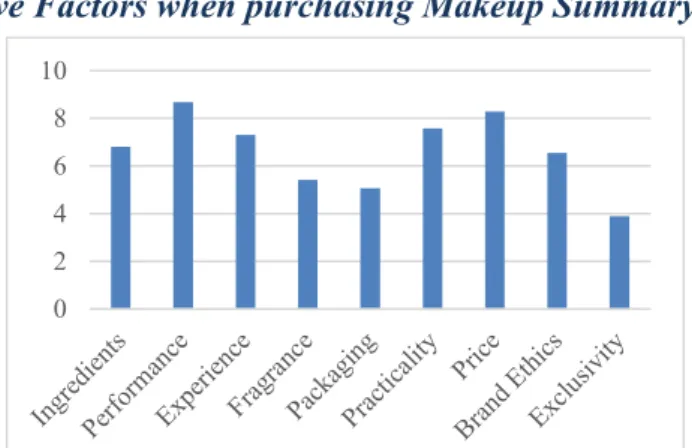
Table 15: Attributes ranking Summary ... 47
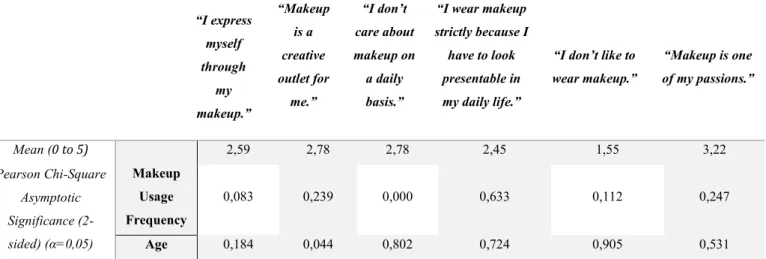
Table 16: Relation with Makeup and dependence with Makeup Usage Frequency/ Age Summary ... 48
List of Graphs
Graph 1: Age ... 37
Graph 2: Gender ... 37
Graph 3: Makeup Usage ... 37
Graph 7: Skin Type ... 38
Graph 4: Net Income ... 38
Graph 5: Occupation ... 38
Graph 6: Urbanism ... 38
Graph 8: Purchasing Motivations Summary ... 44
Graph 9: Decisive Factors when purchasing Makeup Summary ... 46
List of Abbreviations WTP – Willingness to Pay
SPSS – Statistical Package for Social Sciences MV – Market Value
N.A. – Not Applicable F & F – Friends & Family
9
Consumer Behaviour changes in the Cosmetic Industry
1) IntroductionThis thesis aims to understand changes in consumer behaviour, specifically in the Cosmetic Industry, in the makeup category. This is the study of consumers and the processes they use to choose, consume, and dispose of products (Tim Friesner, 2014) in this sector.
"All marketing decisions are based on assumptions and knowledge of consumer behaviour" (Hawkins and Mothersbaugh, 2007), this quote is representative of the importance of understanding changes in consumer behaviour, to adjust the marketing strategy of a company, or even product development itself.
Investigators believe that buying decisions are influenced by varied factors, such as cultural, social, personal and even psychological (Bakshi, 2012). Understanding how these factors interact to generate a purchase decision, is important for companies, to generate a more efficient strategy.
In this study, consumerism patterns regarding gender, personality, skin type, usage and preferences were analysed on the decision-making process of cosmetics consumption and later on, compared to tendencies identified by some cosmetics brands and retailers.
Throughout time, men and women’s role in society have changed. Whereas men used to be the “bread-maker” and have to maintain a certain image, in 2019, with women’s emancipation, such a standard is no longer verified. Both women’s consuming patterns and men’s have shifted, begging for further market research for companies to be able to accompany such patterns adequately (Akturan, 2009:66).
Studies have showed that personality types can also affect consumption patterns (Ercis and Unalan, 2017), meaning there is probably a way for these companies to refine their communication further to their target consumer, according to their personal characteristics. In this thesis, I will explore further the effects of introversion versus extroversion, in the consumption and usage patterns of cosmetics, on both men and women.
Lastly, cosmetics usage can also be affected by individuals skin type and personal preferences. These are relatively unexplored topics, with few research done, however, there are many products in the cosmetics market directed to different skin types (E.g.: foundation for oily/ dry skin) and even styles (makeup for women on the go/ more practical versus full glam/ higher maintenance makeup items), so in this research I will also attempt to correlate and explore the impact that skin type and preferences have on makeup usage and consumption, overall.
10
1.1) Academic and Managerial Relevance
Personal characteristics highly impact individuals’ purchasing behaviour. One of the characteristics that most influences consumers’ behaviour is gender (Hwang & Lee, 2017), followed by personality (Foxall and Goldsmith, 1988), preferences and, in the case of the cosmetic market, skin type can also play a role. Further research on how these factors impact consumers, will provide important information for companies regarding consumer behaviour in the cosmetic industry, which will be considered and compared to the final results, contributing to the better, more efficient segmentation of this market. Furthermore, this thesis can contribute to the public’s general knowledge about a relatively unexplored topic.
1.2.) Problem Statement
This dissertation aims to understand and further explore consumption patterns in the cosmetic industry, specifically makeup products, according to gender, personality type and skin type. Overall preferences and usage patterns are also explored, along with purchasing motivations, comparing results to companies understanding of these patterns later on.
1.3) Research Questions
To answer the problem statement, a main research question was redacted, which was then divided into four main questions:
1) How do personal characteristics affect makeup products consumption and usage? a. Does gender have an effect on makeup usage and consumption?
b. Does personality type influence usage and consumption of makeup products? c. Does skin type affect makeup products usage and consumption?
d. How do makeup preferences and consumption patterns vary according to different demographic factors?
1.4) Scope of Analysis
All consumers tend to have different buying and usage behaviours, being affected by factors such as demographic characteristics (gender, net income, age, etc), preferences, personality and on some cases, skin type. This thesis focuses on how these factors affect consumerism patterns and usage in the Cosmetic industry, within the makeup sector.
1.5) Thesis Organization
This thesis is composed of five main chapters, that divide into multiple subsections. The first chapter is composed of an introduction, problem statement, research questions and finally an overview of the discussion topic, as well as its relevance in academical and professional terms.
11
The second chapter involves the secondary data research, or literature review, using previously published information on the topics under scope to try and shed light on possible answers for the research questions. The third chapter explains the methods chosen for the research, summarizing the data collection methods and being followed by the forth chapter, which presents the analysis of the research results, along with interpretations derived from the information retrieved previously. Lastly, chapter five involves the main conclusions of this study and the discussion, as well as some limitations for this research and future research ideas.
12
2) Literature Review 2.1) Gender Differences
As has been previously established, gender doesn’t represent a simple biological difference in consumers. Men and women have been found to display almost completely opposite consumption behaviours, as well as decision making processes. Where women find shopping pleasurable, obtaining satisfaction from it, men display a certain disdain from it (Bakshi, 2012). The differences between men and women regarding expectation, want, needs and lifestyle are inherently reflected in the consumption behaviour (Akturan, 2009:66), making the study of such differences highly relevant to marketing managers.
Research shows that some of the factors which influence purchase decisions are: - Cultural: determinant in an individual’s wants, as well as behaviours; - Social: what are an individual’s reference groups, social role, status, etc; - Personal: gender, age, occupation, income and lifestyle;
- Psychological: motivation, perceptions, beliefs and attitudes. 2.1.1) Purchase Decision Process Stages
Should marketeers be able to understand the Purchase Decision Process, they would have access to how their consumers seek information pre-purchasing, what kind of factors incline them to purchase and to actually purchase (Solomon et al., 2010).
Many consumer behaviour studies showcase a five stage decision-making model, which is based on the notion that consumers are an information-processing machine. These stages are as follows:
1) Problem Recognition: The consumer detects a gap between his current and desired state;
2) Information Search: In order to help themselves achieve a decision, consumers seek information derived from their surroundings (Solomon et al., 2010). This stage, can be further divided into two stages:
a. Pre-purchase search process;
b. Ongoing research (to keep up to date with new products or the market) (Bloch et al., 1986).
13
3) Alternatives Evaluation: Given the high number of brands present in the market, consumers create their own set of available brands (consisting of brands that they previously acknowledged) (Jobber, 2007).
4) Product Choice: This stage can be simple or complex, being affected by multiple sources of information available to the consumer.
5) Post-Purchase Evaluation: This stage serves to make consumers feel confident in their choice, as well as judge the brand for possible future events.
2.1.2) Gender Differences in Socialization
In terms of socialization, women tend to be perceived as internally focused, using social encounters as a way to connect with others; while men tend to be perceived as externally focused, using social encounters as a method to inform others (Bakshi, 2012).
Women are usually considered compassionate and understanding (Broverman et al., 1972; Martin, 1987; Ruble, 1983; Williams & Best, 1990), making people feel more positively towards them (Eagly & Mladinic, 1989).
2.1.3) Gender Differences in Problem Solving
In problem solving, women tend to be more concerned about the way problems are solved, rather than just in solving said problems; In contrast, for men, how the problem is solved is not nearly as important as solving it in an effective manner. This is due to the fact that, for men, solving a problem comes as an opportunity to showcase their competence/ commitment to a relationship; whilst for women, discussing a problem comes as an opportunity to strengthen and deepen the relationship with the other person (Bakshi, 2012).
2.1.4) Gender Differences in Purchase Decisions
While women consider shopping a social need, men tend to attribute higher importance to the function of a product, rather than any secondary functions (E.g.: status). Research has found that wives tend to be dominant in the problem recognition and information search stages for more traditional products, such as home furniture, appliances, groceries, etc; whilst husbands tend to be more dominant in the information search stage for other types of products such as automobiles, televisions, etc (Davis and Rigaux, 1974). This trend is currently shifting, being women more and more involved in the purchase decision for the latter types of products (Belch and Willis, 2002). This division could be explained due to the fact that women are usually more subjective and intuitive, while men tend to be more logical and analytical (Bakshi, 2012).
14
In research, women are also found to have much stronger buying involvement than men (Helga, Karen & Rosie, 2004), tending to have long-term usage of a product into account when purchasing. This is a stronger factor for a woman’s purchase decision than instant gratification; while men base their purchase decision on immediate needs and how a product will satisfy those needs (Bakshi, 2012).
2.2) Personality Types
Personality is one of the factors that influences an individual’s behaviour and, as has been established in the previous section, psychological factors tend to affect consumer behaviour. Personality is described as a small set of stable characteristics (Dant et al. 2013), which lead every individual to act differently in similar situations.
In this section, I will further explore the impact of personality on consumption. To this purpose, I opted to use the Big Five personality dimensions, seeing how these can correlate to consumption patterns.
The Big Five framework consists of a hierarchical model of personality traits with five broad factors (Ercis and Unalan, 2017). These are:
- Extraversion: Individual tendency to approach social situations (Wolff and Kim, 2012); - Agreeableness: Concern for social harmony and cooperation with peers (Chudzikowski et
al., 2011);
- Conscientiousness: Tendency to be productive, obedient and disciplined (Bozionelos, 2004);
- Emotional Stability: Excessive worry, leading to distress and inability to cope with daily activities (Chudzikowski et al., 2011);
- Openness to Experience: Intellectually curious, with creative cognition styles and openness to new ideas (Chudzikowski et al., 2011).
2.2.1) Big Five Personality Types and Consumer Behaviour
Research shows that high extraversion, as well as low conscientiousness tend to characterize compulsive buyers, with the remaining personality factors not predicting any kind of particular behaviour in this regard (Ercis and Unalan, 2017).
The same research also indicates that high openness to experience, as well as extraversion are characteristics prone to belong to high variety seekers. There is a positive correlation between compulsive buyers and variety seekers, which makes is consistent with the fact that both tend to display high extraversion values (Ercis and Unalan, 2017).
15
According to various researches, it’s possible to infer some consumer behaviour tendencies, based solely on the personality types and degree of each factor that an individual displays. Extraversion, for example, is positively related to hedonic product value which in turn, influences brand effect, leading to higher degrees of attitudinal and purchase loyalty (Matzler et al, 2006) or brand evangelism (Doss, 2014). This personality trait’s also positively related to consumption-based emotions (Mooradian, 1997), as well as positive consumption emotions (Matzler, 2005) and, similarly to conscientiousness, market mavenism (Vazifehdoost, 2012), tending to rely more on word of mouth communication than other personality types (Ranbarian, 2013).
Regarding agreeableness, researchers have found it to be related to an increase in the display of positive emotions by service providers, as well positively related to customer satisfaction (Barrash, 2008). This higher satisfaction, tends to result in a longer relationship, strengthening the commitment with a brand (Hanzaee, 2012).
With emotional stability or neuroticism (as it’s often regarded in scientific papers), it’s positively related to brand evangelism (Doss, 2014), predicting negative affective states, consumer satisfaction, complaint behaviour and negative word of mouth (Mooradian, 1994). It also predicts negative consumption-based emotions and predisposed dissatisfaction (Mooradian, 1997), having a negative effect on satisfaction (indirectly leading to a negative effect on brand loyalty) (Karbasi, 2014).
Finally, regarding openness to experience, like extraversion, it’s positively related to hedonic product value, influencing brand affect and driving attitudinal and purchase loyalty (Matzler et al, 2006). It’s also positively related to brand evangelism (Doss, 2014) and market mavenism (Vazifehdoost, 2012).
2.3) Skin types
One of the research hypotheses, entails that different skin types can influence the consumption of cosmetic products. As such, further explanation on what skin types are considered for the purposes of this research, as well as the needs of each one, provide for a better frame with which to analyse final results.
Generally speaking, skin types are as follows (Kimball, 2008):
- Dry: characterised by smaller to nearly invisible pores, being less elastic, more rough; red spots and visible lines tend to appear, as this skin type often experiences inflammation;
16
- Combination: characterised by having both oily, normal and dry traits, in different areas of the skin (typically oily in the T zone - forehead, nose and chin - and dry to normal on the other regions of the skin);
- Normal: characterised by not having much of any particular trait, being the more balanced skin type;
- Oily: characterised by being shiny, having dilated pores and more frequent appearance of blackheads, zits and other spots;
- Sensitive: characterised by redness, itchiness and dryness.
However, there are other skin concerns, such as mature skin (typical in more mature individuals) or rosacea, which can add to the concerns of generally dry, combination, normal, oily or sensitive skin (Kimball, 2008) - and possibly influence product consumption.
2.3.1) Skin Types’ needs
Despite an individual’s skin type, maintenance and treatment of the skin under appropriate hygienic conditions is a behaviour most individuals tend to adopt. Washing, bathing using soaps and other products, is part of this common behaviour (Junaid and Nasreen, 2012). The same applies to appropriate water ingestion, use of moisturiser and sun protection, which helps balancing out and protecting the skin.
Regarding each particular skin type, individuals with dry skin tend to need agents that not only contain moisturizing properties, while also being able to attract and hold water to the cells, maintaining the skin hydrated. For this, different types of emollient products are advised, such as leave-on products (occlusive emollient cream and ointment, occlusive ointment no water, etc), washing products (emollient and antiseptic washing products) and bath emollients (bath oil and antiseptic or antipruritic bath oil). A similar treatment is proposed to sensitive skin types, with the addition of some calming agents, to soothe skin irritation (Moncrieff, Cork, Lawton, Kokiet, Daly and Clark, 2013).
Individuals with oily skin, tend to need treatments that suppress sebum production. These treatments can be topical, through the use of: retinoids, olumacostat glasaretil (DRM01) or cosmeceuticals; or systemic, through the ingestion of: isotretinoin, spironolactone or oral contraceptives (Endly and Miller, 2017).
Given the fact that combination skin individuals possess characteristics from both dry to normal skin types, and oily skin types, a mixture of both types of treatments is advised according to the needs of the different skin parts.
17
Normal skin individuals have the most balanced skin, so no treatment is needed. However, some skin maintenance care is always advised, such as described in the beginning of this section.
2.3.2) Skin Types and skin care consumption
Non-specialized news outlets, such as magazines, newspapers and even television, tend to dedicate a portion of their publications to cosmetic advertising, through lifestyle columns or segments. A regular consumer, not having much information to evaluate and select the best products according to their skin, often opts for the product with most appealing marketing and presentation (Kabir, 2013).
Other influencing factors tend to be the advising of friends and family (Kabir, 2013) and, for some consumers who visit aestheticians or salons, they attempt to get more information on the best products for their needs there.
There’s also the possibility that a consumer visits a dermatologist, which offers the most objective information for which products are best for a given skin type.
2.4) Global Beauty Market
In this section, I will explore the dynamic and composition of the beauty market, in which the cosmetic industry acts. This market generated total revenues of $532 billion in 2019 (Biron, 2019, Business Insider), having grown 5,5% in 2018, with estimated sales of over 200 billion euros (L’Oréal 2018 Annual Report). It’s divided into five, complementary business segments:
1) Skincare; 2) Haircare;
3) Colour/ Makeup; 4) Fragrances; 5) Toiletries.
Beauty products can further be divided into premium (28%) and mass production (72%) segments, depending on brand prestige, price and distribution channels in which a product is present (Lopaciuk and Loboda, 2013). The majority of the premium cosmetics sales is concentrated in the developed markets, specifically US, Japan and France (Barbalova, 2011). Some factors contributing to this market’s success are:
1) Continuous increase in online beauty spending (25% growth worldwide); 2) Expansion of social networks;
18
3) Consumer interest in new and different premium products; 4) Acceleration of urbanisation worldwide;
5) Increase in the number of senior citizens worldwide; 6) Growth of the upper middle classes.
2.4.1) Product Categories Trends
Of the entire beauty market, the most prominent categories are skincare (39%), which includes facial skincare, face cleansers, body care and sun protection; hair care (21%) and makeup (19%) (L´Oréal 2018 Annual Report). The skincare market experienced rapid growth in the year of 2018 (nearly 60% of the worldwide growth), being boosted by the rise of upper middle classes worldwide and particularly, in Asia.
Asian consumers tend to be both knowledgeable and enthusiastic regarding skin care products, explaining the high focus of this sector in this region.
This category (skincare) is further divided into three divisions: - Luxury Skincare: prestigious brands with a skincare offer;
- Dermocosmetics: cosmetics brands that partner with dermatologists for optimized
skin benefits;
- Affordable Skincare: less expensive skincare brands. 2.4.2) Main Market Players
The dominant market player is L’Oréal, being responsible for $29.4 billions in sales, in the year of 2018. Its main competitor is Unilever, with $21.5 billions in sales during the same year, being followed by Estée Lauder, Procter & Gamble, Coty and Shiseido, respectively (L´Oréal 2018 Annual Report).
2.4.2) Distribution Trends
This market can be geographically divided into dominating (most prominent global revenues) and peripheral regions (smaller values); the dominating regions being North America (25%), Latin America (9%), Asia-Pacific (39%) and Western Europe (18%).
The cosmetic market has been fast growing in countries such as Brazil, Russia, India and China (main force in the emerging markets), accounting for 21% of the global beauty industry in 2010 (Lopaciuk and Loboda, 2013), contributing to the growth of the global market. This, however, represents a challenge to foreign brands, unfamiliar with the local culture and habits.
19 2.4.4) Emerging Market Trends
In 2009, the beauty industry was affected by the recession, recovering rapidly and exceeding the level at which it was, previous to the recession, by 5%, in 2010 as global economy improved. Despite this, emerging countries didn’t suffer as much with the recession, some of them (China, India, Indonesia) surpassing 25% of growth in sales in 2010.
2.4.5) Consumer Behaviour Trends
The market as a whole didn’t suffer much with the recession, but this event still influenced consumer behaviour. Consumers started to increase home consumption, in opposition to doing treatments outside (aestheticians, salons, spas…), treating cosmetics purchases as investments (instead of indulgencies) and paying more attention to premium products (leading most luxury brands to grow).
Beauty consumers tend to take advice for product consumption, from friends (50%), mothers (49%) and other family members (41%); being more influenced and trusting more in these than paid influencers, traditional marketing and advertising methods. Their concept of beauty is changing, as growing demands for inclusive and realistic images surge.
These consumer’s preference for brands they’ve previously had experience with, comes as a challenge for new market entrees to breakthrough, meaning that their offer needs to be truly innovative or branded with natural, clean or organic characteristics (Danzinger, 2019).
2.4.6) Consumer Demographics
Through 2025, women aged 65+ will be the fastest growing female age segment, representing a positive variation of 36% of this market’s consumers, as millennial aged women (24-44) are only expected to grow by 9% and the remaining segments (women aged 18-24 and 45-64) are expected to decline in number (-1% and -3%) (L´Oréal 2018 Annual Report).
The main consumer of this market are women of all ages (despite men also consuming these products, representing a lesser portion of the sales), although focus on each age group may vary according to the type of product and according to the expected growth before mentioned; usually living in urban areas with variated occupations and lifestyles. (de Cerqueira, de Oliveira, Honório, & de Macedo Bergamo, 2013)
2.4.5) Iberian Market
Given that the majority of the research stages will take place in Portugal, with Portuguese consumers, it makes sense that the Portuguese market tendencies be referred as part of this
20
literature review. In this instance, It’s often that the market is compiled into the Iberian one, as companies tend to group Portugal and Spain together.
Studies show that, short term, there will be a growth tendency in the Iberian Beauty market, with demand growing steadily since 2017. Although a minor growth is expected in the latest years, in 2018, the Iberian market has grown around 2%, to a value of 5.215 million euros (Lusa, 2018).
2.4.6) Portuguese Consumers
Some market experts claim that the Portuguese market tends to follow more mature markets, such as the French, Italian or English markets. As such, the Portuguese consumer tends to be more demanding, as well as pragmatic in her choices, giving more meaning to the price-to-quality relation (Pinto, 2018). They constantly seek dynamism, youth and visible immediate results. Word to mouth communication is highly impactful for these consumers, as loyalty to one brand is not verified in new generations. This allows for new brands and new distribution channels to emerge. New generations also tend to be more easily influenced, especially regarding new tendencies and short-term innovation, making for online presence to be highly important for brands in order to be successful (Pinto, 2018).
21
3) Methodology
Regarding research methods, different approaches are to be taken in this study: exploratory, descriptive and explanatory research (Shieds & Rangarajan, 2013). For this, a four-step methodology was employed:
1) Secondary Data Research 2) Unstructured interviews 3) Online survey to consumers 4) Confirmatory In-depth interviews
How each stage was performed in order to accomplish all research goals, will be explored in the following sections.
3.1) Secondary Data Research
Upon a first approach, secondary data research took place, so that clarity regarding the cosmetic market and its consumers, as well as the factors studied (impact of gender, personality type and skin type) was attained. This consisted on a combination of online, literature and case study research, mainly through the use of company reports, market research and previously made university studies. This method allowed to lay a foundation for the research to start, providing a better, in-depth understanding of the topics at hand (Adi Bhat, n.d.).
3.2) Unstructured Interviews
After the exploratory research, two non-structured interviews took place among different types of cosmetics consumers. These served so that some qualitative impressions were exchanged, that complemented information obtained through exploratory research, from the interviewees point of view.
In this stage, the main objectives were to get better knowledge regarding the cosmetic market consumer experience and to try and understand the profiles of this industry’s consumers. For this reason, the interviews were carried out among two different types of consumers.
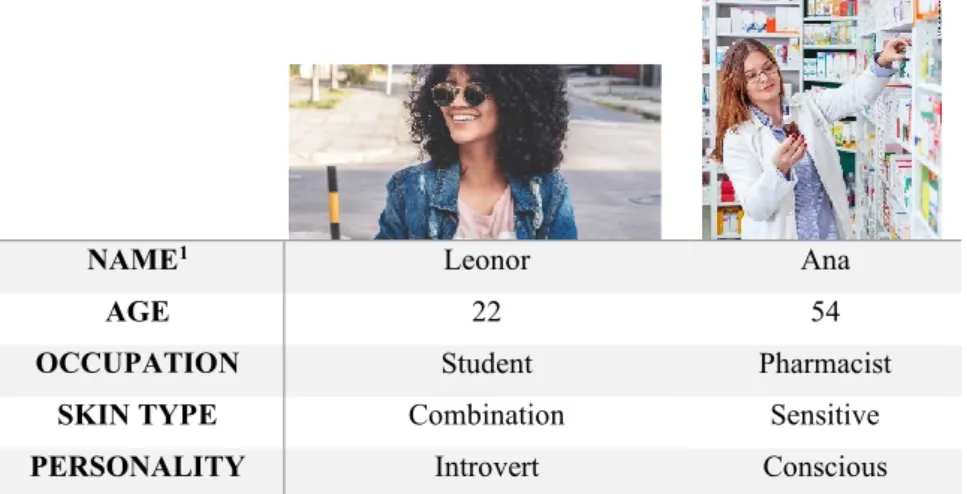
The first interviewee is a female master’s degree student, 22 years old, who is very immersed in the beauty industry. She knows all the new releases and keeps up to date with the latest industry trends, being a regular consumer of beauty products and wearing said products on a daily basis. Her skin type is combination, having traces of both oily and sensitive skin and one of her most prominent personality traits is the fact that she is an introverted.
The second interviewee, also a woman, is a 54-year-old hospital pharmacist, who doesn’t tend to wear beauty products, only resorting to them on a needs basis (special events, etc), not being
22
very informed on the latest news in this industry, nor interested in them. Her skin type is sensitive, also having mature skin concerns and her most prominent personality traits that she is very conscientious (being a very disciplined person). More detailed information on the interviewees can be found on Table 2, bellow.
The interviews didn’t have a fixed structure, being very informal and open, the main focus being to better understand their usage and consumption patterns. These interviews took place during the month of October 2019, separately and individually, allowing for honest opinions to be expressed directly and spontaneously.
This method, allowed for primary data to be collected on the matter at hands, in a detailed and reliable way since the respondents expressed such contrasting patterns and opinions, being probed to expand on their ideas and clarify others. The fact that it was an unstructured interview, also allowed for qualitative data to be generated through the use of open questions, being more flexible and adapting to given answers (McLeod, 2014).
This method, however, isn’t without its faults. The first being how time consuming it can be to prepare and conduct an unstructured interview and sequentially analyse the qualitative results, from answers to open-ended questions (McLeod, 2014). It’s also difficult to gather sufficient conditions that allow for representative impressions of the population, due to the low number of interviewees (Keller & Conradin, 2018). Therefore, interviewing almost opposite consumers of this market was very important to acquire better perspective and knowledge on the cosmetic industry, providing some strategic guidelines for the following research phases. Table 1 provides for more detailed information, regarding this stage in the research.
23
Table 1: Unstructured Interviews Guidelines
Questions Main Objective
1) What words would you use to describe
yourself?
This question aims to understand how the interviewees view themselves in terms of personality, allowing them to explore the answer however they choose, in their own words.
2) Do you have any skin concerns?
This question aims to understand the skin type of the interviewees. The following question might bring skin type back to the interviewees minds and offer some clarity on whether there is an impact on makeup usage and consumption, depending on skin type.
3) What would you say is your relationship with
makeup?
This final question is the most important one, as it allows interviewees to explore the answer however they want, covering frequency of usage to the enjoyment of it and knowledge on the industry.
Given this is merely a guideline to an unstructured interview, further questions were asked as conversation surged, providing for more insights on the matter then covered in this Table.
(Source: Developed by the author (2019)) Table 2: Interviewees' Profiles
NAME1 Leonor Ana
AGE 22 54
OCCUPATION Student Pharmacist
SKIN TYPE Combination Sensitive
PERSONALITY Introvert Conscious
(Source: Developed by the author (2019))
24
3.3) Online survey to consumers
Findings from the previous research stage were used to create an online survey, which served as primary quantitative research.
This part of the research is what allowed to establish the main connections and inferences that would answer the research questions of this study. Its main purpose was to develop and compare different consumers, considering their demographics details (age, gender, etc) and their usage and consumption profile of cosmetic products.
To reach this purpose, one of the first things was to define clearly which concepts were to be studied, considering the afore mentioned secondary data research and unstructured interviews. Additionally, it’s important to note that all questions and variables used in this step have been adapted from previous studies, ensuring their reliability and validity.
This research method is most efficient to collect a large sample, since many individuals can respond at the same time, in short periods of time (Saunders, Lewis & Thornhill, 2009). Information gathered through this approach, also allows for statistically relevant comparisons to be developed, since the sample size is usually large enough to be generalized to a population, reflecting differences among respondents (due to the inclusion of close ended questions). The questionnaire was made in English, offering the option to switch the language to Portuguese and containing five major sections of analysis, with a total of twenty-seven close-ended questions. Data from this questionnaire was collected over the course of several weeks (from the beginning of October to the middle of November 2019). These sections were:
1) Demographics: In this first section, demographic characteristics of the respondents was analysed, such as gender, age, occupation, net income and skin type. This data would then be used and related to consumption and usage patterns of cosmetic products. 2) Personality & Style: In this section, respondents were asked to describe their personal
style and to further identify themselves on a scale from 0 to 10, to a series of statements that are used to establish the level of introversion and extroversion of the respondents. This would later aid in building the consumer’s profile.
3) Cosmetics Usage: This section would establish the respondents’ usage of makeup. If they didn’t wear makeup, the survey would end there; but if they did, questions regarding usage and consumption of certain items would then be asked about, to help build the before mentioned consumer profile.
25
4) Consumerism in Cosmetics: In this section, respondents’ knowledge on makeup retailers is tested and furthermore, frequency/ preference of visitations and purchases is analysed. The average value of said purchases is also analysed, as well as causes for purchase/ influencing factors. This would allow to draw different consumption habits from different consumer profiles.
5) Preferences: Lastly, this section inquires respondents about their preferences for makeup products, first providing with a concrete image of two kinds of products, further inquiring about the value given to the product showed (testing market knowledge), as well as the value they’d be willing to pay for it. Attributes considered most relevant are also asked about, as well as some statements regarding an individuals’ relation with makeup. This allowed to investigate the main characteristics a product must have to be selected by each consumer, as well as what the decisive factors in a selective process of a makeup item is and the emotions they link to makeup.
3.3.1) Measures Used
In the first section of this study, demographic data of the respondents is requested, in order to profile them (gender, age, place of living, occupation, monthly net income and skin type), with some help of (Kuruvilla, Joshi, & Shah, 2009).
Regarding personality type, a Likert scale from 1 to 10 (1 = Strongly Disagree; 5 = Neither Agree nor Disagree; 10 = Strongly Agree) was used to measure the extent to which respondents identified themselves with a series of statements. Such a scale was adopted from (Sauro, 2018). A second Likert scale from 1 to 5 (1 = Strongly Disagree; 3 = Neither Agree nor Disagree; 5 = Strongly Agree), was also used to determine the level of agreement with statements regarding respondents’ relations with makeup.
To assess respondents’ usage and consumption habits, five items were used. For instance, in the question “How often do you wear these makeup items?”, the possible answers were “Every day/ Every other day/ Only on weekends/ On occasion/ Never”, adopted and accordingly adapted to better describe frequency of usage and consumption from (Sauro, 2018).
Two types of scale were used to determine respondents’ priorities and further explore their purchase decision process. The first being a slider scale, from 0 to 10, regarding the level of importance of nine potential factors when purchasing a makeup item; and the last being a constant sum, that required respondents to distribute 100 points among three main factors when purchasing makeup (price, performance and packaging).
26
Lastly, to determine where respondents prefer to purchase beauty items, scales from (The Nielsen Company, 2018) were adopted and further adapted to the new ideology that online channels allow for more frequent visitations than physical spaces. The question “How often do you visit these makeup retailers?” allowed for the answers “Every day/ Every other day/ Once a week/ Twice a month/ Once a month/ Once a year/ Never”, as well as came accompanied by the question “How do you visit these retailers?”, which allowed for the answers “Physical space/ Online/ Both”.
27
Table 3: Online Survey Design (Excluding non-measurable questions)
Section Main Objectives List of items Items Adopted from:
Demographics
- Gather information on respondents to better classify and profile them in terms of consumption.
D1) What gender do you identify as?
Female Male Other
Developed by the author
D2) How old are you?
< 18 18 - 24 25 - 34 35 - 44 45 - 54 55 - 64 65 - 74 75 +
(Kuruvilla, Joshi, & Shah, 2009) & Developed by the author
D3) Do you live in:
A big city A city A village A small town
Developed by the author
D4) Which of these options best describes your current situation?
Student Worker Stay at home mom/ dad
Retired Unemployed
28
D5) What is your household monthly net income?
< 800€ 800-1600€ 1601-2400€ 2401-3300€ 3301-4100€ 4101-4900€ > 4900€
(The Nielsen Company, 2018)
D6) What is your skin type?
Oily Combo
Dry Sensitive
Mature
Developed by the author
Personality & Style
- Contribute to consumer profiling in terms of personality type.
P&S1) How would you describe your style?
Classic Disruptive Innovational
Other
Developed by the author
P&S2) Please, indicate to what extent do you agree with the following statements.
1: Strongly disagree; (…) 10: Strongly agree
(Sauro, 2018)
Cosmetics Usage
- Phase out respondents who don’t wear makeup;
- Understand which products consumers tend to wear;
- Understand consumers makeup usage related habits.
CU1) Do you wear makeup? Yes
No Developed by the author
CU2) How often do you wear makeup?
Every day Every other day Only on weekends
On occasion
(Sauro, 2018) & Developed by the author
29
CU3) How often do you wear these makeup items?
Every day Every other day
On weekends On occasion
Never
Consumerism in Cosmetics
- Analyse which outlets respondents’ resort to and frequency with which they resort to them;
- Analyse purchasing habits, such as average value and frequency of purchases.
CC1) How often do you visit these makeup retailers and how?
Every day Every other day
Once a week Twice a month Once a month Once a year Never --- Physical Space Online Both
(The Nielsen Company, 2018) & Developed by the author
CC2) Of those visits, how often do you actually make a purchase?
On every visit Every other visit
Sometimes Very rarely
CC3) How much money do you tend to spend, on average, per purchase?
<5€ 5-10€ 10-20€ 21-30€ 31-50€ 51-100€ >100€
30
CC4) What makes you purchase a makeup item? You can select multiple items.
Necessity
Repurchase
Curiosity
Good deals (special sales)
Influencers' reccomendation Friends and Family
reccomendation Publicity
Others
Developed by the author
Preferences
- Analyse valued aspects to the decision making of purchasing a makeup item; - Analyse respondents’ relation with makeup.
P1) Please, attribute a level of importance (from 0 to 10) to the following aspects of purchasing a makeup item.
0: Not important at all; (…)
10: Very important.
(Sauro, 2018) P2) When purchasing makeup, which of these
aspects is more important to you? Please distribute 100 points among these items.
Price Performance
Packaging
P3) Please answer these questions, regarding the level of agreement with the following statements.
1: Completely disagree; (…)
5: Completely agree.
31
Before publishing the online survey to the overall public, a pre-test was conducted with six people, all consumers of cosmetic products, to help minimize errors and make sure the survey was clear and perceptible to fill out by the respondents, as well as if the flow of the items was correct and if the time to respond and size of the overall survey was adjusted (Malhotra & Birks, 2006). Some changes were made, considering these people’s feedback, in order to improve the quality of the survey.
Regardless of these measures, this technique maintains some limitations such as questions ignored (leading to unfeasibility of that respondent), being misinterpreted (since questions aren’t explained to the respondents) and only being questioned on a limited amount of information (University of Portsmouth, 2012). There is also no guarantee of honesty in the responses given, which can lead to incorrect inferences for the studied population.
3.4) In-depth Interviews
Lastly, to confirm and compare findings from the quantitative research, a second qualitative research was employed. For this, an interview was done, based on the results attained from the previous steps, being a structured, more in-depth interview with market experts.
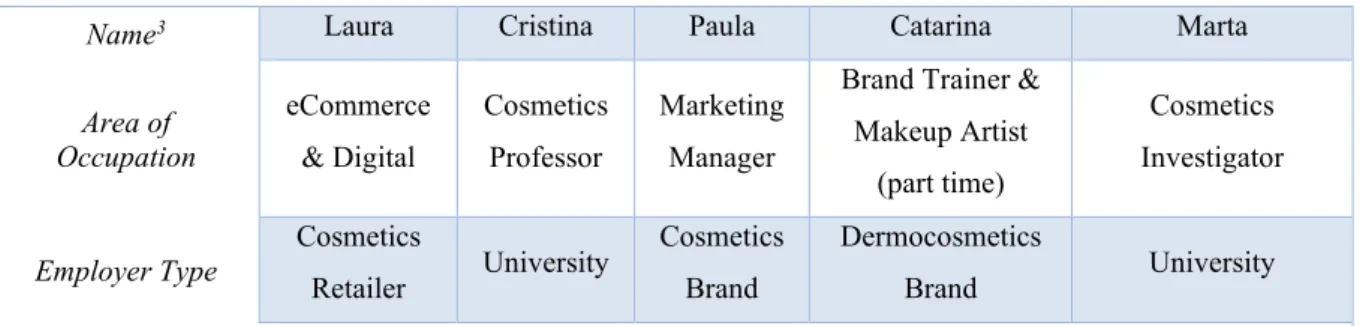
This last step lasted around one week, starting in the midst of November, being performed in Portuguese, with five different interviewees (Table 4): the first being a worker at a big cosmetics retailer in Portugal, in the eCommerce and Digital area (from now on, being referred to as Laura2), the second (Cristina) being a Cosmetics professor at a University in Lisbon, who has had 35 years of experience in this field, working alongside some companies in this field, the third (Paula) being a marketing manager for a cosmetics brand, the forth (Catarina) being a brand trainer (teaching consumers how to use the brands’ products) for a dermocosmetics brand and professional makeup artist on the side; and the fifth (Marta) being an investigator in the Cosmetics field, also for a Portuguese University.
The interviews consisted of the same questions, having clear and well-defined objectives, as showcased on Table 5, following the same order and process for each of them.
These interviews were made separately and individually for each of the interviewees, allowing for respondents to express their opinions more freely, sharing personal experiences and their knowledge on the market consumers’. Additionally, granting complete anonymity of these
32
interviews made it possible to get more detailed information on each of the interviewees’ impressions of consumers’ behaviours.
It was made possible to define a main consumer profile, considering information from the previous research steps and comparing results from this research to what companies consider.
33
Table 4: Market Experts Profile Summary
Interviewees Profile
Name3 Laura Cristina Paula Catarina Marta
Area of Occupation eCommerce & Digital Cosmetics Professor Marketing Manager
Brand Trainer & Makeup Artist (part time) Cosmetics Investigator Employer Type Cosmetics Retailer University Cosmetics Brand Dermocosmetics Brand University (Source: Developed by the author (2019))
Table 5: In- Depth Interview Guidelines
Questions Main Objective
1) How would you describe the cosmetics’
market nowadays?
Understand how the companies perceive the environment in which they are inserted. 2) Could you describe the average makeup
consumer? Where do they prefer to shop and in which platforms (physical or online)?
Understand the companies’ perceptions regarding their consumers’ behaviours. 3) How much would you say is the average
purchase value of this consumer?
4) What would you say is these consumers’
relation with makeup?
Understand the type of relation companies believe their consumers to have with makeup and how they perceive it.
5) Would you say there is a relation
between makeup consumers’ skin type and
makeup usage/ consumerism? Comprehend companies’ take on some of the
studied factors and how these relate to makeup consumption and usage.
6) What about their personality type,
specifically introversion versus
extroversion?
7) What makeup attributes do you believe
are most valued by this consumer?
Understand the most important factors to the companies/ the kind of value they attribute to product attributes.
(Source: Developed by the author (2019))
34
4) Results Analysis
Results were analysed accordingly to the four-step methodology chosen before. Considering that secondary data research has been explored in the literature review part of this thesis, in this section only the following steps will be analysed:
1) Unstructured Interviews 2) Online Survey to consumers 3) In-depth Interviews
4.1) Unstructured Interview
As mentioned in the methodology, the interviews were carried out with two, almost entirely opposite consumers. This allowed for different points of view to be expressed about their use of cosmetics products, preferences and their relation to these products. The main goal was to understand the consumers points of view regarding makeup products.
RQ1) What words would you use to describe yourself?
Firstly, interviewees were asked to briefly describe themselves. A few specific examples were laid out to them (E.g.: when at a party, what is your usual situation? Do you tend to stand in the back/ away from attention or are you the life of the party?), to facilitate possible answers. Leonor, the youngest of the interviewees, claimed to not enjoy going to parties as much, preferring to stay in the background, highlighting her introvertive characteristic.
In contrast, Ana claimed to not have time to go to parties, as she always has to go to bed early to get other tasks done, early in the morning (more conscious).
RQ2) Do you have any skin concerns?
Regarding their skin type and concerns, Leonor claimed to have combination skin, with oily characteristics on her T zone and sensitive characteristics around her mouth.
Ana, being older, highlighted her mature skin concerns but also claimed to have very sensitive skin (having rosacea).
RQ3) What would you say is your relationship with makeup?
This last question brought the interviewees back to the main topic of discussion: makeup. Having asked about their personality and skin concerns previously, allowed for both interviewees to expand on those answers when talking about their relationship with makeup. Leonor expressed her appreciation for makeup, treating it as a creative outlet, with which to express herself in her daily life, combining her makeup (E.g: eyeshadow, lipstick…) with her
35
clothes and even her mood, on a daily basis. She noted that, even though she was very introverted, makeup came to her as a way of letting others know who she was without having to speak. She continued by saying that she would adjust the kind of makeup she bought and used to her skin concerns (E.g: she would wear powder items on the more oily parts of her skin, to control the shine; and avoid wearing makeup altogether in sensitive areas, where she found makeup to irritate her skin).
When asked about her favourite brands, in conversation, she was able to list various different brand names, which she preferred for different products (E.g: She preferred using NARS products for her base, Anastasia Beverly Hills products for her eyes, etc), most of them being high-end brands, claiming to distrust cheaper alternatives found at the drugstore (brands such as Maybelline and MakeUp Revolution came up in this answer).
The interviewee was also asked her preferred purchasing channels (in-store or online, and which retailers). She claimed to prefer purchasing online, since it was easier for her to have access to lower prices and brands, that physical stores in the country didn’t offer. Online Retailers such as BeautyBay, CultBeauty and Lookfantastic were mentioned, alongside Sephora, which Leonor claimed to visit on occasion in store but to mainly purchase online (to attain better deals).
Lastly, when asked what made her buy a specific product, Leonor answered that she was a frequent consumer of online content regarding the beauty industry (influencer reviews) and that she only purchased products that she had previously seen through these channels.
Ana, in contrast, expressed how she would wear very minimal makeup (only black eyeliner), simply because it made her feel more confident and presentable for work and other daily activities, not leaving the house without it.
She claimed not to know much about makeup generally, not being very involved in the makeup “world” (as she put it). When asked where and when she would typically purchase makeup, she answered that she simply bought makeup items when she needed them and she would typically do it at the supermarket or Wells (inside most Continente supermarkets), valuing the convenience factor of the brands present in these channels, but claiming not to remember many brand names. She stated that she would tend to purchase the same product over and over again (a black kohl eyeliner), valuing functionality over any other factor.
36
Brand names such as Essence (one of the cheapest brands found in Wells stores) and Kiko Milano (a brand that has its own store and is not available at supermarkets) were the only ones to come up.
The interviewee was also asked if she would go to stores such as Sephora or Douglas and if so, for what purpose, to which she answered to only go to these stores when in need of perfumes (not associating either store with makeup).
When asked if there were any other makeup items that she would wear on occasion, Ana answered that she would very rarely wear lipstick (only in parties) and would sometimes also wear foundation. She claimed to only wear one of Kiko Milano’s foundations, although she wasn’t able to specify which one, but not being able to wear it for more than a few hours - due to her sensitive skin.
4.2) Online Survey
A total of 241 answers were recorded on this survey. An initial screening was done, with the purpose of detecting some errors which could skew results, offering bias or even making the study unfeasible. For this, all variables were classified, coded and analysed using the Statistical Package for the Social Sciences (SPSS), later conducting tests to achieve topic related quantitative results.
In order to make results more accurate, missing values on the questionnaire invalidated the respondents’ answer, as well as answers that skewed too much out of the norm (normalization of values). This lowered the total response number, leading to a total of 224 considered answers to this survey. Further outlier analysis showed there were no additional outliers detected in this survey’s answers.
4.2.1) Sample Characteristics and Possible Relations
The vast majority of respondents were women (93%), followed by 6,1% of male respondents and 0,9% of respondents, who didn’t identify with either gender. They tended to be within 18 and 44 years old (77,7% of the total number of respondents), which is consistent with the fact that the majority of the respondents claimed to be either students (25,4%) or workers (66,2%) and living in either a big city (for Portugal, either Lisbon or Porto) or a city – 75,4% of respondents.
Regarding net income, the vast majority of the respondents (36,3%) claimed to earn between 800€ and 1600€ monthly, followed by 22,1% who claim to earn between 1601€ and 2400€. This data is consistent with the low wages that tend characterize Portugal (Carvalho, 2018).
37
Lastly, when it comes to skin types, the majority of the respondents claimed to have combination to oily skin (68%), which agrees with the age group in which most respondents were; With 80,1% of respondents claiming to be makeup users. This makes up for a good sample, when it comes to the study of makeup usage and consumption patterns in consumers. A summary of the information described, can be found in the graphs bellow.
Yes No 0 10 20 30 40 50 60 70 80 90 100
Female Male Other
P er ce nt 0 5 10 15 20 25 30 35 P er ce nt
Graph 3: Makeup Usage
38 (Source: Developed by the author, using data provided by the online survey (2019))
Through Crosstab analysis and the Linear Regression model, it’s possible to make some inferences regarding makeup usage, for each of the independent variables explained above (gender, age, skin type, urbanization, occupation and net income).
Gender and Makeup Usage
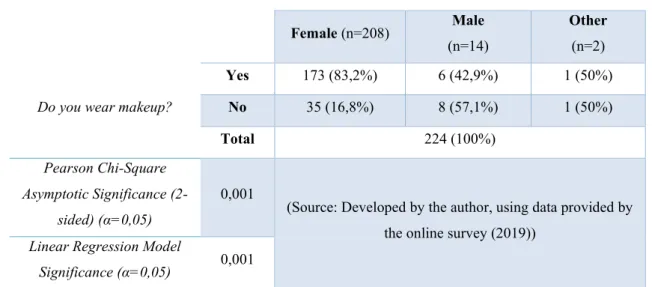
Both the Chi-square test and the Linear regression model (Table 6), indicate that the non-metric variables in question (gender and makeup usage) are dependent (with significance values of 5%, the asymptotic significance value is bellow this percentage for both cases, meaning the null hypothesis of independence can be rejected and there is a relationship between gender and makeup usage).
According to the responses to this survey, most users of makeup are women (83,2%). Men tend not to be wearers of makeup (57,1%), although according to this survey’s responses, there is a considerable amount of men who are makeup users (42,9%).
0% 5% 10% 15% 20% 25% 30% 35% 40% 0% 5% 10% 15% 20% 25% 30% 35% 40% 45% 50%
Oily Combo Dry Sensitive Mature 0% 10% 20% 30% 40% 50% 60% 70% 0% 5% 10% 15% 20% 25% 30% 35% 40% 45%
Big city City Village Small Town
Graph 7: Urbanism Graph 6: Occupation
39
This can be representative of the before mentioned shifting society roles of both genders, allowing men to explore makeup usage (as this is a growing segment in the cosmetic industry). No conclusions can be inferred regarding people who don’t identify with the female or male gender, as answers to this survey were split into 50% makeup users and 50% non-makeup users. Table 6: Gender and Makeup Usage relation Summary
Gender
Female (n=208) Male
(n=14)
Other
(n=2)
Do you wear makeup?
Yes 173 (83,2%) 6 (42,9%) 1 (50%) No 35 (16,8%) 8 (57,1%) 1 (50%) Total 224 (100%) Pearson Chi-Square Asymptotic Significance (2-sided) (α=0,05) 0,001
(Source: Developed by the author, using data provided by the online survey (2019))
Linear Regression Model
Significance (α=0,05) 0,001
Age and Makeup Usage
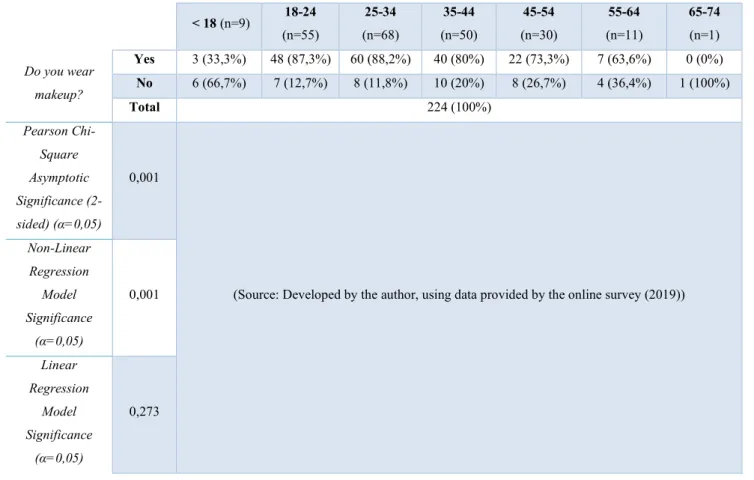
Once again, the Chi-square test on age and squared age, indicates there’s a dependence between the variables age and makeup usage. By observing the Table 7, we can see a trend in which younger people (bellow the age of 18) and older people (above 65), don’t wear makeup but respondents who were any age between these, tended to wear makeup (177 respondents, aged between 18 and 64, wore makeup, out of the total 224 respondents).
The Linear Regression model, however, doesn’t showcase any type of relation between the two factors, being that this model takes into consideration other variables as controls.
40
Table 7: Age and Makeup Usage relation Summary
Age < 18 (n=9) 18-24 (n=55) 25-34 (n=68) 35-44 (n=50) 45-54 (n=30) 55-64 (n=11) 65-74 (n=1) Do you wear makeup? Yes 3 (33,3%) 48 (87,3%) 60 (88,2%) 40 (80%) 22 (73,3%) 7 (63,6%) 0 (0%) No 6 (66,7%) 7 (12,7%) 8 (11,8%) 10 (20%) 8 (26,7%) 4 (36,4%) 1 (100%) Total 224 (100%) Pearson Chi-Square Asymptotic Significance (2-sided) (α=0,05) 0,001
(Source: Developed by the author, using data provided by the online survey (2019))
Non-Linear Regression Model Significance (α=0,05) 0,001 Linear Regression Model Significance (α=0,05) 0,273
Other factors and Makeup Usage
Regarding skin type, no dependence can be verified through the Chi-square test (p value > α), nor linear regression analysis meaning skin type doesn’t affect makeup usage and no conclusions can be extracted in this regard. The same can be said about urbanization, occupation, net income and style: no dependence can be verified through the Chi-square test nor Linear Regression (if applicable), meaning none of these factors affect makeup usage and no conclusions can be extracted in this regard. (Table 8).
Table 8: Other Factors and Makeup Usage relation Summary
Skin Type Urbanization Occupation Net Income Predicted
Styles Other Styles
Pearson Chi-Square Asymptotic Significance
(2-sided) (α=0,05)
0,132 0,477 0,080 0,350 0,970 0,130
Linear Regression Model
Significance (α=0,05) 0,994 0,728 0,108 0,671 N.A. (Source: Developed by the author, using data provided by the online survey (2019))
41 Personality and Makeup Usage
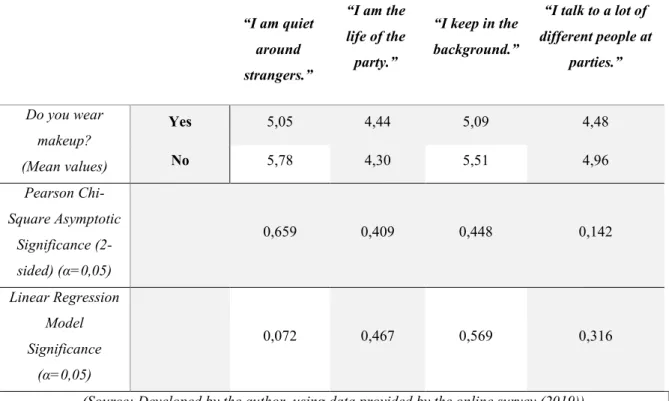
Personality was measured in terms of extraversion and introversion, through the use of statements in which respondents determined their level of agreement. As such, the relation between makeup usage and the answers to these statements were measured, similarly to the before mentioned factors, through the Chi-square test and Linear regression model.
Table 9: Personality and Makeup Usage relation Summary “I am quiet around strangers.” “I am the life of the party.”
“I keep in the background.”
“I talk to a lot of different people at parties.” Do you wear makeup? (Mean values) Yes 5,05 4,44 5,09 4,48 No 5,78 4,30 5,51 4,96 Pearson Chi-Square Asymptotic Significance (2-sided) (α=0,05) 0,659 0,409 0,448 0,142 Linear Regression Model Significance (α=0,05) 0,072 0,467 0,569 0,316
(Source: Developed by the author, using data provided by the online survey (2019))
Results show that no personality type has any relation to the usage of makeup, meaning these are completely independent variables, although the statement “I am quiet around strangers.”, has a very close value to showcasing dependence in the Linear Regression analysis, which considers other model variables as controls.
4.2.2) Makeup Usage Patterns
For the makeup items inquired about (foundation, concealer, eyeshadow, mascara and lipstick), a relation of dependence was established (through Chi-square test of independence) against the factor of how often these consumers wear makeup (p value = 0,00 < α = 0,05). This means that some conclusions can be retrieved, regarding usage patterns of consumers, depending on how often they claim to wear makeup.
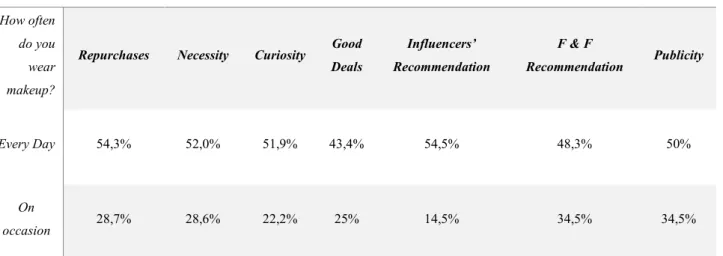
The majority of the respondents (48,9%) claim to wear makeup on a daily basis, with foundation, concealer, mascara and lipstick being the products most used by these consumers (61,4%, 56,8%, 75% and 51,1%), tending to wear eyeshadow only on occasion (43,2%).