i
Chemical identification of 2,4-dinitrophenol (2,4-DNP) by
GC-MS in ‘fat burners’ and studies of its in vitro hepatotoxicity
Daniela Filipa Costa e Sousa Master Degree in Forensic Sciences
Supervisor
Doutora Maria Paula do Amaral Alegria Guedes de Pinho
Co-Supervisors
Professora Doutora Helena Maria Ferreira da Costa Ferreira Carmo Doutora Diana Cristina Dias da Silva
University of Porto
The work conducted under the scope of the current dissertation was carried out at UCIBIO@REQUIMTE Department of Biological Sciences, Laboratory of Toxicology of
the Faculty of Pharmacy of The University of Porto, between September 2016 and August 2017.
AGRADECIMENTOS
Proponho-me agradecer a todas as pessoas que tornaram este desafio possível e que, desde o início, acreditaram em mim.
Primeiramente, agradeço à comissão coordenadora do Mestrado em Ciências Forenses, em especial à Professora Doutora Teresa Magalhães por me ter permitido ingressar numa área pela qual tenho um gosto enorme.
À Doutora Paula Guedes de Pinho, agradeço por ter aceitado orientar este trabalho. Agradeço todos os ensinamentos, todo o apoio, incentivo, dedicação e enorme saber científico. Agradeço toda a confiança que depositou em mim.
À Professora Doutora Helena Carmo, agradeço pela coorientação deste trabalho. Agradeço toda a inspiração e confiança que demonstrou. Agradeço todas as críticas e sugestões que me permitiram evoluir no decorrer do trabalho.
À Doutora Diana Dias da Silva, agradeço igualmente pela coorientação deste trabalho. Agradeço todo o esforço, rigor e dedicação com que sempre me acompanhou. Agradeço também toda a paciência e todos os conhecimentos que me transmitiu. Agradeço a amizade e tudo o que se dispôs a fazer por mim e por este projeto. Agradeço o seu enorme contributo a nível profissional e pessoal.
À Ana Margarida Araújo, agradeço a colaboração, todos os conhecimentos que partilhou comigo, toda a paciência e disponibilidade.
A todos os restantes colegas e colaboradores do Departamento de Toxicologia da Faculdade de Farmácia da Universidade do Porto, um enorme obrigada! Agradeço a forma como me receberam e me acolheram, todo o apoio, todos os docinhos e toda a partilha de experiências e conhecimentos.
Aos meus pais e à minha irmã simplesmente não tenho forma de lhes agradecer, mas tenciono que aqui fique simbolizado o quanto são importantes para mim. Obrigada por terem estado presentes em todos os momentos, nos bons e nos menos bons. Agradeço também a coragem e o apoio incondicional que sempre me demonstraram.
À Sara e à Luciana, um obrigada especial por toda a paciência, amizade e disponibilidade que sempre me dispensaram. A todos os meus amigos quero agradecer por terem presenciado mais esta conquista e por terem estado sempre do meu lado.
v
ABSTRACT
During the last decades, we have witnessed unparalleled changes in human eating habits and lifestyle, intensely influenced by culture and society pressure. Sports practice has been strongly implemented in daily routines and visits to the gym peaked driven by the indulge in intensive ‘weight loss programs’. Also, the pledge of boasting a healthy and beautiful body, all instigate the use of very attractive ‘fat burners’, which are products easily available in market, called safe, and known as a quick way to reduce body weight. Along with the boosted consumption of all those new formulations that daily appear on the market claiming high efficacy on weight loss, the number of reported poisonings also increase. A major reason for concern is the fact that the substances listed on these product labels are not effectively present in the supplements and it is also frequently observed the presence of substances in the formulations that are not labelled at all. One eminent example of such substances is 2,4-dinitrophenol (2,4-DNP).
2,4-DNP is well-known for its weight loss enhancer properties and has been associated with a class of the dietary supplements called ‘fat burners’. By interacting with the cellular metabolism and increasing muscle definition, 2,4-DNP became very attractive as an adjuvant in weight loss processes and attracted the attention of the bodybuilder's community. Its interest and use is of highest concern also among adolescents and adults who fight overweight.
Since 1938, 2,4-DNP has been banned as a product for human consumption in many countries, due to its adverse effects. The main symptoms associated with 2,4-DNP intoxication include hyperthermia, tachycardia, decreased blood pressure and acute renal failure, which motivated a worldwide warning issued by the Interpol Anti-Doping Unit, reinforcing its dangerousness. Information on the effects of 2,4-DNP mainly derive from the intoxication cases reported by the emergency care units, and there is no specific antidote or treatment. For these reasons, the development of analytical methods that quickly allow the detection and identification of this substance in commercial products and in intoxicated individuals is therefore of utmost importance both for forensic and clinical purposes.
In this study, we intended to chemically identify the components of two products marketed online as ‘fat burners’ (Supplement 1 and Supplement 2) by gas chromatography coupled to mass spectrometry (GC-MS) analysis and to verify the presence or absence of 2,4-DNP in these formulations. In addition, we aimed to evaluate
the potential hepatotoxicity of these commercial products and compare the elicited effects to those of 2,4-DNP.
Representative samples of capsules of Supplement 1, as well as the capsules included in the commercial small plastic bags of Supplement 2 were analysed. The content of the capsules was extracted with methanol and subsequent GC-MS investigations identified caffeine, glycerol, fatty acids (including 2-palmitoylglycerol or glycerol monostearate) and sugars (glucose, sucrose and lactose) as the main constituents. No significant qualitative variability was observed in products sold with the same trade name. The comparison with the GC-MS data with the authentic analytical standard excluded the presence of 2,4-DNP in the tested products. Results from the quantitative analysis of caffeine contained in the Supplement 2 products show that the daily supplementation indicated by the manufacturer exceeds the recommended daily dosage (approximately 400 mg
versus 848 mg of caffeine per day).
Furthermore, in vitro bioassays performed for toxicological investigations revealed that primary hepatocytes of Wistar rats isolated through a two-step collagenase perfusion exhibited a concentration-dependent mortality when exposed to 2,4-DNP at concentrations ranging from 549 nM to 10 mM, at 37° C for 24 h, as assessed by three viability assays [neutral red uptake assay: EC50 98.05 µM;
3-(4,5-dimethylthiazol-2-yl)-2,5-diphenyltetrazolium bromide reduction assay: EC50 96.82 µM; lactate
dehydrogenase leakage assay: EC50 174.83 µM]. These results indicate that the
mitochondria was the most sensitive organelle to 2,4-DNP-induced toxicity, followed by lysosome and by the cytoplasmic membrane. Then, the mechanisms contributing to the observed cytotoxicity were scrutinized by exposing cells at 1 μM, 10 μM, 50 μM, 100 μM, and 200 µM of 2,4-DNP for 24 h. A significant concentration-dependent increase of intracellular reactive species (p<0.01, at ≥50 μM; Dunnett’s test) concurrent to a concentration-dependent decline in antioxidant defences [decreased reduced glutathione (redGSH; p<0.01, at ≥100 μM; Dunnett’s test); decreased total glutathione (p<0.01, at ≥100 μM; Dunnett’s test); increased oxidized glutathione (GSSG; p<0.05, at ≥1 μM; Dunnett’s test); and decreased redGSH/GSSG (p<0.001, at ≥1 μM; Dunnett’s test)]. Significant increase of mitochondrial membrane potential was observed at 10 μM and 50 μM (p<0.05; Holm-Sidak’s test), which was in accordance with the exacerbated synthesis of adenosine triphosphate (ATP; p<0.0001, at 10–100 μM; Dunnett’s test). Energy-dependent instigation of apoptosis was also confirmed by activation of pro-caspase-8 at all tested concentrations (p<0.05; Dunnett’s test) and by the increased activities of caspase-3 and -9, at a concentration of 10 μM on higher (p<0.05; Dunnett’s
vii In summary, the results presented herein reveal the absence of 2,4-DNP in both tested commercially available ‘fat burners’, suggesting that these new formulations of Supplement 1 and Supplement 2 are safer from this component. In fact, we prove in this work that the consumption of weight loss products containing 2,4-DNP produce toxicological effects. According to our results, 2,4-DNP seems to accelerate hepatocellular metabolism through instigation of ATP formation at the mitochondria. This effect might be responsible by the observed oxidative burst that in turn could activate cell death signalling pathways through intrinsic and extrinsic pro-apoptotic mechanisms. This information is crucial to reinforce the dangers associated with 2,4-DNP as a substance used for weight loss.
Keywords:
‘Fat Burner’; 2,4-dinitrophenol (2,4-DNP); GC-MS; in vitro hepatotoxicity; primary rat hepatocytes; oxidative stress; apoptosis.
RESUMO
Nas últimas décadas, os hábitos alimentares têm vindo a sofrer enormes alterações, influenciados pelo estilo de vida e devido à pressão exercida por parte da sociedade para a obtenção de um corpo aparentemente saudável. O desporto tem sido fortemente implementado na rotina diária das pessoas que optam por estilos de vida saudáveis e as idas ao ginásio tornaram-se frequentes, muito motivadas por programas intensivos de “perda de peso”. Hoje em dia, o prazer de ter um corpo saudável e bonito começa a prevalecer sobre as simples “dietas”. Deste modo, e a par com os avanços da indústria, todos os dias surgem no mercado novas formulações rotuladas como seguras que prometem total eficácia nos resultados obtidos. Estes produtos tornaram-se muito aliciantes e o seu consumo tem vindo a aumentar juntamente com o número de relatos de intoxicações. O seu perigo é potenciado por não constarem do rótulo os verdadeiros constituintes do produto ou por conterem outros que não constam do rótulo.
Atualmente, o 2,4-dinitrofenol (2,4-DNP) tem vindo a ser associado a uma classe de suplementos dietéticos denominados de “queimadores de gordura”, sendo conhecido como uma substância potenciadora da perda de peso. Os seus efeitos de interação com o metabolismo e o aumento da definição de massa muscular têm estimulado o interesse da comunidade de fisiculturistas. No entanto, a sua procura tem-se intensificado por parte de adolescentes e adultos que combatem o excesso de peso. Desde 1938 que a sua comercialização enquanto produto destinado ao consumo humano foi proibida devido aos seus efeitos secundários. Os principais sintomas que estão associados à intoxicação por este composto incluem hipertermia, taquicardia, diminuição da pressão arterial e falha renal aguda. Recentemente, foi lançado um alerta mundial por parte da Unidade Contra a Dopagem da Interpol reforçando a sua perigosidade, atribuindo maior ênfase à proibição de comercialização. Os dados existentes sobre os efeitos do 2,4-DNP provêm apenas dos casos de intoxicação que chegam às unidades de saúde hospitalar, não existindo ainda um antídoto ou um protocolo de tratamento estabelecido que se possa aplicar. Assim, justifica-se a necessidade de aprofundar o conhecimento sobre este composto tornando-se essencial o desenvolvimento de metodologias analíticas que permitam a sua deteção e quantificação neste tipo de produtos comerciais, para fins clínicos e forenses.
Um dos objetivos deste estudo passou por identificar quimicamente os componentes presentes em dois produtos comercializados online como “queimadores de gordura” (Suplemento 1e Suplemento 2), recorrendo à técnica de cromatografia gasosa acoplada
ix DNP nestas formulações. Este trabalho destinou-se ainda a avaliar os efeitos hepatotóxicos destes mesmos produtos e do 2,4-DNP individualmente, usando cultura primária de hepatócitos de rato Wistar como modelo in vitro.
A análise por GC-MS é considerada uma metodologia analítica altamente sensível e foi aplicada para avaliar a composição real destes dois “queimadores de gordura”. Foi analisado o conteúdo de uma amostra representativa das cápsulas de Suplemento 1 bem como de algumas das cápsulas contidas nas saquetas de Suplemento 2. O conteúdo das cápsulas foi extraído com metanol e os principais compostos identificados por GC-MS foram: cafeína, glicerol, ácidos gordos (incluindo 2-palmitoilglicerol e glicerol monostearato) e açúcares (glucose, sacarose e lactose). O conteúdo dos produtos mostrou-se semelhante entre eles, não apresentando variabilidade entre amostras do mesmo produto. A possibilidade da existência de 2,4-DNP foi excluída por comparação com a análise do respetivo padrão analítico. Considerámos relevante efetuar a quantificação da cafeína e os resultados mostraram que a toma diária sugerida no rótulo do produto Suplemento 2 excede a dose diária recomendada (aproximadamente 400 mg versus 848 mg de cafeína por dia).
Os ensaios in vitro destinaram-se a avaliar a citotoxicidade e revelaram que os hepatócitos primários de rato Wistar, isolados através de uma perfusão com colagenase, exibiam uma mortalidade dependente da concentração quando expostos a concentrações de 2,4-DNP que variaram entre 549 nM e 10 mM, a 37°C durante 24 h, conforme avaliado em três ensaios de viabilidade [ensaio de absorção de vermelho neutro: EC50 98.05 µM; ensaio de redução do brometo de
3-(4,5-dimetiltiazol-2-il)-2,5-difeniltetrazólio: EC50 96.82 µM; ensaio da lactato desidrogenase: EC50 174.83 µM].
Estes resultados indicam que a mitocôndria foi o organelo mais sensível à toxicidade provocada pelo 2,4-DNP, seguido do lisossoma e da membrana plasmática. Seguidamente, os mecanismos que contribuíram para a citotoxicidade observada foram examinados por exposição das células a concentrações de 1 µM, 10 µM, 50 µM, 100 µM e 200 µM de 2,4-DNP, durante 24 h. Verificou-se um aumento significativo da dependência da concentração de espécies reativas intracelulares (p˂0.01, ≥50 µM; teste de Dunnett) com consequente diminuição das defesas antioxidantes dependente da concentração [diminuição da glutationa reduzida (GSH reduzida; p˂0.01, ≥100 µM; teste de Dunnett), diminuição da glutationa total (p˂0.01, ≥100 µM; teste de Dunnett), aumento da glutationa oxidada (GSSG; p˂0.05, ≥1 µM; teste de Dunnett) e diminuição da razão GSH reduzida/GSSG (p˂0.001, ≥1µM; teste de Dunnett)]. Observou-se um aumento significativo do potencial de membrana mitocondrial nas concentrações de 10 µM e 50 µM (p˂0.05; teste de Holm-Sidak) que se apresenta de acordo com a síntese
aumentada de adenosina trifosfato (ATP; p˂0.0001, 10–100 µM; teste de Dunnett). O aumento da apoptose, dependente de energia, também foi confirmado pela ativação da pró-caspase-8 em todas as concentrações testadas (p˂0.05; teste de Dunnett) e pelo aumento da atividade das caspases -3 e -9 para concentrações superiores a 10 µM (p˂0.05; teste de Dunnett).
Em resumo, estes resultados revelam a ausência de 2,4-DNP em ambos os “queimadores de gordura” analisados. De acordo com os resultados obtidos neste estudo, o 2,4-DNP parece acelerar o metabolismo hepatocelular atuando como promotor da formação de ATP nas mitocôndrias. Este efeito pode justificar o dano oxidativo observado in vitro que, por sua vez, poderá ativar os processos de sinalização de morte celular através de mecanismos pró-apoptóticos intrínsecos e extrínsecos. Esta informação é crucial para reforçar os perigos associados ao 2,4-DNP enquanto substância usada para a perda de peso.
Palavras-chave:
“Queimador de gordura”; 2,4-dinitrofenol (2,4-DNP); GC-MS; hepatotoxicidade in vitro; hepatócitos primários de rato; stress oxidativo; apoptose.
xi
GENERAL INDEX
ABSTRACT ... v
RESUMO ... viii
GENERAL INDEX ... xi
FIGURES INDEX ... xiv
ABBREVIATIONS LIST INDEX ... xix
PART 1 – INTRODUCTION ... 1
1.1. The problem of ‘fat burners’ ... 2
1.2. Trends in 2,4-dinitrophenol (2,4-DNP) use ... 3
1.3. Legislation and epidemiology ... 4
1.4. Chemical structure, physicochemical properties and commercial presentation ... 12
1.5. Pharmacokinetics ... 16
1.6. Pharmacodynamics ... 17
1.7. Toxic effects, diagnosis and therapy associated with intoxication ... 18
1.8. Analytical methods for 2,4-dinitrophenol (2,4-DNP) determination in commercial products and biological matrices ... 19
PART 2 – OBJECTIVES ... 23
PART 3 – CHEMICAL CHARACTERIZATION OF COMMERCIAL WEIGHT LOSS PRODUCTS ... 24
CHAPTER 1: MATERIALS AND METHODS ... 24
3.1.1. Reagents ... 25
3.1.2. ‘Fat Burners’ ... 25
3.1.3. Standards and samples preparation ... 26
3.1.4. Derivatization and injection ... 27
3.1.5. GC-MS conditions ... 28
CHAPTER 2: RESULTS AND DISCUSSION ... 29
3.2.1. Research of 2,4-dinitrophenol (2,4-DNP) in weight loss commercial products ………...………..30
3.2.2. Characterization of commercial products ... 35
3.2.3. Caffeine quantitation ... 45
PART 4 – HEPATOTOXICITY OF 2,4-DINITROPHENOL (2,4-DNP) ... 47
CHAPTER 1: MATERIALS AND METHODS ... 47
4.1.1. Reagents ... 48
4.1.2. Animals ... 48
4.1.3. Isolation and culture of primary hepatocytes ... 48
4.1.4. Incubation of primary rat hepatocytes with test compounds ... 50
4.1.5. Cytotoxicity by the 3-(4,5-dimethylthiazol-2-yl)-2,5-diphenyltetrazolium bromide (MTT) reduction assay ... 50
4.1.6. Cytoplasmic membrane integrity by the lactate dehydrogenase (LDH) leakage assay ... 51
4.1.7. Lysosome integrity by the neutral red (NR) incorporation assay ... 52
4.1.8. Measurement of intracellular reactive oxygen (ROS) and nitrogen (RNS) species... ... 53
4.1.9. Measurement of intracellular total glutathione (tGSH) and oxidized glutathione (GSSG) ... 53
4.1.10. Assessment of mitochondrial membrane potential (ΔΨm) ... 54
4.1.11. Measurement of intracellular adenosine triphosphate (ATP) ... 55
4.1.12. Determination of protein ... 55
4.1.13. Measurement of caspase-3, caspase-8, caspase-9 activities ... 56
4.1.14. Statistical analysis ... 56
CHAPTER 2: RESULTS AND DISCUSSION ... 58
4.2.1. 2,4-Dinitrophenol (2,4-DNP) reduces cellular viability in primary rat hepatocytes ... 59
4.2.2 2,4-Dinitrophenol (2,4-DNP) augments production of intracellular reactive oxygen (ROS) and nitrogen (RNS) species ... 61
4.2.3 2,4-Dinitrophenol (2,4-DNP) disrupts intracellular thiol balance ... 63
4.2.4 2,4-Dinitrophenol (2,4-DNP) hyperpolarizes mitochondria, an effect that was concentration-independent ... 64
xiii 4.2.6 2,4-Dinitrophenol (2,4-DNP) activates extrinsic, intrinsic, and common apoptosis pathways ... 67 PART 5 – CONCLUSION ... 69 PARTE 6 – REFERENCES ... 71
FIGURES INDEX
Figure 1: The interaction of ‘fat burners’ on increasing fat metabolism and promoting weight loss, adapted from Jeukendrup and Randell (2011). ... 2 Figure 2: 2,4-DNP (2,4-dinitrophenol) related deaths, between 1910 and 2010, obtained from the research of all cases reported in the literature up to 2010 (Grundlingh et al., 2011). ... 6 Figure 3: Registration of telephone consultations and access data for TOXBASE between January 2007 and December 2013 for 2,4-DNP (2,4-dinitrophenol) (Kamour et al., 2014). ... 10 Figure 4: Registration of telephone consultations and TOXBASE access data of 2,4-DNP (2,4-dinitrophenol) from January 2011 to March 2015 (Thomas and Duarte-Davidson, 2015). ... 11 Figure 5: Registration of telephone consultations and access data to TOXBASE, with relevance starting in the first quarter of 2015 (Thomas and Duarte-Davidson, 2016). . 12 Figure 6: Chemical structure of 2,4-DNP (2,4-dinitrophenol) (TOXNET). ... 13 Figure 7: Metabolic pathway of 2,4-DNP (2,4-dinitrophenol) in rat liver homogenates, adapted from Harris and Corcoran (1995). Legend: NADPH – Nicotinamide Adenine Dinucleotide Phosphate. ... 17 Figure 8: The mechanism by which 2,4-DNP (2,4-dinitrophenol) induces uncoupling of oxidative phosphorylation at the inner mitochondrial membrane (Hargreaves et al., 2016). Legend: ADP – Adenosine Diphosphate; ATP – Adenosine Triphosphate; Pi – Inorganic Phosphate. ... 18 Figure 9: Summary of sample preparation procedures for MS analysis. Legend: GC-MS – Gas Chromatography coupled to Mass Spectrometry; IS – Internal Standard (4-hydroxy-3-methoxybenzylamine hydrochloride); MSTFA – N-methyl-N-trimethylsilyl-trifluoroacetamide; N2 – Nitrogen... 27 Figure 10: Full scan chromatographic profile (A) and mass spectra (B) of 2,4-dinitrophenol (2,4-DNP) directly injected into the GC-MS after dissolution in methanol. ... 31 Figure 11: Full scan chromatographic profile (A) and mass spectra (B) of 2,4-dinitrophenol (2,4-DNP) injected into the GC-MS after dissolution in methanol and derivatization with N-methyl-N-(trimethylsilyl) trifluoroacetamide (MSTFA). ... 32 Figure 12: Chromatographic profiles of 2,4-dinitrophenol (2,4-DNP; brown) and Supplement 1(green)... 33 Figure 13: Chromatographic profiles of 2,4-dinitrophenol (2,4-DNP) and each of the
xv
Figure 14: Schematic representation of the procedure used for the chemical
characterization of ‘fat burners’. Legend: GC-MS – Gas Chromatography coupled to Mass Spectrometry; MSTFA – N-methyl-N-trimethylsilyl-trifluoroacetamide; NIST – National Institute of Standards and Technology. ... 35
Figure 15: Supplement 1 – Commercial product purchased from prozis.com to carry out
this work. ... 36 Figure 16: Comparison between Supplement 1 chromatographic profile directly injected (A) into the GC-MS and injected after derivatization with N-methyl-N-trimethylsilyl-trifluoroacetamide (MSTFA) (B). ... 37
Figure 17: Full scan chromatographic profile of methanol solutions of Supplement 1 (HC)
injected after derivatization with N-methyl-N-trimethylsilyl-trifluoroacetamide (MSTFA) of three different capsules (HC1, HC2 and HC3) of the same product, revealing qualitative similarity between them. More relevant peaks: 1 – Tartaric acid, 4TMS; 2 – Unidentified peak; 3 – Caffeine; 4 – Palmitic acid, TMS; 5 – Stearic acid, TMS. ... 38 Figure 18: Supplement 2. Commercial product purchased from prozis.com to carry out this work. The capsules were wrapped with plastic bags, which by turn were sold in a metallic container. ... 41 Figure 19: Label of Supplement 2. It is clear on the package label the indication ‘these statements have not been evaluated by the FDA’. ... 41 Figure 20: Comparison between Supplement 2 chromatograms obtained without (A) or with (B) derivatization with N-methyl-N-trimethylsilyl-trifluoroacetamide (MSTFA). ... 42
Figure 21: Full scan chromatograms of methanol solutions of capsule 1 (white capsule)
from plastic bags A, B and C of Supplement 2, injected after derivatization with N-methyl-N-trimethylsilyl-trifluoroacetamide (MSTFA), revealing similar qualitative composition. More relevant peaks: 1 – Unidentified peak; 2 – Unidentified peak; 3 – D-(-)-Tagatofuranose; 4 – Quininic acid, 5TMS; 5 – Caffeine; 6 – Unidentified peak; 7 – Palmitic acid, TMS; 8 – Stearic acid, TMS; 9 – Unidentified peak; 10 – Lactulose; 11 – Unidentified peak; 12 – Catechine, 5TMS; 13 - Epigallocatechin, 6TMS. ... 43
Figure 22: Cell mortality induced by 2,4-dinitrophenol (2,4-DNP) in primary rat
hepatocytes after 24h of incubation at 37°C. Data were obtained in three distinct assays: neutral red (NR) uptake assay (data displayed in red), 3-(4,5-dimethylthiazol-2-yl)-2,5-diphenyltetrazoliumreduction (MTT) assay (data displayed in blue) and lactate dehydrogenase (LDH) leakage assay (data displayed in yellow), as indirect measures of cell viability. Data are presented as percentage of cell death relative to the respective negative controls and are from four independent experiments (performed in triplicate for each concentration within each experiment). Curves were fitted using the dosimetric Logit model. The dashed grey lines represent 50% and 100% effect. ... 60
Figure 23: Reactive species (ROS/RNS) production, measured through the 2’,7’-dichlorofluorescin diacetate (DCFH-DA) assay, in primary rat hepatocytes, after 24h of incubation with 2,4-dinitrophenol (2,4-DNP), at 37°C. Results are expressed as percentage of control ± standard error of the mean (SEM) from four independent experiments, run in triplicate. Statistical comparisons were made using one-way ANOVA/Dunnett’s post hoc test. **p˂0.01; ****p˂0.0001; versus control. ... 62 Figure 24: (A) Intracellular contents of reduced (GSH, black bars) and oxidized (GSSG, white bars) glutathione and (B) intracellular GSH/GSSG ratio, in primary rat hepatocytes, after 24h of incubation with 2,4-dinitrophenol (2,4-DNP). Results are expressed as mean ± standard error of the mean (SEM) from four independent experiments. Statistical comparisons were made using one-way ANOVA, Dunnett’s post hoc test. **p˂0.01; ***p˂0.001; ****p˂0.0001; versus GSH control. &p˂0.05; &&p˂0.01; &&&p˂0.001;
&&&&p˂0.0001; versus GSSG control. $$$p˂0.001; $$$$p˂0.0001; versus GSH/GSSG
control. ... 64 Figure 25: Mitochondrial membrane potential (ΔΨm) measured by the TMRE incorporation in mitochondria of primary rat hepatocytes after 24h of incubation with 2,4-dinitrophenol (2,4-DNP), at 37°C. Results are expressed as percentage of control ± standard error of the mean (SEM) from four independent experiments, run in triplicates. Statistical comparisons were made using one-way ANOVA/Holm-Sidak’s post hoc test. *p˂0.05; versus control. ... 65 Figure 26: Intracellular ATP levels in primary rat hepatocytes after 24h of incubation with 2,4-dinitrophenol (2,4-DNP), at 37°C. Results are expressed as mean ± standard error of the mean (SEM) from four independent experiments. Statistical comparisons were made using one-way ANOVA/Dunnett’s post hoc test. *p˂0,05; **p˂0.01; ****p˂0.0001; versus control. ... 66 Figure 27: Caspase-8, -9 and -3 activities in primary rat hepatocytes after 24h of incubation with 2,4-dinitrophenol (2,4-DNP), at 37°C. Results are expressed as percentage of control ± standard error of the mean (SEM) from four independent experiments. Statistical comparisons were made using Kruskal-Wallis one-way analysis of variance/Dunnett’s post hoc test. *p˂0.05; **p˂0.01; ***p˂0.001; ****p˂0.0001; versus control. ... 68 Figure 28: Caspase-8, -9 and -3 activities in primary rat hepatocytes after 24h of incubation with 2,4-dinitrophenol (2,4-DNP), at 37°C. Results are expressed as percentage of control ± standard error of the mean (SEM) from four independent experiments. Statistical comparisons were made using Kruskal-Wallis one-way analysis of variance/Dunnet’s post hoc test. *p˂0.05; **p˂0.01; ***p˂0.001; ****p˂0.0001; versus
TABLES INDEX
Table 1: Entities that regulated the use of 2,4-DNP (2,4-dinitrophenol). ... 5 Table 2: Summary of published fatalities between 1916 and 2016, relating to exposure to 2,4-DNP (2,4-dinitrophenol), adapted from Grundlingh et al. (2011). ... 8 Table 3: Physicochemical properties of 2,4-DNP (TOXNET). ... 13 Table 4: Products containing 2,4-DNP (2,4-dinitrophenol) commercialized online. ... 14 Table 5: Analytical methods used to determine 2,4-DNP (2,4-dinitrophenol) in different samples. ... 20 Table 6: Commercial formulations analysed in the study. ... 25 Table 7: Retention time (min), base peak (m/z), other characteristic ions (m/z), calculated kovats, library kovats, match and Rmatch values of active ingredients of Supplement 1 detected after derivatization with N-methyl-N-trimethylsilyl-trifluoroacetamide (MSTFA). ... 39 Table 8: Retention time (min), base peak (m/z), other characteristic ions (m/z), calculated kovats, library kovats, match and Rmatch values of active ingredients of Supplement 2 detected after derivatization with N-methyl-N-trimethylsilyl-trifluoroacetamide (MSTFA). ... 44
xix
ABBREVIATIONS LIST INDEX
2,4-DNP 2,4-Dinitrophenol
ADP Adenosine Diphosphate
ANOVA Analysis of Variance
ATP Adenosine Triphosphate
Ac-DEVD-pNa Acetyl-Asp-Glu-Val-Asp-p-Nitroanilide Ac-IETD-pNA Acetyl-Ile-Glu-Thr-Asp-p-Nitroaniline Ac-LEHD-pNa Acetyl-Leu-Glu-His-Asp-p-Nitroanalide β-NADH β-Nicotinamide adenine dinucleotide
BSA Bovine Serum Albumine
BSTFA N,O-Bis(trimethylsilyl)trifluoroacetamide
CAS Chemical Abstracts Service
CHAPS 3-[(3-Cholamidopropyl)dimethylammonio]-1-propanesulfonate
DAD Diode Array Detetor
DCFH-DA 2′,7′-Dichlorofluorescin diacetate ΔΨm Mitochondrial membrane potential
DGAV Direção Geral de Alimentação e Veterinária
DMSO Dimethyl sulfoxide
DNA Deoxyribonucleic acid
DTNB 5,5'-Dithiobis[2-nitrobenzoic acid]
DTT Dithiothreitol
EC50 Half maximal effective concentration
EGTA Ethylene glycol-bis(2-aminoethylether)-N,N,N′,N′-tetraacetic acid
EI Electron Ionization
EPA Environmental Protection Agency
F Female
FBS Fetal Bovine Serum
FDA Food and Drug Administration
FFDCA Federal Food, Drug, and Cosmetic Act
FSA Food Standards Agency
GC Gas Chromatography
GHP GH Polypro (membrane filter)
GR Glutathione Reductase
GSSG Glutathione disulfide
HBSS Hank's Balanced Salt Solution
HEPES 4-(2-Hydroxyethyl)-1-piperazineethanesulfonic acid HPLC High-performance liquid chromatography
IS Internal Standard
LC Liquid Chromatography
LDH Lactate dehydrogenase
M Male
MEM Minimum Essential Media
MS Mass Spectrometry
MSTFA N-Methyl-N-(trimethylsilyl)trifluoroacetamide
MTT 3-(4,5-Dimethylthiazol-2-yl)-2,5-diphenyltetrazolium bromide
m/z Mass to charge ratio
NADH Nicotinamide adenine dinucleotide
NADPH Nicotinamide adenine dinucleotide phosphate NIST National Institute of Standards and Technology
NPD Nitrogen Phosphorus Detetor
NR Neutral Red
PFBBr Pentafluorobenzyl bromide
RASFF Rapid Alert System for Food and Feed
redGSH Reduced glutathione
RNS Reactive nitrogen species
ROS Reactive oxygen species
RT Retention Time
SEM Standard Error of the Mean
xxi SPME Solid-phase Microextraction
tGSH Total glutathione
TMCS Trimethylchlorosilane
TMRE Tetramethylrhodamine ethyl ester
TMS Trimethylsilyl
TNB 5-Thio-2-nitrobenzoic
TOF Time of Flight
UK United Kingdom
UNEP United Nations Environment Program
USA United States of America
UV/Vis Ultraviolet–visible
2 1.1. The problem of ‘fat burners’
Several changes have been occurring in society regarding dietary habits. Physical exercise and a strong adhesion to sports requiring strength have promoted the search for all types of supplementation that may include drugs and drugs of abuse (Petróczi et al., 2015). The constant dissatisfaction with physical stature and body is proving to be an ‘epidemic’ issue. This happened with the concern to fight obesity, which has also increased. Therefore, with the advances of the industry and the constant need to respond to the search for these supplements, new formulations labelled as safe and promising total effectiveness in the reduction of body weight appear on the market. These products have become very attractive to be included in weight loss programs, and to be used by those who practice sports and competitions that require greater body strength and to bodybuilders.
The most popular supplements for weight loss are the ‘fat burners’ that are used as weight loss promoters by inducing a greater oxidation of fat during the performance of physical exercise. The main physiological effects induced by ‘fat burners’ include an increase of fat oxidation during exercise, suppress appetite, increase weight loss, prevent weight gain after weight loss, impair fat absorption and increase fat metabolism and energy expenditure (figure 1).
Figure 1: The interaction of ‘fat burners’ on increasing fat metabolism and promoting weight loss, adapted from Jeukendrup and Randell (2011).
However, many users of these type of supplements often believe that there is no need to associate the consumption of these substances with any type of physical activity or diet. In addition to their potential in fat loss, they have also been attributed the ability to promote muscle gain mass (Lee et al., 2014). These supplements can be purchased on the internet or in stores that sold sports supplementation.
These products can be combined with plans for physical exercise, diet and behavioural therapies, and are often integrated into a therapeutic scheme that involves a reduction in appetite, a false increase in satiety and a reduction in nutrient absorption (Ioannides-Demos et al., 2011). Generally, these supplements contain a combination of substances whose main action is the increase of the metabolic rate. The most popular products include caffeine, carnitine, green tea, conjugated linoleic acid (mixture of isomers),
Coleus forskohlii extract, chromium and fucoxanthin (Jeukendrup and Randell, 2011).
However, it has often been found that not all constituents of commercial products are mentioned on the label. In fact, labelling problems have been reported in many supplements available because they are adulterated with mixtures of other substances (da Justa Neves and Caldas, 2015). Many of these substances are of legal use but are unsafe at the concentrations in which they are used, others are of illegal use, as steroids (Pomeranz et al., 2015). Therefore, there is uncertainty and danger regarding the use of these supplements that refrain health professionals from their prescription. On the other hand, their commercialization is not restricted to medical prescription, providing the opportunity to commercialize non-prescription products (Blanck et al., 2007).
1.2. Trends in 2,4-dinitrophenol (2,4-DNP) use
Dinitrophenols are a family of synthetic organic compounds that exist in the solid state, with crystalline structure and yellow color (Harris and Corcoran, 1995; Miranda et al., 2006). They have a high degree of toxicity and can be absorbed by the skin, oral, and inhalation routes (Risikobewertung, 2015). 2,4-Dinitrophenol (2,4-DNP) is one of the isomers belonging to this family of compounds. It began to be applied in the manufacture of ammunition and explosives during the First World War, having been used as food and textile dye, wood preservative and agricultural pesticide. It was in the year of 1933 that its potentialities associated with the loss of weight were discovered, having begun its commercialization without medical prescription (Grundlingh et al., 2011; Janz, 2005; Lee et al., 2014). However, in 1938 it was considered unfit for human consumption because of its toxicity by the Food and Drug Administration (FDA) in the United States of America
4 (Türkay et al., 2014). An alert was issued by the Interpol in 2015 in collaboration with the World Anti-Doping Agency which reinforced the dangers associated with the use of this compound (Agency, 2015; Costa, 2015; INTERPOL, 2015). Over all these years, deaths have been attributed to the ingestion of this dangerous substance, and in many cases were associated with the ambition of body fat loss (Veloso, 2013).
The following sections present a bibliographic review of 2,4-DNP about legislation and epidemiology; chemical structure, physicochemical properties and commercial presentation; pharmacokinetics; pharmacodynamics; toxic effects, diagnosis and treatment associated with intoxication, as well as analytical methodologies for the determination of 2,4-DNP in commercial products and biological matrices. The literature search was carried out using the PubMed database using the words 2,4-dinitrophenol
weight loss, obtaining a total of 35 articles and 2,4-dinitrophenol toxicity with a total of
264 articles, until January 2017. Only papers related to exposure and effects in humans were considered as well as those that included analytical methods of analysis. Information (up to the same dates) was also collected on websites using the Google search engine.
1.3. Legislation and epidemiology
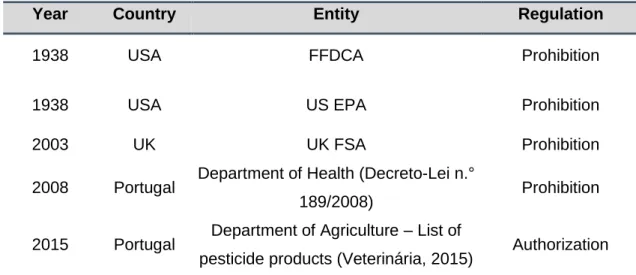
The data on the prevalence of use of 2,4-DNP are scarce, especially at the European level. In Portugal, legislation prohibits its use in cosmetic products but authorizes its commercialization as a pesticide and it is included in the ‘List of pesticide products’ authorized for sale (Veterinária, 2015). Most of the information available in the literature on the use of this substance and associated toxicity comes from the USA and UK. In the USA, reports of the occurrence of death from intoxication with 2,4-DNP, in 1938 led to the first alert that contemplated this compound and labelled it as ‘unfit for human consumption’, labelling it as ‘extremely dangerous’. Also in the same year, the US Environmental Protection Agency (EPA) published it on the list of hazardous air pollutants, and warned of the need to prohibit its commercialization in pesticides products, since this compound could be legally marketed as a pesticide (Harris and Corcoran, 1995; Zaharia et al., 2016). Currently, this supervision is performed by the FDA (Administration, 2008). In Europe, only in 2003, the UK Food Standards Agency (FSA) issued a warning to the public not to consume any product containing 2,4-DNP in its constitution, also labelling it ‘unfit for human consumption’ (Zaharia et al., 2016).
Recently, 110 websites, among a reference of 4402, that commercialize 2,4-DNP as a ‘fat burner’ have been detected. This inspection action was carried out by the FDA and its main objective was to combat the illicit manufacture and marketing of this product in order to remove it from the market (Administration, 2016). Despite all this supervision and successive warnings and bans already issued, this compound is not yet listed on international regulatory bodies such as the World Health Organization (WHO) or the United Nation Environment Program (UNEP) (Zaharia et al., 2016). Table 1 lists the entities that have regulated this compound for human use.
Table 1: Entities that regulated the use of 2,4-DNP (2,4-dinitrophenol).
Year Country Entity Regulation
1938 USA FFDCA Prohibition
1938 USA US EPA Prohibition
2003 UK UK FSA Prohibition
2008 Portugal Department of Health (Decreto-Lei n.°
189/2008) Prohibition
2015 Portugal Department of Agriculture – List of
pesticide products (Veterinária, 2015) Authorization
Legend: FFDCA – Federal Food, Drug, and Cosmetic Act; UK – United Kindom; USA – United States of America; EPA – Environmental Protection Agency; FSA – Food Standards Agency.
Regarding the available data on the epidemiology and number of deaths related to this compound, figure 2 represents data between the years of 1910 and 2010, reported in a study that compiled all cases of fatal poisonings until 2010 described in the literature (Grundlingh et al., 2011).
6 As can be depicted in figure 2, the highest prevalence occurred between 1910 and 1920, which coincides with its use as a dye in the textile industry, as a pesticide in agriculture, and as a wood preservative. The routes of exposure, in these cases, are dermal and inhalation, and are therefore associated with unintentional exposures. After this period, and in the subsequent decade, there was no report of 2,4-DNP inducing intoxications (Grundlingh et al., 2011). From 1931 and in the following two decades there was a record, although not so significant, of deaths associated with this compound, after Maurice Tainter discovered its potential as a ‘fat burner’ (Grundlingh et al., 2011; Tainter et al., 1933). In 1981, in Texas, the physicist Bachynsky developed a formula named ‘Mitcal’, whose main constituent was 2,4-DNP, and began marketing it at the clinic where he worked. This product was intended to be part of an intracellular temperature elevation therapy. Its adverse effects on the patients were reported, with the first death occurring in 1984. Consequently, the FDA banned the sale of this formulation (Grundlingh et al., 2011). In the first decade of the 21st century, 2,4-DNP appears again in media such as
the internet, blogs dedicated to bodybuilding, but also blogs dedicated to nutrition. Initially it began to be referred to as ‘promise for weight loss and for increasing muscle definition’ but quickly its harmful effects on health and its relationship with irreversible intoxications became relevant. In 2015, the Interpol issued an alert to reinforce the dangers associated
Figure 2: 2,4-DNP (2,4-dinitrophenol) related deaths, between 1910 and 2010, obtained from the research of all cases reported in the literature up to 2010 (Grundlingh et al., 2011).
with the ingestion of this compound (INTERPOL, 2015). Despite all the prevention measures and alerts issued, the demand for this type of products has increased. Table 2 summarizes the cases of death from intoxication with 2,4-DNP, occurring between 1916 and 2016, available in the scientific literature.
8 Table 2: Summary of published fatalities between 1916 and 2016, relating to exposure to 2,4-DNP (2,4-dinitrophenol), adapted from Grundlingh et al. (2011).
Sex Age Type of exposure Dose Time to death Maximum
temperature (°C) Year Reference
M Unknown Occupational Unknown 14 h 40.5 1916 (B., 1916)
M Unknown Occupational Unknown Unknown Unknown 1918 (Warthin, 1918)
36 workers Unknown Occupational Unknown Unknown 43 1919 (Roger, 1919)
M Unknown Weight loss 2.5–5 g 10 h >43 1933 (Geiger, 1933)
F 46 Weight loss 0.3 g over 6
weeks Unknown 40.4 1934
(William and L., 1934)
F 31 Weight loss 6.06 g in 4 days 16 days after start of trial 38.9 1934 (Masserman and
Goldsmith, 1934)
F 25 Weight loss 2.88 g over 5 days 7 days after first dose 38.9 1934 (Poole and
Haining, 1934)
F Unknown Weight loss 10 g over 6 weeks 5 days after admission 41 1934 (Silver, 1934)
M 37 Weight loss 9 g over 7 days 11 h 40.9 1934 (Tainter, 1934)
F 13 Weight loss 5.4 g over 46 days 20 h after admission 40.9 1936 (Goldman and
Haber, 1936)
F 21 Weight loss 4.5 g 9 h 41.1 1936 (Purvine, 1936)
M Unknown Intentional Unknown 12 h Unknown 1953 (Swamy, 1953)
M 61 Accidental Unknown 24 h Unknown 1960 (Cann and
Verhulst, 1960)
F 17 Weight loss Unknown 28 h 38.5 2002 (Pace and Pace,
2002)
M 22 Weight loss 2.4 g over 4 days 17 h after last dose 38.9 2004 (McFee et al.,
2004)
F 17 Intentional 2.3 g–2.88 g 10 h >40 2005 (Hsiao et al.,
2005)
M 24 Bodybuilding Unknown Unknown 40.8 2005 (Suozzi et al.,
Sex Age Type of exposure Dose Time to death Maximum
temperature (°C) Year Reference
F 17 Bodybuilding Unknown 3 h after presentation 39.4 2006 (Miranda et al.,
2006)
M 28 Bodybuilding Unknown 50 min after presentation 41.1 2006 (Miranda et al.,
2006)
M 30 Bodybuilding Unknown Unknown Unknown 2007 (Politi et al.,
2007)
F 27 Weight loss Unknown 8 h after presentation 38 2009 (Tewari et al.,
2009)
M 46 Intentional 2.8 g 21 h 37.8 2010 (Bartlett et al.,
2010)
M Unknown Intentional 2.8 g 15 h 39.5 2010
(Siegmueller and Narasimhaiah,
2010)
F 49 Occupational Unknown 15 h 38.9 2011 (Jiukun et al.,
2011)
M 41 Occupational Unknown 9 h 38.5 2011 (Jiukun et al.,
2011)
F 23 Weight loss Unknown Unknown Unknown 2012
(Brooke, 2013; Zaharia et al.,
2016)
M 18 Weight
loss/Bodybuilding Unknown Unknown Unknown 2013
(Watson, 2013; Zaharia et al., 2016) M 30 Weight loss/Bodybuilding ≤1.8 g 15 h 42.9 2014 (Türkay et al., 2014)
F 21 Weight loss Unknown Unknown Unknown 2015
(Ward, 2015; Zaharia et al.,
2016)
M 50 Weight loss 12.3 g 9 h Unknown 2016 (Zack et al.,
10 By analysing the table, one can associate the demand for this compound with the purpose of weight loss and to a younger aged group. However, there is also some adherence by individuals of other ages in the process of weight loss.
A study published by Kamour et al. in 2014, which collected data from 1 January 2007 to 31 December 2013 in the UK, based on consultations carried out by telephone and through the accesses registered on the TOXBASE platform (toxicological database), revealed the growing trend for interest and search for information on 2,4-DNP that probably increased the number of cases of toxicity. Figure 3 shows these data (Kamour et al., 2014).
To counteract the number of intoxications, authorities in the UK have taken many preventive actions in 2013, consisting of police warnings, local authorities control of sales on the internet, public outreach actions at gyms, and also by sending letters addressed to family doctors and emergency medical departments with information on 2,4-DNP. Because of these measures, the number of cases of intoxication by 2,4-DNP apparently decreased between the end of 2013 and the beginning of 2014, alongside with a decrease in the number of telephone and database information search records (figure 4). In the period of 2014/2015 there were 13 cases related to the toxicity of 2,4-DNP, at
Figure 3: Registration of telephone consultations and access data for TOXBASE between January 2007 and December 2013 for 2,4-DNP (2,4-dinitrophenol) (Kamour et al., 2014).
least one of these cases being a fatal poisoning. However, the chart shows a new trend for the increase in the number of 2,4-DNP-related surveys (telephone and database) from 2015, which may mean that its use will again increase (Thomas and Duarte-Davidson, 2015).
During the year of 2015, the authorities continued the warning measures already promoted in 2013, with a greater focus on physicians of the emergency medical departments and the supervision of internet sales. Because of these initiatives, the number of surveys (telephone and database) declined again, meaning a possible decrease in use (figure 5) (Thomas and Duarte-Davidson, 2016).
Figure 4: Registration of telephone consultations and TOXBASE access data of 2,4-DNP (2,4-dinitrophenol) from January 2011 to March 2015 (Thomas and Duarte-Davidson, 2015).
12 From the data published in this study it is concluded that in the UK, since 2008, at least 77 cases of intoxication associated with telephone contacts have occurred, 11 of which corresponded to fatal poisonings and, of these, 6 occurred in 2015. These data confirms the increase in the use of 2,4-DNP in 2015 in the UK (Thomas and Duarte-Davidson, 2016). It is generally concluded from all these reports that preventive and warning measures for the most vulnerable population, as well as for health professionals, have a positive effect on trends in the consumption of potentially hazardous substances such as 2,4-DNP.
1.4. Chemical structure, physicochemical properties and commercial presentation
The molecular formula of 2,4-DNP is C6H4N2O5 and its chemical structure is represented
in figure 6 (Petróczi et al., 2015; TOXNET).
Figure 5: Registration of telephone consultations and access data to TOXBASE, with relevance starting in the first quarter of 2015 (Thomas and Duarte-Davidson, 2016).
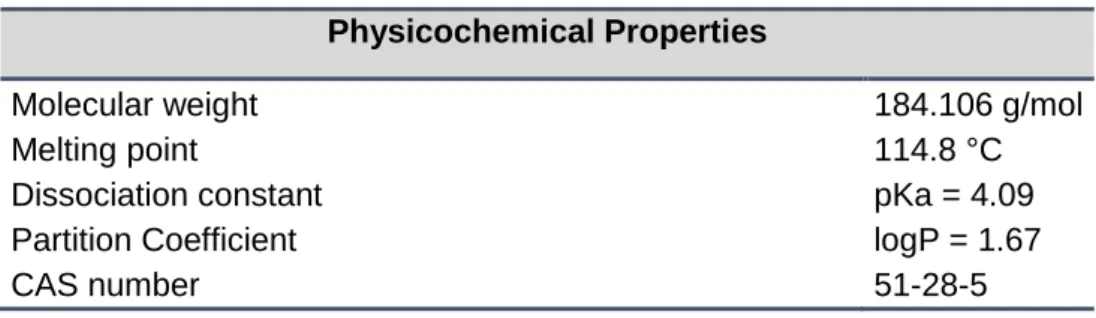
As mentioned before, 2,4-DNP is one of the isomers belonging to the family of dinitrophenols, a class of organic compounds of synthetic origin (Miranda et al., 2006). Table 3 summarizes some of the physicochemical properties of 2,4-DNP (TOXNET).
Legend: CAS – Chemical Abstracts Service.
In addition to this designation, this substance can also appear as 2,4-DNP, dinitrophenol or, simply, DNP. It is marketed in the form of cream, powder, tablets or capsules. In this last case, it is common for capsules to contain between 100-200 mg of compound or to be mixed with thyroxine or anabolic steroids (Grundlingh et al., 2011; INTERPOL, 2015; Türkay et al., 2014). Online sales began by being masked with different names associated, such as Sulfo/Solfo Black, Nitro Kleenup or Caswell No.392, Aldifen, Chemox, Nitophen, Dinofan, Dinosan, Dnoc, Osmotox PRB, Fenoxyl PRB or Tertosulphur PRB. Some of these variants may also be listed on the label of dietary supplements intended for weight loss (Petróczi et al., 2015). Nowadays, when searching the internet through the Google search engine, it is verified that these designations are associated with the theme of weight loss and muscle mass definition. Table 4 shows some examples of commercial products allegedly containing 2,4-DNP in their
Table 3: Physicochemical properties of 2,4-DNP (TOXNET).
Physicochemical Properties
Molecular weight 184.106 g/mol
Melting point 114.8 °C
Dissociation constant pKa = 4.09
Partition Coefficient logP = 1.67
CAS number 51-28-5
Figure 6: Chemical structure of 2,4-DNP (2,4-dinitrophenol) (TOXNET).
14 Table 4: Products containing 2,4-DNP (2,4-dinitrophenol) commercialized online.
Product Webpage address
http://evunsarep.4sql.net/sale/307-dnp-x-fat-burner/ [accessed 15 January 2017]
http://www.shemazing.net/tag/diet-pills/ [accessed 15 January 2017]
https://www.vaultekpharma.com/index/weigth-loss_fat-burners.html [accessed 15 January 2017]
Product Webpage address
https://www.steroid.com/DNP.php [accessed 15 January 2017] http://www.dailymail.co.uk/news/article- 2282158/Student-Sarmad-Alladin-18-known-Mr-Muscles-dies-taking-DNP-fat-burning-pills.html [accessed 15 January 2017] http://www.dziennikzachodni.pl/artykul/919736,dnp- burner-dinitrofenol-odchudzanie-smiertelne-niebezpieczny-srodek-na-odchudzanie,id,t.html [accessed 15 January 2017] http://www.dziennikzachodni.pl/artykul/zdjecia/9197 36,dnp-burner-dinitrofenol-odchudzanie-smiertelne-
niebezpieczny-srodek-na-odchudzanie,2056431,id,t,zid.html [accessed 15 January 2017]
16
Product Webpage address
http://www.dziennikzachodni.pl/artykul/zdjecia/9197
36,dnp-burner-dinitrofenol-odchudzanie-smiertelne-
niebezpieczny-srodek-na-odchudzanie,2056443,id,t,zid.html [accessed 15 January 2017]
1.5. Pharmacokinetics
2,4-DNP may be absorbed in the gastrointestinal tract, when ingested, in the lungs, when inhaled, and through the skin. After absorption, it is transported through the bloodstream to organs and tissues such as the liver and kidneys. Because it is a lipophilic and low molecular weight compound it is rapidly absorbed by passive diffusion. In the stomach, this process occurs in its non-ionized form because it is an acidic compartment (pKa of 2,4-DNP: 4,09). In the bloodstream of 2,4-DNP binds in part to plasma proteins while another portion remains in circulation. It is this fraction that reaches the organs and tissues, exerting toxic effects.
It is mainly metabolized by a reduction reaction that occurs in its nitro groups, forming metabolites of lower toxicity in rat liver homogenates represented in figure 7 (Harris and Corcoran, 1995).
The nitroreductase enzymes responsible for this process are microsomal and cytosolic (where they have the highest activity) and use nicotinamide adenine dinucleotide phosphate (NADPH) as a cofactor. The resulting metabolized compounds are 4-amino-2-nitrophenol, 2-amino-4-nitrophenol and 2,4-diaminophenol (Harris and Corcoran, 1995). A study performed by Eiseman et al. indicates that 2-amino-4-nitrophenol is the most abundant metabolite in rat liver homogenates (Eiseman et al., 1972).
The elimination of the metabolites and of part of the main compound that did not undergo metabolization occurs preferentially through the urine and it is excreted by passive diffusion (Harris and Corcoran, 1995).
1.6. Pharmacodynamics
2,4-DNP acts as an uncoupler agent for mitochondrial oxidative phosphorylation. Its intracellular target is the mitochondria, the organelle responsible for cellular respiration, interfering with oxidative phosphorylation in the Krebs cycle. In the presence of 2,4-DNP, the energy released during the oxidation-reduction reactions, by the consequent transport of electrons, is not able to potentiate the process of adenosine triphosphate (ATP) production (Zaharia et al., 2016).
Figure 7: Metabolic pathway of 2,4-DNP (2,4-dinitrophenol) in rat liver homogenates, adapted from Harris and Corcoran (1995). Legend: NADPH – Nicotinamide Adenine Dinucleotide Phosphate.
18 2,4-DNP acts to block the absorption of inorganic phosphate (PI) which, consequently, prevents its addition by ATP synthase to adenosine adipose phosphate (ADP) molecules (figure 8) (Hargreaves et al., 2016).
The final production of ATP by the cell is negatively influenced and leads to an inhibition of all biological processes that require energy. Additionally, it causes a change in the electrochemical proton gradient by increasing permeability for its passage out of the cell (Grundlingh et al., 2011). Thus, there is a decrease in energy efficiency, potentiated by an increase in the permeability of the membrane to the protons and by the impossibility of converting ADP to ATP. Energy dissipation is then promoted in the form of heat which enhances a rapid increase in metabolism and a higher calorie consumption than usual. Thus, there is a strong inhibition of the cellular respiration process. However, the accumulation of potassium continues and the inorganic phosphate ceases to be absorbed by the mitochondria and remains accumulated (Zaharia et al., 2016).
1.7. Toxic effects, diagnosis and therapy associated with intoxication
Available data on the effects of 2,4-DNP come from reports of patients arriving at emergency medical facilities. The most frequently described symptoms are nausea, vomiting, sweating, tachycardia, hyperthermia, confusion, agitation, breathing difficulties, Figure 8: The mechanism by which 2,4-DNP (2,4-dinitrophenol) induces uncoupling of oxidative phosphorylation at the inner mitochondrial membrane (Hargreaves et al., 2016). Legend: ADP – Adenosine Diphosphate; ATP – Adenosine Triphosphate; Pi – Inorganic Phosphate.
back and abdominal pain (Bartlett et al., 2010; Grundlingh et al., 2011; Siegmueller and Narasimhaiah, 2010; Zack et al., 2016). However, there are other visible external signs related to the change in color and texture of the skin, namely, the appearance of a yellow color and rashes. Acute renal failure is another serious consequence associated with this level of toxicity, evidenced by the existence of tubular necrosis observed in the autopsy of fatal cases (Grundlingh et al., 2011).
There is yet no guideline available for the treatment of 2,4-DNP poisoning. This treatment should therefore be performed symptomatically taking into account the symptoms that the patient is manifesting (Zack et al., 2016). To facilitate the elimination of the compound, the administration of activated charcoal can be considered (Grundlingh et al., 2011; Türkay et al., 2014). Hyperthermia can be minimized by cooling the body through cold baths, administration of benzodiazepines, or dantrolene (currently under study) (Lee et al., 2014; Zack et al., 2016). Anxiety and agitation can also be treated with the administration of benzodiazepines (Grundlingh et al., 2011; Türkay et al., 2014). To verify possible changes in the state of consciousness, it is common to use the Glasgow Coma Scale (Türkay et al., 2014). In cases involving cardiorespiratory arrest situations, professionals may follow the guidelines of the European Resuscitation Council (Nolan et al., 2015).
1.8. Analytical methods for 2,4-dinitrophenol (2,4-DNP) determination in commercial products and biological matrices
The determination of 2,4-DNP in commercial products is possible using liquid or gas chromatography separation techniques and using different detectors [Flame Ionization Detector (FID), Ultraviolet-visible (UV-VIS), Diode Array Detector (DAD), Mass Spectrometry (MS)]. Samples of suspected tablets may be analyzed by High Performance Liquid Chromatography coupled to DAD (HPLC-DAD), Liquid Chromatography coupled to MS and Time-of-Flight (LC-MS-TOF) or Gas Chromatography coupled to MS (GC-MS) to identify and quantify 2,4-DNP in the presence of other compounds (Lee et al., 2014) (Miranda et al., 2006). The determination of 2,4-DNP in biological matrices (blood and urine) is usually carried out by LC-MS (Miranda et al., 2006; Politi et al., 2007; Robert and Hagardorn, 1983). Table 5 summarizes the most used analytical techniques.
20 Table 5: Analytical methods used to determine 2,4-DNP (2,4-dinitrophenol) in different samples.
Sample Sample preparation Separation method Detection
method Reference Capsule --- LC GC LC DAD MS TOF/MS (Lee et al., 2014)
SPE with methanol solution (1 mg/mL). GC
LC
MS DAD
(Miranda et al., 2006) Stock solutions were prepared in methanol (0.5 mg/mL).
Dilution of standard working solution was prepared in methanol (12.5 µg/mL).
Example: powder was prepared in pure acetonitrile. The suspension obtained was mechanically stirred, sonicated
and centrifuged. Filtration: through a 0.45 µm pore size GH Polypro (GHP) membrane filter.
LC DAD (Rebiere et al.,
2012)
Blood
Liquid/Liquid extraction: extraction with n-butyl chloride. LC DAD (Miranda et al.,
2006)
Without previous sample preparation.
Addition of internal standard (3,5,6-d3-2,4-dinitrophenol) solution
in methanol; drying under nitrogen flow; deproteinization with acetonitrile; vortex mixing and centrifugation. Dilution of the
supernatant with formic acid (0.1%).
LC MS (Politi et al.,
2007)
Liquid/Liquid extraction: dilution of samples with saline;
addiction of distilled water containing of 3,5,6-d3
-2,4-dinitrophenol; acidification with citrate buffer (pH = 3, citrate/phosphate buffer) and extraction with diethyl ether; counter-extraction with 5% aqueous NaHCO3. Acidification with
HCl and re-extraction with diethyl ether. The organic phase was dried with anhydrous sodium sulphate; evaporation of diethyl ether at 60⁰C under nitrogen flow. Reconstitution with benzene.
GC MS
(Robert and Hagardorn,
Sample Sample preparation Separation method Detection
method Reference
Blood
Liquid/Liquid extraction with 3,5,6-d3-2,4-dinitrophenol as
internal standard.
Derivatization with BSTFA + 1% TMCS.
GC MS (Fogelberg,
2012)
Urine
--- GC MS (Miranda et al.,
2006)
Without previous extraction.
Addiction of urine to internal standard (3,5,6-d3-2,4-dinitrophenol). Dilution of the sample in formic acid (0.1%).
LC MS (Politi et al.,
2007)
River water
SPE: filtration of the river water through a 0.45 µm filter;
acidification to pH 2 with hydrochloric acid (1 M). Elution with acetone and evaporation under a nitrogen flow.
Derivatization: addiction of 10% aqueous potassium carbonate
and acetone solution of 5% PFBBr reagent. Evaporation to 100 mL under a nitrogen flow. Addiction of dichloromethane and the
organic phase was washed with mili-Q-purified water.
GC MS (Nakamura et
al., 2001)
Precipitation water
Liquid/Liquid extraction: acidification with H2SO4 to pH 2,
extraction in a rotary perforator with a pentane/ether mixture (5:1) (v/v). Separation of organic phase, dried over Na2SO4 and
concentration to 0.5 mL.
Derivatization: addition of cooled etheric diazomethane
solution. Concentration in the rotary evaporator.
GC NPD
MS
(Nick and Schöler, 1992)
Water
SPME: extraction for 30 min with a polyacrylate coated fiber
(desorption time was 3 min at 270°C); acidification with H2SO4 to
pH 2.
GC MS (Lu et al.,
1999)
Legend: BSTFA – N,O-Bis(trimethylsilyl)trifluoroacetamide; DAD – Diode Array Detector; GC – Gas Chromatography; GHP – GH Polypro; LC – Liquid Chromatography; MS – Mass Spectrometry; NPD – Nitrogen Phosphorus Detector; PFBBr – Pentafluorobenzyl Bromide; SPE – Solid/Liquid Extraction; SPME – Solid-phase microextraction; TMCS – Trimethylsilyl chloride; TOF – Time-of-Flight.
22 In general, when the GC technique is used, 2,4-DNP should be extracted from the matrix, either by liquid-liquid extraction (Fogelberg, 2012; Mathers et al., 2007; Nick and Schöler, 1992; Politi et al., 2007; Robert and Hagardorn, 1983), or by solid-phase extraction (SPE) (Nakamura et al., 2001). The compound will have to be extracted with an organic solvent to be injected into the GC. To improve the chromatographic performance, it is possible to use derivatization by fluoroacylation with N, O-bis(trimethylsilyl)trifluoroacetamide (BSTFA) as reported by Fogelberg et al. (2012) and Mathers et al. (2007). Another methodology recommended in GC is the solid-phase microextraction (SPME), where the compound passes to the gas phase and it is subsequently adsorbed onto a fiber with a certain polarity, and then desorbed in the chromatograph injector (Lu et al., 1999). In the case of the use of the HPLC technique, a prior concentration of the compound using SPE before injecting it directly into the LC.
In summary, and as can be seen in Table 5, to be able to apply these analytical methods it is essential to carry out a previous process of treatment of the sample when analyzing the compounds of this family. This is mainly due to its high polarity and volatility that affect its chromatographic resolution. Thus, when the compounds have these characteristics they will have to undergo a pretreatment process (Mahugo Santana et al., 2009), which is usually carried out using extraction techniques followed by a derivatization procedure (Nick and Schöler, 1992) in which the most widely used derivative agent is BSTFA (Fogelberg, 2012; Mathers et al., 2007) although pentafluorobenzyl bromide (PFBBr) may also be used as an alternative (Nakamura et al., 2001). SPE (Nakamura et al., 2001); SPME (Lu et al., 1999) and liquid-liquid extraction (Fogelberg, 2012; Mathers et al., 2007; Nick and Schöler, 1992; Politi et al., 2007; Robert and Hagardorn, 1983) after acidification, are the most common extraction methodologies found in the literature.
PART 2 – OBJECTIVES
The ‘fat burners’ belong to a popular group of nutrition supplements that improve fat metabolism, energy expenditure and increase fat oxidation during exercise. These supplements may contain many ingredients, each one with its own mechanism of action, the combination of these substances is claimed to have additive effects. One of such constituents used in weight loss products is 2,4-DNP. Although it has been banned as a product for human consumption, one must consider the possibility of 2,4-DNP being illicitly included in ‘fat burners’ formulations. Therefore, one of the main objectives of this work was to unveil the presence of 2,4-DNP in two ‘fat burners’ bought online, the Supplement 1 and the Supplement 2.
Since many of these supplements have not yet been evaluated by the FDA it is possible that the ingredients that are included in package label do not correspond to the real content of the formulation. Thus, our second aim was to chemically characterize the products purchased and to compare their real composition with the labelled composition. A comparison among different capsules of the same product was also performed. The last objective was to elucidate the in vitro hepatotoxicity of these supplements and, in particular, of 2,4-DNP, which was deemed responsible for several intoxications associated with weight loss product users. In case of apparent citotoxicity, the mechanisms involved were elucidated.
24
PART 3 – CHEMICAL CHARACTERIZATION OF COMMERCIAL WEIGHT
LOSS PRODUCTS
3.1.1. Reagents
All the reagents used were of analytical grade. methanol and dichloromethane were obtained from Fisher Chemicals (Loures, Portugal). All other reagents were acquired from Sigma-Aldrich (Saint Louis, Missouri) unless stated otherwise. The purity of all standards is known and was always greater than 98.0% (w/w).
3.1.2. ‘Fat Burners’
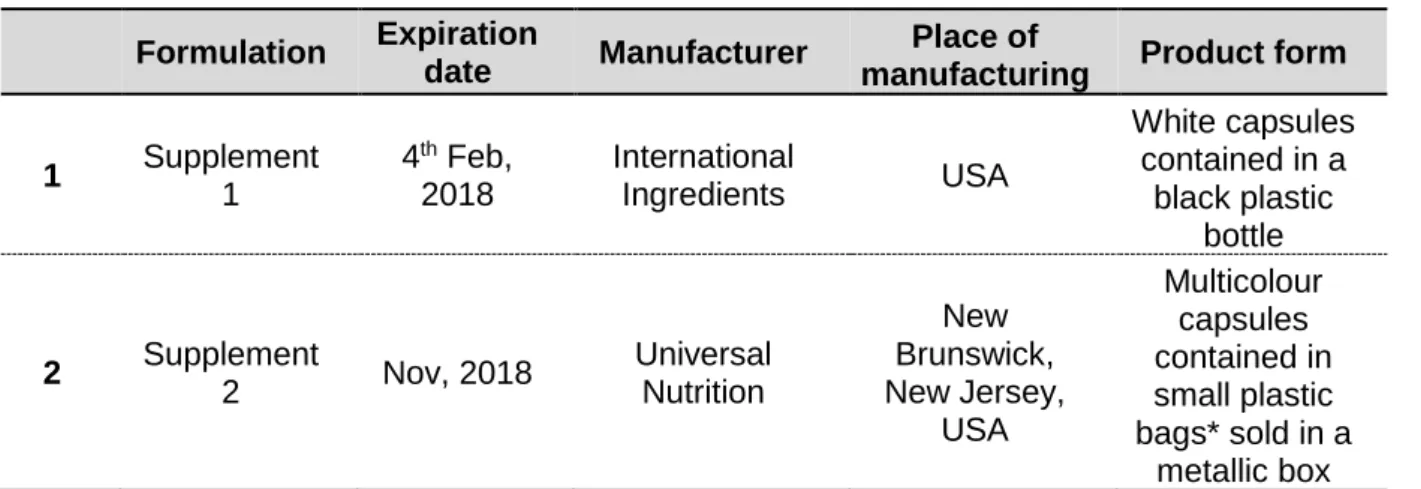
Two commercial formulations, Supplement 1 and Supplement 2, marketed for weight loss were purchased from Prozis website (www.prozis.com/pt), which offers a wide range of products related to supplementation and functional feeding mainly used for human consumption. Table 6 lists the characteristics of these products used for analyses.
Table 6: Commercial formulations analysed in the study.
Formulation Expiration
date Manufacturer
Place of
manufacturing Product form
1 Supplement 1 4th Feb, 2018 International Ingredients USA White capsules contained in a black plastic bottle 2 Supplement 2 Nov, 2018 Universal Nutrition New Brunswick, New Jersey, USA Multicolour capsules contained in small plastic bags* sold in a metallic box
* Each plastic bag contains 9 capsules: 2 white capsules + 1 red capsule + 2 blue capsules + 1 orange capsule + 1 yellow capsule + 1 red/white capsule + 1 blue/white capsule. Legend: USA – United States of America.
Supplement 1 is considered a super-thermogenic product. The labelled composition was divided in three groups of ingredients, based on the claimed three benefits provided. Accordingly, Super-thermogenesis Complex includes Coleus forskohlii and L-theanine;
Extreme Energy Complex includes caffeine anhydrous; and Powerfull Weight Loss Complex includes green coffee extract (C. canephora robusta). The label also indicates
other ingredients, namely L-carnitine/ L-tartrate, cocoa extract (standardized for 6% theobromine), bioperine (black pepper 95% piperine), cayenne pepper (Capsicum