UNIVERSIDADE DE LISBOA
Faculdade de Medicina Veterinária
SHORT-TERM BEHAVIOURAL REACTIONS OF TWO DOLPHIN SPECIES TO A BIOPSY POLE SYSTEM: A PRELIMINARY ASSESSMENT OF ANIMAL WELFARE AND
TECHNIQUE VALIDATION
MARIANA FIGUEIREDO FRAGOSO
CONSTITUIÇÃO DO JÚRI ORIENTADOR
Doutora Ilda Maria Neto Gomes Rosa Dr. Cayetano Francisco Espinosa Miranda Doutor Virgílio da Silva Almeida CO-ORIENTADOR
Doutor Fernando Ribeiro Alves Afonso Doutor Virgílio da Silva Almeida
2019
UNIVERSIDADE DE LISBOA
Faculdade de Medicina Veterinária
SHORT-TERM BEHAVIOURAL REACTIONS OF TWO DOLPHIN SPECIES TO A BIOPSY POLE SYSTEM: A PRELIMINARY ASSESSMENT OF ANIMAL WELFARE AND
TECHNIQUE VALIDATION
MARIANA FIGUEIREDO FRAGOSO
DISSERTAÇÃO DE MESTRADO INTEGRADO EM MEDICINA VETERINÁRIA
CONSTITUIÇÃO DO JÚRI ORIENTADOR
Doutora Ilda Maria Neto Gomes Rosa Dr. Cayetano Francisco Espinosa Miranda Doutor Virgílio da Silva Almeida CO-ORIENTADOR
Doutor Fernando Ribeiro Alves Afonso Doutor Virgílio da Silva Almeida
2019
Ao meu pai
i
Aknowledgments
À minha mãe, essa fonte inesgotável de carinho e de apoio, que sempre me deu asas para poder fazer os meus “passeios” pelo mundo mesmo que isso significasse voar para longe dela. Sempre serás o meu porto de abrigo, obrigada por tudo.
À minha irmã, Joana, pela ajuda nos toques finais, pelas palavras de motivação, e por toda a paciência nos meus dias “maus”.
Ao Tozé, esse menino sonhador, nosso monangambé cagidense e corajoso fazendeiro africano, que sempre partilhou comigo o seu fascínio pelos animais e apreciação pelos meus estudos. A todas as cantorias desafinadas e embalo no teu calor angolano.
À Eva, minha pessoa desde sempre, que me encoraja cheia de orgulho a ir mais além. Obrigada por todo o ânimo e apoio. Que histórias e planos mais se seguirão?
A ti, Caye, que siempre me transmitiste tus conocimientos con tremendo entusiasmo por la vida animal, por toda la confianza, responsabilidad y oportunidades de aprendizaje, muchas gracias.
A la Nico, por la oportunidad en ayudar en el centro de recuperación de fauna silvestre, por me enseñares siempre con una sonrisa sin igual y por todos los chistes. Fue un gusto conocer tu alegría. ¡Eres seca!
A la Poli, por introducirme a Patagonia, por tu amistad y compañía de mate.
A YaquPacha, por la oportunidad de vivir y aprender en Patagonia, ese lugar hermosísimo que me hizo enamorar por la naturaleza cada día más.
Ao professor Virgílio Almeida, por ter aceitado embarcar nesta longa aventura sempre com boa disposição, entusiasmo e motivação na voz.
Às amigas em quem sempre me pude apoiar ao longo destes (vários) anos de faculdade e que tornaram todo este percurso muito mais leve: Cat, Carmitos, Carolina, Dani, Mí e Marin. Aos “meus” fauninhas: Miguel, Maria Isabel, Rafaela, Clarisse, Bárbara, Catarina, Sara, Fogacinha, Helena, Rita e Ale, por manterem o lume deste fascínio pela vida selvagem sempre aceso, pela vossa imensurável dedicação, juntos criámos coisas muito bonitas. Ao “gang”, essa família de amigos que sempre me acompanham.
À Joana “da Luísa”, pela paciência, amizade, carinho e por todos os chás partilhados.
To Eirini, Caterina, Claudia and Mike, for always making the time for my writing, for cheering me along the long hard days and sharing sunsets and Caprice whenever I needed to relax. Aos meus avós, Jaime e Carmen, por sempre partilharem comigo a bagagem de vida que carregam aos ombros. Por me ensinarem a importância das nossas raízes, e me mostrarem a beleza que existe na humildade.
À minha família, que me acarinha e me cuida tão bem.
À minha Syrah e à minha Violeta, companheiras de longas horas de leitura e escrita, sempre no quentinho de uma manta e coberta de mimos.
To my life partner, Matt, “these” dolphins and Patagonia brought me to you, and I couldn’t be more grateful for all the adventures and love we have been sharing since. Thank you for always believing in me and helping me to grow. “We" finally did it!
E por fim, embora não acredite que alguma vez o seja, ao meu pai, António, o melhor contador de histórias. Que me mostrou como “o caminho se faz ao andar”, que sempre me encorajou a cair pois só assim aprenderia a levantar-me e que me ensinou a apreciar as pequenas coisas. O quanto gostaria eu de poder partilhar esta vitória contigo.
ii
Short-term behavioural reactions of two dolphin species to a biopsy pole system: a preliminary assessment of animal welfare and technique validation
Abstract
Free-ranging cetaceans are fully adapted to aquatic environments, and thus can act as sentinels of the ecosystem’s health and guide conservation policies. The Chilean dolphin (Cephalorhyncus eutropia) and the Peale’s dolphin (Lagenorhynchus australis) are two coastal species of small cetaceans whose distribution greatly overlaps with human activities. Understanding the species ecology, biology, physiology and health status is vital to properly direct conservation efforts. Tissue samples can provide a lot of insight and that has been achieved through the development and improvement of biopsy techniques. This preliminary study aims to determine the short-term effect of a biopsy pole sampling protocol on the welfare of these two species of small cetaceans through a behavioural assessment.
The skin samples were taken within the Chiloé Marine Ecoregion, Chile, between December and April of 2015, 2016 and 2017. Combining observational efforts and video records, we were able to successfully register 32 individual reactions (IR) and 26 group reactions (GR) from the Chilean dolphin, and 75 individual reactions and 63 group reactions from the Peale’s dolphin. Their behavioural response was classified according to a continuous numerical scale (0= no noticeable reaction, 1= startle, 2=mild, 3=moderate, 4= strenuous reactions).
Significant statistical differences (p<0.05) were found between species regarding the individual and the group reaction. For the Chilean dolphin the most commonly seen individual reaction was level 2 (90.6%) followed by level 1 (9.4%). The group reactions presented high correlation with the individual reactions, displaying level 2 responses in 80.8% of the biopsy attempts and level 1 reactions in the remaining 19.2%. The Peale’s dolphin presented more heterogenous responses. Concerning the individual reaction, level 2 was the most frequently seen (64.0%), followed by level 1 (28.0%) and finally level 0 (8.0%). The group reaction consisted mainly in level 2 (41.3%), followed by 0 and 1 (both at 28.6%) and lastly level 4 (1.5%).
Most biopsies induced only mild individual and group reactions, which translated into a low short-term impact on the behaviour of these two dolphin species. By only producing a light disturbance on biologically essential activities for their survival and reproduction, these results support that this skin biopsy method can be used as a safe and minimally invasive technique, suitable to maintain the welfare of the individuals sampled and their populations.
iii
Reações a curto-prazo, de duas espécies de golfinhos, a uma técnica de biópsia com lança adaptada: análise preliminar de bem-estar e validação da técnica
Resumo
Os cetáceos de vida livre encontram-se perfeitamente adaptados ao ambiente aquático, podendo assim actuar como sentinelas da saúde do ecossistema e guiar políticas de conservação. O golfinho chileno (Cephalorhyncus eutropia) e o golfinho-do-sul (Lagenorhynchus australis) são duas espécies costeiras de pequenos cetáceos cujas distribuições se sobrepõem a actividades humanas. Entender a ecologia, biologia, fisiologia e o estado de saúde destas espécies é vital para que se consigam, adequadamente, direcionar os esforços de conservação. A obtenção de amostras de tecidos pode gerar bastante conhecimento e tem sido possível através do desenvolvimento e aprimoramento de técnicas de biópsia. Este estudo preliminar visa determinar o efeito, a curto prazo, de um protocolo de biópsia com recurso a uma lança adaptada, sobre o bem-estar destas duas espécies através de uma avaliação comportamental. As amostras cutâneas foram recolhidas na Ecorregião Marinha Chiloense, entre dezembro e abril de 2015, 2016 e 2017. Combinando esforços observacionais e registos em vídeo, reunimos com sucesso 32 reacções individuais (RI) e 26 reacções do grupo (RG) do golfinho chileno, e 75 RI e 63 RG do golfinho-do-sul. A reacção comportamental dos animais foi classificada de acordo com uma escala numérica contínua (0 = sem reação perceptível, 1 = sobressalto, 2 = reacção leve, 3 = reacção moderada, 4 = reacção vigorosa).
Foram encontradas diferenças estatísticas significativas (p <0,05) entre ambas as espécies quanto à reacção individual e a grupal. Para o golfinho chileno, a RI mais frequentemente observada foi de nível 2 (90,6%), seguida pelo nível 1 (9,4%). As RG assemelharam-se bastante às IR apresentando respostas de nível 2 em 80,8% dos eventos e reacções de nível 1 nos restantes 19,2%. O golfinho-do-sul apresentou um leque mais heterogéneo de respostas. Em relação às RI, o nível 2 foi o mais frequente (64,0%), seguido pelo nível 1 (28,0%) e, finalmente, pelo nível 0 (8,0%). A RG exibida foi maioritariamente de nível 2 (41,3%), seguido pelos níveis 0 e 1 (ambos a 28,6%) e, por último, pelo nível 4 (1,5%). A maioria das biópsias induziu apenas reações leves quer a nível individual quer grupal, o que se traduziu num reduzido impacto a curto-prazo no comportamento de ambas as espécies de golfinhos. Dado que o distúrbio produzido sobre as actividades, biologicamente, importantes para a sobrevivência e reprodução das espécies foi considerado mínimo, os nossos resultados defendem que esta é uma técnica de biópsia segura e minimamente invasiva, apropriada à manutenção do bem-estar dos indivíduos amostrados e das suas populações.
Palavras-chave: cetáceos, golfinho chileno, golfinho-do-sul, biópsia, comportamento, bem-estar
iv Table of Contents Aknowledgments... i Abstract ... ii Resumo ...iii Table of Contents... iv List of Figures ... vi
List of Tables ...vii
List of Graphics ... viii
List of Abbreviations and Symbols ... ix
Internship short report ... 1
General introduction ... 5
CHAPTER I – Literature Review ... 7
1 - Cetaceans as sentinel species for marine ecosystem health ... 7
2 - Biopsy sampling as a research tool ... 10
3 - Animal welfare ... 12
4 - Measuring behaviour as a welfare assessment ... 15
5 - Somatosensory perception in cetaceans ... 17
6 - Behavioural reactions to biopsy sampling ... 19
7 - Behavioural reaction to biopsy sampling by non-target animals... 22
8 - Behavioural reactions to misses ... 23
9 - Long-term behavioural impacts ... 24
10 - Cetaceans off the Chilean coast ... 27
10.1 – Chilean dolphin ... 27
10.1.1 - Description ... 27
10.1.2 - Distribution and ecology ... 28
10.2 – Peale’s dolphin ... 29
10.2.1 - Description ... 29
10.2.2 - Distribution and ecology ... 29
10.3 - Threats faced by the two dolphin species ... 31
10.4 - Conservation status ... 33
CHAPTER II - Study ... 34
1 - Aims of the study ... 34
2 - Materials and methods ... 35
2.1 - Study area ... 35
2.2 - Coastal surveys ... 36
2.3 - Biopsy sampling collection ... 38
2.4 - Material preparation and sterilization ... 40
v
2.6 - Statistical analyses ... 43
3 - Results ... 44
3.1 - Case enrolment criteria ... 44
3.2 - Survey effort and reported data ... 44
3.3 - Behavioural reactions to biopsy sampling ... 50
4 - Discussion of results ... 59
4.1 - General findings... 59
4.2.1 - Main findings ... 61
4.2.2 - Behavioural considerations ... 64
5 - Conclusions ... 65
6 - Limitations to this study ... 66
7 - Future Recommendations ... 67
REFERENCES ... 69
Appendix 1 – Beaufort Wind Scale. ... 83
Apendix 2 – Table with p values obtained for each predictor categorical variable using Fisher’s exact test. ... 84
Appendix 3 – Frequency table from all the categorical predictive variables for the Chilean dolphin. ... 85
Appendix 4 – Frequency table from all the categorical predictive variables for the Peale’s dolphin. ... 86
Appendix 5 - Absolute frequencies of dolphin groups (Ce & La) sighted per area studied. “Human” represents the number of groups found near human structures. The mean distance expresses, in meters, the average distance such groups were found from human activities 87 Appendix 6 - Variables that appeared to positively influence the dolphin’s reaction and the overall success of the procedure... 87
vi
List of Figures
Figure 1 - The project's three flagspecies. Top left the Chilean dolphin; top right the Peale's dolphin; and bottom left the Burmeister's Porpoise. On the bottom right an example of an outreach activity performed at an indigenous school. Photo credits: YaquPacha ©... 1 Figure 2 - Environmental education class using Foldscopes © (paper microscopes). On the top left image there is me on my first attempt to assemble the microscope. On the bottom left there is a kid visualizing its algae sample on the foldscope. On the right image you can see a young girl half way through the assembly of her own paper microscope. ... 2 Figure 3 - Several Argentinian tortoises (Chelonoidis chilensis) were being collected from all over Chile to reintroduce in Argentina. ... 4 Figure 4 - Inducing anaesthesia on a black-chested buzzard-eagle (Geranoaetus melanoleucus) that was electrocuted and needed soft tissue surgery to its right wing. ... 4 Figure 5 - List of threats affecting cetacean’s health and survival. ... 7 Figure 6 - Animal welfare can be viewed and judged along a continuum, with the extremes representing great and extremely poor welfare. These states are respectively associated with animals that are thriving in their environment or may die because they are no longer able to cope (Melfi, 2009). ... 13 Figure 7 - Animal welfare embraces three holistic components, the animal’s body, mind and nature (adapted from Fraser, 2008, and Melfi, 2009). ... 13 Figure 8 - Map of skin sensitivity based on Somatosensory Evoked Potentials. The belly and genital areas were not tested. 1, most sensitive, followed by 2, 3 and 4 in descending order (Ridgway and Carder, 1993). ... 17 Figure 9 - Orientation of cutaneous ridges on a bottlenose dolphin (Ridgway & Carder, 1993). ... 18 Figure 10 - Modelling population level consequences of disturbance. Modified from King et al., 2015. ... 25 Figure 11 - Cephalorhynchus eutropia © Wurtz-Artescienza. ... 27 Figure 12 - Distribution of Cephalorhynchus eutropia: coastal waters of Chile and southern Argentina (Heinrich & Reeves, 2017; © IUCN). ... 28 Figure 13 - Lagenorhynchus australis © Würtz-Artescienza ... 29 Figure 14 - Distribution of Lagenorhynchus australis: coastal waters of Chile and southern Argentina (Hammond et al., 2008; © IUCN). ... 30 Figure 16 - Porpoise caught in a shore-based gillnet. (photo credit: YaquPacha ©). ... 32 Figure 15 - Chilean dolphin accidentally caught. (photo credit: YaquPacha ©). ... 32 Figure 17 - Aerial caption of the mussel farms on Chiloé Island (photo credit: Sonja Heinrich). ... 33 Figure 18 - North of the Chiloense marine ecoregion. In orange the sites considered disrupted by human activities (Calbuco, Castro, Quellón and Quemchi) and in green the areas considered the closest to the natural primitive habitat (Melimoyu and Reñihue). ... 35 Figure 19 - The 4 meters inflatable boat with the 20 HP outboard engine, used to perform the biopsy sampling surveys. Photo credits: YaquPacha©. ... 36 Figure 20 - Pole spear adapted with a biopsy head. The force employed was made by the elastic band. ... 39 Figure 21 - Detailed schematic of the biopsy tip. ... 39 Figure 22 - Demonstration of the sample processing a board. ... 40
vii
Figure 23 - Example of one of our record sheets for the Peale’s dolphin. Note the notch on the animal’s dorsal fin here recorded. ... 41 Figure 24 - Video angle obtained from the camera attached to the pool pole. Arrow indicates the 2nd camera that was secured to the biopsy sampler’s head. ... 42
Figure 25 - Map of sampling locations in northern Chilean Patagonia. Number of biopsy samples for Chilean dolphins and Peale's dolphins is shown in green and red, respectively. The size of the chart is proportional to the total number of dolphins sampled in each population. ... 45 Figure 26 - Sequential depiction the Peale’s dolphin’s Boomerang response: (a) approach of the dolphin to the research boat, (b) moment when the biopsy sample occurs, (c) the animal moves away from the stimuli area but quickly returns to the vicinity of the boat. ... 57 Figure 27 - Sequential depiction the Peale’s dolphin Flinch response: (a) approach of the dolphin to the research boat, (b) moment when the biopsy sample occurs, (c) the animal gets startled but quickly returns to his previous position. ... 57 Figure 28 - Sequential depiction of the Chilean dolphin’s Recoil response: (a) approach of the dolphin to the research boat, (b) moment when the biopsy sample occurs, (c) the animal moves away from the stimuli area but quickly returns to the vicinity of the boat... 58 Figure 29 - Sequential depiction of the Chilean dolphin’s Stern flight response: (a) approach of the dolphin to the research boat, (b) moment when the biopsy sample occurs, (c) the animal accelerates, moving away from the stimuli. ... 58
List of Tables
Table 1 - The updated Five Provisions and aligned Animal Welfare Aims from Mellor (2016b). ... 14 Table 2 - Summary of a variety of biopsy methods used and behavioural responses for whale species (concised and adapted from Noren & Mocklin, 2012). ... 19 Table 3 - Summary of some biopsy methods used and behavioural responses for dolphin species (modified from Noren & Mocklin, 2012). ... 20 Table 4 - Behavioural state definitions (adapted from Shane, Wells & Würsig, 1986; Viddi & Lescrauwaet, 2005; Heinrich, 2006 and Peters, Parra, Skuza & Möller 2013). ... 37 Table 5 - Classification of individual and group behavioural reactions of Chilean and Peale’s dolphins to biopsy sampling (adapted from Krützen et al., 2002; Bilgmann et al., 2007; Tezanos-Pinto & Baker, 2012; Loizaga de Castro et al., 2013). ... 42 Table 6 - List of categorical and numerical variables selected for our study, each of their levels and their type of classification. Underlined are the names our variables were identified as. . 43 Table 7 - Absolute frequency of behavioural responses recorded of both dolphin species (Chilean and Peale’s dolphin) per area and according to reaction type: IR – individual reaction; GR – group reaction... 44 Table 8 - Descriptive analysis of the numeric variables recorded for both species: a - Chilean dolphin, b - Peale’s dolphin. In order, the categories analysed were: prebiopsy monitoring period; duration of the whole encounter; size of group where sampling occurred; distance to shore; ocean depth; water visibility; Beaufort wind force scale; and distance to human activities/structures (e.g. fish and mussel farms, transport and fishing boats). The last 4 variables were taken at the exact location of the biopsy sampling... 46 Table 9 - Absolute and relative frequencies of sampled dolphins in general, and sampled dolphins near human activities in particular, per type of area studied (disturbed versus natural). ... 49
viii
List of Graphics
Graphic 1 - Absolute frequency of biopsies collected from each species: Ce - Chilean dolphin; La - Peale’s dolphin. ... 44 Graphic 2 - Absolute sampling frequency over the years and by species. CE - Chilean dolphin; LA - Peale’s dolphin. ... 45 Graphic 3 - Absolute frequencies of samples taken per group size and per species. ... 47 Graphic 4 - Absolute and relative frequencies of samples taken per category of group size and per species. Small includes 1-4 animals. Medium includes 5 -9 animals. Large are groups above 10 animals. ... 47 Graphic 5 - Relative frequencies (%) of predominant group behaviour according to species. ... 48 Graphic 6 - Absolute frequencies of predominant group behaviour according to species. .... 48 Graphic 7 - Histogram of the absolute frequency of biopsy samples collected per depth level and according to the species... 49 Graphic 8 - Frequency of immediate behavioural reactions of the Chilean dolphin. A) Relative frequencies (%) of individual and group immediate reactions recorded from Chilean dolphins to our biopsy pole system. B) Box plot of the individual and group immediate reactions of the Chilean dolphin to the biopsy pole system. ... 50 Graphic 9 - Frequency of immediate behavioural reactions of the Peale’s dolphin. A) Relative frequencies (%) of individual and group immediate reactions recorded from Peale’s dolphins to our biopsy pole system. B) Box plot of the individual and group immediate reactions of the Peale’s dolphin to the biopsy pole system. ... 51 Graphic 10 - Relative frequencies for group reaction (GR) dependent upon individual reaction (IR). Level 0 = “none”; level 1 = “startle”; level 2 = “mild”; level 4 = “strenuous”. ... 51 Graphic 11 - Box and whiskers plot of Peale’s dolphins’ individual reaction according to group size. ... 52 Graphic 12 - Box and whiskers plot of Chilean dolphins’ individual reaction according to group size. ... 52 Graphic 13 - Relative frequencies (%) of intensity of individual response (IR) to the biopsy technique based on group size. S - Small (1 to 4 individuals); M - Medium (5 to 9 individuals), L - Large (equal or more than 10 individuals). ... 53 Graphic 14 - Relative frequencies (%) of the intensity of groups' response based on group size. S - Small (1 to 4 individuals); M - Medium (5 to 9 individuals), L - Large (equal or more than 10 individuals). ... 53 Graphic 15 - Box and Whiskers Plot relating the Peale’s dolphin individual reaction with the water visibility (in meters) of where the biopsy procedure occurred. ... 54 Graphic 16 - Box and Whiskers Plot relating the Chilean dolphin individual reaction with visibility of the water (in meters) where the biopsy procedure occurred. ... 54 Graphic 17 - Box and Whiskers Plot relating Peale’s dolphin group reaction (GR) with prebiopsy monitoring period. ... 54 Graphic 18 - Box and Whiskers Plot relating the Peale’s dolphin individual reaction (IR) with prebiopsy monitoring period. ... 54 Graphic 19 - Peale’s dolphin individual reactions according to location where the sampling occurred. ... 55 Graphic 20 - Peale’s dolphin group reactions according to location where the sampling occurred. ... 55
ix
Graphic 21 - Peale’s dolphin individual reaction according to pre-sampling group behaviour displayed (by order: chasing; milling; socializing and travelling). ... 56 Graphic 22 - Peale’s dolphin group reaction according to pre-sampling group behaviour displayed. (by order: chasing; milling; socializing and travelling). ... 56 Graphic 23 - Chilean dolphin individual reaction according to Beaufort scale at the moment of sampling. ... 56 Graphic 24 - Peale’s dolphin individual reaction according to Beaufort scale at the moment of sampling. ... 56
List of Abbreviations and Symbols
% - Percentage
cDNA – Complementary deoxyribonucleic acid DD – Data Deficient
DNA – Deoxyribonucleic acid e.g. – exempli gratia
GR – Group Reaction h – Hour(s)
IR – Individual Reaction
IUCN - International Union for Conservation of Nature m – Meter(s)
mg – Milligram(s) min – Minute(s) mm – Millimetre(s) NT – Near Threatened
WHO - World Health Organization RNA – Ribonucleic acid
spp. – species
ppm – parts per million
UNAB – Andrés Bello University U.S. – United States
1
Internship short report
This study was performed during the 6th year of the Integrated Masters in Veterinary Medicine
of the Faculty of Veterinary Medicine, Lisbon University, under the supervision of Dr. Cayetano Espinosa-Miranda, scientific director of NGO YaquPacha-Chile and co-supervised by Professor Dr. Virgílio Almeida (Faculty of Veterinary Medicine, Lisbon University).
The curricular internship took place between January 10th and May 1st 2016, performing a total
of 840 hours. The training period took approximately 2 months in the Chilean Patagonia, with most of the surveys taking place in the southeast of Chiloé Island and being completed with two expeditions to the continental fjords around Chaitén and Melimoyu areas. During this period I lived on site, in a wooden house by the bay where our zodiac was anchored.
The Chiloé Small Cetaceans Project focuses on the conservation ecology of dolphins and porpoises and the study of anthropogenic threats to the marine ecosystem in the Chiloé Archipelago in northern Patagonia, Chile. Their flagship species (Figure 1) are the Chilean dolphin (Cephalorhynchus eutropia), the Peale's dolphin (Lagenorhynchus australis), and the Burmeister's porpoise (Phocoena spinipinnis). Through research and education, they aim to promote conservation of ecologically and economically important coastal ecosystems.
The work consisted mainly in learning and perfecting tools used for wild small-cetaceans conservation. The supervisor was undertaking his PhD under the title “The Effect of Anthropogenic Coastal Stressors on the Skin Microbiome and Immune Expression of Small Cetaceans: Elucidating threats from an ecoimmunological perspective” and thus arose the Figure 1 - The project's three flagspecies. Top left the Chilean dolphin; top right the Peale's dolphin; and bottom left the Burmeister's Porpoise. On the bottom right an example of an outreach activity performed at an indigenous school. Photo credits: YaquPacha ©.
2
need to perform skin biopsies from these dolphins. Given that both species of dolphins are poorly known and had never before been biopsied with this method, we decided to record the behavioural reactions of these animals to the sampling procedure in order to evaluate our impact on their welfare.
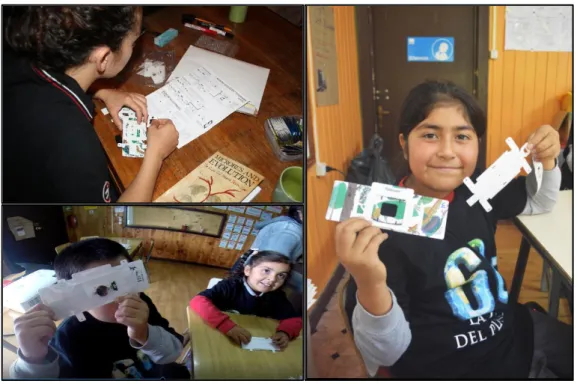
During the summer field season, I learned how to manoeuvre the 4 meter dinghy, how to collect environmental data (e.g. salinity, depth, water visibility, temperature) and animal data (e.g. photo I.D.; size and constitution of the dolphin group). Collecting data was just the beginning of long evenings organizing it, transferring it to different databases and finally analysing it. In various occasions I had to plan, prepare and perform environmental education classes for the indigenous communities in the surrounding areas. Sharing the importance of ocean conservation in general and teaching about the species they share their homes with in particular, were common themes in our classes. However, the one that gave me the most joy was the building of a paper microscope and subsequent collection of different types of marine tissues to be observed under the microscope (Foldscope ©)
The last month was spent at the Ecology and Natural Resources Faculty laboratory, from Andrés-Bello University in Santiago, Chile. The tissue samples collected in Patagonia were first processed here: organization and classification of the samples, DNA and RNA extraction and isolation, cDNA synthesis and cDNA quantification.
Figure 2 - Environmental education class using Foldscopes © (paper microscopes). On the top left image there is me on my first attempt to assemble the microscope. On the bottom left there is a kid visualizing its algae sample on the foldscope. On the right image you can see a young girl half way through the assembly of her own paper microscope.
3
To add to my training, I had the opportunity to help in a different field of conservation medicine, taking action in the rescue and rehabilitation of endemic Chilean fauna (but not restricted to) at UFAS, the Wild Fauna Rehabilitation Unit from Andrés Bello University and Buin Zoo. There I worked under the supervision of Dr. Nicole Sallaberry-Pincheira, teacher at the university and director of the rehabilitation centre.
I worked with species such as: South American grey fox (Lycalopex griseus), Andean fox (Lycalopex culpaeus), Austral Pygmy-Owl (Glaucidium nana), White-tailed kite (Elanus leucurus leucurus), Variable hawk (Geranoaetus polyosoma), Chimago (Milvago chimango), Aplomado falcon (Falco femoralis), Barn owl (Tyto alba), Magellanic Horned owl (Bubo magellanicus), Lesser Grison (Galactis cuja), Elegant Fat-tailed Mouse Opossum (Thylamys elegans), amongst others (Figure 3).
During a double two-week period, I was directly or indirectly involved in many activities such as:
● The daily visit and maintenance of the animals’ different enclosures; ● Food preparation and stocking;
● Patients’ daily physical exams; weekly blood draws and biochemical exams;
● Whenever required coprology exams were undertaken as well as samples collected for bacteriology/virology/cytology/histopathology/parasitology;
● Wound care and bandaging. Drug administration (intravenous, intramuscular); ● Administration of fluids for patient stabilization (subcutaneous and intravenous). ● Assessment and treatment of ocular pathologies in raptors;
● Anesthesia of raptors (Figure 4);
● Assistance in the collection of radiographs from raptors and foxes and ultrasounds from the latter;
● Assistance in osteopathic surgeries, particularly in raptors with broken wings after being shot or electrocuted;
● Microchipping all animals before their release; ● Bird’s beak and nail trimming, whenever needed;
● Necropsy of a dozen species of birds, reptiles and small mammals.
Furthermore, I had the opportunity to participate in the “Avian Medicine & Surgery Workshop: Wild and Exotic Birds”. The theoretical component consisted of two days (12th and 13th
January) in the University of Andrés Bello campus (UNAB) and the practical component consisted of two days (14th and 16th January) split between the UNAB Zoological Medicine
Hospital and the Rescue Centre UFAS. There I attended classes of Avian Anatomy and Physiology; Raptor Medicine; Avian Wound Healing; Avian Emergencies; Avian Radiology; Infectious Diseases; Parasitology; Geriatrics; Zoonotic Diseases and Ethics of Wildlife Rehabilitation.
4
The practical component of the workshop was divided in four chapters. In the first one I got to learn practical techniques for avian handling and physical examination, as well as learn practical techniques for laboratory sample collection, basic treatment procedures, bandaging, grooming, and placement of tube & Elizabethan collars. The second section was dedicated to anaesthesia procedures and radiology positioning. In the third chapter I learned about soft tissue and orthopaedic surgery, and finally the last one was about avian pathology laboratory and necropsy techniques.
Figure 3 - Several Argentinian tortoises (Chelonoidis chilensis) were being collected from all over Chile to reintroduce in Argentina.
Figure 4 - Inducing anaesthesia on a black-chested buzzard-eagle (Geranoaetus melanoleucus) that was electrocuted and needed soft tissue surgery to its right wing.
5
General introduction
Marine mammals are fully adapted to aquatic environments. Given that they depend on the health of these ecosystems for their survival, the study of these species will truthfully reflect the ecosystem’s vulnerabilities and level of deterioration (Moore, 2008). Acting as sentinels of the ocean’s status, cetaceans can guide human stewardship activities towards conservation and subsequently towards promoting human health (Bossart, 2011).
The Chilean dolphin (Cephalorhyncus eutropia) and the Peale’s dolphin (Lagenorhynchus australis) are two species of small cetaceans native of south waters of South America (Viddi & Harcourt, 2016), and whose distribution greatly overlaps with human activities (e.g. fisheries, mussel farms, fish farms and transportation vessels).
It is known that human activities can directly or indirectly, intentionally or unintentionally, have a negative impact on cetaceans’ well-being (de Vere, Lilley & Frick, 2018). Assuring good animal welfare should always be a priority, given that the health of the ecosystems are intimately dependent upon the health of the species it comprises (Aguirre, O’Hara, Spraker & Jessup, 2002).
Ocean pollution, both chemical and physical, such as plastic debris or ghost fishing gear, is currently one of the hottest topics discussed worldwide. Cetaceans, as top predators, bioaccumulate chemical pollutants which can cause endocrine disruption, reproduction impairment and immune disfunction (Fossi et al, 2004). Plastic debris cause harm mainly by ingestion, which consequently may lead to a disfunction in digestion and absorption culminating in starvation, or by entanglement, which can cause severe tissue damage if not death (de Vere et al., 2018). Fishery interactions can pose a serious risk to marine mammals either through bycatch and vessel strikes, which are usually lethal, or by disturbance of behaviour due to high traffic intensity and habitat overlap, which may impair the animal’s welfare (Sai Leung & Leun, 2003). Anthropogenic noise, due to vessel traffic, sonar activity, drilling and seismic surveys, just to name a few, can be heavily deleterious on the acoustic communication between cetaceans, which depend upon it for a myriad of activities (social interactions, navigation, echolocation, foraging, and reproduction). As exemplified, the health of marine mammals is being disrupted by human activities, thus raising to the importance of studying these animals in order to preserve its populations viability and promote conservation strategies.
Studying behaviour and welfare is important to research marine mammals. Cetaceans are highly cognitive and socially complex. Understanding that behavioural funnelling can lead to vulnerability, while behaviour flexibility may help a species resilience, leads us to acknowledge the importance of incorporating behavioural data into conservation management (Brakes & Dall, 2016). Poor welfare might induce an impairment in reproduction, growth rate, and immunity, which consequently may lead to increase morbidity/mortality, ultimately affecting the
6
populations fitness (Dawkins, 2003). Measuring welfare both at an individual and population levels is crucial because effects on individual animals can be assessed immediately while impacts on populations can only be measured after a considerable period of time, when irreversible changes might potentially have already taken place (Papastavrou, Leaper & Lavigne, 2017).
Assuring the well-being of a species under research is of maximal importance. Especially when referring to endangered and small sized populations, in which the individual value of each animal increases exponentially and as such its individual welfare too. The best current illustration is the critical scenario faced by the Vaquita porpoise (Phocoena sinus). This species is the most endangered marine mammal in the world as a result of bycatch in gillnets. Despite efforts by the Mexican government in banning fishing activities over the distribution of the vaquita, continued decline forced a more intrusive approach. The conservation plan aimed for the capture and maintenance under human care of the last 30 individuals, keeping them in a temporary sanctuary until it would become safe to be released back into the Gulf of California. In the meantime, a breeding protocol would be put in place to increase population size. However, even with all the experts and state-of-the-art equipment, the rescue efforts had to be halted due to the death of a female vaquita after capture. It appears that these animals react poorly to being in a new environment (Vaquita CPR, 2017). Critical cases such as this demonstrate the importance and need for the understanding of a species behaviour and welfare requirements.
With the aim of studying the effects of human stressors in the two Patagonian dolphin species immune systems, the need for collecting skin biopsy samples arose. Overall considered to be a minimally invasive technique, biopsy sampling can still pose risks (Noren & Mocklin, 2012). In 2000, Bearzi reported the death of a common dolphin (Delphinus delphi) as a consequence of possible vertebral trauma or stress. This example further confirms that behaviour is not only species specific as it may also reveal individual variation. Since this was the first time this biopsy sampling technique was applied on both species, Chilean and Peale’s dolphins, there was a clear concern for the animals’ well-being. Attending to the possible detrimental effects on the animals’ welfare, we decided to make a behavioural assessment on the animals’ response to the procedure. Although it is impossible to protect wild animals from all kinds of negative welfare issues, as veterinarians we have the moral responsibility to prevent unnecessary harm whenever possible and reduce the inevitable ones.
7
CHAPTER I – Literature Review
1 - Cetaceans as sentinel species for marine ecosystem health
According to the Convention on the Conservation of Migratory Species of Wild Animals (CMS, 2014), cetaceans face an array of threats, from direct catch and by-catch, vessel traffic and noise disturbance to habitat degradation, over-fishing, pollution and climate change (Figure 5). From all these, the major threat for odontocetes has been by-catch in fishing operations, as stated by the Marine Mammal Commission in 2014: “bycatch and entanglement in fishing gear remain the greatest source of direct marine mammal mortality in the United States and around the world”.
Reeves, McClellan and Werner (2013) brought to attention how little and fragmented is the information available regarding the real bycatch number, urging to address this issue with the right methodologies towards the protection and restoration of marine mammal diversity and subsequent ecological health. Therefore, in recent years there have been increasing efforts to investigate the impact of fisheries on cetaceans and how to mitigate it (Brown, Reid & Rogan, 2013, 2015; Stolen et al., 2013; Marçalo et al., 2015; Di Tullio, Fruet & Secchi, 2015).
We now admit the risks dolphins currently face are all directly or indirectly caused by anthropogenic activities (Culik, 2004; Van Bressem et al., 2009; Jepson & Law, 2016). Therefore, understanding these threats and developing a holistic management based on scientific evidence, becomes vital to protect and preserve these species, as well as the marine environment in which they inhabit (Bossart, 2011).
Fishing interactions
Direct human interaction
Climate change Harmful algal blooms
Emergence of infectious diseases
Ship strikes
Military activities
Coastal pollution Industrial activities: noise,
pollution, habitat degradation
8
The World Health Organization (WHO) in its constitution defines health as a “state of complete physical, mental and social well-being and not merely the absence of disease and infirmity” (WHO, 1948). Extrapolating this to the level of an entire ecosystem, the idea of “health” becomes an integrative concept in which complex systems maintain intimate interrelationships between organisms (humans included), as well as with the abiotic factors of the environment they are in (Aguirre et al., 2002).
Rapport (1989) was the first to propose the concept of ecosystem health, and later Costanza
and Mageau (1999) summarized the attributes comprising his concept as follows: (1) homeostasis; (2) absence of disease, (3) vigour or scope for growth and reproduction;
(4) stability or resilience (capacity to buffer perturbations); (5) diversity or complexity; and (6) balance between system components.
The oceans cover approximately 70% of the Earth’s surface, providing approximately 60% of the biosphere’s economic value and representing direct subsistence for over 200 million people (Wilcox & Aguirre, 2004). The marine environment has constantly been under human pressure, especially during these last couple of decades, leading to its alteration and degradation. We now admit the ocean’s health is indivisibly connected to human and animal health. This triangle of Environment, Animal and Human common health issues has been referred to as ‘‘one health, one medicine’’ (Bossart, 2011; van Helden, van Helden, & Hoal, 2013). In 2005, the 32nd report from the U.S. Marine Mammal Commission stated that threats
to marine mammals are ultimately related to the size, growth rate, consumption patterns and behaviours of humans. This assumption reminds us that advocating for marine mammal health is in our best interest, given how it can affect us (Stewart et al., 2008).
In order to assess the quality of health in the marine environment, scientists started surveying sentinel species (Wells et al., 2004; Aguirre & Tabor, 2004). The word “sentinel” derives from the Italian word “sentinella” that derived itself from the Latin verb “sentire” which means “to perceive/to feel”. Sentinel is thus defined as “someone that has to stand guard and keep watch over something”. Therefore, a sentinel species would detect changes to the environment before the effects become noticeable to us or worst, irreversible (Reddy, Dierauf & Gullard, 2001). The National Research Council (1991) defined an animal sentinel system as a “system in which data on animals exposed to contaminants in the environment are regularly and systematically collected and analysed to identify potential health hazards to other animals or humans”. These early warnings enable primary responses to potentially harmful conditions and allow an effective management of resources (Bonde, Aguirre & Powell, 2004).
Holden (1972) was probably the first scientist to use marine mammals as environment sentinels. In his study he monitored organochlorine contamination of the marine environment through the analysis of residues in seals. Marine mammals are highly adapted and specialized to the environment they inhabit and from which their survival depends. They are crucial in the maintenance of the structure and function of pelagic marine ecosystems (Méndez-Fernandéz,
9
Polesi, Taniguchi, Santos & Montone, 2016). As such, free-living cetaceans, as marine mammals, are a logical choice as sentinels of the ocean’s health. It is important to note that captive or stranded animals are not representative of natural populations (Wobeser, 1994). Several studies (Katona & Whitehead, 1988; Bowen, 1997; Aguilar, Borrell & Pastor 1999; Reddy et al. 2001; Aguirre & Tabor, 2004; Burek, Gullard, & O’Hara, 2008; Moore, 2008; Smee, 2010; Bossart, 2011; Brito & Sousa, 2011) assembled scientific evidence that justify the use of free-ranging cetaceans as sentinels:
1) They are “charismatic megafauna” that as a special public appeal and can be more effective at drawing social attention and action to the plight of ecosystems (so called flagship species).
2) They depend on the marine environment to survive, which is linked to its integrity. As such, changes in the environment can severely impact their populations.
3) Some species are migratory which allows us to have access to information on a wide geographical area.
4) They have long life spans and are at the highest trophic level, thus they are more likely to show the biomagnification effects of contaminants.
5) They can reflect the status of inferior trophic levels, given they are top predators.
6) They have large blubber stores that can serve as depots for anthropogenic chemicals and toxins.
7) Many marine mammal species share the same coastal environment as humans, consuming the same food and thus being important to assess potential public health threats.
According to Moore (2008), selecting the appropriate marine mammal species to use as a sentinel of change depends on the ecological alteration of concern. Migratory mysticete whales may be used to investigate broad scale shifts in ecosystems, whereas coastal dolphins are suited for the monitoring of pollutants, disease vectors, or anthropogenic activities in nearshore habitats.
10
2 - Biopsy sampling as a research tool
In marine mammals, the most commonly used and easiest method for obtaining biological samples is to resort to naturally stranded or incidentally captured animals (Méndez-Fernandez, Polesi, Taniguchi, Santos & Montone, 2016). Although it has the advantage of retrieving large amounts of tissues, in general the animals who strand are either ill or their carcass is in an emaciated and/or deteriorated condition. Additionally, these individuals are not randomly selected and as such are not representative of natural populations (Wobeser, 1994). Due to this unreliability, researchers have developed non-lethal sampling techniques to study free- -living marine animals (Noren & Mockling, 2012).
Unlike terrestrial animals, obtaining blood samples from cetaceans is logistically challenging and restricted to unique situations. Therefore, the skin is the easiest and most accessible tissue to acquire, making it the preferred type of sample. Important to note that when obtaining a skin sample, it is also easy to collect a hypodermis sample, augmenting our opportunities to generate understanding.
The skin is a critical interface between mammals and its external environment, which prevents the loss of moisture, regulates body temperature, receives environmental stimuli, reabsorbs lipophilic substances, protects deeper tissues, blocks the entry of pathogens, and synthesizes pre-vitamin D3, that is important for bone formation as well as the function of brain, heart,
muscles and immune system (Mostafa & Hegazy, 2015). Genetic analyses of skin samples can provide information on population parameters as individual gender and identification, social organisation, population size, movement patterns, mating system and stock identity, genetic philopatry and variability (Amos & Hoelzel, 1990; Waples, 1991; Baker et al., 1990, 1993; Bérubé et al., 1998; Palsbøll, Bérubé, & Jørgensen, 1999; Möller & Beheregaray, 2004; Sellas, Wells & Rosel, 2005; Knoff, Hohn & Macko, 2008; Caballero et al., 2012; Louis et al., 2014). Furthermore, the population’s sex ratio can be estimated through molecular sex determination (Quérouil et al., 2010; Kellar et al., 2013). Examining the blubber portion of the samples can lead us to determine pollutant concentrations (Marsili & Focardi, 1996; Fossi et al., 2000, 2004; Berrow et al., 2002; Fair et al., 2010; Sinclair et al., 2015; Balmer et al., 2018), and pregnancy status (Trego, Kellar & Danil, 2013; Clark et al., 2016). It also allows to learn the animal’s feeding ecology and its nutritive condition through the examination of stable isotopes, fatty acids and lipid content (Herman et al., 2005; Valenzuela, Sironi, Rowntree & Seger, 2009; Gross, Kiszka, van Canneyt, Richard & Ridoux, 2009; Kiszka, Oremus, Richard, Poole & Ridoux, 2010; Wilson, Nelson, Balmer, Nowacek & Chanton, 2013).
In sum, the skin is a vital organ to the immune, endocrine and nervous systems. Therefore, the knowledge generated through skin biopsy samples constitutes an important first step in elucidating the relationship between the animal health, animal-environmental interactions, and potentially, ecosystem health (Bierlich et al., 2018).
11
Remote biopsy sampling is a widely recognized technique for obtaining skin and blubber tissues from free-ranging cetaceans (Noren & Mocklin, 2012) and has successfully been used on both mysticetes and odontocetes (Aguilar & Nadal, 1984; Mathews, Keller & Weiner, 1988; Weinrich, Lambertsen, Baker, Schilling & Belt, 1991; Barrett-Lennard, Smith & Ellis, 1996; Gauthier & Sears, 1999; Crain et al., 2014; Fruet et al., 2017).
Samples have been obtained using crossbows or compound bows (Lambertsen, 1987; Mathews et al., 1988; Whitehead, Gordon, Matthews & Richard, 1990; Palsbøll, Larsen & Hansen, 1991; Weinrich et al., 1991, 1992; Hooker, Baird, Al-Omari, Gowens & Whitehead, 2001; Jefferson & Hung, 2008; Kiszka, Simon-Bouhet, Charlier, Pusineri & Ridoux, 2010), rifles or pneumatic guns (Lambertsen, Baker, Weinrich & Modi, 1994; Krützen et al., 2002; Parsons, Durban & Claridge, 2003), pole systems (Fossi et al., 2004; Bilgmann, Griffiths, Allen & Möller, 2007), skin swabs (Milinkovitch, Dunn & Powell, 1994; Harlin, Würsig, Baker, & Markowitz, 1999), and by picking up sloughed skin (Amos & Hoezel, 1990; Amos et al., 1992; Valsecchi, Glocknbr-Ferrari, Ferrari & Amos, 1998) or doing faecal collection (Parsons et al., 1999, 2003; Green, Herzing, & Baldwin, 2007). Each method presents its own potentials and limitations. The two latter ones are considered non-invasive methods because they do not cause any physical lesion, and as such do not affect the animal’s health, which translates into minimal ethical implications. Furthermore, both are quite simple and low cost techniques. Its disadvantages lie in the difficulty of obtaining sufficient and quality material and easiness in it getting contaminated. Skin swabbing does not allow for most toxicological and feeding analysis tests, and faecal sampling is quite time consuming (waiting for the animal to defecate) and also complicated because dolphins defecate underwater which rapidly gets diffused, requiring close approximation of the snorkelers to the group (Harlin et al., 1999; Green et al., 2007). On the other hand, there are the invasive methods, which by collecting skin and blubber samples allow for most toxicological and feeding analysis tests, besides the genetic analysis, but do cause tissue damage, which may pose a risk for infection. Crossbows and riffles require more expensive material and are considered remote methods, which means they do not require a close approximation to the group, however the sampling is of higher impact when compared to the pole system (Weller, Cockcroft, Würsig, Lynn, & Fertl, 1997). The latter although low cost and easy to perform, requires the animals to bow-ride, which limits the species it can be performed on (Loizaga de Castro, Hoelzel & Crespo, 2013). There is still little information regarding infection risks and behavioural impact on the mid and long-term on these still considered minimally invasive methods.
Attending to the fact that these procedures involve a degree of intrusion or disturbance, efforts have been made to minimise the impact on the animal’s well-being (Weinrich et al., 1991; Clapham & Mattila, 1993; Brown, Corkeron, Hale, Schultz & Bryden, 1994; Patenaude & White, 1995; Gauthier & Sears, 1999).
12
3 - Animal welfare
When collecting tissue samples from live animals, concerns about their welfare arise. If not from an ethical and moral point of view, because the quality of the results will depend upon the quality of the animals (Castle, 2016).
Awareness to the importance of animal welfare considerations emerged after the publication of Ruth Harrison’s book called ‘‘Animal Machines’’ (1964), which discussed how often animal production industry mistreated animals. The year after, the British government assembled the Brambell Committee where the concept of the “Five Freedoms” was born. These outlined five aspects of animal welfare under human control and has since been adopted by the Farm Animal Welfare Committee (FAWC, 2009):
Freedom from hunger and thirst Freedom from discomfort
Freedom from pain, injury and disease Freedom to express normal behaviour Freedom from fear and distress
Although this was an important step towards the beginning of the animal welfare debate, we cannot assess the quality of welfare of a particular individual based only upon granting its five freedoms, because these are not precise enough, and do not allow for a scientific measurement (Broom, 2011).
The Freedoms concept should only be used as an initial indication of what should be assessed and what should be provided to the animals. Broom and Johnson (1993) defended that determining the animal’s needs is far more important and can transform welfare into a measurable scientific concept. For them, “needs” are requirements, fundamental in the biology of the animal, to obtain a specific resource or answer to a particular environmental or bodily stimulus. As such, needs are not all of the same importance. Food and water are fundamental needs whereas a comfortable lying area may be considered less important (if considering animals under human care).
In 1986 Broom suggested “welfare of an individual [to be] its state as regards its attempts to cope with its environment”. Subsequently, coping could be translated to “having control of mental and body stability” (Broom & Johnson, 1993). With this definition, welfare could now be scientifically measured, ranging between “very poor” and “very good” (Figure 6). Nonetheless, it can only be assessed in relation to one individual at a time, given that it can vary between animals of the same species, regardless of being exposed to the same environment (Hill & Broom, 2009). It should also be determined at a species level given the members of such species evolved together to adjust to particular situations (e.g. environment, dietary needs, etc.).
13
While there are experts like McGlone, who in 1993 suggested that an “animal is in poor state of welfare only when physiological systems are disturbed to the point that survival or reproduction are impaired”, there are other welfare scientists who prefer to emphasise the psychological aspects of animal welfare, which likely echo motivational and physiological states (Veasey, Waran & Young, 1996). In 1990, Dawkins stated that any individual who’s experiencing an unpleasant mental state, will have its welfare compromised. Later, in 2006, she acknowledged that although the feelings of an animal should be the centre, its health would also be an important welfare indicator. Duncan (1993) shared the same idea by defending that “neither health nor lack of stress nor fitness is necessary and /or sufficient to conclude that an animal has good welfare. Welfare is dependent upon what the animals feel”. For Fraser (2008) animal welfare had to be considered as a broad concept which could be grossly grouped under three main captions: the basic health and functioning of animals (“body”), their affective states (“mind”) and the possibility for animals to live reasonably natural lives (“nature”), all together constituting the Three Orientations Model (Figure 7). This notion was adopted in 2010 by the American College of Animal Welfare (ACAW) which determines that in order to assess welfare we need to consider the “animal’s health, behaviour, and biological function” (ACAW, 2018).
Animal’s Nature
Natural conditions & behaviours
Animal’s Mind
Feelings: pleasure, suffering & consciousness
Animal’s Body
Functioning: health, growth, disease, reproduction
ANIMAL WELFARE: MIND, BODY, NATURE
Figure 6 - Animal welfare can be viewed and judged along a continuum, with the extremes representing great and extremely poor welfare. These states are respectively associated with animals that are thriving in their environment or may die because they are no longer able to cope (Melfi, 2009).
Figure 7 - Animal welfare embraces three holistic components, the animal’s body, mind and nature (adapted from Fraser, 2008, and Melfi, 2009).
14
Recently, and aiming towards that same holistic perspective on welfare, Mellor (2016a) decided to update the Five Freedoms paradigm to the Five Provisions aligned with the Animal Welfare Aims. With this upgrade he intended to minimise negative experiences or states (as the previous model already envisioned) and actively promote positive ones (highlighting the animal’s affects). To this end, the Animal Welfare Aims were introduced to redesign the Five Freedoms, as the Five Provisions constitute the requirements to achieve such welfare goals (Mellor, 2016b; Table 1).
Table 1 - The updated Five Provisions and aligned Animal Welfare Aims from Mellor (2016b).
Most welfare studies have been focused on identifying signs indicating poor welfare, admitting that good welfare would result from an absence of suffering (Clegg & Delfour, 2018). However, it is now accepted that the measurement and promotion of good welfare and positive emotions should be as important as the prevention of negative ones (Mellor, 2016a).
The welfare needs of free-living animals are insufficiently defined and, as such, the welfare of wild animals ultimately depends upon stakeholders’ personal relationships, of the way they value and relate with animals (Miller, Anthony & Golab, 2018).
As presented, Animal Welfare is a rather new subject in Science and thus its idea is still not unanimously defined. Nevertheless, it will always be a concept in constant evolution, adjusting to changing cultures, to Science improvements and to the emergence of new methods to measure physiological, behavioural and cognitive parameters.
Provisions Animal Welfare Aims
1. Good nutrition: Provide ready access to fresh water and a diet to maintain full health and vigour
Minimise thirst and hunger and enable eating to be a pleasurable experience
2. Good environment: Provide shade/shelter or suitable housing, good air quality and comfortable resting areas
Minimise discomfort and exposure and promote thermal, physical and other comforts
3. Good health: Prevent or rapidly diagnose and treat disease and injury, and foster good muscle tone, posture and cardiorespiratory function
Minimise breathlessness, nausea, pain and other aversive experiences and promote the pleasures
of robustness, vigour, strength and well co- -ordinated physical activity
4. Appropriate behaviour: Provide sufficient space, proper facilities, congenial company and appropriately varied conditions
Minimise threats and unpleasant restrictions on behaviour and promote engagement in rewarding activities
5. Positive mental experiences: Provide safe, congenial and species-appropriate opportunities to have pleasurable experiences
Promote various forms of comfort, pleasure, interest, confidence and a sense of control
15
4 - Measuring behaviour as a welfare assessment
Over the past few years an increased concern about non-domestic animals’ welfare has been noticed (Miller et al., 2018), however there is still a huge gap when referring to wild species. Very little is known about the biology and ecology of many groups and what is known is generalized across species (Melfi, 2009). This proved to be true in our study. The Peale’s dolphin is still considered Data Deficient on IUCN’s redlist and the Chilean dolphin, although already categorised as Near Threatened, it is still poorly known. Furthermore, when working with threatened species, higher caution needs to be taken given any loss or long term detrimental effects on welfare produced by our research could have a huge impact on the survival of such species.
According to Melfi (2009) and Hill and Broom (2009) the most commonly used measures of welfare can be divided into three sections:
1- Health measures, such as growth, health status, reproduction rate and longevity;
2- Physiological measures, such as heart and respiratory rates, and the hypothalamic- -pituitary-adrenal axis activity, which is typically monitored through cortisol or
corticosterone levels.
3- Behavioural measures, such as changes in normal behaviours; presence/development of stereotyped behaviours; self-directed displacement; change in activity budgets; assessment of behavioural diversity and comparison with the wild.
Behaviour assessments can be good indicators of animal welfare since they may give us a good perception on if the animal is able to adjust well to its environment, through the choices it makes and reactions it has to a variety of stimuli. Nonetheless it is important to emphasize how many animals have evolved to hide any indication of poor welfare, given it would be disadvantageous to communicate to any potential predators or competitors that such animal is experiencing any hardships (Hill & Broom, 2009). This is true for dolphins, where pain is difficult to assess given they mask their symptoms for adaptive reasons (Clegg & Delfour, 2018). Also, several indicators of poor welfare may only be revealed at a late stage, which means we may have compromised welfare for quite some time until we are able to notice it. To evaluate behaviour, it is essential to know the normal range of behavioural activity of the species under observation, as well as the spectrum of individual variability. Attempting to define what’s normal versus abnormal can be quite a challenge, open to interpretation (Miller et al., 2018). Behavioural assessments are in part a subjective activity, which makes harder to prove its validity.
Most research has been conducted on terrestrial animals, specially domesticated species, given their economic interest and availability. Furthermore, the majority of welfare assessments has been conducted on terrestrial mammals, lacking standard guidelines for free-ranging marine animals, hence the importance of studies like ours.
16
According to Dawkins (2006) good animal welfare begins by assuring physical health but it also implies that animals have positive emotions over negative ones. In the wild, animals experience negative emotions, like hiding or escaping predators, on which they do not possess control over, but there are also cases where animals deliberately choose to sacrifice their own welfare in order to assure the perpetuity of its species (Dawkins, 1998). This is the case, for example, of when penguins starve themselves to nurse their young while their partner is out at sea feeding itself.
In sum, even though researchers try to ensure the best welfare by performing wild-captive comparisons, there are several conceptual and procedural issues to it (Veasey et al., 1996; Miller et al., 2018):
- Observers may influence behaviour of wild more than of captive animals;
- There are a number of abiotic and biotic factors that might influence animal behaviour (e.g. health status, age, weather);
- Behaviours seen may not be representative, since sample sizes of both wild and captive animals may be small because of rarity and difficulty in access;
- Variability between different populations, both in the wild and in captivity, may distort results;
- Same behavioural measures are seldom used (observers are never the same in the wild as in captivity);
- Assumption that welfare in the wild is optimal.
Even though they are easier to perform, and less invasive, behavioural assessments are difficult to interpret and may be considered less rigorous, as such, several scientists would rather complete the welfare assessment based on physiological measures. However, in the wild, being able to collect the samples required for such analysis (blood, faeces, urine, etc.) might prove to be quite hard and even produce biased results.
Animal welfare and conservation are interconnected, with actions to improve welfare having the possibility to promote conservation outcomes (Gales et al., 2009). In 2007, Broom made a very pertinent statement that if one would want to assess the quality of life of a certain individual, one would need to assess its welfare over a lengthy period of time. Once again reflecting the importance of long-term studies and the lack of such in wild animals.
It is possible to mitigate our impact on cetacean’s welfare through rigorous surveillance with systematic scientific data collection and analyses on a variety of welfare indicators from both short and long-term ranges (de Vere et al., 2018). These are essential to evaluate and improve the performance of human activities against target species. Furthermore, and given that our research could have some negative impact on the dolphins’ welfare, we pushed for the training and education of all personnel involved in any sort of human-dolphin interaction.
17
5 - Somatosensory perception in cetaceans
The survival of any organism depends upon their sensory perception of what surrounds them. From being able to find food, communicate and recognise their affiliates, detect the potential presence of a predator or identify any significant changes in their physical environment, it all is of the utmost importance for a species endurance.
Dolphins evolved from a terrestrial to an aquatic environment about 47 - 50 million years ago apparently from a small tetrapod ancestor (Thewissen, Cooper, George & Bajpai, 2009). With such a radical change in environment, it obviously triggered extensive changes in the animals’ anatomy, physiology and behaviour (Gatesy et al., 2013). The ocean environment is a highly mutable one. There are constant changes in pressure, tides, currents and even temperature, to which the animals inhabiting it must be able to perceive in order to adjust accordingly. To this end vertebrates have developed several different receptor types (mechanoreceptors, nociceptors, and thermoreceptors) located in their dermis, muscle and joints. All together they form a somatosensory system, providing the animal the ability to feel temperature (thermoreception), touch (mechanoreceptors), pain (nociception), and perceive body position (proprioception).
Given cetaceans evolved to be more streamlined and hydrodynamic, they have lost their sensory hairs or vibrissae. Most odontocetes only possess vibrissae on the new-born’s rostrum, losing them shortly after birth (Kremes et al., 2016). Therefore, the dolphins’ skin is a well inervated organ and very sensitive to touch (Tyack, 2000).
Lende and Welkar (1972) were the first to study dolphin skin sensitivity, recording Somatosensory Evoked Potentials, followed by Kolchin and Bel’kovich a year later (1973), who studied the Galvanic Skin Response. Both tried to develop a map of body skin sensitivity (Figure 8). They found that dolphins are most sensitive around the blowhole and eyes, followed by snout, lower jaw and melon, reaching a sensitivity comparable to human fingertips or lips (Ridgway & Carder, 1990). In these areas they can perceive pressures as small as 10mg/mm2
(Kolchin & Bel’kovich, 1973).
Figure 8 - Map of skin sensitivity based on Somatosensory Evoked Potentials. The belly and genital areas were not tested. 1, most sensitive, followed by 2, 3 and 4 in descending order (Ridgway and Carder, 1993).
18
The least sensitive part of their body seems to be along the back, like around the posterior area to the dorsal fin (Ridgway & Carder, 1993).
The skin of bottlenose dolphins is covered by small ridges (Figure 9) that are approximately circumferentially oriented in the anterior part of the body, from head to dorsal fin, and somewhat more obliquely positioned in the posterior part of the body, from dorsal fin to caudal fin (Kremers et al., 2016). These ridges have been suggested to be involved in the sense of touch (Shoemaker & Ridgway, 1991), hydrodynamics (Ridgway & Carder, 1993) or both.
Touch is important for short-range communication between animals. It is used in a variety of contexts, from play and sexual displays to maternal care and social encounters (both in aggressive and affiliative situations). Rubbing one another is an important social part of dolphin’s behaviour. Contact swimming, gentle stroking with the pectoral fin or rubbing against another individual. It all seems to maintain affiliative relationships in some dolphin species, the equivalent of social grooming in primates (Tyack, 2000).