PAIN ACCURACY: IS THERE A LINK BETWEEN
ACCURACY IN PAIN REPORT AND ACCURACY IN
INTEROCEPTION AND TASTE TASKS?
Dissertação apresentada à Universidade Católica Portuguesa
para obtenção do grau de mestre em
Neuropsicologia
Por
Mariana Ribolhos Agostinho
Lisboa, 2018
PAIN ACCURACY: IS THERE A LINK BETWEEN
ACCURACY IN PAIN REPORT AND ACCURACY IN
INTEROCEPTION AND TASTE TASKS?
REPORTAR A DOR COM PRECISÃO: EXISTEM
LIGAÇÕES ENTRE A CAPACIDADE DE REPORTAR A
DOR E OUTRAS MODALIDADES SENSORIAIS?
Dissertação apresentada à Universidade Católica Portuguesa
para obtenção do grau de mestre em
Neuropsicologia
Por
Mariana Ribolhos Agostinho
Sob a orientação de Prof.ª Doutora Rita Canaipa e Prof. Doutor Roi
Treister
Abstract
Purpose: Pain intensity, as intensities of other subjective experiences is
challenging to measure. The subjective nature of pain assessment and the variability in how patients are understanding and using pain scales are negatively affecting patient-health care provider communication and reducing the essay sensitivity of pain related studies. Little is known about the ability of patients to accurately report pain, and its possible relations with the ability to accurately report other bodily sensations. The aim of this study was to explore the relationships between the ability to accurately report pain and the ability to accurately report other sensations.
Participants and methods: Healthy volunteers enrolled from local universities
underwent the FAST procedure, to assess pain reporting accuracy, a taste task, to assess tastes (sweet and salty solutions) intensity reporting accuracy, and the heartbeat perception task, an interoceptive task aimed to assess how accurate subjects are in monitoring and reporting their own heartbeat. In addition, all subjects completed the Multidimensional Assessment of Interoceptive Awareness (MAIA), the Perceived Stress Scale (PSS) and Hospital Anxiety and Depression Scale (HADS). Spearman’s correlations were used to assess relations between the accuracy tasks (FAST and taste) and interoception measures (heartbeat task and MAIA), as well associations with pain-related psychological questionnaires (PSS and HADS).
Results: Ability to accurately report the sensations of different modalities were
independent of each other (P>0.05 for all outcome measures). Positive correlations were found within modality, between reporting accuracy of salt and sweet solutions (Spearman’s r=0.477, P<0.001). No correlations were found between the psychological and accuracy measures.
Conclusion: Pain reporting accuracy is not related to interoceptive awareness of
other modalities. Further research is ongoing to investigate the clinical relevance of pain reporting accuracy.
Keywords: Pain assessment, Pain intensity; Interoceptive awareness,
Resumo
Objetivo: A avaliação da intensidade da dor, assim como a avaliação de outras
experiências subjetivas tem representado um grande desafio para a investigação. A natureza subjetiva da avaliação da dor e a variabilidade que os doentes revelam na compreensão e utilização de escalas de dor tem tido um impacto negativo na comunicação entre os doentes e os profissionais de saúde, e tem tido consequências na diminuição da sensibilidade dos estudos relacionados com a dor. Pouco se sabe sobre a capacidade que os doentes têm de reportar com precisão a dor e que possíveis relações existem com a capacidade de reportarem com precisão outras sensações.
Participantes e métodos: Foram recrutados participantes saudáveis de
universidade locais, a quem foi aplicado um novo procedimento, o FAST, para avaliar a precisão nos relatos de dor, uma tarefa de paladar, para avaliar a precisão nos relatos de intensidades de diferentes gostos (soluções doces e salgadas), e a tarefa de perceção do batimento cardíaco, uma tarefa de interoceção utilizada com o objetivo de avaliar o quão precisos os indivíduos são na monitorização e no relato do seu batimento cardíaco. Para além disto, os participantes preencheram o MAIA (Avaliação Multidimensional da Consciência Interoceptiva), a Escala de Stress Percebido (ESP) e a Escala Hospitalar de Depressão e Ansiedade (HADS). As relações entre as tarefas de precisão (FAST e paladar) e as medidas de interoceção (batimento cardíaco e MAIA), assim como as associações com os questionários de dimensões psicológicas relacionados com a dor (ESP e EHDA), foram analisadas com o coeficiente de correlação de Spearman.
Resultados: As capacidades para reportar de forma precisa as sensações de
diferentes modalidades revelaram-se independentes (P>0.05 para todas as medidas de resultados). Foram encontradas correlações positivas na mesma modalidade sensorial (intramodalidade) entre a capacidade de reportar com precisão soluções doces e salgadas (correlações de Spearman r=0.477, P<0.001). Não se encontram correlações entre dimensões psicológicas e medidas de precisão.
Conclusão: A capacidade para reportar a dor com precisão não se relaciona
estudos estão em curso, e são necessários, para melhor compreender a relevância clínica da precisão na avaliação da dor.
Palavras-chave: Avaliação de dor; Intensidade de dor; Consciência interocetiva,
Content
1. Literature Revision ... 1
1.1 Pain... 1
1.2 Focused Analgesia Selection Test (FAST) ... 3
1.3 Interoception ... 5
1.4 Interoception and other sensory modalities ... 13
1.5 Theoretical proposals ... 15
2. Submitted Manuscript ... 16
2.1 Introduction ... 16
2.2 Materials and Methods ... 18
2.3 Results ... 24
2.4 Discussion ... 30
3. General Conclusion ... 33
4. References ... 36
List of Tables and Figures
Literature Revision
Figure 1: Organizational chart for interoception.
Figure 2: Integration of activity in progression from the posterior insula (left)
through the mid-insula to the anterior insula (right).
Figure 1. Model proposed by Smith and Lane (2015) on three hierarchical
systems.
Submitted Manuscript to journal of pain research Table 1. Demographic data of the study population (n=60). Table 2. FAST outcomes.
Table 3. Taste task outcomes
Table 4. A summary of the values distribution of the MAIA questionnaire
Table 5. A summary of the values distribution of the psychological questionnaire Figure 1. Mean pain scores in response to the 7 FAST stimuli by stimulus
intensity.
Figure 2. Mean intensity taste scores.
1. Literature Revision
1.1 Pain
Pain is a complex phenomenon defined by the International Association for the Study of Pain (IASP) as an “unpleasant sensory and emotional experience associated with actual or potential tissue damage or describe in terms of such damage”. It is a conscious and subjective experience influenced by memories, emotional and cognitive factors. It is considered an experience with high evolutionary value because it guarantees protection from potentially harmful stimulus and situations. Yet in some situations the pain experience can become maladaptive, leading to chronic pain conditions (Pollatos & Critchley, 2012; Wiech & Tracey, 2013; Tracey & Mantyh, 2007).
Chronic pain is currently a huge health problem that affects about one in each five persons and has an estimated prevalence from 19% to 35% across various countries in the world (Breivik, Collett, Ventafridda, Cohen & Gallacher, 2006; Breivik, Eisenberg & O’Brien, 2013; Tracey & Mantyh, 2007). The high prevalence and burden of pain is related to the lack of adequate pain treatments and medication. Despite treatments, many patients suffer from pain, which in turn affect their personal, social and professional lives. The social and economic impact of pain is high (Barham, 2012; Phillips, 2006, 2009).
Pain is influenced by a complex set of factors and scored on scales that are variably understood. It is not surprising, hence, that pain assessment is a real challenge. As in case of any condition, adequate pain treatment relies on accurate assessment of subjects’ pain. It is not only the clinical care that is negatively impacted; clinical research and the development of new treatments are comprised by the high variance of pain.
Many experts in the field of pain agree that analgesic clinical trials often fail because they rely on patient’s pain reports, which reduce the assay sensitivity of these trials (Wager et al., 2004; Dworkin et al., 2012).
One reason contributing to the low statistical power has been attributed to the high variability of the participants’ pain scores (Treister, Eaton, Trudeau, Elder, & P Katz, 2017). As in any other measure, part of this variability is due to true
variance: pain does fluctuate from day to day and even hour to hour, in many patients. Another source of variance is the error variance. This relates to any reason that influence pain ratings. As a subjective experience is difficult to measure, it is susceptible to error due to difficulties in accurately and reliably, conveying the internal pain sensations using common pain scales (e.g. Visual Analogue Scale, Numeric Rating Scale; Loggia, Juneau, & Bushnell, 2011; Treister, et al., 2017).
Pain can be assessed using different methods. Clinical pain, the spontaneous pain that the patients feel can be assessed using self-report questionnaires (e.g. Brief Pain Inventory, MacGill Pain Questionnaire) (Younger, McCue & Mackey, 2009) and behavioural observation. Visual analogue scales and Numerical Pain Rating Scales can also be used to assess spontaneous pain. In these, the subject is asked to rate his pain. In laboratory setting, it is more frequent to study evoked pain. The experimenter induces pain through a mechanical, thermal, electrical o other stimulus modality and the subject report, again on a VAS an NRS the pain felt. Thresholds, tolerance and pain intensity assessments can be performed. The VAS and NRS are either used in the more recent dynamic pain methods, as conditioned pain modulation and temporal summation, known for their ability to assess the activity of pain modulation systems (Kennedy, Kemp, Ridout, Yarnitsky & Rice, 2016; Nahman-Averbuch et al., 2013).
The above methods are all rely on patients reports on rating scales. However, subjects may evidence differences in their pain reporting abilities. Some subjects may report their pain levels reliably, reporting the same pain intensity in response to a specific stimulus, and accurately, in a good approximation to the real experience. Others, may not be good, changing easily their pain reports. In these situations, the individual’s evidence high variability in their reports. In clinical trials, this high variability has been related to an increased response in placebo conditions, thus undermining the ability of the essays to demonstrate the effect of analgesics (Harris et al., 2005; Dworkin et al., 2010; Vachon-Presseau et al., 2018). Further studies suggested that there are significant differences between subjects in their pain reporting skills and that selecting good reporting pain subjects in clinical trials can improve assay sensitivity (Harris et al., 2005; Farrar et al., 2014; Treister et al., 2017).
1.2 Focused Analgesia Selection Test (FAST)
In order to characterize the differences in pain reporting abilities, Treister and colleagues (2017), developed the Focused Analgesia Selection Test (FAST), a method aimed to measure patients’ pain reporting skills, which discriminates between the “good and poor” reporters. FAST relies on recording subjects’ pain reports in response to repeated administration of noxious thermal stimuli of various intensities applied to ventral surface of the subject’s non-dominant arm. This method exposes subjects to evoked pain stimuli of known intensities and ask them to rate its intensity. It uses the Medoc® Thermal Sensory Analyzer II incorporating a Peltier element-based thermode (30 x 30 mm2). Subjects were
instructed to rate their perceived pain intensity in response to each stimulus on a 0-100 numerical rating scale (NRS), ranging from 0, denoting “no pain”, to 100, denoting “the worst imaginable pain”. Seven predetermined temperatures (44, 45, 46, 47, 48, 49 or 50°C) are presented 7 times in a random block-ordered design (total of 49 stimuli) (Treister, Eaton, Trudeau, Elder, & P Katz, 2017). Knowing both the intensity of the stimuli and the pain score reported in response to each stimulus allows the assessment of how accurate, consistent and reliable each subject is in reporting pain. FAST has three main outcomes. R2, coefficient of determination, informs about the disparity between the predicted function and actual scores of the subjects and it’s a measure of accuracy or reliability. R2 is calculated by using a power model regression. Close concordance between actual and predicted scores are expressed by higher R2 indicating higher accuracy and reliability. ICC, intraclass correlation, is a measure of reliability. It is computed using a 2-way mixed model for the 7 presentations of each of the 7 stimuli intensities. Higher values of ICC indicate a high agreement in responses to the same stimuli over several presentations, thus a high degree of reliability. CoV, coefficient of variation is the ratio of the standard deviation to the mean, calculated separately for each stimulus intensity. A higher CoV demonstrates a larger variability in reporting.
FAST is well tolerated, it is not influenced by habituation, and has been found to have good reliability (Treister et al., 2017). A recent study utilizing the FAST has shown that pain reporting skills varied between subjects and that the FAST results correlated with changes in clinical pain. This study enrolled subjects with
chronic osteoarthritis (OA) who performed FAST followed by an exercise task (e.g. climbing staircases), expected to increase levels of pain. The patients rated their clinical pain before and after the stairs climbing. It was found that the FAST ICC significantly predicted the change in the subject’s clinical pain. Exercise is expected to increase OA pain, and accurate pain reporters are expected to demonstrate the expected change in pain. The positive correlation between the FAST ICC and the change in clinical pain following exercise implies that those who demonstrated greater pain reporting skills (higher ICC) reported greater increases in their clinical pain following exercise. The result suggests that by using FAST one can identify subjects who can more accurately report changes in clinical pain. A second study enrolled patients with painful diabetic neuropathy (PDN) (Treister et al., 2018). This study aimed to assess if pain reporting accuracy could be improved by an evoked-pain training, using the Accurate Pain Reporting Training (APRT), a program developed by the same laboratory, based on multiple applications of FAST, while providing feedback on pain reporting accuracy between each FAST application. Patients were first randomly included into Training and No-Training interventions and subsequently, were randomized into a double-blind crossover trial of Pregabalin (PGN). According to previous studies (Harris et al., 2005; Farrar et al., 2014) and Treister et al 2017, here again the variability in pain reporting was related to the response in placebo conditions. Interestingly, here it was found that the training program improved the accuracy outcome (R2) and also reduced the placebo response.
It is unclear why increasing symptom reporting accuracy would impact the placebo response. Psychological expectations due to instructions, conditioning, and social learning might be the reason. Previous research also suggested that patients inconsistent in reporting their pain show constant inconsistency over time and individuals with large pain fluctuations are more likely to respond to placebo or respond well to both the analgesic and placebo (Harris et al., 2005). A recent study aimed to increase our understanding of the shared underling mechanisms. Healthy subjects underwent FAST and placebo response (assessed using tonic heat pain stimuli with 44°, 46.5° and 48°) with stimuli evoking mild, moderate and severe pain. These heat stimuli were given before subjects received a sugar pill and once again, after they took the sugar pill. The results highlight a negative
correlation between R2 FAST outcome measure and the placebo effect for severe pain, which means that greater accuracy and reliability was associated with less placebo effect. Similar, but non-significant results were found for mild and moderate pain (Honigman, Asaad &Treister, 2018). The hypothesis proposed for these results is that the more focused and accurately individuals can perceive bodily signals, more accurate and with less variability the FAST outcomes will be, and less affected by external cues, suggestions or expectations, which derive the placebo response.
However, further studies are needed to fully understand why some individuals are more accurate in their pain reports while other are less. It is also unknown if being accurate is a general trait, such that other sensations are reported accurately, or is it a pain specific trait, that is not related to the ability to accurately report other sensations.
1.3 Interoception
In contrast to exteroception, the processing of input from outside the body (vision, hearing, smell, taste and touch, with touch and taste having components of both), interoception is the sensitivity towards the physiological condition of one’s body. It is crucial to the generation and perception of bodily sensations such as pain, temperature, hunger, thirst, vasomotor flush and respiration. Thus, interoception is a multimodal construct that includes several physiological channels that integrates multisensorial signals processed by internal viscera, baroreceptors, chemosensors, and surface temperature receptors and nociceptors. All these signals influence subjective perception of the body state and contribute to subjective feelings and the sense of self (Craig, 2003, 2009; Ceunen et al., 2016). The concept of interoception, previously seen as the sense of visceral sensations, is currently defined as “the sense of the physiological condition of the entire body”. This definition highlights the crucial role of interoception which allows the organism to regulate itself through feedback processes (Craig 2002, 2015; Critchley & Harrison, 2013).
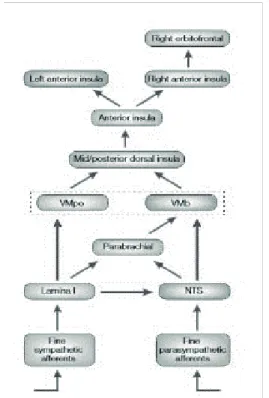
Previous research on Interoception highlights the role of vagus nerve and of the small-diameter fibres (Aδ and C) that converge in spinal dorsal horn lamina I. Both are implicated in the spinothalamocortical pathway (figure 1), the pathway
that conveys information regarding pain, visceral and cardiorespiratory inputs that later activate insular cortex (Strigo & Craig, 2016; Cameron, 2001; Craig, 2002, 2003; Critchley & Harrison, 2013; Critchley, Wiens, Rotshtein, Öhman & Dolan, 2004). Neurons in the spinal lamina I project into the nucleus of the solitary tract (NTS), parabrachial nucleus, periaqueductal gray, and other brainstem autonomic nuclei. Then, in the posterior and basal ventromedial nucleus of the thalamus, arises the main relay of viscerosensory and gustatory information within the spinothalamic tract, projecting onto hypothalamus, amygdala, orbitofrontal cortex, anterior cingulate cortex (ACC), and insular cortex (Craig, 2002, 2003; Strigo & Craig, 2016; Avery 2015, 2017).
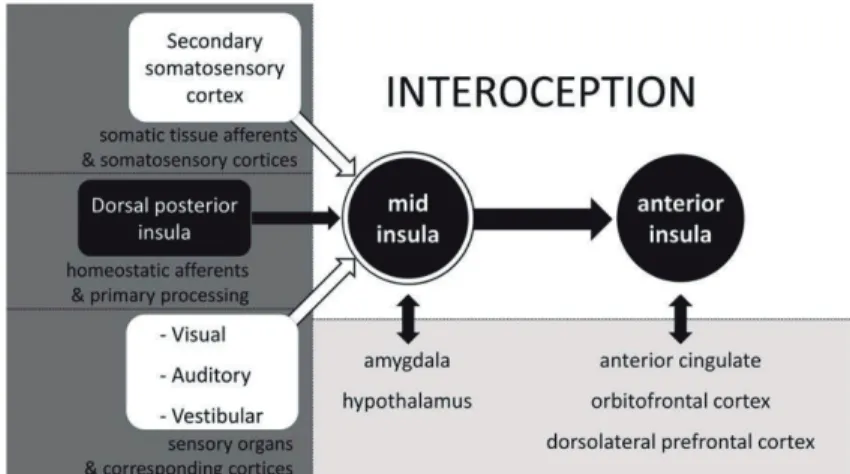
Accordingly, the information processed by the posterior insula is integrated in the mid-insula which also receives inputs from secondary somatosensory cortex (thus allowing integration of non-homeostatic information) (Kuehn, Mueller, Lohmann & Schuetz-Bosbach, 2015). Mid-insula is considered the locus of cross-modality integration, with efferents to the amygdala (stimulus salience
Figure 2 Organizational chart for interoception; nucleus of the solitary tract (NTS); ventromedial thalamic nucleus (VMb); ventromedial nucleus (VMpo) (Craig, 2002).
and emotional memories) and hypothalamus (state of the autonomic nervous system and of ongoing metabolic processes) (figure 2) (Ceunen, VlaeyenJ & Van Diest, 2016).
Lastly, anterior insular cortex is essential for the conscious interoception reflecting the reciprocal connections with higher order structures like anterior cingulate cortex, ventromedial prefrontal cortex and dorsolateral prefrontal cortex. Somatosensorial and somatomotor cortex also play important roles in this system, and are preferentially activated by aversive stimuli (Craig, 2002; 2003; 2009; Zu Eulenburg, Baumgärtner, Treede & Dieterich,2013). Studies also highlight the importance of the connections between anterior insular cortex, more specifically the right anterior insula (which integrates the sensation and the interoceptive system) and the close relation with ACC (which is responsible for motivational behaviour that participates in emotion) leading to emotional behaviour awareness (Pollatos et al., 2005; Critchley et al., 2004; Kuehn, Mueller, Lohmann & Schuetz-Bosbach, 2015).
The research interest on interoception has grown exponentially over the past 10 years. In one of the first and most influential peripheral theories, the James– Lange theory of emotion, it was suggested that signals generated from the body, such as the sensation of the heartbeat and respiration, are fundamental for the subjective experience of emotion. In this theory, an emotive stimulus automatically initiates visceral, vascular and somatic responses. Other theories,
Figure 3. Integration of activity in progression from the posterior insula (left) through the mid-insula to the anterior insula (right). (Ceunen, VlaeyenJ & Van Diest, 2016)
specifically bodily feedback theories, proposed that the emotion experience is a product of cognitive-affective appraisal of bodily arousal (e.g. somatic markers by Damasio, 2000). These theories state that the identification of the changes in the generation and perception of bodily responses, are crucial for the variability in emotion experience. This was found both in central and peripheral processing of emotional stimuli (Craig 2002, 2015; Pollatos et al., 2005, 2007; 2012; Herbert et al., 2007), as well as cognitive processes like intuition and decision (Dunn et al., 2010). In other words, these evidences suggest that the more accurate in perceiving bodily activity the individual is, the stronger the relationship between such bodily changes and emotional experience and cognitive processing.
Despite theoretical suggestions of multiple integrations of the interoceptive information it is still unknown whether there is a general interoceptive ability. To clarify the field, several authors have proposed different models and tried to detail interoception theoretical construct (for a review see Di Lernia, Serino & Riva, 2016). One of the most influential is the theoretical model proposed by Garfinkel Seth, Barrett, Suzuki & Critchley (2015). In their model, they suggest that interoception can be divided into three different concepts: interoceptive accuracy (IAc), interoceptive sensibility (IS), and interoceptive awareness (IAw) (Garfinkel et al., 2015). “Interoceptive accuracy” is the objective ability in perceiving internal (bodily) signals and sensations, investigated for example, by means of heartbeat procedures related to cardiovascular perception (Garfinkel et al., 2015; Calì, Ambrosini, Picconi, Mehling & Committeri, 2015). These measures are sensitive to relevant individual differences (e.g., Critchley et al., 2004; Pollatos, 2012; Dunn et al., 2010) and to affective dimensions such as intensity (e.g., Wiens, Mezzacappa, & Katkin, 2000; Pollatos et al., 2012).
One of the most frequently used method to asses interoception is the heartbeat tracking method developed by Schandry (Schandry, 1981; Kleckner, Wormwood, Simmons, Barrett & Quigley, 2015). In this method, participants are fitted to an ECG, which records their true heartbeat through the entire task. Thereafter, subjects are asked to silently count their own heartbeats through three or four intervals with varying duration ranging from 25-55 seconds and to report the number of heartbeats counted for each interval. Individuals are asked to avoid touching their body or use any kind of physical manipulation to directly
feel their heartbeats. The outcome result is calculated by comparing the number of actual and reported heartbeats (Schandry, 1981). Studies using this task exhibited association between heartbeat tracking accuracy and memory for emotional words and decision making in complex situations (Werner, Peres, Duschek, & Schandry, 2009; Werner, Jung, Duschek & Schandry, 2009). Moreover, heartbeat tracking accuracy was also linked to subjective arousal while rating emotional images, and increasing IA promoted intuitive decision making in advantageous or disadvantageous choices dependent on the anticipatory bodily signals (Dunn et al., 2010). This method elicits activation of neuroanatomical structures such as thalamus, insula, medial frontal/dorsal cingulate, inferior frontal gyrus, as well as the somatomotor cortex (Pollatos, Schandry, Auer & Kaufman, 2007).
This method is widely used and relatively easy to perform in a research setting, with relatively short task duration (10–15 min). However, it has also some limitation, particularly related to the impact of expectations on the performance (e.g., knowledge of one’s typical heart rate) (for revision of procedures see Kleckner, Wormwood, Simmons, Barrett & Quigley, 2015).
Although the most commonly used task is the heartbeat mental tracking, other methods to assess this modality were developed. Heartbeat discrimination task, also known as the modified Whitehead task (Whitehead, Drescher, Heiman, & Blackwell, 1977), is another example. In this task, participants are fitted to an ECG to acquire the true heartbeat. A series of 10 exteroceptive tones or visual inputs triggered by the R-spike in ECG are presented to either coincide or not coincide with the perception of those heartbeats. The subject’s task is to discriminate whether the tones series presented are coincident (tones are presented 200 ms after each R-spike) or not coincident (tones presented 500 ms after each R-spike) with his heartbeat (Whitehead, Drescher, Heiman & Blackwell, 1977; Schulz et al., 2013). Studies using this method found that better IA detectors had greater experience of emotion while watching video clips with emotional valence (Wiens et al., 2000). This task has the advantageous of not being influenced by expectations, but it also implies different cognitive resources when compared to Schandry task. The later requires attention to visceral
sensations, while the Whitehead tasks require a focus on visceral sensations and exteroceptive stimuli concurrently.
Interoceptive Sensibility (IS), another concept proposed in the Garfinkel et al model, is considered as a subjective, self-evaluated characterological trait, assessed by questionnaires. Its frequently assessed using questionnaires that assess the extent to which individuals are able to perceive their internal sensations (e.g Multidimensional Assessment of Interoceptive Awareness, MAIA, Mehling et al., 2012; Interoception Sensory Questionnaire, by Fiene, Ireland & Brownlow, 2018; Body Awareness Questionnaire, see Shields, Mallory & Simon, 1989; Big Five Inventory see Benet-Martínez & John, 1998; John, Donahue, & Kentle, 1991; Five Factor Mindfulness Questionnaire, Baer et al., 2008; Self Awareness Questionnaire, Longarzo et al., 2015).
One of the most studied questionnaires in this research field is MAIA. It was developed by Mehling and colleagues (2012) and aimed to evaluate interoception as a multidimensional concept. MAIA has been developed based on the theoretical rational that several factors contribute to this construct like attentional styles, emotional awareness, anticipation and past experiences, abstraction and confidence of information arising within the body sensation. This may have therapeutic implications for clinical conditions, like anxiety, or helping to understand which aspects of body awareness are related to clinical outcomes, thus directing the therapies toward them.
The original version of MAIA is composed of 32 items. This has 8 different sub-scales to evaluate several component of interoception sensitivity: (1) Noticing, the awareness of one’s body sensations; (2) Not-distracting, the tendency not to ignore or distract oneself from sensations of pain or discomfort; (3) Not-worrying, the tendency not to experience emotional distress or worry with sensations of pain or discomfort; (4) Attention regulation, the ability to sustain and control attention to body sensation; (5) Emotional awareness, the awareness of the connection between body sensations and emotional states; (6) Self-regulation, the ability to regulate psychological distress by attention to body sensations; (7) Body-listening: the tendency to use the insight abilities while listening the body and (8) Trusting: the experience of one’s body as safe and trustworthy. The results indicated good psychometric properties, supporting the
construct validity and internal consistency reliability of the MAIA scales. Accordingly, association were found between MAIA scales and scales of related constructs (among others, Five Factor Mindfulness Questionnaire (Baer et al., 2008), Body Consciousness Questionnaire (Miller, Murphy & Bush, 1981), Pain Catastrophizing Scale (Sullivan, Bishop & Pivik, 1995), State-Trait Anxiety Inventory (Spielberger, 1983), Difficults in Emotion Regulation Scale (Gratz & Roemer, 2004). Recently, MAIA was translated and validated into a Portuguese by Machorrinho (2017). The Portuguese version is composed of 33 items scored on a 6-points Likert scale. This multidimensional instrument measures IAw on seven scales: (1) Noticing (3 items); (2) distracting, (4 items); (3) Not-worrying, (4 items); (4) Attention regulation, (7 items); (5) Emotional awareness, (5 items); (6) Self-regulation, (7 items); (7) Trusting, (3 items). The score is calculated for each scale by averaging the scores of individual items, and thus can range 0–5. Higher values in the questionnaire reveal higher IS (Machorrinho, 2017; Mehling et al., 2012).
Interoceptive awareness (IAw), is the metacognitive awareness of interoceptive accuracy (Garfinkel, et al., 2015). This measure is usually assessed immediately after the end of the heartbeat detection task. The subject is asked to rate his confidence in his perceived accuracy response, (e.g. using a paper and pencil marking his response on a continuous visual analogue scale from “No heartbeat awareness” to “Full perception of heartbeat” (Garfinkel et al., 2015). These confidence measures highlight the relationship between subjective (perceived) and objective (actual) interoceptive ability (Khalsa et al., 2008). From another viewpoint, it is also possible to quantify explicitly how the confidence predicts accuracy within a given individual using more sophisticated analytic approaches (e.g. receiver operating characteristic (ROC) curves or trial-by-trial confidence – accuracy correlations) (Green & Sweets, 1966; Garfinkel et al., 2015).
Garfinkel and colleagues (2013, 2015) proposed an hierarquical model of interoception, with IS as the base, revealing a tendency/trait to be internally focused to body sensations, with influences on IA performance and IAw (Calì, Ambrosini, Picconi, Mehling & Committeri, 2015). Previous research has already found that IS and IA do not predict each other or have significant correlations
(Mcfarland, 1975; Whitehead, et al., 1977). In a recent research, Garfinkel and colleagues (2015) found that the three dimensions were distinct and dissociable, but within the group of subjects with better IA scores, IA was predicted by IAw and IS, revealing a possible central effect of this construct, supporting the remain. IAw and IS also seems to be independent (i.e. not predicted by each other).
Further evidence for this model came from studies with experienced meditators and non-practices of contemplative therapies, showing that meditators don’t differ in IA but rate their performance as better. This means that meditation increase measures of confidence, which increase measures in awareness, when match IAc with better performance in IAw. (Khalsa et al., 2008). Fischer, Messner & Pollatos, 2017 also measured the behaviour of these three dimensions of interoception towards an implementation of a 8-week mindfulness-based stress approach, to increase attention to bodily sensations, called body scan (Parkin et al., 2014). The results showed that participants were able to detect their heartbeat more accurately after the training approach, supporting the idea that paying attention to the body in a mindful way has a beneficial impact on interoception (Parkin et al., 2014) and also on the confidence in the interoception. However, no change in IS was observed. This might have happened because of methodological reasons: the measure used to assess IS was the Eating Disorder Inventory (Garner, Olmstead & Polivy, 1983) which was not a questionnaire directed to general body awareness, as MAIA is.
In summary, even though some contemplative practices like meditation and biofeedback are assumed to improve the sensation of bodily signals and attention towards own body, other studies suggest no such affect concerning heartbeat perception performance (Nielsen and Kaszniak, 2006; Khalsa et al., 2008). However, several studies, including mindfulness, only improved the measures of interoceptive confidence, functionality and quality of life, distinguishing individuals more experience in this practice as more confident in interoception tasks than the non-meditators (Khalsa et al., 2008; Parkin et al., 2013; Mehling, 2016; Farb et al.,2015; Mehling, 2016).
The increase interest in the ability to increase the interoception reporting skills described in these studies is due to its close and crucial link known to exist between interoception and other relevant human neurocognitive processes, such
as memories, decision making, perception of time, emotion experience, health and pain (Ceunen, Vlaeyen, & Van Diest, 2016; Schandry et al., 1981; Wiens, 2005; Craig, 2009b; Pollatos and Schandry, 2007; Garfinkel et al., 2014).
1.4 Interoception and other sensory modalities
The relation between different interoception modalities has been intriguing. The studies conducted under this topic have not found clear-cut results and the relations are still not easy to understand. One of the reasons is that different studies assess different modalities and use diverse methods to assess the same modality. Several interoceptive modalities have been measured in this field, such as gastric function, assessed by invasive, (Whitehead & Drescher, 1981), and more recently, non-invasive methods like Water Load Test, to induce gastric distension and gastric neuromuscular activity, by ingesting room temperature, non-carbonated water (Chen, Lin, Chen & Huang, 2005; Herbert, Muth, Pollatos & Herbert, 2012). Regarding the gastrointestinal modality tasks of rectal and anal distensions are also used (Hobday et al., 2001). Another modality that is frequently included in interoception research is respiratory function (Daubenmier, Sze, Kerr, Kemeny & Mehling, 2013; Faull, Cox & Pattinson, 2016; Harver, Katkin & Bloch, 1993) using respiratory load task and respiratory discrimination (Zechman, Hall, & Hull, 1957; Webster & Colrain, 2000). In these tasks’ participants must detect when a (or several) resistances have been introduced into a tube, through which they are breathing (Davenport, Chan, Zhang, Chou, 2007; Zhao, Martin, & Davenport, 2002). Tactile acuity task (Van Boven & Johnson, 1994) assess sensitivity for touch. It can be made using a series of grooved shaped pieces of plastic applied with bars and grooves aligned in one of two orthogonal directions. The participant is asked to identify which was the orientation of the stimulus. (Zu Eulenberg, Baumgärtner, Treede & Dieterich, 2013). In taste tasks, sweet, bitterness and the neutral flavours are sprayed into the oral cavity of the subject (e.g. Avery et al., 2015; Ferentzi et al., 2017) and he is asked to rate the perceived intensity and pleasantness of the stimulus.
The contemporary approach to interoception includes also the assessment of the lemniscal pathway, responsible for proprioception, the conscious perception
of joint angles and muscle tensions, of movement, posture, and balance (Craig, 2015; Goble, 2010) (see protocol in Ferentzi et al., 2018). Examples of tasks measuring this are the joint position matching, whereby individuals must replicate a reference joint angle in the absence of vision (ie, using proprioceptive information).
Based on the comparison of these modalities, two studies found moderate associations between heartbeat perception task and gastric perception (Whitehead and Drescher, 1980; Herbert et al., 2012) and another between the heartbeat task and the perception of skin conductance (Steptoe e Noll, 1997). Several other studies assessing perception of multiple interoception modalities, as detection of heartbeat, gastric and respiratory perception, did not found correlations between different modalities (Vaitl, 1996; Harver et al, 1993; Werner et al., 2009; Garfinkel et al 2016). A recent study investigated four interoceptive channels, namely heartbeat perception, pain threshold and pain tolerance, bitterness sensitivity and balancing ability (Ferentzi et al., 2017). They found no relations between these modalities. One interesting study, in chronic pain patients related two modalities, respiration and pain have found that healthy subjects who underwent a slow breathing approach reduced ratings of pain intensity and unpleasantness, while in fibromyalgia patients these relations were less reliable (Zautra, Fasman, Davis, Arthur & Craig, 2009).
A recently published study directly investigated the relations between a higher number of interoception modalities (Ferentzi et al., 2018). A multichannel approach was used, and six sensory channels were assessed: heartbeat, gastric, pain and bitter perception, proprioception and balancing ability. Correlations and factor analyses were performed, and the results indicated that there were no correlations or a common factor between different modalities. This suggest that the ability to perceive multiple dimensions from the same modality is integrated for a general perception of a specific sensory channel, but the same is not true between modalities. The current study aimed to investigate the relations between pain reporting accuracy and the ability to report other interoception modalities, such as taste and heartbeat.
1.5 Theoretical proposals
From a theoretical point of view, the absence of relations between different modalities is not clearly hypothesized. According to Craig's perspective (Craig, 2002, 2009; 2015) and other “embodied theories of emotion” (e.g.; Critchley, 2005; Damasio et al., 2000; Rainville et al., 2006) the information provided by sensory systems is essential for emotional processing and appraisals, and usually all contribute to a general interoception perception. More recently, Smith and Lane (2015) detailed this “general” interoception ability suggesting that emotional processing depend on three systems with hierarchical organization, from those that require lower cognitive appraisals to those that need higher cognitive appraisals. The first stage, called “generative”, information convey by each sensory system is processed at somatosensory cortex and posterior insula. Only in the next stage of processing, the “perceptual”, a “whole-body pattern” is created in the anterior insula, based on the integration of these discrete systems. Finally, in the third stage the anterior cingulate cortex, the emotional concepts are created using information from the lower level processing with “regulatory” higher systems. Between these systems, several feedback and feedforward processes modulate the appraisals, and may be related to other brain areas. Based on this model it may be hypothesized that each sensory modality is independently processed before integration to generate a more general “whole-body” assessment. It might be that the IA (Garfinkel et al., 2015) assessed for example using MAIA, as well as other psychological constructs may be processed at higher level than modality specific tasks. Accordingly, due to such differences in the design of studies comparing different interoception modalities, it is still unclear if there are relations between these modalities.
Each sensory System “generative” somatosensory cortex
Perceptual “whole-body pattern” mid and anterior insula Emotional Concepts “regulatory higher systems”
anterior cingulate cortex
Figure 4. Model proposed by Smith and Lane (2015) on three hierarchical systems.
2. Submitted Manuscript
2.1 Introduction
Pain intensity, as intensities of other subjective experiences is challenging to measure. Both clinical and research findings depend on such subjective self-report assessments, which are self-reported on scales that are variably understood by subjects. These limitations are reflected in experts concerns regarding the appropriateness of pain intensity measures as primary outcomes in chronic pain populations (Ballantine & Sullivan, 2015), and in lack of use of such scales by pain clinicians (Bačkonja & Farrar, 2015).
Recent findings suggest that pain reporting accuracy vary across patients (Treister, Eaton, Trudeau, Elder & Katz, 2017), a characteristic that can be assessed by the Focused Analgesia Selection Test (FAST) task. The FAST is based on exposing subjects to repeated noxious stimuli of various intensities in blinded manner. Assessing the relations between the stimulus intensities and pain reports allow to assess the error variance component of one's pain intensity reports, or in other words, to quantify subject's ability to accurately report pain. As shown, subjects ability to accurately report pain in the FAST procedure relates to their ability to accurately report changes in clinical pain (Treister, Eaton, Trudeau, Elder & Katz, 2017).
The notion that the ability to accurately report pain can be assessed by an experimental procedure is novel; however, the assessment of reporting accuracy of other bodily sensations, termed interoception, has been intensively investigated. Previously seen merely as the sense of visceral sensations, interoception is currently defined as “the sense of the physiological condition of the entire body” (Ceunen, Vlaeyen, & Van Diest, 2016; Craig, 2015), often linked to pain and temperature, cardiorespiratory function, hunger, thirst, stress, vasomotor flush and respiration. Interoception has been assessed by several methods, based on various modalities. A common method is based on sensitivity to detect one's own heartbeats, termed the heartbeat detection task (Schandry, 1981). Other methods and questionnaires have been used to assess interoception (Flor, Fürst & Birbaumer, 1999; Garfinkel et al., 2016; Garfinkel,
Seth, Barrett, Suzuki, & Critchley, 2015; Harver, Katkin, & Bloch, 1993; Herbert, Muth, Pollatos, & Herbert, 2012; Mehling et al., 2012; Michael, Naveteur, Dupuy & Jacquot, 2015; Whitehead, Drescher, Heiman, & Blackwell, 1977).
Interoceptive signals ascend from the periphery in two main pathways (Craig, 2009), the spinothalamical and lemniscal tracts, which are integrated at multiple levels, among which the medial and the anterior insular cortex play a primary role (Engström, Karlsson, Landtblom & Craig, 2015). Given that interoceptive information, regardless of its origin, is processed by same brain structures, it is reasonable to assume that being able to accurately report pain would correlate with ability to accurately report other bodily sensations, which is, the aim of the current investigation. Specifically, possible relationships between pain-reporting accuracy and the ability to accurately detect heartbeat and tastes will be assessed.
2.2 Materials and Methods
Subjects:
The study sample included healthy volunteers, which were recruited from local Universities of Lisbon. Experiments were conducted in accordance with the Declaration of Helsinki and with the approval of the local Ethical Board. Written informed consent was obtained from each participant before the beginning of the experiment, and afterwards a code number was attributed to each subject. Participants were enrolled onto the study after meeting the following criteria: (1) age above 18; (2) absence of acute or chronic pain disorders; (3) no reports of psychiatric, cognitive, and /or neurological disorders; and (4) no chronic use of medications except for oral contraceptives. Participants were excluded if: (1) were pregnant or breastfeeding; (2) had any persistent or severe infection within 30 days of baseline; (3) had formal diagnosis of any uncontrolled medical condition and (4) were unable to provide informed consent, communicate and understand the purpose and the instructions of the study.
Instruments and procedures:
The Focused Analgesia Selection Test (FAST)
FAST was developed to assess pain-reporting skills in response to repeated administration of thermal noxious stimuli of varying intensities applied to ventral surface of the subject’s non-dominant arm. It uses the Medoc® Thermal Sensory Analyzer II incorporating a Peltier element-based thermode (30 x 30 mm2).
Subjects were instructed to rate their perceived pain intensity in response to each stimulus on a 0-100 numerical rating scale (NRS), ranging from 0, denoting “no pain”, to 100, denoting “the worst imaginable pain”. The temperature was raised from a baseline of 32°C, peaked for 3 seconds at one out of 7 predetermined temperatures (44, 45, 46, 47, 48, 49 or 50°C) and then decreased down to baseline, with total stimulus duration (including ramping up and down) of 8 seconds. Each temperature was presented 7 times in a random block-ordered design (total of 49 stimuli), based on a previously described protocol (Treister, Eaton, Trudeau, Elder & Katz, 2017). The location of the thermode was adjusted every 10 stimuli to minimize sensitization and/or habituation effects with
inter-stimulus intervals (ISI) of 15 seconds. The FAST procedure duration is about 25 minutes.
Pain scores captured during the FAST were used to calculate the 3 FAST outcomes as follows: 1) R2 was calculated by using a power model regression.
Disparity between the predicted function and actual scores could be a result of inaccuracy or unreliability. Close concordance between actual and predicted scores are expressed by higher R2, and suggests greater accuracy and reliability;
2) ICC was computed using a 2-way mixed model for the 7 presentations of each of the 7 stimuli intensities. An ICC score approaching 1 denotes a high degree of reliability (or the agreement in responses to the same stimulus over several presentations); 3) The CoV is the ratio of the SD to the mean, calculated separately for each stimulus intensity. The average CoV was calculated as the mean of 7 CoVs. A higher CoV demonstrates a larger variability in reporting.
Taste Perception task
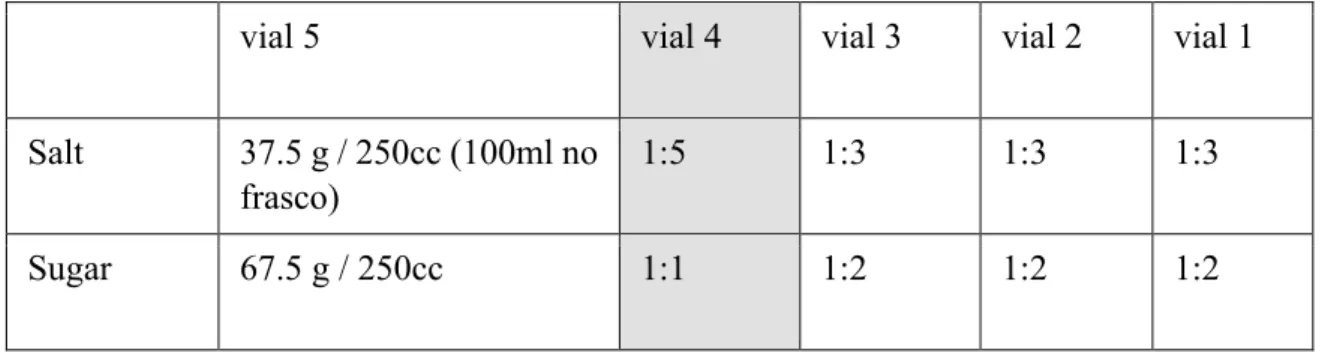
This task is a modification of Hendi and Leshen (2014) procedure, which was developed to assess the sensitivity to salty and sweet taste. Unlike the original purpose, the procedure was modified to assess reporting accuracy of tastes, rather than sensitivity to tastes. The participants were asked to avoid eating, drinking (except water) and smoke 2 hours before the test. During the task subjects were requested to grade the intensity of five different concentrations of each flavor, administered on the tongue via oral sprays. Preparation of the sprays was as follows: for the most concentrated salty solution (vial 5), 37.45 g of NaCl was added to 250 cc (quarter-litter) of mineral water. For the second solution (vial 4), the first concentration was diluted by 1.5. For the third concentration (vial 3), the first solution was diluted by ratio of 1:3. The last two concentrations were diluted from the third (vial 2) and the forth (vial 1) concentrations, by 1:3. Preparation of the sugar solution was as follows: The highest concentration (vial 5) was of 67.5 grams of sugar in 250 cc (quarter-litter) of mineral water. The rest of the sprays were prepared by repeated dilution at a ratio of 1:2, except the second concentration (vial 4), that was prepared from the high concentration and diluted in ratio of 1:1. Mineral water with a maximum of 9mg of NaCl /L was used for both the salty and sugar solutions. The exact ratio of concentrations was determined based on pilot studies, aimed to identify concentrations that will be
perceived, on average, as distinct from each other. During the task, the experimenter sprayed each taste solution onto the participant’s oral cavity in a semi-randomised order (excluding sequential concentrations). Between every two sprays subjects were requested to wash their oral cavity with fresh water. Subjects randomly began the taste task with either salty or sweet taste series, followed by the other taste. ISI between two consecutive administrations of sprays was about 10 seconds. Each concentration was repeated 5 times (a total of 25 repeats for each taste). The participants were asked to indicate how strong was the flavor, for each concentration of taste, on a NRS ranging from 0 "not feeling", to 100 "most strong". As in the FAST procedure, the taste procedure outcomes are the R2, ICC and CoV, calculated in the same manner as in the
FAST.
Heartbeat perception task
The heart beat perception task assesses the individuals' ability to be accurate in the perception of its heartbeat. This task, named the Mental Tracking Method, was developed by Schandry in 1981 in order to assess interoception accuracy using three heart beat counting phases with varying length (Schandry, 1981). First, participants fitted to physiological recording equipment to assess true heartbeat through electrocardiography (BITalino device, Plux Wireless Biosignals, SA, Lisbon, Portugal). The experimental task consisted of five minutes resting period to assess baseline measures. Then, when a voice signal was presented by a research assistant, the subject is asked to pay attention and count his/her heartbeats silently, focusing only on bodily feelings. Next, after offset voice signal was given, the subject is asked to report the number of counted heartbeats. The following instructions are given: “Without manually checking, count silently each heartbeat you feel in your body from the time you hear “start” to when you hear “stop”. Subjects were instructed to avoid any kind of physical manipulation (pressure points, respiratory manipulation) that might ease detection. The task was performed three times with varying in length (25, 35, 45 seconds) in the following order: rest (60s) - perception (25s) – rest (30s) – perception (35s) – rest (30s) – perception (45s) – rest (60s). The subject was unaware to the different length of each round. Heart rate and respiration were assessed using Ag/AgCl electrodes per Eithovens’ triangle and respiratory belts,
respectively, connected to the BITalino device. Heartbeat perception accuracy was calculated, for each subject, as an error score between counted heartbeats reported and actual heartbeats obtained by ECG, according to the formula:
IAc score=
å
--(recordedheartbeats countedheartbeats)/recordedheartbeats] [1
3 1
. IA vary between 0 - 1. Higher scores indicate better IAc.
Questionnaires
Sociodemographic Questionnaire:
Participants indicated their age, sex, height and weight, health condition, medication (last 48 hours, contraceptives), last menstruation and consumption habits (alcohol, tobacco, drugs).
In addition, the following patients reported outcome measures, which are known for being related to pain or interoception were assessed:
Perceived Stress Scale (PSS):
Perceived Stress Scale is a brief instrument, used in community samples to assess to what degree, situations in participants’ life were appraised as stressful (Cohen, Kamarck & Mermelstein, 1983). In response to each item, participants report their feelings on a five-likert scale during last month. The validated Portuguese version of this instrument was considered adequate and was used (Moreira, 2002).
Hospital Anxiety and Depression Scale (HADS):
The Hospital Depression and Anxiety Scale is a brief instrument commonly used to assess anxiety and depression in non-psychiatric population (Zigmond & Snaith, 1983). It consists of 14 items (response scale 0–3), which are divided into 2 subscales measuring either anxiety or depression feelings during past week. The validated Portuguese version was used (McIntyre, Pereira, Soares, Gouveia & Silva, 1999). The results vary from 0 to 21, with higher scores indicating higher levels of depression or anxiety. The severity of anxiety and depression is classified as: values 0-7 = normal, 8-10 = light, 11-14 = mild and 15-21 = severe.
Interoceptive awareness (IAw) was assessed by the Portuguese version (Machorrinho, 2017) of the original English-language MAIA (Mehling et al., 2012). The MAIA is composed of 33 items scored on a 6-points Likert scale. This multidimensional instrument measures IAw on seven scales: (1) Noticing, the awareness of one’s body sensations (3 items); (2) Not-distracting, the tendency not to ignore or distract oneself from sensations of pain or discomfort (4 items); (3) Not-worrying, the tendency not to experience emotional distress or worry with sensations of pain or discomfort (4 items); (4) Attention regulation, the ability to sustain and control attention to body sensation (7 items); (5) Emotional awareness, the awareness of the connection between body sensations and emotional states (5 items); (6) Self-regulation, the ability to regulate psychological distress by attention to body sensations (7 items); (7) Trusting: the experience of one’s body as safe and trustworthy (3 items). The score for each scale is calculated by averaging the scores of individual items, and thus can range 0–5.
Experimental protocol
Subjects were asked to refrain from: (1) taking any analgesics, beta blockers (that influences heart function) and any over-the-counter medications during the day of the study visit; (2) eating and drinking (besides water) 2h hours prior to the study session; and (3) smoking 2h hours prior to the study.
The experiments were conducted at NeuroSer Clinic and university laboratory. At the beginning of the experimental session, all subjects underwent short training in order to familiarize them with the devices, the sensations evoked by the painful stimulation, and the rating task. After the familiarization stage the experiment begun with the FAST procedure. Thereafter, all subjects preformed the heart beat task, which begun with 5 minutes baseline measures recordings, followed by a 10 sec familiarization phase. Upon completion of the heartbeat detection task, the taste procedure was familiarized and preformed. The total duration of the experimental session was approximately 1 and a half hours, and participants were rewarded for their participation with credits for neuroscience subject.
Statistical Analyses
Data were processed and analysed using Excel (Microsoft Corp, Redmond, WA, USA), and SPSS software version 23 (SPSS, Inc., Chicago, IL, USA).
Descriptive statistics were used to present demographic and baseline characteristics.
As most variables were non-normally distributed (tested by Kolmogorov– Smirnov and Shapiro–Wilk tests), data were analysed with nonparametric tests. Friedman’s tests (followed by Wilcoxon post hoc test, when applicable) were used to assess differences in pain and taste (sugar and salt) scores. Spearman’s correlations were used to assess relations between the accuracy tasks (FAST and taste) and interoception measures (heartbeat task and MAIA), as well associations with pain-related psychological questionnaires (PSS and HADS). In all figures, data presented as mean ± SD unless specified otherwise. Statistical significance was defined as P≤0.05.
2.3 Results
Participants’ Characteristics
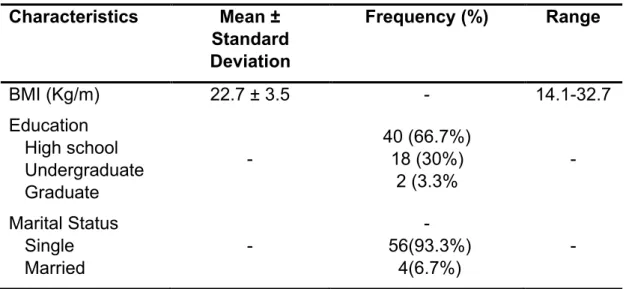
The study sample included 60 volunteers (29 men and 31 women), ranging in age from 18 to 53 with mean ± standard deviation (SD) of 23.63 ± 6.31 years. Table 1 depicts the socio-demographic data of the entire sample.
Table 1. Demographic data of the study population (n=60)
FAST outcome measures
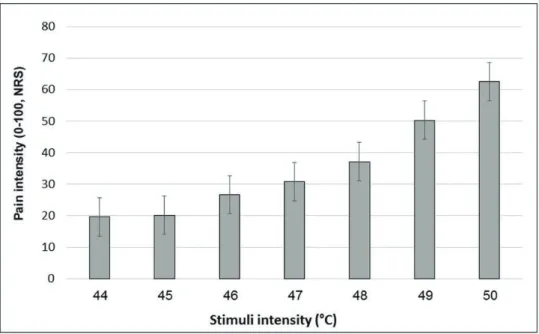
Mean pain intensities reported in response to each of the seven stimuli intensities are presented in Figure 1. Group mean ± SD responses ranged from 19.65 ± 17.7 for the lowest stimulus intensity (44°C) to 62.59 ± 23.8 for the highest stimulus (50°C). Mean pain scores significantly differed from each other (Friedman’s test, chi-square 288.83; P <.001). Post hoc Wilcoxon test revealed significant difference between all stimuli intensities (P<0.001) apart from a non-significant difference when comparing between 44°C and 45°C (P=0.216).
Characteristics Mean ± Standard Deviation Frequency (%) Range BMI (Kg/m) 22.7 ± 3.5 - 14.1-32.7 Education High school Undergraduate Graduate - 40 (66.7%) 18 (30%) 2 (3.3% - Marital Status Single Married - - 56(93.3%) 4(6.7%) -
Figure 1. Mean pain scores in response to the 7 FAST stimuli by stimulus intensity.
Note: Black bars represent the average pain scores in response to the 7 stimuli at each intensity. Error bars represent the standard error of the mean.
Descriptive statistics of the FAST outcomes are described in Table 2. The R2,
ICC, and CoV indicated that subjects’ pain reporting skills were widely distributed. R2 had a mean of 0.45 (range 0.01–0.77), ICC with mean of 0.60 (range 0.08–
0.87), whereas CoV had a mean of 0.58 (range 0.05–1.56).
Table 2. FAST outcomes
R2 ICC CoV
Mean (SD) 0.453 (0.16) 0.602 (0.16) 0.577 (0.38)
Median 0.49 0.62 0.49
Minimum 0.01 0.08 0.05
Maximum 0.77 0.87 1.56
Note: FAST, focused analgesia selection test; SD, standard deviation; ICC,
intraclass correlation coefficient; CoV, coefficient of variation
Interoception Task:
The mean heartbeat perception score was 0.65 (range 0.00–0.98), with median score of 0.69. This wide range of scores suggests that participants differ in their interoception accuracy, as assessed by the heartbeat detection task.
Taste task outcome measures:
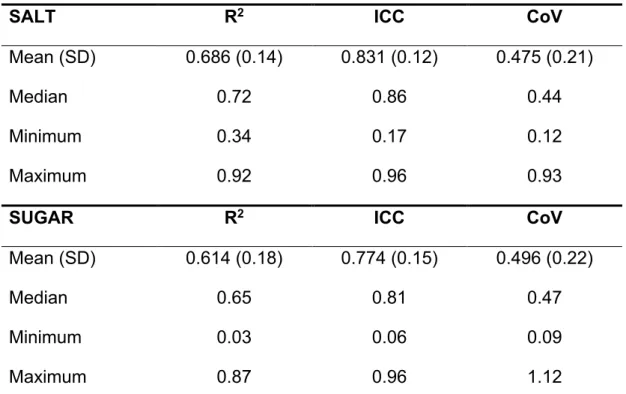
Mean taste intensity ratings reported in response to each of the five concentrations for both sugar and salt are presented in Figure 2. Group mean ± SD responses ranged from 2.22 (± 3.53) and 1.95 (±3.01 SD) for the lowest stimuli intensity (Salt 1 and Sugar 1 respectively) up to 54.02 (± 25.19) and 33.73 (± 25.61) for the highest stimuli (Salt 5 and Sugar 5, respectively). Mean taste scores of salt significantly differed from each other (Friedman’s test, chi-square 231.56, p<.001) as well as the mean taste scores of sugar (Friedman’s test, chi-square 225.15, p<.001). Post hoc Wilcoxon test revealed significant difference between each concentration of both sugar and salt (P<0.001). Descriptive statistics of the tastes outcomes are described in Table 3. The R2, ICC, and CoV
indicated that subjects’ taste reporting skills were widely distributed.
Figure 2. Mean intensity taste scores.
Note: Each bar represents the average taste scores in response to the different salt/sugar concentrations. Error bars represent the standard error of the mean. Taste concentrations are labeled 1 to 5, from lowest to highest concentration.
Table 3. Taste task outcomes
Note: SD, standard deviation; ICC, intraclass correlation coefficient; CoV,
coefficient of variation.
Interoception as assessed by the MAIA questionnaire:
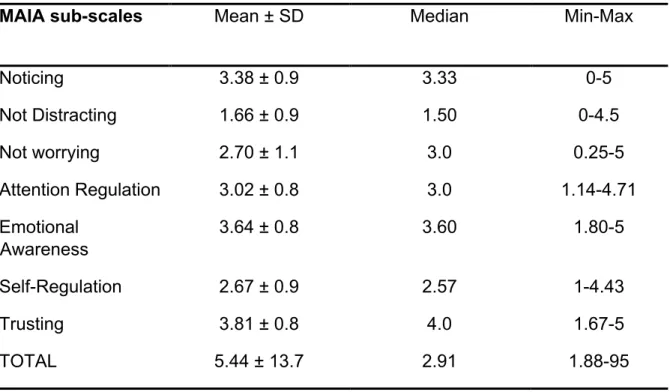
Table 4 depicts the results of the Multidimensional Assessment of Introceptive Awareness (MAIA) questionnaire.
SALT R2 ICC CoV
Mean (SD) 0.686 (0.14) 0.831 (0.12) 0.475 (0.21)
Median 0.72 0.86 0.44
Minimum 0.34 0.17 0.12
Maximum 0.92 0.96 0.93
SUGAR R2 ICC CoV
Mean (SD) 0.614 (0.18) 0.774 (0.15) 0.496 (0.22)
Median 0.65 0.81 0.47
Minimum 0.03 0.06 0.09
Table 4. A summary of the values distribution of the MAIA questionnaire
Cross-modal associations of accuracy reporting
Positive correlation was found between reporting accuracy of the two tastes. Subjects with high salt ICC had a high sugar ICC values (Spearman’s r=0.477, P<0.001). No significant cross-modal correlations were found between any of the accuracy tasks (FAST, heartbeat task and taste) (P>0.05 for all outcome measures). No significant correlations were found between Interoception task and the MAIA questionnaire (P>0.05).
Relations between pain-related psychological questionnaires and measures of accuracy
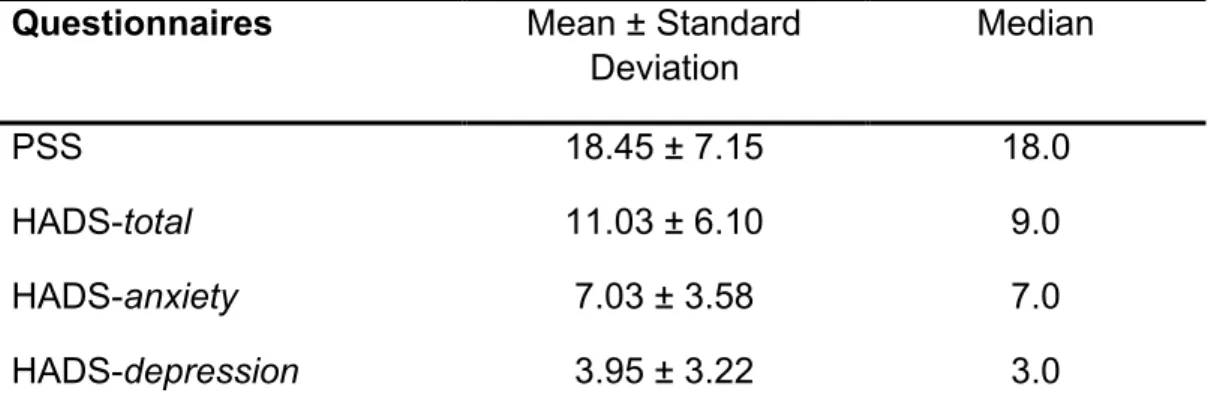
Table 5 depicts the psychological characteristics. No significant correlations were found between any of the psychological measures and accuracy measures (FAST, heartbeat, and taste).
MAIA sub-scales Mean ± SD Median Min-Max
Noticing 3.38 ± 0.9 3.33 0-5 Not Distracting 1.66 ± 0.9 1.50 0-4.5 Not worrying 2.70 ± 1.1 3.0 0.25-5 Attention Regulation 3.02 ± 0.8 3.0 1.14-4.71 Emotional Awareness 3.64 ± 0.8 3.60 1.80-5 Self-Regulation 2.67 ± 0.9 2.57 1-4.43 Trusting 3.81 ± 0.8 4.0 1.67-5 TOTAL 5.44 ± 13.7 2.91 1.88-95
Table 5. A summary of the values distribution of the psychological questionnaire
Note: PSS, perceived stress scale; HADS, hospital anxiety and depression scale. Questionnaires Mean ± Standard
Deviation Median PSS 18.45 ± 7.15 18.0 HADS-total 11.03 ± 6.10 9.0 HADS-anxiety 7.03 ± 3.58 7.0 HADS-depression 3.95 ± 3.22 3.0
2.4 Discussion
The aim of the current study was to investigate if the ability to accurately report pain is correlated with the ability to accuracy report other bodily sensations. Our hypothesis was rejected: No correlations were found between reporting accuracy of pain intensity and accuracy of reporting other sensations.
Our results suggest that interoceptive accuracy covary across different modalities. Several other studies assessing perception of multiple interoception modalities, as detection of heartbeat, gastric and respiratory perception, did not found correlations between accuracy of reporting different modalities (Garfinkel et al., 2016; Harver, Katkin & Bloch, 1993; Ferentzi et al., 2017; Vaitl, 1996; Werner, Duschek, Mattern & Schandry, 2009). As such, a recent study directly investigated the relations between six interoception modalities tasks, including heartbeat, gastric, pain, bitter perception, proprioception and balancing ability (Ferentzi, et al., 2018). The results indicated that there were no correlations or a common factor between different modalities. As in our case, the authors did find correlations within measures of the same sensory modality. This suggests that reporting accuracy is a characteristic that can be generalized within, but not between modalities. In contrast to our and Ferentzi et al., (2018) results, previous studies shown moderate associations between heartbeat perception task and gastric perception (Garfinkel et al., 2016; Whitehead & Drescher, 1980) and between the heartbeat task and the perception of skin conductance (Steptoe & Noll, 1997).
Methodological differences can account for these seemingly contrasting findings. Commonly, methods involved not only different sensory channels, but also different tasks modalities. For example, in Ferentzi et al (2018) pain was assessed using a threshold and tolerance tasks. These two measures assess pain perception and as such, correlations between such measures does not necessarily reflect pain-reporting accuracy. Some studies found correlations between heartbeat perception task and pain perception (Herbert, Pollatos & Schandry, 2007; Pollatos, Füstös Critchley, 2012; Wiens, Mezzacappa & Katkin, 2000) while other did not (Werner, Duschek, Mattern & Schandry, 2009). Unlike pain perception measures (eg pain thresholds and tolerance), the FAST outcomes capture different aspects of pain reporting accuracy, and are less
affected by pain sensitivity. Similarly, a single Visual Analogue Scale score of intensity (or unpleasantness) of a taste solution represent the sensitivity (or hedonic assessment) of subjects to a given taste, rather than subject's ability to accurately report intensity of tastes (Ferentzi et al., 2018).
Aligned with previous research findings, in our study, the interoception tasks were not significantly correlated with the measures assessed by the MAIA questionnaire, indicative that these tasks do not measure the same constructs. This observation is in line with the theoretical model proposed by Garfinkel and colleagues (2015) that suggests that “interoceptive sensibility”, the subjective self-evaluated trait assessed by questionnaires (e.g. MAIA) does not correlate with “interoception accuracy”, an objective measure (Garfinkel, Seth, Barrett, Suzuki, & Critchley, 2015; Calì, Ambrosini, Picconi, Mehling & Committeri,2015).
Our findings of lack of correlations between interoceptive modalities support the notion that the accuracy is specific for each sensory system and can’t be generalized across modalities or inferred from one modality to another. Craig's perspective, suggests that even though the interoception integrates several different sensations from the body running in the same neuronal pathways, interoception is a general homeostatic function (Craig, 2002; 2003; 2009; 2015). More recently, Smith and Lane (2015) proposed a specific organization for the specific sensory information and the general feelings of interoception. They considered that interoception is processed on three hierarchical systems: the “generative”, processing information from each sensory system (involving somatosensory cortex and posterior insula), the “perceptual”, where a first “whole-body pattern” is constructed (in the anterior insula) and the “regulatory”, the final stage (integrating the anterior cingulate cortex) where the emotional concepts are created using information from the lower level processing with higher systems (Smith & Lane, 2015). The lack of cross-modal correlations in reporting accuracy observed in our study is aligned with this above-mentioned model.
Treister et al. (2018) have recently showed that pain accuracy is a trainable skill that can be improved by an evoked-pain training approach. The lack of correlations between accuracy reporting of various modalities found in this study
suggest that improving reporting accuracy of one modality will probably not affect the accuracy reporting of other modalities.
In summary, the current study demonstrated lack of associations between pain reporting accuracy and the accuracy of reporting other sensations, suggesting that interoceptive accuracy cannot be generalized across modalities. Further investigation is needed in order to understand differences in the accuracy in symptom reporting and its clinical relevance.
Acknowledgments
We wish to thanks Neuroser (http://neuroser.pt/) and particularly Dra Ana Paula Pereira for providing the place in which data collection was performed.
Disclosure