MANAGING A SOCIAL
(IR)RESPONSIBILITY CRISIS:
THE CASE OF FERRERO AND THE PALM
OIL ISSUE
Chiara Fornelli
Dissertation written under the supervision of Pietro Versari
Dissertation submitted in partial fulfilment of requirements for the
MSc in Business, at the Universidade Católica Portuguesa, June 7
th,
1
ABSTRACT
Title: Managing a Social (Ir)responsibility crisis: the case of Ferrero and the palm oil issue Author: Chiara Fornelli
Crisis management communication represents a challenging concern for today’s organizations. A single episode of negative brand publicity can lead to crucial damages to the constituents, troubles for the entity, as well as threats to its reputation, leading it to their very existence end. Increasingly number of academics identify the brand reputational status as relevant influencer factor in all business’ aspects. Indeed, brand reputation is the base for all organizations to be successful.
This thesis builds on the brand crisis management theories to analyze how Ferrero, one of the largest confectionary companies worldwide, faces and overcome the palm oil scandals, which recently represented its greater threat, improving both profits and reputation. Moreover, this work can be applied as a managerial case study in classes such as Corporate Social Responsibility, Business Ethics, Crisis Management Communication, Management Consulting.
Along this thesis, some crisis characteristics and consumers’ reactions are analyzed, as well as the major strategic crisis responses, thanks to an accurate Literature Review. After pursuing a qualitative research on Ferrero, I identify the main reasons why the company could successfully overcome the crisis. Finally, some alternative response solutions are explored.
Keywords: Corporate Social Responsibility, Brand Crisis, Crisis Communication, Palm Oil
2
RESUMO
Título: Gestão de uma crise de (ir)responsabilidade social: o caso da Ferrero e o problema do óleo de palma
Autor: Chiara Fornelli
A gestão da crise é uma função vital para as organizações. O seu insucesso pode resultar em sérios danos para os parceiros, perdas para a empresa, e em ameaças à reputação da organização. Sempre mais empresas e figuras da academia reconhecem que o estado da reputação de uma marca tem impactos consideráveis em todos os aspetos do negócio. Efetivamente, a reputação da marca é um fator-chave para que as empresas vençam em termos competitivos.
A presente tese assenta nas teorias de gestão de crise das marcas para analisar de que modo a Ferrero, enfrenta os escândalos relacionados com o óleo de palma, melhorando quer os seus lucros quer a sua reputação. Adicionalmente, a tese poderá ser aplicada por professores da instituição universitária como um estudo de caso em gestão para unidades curriculares que abordem a Responsabilidade Social das Organizações, Ética nas Empresas, Comunicação na Gestão de Crises, e Consultoria de Gestão.
Neste trabalho, são também analisadas algumas características da crise e reações dos consumidores, bem como as principais estratégias de resposta a crises, graças a uma revisão da literatura detalhada. Após a condução de uma investigação qualitativa, são identificadas as principais razões pelas quais a entidade pôde ultrapassar esta crise com sucesso. Finalmente, são exploradas algumas soluções alternativas para a situação em questão.
Palavras-chave: Responsabilidade Social nas Empresas, Crises de Marcas, Comunicação em Crises, Óleo de Palma
3
ACKNOWLEDGMENTS
First of all, I would like to thank my supervisor, Professor Pietro Versari, for his support and inputs during this semester. I am very grateful for his availability and constant presence. Even if abroad, we had a fluent communication and he was always able to provide me punctual feedback.
Thanks also to Católica Business School, which Master program gave me the opportunity to live in two beautiful countries, Portugal and Brazil, making me grow both academically and personally. I will be always grateful for it, especially for the exchange semester in São Paulo. Many thanks go to my life-time friends Gaia, Nicolò, Alessio, Claudia, Daniela, Deborah, Elisa for always be present since years in my life, even if apart.
Special thanks to my Master girls Anita, Emily and Alejandra to share with me university struggles and joys.
Thanks also to my Italo-Portuguese flatmates, Madalena and Camila for the outgoing friendship and support, and Catarina for helping me with the Abstract translation. Still, many thanks to my São Paulo friends, especially Matilda and Veronica, for sharing life advices and most of the Brazilian adventures.
Finally, and most importantly, thanks to my family, my roots and wings. Thank you for your unconditional love and support, for always letting me follow my dreams and for providing me many reasons to go abroad and enough to come back. Thanks for being who you are, my main source of inspiration.
4 TABLE OF CONTENTS LIST OF TABLES ... 6 LIST OF FIGURES ... 7 LIST OF ABBREVIATIONS ... 8 I. INTRODUCTION ... 9
1.1. Explanation of the case study ... 9
1.2. Data Collection ... 10
II. CASE STUDY ... 11
2.1. Brief history of Ferrero – A sustainable family business ... 11
2.2. Ferrero CSR: “The Ferrero Family” ... 12
2.2.1. Labelling System and Kinder+Sport Project ... 13
2.2.2 The People, “Ferrero Foundation” and “Ferrero Social Enterprises” ... 14
2.2.3. The supplier relations and the attention to products quality ... 15
2.2.4. Ferrero and the environment ... 15
3.0. Palm oil scandals ... 16
3.1. Understanding of the palm oil characteristics and issues, an overview ... 16
3.2. First alarms – Is palm oil safe? ... 18
3.3. Amnesty Report and public opinion reactions – Is palm oil ethical? ... 20
4.0 Responses and actions ... 22
4.1. Ferrero first responses ... 22
4.2. Ferrero palm oil campaign “Da 70 anni la qualità prima di tutto” (“Since 70 years, quality first”)... 23
III. LITERATURE REVIEW ... 26
5.0. Introduction: Beyond the crisis ... 26
5.1. Crisis types and characteristics ... 27
5.1.1. Attribution Theory Perspective - Situational Crisis Communication Theory ... 27
5.1.2. Brand Equity Theory ... 32
5
6.1. Substantive management ... 36
6.2. Symbolic management ... 37
6.3. Recent approaches ... 40
IV. TEACHING NOTES ... 42
7.1. Case Abstract ... 42
7.2. Notes to the instructor ... 42
7.3. Assignment Questions ... 43
V. CONCLUSIONS ... 48
REFERENCES ... 50
6
LIST OF TABLES
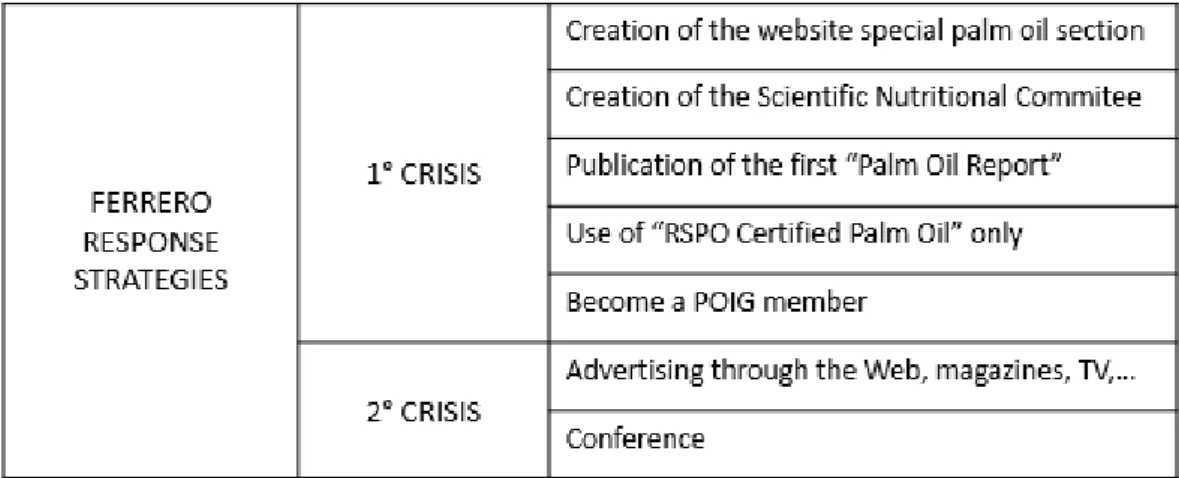
Table 4.2. Ferrero response strategies ………..25
Table 5.1.1. SCCT crisis types by crisis clusters ………...……..29
Table 6.3. Reduction of offensiveness actions ……….40
Table 7.3.1(a). RQ1(a) response ……….……….44
Table 7.3.1(b). RQ1(b) response ……….……….45
Table 7.3.2. RQ2 response ……….……….…….46
Table 8(a). Twitter stakeholders’ reactions (2013/2014)………...55
7
LIST OF FIGURES
Figure 3.1. Main palm oil-consuming countries (2014)………...…17
Figure 3.2. Palm oil awareness (2016)………...………...18
Figure 5.1.1. SCCT model………...…30
Figure 5.1.2. Brand Equity Theory ………..………....…33
8
LIST OF ABBREVIATIONS
CSR: Corporate Social Responsibility EFSA: European Food Safety Authority LDL: Low-Density Lipoprotein
NGO: Non-Governmental Organization POIG: Palm Oil Innovation Group RQ: Research Question
RSPO: Roundtable on Sustainable Palm Oil SCCT: Situational Crisis Communication Theory
9
I. INTRODUCTION
1.1 Explanation and purposes of the case study
The aim of this work is to analyze how a multinational as Ferrero could have coped with a brand crisis improving not only the profits but, most important, the reputation.
Ferrero represents one of the biggest companies within the confectionary sector worldwide, selling over 170 countries and employing around 35.000 people. Over the years, Ferrero has been characterized by a strong corporate social responsibility, focusing its attention on employee’s welfare, clients’ satisfaction, quality of the products and the protection of the environment. However, its positive brand image has been threated due to the recent palm oil scandals, that had a great impact at least in some European countries, bringing to a proper boycott actions towards some products containing this specific ingredient, in primis Ferrero start product, Nutella.
I decided to elaborate a case study about Ferrero, since I personally found interesting to see how such popular scandals did not affect its activities, but rather improved its business and public image. Moreover, Ferrero caught my attention since it is a highly competitive multinational with Piedmont roots, Italian region where I am from, and hence, it reflects both my love for my home country and my willingness to get international experience.
Throughout this study, I follow the research question How could Ferrero cope with a
brand crisis, expanding both its profits and reputation? To better analyze how this was possible,
I divided the research question into two more specific challenging phases that the multinational had to face:
RQ1: Does the crisis perception and crisis responses change over time? RQ2: Which actions did Ferrero pursue to regain legitimacy?
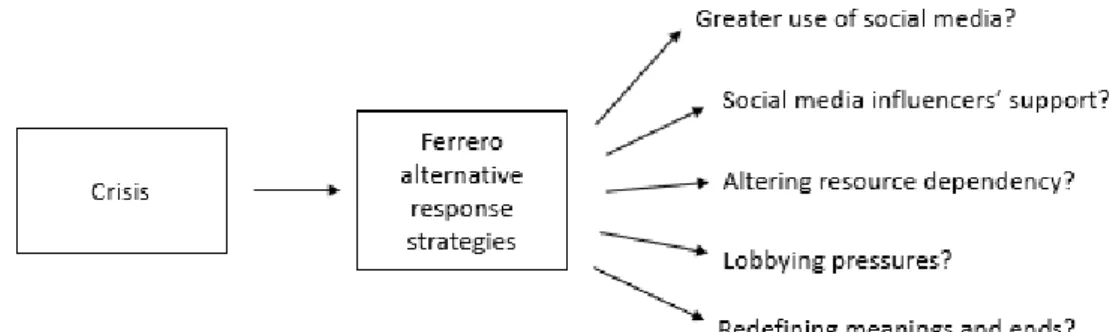
Then I developed a more creative and stimulating question, in order for students to critically rethink about the theory and data presented and find out alternative solutions:
10
In the literature review, after the introduction of some general concept of reputation and organizational crisis, some theories developed by several researchers will support the understanding of the case and analyze the issue of coping with brand crises. The literature review is divided into two parts, corresponding to the first two research questions. In the first part, the major models to study the main characteristic and consequently stakeholders’ reaction of a crisis are presented. Regarding this, students will be able to make some conclusions, according to the findings of Coombs (2007) and Keller (1993). In the second part, after defining the concept of substantive and symbolic management, the main crisis response actions are analyzed, thanks to authors such as Ashforth and Gibbs (1990), Di Maggio and Powell (1983) within the others.
1.2. Data Collection
In order to elaborate the case study and have an accurate analysis over Ferrero main stakeholders’ reactions, social media activities have been taken into account. In particular, thanks to Twitter, it was possible to collect specific tweets from the periods of the crises, making it easier to prove the facts reported and complementing the case. The tables 8(a) and 8(b) in the Appendix provide an exhaustive list of the sources of information used.
11
II. CASE STUDY
Luxemburg, September 2016
After the routine Friday meeting with the Marketing Department, Mr. Rizzo was ready to go home and spend the weekend with his family. He was back from a long business travel in Brazil and needed some proper rest before kicking off a new working week.
He took his jacket and the usual umbrella, mumbling why he was still stuck in foggy Luxemburg instead of living in Ipanema. His mind was still dreaming of sun and palm trees, when Ms. Alonso came breathless and a bit upset, grabbing some papers. She was one of his Communication Management colleagues and their last meeting took place few weeks before; maybe she had some new market researches regarding the launch of some Ferrero products, he thought.
Instead, she handed him some excel files full of Ferrero hashtags and much warning ones, reporting the words “palm oil”. Here we go again, Mr. Rizzo thought. The palm oil has been persecuting them since early 2011, with some concrete boycott actions already during 2014. The problem was already solved, thanks to some measures the multinational already adopted during the years.
Ms. Alonso insisted, with her lively Spanish accent: “This time, it is different!”. Mr. Rizzo took the papers and went slowly back to his office. Actually, this time the concerns had another tone and were carried on by much more diversified users. Moreover, the presence of NGOs, social groups and food association within the tweets did not bode well.
Sighing, Mr. Rizzo started reading the files and the report provided. Apparently, the problem was not solved and the relax needed to wait longer.
2.1. Brief history of Ferrero – A sustainable family business
Model of a brand “made in Italy”, manufacturer of confectionary products, Ferrero is one of the best examples for defining post Second World War private sector in Italy.
12
Its story begins during the ‘40, when Pietro Ferrero opens a pastry laboratory in Alba, in northwestern Italy. Due to the tough war times, costs need to be very low and just few food ingredients are available. Thus, this space allows him to keep on experimenting and improving cheap alternatives to chocolate based on hazelnuts, largely available in this area. In 1946, thanks to an effective formula, Pietro invents the ancestor of Nutella, called “pasta Gianduja”, which gets immediately successful and turns the tiny pastry shop into a proper company.
Three years later, Pietro dies and his brother Giovanni brings on the activity, helped by Pietro’s son Michele, who will manage and develop the company to its actual global expansion. Therefore, since his early career stage as leader of the family business, Michele manages to enter first the German market and then the Austrian, Belgian and French ones. At the same time, he develops some of the most popular Ferrero products, such as Mon Cherie, Kinder Joy egg and the star product Nutella.
From the ’60 the company has been growing all around the world, including the entrance in countries such as Brazil, Ecuador, Australia and Hong Kong, turning into the famous multinational of nowadays. Although the global unpredictability and the industry challenges, Ferrero has showed its ability in extending and consolidating its business throughout the years, selling over 170 countries and employing around 35.000 people. Nowadays, Ferrero occupies the third position in the confectionary sector worldwide, after the American Mars and Mondelez International.
2.2. Ferrero CSR: “The Ferrero Family”
This large success is probably due to the Ferrero’s ability to always combine significant investments in the R&D sector with a tangible attention to their CSR policies. A strong work ethic has historically been priority within the company at all levels, from the attention to the environment and the quality of the products to an accurate employee welfare and social projects development. Moreover, a transparent communication and advertisement has always characterized the multinational.
Great attention is always given to the consumers, who represent Ferrero’s first stakeholders. Indeed, through the years, Ferrero developed several programs to protect consumer health, products freshness, quality of the raw materials and a healthy consumer lifestyle. Special consideration is given to ex-employees, thanks to the “Ferrero Foundation”,
13
better described afterwards. Regarding the territory, Ferrero is committed to minimize its global impact, while trying to improve the potential of the local communities, for example with some partnership projects with local farms and people worldwide. The company is also committed to a sustainable use of the raw materials and an effective use of the natural resources (Ferrero CSR Reports, 2012, 2014).
At an international level, Ferrero counts on several sustainable agreements and takes part to CSR global associations such as “Global Reporting Initiatives” and “CSR Europe”, initiatives with the aim of enhancing a transparent and complete accountability system and develop the corporate social responsibility, or its participation in “EPODE” program, which has the purpose of reducing the childhood obesity worldwide.
Therefore, the company keeps being the first food company in the world for reputation while amplifying and improving its assets in line with its ethical and business commitments.
2.2.1. Labelling System and Kinder+Sport Project
Regarding the responsibility across their productive activities, Ferrero focuses its attention on a clear and transparent labelling system. Since most of its products are addressed to young people and children, indicating the right doses of fats and sugars gets relevant. Thus, the company uses a nutrition labelling system conformed to international standards and takes part to several associations which provide accurate labelling system and complete calorie-related information. Moreover, Ferrero studies and analyzes balanced ingredient proportions, especially for its snacks. Therefore, the weight of Kinder products varies between 5 and 43 grams (Ferrero CSR reports, 2014). The decisions about the snack ideal weigh are based on some studies regarding the average food characteristics of children and age groups in development phases. Moreover, most of these snacks are developed in order to be combined with other foods to get a vary and balanced diet.
The “Kinder+Sport” project aims to promote an active lifestyle among young people, underlining the importance of a proper and constant physical exercise. In order to be in line with international standards, Ferrero provides a “brand book” with all the guidelines that young people should follow to stay fit and avoid obesity diseases, supported by the studies of different nutritionists and experts in the sector. Furthermore, the company counts on partnerships with local institutions, such as gyms and schools, for the developing of the program, with the goal
14
of educating also the parents about the right doses of Ferrero products to give to their children. Also, “Kinder+Sport” has a “glocal” approach, since it is present at a global level, but involved in different sport activities, according to the most successful sports in each country (e.g in Italy is focused on football and volleyball, while in South Korea on martial arts). Finally, the project is tangible measurable, thanks to some KPIs which show both its degree of appreciation and its reputational return.
2.2.2 The People, “Ferrero Foundation” and “Ferrero Social Enterprises”
People occupy a central role in Ferrero strategy definition. Indeed, reference stakeholders are consumers, employees, ex-employees and local communities. For Ferrero, as for any company, consumer satisfaction is an essential goal. In practical terms, this means the constant attention in selecting the best raw materials, designing a responsible communication and producing high quality goods, beside the numerous researches about the correct proportion, mentioned above. The attention towards employees is characterized by the creation of a friendly and fair work environment, which allows the development of worker skills, positive attitudes and creative ideas.
“Ferrero Foundation” is a great example of this attitude. Founded in 1983 and based in Alba (IT), it has the goal of improving the ex - employees’ quality of life, promoting in this sense several activities. The granting of health services to former employees, also house-called, the organization of dedicated physical activities for older people, the creation of a kindergarten within the Foundation and the allocation of student scholarship are just some examples of its activities.
On the other hand, Ferrero Social Enterprises represent the company CSR willingness among third world countries. Realized in 1996 first in Cameron and then in India and South Africa, the project has a philanthropic and entrepreneurial aim. Therefore, they are proper business enterprises focused on the creation of working places and social-humanitarian projects, providing also some healthcare and education initiatives in the mentioned developing countries. To this end, Ferrero ensures respectable salaries, proper training, improvement of the working skills and the use of local raw materials. The profits derived from these activities are then reinvested at a local level. The result is the creation of relevant positive externalities within these areas. Just to have an idea, according to 2015 data, Ferrero employs around 3700 people
15
in India, in the cities of Pune and Baramati, while when the project started, early 2009, it counted just on 650 employees (Ferrero CSR report, 2015).
2.2.3. The supplier relations and the attention to products quality
The company is aware that to respect high CSR standards, needs to involve also its business partners in social agreements and sustainable management. About this aspect, Ferrero operates on two levels: attention while selecting suppliers and the purchase of raw materials as much as possible close to its production plants (for example in Italy, Mexico and France over 90% of the raw materials is bought from national suppliers, while the lowest level of national purchases happens in Belgium with 63,80%).
Moreover, the suppliers are selected with uniform standards worldwide and are all connected through an online platform. In addition, six-monthly inspections are realized within all the suppliers, in order to analyze the compliance of the products and freshness, hygiene and quality standards. Other quality-related initiatives will be realized due to the palm oil scandals, presented in the next chapter.
2.2.4. Ferrero and the environment
Ferrero also gives special attention to the planet. Therefore, it tries to complement a strong interest in growing with a great awareness of its impact on the environment. For examples, the main responsibility of the multinational is to track its products’ supply chains effects. Therefore, the group believes that it can manage to limit its impact only once it gets a proper and strong vision about it. Indeed, since 2009, Ferrero has measured once per year its Carbon Footprint, committing to a responsible gradual rise of its restrictions too.
Another example is its commitment in developing sustainable agricultural practices, through some rural requalification projects. According to this, Ferrero has also launched a program called “F-ACTS” (Ferrero Agricultural Commitment to Sustainability) which involves any agriculture raw material, based on three dimensions: development of focused agreements, standard and certified systems, institutional and collective deals. F-ACTS has ambitious goals, such as producing 100% sustainable cocoa and brown sugar until 2020. But thanks to this program, Ferrero already in 2014 reaches important goals, such as 100% use of sustainable and
16
highly controlled European eggs and 100% use of certified palm oil, as will be more deeply analyzed in the next chapter.
3.0. Palm oil scandals
Ferrero’s positive image has recently been threated due to the palm oil scandals. Even if awareness of potential issues about this particular oil starts already in the other decade, it is just few years ago that these concerns get relevant for Ferrero.
3.1. Understanding of the palm oil characteristics and issues, an overview
The palm oil (scientific name “Elaeis guineensis”) is a vegetable oil which is obtained from the fruit of oil palm trees. Two different oils can be produced: the crude palm oil, which comes from crushing the fleshy fruit naturally and palm kernel oil, which is obtained by squeezing the kernel contained in the fruit. The differences between the two depend on the color and the saturated fat content: the crude one has a characteristic reddish aspect due to high beta-carotene content and is 49% saturated, while the kernel one lacks carotenoids, thus is not red, and counts on 80% saturated fat. Nevertheless, if the crude red palm oil is properly treated, turning into an everyday good called RBD palm oil, should not contain any carotenoid. Oil palm crops are originally from Africa but were also brought to South-East Asia around 100 years ago as decorating plant. Therefore at the moment Indonesia and Malaysia represent the countries of greater production, providing over 85% of the global demand, but there are around 42 other countries that also produce this particular oil (e.g Colombia, Ecuador, Thailandia,…). In these countries, the palm oil production represents essential part of the national economies. For example, in Indonesia around 25 million of people live directly or indirectly on this industry (Rival and Levang, 2014).
The palm oil is basically presented in everything, since it is contained in about 50% of the packaged products in common supermarkets. For example, it is present in processed products, such as chocolate and frozen pizza, and cosmetics ones, such as soap, toothpaste and gel douche. Moreover, it is often contained in animal feed and used as biofuel in several countries. Finally, in most of the African, Southeast Asian and Brazilian areas it represents a common ingredient, just as sunflower or olive oil in Europe.
17
Figure 3.1. Main palm oil-consuming countries (2014)
Source: Rival and Levang, 2014, p. 9
Its large use worldwide is due to its extremely versatile characteristics. Therefore, it is semi-solid at room temperature, making it easily spreadable and it is particularly resistant to the process of oxidation, property that confer products a longer life. It has also the capability of staying stable at elevate temperatures, giving fried food the characteristic crispy composition; moreover, it is odorless and colorless, so it does not influence smell or aspect of the products. Furthermore, from the production point of view, beside being the cheapest option on the market, it is also very adaptable and productive, since it can generate higher levels of oil per land area than any other similar oil crop. Indeed, palm oil satisfies around 35% of the world’s vegetable oil demand, using just around the 10% of the land. To have a comparison, to obtain the same quantity of similar oils, for example coconut oil, it would be needed among 4 to 10 times more land (Teoh, 2002; WWF, 2012), with consequently higher costs and environmental issues.
However, this special oil brings on negative aspects too. Therefore, it keeps representing one of the greatest reasons of deforestation in several world’s most biodiverse ecosystems, being responsible for the destruction of some species’ habitats such as Orangutan and Pygmy Elephant, animals already at risk of extinction. The deforestation process, combined with higher and higher levels of carbon in the soils, is dissipating thousands of greenhouse gases into the atmosphere, having an increasing role within the climate change issue. Still, in some cases, the
18
palm oil represents a driver for child labor and exploitation of workers (WWF, 2012), topic better explored in the following pages.
3.2. First alarms – Is palm oil safe?
It all starts during December 2011, when a new European Union food labelling law (EU regulation 1169/2011) gets approved. According to this regulation, the food industries need to be crystal clear about the ingredients they are using, the percentages of them and their labelling communication to the final clients. Among the constraints there is the duty to inform consumers about the type and percentage of fat presents in the product, instead of the generic “vegetable fat added”. This normative shows up that most confectionary industries were using palm oil in their products which, despite its name, is an oil with high levels of saturates, typically known to increase the LDL cholesterol and the probability of cardiovascular disease. The cheap cost of the palm oil is one of the main reasons why it has been used to replace similar alternatives, such as butter or margarine.
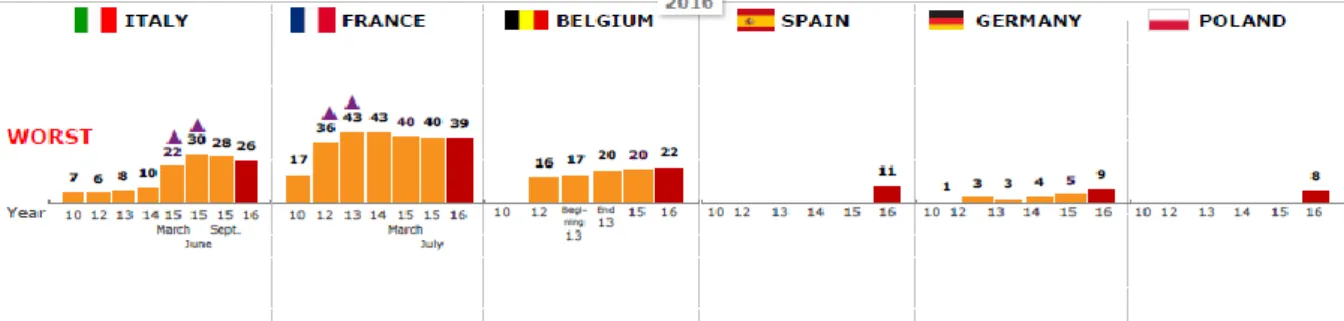
Figure 3.2. Palm oil awareness (2016)
19
According to WWF, 2016 (see figure 3.2) palm oil awareness gets a hot topic just in Europe and in particular in Italy, France and Belgium. France case particularly affects Ferrero. Therefore, following this first wave of scandals, in November 2012 the French Senate proposes the “Nutella tax”, a law which would quadruple the tax on palm oil, a star ingredient in the product, to deter the demand of the saturated-fat oil. Even if Nutella is not the direct implied of this regulation, due to the name of this law, it becomes the principal symbol victim of the situation with a huge brand negative impact on French public opinion.
This fact represents a first important consequence towards Ferrero, also considering that Frenches are the biggest consumers of Nutella. Indeed, even if representing just 0,86% of the worldwide population, Frenches consume around 25% of the total Nutella production, that is 75.000 tonnes per year (Mozaffarian and Clarke, 2009). Even if at the end the law is not approved, it triggers consequences and negative Ferrero perception in all Europe.
It is interesting to notice how this negative perception starts to acquire relevance also through social media, especially Twitter. If considering the period between 2013/2014 is not hard to find tweets concerning the palm oil situation and the direct or indirect Ferrero implication. Tweets such as
“I'm start getting worried for my children...is #nutella safe? What about this #palmoil news? #ferrero #nutella”
“So delicious but so dangerous! Can't we make it with balsamic vinegar? #nutella #ferrero”
“In France not to use #palmoil is a proud! #freepalmoil #nutella Say no to palm oil”
start getting popular, meaning the increasing awareness of people towards the topic. The issue is considered even bigger when coming to kids and young people as showed by
“For my kids…what a world would be without #nutella? For sure a cleaner and healthier one #palmoilfree #boycott”
“I'm start getting worried for my children…is #nutella safe? What about this #palmoil news? #ferrero #nutella”
Even though some people write quite sarcastic tweets such as
“The label of #nutella is like the cigarette labels. Useless. We keep eating it #palmoil #nutella”
20 “I don't care about the #palmoil. #nutella I will always eat you
#whataworldwouldbewithoutyou?”
alternative to Nutella and Ferrero recipes start to show up:
“Are there alternative to @palmoil? (link attached)”
“Check out #nutella recipe (file attached). Be aware of what you and your kids eat #nopalmoil #boycott”
A broader collection of tweets showing the reactions of the stakeholders can be seen in Table 8(a), in the Appendix. Another palm oil alarm takes place early 2016, when the EFSA publishes a study about the presence of high levels of bad substances in the palm oil, in particular 3-MCPD, 2-MPCD and GE, potentially dangerous for the kidneys and the development of some types of cancers. Therefore, the quantities of these components are considerable. While other vegetable oils contain between 48 and 608 μg/kg of 3-MCPD, the palm oil counts on 2912 μg/kg. The situation does not get any better if considering the other two elements. Indeed, it contains over 1565 μg/kg of 2-MPCD and 3955 μg/kg of GE, while on average the other oils have 86 to 270 μg/kg and 15 ed i 650 μg/kg respectively (EFSA Journal, 2016). According to the report, the most exposed ones are the newborns, whom if feed with artificial milk exceed by four times the tolerated daily dose of 3-MCPD, in the cases of high exposure. Then there are some groups of children, whom take these substances through snakes and sweets. Teenagers reach considerable doses just in half of the cases of high exposure. Instead, average adults are mostly classified in acceptable levels for all the components.
Due to this event, during the same year, also Italy and Switzerland analyze some measures against products contains the disputed ingredient. For example, the Swiss Department of Education forbids the sale of some confectionary products in the vending machines of elementary schools, due to their composition. In Italy, some legislative proposal against the palm oil are taken into consideration, even if then not applied. For example, some proposes regard the possibility of increasing the tax on the ingredient, from 4% to 22%, while others suggest a more drastic total avoidance of its use in both food and cosmetic goods.
3.3. Amnesty Report and public opinion reactions – Is palm oil ethical?
Despite the functional relevance of these initial facts for Ferrero and the confectionary industry products, the event that probably represents the cherry on top happens some months
21
later. In August 2016, the global known NGO Amnesty International publishes a long and well articulate report called “The great palm oil scandal: labor abuses behind big brand names”. The research is the result of a deep investigation on Indonesian plantation own by Singapore based Wilmar, which represents the biggest producer and retailer of both palm and palm kernel oils, controlling a share of about 43% of the worldwide palm oil business. Moreover, it supplies multinationals such as P&G, Nestlé, Kellogg’s and Colgate-Palmolive.
Amnesty finds out serious human rights abuses and violence episodes in the plantations of Wilmar and its suppliers. These include, for example, issues related to the treatments of the workers, such as forced and child labor, as well as gender discrimination. Therefore, especially women are forced to work under irregular working conditions, making them particularly exposed to abuses. Moreover, Wilmar is responsible for the pursue of some risky working practices that can be dangerous or even fatal for workers’ lives. It has been analyzed that these abuses are not casual incidents, but are rather due to Wilmar’s routine working conditions, such as low levels of wages and the use of “piece rates” (workers are not paid based on the effective hours worked, but just on tasks completed) among the others.
This scandal has a greater impact on the public opinion, than the ones before. Consumers suddenly starts concerning about the palm oil effects on personal health, climate change, environmental protection and biodiversity conservation. The public opinion gets emotional about till-then unknown issues and starts perceiving palm oil users as careless enemies, who make their own profits without pursuing any effort to avoid the exploitation of human rights and environment. Thus, people start paying much more attention to the ingredients of the food they consume and start to avoid palm oil-based products. On one hand, they keep being scared due to healthy reasons and potential development of cardiovascular diseases, especially worried about the health status of the children, target towards most of Ferrero product are directed. Tweets such as
“Palm oil is toxic for both human and animals @theguardian #palmoil” “I will check products by products…i'm aware of #palmoil now than before”
confirmed these concerns. On the other hand, due also to social pressures, consumers become much more aware of the controversial situation regarding the palm oil production, getting outraged by the lack of regulation workers, animals and environment are exposed to. This phenomenon is once again clear when considering the Twitter accounts. However, the quality
22
and content of the tweets are different from the ones before, as showed by some of these examples
“#RSPO is giving license to kill. There is only one palm oil: bad palm oil #palmoil #palmoilkills”
“#ferrero stop using and promoting #palmoil. You're destroying the #environment” “@indipendentuk we demand instant action! Withdraw #palmoil from our products now (picture attached)”
“Animals are losing their homes for #palmoil #RSPO is certifying the killing fields #palmoilkills”
A more detailed collection of tweets showing the reactions of the stakeholders can be seen in Table 8(b). As a consequence, most of the food industries immediately react to these trends, analyzing new recipes and offering palm oil free alternatives.
Ferrero is in the eye of the storm. Many of its goods are realized thanks to this oil, firstly Nutella, its more sold and successful product ever. Studying new formulas, changing its recipe and adapting the entire supply chain to new ingredients would be time and money consuming. Moreover, it is not easy to find an effective alternative to the palm oil, which counts on many advantages. Besides being cheap, it does not have any flavor, color, gives chemical stability and texture to the product and bears high temperatures.
Thus, the company prefers to pursue a responsible approach, consistent with its CSR principles and launches a campaign for the use of its certified Ferrero palm oil.
4.0 Responses and actions
4.1. Ferrero first responses
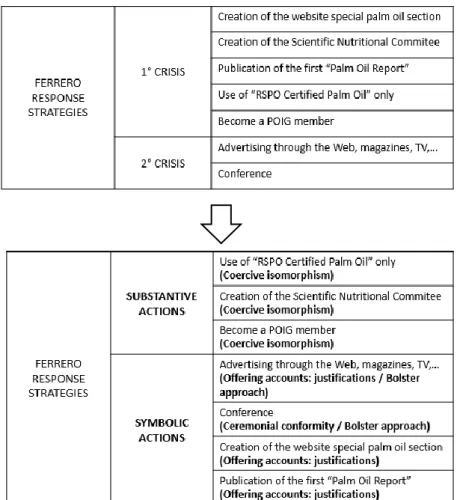
Since the first palm oil alarms, Ferrero has complemented its CSR activities with an informative approach about the palm oil question. Indeed, during 2014, it enriched its website with a special section about the oil ingredients, which has been constantly updated according to newest scientific researches and findings. The information reported has the aim to explain the products composition and production to the consumers, with a special attention to the proportions of the ingredients. Ferrero intention is to calm down the public opinion with a clear
23
and scientific communicative approach, to avoid concerns about the safety of its products. From year to year, this website section has been largely developed. For example, it has been subdivided into different parts, each one refers to a specific trait of the palm oil, from its production to its characteristics and great use worldwide in the most diverse sectors. Moreover, concerning the arose health issues, Ferrero creates an internal Scientific Nutritional Committee, to which take part the managers involved in the definition of correct food policies.
Furthermore, in May 2014 the group publishes its first “Palm Oil Report” and during November of the same year, it decides to use only RSPO Certified Palm Oil, of which is effective member since 2004. This is a first strong response, since being part of RSPO does not allow the use of palm oil if mixed up with no-sustainable raw materials. However, to reinforce once more its position, in November 2015 Ferrero becomes a POIG (Palm Oil Innovation Group) member. POIG is a multi-stakeholder program, which sees the cooperation of important NGOs and advanced palm oil producers. It has the goal to make all constituents adopt responsible production practices. In order to implement such a program, POIG has been developing a reliable and measurable standard criterion, which is directly built on RSPO standards, focusing on creating and promoting progressive innovation.
As underlined by Ferrero, its efforts within the sector are rewarded by the NGOs WWF and Greenpeace. In particular, WWF scores the group 9/9 in the “Palm oil buyers scorecard 2016”, while Greenpeace defines Ferrero as “one of the most progressive multinationals in the palm oil sector”, beside positioning it within the firsts two companies worldwide in its “Company scorecard 2016”. These results obtained in the environmental sector will be the base on which Ferrero builds its pro palm oil campaign after the Amnesty scandals.
4.2. Ferrero palm oil campaign “Da 70 anni la qualità prima di tutto” (“Since 70 years, quality first”)
As mentioned before, unlikely most of the food and confectionary industries, Ferrero opts for keeping the palm oil in its products after 2016’s scandals. Therefore, the company starts a big communication campaign focusing its attention on the quality of the raw materials, rising also to the occasion of the 70th anniversary of its foundation.
In October 2016, Ferrero launches a television and online advertising, emphasizing how the quality of its ingredients and its attention to the entire supply chain process has characterized
24
the group’s responsibility for 70 years, making Ferrero a global known brand. Due to the scandals, great attention is given to the Ferrero palm oil quality. It is specified that “there are palm oils and palm oils. Our is Ferrero palm oil certified” which is described as “safe, since obtained from fresh squeezed fruits, sustainable raw materials” and thus “perfect to enhance the taste and the consistency of our products and make them so creamy” (Ferrero CSR report, 2016). Beside this campaign, Ferrero leads his initiative also promoting ads on newspapers and magazines and organizing a conference properly called “Palm oil workshop: a responsible choice, based on science”. It is interesting to noticed how a very heterogenous group of experts, from researchers to doctors and NGO representatives, participate to the conference, meaning that Ferrero is taking into consideration the different stakeholders’ perspectives and interests. Parts of this meeting are also used in TV advertising, which see also the participation of some suppliers and employees through some short interviews. Moreover, the campaign sees also the participation of the Italian counsellor of WWF, who is shot while visiting the Ferrero palm oil mills in Malaysia.
Throughout these advertising activities, Ferrero reply to the negative critics showing a strong presence and availability to explain all its business choices, from the production to the sales. It has underlined how the palm oil processing is highly controlled and sustainable, thanks to special techniques of purification which keep intact the natural characteristics of the material. Thanks to this working process, Ferrero can ensure a “completely safe product, already in line with EFSA recommendations and standards” (Ferrero CSR report, 2016).
Although this large advertising campaign, the negative effects of the scandals show up. For examples, in Italy, Nutella sales falls by about 3% in one year, until the end of August 2016, event that the multinational partly implied to some competitors promoting alternative products, based on palm oil-free receipts.
However, it is interesting to notice how positive results since the campaign are not slow to arrive. Indeed, consumers regain trust towards Ferrero, despite its choice of keeping the oil as star ingredient of its recipes. For example, in Italy Nutella sales rise 4% in the last four months of 2016. The company did not publish its sale reports for the rest of Europe, but at a global level, it seems that Nutella sales have not been influenced by the EFSA research and are rather growing at 5-6% per year (Ferrero CSR report, 2018). Furthermore, to be consistent with its approach, Ferrero continuing to take action. Following the publication of the Greenpeace report “The Final Countdown” (September 2018), which based on the previous one once again
25
underline the importance of using sustainable palm oil to avoid deforestation issues, Ferrero take full responsibility of its actions. The group wants to demonstrate its absolute dedication to transparency, thus it will update and publish the full list of mills it sources from every 6 months as well as provide update on their sustainability progress.
26
III. LITERATURE REVIEW
5.0. Introduction: Beyond the crisis
It is nowadays priority for a lot of firms to invest relevant amount of resources and time on advertising campaigns, social responsibility and funding activities to develop and ensure a positive brand perception, based on both great performing achievements and high social values. Nonetheless, brand positive perceptions can be easily spoiled by an organizational crisis event. According to the literature, an organizational crisis can be considered as an unpredictable event, that can occur due to several reasons and under different circumstances, threating an organization’s performance and goals (Seeger, Sellnow and Ulmer, 1998). Moreover, crises are seen as change-inducing events that disrupt the status quo, making ineffective previously designed crisis response strategies (Seeger at al, 2005).
Therefore, these events are dangerous for the legitimacy and the reputation of an organization (Coombs, 2007), since these changes may influence the way stakeholders perceive and related themselves with it (Barton, 2001; Dowling, 2002).
Even if the concept of reputation is quite simply and understandable in its common usage, it gets quite hard to explain when coming to the business management field, as showed by the many different definitions that have been developed across different studies.
Within the most recent literature, the concept of reputation has been summarized as a non-tangible asset, crucial for the success and prosperity of any type of organization (Fombrun and Gardberg, 2000).
Hence, it is particularly important to increase it or, at least, defend and preserve it along the time. Academics and researchers agree that effective crisis communication strategies can decrease the impact of the crisis on an organization and the related reputation damage inflicted (Benoit, 1995; Coombs, 1995; Murray and White, 2005). However, understanding the characteristics of the crisis and how it is seen and perceived by stakeholders represent the first step to plan effective strategic responses.
27
5.1. Crisis types and characteristics
As previously seen, crises are considered as one of the major threats for the reputation of an organization. If considered the definition of reputation as the stakeholders’ valuation of how well a company is satisfying their concerns and expectations (Wartick, 1992), it is possible to conclude that reputation towards an organization can be either positive or negative. Crises have the power to damage this equilibrium as well as the way stakeholders see and consequently will interact with the organization. Hence, in order to repair or prevent the organizational reputational threats, appropriate crisis communication strategies are needed.
According to the literature, there are two major theories to analyze brand crises: 1) Attribution Theory perspective – Situational Crisis Communication Theory (Weiner, 1985; Coombs, 2007); 2) Brand Equity Theory perspective (Keller, 1993).
5.1.1. Attribution Theory perspective - Situational Crisis Communication Theory The Attribution Theory perspective predicates that individuals research for the causes of events, especially for events that are perceived as non-ordinary and negative (Weiner, 1985; Weiner 1986, 2006). Basically, people give a certain degree of responsibility to an action or event and, according to the level of importance and the perception created, they will develop a specific emotional reaction for what happened. The theory focuses its attention on the emotions of “anger” and “sympathy” and on how their attribution to responsibility serves as motivation for action. Weiner (1986) argues that the interpretation of the episode is the first step in creating this emotive process, that will lead people to final conclusions and judgements. In particular, he suggests that when individuals are considered responsible, anger feelings rise up and negative behavioral actions are implied. On the contrary, if a person is considered as not responsible, sympathy emotions and favorable responses prevail on negative ones.
According to this theory, Coombs (2007) posits that each crisis has a predictable responsibility’s level, which leads to the rise of consequently specific emotions and reactions. Links between the Attribution Theory and crises are often presented in the literature (eg, Bradford and Garrett, 1995; Coombs, 1995; Härtel et al., 1998; Jorgensen, 1994, 1996; Mowen, 1980; Stockmyer, 1996). Therefore, understanding the stakeholder attribution of responsibility to an organizational crisis event is essential for managers, since stakeholders’ emotions turn into behavioral consequences, which quickly become reactions and concrete actions.
28
Situational Crisis Communication Theory
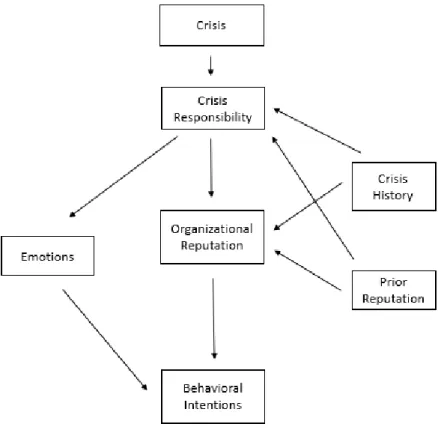
In particular, Coombs extends upon the previous theory with the “Situational Crisis Communication Theory” (SCCT, Coombs, 2007). This model tries to analyze how it is possible to anticipate crisis’ threat and which are the best communication responses that should be adopted to reduce the damage and preserve as much as possible the initial reputation. The concept of threat has been identified by the author as the total harm a crisis may inflict to the reputation of any entity, if no corrective measures are taken (Coombs, 2007). According to the theory, there are three specific elements that influence the reputational threat: (1) initial crisis responsibility, (2) crisis history and (3) prior relational reputation.
(1) Initial crisis responsibility is the perceived degree of the initial organization’s control over the crisis. Basically, it is stakeholders’ perception of how certain actions pursued by an organization might have led to the final crisis. Accordingly, the reputational threat is considered higher when stakeholders perceive inner organizational actions as major causes of the crisis. On the contrary, the lower this degree of attribution, the lower the related reputational threat (Coombs, 1998; Coombs and Holladay, 1996, 2002, 2004).
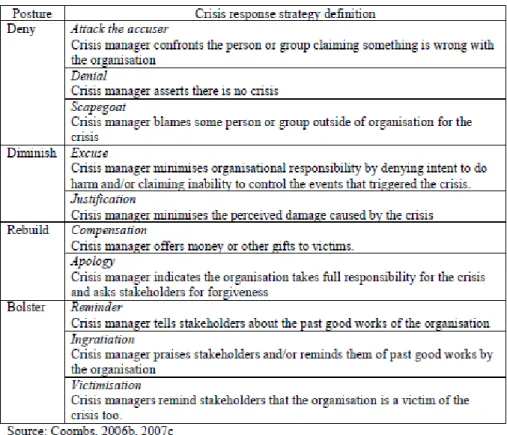
Given this definition, Coombs analyzes three crisis actors according to the different perceptions of the initial crisis responsibility (see table 5.1.1):
1) victim crisis: the organization has none or very little attributions of crisis responsibility (for example natural catastrophes, external rumors and baseless judgements due to disinformation or ambiguous interpretation,…). Hence, the organization itself can be considered victim of the crisis;
2) accidental crisis: the organization has some minimal attributions of crisis responsibility (for example, technical errors within the supply chain or the production activities,…). In this case, the organization is considered partly involved within the crisis, even though the related actions were pursued unintentionally;
3) intentional crisis: the organization has tangible and strong attributions of crisis responsibility (for example, intentional misdeed, abuses or violence towards employees, avoid the fulfillment of legal standards,…). Hence, the actions are seen as intentionally pursued and the organization as principle implied and responsible for the crisis.
29
Table 5.1.1. SCCT crisis types by crisis clusters
Source: Coombs, 2007
(2) Crisis history depends on the previous behavior of the organization, if it had to face similar negative events in the past and, in case, how successfully it dealt with them. The Attribution Theory suggests that in case of previous crises, the organization has some problems that already came up, but still need to be properly fixed (Kelley and Michela, 1980). Hence, these organizations will be considered more responsible towards the new crisis and will deal with stronger reputational issues than the “spotless” ones.
(3) Prior relational reputation is related to the way an organization is perceived to care about stakeholders’ welfare and interests and how it normally treats and deals with them. Accordingly, if an organization counts on negative prior relational events, it will have to face tougher reputational threats, especially because it means that the organization has an overall little consideration for its stakeholders, which is not only limited to the crisis period (Porritt, 2005). On the contrary, organizations counting on successfully and fair prior relations with their stakeholders, will be less damaged by the crisis and will overcome it much faster.
30
Steps in Evaluating the Reputational Threat of a Crisis
Figure 5.1.1. SCCT model
Adapted from Coombs, 2007
Following these characteristics, Coombs elaborates the SCCT model (2007), synthetized by the Figure 5.1.1.
To get to the SCCT model output and take effective response actions to cope with the crisis, it is crucial to set the level of initial crisis responsibility first. As seen before, the SCCT model tries to explain how to each specific type of crisis corresponds a predictable degree of responsibility. Therefore, three actors with different levels of responsibility are analyzed: victim cluster, accidental cluster and intentional cluster, with relative characteristics (see table 5.1.1.). Considering the crisis type, managers can actually anticipate and analyze how stakeholders will perceive the organizational behavior, to which degree they will attribute its crisis responsibility and, consequently, how they will act towards the organization (Coombs, 2007).
31
Then, the two intensifying elements should be considered: crisis history and prior relational reputation. As mentioned before, if the organization counts on prior crisis history and/or prior bad relational reputation, stakeholders will perceive the organization as more involved into the crisis and the reputational threat will be much stronger. However, these two factors can also decrease the degree of organizational responsibility perceived, in case the organization counts on a responsible and fair background (Coombs, 2004a. 2004b).
Having a look at the scheme, it is possible to see how crisis responsibility affect both emotion and organization reputation. Therefore, feelings of anger rise up and the sympathy ones are reduced if the attributions of crisis responsibility are higher. On the opposite sympathy feelings prevail on anger if the attributions of crisis responsibility are lower (Coombs and Holladay, 2005).
Finally, the scheme intends to provide some conclusions regarding the crisis’ effects on the stakeholders’ behavioral intentions. Indeed, the last but not least reason to analyze the characteristics of an organizational crisis is to try to prevent how people will interact and behave towards the post-crisis organization. Will they change their attitude? Will they stop using the organization products or services? Or will the situation keep going on as nothing happened?
According to the literature, it seems that stakeholders will be less supportive in case either of negative reputation or negative emotions. This is easily explained because even if they are not directly linked, a negative perceived crisis responsibility will affect in the same way both reputation and emotions. On the opposite, stakeholders will be more supportive towards the organization, even if going through a crisis, if positive reputation and positive emotions prevail. (Coombs, 2004; Jorgensen, 1996; Rudolph et al., 2004). Hence both elements can influence final stakeholders’ behavioral intentions.
To conclude, it is demonstrated how stakeholders’ behaviors are influenced by the initial reputational damage due to the organizational crisis. The degree of responsibility the stakeholders will imply to the organization and how they will perceive it is the crucial key to prevent and treat potential short and long-term issues (such as stop purchasing certain products or stop supporting the organization) which can lead to a more drastic end of the company survival. This predictive aspect is essential for any crisis communication strategy, since the greater initial stakeholders’ perception of crisis responsibility about a company, the greater the reputational threat and the harder the possibility to reset a good relationship between stakeholders and organization (Coombs, 2007; Rudolph et al., 2004).
32
5.1.2. Brand Equity Theory
While the Attribution Theory bases its findings on different external factors that can influence stakeholder perceptions, potential crisis types and strategic responses to an organizational crisis, the Brand Equity Theory focuses the attention on factors closer to brand’s products and values.
According to this theory, brand crises are defined as unpredictable episodes that threat an organization’s ability to provide expected benefits, hence decreasing the brand equity (Dawar and Pillutla, 2000; Dawar and Lei, 2009).
The concept of brand equity, which can be considered as the general brand’s value, depends on how much stakeholders trust the company in satisfying expected standards and how better they take into account this brand over the competitors (Aaker, 1996; Keller, 1993, 2005). In other words, it is how much consumers are willing to choose this brand over others, because expecting specific benefits or welfare from it, which make it their overall best choice.
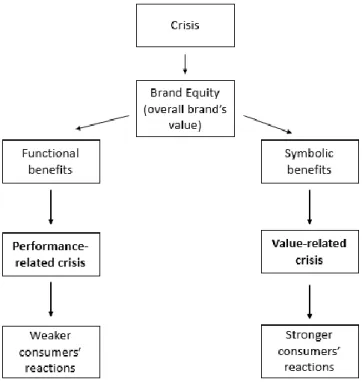
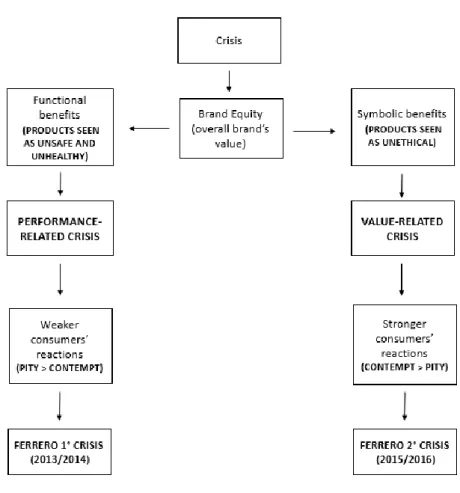
Keller (1993) argues that stakeholders can generally expect two types of benefits from a brand, functionals and symbolics. Following this concept, Dutta and Pullig (2011) distingue two general dimensions of brand crises:
1) Performance-related crises, or product-harm crises, are due to defects in the products. They may decrease stakeholders’ perception about the willingness and ability of a brand to fulfill and deliver the functional characteristics of the products (Dawer and Pillutla, 2000). They can imperil long-standing favorable consumer impressions about a brand.
2) Values-related crises are due to ethical or social values related to a brand. Even if these issues might not involve directly products’ disfunctions, they might compromise stakeholders’ perception about the social acceptance of these ones and the consequently brand’s lack in delivering inner or symbolic benefits (Dutta and Pullig, 2011).
Most of the literature agrees that consumers take much more into consideration functional benefits while purchasing. Hence negative publicity about products’ performance defects will have greater impact on their choice likelihood and consequently final satisfaction.
According to Swann and Combs (1976), exist two types of product benefits with related different degree of interaction with personal satisfaction. Indeed, they can be classified as
33
“instrumental” or “expressive” benefits and they cover a different level of importance in consumers’ mind. While the first are seen as fundamental in order for an individual to be properly satisfied by his/her purchase, the second are considered less important or, better said, their presence is not indispensable or required as such for the functional ones.
This hierarchy is largely supported in the literature. For example, Carroll (“The pyramid of Corporate Social Responsibility”, 1991), suggests that an organization CSR is composed by four different levels of responsibility – economic, legal, ethical and philanthropic – that should be satisfied in this order by any company. Thus, the legal level, representing the instrumental benefits has the priority on the ethical responsibilities, which expressive benefits belong to.
Still, according to Keller (2005), performance benefits are an essential aspect of any brand, while symbolic benefits are relevant just if considering a strategic marketing approach, based on the advantages related to a differentiation of the products.
However, even if most of the literature agrees on the priority of performance concerns over value ones for consumer’s satisfaction, it seems that when coming to emotions, consumers react more strongly to values-related issues. Indeed, emotional elements might be more important than cognitive ones in creating the positioning of a brand in consumers’ mind and so their point of view towards it (Chen et al., 2014).
The entire process is summarized by the Figure 5.1.2. Figure 5.1.2. Brand Equity Theory
34
Generally speaking, there are two perceptions that value-related and performance-related brand advertising can produce: competence (for example efficiency and power) and warmth (for example kindness, caring, empathy). According to the studies of Fiske, 2002, it seems that while the dimension of competence is more related on the individual’s perception on the abilities of the brand of efficiently pursuing certain intentions, the dimension of warmth focuses on the individual’s perception of these intentions towards him/herself.
Accordingly, value-related crisis will decrease brand’s perceived warmth, while performance-related crisis will decrease brand’s perceived competence.
These concepts find a strong base in the literature. For example, Keryyn, 2014, states that “warmth” comes before “competence”, because it is more important for all human beings first to be aware about the real intentions of the others towards themselves, rather than their ability (they might be important as well, but just in a second moment).
Moreover, according to Peeters and Czapinski, 1990, warmth dimension and related feelings are perceived as more positive for the others and not just for oneself, while the dimension of performance is only positive for the single individual, without having consistent relevance for others.
Ybarra (2001) builds on these concepts, suggesting how people are generally more sensitive to information related with the warmth dimension, rather than the competence one. Thus, they judge easily and quickly warmth-related information because they lead to stronger emotive reactions.
Finally, a values-related crisis clearly suggests bad intentions, while a performance-related crisis can be caused by several factors, such as weak competence, bad luck or issues related within the company’s working process, which do not imply directly mean or bad purposes.
Still, in case of performance-related crisis, the relationship between the brand and the stakeholders is temporary damaged by the failure of the product or weak brand’s skills. Thus, this relationship is easily reversible and can be fix in the short-term (Jeon and Baeck, 2016). It is different if considering value-related crisis. In this case, the broken or damaged relationship is not that quickly fixable and even the most devoted clients and stakeholders are not so incline to forget and forgive the mistakes of the brand.
35
Hence, it is reasonable to think that organizational crisis or negative publicity on a brand will rise different types of reactions and emotions among stakeholders. In particular, value related crisis elicits more intense contempt feelings (much stronger feeling), while performance related crisis more pity ones (less strong ones).
Cuddy, 2007, argues that even if both feeling have unfavorable influence on the brand and its reputation, the negative effects of contempt are way stronger.
This happens because, as specified by Ivens, 2015, contempt produce just negative reactions, whilst pity can stimulate either negative or positive ones, which may partly reduce the harmful effects.
Brands create associations and believes and, based on these characteristics, consumers build trust (Darke, Ashworth & Main, 2010).
There are two major dimensions of consumer behavior that define consumer’s trust and thus predispose choice behaviors: brand evaluation – stakeholder’s overall evaluation of a brand – and purchase intention – customers’ willingness to buy a brand’s product (Keller, 1993; Rousseau, 1998). According to these definitions, the research suggests that customers will experience worse brand evaluation and purchase intentions in case of value-related crisis than performance-related ones. Consequently, value-related crises seem to be more dangerous ones, due to both economical and reputational implications.
6.0 Strategic responses and actions
Understanding the crisis characteristics and type of emotions and reactions that rise among stakeholders is crucial for any organization to analyze the most effective strategy responses.
Indeed, as already seen, crisis strategy responses help in reducing crisis effects and preventing negative behavioral intentions, repairing the organization’s reputation (Coombs, 2007).
Obviously, it is unrealistic and impossible to write the perfect prescription of effective actions that match and solve any type of crisis. Indeed, researchers have tried to analyze and suggest some possible strategy responses according to the different types of stakeholders’ reactions, seen in the previous chapter.
36
According to Coombs’ SCCT model, organizational crisis responsibility depends on the reputational threat. However, any organization should be responsible for its actions and develop proper strategy responses to cope with the crisis.
In other words, only when well-performing socially acceptable ends, an organization is seen as legitimate and accepted as such.
In the literature, there are two ways according to which organizations pursue legitimacy and organize their response actions in case of management crisis: substantive management and symbolic management (Pfeffer, 1981a; Richardson, 1985).
6.1. Substantive management
This approach implies real, concrete changes within organization objectives, functional systems, processes or social institutionalized practices. Since they represent tangible actions, normally require a considerable cost and amount of time to be realized. The main exemplifications of this approach are presented below.
Role performance
The organization can simply perform in line with its crucial constituents’ expectations (Ashforth and Gibbs, 1990).
Examples of role performance include providing a good return on stakeholders’ equity, safe products for consumer, fair wage or treatment for employees.
According to “The pyramid of Corporate Social Responsibility” (Carroll, 1991), role performance provides the fulfillment of the two first levels of the pyramid, the economic and legal ones, which are necessary conditions for the survival itself of any organization.
Coercive isomorphism
The organization might pursue legitimacy according to the “coercive isomorphism” approach, which is defined as the conformism with the stakeholder’s expectations and values (Di Maggio and Powell, 1983).
This aspect would represent the fulfillment of the third level of Carroll’s pyramid, the ethical one, which represents the responsibility to act morally and ethically. Coercive isomorphism shows the capability of an entity to fulfill stakeholders’ expectations (Meyer, 1979). This approach is significant wherever stakeholders are not really close to the organization, used to its practices or do not have clear expectations towards it.
37
Altering resource dependencies
The organization may attempt to change the level of dependences upon its stakeholders. This means changing the expectations to which the organization must respond and the people it has to consider in its decisions (Strand, 1983). By reconsidering its constituent relationships and finding alternative suppliers, the organization has some margin of freedom and decision power. Altering socially institutionalized practices
The organization may try to transform socially institutionalized procedures, status or ethics in order to make them conformed with its means and ends. It means lobbying activities against government legislation, contesting or dealing with regulators and other institutionalized actors. In other words, this practice is consistent with attempting to change stakeholders’ purposes, activities and outcomes when stakeholders’ practices are substituted for “socially institutionalized practices”. However, as noticed by Epstein and Votaw (1978), it is normally more expedient to alter organizational practices than settled social values and practices.
6.2. Symbolic management
The organization may just opt to simply make its structures and goals so as to seem in line with social values and stakeholders’ expectations, without changing its real inner organization. Richardson (1985) states that symbolic actions transforms the meaning of acts, without changing their substance.
Moreover, the nowadays society is more and more used to deal with symbols and images, being satisfied just by “cosmetic illusions”, rather than seeking for the real causes of the issues. Still, symbolic actions rise more superficial opinions, making them open to multiple interpretations and more easily adaptable than real actions.
Espousing socially acceptable goals
The organization might publicly promote acceptable goals, while keep performing less fair ones (Ashforth and Gibbs, 1990). For example, many organizations create and publish social reports and ethics standards, without actually setting any controlling procedures to impose fees or sanctions in case of their default.