A One Stop Shop for Social Enterprise Resources
The Case of seToolbelt
Donata von Doetinchem
Academic Advisor: Professor Susana Frazão Pinheiro
Dissertation submitted in partial fulfillment of requirements for the degree of
MSc in Business Administration, at the Universidade Católica Portuguesa.
Abstract
Title: A One Stop Shop for Social Enterprise Resources - The Case of seToolbelt
Author: Donata von Doetinchem
The concept of social entrepreneurship has become well-established in business as a beneficial approach to achieve a desired social change. The purpose of this dissertation is to raise awareness of the field of social entrepreneurship, the needs of practitioners, and the opportunities of open source sharing as well as crowdsourcing in this area. At the beginning, an overview of the main literature and research on social entrepreneurship and the potential of Web 2.0 for firms is provided. The methodology adapted is a case study approach with the scope of presenting the story of seToolbelt, an online platform that aims to assist social entrepreneurs to grow successful social enterprises. The main challenges the company faces are addressed in the research questions and discussed in the teaching notes that enrich the case study. The first of seToolbelt’s concerns is the ability to motivate users to participate, the second one the impact measurement of its operations. The dissertation concludes by indicating possible approaches to tackle these problems and to identify avenues to take.
Resumo
Título: Uma Loja de Balcão Único para Empresas Sociais - O Caso da seToolbelt
Autora: Donata von Doetinchem
O conceito de empreendedorismo social tornou-se bem estabelecido no mundo empresarial como uma abordagem benéfica para alcançar uma desejada mudança social. O objetivo desta dissertação é sensibilizar para a temática do empreendedorismo social, as necessidades dos seus profissionais, e as oportunidades de partilha de código aberto, bem como, crowdsourcing nesta área. No início, uma visão geral da principal literatura e pesquisa sobre empreendedorismo social e o potencial da Web 2.0 para empresas é fornecida. A metodologia adaptada é um estudo do caso apresentando a história da seToolbelt, uma plataforma online que visa apoiar empreendedores sociais a crescer empresas sociais bem sucedidas. Os principais desafios que a empresa enfrenta são abordados nas questões de pesquisa e discutidos nas notas de ensino que enriquecem o estudo do caso. A primeira preocupações da seToolbelt é a capacidade de motivar a participação dos usuários, a segunda a medição do impacto de suas operações. A dissertação conclui indicando possíveis abordagens para resolver estes problemas e identificando caminhos a tomar.
Table of Content
1
Preface
1
2
Introduction
2
3
Methodology and Research Design
4
4
Literature Review
5
4.1
Social Entrepreneurship
5
4.1.1 Definition of Social Entrepreneurship 5
4.1.2 History and Development of Social Enterprise 7
4.1.3 Industry Characteristics 8
4.1.4 Players in the Field of Social Enterprise 9
4.1.5 Needs and Behaviors of Practitioners 10
4.2
Innovation through Crowdsourcing
11
4.2.1 Open Innovation 11
4.2.2 User-driven Innovation 11
4.2.3 Crowdsourcing 12
4.2.4 Dissociation of Terms 13
4.2.5 Fields of Usage for Crowdsourcing 13
4.2.6 Motivations for Participation 14
4.3
Annexes
16
5
Case Study
20
5.1
How it began…
20
5.2
The Concept of seToolbelt
21
5.2.1 Naming the Project 21
5.2.2 Vision and Mission 22
5.2.3 Value Proposition – What did seToolbelt offer in detail? 22
5.2.4 Open Source Ethos 24
5.3
Organizational Structure
24
5.3.1 The Team 24
5.3.2 Board of Directors 26
5.3.3 Personnel Plan 26
5.3.4 Partnerships are Core 26
5.3.5 Technical Issues 30
5.4
Products and Services
30
5.4.1 Communication 31
5.4.2 The Challenges of Crowdsourcing and Open Source Sharing 32
5.4.3 Effects of Communication and Traffic Figures 32
5.4.4 Measuring Impact 33
5.5
Financials
34
5.6
Industry Characteristics and Competitors
34
5.8
Merger with W1SDØM
35
5.9
Recent Developments
37
5.10
Exhibits
38
6
Teaching Notes
51
6.1
Teaching Objectives
51
6.2
Additional Relevant Material
51
6.3
Teaching Questions
52
6.4
Analysis and Discussion
52
7
Conclusions, Limitations, and Future Research
58
7.1
Conclusions
58
7.2
Limitations and Future Research
59
List of Figures and Appendices
Figure 1 – Spectrum of Social Enterprise 8
Figure 2 – seToolbelt’s Objectives 23
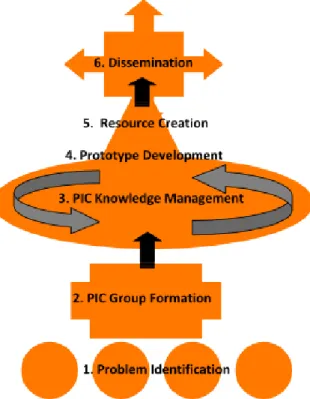
Figure 3 - The PIC Resource Development Process 28
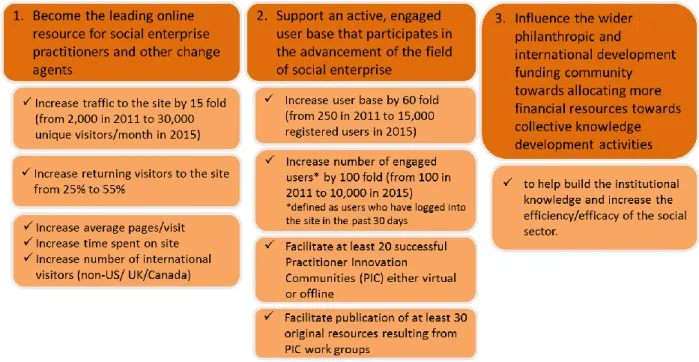
Figure 4 – seToolbelt’s Strategic Goals 35
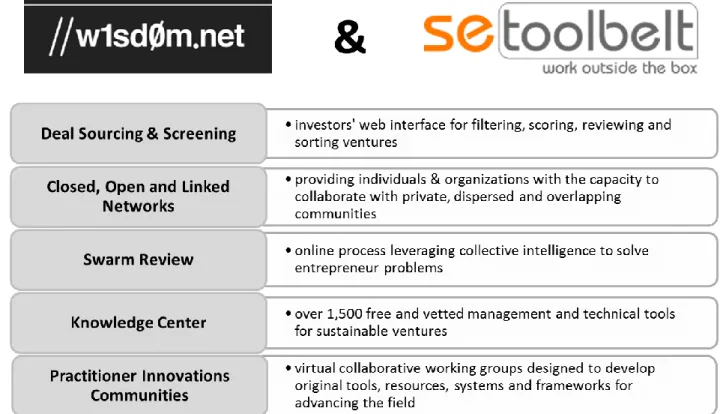
Figure 5 – Initial Set of Services Offered by Merged Platform of seToolbelt and W1SDØM 36
Annex 1 – Characteristics of Three Models of Social Enterprise 16
Annex 2 – Selected Organizations in the Field of Social Enterprise 16
Annex 3 – Three-stage Process to Foster and Sustain Member Engagement 18
Exhibit 1 – Prospective Members of Board of Directors 38
Exhibit 2 – Overview of Personnel Costs 38
Exhibit 3 – Personnel Plan 2011 - 2015 39
Exhibit 4 – seToolbelt’s existing Content Partners, by February, 2012 39
Exhibit 5 – The PIC Resource Development Process 40
Exhibit 6 – Potential Grant Funders 40
Exhibit 7 – Overview of seToolbelt’s Products and Services 41
Exhibit 8 – Google Analytics Report for seToolbelt.org, period August 1, 2011 to July 31, 2012 43
Exhibit 9 – Practitioner Resource Needs Survey Results 44
Exhibit 10 – seToolbelt’s Annual Operating Plan 2012-2015 / Income Statement Projections 48
1 Preface
Traditional profit maximization is no longer the only goal a business should strive for. Customers, the public and further company stakeholders are increasingly concerned with responsible consumerism, sustainability, and environmental issues. Companies have understood that their image can be positively influenced by applying an appropriate code of conduct that respects social responsibility, sustainability, and environmental awareness.
As part of my master studies I had the opportunity to study the concept of social entrepreneurship and to get to know the versatile areas where to apply it. During the preparation of my research, contacts to different firms have demonstrated that commitment in the field of social responsibility plays an essential role in their corporate strategy and is often part of their communication.
The dissertation seminar Entrepreneurship & Development with Professor Susana Frazão Pinheiro encouraged me to focus on social entrepreneurship. Once I had decided to dedicate my dissertation to this topic I was lucky to learn about seToolbelt, a young company with the mission to support social entrepreneurs through resources, tools, and a global peer learning network in planning, managing, and growing successful social enterprises. Thanks to my advisor, Professor Susana Frazão Pinheiro, I got in touch with Lindsay Miller, Director of seToolbelt at that time. With her support I was able to tell the story of seToolbelt and to dive further into the field of social entrepreneurship.
First of all, I would like to express my sincere gratitude to Lindsay Miller for dedicating time and effort to provide me with the necessary information and clarify my questions, even after she had officially left the seToolbelt team. I am deeply grateful to Professor Susana Frazão Pinheiro for her availability, assistance, and orientation during the dissertation period. Furthermore, many thanks are owed to my family and friends for their encouragement, support, and patience during the last months.
2 Introduction
The concept of social entrepreneurship has become well-established in business during the last two decades. It is recognized as a solution for various pressing social problems and for mitigating market failure. The purpose of this dissertation is to raise awareness of the field of social entrepreneurship, the needs of practitioners, and the opportunities of open knowledge sharing and crowdsourcing in this area. The main component represents the case study of seToolbelt, an online platform that aims to assist “social entrepreneurs [to] plan, launch, manage, and grow successful social enterprises.”1
During the process of information gathering for the case study seToolbelt Director Lindsay Miller pointed out that the company is facing two main challenges at the moment. The first one concerns the ability to motivate users to participate in seToolbelt, the second one the impact measurement of seToolbelt’s operations. The objective of this dissertation is to provide possible approaches to tackle these problems and to identify avenues to take.
Throughout the compilation of the case study from April to August, 2012, seToolbelt was facing different challenges resulting from changes inside the organization as well as within its direct environment. Since the initiative was not a viable business yet, it continued to be dependent on funding partners. In summer 2012, the company was facing a serious funding problem as the existing grants were not sufficient to keep on going; on completion of the case study, no solution to the financial shortfall had been found so far. A further challenge posed the announcement of seToolbelt Director Lindsay Miller to leave the team by end of May. Due to the difficult funding situation the team had no financial means to hire a replacement for her. Apart from these internal challenges, a development in the field of social enterprise changed the competitive environment for seToolbelt: On May 15, the Skoll Foundation announced that Social Edge and Skoll World Forum would merge into a new platform, the Skoll World Forum Online. This new powerful competitor represented a new challenge for seToolbelt. At the same time, the merger with the online platform W1SDØM, planned since spring 2012, could be beneficial for both organizations to compete with the new rival. These developments demonstrate that the case on seToolbelt is the story of a young growing organization in a fast changing environment facing challenges of various kinds.
The dissertation is structured in six main chapters starting with explanations regarding the applied methodology and the research design (ch. 3). The literature review (ch. 4) aims to provide an overview of the existing research on social entrepreneurship and innovation through knowledge sharing and
crowdsourcing. This information is also necessary for students studying the case of seToolbelt to discuss and answer the teaching questions. Subsequently, the case study (ch. 5) is presented, followed by teaching notes (ch. 6) as guidance for instructors. Within the teaching notes the research questions are addressed and recommendations for seToolbelt’s challenges are provided. The dissertation concludes with suggestions for seToolbelt’s further development, limitations, and proposals for future research (ch. 7).
3 Methodology and Research Design
The methodology adapted is a case study approach with the scope of presenting seToolbelt’s story from its inception until today. With regard to the style, it should be mentioned that “cases are written in the past tense. This way, they can be taught for years without seeming outdated” (Linder 1994, p. 4). This approach has been applied to the present case.
The data used is primary data collected in phone interviews as well as via e-mail correspondence with seToolbelt Director Lindsay Miller. Furthermore, secondary data sources like the company’s business plan, reports, and working papers have been used.
In order to address the problems seToolbelt faces and to provide possible approaches to tackle them, the following research questions are brought forward:
Research Question 1: How can seToolbelt’s impact on the social enterprise field be measured? Research Question 2: How can seToolbelt win more users and motivate them to participate?
The questions will be discussed in the Teaching Notes together with further questions related to seToolbelt’s future development options.
4 Literature Review
This chapter is dedicated to introducing the topic of social entrepreneurship, presenting different approaches to defining the concept, and providing details about the industry and players in the field. The second part of the literature review explains how firms can apply the potential of Web 2.0 to optimize their performance. The focus is on the topic of innovation through knowledge sharing and crowdsourcing and the motivations for participating in such activities.
4.1 Social Entrepreneurship
In general, the term “entrepreneurship” refers to the “capacity and willingness to undertake conception, organization, and management of a productive venture with all attendant risks, while seeking profit as a reward.”2 The social component adds an additional objective to the concept. Entrepreneurial principles are not only used to create profit, but also to achieve a desired social change in recognition of a social problem. This is, first of all, the plain meaning of the term “social entrepreneurship”. However, disagreement exists regarding the definition of its concept.
Before elaborating on the distinct perceptions of social entrepreneurship an assumption, based on Peredo & McLean (2006), is made in this dissertation concerning the relationship between “social entrepreneurship” and the term “social enterprise”. Social entrepreneurship is about the driven individual and its entrepreneurial activity, while social enterprise represents the organization in which this activity manifests itself (Chell et al. 2010). Though, for the purpose of this research, social enterprise will be equated with social entrepreneurship. This conception complies as well with seToolbelt’s view.
4.1.1 Definition of Social Entrepreneurship
During the last 20 years the idea of social entrepreneurship has become well-established in business. Both scholarly and popular commentators discuss the characteristics of organizations and initiatives engaging in social entrepreneurship. Leading business schools include the topic in their curriculum (Peredo & McLean 2006). Organizations like Skoll, Schwab, and Ashoka, have taken up the cause of social
2
entrepreneurship; their mission is to drive change, address social problems, and advance sustainable social innovation.3
However, despite the growing interest in this field, there is no clear definition of its domain (Zahra et al. 2009). ““Social Entrepreneurship” is one of the most misunderstood phrases in the nonprofit sector today. Everybody, it seems, has a different definition of what it means”(Boschee & McClurg 2003, p. 1).
Zahra et al. (2009) address this problem and provide an overview of existing definitions in literature. They present a list of 20 definitions and descriptions of social entrepreneurship and social entrepreneurs. Based on this compilation they “provide a definition that integrates common points of view” (p. 520). While commercial entrepreneurs are largely driven by profits and their performance is measured by financial returns (Austin et al. 2006), social entrepreneurs, in comparison, often pursue both social and economic goals. Zahra et al. (2009) summarize that, “on the whole, most existing definitions imply that social entrepreneurship relates to exploiting opportunities for social change and improvement, rather than traditional profit maximization” (p. 521). They conclude their observations by giving the following definition: “Social entrepreneurship encompasses the activities and processes undertaken to discover, define, and exploit opportunities in order to enhance social wealth by creating new ventures or managing existing organizations in an innovative manner” (p. 522). The Nobel Peace Prize winner and founder of the microfinance bank Grameen, Muhammad Yunus, gives a similarly wide definition: “Social entrepreneurship is a very broad idea. As it is generally defined, any innovative initiative to help people may be described as social entrepreneurship. The initiative may be economic or non-economic, for-profit or not-for-profit” (Yunus 2007). Austin et al. (2006) endorse Yunus’ statement when they define social entrepreneurship in the following way: Social entrepreneurship is an “innovative, social value creating activity that can occur within or across the nonprofit, business, or government sectors” (p. 2). Peredo & McLean (2006) argue as well “that the line between for-profit and not-for-profit (NFP) enterprises is hard to sustain as a significant boundary on social entrepreneurship. Indeed one thing that emerges from a look at the range of uses given to ‘‘social entrepreneurship’’ is the clear suggestion that the distinctions among public, private and NFP sectors become attenuated” (p. 64).
Common across all perspectives is the fact that social entrepreneurship is generally focused on creating social value and improvement through innovative methods (Austin et al. 2006). Kim Alter, founder of Virtue Ventures and seToolbelt, shares this view, too. Due to her experience with the funding problems
of nonprofit organizations she thinks that they need to diversify their funding, be smarter, and look for alternative sources. In this context, business is a means to do that. In her opinion, social entrepreneurship is about being innovative and taking all valuable characteristics and principles that are typical for the business sector, like creativity, agility, discipline, and rigor, and bringing them to the nonprofit sector. Kim Alter’s definition of social enterprise is therefore “a vehicle for mitigating a social problem or a market failure using business as a vehicle to do that” (Alter 2011).
The definition that will be taken as a basis for this dissertation will be the one provided in seToolbelt’s Business Plan (p. 39): “Social Enterprise: The business of solving social problems or market failures by employing entrepreneurial, private sector approaches to increase effectiveness, sustainability, and impact. It is not a “thing”, not a legal structure, nor a type of business, but rather a methodology that promotes integrated value creation – financial, social and environmental – to achieve social benefit or change.”
4.1.2 History and Development of Social Enterprise
Throughout history, private parties have addressed certain social problems by providing services or goods “that were not, in their judgment, being adequately or appropriately provided by either business or government” (Dees 1996, p. 1). The problems addressed range from health and education to environmental sustainability, peace and security, tolerance and human rights. Traditionally, the private parties were structured as nonprofit organizations (Dees 1996), being depended on philanthropic activities and charity (Nagler 2007). However, during the past 30 years, the situation has changed dramatically. Operating costs have soared; due to increasingly strained government budgets and limited philanthropic funds the available resources have flattened; and the number of organizations competing for grants and subsidies has grown. That is why many nonprofits have realized that they have to find other ways (in addition to philanthropic resources) to ensure their survival; so they started to adapt more entrepreneurial modes of operations (Boschee & McClurg 2003; Dees 1996).
Elkington & Hartigan (2008) describe different organizational models for social enterprise that differ in leadership, management, and fund-raising styles: the “leveraged non‐profit” model, the “hybrid non‐ profit” and the “social business” model. The characteristics of each model can be found in Annex 1.
Kim Alter choses a similar approach when describing the social enterprise typology as a hybrid spectrum that lies at the intersection of business and traditional nonprofit. This spectrum includes four types of Hybrid Practitioners (see Figure 1). On the left side of the spectrum one can find nonprofits with
commercial activities that aim to generate income and economic value to fund social programs; their main motive is mission accomplishment as dictated by stakeholder mandate. The right side consists of for-profit organizations that act in a socially responsible way, but whose main motives are generating profits and redistributing it to their shareholders (Alter 2010).
Figure 1 – Spectrum of Social Enterprise
Source: Alter 2010.
4.1.3 Industry Characteristics
Social entrepreneurship serves as a tool to diminish a market failure or to address a social problem. As social problems exist in various constellations and scenarios it is not easy to delineate the industry in which it takes place. seToolbelt observes “that “social enterprise” is becoming interchangeable with large and established do-good-ing industries like international development, philanthropic giving, social investment, and social business” (seToolbelt 2012, p. 19). The resulting collection of privately-controlled social-purpose organizations resembles the social sector (Dees 1996), also referred to as third sector. The term “third sector” has been coined in the UK and “is used to distinguish such organisations from the other two sectors of the economy: the public sector (‘government’) and the private sector (‘businesses’)” (National Audit Office 2009, p. 5).
The market volume of the social sector is huge, looking at amounts of money spent in international development aid. According to the Development Assistance Committee of the Organization for Economic Co-operation and Development (OECD) the donor nations provided $133.5 billion in official development assistance in 2011 (OECD 2012). In the same year, private donations in the US reached $298.4 billion (The Chronicle of Philanthropy 2012). Another indicator for the size of the market is the demand for services mostly supplied by social enterprises. Prahalad (2010) draws attention to the 4-5 billion poor
who are unserved or underserved by the large organized private sector, the so-called Bottom of the Pyramid consumers. A study by World Resources Institute/International Finance Corporation has shown that this group of consumers account for $5 trillion in purchasing power parity terms. Moreover, “market development at the Bottom of the Pyramid will also create millions of new entrepreneurs at the grass root level” (Prahalad 2010, p. 6).
The mentioned figures give an idea of the dimensions the development industry and social enterprises are facing. Different sources affirm that this sector is growing faster than the rest of the economy.4
4.1.4 Players in the Field of Social Enterprise
Due to the diversity of social challenges that exist globally the amount of players in the field of social enterprise is huge. Support organizations for social entrepreneurship such as Ashoka, Schwab Foundation for Social Entrepreneurship, and The Skoll Foundation have emerged during the last 30 years. Their mission is to promote social entrepreneurship by providing a range of services to social entrepreneurs, raising awareness, and advancing understanding of social entrepreneurship in society. More details can be found in Annex 2.
Apart from these three important organizations other networking platforms and fellowship programs for social entrepreneurs offer membership benefits including access to networks, services, publications and content, and annual conferences or events. Among these are Social Enterprise UK, Social Enterprise Alliance (in the US), ClearlySo, and the Guardian Social Enterprise Network.
Furthermore, funders and organizations providing financial support to social enterprises are crucial players in the field. One of these is Acumen Fund that invests philanthropic capital in early-stage enterprises which tackle social problems. The loans or equity (no grants) are accompanied by a wide range of management support services. Several other funding institutions can be found in Annex 2.
Additionally, any kind of traditional nonprofit organizations as well as socially responsible business entrepreneurs have to be considered when talking about the actors in the spectrum of social enterprise. Consulting firms primarily specialized in supporting and advising social enterprises represent another group. Moreover, academics and educators studying and researching on this field are relevant players.
4
http://www.socialenterpriselive.com/section/se100/management/20110711/vibrant-sector-defies-downturn-powerful-growth; http://www.dynamicbusiness.com.au/entrepreneur-profile/social-entrepreneurship-fastest-growing-sector-of-economy-16042012.html [Both accessed August 17, 2012].
4.1.5 Needs and Behaviors of Practitioners
There is not much literature or academic papers on the needs of practitioners; probably because it is a topic from the practice. Nevertheless, the number of organizations offering assistance to social enterprise practitioners speaks for itself. There is definitely a need for support of social enterprises. As already mentioned in section 4.1.4 the types of support services vary from networking and community building, peer collaboration and cross-fertilization, access to content, resources, and publications to promoting social entrepreneurship in the public, consulting services, and funding, such as grants, seed financing, and capital.
With regard to seToolbelt’s services - the open content resource hub - the statement of a social entrepreneur on the World Skoll Forum for Social Entrepreneurs, 2008 encourages this initiative: “It would be great if there was a one stop shop for social enterprise resources.”5
Although the demand for a knowledge sharing platform is existent the challenge might be the behavior of social entrepreneurs and their attitude towards virtual resource sharing. As seToolbelt notes “social entrepreneurs are a difficult audience to engage virtually” (seToolbelt 2012, p. 19). Busy with their practical work their main focus lies on advancing their projects to approach their social goals. Knowledge management and sharing practices are less likely part of their mindset or have no high priority in their daily work.
An additional aspect worth to be considered when discussing the needs and behaviors of social entrepreneurs is the fact that “the ability to efficiently measure and demonstrate your impact [in the third sector] has taken on renewed importance in recent years.”6 Companies acting in social business have to struggle even more than traditional businesses to prove to their funders that they create value and impact, especially in troubled economic conditions. Investors who seek new choices and are interested in investing in sustainable ventures that account equally for human, environmental, and financial return have to be convinced of the concept. Moreover, impact measurement benefits the organizational efficiency. That is why social enterprise practitioners need to install certain instruments to measure the impact of their venture.
5http://www.setoolbelt.org/about [Accessed August 29, 2012]. 6
4.2 Innovation through Crowdsourcing
Web 2.0 and social media play a central role in today’s society, including the business world. Yet, companies have to “fully explore the possibilities of Web 2.0 […] The next logical step is to apply the potential of Web 2.0 to optimize firm performance” (Schenk & Guittard 2009, p. 3). The concept of crowdsourcing is a beneficial approach to outsource company activities at low costs to the large group of internet users globally available and ready to contribute to projects for little or no remuneration. Although the first crowdsourcing activities have already taken place in 1998 with the creation of the platform InnoCentive, the term “crowdsourcing” first appeared eight years later. Since then various projects applying the concept have been initiated, discussions in online blogs and communities are ongoing, and books about the idea have been written. However, academic papers especially focusing on crowdsourcing are rare, and the concept of crowdsourcing is under construction. That is why crowdsourcing is often confused or conflated with other related concepts such as open innovation, user-driven innovation, and open source software (Schenk & Guittard 2009). In the following, these concepts are characterized and the similarities and differences presented.
4.2.1 Open Innovation
Traditionally, firms generated ideas for innovation in internal processes. As companies are rethinking the fundamental ways of managing their innovation activities a new tendency to attract innovation from outside the company has emerged during the last decade (Leimeister et al. 2009; Busarovs 2011). In 2003, Henry Chesbrough coined the term “Open Innovation” (Chesbrough 2003) as a “new paradigm for organizing innovation. It assumes that firms can and should use external ideas as well as internal ideas, and internal and external paths to market, as they look to advance their innovations” (Chesbrough 2012, p. 21). Integrating external parties (stakeholders of the firm) in the research and development process “will open up the company’s innovation funnel”, in that way increasing the amount of innovation potential (Leimeister et al. 2009). The underlying assumption is the “wisdom of crowds” concept: “Under the right circumstances, groups are smarter, make better decisions and are better at solving problems than even the smartest people within them. On any one problem a few people may outperform the group. But over time collective wisdom is near-impossible to beat. No one, you might say, knows more than everyone” (Surowiecki 2004).
4.2.2 User-driven Innovation
Companies who want to make use of this principle have to understand that customers and users are one of the biggest resources of innovation (Leimeister et al. 2009). Leimeister at al. (2009) discuss three core
approaches how to involve customers: Lead-User Method, Internet Toolkits, and Ideas Competitions. The Lead-User Method integrates innovative customers, so-called lead users, into internal company workshops in order to generate concepts for new products or services. The other two practices are both internet-based. Via Internet Toolkits, customers are asked to design concepts for new products online via a software application. In Ideas Competitions, companies collect innovative ideas from customers related to a certain topic.
4.2.3 Crowdsourcing
As mentioned before, these practices of open innovation are based on the idea of “collective intelligence” and the “power of crowds” (Libert & Spector 2007), which can be summed up in the term “crowdsourcing”. The name “crowdsourcing” was invented by Jeff Howe in 2006 and is formed from two words, “crowd” and “outsourcing”. Howe defines crowdsourcing as “the act of taking a job traditionally performed by a designated agent (usually an employee) and outsourcing it to an undefined, generally large group of people in the form of an open call” (Howe 2006). The job can either be carried out in peer-production or be performed by sole individuals. Essential is the use of the open call format that reaches a large network of potential laborers (Howe 2006). With regard to seToolbelt’s business concept, the slightly more inclusive definition of crowdsourcing that Howe recommends for the purposes of his blog should be mentioned: “Crowdsourcing need not require an active shift from current employees or contractors to the crowd; it can start with the crowd” (Howe 2006).
Estellés-Arolas & González-Ladrón-de-Guevara (2012) came to the conclusion that “the term “crowdsourcing” is a term in its infancy, which, as new applications appear, is undergoing a constant evolution.” Due to its use for a wide group of activities and its adaptability to different forms of practices various definitions exist in the literature. The authors’ overview of 40 different definitions clearly reflects the disagreement among scholars; and the result of their analysis is the following very broad definition that shows how difficult it is to pay tribute to all existing crowdsourcing processes:
“Crowdsourcing is a type of participative online activity in which an individual, an institution, a non-profit organization, or company proposes to a group of individuals of varying knowledge, heterogeneity, and number, via a flexible open call, the voluntary undertaking of a task. The undertaking of the task, of variable complexity and modularity, and in which the crowd should participate bringing their work, money, knowledge and/or experience, always entails mutual benefit. The user will receive the satisfaction of a given type of need, be it economic, social recognition, self-esteem, or the development of individual skills, while the crowdsourcer will obtain and utilize to their advantage that what the user has brought to the venture, whose form will depend on the type of activity undertaken” (Estellés-Arolas & González-Ladrón-de-Guevara 2012, pp. 9).
4.2.4 Dissociation of Terms
In literature as well as in practice the different terms and concepts in this area are frequently confused and sometimes conflated (Gobble 2012; Estellés-Arolas & González-Ladrón-de-Guevara 2012). In the following, light is shed on the relationships between open innovation, crowdsourcing, and open source.
In contrast to open innovation, only some crowdsourcing activities originate innovation of any kind. Crowdsourcing as one aspect of “network-driven innovation” usually delivers only pieces of an innovation which must still be synthesized, whereas the objective of open innovation is to generate a complete new offering. In conclusion, open innovation and crowdsourcing are differentiated by their products (Gobble 2012). However, they “fall within the same paradigm: knowledge is distributed and the opening of a firm's R&D processes can be a source of competitive advantage” (Schenk & Guittard 2009).
The term “open source” is related to the idea of free and open source software available for anyone without any access barriers. It takes its origins in the early days of computer programming when software developers and scientist freely exchanged codes they had created as part of their research culture (von Hippel 2005). In answer to the general trend toward development of proprietary commercialized software hacker communities promote the open source movement being persuaded “that intellectual property protection is unnecessary and indeed, unhelpful to innovation” (Chesbrough 2012, p. 21). According to Gobble (2012, p. 59) “open source is a philosophy as much as a methodology and its defining characteristic is an antipathy toward intellectual property laws and other limits on sharing. It is focused on peer collaboration as the engine of creation.”
With regard to the attitude toward intellectual property protections the open source and open innovation concepts come to accordance. However, they differ by the profit motive. “Open source is not in itself concerned with profiting from its creations” (Gobble 2012, p. 59), while open innovation processes utilize business models and are focused on capturing value (Gobble 2012; Chesbrough 2012).
4.2.5 Fields of Usage for Crowdsourcing
Relying on the power of crowds makes sense for diverse tasks, whether to create customized products or services that satisfy real customer needs, or to augment the innovation potential of a company through integration of external parties in the innovation process. But also in case of simple routine tasks that require human intelligence and that occur in high numbers crowdsourcing is an appropriate method.
Busarovs (2011) identifies two main approaches in recent literature how to structure crowdsourcing types: by kind of task and by size of reward for the participant. There exist three categories of tasks,
namely routine, complex, and creative (Schenk & Guittard 2009). The size of reward is divided into the following four categories: with no reward, penny rewards, dollars rewards, and millions reward (Borst & van den Ende 2007; 2008). Busarovs (2011) then combines both approaches in one matrix with nine fields to make crowdsourcing taxonomy more visual. The combinations routine task - dollars reward, routine task - millions reward, and complex task - millions reward are considered as not applicable in real life as no one will pay high rewards for simple tasks. It would go beyond the scope of this dissertation to explain all the details of Busarovs’ approach and the case examples he provides per combination category. Therefore, only one case will be discussed, namely the one of the category creative task - no reward; this is the most suitable with reference to seToolbelt. The objective of the sample project “Management Innovation eXchange” (MIX) is to reinvent management for the 21st century. “The MIX is designed for all those who are frustrated by the limits of our legacy management practices” (Busarovs 2011, p. 55); it provides a platform where leading-edge ideas and practices can be documented, shared, and developed. Harvard Business Review and McKinsey & Company partner with MIX in launching this contest. The nonmonetary reward for winners will be significant recognition as management innovators on MIX, Harvard Business Review, and McKinsey Quarterly.
Further crowdsourcing examples of different types are: reCAPTCHA, InnoCentive, Threadless, Amazon Mechanical Turk, ModCloth, Lánzanos, Fiat Mio, and iStockPhoto (Busarovs 2011; Estellés-Arolas & González-Ladrón-de-Guevara 2012).
4.2.6 Motivations for Participation
Today in the age of new media technologies, such as the internet, “audiences do not merely use and seek pleasure from content. Audiences are producers and consumers, what futurist Alvin Toffler (1980) called a “prosumer” of media content” (Brabham 2008). Web 2.0 enables people to interact with websites and add information. It is very easy to publish work, connect with other people, and share and exchange information (Wikipedia 2012). To account for this development, recent studies on audience motivations for online media use have focused on the practice of open source software production. As explained before, open source software producers create software for free. According to different studies (Bonaccorsi & Rossi 2004; Hertel et al. 2003) the producers’ motivator is the pleasure found in programming. Most of them do not expect to get paid or receive public recognition (Brabham 2008). But such intrinsic motivation is not the only reason why individuals are drawn to crowdsourcing applications. Brabham’s (2008) study on iStockphoto reveals “that the desire to make money [an
extrinsic motivator], develop individual skills, and to have fun were the strongest motivators for participation at iStockphoto” (Brabham 2008).
The examples demonstrate that there exist both intrinsic as well as extrinsic motivations for participation in virtual communities. Porter et al. (2011) developed a three-stage process that indicates the necessary steps for a firm to take to encourage and sustain engagement in virtual communities. The model considers both types of motivation and reveals that “engagement often is amplified by specific, proactive efforts on the part of a firm that provides members with the appropriate resources to create value for themselves and for the firm in a community it sponsors” (Porter et al. 2011; Wenger 2004). In detail, the model is explained in Annex 3.
4.3 Annexes
Annex 1 – Characteristics of Three Models of Social Enterprise
Source: Adapted from Elkington & Hartigan (2008). Annex 2 – Selected Organizations in the Field of Social Enterprise
Organization Description
Ashoka
http://www.ashoka.org/
- Founded by Billy Drayton in 1980 – the first network of “social entrepreneurs”
- Supports social entrepreneurs financially
- Promotes networking and collaboration among Ashoka Fellows - “Build[s] an infrastructure that supports the growth and expansion of
the field of social entrepreneurship, including seed financing and capital, bridges to the business and academic sectors”
•A public good delivered to the most economically vulnerable, who do not have access to, or are unable to afford, the service rendered.
•Entrepreneur and organization are change catalysts, with a central goal of enabling direct beneficiaries to assume ownership of the initiative, enhancing its longer-term sustainability. •Multiple external partners are actively involved in supporting the venture financially/politically. •Founding entrepreneur morphs into a figurehead as others assume responsibilities and
leadership. Model 1:
Leveraged Non‐profit
•As with model 1 ventures, goods/services are delivered to populations that have been excluded or underserved by mainstream markets, but the notion of making (and reinvesting) a profit is not totally out of the question.
•Sooner or later, the founding entrepreneur typically develops a marketing plan to ensure that the poor or otherwise disadvantaged can access the product/service being provided.
•Enterprise is able to recover a portion of its costs through the sale of goods/services, in the process often identifying new markets.
•To sustain activities and address the unmet needs of poor or otherwise marginalized clients, the entrepreneur mobilizes funds from public, private, and philanthropic organizations in the form of grants, loans, or quasi-equity investments.
•As mainstream investors and businesses enter the picture, they tend to push these ventures to become model 3 social businesses, to ensure access to new sources of funding, particularly capital markets. This may be warranted, but it risks refocusing activities to the point where the poorest will no longer be served.
Model 2: Hybrid Non‐profit
•The entrepreneur sets up the venture as a business with the specific mission to drive transformational social and/or environmental change.
•Profits are generated, but the main aim is not to maximize financial returns for shareholders but instead to financially benefit low-income groups and to grow the social venture by reinvestment, enabling it to reach and serve more people.
•The entrepreneur seeks out investors interested in combining financial and social returns. •The enterprise’s financing - and scaling - opportunities can be significantly greater because
social businesses can more easily take on debt and equity. Model 3:
Social Business
Schwab Foundation for Social Entrepreneurship
http://www.schwabfound.org/
- Created by Klaus and Hilde Schwab in 1998
- Community building: over 190 social entrepreneurs form part of the Schwab Foundation community
- Social Entrepreneur of the Year competition
- Doesn’t give grants or financial investment in organizations of social entrepreneurs
- Participation and involvement of social entrepreneurs at the meetings of the World Economic Forum
- Scholarships for students of partner university
The Skoll Foundation
http://www.skollfoundation.org/
- Created by Jeff Skoll, founder of eBay, in 1999
- Invests in social entrepreneurs through its award program, the Skoll Awards for Social Entrepreneurship
- Partnership with the Saïd Business School at the University of Oxford to launch the first academic center dedicated to social entrepreneurship, the Skoll Centre for Social Entrepreneurship
- Foster collaboration between social entrepreneurs through the annual Skoll World Forum and Social Edge (both are planned to merge until fall 2012 to the new Skoll World Forum Online)7
- Drive public awareness of social entrepreneurship through sharing stories of social entrepreneurs via films and broadcasting
Acumen Fund
http://www.acumenfund.org/
- Founded in 2001
- Fund using philanthropic capital as so-called patient capital. “Patient capital is understood as a debt or equity investment in an early-stage enterprise providing low-income consumers with access to healthcare, water, housing, alternative energy, or agricultural inputs.” Acumen Fund’s typical commitments of patient capital for an enterprise range from $300,000 to $2,500,000 in equity or debt with payback or exit in roughly seven to ten years. In addition, a wide range of management support services is provided to nurture the company to scale. - Any financial returns are recycled into new investments.
- They address investors willing to take on a risk/return profile that is unacceptable to traditional financiers.
Echoing Green
http://www.echoinggreen.org/
- Founded in 1987
- Start-up funding, customized support services - Networking: Global Network of Champions
- Has already provided more than 500 emerging social entrepreneurs working in more than 40 countries with $31 million in start-up funding
Bamboo Finance
http://www.bamboofinance.com/
- Created in 2007
- Commercial investment firm managing $250 million representing a unique portfolio of direct investments around the world
- Specialized in the financing of entrepreneurship using a market-oriented approach to deliver social value, environmental value and financial returns to investors.
7
http://skollworldforum.org/2012/05/15/social-edge-to-merge-with-skoll-world-forum/ [Accessed August 23, 2012].
Kiva
http://www.kiva.org/
- Founded in 2005, first online lending platform
- “Leveraging the internet and a worldwide network of microfinance institutions, Kiva lets individuals lend as little as $25 to help create opportunity around the world.”
Calvert Foundation
http://www.calvertfoundation.org/
- Founded in 1988, current programs were launched in 1995
- Uses investment capital of people to make positive social impact by investing in social businesses and nonprofit organizations, while also earning a financial return.
Source: adapted from the websites of the organizations. Annex 3 – Three-stage Process to Foster and Sustain Member Engagement
First of all, the manager must understand the consumer needs that lead to intrinsic motivations. These might be of social nature, such as “perceiving significant overlap between their personal identity and that of other community members; viewing themselves as a valued member of the community; and feeling a general sense of belonging to the community” (Porter et al. 2011, p. 84). Or they might be of psychological nature, such as a need for recognition and status or enjoyment and fun. As “reluctance of members to contribute is a primary cause of community failure” (Porter et al. 2011, p. 85), it is crucial to
provide additional motivation in the second stage. These extrinsic motivation efforts include:
Encouraging content creation: offer the possibility to rank or tag content, initiate discussion-based events on topics (e.g., webinars), enable member-driven blogs;
Cultivating connections among members and between members and community as a whole: proactively link subcommunities, promote cross-channel communications (i.e., meet both online and offline);
Creating enjoyable experiences, i.e., gratifying both utilitarian (e.g., learning) and hedonic (e.g., fun, adventure) needs.
In the third step of the engagement process, the manager has to motivate the customers to cooperate, such that value is created for both the community members and the firm. To achieve this goal the members have to feel embedded and empowered, i.e., they do not only feel a sense of obligation to
support the community because they receive value in return, but also believe that their activities have real influence with the community. The following three efforts are effective to achieve this kind of cooperation: mobilizing member-leaders, inspiring ideas from members, and polling members for strategic insights.
5 Case Study
“It would be great if there was a one stop shop for social enterprise resources.”
Social Entrepreneur, Skoll World Forum for Social Entrepreneurs, 20088The story of seToolbelt started in 2007 when Sutia “Kim” Alter, Founder and Managing Director of Virtue Ventures LLC, felt the need for a collaborative forum for social enterprise practitioners to exchange ideas, knowledge, and resources.
5.1 How it began…
Virtue Ventures was a small, innovative management consulting firm working in the field of designing, launching, and managing social enterprises and nonprofit agencies. It dedicated itself especially to developing countries and transitioning economies. Founded in 2000 and located in Portland, Oregon, United States, Virtue Venture was committed to fostering social entrepreneurship through action-research, technical services and capacity building initiatives.9
During the daily consulting praxis Kim Alter experienced that a knowledge share platform would be a helpful tool to assist practitioners in the process of setting up and running their social business. When building a new business, a non-social entrepreneur required inspiration and support from others who contributed their experiences and knowledge. In the field of social venture knowledge sharing was even more important as these kinds of businesses often faced problems of distinctive features that had scarcely been addressed before. Furthermore, social entrepreneurs frequently faced barriers to finding or accessing appropriate resources necessary for advancing their projects.
The initial idea that established a basis for the creation of seToolbelt was to connect social entrepreneurs to exchange knowledge and experiences in order to enhance each other’s enterprises. Several additional aspects as explained in the following came along.
Most existing social enterprise literature was devoted to scholarly theories and inspirational stories that did not help social practitioners to plan and operate their business. Instead of the “top down” approach, which was common for the majority of social enterprise resources that were created and published by academic and funding organizations, a more hands-on approach driven by practitioners was needed.
8
Relevant strategic and management topics were not addressed sufficiently. seToolbelt saw this gap as opportunity.8
In addition to the objective of “filling the gap” seToolbelt aimed to address the issue of financial resources spent every year on creating knowledge products in the field of social enterprise. Yet, this wealth of resources is mostly stored in publisher’s own resource centers and libraries and not accessible for the public due to a proprietary culture or unreasonable costs. Even if the manuals, tools, and templates are publicly available they are kept in disparate locations or spread across issuer’s websites.10
A further dimension was added through the purpose of collaborative content creation. The peer network structure should enable addressing common social enterprise problems and collectively tackling challenges social entrepreneurs faced when planning, starting, and managing their ventures.11
5.2 The Concept of seToolbelt
As a prerequisite to provide all these services Kim Alter and co-founder Vincent Dawans thought of an internet platform as basic tool where a virtual online community could come together with global reach.
Thus, the project of seToolbelt was born and Kim Alter, Vincent Dawans, and Lindsay Miller, who joined as Director, started to build “an open content resource hub supporting social enterprise practitioners to find, share, and collectively develop technical resources and tools to help them plan, launch, manage, and grow successful social enterprises.”12 Although the project was reliant on seed financing in the beginning, the main goal was to become a self-sustaining company.
5.2.1 Naming the Project
Yet, the name of the platform had not been seToolbelt from the beginning. As the project was an outgrowth of a Virtue Ventures initiative (entitled “Social Enterprise: A Methodology for Building High Performance Organizations”) the name originally chosen was “Venturesource”, a combination of the terms “venture” and “resource”. On the one hand it referred to the parent organization; on the other hand it expressed the business objective – to provide the necessary resources for venture creation.
10 seToolbelt 2012, p. 4.
11
http://www.setoolbelt.org/collaborate [Accessed August 29, 2012]. 12
However, VentureOne Corporation, a DowJones company, had already trademarked that term in 199713. One day, Kim Alter received a letter from a lawyer informing her that the name had already been protected by copyright and asking her to change it immediately. Kim Alter and Vincent Dawans decided not to start a case. Therefore, the initiative was re-branded and officially launched as seToolbelt in January, 2011, operating the website www.setoolbelt.org. “se” in seToolbelt stood for “social enterprise”, thus indicating the project’s purpose: providing social enterprise practitioners with necessary tools for their daily work.
5.2.2 Vision and Mission
seToolbelt was driven by the vision to contribute to “a world in which social enterprise has merged with mainstream business, where business and social/environmental objectives are truly aligned rather than in conflict, where consumers demand responsibility, equity, and accountability of corporations, and where by the very nature of doing business, the world is made a better place.”14
In order to achieve the vision, seToolbelt defined its mission as following: “To enable social entrepreneurs to find, share, and develop practical resources through a global peer learning network to help them plan, start, manage, problem-solve, and grow successful social enterprises.”14 And seToolbelt intended to become “the leading aggregator of vetted, practical, free tools and resources for change agents worldwide.”15
5.2.3 Value Proposition – What did seToolbelt offer in detail?
seToolbelt offered a unique value proposition as it “is the first global platform for collective problem-solving and knowledge creation for social enterprise that brings a grassroots practitioner perspective to the fore.”16 seToolbelt had built up a resource library containing over 1,500 free toolkits, cases, articles, videos, examples, manuals, interviews, pod casts, business plans, frameworks, and templates. In order to eliminate any barriers between practitioners and the tools they need to succeed, all resources were available for free and without any registration or login requirements. Any user could contribute and submit content.17
13 United States Patent and Trademark Office, Trademark Electronic Search System (TESS)
http://tess2.uspto.gov/bin/showfield?f=doc&state=4002:7qql5q.2.1. [Accessed July 12, 2012]. 14
seToolbelt 2012, p. 9. 15 seToolbelt 2012, p. 4. 16
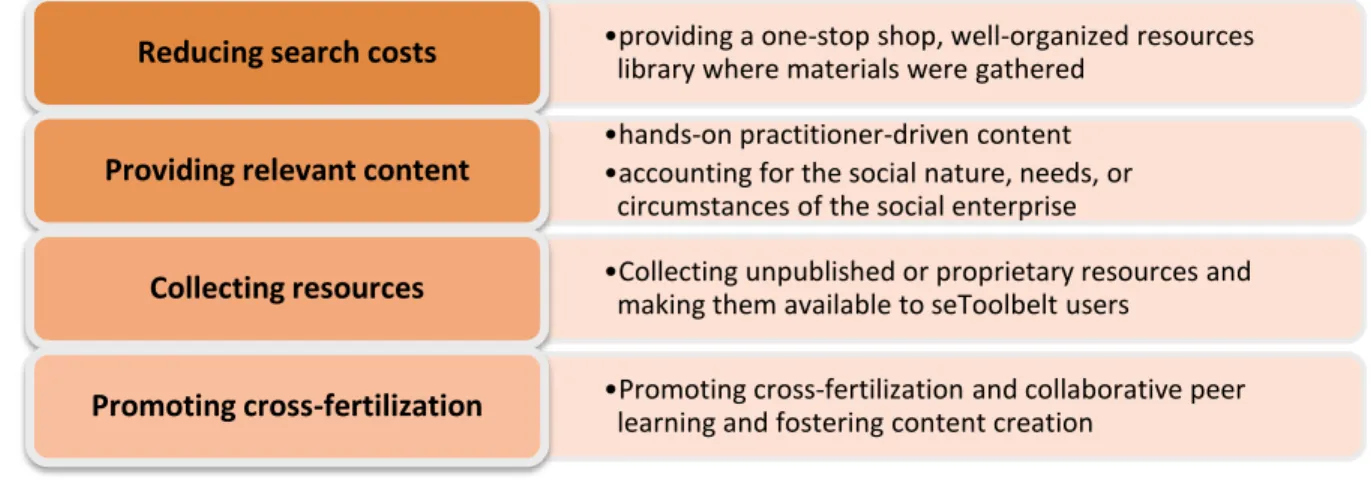
A market research, that seToolbelt conducted during the start-up phase, suggested that “84% of social enterprise practitioners would benefit from strategic and managerial resources, while over 65% create[d] original technical resources because they [could not] find appropriate tools in the public space.”18 Therefore, seToolbelt’s objectives were:
Figure 2 – seToolbelt’s Objectives
Source: adapted from seToolbelt 2012, pp. 7.
seToolbelt’s value proposition serviced not only social entrepreneurs, but all players across the spectrum of social enterprise actors, ranging from traditional nonprofit professionals to socially responsible business entrepreneurs. To technical assistance providers like consulting firms in the area of social enterprise seToolbelt’s resource center offered helpful, practical tools for use in the field to support their constituents’ work. For funders, who were interested in supporting social enterprises, the library provided latest practical thinking and resources to help select, monitor, and measure successful social enterprises. Furthermore, academics and educators could benefit from the frameworks and case studies that were grounded in reality by using them to enrich their theoretical teaching materials and research agendas.
According to its vision and mission, seToolbelt aimed to become an international platform with global reach. By spring 2012, 50% of its traffic was international, being composed of users from 150 different countries among which a high density in India could be observed. The other 50% of its users came from UK, US, and Canada, which represented the most engaging countries in terms of social enterprise.
18
seToolbelt 2012, p. 7.
•providing a one-stop shop, well-organized resources library where materials were gathered
Reducing search costs
•hands-on practitioner-driven content •accounting for the social nature, needs, or
circumstances of the social enterprise
Providing relevant content
•Collecting unpublished or proprietary resources and making them available to seToolbelt users
Collecting resources
•Promoting cross-fertilization and collaborative peer learning and fostering content creation
5.2.4 Open Source Ethos
The main objective that united all these purposes was an open source ethos. seToolbelt believed that social change was possible if social businesses got free and open access to the necessary social enterprise and organizational development resources.
Free and open access was one of the prerequisites for the open source philosophy. This meant no login requirements or fees. Therefore, seToolbelt abstained from any user registration or financial barriers that contravened the open source character and did not serve to build the kind of open source community for social enterprise practitioners that all would benefit from.
“Knowledge is power, and power should be shared!”19 This second prerequisite for the open source community was based on the idea that barriers to sharing only served to slow the development of the field of social enterprise and limit the potential social impact that could be achieved, if a truly open-source approach was cultivated. On the one hand, sharing of experiences, tools, and further reopen-sources with others working in the field could help to improve their business practice; on the other hand it could contribute to embed social enterprise approaches within mainstream business practice.
The seToolbelt team believed that open source sharing and crowdsourcing could contribute highly to advancements in the third sector. They drew the comparison to the open source ideology in software development: The developer of a program shared the source code with other users or developers worldwide who worked on the code and produced as final result a vastly improved source code. In a similar way, collaborating in the process of resource and tool creation for social enterprise could serve to advance the quality and the value of the content, thus enhancing the impact of practitioners working to solve social problems, and thereby the wider field of social enterprise.19
5.3 Organizational Structure
As a young and growing company with limited funds, seToolbelt had to start with a small team in order to keep the expenses low.
5.3.1 The Team
Sutia “Kim” Alter
As Founder and Managing Director of Virtue Ventures, Sutia “Kim” Alter took the role of Strategy Advisor for seToolbelt. When seToobelt was officially launched in 2011, she could rely on her experience in the area of social business gleaned over the last 20 years. Kim Alter’s career as a social entrepreneur started when she co-launched and directed a social enterprise, Visions in Action, with operations in five African countries. In 2000, she founded Virtue Ventures LLC. Alter is also a founding member of the Social Enterprise Alliance, and served on the board of directors for three years. Due to her practical contributions to the social enterprise field Kim Alter was appointed Visiting Fellow to the Skoll Centre for Social Entrepreneurship at Saïd Business School, University of Oxford in 2004. There, Kim Alter conducted research and taught courses on social entrepreneurship.
She was widely considered a social enterprise “thought leader” and therefore invited to numerous conferences and events as keynote speaker; among these were the Skoll World Forum on Social Entrepreneurship and the Asian Social Entrepreneurs Summit (ASES) in Seoul, Korea in October 2008. Kim Alter had worked so far in 40 countries in Europe, Asia, Africa, Latin America and the Middle East and in a wide variety of industries and sectors. 20
Vincent Dawans
Due to his expert knowledge in the field of IT solutions Vincent Dawans was nominated Chief Technical Officer at seToolbelt. When he joined Virtue Ventures as Partner he had already worked as system analyst and developer and in management consulting. From then on, he participated in a variety of social enterprises and international development agencies and championed Virtue Ventures’ initiative, “Social Enterprise: A Methodology for Building High Performance Organizations”, which resulted in the inception of seToolbelt. As system engineer and programmer, Drupal21 specialist, and open source champion all design and web development work of seToolbelt was attributed to Vincent Dawans. He had worked before on projects in East Africa, West Africa, India, Peru, Indonesia, as well as around the United States.22
Lindsay Miller
Lindsay Miller joined Virtue Ventures in 2008 as Associate Consultant who fostered the growth of social enterprises and nonprofits in the US and abroad by providing technical assistance and advisory support.
20
http://www.virtueventures.com/about/team/kim-alter [Accessed August 29, 2012]; seToolbelt 2012, p. 34. 21 See section 5.3.5 Technical Issues.
22
http://www.virtueventures.com/about/team/vincent-dawans [Accessed August 29, 2012]; seToolbelt 2012, p. 35.
She gained international working experience in ecotourism and skills training projects for indigenous women in Chile and Mexico and in infrastructure development projects in Nepal. Lindsay Miller was a Skoll Scholar in Social Entrepreneurship at Oxford University’s Saïd Business School where she earned her MBA degree. In October, 2011, Lindsay Miller was appointed Director of seToolbelt.23
5.3.2 Board of Directors
Additionally, it was planned to establish a Board of Directors to provide guidance by reviewing and advising on seToolbelt’s strategic decisions. The prospective members of the Board (see Exhibit 1 for details) were leaders in the social enterprise and “changemaking” fields; that is why they were able to support seToolbelt’s development through providing connections to larger networks of investors, funders, potential clients, and users. Furthermore, the Board monitored the business activities, supervised the use of funds, and accounted for the company’s legal and regulatory compliance.24
5.3.3 Personnel Plan
In line with seToolbelt’s growth strategy (see later in section 5.7 Strategic Goals) the personnel plan considered a deliberate and careful expansion of the team. As payroll costs constituted a high percentage (around 84% on average according to seToolbelt’s income statement25) of total expenses, it was important for the company to keep them as low as possible in order to reach the goal of a viable business. Therefore, they cooperated with volunteers and paid interns. Exhibit 3 provides an overview of the personnel plan.
5.3.4 Partnerships are Core
seToolbelt relied on five different kinds of partnerships which are described in the following.
5.3.4.1 Content Partners
First of all, there were Content Partners who contributed resources directly to the library, thus ensuring that the most current and relevant resources were available to users. They provided content related to a variety of industries, disciplines, geographical regions, and languages; and it was in their responsibility to maintain and manage their own resources. The incentive for content partners to cooperate was the gain of access to seToolbelt’s global community of practitioners and promotion on the website and through
23http://www.virtueventures.com/about/team/lindsay-miller [Accessed August 29, 2012]; seToolbelt 2012, p. 35. 24
social media communications. Moreover, they benefited from valuable feedback from users about resources they contributed.26
In February 2012, seToolbelt maintained content partnerships with 28 different organizations. Among these were Enterprising Nonprofits, Social Enterprise Associates, Demonstrating Value, Ashoka Changemakers, and Grassroots Business Funds.27 Furthermore, Virtue Ventures as parent company contributed resources and content.
5.3.4.2 Network Partnerships
Network Partnerships formed another important type of partners as they ensured access to existing networks of social entrepreneurs and other players in the field that were important to build seToolbelt’s community of users. “By engaging with multiple network partners, seToolbelt [was] able to link existing networks […] as well as to convene a global practitioner community across fragmented social enterprise markets.”28 As of May, 2012, Social Enterprise Alliance was the first and only network partner seToolbelt had brought on. The objective was to connect with the main existing networks operating in the field of social enterprise, e.g. Development Marketplace, Skoll, Schwab, Social Enterprise Coalition, Ashoka, GSBI, ANDE. In addition, network partners were appropriate leaders of Practitioner Innovation Communities which fostered joint problem-solving and new resource creation.28 29
A further development announced opportunities to enlarge the network: A partnership with the community W1SDØM, planned to start in the summer of 2012, would entail several other partners that seToolbelt was hoping to engage with. The details and impact of this merger will be discussed later on in section 5.8.
5.3.4.3 Collaboration Partners
“seToolbelt [was] a collaborative forum where social entrepreneurs [could] collectively tackle challenges.”30 That is why Collaboration Partners, as the third kind of partnership, represented the core of seToolbelt. Many issues social entrepreneurs were confronted with when planning, starting, and managing their businesses were of a common nature. Therefore, seToolbelt decided to give room to “the mutual desire to address common social enterprise problems”30 by facilitating and synthesizing community discussions, in both online and offline working groups. Thus, cross-fertilization and peer learning could be promoted and content creation could be facilitated.
26
seToolbelt 2012, p. 12; http://www.setoolbelt.org/about/partners [Accessed August 29, 2012]. 27 See Exhibit 4 for a complete list of Content Partners.
28
seToolbelt 2012, p. 12. 29