PIG BREEDING IN HOT CLIMATES
Carla Andrea Machado Martins
Orientadores:
Divanildo Outor Monteiro Departamento de Zootecnia Universidade de Trás-os-Montes e Alto Douro Vila Real, Portugal
Saskia Bloemhof Research and Development Department
Institute for Pig Genetics B.V. Beuningen, The Netherlands
Dissertação do 2º Ciclo de Estudos em Engenharia Zootécnica (Grau de Mestre), apresentada à Universidade de Trás-os-Montes e Alto Douro
Universidade de Trás-os-Montes e Alto Douro Vila Real
As doutrinas apresentadas são da exclusiva responsabilidade do autor.
V
PREFÁCIO
Esta tese está integrada no plano curricular do 2.º ciclo de Engenharia Zootécnica e é o resultado do estágio realizado no Institute for Pig Genetics localizado em Beuningen, Países Baixos. Tomei conhecimento do IPG e do seu objecto de estudo após uma visita realizada à Topigs a 15 de Janeiro de 2010, que desde logo me suscitou interesse para lá realizar a minha investigação.
Apesar de o estágio ser realizado nos Países Baixos, o interesse por realizar a investigação com dados provenientes de Portugal e Espanha foi sempre uma ambição. Daí surgiu a oportunidade de estudar e quantificar os efeitos do stress térmico na performance produtiva e reprodutiva de porcas, que foi uma opção que veio de encontro às minhas expectativas. Este trabalho está inserido num amplo projecto da Topigs que visa o melhoramento genético de suínos para a robustez.
VII
AGRADECIMENTOS
Este espaço é dedicado a todos aqueles que deram o seu contributo para tornar esta dissertação possível. A todos deixo aqui os meus sinceros agradecimentos.
À investigadora e orientadora desta dissertação Saskia Bloemhof, pela partilha do saber, pela orientação durante o percurso de estudo, pelas críticas e sugestões para o enriquecimento desta dissertação.
Ao Professor Doutor Divanildo Outor Monteiro, orientador desta dissertação, por todo o apoio e partilha de conhecimento, sobretudo seu pelo gosto pelos suínos que me contagiou.
Ao Professor Doutor Jorge Colaço pela ajuda disponibilizada durante o trabalho.
A todos no Institute for Pig Genetics pelo acolhimento, pelos bons momentos passados e pela boa experiência durante o estágio.
Ao investigador Bruno Silva pela partilha de conhecimento e pelo apoio durante o estágio no Institute for Pig Genetics.
À IAAS-UTAD, aos membros e amigos pelos bons momentos passados, onde muito aprendi durante estes anos.
A todos os meus amigos, de Esposende e da UTAD, por todo o seu contributo durante a minha vida, durante todo este percurso académico e por todos os bons momentos passados.
Aos meus irmãos Vítor e Sandra, respectivos cunhados e sobrinha Ana por todo o apoio dado.
Aos meus pais, Francisco e Amélia, que me fizeram ser a pessoa que sou hoje, por todo o incentivo e por terem tornado toda esta experiência possível.
IX
ABSTRACT
Pigs are very sensitive to high temperatures, when they are exposed to high temperature, above the thermo-neutral zone, they respond invoking physiological and behavioral mechanisms to facilitate heat losses to the environment or to minimize heat gain from the environment. Feed intake and reproductive performance are affected when sows are exposed to heat stress.
Firstly, it was studied on which day heat stress had the greatest impact on reproductive performance in two different sow lines, a Yorkshire line (D-line) producing mainly in temperate climates and a Large White line (I-line) producing mainly in hot climates. Secondly, the relationship of temperature and humidity collected on-farm and collected on weather stations located at different distances from the farm was studied. Thirdly, new indicator traits, feed intake score and losses in back fat during lactation, to use in Breeding Value Estimation were studied.
From the first analysis, it was possible concluded that total number born (TNB) was negatively affected by Temperature Humidity Index (THI) for D-line and for I-line. Farrowing rate (FR) of D-line was significantly affected by THI and FR of I-line was not significantly affected by the class effect of THI. Temperature Humidity Index had a largest negative effect on TNB of D-line at 14 days after insemination and the largest effect of THI on TNB of I-line was at 5 days before insemination. D-line showed higher losses in reproductive performance than I-line sows when THI increased. These differences may be an indication of genetic differences in heat stress tolerance in sow lines. From the second objective, it was possible concluded that data from on-farm records were more accurate for predict losses in reproduction performance than information from weather station; however, weather station until 117 km far from the farm also provide satisfactory information for quantify losses in reproduction performance under heat stress conditions. From the third objective, feed intake score is a trait affected by high temperature and season. Feed intake score showed a low heritability; however may be introduced at Breeding Value Estimation to improve selection on start up of sows in Spain and Portugal. Losses in back fat during lactation was not a heritable trait.
Key words: feed intake, heat stress, reproductive performance, sow, Temperature Humidity
XI
RESUMO
Os suínos são animais muito sensíveis a elevadas temperaturas. Em presença de elevadas temperaturas, acima da sua zona de termo neutralidade, eles accionam mecanismos fisiológicos e comportamentais que permitem facilitar as perdas de calor para o ambiente ou minimizar ganhos de calor do ambiente. A sua ingestão de alimento, bem como a sua performance reprodutiva são afectadas quando as porcas são expostas ao stress térmico.
Nesta dissertação, em primeiro lugar, foram determinados os dias que têm um maior impacto negativo na performance reprodutiva em duas linhas de porcas distintas, linha Yorkshire (linha D) produzida principalmente em climas temperados, e a linha Large White (linha I) produzida maioritariamente em climas quentes. Em segundo lugar foi estudada a relação dos dados de temperatura e humidade recolhidos na exploração e recolhidos em estações meteorológicas localizadas a diferentes distâncias da exploração. Em terceiro lugar, foi estudada a importância de novos parâmetros para implementar na estimativa de valores genéticos com a finalidade de aperfeiçoar a selecção de porcas reprodutoras baseada na sua capacidade de ingestão de alimento após o parto e na sua mobilização de reservas durante a lactação.
Com esta dissertação pode-se concluir que porcas sujeitas a elevados valores do Índice de Temperatura e Humidade (ITH) diminuem a sua performance reprodutiva traduzindo-se numa diminuição do tamanho da ninhada e da taxa de parto. A taxa de parto da linha D foi afectada significativamente pelo ITH, no entanto a taxa de parto da linha I não foi afectada. O maior impacto negativo do ITH no tamanho da ninhada foi registado 14 dias após a inseminação para a linha D e para a linha I foi registado 5 dias antes da inseminação. A linha D mostrou maiores quebras na performance reprodutiva que a linha I com o aumento do ITH. Dados de temperatura e humidade registados na exploração são mais precisos no estudo das quebras da performance reprodutiva associadas ao stress térmico, no entanto, a estação meteorológica mais próxima da exploração, até uma distância de 117 km, pode também fornecer informação útil para utilizar em estudos relacionados com o stress térmico. No terceiro objectivo, a classificação da ingestão de alimento após o parto mostrou ser um parâmetro interessante para usar no aperfeiçoamento da estimativa de valores genéticos sendo que foi claramente afectado pela temperatura e estação.
Palavras-chave: índice de temperatura e humidade, ingestão de alimento, performance
XIII
CONTENTS
ABSTRACT...IX
FIGURE INDEX... XV
TABLE INDEX... XVII
LIST OF ABBREVIATIONS...XIX
1. INTRODUCTION...1
1.1. Objectives...2
2. LITERATURE REVIEW...3
2.1. Meteorological elements and sows housing...3
2.2. Heat stress ...5
2.2.1. Physiology of heat stress ...8
2.3. Feed intake ...9
2.4. Reproduction ...10
2.4.1. Ovarian follicular growth ...10
2.4.2. Ovulation...11
2.4.3. Maternal recognition and implantation period ...13
2.4.4. Reproduction and heat stress...13
2.5. Genetic improvements ...15
2.6. References ...17
3. ANALYSIS 1:UTILITY OF WEATHER RECORDS ON PIG BREEDING PROGRAM...23
3.1. Abstract ...23
3.2. Introduction ...24
3.3. Material and Methods...25
3.3.1. Data ...25
3.3.2. Meteorological data...26
3.3.3. Calculations and Statistical Analysis ...26
3.4. Results ...30
3.5. Discussion...36
3.6. Conclusion...40
3.7. References ...41
4. ANALYSIS 2:EVALUATION OF NEW TRAITS TO USE IN BREEDING VALUE ESTIMATION...43
4.1. Abstract ...43
4.2. Introduction ...44
4.3. Material and Methods...45
4.3.1. Data ...45 4.3.2. Statistical analysis ...46 4.4. Results ...47 4.5. Discussion...52 4.6. Conclusion...56 4.7. References ...57 5. FINAL CONSIDERATIONS...59
XV
FIGURE INDEX
Figure 2.1. Relationship factors involved in the maintenance of homoeostasis in pigs ... 5
Figure 2.2. Critical temperatures and zones... 6
Figure 2.3. Effect of ambient temperature on heat loss, voluntary energy intake and productive energy ... 9
Figure 2.4. Average diameter of the follicular cohort in sows with different weaning to oestrus interval. 11 Figure 2.5. Diagrammatic representation of hormone levels during the oestrous cycle of the pig... 12
Figure 3.1. Linear regression model ... 28
Figure 3.2. Plateau-linear model... 28
Figure 3.3. Means of TNB and FR per Temperature Humidity Index (THI) recorded on-farm ... 31
Figure 4.1. Average feed intake score per month of farrowing on two farms ... 48
Figure 4.2. Average feed intake score per maximum temperature at day of farrowing for two farms... 49
XVII
TABLE INDEX
Table 2.1. Temperature and Humidity Index values related to heat stress safety ... 7
Table 3.1. Descriptive statistic of productive and reproductive traits for 2 sow lines ... 30
Table 3.2. Descriptive statistic of maximum temperature and THI measured on-farm ... 31
Table 3.3. Linear (L) and plateau-linear (P) analysis of THI on TNB and FR ... 33
Table 3.4. Estimated values of the effect of THI on TNB and FR ... 33
Table 3.5. Correlation between THI of Portuguese weather stations and on-farm data ... 34
Table 3.6. Correlation between THI of Spanish weather stations and on-farm data with ... 34
Table 3.7. Analysis of THI variance on- and off-farm for TNB for I-line sow farm... 35
Table 3.8. Plateau-linear analysis of THI on- and off-farm for TNB for D-line sow farm ... 35
Table 4.1. Number of observations per line per farm ... 45
Table 4.2. Descriptive statistics of TNB, LMO, NW and parity number per line ... 47
Table 4.3. Descriptive statistics and frequency of feed intake score per line ... 47
Table 4.4. Descriptive statistics and frequency of feed intake score per farm... 48
Table 4.5. Descriptive statistics of farrowing and weaning back fat per line ... 49
Table 4.6. Descriptive statistics of farrowing and weaning back fat per farm... 50
Table 4.7. Phenotypic variance, heritability and repeatability for different traits ... 51
XIX
LIST OF ABBREVIATIONS
ACTH adrenocorticotropic hormoneBGHI Black Globe Humidity Index BVE Breeding Value Estimation
CL corpus luteum
CRH corticotrophin releasing hormone FIS feed intake score
FR farrowing rate FSH follicle-stimulating hormone GnRH gonadotropin-releasing hormone h2 heritability L linear LH luteinizing hormone
LMO litter mortality
NBA number born alive
NMP number mummified piglets
NR28 non return at 28 days NSB number stillborn piglets
NW number weaned P Plateau-linear r2 repeatability RH relative humidity SD Standard deviation T temperature
THI Temperature Humidity Index TNB total number born
Introduction
1
1. INTRODUCTION
Pigs are homothermous animals; they maintain body temperature within a certaininterval, regardless of fluctuations in ambient temperature. Pigs are more sensitive to high ambient temperatures than other farm animals because they can not sweat and pant so well (Huynh, 2005). Pig production occurs on commercial farms all over the world because of expansion of the human population. This requires that animal protein should be produced not only under favourable but also under the unfavourable meteorological conditions prevailing in tropical, polar and high altitude countries. Here the problem arises of finding animals best suited for producing under such conditions.
Farm animals are selected and bred for productive traits, in contrast to wild animals that have been adapted to their meteorological environment through natural selection. One of the greatest challenges of modern pig farming is to achieve the maximum genetic potential of the animal, improving production and reproductive performance. For many years the research on achieving maximum efficiency in animal production was focused on management, animal health, nutrition and genetics. Nowadays, advances in these areas have been limited by environmental factors, mainly, due to heat stress effects which the animals are subject to. Besides high temperatures decreases animal efficiency, it may as well establish harmful air quality conditions to animals and workers.
TOPIGS is a worldwide breeding company and is active in over 50 countries, as Portugal and Spain. Portugal and Spain have high temperatures during the summer; therefore they are included in countries with tropical climate. Tropical climate in some countries is one important issue that TOPIGS wants to overtake improving the genetic value of its animals. This study is important for improve Breeding Value Estimation on heat stress tolerance and it is part of a larger TOPIGS project on breeding for robustness in pigs.
Pig breeding in hot climates
2
1.1. Objectives
The objectives of the first part of this study were: 1) to study on which day heat stress has the largest impact on total number born and farrowing rate in two different sow lines, a Yorkshire line (D-line) producing mainly in temperate climates and a Large White line (I-line) producing mainly in hot climates and 2) to identify if on-farm recording of weather parameters is a better predictor of heat stress than off-farm recording when used for application in genetic studies in heat stress tolerance. Study the relation between on-farm and weather station records is important because to our knowledge no study has worked on developed in pigs to understand if the information from on-farm is more accurate in capturing the effect of heat stress as the data collected in the weather station.
The objective of the second part of this study was to analyse new indicator traits which might be implemented in Breeding Value Estimation to improve selection on start up of sows after farrowing during hot periods in Portugal and Spain.
Literature Review
3
2. L
ITERATURER
EVIEW2.1. Meteorological elements and sows housing
Meteorological elements constitute a complex system which acts upon the animal body and it can influence the organism singly, or in various combinations of temperature, humidity, solar radiation and air movement (Bianca, 1976). Effective temperature is influenced by five environmental elements: air temperature, humidity, air movement, solar radiation and precipitation. Level of heat stress to which animals are exposed is affected by effective temperature (Fuquay, 1981).
The impact of meteorological elements on pigs, or domestic animals in general, can be detrimental or beneficial. For most meteorological elements there is a range of indifference, i.e. a zone within which compensatory responses by the organism are absent, the thermal neutral zone (Bianca, 1976). If the meteorological elements move outside this range, pigs get stressed and begin to activate its defence mechanisms. Piglets have a thermal neutral zone at a relative high temperature, between 30ºC to 37ºC and lactating sows have a thermal neutral zone at relative low temperature between 12 to 22ºC (Black et al., 1993).
In pigs, cold ambient, with lower temperatures, normally represents a smaller problem than heat. Heat refers to those meteorological elements which either interferes with the dissipation of body heat to the environment or which impose an external heat load on pigs (Bianca, 1976).
Meteorological elements can cause effects with different magnitude on the animal. Different categories can be distinguished: thermal indifference, mild heat when the thermoregulation mechanisms of the body can compensate the extra load, moderate heat when the thermoregulation mechanisms work at higher intensity and body temperature can be stabilized, and severe heat when the thermoregulation mechanisms are overtaxed, body temperature rises continuously and eventually death may occur (Bianca, 1976).
Developments in modern pig housing have occurred in the last decades as a result of researches and improvements in pig industry. The most significant feature in the success operation of any piggery is the achievement of a good standard of environmental conditions required for pig production (Brent, 1986).
Pig breeding in hot climates
4
The construction of pig pens and houses depend to a certain extent upon the climate and local circumstances. Local conditions are important, in terms, of the construction site (waterlogged, exposed to wind...etc.) or the building materials and the skills available for the construction of the installations (Muys and Westenbrink, 2004). Reduction of the stressful meteorological situation is mostly achieved by reducing the impact of meteorological elements, or by improving the microclimate inside the barn (Bianca, 1976). Thermal properties of materials in the roof have great importance for explanation of temperature oscillations in piggery (Muys and Westenbrink, 2004).
Some equipment can be used for satisfy the best thermal requirements for sows like ventilation systems, evaporative cooling systems and floor cooling systems. Ventilation systems are used to control air temperature and relative humidity, to maintain a satisfactory degree of comfort for stock and operator (including toxic gas levels), to renew stuffy air, and to quantify the speed at which air passes over the sows (Brent, 1986 and Silva, 2005). Evaporative cooling system is an adiabatic humidification process where sensible heat of the air is used to evaporate the water that comes in contact with the air; the reduction of temperature with a complementary increase of relative humidity is a consequence of sensible heat converted to latent heat in the added vapour (Lucas et al., 2000). Floor cooling system increases the differences in temperature between sows’ body and floor cooled improving the heat losses between the animal and the floor (Shi et al., 2006).
Brent (1986), concluded that measure house temperature is not easy and measures from mechanical ventilation are often unreliable due to the position of the sensor, accuracy of the controller, precision of design and operation of the house. In practice, precise temperature measurement will be guided by pig behaviour and performance of the pigs in declining the suitability of the temperature control (Brent, 1986).
Literature Review
5
2.2.
Heat stressEnvironments of high temperatures and high humidity are detrimental to the productivity of pigs and all farm animals, in general (Fuquay, 1981). Figure 2.1 demonstrates the most important external factors which influence the productivity of the pig. Heat is the major constraint on animal production in hot climates (Habeeb et al., 1992). Animals are considered to be exposed to heat when ambient temperature is above the thermal neutral zone and this zone lies between 12 and 22°C for lactating sows (Black et al., 1993). The thermal neutral zone covers the range of temperatures between the animal’s lower critical temperature and its upper critical temperature (Black et al., 1993).
Figure 2.1. Relationship of external and internal factors involved in the maintenance of
homoeostasis in pigs (Adapted: Gordon, 1997).
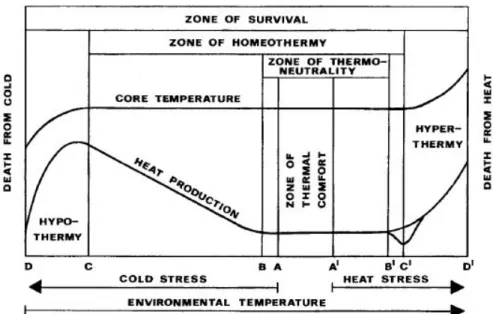
Figure 2.2 illustrates the critical temperatures and zones for pigs. Within C and C’, pigs can keep their body temperature constant. Environmental temperatures below C cause body temperature to fall, while above C’ the body temperature rises. The zone C-C’ can be divided into zones C-B, B-B’, A-A’ and B’-C’. Within zone C-B, body temperature is kept constant by regulation of heat production. The thermal neutral zone is within zone B-B’, where B point is called the lower critical temperature, while B’ point is called the upper critical temperature. Zone A-A’ is zone of thermal comfort.
Pig breeding in hot climates
6
Figure 2.2. Critical temperatures and zones (Source: Bianca, 1976).
Sows are exposed to heat stress when temperature exceeds the upper critical temperature (B’-C’, above 22°C). Heat stress results from a negative balance between the net amount of energy flowing from the animal to its surrounding environment and the amount of heat energy produced by the animal. This imbalance is induced by changes in a combination of environmental factors, like radiation, humidity and air temperature, animal properties and thermoregulatory mechanisms (St. Pierre et al., 2003). The more heat an animal produces internally by its metabolism, less is its capacity for tolerating external heat. There is thus a basic incompatibility between a high level of production and a high tolerance to heat (Bianca, 1976).
Heat stress is detrimental not only for economics of the pig industry but also for animal’s welfare (St. Pierre et al., 2003 and Huynh, 2005).
A complex of psychological, behavioural and anatomical mechanisms are invoked by the pig in response to heat stress aimed facilitating heat losses or decreasing heat gain from the environment (Huynh, 2005). In the nature, wild pigs can wallow in sludge or water during hot periods. Pigs can lose heat by radiation, conduction, convection and evaporation (Habeeb et al., 1992 and Huynh, 2005). When the pig cannot sustain homeothermy, it reduces the heat production using internal physiological means to help in re-establishment of the thermal balance. Response to heat stress are increased respiration rate or panting, decrease feed intake and increased rectal temperature (Habeeb et al., 1992, Huynh, 2005 and Silva et al., 2009b). Feed consumption and thermogenic hormone secretion decrease to lower the basal mechanism
Literature Review
7
resulting in a quick decline in productivity. If all these physiological mechanisms fail to balance the excessive heat load, the body temperature rises and the pig starts the acute phase of stress. If these systems still fail to stop the increase of body temperature, the animal succumbs with heat stroke and dies (Habeeb et al., 1992).
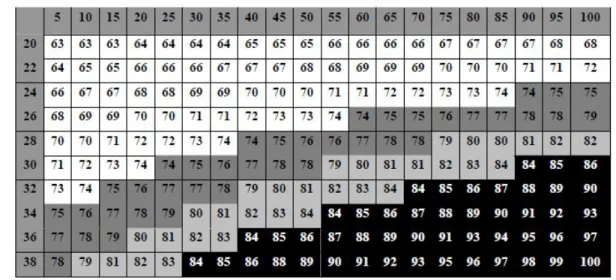
To characterize and quantify adequate comfort zone for distinct domestic animals species were developed thermal comfort indexes. Several publications are using thermal comfort indexes as Temperature Humidity Index (THI), based on air temperature and relative humidity, and Black Globe Humidity Index (BGHI) associating the use of black globe temperature adding the solar radiation effect (Kelly and Bond, 1971 and Buffington et al., 1981). Temperature Humidity Index values in the Table 2.1 were developed and used for measuring and estimating heat stress conditions in beef cattle, dairy cows and pigs; the normal values were considered lower than 75, alert values were from 75 to 78, danger values are from 79 to 83 and emergency values are higher than 83 (Nããs, 2006).
Table 2.1. Temperature and Humidity Index values related to heat stress safety (Source: Nããs,
Pig breeding in hot climates
8
2.2.1.
Physiology of heat stressAn immediate response to stress is activation of the sympathoadrenal system, which consist of the sympathetic nervous system and the adrenal medulla (Turner and Tilbrook, 2006). Another ubiquitous response to stress is activation of the hypothalamo-pituitary adrenal axis which results in the release of corticotrophin releasing hormone (CRH) and vasopressin from the hypothalamus into the hyphotalamo-hypophysial portal circulation (Turner and Tilbrook, 2006). CRH and vasopressin stimulate the anterior pituitary gland to synthesise and release adrenocorticotrophic hormone (ACTH). ACTH induces the increase of plasma cortisol level during acute heat stress and glucocorticoid hormones have hyperglycaemic action to increase gluconeogenesis and provide the expected increase in glucose utilization in heat stressed animals (Habeeb et al., 1992). Although cortisol is the main glucocorticoids produced, ACTH also induces production in the adrenal cortex adrenaline and noradrenaline (Torpy and Chrousos, 1996).
The elevation of circulating concentrations of adrenaline, noradrenaline and cortisol results in the rapid mobilisation of the body’s energy stores to allow the necessary responses to cope with the challenge encountered (Turner and Tilbrook, 2006). For example, the increase of adrenaline and noradrenaline results an increase of heart rate, dilatation of bronchial tree, an increase of pupil dilatation and redistribution of blood to skeletal and cardiac muscle and away from organ systems which are not essential (Udelsman and Holbrook, 1994). Turner and Tilbrook (2006) reported that reproduction in female pigs can be impaired by exposure to stress.
In periods with persistent heat stress, the decline of cortisol occur because cortisol is thermogenic in animals and, consequently, the reduction of adrenocortical activity under thermal stress is a thermoregulatory protective mechanism preventing metabolic heat production in a hot environment. This indicates the function of the adrenal cortex gland in adaptation to stress (Habeeb et al., 1992).
In studies on heat stress effects on animal production, weather information are usually obtained from weather stations, which routinely collect daily or even hourly information for temperature, humidity and precipitation. Weather stations are found in many locations all over the world. They can provide reasonable good information for heat stress when they are located in a relative flat area; in other locations, with geographical differences, complicated landscapes, such mountains, the data from weather station may be less useful for prediction of on-farm weather conditions (Freitas et al., 2006).
Literature Review
9
2.3. Feed intake
To understand the control and regulation of feed intake is important to establish an appropriate feeding strategy and study the main factors which affect feeding behaviour. Voluntary feed intake is affected by several factors; many of them are environmental factors (Gourdine et al., 2006). Lactating sows are particularly sensitive to high temperatures (Silva et
al., 2009a). When ambient temperature falls below the lower critical temperature, the animal has
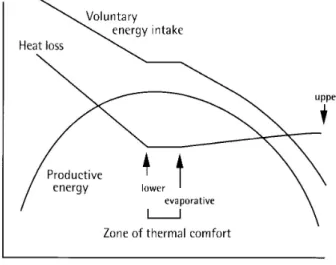
to increase its heat production to maintain body temperature; this is done by increasing feed intake (Figure 2.3). Within zone of thermal comfort the animals maintain its body temperature and increase its heat losses by simple mechanisms that require little effort (Williams, 1998). When ambient temperature increase above evaporative critical temperature, the pig increases heat loss by evaporation, mainly through the lungs, and reducing its heat production by reducing its feed intake because of the thermal effect of feed (Silva et al., 2009a).
To support maintenance and milk production, sow physiologically requires nutrients (NRC, 1987). Milk production has a high priority, and if nutrient intake is restricted, the sow will draw on body tissue in an attempt to maintain milk production (NRC, 1987). Consequently, reducing sow’s feed intake results in body reserves mobilization, decrease of milk production, and future reproductive and productive performance of the sow is compromised (Dourmad et al., 1998). Reduction in feed intake plays probably a role in the delayed return-to-oestrus after weaning under elevated temperatures (Prunier et al., 1997).
Figure 2.3. Effect of ambient temperature on heat loss, voluntary energy intake and productive
Pig breeding in hot climates
10
2.4. Reproduction
Reproduction has a major impact on the efficiency and productivity of pig production systems. Reproductive performance depends on the genotype of the pig and the environment which it encounters.
Reproductive performance in sows depends on several factors, such as parity number, breed, season, temperature, photoperiod and nutrition (Gourdine et al., 2006; Peltoniemi and Virolainen, 2006; Suriyasomboon et al., 2006 and Silva et al., 2009a). Litter size and number of piglets weaned are the most important measure of sow productivity and has a large effect on overall herd profitability (Gordon, 1997).
Non-pregnant and non-lactating sows and gilts display oestrus or standing heat throughout the year. The oestrus cycle is normally 21 days and is defined as the time between the onsets of one oestrus to the onset of the next. The cycle length can range from 18-24 days (Singleton and Diekman). Several authors reported the influence of high ambient temperature at different moments in the sow’s reproductive cycle. Follicular development, oestrus behaviour, oocyte competence, fertility rate, embryo quality and embryonic development may be affected by heat stress (Omtvedt et al., 1971; Wettemann et al., 1988; Tantasuparuk et al., 2000; Hansen et
al., 2001 and Suriyasomboon et al., 2006).
2.4.1. Ovarian follicular growth
Ovarian follicular development during lactation and after weaning in sows is a complex process that ultimately determines rebreeding efficiency of sows (Lucy et al., 2001). Sows normally return to oestrus 3-7 days after weaning in order to be inseminated and establish a new pregnancy (Soede and Kemp, 1997).
Multiple patterns of ovarian follicular development before weaning are observed when individual sows are compared (Lucy et al., 2001). In general, sows with normal pattern have follicles of 2-5 mm in diameter when they are weaned and weaning origin a quick development of preovulatory follicles (Lucy et al., 2001). The inhibition of LH secretion by lactation prevents preovulatory follicular development before weaning (Britt et al., 1985; Varley and Foxcroft, 1990) and reducing suckling stimulus as the litter matures results in the increase of LH secretion (Britt et al., 1985; Quesnel and Prunier, 1995). LH pulsatility increases within 4 hours after weaning therefore it is believed that the increase in LH secretion stimulate follicular growth
Literature Review
11
(Lucy et al., 2001). Growth of ovarian follicles after weaning leads to an increase in oestradiol and decrease in FSH. The decrease in FSH prevents the development of small follicles during the preovulatory period and ensures that only LH-dependent follicles (>5 mm) will continue the development (Lucy et al., 2001). When sows come into oestrus the follicles are maximally steroidogenic at 6-7 mm and they grow slightly larger (7-8 mm) before ovulation. Lucy et al. (1999) concluded that sows ovulated on day 5 after weaning have an earlier follicular development than sows ovulated on day 7 or 9 after weaning and their growth curves for the preovulatory follicles are parallel (Figure 2.4). In sows with low body condition or in sows exposed to heat stress a long interval from weaning to oestrus has been observed (Lucy et al., 2001). Nutritional and environmental inputs can modify the secretion of LH. In sows that are under-fed or exposed to high environmental temperatures may occur the decrease of follicular growth associated with reduced LH secretion (Lucy et al., 2001).
Figure 2.4. Average diameter of the follicular cohort in sows with different weaning to oestrus
interval (¯-5 days, £-7 days, r-9 days and ™-anoestrus). (Source: Lucy et al., 2001)
2.4.2. Ovulation
Ovulation usually occurs about 40 hours after the onset of oestrus when the heat period lasts about 2 days and it is a spontaneous process; when the duration of heat is longer than 2 days, ovulation occurs when about 75% of the heat period has elapsed (Gordon, 1997). In normal cyclic sows, the release of the LH being at the onset of oestrus and the interval from release of preovulatory LH to ovulation is about 40 hours (Niswender et al., 1970). The LH surge induces ovulation, the differentiation of follicular cells and the formation of corpus luteum (CL), (Gordon, 1997).
Pig breeding in hot climates
12
Figure 2.5. Diagrammatic representation of hormone levels during the oestrous cycle of the pig
(Source: Gordon, 1997).
Figure 2.5 shows the hormone levels during the oestrous cycle of the sow. Oestrogen level raises during the follicular phase of the cycle, triggering the release of the preovulatory surge of LH at the onset of oestrus. The level of the GnRH remains low during the remainder of the cycle, there is just one sharp LH peak at oestrus (Gordon, 1997).
The oocytes from all of the large follicles from both ovaries ovulate in a relatively short period of time (approximately 3 hours). However, even though there is minimal variation in the time to ovulate all follicles within a female, the time of ovulation after onset of oestrus is highly variable between females (Knox, 2002).
Knox (2002) reported that after ovulation all the large follicles at oestrus, the oocytes, are moved into the oviduct. This movement occurs by the coordinated muscular contractions of a thin piece of tissue called the fimbria. The fimbria wraps around the entire ovary, and under the influence of oestrogen, induces muscular contractions which propel all of the oocytes into the funnel shaped opening of the oviduct (Knox, 2002). Fertilization takes place in the oviduct, at the ampullary-isthmic junction (Gordon, 1997). It is also important to note that the levels of oestrogen and progesterone can affect the movement of the sperm and oocytes in the oviduct. Excessive oestrogen at this time has been reported to cause oocyte retention in the oviduct, while excessive progesterone has the effect of opening the oviduct and speeding entry of the sperm and exit of the oocyte (Knox, 2002).
Literature Review
13
2.4.3. Maternal recognition and implantation period
The theory of maternal recognition and implantation period in pigs has been reported by several authors (Bazer et al., 1982; Gordon, 1997 and Geisert et al., 2005). Gordon (1997), reported that from day 11-12 of pregnancy, pig blastocysts start elongating and there is a decrease in their diameter, which gives rise to filamentous structures. Migration of embryos from the tip of the uterine horn to the body of the uterus starts after they have hatched and when the blastocyst starts to expand (Gordon, 1997). Ziecik et al. (2006) concluded that the period from successful fertilisation to the process of initiation of implantation lasts about 14 days. Also Gordon (1997) concluded that the implantation starts around day 13-14 of pregnancy and embryonic oestrogen play a role in regulating the uterine secretions on which embryos are highly dependent before and after implantation. Oestrogens produced by blastocysts from the day 11 alter the direction of movement of PGF and its secretion remains in an exocrine direction, to the uterine lumen in order to prevent PGF enter in the uterine venous drainage and to exert a luteolytic effect on the CL (Bazer et al., 1982). Prostaglandins are key mediators on reproductive functions as ovulation, fertilisation, implantation and parturition (Ziecik et al., 2006). However, although oestrogen plays a major function in preventing luteolysis and inducing uterine secretions necessary for changes in conceptus morphology for implantation in pigs, the inappropriate timing of uterine exposure to oestrogen has a detrimental effect on conceptus survival (Geisert et al., 2005). According to Ford (1997) pregnancy recognition occurs between day 12 and day 18 after insemination.
2.4.4. Reproduction and heat stress
Summer and hot periods have been characterized by a decline in the pig’s reproductive performance in many parts of the world (Wettemann et al., 1988; Tantasuparuk et al., 2000; Suriyasomboon et al., 2006 and Bloemhof et al., 2008). Elevated ambient temperatures have been shown to affect follicular development, increase the incidence of anoestrous which interfere with ovulation, reduce oocyte competence and conception rate and embryo survival (Habeeb et
al., 1992; Gordon, 1997 and Hansen et al., 2001). Also male fertility is affected by high
temperatures reducing semen quality (Gordon, 1997).
The hormones associated with stress (ACTH) may interfere on preovulatory oocytes and their development after fertilization. ACTH interrupted oocyte maturation by disrupting the
Pig breeding in hot climates
14
integrity of the vitelline membrane and by interfering with the normal action of the cortical granules (Gordon, 1997). Liptrap (1993) suggested that stress in sows may result in a decrease in circulating oestradiol levels. Also Habeeb et al. (1992) concluded that insufficient gonadotrophin (FSH and LH) hormone secretion under heat stress may lead to inadequate oestrogen and/or progesterone production and consequently reproductive failure. Decreased LH may lead to ovulation failure with subsequent developmental failure of the corpus luteum (Habeeb et al., 1992). Farghaly (1984) reported that thyroid gland also plays a role in reducing reproductive activity with a decrease in the level of triiodothyronine (T3) and thyroxine (T4) hormones.
Reproductive performance is reduced when gilts and sows are exposed to high ambient temperatures during early pregnancy (Wetteman et al., 1988). Heat stress may interfere with early development and implantation of the embryo. Gilts exposed to heat stress have alterations in endocrine functions as decrease of progesterone concentrations and they tended to have smaller embryos at slaughter than gilts confined to the control chamber (Wettemann et al., 1988). Also concentrations of oestrogens in plasma were influenced by exposure of gilts to elevated ambient temperatures. Decreased concentrations of oestradiol of pregnant heat stressed gilts during day 13 to 15 of pregnancy compared with control pregnant gilts may influence maternal recognition of pregnancy (Wettemann et al., 1988).
Some alternatives can minimize the negative effects of high temperatures inside sow’s housing. Cooling systems, nutritional solutions and management procedures can be used for to alleviate the negative consequences of heat stress on the sows’ performance. However, for production in hot environment, it a more sustainable solution would be to select pigs resistant to heat stress.
Literature Review
15
2.5. Genetic improvements
Wild animals have been adapted to their environments through natural selection; by contrast farm animals, which are originated from wild animals, have been selected for productive traits (Bianca, 1976 and Owen, 1992).
At the presence of a heat stress situation attempts are made to provide sows capacity for cope with it relatively well. This capacity is increased by breeding and selection. Bianca (1976) reported that in tropical climates, some species of animals are combined breeds from temperate regions, which contributed with a high production capacity, and indigenous breed, which contributed with tolerance to heat and other adverse environmental conditions. The genetic proportion contributed by the indigenous partner is increased with increasing severity of the environmental conditions. Selection can be repeated over many generations and genetic progress made continually (Bianca, 1976).
Genetic differences were found among breeds and animals of the same breed such that there is both genetic and non-genetic variability between pigs of the same breed under the same management system. For reproduction traits, such as litter size, and its components, such as ovulation rate and embryonic survival, genetic variability is due to segregation of many genes which have different effects on each trait and also exist with different frequencies in the population (Hill and Webb, 1982). It is necessary to distinguish between genetic differences in performance observed among and within different breeds, or lines of the same breed in different herds.
For Knap (2005), increasing genetic potential requires advances in animal nutrition and animal management to support its expression; however they are often poorly addressed or overlooked and changes in genetic potential are often not accompanied by changes in the production environment. Selection for increased production and reproduction traits occurs in nucleus level in mainly temperate climates and under improved environmental conditions (Knap, 2005).
In general, environmental sensitivity is increased by selection on production traits under improved environmental conditions (van der Waaij, 2004). Genetic variation in heat stress tolerance between animals has been found for cattle, sheep and sows (Ravagnolo et al., 2000; Finocchiaro et al., 2005 and Bloemhof et al., 2008).
Pig breeding in hot climates
16
The historical development of the breeds may be important to understand the attributes and problems of today’s breeds. The major centres of a breed development were England, China and USA (Jones, 1998).
Peltoniemi and Virolainen (2006) reported a clear difference in reproductive performance between breeds. Yorkshire sows had 1.20 times higher risk of rebreeding and Landrace sows had 1.12 times higher risk of rebreeding than crossbreed sows. However, the Yorkshire breed appeared to be more susceptible to seasonal variation in reproduction than the Landrace breed (Peltoniemi and Virolainen, 2006).
Although there has been confusion about the names Yorkshire and Large White, Large White pig is originated in the United Kingdom, although is known in many countries as the Yorkshire pig (Gordon, 1997). Selection for both breeds has been done in different countries. The Large White breed has been registered since 1884 and the Yorkshire breed had the first herd book published in 1901 (Briggs, 1983). During the past years selection in both lines was based on body weight (BW) gain, back fat, litter size and litter mortality (Bloemhof et al., 2008). Comparing purebred Yorkshire sows with purebred Large White sows, purebred Yorkshire sows showed greater susceptibility to high temperature on litter size and farrowing rate than purebred Large White sows (Bloemhof et al., 2008).
Literature Review
17
2.6. References
Bazer, F.W., R.D. Geisert, W.W. Thatcher and R.M. Roberts. 1982. The establishment and maintenance of pregnancy. In: Cole D.J.A. and Foxcroft G.R. (ed) Control of Reproduction
in the Pig. pp. 227-252.
Bianca, W. 1976. The Significance of Meteorology in Animal Production. Int. J. Biometeor. vol. 20, number 2, pp. 139-156.
Black J.L., Mullan B.P., Lorschy M.L. and Giles L.R.. 1993. Lactation in the sow during heat stress. Livestock Production Science 35, pp. 153-173.
Bloemhof S., van der Waaij E.H., Merks J.W.M. and Knol E.F. 2008. Sow line differences in heat stress tolerance expressed in reproductive performance traits. Journal Animal Science 86, pp. 3330-3337.
Brent G. 1986. The environmental needs of the pig. In: Housing the pig. Farming Press Ltd. Wilshire. pp. 35-55.
Briggs, H. M., 1983. International Pig Breed Encyclopedia. Elanco Animal Health, Indianapolis, USA.
Britt J. H., Armstrong J. D., Cox N. M. and Esbenshade K. L. 1985. Control of follicular development during and after lactation in sows. Society for Reproduction and Fertility, Supplement 33, pp. 37-54.
Buffington, D.E., Collasso-Arocho, A., Canton, G.H. and Pit, D. 1981. Black globe humidity index (BGHI) as comfort equation for dairy cows. American Society of Agricultural and
Biological Engineers 24, pp. 711–714.
Dourmad J. Y., Noblet J., and Etienne M. 1998. Effect of protein and lysine supply on performance, nitrogen balance, and body composition changes of sows during lactation.
Journal Animal Science 76, pp. 542-550.
Farghaly H. A. 1984. Thyroid and some ovarian hormones and their relation to reproduction in
Egyptian water buffalo. MSc Thesis, Faculty of Agriculture, Cairo University, Cairo.
Finocchiaro R., van Kaam J. B. C. H. M., Portolano B. and Misztal I. 2005. Effect of Heat Stress on Production of Mediterranean Dairy Sheep. Journal Dairy Science 88, pp. 1855–1864. Ford, S.P. 1997. Embrionic and fetal development in different genotypes in pigs. Journal of
Pig breeding in hot climates
18
Freitas M.S., Misztal I., Bohmanova J. and West J. 2006. Utility of on- and off-farm weather records for studies in genetics of heat tolerance. Livestock Science 105, pp. 223-228.
Fuquay W. 1981. Heat Stress as it Affects Animal Production. Journal Animal Science 52, pp. 164-174.
Geisert R.D., Ross J.W., Ashworth M.D., White F.J., Johnson G.A. and DeSilva U. 2006. Maternal recognition of pregnancy signal or endocrine disruptor: The two faces of oestrogen during establishment of pregnancy in the pig. In: Control of Pig Reproduction
VII. R. Kraeling and C. Ashworth, Eds, Nottingham University Press, pp 131-145.
Gordon I. 1997. Controlled Reproduction in Pigs. CAB International, Oxon, UK.
Gourdine J. L., Binadel J. P., Noblet J. and Renaudeau D. 2006. Effects of breed and season on performance of lactating sows in a tropical humid climate. Journal Animal Science 84, pp. 469-480.
Habeeb A. A. M., Marai I. F. M. and Kamal T. H. 1992. Heat Stress. In: Phillips C. and Piggins D. (ed.) Farm Animals and the Environment. CAB International, Oxon, UK. pp. 27-47. Hansen, P. J., Drost M., Rivera R. M., Paula-Lopes F. F., Al-Katanani Y. M., Krininger C. E.,
and Chase C. C. 2001. Adverse impact of heat stress on embryo production: Causes and strategies for mitigation. Theriogenology 55, pp. 91–103.
Hill W. G. and Webb A. J. 1982. Genetics of reproduction in the pig In: Cole D.J.A. and Foxcroft G.R. (ed) Control of Reproduction in the Pig. pp. 541-564.
Huynh, T. T. T. 2005. Heat stress in growing pigs. PhD Thesis. Wageningen Univ., The Netherlands.
Jones G. F. 1998. Genetic Aspects of Domestication, Common Breeds and their Origin In: Rothschild M. F. and Ruvinsky A. (ed.) The Genetics of the Pig. CAB International, Oxon, UK.
Kelly C.F. and Bond T.E. 1971. A guide to environmental research on animals. National Academy of Sciences, Washington, DC.
Knap P. W. 2005. Breeding robust pigs. Australian Journal of Experimental Agriculture, 45, pp. 763-773.
Knox R. V. Anatomy & Physiology of Reproduction In Female Pigs. University of Illinois Champaign-Urbana.
Literature Review
19
Liptrap R. M. 1993. Stress and reproduction in domestic animals. Annals of the New York
Academy of Sciences 697, 275–284.
Lucas E. M., Randall J. M. and Meneses J. F. 2000. Potential for Evaporative Cooling during Heat Stress Periods in Pig Production in Portugal (Alentejo). Journal of Agricultural
Engineering Research 76, pp. 363-371.
Lucy MC, Liu J, Boyd CK and Bracken C.J. 2001. Ovarian follicular growth in sows. Society for
Reproduction and Fertility, Supplement 58, pp. 31-45.
Lucy MC, Liu J, Koenigsfeld A.T., Cantley T.C. and Keisler D.H. 1999. Ultrasonically-measured ovarian follicular development in weaned sows. Biology of Reproduction 60 (Supplement 1), pp. 166 (Abstact).
Muys M. and Westenbrink G. 2004. Pig keeping in the tropics. Fifth edition. Agromisa Foundation, Wageningen.
Nããs I. A. 2006. Animal Housing in Hot Climates: A multidisciplinary view. Campinas, Brazil. National Research Council, 1987. Predicting Feed Intake of Food Producing Animals. National
Academy Press, Washington, DC.
Niswender G. D., Reichert L. E. and Zimmerman D. R. 1970. RIA of serum levels of LH throughout the estrous cycle in pigs. Endocrinology 37, pp. 576-580.
Omtvedt I. T., Nelson R. E., Edwards R. L., Stephens D. F. and Turman E. J. 1971 Influence of Heat Stress During Early, Mid and Late Pregnancy of Gilts. Journal Animal Science 32, pp. 312-317.
Owen J. B. 1992. Genotype-Environment Interaction. In: Phillips C. and Piggins D. (ed.) Farm
Animals and the Environment. CAB International, Oxon, UK. pp. 289-305.
Peltoniemi O.A.T. and Virolainen J. V. 2006. Seasonality of reproduction in gilts and sows.
Society for Reproduction and Fertility, Supplement 62, pp. 205-218.
Prunier A., Messias de Bragança M., and Le Dividich J. 1997. Influence of high ambient temperature on performance of reproductive sows. Livestock Production Science 52, pp. 123-133.
Quesnel H. and Prunier A. 1995. Endocrine bases of lactational anoestrus in the sow.
Reproduction, Nutrition and Development 35, pp. 395-414.
Ravagnolo O., Misztal I. and Hoogenboom G. 2000. Genetic Component of Heat Stress in Dairy Cattle, Development of Heat Index Function. Journal Dairy Science 83, pp. 2120-2125.
Pig breeding in hot climates
20
Shi Z., Li B., Zhang X., Wang C., Zhou D. And Zhang G. 2006. Using Floor Cooling as an Approach to improve the Thermal Environment in the Sleeping Area in an Open Pig House.
Biosystems Engineering, 93, pp. 359-364.
Silva B. A. N., Noblet J., Donzele J. L., Oliveira R. F. M., Primot Y., Gourdine J. L. and Renaudeau D. 2009a. Effects of dietary protein level and amino acid supplementation on performance of mixed-parity lactating sows in a tropical humid climate. Journal Animal
Science 87, pp. 4003-4012.
Silva B. A. N., Oliveira R. F. M., Donzele J. L., Fernandes H. C., Lima A. L., Renaudeau D. and Noblet J. 2009b. Effect of floor cooling and dietary amino acids content on performance and behaviour of lactating primiparous sows during summer. Livestock Science 120, pp. 25-34.
Silva, B. A. N. 2005. Efeito do resfriamento do piso da maternidade sobre o desempenho
produtivo e reprodutivo de porcas em lactação no verão. Master thesis. Viçosa, Minas
Gerais – Brasil.
Singleton, W and Diekman. M. Reproductive physiology and anatomy of the sow. Animal Science, Purdue University. Available: www.ansc.purdue.edu/swine/porkpage/repro/ physiol/reppaper.htm
Soede N. M. and Kemp B. 1997. Expression of oestrus and timing of ovulation in pigs. Society
for Reproduction and Fertility, Supplement 52, pp. 91-103.
St. Pierre N.R., Cobanov B., and Schnitkey G. 2003. Economic Losses from Heat Stress by US Livestock Industries. Journal Dairy Science 86, E52–E77 (E.Suppl.).
Suriyasomboon A., Lundeheim N., Kunavongkrit A., and Einarsson S. 2006. Effect of temperature and humidity on reproductive performance of crossbred sows in Thailand.
Theriogenology 65, pp. 606–628.
Tantasuparuk W, Lundeheim N, Dalin AM, Kunavongkrit A and Einarsson S. 2000. Reproductive performance of purebred Landrace and Yorkshire sows in Thailand with special reference to seasonal influence and parity number. Theriogenology 54, 481–96. Torpy D. J. and Chrousos G. P. 1996. The three-way interactions between the
hypothalamic-pituitary-adrenal and gonadal axes and the immune system. Baillieres Clinical
Literature Review
21
Turner A.I. and Tilbrook A.J. 2006. Stress, cortisol and reproduction in female pigs. Society for
Reproduction and Fertility, Supplement 62, pp. 191-203.
Udelsman R. and Holbrook N. J. 1994. Endocrine and molecular responses to surgical stress.
Current Problems in Surgery 31, pp. 653-720.
van der Waaij, E. H. 2004. A resource allocation model describing consequences of artificial selection under metabolic stress. Journal Animal Science 82, pp. 973-981.
Varley M. A. and Foxcroft G. R. 1990. Endocrinology of the lactating and weaned sow. Society
for Reproduction and Fertility, Supplement 40, pp. 47-61.
Wettemann, R. P., Bazer F. W., Thatcher W. W., Caton D. and Roberts R. M. 1988. Conceptus development, uterine response, blood gases and endocrine function of gilts exposed to increased ambient temperature during early pregnancy. Theriogenology 30, pp. 57–74. Williams I. H. 1998. Nutritional effects during lactation and during the interval from weaning to
oestrus. In: Verstegen M.W.A., Moughan P.J. and Schrama J.W. (ed.) The Lactating Sow. Wageningen Pers. Wageningen.
Ziecik A. J., Blitek A., Kaczmarek M. M., Waclawik A., and Bogacki M. 2006. Inhibition of luteolysis and embyo-uterine interations during the peri-implantation period in pigs. Society
Utility of weather records on pig breeding program
23
3. ANALYSIS 1: UTILITY OF WEATHER RECORDS ON PIG BREEDING PROGRAM
3.1. Abstract
The objectives of this study were 1) to study on which day heat stress has the greatest impact on reproductive performance in two different sow lines, a Yorkshire line producing mainly in temperate climates and a Large White line producing mainly in hot climates, and 2) to find whether data from on-farm recording is a better predictor of heat stress than off-farm weather records to evaluate reproductive performance based on Temperature Humidity Index (THI).
Data included 2,695 records on reproductive performance from 568 sows on two sow farms, in Portugal and in Spain, collected from July 2007 to February 2010. Sows were from two different purebreds’ lines, named D-line (Yorkshire purebred line) and I-line (Large White purebred line). The effect of Temperature Humidity Index was studied on 2 reproduction traits: total number born (TNB) and farrowing rate (FR). Data were corrected for fixed effects of parity, service sire and interaction between farm, year and month. Corrected data were used as observations in two different models to study the effect of Temperature Humidity Index. The models used were a linear regression model and a plateau linear model with the plateau representing the thermo-neutral zone and a linear the decrease above that zone. Each farm was associated with four weather stations to compare weather data.
Total number born of D-line was significantly affected by THI at 14 days after insemination and TNB of I-line was significantly affected by THI at 5 days before insemination. Farrowing rate of D-line was significantly affected by THI at 5 days before insemination and FR of I-line was not significantly affected by THI. The estimate decrease of TNB and FR per unit of THI increased was greater for D-line than for I-line. These differences may be an indication of genetic differences in heat stress tolerance in sow lines. Data from on-farm records were more accurate for predict losses in reproduction performance than information from weather station; however, the closest weather station also provides satisfactory information to quantify losses in reproduction performance under heat stress conditions.
Key words: heat stress, reproductive performance, sow line, Temperature Humidity Index,
Pig breeding in hot climates
24
3.2. Introduction
The increase of human population requires that animal protein should be produced in favorable and unfavorable environmental conditions. Portugal and Spain are classified as Mediterranean climate with cold and wet winter and hot and dry summer (Nããs, 2006). Pig production in Portugal is often affected by high temperatures (Lucas et al., 2000). High temperatures combined with higher relative humidity influence productive and reproductive performance of sows (Fuquay, 1981; Prunier et al., 1997; St. Pierre et al., 2003; Peltoniemi and Virolainen, 2006 and Suriyasomboon et al., 2006). Sows are exposed to heat stress when air temperature is above the thermal neutral zone, which lies between 12ºC and 22°C (Black et al., 1993). Heat stress can compromise embryo production by decreasing expression of estrous behavior, altering follicular development, inhibiting embryonic development (Hansen et al., 2001) and also may interfere with early development and embryo implantation (Wettemann et al., 1988). Nevertheless, cattle, sheep and sows showed genetic variation in heat stress tolerance (Ravagnolo et al., 2000; Finocchiaro et al., 2005 and Bloemhof et al., 2008).
In studies in heat stress effects on animal production, weather information are usually obtained from weather stations, which routinely collect daily or even hourly. Weather stations provide useful information, and it may as accurate as data collected on-farm, for studies to quantify the change in milk, protein and fat yield, in response to heat stress in dairy cattle (Ravagnolo et al., 2000 and Freitas et al., 2006). No study was developed to evaluate information from weather station to quantify the production losses in sows.
The objectives of this study were 1) to study on which day heat stress has the greatest impact on total number born (TNB) and farrowing rate (FR) in two different sow lines, a Yorkshire line producing mainly in temperate climates and a Large White line producing mainly in hot climates, and 2) to find whether data from on-farm recording is a better predictor of heat stress than off-farm weather records to evaluate TNB and FR based on Temperature Humidity Index.
Utility of weather records on pig breeding program
25
3.3. Material and Methods
Animal Care and Use Committee approval was not required for this study because data came from an existing database.
3.3.1. Data
This study was based on data recorded on 2 sow farms, one located in Spain with 318 sows originated from a Dutch (D) purebred Yorkshire sow line and other sow farm in Portugal with 568 sows originated from an International (I) purebred Large White sow line. Data composed of 2,695 records from July 2007 until February 2010. Both sow lines belonged to genetic lines of the TOPIGS breeding company (Vught, The Netherlands). For I-line sows, the nucleus farm operate in Spain, Portugal, Italy, Philippines and Brazil and they provided its own females replacement. For D-line a similar structure existed over these years with solely Dutch nucleus and multiplication farms. Nowadays there are some nucleus farms with D-line in Spain. Data for BVE estimation came from all of these farms.
Data available with individual information for each sow included sow identification number, birth date, parity, farm, sow line, first insemination date, service sire, re-insemination, re-insemination date, non return rate at 28 days (NR28), gestation length, farrowing rate (FR), farrowing date, total number of piglets born (TNB), number of piglets born alive (NBA), number of stillborn piglets (NSB), number of mummified piglets (NMP), litter mortality (LTM), weaning date, number of weaned piglets (NW), interval between weaning to 1st insemination.
Farrowing rate (FR) was recorded as a binomial trait and was defined as 100 if the insemination resulted in a pregnancy and gestation length was longer than 108 days or if litter size was at least 1; otherwise, FR was defined as 0. Non return at 28 days (NR28) was recorded as a binomial trait and defined as 100 if till 28 days after insemination sow did not return in heat (the gestation is confirmed by ultrasound scanning); otherwise NR28 was defined as 0.
Interval weaning to first insemination was defined as the number of days from weaning to first service within 30 days, values longer than 30 days was regarded as missing values.
For the statistical analysis, parity was grouped into 7 classes: 1, 2, 3, 4, 5, 6, 7-10. Intervals between: [µ - 3σ; μ + 3σ] were restricted for TNB, NBA, NSB, NMP and NW, values outside of this range were treated as missing values. Service sire effect was grouped into 22 classes, grouping boars with less than 25 observations by boar line.
Pig breeding in hot climates
26
In both farms sows, after lactation period, sows stay at service room until pregnancy is confirmed. Then sows are moved to gestation pens until 7 days before farrowing. In gestation pens, groups are composed by 9 pregnant sows grouped by sows with the same body condition and similar weight. In both farms, in Portugal and in Spain ventilation systems are used; and in Portugal there is also water cooling system in the windows at the service, gestation and farrowing unit.
3.3.2. Meteorological data
Meteorological data was available from weather stations and from on-farm recording. Temperature and humidity were recorded on-farm with a data logger at farrowing unit every hour, from July 2007 to February 2010. At farrowing unit, the equipment for record temperature and humidity was placed in the middle of the compartment at a height of about 1.70m. Average, maximum and minimum temperature and humidity were calculated for each day.
For each farm 4 weather stations at different distances from the farm were chosen from the European Climate Assessment Dataset (Klein Tank et al., 2002). Meteorological data from weather station included daily summaries for average, maximum and minimum outside temperature and humidity. For all these weather station, data was available from 2007 and until February 2010. Distance between each farm and each weather station were calculated using their latitude (lat) and longitude (lon) with the following equation of Ravagnolo and Misztal (2002), where the distance (in kilometers) between location 1 and 2 is:
distance(1,2)=6371*(acos(sin(lat1)*sin(lat2)+cos(lat1)*cos(lat2)*cos(lon2-1));
The closest weather station for the farm located in Portugal was in Beja, about 40 km far from the farm and the closest weather station for the farm located in Spain was in Valladolid, about 92 km far from the farm. Geographical conditions were studied to understand the influence of distance between farm and weather station on the results.
3.3.3. Calculations and Statistical Analysis
Data were analysed using the MEANS procedure of SAS program (Version 9.2, SAS Institute Inc., Cary, NC).
Weather data used in the analyses consist of humidity data and temperature data during the period of study (from July 2007 to February 2010). The Temperature Humidity Index (THI) is one simpler method to quantify heat stress in animals. THI was calculated for on-farm records
Utility of weather records on pig breeding program
27
by combining values of relative humidity, RH (%) and air temperature, T (°C), using the following equation of Kelly and Bond (1971):
THI= (1.8×T) + 32 – (0.55 – 0.0055 RH) × ((1.8×T) – 26). [1]
Maximum THI was calculated for each day using maximum temperature (Tmax) and minimum relative humidity.
For evaluating the effect THI on different reproductive traits was used the GLM Procedure of SAS program (Version 9.2, SAS Institute Inc., Cary, NC). Statistical significance was set on P<0.05.
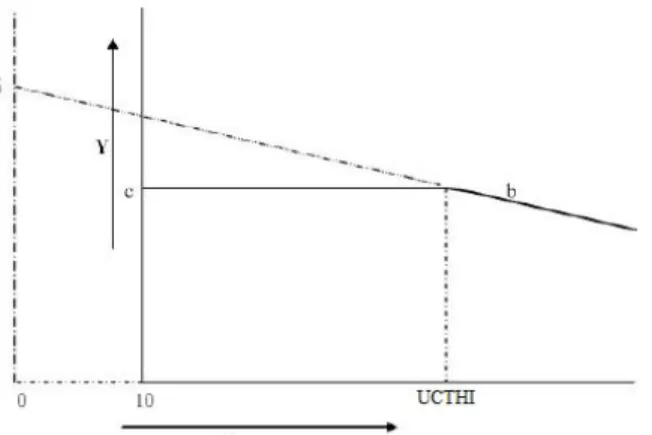
To test whether there was a thermo neutral zone and a UCTHI (upper critical THI), were defined 2 models: a linear regression model and a plateau-linear model.
Model [2], linear regression model, was used to determine at which day (5 days before insemination day, insemination day or 14 days after insemination day) heat stress had a greater influence on TNB and FR. Data from D-line and from I-line were analysed separately. The fixed-effect model (Figure 3.1) was defined as:
yijklm = µ + ymi + pj + vk + b * THI + eijklm [2]
where yijklm is the reproductive trait to be tested: TNB and FR; ymi is the fixed effect of year, month (29 classes); pj is the fixed effect of parity number (7 classes); vl is the fixed effect of service sire (22 classes); b is the slope of y when THI increases with 1 unit; and eijklm is residual.
The effect of THI on TNB and FR was investigated using plateau-linear model (model [3] and model [4]). In model [3], data were corrected for systematic effects using the following model:
yijkl = µ + ymi + pj + vk + eijkl [3]
where yijkl is the value of TNB and FR; ymi is the effect of year, month (29 classes); pj is the effect of parity number (7 classes); vk is the effect of service sire (22 classes); b is the slope of y when THI increases with 1 unit; and eijkl is a random residual term. Corrected observations (y*) for TNB and FR were calculated for each record as:
y*=µ+êijkl [4]
Corrected observations (y*) were used to investigate the effect of THI on TNB and FR. It was tested a plateau-linear model including a thermo-neutral zone (i. e., a plateau) for both sow lines using NLIN procedure (Version 9.2, SAS Institute Inc., Cary, NC). The linear regression model was adapted to thermo-neutral zone theory and a plateau was added to the linear regression model