Gristina lsabel
Oliveim
EspÍrito SantoINSIDE A MARINE HARBOUR: PATTERNS OF DISTRIBUTION AND ABUNDANCE OF frtlttülus gellopravtnclalls lN THE PORT OF SINES
Dissertação apresentada
à
Univercidade
de
Évota
para
o
cumprimento dos
rcquisitos
necessários à obtençâodo gmu
deMeste
emBiologia
e Ecologiado
Litoral
Marinho.Esta dissertação não inclui as criticas e
sugest&s
feÍtas
pelotúÍi.
Orientadora:
Professom Doutor:a Teresa Paula Gonçalves CruzDepartamento de
Biologia
Labomtório
de Ciências do Mar(CIEMAR) Universidade de Évom wt
UE 169 484 Outubro de 2007B§
Grisffna lsabel Oliveira Espírito Sarúo
lNSltlE A
MARINE FIARBOUR: PATTERÍI|S OFDlSmlzuTlON
AND ABUNDANCE OF §tyülus gaíÍoptutít
ctaills !N THE PORT OF SINES,46qU2\
DissêÍhção
apresentada
à
Unhercidade
de
Évora
para
o
cumprinrcnto dos
reqdsitoc
lreáric
àorenção
do graude
Mesfuê emBiologia
e EcologÍado
Litoml
Marinho.Esh
disserhção
nâo inclui as crfticas e sugestões
êttas
pelojúri.
Orientadora: ProÊssota
Douúom Tercsa Paula Gonçahrcs Cruzliq
tleparhmento
&
Biologla
LsboratóÍlo
de Giênc&asdo
Mar(GIEMARI Unlversldade de Évoracte--Fft=ôr
As I
tum
to sand, youtook
me by the hand,and declared
that
love prevails overall...
Aos
meus pais Luisa e Manuel, Always...AGRADECIMENTOS
A
realização deste trabalho contou com a colaboração, empenho, amor e amizade de várias pessoas, às quais agmdeço por me terem acompanhado ao longo destes anos.À
professa Doutom Teresa Cruz, por ter aceite a orientaçáo científica deste estudo, eque
desdeo
primeiro minutome
incentivoue
orientou, mostrando-se disponível eempenhada para que se tornasse uma realidade. Um muito obrigado pela amizade e
por tudo!
A
AdministraÉodo
Porto de Sines (APS)e
seus colabomdores, que desdeo
iníciomostraram interesse na realização deste estudo, tendo permitido o livre acesso e total
disponibilidade
para
a
concepçãodas
diversas experiênciasnas suas áreas
dejurisdiçao.
Ao
Jorge Araújo,
Directordo
Laboratoriode
Ciências
do
Mar
(CIEMAR), pelo permanente interessee
apoios dadosno
desenvolvimentoda
Biologia Marinha naUniversidade de Évora.
Aos
colegas
ciemarienses,David Jacinto,
EugénioSousa,
lnês
Seabra,
JoanaFemandes, João Castro, Nayana Teixeira, Rui Nunes, Silvia Rodrigues, Sónia Sousa,
Susana Vicêncio
e
TeresaSilva,
pela voluntariosa ajuda, agradável companhia eamizade ao longo da concepção deste estudo. Este trabalho também
é
um pouco de vós.Aos
colegasde
mestrado,Ana
Catarino, Carla Monteiro, Catarina Campos, JoanaGarcia e Joáo Feneira, pelas intermináveis horas de ajuda e companhia na concepçâo
de relatórios e trabalhos... A amizade e companheirismo continuam!
À
minha grande AMIGA Tânia Gomes, pelo apoio, pelo suporte, pela paciência, pelos conselhos, pelas aventuras que passámos juntas, por seres quem és... Agora,e
para sempre, eu te agradeço.Aos arrltrcos António José, Gabriela e Mónica, e à avó Aurom e avó Lurdes, por tudo,
mas
mesmotudo,
o
quetêm feito por
mim.A famÍlia
Mourão ficairá comigo para sempre...À minha rAMÍLn, avó Amélia, Cátia, Helder, Nádia, tia Paula, üo Pedro, Sofia, primos e primas, por me terem dado força e incentivo em todos aqueles momentos onde ambos faltavam. Avô Augusto, eu consegui! Apesar de não estares mais aqui comigo eu sei que eltt um orgulho para ü. Descansa em paz junto da avó Leonor.
Ao meu MANo Nuno, por seres meu irmão, meu amigo, meu confidente, simplesmente
meu e para sempre... Adoro-te.
Ao meu AMoR Miguel Mourão, porque apesar de tudo este trabalho
é
um pouco de ti,por
toda
a
Íorça,
ajuda, amizade, carinho
e
amor...,
todas
as
palavras
de agradecimento não são suficientes para expressara tua
dedicaçãoao
longo destesúlümos anos.
Por fim, mas sendo Sempre os primeiros, aos meus PAIS, que tanto amo, pelo amor
retribuído, pela enonuE compreensáo da minha "vida marinha", pelo incentivo
e
peloABSTRAGT
lnside
the
Portof
Sines, mussels are abundantin
vertical seawalls and buoys, andabsent in horizontal breakwaters; outside the
port
mussels form patchy monoanlturesin
rocky
shores.As
a
first
objective,the pattems
of
distribution, abundance anddimensional structure
of
musselswere
studied,and
three processesthat
generatepattems:
predation,thermal stress,
and
recruitment. Differen@swere
apparentbetween orientations inside the port (vertical vs. horizontal) and among areas inside vs.
outside, with significant effects of predaüon and thermal stress. Recruits were present
in all areas; however, the three processes didn't explain the distribution and abundance
of mussels inside the port. The second objective consisted in a preliminary study of the morphology
of
mussels. Qualitativeand
morphometric characters were analysed inthree environments, being useful
to
singnificantly separate mussels from each area insideand
outsidethe
port.
Resultswere
insufficientto
discriminate similarities or differences meaningful of one or two species.RESUMO
Dentro do Porto de Sines, mexilhões são abundantes em paredes verticias
e
bóias, eausentes
em
molhes
horizontais;fora
do
porto,
sâo
comuns
monocultums de mexilhôes em praias rochosas. Como primeiro objectivo, fomm estudados os padrôes de distribuição, abundância e estrutura dimensional de mexilhões, e três factores quegeram padrôes:
preda$o,
stress térmicoe
recrutamento. Foram obtidas diferenças significaüvas entre orientaSes dentro do porto (verticais vs. horizontais) e entre áreasdentro vs. fora, com efeitos significaüvos
de
predaçãoe
stress térmico. Registou-serecrutamento em todas as áreas; porém, os três factores não definiram um padrão de
distribuição e abundância de mexilhões dentro do porto. O segundo objectivo consistiu
num
estudo preliminarda
morfologiade
mexilhfus.
Foram analisados caracteresqualitativos
e
morfométricos emtrês
ambientes, sendo significaüvamente úteis parasêparar
mexilhõesde
cada área dentro
e
fora
do
porto.
Os
resultados foraminsuficientes paria discriminar semelhanças
ou
diferenças característicasde
uma ouTABLE
OF GONTENTS
í.í
Human-madeconstructions
in coastalaneas...
...-1-1.2
Theroc§
intertidal
habitats...
...-2-í.3
Thegenus
Mytilus....
...4-í.3.1
Taxonomy4-í.3.2
Distribution
...-6-í.3.3
Hybridezones.
...-7-í.3.4
Reproduction
...-8-1.3.5 Economical
importance
...-10-í.4
Environmentalmonitoring
in the PoÉ ofSines...
...-í1-1.5
Objectives of thethesis
...-í3-CHAPTER 2
lnside
a marineharboun pattems
ofdistribution
and abundanceoÍ Mytilus
galloprovlncialis
inthe
Port ofSines
...-í4-2.í
ABSTRACT2.2
INTRODUCTION.2.3
MATERIAL AND METHODS2.3.í
Study area...2.3.2
Patterns ofdistribution
and abundance2.3.3
Dimensionalstructure.
2.3.4
Manipulative experimentof
predation...2.3.5
Manipulative experiment of thermal stress...2.3.6
Recruitment...2.4
RESULTS...2.4.1
Patterns ofdistribution
and abundance2.4.2
Dimensionalstructure.
2.4.3
Manipulative experimentof
predation...2.4.4
Manipulative experiment oftfiermal
stress...2.4.5
Recruitment...-14-
-í8- -21- -23- -24- -27- -29- -32- -33- -35- -37--39-2.5
D|SGUSSION...2.5.í
Patterns ofdistribúion
and abundance...2.5.2
Dimensionalstructure.
2.5.3
Manipulative experiment of predation...2.5.4
Manipulative experiment of thermal stress...2.5.5
Recruitment..CHAPTER 4
Genera I
considerations
and fr$u re percpectivesReference
list
Appendix
41-
43-
45-
47-
48-CHAPTER 3Morphological
study of
mussels inside and outside the Portof
Sines...-50-
-63-
CHAPTER
í.
General
introduction
í.í
Human-madeconstructions
in coastal atreasCoastal areas play a crucial role in the economical, social and political development of
most
countries,and their
economic importanceis set
to
grow considerably due toconcentration
of
populations, indusúiesand
recreational activities.ln
recent times, although the tendency isa
more residential development inthe
coastal zone (Gray,1gg7; Bulleri
&
Chapman,20M),
the effectsof
urbanisationon
marine environmentshave
receivedlittle
attentionin
comparisonto tenestrial
counterparts (reviewed inPickett et al., 2OA]ç but see Chapman & Bulleri, 2003), particularly those fragmented by
the
deploymentof
hard man-made structures suchas
port installationsand
coastaldefences.
tn
Europe, these
structureshave
proliferatedand
lead
to
a
severeaúificializaüon
of
coastal arêas;for
example, inthe
ltalian coasts of the Adriatic Sea,they
cover
over half
of
the
shoreline,resulting
in
dramatic changesto
coastal landscapes and environments (Bacchiocchi & Airoldi, 2003).Hard-substrate defence structures
of
different materials (wood, concrete, limestone,sandstone) are among the most @mmon human-made constructions in coastal areas,
and
havebeen
buitt sincethe
1960s (Glasby,2000;
Bacchiocchi&
Airoldi, 2003;Chapman, 2OO3).
The
most frequent typologiesare
longitudinal structures, such aswalls, quays, pontoons, pier-pilings and breakwaters, and tmnsversal structures, like
groynes
and dikes
(Connelt&
Glasby, 1999; Glasby, 1999a; Bulleriet
a!.,
2000;Connell, 2OA\ Glasby & Connell, 2001; Davis et al., 2A02: Bacchiocchi & Airoldi, 2003;
Chapman, 2003; Chapman
&
Bulleri,2003;
Bulleri&
Chapman, 2OO4; Airoldiet
al.,2005;
Blockley&
Chapman, 2006).As
documentedby
Glasby (2000), Glasby &Connell (2001) and Airoldiet al. (2005), the primary purposes of defence structures are
to
preventor
reduce erosion and floodingof
high value coastlines,to
stabilize andretain beaches and reclaimed land, and to increase the amenity value of the coast (e.9.
beach use, surfing). Therefore, different design criteria result in different hydrodynamic
and physical conditions around the structures,
with
possible important effects on the distribution of epibiota.Once it has been decided to build a structure on rational grounds to protect an area of coasttine there wilt inevitabty
be
consequencesfor the
environment. These are welldescribed in Airoldi
et al.
(2005), who summarized those regional effects: increasedabundance and incidence of rocky shore species; decreased abundance and incidence
of soft sediment species; changed
omposition
or struch.tre; increased gene flow; andincrease
of
non-native species.As
these authors suggest,high
numberof
nearbyartificial súuctures
can
acl as
stepping stones,
disruptingnatural baniers
andfacilitating
the
dispersalof
rocky coast
speciesacross
habitatsand
regions that naturally would be poorly connected. The type and magnitude of the changes inducedcan vary considerably depending on the environmental setting where the structures are built.
Overall,
the
constructionof
hard defence structures always resultsin
a
local loss of soft-bottom habitatsand
associated assemblagesof
animalsand
plants (Connell &Glasby, 1999; Glasby, 1999a; Chapman
&
Bulleri, 2003; Bulleri&
Chapman,2OO4;Airoldi
et
al.,
2OO5). Therefore,as
reportedby
Bulleri (2005a), whenever artificialstructures are going to be introduced in shallow coastalwaters, mitigating the changes
to
natuml assemblagesof
organisms shouldbe
a
priority. Accordingto this
author,understanding
the
mechanisms
that
determine
the
establishmentof
different assemblagêson
naturaland
artificial habitats might enablea
better
designing of artificial structures as sunogates for the natural habitats they may replace. This would improve our abilityto
manage transfonnaüonsof
coastal landscapesin
urban areas, contributing to the conservation of marine biodiversity.1.2
The rockyinteÉidal
habitatsFor seveml purposes, intertidal communiües are an attractive system
to
examine therole
playedby direct
positiveand
negative interactionsand
habitat modification innatural communities (Paine, 1966;
Seed
&
Suchanek, 1992; Bertness&
Leonard,1997; Bertness
et
al.,
1999, 2AO2). Therearê
many reasonswhy rocky
intertidalhabitats
have been
a
model systemfor
examininghow
natural communiües arestructured, studying the processes that generate pattems and struc{ure. First, they are
relatively simple assemblages that are ac@ssible and dominated by small and easily
manipulated sessile plants and invertebrates, as well as slow moving consumers that are often readily removed manually or effectively manipulated in the field with cages.
Second, one of the most valuable attributes is that they ocorr across very compact and
severe gradients in physical stress (Canol & Highsmith, 1996; Martin et al., 2@5). This
Stress on organism interactions.
lt
could be argued, in fact, that modem experimental marine community ecology developed asa
reaclion to the emphasis of ecologists on physical stress explanationsof
intertidalcommuni§
pattems (Bertness&
Leonard'1se7).
ln
intertidal rocky systems, causes underlying the disribuüonal pattemsof
organisms have been approachedby
many authors. Examples includethe role of
competition(e.g.
Griffrths&
Hockey, 1987;Wootton,
1993; Underwood,2000),
herbivory and predation (e,g. Hawkins&
Harh1oll, 1983; Griffiths&
Hockey, 1987; Petraitis' 1990;Bulleri et al., 2000; Harley, 2003), settlement and recruitment (e'g' Connell' 1985; Poni
et
al., 2006), height above chart datum (e.g.undepood'
1978; GrifÍiths&
Hockey' 1987; McQuaidet
al., 2000; Harley&
Helmuth, 2003; Davenport&
Davenport' 2005;McQuaid
&
Lindsay, 2OO5), and gradientof
wave exposure(e'g'
underwood' 1981; McQuaid & Lindsay, 2000; McQuaid et al., 2000; Harley & Helmuth, 2003; Fitzhenry etal.,
2aa4i Hammond&
Griffiths,
2a(/1; Davenport&
Davenport,2005;
McQuaid & Lindsay,2005;Westerbom & Jattu,2@6; McQuaid & Lindsay' 2@7)'Mussels are one of the dominant compeütors for space in this mechanically stressful rocky intertidalenvironment (Vlfrtman & Suchanek, 1984, Seed & Suchanek' 1992)' and one key aspect of their success is their ability to maintain a secure attachment to the substrate
(Bell&
Gosline, 1997). Attachment is achieved by means of a byssus' whichis
an
extracellular, collagenous secretionof
the
foot
(Canington'
2OO2a'b)' Otherimportant features of mytilids are their rapid growth rate at dÍffering water temperatures' high feo.rndity, and resistance to desiccation, salini§ and parasites (Griffiths & Hockey' 1987;Van Erkom Schurink & Grtffiths, 1990; Seed & Suchanek, 1992; Petraiüs' 1995)'
In the subtidal environmen( however, they are limited by high predation pressure and
competiüon (Wootton, 1 993).
At levels on the shore above the physiological limits of their major predators, and in the
absence
of
physical disturbanoe, mussels can forma
virtual patchy monocultures in areas more exposed (canington, 2002a).ln
sheltered environments, mussel usually form highly dense, overcrowded and multilayered matrices or beds (reported as thickas ca.
120 cm), where self-thinning pro@sses are expectedto
occur (Newell' 1989; seed &suchanek,
1ilg 2;Alvarado & castilla, 199ô). These beds allow colonization by infaunal organisms in the sediment trapped in the interstices among shells-
organismsas a dominant competitor for space, mussels have the potenüal
to
reduce the diversiSof
primary space-occupying specieson the
shore,and to
control species richness(Levin
&
Paine,
1974; Newell, 1989; Seed&
Suchanek, 1992; Canington, 2OO2ai Hammond & Griffiths, z1c/.;). Sometimes gaps can be formed between the beds, whichmay
be
initiatedby
either physical factors (e.g. Levin&
Paine, 1974; Sousa, 1984;Denny,
1984,
or biotogical processes (ê.g. Paine, 1966; V1/itman & Suchanek, 1984),so processes conúibuting to variation in its abundance can have cascading inÍluences throughout
the
community (Blanchetteet al.,
2OO7).As they live
in
conspecific orheterospecific groups,
the
individual's riskof
being damagedand killed
is
reducedbecause
neighboursdirectly
or
indirectlybufÍers
environmental extremes(Bel!
&Gosline, 1997; Bertness & Leonard, 1997).
1.3
The genusMytilus
í.3.í
TaxonomyMarine mussels
of the
genusMfiilus
(Class: Bivalvia, Pelecypoda; Order: Mytiloida;Family: Mytiliclea) are present
at
higher latitudesin
all oceans and major seas of theworld (Newell, 1989; McDonald et al., 1991), being one of the most studied genera in
the marine environment. The systematic status of Mytilus species have been subject of
considerable discussion
sine
the
1&0s
(reviewedin
Gosling,'t9&,
1992a)-ln
an extensive review of the genus, Gosling (1992a,b) summarized the recognition of about nine distinct speciesoi
Mytilus based on studies prior to the use of electrophoresis: M.edutis Linnaeus, 1758 from northem tempemte latitudes; M. galloprovincialis Lamarck, 1B1g
from the Mediteranean Sea; M.
Írossulus Gould, 1850and
M.
califomianus Conrad, 1837 fromthe
Pacific coast of North America;M.
chilensis Hupe, 1854 fromChile;
M.
ptatensis Orbigny, 1846 from Argentina; M. planulaÍus Lamarck, 1819 from Australia;M.
desotationis Lamy, 1936 fromthe
Kerguelen lslands; andM.
coruscusGould,
1861 (=M. crassrfesúa Uschke, 1868)from
Japanand
China. Nevertheless,there was by no means a general concensus on this.
ln some areas, namely the coasts of England, lreland,
Frane
and Spain, separation of trvo difÍerent formsof
mussels(M.
dutis
and M. galloprovincial§ have provedto
beexceedingly
difficult
due
to
a
onsiderable degree
of
overlap
in
morphologicalcharacterisücs (Gosling
&
\Â/ilkins, 1981; Skibinskiet al.,
1983; Fish&
Fish, 1996).This,
togetherwith
the
large
numberof
truly
intermediateforms observed
(e.9.skibinski
et
al., 1978; Gosling & \Mlkins, 1981; Skibinski etal.,
1983; Gosling, 1984.; Blot etal.,
1988; Gardner&
skibinski,19s;
Kautskyet
al., 1990; Lobel et al., 1990;Tedengren
et al.,
1990; Vãinolâ, 1990; Gardner&
skibinski, 1991; McDonaldet
al', 1991; Skibinski&
Roderick, 1991;butfor
reviews see Gosting, 1992a,b), was the first indicationthat
hybridizaüonand
intnogression mightbe
occuning between species.While some earlier authors regarded the genetic difÍerences large enough to wanant the discrimination of both as distinct species, others consider it merely as a variety of the larger
M.
edutissuperspecies or complex (see Skibinskiet al., 1983; Gosling, 19M;Blot et
al.,
1988; Johannesson etal.,
1990; Tedengren et al., 1990; McDonald et al',1991; Beaumont et al., 1993).
Earlier classifications based only on extema! shell morphology showed to be complex
and confusing (Gosling, 1992a). More recently, multidisciplinary studies have shed new
light on
the
previously uncertrain taxonomy ofthe
Mytilus species complex which cannow be
consideredto
consistof
three distinct evolutionary lineages,M-
edulis, M.galloprovincrãírs
and M.
fiossuíus (McDonaldet
al.,
1991; Beaumontet al.,
1993; Sanjuan et al., 1994; Rawson & Hilbish, 1995; Suchanek et al., 1997; Comesafia et al.,1998; lnnes
&
Bates, 1999; Rawsonet al.,
1999: Hummelet
al.,2@1;
Secoret
al',2OO1; Hilbish et
al.,
2OO2; Woodet
al., 2@3a; Ridgway &Navdal,
2OO4; Wonham ,2OO4i
Toro
et
al., 2005;
Beaumontet
al.,
2006). v1/hetherthey are
regarded asseparate species or not, they do differ biochemically
at a
numberof
loci (Skibinski et al., 1g78), maintain unique genetic cohesiveness throughout much of their ranges, andhave distinct evolutionary histories (Riginos
&
Cunningham, 2005). The debate is still opened. Therefore,as
suggest by Gosling (1992a,b),'in
orderto
avoid unnecessary confusion, the most prudent scenario would seem to be to continue refening to the taxaas: M. edulrs,
M.
galloprovincialis, M. úrossuíus, while at the same time recognizing-with
the
morphotogical and genetic informationwe
haveat
present-
that thereis
aconsiderable lack of agreement on their exact taxonomic status''
Genetics
have
been extremely usefulin
helpingto
resolvethe
systematicsof
the genus, as well as to map the global distribúion oÍ Mytilus and their hybridization. From 1970s to the 1990s allozymes (electrophoreüc analysis) were the main genetic markersused (e.g. Skibinski
et al.,
1983; Gosling, 1984; Johannessonet al.,
1990; VáinÕlà,1990; McDonald et al., 1991; Sanjuan et al., 1994; Quesada et al., 1995). Nowadays,
the
adventof
PCR-based techniqueshas
openedup
new
possibilitiesfor
finding diagnostic markers,but
it
was only very
recentlythat
microsatelliteloci
have beenisolated for mussels and employed
in
an extensive population shrdy (e.g' lnoue etal"
1995; Rawson & Hilbish, 1995; Rawsonet
al.,19S;
lnoue etal',
1997: Suchanek et al., 1997; Comesafia et al., 1999; Daguin & Borsa, 1999; Rawson et al., 1999; Daguin& Borsa, 2000; Hilbish et al., 2000; Daguin et al., 2OO1; Skurikhina et
al',
2OO1; Biemeet
al.,
2OO2; Hilbish etal.,
2OO2; Biemeet
al., 2003; Hilbish etal',
2003; Woodet
al"2003a,b; Smietanka et al., 2OO4; Toro et al',200É,2005)'
í.3.2
Distribution
ln terms of geographical disÚibution, all three species are now considered as globally widespread, dominating
eposed
or
moderatelyerposed rocky shore
communities where they overlap (reviewed by Seed & Suchanek, 1992). Mytilus edulis is recognizedalong the Atlantic coast of Europe, from the northem White Sea, Norway and lceland'
down to England and north of France in the westem European coasü and is common in
canada, eastem North America and
soÚh
America (chile, Argentina, and the Falkland and Kerguelen lslands); nZ. galloprovincraírs has been unambiguously identified on theMeditenanean coast and Black Sea, as well as in north-west Africa and South Africa' being common in countries like Mauritania, Portugal, spain, France and ltaly, as well as in eastem Asia, Austmlia, Tasmania, New Zealand, southem califomia,
chile,
andthe
south and west coasts
of
lreland, Wales
and
England;finally,
M.
Írossu/us apparenüy occurs only in the northem hemisphere, namely inthe
Balticsea,
eastem Canada, Alaska, Siberia, and westem North America (Califomia) (Johannesson et al., 1990; McDonald etal.,
1991; Gosling, 1992a; Sanjuan et al., 1994; Ardizzoneet
al', 1996; Fish&
Fish, 199ô; Suchaneket al.,
1997; Comesaftaet al',
1998; Daguin & Borsa, 1999, 2000; Hilbish et at., 2000; Hummelet al., 2001; Ridgiway & Navdal, ZOo4.;Smietanka et al.,
2}M;Wonham,
2OO4; Toro et al., 2005)'ln
Portugal, musselshave
been recognizedas M.
gattoprovincíalh (e.9. saldanha, 1974;Santos, 2000; Rius & cabral, 2@4). However, some geneüc studies (McDonald et al., 1991; Sanjuan et al., 1994; Quesada et al., 1995; Daguin et al', 2001; Bieme etal., 2002,2003;
Smietankaet
al.,
2OA4) reportedthe
occunenceof
M- edulis-likealleles. As suggest by Daguin et
al.
(2001), this occuÍrence can be explained by past introgressionbyM.
dutis.
Other important conclusion from these population genetic studies is thatM.
galloprovincialis is genetically subdivided into an Atlantic group and aMeditenanean
group,
with
a
break
point
at
the well
defined
Almeria-Oran oceanographicfront
(Quesadaet
al.,
1995; Daguinet
al., 2001)' This
geographicisolaüon can be also the @use
of
the genetic differences exhibited by north-westemAfrican
M.
gattoprovinciatiswith the
Mediternanean group,but not with the
Atlanüc mussels from Portugal (Daguin & Borsa, í999). Therefore, instead of a single genetic gradient tromM.
galtoprovincialis ofthe
lberian Peninsulato M.
edulis populaüons inthe
NorthSea,
several successive transitionsare
observed delineating patches of poputations chamcterised by high frequencies of parential alleles (Bieme et al., 2@2).As
statedby
Beaumontet al.
(2006),it
seemsthat M.
galloprovinctaÍsis
slowly spreading northwards invading tenitory once exclusiveto
M. edulis and that this maybe
partlya
result of global warming. Whether or not it has been involved sofar, it
islikely that climate change will increase the rate of this. In fact, the precise distributions
of the two species, and the extent of their hybridisation, remain to be characterised for most areas of the European Atlantic coast, being the coast
of
lberian Peninsulaa
keyarea
for
understandingthe
distributionof the
genus Mytilus (Sanjuanet al.,
1994; Beaumont et al., 2006).í.3.3
Hybride zonesMussel hybrid
zones have long
attracted attentionin
evoluüonary biologyas
they present the opportunity to examine the genetics of differentiation among taxa and theprocess of speciation (Hilbish et al., 2003). ln the last years, the most intensely studied
marine hybrid zone is
oÍ
Mytilus edulisx
M. galloprovincialis species, which stands onthe coasts of England, France and Spain, with a considerable extension up
to
lrelandand Scotland (see Gardner
et
al., 1993; Sanjuanet al.,
1994; Comesafia & Sanjuán, 1996; Wilhelm&
Hilbish, 1998; Gilg&
Hilbish, 2000; Daguin et al., 2001; Secoret
al.,2OO1: Bieme et al., 20O2; Hilbish et al., 2OO2; Bieme et al., 2003; Wood et al., 2003b;
Coghlan & Gosling, 2OO7). Anotherwell-known hybrid zones are the one for M. edulis x
M- trossulus species in Atlantic Canada and northem Europe, namely in the Balüc and
North Seas (see Saavedra
et
al., 1996; Comesafia etal.,
1999; lnnes&
Bates, 1999;Toro,
1999; Gardner&
Thompson, 2001; Toroet
al.,2O02i Smietankaet al.,
2OC4r;Toro et al.,
2004; Riginos&
Cunningham, 2005),and for M.
galloprovincialisx
M.Írossu/us
in the
Pacific Coastof
North America and Japan (see lnoueet al.,
1997; Suchanek et al., í997; Rawson et al., 1999; Skurikhina et al., 2001).The
main feah.rre of these zones isits
mosaicsfucture,
in which populaüonsof
puregenotypes altemate
with
hybrid
populaüonsby
differential adaptationto
patchyare
thoughtto
reflect geographica! variationin
the
opportuniüesfor
interbreeding,enhanced
by
geographically variable levelsof
selectionon
recruits (Skibinskiet
al., 1e83).Despite the fact that MyÍr7us species have
a
prolonged larval stage enabling dispersalover large distances, little is known
aboú
how these hybrid zones are maintained andno diagnostic criteria exist at the species level for early-stage Mytilus larvae (Wood et
a!., 2003a). Therefore, the availabili§ of a rapid method for identifying larvae of these
three species and their hybrids would facilitate studies of hybridization, and would aid
the
studyof
larval dispersaland
geneflow.
Large scale studies haveyet
to
beencanied out to characterise the mosaic of populations oÍ
M.
edulis, M. galloptovíncialis and their hybrids.1.3.4
ReproductionThe
setlement
and
recruitment processes
of
mytilid bivalves
have
received considerable attention,but
becauseof the
ongoing confusionin
the
literature withrespect to the use of the terms settlement versus recruitment (Connell, 1985; Seed & Suchanek, 1992),
it
is importantto
ascertain its definitions. As suggestedin
Lasiak &Bamard (1995)
and Poni
et
al.
(2006), settlementis the
permanent, reversible or ineversible contact that planktonic larvae establish with the substratum. As this contact is made, the larvae may or may not go through a phase of metamorphosis, so we canconsider settlement
to
be the transition fromthe
planktonic larval stageto life
in thebenthos (Seed
&
Suchanek, 1992; Alfaro, 2006). Recruitmentis
less easyto
define,being more than
a
simpleanival of
new individualson
the shore;is
essentially thenumber
of
individuals that have survivedbr
a
certain period after settlement, duringwhich üme
post-settlementmortali§ may have occuned (Connell, 1985; Seed
&Suchanek, 1992; Lasiak
&
Bamard, 1995; McQuaid&
Lindsay, 2005;Poni
et
al',2006).
Rrecruitmentrate can
be
definedas
the
rate at which
juvenilesjoin
thepopulation,
and
is
usuallyonly
possibleto
measure sometime after
settlement(Connell, 1985).
As
broadcast spawners with extemal fertilisation (Gardner&
Skibinski, 1990; Fish &Fish, 1996; Helson
& Gardner,z}@l),
each individual produ@s more thana
millioneggs, of which ultimately only a very few will settle and survive per m2
lHanis et
al.,wind and tidally driven cunents (Cáceres-Martínez et al., 1994; Bertness et
al.,
1996;de Vooys, 1999; McQuaid & Phillips, 2@0; Branch & Steffani, 2O@; Beaumont et al.,
2006). lnitially,
they
settle
preferentiallyon
filamentoussubstrata
(hydroids andfilamentous afgae such
as
Polysiphonia and Cenmium)with
proteinaceous threads (byssus or byssal threads), and aftera
period of growth they detach and enter into asecondary pelagic phase,
the
so-called bysso-pelagic migration phase (Dareet
al.,1983; Barkati, 1989; King et
al.,
1989; Newell, 1989; LuE&
Kennish, 1992; Lasiak &Bamard, 1995; Fish & Fish, 1996; Pulfrich, 1996).
Newly seftled mussels are known
as
early plantigrades and have <O.5 mmof
shelllength, but after 4 to
I
weeks, late plantigrades up to a size of2
mm drift to new sitesuntil they reach adult mussel beds (Sprung, 1984; King et al., 1989; Lutz
&
Kennish,1992; Seed
&
Suchanek, 1992; Cáceres-Martínezet al.,
1993, 1994; Fish&
Fish, 1996; Pulfrich, 1996; Suchanek et al., 1997; Chícharo & Chícharo, 20C0; Dobretsov &Wahl, 2001). This distinction may be important also for the study of selecüon between
Mytitus species
among spat (Gilg
&
Hilbish, 2000).All this
behaviourpattem
atsetgement is believed
to
bean
adaptaüonto
reduce compeütion betweenthe
newlysettled and adult
mussels,but
there
is
growing
evidene that,
in
some
mytilidpopulations, early plantigrades forgo this initial growth phase on filamentous substrata
and settle directly onto adult mussel beds (Fell & Balsamo, 1985; McGrath et
al',
1988;Seed
&
Suchanek, 1992; Cáceres-Martínezet at.,
1993, 19%t; Fish&
Fish, 't996;Alfaro, 2OOO). However, some authors focus the little direct evidence for this (King et
al.,
1g89; Lasiak&
Bamard, 1995; Gilg&
Hilbish, 2000). ln general, exact predictionsof
recruitmentto
any given mussel population are difficult, becoming apparent that it can occur at almost any time of the year (Newel, 1989; Brinkman et al., 2OO2).Filamentous
algae, together
with
other algae such
as
Conllina and
Gigartina,appeared
to
providean
extensive poolof
young mussels. Manyof
which could bemigrating onto the adult beds more or Iess at any time of the year, ac@unting for the
sporadic and often unpredic-table pulses of recruiúnent that characterize many Mytilus
populaüons (review
in
Seed&
Suchanek, 1992).As
these authors document, whilemigration
from
primary attachment sitesto
the
adult habitat appearsto
be due
tochanges in the ecological requirements of the plantigrades, many mussels will also be
liberated involuntarily
by the
seasonal die-backof their
host algae,or
through theacüon
of
winter storms.The
suitabilityof the
substratum seemto
be
relatedto
itssuÍfaces rather than to any chemical attracüon (Dare et al., 1983; Petraitis, 1990, 1991;
Seed & Suchanek, 1992).
As a
consequence, plantigrades usually attach and detachthemselves many times before finally settling under more favourable
substrate conditions on established musselbeds (LuE & Kennish, 1992; Cáceres-Martínez et al.,19e4).
ln terms of spawning, Southern Hemisphere species usually reproduce later in the year
and have
a
progressively restricted season further north; Northem species exhibit the reverse trend, spawning earlier and witha
more extended season further south (e'9. Curiet-Ramírez&
Cáceres-Martínez, 2OA4).!n
northwestemEurope, namely
inEngland,
M.
edutis spawns generally during springand
early summer (Kinget
al., 1989; de Vooys, 1999), butat a
more eastem place, in the Wadden Sea,it
extendsthroughout
the year with
peaksin
early
summerand
autumn (Pulfrich, 1996). lnMeditenanean,
M.
galloprovincialrs hasa
much longer spawning period,coveíng
alarge part
of
autumn,winter and
spring seasonswith
a
restingstage
in
summer(Ceccheretli
&
Rossi, 1984; Ardizzone etal.,
19S;
de Vooys, 1999). However, in theRia
de
Vigo
(north-west Spain),two peaks
of
recruitmentwere
recordedfor
thisspecies,
one
in
springand other
in
summer (Molares&
Fuentes, 1995;Cáceres-Martínez
&
Figueras, 1998).ln
Portugal, the only two recruitment studies of Saldanha(1914)
and Santos
(2000),based
in
length frequencies, suggestthe
existence of recruitment all the year. The generali§ is that the recruitment pattemsof
most sessilebenthic
macro-invertebrates, especiallybamacles
and
mussels,follow
a
bimodalpattem, with two peaks during a year that seem to be related to tempemture increase
of seawater (e.g. Seed & Suchanek, 1992; de Vooys, 1999; Buck, 2OO7), salini§ (e.9.
Fell
&
Balsamo, 1985) and/or fuod availabili$ (e.g. Mengeet al.,
2Oo4; Beaumont et a|.,200ô).í.3,5
Economical importanceMussels have received muclr attenüon as marine bulers as well as indicators of marine
environmental
quali§
in recent years (\ffiddows & Donkin, 1992). ln addiüon, they areimportant as food in many countries (e.g. lnoue et al., 1994. As a consequence, they represent
an
enconomically important resourcefor
human harvesting(e.9.
Rius & Cabral,2@4) and for
aquaculture(e.g.
Hickman, 1992). Thereis
a
very extensivemariculture of mussels almost throughout their distribution (Beaumont et al., 2006). ln
tonnes annually), higher than the combined total of other important mussel producing countries, such as Netherlands, Fran@, ttaly, treland and UK (Cáceres-Martínez et al.,
19g3; Beaumont
et
al., 2006). As an example, European countries produced 387o of world productionin
2003 (Beaumont et al., 2006), being China, however,the
largest producer byfar
(Buck, 2OOn.With the worldwide increasing developmentof
marine aquaculture the necessi§ of evaluate the genetic impact of its escapees is extremely important.\,11rth
the
increasing ratesof
accidentalor
deliberate introductionof
alien ('exotiC or,non-native') species in coastat marine habitats, considering the globa! rise in shipping
and aquaculture activities over the last century (Carlton, 1992; Brancfr & Steffani, 2OA4;
Wonham, 2OO4; Minchin, 2OO7), mussels have become invasive
in
many parts of the world (Grant & Cherry, 1985; McDonald et al., 1991; Hilbish et al', 2000). This can beone reason
forthe
similarity between northem and southem Mytilus spp. (McDonald etal.,
1g91; Hilbishet al.,
2O0O). Whilethe majori§ of
these transplantaüons remainrestricted
to
harboursand
sheltered lagoonsor
estuaries,in other
places, like the South African coast (Branch&
Steffani, 2004; Rius&
McQuaid, 2006; Zardiet
al', 2006a,b), one single species spread extensively. Hence, this phenomenon can have major consequencesfor
community structure, including the eliminationof
indigenous species by competitive advantagefor the
same resour@s (Branch&
Steffani, 2OO4;Bownes & McQuaid, 2006).
í.4
Environmentalmonitoring
inthe
PoÉ of SinesAmong the many industrial activities of
the
Portof
Sines, stands out the charge and discharge of crude oil, liquefied petroleum gas and refined products on the Liquid BulksTerminal, ethylene
and
propyleneon
the
Petrochemical Terminal,and coal in
theMu!üpurpose Terminal. With economical importance at regionaland naüonal levels, this port is one of the principal
plaes
that supply the oil-bearing and elestrical producing industriesin
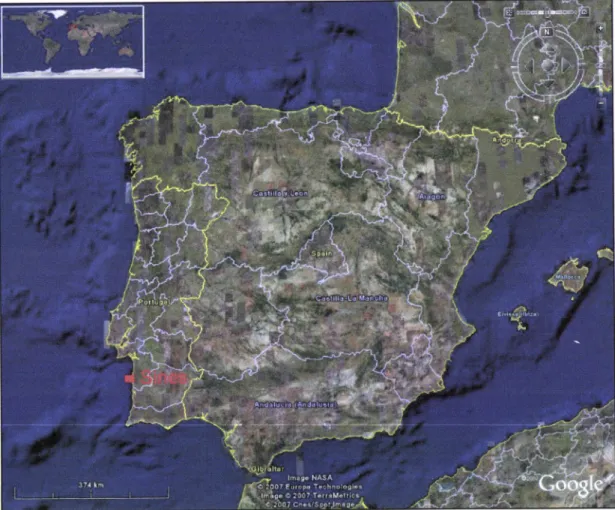
Portugal(Figure
í).
At
locat Ievel, there also the movement of chemical materials from the Service Harbour, and activities in the Leisure and Fishing Harbours.All
together,
these
industrial
and
recreational
movementscan
have
potential environmental impacts, along with the continuous discharge of raw domestic sewagefrom the town of Sines. Hence, the release of pollutants in the marine environment can
influence, direct or indirecfly, the environmental quality of the Port of Sines, as well as
in the port activities, only
a
continuous and profound knowledgeof
its environmental impact wi!! allow us to intervene and manage itsenvironments-With the
overallaim
of
assessingthe
impactof
the Port
of
Sines
in the
marineenvironment, several projects funded by the Administration
of
the Portof
Sines wereconducted from 1996 to 2006 under the coordination of CIEMAR (Universi§
of
Évora;e.g. CIEMAR,2004).
Figure
í.
The geographical distribution of Sines in the Ibedan Peninsula (in Google Earth).This
thesis
was
integrated
in
one
of
those projects
("Monitorizationof
MarineEnvironments of
the
Port of Sines-
MAPSi 20o4,l2OCF"). Therefore, earlier studies inthe rocky shores detected an effec{ of the Port of Sines, with the number of taxa being Iower inside the port than outside, and the dissimilarity of assemblages higher between
inside and outside areas than among inside or between outside areas (Cruz & Castro, z0f,l2). As these authors suggest, one main eplanation
forthis
intertidal pattem can bethe differences in the type (artificial substrata inside the port, natural substrata outside),
age and disturbances past (outside substrata are older and
with
a
longer history of disturbances) of substmta. Another impact that can be frequent but spatially restrictedis the effect of the
Liquid Bulksand
Petnochemical Terminalsin
variablesas
totalhydrocarbons in sediments and mussels, and polycyclic aromatic hydrocarbons (PAH)
in
mussels (higher values where recordedin
areas close to these terminals; Cruz &Castro, 2OO2). Finaly, these authors report also an important environmental problem in
the
Fishing Harbour, probably dueto the
dischargeof
raw sewagein
this area andclose
to
it, which effects can be magnified by its high closure, and diverse industrialactivities (boat painüng and repair, fish landing, etc.).
í.5
Objectives of thethesis
ln the Port of Sines, mussels (Mytilus
galloprovincia§
are extremely abundant in theintertidal and subtidal environments of vertical seawalls, as well as attached to floating
buoys,
and are
absentin the
horizontal breakwaters adjacentto
them
(preliminaryobservations). Outside the port,
at
northem and southem natural areas, mussels areabundant
in
exposed shores.ln this
study,the
main purposeis
to
characterize thespatial distribution
of
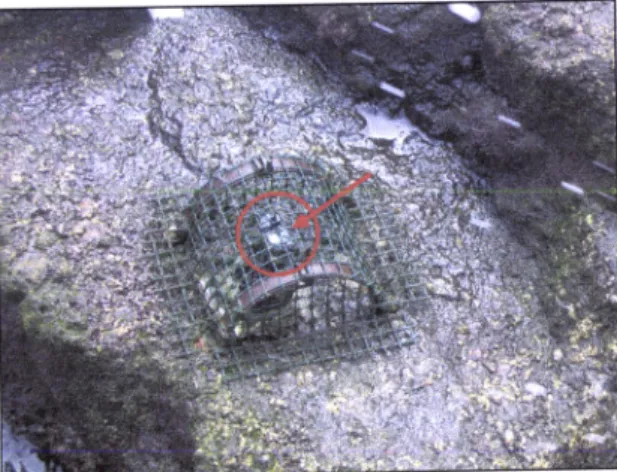
mussels inside and outsidethe
Port of Sines, taking mostly intoaccount its total absence in horizontal breakwaters. Hence, the models analyzed were:
o
a
different spatial pattemof
distribution in areas inside and outside the Port of Sines;o
a different dimensional structure of the mussels surviving inside and outside theport, as an adaptation to the different environments;
.
an
heavier
predation pressurein
the
breakwaters comparingwith
vertical seawalls;.
a greater thermal stress in the breakwaters comparing with vertical seawalls;.
a different recruitment pattem between these two types of environments; and.
a different morphologicalpattem in mussels from inside and outside the port.As a first main objective (Chapter 2), was made a description of the pattems of mussel
distribution and abundan@, and
of
its
dimensional structure inside and outside theport, with the effects
of
predation and thermal súess, andwith
recruitment pattems.The
second objectivewas
to
report
a
preliminary approachof
the
morphologicaldifferences observed
in
musselsfrom
inside and outside areasof the
Portof
Sines (Chapter 3).CHAPTER
2.
lnside
a
marine harbour: patterns
of
distribution
and
abundance
of
Mytilus galloprovincialis
in
the Port of Sines
2.1
ABSTRAGTlnside the Port of Sines, mussels are abundant in artificial vertical seawalls and buoys,
forming thick and dense
communities,while
in
adjacent breakwatersare
absent.Outside the port, mussels form patchy monocultures in nafural rocky shores. ln several
areas, the
pattemsof
distribúion and
abundanceof
musselswere
studied usingquadrats in the mid,intertidal zone, as wel! as its dimensional structure in three different
environments.
Taking into
accountits
absencein
breakwaters,three
main factorswhere
studied: predation,thermal stress,
and
recruitment. Remarkably consistent differences were apparent between orientations inside the port (vertical vs. horizontalsurfaces) and among areas inside vs. outside. Adult mussels of outside areas showed
significantly shorter Iength
of
shell than mussels living insidethe
port, and predationpressure
was
significantin all
areas studied. Thermal stresswas
significant amongtreatments, with apparently greater survival
of
mussels in seawalls comparing with abreakwater. ln terms of recruitment, al! areas presented mussel recruits, with significant
differences
among areas only
in
one
month.
Overall,these paüems
can
reflectdifferences
in
grovuth and post-settlement mortality during earlier colonisaüon, alongwith
an
intensivetop-down pressure
by
predators.Thermal stress
and
intrinsicproperties
of the
substmtumcan
be
extremely
importantfor
mussels'
survival,especially in first stages of its life history.
2.2
INTRODUCTIONArtificial
surfaes
are conünuously being added to waterways all over the world due tothe rapid urbanization of coastal regions. This progressive increase has raised concem
about
their
effectson
natural assemblagesof
organisms (Connell&
Glasby, 1999;Glasby, 1999b; Bulleri
et
al., 2000; Glasby,20@;
Daviset al.,
2OO2; Bacchiocchi &Airoldi, 2003; Chapman & Bulleri, 2003; Moschella et al., 2005; Blockley, 2OOn. Recent
work indicates that assemblages on vertical surfaces of pilings, pontoons and retaining
walls are quite difÍerent from those on nearby natural rocky reefs (McGuinness, 1989;
Connell & Glasby, 1999; Glasby, 1999a,b; Holloway & Connell, 2@2; Chapman, 2003;
they may also provide
surfacesof
various orientations (Glasby,2000; Glasby
& connell, 2001). As a consequen@, very different§pes
of epibiotic assemblages have been shownto
occur on surfaces with distinct orientations: upper vs. lower surfaces, and vertical vs. horizontal surfaces (chapman, 2003; chapman&
Bulleri, 2003). The reasonsfor
such differencesin
assemblagesare not
clear,but
couldbe due
to
avariety
of
fractorsand
combinationsof
influencesthat
determineits
distribution andabundance (Glasby, 1 999c).
Surprisingly, the epibiota
of
man-made coasfial defence structures have received littleattention until the Iast decade or
so
(Ardizzone etal.,
1996; Connell&
Glasby, 1999;Bulleri
et
al., 2000; Bacchiocchi & Airoldi, 2003; Chapman, 2003)' Few studies havespecifically attempted to compare artificial and natural surfaces in order
to
understand their relative effects on species diversi§ and abundance (but see McGuinness, 1989; Glasby, 1999a,b, 2000; Holloway & Connell, 2OO2). This limits the possibili§ to developmodels of predicted impacts, and to identify options for the design and management of
defence structures (Bacchiocchi & Airoldi, 2OO3). Although, as referenced in Bulleri &
Chapman
(2W4),
it is
importantto
evaluatethe
ecological valueof these
artificialsurfaces
as
habitatsfor
epibenthic assemblages,as
a
wayto fully
understand the ecologyof
complex coastal developmentsthat
introduce different typesof
substratainto
a
relatively small area.This
studyis
unusualin that it took
placein
a
marineharbour,
the
Port
of
Sines, being
its
main
purposethe
assessmêntof
spatialdifferences between mussels from two different types of artificial habitats (seawalls and breakwaters).
Mussel populations show a high degree of spaüal aggregation or patchiness in space
(Sousa, 1984; Littorin
&
Gilek,
'1999; Erlandsson&
McQuaid,2Oo4),.lts
degree ofheterogeneity
is
scale
dependent andthe
importanceof
different regulating factorsvaries through space and time (Connolly
&
Roughgarden, 1998; Lawrie&
McQuaid,20O1; Erlandsson
&
McQuaid,2O@;, Airoldiet al.,
2005). Tradiüonally,the
principalfactors regulaüng temperate intertidal communities have been thought
to
be physicalvariables,
such
as
wave
exposure
and
shoreline
configuration,and
biologicalprocesses like compeütion and predaüon (Paine, 1966; Levin
&
Paine, 1974; Sousa,1984; Denny, 1917;Grtffiths & Hockey, 1987; Alvarado & Castilla, 1996; Bustamante &
Branch, 1996;
Hunt
&
Scheibling, 1996; McQuaidet
al., 2000;
Undenpood, 2000;Canington
,
2OO2a; StefÍani&
Branch, 2003). Predation pressureis
undoubtedly thethe 3 weeks when it is a planktonic larva (Newell, 1989; Seed & suchanek, 1992)' This
is
the
so-calledtop-down" control exerted
primarilyby
seastars (Paine'
1966; suchanek, 1978; Mengeet al.,
1994; Saier, 2001; Menge et al.,20M),
shore crabs (Ceccherelli&
Rossi,19M; ap
Rheinallt, 1986; Ameyaw-Akumfi&
Hughes, '1987;Enderlein
&
Wahl,2@4) and
dog-whelks(e'g.
Suchanek, 1978)' Other gastropods'birds,
mammals(including seals, walrus,
sea
otters,
and
even turtles),
fishes' octopuses, Iobsters, sea urchins and polychaetes are also known to feed on mussels and may account for some mortali§ (Seed & Suchanek, 1992 and references therein)'Environmental condiüons
may alter
the
behaviourandlor relative
abundance of predators, resutting in variation in feeding rate, susceptibility of prey to capture, or sizeselectivi§ of predators (Ameyaw-Akumfi
&
Hughes, 1987; Canoll&
Highsmith, 1996)'Thus, predatofs handling üme and preference may vary with prey size, being mortality
rates also size dependent (Dare
et al.,
1983;ap
Rheinallt, 1986; Ameyaw-Akumfi &Hughes,
1987; Griffiths&
Hockey, 1987; Seed&
Suchanek, 1992; Petmitis, 1995; Nagarajan et al., 2006).Thermal stress is
a
matter that is becoming an increasingly important area of scientificinterest and
concemwith
the
ctimate changes throughoutthe world
(Helmuth & Hofmann, 2Oo1; Fitzhenry et al.,2oA).
Temperature varies seasonally and latitudinallyin a moderately uniform manner, performin a causal relationship with reproduction and geographical distribution
(Seed
&
Suchanek, 1992;
Helmuth&
Hofmann, 2001;somero,
2oo2;wethey,
2oo2; Harley, 2oo3). Therefore, physiological intolerance to temperature extremes and desiccation represent one of the most important factors for the determination of upper limits of mussels and their predators in rocky intertidal sites(Suchanek, 1978; Seed
&
Suchanek, 1992;Hohann
&
Somero, 1995: Dahlhoff & Menge, 1996; Hunt&
Scheibting, 1997; Buckleyet al.,
2OO1: Helmuth&
Hofmann,2OO1; Sanford, 2OO2; Blanchette
et al.,
2OO7). Although mussels are well-adapted tolife in constantly changing environmental conditions (Seed & Suchanek, 1992; LeBlanc
et
al.,
2OOS), survival dependsgreatly
on
acclimaüon,humidi§, food
availabili§'reproductive condition, and especially with its previous thermal history (Buckley et al.,
2OO1; Somero, 2OO2); but
all
species live ina
characteristic limited rangeof
habitats,and within their range they tend
to
be most abundant at their particular environmental optimum (Bustamante et al.,1997)-More recenly, a big emphasis has been placed on understanding the effecl of variation
Connell, 1985; Gaines & Roughgarden' 1985; Petraitis,
199í;
Caley etal''
1996; Hunt & scheibting, 1996, 1997; Hanis et al., 1998; Helson&
Gardner,2@4\, and how this variabilis can sometimes be explained by features of the substratum (Nielsen & Franz,1995; Connolly et
al.,
2OO1; Lawrie & McQuaid,2OOl; Erlandsson&
McQuaid' 2004)'or near-shore processes operating at various spatial (tens to hundreds
of
kilometers) and tempoml scales (annua!, decadal,or
unusual events) (e.g. undenuood&
Denley,1984;
Denny, 1987; Roughgardenet al.,
1988; Underwood&
Fairweather, 1989; Pineda, 1991;Wing
et al.,
1995; Connolly&
Roughgarden, 1998; Archambault &Bourget, 1999; McQuaid
&
Phillips, 2000; McCulloch&
Shanks, 2003; Shanks etal''
2@3;Airoldi
et al., 2005; Poni et al., 2006; McQuaid&
Lindsay, 2OO7)' Consequentlyall
factorsthat
influencethese
basic processêswill also
influencethe
assemblage presentat a
given location, suchas
salinity (Seed&
Suchanek, 1992), shading and proximi§to
the seafloor (Kennelly, 1989; Glasby, 1999b,c), food availabili§ (sprung' 1984;Gilek
et
al., 2001), and
overcrowding (Skibinski&
Roderick, 1991;Seed
& Suchanek, 1992).These factors can vary
seasonallyand their
combined and/or synergisticeffects
occasionallyresult
in
spectacular mass
mortaliües(seed
& Suchanek, 19992).lnside
the port
of
Sines,
musselsare
abundantin
the
artificialvertical
seawalls (intertidaland
subtidal)and
beneath buoys, formingthick and
dense communities' Adjacent to these areas, they are absent in the intertidal and subtidal environments of horizontal breakwaters with different orientations. outside the port, in natural areas ofrocky shores,
musselscan be
abundant
in
areas exposed'
This
suggests that differential hydrodynamics, predation, thermal stress, and recruitment (and interactionsamong these factors) may play
importantroles
in
explainingthe
above
pattem. Experiments were set up to test the following hypothesis inside the Portof
Sines: (1)that in breakwaters predation have a greater effect than in adjacent seawalls; (2) that thermal stress in mussels is heavier in brealosaters than in seawalls; and (3) that there
is
higher recruitmentin
vertical seawallsthan in
breakwaters.At the
sametime,
its pattemsof
distributionand
abundancein
areasinside and
outsidethe port
were studied,as well
asthe
dimensional structureof
mussel populationsin
intertidal and2.3
MATERIAL AND METHODS2.3.1
Study aÍêaThe
Portof
Sines is an open deep-water sea port located in the southwest coast of continental Portugal (Laütude: 37o57'N, Longitude: 08o53W), being the main port in the lbero-Atlantic front. \Mth relevant national and intemational importance by its strategiclocation
and
natural characteristics,it
offers unique facilitiesto
receiveany
§pe
of vessel. Between the many industrial activities, stands out the charge and discharge of crude oil, liquefied petroleum gas and refined prcducts on the Liquid Bulks Terminal(LBT), and ethylene and propylene on
the
Petrochemical Terminal (PET; see Figure 2). Adjacent to this port, there are moderately to extreme exposed marine areas with regionaland
national importancefor
tourism, fisheries and conservation, namely a natural park, "Parque Natural do Sudoeste Alentejano e Costa Vicentina".Figure 2. The Port of Sines and shores at noilh and south of Sines. CSN: Cabo de Sines Norte;
VIE: Meirinha; OLI: Oliveirinha; SAM: Samouqueira; QUE: Queimado; LBT: Liquid Bulk Termina!;PET: PetrochemicalTerminal;FH: Fishing Harbour; LH: Leisure Harbour; SH: Service
For the purpose of this study, we have chosen some areas inside and outside the Port
of
Sinesfor
our samplings and experiments(Figures
3-4):ten
insidethe
port-
t\o
artificial vertical seawalls and three breakwaters located between the Liquid Bulk and
Petrochemical Terminals (hereafter
SW1,
S\^2,
E1,
92
and B3), the
natural andartificial (breakwaters) substrates of
the
Leisure Harbour (LHn and LHa) and Service Harbour (SHn and SHa), and the Fishing Harbour (FH); and five beaches oúside-
onenorth of Sines (Cabo de Sines Norte-CSN), and four south (Vieirinha-VlE,
Oliveirinha-OLl,
Samouqueira-SAM,and
Queimado'QuE). Breakwatersare
heterogeneous inshape
and
age,and were
madeof
concreteand
concreteand
sand.The
verticalseawalls that support the jetties for the vessel's ancfiorage rrvere built with reinforced concrete. The main structure of the port dates from early 1980s, having been amplified
and restructured until 2003.
Figure 3. Breakwaters and vefiical seawalls located inside the Port of Sines, between the Liquid Bulk and PetrochemicalTerminals (ln Google Earth).
Preliminary observations inside
the
port
suggestedthat
intertidal assemblages onseawalls are composed of fewer species than
on
breakwaters right beside, althoughpattems seem to vary among areas. ln vertical seawalls much of the space becomes
dominated by beds of Mytilus galloprovincralrs intermixed with the algae Enteromorpha
spp., Codium adhaerens and Caulacanthus u§ulatus. Sessile animals
are
relativelycommon, like bamacles (chiefly Balanus peúontus), polychaetes, sponges, ascidians
and bryozoans, as well as mobile animals, namely crabs (Pachygnpsus n armontus).
The
bouldersof
breakwatersare
overgrownby
a
biofilm,
composedmostly
by-Cyanophyceae (Catothl,ix
spp. and
Oscil/aÍona spp.),and
some Entercmorpha spp.and Caulaanthus
ustulatus.M.
galloprovincíalisis
absent,but other
animals arecommonly found, such
as
bamacles (Chthamalus Spp.), polychaetes, pla§helminths,Iimpets (mainly Patelta ulyssíponensís and Siphonaia pectinata), the whelk Melanphe
ne ritoides, staúishes (Mafthasteias glacialis), and crabs.
Figure 4.The artificial and natural subslrates of the Leisure (LHa, LHn) and Service (SHa, SHn) Harbours, inside the Port of Sines (in Google Earth).
2.3.2
Pattems ofdistribution
and abundanceThe distribution and abundance
of
mussels were investigated during November andDecember 2005, with spatial variation being studied in eight areas inside
the
Port of Sines (SW1, S\42, 81, 82, LHn, LHa, SHn and SHa) and Íour outside (CSN, OLl, SAMand
eUE).
Sampling was doneat
spring tides, placing6
randomly chosen 50x50 cmquadrats (2500 cm21
in the
mid-intertidal mussel zoneof
two sites in each area (seeFigure S).
ln
seawalls,the
sea- and
landwardfaces were
sampledto
maximisedifferences between exposure to sunlight and wave action. Two random sites
(-1ç2O
m of distance) were selected in each area to unconfound variation among areas. Each
replicate consists on
a
photograph of the quadrat area, avoiding rough and sediment surfa@s, crevices and tidePools.Breal«water
Seawal!
Outside shorc (OLl)
Figure S. Examples of photo quadrats (50x50 cm) taken in a breakwater and a seawall inside
the Port oÍ Sines, and in an outside shore.
The
question addressed
in
this
study
is: do
initial
observationsrepresent
the distribution and abundance of mussel populations living in this area? What we expect isthat mussels are significantly abundant in areas outside the port and in seawalls inside;
and in breakwaters and natural substrates inside
the
port they should be fewor
rare.Thus,
a
rangeof
spatialscales were
covered:meters
(distanceamong
replicatequadrats, and
-20
meters among sites), hundreds of meters (distance among replicate areas) and tens of kilometres (distance among inside and outside areas).Despite the great amount
of
methods that can be used for the estimationof
surfacecover (e.9.
Dethieret
al.,
1993; Benedetti-Cecchiet al.,
1996; Pechet
al.,
2004),photographing
a
quadrat area, and then determining surface coverin the
laboratoryusing a grid (photo quadrat), can present several advantages (reviewed in Pech et al., 2OAq. At an easily and relatively low cost way high quality digital cameras allow us to
build up an extensive image data base for qualitative and quantitative studies, lowering the costs of monitoring programs.
To
obtain reliable photographs,the
camerawas
held perpendicularlyto the
quadrat frame covering the total screen of the digital camera, thus minimizing possible parallaxenors. Photographs (3264x2448 pixel size) were transferred directly from the camera
to
the
computerusing JPG format, and photo
analysiswas
performed followingstandard procedures
of
image analysis. Projecting the photographs onthe
computerscreen using SigmaScan Pro 5 software (SPSS science 1999), cover was interactively
determinated by delimiting the edge boundaries of mussels (for an example see Figure 6). Abundance
of
mussels was quantified as cover per quadrat area (%). The spatialpatterns of distribution and abundance were analysed in a two-way nested analysis of variance (ANOVA),
with the
random factorsite
(two levels) being nested under the main fixed factor area (twelve levels). GMAVS@ for Windows (Underwood & Chapman, 1998) was used to carry out all ANOVAs. The assumption of homogeneity of variancewas
checkedby
Cochran'stest,
andthe
datawere
arc-sin transformedto
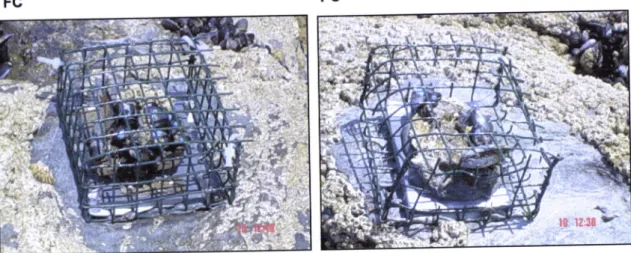
stabilisevariances. Student-Newman-Keuls