THE EFFECTS OF BAIL-INS ON BAIL-OUT
EXPECTATIONS IN THE EUROPEAN BANKING
SECTOR
Bernd Edelmann
Thesis is written under the supervision of Professor Diana Bonfim
Dissertation submitted in partial fulfilment of requirements for the MSc in Finance, at the Universidade Católica Portuguesa, 1st of June 2017.
I Abstract
In the aftermath of the Great Recession, sovereign guarantees and the associated bail-out ex-pectations caused a distortion in the cost of funding and risk-taking behaviour of financial in-stitutions. The Bank Recovery and Resolution Directive (BRRD) aims to achieve financial sta-bility through transparency and incentivizing market discipline. The central tool of the BRRD, the bail in, is a burden-sharing mechanism reallocating the cost of the gone concern of financial institutions. Forcing shareholders and creditors to participate in potential losses must increase monitoring, thus reducing the moral hazard of large financial institutions. If the directive is credible, these changes in bail-out expectations must be reflected in the security prices of all affected banks. As changes in regulation are introduced over several years, effects on market prices are difficult to observe. I show that the recurring resolution events between 2011 and 2016 across several Eurozone countries affected bail-out expectations, reaching a critical level in 2013. The write down of junior debt in Cyprus caused highly significant reactions on bank charter values and CDS spreads. From 2014 to 2016, effects were inconsistent and lacked di-rection. This decrease in market reactions points to the achievement of bail-in expectations through commitment and consistent implementation. Bail-in expectations imply the anticipa-tion of a bail-in in case of bank financial distress, which requires strict and diligent monitoring.
Keywords: Bail-ins, Regulation, EU, Bank Resolution and Recovery Directive, Resolution, BRRD, event study.
II Resumo
Na sequência da Grande Recessão, as garantias soberanas e as expectativas de bail out associ-adas causaram uma distorção no custo do financiamento e no comportamento de risco das ins-tituições financeiras. O Banco de Recuperação e Diretiva de Resolução (BRRD) visa alcançar a estabilidade financeira através da transparência e do incentivo à disciplina de mercado. A ferramenta central da BRRD, a fiança, é um mecanismo de repartição de encargos que reafecta o custo. Forçar os acionistas e credores a participar em perdas potenciais deve aumentar o mo-nitoramento moral hazard. Se a diretiva for credível, essas mudanças nas expectativas de resgate devem refletir-se nos preços de segurança. Como as mudanças na regulamentação são introdu-zidas ao longo de vários anos, os efeitos nos preços de mercado são difíceis de observar. Eu venho mostrar que os eventos de resolução recorrente entre 2011 e 2016 em vários países da zona do euro afetaram as expectativas de bail-out, atingindo um nível crítico em 2013. A redu-ção da dívida júnior em Chipre causou reações altamente significativas sobre os valores da carta patente do banco e os spams do CDS. De 2014 a 2016, os efeitos foram inconsistentes e care-ciam de direção. Esta diminuição nas reações do mercado aponta para a realização das expec-tativas de fiança através de compromisso e implementação consistente. As expecexpec-tativas de fi-ança implicam a antecipação bail-in em caso de instabilidade financeira bancária, o que exige um monitoramento rigoroso e diligente.
Palavras-chave: Bail-in, resolução, EU, Banco de Recuperação e Diretiva de Resolução, ex-pectativas de bail-out, event study, BRRD.
III Acknowledgements
I want to express my deepest gratitude to Professor Diana Bonfim, who kindly agreed to super-vise my thesis as independent process in addition to her regular workload. Her understanding of banking regulation, precise feedback and understanding of my personal working process helped me greatly in successfully completing this thesis.
Furthermore, I want to thank my family, girlfriend and friends for their continuous support and patience during the past months. Without their help and emotional support I would have never been able to complete my thesis.
To my parents Rudolf and Ursula, I will be eternally grateful for giving me the opportunity to study in Lisbon, as well as the continuous emotional and intellectual support. You always sup-port and believe in me, even when I do not.
To my sister Andrea, your patience and willingness to listen to hours of frustration helped me persevere at times where I thought success was impossible. You made me focus my energy on problems I can change, rather than worrying about those I cannot.
To Lena, thank you for listening to hours and hours of problems, solutions, achievements, fail-ures and worries. Thank you for taking care of our home, forcing me to take breaks, and to believe in myself. Your support in the past months was crucial to me being able to achieve this milestone.
To Simon, I want to thank you for the intense discussions on correct methodology and reason-ing, as well as the hundreds of hours in the laboratory you made bearable. Your ability to find amusement and positivity even in the smallest things helped me to not take everything too se-riously.
Finally, I want to thank Leonor Sousa for translating the abstract and for the support and friend-ship during the entire program.
IV
I.
Table of Contents
I. Table of Contents ... IV II. List of Tables ... VI III. List of Figures ... VII IV. List of Abbreviations ... VIII
1 Introduction ... 1
2 Literature Review ... 5
2.1 Goals of Regulation ... 5
2.2 Effects of Bail-Outs ... 5
2.3 How bail-ins could mitigate these Effects ... 7
2.4 Expected Effects of Bail-Ins ... 9
3 Methodology and Data ... 11
3.1 Empirical Model ... 11 3.2 Description of Data ... 16 3.3 Summary of Events ... 17 3.4 Significance of Results ... 20 3.5 Expected Results ... 20 4 Analysis of Results ... 23 4.1 Denmark ... 23
4.2 Portugal and Spain ... 24
4.3 Netherlands and Cyprus ... 25
4.4 Portugal and Italy ... 27
5 Concluding Discussion ... 29
5.1 Implications of empirical Results ... 29
5.2 Limitations of the Study and Suggestions for future Research ... 31
V V. Bibliography ... IX VI. Appendix ... XIV i. Austria and Greece ... XIV ii. Equations ... XXVIII
VI
II.
List of Tables
Table 4-1: Regression Results – Denmark ... 23
Table 4-2: Regression Results – Portugal and Spain ... 25
Table 4-3: Regression Results – Netherlands and Cyprus ... 26
Table 4-4: Regression Results – Italy and Portugal ... 28 Table VI-1: Regression Results – Austria and Greece ... XV Table VI-2: Regression Results – Senior vs. Subordinated abnormal CDS Spreads. ... XVI Table VI-3: Event Summary and Description. ... XVII Table VI-4: List of GSIBs ... XVIII Table VI-5: p-values of the BMP and Adj.BMP statistic (2011-2013) ... XXIII Table VI-6: p-values of the BMP and Adj. BMP statistic (2014-2016) ... XXIV Table VI-7: p-values for the Corrado and Zivney Rank Test (2011-2013) ... XXV Table VI-8: p-values for the Corrado and Zivney Rank Test (2014-2016) ... XXVI Table VI-9: Number of firms in each regression system ... XXVII
VII
III.
List of Figures
Figure VI-1: Stock Returns for GIIPS, Non-GIIPS and Full Sample, 2011. ... V Figure VI-2: Stock Returns for GSIB, Non-GSIB and Full Sample, 2011 ... V Figure VI-3: Stock Returns for GIIPS, Non-GIIPS and Full Sample, 2012. ... VI Figure VI-4: Stock Returns for GSIB, Non-GSIB and Full Sample, 2012. ... VI Figure VI-5: Stock Returns for GIIPS, Non-GIIPS and Full Sample, 2013. ... VII Figure VI-6: Stock Returns for GSIB, Non-GSIB and Full Sample, 2013. ... VII Figure VI-7: Stock Returns for GIIPS, Non-GIIPS and Full Sample, 2014. ... VIII Figure VI-8: Stock Returns for GSIB, Non-GSIB and Full Sample, 2014. ... VIII Figure VI-9: Stock Returns for GIIPS, Non-GIIPS and Full Sample, 2015A. ... IX Figure VI-10: Stock Returns for GSIB, Non-GSIB and Full Sample, 2015A. ... IX Figure VI-11: Stock Returns for GIIPS, Non-GIIPS and Full Sample, 2015B. ... X Figure VI-12: Stock Returns for GSIB, Non-GSIB and Full Sample, 2015B. ... X Figure VI-13: Stock Returns for GIIPS, Non-GIIPS and Full Sample, 2016. ... XI Figure VI-14: Stock Returns for GSIB, Non-GSIB and Full Sample, 2016. ... XI Figure VI-15: CDS Spreads for GIIPS, Non-GIIPS and Full Sample, 2011. ... XII Figure VI-16: CDS Spreads for GSIB, Non-GSIB and Full Sample, 2011. ... XII Figure VI-17: CDS Spreads for GIIPS, Non-GIIPS and Full Sample, 2012. ... XIII Figure VI-18: CDS Spreads for GSIB, Non-GSIB and Full Sample, 2012. ... XIII Figure VI-19: CDS Spreads for GIIPS, Non-GIIPS and Full Sample, 2013. ... XIV Figure VI-20: CDS Spreads for GSIB, Non-GSIB and Full Sample, 2013. ... XIV Figure VI-21: CDS Spreads for GIIPS, Non-GIIPS and Full Sample, 2014. ... XV Figure VI-22: CDS Spreads for GSIB, Non-GSIB and Full Sample, 2014. ... XV Figure VI-23: CDS Spreads for GIIPS, Non-GIIPS and Full Sample, 2015A. ... XVI Figure VI-24: CDS Spreads for GSIB, Non-GSIB and Full Sample, 2015A. ... XVI Figure VI-25: CDS Spreads for GIIPS, Non-GIIPS and Full Sample, 2015B. ... XVII Figure VI-26: CDS Spreads for GSIB, Non-GSIB and Full Sample, 2015B. ... XVII Figure VI-27: CDS Spreads for GIIPS, Non-GIIPS and Full Sample, 2016. ... XVIII Figure VI-28: CDS Spreads for GSIB, Non-GSIB and Full Sample, 2016. ... XVIII Figure VI-29: Senior vs. Subordinated CDS Contracts, 2011. ... XIX Figure VI-30: Senior vs. Subordinated CDS Contracts, 2012. ... XIX Figure VI-31: Senior vs. Subordinated CDS Contracts, 2013. ... XX Figure VI-32: Senior vs. Subordinated CDS Contracts, 2014. ... XX Figure VI-33: Senior vs. Subordinated CDS Contracts, 2015A. ... XXI Figure VI-34: Senior vs. Subordinated CDS Contracts, 2015B. ... XXI Figure VI-35: Senior vs. Subordinated CDS Contracts, 2016. ... XXII
VIII
IV.
List of Abbreviations
BMP Boehmer, Musumeci and Poulsen (1991) test statistic BMPS Banca Monte Dei Paschi di Siena
BRRD Bank Recovery and Resolution Directive CDS Credit Default Swaps
DGS European Deposit Guarantee Scheme ESM European Stability Mechanism EU European Union
FT Financial Times
G20 International forum of governments and central bank governors GDP Gross Domestic Product
GIIPS Greece, Ireland, Italy, Portugal and Spain GSIB Globally Systemically Important Banks IMF International Monetary Fund
MoU Memorandum of Understanding MVAR Multivariate Regression
NGIIPS Eurozone countries except Greece, Ireland, Italy, Portugal and Spain NGSIB Non-Globally Systemically Important Banks
SEN Senior Credit Default Swap contracts SRM Single Resolution Mechanism
SUB Subordinated Credit Default Swap contracts SUR Seemingly Unrelated Regressions
1
1 Introduction
The Great Recession demonstrated in a clear and devastating way that things had to change. The financial crisis caused a global recession and forced a change in risk assessment, regulation, and supervision. G20 leaders scrambled to agree on a global reform to reduce the cost of inevitable future crises and to create a more resilient and stable economy (G20, 2014). These decisions yielded somewhat closely aligned global reforms, such as the Dodd-Frank act in the United States, and the Bank Recovery and Resolution Directive (BRRD) in the European Union.
Financial institutions and their investors were not spared from traditional bankruptcy proceedings without reason. Commercial banks have several key functions for global markets, such as gathering and reallocating liquidity, maturity transformation, and providing access to leverage and payment services. Precisely this key role for financial stability makes resolution so difficult, and causes time inconsistency in sovereign behaviour. Due to the cost of bank failures, governments are heavily invested in the regulation and control of financial institutions to minimize the potential cost of future crises. This issue is exacerbated for large global insti-tutions classified as “globally systemically important bank”, or GSIB (Financial Stability Board, 2016). The distortion of market discipline regarding these institutions caused significant moral hazard, generating a competitive advantage through lower funding costs, as well as po-tentially increased risk-taking.
The central objective of the BRRD is enhancing stability and resilience of financial markets, while simultaneously minimising costs for taxpayers (European Commission, 2016; The European Union, 2014). The directive proposed a set of tools to achieve these objectives, most notably the bail-in tool, which implements a pecking-order approach in shareholder and creditor loss participation. Bail-ins should hence directly increase incentives to monitor the health of financial institutions, effectively increasing market discipline (The European Union, 2014). If successful, the directive would preserve the core business activities of a failing insti-tution by transferring them to a holding entity, minimizing potential disruption and preserving at least partial trust in the financial system. The announcements surrounding the Cypriot bail-in case for bail-instance were unable to fully preserve this trust, leadbail-ing to a partial bank-run bail-in the days before the resolution.1
2 If the new resolution framework is going to be successful in reducing bail-in expecta-tions, these events must have directly affected the cost of funding and probability of default of European banks. Schäfer, Schnabel and Weder di Mauro (2016) show that regulation alone has limited effects on security prices. This is due to the nature of regulation, where time-incon-sistency of behaviour is prevalent and often not exclusively rational. Convincing and efficient regulation requires credibility, and thus consistent commitment. Commitment can be demon-strated by adhering to the defined rules and successful implementation. The impact of the new framework and its success in reducing bail-out expectations can thus be assessed by examining the effects of recapitalization events where burden-sharing has been implemented. The three-year process of defining, and finally introducing the Single Resolution Mechanism in 2016, was accompanied by several such events across Europe.
As of the writing of this thesis, one year after the BRRD came into effect, the uncertainty surrounding the struggling Banca Monte Dei Paschi de Siena is another missed opportunity for sending a strong believable signal for future bank resolution. Members of the Single Resolution Mechanism are fully aware of this. Yet, they must wait for Brussels to define a restructuring plan before they can finalize a capital plan, while Brussels is waiting for supervisors to agree on a capital plan before defining restructuring terms of BMPS. It is evident that the mechanism is not yet working as intended (Barker et al., 2017). This raises the question of how successful bail-ins will be in reducing bail-out expectations, even more so since at least partial state recap-italization is not fully off the table. Even though it is very difficult and expensive to convinc-ingly introduce regulation, past crises and current economic developments demonstrate its in-evitability.2
Amendments to the Basel agreements, as well as living wills, should further strengthen financial stability by ensuring adequate, and transparent, capitalization. Living wills are recov-ery and resolution plans which financial institutions are obliged to define ex-ante, and should in theory grant a wider range of options than having to resolve an entire bank (Avgouleas et al., 2013). Furthermore, they pre-define burden-sharing agreements between banks’ home and host countries. Living wills complement the Basel III agreements, and force financial institutions to internalise the systemic externalities they cause (Acharya, 2009; Basel Committee On Banking Supervision, 2011). In combination with such living wills defining measures in the event of
2 Crisis-related losses in the European Union alone have been estimated to €1 Trillion (European Commission,
3 distress, the increased capital requirements of Basel III have the potential to reduce the too-big-to-fail problem by ensuring sufficient capitalisation of all institutions.
Southern European banks face balance sheets that are severely inflated by significant amounts of non-performing loans and low economic growth.3 The low interest rate environment and increased regulatory tightening pressure revenues and profitability by restricting bank flex-ibility and linking increases in risk-taking to costly capital requirements (Constâncio, 2016; Repullo and Suarez, 2013). For instance, potential profits of maturity transformation are di-rectly and negatively affected by the flat yield curve, while simultaneously exposing financial institutions to significant interest rate risk (IMF, 2016, p. 11). It is evident that the European banking sector is still facing significant difficulties ten years after the Great Recession (IMF, 2016).
The purpose of this thesis is to assess whether bail-in cases can influence bail-out ex-pectations and thus, force markets to re-evaluate banking risk. This requires the definition of the pre-BRRD status of regulation, the central goals of banking regulation, and the effects of bail-out policies on market discipline and security pricing. It is crucial to then understand what changes the new framework intends to introduce, and which characteristics or instruments have the potential to influence markets. The well-established event study methodology serves as a tool to finally determine the effects of each event, and across events in total.
Bail-ins as resolution mechanisms can reduce bail-out expectations, or at least influence the charter values and implied default probabilities of European banks. Several events of vary-ing scope caused significant reactions in equity returns and credit default swap spreads, most notably the announcements in Cyprus, Spain and the Netherlands. Capturing the definitive de-velopment of bail-out expectations across the event sample however is difficult, as increasing time spans introduces noise. Nevertheless, the Cypriot event appears to be the turning point in the market perception of future resolution. The high significance from economic and statistical perspective, and the decreasing impact of subsequent events indicate a persistent effect on bail-out expectations.
This remainder of this paper is organized as follows: Section II describes relevant re-search in related fields, Section III describes the empirical model and data used, and Section IV
3 The average Non-Performing Loans to Gross Loans (%) for banks from GIIPS (Greece, Ireland, Italy, Portugal
and Spain) countries ranged from 8.41% (2010) to 17.53% (2015), while the global average remained below 7%. The Greek banking sector was the main driver behind this increase, reaching 36.65% in 2015. Excluding Greece, the (G)IIPS country average is nevertheless significantly higher than the global average at 12.75% (IMF, 2016).
4 analyses the obtained results in detail. Section V then finally discusses the implications of the empirical result and suggests future research.
5
2 Literature Review
The severe impact on the global economy caused by the Great Recession has been largely attributed to the behaviour of the financial sector, which demonstrated the effects of a lack of transparency, improper regulation and supervision, and an absence of proper monitoring (Zingales, 2008). Introducing lasting amendments is difficult, as it requires a clear identification of the shortcomings of the past regulatory environment. This vastly difficult due to the com-plexity and systemic importance of the financial sector.
While the goal of this study is not the analysis of the new European recapitalisation and resolution framework, a bottom line understanding is crucial for any meaningful analysis. The characteristics of the environment prior to introduction of the European Bank Resolution and Recovery Directive, as well as the pursued goals and systemic challenges implemented must be defined to allow a qualified assessment of the change in bail-out expectations.
2.1
Goals of RegulationThe main goals of regulation are simultaneously achieving productive efficiency of banks, financial stability, and a credible no-bailout promise (Dewatripont, 2014). The European Commission summarizes the goal of bank resolution regulation as achieving a mechanism al-lowing quick resolution for bank assets playing a key role for financial stability. Resolution is difficult, and gets exponentially more so with increasing systemic importance, supra-national-ity, and generally with more externalities than easier. The regulatory environment typically undergoes a cycle, fulfilling at most two of the three goals identified by Dewatripont.
Today, the only achieved objective is financial stability, or at least a limited sense of such. The low European interest rate environment and increasing regulatory constraints depress productive efficiency, while determining the success in reducing the expectation of bail-out guarantees is the focus of this paper.4
2.2
Effects of Bail-OutsBail-outs were discussed in detail from a variety of perspectives, especially due to the key role they played in the Great Recession. It is estimated that the US Government intervention in 2008 increased the value of banks’ financial claims by $130 billion, with a bill to the
6 ers between $21 and $44 billion (Veronesi and Zingales, 2010). Crisis-related losses by Euro-pean banks alone amounted to €1 trillion, with €491.9 billion being approved in state aid measures between 2008 and 2010 (European Commission, 2013). The intervention however was not only fiscally expensive, but had additional negative consequences due to the implicit component of a government guarantee (Conlon and Cotter, 2014). The current focus on bail-out research is the effect of such policies especially this implicit component, on risk-taking behaviour. The influence on risk taking is affected through two channels: market discipline and charter values, with the majority of researchers focusing on the latter (Gropp et al., 2011). The relationship between government guarantees and protected bank risk-taking has been estab-lished by several researchers (Dam and Koetter, 2012; Gropp et al., 2011; Keeley, 1990)
In theory, bail-out policies should mainly affect banks that are considered too-big-to-fail, generally those defined as global systemically important financial institutions (G-SIFIs). This declaration inclines banks to, for instance, increase their risk-taking.5 G-SIFIs, as defined by G20 and the Financial Stability Board, must not default to avoid critical disruption to the financial system. This fact became especially apparent during the recent financial crisis, where the bankruptcy of Lehman Brothers played a key role in liquidity shortages around the globe. While the size of largest (and likely most complex) bankruptcy in US history was indubitably problematic, a significant additional driver behind the interbank markets drying up was uncer-tainty; no-one could have imagined a default of the largest investment bank on the planet, and trust in the financial system diminished.
The past financial crisis, more specifically the bankruptcy of Lehman Brothers, clearly demonstrated the devastating consequences of an unorganized resolution, and why banks can-not be allowed to fail like non-financial firms do (Zingales, 2008). While the decision against a bail-out of Lehman Brothers has been heavily scrutinized after the fact, it was not anticipated. This lack of anticipation may be attributed to two major factors: a severe underestimation of risk exposure especially regarding complex derivatives, and a lack of discipline in the monitor-ing of banks deemed too big to fail (Zmonitor-ingales, 2008).
The influence of market discipline on risk-taking behaviour materializes itself in inves-tors not having the incentive to monitor sufficiently, thus not requiring appropriate compensa-tion for risk. The lack of appropriate monitoring manifests itself in lower average funding costs of systemically important banks, reaching up to 100 basis points in 2009 (Acharya and
7 Yorulmazer, 2008). Changes in funding costs directly influence the return on equity, and hence the market capitalisation of banks. Market discipline, or the lack thereof, has significant influ-ences on the fair pricing of risk. The distortions caused by externalities must be reflected in the analysis of any identified abnormal behaviour. Bank risk-taking is also affected by bail-out policies, which influences their value-generating activities, and thus charter values (Keeley, 1990). However, the risk-increasing effect of committing to bail-out failing banks, commonly referred to as “moral hazard”, can be outweighed by a so-called “value effect” (Cordella and Yeyati, 2003). Völz and Wedow find the “too-big-to-fail” status is reflected in a distortion of the Credit Default Swap market due to a size effect, implying reduced market discipline when financial institutions reach a certain size (Völz and Wedow, 2011).
Estimations of this implicit subsidy to major UK banks alone range from £6 billion to £100 billion (Noss and Sowerbutts, 2012), which causes a significant competitive advantage for banks deemed to be “too big to fail”. However, markets appear to make their own assess-ment of the bail-out expectations of individual banks, rather than following the official decla-ration of such (Bongini et al., 2015). While the scope of the implicit subsidy varies significantly, there is definitive evidence of an implicit guarantee (European Commission, 2013; Veronesi and Zingales, 2010). Comparing the cost of financing for “Deutsche Landesbanken” before and after the German government provided guarantees for its bond issuance, the cost of financing increased markedly after the removal (Fischer and Hainz, 2011). Adding to this study, bond markets in general clearly reflect the risk-taking of large and complex banks (Afonso et al., 2014). This implies a distortion of competition due to implicit and explicit guarantees (Hakenes and Schnabel, 2010). While it appears that most agree on an increase in risk-taking due to sov-ereign protection, Allen et al. (2015) challenge this view and propose an alternative framework for evaluating the influence of government guarantees. Not only protected banks change their risk-taking behaviour however, as do unprotected banks due to make up for the competitive distortion caused by guarantees (Gropp et al., 2011).
2.3
How bail-ins could mitigate these EffectsIn theory, removing guarantees is relatively simple. Sovereigns must only stop granting explicit guarantees and discontinue those outstanding, such as done with “Deutsche Landes-banken”. This of course is a radically simplified view, as the challenge in stopping guarantees is not on the methodological side, but the political and economic implications. Direct guarantees may serve an important purpose to the economy, such as providing access to funding for risky
8 or negative cash flow investments that nevertheless create value for society or the economy. With a healthy European banking sector, governments will have no trouble refraining from granting any support to their lenders. In the case of a crisis, or an accelerating worse perfor-mance of nationally important systemic banks, granting guarantees to secure access to liquidity quickly becomes a valid form of support without accessing taxpayer funds.
Removing implicit guarantees however, such as those in the form of bail-out expecta-tions, is difficult already from a purely mechanical perspective. These guarantees materialize in implicit subsidies, and directly influence market efficiency. Markets have to assign credibil-ity to the change in resolution and recapitalization regime for bail-out expectations to vanish, thus allowing risk to be priced fairly (European Commission, 2014). First and foremost, letting shareholders and creditors participate in losses before taxpayers, at least reduces the explicit government guarantee. Following the “no creditor worse off”, or pari passu principle implies that the wealth effects to society must be no worse than bail-outs. This of course is a bold statement, and heavily depends on the scope of the resolution, as well as the efficiency of the bail-in process.
The most recent capital requirements set the theoretical possibility of efficient resolu-tion, and offer additional information to investors on the “bail-in-ability” of their investments. These debt securities should offer additional protection to taxpayers, as the bail-in framework’s waterfall burden-sharing requires a sufficient and applicable capital base. The bail-in of unin-formed investors should be avoided at all cost – as the cases of Banca Etruscia and the pushback during the Cypriot bail-in clearly demonstrate. Furthermore, part of the intent of the BRRD is reducing the burden on taxpayers – which is not achieved by reaching into a different pocket by writing down their retirement savings.
Bail-ins were assessed in their ability to mitigate moral hazard already in 2001, where Eichengreen and Rühl (2001) discussed it focusing on examples in Pakistan, Ecuador, Romania, and Ukraine. Of course, due to the severe costs of bail-out policies during the Great Recession and the subsequent Euro-crisis, literature gained further traction. In the case of European banks, empirical findings suggest that even during the 2008-2010 period, bail-ins would have primarily affected subordinated bondholders and shareholders, with very limited losses for senior bond-holders, and of course taxpayers (Conlon and Cotter, 2014). However, this at most an indication that bail-ins could work reasonably well. Several researchers evaluate bail-ins critically, and recognize potential severe difficulties. It remains to be seen how well a creditor
participa-9 tion/burden sharing mechanism can deal with systemic risk, while its advantages for idiosyn-cratic failures are clear (Avgouleas and Goodhart, 2015). The effects of the majority of bail-in events before 2015, including the official introduction of the Bank Resolution & Recovery Di-rective (BRRD) on January 1st, 2016, were limited (Schäfer et al., 2016).
Reasons for limited effects in the past, as well as future threats to the success of the new framework, can be attributed to several factors. One of the primary challenges are the global activities of banks, and thus the number of jurisdictions involved in the resolution (Beck, 2016). As the new framework is valid for both national and supranational regulation, centralizing de-cision making and resolution funds, optimal resolution becomes a significantly difficult process to achieve (Beck, 2016; European Commission, 2014).
Second, regulator and sovereign decision making is heavily impacted by time incon-sistency. The desire to be strict is greater ex-ante than in the event of crisis, and market actors are anticipating this behaviour. This inconsistency thus reduces confidence in the commitment to not bail out (Acharya and Yorulmazer, 2007; Chari and Kehoe, 2016). Investors face uncer-tainty about the scope of creditor involvement in case of bank distress – the flexibility of the new system hence limits its potential to mitigate the shortcomings of previous regulation (Schäfer et al., 2016). This uncertainty however should further increase monitoring incentives, as the risk of all instruments qualifying for write-down increases.
Bail-ins are by far not a new concept, and may only be foreign to the financial industry. A large part of the bail-in tool is standard practice for the resolution of non-financial firms, where shareholders and creditors carry the entire bankruptcy burden and hence demand proper compensation. Banks and insurance providers have been partially protected from default due to their systemic importance, as “traditional” bankruptcy would be of exceptional difficulty, and often significant cost to society. The BRRD sets out to define a resolution mechanism that ac-counts for the particularities of the industry, while finally holding investors at least partially accountable.
2.4
Expected Effects of Bail-InsShifting the cost and risk away from taxpayers to investors has the potential to reduce bail-out expectations, thus affecting the implicit subsidy granted to protected banks. The new framework includes pre-emptive measures reducing the likelihood of systemic crises, such as
10 the Basel III regulations and the requirement for “Living Wills”. The latter are obligatory reso-lution and recovery plans, which could help mitigating the cross-border problem by predefining burden sharing ex-ante (Avgouleas et al., 2013; Schäfer et al., 2014).
Bail-ins aim to provide a structured resolution framework which puts no investor at a disadvantage, and lets those participate that actively choose to do so (rather than taxpayers). In theory, changes in bail-out expectations should have economic effects (Dam and Koetter, 2012). Hence, if the new framework was able to successfully influence the expectations of sov-ereign bail-outs, this should manifest in adverse bank charter value effects.
Creditor participation effectively increases the default risk for creditors and sharehold-ers. Burden sharing in the scope of the BRRD follows a pecking-order, meaning the default risk varies among tranches. The order by which it is determined which liabilities are eligible and will be converted to equity is defined by Article 48: Common Tier 1 Equity, Additional Tier 1 and Tier 2 capital, subordinated debt, unsecured debt, unsecured claims, and then deposits over €100,000, as all deposits below this threshold are covered by the European Deposit Guarantee Scheme (DGS) (European Union, 2014). Furthermore, the write-downs have to be performed equally across each instrument (European Union, 2014, Article 48.2). Hence, all instruments within a certain tranche can be expected to uniformly reflect the increase in risk.
With the effective increase in default risk of all outstanding and bonds to be issued, it can be assumed that credit default swap spreads (CDS) will rise for all financial institutions affected by the new framework. As in most cases the pecking-order burden sharing approach affected junior debt only, the increases in spreads must be higher for related contracts, so those on subordinated debt.
The primary method for the assessment of economic or corporate events on security prices is employing an event study (MacKinlay, 1997). Schäfer et al. established the higher significance of events compared to regulation in affecting equity returns and credit default swap spreads (Schäfer et al., 2016). They confirm that changes in expectations and behaviour require events convincingly demonstrating the change.
11
3 Methodology and Data
The effects of bail-ins on bail-out expectations, and thus security prices, is based on the central theoretical works on event studies in econometrics and finance (Fama et al., 1969; MacKinlay, 1997) and the contributions made by Binder (1998, 1985a, 1985b). Event studies are the central methodology in assessing and quantifying the economic effects of information.
The event study is split into the effects on equity returns and on credit default swap spreads. Credit default swap spreads have significant advantages over bonds in assessing the event influence on debtholders. First, there is fixed number of specified contracts per firm with standardized maturity.6 Bonds however are issued continuously and simultaneously, with var-ying maturities and differences in structure. Second, credit default swap spreads are, at least in theory, a pure measure of default risk, while bond prices are heavily influenced by other risk factors.7
The event dates to be analysed are based on the research by Schäfer et al. (2016), as well as the analysis by Dübel (2013). I verified these dates in the Financial Times Europe archives and Bloomberg news to confirm both validity and accuracy. Additional events are identified according to Financial Times Europe front page where available, and the complete issue other-wise. The events in Austria and Greece were not announced in the Financial Times, and are hence included in the appendix only.
3.1
Empirical ModelRegulatory event studies have three key features that distinguish them from corporate event studies. First, due to the economic impact and the number of involved stakeholders, there are typically multiple announcements of varying frequency. This makes it difficult to determine the exact date at which expectations changed. This problem can be at least partially solved by including key announcements prior to the bail-in event into the study, thus capturing the changes in expectations with each new piece of information. Second, the heterogeneity of ef-fects new regulation may have on different sub-samples makes hypothesis testing inherently difficult, and could lead to failure to reject the null hypothesis. The type II error in this context
6 For instance, for one bank, two EUR-denominated CDS contracts with maturity of five years, one each for senior
and subordinated debt and credit event Modified Restructuring, while the firm has 10 outstanding bonds with varying covenants and coupons, maturing at any point between today and ten years from now.
7 Of course, CDS contracts are also exposed to risks other than default risk, such as counterparty, liquidity, and
12 is primarily prevalent when looking at heterogeneous industries, where significant abnormal returns of opposite signs would lead to insignificant abnormal returns on average.
Excessive type II error is likely of negligible concern in this study, as the changes in regulation should affect the sample firms of the European banking sector similarly. To never-theless account for possible failed rejections, hypothesis testing will be performed on subsam-ples and tested for robustness by employing appropriate tests. Third, unlike corporate events, the effects of changes in regulation are highly likely to be clustered by industry. Hence, even significant excess returns could be caused by an externality common to that sector that was not related to changes in regulation (Binder, 1985b). This can be partially remedied by including the correlation of residuals in the estimation.
The event date is defined as the first trading session after the announcement, determined by the publication in a highly publicised newspaper.8 Under the efficient market hypothesis, security prices should immediately, and fully, reflect the new information (Fama et al., 1969). Hence, the event window is set to the first trading session following the announcement. To capture possible delayed or corrective reactions an additional event day will be included. These windows should capture all effects, as well as potential corrections.9 Due to the number of countries involved, the event days might not coincide for all firms.10 While larger event win-dows could capture delayed effects, they also introduce noise.
Determining the abnormality of returns implies that normal returns must be predicted. Normal, or expected returns, are a central topic in fields such as asset allocation. A wide array of models of varying complexity are utilized to predict equity returns, incorporating both mar-ket data and accounting figures. The marmar-ket model has been established as a simple prediction model as early as 1969, and has subsequently been employed in event studies of various disci-plines (Fama et al., 1969). It assumes a linear relationship between individual firm returns and the return of a market index (MacKinlay, 1997). Brown and Warner show that the market model, as well as parametric tests such as the t-statistic, are sufficiently powerful in the scope of most event study research (Brown and Warner, 1985, 1980).11 While multifactor regression
8 In the case of the decision falling on a non-trading day, the newspaper announcement and event session 0 will
coincide.
9 Mitchell and Netter (1989) found that even propositions of changes in regulation were reflected in security prices
within 90 minutes.
10 For instance, the nationalization of SNS Reaal was announced after market close on Friday, the 1st of March, on
March 2nd, the Financial Times made the associated announcement, and the first trading session was on Monday
the 4th, 2017.
11 This is partially confirmed by a similar rejection percentage of the t-statistic in comparison with the arguably
13 models such as the Fama-French three- or five-factor models have the potential to alleviate the omitted variable bias of the single-factor market model, they simultaneously increase estima-tion error (Fama and French, 1997; French and Fama, 1996).
The Global STOXX 1800, a global and widely diversified price index of 1800 fixed contributors, serves as a benchmark for the market return. Choosing a global index avoids the effects of interdependency of financial and non-financial firms, as would be the case for an index with an over- or underweighted financial sector (Schäfer et al., 2016).
Residuals will likely not be independent for events occurring during the same calendar-time period, or if the sample firms are parts of the same industry (Binder, 1985b). These how-ever are defining features of regulatory event studies (Binder, 1985b, p. 371). The underlying assumptions of the market model, more specifically that residuals are independent and identi-cally distributed, can introduce severe bias to the return estimation, and thus the significance of abnormal returns. This potential bias must be reflected in the validation of the obtained regres-sion results, or incorporated in the regresregres-sions directly.
In this study, the announcements qualify as regulatory in nature. The financial sector can be assumed to be highly, and rather uniformly, exposed to changes in the regulatory envi-ronment. The clustering of announcements will increase the variance of performance measures, thus lower the power of tests employed (Brown and Warner, 1980). Hence, one needs to be careful when selecting, and interpreting, test statistics.12
Binder (1985a, 1985b), as well as Schipper and Thompson (1985), utilize multivariate regression models (MVAR) to jointly estimate the equations of event studies during the same calendar periods. This method was suggested by Gibbons (1982) and utilizes Zellner's (1962) Seemingly Unrelated Regressions (SUR). SUR implements Aitken’s generalized least squares on a system of equations. The obtained regression coefficients should generally be at least as-ymptotically more efficient than those of an equation-by-equation ordinary least squares. The efficiency is further increased if the explanatory variables across equations are not highly cor-related, while the residuals of the equations are (Zellner, 1962). The latter is confirmed by the consistently highly significant Breusch-Pagan test statistics in the appendix.13
12 Please refer to chapter “Hypothesis Testing” for a summary on the choice of test statistics
14 The MVAR approach assumes that the residuals are i.i.d. within each equation, but dif-fer across firms. The contemporaneous covariance of disturbances, so the correlation of resid-uals across firms, is assumed to be different from zero. This is particularly important when employing simple return models such as the market model, where the residual term is likely to capture exogenous influences that affect a specific sample, but not all market benchmark con-stituents equally.14 A higher-factor model could capture the influence of these exogenous vari-ables, but potentially introduces further estimation bias.
The non-contemporaneous correlation in contrast is assumed to be zero (Binder, 1985b, p. 172). The two main advantages of the MVAR approach with SUR estimation are in permit-ting joined hypothesis tespermit-ting rather than only tespermit-ting for average effects, and the inclusion of a covariance estimate in the normal return estimation. This estimate relaxes the assumptions of homoscedasticity and incorporates the correlation among industry peers (Binder, 1985b, p. 174). The sigma estimate has the potential to correct the bias introduced by the assumptions underlying the market model, as it incorporates the cross-sectional correlation of residuals. The coefficient of the event dummy variable 𝛾𝑖,𝜏, is effectively as the abnormal return for firm i on event day τ. The average abnormal and cumulative average abnormal returns are hence defined as in Eq. 1 and Eq. 2, where 𝐿2 is the number of days in the event window ranging from day 0 to Τ2, and N is the number of firms in the respective sample. Eq. 3 and 4 are the (cumulative) abnormal average relative CDS spreads, following the same notation.
𝐴𝐴𝑅τ = 1 𝑁 ∑ 𝛾𝑖,τ 𝑁 𝑖=1 (1) 𝐶𝐴𝐴𝑅[τ,Τ] = 1 𝐿2 ∑ 1 𝑁 ∑ 𝛾𝑖,τ 𝑁 𝑖=1 Τ2 τ = 0 (2) 𝐴𝐴𝑆τ= 1 𝑁 ∑ 𝛾𝑖,τ 𝑁 𝑖=1 (3) 𝐶𝐴𝐴𝑆[τ,Τ]= 1 𝐿2 ∑ 1 𝑁 ∑ 𝛾𝑖,τ 𝑁 𝑖=1 Τ2 τ = 0 (4)
14 In the scope of this study, this relates to variables such as the level and slope of the yield curve, which will likely
affect commercial banks uniformly, while global GDP growth should have uniform effects across all constituents and hence be included in the slope and intercept of the market model.
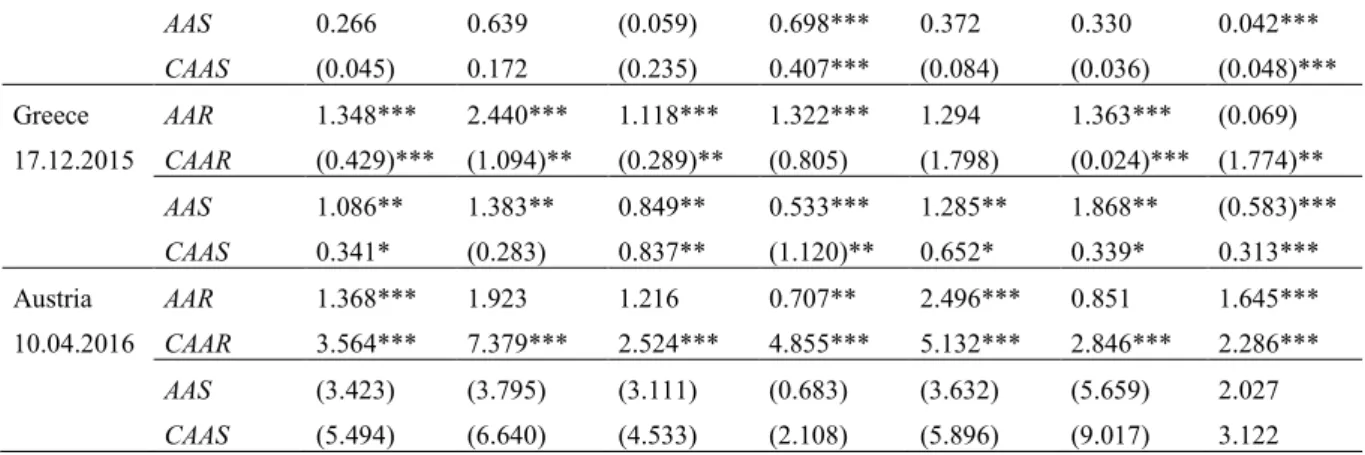
15 Estimating separate equation systems for each event day within an event period allows a more detailed analysis than estimating an average abnormal return over the event window.15 This is particularly important due to the difficulty in defining precise event dates in regulatory event studies. Estimating the abnormal returns per announcement, and testing for significance separately, defines an equation for each firm and announcement day. The resulting sets of equa-tions are effectively already in the form of a Seemingly Unrelated Regression system, with a total of 28 SUR equation systems across all events and event days.16
𝑅1,𝑡 = 𝛼1 + 𝛽1𝑅𝑀,𝑡+ ∑ 𝛾1,𝜏𝐷𝜏,𝑡 𝑇 𝜏=1 + 𝜖1,𝑡 : 𝑅𝑗,𝑡 = 𝛼𝑗+ 𝛽𝑗𝑅𝑀,𝑡+ ∑ 𝛾𝑗,𝜏𝐷𝜏,𝑡 𝑇 𝜏=1 + 𝜖𝑗,𝑡 (5)
If a confounding event occurred within another’s estimation window, this introduces noise to the return estimation. I account for past events by introducing a dummy variable that removes past event windows from the estimation, and enlarge the window accordingly.17 With this adjustment, the effective length is constant across equation systems (Schäfer et al., 2016). The number of equations per system varies depending on the liquidity in the 120 trading days prior to each announcement.
For CDS spreads, the market model is poorly specified for determining unexpected spread changes. The desirable approach would be utilizing a multi-factor model including de-terminants of the spread changes, such as equity implied volatility and the level and slope of the treasury yield curve. Andres et al. (2013) suggest a three-factor model based on these ex-planatory variables. As with equity returns however, introducing additional variables poten-tially increases estimation error. The simple mean adjusted approach performs reasonably well for determining abnormal changes in spreads (Andres et al., 2013).
I will again refer to Schäfer, Schnabel and Weder di Mauro (2016) and utilize the ad-justed mean approach in the scope of Zellner’s SUR to allow for simultaneous estimation. The
15 See for example Izan (1978), Jaffe (1974) and Mendelker (1974).
16 Two event days for each of the 14 announcements, see Table VI-9 for the number of firms per system and Table VI-3 for a short event
overview. Table VI-9: Number of firms in each regression system
The numbers per regression system are presented for the full sample (Full), and the distribution between sub-samples (GSIB, NGSIB, GIIPS, NGIIPS). “CDS” are the number of equations in the CDS-related regression sys-tems, while “EQT” refers to the equity-related regression systems.
17 In addition to the 14 bail-in related announcements, I furthermore included the spike in the probability of a
16 regression constraints are set according to the mean model, with intercept equal to zero and slope equal to one.
∆𝐶𝐷𝑆𝑖,𝑡 = 𝜇𝑖+ ∑ 𝛾𝑖,𝜏𝐷𝑖,𝜏,𝑡 𝑇2 𝜏=𝑇1 + 𝜀𝑖,𝑡 : ∆𝐶𝐷𝑆𝑗,𝑡 = 𝜇𝑗+ ∑ 𝛾𝑗,𝑛𝐷𝑗,𝑛,𝑡 𝑇+1 𝑛=𝑇−1 + 𝜀𝑗,𝑡 (6)
3.2
Description of DataDaily equity prices and trading volumes were obtained from Thomson Reuters DataStream. To avoid selection bias, I obtained the individual security identifiers of all availa-ble commercial banks listed on stock exchanges between 2009 and 2017 in the European Union from Worldscope.18
I refrained from any additional amendments to the sample, apart from removing Amer-ican depository receipts. This then yields a sample of 286 banks. The sample was subsequently dynamically adjusted by excluding institutions that were not traded for at least 100 of the past 120 trading days prior to each event.19 Missing observations, as determined by a trading volume of zero, were excluded from the return estimation.
Credit Default Swap daily mid-spreads were also obtained from Thompson Reuters Datastream. CDS spreads are of contracts with a maturity of five years, as they are the most liquid (Blanco et al., 2005; Hull et al., 2004). The contracts were selected based on the credit event Modified Modified Restructure. Other default events, such as Bankruptcy or Failure to
Pay are narrower in scope. This might introduce bias, as certain contracts would not be affected
by all events depending on their classification, and hence miss-specify average abnormal spreads. There is no liquidity or trading volume available for CDS spreads on DataStream. Filtering for illiquid days or contracts must hence be based on zero returns. These zero returns
18 I furthermore included banks from Norway, Liechtenstein and Switzerland to the EU Sample due to their
prox-imity, and relative importance.
19 For each announcement in the estimation window, this relationship is amended and increased by three days: the
day before the event, as well as the two event days, to ensure an identical estimation period for each firm. If confounding events are present in the estimation window, this liquidity constraint is amended to account for the lost observations.
17 can be caused by illiquidity, or simply an absence of changes in information about the exposure the protection was purchased against.20
The sample will furthermore be grouped into sub-samples based on the host country’s fiscal capacity and exposure to the sovereign debt crisis, and the banks relative importance to the economy, defined as “GIIPS” (Greece, Ireland, Italy, Portugal, Spain) and “GSIB” (globally systemically important banks), respectively.
3.3
Summary of EventsThe following is a summary of the events, the accompanying announcements and the expected reactions across the eight distinct bail-ins in Denmark, Spain, Netherlands, Cyprus, Portugal, and Italy.21 These cases vary significantly in size, bail-in basis, their timing in respect to the introduction process of the BRRD, as well as the respective national economic environ-ments.22 For a more detailed explanation and summary of each announcement, please refer to Dübel (2013), as well as the Financial Sector Advisory Center (2016).
First, the nationalisation of the Danish Amagerbanken relates to a very small bank with total assets of EUR 4.5 billion. Nevertheless, the bail-in directly affected a large bail-in basis, potentially sending signals of increasing investor loss participation. However, Denmark is not part of the Eurozone and the creditor participation decisions were hence made independent of the Single Resolution Mechanism, limiting potential signalling effects.
The GIIPS countries experienced stagnant or negative GDP growth, high unemployment and high levels of non-performing loans. The interest rate environment and heterogeneity of the Euro-block countries further exacerbated these issues, as the relative euro strength incor-rectly reflected the economic potential of this “sub-block”.
Against this background, the second event studied pertains to Spain, where the eco-nomic situation got increasingly worse between 2008 and 2012. From the financial crisis in 2007 to a real estate crash, and subsequently a sovereign debt crisis (“Euro crisis”). The Great
20 After corrections, the CDS contracts per regression system ranged from 57 to 99 (Table VI-9).
21 For the cases in Spain, Cyprus and Portugal, two additional announcements were made before the final bail-in.
Three more cases, two in Austria and one in Greece, are outlined in the appendix. A detailed analysis in the main body is excluded, as no information was publicised in the Financial Times and a direct comparison to the other events would be misleading.
22 Bail-in basis refers to the subsets of creditors and shareholders. A narrow bail-in for instance is a write-down
limited to equity, a write-down of equity and subordinated debt is of medium or limited basis, and the potential write-down of depositors and senior debt constitutes a broad or major basis.
18 Recession was however merely the trigger, as increasing non-performing loan books and low economic growth already destabilized the Spanish financial sector.
In July 2012, Spain requested financial support to recapitalize ten of its financial insti-tutions. The European Stability Mechanism (ESM) granted EUR 100 billion under strict con-ditions of a “Memorandum of Understanding on Financial Sector Policy Conditionality” (MoU). The program defined measures including the bail-in of subordinated debt, as well as a segregation of real estate portfolios to an asset management vehicle (Financial Sector Advisory Center, 2016, p. 68). Hence, this resolution had characteristics of both bail-in and bail-out, as the burden was shared by taxpayers and creditors.23
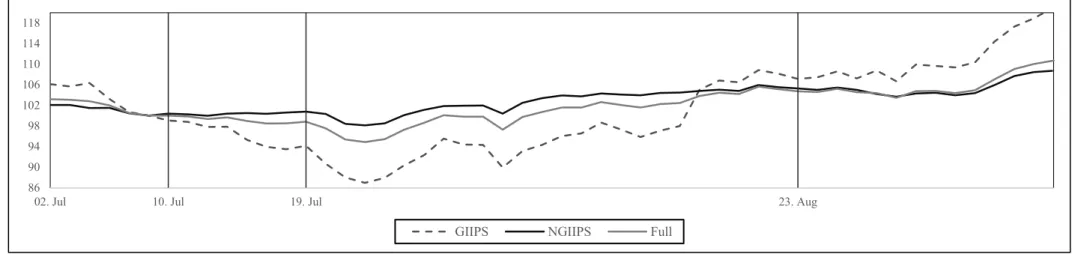
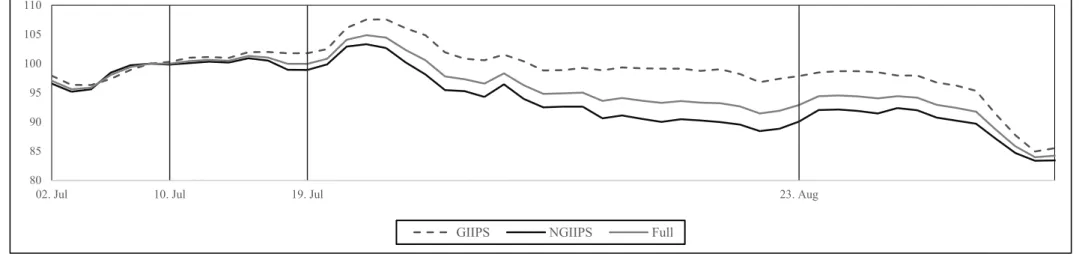
Even though the basis of the Spanish bail-in event is comparably small, it occurred dur-ing the definition of the Sdur-ingle Resolution Mechanism. The bank resolution case in Spain is a prime example of regulatory event studies – several announcements ranging from the initial discussion on July 10th, to further commitment on July 19th, then finally culminating in the national resolution law being signed on August 23rd, 2012. In this case, increasing commitment to bail in was communicated across the announcements, which should be reflected in security prices. The first announcement relates to the MoU, which proposes the write-down of junior debt. On July 19th, 2012, German authorities officially backed the rescue plan. The last an-nouncement on August 23rd, 2012 is the final decision to bail in creditors.
The third and fourth events studied, which cover the cases in the Netherlands and Cy-prus, cannot be completely separated due to their chronological vicinity. As in the cases of Spanish banks, the bail-in of the Dutch SNS Reaal on February 1st, 2013 concerned junior cred-itors only. However, the upcoming and frequently discussed Cypriot bail-in, as well as the on-going development of the SRM imply significant political signalling potential.
The resolution of the Bank of Cyprus and Cyprus Popular Bank (Laiki) was a bail-in event with the broadest basis across all events, writing off uninsured depositors. Greece adopted a resolution law oriented at the BRRD, which was still two years from coming into effect. Strong reactions in markets are very likely due to several factors. First and foremost, the bail-in basis was significant, with even a write-off of bail-insured deposits bebail-ing under consideration.
Cyprus joined the Euro area in 2008, and faced increasing budget deficits over the fol-lowing years. As the closely aligned GIIPS countries, Cyprus financed its rising expenditures
23 Similar programs were implemented in the other GIIPS countries, namely Portugal, Ireland, Italy, and Greece
19 and interest obligations on international financial markets, until the sovereign debt crisis made this unsustainable and government bond yields rose above 7% (Financial Sector Advisory Center, 2016). The late decision to request support from the Troika caused inefficiencies in the resolution, and allowed a partial bank run draining bail-in-able funds.
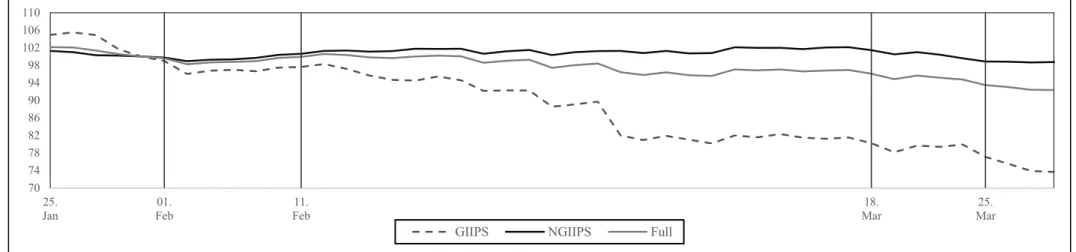
After several unsuccessful attempts to avoid a resolution of Laiki and the Bank of Cy-prus, Cyprus agreed on a deal with the finance ministers of the Euro area on March 16, 2013. This deal imposed haircuts on uninsured as well as insured deposits in the form of a tax, and was rejected by the Cypriot parliament. The mere suggestion of a loss participation of insured depositors was heavily scrutinized internationally, and thus reduced the likelihood of a bail-in of such investors in the future.
The Cyprus Resolution Law (2013), approved on March 22nd, enabled the Central Bank of Cyprus to resolve insolvent institutions independently. The terms of the resolution of Laiki were announced on March 25th, with shareholders, bondholders and uninsured depositors being fully written off. The resolution of the two largest banks in Cyprus had severe, and lasting, effects on the trust in the banking sector.
The fifth bail-in event relates to the Portuguese Banco Espírito Santo, which was split into a good and bad bank on August 4th, 2014. The bail-in basis was again limited to junior bondholders, and prior events had already influenced bail-out expectations. As senior creditors and depositors were furthermore spared, it is likely that this announcement’s signalling effects will be limited.
The decision to then increase the bail-in basis and to write down €2 billion in senior bonds of the good bank on December 31st, 2015 caused affected creditors to threaten and pursue legal action. While a write down of senior debt has significant signalling potential, the main bail-in process started already 14 months prior, making it difficult to isolate effects.
The sixth distinct event concerns four Italian banks. Creditors and shareholders were bailed in on November 23rd, 2015, less than two months before the BRRD came into effect. The developments in Italy and the second announcement in Portugal are direct indicators of increas-ing credibility regardincreas-ing changes in the regulatory environment. In both cases, national super-visors and regulators made rushed decisions regarding the resolution of several financially un-stable banks. It is evident that the decision-making process of national regulators is directly affected by the imminent implementation of the BRRD, implying credibility of the new frame-work.
20
3.4
Significance of ResultsThe multivariate approach allows for joint hypothesis testing. Each regression system can be simultaneously tested for 𝐻0: 𝛾𝑖,𝑡 = ⋯ = 𝛾𝑗,𝑡 = 0. This however only confirms the presence of an effect. It does not indicate the magnitude of the effect, nor does it give an indi-cation of how many equations have significantly non-zero gamma coefficients, or if the effect is persistent in the cross-section.
Brown and Warner discussed the low power of the t-statistic in cross-sectional testing, as well other tests such as the standardised residual test by Patell (1976). The standardized cross-sectional test by Boehmer, Musumeci and Poulsen (1991) accounts for the shortcomings of Patell’s z-score and the low test power of the simple cross-sectional t-statistic (Brown and Warner, 1985, 1980). The BMP test is immune to serial correlation and the distribution of re-siduals across the event window, and the only parametric test to account for event-induced vol-atility. Boehmer et al. (1991) describe their suggested test statistic as a hybrid of the cross-sectional and Patell’s (1976) standardized residual approach.
I will furthermore present the crude dependence adjustment by Kolari and Pynnönen in the appendix, which accounts for the contemporaneous correlation of residuals in the Patell and BMP statistics (Kolari and Pynnönen, 2010). However, as the sample is composed entirely of firms of one industry in the same geographic region, the high average correlation causes a se-vere downward adjustment of test statistics.
For daily CDS spreads, parametric tests are generally inferior to non-parametric tests, with the rank test suggested by Corrado and Zivney (1992) performing best (Andres et al., 2013). I will hence determine and present significance using this statistic.
The first differences in abnormal returns and spreads of the sub-samples, grouped by global systemic importance and host country, are tested with simple the non-parametric Wil-coxon rank test (WilWil-coxon, 1945), as well as the parametric two-tailed mean test.
3.5
Expected ResultsUnder the Bank Resolution and Recovery Directive (European Union, 2014), the Euro-area is heading for a centralized joint resolution approach, implementing pecking-order burden sharing among investors in favour of cost socialisation. The basis for this comprehensive new framework was defined by the Financial Stability Board (Financial Stability Board, 2014). The central tool for reducing the cost to society and increasing financial stability of the financial
21 sector is the bail-in, which writes down debt and equity of failing or likely to fail institutions according to the predefined hierarchy. The write-downs or conversions to equity are performed until the losses are absorbed, effectively internally recapitalizing an institution without the need for taxpayer assistance (European Commission, 2016). Under the assumption of credibility, this increased likelihood of write-downs on eligible instruments must be reflected the equity prices of all Euro-area banks, as well as the cost of insurance against their issued bonds. The magni-tude of effects depends on the perceived change in the probability of loss in financial markets.
The events prior to 2013 are expected to show little significance, with little effect to markets and insignificant rises in funding costs (Schäfer et al., 2016). As the presence of bail-out expectations has been confirmed, this might reflect a lack of market discipline, little credi-bility regarding the new framework, or both. Starting in 2013 however, the upcoming change in regulation became evident in the behaviour of regional regulators and supervisors.24 Several high-profile cases were discussed in detail in the Financial Times. By 2015, national regulators were apparently anticipating and started preparing for the imminent change in environment. This implies that over time, the credibility of the changes increased, which should have nega-tively affected bail-out expectations. All else being equal, the increasing credibility should cause decreasingly noteworthy results over time.
From a more fundamental perspective, the bail-in events analysed vary in scope, or
ba-sis. Junior bond- and equity investors are more likely to have consciously taken on more risk in
exchange for higher returns. This is less likely the case with the more senior bondholders, and especially retail investors and depositors. Unfortunately, a lack of market discipline is espe-cially widespread in uninformed investors, which are unlikely to assign risk to a large bank, and hence do not require adequate compensation. Hence, the bail-in basis outlined in the recov-ery or resolution announcement should play a significant role in magnitude and significance of event effects.
Changes in this perception of risk associated with investments in commercial banks, should immediately be reflected security prices. If an event had an influence on the credibility of the change in bank resolution mechanism, this should have immediate effects. Credible changes in risk will require additional creditor compensation, assuming appropriate monitoring. This increase in funding cost then must negatively affect stock returns.
22 Credit default swap spreads can be assumed to change for similar reasons. However, fluctuations in spreads are more likely to be additionally driven by the probability of default, as well as the recovery rate in case of the credit event. These are both key uncertainties created by the BRRD, as the bail-in basis and the write downs per tranche are only defined ex post. The former increases the probability of default of all eligible debt securities, while the latter influ-ences probability of default and the recovery rate. Of course, higher funding costs have an influence on the probability of default, as narrowing margins translate to reduced certainty and security, and directly impact the financial result.
The magnitude and significance of these effects then depends on the spread between correctly and incorrectly priced risks, so the adverse effect of a lack of market discipline due to the expectation of sovereign rescue in case of distress. Small banks did not directly profit from this implicit or explicit subsidy, and generally less than their systemically important peers. Changes in market expectations are hence likely to be smaller for these non-systemic banks (NGSIBs). As the presence of these subsidies and their adverse effects has been established, a credible change in bail-out expectations must affect globally systemically important banks more significantly.
The fiscal capacity of the parent banks’ host country plays a similar role in bail-out expectations Schäfer et al. (2016). Intuition would suggest that expectations will be higher in fiscally solvent (Non-GIIPS) countries. Due to the ESM intervention in the GIIPS countries however, this effect blurs due to two main reasons. The ESM funds created a precedent of at least partial bail-outs even in the absence of sovereign solvency, and GIIPS banks are more likely to be in distress. This makes it very difficult to compare expectations before bail-in events, and the noise persists in the analysis of event impacts.
23
4 Analysis of Results
Changes in bail-out expectations must be reflected in changes in bank charter values and their probability of default. This change may thus be measured by determining average abnormal effects on stock returns and credit default swap spreads. If expectations gradually move towards bail-ins, reactions must dissipate across announcements reflecting the increase in credibility. The following is a detailed analysis of the development of bail-out expectations in the period from 2011 to 2016. The event-specific effects will then be summarized and ana-lysed across the examined period around the implementation of the BRRD.
4.1
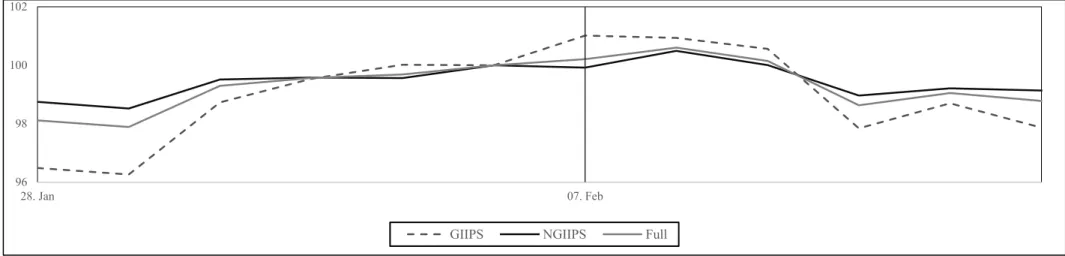
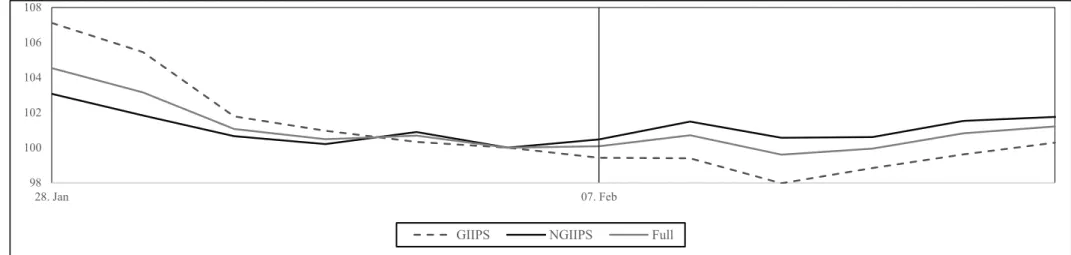
DenmarkThe regression results in Table 4-1 reflect the small size of Amagerbanken, as well as the Danish separation from the Euro bloc. While the bail-in basis was large, this characteristic is most likely to produce political spill over – which requires a certain level of political linkage between Denmark and the other sample banks. The absence of a meaningful impact on bail-out expectations is evident in the reversal of the full sample abnormal return on the second day, where the highly significant positive abnormal returns on day one of 0.622 percent are de-pressed to -0.052 percent.
Abnormal Credit Default Swap spreads are negative, but similarly insignificant. The only consistently significant result is the difference in abnormal spreads between the subsam-ples. The bankruptcy of Amagerbanken did thus not cause any increased implied probability of default for European banks, and thus failed to reduce bail-out expectations.
Table 4-1: Regression Results – Denmark
This table and the subsequent “Regression Results” tables display the results of the respective equation system. It shows the average abnormal returns (AAR) and cumulative average abnormal returns (CAAR) across the event window, as well as the abnormal relative CDS spread (AAS) and cumulative average abnormal CDS spreads (CAAS). All are presented in percent. The abnormal returns are estimated via the market model, with the Stoxx Global 1800 serving as benchmark index. The estimation of normal returns was performed within Zellner’s (1962) Seemingly Unrelated Regression GLS model across an estimation window of 100 trading days. The returns are furthermore reported for the sub-samples grouped by the firms’ host country classification as GIIPS (Greece, Italy, Ireland, Portugal, Spain), and similarly the classification as GSIB (Globally Systemically Important Bank, as defined by the Financial Stability Board). The number of firms in the sample varies across an-nouncements, and is indicated in Table VI-9 in the Appendix. In addition, each table includes the regression systems’ estimation window summary statistics for the full sample. The significance of stock returns is reported according to the BMP Test statistic of Boehmer, Musumeci and Poulsen (1991). Δ shows the first difference of (cumulative) average abnormal returns for each subsample criterion, and significance results are reported according to the Wilcoxon Rank-Sum test statistic. Significance at 10% level is indicated by *, significance at the 5% level by **, significance at the 1% level by ***. For BMP and additional tests’ p-values, please refer to Table VI-5 in the appendix.
Global Systemic Importance Host Country Classification
Event Full GSIB N-GSIB Δ GIIPS N-GIIPS Δ Denmark AAR 0.622*** 0.824 0.576 0.248 0.707 0.572*** 0.135 06.02.2011 CAAR (0.052) 0.005*** (0.064) 0.069 (0.034) (0.062) 0.027 AAS (1.756) (2.481) (1.318) (1.163)*** (1.920) (2.408) 0.488***