CUIDADO É FUNDAMENTAL
UNIVERSIDADE FEDERALDO ESTADODO RIODE JANEIRO. ESCOLADE ENFERMAGEM ALFREDO PINTO
RESEARCH DOI: 10.9789/2175-5361.2019.v11i1.124-128
DOI: 10.9789/2175-5361.2019.v11i1.124-128 | AndradeLL; CarvalhoGCP; ValentimFAAA; et al. | Characteristics and treatment of diabetic foot ulcers...
CUIDADO É FUNDAMENTAL
UNIVERSIDADE FEDERALDO ESTADODO RIODE JANEIRO. ESCOLADE ENFERMAGEM ALFREDO PINTO
R E V I S T A O N L I N E D E P E S Q U I S A
Characteristics and treatment of diabetic foot ulcers in an
ambulatory care
Caracterização e tratamentode úlceras do pé diabético em um ambulatório
Características y tratamiento de las úlceras diabéticas en un cuidado
ambulatorio
Lidiane Lima de Andrade;1 Gabrielly de Carly Pereira Carvalho;2 Fernanda Albyege Alves de Andrade
Valentim;3 Werllinson Azevedo Siqueira;4 Fabrícia Maria de Araújo Bustorff Melo;5 Marta Miriam Lopes Costa6
How to quote this article:
AndradeLL, CarvalhoGCP, ValentimFAAA, Siqueira WA, Melo FMAB, Costa MML. Caracterização e tratamento de úlceras do pé diabético em um ambulatório. Rev Fun Care Online. 2019 jan/mar; 11(1):124-128. DOI: http://dx.doi.org/10.9789/2175-5361.2019.v11i1.124-128
ABSTRACT
Objectives: To characterize diabetic foot`s ulcers of patients treated at a first aid post and to investigate the
treatment given to these lesions. Methods: Descriptive study with a quantitative approach, carried out in a first aid post of a university hospital, with 56 patients as subjects. For the data collection, a guideline was used, addressing sociodemographic and clinical data, characterization data and treatment data of diabetic foot ulcers. Results: The age range of individuals ranged from 38 to 84 years. It was found that 40 (71.4%) had a family record of diabetes. Regarding wound classification, 27 (34.6%) presented lesion in the plantar fascia and 20 (35.7%) presented shedding in the wound bed. Regarding the treatment, essential fatty acids were used in 45 (80.3%) of the lesions. Conclusion: Results reinforce the importance of the characterization / evaluation of the lesions to choose an effective treatment, which reduces the severity of complications.
Descriptors: Diabetic foot, Nursing care, Wound healing. RESUMO
Objetivo:Caracterizar as úlceras do pé diabéticode pacientes atendidos em um ambulatório e investigar qual o tratamento dispensado
a estas lesões. Método: Estudo descritivo com abordagem quantitativa, realizado noambulatório de um hospital universitário, tendo como sujeitos, 56 pacientes. Para a coleta de dados, foi utilizado um roteiro abordando dados sociodemográficos e clínicos, dados de caracterização e de tratamento das úlceras do pé diabético.Resultados:A faixa etária dos indivíduos variou de 38 a 84 anos. Verificou-se que 1 Bacharela em Enfermagem pela UFPB. Doutora pela UFPB. Professora Adjunta da UFCG.
2 Enfermeira graduada pela UFCG. Residente do Programa Multiprofissional em Saúde da Família e Comunidade.
3 Enfermeira graduada pela UFCG. Pós-graduanda em Urgência e Emergência pelas Faculdades Integradas de Patos (FIP). Enfermeira do Hospital Regional de Taperoá.
4 Enfermeiro graduado pela Faculdade Santa Emília de Rodat. Especialista em Cirurgia, Centro de Material e Esterilização e Recuperação Pós-Anestésica pelo Centro de Formação Profissional Apt. do Hospital de Emergência e Trauma Senador Humberto Lucena.
5 Enfermeira graduada pela UFPB. Mestranda do Programa de Pós-Graduação em Enfermagem da UFPB. Enfermeira do Hospital Universitário Lauro Wanderley.
40 (71,4%) tinham histórico familiar de diabetes. Quanto àclassificação da ferida, 27 (34,6%) apresentavam a lesão na fáscia plantar e 20 (35,7%) apresentavam esfacelo no leito da ferida. Em relação ao tratamento, em 45 (80,3%) das lesões foi utilizado ácidos graxos essenciais.Conclusão:Os resultados reforçam a importância da caracterização/avaliação das lesões para escolha de um tratamento eficaz, o que reduz a gravidade de complicações.
Descritores: Pé diabético, Cuidados de enfermagem, Cicatrização de
feridas.
RESUMEN
Objetivos: Caracterizar como úlceras do pé diabético de pacientes
atendidos en un ambulatorio e investigar el tratamiento dispensado a estas lesões. Métodos: Estudo descritivo com abordagem cuantitativa, realizado sin ambulatorio de un hospital universitario, teniendo como sujetos, 56 pacientes. Para una coleta de datos se utilizó un roteador de datos médicos y datos clínicos, datos de caracterización y tratamiento de las úlceras del péptido diabético. Resultados: A faixa y tipos variados de 38 a 84 anos. Verificou-se que 40 (71,4%) tienen historia familiar de diabetes. (34,6%) presentaban una lesión en la planta plantar y 20 (35,7%) presentaban esfacelo no leito da ferida. Em relação ao tratamento, em 45 (80,3%) de las lesiones de los ácidos graxos essenciais. Conclusión: Los resultados refuerzan la importancia de la caracterización / evaluación de las opciones para la selección de un tratamiento eficaz.
Descriptores:Pie diabético, Atención de enfermeira, Cicatrización de
feridas.
INTRODUCTION
Among chronic degenerative diseases with high morbidity and mortality rates, Diabetes Mellitus (DM) has been highlighted as an important public health issue. This is because each year its incidence increases in the world population, which generates expensive expenses with treatment and consequent cooling of the quality of life of the people who suffer from this illness.1
DM is a multifactorial complication disease, with diabetic foot being one of the most common and devastating, due to the large number of cases that develop for lower limb amputations.2 The prevalence of foot ulcers reaches 4% to 10% of affected persons for DM, about 40% to 60% of non-traumatic lower limb amputations occur in these patients, of which 85% are preceded by foot ulcers.3
Diabetic foot comprises a range of pathophysiological processes ranging from infection, appearance of ulcers with consequent destruction of deep tissue, neurological abnormalities and/or vascular impairment, which causes suffering to the person’s life quality.4
Faced with this issue, care with the feet of people living with DM involves several measures that require close collaboration and responsibility of both the patient and health professionals. Numerous studies point to the activity of health education as a form of prevention, nonetheless, there is incipience of national scientific production about the evaluation and treatment of diabetic foot ulcers already installed.
In a study carried out in Rio Grande do Norte State,4 it was evidenced that due to the precariousness of the health services provided to individuals with diabetic foot, complications and
interventions were obtained, of which the most invasive was the amputation.
It should be emphasized that assistance to patients living with wounds should be provided in a comprehensive manner, since it involves physiological and emotional issues.5 Moreover, the practice of caring for wounded individuals is a specialty within Nursing, recognized by the Brazilian Society of Dermatological Nursing. Hence, it is up to these professionals to improve their knowledge regarding the specifics of this area, in the sense of providing a resolute and quality assistance.
It must be also highlighted that the nursing professionals are legally supported in providing this care, since the Federal Nursing Council regulates, through the Resolution No. 501/2015, the competence of the nursing team in wound care, as well as points out the nurse’s autonomy when assessing and prescribing medicines and also wound dressing.6
Given the aforementioned issue, the following research questions were established: What are the characteristics of diabetic foot ulcers of patients treated at a first aid post? What are either the wound dressings or medications used to treat those lesions? Bearing these considerations in mind, this study aimed to characterize diabetic foot ulcers of patients assisted at a first aid post, and also to investigate the treatment given to those lesions as well.
METHODS
It is a descriptive study with a quantitative approach that was performed with 56 patients with diabetic foot ulcers, who were assisted in a first aid post from a University Hospital located in the Paraíba State.
The population of the present study consisted of patients with diabetic foot ulcers, who were assisted by the Registered Nurse in the ambulatory service from the aforesaid research field, during the period stipulated for collection (from May to June 2015).
As inclusion criteria, patients older than 18 years old that attended the ambulatory service were selected for the treatment of diabetic foot ulcers. Patients that looked for the service but who had wounds that were not characterized as diabetic foot ulcers, and patients unable to provide the requested information in the data collection were then excluded.
A structured guideline was used for data collection, which was divided into three parts. The first dealt with sociodemographic and clinical data; the second one dealt with the wound characterization process, whose data were extracted from the Pressure Ulcer Scale for Healing (PUSH) scale and the Barbara Bates-Jensen scale; and the third presented data on cleanliness and treatment.
The PUSH scale is used for the evaluation and characterization of the healing process of pressure lesions, but in Brazil, one of its versions was adapted and validated for monitoring of leg ulcers.7 The Barbara Bates-Jensen scale, known as Pressure Sore Status Tool (PSST), is used to evaluate the process of wound healing, through the parameters of wound size, amount of exudate and tissue.8
Considering the data analysis, the absolute and frequency distributions were calculated for the studied variables. Furthermore, the data were discussed according to the relevant literature.
The research was approved by the Research Ethics Committee from the institution linked to the study, under the Certificado de Apresentação para Apreciação Ética (CAAE) [Certificate of Presentation for Ethical Appreciation] No. 34719914.5.0000.5182, then respecting the principles according to the Resolution No. 466/12 from the Council National Health that guide the development of researches with human beings.
RESULTS
Considering the 56 patients, 35 (62.5%) were males and 38 to 84 years old, 34 (60.6%) were between 58 and 75 years old. Observing the education, 20 (35.7%) had incomplete elementary education and 18 (32.1%) were illiterate. Considering the marital status, 32 (57.1%) were married; and, 40 (71.4%) did not present occupational activity, then being retired.
Regarding the clinical profile, it was found that 53 (94.6%) were not smokers, but 53 (94.6%) were non-smokers. With regards to the family history of DM, it was verified that 40 (71.4%) had some relatives diagnosed. As for the type of DM, 53 (94.6%) showed type 2 DM and 31 (55.3%) had an ulcer in the lower limbs from 1 to 10 years.
Table 1 shows the characteristics of the study participants’
diabetic foot ulcers.
Table 1 - Characteristics of diabetic foot ulcers of the patients
assisted at a first aid post. Campina Grande city, Paraíba State, 2015. Variable n % Anatomical location Plantar Fascia 27 34.6 Amputated Hallux 23 29.5 Calcaneus Region 10 12.8
Front of the Foot 10 12.8
Amputated Metatarsus 8 10.3 Amount of exudate Scarce 27 48.1 Moderate 18 32.2 Abundant 6 10.8 None 5 8.9 Type of exudate Serohematic 26 46.3 Hematic 22 39.3 Purulent 4 7.2 Serous 4 7.2 Type of tissue
Dead shredded tissue 20 35.7
Granulation tissue 20 35.7
Epithelized tissue 10 17.8
Necrotic tissue 6 10.8
*Note: since many patients had more than one lesion, the anatomical location shows n = 78.
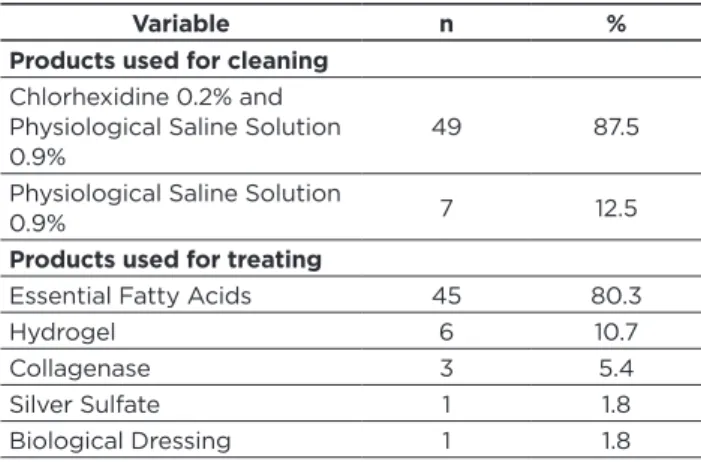
Table 2 displays the products used for cleaning and treating
the subjects’ diabetic foot ulcers.
Table 2 - Products used for cleaning and treating the
diabetic foot ulcers of the patients assisted at a first aid post. Campina Grande city, Paraíba State, 2015.
Variable n %
Products used for cleaning
Chlorhexidine 0.2% and Physiological Saline Solution
0.9% 49 87.5
Physiological Saline Solution
0.9% 7 12.5
Products used for treating
Essential Fatty Acids 45 80.3
Hydrogel 6 10.7
Collagenase 3 5.4
Silver Sulfate 1 1.8
Biological Dressing 1 1.8
DISCUSSION
A predominance of males was observed, this fact may be related to the better health care performed by women, as pointed out by a study carried out in a large municipality in the Brazilian South region.9 It was identified that most practices related to lifestyle changes required to control DM and self-care with the feet in order to prevent ulcerations were more prevalent in females.
About the age, it was observed predominance from 58 and 75 years old, and it is inferred that this finding is due to the aging process of the country. The elderly people show noticeable cellular and extracellular changes, mainly a decline in physiological functions, a decrease in the body’s ability to maintain homeostasis, and organic systems no longer function with full efficiency due to cell and tissue deficits, the results of these alterations imply susceptibility of the elderly to chronic diseases such as DM.10
The research also showed a low level of schooling, which represents an important risk factor, since the low level of education is a strong allied to the development of complications, because it influences the capacity of the individuals to assimilate the knowledge about the disease and the importance given to your control. This data has been evidenced in other studies, such as the study developed in
Minas Gerais State, with factors associated with peripheral
neuropathy in individuals with DM, which pointed out that 18.45% of the subjects were illiterate and 66.01% had primary education incomplete.11
With regards to marital status, the presence of a relationship is considered to be a spousal support for daily tasks and treatment, which is a positive factor. A study that investigates the quality of life of patients living with diabetic foot ulcers12 corroborates the findings and shows that people living alone have a poor quality of life in the physical, psychological, social and environmental domains, if isolated because of their physical limitations.
Concerning the occupational activity, it is verified that the majority is retired, these data are expected, since the majority of the research subjects are elderly. It is also pointed out that due to incapacitating complications arising from diabetic foot ulcers, due to amputations, there are early retirements due to disability.4
Regarding the clinical profile, it was verified that the majority of the subjects of the studies did not present smoking and alcoholic activity. Similar to this is evidenced in a study investigating the prevalence of peripheral neuropathy in diabetics,11 where alcoholism and smoking were observed in 12.62% and 9.71% of the cases, respectively. The same authors point out that smoking is related to decreased sensitivity in lower limbs, since nicotine triggers adrenergic responses that raise glucose values, suppressing insulin production.
It was verified that the majority of the individuals already had some relative diagnosed with DM, with family history mainly related to mother. This is very relevant because first-degree relatives of people with type 2 DM are two to six times more likely to develop the disease than controls without a family history.13
Regarding the DM type, it was observed that the most part show type 2 DM, but also, they live with an ulcer in the lower limbs from 1 to 10 years. The healing time is a relevant factor, because the microorganisms present are determining factors for the infections and long periods for their complete healing, this demands an intensive treatment by the nursing team.4
The assessment and classification of wounds constitutes an important part of the care process, and involves the patient’s physiological and emotional recognition, the cause of wound onset and the wound surroundings.14
Regarding the characterization of the wound site, it was verified that the majority of patients had diabetic foot ulcers in the plantar fascia and amputated hallux. Sites in which diabetic foot ulcers commonly occur include the large toe plantar region, 30%; the head of the first metatarsal (hallux), 22%; the back of the fingers, 13%; the plantar region of other fingers, 10%; heel, 1%.15
In case studies evaluating care management for patients bearing diabetic foot ulcers,14 localized lesions in the plantar fascia were found to occur due to discharge and increased vascular insufficiency in the area.
The exudate is produced by the increase of vascular permeability, being originated from specific reactions of the healing process. The amount of exudate must be controlled in a way that maintains moisture in the wound site. In addition, the reduction of its quantity and the improvement of its type are factors that indicate the evolution of the healing process.16 The fact observed in the lesions of the subjects participating in this study, in which was observed a higher percentage of lesions presenting a quantity of either scarce or moderate exudate and type of serous or hematic exudate.
Serous exudate is related to clean lesions and is characterized by being plasmatic, transparent and aqueous, blood exudate indicates the presence of vascular lesion of the new fragile vessels that are appearing through the healing process.15
A study carried out in a venous ulcer repair clinic showed that 3 (5%) lesions drained purulent exudate, 4 (6%) hematic, 16 (24%) serohematic and 44 (65%) serous. Regarding the quantity, 26 (38.8%) ulcers drained a moderate amount of exudate, 25 (37.3%) drained a small amount and 16 (23.9%) drained a large amount of it.17
When observing the wound site, it was verified the predominance of dead shredded tissue and tissue of granulation. The latter corresponds to an important tissue in the healing process, of reddish coloration, with ample blood irrigation due to angiogenesis.
In case studies,14 the discolored and friable granulation tissue was evidenced at the beginning of the treatment of all the lesions, suggesting the presence of biofilm, still, with the use of an antimicrobial dressing, the granulation tissue was taking the normal staining, indicating an evolution in the healing process.
The presence of necrotic tissue, such as dead shredded tissue or liquefaction necrosis, slows down the healing process and leaves the lesion more susceptible to infection. The process of diagnosis and treatment of an infection involves several factors, such as: history of injury and physical examination, laboratory evaluation, microbiology evaluation and diagnostic imaging. This implies high costs, since most of the time, the treatment is related to hospital admission.18
Cleaning and treatment are important elements in the preparation of the wound site. There is no specific treatment for diabetic foot ulcers, however, the general principles correspond to a dressing that protects the area from trauma and contamination, absorbs the exudate and keeps the wound occluded.19
In cleaning, the main products used were chlorhexidine 0.2% and Physiological Saline Solution 0.9%. The characteristics of an ideal wound cleansing solution are as follows: not to be toxic to human tissues, to maintain viable granulation tissue, to reduce the number of microorganisms, not to cause sensitivity reactions, to be widely available and to be inexpensive.5 Physiological Saline Solution 0.9% fulfills these criteria, it is an isotonic solution, it does not interfere with the normal healing process and does not cause damage to the tissues, so it is even a choice for irrigation.20
With regards to the products used in the treatment, the use of most of the essential fatty acid lesions is observed. This fact can be explained by the fact that the outpatient units of the public health service do not always offer a diversity of products, making nurses to use the available dressing, considering the conditions of the lesion of each patient and always adapting to the nearest ideal.21
A particular study22 shows the efficacy of other products in the treatment of diabetic foot ulcers, such as papain and hydrogel. The first solution consists of a complex mixture of proteolytic enzymes, which causes proteolysis, protein degradation in tissue amino acids, non-vitalization and necrosis, without altering the healthy tissue. Other characteristics of this substance are anti-inflammatory, bacteriostatic and bactericidal capacity. The hydrogel is composed of the association of water, carboxymethylcellulose
and propylene glycol, whose main function is to soften and remove devitalized tissues through autolytic debridement.
It is essential to highlight the relevance of the aspects raised in this study to nursing care, as well as to the scientific community in the area, in order to provide aspects that scientifically support the evaluation and treatment of diabetic foot ulcers. All this aims to minimize the impacts of the lesion already installed.
Pondering about the limitations of this research, unfortunately it was not possible to assess the lesions on more than one occasion, then demonstrating whether they get better or not by considering the treatment applied. It was due to the period scheduled for data collection. Therefore, it is suggested to carry out researches that are able to assess the diabetic foot ulcers in more than one occasion.
CONCLUSIONS
The results reinforce the importance of characterizing/ assessing the lesions in order to choose an effective treatment, which improves the likelihood of reducing the aggravations, such as amputations and consequent impairment of patients’ life quality.
It ought to be underlined that this study points to contributions to the visibility and autonomy of the nursing professional since the same must be emphasized about advances and scientific discoveries, especially regarding the assessment and treatment of wounds.
It is recommended that studies of this nature may be undertaken, since even recognizing the relevance of the prevention of diabetic foot ulcers, there must be a protocol for the adequate treatment of the already installed injury, since the risk of amputation becomes greater, besides having an impairment in the quality of life of the affected patient.
REFERENCES
1. Policarpo NS, Moura JRA, Júnior EBM, Almeida PC, Macêdo SF, Silva ARV. Conhecimento, atitudes e práticas de medidas preventivas sobre pé diabético. Rev Gaúcha Enferm [Internet]. 2014; 35(3):36-42 [acesso em 07 abr 2017]. Available at: http://www.scielo.br/scielo. php?script=sci_arttext&pid=S1983
2. Jiang Y, Ran X, Jia L, Yang C, Wang P, Ma J, et al. Epidemiology of Type 2 Diabetic Foot Problems and Predictive Factors for Amputation in China. Int J Low Extrem Wounds. 2015;8:1-9.
3. Mantovani AM. Parâmetros da marcha, pressões plantares, e equilíbrio corporal de diabéticos neuropatas e vasculopatas, com uso de palmilhas. [dissertação]; Presidente Prudente (SP): Programa de Pós-graduação em Fisioterapia, Universidade Estadual Paulista; 2013. 4. Targino IG; Souza JSO; Santos NMG; Davim RMB, Silva RAS. Fatores relacionados ao desenvolvimento de úlceras em pacientes com Diabetes Mellitus. Rev Fund Care Online. 2016; 8(4):4929-34. 5. Oliveira FP, Oliveira BGRB, Santana RF, Silva BP, Candido JSC.
Classificações de intervenções e resultados de enfermagem em pacientes com feridas: mapeamento cruzado. Rev Gaúcha Enferm. 2016;37(2):e55033.
6. Conselho Federal de Enfermagem. Resolução nº 501/2015. Regulamenta a competência da equipe de enfermagem no cuidado às feridas e dá outras providências. Brasília; 2015.
7. Espírito Santo PF, Almeida AS, Silveira MM, Salomé GM, Ferreira LM. Uso da ferramenta Pressure Ulcer Scale for Healing para avaliar a cicatrização de úlcera crônica de perna. Rev Bras Cirurgia Plástica. [Internet]. 2013; 28(1):133-41 [acesso em 03 de mai de 2017]. Available at: http://www.scielo.br/pdf/rbcp/v28n1/23.pdf
8. Bates-Jensen BM, Nystul SN, Scachetti GG. Prevenção da úlcera por pressão por parte do cuidador domiciliar. In: Malagutti W, Kakihara CT. Curativo, estomias e dermatologia: uma abordagem multiprofissional. São Paulo: Martinari; 2010.
9. Rossaneis MA, Haddad MCFL, Mathias TAF, Marcon SS. Differences in foot self-care and lifestyle between men and women with diabetes mellitus. Rev Latino-am Enferm. 2016;24:e2761. [Access 2017 apr 26]. Available in: http://www.scielo.br/scielo.php?script=sci_ arttext&pid=S0104-11692016000100384
10. Souza SS, Silva JM, Santos MF. Análise do perfil da hipertensão e diabetes no município de Jequié-BA. InterScientia. 2014; 2(1):63-76. 11. Brinati LM, Diogo NAS, Moreira TR, Mendonça ET, Amaro MOF.
Prevalencia e fatores associados a neuropatia periferica em indivíduos com diabetes mellitus. Rev Fund Care Online. 2017; 9(2):347-355. [acesso em 03 mai 2017]. Available at: http://seer.unirio.br/index.php/ cuidadofundamental/article/view/4476/pdf_1
12. Nemcova J, Hlinkova E, Farsky I, Ziakova K, Jarosova D, Zelenıkova R, et al. Quality of life in patients with diabetic foot ulcer in Visegrad countries. Journal of Clinical Nursing2017; 26(9-10):1245-56. 13. Medeiros CCM, Bessa GG, Coura AS, França ISX, Sousa FS.
Prevalência dos fatores de risco para diabetes mellitus de servidores públicos. Rev Eletr Enf. [Internet]. 2012;14(3):559-69. [acesso em 03 mai 2017] Available from: http://www.fen.ufg.br/revista/v14/n3/ v14n3a12.htm
14. Torkington-Stokes R, Metcalf D, Bowler P. Management of diabetic foot ulcers: evaluation of case studies. British Journal of Nursing. 2016; 15 (25): 27-33.
15. Irion GL. Feridas: novas abordagens, manejo clínico e atlas em cores. 2. ed. Rio de Janeiro: Guanabara Koogan; 2012.
16. Ribeiro APL, Oliveira BGRB, Soares MF, Barreto BMF, Futuro DO, Castilho SR. Efetividade Dos Géis De Papaína A 2% E 4% Na Cicatrização De Úlceras Venosas. Rev esc enferm USP [Internet]. 2015; 49(3): 394-400. [cited 2017 apr 28]. Available from: http:// www.scielo.br/scielo.php?script=sci_arttext&pid=S0080-62342015000300394&lng=en.
17. Oliveira BGRB, Nogueira GA, Carvalho MR, Abreu AM. Caracterização dos pacientes com úlcera venosa acompanhados no Ambulatório de Reparo de Feridas. Rev Eletr Enf. [Internet]. 2012 ;14(1):156-63. [acesso em 03 mai 2017] Available at: http://www.fen. ufg.br/revista/v14/n1/v14n1a18.htm
18. Hobizal KB, Wukich, DK. Diabetic foot infections: current concept review. Diabet Foot Ankle. 2012; 3: 10.3402/dfa.v3i0.18409.
19. Holt P. Assessment and management of patients with diabetic foot ulcers. Nursing Standard. 2013; 27(27): 49-55.
20. Queirós P, Santos E, Apóstolo J, Cardoso D, Cunha M, Rodrigues M. The effectiveness of cleansing solutions for wound treatment: a systematic review protocol. JBI Database of Systematic Reviews & Implementation Reports. 2013;11(5):169-81.
21. Oliveira IC, Veríssimo RCSS, Bastos MLA, Lúcio IML. A frequência dos diagnósticos de enfermagem em pacientes com feridas. Rev enferm UFPE on line. 2014;8(7):1937-46.
22. Aguiar Jr AC, Isaac C, Nicolosi JT, Medeiros MMM, Paggiaro AO, Gemperli R. Análise do atendimento clínico de portadores de úlceras crônicas em membros inferiores. Rev Bras Cir Plást. 2015;30(2):258-63.
Recebido em: 26/05/2017 Revisões requeridas: Não houve Aprovado em: 12/07/2017 Publicado em:xx/01/2019
Autora responsável pela correspondência:
Lidiane Lima de Andrade Sítio Olho D’Água da Bica, s/n Cuité, Paraíba, Brasil CEP: 58.175-000