Adsorption of microcystins and anatoxin-a on nanofiltration membranes
Margarida Ribau Teixeira
a*and Maria João Rosa
ba
CENSE and Faculty of Sciences and Technology, University of Algarve, building 7, Campus de Gambelas, 8005-139 Faro, Portugal
b
Urban Water Division, Department of Hydraulics and Environment, LNEC - National Laboratory for Civil Engineering, Av. Brasil 101, 1700-066 Lisboa, Portugal
Summary
This work pretends to study the adsorption of microcystin-LR (MC-LR) and anatoxin-a (ATX-a) on nanofiltration membranes and to understand the adsorption behaviour with the solution chemistry (background natural organic matter (NOM) and in the presence of ATX-a). Results demonstrate that MC-LR adsorption increases with water recovery due to the increase in MC-LR feed concentration. MC-LR adsorption is governed by hydrophobic interactions established between the membrane surface and the MC-LR molecules, and between the MC-LR molecules. For ATX-a, adsorption onto the membrane surface is governed by electrostatic attractions and the background NOM minimises the ATX adsorption. When ATX-a and MC-LR are both present in water, adsorption is higher for ATX-a than for MC-LR and is higher at pH 4 for both cyanotoxins.
Introduction
Cyantoxins produced by cyanobacterial blooms have been extensively found in water reservoirs used for drinking water abstraction. Cyanobacteria may produce a wide range of toxins including the cyclic peptide hepatotoxins, such as microcystins (800-1100 Da, hydrophobic, negatively charged), and the alkaloid neurotoxins like anatoxin-a (166 Da, hydrophilic, positively charged) (Carmichael, 1994)). Microcystins (MC) are therefore of great concern due to acute and sublethal toxicity and anatoxin-a (ATX-a) due to chronic toxicity (Sivonnen and Jones, 1999).
To reduce the public health risk associated with drinking water consumption of these waters several technologies for water treatment have been studied. Among them, nanofiltration (NF) had proved its efficiency to remove microcystins (mainly by steric hindrance) and anatoxin-a (by electrostatic interactions and steric hindrance), producing a final water of superior quality, regardless of the variations in feed water quality (pH, calcium hardness, natural organic matter, toxins) and water recovery rate (up to 90%) (Ribau Teixeira and Rosa, 2005; Ribau Teixeira and Rosa, 2006a; Ribau Teixeira and Rosa, 2006b). However, it was proposed that MCs may foul the NF membrane by adsorbing onto its surface (Ribau Teixeira and Rosa, 2005). Therefore, this work aims to study the adsorption of MC-LR (the most commonly found variant of microcystins) and anatoxin-a on nanofiltration membranes and to understand the adsorption behaviour with the solution chemistry, namely, with the background natural organic matter (NOM) and in the presence of ATX-a. If adsorption is well understood, one may improve the NF effectiveness (cyanotoxin retention) and efficiency (permeation flux) for treating cyanotoxin-rich waters.
Membrane fouling can be classified as (ir)reversible deposition of retained compounds on (pores) or in (surface) of the membranes, which includes adsorption, pore blocking, precipitation and cake formation (Mulder, 1997). Fouling results in flux decline with time and it is governed by chemical and physical
(hydrodynamic) interactions (Hong and Elimelech, 1997; Seidel and Elimelech, 2002). It is widely consensus that NOM is one of the major membrane foulants (Cho et al., 2000; Hong and Elimelech, 1997; Schäfer et al., 2004). However, other membrane foulants exist like organic micropollutants (Nghiem and Hawkes, 2007), cyanobacterial metabolites (Dixon et al., 2011), cyanotoxins which may result in different membrane removal due to different membrane/solute interactions.
Material and Methods
Experimental set-up
This study is based on the protocol and experimental set-up presented elsewhere (Ribau Teixeira, Rosa (2005), Ribau Teixeira, Rosa (2006b), Ribau Teixeira, Rosa (2006a)). A thin film composite membrane was used (NFT50, Alfa Laval), made of polypiperazine amide and with a hydraulic permeability of 5.9 kg/(h.m2.bar) at 25ºC, a molar mass cut-off of 150 Da and an isoelectric point (i.e.p.) of 5-6 in the presence of calcium ions (Ribau Teixeira, Rosa (2005)). Different background NOM contents were investigated by supplementing MC-LR and/or ATX-a to: (i) decanted water (DW) (after ozonation/ coagulation/ flocculation/ sedimentation) from a water treatment plant in Portugal; (ii) DW amended with NOM model substances, namely salicylic acid (SA) and purified Aldrich humic acid (AHA) and (iii) model electrolyte of equivalent hardness (1 mM KCl + 1 mM CaCl2) and with no background NOM.
NF concentration runs were performed up to 91% water recovery rate (WRR) at 10 bar as described in Ribau Teixeira, Rosa (2005), 25ºC and 965 Re number. The adsorption at each WRR was computed by mass balance (equation_1), where Mass0 is the initial mass in the feed solution (before the trials started) (i.e.
the total available for adsorption), MassB is the mass in the feed for 91% WRR (the last WRR) and Massi is
the mass in the permeate solution at a given WRR.
100 * Mass Mass Mass Mass (%) Adsorption 0 91% WRR 0% WRR i i B 0 − − =
∑
= _1Cyanotoxins, NOM and Chemicals
Microcystins were extracted from a culture of Microcystis aeruginosa supplied by Pasteur Culture Collection (PCC7820) and maintained in laboratory. The experimental procedures to extract microcystins from cultures, to prepare the microcystins stock solution and solutions for NF experiments were already described in Ribau Teixeira and Rosa (2005), which followed the standard operating procedure developed by Meriluoto and Spoof (2005b). Anatoxin-a used in this study was a pure reagent kindly supplied by G.A.
Codd and J. Metcalf (University of Dundee, UK) within the TOXIC European Project, “Barriers against cyanotoxins in drinking water”.
Decanted water (DW) (collected after ozonation, coagulation (with a pre-polymerised coagulant of high basicity), flocculation and sedimentation) from Water Treatment Plants (WTP), Algarve, Portugal, was the natural water used in these experiments. This water is moderately hard (95 - 112 mg CaCO3/L) with low
NOM content (DOC: 2.3 – 2.6 mgC/L) and hydrophilic NOM (SUVA: < 1 (L/(m.mgC)).
Salicylic acid (SA) and Aldrich humic acid (AHA) were the NOM model substances used to spike the DW. The salicylic acid is a certified analytical grade from Merck (>99.0% purity) with a low molar mass (138.12 g/mol) and was used without any purification. AHA was purified through a repeated precipitation with HCl as described by Hong and Elimelech (1997) and already presented in Ribau Teixeira and Rosa (2006).
Deionised water (DI) was used for the preparation of all stock solutions. Certified analytical grade potassium chloride (KCl) and calcium chloride (CaCl2) salts were used. HCl and KOH were used for
adjusting the solution pH.
Analytical Methods
Samples were analysed for pH (at 25ºC, using a Whatman WTW pH340 meter), conductivity (Crison GLP32 conductimeter), dissolved organic carbon (DOC) (Shimadzu TOC 5000A analyser, 50 ppb – 4000 ppm), UV245nm absorbance (Beckman DU-640B UV/VIS spectrophotometer) and turbidity (HACH 2100N
turbidity meter of high resolution, 0.001 NTU) using standard methods of analysis. Prior to DOC and UV254nm
measurements, samples were filtered through 0.45 µm acrodisk filters. The permeate fluxes were determined by weight (analytical balance Shimadzu, model BX 620S).
The extraction of microcystins from the water samples was already described in Ribau Teixeira and Rosa (2005), and followed the standard operating procedure developed by Meriluoto and Spoof (2005b). ATX-a followed the standard operating procedure developed by Metcalf and Codd (2005b).
Anatoxin-a and microcystins were analysed by liquid chromatography using a Dionex HPLC/PDA Summit system, which includes a high pressure gradient pump (Dionex Summit), an autosampler (ASI-100), a column oven (STH-585) and a photo diode-array detector (PDA-100). A C18 column was used (Merck Purospher STAR RP-18 endcapped, 3 µm particles, LiChroCART 55x4 mm). The mobile phase used a gradient of milli-Q water and acetonitrile, both with 0.05% (v/v) of trifluoracetic acid. Chromatograms were analysed between 180 - 900 nm, with a main detection at 230 nm for the typical anatoxin-a spectra (Metcalf and Codd (2005a)) and at 238 nm for microcystins (Meriluoto and Spoof (2005a)). The quantification limits were 0.13 µg/L for ATX-a and 0.29-0.36 µg/L for microcystins.
Results and Discussion
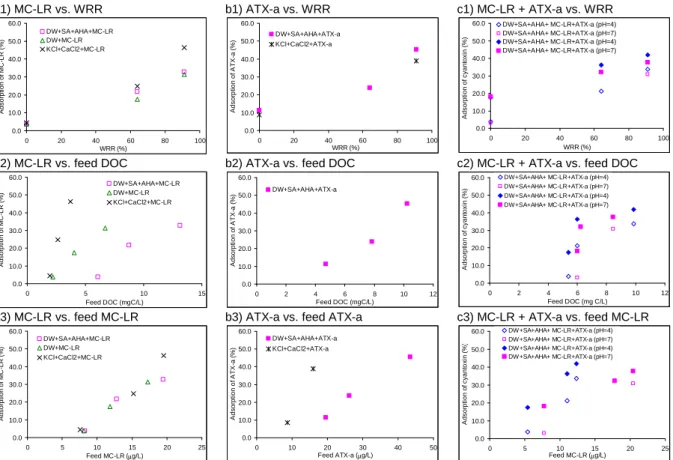
Figure 1 shows the NF adsorption results of MC-LR and ATX-a under the different solution chemistries investigated.
a1) MC-LR vs. WRR b1) ATX-a vs. WRR c1) MC-LR + ATX-a vs. WRR
0.0 10.0 20.0 30.0 40.0 50.0 60.0 0 20 40 60 80 100 WRR (%) A d s o rp ti o n o f M C -L R ( % ) DW+SA+AHA+MC-LR DW+MC-LR KCl+CaCl2+MC-LR 0.0 10.0 20.0 30.0 40.0 50.0 60.0 0 20 40 60 80 100 WRR (%) A d s o rp ti o n o f A T X -a ( % ) DW+SA+AHA+ATX-a KCl+CaCl2+ATX-a 0.0 10.0 20.0 30.0 40.0 50.0 60.0 0 20 40 60 80 100 WRR (%) A d s o rp ti o n o f c y a n to x in ( % ) DW+SA+AHA+ MC-LR+ATX-a (pH=4) DW+SA+AHA+ MC-LR+ATX-a (pH=7) DW+SA+AHA+ MC-LR+ATX-a (pH=4) DW+SA+AHA+ MC-LR+ATX-a (pH=7)
a2) MC-LR vs. feed DOC b2) ATX-a vs. feed DOC c2) MC-LR + ATX-a vs. feed DOC
0.0 10.0 20.0 30.0 40.0 50.0 60.0 0 5 10 15 Feed DOC (mgC/L) A d s o rp ti o n o f M C -L R ( % ) DW+SA+AHA+MC-LR DW+MC-LR KCl+CaCl2+MC-LR 0.0 10.0 20.0 30.0 40.0 50.0 60.0 0 2 4 6 8 10 12 Feed DOC (mgC/L) A d s o rp ti o n o f A T X -a ( % ) DW+SA+AHA+ATX-a 0.0 10.0 20.0 30.0 40.0 50.0 60.0 0 2 4 6 8 10 12 Feed DOC (mg C/L) A d s o rp ti o n o f c y a n to x in ( % ) DW+SA+AHA+ MC-LR+ATX-a (pH=4) DW+SA+AHA+ MC-LR+ATX-a (pH=7) DW+SA+AHA+ MC-LR+ATX-a (pH=4) DW+SA+AHA+ MC-LR+ATX-a (pH=7)
a3) MC-LR vs. feed MC-LR b3) ATX-a vs. feed ATX-a c3) MC-LR + ATX-a vs. feed MC-LR
0.0 10.0 20.0 30.0 40.0 50.0 60.0 0 5 10 15 20 25 Feed MC-LR (µg/L) A d s o rp ti o n o f M C -L R ( % ) DW+SA+AHA+MC-LR DW+MC-LR KCl+CaCl2+MC-LR 0.0 10.0 20.0 30.0 40.0 50.0 60.0 0 10 20 30 40 50 Feed ATX-a (µg/L) A d s o rp ti o n o f A T X -a ( % ) DW+SA+AHA+ATX-a KCl+CaCl2+ATX-a 0.0 10.0 20.0 30.0 40.0 50.0 60.0 0 5 10 15 20 25 Feed MC-LR (µg/L) A d s o rp ti o n o f c y a n to x in ( % ) DW+SA+AHA+ MC-LR+ATX-a (pH=4) DW+SA+AHA+ MC-LR+ATX-a (pH=7) DW+SA+AHA+ MC-LR+ATX-a (pH=4) DW+SA+AHA+ MC-LR+ATX-a (pH=7)
Fig. 1. Adsorption of MC-LR (a), ATX-a (b), and MC-LR+ATX-a (c) (empty symbols: MC-LR; full symbols: ATX-a)
The results indicate that MC-LR adsorption increases with WRR (Fig. a1) due to the increase in MC-LR feed concentration (Fig. a3) rather than by the DOC feed concentration (Fig. a2). This trend demonstrates the strong adsorption behaviour of microcystins, whose feed concentration linearly correlates with its adsorption on the membrane surface (Fig. a3). During the experiments with DW (pH 7, with or without NOM model compounds), MC-LR adsorption is governed by hydrophobic interactions established between the membrane surface (negatively charged at pH > 6) and the MC-LR molecules (hydrophobic, with net charge of -1) and between the MC-LR molecules. KCl+CaCl2+MC-LR experiments were made at pH 6, so the
membrane was neutral to weakly negatively charged and therefore the membrane – MC-LR electrostatic repulsions were minimized and MC-LR adsorption promoted.
Regarding ATX-a, results also show an increase of toxin adsorption with WRR (Fig. b1) related with the increase in ATX-a feed concentration. ATX-a is a small, hydrophilic and positively charged solute, so its adsorption onto the membrane surface (negatively charged in the presence of DW and neutral to weakly
negatively charged with the electrolyte) is governed by electrostatic attractions. For the same feed concentration, ATX-a adsorption on the membrane surface should therefore be higher in the presence of DW than in the electrolyte solution. Fig. b3 shows that this was not however the case, which indicates that the background NOM plays a role in the minimization of the ATX adsorption.
When ATX-a and MC-LR are both present in water (as it may occur in a real bloom), adsorption is higher for ATX-a than for MC-LR and is higher at pH 4 for both cyanotoxins. As the pH increases, the membrane surface and pores become both more negatively charged and as a result the pore size of the membrane is reduced and adopt and extended conformation. Furthermore, at basic pH the humic substances adopt an extended configuration and the sieving effects are stronger and the repulsive forces between the membrane surface and the NOM could prevent the LR from adhering onto the membrane surface, reducing the MC-LR adsorption (Fig. 1c). ATX-a is positively charged and MC-MC-LR negatively charge, therefore attraction between the membrane surface and toxin are stronger for ATX-a.
References
Carmichael WW. The toxins of cyanobacteria. Scientific American 1994; 270: 78-86.
Cho J, Amy G, Pellegrino J. Membrane filtration of natural organic matter: comparison of flux decline, NOM rejection, and foulants during filtration with three UF membranes. Desalination 2000; 127: 283-298. Dixon MB, Falconet C, Ho L, Chow CWK, O'Neill BK, Newcombe G. Removal of cyanobacteril metabolites
by nanofiltration from two treated waters. Journal of Hazardous Materials 2011; 188: 288-295. Hong S, Elimelech M. Chemical and physical aspects of natural organic matter (NOM) fouling of
nanofiltration membranes. Journal of Membrane Science 1997; 132: 159-181. Mulder M. Netherlands.: Kluwer Academic Publishers., 1997.
Nghiem LD, Hawkes S. Effects of membrane fouling on the nanofiltration of pharmaceutically active compounds (PhACs): Mechanisms and role of membrane pore size. Separation and Purification Technology 2007; 57: 176-184.
Ribau Teixeira M, Rosa MJ. Microcystins removal by nanofiltration membrane. Separation and Purification Technology 2005; 46: 192-201.
Ribau Teixeira M, Rosa MJ. Integration of the dissolved gas flotation and nanofiltration treatment processes for M. aeruginosa and microcystins removal. Water Research 2006a; 40: 3612-3620.
Ribau Teixeira M, Rosa MJ. Neurotoxic and hepatotoxic cyanotoxins removal by nanofiltration. Water Research 2006b; 40: 2837-2846.
Schäfer AI, Pihlajamäki A, Fane AG, Waite TD, Nyström M. Natural organic matter removal by nanofiltration: effects of solution chemistry on retention of low molar mass acids versus bulk organic matter. Journal of Membrane Science 2004; 242: 73-85.
Seidel A, Elimelech M. Coupling between chemical and physical interactions in natural organic matter (NOM) fouling of nanofiltration membranes: implications for fouling control. Journal of Membrane Science 2002; 203: 245-255.
Sivonnen K, Jones G. Cyanobacterial toxins. In: Bartram ICaJ, editor. Toxic cyanobacteria in water. A guide to their public health consequences, monitoring and management. E & FN SPON, London and New York, 1999, pp. 41-91.