IJCCI 2009
Proceedings of the
International Joint Conference on
Computational Intelligence
Funchal - Madeira, Portugal
October 5 - 7, 2009
Sponsored by
INSTICC – Institute for Systems and Technologies of Information, Control
and Communication
ARTIFICIAL NEURAL NETWORK MODEL APPLIED
TO A PEM FUEL CELL
D. S. Falcão1, J. C. M. Pires2, C. Pinho1, A. M. F. R. Pinto1 and F. G. Martins2 1
CEFT - Centro de Estudos de Fenómenos de Transporte
2
LEPAE - Laboratório de Engenharia de Processos, Ambiente e Energia
Faculdade de Engenharia da Universidade do Porto, Rua Dr. Roberto Frias, s/n, 4200-465 Porto, Portugal [email protected], [email protected], [email protected], [email protected], [email protected]
Keywords: Artificial neural networks (ANN), Proton Exchange Membrane Fuel Cell (PEMFC), Modelling.
Abstract: This study proposes the simulation of PEM fuel cell polarization curves using artificial neural networks (ANN). Fuel cell performance can be affected by numerous parameters, namely, reactants pressure, humidification temperature, stoichiometric flow ratios and fuel cell temperature. In this work, the influence of relative humidity (RH) of the gases, as well as gases and fuel cell temperatures was studied. A feedforward ANN with three layers was applied to predict the influence of those parameters, simulating the voltage of a fuel cell of 25 cm2 area.Different ANN models were tested, varying the number of neurons in the hidden layer (1 to 6). The model performance was evaluated using the Pearson correlation coefficient (R) and the index of agreement of the second order (d2). The results showed that feedforward ANN can be
used with success in order to obtain the optimal operating conditions to improve PEM fuel cell performance.
1
INTRODUCTION
Fuel cells are an innovative alternative to current power sources with potential to achieve higher
conversion efficiencies thus reducing the
environmental impact. In particular, the proton-exchange membrane (PEM) fuel cells are today in the focus of interest as one of the most promising developments in power generation with a wide range of applications in transportation and in portable electronics. Although prototypes of fuel cell vehicles and residential fuel cell systems have already been introduced, their cost must be reduced and their efficiencies enhanced.
To achieve optimal fuel cell performance, it is critical to have an adequate water balance to ensure that the membrane remains hydrated for sufficient proton conductivity, while cathode flooding and anode dehydration are avoided (Baschuk and Li, 2000; Biyikoglu, 2005). Water content of the membrane is determined by the balance between water production and three water transport processes: electro-osmotic drag of water (EOD), associated with proton migration through the membrane; back diffusion from the cathode; and diffusion of water to/from the oxidant/fuel gas streams. Understanding the water transport in the
PEM is a guide for materials optimization and
developments of new Membrane Electrode
Assemblies (MEA’s).
Mathematical modelling and simulation are needed as tools for design optimization of fuel cells. In this work, the effect of anode/cathode relative humidity, reactants temperatures and fuel cell temperature on the performance of a PEMFC with multiserpentine flow channels is studied and the results are compared to the predictions of an artificial neural networks (ANN) based model. ANN is a statistical model that is applied in different fields, such as, process control, optimization, medical diagnosis, decision making, signal and speech processing (Gupta and Achenie, 2007; Nagy, 2007; Uncini, 2003). ANN models are characterized by a set of processing neurons with an activation function that are distributed in layers (input, hidden and output layers). One of the problems of the training step is the overfitting. A high number of iterations lead to decrease the error in the training set, but the achieved model presents a large error when applied to a new set. A method often applied to solve this problem is the early stopping (Nguyen et al., 2005; Özesmi et al., 2006). Using this method, the data should be divided into three sets (Chiang et al., 2004): (i) the training set, used to determine the
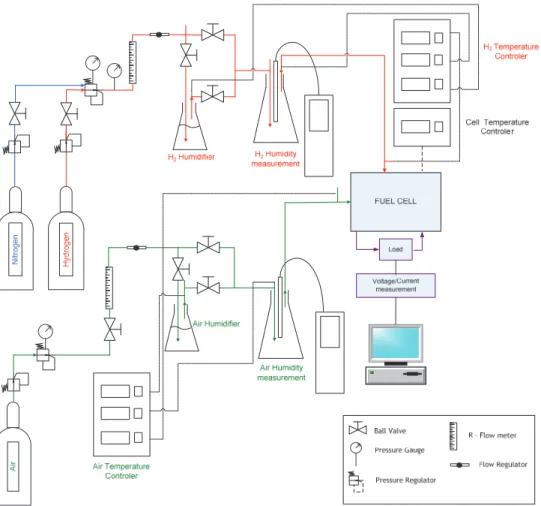
Figure 1: Schematic representation of the experimental set-up.
model parameters; (ii) the validation set, used to evaluate the performance of ANN model during the training step and to stop it when the validation error starts to increase; and (iii) the test set, used to evaluate the ANN performance when applied to a new set. Some studies applying ANN models to fuel cells can be found in recent literature (Ogaji et al., 2006; Saengrung et al., 2007; Ou and Achenie, 2005). Ogaji et al. (2006) applied these models to simulate the performance of solid oxide fuel cells ANN presented great accuracy. Saengrung et al. (2007) tried to predict the performance of a commercial proton exchange membrane using two ANN models. Both models presented successful predictions of the stack voltage and current of the fuel cell. Ou and Achenie (2005) compared the performance of ANN and two hybrid models for predicting the voltage of proton exchange membrane
fuel cells. The models presented similar
performance.
The scope of this work is the application of an ANN model to predict fuel cells polarization curves
and verify the feasibility of this application.
2
EXPERIMENTAL SYSTEM
A schematic drawing of the experimental apparatus used in this work is shown in Figure 1
Pure hydrogen (humidified or dry) as fuel and air (humidified or dry) as oxidant are used. The pressure of the gases is controlled by pressure regulators
(Air- Norgreen 11400, H2 - Europneumaq mod.
44-2262-241) and the flow rates are controlled by flow meters (KDG – Mobrey).
The reactants humidity and temperatures are monitored by adequate humidity and temperature
probes (Air – Testo, H2 – Vaisala). The
humidification of air and hydrogen gases is conducted in Erlenmeyer flasks by a simple bubbling process. To control the humidification temperature, each Erlenmeyer flask is thermally isolated and surrounded by an electrical resistance (50 W/m) activated by a Osaka OK 31 digital
temperature controller. The same procedure is applied along the connecting pipes from the humidification point up to the entrance of the fuel cells to guarantee the temperature stabilization of each reacting gas flow, as well as to control the operating temperature of the fuel cell. For the measurement and control of the cell electrical output, an electric load reference LD300 300W DC Electronic Load from TTI is used. This device could work with five different operating modes:
- Constant current – two possibilities were available, 0 to 8 A (with 1 mA resolution) and 0 to
80 A (10 mA resolution), with a precision of r0.2
%+20 mA;
- Constant voltage – two possibilities were available, Vmin up to 8 V (1 mA resolution) and Vmin up to 80 V (10 mA resolution (were V min is 10 mV for low power situation and 2 V for 80 A).
Precision is r0.2 %+2 digits;
- Constant power – the available power range goes from 0 till 320 W, with a precision of 0.5 %+2 W;
- Constant conductance - operating range from 0.01 up to 1 A/V (1 A/V resolution) and from 0.2 up to 40 A/V (resolution of 0.01 A/V) with a precision of 0.5 %+2 digits;
- Constant resistance – operating range from 0.04
up to 10 : (0.01 : resolution) and from 2 to 40 :
(with 0.1 : resolution) with a precision of 0.5 %+2
digits.
This load was connected to a data acquisition system composed by Measurement Computing boards installed in a desktop computer. The used data acquisition software was DASYLab.
In the present work, all the components of the PEMFC were “in house” designed, with exception of the MEA. A Dupont Nafion 111 MEA with 25
cm2 active surface area is used. The channels
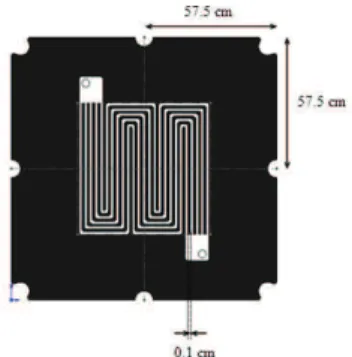
configuration used for the anode and cathode flow channels (multiserpentine design) is represented in Figure 2. Channels depth is 0.6 mm for anode side and 1.5 mm for cathode side.
Figure 2: Flow channels configuration and dimensions.
3
ANN MODEL
In this study, a feedforward ANN with three layers was applied to predict the voltage (V) of a PEM fuel cell. The input variables (see Figure 3) were: Anode
Relative Humidity (RHa), Cathode Relative
Humidity (RHc), Anode flow rate Temperature (Ta),
Cathode flow rate Temperature (Tc), Cell
Temperature (Tcell) and Current Density (CD). Hyperbolic tangent and linear functions were used as activation functions in hidden and output neurons, respectively. The objective function was the minimization of the mean squared error of the training data. The early stopping method was applied and the data was divided into three sets (training – 124 data points; validation – 25 data points; and test – 38 data points). Different ANN models were tested, varying the number of neurons in the hidden layer (1 to 6). For each structure, 100 runs were performed. The best ANN model corresponded to the minimum error in the training and validation data. The model performance was evaluated using the Pearson correlation coefficient (R) and the index of agreement of the second order
(d2) (Sousa et al., 2007).
Figure 3: ANN structure for fuel cell electric voltage modelling.
4
RESULTS
In this work, the influences of gases relative humidity and temperature and cell temperature were studied. Additionally, several ANN models were tested to predict the voltage using some experimental conditions. The early stopping
methodology was applied to improve the
generalization of the ANN models obtained. The data were divided into three sets: training, validation and test. Training and validation sets were used to determine the ANN model parameters. The test set was used to evaluate the performance of ANN model when applied to a new set (not influencing the determination of the model parameters). The best
ARTIFICIAL NEURAL NETWORK MODEL APPLIED TO A PEM FUEL CELL
model, containing 6 hidden neurons, adjusts very well experimental results, as can be seen in Figures 4 to 8. Accordingly, the performance indexes obtained by this statistical model are presented in Table 1. The values showed that the achieved ANN model is good for predictive purposes.
Table 1: Performance indexes (R and d2) in training,
validation and test sets.
Set Training Validation Test
R 0.99 0.99 0.91
d2 1.00 1.00 0.96
Figures 6 and 8 with a Tcell of 333 K and Figure 7 with a Tcell of 313 K show the performance of the model in test set. The remaining figures show the performance in the training and validation sets.
4.1 Influence of the Relative Humidity
of Reactants Gases
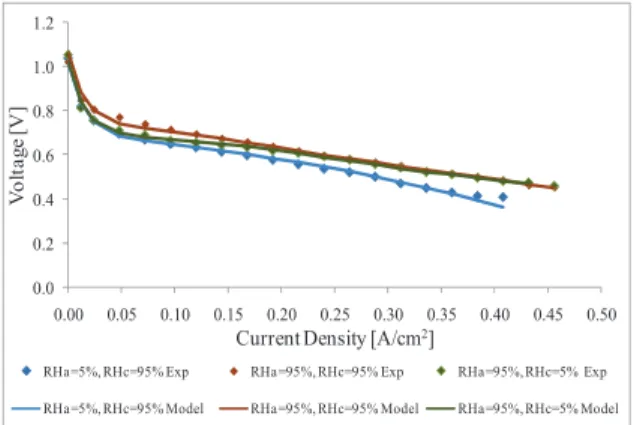
To study the influence of gases RH, three experiments were done: two with only the anode or cathode stream humidified and another with both gases streams humidified. As can be seen in Fig. 4, the best fuel cell performance was achieved when both streams were humidified. Relatively to the other two experiments, best results were obtained when just the anode stream was humidified. In fact, the water production occurs at the cathode side. So, for these operating conditions, the cathode humidification is dispensable.
Figure 4: Experimental and modelling data for dry anode or cathode and for both gases humidified, for gases and cell temperatures of 298 K.
4.2 Influence of Cell Temperature and
Reactant Gases Temperature
The influence of cell temperature was studied for
two gases humidification temperatures: 298 K and 333 K and the influence of gases temperature for two cell temperatures: 298 K and 333 K. Fig. 5, 6, 7 and 8 show that the best performance was achieved when the cell temperature is the same as the reactant gases temperature. So, for all experiments, better results were obtained for a cell temperature/gases temperature of 298 K and 333 K. If the cell temperature is higher than the gases temperature, the membrane will dry and the proton conductivity is severely affected. If the cell temperature is lower than the gases temperature, the membrane will flood. Excessive water amounts filling the pores inhibit the access to active sites and block the transport of gaseous reactants and products.
Figure 5: Experimental and modelling data for different cell temperatures, for fully humidified gases at 298 K.
Figure 6: Experimental and modelling data for different cell temperatures, for fully humidified gases at 333 K.
Curiously, in Figures 6 and 7, for lower current densities, better results are obtained for Tcell/gases temperature of 313 K. For lower current densities, the water production in the cathode is lower and, so, the introduction of more water improves the cell performance. 0.0 0.2 0.4 0.6 0.8 1.0 1.2 0.00 0.05 0.10 0.15 0.20 0.25 0.30 0.35 0.40 0.45 0.50 V o lt a g e [V ]
Current Density [A/cm2]
RHa=5%, RHc=95% Exp RHa =95%, RHc=95% Exp RHa =95%, RHc=5% Exp RHa=5%, RHc=95% Model RHa =95%, RHc=95% Model RHa =95%, RHc=5% Model
0.0 0.2 0.4 0.6 0.8 1.0 1.2 1.4 0.00 0.05 0.10 0.15 0.20 0.25 0.30 0.35 0.40 0.45 0.50 V o lt a g e [ V ]
Current Density [A/cm2]
Tcell=298 K Exp Tcell=313 K Exp Tcell=333 K Exp Tcell=298 K Model Tcell=313 K Model Tcell=333 K Model
0.0 0.2 0.4 0.6 0.8 1.0 1.2 0.00 0.05 0.10 0.15 0.20 0.25 0.30 0.35 0.40 0.45 0.50 V o lt a g e [ V ]
Current Density [A/cm2]
Tcell=298 K Exp Tcell=313 K Exp Tcell=333 K Exp Tcell=298 K Model Tcell=313 K Model Tcell=333 K Model
Figure 7: Experimental and modelling data for different gases temperatures (fully humidified), for a cell temperature of 298 K.
Figure 8: Experimental and modelling data for different gases temperatures (fully humidified), for a cell temperature of 333 K.
5
CONCLUSIONS
The effect of the relative humidity of the gases, and of the temperature of the reactant gases and cell on fuel cell performance was studied. It was concluded that the fuel cell works better with both anode and cathode humidified and that the temperature of the gases and of the fuel cell should be the same. The model developed in this work predicts very well the experimental results. This kind of models could be used with success for quick predictions of fuel cell behaviour.
ACKNOWLEDGEMENTS
The partial support of “Fundação para a Ciência e Tecnologia - Portugal” through project POCI/
EME/55497/2004 and scholarships SFRH/
BD/28166/2006 and SFRH/BD/23302/2005 is
gratefully acknowledged.
REFERENCES
Baschuk, J..J. and Li, X., 2000, Modeling of polymer
electrolyte membrane fuel cells with variable degrees of water flooding, J. of Power Sources, Vol. 86, pp.
181-195.
Biyikoglu, A., 2005, Review of proton exchange fuel cell
models, International Journal of Hydrogen Energy,
Vol. 30, pp. 1185-1212.
Chiang, Y.M., Chang, L.C., Chang, F.J.,2004.
Comparison of static-feedforward and dynamic-feedback neural networks for rainfall–runoff modelling. Journal of Hydrology 290 (3-4), 297-311.
Gupta, R.R., Achenie, L.E.K., 2007. A network model for
gene regulation. Computers & Chemical Engineering
31 (8), 950-961.
Nagy, Z.K., 2007. Model based control of a yeast
fermentation bioreactor using optimally designed artificial neural networks. Chemical Engineering
Journal 127 (1-3), 95-109.
Nguyen, M.H., Abbass, H.A., McKay, R.I., 2005.
Stopping criteria for ensemble of evolutionary artificial neural networks. Applied Soft Computing 6
(1), 100-107.
Ogaji, S.O.T., Singh, R., Pilidis, P., Diacakis, M., 2006.
Modelling fuel cell performance using artificial intelligence. Journal of Power Sources 154 (1),
192-197.
Ou, S., Achenie, L.E.K., 2005. A hybrid neural network
model for PEM fuel cells. Journal of Power Sources
140 (2), 319-330.
Özesmi, S.L., Tan, C.O., Özesmi, U., 2006.
Methodological issues in building, training, and testing artificial neural networks in ecological applications. Ecological Modelling 195 (1-2), 83-93.
Saengrung, A., Abtahi, A., Zilouchian, A., 2007. Neural
network model for a commercial PEM fuel cell system.
Journal of Power Sources 172(2), 749-759.
Sousa, S.I.V., Martins, F.G., Alvim-Ferraz, M.C.M., Pereira, M.C., 2007. Multiple linear regression and
artificial neural networks based on principal components to predict ozone concentrations.
Environmental Modelling & Software 22 (1), 97-103. Uncini, A., 2003. Audio signal processing by neural
networks. Neurocomputing 55 (3-4), 593-625. 0.0 0.2 0.4 0.6 0.8 1.0 1.2 0.00 0.05 0.10 0.15 0.20 0.25 0.30 0.35 0.40 0.45 0.50 V o lt a g e [ V ]
Current Density [A/cm2]
Tgases=298 K Exp Tgases=313 K Exp Tgases=333 K Exp Tgases=298 K Model Tgases=313 K Model Tgases=333 K Model
0.0 0.2 0.4 0.6 0.8 1.0 1.2 0.00 0.05 0.10 0.15 0.20 0.25 0.30 0.35 0.40 0.45 0.50 V o lt a g e [ V ]
Current Density [A/cm2] Tgases=298 K Exp Tgases=313 K Exp Tgases=333 K Exp Tgases=298 K Model Tgases=313 K Model Tgases=333 K Model
ARTIFICIAL NEURAL NETWORK MODEL APPLIED TO A PEM FUEL CELL