1 artigo 420
UpdAtiNg ArticlE
The authors declare that there was no conflict of interest in conducting this work 1 – Associate Professor, University of São Paulo Medical School
2 – PhD in Medicine. Attending Physician in the Geriatrics Service, IOT/HC/FMUSP 3 – Geriatrician and Trainee in the Geriatrics Service, IOT/HC/FMUSP
Work performed in the Medical Investigation Laboratory for the Musculoskeletal System (LIM41), Department of Orthopedics and Traumatology, University of São Paulo Medical School.
Correspondence: Serviço de Infectologista do Instituto de Ortopedia e Traumatologia do HC/FMUSP - Rua Dr. Ovídio Pires de Campos, 333 – 3ºandar – Cerqueira Cesar – 05403-010 - São Paulo, SP. E-mail: [email protected]
Work received for publication: September 27, 2010; accepted for publication: December 23, 2010.
OrthOpedic surgery amOng the elderly:
clinical characteristics
Luiz Eugênio Garcez Leme1, Maria do Carmo Sitta2, Manuella Toledo3, Simone da Silva Henriques3
iNtrOdUctiON
Orthopedic surgery is becoming more frequent and more complex. The technical development of prostheses, anesthetic equipment and technology and perioperative controls, added to the age group chan-ges among the population have been transforming something that was exceptional until a few years ago into routine practice: large-scale orthopedic surgery on elderly patients.
The particular preoperative clinical condition may vary according to the type of condition presented by the patient. Patients assessed in a consultation office or outpatient clinic in preparation for elective sur-gery, even involving large-scale procedures such as total hip or knee prostheses, cannot be compared with those who are attended in walk-in services, under conditions requiring emergency surgery following fracture or trauma.
Notwithstanding these differences, the major clini-cal factors of perioperative complications are
appro-ximately the same, and identifying and treating them
is one of clinicians’ most important tasks(1,2). Care
in identifying and controlling preexisting individual organic limitations and care regarding the possibilities of deep vein thrombosis, pulmonary embolism, car-diological complications, respiratory complications, indications for and risks of blood transfusion, infec-tions, delirium and dementia should always accom-pany the clinical attention that is provided for elderly patients perioperatively(3-5).
Preexisting functional limitations
Progressive functional loss occurs in various organic
systems and goes on accumulating over the years(6,5).
Some of these changes are age-related and lead to specific perioperative risks, as can be seen in Table 1.
Perioperative assessment
The preoperative assessment seeks to identify and quantify possible risk factors and to take measures that, if possible, will correct or prevent complications
AbStrAct
Care for elderly patients undergoing orthopedic surgery, particularly for those requiring emergency surgery, needs to take into account an analysis of physical capacity and risks specific to elderly individuals, in an attempt to reduce the risks. Nevertheless, these remain high in this group.
Despite the risks, procedures developed promptly have a
positive effect on these patients’ evolution. Coordinated
care, composed of teams of specialists within clinical medicine, geriatrics, orthopedics, anesthesiology and critical care, along with other healthcare professionals, may be highly beneficial for this group of patients.
239
to problems from the surgical procedure in itself, whe-reas those during the first week are more related to cli-nical complications from the intervention (embolism, infarction, pneumonia, etc). It can be inferred that most lethal complications, especially postoperatively among elderly patients, occur because of problems of a clinical nature. This makes it clear that adequate clinical support is essential in order to increase safety.
Overall assessment scales: the ASA scale
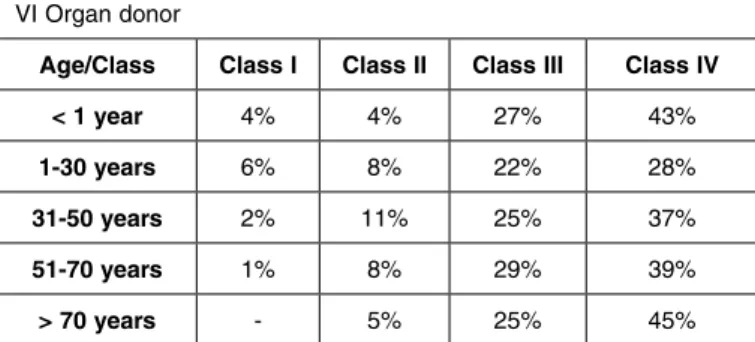
The surgical risk scale of the American Society of Anesthesiology (known by its abbreviation, ASA) was described in the 1960s and has changed little over the years. It continues to be one of the most used scales because of its practicality and sensitivity for predicting the overall risk of mortality, according to patients’ ages and functional status, independent of the type of procedure that will be performed(2,7,8). The
ASA classification and one of the risk tables relating to its scoring are presented in Table 2.
table 1 – Physiological changes due to aging and their signifi -cance for perioperative complications.
(Adapted from Francis J. Perioperative management of the older patient in principles of geriatric medicine and gerontology. In: Hazzard W, Bierman EL, Blass JP, Ettinger W Jr, Halter JB. editors. Geriatric Medicine & Gerontology. New York: McGraw-Hill; 1994).
relating to the postoperative period. Perioperative care intensifies with increasing age, because of the severity of the surgical condition, presence of comorbidities and changes to elderly individuals’ functional state(2,7). Surgical risk: overall risk predictor
It is evident that surgery presents risks that be-come accentuated not only through the complexity of the surgical procedure, but also and especially through the patient’s clinical condition. This is more important among elderly patients, given the functio-nal limitations that accompany the reduction of the organic reserve(7,8).
There is greater mortality during the first postope-rative week. Deaths on the first day are more related
table 2 – Risk scale of the American Society of Anesthesio -logy (ASA).
Cardiac risk scales
Most complications, particularly mortal complica-tions during the postoperative period, are of cardiac origin. It is important to stratify this risk in isolation, in order to achieve support that is more differentia-ted and safer, and thus seek to minimize this risk. The commonest cardiac complications are myocardial infarction, decompensation relating to heart failure,
arterial pressure abnormalities and arrhythmia(9,10).
System change Significance
general
↓ Total water and lean mass
↓ Thermoregulatory response
↑ Toxicity due to drugs ↑ Risk of hypothermia
Skin ↓
Capacity for epithelialization ↓ Blood flow
↑ Healing capacity ↑ Risk of scabbing
cardiac
fibrosis of sinus and conducting tissues Alteration of diastolic function
↓ Arterial compliance ↓ Baroreceptor response
↑ Risk of conduction disorders
↑ Risk of hypotension and direct congestive heart failure
↑ Systolic hypertension and left ventricular hypertrophy
↑ Risk of hypotension
pulmonary
changes to ventilation mechanisms ↓ Response to hypercapnia ↓ Airway protection mechanism
↓ fcV, fEV1, pO2. Risk of sedative drugs ↑ Risk of aspiration/ infection
renal
↓ Glomerular filtration rate ↓ Creatinine excretion rate ↓ Response to sodium deficiency
↓ Water and salt excretion capacity
↑ drug half-life
↑ Risk of masked kidney failure
↑ Risk of volume depletion Volume and sodium overload
immune Involution of thymus ↓ T lymphocyte function ↑ Risk of infection
hepatic ↓ Blood flow and microsomal oxidation ↑ drug half-life
Endocrine ↓action Insulin secretion and Overload hyperglycemia and glucose intolerance
Others Hyperplasia of the prostate ↑ Risk of urine retention
ASA I healthy individual, under 70 years of age
II Mild systemic disease – without functional limitation or > 70years III Severe systemic disease – defined functional limitation
IV Incapacitating systemic disease that is a constant threat to life
V Moribund – not expected to survive for 24 h with or without surgery
VI Organ donor
Age/class class i class ii class iii class iv
< 1 year 4% 4% 27% 43%
1-30 years 6% 8% 22% 28%
31-50 years 2% 11% 25% 37%
51-70 years 1% 8% 29% 39%
The Detsky cardiac index, as modified by Eagle et al(8) and Mangano et al(11) with low-risk variables, is
easy to apply and is fundamentally based on clinical history and electrocardiograms. It has been validated
by the American College of Physicians (ACP)(1,7,8)
(Figure 1).
Beta-blockers reduce morbidity and mortality when they are administered to high-risk patients(15). A target
heart rate of 70 beats per minute is recommended(3).
Cardioselective beta-blockers should be chosen. The following drugs are recommended: atenolol, 50 to 100mg/day orally; bisoprolol, 5 to 10mg/day orally; atenolol, 5 to 10mg intravenously; and meto-prolol, 5 to 10 mg intravenously. Oral administration is recommended before the operation, and parenteral use is recommended at the time of inducing anesthe-sia, intraoperatively and postoperatively for as long as the fasting period continues.
Adverse effects are rare and include the appearance of bradycardia and hypotension. They are worse in
Figure 1 – Assessment algorithm and procedure for evaluating surgical risk and guiding noninvasive testing (American College of Physicians).
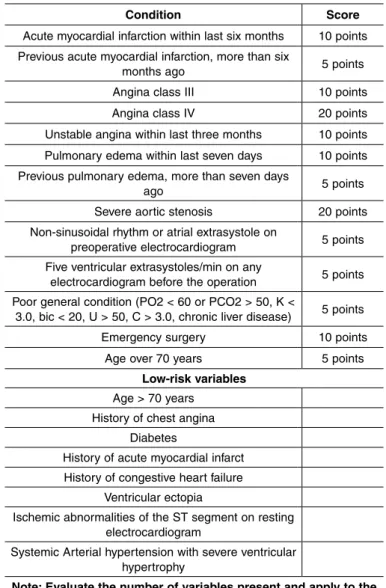
An initial classification into classes I, II and III is made according to the sum of the points attributed to the items in Table 3. For patients in class I, the number of low-risk variables needs to be evaluated.
Patients classified as class II or III are considered to be at high risk, and indications for surgery should be considered within this context, because the chance of complications is greater than 15%. If surgery is funda-mental, patients should be stratified using cardiological examinations, which include myocardial scintigraphy (MIBI), stress echocardiogram with dobutamine and
coronary angiography when indicated(9,10).
Patients in class I with 0-1 variables are considered to present low risk and are released for surgery wi-thout cardiological stratification. Patients with two or more variables are considered to present intermediate risk. They should be stratified in cases of vascular surgery, or released without additional examinations in cases of nonvascular surgery.
There is strong evidence for indication of beta-blocker use in high or intermediate-risk patients, or in those with coronary disease already established, in order to prevent the appearance of ischemic events during the postoperative period(10,12-15).
table 3 – Modified Detsky Index.
condition Score
Acute myocardial infarction within last six months 10 points previous acute myocardial infarction, more than six
months ago 5 points
Angina class III 10 points
Angina class IV 20 points
Unstable angina within last three months 10 points
Pulmonary edema within last seven days 10 points previous pulmonary edema, more than seven days
ago 5 points
Severe aortic stenosis 20 points Non-sinusoidal rhythm or atrial extrasystole on
preoperative electrocardiogram 5 points five ventricular extrasystoles/min on any
electrocardiogram before the operation 5 points poor general condition (pO2 < 60 or pcO2 > 50, k <
3.0, bic < 20, U > 50, c > 3.0, chronic liver disease) 5 points Emergency surgery 10 points
Age over 70 years 5 points low-risk variables
Age > 70 years History of chest angina
Diabetes
History of acute myocardial infarct
History of congestive heart failure
Ventricular ectopia
Ischemic abnormalities of the ST segment on resting electrocardiogram
Systemic Arterial hypertension with severe ventricular hypertrophy
Note: Evaluate the number of variables present and apply to the algorithm below
Class I = 15 points
Class II = 15-30 points
Class III = 30 points or more
Class I (0-15)
Analyze low-risk variables
0 or 1 variable
Low risk (< 3%)
Proceed with surgery
NO
Negative 2 or more variables
Intermediate risk (3-15%)
Vascular surgery
YES
Noninvasive test for ischemia
Positive
Class II (20-30 points) or Class III (> 30 points)
High risk (>15%)
Coronary angiography Angioplasty and/or Revascularization?
Reevaluate together with
241
patients with perioperative heart rates of less than 60 beats/min. A recent study showed that high doses of beta-blockers and preventive use in high-risk patients increase mortality and the risks of stroke, septic shock
and the complications from septicemia(16).
Perioperative circulatory problems angina pectoris In assessing an anginous patient preoperatively, the characteristics of the angina, the patient’s degree of functional limitation and the efficacy of the anti-angina medication should be ascertained. The medication should be reassessed and, if it is not being efficient, it should be intensified before the surgery or reviewed at the time of proceeding with the surgery(5,13).
It should be taken into consideration that many pa-tients (particularly diabetics, hypertensive individuals and those with peripheral vasculopathy) possibly have a condition of silent ischemia, an entity that increa-ses in prevalence with advancing age. To asincrea-sess the degree of coronary abnormality, it may be necessary, when possible, for the patients to undergo an ergo-metric test, myocardial scintigraphy at rest and with pharmacological stress (MIBI-dipyridamole), stress echocardiogram with dipyridamole or dobutamine and, possibly, coronary angiography.
deep vein thrombosis (dvT) and pulmonary em-bolism (PTE)
To guide prophylaxis better, the physiological con-dition that predisposes patients to develop deep vein thrombosis (DVT) and pulmonary embolism (PTE) needs to be understood. Venous stasis, lesions of the intimal layer of vessels and states of hypercoagula-bility make up the physiopathological trio involved greater risk of DVT and PTE. The supine position of the surgical table, the anatomical positioning of the extremities, the effect of the anesthesia and the dura-tion of the surgical procedure under anesthesia
con-tribute towards venous stasis during the operation(17).
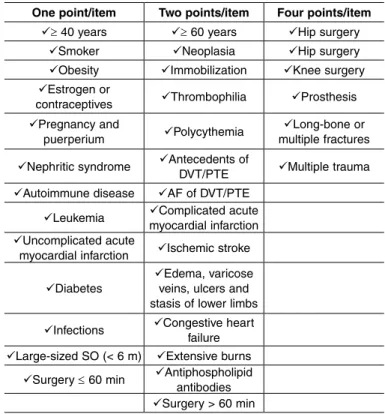
The scale for assessing the risk of DVT and PTE does not differ from what is normally used for youn-ger patients. The points are summed according to the risk factors listed in Table 4. The scores are classified as low risk (≤ 1 point), moderate risk (2-4 points) and high risk (> 4 points). It can be seen that elderly people at the perioperative stage of orthopedic surgery or presenting fractures are always considered to be at high risk(2,17).
One point/item two points/item Four points/item
≥ 40 years ≥ 60 years Hip surgery
Smoker Neoplasia Hip surgery
Obesity Immobilization knee surgery
Estrogen or
contraceptives Thrombophilia Prosthesis
Pregnancy and
puerperium Polycythemia
Long-bone or multiple fractures
Nephritic syndrome Antecedents of DVT/PTE Multiple trauma
Autoimmune disease Af of dVt/ptE
Leukemia Complicated acute myocardial infarction
Uncomplicated acute
myocardial infarction Ischemic stroke
Diabetes
Edema, varicose veins, ulcers and stasis of lower limbs
Infections Congestive heart failure
Large-sized SO (< 6 m) Extensive burns
Surgery ≤ 60 min Antiphospholipid antibodies
Surgery > 60 min
table 4 – Risk of deep vein thrombosis (DVT) or pulmonary thromboembolism (PTE).
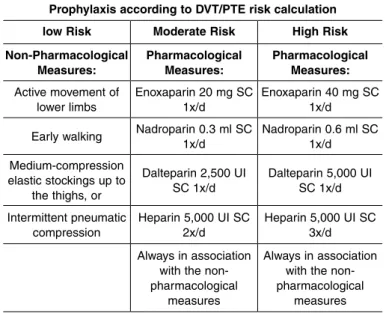
In moderate-risk cases, the percentages are 2 to 8% for DVT and 1 to 8% for PTE. In high-risk cases, they are 10 to 20% for DVT and 5 to 10% for symptomatic PTE. The recommendations for the treatment are lis-ted in Table 5. Drug prophylaxis should start 12 hours before the surgery. It is recommended that patients presenting bleeding or conditions with a high risk of bleeding should only start to receive drug prophyla-xis after the operation, when the risk of hemorrhage ceases. Non-pharmacological prophylaxis measures such as elastic stockings and intermittent pneumatic compression should be started on admission to hos-pital and should be maintained intraoperatively and postoperatively.
The risk of bleeding is greater in patients with an-tecedents of coagulopathy (generally due to deficien-cies of coagulation factors), low platelet counts or use of drugs that interfere with platelet aggregation. For this reason, use of medications that interfere with this function, such as aspirin, dipyridamole, ticlopidine and clopidogrel should be suspended for at least seven
day before carrying out elective surgery(8).
Blood transfusion
Evaluation of the red series is very important
impro-non-coronary disease patients is recommended, but attentiveness must be maintained since elderly peo-ple may present silent ischemia. In coronary disease patients, hemoglobin levels greater than or equal to 11 g% at the time of starting the surgical procedure are desirable(5,8).
renal and urological abnormalities
Elderly individuals present greater renal risk be-cause of the progressive decrease in clearance. Co-morbidities, especially diabetes, hypertension and heart failure, worsen the risk of kidney failure after the operation. Requesting routine tests such as urea, creatinine, urine I with culturing and creatinine clea-rance, when indicated, is recommended.
One extremely important calculation in this si-tuation may be the estimated creatinine clearance, as proposed by Cockcroft and Gault (Figure 2). Knowledge of simple variables such as the patient’s age, sex and serum creatinine level enables good assessment of creatinine clearance and thus enables prevention of the iatrogenic complications that are frequently connected with surgical interventions, es-pecially among frail patients(3).
prophylaxis according to dvt/ptE risk calculation
low risk Moderate risk high risk
Non-pharmacological
Measures: pharmacological Measures: pharmacological Measures: Active movement of
lower limbs
Enoxaparin 20 mg Sc
1x/d Enoxaparin 40 mg Sc 1x/d
Early walking Nadroparin 0.3 ml Sc
1x/d Nadroparin 0.6 ml Sc 1x/d Medium-compression
elastic stockings up to the thighs, or
dalteparin 2,500 UI
Sc 1x/d dalteparin 5,000 UI Sc 1x/d
Intermittent pneumatic compression
heparin 5,000 UI Sc
2x/d heparin 5,000 UI Sc 3x/d Always in association
with the non-pharmacological
measures
Always in association with the non-pharmacological
measures
table 5 – Recommendations for DVT/PTE prophylaxis.
vements in hematocrit and hemoglobin rates may bring dramatic improvements in elderly patients’ symptoms, thus emphasizing the importance of in-vestigating and correcting their levels in the blood before the operation(5).
In preoperative assessments before elective sur-gery, hemoglobin levels lower than 11 g% in elderly patients deserve investigation and, if necessary, re-placement. In any event, there seems to be a consen-sus that patients over 50 years of age or those with cardiopathy should never be sent for surgery with hemoglobin levels lower than 10 g%. With regard to the replacement method, supplying packed red blood cells during the procedure or just afterwards seems to be the most effective means.
Hemotherapy is frequently used in orthopedic sur-gery, either to prepare for the surgical procedure, or during or after it. This is because of the large quan-tities of blood that are lost due to bone trauma and the difficulties of achieving hemostasis in this tissue. It is known that patients with anemia have a notably higher risk of surgical complications and death, which may reach 30% of the cases in which the hemoglobin level is lower than 6 g%. However, it is increasingly accepted that infusions of red blood cells leads to diminished immunity after the operation. It has been found that infection rates are higher among patients undergoing femoral neck surgery who recei-ved transfusions.
Greater tolerance regarding hemoglobin levels in
Unsurprisingly, iatrogenic complications are among the biggest causes of death among elderly
pa-tients(8). Potentially nephrotoxic medications such as
aminoglycosides or non-hormonal anti-inflammatory agents should be avoided, as should iodide and ga-dolinium contrast media. Hydration is fundamental after the operation, until oral ingestion has been well established. Support measures such as prior use of acetylcysteine at a dose of 1.2 grams/day preceding
contrast examinations may be beneficial(2,8). Another
prudent measure among frail patients with serum
cre-Figure 2 – cockcroft-gault formula.
Calculation of estimated clearance according to the Cockcroft-Gault formula*:
[140 – age (years)] x ideal weight (kg)
([creatinine (mg/dl)] x 72)
243
atinine levels greater than 2 mg% is to keep in contact with the hospital’s nephrology, in a state of “armed alert” for possible dialytic intervention if necessary.
Among elderly individuals, cases of prostatic hypertrophy and/or the need to force the bladder are common, with difficulty in urinating after the opera-tion. It is not uncommon for an enlarged bladder to appear, which gives rise to the need to pass a probe into the bladder to relieve and/or delay the condition. This situation may be particularly common in patients who have received regional anesthesia (peridural or spinal anesthesia) using morphine, which may lead to transitory urine retention.
Elderly women may present urinary incontinence and attention needs to be given to changing nappies/ diapers and/or passing a probe into the bladder, with the aim avoiding the appearance of blisters and ulcers of sacral decubitus. Use of a delay probe is also re-commended for patients whose hydric balance needs to be brought under control. Collection of urine type I and urine culturing is also recommended for patients who will undergo arthroplasty because of the risk of infection in the prosthesis.
Pulmonary abnormalities
Aging is associated with a series of changes that may place elderly individuals in situations of greater risk of perioperative pulmonary complications. Chan-ges to deglutition increase the risk of oropharyngeal dysphagia; diminution of the cough reflex implies less protection for the airways; changes to connective tis-sue cause alveolar deformities similar to those found in emphysema; kyphoscoliosis and calcification of the costal cartilage cause lower compliance of the chest cavity; and sarcopenia results in lower performance of the intercostal muscles and diaphragm(6,19,20).
The main pulmonary complications found after the operation are atelectasis, bronchospasm, tracheobron-chial infection, pneumonia, exacerbation of chronic obstructive pulmonary disease (COPD), respiratory failure and prolonged mechanical ventilation. Occur-rences of these complications are closely linked to the existence of risk factors relating to the patient and to the procedure. The main factors encountered were ASA > 2, chest X-ray showing abnormalities, age > 70 years, congestive heart failure, albumin < 3.5 mg/dl, aortic surgery, chest surgery, upper abdominal
surgery and prolonged surgery(19-21).
Patients with COPD should be treated aggres-sively in order to obtain the best control possible. All patients with symptomatic COPD should receive ipratropium or tiotropium every day during the pe-rioperative period. Inhaled beta agonists should be used as needed to control the symptoms. Patients with persistent wheezing or functional limitation despi-te optimized bronchodilation therapy should receive systemic corticosteroid(6,19,20).
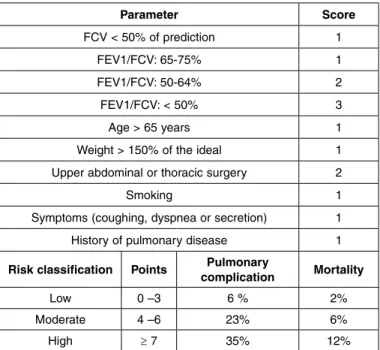
All patients should undergo respiratory and motor physiotherapy starting from when they are admitted to hospital, with the aim of preventing respiratory complications, which increase mortality and prolong hospitalization(8,20,21) (Table 6).
table 6 – Torrington and Henderson scale for pulmonary risk classification.
delirium during the perioperative period
Delirium is a frequent complication during the
postoperative period(18,22). Approximately 30% of
hospitalized elderly patients develop conditions of delirium. The main clinical manifestations are:
• Disorganized and incoherent thinking. Difficulty
in understanding facts and recognizing situations
• Altered perception in 40% (illusions and visual and
auditory hallucinations)
• Persecution delirium in 50%
• Impaired fixation and evocation memory
• Diminished attention
• Psychomotor activity (hyper or hypo)
parameter Score
fcV < 50% of prediction 1
fEV1/fcV: 65-75% 1
fEV1/fcV: 50-64% 2
fEV1/fcV: < 50% 3
Age > 65 years 1
Weight > 150% of the ideal 1 Upper abdominal or thoracic surgery 2
Smoking 1
Symptoms (coughing, dyspnea or secretion) 1 History of pulmonary disease 1
risk classification points complicationpulmonary Mortality
Low 0 –3 6 % 2%
Moderate 4 –6 23% 6%
According to the DSM-IV, delirium is characteri-zed by altered consciousness, difficulty in focusing attention, cognitive impairment and disorganized thinking, and it may be associated with perception disorders. It develops over a short space of time (from hours to days), with a tendency to fluctuate over the course of the day. The main predisposing factors are advanced age, sensory deficit and diseases of the central nervous system such as dementia, stroke and Parkinson disease(18,22,23).
• There are multiple triggering factors and they are
listed in the following:
• Hydroelectrolytic disorders (dehydration, hypo/
hypernatremia or hypercalcemia);
• Infections (urinary, respiratory, skin or soft-tissue);
• Toxicity due to medications;
• Metabolic changes (hypoglycemia,
hypothyroi-dism, uremia or liver failure);
• Low cardiac output (shock, heart failure or
myo-cardial infarction);
• Hypoxemia.
Environmental factors are important triggering fac-tors. The main ones are:
• Loss of time and space references (lack of natural
lighting, calendar or clock);
• Immobility (including use of physical containment);
• Use of bladder probe;
• Sleep deprivation;
• Frequent changing of bedroom;
• Being in an intensive care unit or chronic
treat-ment unit.
Toxicity due to medications occurs in approxima-tely 30% of the cases of delirium, and the main drug classes involved are antidepressants, antihistamines, antiparkinsonians, analgesics, anesthetics, sedatives, hypnotics and quinolone antibiotics. On the other hand, abrupt withdrawal of certain agents such as benzodiazepines induces abstinence and consequently delirium(10,23).
Furlanetto and Garcez Leme studied 103 elderly patients hospitalized with hip fractures who presented delirium diagnosed using the “confusion assessment method” (CAM), and they observed that delirium is a frequent complication among elderly people hos-pitalized with femoral fractures. It is associated with cognitive and functional deficits and increases the duration of hospital stay and the mortality rate(18).
The treatment for delirium is based on two si-multaneous objectives: management of behavioral alterations; and actively seeking and treating trigge-ring factors. Haloperidol at low doses (0.5 to 1.0 mg orally, intravenously or intramuscularly) may be used to control agitation or psychotic symptoms, but on rare occasions, it may induce sedation and hypoten-sion. Its action starts 30 to 60 minutes after parenteral administration(23).
Strategies for preventing delirium, through cha-racterizing and minimizing the risk factors are
effec-tive(18). It is recommended that oxygen therapy (2 l/
min) should be used routinely over the first 48 hours after the operation, even when the individual does not present signs of dyspnea or respiratory
decom-pensation(24). Atypical neuroleptics such as
risperido-ne and olanzapirisperido-ne present fewer adverse effects and have shown efficacy similar to that of haloperidol in retrospective studies, but have not been studies over the perioperative period(23).
Nutritional abnormalities
It is known that malnutrition is a serious problem among elderly patients who need to undergo arthro-plasty, particularly when secondary to hip fracture. The poor nutritional condition shown by this patient profile may stem from very many factors, including: changes to gastrointestinal physiology, medications, chronic clinical conditions, diminished appetite, di-minished physical activity, didi-minished lean mass in the organism, chronic liver and kidney disease, cancer and surgery(25,26).
The nutritional status of elderly patients influences postoperative recovery, and those in a good nutritional condition have better and faster clinical
rehabilita-tion(10). Protein deficiency causes increased numbers
of infections, bed sores, muscle weakness, poor
respi-ratory function, myocardial hypertrophy and death(26).
Low albumin levels are associated with high morbidi-ty and mortalimorbidi-ty, long hospital stays and readmissions.
It is recommended that the following biochemical indicators of malnutrition should be used: anemia; vitamin deficiency; low levels of pre-albumin, albu-min, transferrin and cholesterol; and low lymphocyte counts. Three of these variables present proven clini-cal relevance as prognostic factors: albumin < 3.5 mg/
dl, lymphocytes < 1800 mm3 and involuntary weight
245
predictor of complications within the first 30 posto-perative days(7).
Preoperative nutritional support is beneficial in these patients, and it significantly reduces mortali-ty and surgical complications. Use of orally admi-nistered enteral supplements is recommended, and this may contribute towards improving the protein- energy supply(8,27).
infections
Infections are among the main causes of death among the elderly population. Early diagnosis of in-fections is essential, given that morbidity and mor-tality have significant roles in such conditions. The atypical presentation of some manifestations of infec-tions constitutes a further challenge. It is known that only 60% of elderly individuals with severe infectious conditions develop leukocytosis; also in this regard, the response to fever may be weak, and temperatures greater than 38.3°C many indicate severe infection. On the other hand, cognitive manifestations may be present in 50% of elderly individuals with infections, particularly cases of delirium. Pneumonia, urinary infections and skin infections occur frequently.
In cases of infection associated with orthopedic interventions, the complications are given additional potency because of the difficulty of achieving anti-biotic access to bone tissue and the chronic nature of such complications. These may require new and repeated interventions, with the removal of prosthesis or synthesis materials.
It is essential in orthopedic surgery to have an accurate assessment of possible foci before the ope-ration, including foci in the skin, teeth, respiratory tract and urinary tract, given the greater incidence of infection of the surgical site in patients who already present other foci.
Blood glucose control in diabetic patients is also important. The risk ratio for transoperative infection is greater than 3 in patients who present fasting blood
glucose levels higher than 300 mg%(4,5).
It is essential to be attentive regarding the appro-priate antibiotic prophylaxis as recommended by the hospital infection control committee, along with prophylaxis for bacterial endocarditis and treatment for preexisting infections, before proceeding with the surgery.
Antibiotic prophylaxis is applied universally to
pa-tients undergoing implantation of prostheses or syn-thesis material. It currently consists of administration of second-generation cephalosporins over the 24-hour period encompassing the operation. Special measures need to be structured for cases of trauma, particularly those that incorporate exposure of soft tissues, as is the case of exposed fractures.
Waiting time for the intervention
The multiple coexisting conditions and frailness observed among elderly patients may often lead the surgical and anesthetic team to postpone the surgical intervention(4).
Controlling the risk factors and scheduling the in-tervention under the best technical conditions possible are highly desirable for reducing the risk among these patients. However, in cases of acute conditions such as hip fractures in frail patients, this type of approach is often not possible or even desirable.
Suspension or postponement of an emergency sur-gical intervention does not eliminate from the patient the risk of the intervention but, rather, it incorporates into this risk the risk inherent to non-intervention or to the postponement itself. Delaying the surgical in-tervention by more than 48 hours in cases of patients with hip fractures increases the risk of complications and corresponds to a significant decrease in one-year survival. The importance of rapidly assessing and pre-paring these patients is emphasized, in order to avoid the risks inherent to delays in the intervention. Such risks include, among other consequences of prolonged immobility, muscle atrophy, bed sores, osteopenia, pneumonia, urinary sepsis, pulmonary thromboem-bolism, embolization of fat and institutionalization.
Coordinated interprofessional attention
Given the complexities of clinical follow-up for el-derly patients undergoing orthopedic treatment, many clinics over the last 50 years have envisaged specific relationship structures coordinated between orthope-dists and clinicians, especially geriatricians, with the aim of providing greater safety and speed for these high-risk patients(4,5).
in caring for elderly individuals with orthopedic con-ditions, such as: the importance of early intervention, especially for the frailest patients; the importance of early rehabilitation; and the importance of interpro-fessional attention, among other principles. There is evidence indicating that the only intervention presen-ting statistical significance in terms of mortality, for elderly individuals with hip fractures, is differentia-ted geriatric attention that includes multiprofessional participation.
Satomi E, Sitta MC, Machado NA and Garcez-Leme LE observed that the majority of elderly indi-viduals hospitalized due to fractures did not receive adequate prescriptions for treating osteoporosis and preventing new fractures after discharge from hos-pital. This serves as an alert regarding the need for clinicians to review prescriptions at the time of
ortho-pedic discharge, in order to ensure that catastrophic events are prevented(28).
FiNAl rEMArkS
The care provided for elderly patients undergoing orthopedic surgery, particularly for those requiring emergency surgery, needs to take into account the assessment of elderly individuals’ physical capacity and specific risks, in an attempt to reduce the risks, which remain high in this group.
Despite the risks, procedures implemented promptly have a positive effect on these patients’ evolution. Coordinated care provision between the clinical/geria-tric team, the orthopedic team, anesthetists, intensive care specialists and other professionals may be highly beneficial in this group of patients.
rEFErENcES
1. Machado FS, Martins MA, Caramelli B. Perioperatório: procedimentos clínicos. São Paulo: Sarvier; 2004.
2. Pires PWA, Branco PD, Sitta MC. O doente cirúrgico idoso. In: Gama-Rodrigues JJ, Machado MC, Rasslan S, organizadores. Clínica cirúrgica: Manole, 2008. p. 2060-74
3. Pires PW, Branco PD, Sitta MC. O doente idoso cirúrgico. In: Utiyama EM, Otoch JP, Rasslan S, Birolini D. organizadores. Propedêutica cirúrgica. 2a. ed. Barueri: Manole; 2007. p. 249-63.
4. Polanczyk CA, Marcantonio E, Goldman L, Rohde LE, Orav J, Mangione CM, et al. Impact of age on perioperative complications and length of stay in patients undergoing noncardiac surgery. Ann Intern Med. 2001;134(8):637-43. 5. Williams SL, Jones PB, Pofahl WE. Preoperative Management of the Older
Patient. Clin Geriatr. 2006;4(6):24-8.
6. Smetana GW, Lawrence VA, Cornell JE; American College of Physicians. Preoperative pulmonary risk stratification for noncardiothoracic surgery: systematic review for the American College of Physicians. Ann Intern Med. 2006;144(8):581-95.
7. Machado AN, Sitta Mdo C, Jacob Filho W, Garcez-Leme LE. Prognostic factors for mortality among patients above the 6th decade undergoing non-cardiac surgery: cares--clinical assessment and research in elderly surgical patients. Clinics (Sao Paulo). 2008;63(2):151-6.
8. Sitta MC, Machado AN, Apolinário D, Garcez-Leme LE. Avaliação perioperatória do idoso. Geriatr Gerontol. 2008;2(2):86-94.
9. Eagle KA, Brundage BH, Chaitman BR, Ewy GA, Fleisher LA, Hertzer NR, et al. Guidelines for perioperative cardiovascular evaluation for noncardiac surgery. Report of the American College of Cardiology/American Heart Association Task Force on Practice Guidelines (Committee on Perioperative Cardiovascular Evaluation for Noncardiac Surgery). J Am Coll Cardiol. 1996;27(4):910-48. 10. Goldman L. Evidence-based perioperative risk reduction. Am J Med.
2003;114(9):763-4.
11. Mangano DT, Wong MG, London MJ, Tubau JF, Rapp JA. Perioperative myo-cardial ischemia in patients undergoing noncardiac surgery--II: Incidence and severity during the 1st week after surgery. The Study of Perioperative Ischemia (SPI) Research Group. J Am Coll Cardiol. 1991;17(4):851-7.
12. Auerbach AD, Goldman L. beta-Blockers and reduction of cardiac events in noncardiac surgery: scientific review. JAMA. 2002;287(11):1435-44. 13. Devereaux PJ, Beattie WS, Choi PT, Badner NH, Guyatt GH, Villar JC, et
al. How strong is the evidence for the use of perioperative beta blockers in
non-cardiac surgery? Systematic review and meta-analysis of randomised controlled trials. BMJ. 2005;331(7512):313-21.
14. Lindenauer PK, Pekow P, Wang K, Mamidi DK, Gutierrez B, Benjamin EM. Perioperative beta-blocker therapy and mortality after major noncardiac surgery. N Engl J Med. 2005;353(4):349-61.
15. Redelmeier D, Scales D, Kopp A. Beta blockers for elective surgery in elderly pa-tients: population based, retrospective cohort study. BMJ. 2005;331(7522):932. 16. Devereaux PJ, Yang H, Yusuf S, Guyatt G, Leslie K, Villar JC, et al. Effects of
ex-tended-release metoprolol succinate in patients undergoing non-cardiac surgery (POISE trial): a randomised controlled trial. Lancet. 2008;371(9627):1839-47. 17. Kearon C, Hirsh J. Management of anticoagulation before and after elective
surgery. N Engl J Med. 1997;336(21):1506-11.
18. Furlaneto ME, Garcez-Leme LE. Impact of delirium on mortality and cognitive and functional performance among elderly people with femoral fractures. Clinics (Sao Paulo). 2007;62(5):545-52.
19. Chan ED, Welsh CH. Geriatric respiratory medicine. Chest. 199;114(6):1704-33. 20. Smetana GW. Preoperative pulmonary evaluation. N Engl J Med. 1999;
340(12):937-44.
21. Arozullah AM, Daley J, Henderson WG, Khuri SF. Multifactorial risk index for predicting postoperative respiratory failure in men after major noncardiac surgery. The National Veterans Administration Surgical Quality Improvement Program. Ann Surg. 2000;232(2):242-53.
22. Inouye SK. Delirium in older persons. N Engl J Med. 2006;354(11):1157-65. 23. Prado LK, Machado AN, Curiatti JAE, Sitta MC. Delirium. RBM Rev Bras Med.
2008;65(1/2):28-33.
24. Aakerlund LP, Rosenberg J. Postoperative delirium: treatment with supplemen-tary oxygen. Br J Anaesth. 1994;72(3):286-90.
25. Howard L, Ashley C. Nutrition in the perioperative patient. Annu Rev Nutr. 2003;23:263-82.
26. Eneroth M, Olsson UB, Thorngren KG. Nutritional supplementation decreases hip fracture-related complications. Clin Orthop Relat Res. 2006;(451):212-7. 27. Duncan DG, Beck SJ, Hood K, Johansen A. Using dietetic assistants to improve
the outcome of hip fracture: a randomised controlled trial of nutritional support in an acute trauma ward. Age Ageing. 2006;35(2):148-53.