Epidemiological and serological aspects of hepatitis A
among children and teenagers in the city of Santos: a
cross-sectional study
Aspectos epidemiológicos e sorológicos da hepatite A em crianças e adolescentes
na cidade de Santos: estudo transversal
Maria Célia Cunha Ciaccia
I, Regina Célia Moreira
II, Alexandre Archanjo Ferraro
III, Marcílio Figueiredo Lemos
II, Isabel Takano Oba
II,
Gilda Porta
IVInstituto da Criança (ICR), Hospital das Clínicas (HC), Faculdade de Medicina da Universidade de São Paulo (FMUSP), and Virology
Service, Instituto Adolfo Lutz, São Paulo, Brazil
ABSTRACT
CONTEXT AND OBJECTIVE: Viral hepatitis A is still a concern at public health level in Brazil and around the world, due both to the number of afected subjects and the possibility of complications in the acute forms. The Brazilian Ministry of Health estimates that at least 70% of this country’s population has already had contact with the hepatitis A virus (HAV). The aim here was to discover the prevalence of serological markers for the hepatitis A virus among children and teenagers at daycare facilities, kindergartens and elementary schools in the city of Santos.
DESIGN AND SETTING: Cross-sectional study in kindergartens and elementary schools within the municipal education network in several regions of the city of Santos.
METHOD: Students’ family members were surveyed using a questionnaire and 4,680 inger-prick blood sam-ples were taken and assayed by means of the ELISA technique.
RESULTS: The general prevalence of HAV IgG was 9.72% and, of these cases, 74.6% were reactive to anti-HAV IgM. There was higher prevalence of anti-anti-HAV IgG among older children, females, children who played in streams, those whose homes were not connected to the sewage system, those whose parents had low education levels, those with low household income and those who did not live along the seashore. The preva-lence of anti-HAV IgM peaked in the early years and subsequently fell, and it was lower on the hills and in the Northwestern Zone.
CONCLUSION: The general prevalence of serological markers for hepatitis A was low in Santos.
RESUMO
CONTEXTO E OBJETIVO: A hepatite viral A continua sendo uma preocupação em nível de saúde pública no Brasil e no mundo, tanto pelo número de indivíduos atingidos, como pela possibilidade de complicação das formas agudas. O Ministério da Saúde estima que pelo menos 70% da população do Brasil já tiveram contato com o vírus da hepatite A. O objetivo foi conhecer a prevalência de marcadores sorológicos do vírus da hepatite A em crianças e adolescentes de creches e escolas de ensino infantil e fundamental na cidade de Santos.
TIPO DE ESTUDO E LOCAL: Estudo transversal em pré-escolas e de ensino fundamental da rede municipal em diversas regiões da cidade de Santos.
MÉTODO: Foi aplicado um questionário aos familiares dos estudantes e coletadas 4.680 amostras de sangue através de punção capilar para realização da sorologia pela técnica ELISA.
RESULTADOS: A prevalência geral do anti-HVA IgG foi de 9,72% e, desses, 74,6% foram anti-HVA IgM reagentes. A prevalência de anti-HVA IgG foi maior entre as crianças mais velhas, meninas, aquelas que brincavam em córregos, sem rede de coleta de esgoto em sua moradia, de pais com baixa instrução, de baixa renda familiar e aquelas que não eram moradoras da orla. A prevalência de anti-HVA IgM teve pico nos primeiros anos e poste-rior queda e, no morro e Zona Noroeste, foi mais baixa.
CONCLUSÃO: A prevalência geral dos marcadores sorológicos para hepatite A foi baixa em Santos.
IMD, Department of Pediatrics, Instituto da
Criança (ICR), Faculdade de Medicina da Universidade de São Paulo (FMUSP), São Paulo, Brazil.
IIMD, PhD. Scientiic Researcher, Instituto Adolfo
Lutz, São Paulo, Brazil.
IIIMD, PhD. Professor, Department of Pediatrics,
Instituto da Criança (ICR), Hospital das Clínicas (HC), Faculdade de Medicina da Universidade de São Paulo (FMUSP), São Paulo, Brazil.
IVMD, PhD. Full Professor, Department of
Pediatrics, Instituto da Criança (ICR), Hospital das Clínicas (HC), Faculdade de Medicina da Universidade de São Paulo (FMUSP), São Paulo, Brazil.
KEY WORDS: Prevalence. Hepatitis A. Child. Serology. Epidemiology.
PALAVRAS-CHAVE: Prevalência. Hepatite A. Criança. Sorologia. Epidemiologia.
INTRODUCTION
Viral hepatitis A is still a concern at public health level in Brazil and around the world, due both to the number of afected subjects and the possibility of complications in the acute forms. he Brazilian Ministry of Health estimates that at least 70% of this country’s population has already had contact with the hepatitis A virus (HAV).1
with increasing age,2 and also with poor socioeconomic and san-itary conditions.2,3 In Brazil, Clemens et al.4 evaluated the preva-lence of anti-HAV among 3653 subjects aged 1 to 40 years, in four Brazilian state capitals: in the Northern region, it was 92.8%; in the Northeastern region, 76.5%; and in the Southern and South-eastern regions, 55.7%.
he severity of the clinical picture is directly related to the patient’s age. About 1% of hepatitis A cases can evolve into the fulminant form.5,6 Despite improvements in the socioeconomic conditions of populations, hepatitis A epidemics and outbreaks continue to occur,7 even in developed countries,8 and they are a major public health problem. Considering that young adults are more susceptible to the infection and that disease severity for this age range is high, healthcare professionals need to be aware of the prevalence of viral hepatitis A in order to identify, evalu-ate and control epidemics and calculevalu-ate the impact of vaccina-tion programs.9-12 It is worth emphasizing that some studies have showed that vaccination against hepatitis A is capable of prevent-ing disease dissemination durprevent-ing an outbreak, and also of pro-tecting patients’ household contacts.13
In Brazil, there have been few prevalence studies on population samples representative of hepatitis A. It is therefore diicult to gen-eralize the indings or make comparisons between these studies.
herefore, we proposed to identify the knowledge of the epi-demiological and serological aspects of hepatitis A among children and teenagers enrolled at daycare facilities, kindergartens and ele-mentary schools within the municipal education network of the city of Santos, Brazil. We believe that this is important for enabling actions and policy decisions directed towards the healthcare sector.
OBJECTIVE
he aim of this study was to assess the prevalence of immuno-globulin G (IgG) and immunoimmuno-globulin M (IgM) anti-hepatitis A virus (anti-HAV) antibodies, thus revealing any cases of subclini-cal acute infection by the hepatitis A virus among children and teenagers enrolled in the municipal education network of the city of Santos, according to age range and socioeconomic level.
METHODS
Santos is the largest city on the coast of the state of São Paulo, with an area of 280,300 km2 and a population of nearly half a million. Its medical care resources are centered around the pub-lic healthcare system (Sistema Único de Saúde, SUS) and service agreements. here have not been any really representative evalu-ations on the prevalence of antibodies against hepatitis A among children and teenagers in Santos.
A cross-sectional study was conducted between June 28 and December 14, 2007, in which 4,680 inger-prick blood sam-ples were collected from children and teenagers enrolled at day-care facilities, kindergartens and elementary schools within the
municipal education network in several regions of the city of Santos. At the same time, a survey questionnaire was applied to members of the children and teenagers’ families. he following were taken to be exclusion criteria: students who were absent ater three requests to take part in the study, those who did not bring the vaccination record card (n = 374) and those who had received the vaccine against hepatitis A (n = 57) for analysis of the anti-HAV IgG serological markers.
his project was approved by the Ethics Committee of Hos-pital das Clínicas (HC) and of Faculdade de Medicina da Univer-sidade de São Paulo (FMUSP), by the Ethics Committee of the Health Department of Santos and by the Education Department of Santos. An informed consent statement was presented to the persons responsible for the children and teenagers and, ater they had approved it by signing it, the questionnaire was applied and collection of inger-prick blood samples was started.
Operationalization
he irst part of the study consisted of randomizing the stu-dents and telephoning their parents or the persons responsible for them, in order to apply a questionnaire seeking information regarding student identiication, age, gender, birth date, parents’ education level and parents’ profession, household income, indi-vidual and family history, physical environment and vaccination record card. he second part consisted of carrying out the sample collection and the third part consisted of laboratorial testing.
Sample calculation
his study was part of a population survey about the prevalence of hepatitis A, B and C. To determine the sample size, an expected frequency of 1% (the expected frequency of hepatitis B would be less than this), acceptable error of 0.5% and conidence level of 95% were calculated using the Epi Info sotware, version 6. he total population was 29,589 students enrolled within the munici-pal education network of Santos: 2,050 at daycare facilities, 6,079 in kindergartens, 16,026 in elementary school from 1st to 4th grade and 5,434 teenagers from 5th to 8th grade. From this population, the total sample achieved was 4,680 students, i.e. 880, 1,220, 1,390 and 1,190, respectively for each education stratum. he sample was then divided into equally sized groups in each of ive regions of the City of Santos. he regions for this study were chosen based on the socioeconomic diferences that exist among them.
Sample collection
he blood collection consisted of inger puncture using an appro-priate disposable lancet, on a ilter paper containing two circles of 2.5 centimeters in diameter. Ater collection, the ilter paper with the student’s identiication remained for two hours in a container for drying and was then stored at - 20 °C in closed small transparent plastic bags. he serological tests performed were IgG anti-HAV and IgM anti-HAV (the latter was performed when IgG was positive), by means of the enzyme immunoassay. he tests were carried out in the Hepatitis Laboratory of Institute Adolfo Lutz, in São Paulo.
Data processing and analysis
he analysis was done with the aid of the Stata sotware, version 9.0. To compare means, we used the Mantel-Haenszel chi-square and the chi-square trend for ordinal categories. For risk analysis, we calculated the prevalence ratio according to category, and its 95% conidence interval, using Poisson regression. To ascertain the efect of independent variables, multivariate Poisson regres-sion was used, with the calculation of the linear trend or hetero-geneity in cases in which there was more than one risk category. he contributors in this analysis were 3928 individuals whose data were complete. he value for rejecting the null hypothesis was set at P < 0.05.
RESULTS
he ages of the study population ranged from seven months to 18 years and one month, and the mean age was eight years and four months. he general prevalence of reactive anti-HAV IgG serological markers was 9.72% and, among these individuals, 74.7% were also found to be reactive to anti-HAV IgM, as shown in Table 1.
In the cases that were reactive to the anti-HAV IgG and IgM serological markers, the prevalence of evident symptoms or knowledge of ever having had hepatitis, on the part of the stu-dent or his/her family, was low. Most of them said that they had never had any symptoms and were unaware of ever having had hepatitis (95.6%). Among the symptoms presented, jaundice was the most frequent (3.9%).
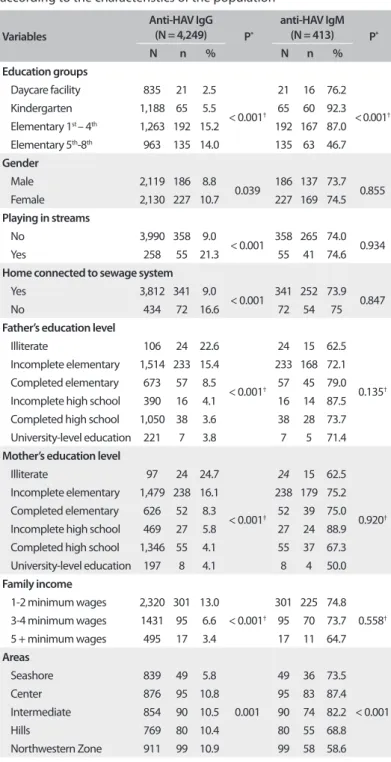
Table 2 shows the prevalence of anti-HAV IgG and IgM
among the population. All the variables were statistically asso-ciated with presence of anti-HAV IgG, with higher prevalence among older children, females, children who were in the habit of playing in streams, those whose homes were not connected to the sewage system, those whose parents had low education levels, those with low family income and those who did not live along the seashore (no diferences between the other areas).
he prevalence of anti-HAV IgM, as shown in Table 2, did not difer between the categories, except for the age (peak in the early years and subsequent fall) and the area of the city (lower on the hills and in the Northwestern Zone).
n ( % )
Anti-HAV IgG Anti-HAV IgM
Non-reactive 3,836 (90.3) 105 (25.4) Reactive 413 (9.7) 308 (74.6)
Total 4,249 (100.0) 413 (100.0)
Table 1. General prevalence of the anti-HAV IgG and anti-HAV IgM serological markers when anti-HAV IgG was reactive
Table 2. Prevalence of reactive serological indings for anti-HAV IgG and anti-HAV IgM (subsample of individuals who were IgG-positive), according to the characteristics of the population
Variables
Anti-HAV IgG
(N = 4,249) P*
anti-HAV IgM
(N = 413) P*
N n % N n %
Education groups
Daycare facility 835 21 2.5 < 0.001†
21 16 76.2 < 0.001†
Kindergarten 1,188 65 5.5 65 60 92.3 Elementary 1st – 4th 1,263 192 15.2 192 167 87.0
Elementary 5th-8th 963 135 14.0 135 63 46.7 Gender
Male 2,119 186 8.8
0.039 186 137 73.7 0.855 Female 2,130 227 10.7 227 169 74.5
Playing in streams
No 3,990 358 9.0
< 0.001 358 265 74.0 0.934 Yes 258 55 21.3 55 41 74.6
Home connected to sewage system
Yes 3,812 341 9.0
< 0.001 341 252 73.9 0.847 No 434 72 16.6 72 54 75
Father’s education level
Illiterate 106 24 22.6
< 0.001†
24 15 62.5
0.135†
Incomplete elementary 1,514 233 15.4 233 168 72.1 Completed elementary 673 57 8.5 57 45 79.0 Incomplete high school 390 16 4.1 16 14 87.5 Completed high school 1,050 38 3.6 38 28 73.7 University-level education 221 7 3.8 7 5 71.4
Mother’s education level
Illiterate 97 24 24.7
< 0.001†
24 15 62.5
0.920†
Incomplete elementary 1,479 238 16.1 238 179 75.2 Completed elementary 626 52 8.3 52 39 75.0 Incomplete high school 469 27 5.8 27 24 88.9 Completed high school 1,346 55 4.1 55 37 67.3 University-level education 197 8 4.1 8 4 50.0
Family income
1-2 minimum wages 2,320 301 13.0 < 0.001†
301 225 74.8 0.558†
3-4 minimum wages 1431 95 6.6 95 70 73.7 5 + minimum wages 495 17 3.4 17 11 64.7
Areas
Seashore 839 49 5.8
0.001
49 36 73.5
< 0.001 Center 876 95 10.8 95 83 87.4 Intermediate 854 90 10.5 90 74 82.2 Hills 769 80 10.4 80 55 68.8 Northwestern Zone 911 99 10.9 99 58 58.6
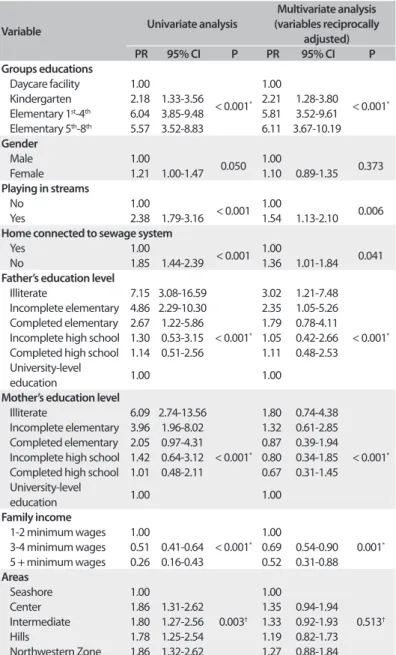
Table 3 shows the risk associated with each category of the
variable studied for IgG antibody positivity. he greatest risks were associated with parental education (prevalence reason, PR = 7.15 with 95% conidence interval, CI, of 3.08-16.59 for the father to be illiterate; and PR = 6.09 with 95% CI of 2.74-13.56 for the mother to be illiterate), and the lowest risk was associated with family income (PR = 0.26 with 95% CI of 0.16-0.43 for the family to be wealthy).
Multivariate analysis on anti-HAV IgG positivity showed that the variables were all independent of each other, except for gen-der and the area of the city, and were not statistically signiicant. he greatest risk was among the teenagers: 6.11 times higher than among the children in daycare.
DISCUSSION
he sampling of this study was probabilistic, thus assuring its representativeness, and the proportions were maintained when age ranges according to the census data were used.
he use of capillary blood collected on a ilter paper for sero-logical testing facilitates the collection, transportation and stor-age of the samples, and the results reported in the literature already show that such testing is valid for hepatitis A investiga-tions.14 hus, blood collection by means of a lancet on ilter paper for determining antibody levels provides an excellent opportu-nity to investigate diseases in representative populations.
he presence of anti-HAV IgG indicates previous exposure to the virus or vaccination. Determination of its prevalence enables evaluation of the immunological condition of such populations of children and teenagers without vaccination against HAV, thus indicating natural infection. he general prevalence of serologi-cal markers for hepatitis A in our study (9.7%) was lower than in other regions of Brazil, with reports ranging from 32.3% in the Central-Western region,15 in 2008, to 60% among children under the age of 10 years in Lábrea, in the Brazilian Western Amazon region,16 in 2009. Regarding worldwide epidemiology, variations have been found, depending on the location.17,18 It was found to be rare in Japan,18 among subjects under the age of 44 years, and reached up to 80% in Turkey,19 among children under the age of nine years.
We found that anti-HAV IgG was more prevalent among females, which had not been reported in the majority of the data in the literature. In the semi-arid region of the state of Bahia,20 and in the Brazilian Western Amazon region20 among children between 6 months and 14 years of age, the prevalence of these markers was found to be similar between the genders.
he strong relationship between positivity of anti-HAV IgG and socioeconomic conditions found in the present study is con-cordant with the data in the literature. Pinho et al.3 showed that the prevalence of anti-HAV IgG in Campinas was 95% in the group of low socioeconomic level and 19.6% in the group of high socioeconomic level. Ferreira et al.2 evaluated the relationship
between the prevalence of hepatitis A and socioeconomic level in Porto Alegre, and found that the prevalence was 51% in the low-level group, and 11% in the high-level group. In Vila Velha, Espírito Santo,21 there was a correlation between positive serolog-ical tests for hepatitis A and lower access to iltered water, lower access to the sewage system, habits of swimming in rivers or the sea and a greater number of people living in the same room. In the Brazilian Western Amazon region,16 it was also associated with a greater number of people in the family. In Greece,22 a strong relationship was shown between positive serological tests for hepatitis A and a low level of education among the parents, a greater number of people per room and lower access to water, among children with an average age of nine years.
Variable Univariate analysis
Multivariate analysis (variables reciprocally
adjusted)
PR 95% CI P PR 95% CI P
Groups educations
Daycare facility 1.00
< 0.001*
1.00
< 0.001*
Kindergarten 2.18 1.33-3.56 2.21 1.28-3.80 Elementary 1st-4th 6.04 3.85-9.48 5.81 3.52-9.61
Elementary 5th-8th 5.57 3.52-8.83 6.11 3.67-10.19 Gender
Male 1.00
0.050 1.00 0.373 Female 1.21 1.00-1.47 1.10 0.89-1.35
Playing in streams
No 1.00
< 0.001 1.00 0.006 Yes 2.38 1.79-3.16 1.54 1.13-2.10
Home connected to sewage system
Yes 1.00
< 0.001 1.00 0.041 No 1.85 1.44-2.39 1.36 1.01-1.84
Father’s education level
Illiterate 7.15 3.08-16.59
< 0.001*
3.02 1.21-7.48
< 0.001*
Incomplete elementary 4.86 2.29-10.30 2.35 1.05-5.26 Completed elementary 2.67 1.22-5.86 1.79 0.78-4.11 Incomplete high school 1.30 0.53-3.15 1.05 0.42-2.66 Completed high school 1.14 0.51-2.56 1.11 0.48-2.53 University-level
education 1.00 1.00
Mother’s education level
Illiterate 6.09 2.74-13.56
< 0.001*
1.80 0.74-4.38
< 0.001*
Incomplete elementary 3.96 1.96-8.02 1.32 0.61-2.85 Completed elementary 2.05 0.97-4.31 0.87 0.39-1.94 Incomplete high school 1.42 0.64-3.12 0.80 0.34-1.85 Completed high school 1.01 0.48-2.11 0.67 0.31-1.45 University-level
education 1.00 1.00
Family income
1-2 minimum wages 1.00
< 0.001*
1.00
0.001*
3-4 minimum wages 0.51 0.41-0.64 0.69 0.54-0.90 5 + minimum wages 0.26 0.16-0.43 0.52 0.31-0.88
Areas
Seashore 1.00
0.003†
1.00
0.513†
Center 1.86 1.31-2.62 1.35 0.94-1.94 Intermediate 1.80 1.27-2.56 1.33 0.92-1.93 Hills 1.78 1.25-2.54 1.19 0.82-1.73 Northwestern Zone 1.86 1.32-2.62 1.27 0.88-1.84
Table 3. Uni and multivariate analysis on the risk of positive indings of anti-HAV IgG relating to presence of characteristics of the population (n = 3,928)
In our series, we observed that a large number of teenag-ers were at high risk of infection, because even with the gradual increase in prevalence of anti-HAV IgG antibodies, it remained low. Clemens et al.4 showed that the prevalence of anti-HAV IgG antibodies increased with age, in four Brazilian regions.
We observed that there had been an outbreak of hepatitis A virus, by analyzing the positivity of anti-HAV IgM. We found in this study that there was no inluence from the presence or absence of a connection to the sewage system among these children’s homes, or from the habit of playing in streams near their homes.
Most of the children who were reactive to anti-HAV IgM did not show any symptoms, and these data are in agreement with the literature. No liver enzyme tests were performed in most of these children with the presence of anti-HAV IgM, because they were asymptomatic. Vitral et al.23 demonstrated in a review of the literature covering 1980 to 2002, in Brazil, that infection by the hepatitis A virus is very oten asymptomatic or develops without jaundice in children, and that the symptoms increase with age.
he high proportion of asymptomatic cases in lower age ranges probably makes it diicult to estimate the magnitude of the events and to decide on timely intervention measures that would prevent difusion of epidemics. In this manner, the infec-tion reaches older age groups. Continuing presence of suscepti-bility to hepatitis A virus among adults indicates that although the socio-environmental conditions may have improved, cases of acute disease at adult ages can still occur, with the possibil-ity of greater severpossibil-ity. At the same time, since there are younger children susceptible to the virus, studies on vaccination strategies can be designed, given that this is a common disease that is pre-ventable through immunization.
Although our data conirm that a change in the epidemio-logical proile of hepatitis A has taken place, the current preven-tive measures regarding sanitation, education level and housing still remain deicient in Santos, the coastal city with the largest port in Brazil.
Based on these epidemiological data, we call on government spheres to make a response directed towards dealing with this major public health problem. Despite socioeconomic improve-ments, a number of environmental factors have remained unchanged over the years, such as poor conditions of hygiene and family education; unsuitable sanitary conditions; inade-quate sewage system provision by the local administration; and the authorities’ inability to resolve the lack of sewage network in such a way that transmission of infections can be prevented: not only hepatitis A, but also other enteric infections.
CONCLUSIONS
It is concluded in this study that the general prevalence of sero-logical markers for hepatitis A was low, compared with the literature.
REFERENCES
1. Brasil. Ministério da Saúde. Secretaria de Vigilância em Saúde. Departamento de Vigilância Epidemiológica. Hepatites virais: o Brasil está atento. Brasília: Ministério da Saúde; 2005. Available from: http:// portal.saude.gov.br/portal/arquivos/pdf/hepatites_virais_brasil_ atento.pdf. Accessed in 2011 (Nov 29).
2. Ferreira CT, Silva GL, Barros FC, Ferreira-Lima J. Soroepidemiologia da hepatite A em dois grupos populacionais economicamente distintos de Porto Alegre [Serum epidemiology of hepatitis A in two economically distinct population groups of Porto Alegre]. GED Gastroenterol Endosc Dig.1996;15(3):85-90.
3. Pinho JRR, Sumita LM, Moreira RC, et al. Duality of patterns in hepatitis a epidemiology: a study involving two socioeconomically distinct populations in Campinas, São Paulo State, Brazil. Rev Inst Med Trop São Paulo. 1998;40(2):105-6.
4. Clemens SA, Da Fonseca JC, Azevedo T, et al. Soroprevalência para hepatite A e hepatite B em quatro centros no Brasil [Hepatitis A and hepatiti B seroprevalence in four centers in Brazil]. Rev Soc Bras Med Trop. 2000;33(1):1-10.
5. Ferreira CT, Silveira TR. Hepatites virais: aspectos da epidemiologia e da prevenção [Viral Hepatitis: epidemiological and preventive aspects]. Rev Bras Epidemiol. 2004;7(4):473-87.
6. Centro de Vigilância Epidemiológica “Prof. Alexandre Vranjac”. Secretaria de Estado da Saúde São Paulo. Guia de orientações técnicas. Hepatites B e C.São Paulo: Secretaria de Estado da Saúde São Paulo; Centro de Vigilância epidemiológica “Prof. Alexandre Vranjac”; 2002. Available from: ftp://ftp.cve.saude.sp.gov.br/doc_tec/ outros/hepa_guia03.pdf. Accessed in 2011 (Nov 29).
7. Carrilho FJ, Mendes Clemente C, Silva LC. Epidemiology of hepatitis A and E virus infection in Brazil. Gastroenterol Hepatol. 2005;28(3):118-25. 8. Tosti ME, Spada E, Romanò L, et al. Acute hepatitis A in Italy: incidence,
risk factors and preventive measures. J Viral Hepat. 2008;15 Suppl 2: 26-32.
9. Franca R, Silva L, Melo MC, et al. Pediatric knowledge about acute viral hepatitis. Braz J Infect Dis. 2004;8(3):227-35.
10. American Academy of Pediatrics Committee on Infectious Diseases. Hepatitis A vaccine recommendations. Pediatrics. 2007;120(1):189-99. 11. Dominguez A, Oviedo M, Carmona G, et al. Impact and efectiveness
of a mass hepatitis A vaccination programme of preadolescents seven years after introduction. Vaccine. 2008;26(14):1737-41. 12. Ferreira CT, Silveira TR. Prevenção das hepatites virais através de
imunização [Viral hepatitis prevention by immunization]. J Pediatr (Rio J).2006;82(3 supl):s55-s66.
13. Stein-Zamir C, Volovik I, Rishpon S. Control of Hepatitis A outbreaks in an endemic community: the role of sustained immunization coverage. Public Health. 2007;121(3):199-201.
15. de Alencar Ximenes RA, Martelli CM, Merchán-Hamann E, et al. Multilevel analysis of hepatitis A infection in children and adolescents: a household survey in the Northeast and Central-west regions of Brazil. Int J Epidemiol. 2008;37(4):852-61.
16. Braga WS, Borges FG, Barros Júnior GM, et al. Prevalence of hepatitis A virus infection: the paradoxical example of isolated communities in the western Brazilian Amazon region. Rev Soc Bras Med Trop. 2009;42(3):277-81. 17. Al-Aziz AM, Awad MA. Seroprevalence of hepatitis A virus antibodies among
a sample of Egyptian children. East Mediterr Health J. 2008;14(5):1028-35. 18. Kiyohara T, Sato T, Totsuka A, et al. Shifting seroepidemiology of hepatitis
A in Japan, 1973-2003. Microbiol Immunol. 2007;51(2):185-91. 19. Ceyhan M, Yildirim I, Kurt N, et al. Diferences in hepatitis A seroprevalence
among geographical regions in Turkey: a need for regional vaccination recommendations. J Viral Hepat. 2008;15 Suppl 2:69-72.
20. Assis SB, Souto FJD, Fontes CJF, Gaspar AMC. Prevalência da infecção pelos vírus das hepatites A e E em escolares de município da Amazônia Matogrossense [Prevalence of hepatitis A and E virus infection in school children of an Amazonian municipality in Mato Grosso State]. Rev Soc Bras Med Trop. 2002;35(2):155-8.
21. Zago-Gomes MP, Stantolin GC, Perazzio S, et al. Prevalence of anti-hepatitis A antibodies in children of diferent socioeconomic conditions in Vila Velha, ES. Rev Soc Bras Med Trop. 2005;38(4):285-9. 22. Michos A, Terzidis A, Kalampoki V, et al. Seroprevalence and risk
factors for hepatitis A, B, and C among Roma and non-Roma children in a deprived area of Athens, Greece. J Med Virol. 2008;80(5):791-7. 23. Vitral CL, Gaspar AM, Souto FJ. Epidemiological pattern and mortality
rates for hepatitis A in Brazil, 1980-2002--a review. Mem Inst Oswaldo Cruz. 2006;101(2):119-27.
Acknowledgements: We are grateful for assistance relating to the references provided by Mariza Umetsu, Instituto da Criança (ICR), Hospital das Clínicas (HC), Faculdade de Medicina da Universidade de São Paulo (FMUSP)
Sources of funding: Fundação de Amparo à Pesquisa do Estado de São Paulo (Fapesp), Grant no.06/599728
Conlict of interest: None
Date of irst submission: July 2, 2011
Last received: October 14, 2011
Accepted: December 15, 2011
Address for correspondence: Maria Célia Cunha Ciaccia Rua Ceará, 31/81
Pompéia — Santos (SP) — Brasil CEP 11065-430