The Impact of European Union 2007
Enlargement on Turkey’s Democratic
Commitment
André Pereira Matos
Doutorando em Relações Internacionais na Faculdade de Ciências Sociais e Humanas da Universidade Nova de Lisboa (FCSH-UNL). Licenciado em Línguas e Relações Internacionais pela Faculdade de Letras da Universidade do Porto.
Resumo
O Impacto do Alargamento da UE em 2007 no Compromisso Democrático da Turquia
A União Europeia constitui uma potência regional que promove, junto de terceiros, princípios, como os Direitos Humanos e a democracia, pelos quais se orienta. Nesse sentido, frequentemente utiliza uma política de “carrot and stick”, ajudando os pa‑ íses com os quais se relaciona, mas exigindo, em troca, mudanças reais. A Turquia, candidata à ade‑ são, é uma das visadas desta política, assim como um caso muito especial de integração na União. O caminho nessa direcção leva já algumas décadas e a Turquia tem assistido a vários países que ul‑ trapassam a barreira da candidatura e alcançam o objectivo da integração plena.
O presente trabalho visa descobrir o que é que a adesão da Bulgária e da Roménia significaram para a Turquia em termos do seu envolvimento no processo de democratização e até que ponto é que contribuiu para um maior ou menor empenho no processo de integração e, por consequência, no seu próprio processo de democratização.
Abstract
The European Union is a regional power concerned with some principles it stands for, such as the human rights or democracy. In order to pursue these principles, the EU uses a “carrot and stick” policy, helping the coun-tries, but demanding real changes. Turkey, as a candida-te for the full membership status, is object of this policy, as well as a very special case of accession to the EU, with which the Union has to deal. The path towards the ac-cession has been going for decades and Turkey has seen many other countries overcoming the European barrier and achieving the goal of full membership.
This work aims to find out what does the Bulgarian and Romanian full membership meant to Turkey in terms of its commitment and to what extent did the last enlarge-ment contributed to a deeper engageenlarge-ment of Turkey with its own process of integration and subsequently with its democratic transition process.
Introduction
Turkey’s path towards the European Union (EU) has been long and turbu‑ lent: during the last decades, we have witnessed the advances and retreats in this process. In 2002, the Copenhagen European Council closed the negotiations with the Central and Eastern European Countries (CEEC’s), with Cyprus and Malta, as well as they gave Bulgaria and Romania some hope regarding the accession, postponing once again the one of Turkey. Nevertheless, the Council committed itself to opening the negotiations with Ankara, as long as the 2004 Progress Report was favourable and Turkey fulfilled the Copenhagen criteria. This actually came to happen, but the realisation of the 2007 enlargement raised a wave of discontent on the Turkish side.
Having this context in mind, we will seek to understand to what extent did the last enlargement in 2007 influence the engagement of Turkey with its own process of integration and subsequently with its democratic transition process. In order to find out an answer for this question, and only after thinking about concepts involved like democracy and democratization, will we develop a com‑ parative study of the Turkish democratic performance in two periods – 2004 to 2006 and 2007 to 2009.
Democracy and Democratisation
Brief Conceptual Analysis
Despite being a widely studied area among social scientists, the issue of democ‑ racy continues to generate countless approaches, resulting very often in a wide range of definitions and divisions among the academic community. First of all, it is important to notice that democracy can be defined by what it is not: an autocracy (Jaggers and Gurr, 1995: 496). We would be then following a logic that traces a po‑ litical continuum in which one of the extremes is democracy and the other an auto‑ cratic regime. Throughout that line, different political systems would be displaced, defined by their democratisation degree. Thus, any non‑democratic regime could be understood as a form of governance that, denying their citizens the possibility of political participation, has as priority the state’s interests, exercising the power arbitrarily (Giddens, 2000: 428; Pasquino, 2010: 320).
If a non‑democratic regime is established, same changes will have to occur in order to modify that situation and the country to enter in a transition period that might eventually lead it to democracy. However, this change is not easy and has to overcome the obstacles of the resistance of the previous regimes, whether it is the economic success, the repressive logic or the power of the leaders, for example (Diamond, 2003: 20). Sooner or later, nevertheless, some internal and external dynamics begin to come up and to promote a favourable context to transition.
The list of factors responsible for the promotion of democratic transitions is very long: it includes both the agents (civil society or elites) and the structure in itself (social and psychological pre‑requisites, national unity, education, econo‑ my, History, international pressure,...). Being included in and/or influenced by international organisations, such as the Council of Europe and OSCE, or even other states, the democratising countries are pushed in the direction of improv‑ ing their democracy, proving that, as we stated earlier, it is a question of a mixed influence of internal and external factors. In Turkey, the pressure from the EU and the role of political and economic elites have been determinant to the suc‑ cess of the transition – or at least to the achieved results.
The aim of the transition process is to reach democracy. But what is after all democracy? Can we talk about democracy in Turkey or is it too early? What we now propose is to congregate the contribution of different authors, more closely following the one of Bühlmann and his team, given its completeness.
First of all, it’s important to define a central division in the field of democ‑ racy. Thus, we consider two types of this regime: the liberal and the electoral1.
The first is known by the respect and affirmation of the civil and political rights, of pluralism, the rule of law, etc.; while the latter is limited to the existence of elections, without the actual application of the liberal democratic principles (Pasquino, 2010; Epstein, et al., 2007; Diamond, 2003; Schedler, 1998). Elections are therefore the minimum threshold under which there is no democracy.2
1 This is one possible choice among many others presented by other authors.
2 Besides the types of democracy, we could also have added the degrees of democracy, related to its quality and that would refine our analysis, which we have not done due to the scope of this article.
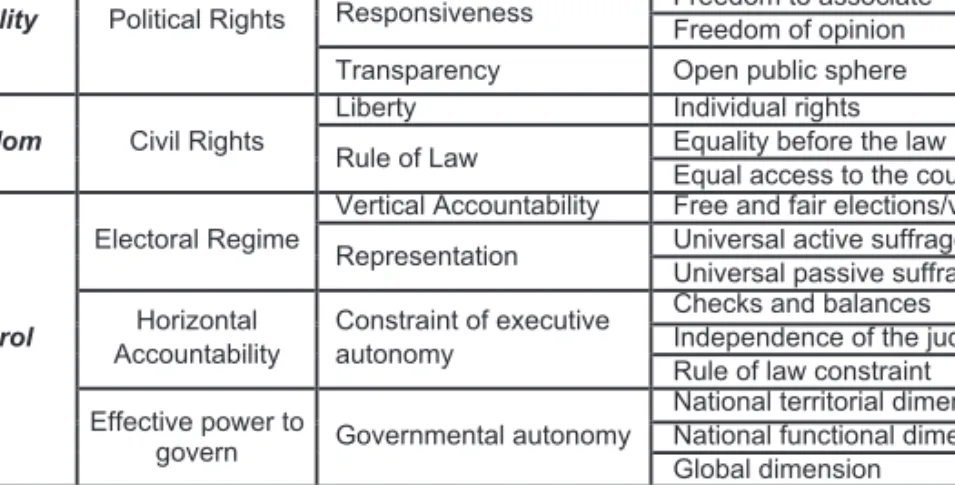
Figure 1 – Democratic principles, partial regimes, functions and components
Abridged by the author from Bühlmann, et al. (2007: 47‑51)
Going back to the Bühlmann, Merkel and Wessels’ conceptualisation, Figure 1 constitutes a simpler version of the original and it is this one that we will now follow. As it can be seen, they suggest three fundamental and more abstract dem‑ ocratic principles, inside of which a set of partial regimes are distributed. These are responsible for the normative and operational functioning of the complex institutional structures of the modern democracies. Not intending to go very deep into this question, some central aspects of each partial regime worth being explored.
The political rights are included in the chapter of equality and unfold in three different functions: participation – that embraces the rights to compete for electoral support (Bühlmann, et al, 2007: 17; Epstein, et al, 2006: 555) –, transparency, and responsiveness – “the capacity to satisfy the governed by executing its policies in a way that corresponds to their demands” (Morlino, 2002: 12). In other words, these rights involve the awareness of the real demands of the population and the subsequent assessment of the government’s response by the governed, in order to realise the convergence or divergence of its policies.
The civil rights belong to the freedom chapter and have two functions: the indi‑ vidual freedom and the rule of law. The first is a set of rights closely related to what we know as the Human Rights; the second comprises the principle through which “the state is bound to the effective law and acts according to clearly defined pre‑ rogatives.” (Bühlmann, et al., 2007: 18). In that sense, the separation of powers, the equality before the law and in the accession to Courts, the erga omnes application of the legal system, fair trials and the protection against corruption are some essential
Principles Partial Regimes Functions Components
Equality Political Rights
Participation Equal rights to participate Responsiveness Freedom to associate Freedom of opinion Transparency Open public sphere Freedom Civil Rights Liberty Rule of Law Individual rights Equality before the law
Equal access to the courts
Control
Electoral Regime Vertical Accountability Representation Free and fair elections/votes Universal active suffrage Universal passive suffrage Horizontal
Accountability Constraint of executive autonomy
Checks and balances Independence of the judiciary Rule of law constraint Effective power to
govern Governmental autonomy
National territorial dimension National functional dimension Global dimension
features of this juridical institution. As we will notice, these areas are problematic in Turkey and constitute a serious obstacle to the consolidation of its democracy.3
The final principle, the control, is materialised in other three partial regimes, all of them sharing the main feature of the control and assessment of the rulers’ ac‑ tion, only varying in the way that evaluation is developed. The electoral regime is fundamental as it constitutes the popular sovereignty’s clearest expression (Bühl‑ mann, et al., 2007: 16); together with the political rights, both constitute the vertical accountability, which is the one that can be demanded by the governed and that is periodical (Morlino, 2002: 9, 10). The horizontal accountability refers to the rulers’ responsibility before other institutions or collective actors with controlling pow‑ ers over the government – the Parliament, political parties, courts, central banks, trade unions, etc. are the responsible for this kind of continuous oversight (Idem: 10), implying therefore independent institutions to the effective functioning of this system. The last partial regime is related to the real capacity to rule, also essential once there is the risk that extra‑constitutional actors, not subject to the horizontal accountability, influence the decision‑making process, such as the military, mili‑ tias, powerful economic actors and lobbies.
Figure 2 – The study of democratic consolidation
Source: Schedler (1998)
3 L. Morlino includes in this regime the civilian democratic control over the military, which is also a problem in Turkey.
After having thought about transition and democracy, it is time to devote a few words about the final phase of this process: consolidation. Following the im‑ plementation of a democratic regime, this new situation is complex, lengthy and uncertain (Gomes, 2008: 73), as it involves “the complete institutionalization of a new system, the adoption of its rules and procedures, and the spread of demo‑ cratic values” (Pridham and Agh, 2001; Gomes, 2008: 73). The amount of time de‑ pends on the scope and deepness of the process that implies the gradual removal of the uncertainty that surrounds transition, the internalisation of its rules and proceedings, and the spread of the democratic values (Pridham and Vanhanen, 2003: 02). If we take this as a pattern, it will be easily realisable the complexity of this stage, where the possibility of a backward movement to an authoritarian regime should already be very low.
We will use the model proposed by Andreas Schedler (1998: 92), according to whom there are a couple of possible movements within the consolidation period. And as Schedler uses the same typification we adopted in terms of the types of de‑ mocracy, it means that as long as elections take place, that society should be object of the academics’ attention in this particular field of consolidation for being in a stage (although in different levels) of the maturation of its own system. As it can be observed in Figure 2, there are three types of possible movements according to this proposal: positive, negative or neutral, and all of them belong to this phase. The idea is that, once established, a democratic society can’t relax, as there still is the chance of a democratic breakdown or a more subtle (and many times unnoticed) kind of democratic erosion (Idem: 96, 97). But it is also possible for the society to complete the system with a growing number of democratic characteristics, or to deepen its qualities in order to achieve an “advanced” democracy. Or it can simply reorganise itself focusing on some specific aspects (Idem: 96‑100).
Methodological Approach
Our main objective, as stated earlier, is to find out the impact of the 2007 en‑ largement on the Turkish commitment to the democratisation process. In order to do so, we defined two chronological periods that allowed us to establish a com‑ parison: from 2004 to 2006, and from 2007 to 2009, split by the moment of Romania and Bulgaria’s integration.
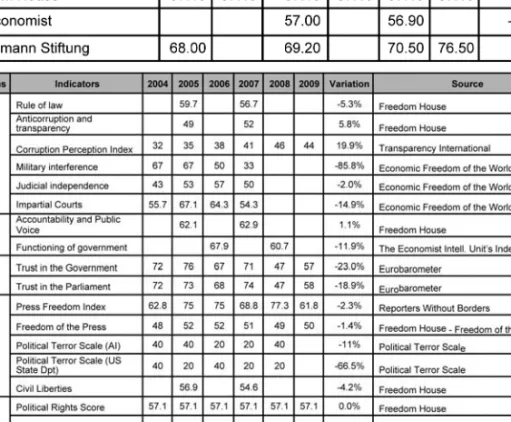
Figure 3 – Dimensions, indicators and data: the Turkish democracy between 2004‑2009
Source: author
The idea was to compare the Turkish effort in the first and the second periods, so that we could realise whether or not the enlargement influenced that effort in terms of the democratising process. First of all, we tried to figure out a way of measuring and assessing this commitment: as we showed in the previous section, we combined two proposals, crossing Morlino’s (2002) five dimensions with Bühl‑ mann, Merkel and Wessels’ (2007) indicators. Those five dimensions – rule of law, accountability, responsiveness, freedom and equality – provided us the main areas of democracy that afterwards became tangible with some of the indicators sug‑ gested in the work of Bühlmann and his team.
Secondly, and having established what a democracy is, we moved to the meas‑ urement: our choice implied gathering a number of different sources that provided quantitative data related to the period and the country in question. As the scales used by those institutions differ, all the values were converted into a 0‑100 scale, an index, in order to allow direct comparisons. From this crossing, came up Figure 3 (above), where the dimensions, the indicators, the sources and a variation rate are available.
Notwithstanding the importance of the quantitative data to bring objectivity to our evaluation, the Annual Progress Reports developed by the European Commission couldn’t be left aside and were used to counterbalance the quantifiable results.
Therefore, and after giving a quick glance at the role of the EU as a democracy promoter and the Turkish, Bulgarian and Romanian path towards the Union, we will analyse these results and try to reach some conclusion on whether Turkey was affected by the 2007 enlargement or not.
The European Union as a Democracy Promoter
The EU, as an international actor, has a peculiar character: it is neither a com‑ mon Westphalian sovereign state nor a merely intergovernmental organisation. Jan Zielonka, in his book Europe as Empire (2006), solves this dilemma by arguing that the enlarged Union constitutes a “neo‑medieval empire”. It means that this institu‑ tion presents characteristics which are typical of the medieval system but with post‑ modern adaptations. The idea of Empire comes from the fact that the EU exports its rules and relates itself very intensively with the rest of the world; simultaneously, the Union can’t be seen like a centralised state, as its authority is shared and diffuse (Zielonka, 2006: 10‑13). Sjursen (2007: 1) agrees with this special statute of the EU and argues that the study of the European Foreign Policy needs to be reassessed, as the Union is not a common international actor, what requires a different perspective of analysis.
Apart from this interesting conception, we should understand the EU as the international organisation it is. And as such, it has a special role in the interna‑ tional arena: “International institutions define who the players are in a particular situation and how they define their roles, and thus place constraints on behav‑ iour.” (Simmons and Martin, 2005: 198). They function therefore as a framing for the international actors, having the capability to change their identities and interests as a result of the interaction on time limited by a set of rules and norms. In other words, there is a promotion of the adequate behavioural patterns that re‑ minds us of the socialisation process, making international organisations part of the states, at the same time states can also influence the organisations they are in.
So, from the perspective of the agency, the EU tries to promote a certain im‑ age that is supposed to reflect its identity – keeping that as a guideline for its ac‑ tion and its relations to third states, the European Union is assuring coherence4,
4 The doubts about the existence of a single European identity will not be developed here, as it extrapolates the logic of the paper.
whether the enlargement policy, the commercial policy or any other is at stake. The Portuguese researcher Andreia Soares (2009: 98) refers to the “common Eu‑ ropean values” namely associated with peace and prosperity (the initial main objectives of the Communities), and democratic values, such as the respect for the Human Rights and the fundamental freedoms. As the EU Treaty puts it and the member‑states subscribe: “The Union is founded on the values of respect for human dignity, freedom, democracy, equality, the rule of law and respect for human rights (...)” (EUT, article 2). This implies that, despite the unavoidable diversity regarding the constitution of the European Union with its 27 members, there is some degree of coherence in its action given by these principles all the member‑states accepted.
One of those principles is precisely democracy, whose importance has been growing in legal and practical terms during the last decades. As a result, the world‑ wide promotion of democracy arises as one of the most important objectives of the External European Policy:
“The Union’s action on the international scene shall be guided by the principles which have inspired its own creation, development and enlargement, and which it seeks to advance in the wider world: democracy, the rule of law, the universality and indivisibility of human rights and fundamental freedoms, respect for human dignity, the principles of equality and solidarity, and respect for the principles of the United Nations Charter and international law.” (EUT, article 21)
Through a wide range of policies (neighbourhood, enlargement, commercial agreements,...), the EU functions as a strong centre of attraction – democratically speaking too. Michael Emerson and Gergana Noutcheva (2004: 2) use an illustra‑ tive metaphor imported from Physics: the gravity model of democratisation relies on the idea that, like the centre of gravity that attracts the objects towards itself, so do the big reference democracies promote the convergence of other countries. And although there are some sceptical voices regarding this EU’s capacity of effectively promoting democracy in other countries5, security, well‑being, peace, modernisa‑
tion and others are good motives for this attraction, apart from the more material benefits that will arise if a country decides to accept this democratic promotion in its state. In the case of the EU, this is developed through a normative, soft power model (Manners and Whitman, 2003: 389; Tafel, 2008: 8; Manners, 2002; Tafel, 2008: 2), where mechanisms like socialisation and conditionality are preferred to others. One has to admit that not always can the EU be regarded as a successful actor namely in what comes to the promotion of democracy, but the success of condi‑
tionality, for instance, cannot be disregarded, mainly when it is used in the context of the enlargement policy. And even though this academics’ position creates the idea of them being “naïve moralists” (Sjursen, 2007: 4) for considering the EU a “normative, civilising or ethical power within the international system” (Ibidem), the fact is that the issue of democracy, as well as Human Rights and others, are some of conditionality’s demands and the countries with relations with the Euro‑ pean Union spend some effort on the accomplishments of the wanted results.
The enlargement process is considered one of the most successful leverage mechanisms within the European external relations6 regarding democracy promo‑
tion. Turkey, as a candidate, is part of this process and, subsequently, has to cope with the conditionality imposed by the aquis communautaire and the Copenhagen criteria. And despite the eventual success of these policies, the transposition into the domestic law is sometimes quite difficult and creates a certain degree of ten‑ sion between Turkey and the European Union, as it happens concerning the civil‑ military relations and the respect for the human rights, more specifically for mi‑ norities, for example. Nevertheless, these are some areas that need to be worked on and the EU, with an attractive enlargement process and an effective conditionality policy, can be regarded as a “considerable transformative power in the applicant countries” (Schimmelfennig and Scholtz, 2008: 188), namely in the area of democ‑ racy. As the same authors explain:
“And although this literature would not claim that the EU accession conditionality is more important than domestic conditions of democratisation, it demonstrates that in many cases the Union’s external incentives have been instrumental in overcoming domestic obstacles to further democratic reform.” (Ibidem)
So, in a nutshell, we might consider the European Union a democracy promot‑ er through a set of differentiated policies and mechanisms. Together with domes‑ tic factors, the presence of this international organisation in countries like Turkey, namely through certain policies such as the already mentioned conditionality, has contributed to the acceleration of the pace of democratisation.
The Path towards the EU: Turkey, Bulgaria and Romania
Turkey‑European Union relations have been object of the attention of many scholars under different perspectives. Here, they will only be used to frame our 6 See, for example, Emerson et al. (2005: 5); Goksel and Cepel (2006:7); Schimmelfennig and Scholtz
main objective, as the nature of this relationship is crucial to understand the Turk‑ ish position and the movements of its commitment towards the European Union and democratisation processes.
Although the relationship with Europe could be traced back to the Otto‑ man Empire period, due to the influence received from the West and to the Ottoman involvement in the European concert, this agitated process started in 1959 when Turkey asked for Association with the EEC. It came to happen four years later, since when the ups and downs have always been present in this link with the West. A critical point was reached in the 70ies with the Turkish inva‑ sion of Cyprus (Faucompret and Konings, 2008: 24‑29). In spite of this situation the proposals for integration were as recurrent as the European Community’s refusals. The organisation justified its position with the political and economic instability of the country. Still, in 1996 an agreement on customs union entered into force and in 1999, in the Helsinki Summit, Turkey was given the candidate status, for being considered that the country already fulfilled the majority of the Copenhagen criteria. As a matter of fact, other two factors are suspected to be involved in this positive movement: firstly, because of the CEEC’s accept‑ ance in NATO, being Turkey one of its members; secondly, the Greek allowed that status to Turkey, once granted that Cyprus would join the Community (Idem, 28; Fernandes, 2005: 131).
In March 2001 an Accession Partnership is signed and in the next year the Turkish government creates the “National Programme for the Adoption of the Acquis”, followed by a considerable reforming effort: 34 constitutional amend‑ ments in 2001, and a new Civil Code considerable changes in sensitive areas, like the Human Rights and some freedoms – “These reforms were the first crucial responses to EU conditionality.” (Düzgit and Keyman, 2007: 73). As an incentive, the EU raises the financial pre‑accession assistance during the following years, also thanks to the impetus provided by the AKP, the opposition and the civil society, all of them committed to this project, despite the internal obstacles some tried to lift (Idem: 76‑79). Yet, the Turkish efforts were rewarded by the positive judgment of the 2004 Progress Report that allowed the European Council of that same year to give green light to the opening of the accession negotiations (Fau‑ compret and Konings, 2008: 45).
Graph 1 – Bulgaria and Turkey’s performances compared
Graph 2 – Romania and Turkey’s performances compared
Grey ‑ Bulgaria; Black ‑ Turkey
Düzgit and Keyman (2007: 74) assess this long process: “As can be seen from the brief description of events given above, the role of the EU triggering the steps towards a more consolidated democratic system is undeniable.”.In fact, that was how it worked in the considered period. Nonetheless, after being overcome by Greece, the Iberian countries and by all the other enlargement processes that in the meanwhile took place, what could have been the impact of the last one? As it is known, Romania and Bulgaria are geographically closed to Turkey and, for the Turks, their performances were not sufficiently better to justify the integration. Graphs 1 and 2, built with the tool available at the Bartelsmann Stiftung website, show a comparison between the three countries.
In relation to Bulgaria, for example, most indicators have been better performed in this already EU‑member: the socioeconomic level, the stability of the democratic institutions, the rule of law, political participation and stateness are the ones where the hiatus is more visible (and the ones more important in terms of democracy). Still, the difference is almost always about one point out of ten. However, in all the other indicators both countries are quite even: notice that except the political and social integration, the others relate directly to the economic performances – so many times highlighted as an obstacle to the Turkish integration.
Regarding Romania, we find a similar situation, but the difference between the two neighbours is not as remarkable as in the previous case. Overall in the economic domain, Turkey performs as good as or better than Romania. In socio‑ political terms, except for the socioeconomic level, Turkey is very closed or even sometimes at the same stage (political and social integration, stability of demo‑ cratic institutions and the rule of law are good examples).
A more detailed study was developed by Nicholas Sarokhanian and Yannis Stivachtis and it was exclusively based on a comparative approach regarding the European Commission Annual Progress Reports of Turkey, Bulgaria and Romania:
“In an effort to emphasize that Turkey has, so far, been unjustly left outside the Eu‑ ropean Union, many have argued that when compared to Bulgaria and Romania, Turkey scores better in its fulfilment of the Copenhagen political criteria than the other two, which jointed the EU on 1 January 2007.” (Sarokhanian and Stivachtis, 2008: 279)
The authors compare the different chapters of the Reports individually and rec‑ ognise, for example, that in relation to both countries, Turkey needs some improve‑ ment in the fighting against corruption and transparency (Idem: 283) – two impor‑ tant features of the rule of law. However, it is noticed that the executive branch of the Turkish public administration is better than the one of Romania (Idem: 284). The critics regarding the implementation of the acquis in terms of the judicial sys‑ tem were similar to Romania’s and that, in this field, “At the time of accession of
Bulgaria and Romania, Turkey was at least at the same level of meeting the criteria or even further along” (Idem: 286). In what comes to anti‑corruption measures, the authors understood from the reports that, although there are some concerns with this area in Turkey, it is not comparable to the “major structural threat” that cor‑ ruption represents in Bulgaria and Romania (Idem: 287).
Many other fields are scrutinised by the authors: on the one hand, for instance, human rights are the Achilles’ heel for Turkey (Idem: 288); on the other hand, in terms of civil and political rights, “Turkey shows greater advancements in most areas when compared to Romania and it is also farther advanced than Bulgaria in some realms” (Idem: 292), as it also happens in the domain of economic, social and cultural rights.
After having analysed the various chapters, the researchers recognised that, despite the need for some further changes in the Turkish society, this country fulfils the political Copenhagen criteria, concluding that “The progress shown is compa‑ rable to the relative statutes of Bulgaria and Romania when they acceded.” (Idem: 299). Truth is that the differences between both countries were not that remarkable and it will be our aim in the next section to find out if that caused a lack of motiva‑ tion in the Turkish democratic commitment.
The Evolution of Turkey’s Democratic Commitment
In terms of a general oversight in relation to the Turkish democracy, in Graph 3 all the indexes put the status of the system in this country above the line of the 50 points. The existence of a democracy seems therefore accepted by the three consulted sources. Given our central democratic division, in fact, Turkey does not seem to be just an electoral democracy; notice that for the “Transformation Index” from the Bartelsmann Stiftung, it comes close to 80. Are we thus talking about a
transition or a democratic consolidation? According to what we have been argu‑ ing, the transition includes the antecedents and the moment of the regime change in itself – since 1923, Turkey has a liberal Constitution: for many it is a sign that it has already moved in the direction of the consolidation. But if we raise our stand‑ ards up, only with the democratic improvements brought by the last decades, it seems to be wise to consider a democratic consolidation. Some reasons point in that direction: a) the EU’s measures and conditionality policies are demanding from the point of view of democracy and in 2004 the negotiations were opened; b) although we refer to consolidation, it does not imply a constant improvement in the quality of the political system; c) according to Raik (2005: 569), the studies on the international dimensions of the transitions fail when focusing on the phases of the regime change, as the EU integration can only start after transition is complete, that is, when it starts to consolidate.
Examining the data provided by Graph 4, we realise that the different institu‑ tions reveal contradictory values: for the Bartelsmann Stiftung, the evolution was positive given the rise of 6.7% of the Turkish democratic performance; however for the Freedom House, the progress was null, and for The Economist there was a retrocession of ‑0.18%. Once we have this contradiction in our hands, an individual analysis of the already defined dimensions seems to be more accurate to assess this democracy.
Corruption is the first indicator and the only one that showed an interrupted growth since 2004 (Graph 5). Both for Transparency International and for the Freedom House the movement was positive, but always with values in the negative field or very close to the threshold. Nevertheless, in the Progress Reports the conclusions were different: in the first three years, the signature and ratification of conventions, and the adoption of specific and concrete measures aren’t obscured by the existing gaps; in all those years, the reports refer “some progress” (European Commission, 2004: 28; 2005: 17; 2006: 59). This pattern is not found from 2007 to 2009 though:
“limited progress” (Idem, 2007: 59; 2008: 67; 2009: 12) is the expression used in the documents, conveying the idea of a contrary tendency to the one given by the quantitative data. In that sense, we can argue that this is an unstable domain of the Turkish democracy. Despite the positive evolution showed by the graph, the values do not even reach the middle of the scale; on the other side, the EU presents a negative tendency, pointing the fingers to the failures of the fight against cor‑ ruption – in 2007 Turkey did not implement the measures of the Group of States Against Corruption and was criticised by the practice of bribes.
Regarding the military intervention, the same graph illustrates an opposite tendency: since 2005, the country’s performance in this area has suffered an ac‑ centuated and continuous decrease, according to the data from the Economic Free-dom of the World. This same opinion is shared by the European Commission – the institution praises the effort and the results of the measures on the civilian control over the military and on the decrease of their influence on politics. The reports mention progresses, namely vis‑à‑vis the National Security Council, whose action was constrained and where the number of civilians was augmented. (Idem, 2004: 21‑23; 2005: 14). However, in 2006 there is not as much optimism as in previous years (“limited progress”), and in 2007 and 2008 there is a clear inversion of the assessment: “overall no progress” (Idem, 2007: 9; 2008: 9). In 2009 there are signs of slight improvement.
The last issue raised by the rule of law is the judiciary, for which the graph describes an enhancement until 2006 and a decrease of the quality after that year. The Progress Reports, from 2004 to 2006, highlight the positive adopted measures in this domain, especially regarding the new Penal Code, the establishment of the Justice Academy, and the application of the European Convention on Human Rights. In 2006, the Commission wrote: “Overall, there was continued progress in the area of judicial reform” (Idem, 2006: 10). But in the next year, although they rec‑ ognise the improvements at the judicial efficiency, the document reports a special concern on the system’s independence (Idem, 2007: 10) and impartiality that are
reiterated in 2008 (Idem, 2008: 10) and in 2009 (Idem, 2009: 9). As a result, in what comes to the rule of law, its weaknesses and lack of solidity were revealed; almost all indicators noted a deterioration of the quality of this dimension’s elements, especially since 2006. Overall, and as is shown by Graph 6, built with the average of all the indicators, the evolution from the first to the second period was pretty negative, almost reaching a decrease of about 14%.
Again in contradiction, as the Graph 7 shows, the data related to the account‑ ability indicators diverge: a slight improvement according to the Freedom House, and a significant break in the governmental performance for The Economist. Yet, both are above the 50 threshold, in a green zone.
In the Progress Reports, the section regarding the government was specially taken into consideration: in every single year, the European Union considered that the executive was both democratically elected and very deeply engaged in the integration process, accomplishing the necessary reforms in accordance with that. They also reported the cooperation with the main opposition party, both keeping their electoral promises. Furthermore, the documents highlighted the large voter turnout and the renewed trust in the AKP in the second elections, what meant the satisfaction with the governmental performance (Idem, 2004: 20; 2005: 11; 2006: 6; 2007: 7; 2008: 7; 2009: 8). Thereupon, this seems to be a relatively successful domain, but also pretty difficult to evaluate. Still, the evolution between the two periods ended up being negative, due to The Economist’s data (Graph 6).
In order to assess the responsiveness, the third dimension of the table, we ana‑ lysed the popular trust in two national institutions (Graph 8): the Parliament and the Government, as we found relevant to estimate the way their performance is or is not in accordance with the demands and wishes of the electorate. Both lines developed a parallel and very close route, but also both with an elevated degree of instability – in each year the tendency inverted. The strength of the 2008 fall, however, gave a negative connotation to the evolution between the two periods.
This situation does not become clearer with the reading of the Progress Reports, once they are not critical about these organs and they only practically refer to their democratic character, not allowing further conclusions.
On the contrary, the next domain is far more complex: freedom is expressed through a wide range of possible indicators, namely the ones represented in Graph 9, and the interpretation of those values should be very careful, as diverse issues are at stake. The freedom of the press is the first one to be studied and according to the used sources, although they diverge in the degree of freedom, the progress between the two periods is negative. For the European Commission, the perform-ance in terms of this kind of freedom was pretty unstable: on the one hand, Turkey was able to reach some improvements, but, on the other hand, there still are recur-rent constraints on the non-violent expression of opinion. The Commission states some improvements in many years, but always shows its concern regarding this sector, such as the excessively high fines, excessive prosecutions and convictions, etc. (Idem, 2004: 38; 2005: 25; 2006: 14; 2007: 14; 2008: 16; 2009: 18).
The second element is related to the political rights – persecutions, torture and ill-treatment are some indicators investigated by the International Amnesty, whose
Graph 8 – Responsiveness in Turkey (2004-2009) Graph 7 – Accountability in Turkey (2005-2007)
reports negatively assess the Turkish fulfilment, especially in 2006 and 2007, where a more accentuated decline was felt. The European Commission shares a different opinion though: for the Union, Turkey always spent a great effort on the resolution of these problems, having adopted since 2004 a 0‑tolerance policy with practical ef‑ fects achieved; however, in 2008 and 2009, the number of reported cases increased, as well as the concerns about the impunity of the authors of these crimes. Hence, the governmental “limited efforts” are considered the main responsible for this situation in the last years (Idem, 2008: 14; 2009: 16).
In what comes to civil liberties, the Freedom House has also registered a neg‑ ative trend. However, as we can understand from the graphs, it was a slight negative trend and this dimension always kept the positive results. In the Euro‑ pean Commission Reports, the results regarding the religious and of assembly freedoms were similar: the first has shown some progress, although limited by the persistence of the problem felt by non‑Muslim groups (except in 2009); the second was also marked by improvements throughout the years, especially in terms of the legal framing. There still are nevertheless obstacles in practice to be overcome. On the whole, as shown by Graph 6, the freedom field evolved positively. Apart from the noticed failures in the different domains, the efforts on the reforms promoted some not very accentuated but real positive effects. Even though, for the effective consolidation of the new reality, more than only these formal changes are necessary: the familiarisation of the population with the new principles, their internalisation and application in everyday life are crucial steps to be taken.
The last dimension, equality, wasn’t able to be easily detected in the Progress Reports given their specificity. Yet, some general considerations can be made, hav‑ ing in mind Graph 10: a) in the three indicators used, there was no variation; b) only the electoral process and pluralism registered a solid punctuation, almost in
the order of the 80 points; c) the other two were below the minimum threshold. For these reasons, we consider this area to be very difficult to assess and to draw some conclusions from.
Graph 11 shows us a comparative approach with the evolution of each one of the dimensions between the two periods. And as we verified, although equality and freedom kept similar or have slightly improved, the other three dimensions suffered a retrocession in the second period. This development can even be more clearly ap‑ preciated in the already known Graph 6, where it is also represented and which confirms the above mentioned conclusions. Graph 12 makes available the annual progress of each field. We emphasise: a) the volatility of the different dimensions in time; b ) the lack of a clear pattern of growth or retrocession; c) overall and in general, we are able to notice a decrease since 2006 in almost all dimensions (responsive is
Graph 10 – Equality in Turkey (2006, 2008)
the exception, as it only starts to decrease in the next year), a convergence in 2008 with smaller values and distinctive behaviours in 2009. Once again, we reiterate that there is no clear and pure pattern, but we can draw some conclusions from the gen‑ eral tendency of decrease in the second period. Thus, and using the available data, some reflections and deductions might be risked: what kind of democracy is present in Turkey? Is this country going through a process of completing or deepening its democracy? And how can we assess the development of Turkey’s effort during the periods? What was after all the effect of the 2007 enlargement?
Conclusion
Attending to the performance of the Turkish society in the different fields and the recent reforms and improvements, we tend to believe that it is not a merely electoral democracy anymore, finding itself in the way to the consolidation of the liberal nature of its regime. There is, we can state, a certain hybridism that allows us to locate it in the movement of completing its regime. In other words, the Turk‑ ish democracy has already abandoned the electoral type and is getting closer to the liberal one.
We believe that it is wise to argue that there is, in fact, a negative progress of the Turkish effort on its own process of democratic consolidation, naturally very tightly linked to the accession to the EU, reflected by the results of those changes
Graph 12 – Annual evolution per dimension
Rule of Law
that were less visible during the period from 2007 to 2009. Thus, we consider that the preferences and interests of the country, as result of the constant interactions, changed: until 2006/2007, there was a shift from a prior phase of carelessness to a proactive effort; then, after 2007, again to despondency.
The reasons that underlie these changes are many, but we recognise that Turks’ ideas and perceptions were significant to that negative movement. After the prom‑ ise of opening the negotiations of accession (that worked like a “carrot”) there was a doubled effort to make the needed reforms. Nevertheless, after having reached that “carrot”, and perceiving the accession of two countries geographically close and whose political and economic performances the Turks did not regard as much different as theirs, their interpretation of these facts might have originated a shift in their behaviour, now less committed to the closeness to Europe. Notice that, in the last years, that movement coincided with a reinforcement of Turkey’s regional influence on the Middle East – the mediation efforts in the case of Iran and the nu‑ clear question, in the opposition to the Gaza blockade and the flotilla incident are good examples, regarded by many as a “return to Asia”.
In fact, the data appears to show a retrocession; eventually it consists in a decel‑ eration of the reforms’ pace, and in that case we would need more data to confirm, mainly related to 2008 and 2009. However, it does not deny the EU influence on the Turkish reality; on the contrary, such is visible in many occasions and contexts. Still, there is a strong tendency to think that one of the possible explanations of the general negative evolution might be the lack of enthusiasm caused by the 2007 enlargement: note that some authors, like Levitz and Pop‑Elaches (2010: 479‑480), argue that even after accession the effort on the reforms might possibly slow down, but does not stop or retreat. It calls into question the theory that defends that, after the opening of the negotiations, Turkey relaxed from its effort. Besides, the nego‑ tiations were allowed after the 2004 Report, and in 2005 and 2006 there was still an intense rhythm. We should also not forget the controversial discourse inside the European Union: the Commission is more permissive and optimistic, but the Council is divided and refuses consecutively the approach to Turkey, postponing sine die a final decision – France, Germany and Greece constitute the nucleus of that side.
Although the study has left some open ends, which were beyond the scope of the theoretical framework chosen and that need to be further deepened, we consider that these conclusions are willing to be considered a possible answer to the initial doubts, given the theoretical outline and the developed analysis and interpretation. Thus, we subscribe and support these results, waiting for new ap‑ proaches to this question.
Split between two continents, Turkey is very likely to be in the coming time a lively motive for debate inside the EU, among academics and the population in
general, as it raises important questions related to the European identity, limits and nature. However, the divergent signs the Union has sent do not contribute to the necessary harmony to the societal transformations that the EU demands. Thus, it urges more coherence in its action in relation to Turkey, in order to promote the alterations that the European Union stands for or to take the “stick” away if it can‑ not assure the presence of the “carrot”.
References
Bertelsmann Stiftung (2004). Bertelsmann Transformation Index 2003 – Turkey Coun-try Report, Gütersloh. http://bti2003.bertelsmann‑transformation‑index. de/147.0.html?&L=1 [2010.08.16]
Bertelsmann Stiftung (2007). Bertelsmann Transformation Index 2006 – Turkey Coun-try Report, Gütersloh. http://bti2006.bertelsmann‑transformation‑index. de/147.0.html?L=1 [2010.08.16]
Bertelsmann Stiftung (2010). Bertelsmann Transformation Index 2009 – Turkey Country Report, Gütersloh. http://www.bertelsmann‑transformation‑index. de/147.0.html?&L=1 [2010.08.16]
Bühlmann, Marc; Merkel, Wolfgang; Wessels, Bernhard (2007). “The Quality of Democracy: Democracy Barometer for Established Democracies“, National Center for Competence in Research, Working Paper no. 10. http://www.nccr‑ democracy.uzh.ch/publications /workingpaper/pdf/WP10.pdf [2010.07.01]. Diamond, Larry (2003). “Can the Whole World Become Democratic? Democ‑
racy, Development, and International Policies”, Center for the Study of De‑ mocracy, University of California, April. http://www.escholarship.org/uc/ item/7bv4b2w1 [2010.06.07].
Düzgit, Senem; Keyman, E. (2007). “Europeanization, Democratization and Hu‑ man Rights in Turkey” in LaGro, Esra; Jørgensen, Knud (eds.) Turkey and the European Union: Prospects for a Difficult Encounter. New York: Palgrave Macmil‑ lan, pp. 69‑89.
European Commission (2004). 2004 Regular Report on Turkey’s progress towards accession, COM(2004) 656 final, Brussels, October 6. http://ec.europa.eu/en‑ largement/archives /pdf/key_documents/2004/rr_tr_2004_en.pdf [2010.08.16] European Commission (2005). Turkey 2005 Progress Report, COM(2005) 561 final,
Brussels, November 9. http://ec.europa.eu/enlargement/archives/key_docu‑ ments/reports_ 2005_en.htm [2010.08.16]
European Commission (2006). Turkey 2006 Progress Report, COM(2006) 649 fi‑ nal, Brussels, November 8. http://ec.europa.eu/enlargement/pdf/key_docu‑ ments/2006/nov/tr_sec_ 1390_en.pdf [2010.08.16]
European Commission (2007). Turkey 2007 Progress Report accompanying the Communication from the Commission to the European Parliament and the Council – Enlargement Strategy and Main Challenges 2007‑2008, COM(2007) 663 final, Brussels, November 6. http://ec.europa.eu/enlargement/pdf/key_ documents/2007/nov/turkey_progress_reports_en.pdf [2010.08.16]
European Commission (2008). Turkey 2008 Progress Report accompanying the Communication from the Commission to the European Parliament and the Council – Enlargement Strategy and Main Challenges 2008‑2009, COM(2008) 674 final, Brussels, November 5. http://ec.europa.eu/enlargement/pdf/ press_corner/key‑documents/reports_nov_2008/ turkey_progress_ report_ en.pdf [2010.08.16]
European Commission (2009). Turkey 2009 Progress Report accompanying the Communication from the Commission to the European Parliament and the Council – Enlargement Strategy and Main Challenges 2009‑2010, COM(2009) 533 final, Brussels, October 10. http://ec.europa.eu/enlargement/pdf/key_ documents/2009/tr_rapport_2009_en.pdf [2010.08.16]
The Economist (2006). The Economist Intelligence Unit’s index of democracy. http:// www.economist.com /media/pdf/democracy_index_2007_v3.pdf [2010.08.16] The Economist (2008). The Economist Intelligence Unit’s index of democracy. http://
graphics.eiu.com/ PDF/Democracy%20Index%202008.pdf [2010.08.16] Emerson, Michael; Noutcheva, Gergana (2004). “Europeanisation as a Gravity Mod‑
el of Democratisation”, Centre for European Policy Studies, Working Document no. 214, November. http://www.ceps.eu/files/book/1175.pdf [2010.08.08]
Epstein, David; Bates, Robert; Goldstone, Jack; Kristensen, Ida; O’Halloran, Sharyn. (2006). “Democratic Transitions”, American Journal of Political Science, 50(3), July, pp. 551‑569. http://www.jstor.org/stable/3694234 [2010.05.04].
Epstein, Susan; Serafion, Nino; Miko, Francis (2007). “Democracy Promotion: Cornerstone of US Foreign Policy?”, Congressional Research Service, Report for US Congress, December 26. http://www.fas.org/sgp/crs/row/RL34296.pdf [2010.07.01].
Eurobarometer (2004). Public Opinion in the European Union, European Commission Directorate General Communication, Standard Eurobarometer, 61, July. http:// ec.europa.eu/public_ opinion/archives/eb/eb61/eb61_en.htm [2010.08.16]
Eurobarometer (2005). Public Opinion in the European Union, European Commission Directorate General Communication, Standard Eurobarometer, 63, July. http:// ec.europa.eu/public_ opinion/archives/eb/eb63/eb63_en.htm [2010.08.16] Eurobarometer (2006). Public Opinion in the European Union, European Commission
Directorate General Communication, Standard Eurobarometer, 65, July. http:// ec.europa.eu/public_ opinion/archives/eb/eb65/eb65_en.htm [2010.08.16] Eurobarometer (2007). Public Opinion in the European Union, European Commission
Directorate General Communication, Standard Eurobarometer, 67, July. http:// ec.europa.eu/public_ opinion/archives/eb/eb67/eb67_en.htm [2010.08.16] Eurobarometer (2008). Public Opinion in the European Union, European Commission
Directorate General Communication, Standard Eurobarometer, 69, July. http:// ec.europa.eu/public_ opinion/archives/eb/eb69/eb69_en.htm [2010.08.16] Eurobarometer (2009). Public Opinion in the European Union, European Commission
Directorate General Communication, Standard Eurobarometer, 71, July. http:// ec.europa.eu/public_ opinion/archives/eb/eb71/eb71_en.htm [2010.08.16] Faucompret, Eric; Konings, Jozef (2008). Turkish Accession to the EU: Satisfying the
Copenhagen Criteria. New York: Routledge.
Fernandes, José (2005). Turquia: Metamorfoses de Identidade. Lisboa: Instituto de Ciências Sociais da Universidade de Lisboa.
Freedom House (2004). Freedom in the World – Country Report: Turkey, 2004 Edition. http://www. freedomhouse.org/template.cfm?page=22&year=2004&count ry=3046 [2010.08.16]
Freedom House (2004a). Freedom of the Press – Country Report: Turkey, 2004 Edi‑ tion. http://www.freedomhouse.org/template.cfm?page=251&year=2004 [2010.08.16]
Freedom House (2005). Freedom in the World – Country Report: Turkey, 2005 Edition. http://www. freedomhouse.org/template.cfm?page=22&year=2005&count ry=6851 [2010.08.16]
Freedom House (2005a). Countries at the Crossroads – Country Report: Turkey, 2005 Edition. http://www.freedomhouse.org/template.cfm?page=140&edition=2& ccrpage=8&ccrcountry=103 [2010.08.16]
Freedom House (2005b). Freedom of the Press – Country Report: Turkey, 2004 Edi‑ tion. http://www.freedomhouse.org/template.cfm?page=251&year=2005 [2010.08.16]
Freedom House (2006). Freedom in the World - Country Report: Turkey, 2006 Edition. http://www.freedomhouse.org/template.cfm?page=363&year=2006&count ry=7077 [2010.08.16]
Freedom House (2006a). Freedom of the Press – Country Report: Turkey, 2004 Edi‑ tion. http://www.freedomhouse.org/template.cfm?page=251&year=2006 [2010.08.16]
Freedom House (2007). Freedom in the World - Country Report: Turkey, 2007 Edi‑ tion. http://www.freedomhouse.org/template.cfm?page=22&year=2007&cou ntry=7291 [2010.08.16]
Freedom House (2007a). Countries at the Crossroads – Country Report: Turkey, 2007 Edition. http://www.freedomhouse.org/template.cfm?page=140&edition=8& ccrpage=37&ccrcountry=173 [2010.08.16]
Freedom House (2007b). Freedom of the Press – Country Report: Turkey, 2004 Edi‑ tion. http://www.freedomhouse.org/template.cfm?page=251&year=2007 [2010.08.16]
Freedom House (2008). Freedom in the World - Country Report: Turkey, 2008 Edition. http://www.freedomhouse.org/template.cfm?page=363&year=2008&count ry=7508 [2010.08.16]
Freedom House (2008a). Freedom of the Press – Country Report: Turkey, 2004 Edi‑ tion. http://www.freedomhouse.org/template.cfm?page=251&year=2008 [2010.08.16]
Freedom House (2009). Freedom in the World - Country Report: Turkey, 2009 Edi‑ tion. http://www.freedomhouse.org/template.cfm?page=22&year=2009&cou ntry=7722 [2010.08.16]
Freedom House (2009a). Freedom of the Press – Country Report: Turkey, 2004 Edi‑ tion. http://www.freedomhouse.org/template.cfm?page=251&year=2009 [2010.08.16]
Giddens, Anthony (2000). Sociologia. Lisboa: Fundação Calouste Gulbenkian. Gomes, Teresa (2008). “A democratização dos Balcãs: o caso da Macedónia”.
Re-lações Internacionais, IPRI, n.º 20, Dezembro, pp. 69‑83.
Göksel, Nilüfer; Çepel, Zühal (2006). “European Neighbourhood Policy and De‑ mocracy Promotion”, Third Pan-European Conference, European Consortium for Political Research, Istambul, Setembro. http://www.jhubc.it/ecpr‑ istanbul/ virtualpaper room/062.pdf [2010.06.12]
Gwartney, James; Lawson, Robert (eds) (2009). Economic Freedom of the World – 2009 Annual Report, Vancouver: Economic Freedom Network. http://www.free‑ theworld.com/ 2009/reports/ world/EFW2009_BOOK.pdf [2010.08.16] Jaggers, Keith; Gurr, Ted (1995). “Tracking Democracy’s Third Wave with the Pol‑
ity III Data”, Journal of Peace Research, November, pp. 469‑482, http://www. jstor.org/stable/425616 [2010.06.04].
Levitz, Philip; Pop‑Elaches, Grigore (2010). “Why No Backsliding? The European Union’s Impact on Democracy and Governance Before and After Accession”, Comparative Political Studies, 43(4), pp. 457‑485, http://cps.sagepub.com/con‑ tent/43/4/457 [2010.07.17]
Morlino, Leonardo (2002). “What is a “Good” Democracy? Theory and Empirical Analysis”, Conferência The European Union, Nation State, and the Quality of De-mocracy: Lessons from Southern Europe, Outubro/November, University of Cali‑ fornia, Berkley. http://ies.berkeley.edu/research/files/CP02/CP02‑What_is_ Good_Democracy.pdf [2010.07.01].
Pasquino, Gianfranco (2010). Curso de Ciência Política. Cascais: Princípia, 2.ª ed. Pridham, Geoffrey; Vanhanen, Tatu (eds.) (2003). Democratization in Eastern Europe:
Domestic and International Perspectives. London/Nova York: Routledge.
Raik, Kristi (2004). “EU Accession of Central and Eastern European Countries: De‑ mocracy and Integration as Conflicting Logics”, Eastern European Politics and Societies, 18 (4), pp. 567‑594.
Raik, Kristi (2006). “A bleak version of enlargement: The EU’s democracy promo‑ tion policy in the eastern neighbourhood” in Kasekamp, Andres (ed.) Estonian Foreign Policy Yearbook 2006. Tallin: Estonian Foreign Policy Institute, pp. 27‑50. Reporters Without Borders (2009). Press Freedom Index 2009. http://en.rsf.org/
press‑freedom‑index‑2009,1001.html [2010.08.16]
Reporters Without Borders (2008). Press Freedom Index 2008. http://en.rsf.org/ spip.php?page= classement&id_rubrique=33 [2010.08.16]
Reporters Without Borders (2007). Press Freedom Index 2007. http://en.rsf.org/ spip.php?page= classement&id_rubrique=34 [2010.08.16]
Reporters Without Borders (2006). Press Freedom Index 2006. http://en.rsf.org/ spip.php?page= classement&id_rubrique=35 [2010.08.16]
Reporters Without Borders (2005). Press Freedom Index 2005. http://en.rsf.org/ spip.php?page= classement&id_rubrique=549 [2010.08.16]
Reporters Without Borders (2004). Press Freedom Index 2004. http://en.rsf.org/ spip.php?page= classement&id_rubrique=550 [2010.08.16]
Sarokhanian, Nicholas; Stivachtis, Yannis (2008). “Fulfilling the Copenhagen Political Criteria: A Comparison between Turkey, Bulgaria and Romania” in Müftüler‑Baç, Meltem; Stivachtis, Yannis (eds.) Turkey-European Union Rela-tions. Plymouth: Lexington Books, pp. 279‑301.
Schedler, Andreas (1998). “What is Democratic Consolidation?”, Journal of Democ-racy, 9(2), April, pp. 91‑107. http://psweb.sbs.ohio‑state.edu/faculty/mcoop‑ er/ ps744readings/schedler.pdf [2010.07.01].
Schimmelfennig, Frank; Scholtz, Hanno (2008). “EU Democracy Promotion in the European Neighbourhood: Political Conditionality, Economic Development and Transnational Exchange”, European Union Politics, 9(2), pp. 187‑215. http:// eup.sagepub.com/content/9/2/187 [2010.07.17]
Simmons, Beth; Martin, Lisa (2005). “International Organizations and Institutions” in Carlsnaes, Walter; Risse, Thomas; Simmons, Beth. (eds) Handbook of Interna-tional Relations. London/Thousand Oaks/New Delhi: SAGE Publications, pp. 192‑211.
Soares, Andreia (2009). “O processo de alargamento da UE: problemáticas e de‑ safios” in Costa, Carla; Ferreira, Marcos; Pereira, Maria João; Soares, Andreia (org.), A União Europeia como Actor Global: Dimensões Económicas e Normativas da Política Externa Europeia. Lisboa: Instituto Superior de Ciências Sociais e Políti‑ cas, pp. 97‑166.
Sjursen, Helene (2007). “Doing good in the World? Reconsidering the Basis of the Research Agenda on the EU’s Foreign and Security Policy”, RECON On-line Working Paper 2007/09. http://reconproject.eu/projectweb/portalproject/ RECONWorkingPapers.html [2011.05.26].
Tafel, Heather (2008). “The EU as a Democracy Promoter: EU Identity, Leverage, and Institutions”, Annual Meeting of the International Studies Association, San Francisco, March. http://www.allacademic.com/meta/p253382_index.html [2010.07.17]
Transparency International (2004). Corruption Perceptions Index 2004. http://www. transparency.org /policy_research/surveys_indices/cpi/2004 [2010.08.16] Transparency International (2005). Corruption Perceptions Index 2005. http://www.
transparency.org /policy_research/surveys_indices/cpi/2005 [2010.08.16] Transparency International (2006). Corruption Perceptions Index 2006. http://www.
Transparency International (2007). Corruption Perceptions Index 2007. http://www. transparency.org /policy_research/surveys_indices/cpi/2007 [2010.08.16] Transparency International (2008). Corruption Perceptions Index 2008. http://www.
transparency.org /policy_research/surveys_indices/cpi/2008 [2010.08.16] Transparency International (2009). Corruption Perceptions Index 2009. http://www.
transparency.org /policy_research/surveys_indices/cpi/2009 [2010.08.16] Walmsely, Roy (org.) (2004). World Prison Population List, 5th Edition, International
Centre for Prison Studies, King’s College, London. http://rds.homeoffice.gov. uk/rds/pdfs2/r234.pdf [2010.08.16]
Walmsely, Roy (org.) (2005). World Prison Population List, 6th Edition, Internation‑
al Centre for Prison Studies, King’s College, London. http://www.building‑ block.org/world‑prison‑population‑list‑2005.pdf [2010.08.16]
Walmsely, Roy (org.) (2006). World Prison Population List, 7th Edition, International
Centre for Prison Studies, King’s College, London. http://www.kcl.ac.uk/dep‑ sta/law/research/ icps/downloads/world‑prison‑pop‑seventh.pdf [2010.08.16] Walmsely, Roy (org.) (2008). World Prison Population List, 7th Edition, International
Centre for Prison Studies, King’s College, London. http://www.kcl.ac.uk/ depsta/law/research/ icps/downloads/wppl‑8th_41.pdf [2010.08.16]
Zielonka, Jan (2006). Europe as Empire: the nature of the enlarged European Union. Ox‑ ford: Oxford University Press.