Universidade de Trás-os-Montes e Alto Douro
Perceções dos residentes sobre a imagem da marca Madeira e sobre os
atributos relevantes para a sua qualidade de vida na região
Dissertação de Mestrado em Ciências Económicas e Empresariais
Carla Sofia Vasconcelos Câmara
Orientador: Prof. Doutor Mário Sérgio Carvalho Teixeira
Universidade de Trás-os-Montes e Alto Douro
Perceções dos residentes sobre a imagem da marca Madeira e sobre os
atributos relevantes para a sua qualidade de vida na região
Dissertação de Mestrado em Ciências Económicas e Empresariais
Carla Sofia Vasconcelos Câmara
Orientador: Prof. Doutor Mário Sérgio Carvalho Teixeira
Composição do Júri:
Prof.ª Doutora M. Teresa Couceiro Costa Sequeira e S. Carvalho Prof. Doutor Ricardo Jorge Vieira Correia
Prof. Doutor Mário Sérgio Carvalho Teixeira
Dissertação apresentada à Universidade de Trás-os-Montes e Alto Douro, como requisito parcial para a obtenção do grau de Mestre em Ciências Económicas e Empresariais
Ag
Acknowledgment
I would like to start by expressing my sincere thankfulness to my mentor Prof. Dr. Mário Sérgio Teixeira for the continuous support of my study and related research, for his motivation and immense knowledge. He consistently allowed this paper to be my own work but steered me in the right direction whenever he thought I needed it.
Besides him, I would also like to thank the expert Filipa Jorge, involved in the validation survey data for this research project, for her insightful comments, but also for the hard questions which incanted me to widen my research from various perspectives. Without their passionate participation and input, the survey data validation could not have been successfully conducted. Finally, I must express my very profound gratitude to my parents and to my boyfriend for providing me with unfailing support and continuous encouragement throughout my years of study and through the process of researching and writing this thesis. This accomplishment would not have been possible without them.
Re
ResumoA maioria dos estudos sobre o Place Marketing foi focado em turistas. Assim, o objetivo desta dissertação é examinar a noção de “imagem do lugar” tida pelos residentes e o que a pode influenciar, através de uma revisão da literatura existente sobre marketing territorial, bem como através de um estudo empírico sobre uma imagem de marca territorial, a perceção da comunidade sobre a qualidade de vida dos residentes, a sua aceitação ao desenvolvimento de atividades turísticas e, ainda, o seu apoio ao futuro do desenvolvimento turístico.
Método: Para além da revisão de literatura para o artigo teórico, a metodologia adotada para o
artigo empírico consistiu numa abordagem quantitativa que se materializou na realização de questionários aos residentes da Região Autónoma da Madeira, tendo sido obtida uma amostra de 290 indivíduos, sendo os dados obtidos posteriormente trabalhados com recurso ao método de equações estruturais, com vista a validar as conclusões da investigação.
Resultados: Com base nesta dissertação e no trabalho empírico apresentado, concluímos que a
imagem do lugar Madeira que é percecionada pelos residentes é positivamente influenciada pela sua aceitação ao desenvolvimento de atividades turísticas e pelo seu apoio ao futuro desenvolvimento associado a esta atividade económica, e que esta última variável é positivamente influenciada pela aceitação dos residentes em relação ao desenvolvimento de atividades turísticas. Finalmente, comprova-se que a qualidade de vida percebida pelos residentes influencia esta sua aceitação ao desenvolvimento de atividades turísticas, mas não tem impacto no seu apoio ao futuro desenvolvimento do turismo nem na imagem que os residentes têm da região da Madeira.
Ab
AbstractMost of the studies on place marketing focused on tourists. Thus, the purpose of this dissertation is to examine the notion of “place image” held by residents and what can influence it, through a review in the existing literature about territorial marketing, as well as through an empirical study on a territorial brand image, the residents’ community perception about quality of live, their acceptability of tourism activities development and also their support for future tourism development.
Method: In addition to the theoretical article literature review, the methodology adopted for
the empirical article consisted of a quantitative approach which followed by the application of questionnaires to the Autonomous Region of Madeira residents, having been obtained a sample of 290 individuals. The data was later treated using a structural equations method, in the attempt of validating the conclusions.
Results: Based on this dissertation and the empirical work presented, we concluded that the
residents’ Madeira place image is positively influenced by their acceptability of tourism activities development and their support for future development associated with this economic activity, and this last variable is positively influenced by residents’ acceptability of tourism activities development. Finally, we show that the residents’ perceived quality of life has a positive influence on this acceptability of tourism activities development, but has no impact on their support for future tourism development or on their perceived Madeira place image.
1
Ind
Chapter 1 ... 1 Theoretical framework ... 9 Research Objectives ... 10 Dissertation structure ... 10 Chapter 2 ... 13Place Marketing: Target groups and destination brand image – a theoretical approach ... ... 15
Chapter 3 ... 35
Residents’ perceptions about the image of Madeira brand and evaluation of its influence by the attributes relevant to their quality of life in the region, acceptability of specific tourism activities development and support for future tourism development – an empirical approach ... 37
Chapter 4 ... 73
Conclusions ... 75
Limitations and suggestions for future research ... .77
Bibliography ... 79
3
Figures Index
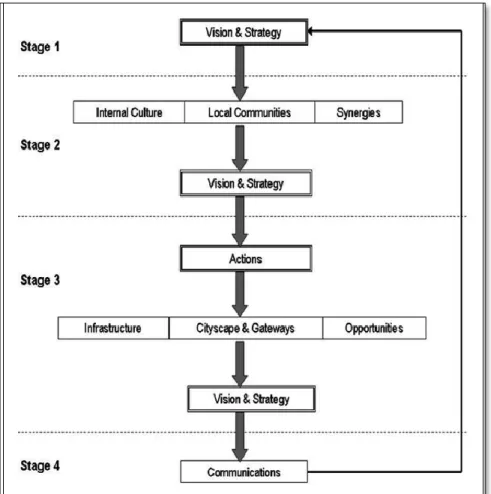
Fig. 1- Place brading process (Kavaratzis, 2009) ... 27 Fig. 2- Research conceptual model ... 48 Fig. 3- Results of the 2011 Censuses (thousands) Source: INE/DREM- Demographic Statistics
... 52
4
5
Table Index
Table 1- Population residing in the Autonomous Region of Madeira; Source: Data according
to the 2013 version of the Nomenclature of Territorial Units for Statistical Purposes (NUTS)
version 2002, updated until April 2015 ... 44
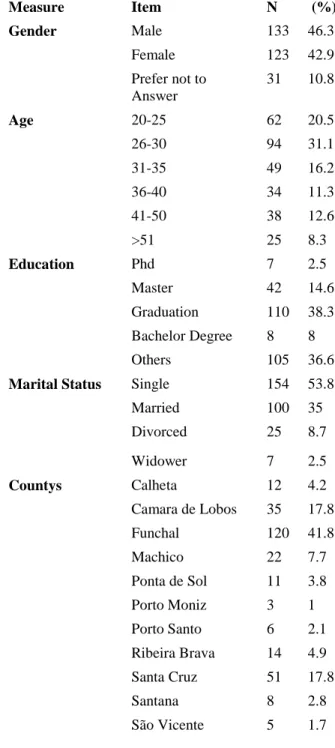
Table 2- Survey respondent profile (n=290) ... 51
Table 3- Authors/Articles used in questionnaire scales ... 53
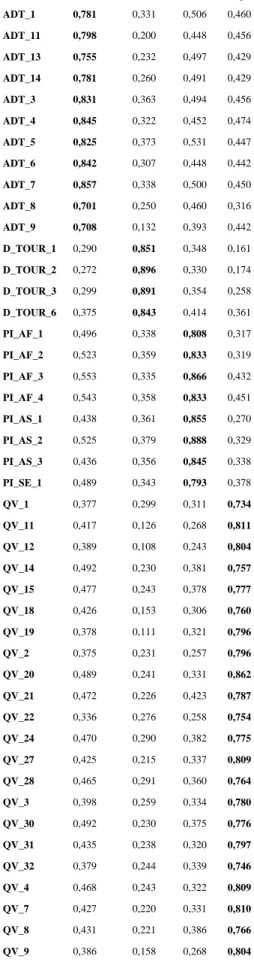
Table 4- Loading and cross loading ... 54
Table 5- Measurement model indicators for the totality of the items under analysis ... 55
Table 6- Heterotrait-monotrait ratio (HTMT) ... 55
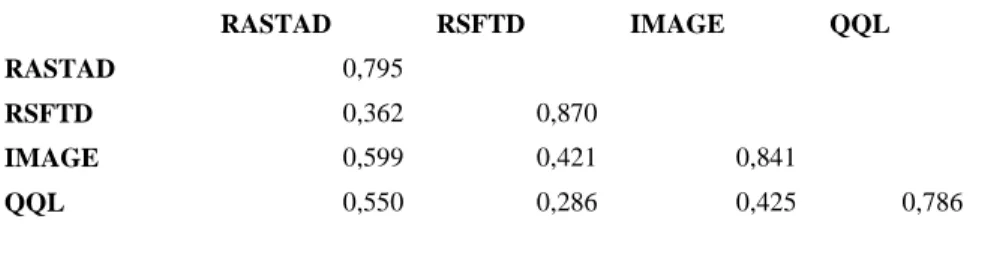
Table 7- Fornell Lacker Criteria ... 56
7
9
Theoretical framework
Over the last 20 years, in the context of a modern economy and a marked growth in the availability of information and communication technology (ICT), there has been a noticeable increase in competition between territories (countries and cities), becoming increasingly important to manage them in order to attract residents, investors, companies and tourists. This is stimulating for scholars, who have published a considerable number of articles on place marketing (Gartner and Ruzzier, 2011).
The role and importance of regions change actively, having become entities of vital importance in the frame of a new internationalized environment. In this line, territorial or place marketing can be understood as a perspective that reflects the development of a territory, taking into account the current socioeconomic context. Territorial marketing aims at the acquisition of competitive advantages based on the expectations and needs of multiple agents, such as residents, emphasizing a perspective view for the promotion of a sustainable development by encouraging a territorial identity pointed at the notoriety of places (Kotler, Haider and Rein, 2002), since many places globally and especially in Europe use promotion policies in order to support their images (Ashworth and Voogd, 1990).
Kavaratzis and Ashworth, (2008) have stated that place marketing has increased in popularity year after year and today is generally practiced on scales ranging from the neighborhood, local or regional up to the national scale.
In literature, the authors (e.g. Kavaratzis and Ashworth, 2005) affirm that place marketing is very important for many reasons such as attracting tourists, skilled employees, encouraging investors and causing a sense of civic pride amongst local residents.
The key success factors for an emerging tourist place are a civic pride and the attachment of residents, by working to create a positive image of a tourism place along with attracting new residents and tourists (Avraham, 2004).
The tourist activity on the Madeira island, is considered by many as the lifeline for the development of the region. Thanks to its economic and social importance, it is an important pillar for the region's economy and development, therefore it’s important to try to understand residents' perceptions of the Madeira brand image and the attributes relevant to their quality of life in the region.
10
Research objectives
This study seeks to contribute to the body of research on place brand image by exploring the nature and consistency of its essential dimensions from the local residents’ perspective and in relation to an emerging tourism place while studying residents’ quality of life.
We develop a theoretical review of the place marketing and brand image, approaching the concept of place marketing and the way in which territories have established marketing strategies for conquering residents, visitors, and companies who are able to bring added value to territories. Based on these concepts we raise the following research question to start:
RQ: Which are the residents’ perceptions about the Madeira brand and how are these
influenced by other variables relevant to them as their quality of life in the Region?
The primary data was collected through surveys distributed in the 11 municipalities of the Madeira Island, using a sample of 290 participants representing 0.011% of the population. We used a quantitative methodology that allows us to analyze residents’ opinions, perceptions and attitudes of a universe (target audience) through a sample that represents it. In the literature, it is seen as a flexible method to explore attitudes and responses from non-random samples of people who fit into a specific profile (Morgan, 1998). Saunders, Lewis, and Thornhill (2009) explained the quantitative method in their book as a method which involves data collection techniques or data analysis procedures.
Dissertation structure
This work is divided into four chapters.
Chapter I consists of the introduction, made of framework inherent to the topic under the Madeira Island image for residents, by taking into account the tourism study, with the objectives, methodology, and structure of the work.
Chapter II consists of a literature review, where we make a brief approach to place marketing. In this review, we characterize Place Marketing and try to understand its concept, consulting the opinions of several authors. It is also important to address the implicit development of Place Marketing, in which places can be compared to products because both have to meet the needs
11
of different target groups, where citizens, visitors, workers, companies, industries, and export markets are the target-groups market.
Later, and still, from a theoretical perspective, we will approach the analysis of the brand image of a place, region or tourist destination.
Chapter III consists of an empirical article analyzing the residents’ perceptions about the Madeira brand image and evaluating its influence by the attributes relevant to their quality of life, their acceptability of specific tourism activities development and residents’ support for future tourism development. As methodology used, we have developed a quantitative analysis based on data collected through a closed-response inquiry form applied to a sample of 290 residents in all the different municipalities of the Autonomous Region of Madeira.
Chapter IV comprises the analysis and discussion of data obtained, taking into account the literature review, in which an analytical synthesis is developed. It discusses the final observations, as well as the limitations presented throughout the development of the work, followed by suggestions for future work development.
13
15
Place marketing: Target groups and destination brand image – a
theoretical approach
Abstract
Place marketing is being progressively used to manage perceptions about regions, cities, and countries. This concept can be seen as an instrument to determine the internal advantages of the region, investment and economic development factors increasing the attractiveness of a place. We review this literature and provide guidance to spur future research. The primary theoretical basis and concepts of local marketing are present in this article and consist in deepening the theory on the subject, target groups, and branding of a tourist destination. It also addresses the importance of residents to a place brand marketing, associated with the use of tourism that aims to enhance the image of an area to attract investor. Consequently, increase the supply of work available to the local community, increasing the attachment of the residents, improve the quality of life and try to make the destination politically more acceptable.
Palavras-chave: Place marketing, target groups, place brand, residents. Paper Type: Theoretical
What about place marketing? Introduction.
Since the mid-1980s, a significant number of scholars have been publishing about place marketing, and today there is extensive literature on the subject. Place marketing or place branding has a broad appeal and attracts the interest of researchers, which has led to the delimitation of the field would to include theoretical propositions and empirical research. Place marketing is conceptualized with reference to urban developments. We can also use place marketing to represent externally oriented activities undertaken for strengthening the attractiveness and competitiveness of a place (Ashworth and Kavaratzis, 2008).
An important aspect of this concept is the application of marketing instruments to geographical locations, such as nations, cities, regions, and communities themselves. Economic strategies are associated with local economic development, so we can say the essence of place marketing has been inspired by the principles of marketing strategy in business, where place marketing
16
must find a balance between identity, image and desired reputation to attract citizens and entrepreneurs (Kearns and Philo, 1993).
According to Cidrais (1998) place marketing (or city marketing, territorial marketing, urban marketing, marketing of the place, amongst other denominations) appears as one of the most essential elements of strategic planning of places. So, this concept can be seen as an instrument to determine the internal advantages of the region, investment and economic development factors increasing the attractiveness of a place (Bagautdinova, Gafurov, Kalenskaya, and Novenkova, 2012).
Fernandes and Fernandes (2006) argued that territorial marketing is seen as a set of activities that support the development of a place which can meet the demand of segments through competitive opportunities in a geographical context. The same argument has been supported by Metaxas (2003), who concludes that place marketing supporters recognize local economic development and place competitiveness as objectives attributing the meaning of the product to the place itself. The intention is to maximize the efficiency of social and economic functioning of the area concerned, in accordance with whatever wider goals have been established (Metaxas, 2006).
Similar conclusions derived from Brandley, Hall, and Harrison (2002) and Kotler, Haider, and Rein, (1993) who advertised about the importance of place marketing as a major factor in the improvement of a place’s competitiveness where, over years, territorial cohesion has become an important concern that results from the unexpected growth in spatial imbalance in terms of economic development. Although the urban areas are more developed, they’re more and more appealing to people and economic activities, while a great part of rural areas seems sentenced to rejection.
Place marketing is seen as an approach to place development, to help places compete effectively in our new economy and stand up to heavy competition. More than ever, it is necessary to have a strategic and market-oriented vision, while responding to the trend towards increasing competition amongst cities. (Zenker and Martin, 2011). In this procedure, places created their own marketing strategies, realizing that the marketing of a city or region is not as straightforward as many people think (Berg and Braun, 1999).
17
As an example, there is a study made in Swedish municipalities where the objective was to attract immigrants. Amongst the results, it is suggested that place marketing has definitely become more important over the last few years (Niedomysl, 2004). However, if marketing can increase the attractiveness of places, evaluative studies are clearly needed if we are to make such claims.
Paddison (1993) argues that as for the place, including the city, marketing can be seen as a variant of social marketing. City marketing seeks to achieve a number of different objectives related to territorial marketing such as improving the city’s competitiveness, attracting foreign investment, refining its image and the wellbeing of its population.
According to Kotler et al. (1999), place marketing can be defined as:
“... a place planning procedure concerning the satisfaction of needs of target markets. It could be successful when it satisfies two main parameters: a) The enterprise’s and resident’s satisfaction from the purchase of goods and services provided in that place; b) the satisfaction of expectations on potential target markets (enterprises and visitors), as long as the goods and services provided are those that they wish to get.”
However, as Kotler, Haider and Rein (1993) pointed out “places are more than budgets and business. There are people, cultures, historical heritage, physical assets, and opportunities.” Following this line of thought, Kavaratzis (2007) argued that the practice of place marketing has moved yonder attempts to attract companies and manufacturing jobs to become more and more differentiated and focused on place reinvention.
Kotler et al. (1993), accentuates that marketing is about accomplishing consumer needs. Thus, place marketing is about developing a place that fits the needs of citizens, visitors, and investors. The trade of selling a place to attract visitors, industries or tourism is more difficult than we think, thus it’s necessary for places to enjoy a strong financial health in order to attract tourists, new residents, and business people. Linked to this is the inherent selectivity of the place elements highlighted by those charged with the management of marketing activities as part of the strategies that seek to reinvent a place (Pike, 2004).
One of the objectives of place marketing, as previously mentioned, is to attract visitors (tourism), thus it is associated with destination marketing which, according to Pike (2004),
18
states that a destination is a place that attracts visitors for a temporary stay, including continents, countries, states, cities, villages and purpose-built resort areas.
Destination marketing has traditionally been heavily oriented towards the promotion function (Ritchie and Ritchie, 2002). The objective is to achieve a sustainable competitiveness of a destination that involves the identification, development, and implementation of a tourism intensifier.
Horner and Swarbrooke (1996) argue that destination marketing is associated with the use of tourism that aims to enhance the image of an area to attract investors. Consequently, increase the supply of work available to the local community, increasing the attachment of the residents, improve the quality of life and try to make the destination politically more acceptable.
As Baker and Cameron (2008) defend, and according to the definitions of local and destination marketing, a major challenge is the fragmentation of ownership as there isn’t a single product on with the producer has complete control. They believe tourism is composed of different size organizations.
Ashworth and Voogd (1990) have developed a concept about place-marketing by relating place planning to marketing theory. In their research, the place is considered a product and the users as customers. The central idea has understated the concept of place-product. In this way, a place-marketing strategy consists of two elements, product development, and promotion. Warnab and Medway (2013) considered the concept of “place” in the context of place marketing. The authors appraise the concept of the place-product, with specific reference to the creation of place narratives. This is exemplified using as a case study a place marketing initiative in the city of Manchester, England. The results show the place product should be seen as a dynamic concept, composed of both mutable and competitive narratives in and over time. Considering how places could be viewed as products, Cresswell and Hoskins (2008) claim that the notion of place at the same time induces two elements, the materiality and a less concrete dominion of meaning.
Implicit in all the above definitions, places can be compared to products, because both have to satisfy needs in different target groups, where citizens, visitors, workers, businesses and
19
industry, and export markets are central target groups in place marketing (Gertner and Kotler, 2004).
Target Groups
In this section we present the concept of the different target-groups in place marketing, taking into account the perspectives of various authors. From a theoretical point of view, the main target groups in place marketing and place branding can broadly be divided into four target market segments (Kotler et al., 1993):
Visitors
Nowadays we can see how countries, regions, and cities are really trying to compete with each other to attract visitors, where those who show the worst results have as consequence poorer tourism (Hospers, 2004).
The visitor market is separated into two distinct groups: business visitors and leisure visitors. Visitors in business are those who come to a place to attend a meeting or convention, to evaluate a territory, or to buy/sell a product. Leisure visitors include tourists who are looking for holiday and entertainment or want to visit family or friends (Kotler et al.2002). Both have a significant role since they can take the settlement’s good or bad fame to others.
Freire (2006) developed an exploratory study and used qualitative techniques to examine the role of tourists in the place branding process. The author advocates that tourists are a significant and vital factor for the place brand-building process.
Visitor managers must understand the values that tourists are looking for as users (performance, social and emotional values), as buyers (convenience and personalization) and as payers (price and credit), also competitive background need to be methodically analyzed, in order to be successful in the tourism industry, a place must be very specific about what it wants to market and to whom (Kotler and Gertner, 2002).
Gartner (1989) suggests that visitors’ choices of destinations are built on the degree to which they generate positive images.
20 Residents and Workers
Another significant target markets for places are residents and workers, looking for a place to live, work or relax.
Residents can be defined by a set of active agents in the composition of the attractiveness of a place, as they are members and co-producers of public policies, goods and services (Zenker, Peterson and Aholt, 2013). Places depend on residents to work, whether at the economic, social or environmental level (Insch, 2010).
According to Kotler et al. (2002), an attractive region for those who live in it becomes more pleasant to potential residents and other public we may want to attract. That's why it’s so relevant the creation of incentives to improve the community's quality of life, providing conditions for the implementation of new businesses and modernize the marketing factors which fix residents (Kotler et al., 2002). So, in the case of local residents, the goal is to form a viable settlement, and this environment could become attractive to potential people who want to settle down (Treutz, 2015).
Marans (2003) developed a study with the objective of measuring the quality of community life in the metropolitan area of Detroit. The study reports the theoretical concerns about the relationships between objective conditions in cities and areas, as well as the subjective well-being of the Detroit area. The author concluded that the quality of the neighborhoods and their attributes, together with the quality of the environment, are important for the wellbeing of individuals and families.
Ashworth and Voogd (1990), argue that the main purpose of place marketing is to exploit both the economic and social environment of an area. Many instruments have already been developed to measure satisfaction with life, a concept that goes through a process of cognitive judgment, where the quality of life of a person is analyzed globally according to his personally chosen criteria.
Amongst the conditions that shape the quality of life, according to Theodori (2001) and Prezza et. al. (1998) assessed the satisfaction with life taking into account the community in which we are inserted. Considering that the attachment we have to a community is linked with the individual wellbeing, reason why a greater satisfaction and attachment to the community results in higher levels of perceived well-being.
21
Places have been increasingly competitive, this competition is supported out through to attract and retain specific groups and population segments, that’s the way it becomes an even more important aspect in place marketing.
Business and Industry
Places are gradually trying to attract more business, economic investment and industry to provide jobs for their citizens (Kotler et al., 1993). One of the most interesting aspects of place marketing deals with place’s effort to appeal to new factories and business investments. So, the primary role of place marketers is to develop additional communication strategies and provide information to firms seeking plant and office locations (Kotler and Gertner, 2002).
Rohr-Zanker (2001) study of local enterprises in Northwestern Germany exemplifies this point very well. Its conclusions reveal that companies located in peripheral regions have to make additional efforts to compensate for the non-attractiveness of their location. Only a few companies are prepared or able to pursue this strategy and bigger companies were better able to do so than smaller firms.
Young (2005) made a case study on the challenges of attracting foreign direct investment to post-socialist Hungary, reviewing the strategies developed by the Ministry of Economy and Transport and the Hungarian Investment and Trade Development Agency. The author found that strategies are more focused on accomplishing value enhancement, thus pursuing to upgrade the local labor force and supplier networks to enhance the worth of foreign subsidiaries, therefore making them more valuable to the parent multinational enterprise.
Place marketers must understand how companies make their site selection. Kotler et al. (1993) suggest that plant location decision making is based on ten aspects:
• Local labor markets:
• Access to customer and supplier markets;
• Availability of development sites, facilities, and infrastructures;
• Transportation;
• Education and training opportunities;
22
• Business climate;
• Access to R&D facilities;
• Capital availability;
• Taxes and regulations.
Porter (1998) in addition to the concept of urban place competitiveness claims that factors such as the location, concentration of know-how and existence of clusters can increase the attractiveness and the promotion of a place through territorial marketing.
23 Export Markets
Export markets are the ability to produce and sell goods, products, and services that other places, people or services cannot make (Hospers, 2004).
Kotler et al. (1993) and Porter (1995) studies argued that a place must inspire local firms to promote their products and brands by expanding their sales to external markets. So, there is a need for a place to exploit and expand export markets.
Through an empirical study in the context of export marketing, Cavusgi and Zou (1994) investigated the relationship between marketing-performance strategies in the context of export ventures. The results show that a company's strategy and management commitment are determinants of export performance.
Moreover, Kotler et al. (1999) provide general guidelines on how to work for attracting external markets. He proposed a linear and comprehensive four-step planning process which includes (I) a systematic place audit, (II) vision statements and formulation of goals and strategies, (III) the making of an action plan, (IV) implementation and evaluation.
A place without exports is almost inconceivable because it would have to be a place that consumes its entire production. Countries can effectively expand their product varieties in export. A model created by Zheng et al. (2014) discovered that productivity, technology-based capability, export experience, industry entry barriers, subnational institutions, and intermediary institutional support affect firms’ outward foreign direct investment decisions (OFDI). The results have significant policy and managerial effects.
“For many cities, regions, and nations exports are their lifeblood” (Haider and Rein, 1993). Through a literature review, Morgan et al. (2012) examined the export marketing capability antecedents and performance index of export marketing strategy execution, in the context of industrial firms exporting to international markets. Findings indicated that effective implementation of planned export marketing strategy contributes to the export market and financial performance and that marketing competencies have an important role in qualifying effective marketing strategy implementation in export venture operations.
24
Brand image of a place, region or tourism destination - Concepts and
applications
According to Zenker (2011), brands (including destination marks) are multidimensional. In this notion of place marketing it is important to recognize the concept of a brand, be it a place, region or product. Godeswar (2008) defines brand as a name and/or symbol envisioned to identify the goods or services of sellers, and to distinguish those goods or services from the competition.
Seetharaman et al. (2001) defined brand as ‘an asset that does not have physical existence and the value of which cannot be determined exactly unless it becomes the subject of a specific business transaction of sale and acquisition.”
Mommas (2003) defends that city branding is primordially related with the economically thrust desire to place cities in a more favorable way between increased mobile and competitive markets, so cities have to establish themselves by calling the attention of the more mobile and less location-dependent companies, inhabitants and visitors.
Pike (2009) argues that the place image is known as a precursor of the place brand. Subsequently, we can say that the place image is truly significant and a fundamental construction of place branding (destination image).
Hence, the brand image may be associated with a city, a country or a region. The consumer associates the image with the destination according to the characteristics of the place or even of its population. Kotler at al., (1999) defines brand image as the set of beliefs held about a particular brand.
Hankinson (2005) emphasizes the difference between branding a country and promoting tourism. The later is acknowledged as sharing more characteristics with nation-branding than with any other aspect of a country’s external affairs, being merely part of the whole.
A number of studies have been directed on brand image, and Gender and Kotler (2004) argue that the image of a place can be understood as a set of beliefs, ideas, and impressions people have of a certain place. The authors have a set of guidelines for the elaboration of the image of a place, once it is necessary to understand and deliberate about this possible image to make it effective for certain target groups. This perception can differ from person to person, for example, one person can see a certain place as his hometown while others can contemplate it as a polluting city.
25
Another important construct in place branding is place identity. Wheeler (2012) advised that the brand identity is an essential part of the brand, not only to help identify the product but also to differentiate and make ideas and meaning reachable.
Aaker and Joachimsthaler (2000) report the importance of brand identity being differentiated from competitors because the key to successful branding is understanding how to develop brand identity. Aaker and Keller (1992) settle the conclusion that a brand identity is an exceptional set of brand relations implying a promise to customers, so it’s seen as a strong brand leading to higher brand equity. The firm needs to create a strong and reliable brand identity by connecting brand attributes to be easily understood by the customers (Nandan, 2005).
Wood (2000) sought to establish relationships amongst the constructions and concepts of branding to provide a structure and vocabulary that helps communication between functions of accounting and marketing. It was suggested that brand management should be strategic and holistic, as this is conducive to longevity.
Ashworth and Kavaratzis (2009) after a brief review of the basic elements of the corporate brand, detected the need to adopt branding tools to the needs of cities, where it becomes important for brand management to be approached strategically.
All brands have social, emotional and identity value to consumers. It’s safe to say they have personalities and increase the perceived value, desirability and quality of a product. When consumers make selections about products, including destinations, they are buying into an emotional relationship (Kotler and Gertner, 2002).
Pearce (1982) defined destination brands as a set of means by which a prospective tourist determines a destination’s potential for satisfaction.
Due to structural changes in the economy, destination marketers must pursue a fuller understanding of the nature of images. The qualitative research made by Hankinson (2004) about the images of 25 destinations in the UK, measures the relative contribution of image attributes linked with history, tradition, and culture in shaping the perceptions of places as tourism destinations. From a broad theoretical perspective, results show destination marketers view organic image characteristics such as
26
those associated with history, heritage and culture, as essential discriminators between competing destinations.
Therefore, a destination can be considered a brand of all products, services and finally experiences provided locally. This also allows us to recognize the impact of regional tourism, as well as managing supply and demand in order to maximize benefits for all stakeholders (Buhalis, 2000).
According to Buhalis (2000) the most significant criterion for selecting the destination is an image, which is the set of expectations and perceptions the potential visitor has about it.
Caldwell and Freire (2004) in an exploratory study with the Chernatony Brand Box Model, applied it to countries, regions, and cities, in order to understand and explain the branding techniques that should be applied to these three different types of places. They concluded that the factors influencing the image of a country are different from the factors that affect a region and city, because countries are functionally diverse, so they should leverage the emotive parts of brand identity, whereas regions and cities should work in its functional aspects.
Madsen (1992) after a review about place-marketing in Liverpool, concluded that although it has had some success in promoting itself as a destination for metropolitan tourism, it faced problems concerning its image as a business location. The limited supply of skilled manual workers and professional/managerial employees, lack of resources for urban regeneration, geographical periphery in the UK and Europe and the tough competition amongst northern cities on the cultural amenities market, constitute the biggest obstacles for the business element of Liverpool’s new place-image. Murphy, Moscardo and Benckendorff (2007) surveyed 480 tourists in Australia to test the value of the destination branding personality construct in distinguishing between two regional destinations. Outcomes indicated, despite the validity of the proposition on brand personality notion to differentiate places, that tourists were able to articulate different destination brand personalities for each region. The most common personality-based descriptors were sporty, classy, fun-loving, and adventurous. Kavaratzis (2004) developed a communication model of the city brand which states that the perceptions of cities are formed by three types of brand communication:
(1) Primary communication, which can be described as the city's own actions (local architecture) and city behavior;
27
(2) Secondary communication, which includes formal communication as all forms of advertising or public relations;
(3) Tertiary communication, which refers to the word-of-mouth generated by the residents of a city.
In the same line of thought is Braun (2011), who highlights how important the role of residents is in the process of word-of-mouth communication for the authenticity of the local brand. Place branding echoes the growing interest in the ways that communities, cities, regions, and countries market their entity.
For Kavaratzis (2009), the place branding process has multiple phases, starting with the formulation of a vision for the place, which is open for consultation to people responsible for branding, the residents and all potential partners (see Figure 1).
28
Zenker, Braun and Petersen (2017) have contributed to a broader understanding of how the brand of places affects residents and tourists. Two studies were developed: Results of the first showed that residents’ positive place attitude (i.e. identification and attachment) increase with a higher brand complexity; The second study shows that the positive relationship of brand complexity is stronger for residents than for tourists.
Final Considerations
The above discussion has sought to demonstrate contexts in which much traditional marketing theory was developed. Presently, more and more regions are trying to "sell" their area by developing approaches in the field of place marketing. To analyze this trend, we have reviewed theories presented in literature, concluding that place marketing can be associated with the idea of seeing regions as being involved in a process of territorial competition. This is so because growing territories increasingly compete to attract and retain residents, firms, and visitors. Consequently, it is very important to understand the historical phases of place marketing development over time, since it is an aspect of local development (Kotler et al., 1999). Places, similar to businesses, face new challenges as new technology has molded one global economy. The role of place marketers will be fundamental to the success of the place.
We believe places can be branded like products (e.g. Kotler et al., 1999; Hankinson, 2001). This proves the notion of a place itself is something created and produced by people. Places, in this reverence, are products we can develop. Residents enter in this role because they contribute to building a solid positive image that can lead to a competitive advantage for a place.
Succinctly, this article argues that places should be regarded as a dynamic concept. However, for regions to succeed, they need to know how to capture potential residents, firms, export markets, and visitors, this because competing regions certainly will invest in place marketing. We also recognize the “sense of place”, as it is built and experienced by residents, subsequently they should be seen as the center of the brand strategy. Likewise, one way or another, the branding of places will increasingly be seen as a key focus of marketing, for economic and cultural development.
A limitation of this literature review, it only applies in some theoretical questions related to place marketing, as target groups and destination brand image. As such, it could be suggested
29
to study other theoretical questions related and analyze empirical cases on the perceptions of several targets groups about a place brand.
References
Aaker, D. A., & Joachimsthaler, E. (2000). Brand leadership: The next level of the brand
revolution. New York.
Aaker, D. and K. Keller. (1992). “The Effects of Sequential Introduction of Brand Extensions.”
Journal of Marketing Research 29 (February): 35-50.
Ashworth, G.J., & Kavaratzis, M. (2008). Place marketing: how did we get her and where are we going? In: Journal of Place Management and Development, Vol. 1, No. 2, pp. 150- 165.
Ashworth, G.J., & Kavaratzis, M. (2009). Beyond the logo: Brand management for cities.
Journal of Brand Management, 16(8), 520-531.
Ashworth, G. J., & Voogd, H. (1990). Selling the city: marketing approaches in public sector urban planning. Belhaven Press.
Avraham, E. (2004), “Media Strategies for Improving an Unfavourable Image of City”, Cities, 21, (6), 471-479.
Bagautdinova, N., Gafurov, I., Kalenskaya, N., & Novenkova, A. (2012). The regional development strategy based on territorial marketing (the case of Russia). World Applied
Sciences Journal, 18(18), 179-184.
Baker, M. J., & Cameron, E. (2008). Critical success factors in destination marketing. Tourism
and hospitality research, 8(2), 79-97.
Bradley, A., Hall, T., & Harrison, M. (2002). Selling cities: promoting new images for meetings tourism. Cities, 19(1), 61-70.
Braun, E. (2011), “Putting City branding into Practice”, Journal of Brand Management, advance online publication, doi:10.1057/bm.2011.55.
Buhalis, D.(2000). Marketing the competitive destination of the future. Tourism Management, 21, 97-116.
30
Caldwell, N., & Freire, J. R. (2004). The differences between branding a country, a region and a city: Applying the Brand Box Model. Journal of brand management, 12(1), 50-61. Cavusgil, S. T., & Zou, S. (1994). Marketing strategy-performance relationship: an
investigation of the empirical link in export market ventures. The Journal of Marketing, 1-21.
Cidrais, Á. 1998. O marketing territorial aplicado às cidades médias portuguesas: os casos de Évora e Portalegre. Dissertation for the Master in Human Geography. Lisboa: Faculdade de Letras - Universidade de Lisboa
Cresswell, T. and Hoskins, G. (2008) ‘Place, Persistence, and Practice: Evaluating Historical Significance at Angel Island, San Francisco, and Maxwell Street, Chicago’, Annals of the
Association of American Geographers 98(2): 392–413.
Fernandes, R. J. L., & Fernandes, R. J. G. (2006). As cidades e Territórios do conhecimento na óptica desenvolvimento e do marketing territorial.
Freire, J. R. (2006). ‘Other tourists’: A critical factor for a geo-brand-building process. Place
Branding and Public Diplomacy, 2(1), 68-83.
Freire, J. R. (2009). Local People’ a critical dimension for place brands. Journal of Brand
Management, 16, 420 e 438.
Gartner, W.C. (1989), “Tourism image: attribute measurement of state tourism products using multidimensional scaling techniques”, Journal of Travel Research, Vol. 28 No. 2. Gartner, W. C., & Ruzzier, M. K. (2011). Tourism destination brand equity dimensions:
Renewal versus repeat market. Journal of Travel Research, 50(5), 471-481.
Gertner, D, & Kotler, P. (2004,). How can a place correct a negative image?', Place Branding, vol. 1, no. 1, pp. 50-57.
Ghodeswar M.B (2008), 'Building brand identity in competitive markets: a conceptual model',
Journal of Product and Brand Management. Vol 17 (1), pp.4–1
Haider, D. H., & Rein, I. (1993). Marketing places, attracting investment, industry and tourism to cities, states and nations. New York: Maxwell Macmillan International.
31
Hanna, S., & Rowley, J. (2015). Towards a model of the place brand web. Tourism
Management, 48, 100e112.
Hankinson, G. (2004). The brand images of tourism destinations: a study of the saliency of organic images. Journal of Product & Brand Management, 13(1), 6-14.
Hankinson, G. (2005). Destination brand images: a business tourism perspective. Journal of
Services Marketing, 19(1), 24-32.
Horner, S., Swarbrooke, J., & Horner, S. (1996). Marketing tourism, hospitality and leisure in Europe. London: International Thomson Business Press.
Hospers, G. J. (2004). Place marketing in Europe. Intereconomics, 39(5), 271-279.
Insch, Andrea. (2010). Managing residents' satisfaction with city life: Application of Importance–Satisfaction analysis. Journal of Town & City Management, 1.2.
Karavatzis M. and Ashworth G. J. (2005) “ City Branding: An Effective Assertion of Identity or a Transitory Marketing Trick?” Royal Dutch Geographical Society KNAG , Vol. 96, No. 5, 506–514
Kavaratzis, M. (2004), “From city marketing to city branding: towards a theoretical framework for developing city brands”, Journal of Place Branding and Public Diplomacy, Vol. 1 No. 1, pp. 58-73.
Kavaratzis, M. (2007). City marketing: The past, the present and some unresolved issues.
Geography compass, 1(3), 695-712.
Kavaratzis, M. (2009) ‘Cities and Their Brands: Lessons From Corporate Branding’, Place
Branding and Public Diplomacy 5(1): 26–37.
Kavaratzis, M. (2017). The participatory place branding process for tourism: linking visitors and residents through the city brand. In Tourism in the City (pp. 93-107). Springer, Cham. Kearns, G., & Philo, C. (1993). Culture, history, capital: A critical introduction to the selling of
places. Selling places: The city as cultural capital, past and present, 1-32.
Kotler, P., Asplund, C., Rein, I., & Haider, D. (1999). Marketing Places Europe. Prentice Hall. ISBN 0, 273(64442), 4.
32
Kotler, P., Haider, D. H., & Rein, I. (1993). Marketing places. Free Press
Kotler, P., Haider, D.H & Rein, I (2002). Marketing places. Simon and Schuster.
Kotler, P., & Gertner, D. (2002). Country as brand, product, and beyond: A place marketing and brand management perspective. Journal of brand management, 9(4), 249-261. Madsen, H. (1992). Place‐marketing in Liverpool: a review. International Journal of Urban
and Regional Research, 16(4), 633-640.
Marans, R. W. (2003). Understanding environmental quality through quality of life studies: the 2001 DAS and its use of subjective and objective indicators. Landscape and Urban
Planning, 65(1), 73-83.
Metaxas, T. (2003). The Image of the City As' good': The Creation of a City's Promotional Package through a Strategic Framework Analysis of City Marketing Procedure. WIT
Transactions on Ecology and the Environment, 67.
Metaxas, T. (2006). Implementing place marketing policies in Europe: A comparative evaluation amongst Glasgow, Lisbon and Prague. International Journal of Sustainable
Development and Planning, 1(4), 399-418.
Mommas, H. (2003). City branding. Rotterdam, the Netherlands: NAI Publishers.
Morgan, N. A., Katsikeas, C. S., & Vorhies, D. W. (2012). Export marketing strategy implementation, export marketing capabilities, and export venture performance. Journal
of the Academy of Marketing Science, 40(2), 271-289.
Murphy, L., Moscardo, G., & Benckendorff, P. (2007). Using brand personality to differentiate regional tourism destinations. Journal of travel research, 46(1), 5-14.
Nandan, S. (2005). An exploration of the brand identity–brand image linkage: A communications perspective. Journal of brand management, 12(4), 264-278.
Niedomysl, T. (2004). Evaluating the effects of place-marketing campaigns on interregional
migration in Sweden. Environment and Planning A, 36(11), 1991-2009.
Paddison, R. (1993). City marketing, image reconstruction and urban regeneration. Urban
33
Pearce, P.L. (1982), “Perceived changes in holiday destinations”, Annals of Tourism Research, Vol. 9, pp. 145-64.
Pike, S. (2004). Destination Marketing Organisations, Elsevier, Oxford.
Pike, S. (2009). Destination brand positions of a competitive set of near-home destinations.
Tourism Management, 30(6), 857–866.
Porter, M. E. (1998). Clusters and the new economics of competition (Vol. 76, No. 6, pp. 77-90). Boston: Harvard Business Review.
Prezza, Miretta & Costantini, Stefano. (1998). Sense of community and life satisfaction: Investigation in three different territorial contexts. Journal of community & applied social
psychology, 8.3: 181-194.
Ritchie, R. J., & Ritchie, J. B. (2002). A framework for an industry supported destination
marketing information system. Tourism Management, 23(5), 439-454.
Rohr-Zänker, R. (2001). How to attract managers and professionals to peripheral regions? Recruitment strategies in the Weser-Ems Region, Germany. European Planning Studies, 9(1), 47-68.
Seetharaman, A., Nadzir, Z. A. and Gunalan, S. (2001) ‘A conceptual study on brand valuation’,
Journal of Product & Brand Management, Vol. 10, No. 4, 243–256.
Tajfel, H., & Turner, J. C. (1986). Social identity theory of intergroup behaviour. In W. G. Austin, & S. Worchel (Eds.). The social psychology of intergroup behaviour (Vol. 2, pp. 7e24). Monterey, CA: Brooks/Cole.
Theodori, G. L. (2001). Examining the effects of community satisfaction and attachment on individual well‐being. Rural sociology, 66(4), 618-628.
Treutz, Á. U. (2015). Factors influencing quality of life and life satisfaction in Hungary. Annals
of Marketing Management & Economics, 1(1), 93-107.
Van den Berg, L., & Braun, E. (1999). Urban competitiveness, marketing and the need for organising capacity. Urban studies, 36(5-6), 987-999.
Warnaby, G., & Medway, D. (2013). What about the ‘place’in place marketing? Marketing
34
Wei, Y., Zheng, N., Liu, X., & Lu, J. (2014). Expanding to outward foreign direct investment or not? A multi-dimensional analysis of entry mode transformation of Chinese private exporting firms. International Business Review, 23(2), 356-370.
Wheeler, A. (2012). Designing brand identity: an essential guide for the whole branding team. John Wiley & Sons.
Wood, L. (2000). Brands and brand equity: definition and management. Management decision, 38(9), 662-669.
Young, C. (2005). Meeting the new foreign direct investment challenge in East and Central Europe: place-marketing strategies in Hungary. Environment and Planning C:
Government and Policy, 23(5), 733-757.
Zenker, S. (2011). How to catch a city? The concept and measurement of place brands. Journal
of Place Management and Development, 4(1), 40e52.
Zenker, S., & Braun, E. (2017). Questioning a “one size fits all” city brand: Developing a branded house strategy for place brand management. Journal of Place Management and
Development, 10(3), 270-287
Zenker, S., Braun, E., & Petersen, S. (2017). Branding the destination versus the place: The effects of brand complexity and identification for residents and visitors. Tourism
Management, 58, 15-27.
Zenker, S., & Martin, N. (2011). Measuring success in place marketing and branding. Place
Branding and Public Diplomacy, 7(1), 32-4.
Zenker, S., Petersen, S., & Aholt, A. (2013). The Citizen Satisfaction Index (CSI): Evidence for a four basic factor model in a German sample. Cities, 31, 156-164.
35
37
Residents perceptions about the image of Madeira brand– an empirical
approach
Abstract
Exploring residents’ behaviour towards tourism has been underway for many years. This study evaluates a conceptual model that is developed based on theories of tourism impacts on the community and examines a region brand image perception of residents and identifies how this can be influenced by their perceptions about quality of life, acceptability of specific tourism activities development and, also, support for future tourism development. Data was collected in different municipalities of the Autonomous Region of Madeira, from which was obtained a sample of 290 individuals. The results were submitted to a structural equation modelling in order to validate conclusions for this research.
We concluded that the residents’ Madeira place image is positively influenced by their acceptability of specific tourism activities development and by their support for future tourism development. We also verified that residents’ acceptability of specific tourism activities development has been positively influenced by their quality of life perceived and influence future development associated with this economic activity. Finally, we show that residents’ perceived quality of life has a positive influence on this acceptability of tourism activities development, but has no impact on their support for future tourism development or on their perceived Madeira place image.
Keywords: Place marketing; Residents; Quality of life; Tourism; Place brand image. Paper Type: Empirical Research
38
Introduction
The Quality of Life (QOL) concept has become increasingly relevant (Middleton, Ventura, Santos-Modesitt, Poelke, Yaffe and Barnes, 2018). Therefore, the QOL exploration is an emerging field of study in the social, behavioural, environmental and political sciences in the last decades (Uysal, Sirgy, Woo, and Kim, 2016).
The objective of this study is to analyse if the quality of life perceptionated by Madeira residents, taking into account mediating variables as their acceptability of tourism activities development and support for future tourism development affects their image of the Madeira region brand.
To do this, in the model discussed, considering the existing literature, the following research questions (RQs) are verified:
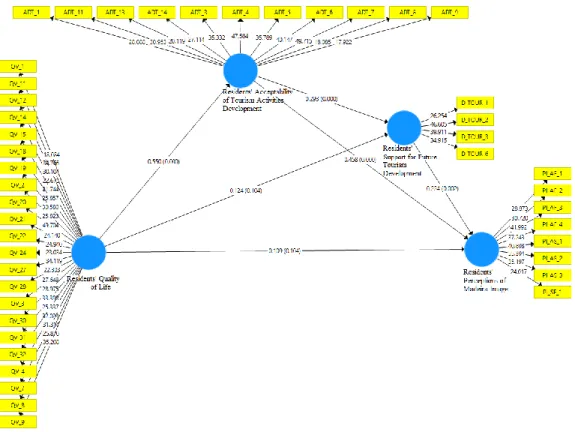
RQ1 – Does the residents’ acceptability of specific tourism activities development affect their support for future tourism development or the image of Madeira brand?
RQ2 - Does the residents’ support for future tourism development influence the image of Madeira brand?
RQ3 - Does residents’ quality of life impact their image of Madeira brand directly or mediated by the acceptability of specific tourism activities development or support for future tourism development?
In this article, we intend to do two contributions to the literature: Firstly, understand the importance of the elements that can be influenced by the quality of life of residents, as their acceptability of specific tourism activities development or support for future development of tourism; Second, we investigate the influence of these three variables on the image of the Madeira region brand by residents, in order to obtain better internal communication strategies for the image of this place.
This article is structured as follows: Section 1 is composed by the introduction; Section 2 holds the theoretical considerations background; Section 3 presents the conceptual model; Section 4, outlines the methods used in the investigation; In sections 5 and 6 we find the data analysis and results from discussion; Lastly, conclusions are in Section 7.
39
Place brand perceived by residents besides Quality of life, acceptability of
specific tourism activities development and support for future tourism
development
We can define the word "place" as cities, states, regions or nations which compete to attract tourists, factories, companies and new residents (Davidson, 1998).
As identified in the literature on place branding, (e.g., Ashworth and Voogd, 1990; Kotler, Haider and Rein, 1993) one of the three main target groups are residents.
Residents are seen as vital participants in the branding process as producers of public goods and services (Freire, 2009). The current paper concentrates on place branding perceptions by residents’ stakeholders.
The application of branding techniques to places is growing in frequency, given the gradually increasing global competition (Dinnie, 2004). Place brand emphasizes the marketing and branding of places for residents as a home and for businesses as a place to invest (Merrilees, Miller & Herington, 2009).
Merrilees et al. (2009) show that residents have a strong influence on place brand through their social connections, brand personality and culture. Place branding provides the developing policy to pursue economic development and, at the same time, helps residents in identifying with their city (Kavaratzis, 2004).
The concept of quality of life (QOL) began to be investigated from the early 1960s. Over the years, its use has increased, especially in the field of health-related problems. Difficulties emerged about the dimensions of quality of life, its definition, its measurement and factors that can influence it (Taillefer et. al., 2003).
So, QOL is a broad concept that includes a number of different dimensions. Ultimately it depends dramatically on citizen’s priorities and needs. Measuring quality of life for different populations and countries in a similar way is a complex mission, and a scoreboard of indicators covering a number of pertinent dimensions is needed for this purpose (Eurostat, 2003).
40
To Fletcher, Hunt and Bulpitt (1987) “the concept of quality of life encompasses many components: cultural and political values as well as more tangible measures such as living and educational standards and freedom from disease.”
When researchers measure a person's overall quality of life in terms of reported satisfaction, they probably assume that people are the best judges of the value of their own lives (Michalos, 2017).
Quality of life can be so described as an individual’s satisfaction with his dimensions comparing to his ideal life. Evaluation of the quality of life depends on the individual’s value system and the cultural environment where one lives (Gilgeous, 1998).
QOL research is mostly concerned with positive wellbeing, like satisfaction and happiness, so talking about life-satisfaction is talking about quality of life. Satisfaction with aspects of life will typically contribute to one’s satisfaction with life as a whole (Tay, Kuykendall, and Diener, 2015). For instance, the Comprehensive Quality of Life Scale (Cummins, 1997) agreed with this approach to evaluate the satisfaction with "life as a whole".
Tourism has great potential to affect the lives of community residents. In order to consider the residents’ quality of life, Jurowski (1998) measured specific aspects of his community, one of
them was tourism development.
There are many ways in which tourism development may influence an individual’s QOL. Studies establish that tourism increases the standard of living of host residents (Var and Kim, 1989). An improved QOL can also be seen through a higher personal standard of living, increased tax revenues, increased employment opportunities and economic diversity, all of which may create a positive impact on a resident’s perception of QOL (McCool and Martin, 1994).
Tourism impacts are so important because affect residents’ support for tourism development (Nunkoo and Ramkissoon, 2012). It’s important to understand that when tourism is introduced into a community, there will be new benefits and negative impacts experienced by residents. Residents should be made aware of the tourism development costs and benefits (Teye, Sirakaya and Sönmez, 2002).
41
One example of these negative impacts can be in the form of crowding, traffic and parking problems, increased crime, increased cost of living, friction between tourists and residents, changes in resident’s way of life, and others (McCool and Martin, 1994). Also, Sheldon and Var (1984) in their study, found agreement that increases in tourism were the cause of rising prices of goods and services.
Many studies assume that positive attitudes toward tourism imply support for future tourism development (Andereck and Vogt, 2000).
Jurowski, Uysal, and Williams (1997) argued that economic gain, combined with social and environmental factors, have an effect on residents’ support for future tourism development. Several attributes, namely in terms of demographic characteristics, have been found to influence residents' acceptability of tourism development. Younger (McGehee and Andereck, 2004) or more educated (Korça, 1998) individuals tend to accept tourism development more positively than others. Length of residence is also found to be related to residents' acceptability of tourism development (McGehee et al., 2004).
Some researchers have turned their attention to developing effective methods of measuring residents' acceptability of specific tourism activities development because those same attitudes could be a handicap in the development and sustainability of tourism and the success of this industry depends on residents (Gursoy, Jurowski and Uysal, 2002). Thus, residents’ acceptability of specific tourism activities development, for example, a friendly attitude from a resident, may support tourism development (Almeida-García, Peláez-Fernández, Balbuena-Vazquez and Cortes-Macias, 2016).
Conceptual issues and hypotheses development
Residents’ quality of life and their acceptability of specific tourism activities development.
Exploration of residents’ acceptability of specific tourism activities development has been underway for many years. A number of studies have considered residents’ acceptability of tourism and the impacts tourism can have on the quality of life of a community (Andereck and Vogt, 2000).
42
Long, Perdue and Allen (1990) through their study, reported that residents’ acceptability of specific tourism activities development and quality of life, in general, are linked, and residents have positive attitudes towards tourism when it produces economic, sociocultural and environmental benefits. Also, residents show acceptability of specific tourism activities development when there is an economic improvement associated with a better quality of life (McCool and Martin 1994).
Andereck and Vogt (2000) also argue that the perception of the QOL in a community differs in relation to the acceptance of specific tourism activities development since, through their study, they concluded that the majority of the residents agree that tourism can positively affect the development of the community and thus, the quality of life.
Using a sample of 562 residents from Shenzhen, Liang and Hui (2016) recognized six measurements for tourism and quality of life (TQOL) domains and examined the effects of each one, based on the residential status and residents' attitudes in supporting further tourism development. Results identify four residents’ clusters with different acceptability of specific tourism activities development, which are contingent with whether they perceive the community as a place for earning a living or a place to live.
Considering this framework, the following hypothesis is presented:
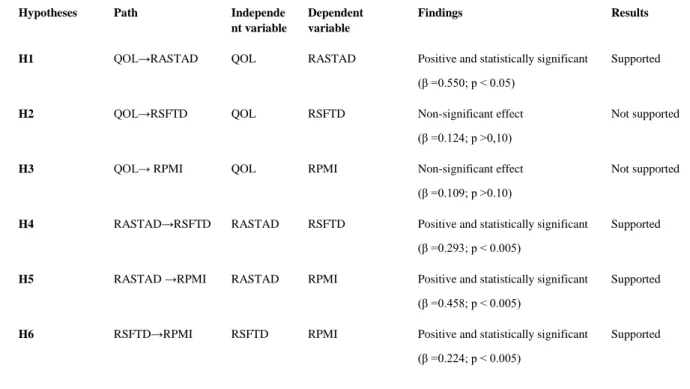
H1: Residents’ quality of life positively affects their acceptability of specific tourism activities development.
Residents’ quality of life and their support for future tourism development.
As tourism becomes increasingly important to communities around the world, it can help them achieve desired living environments. Mattson (1990) argues that, for the success of tourism, economic development strategies must consider the intrinsic qualities of communities.
The personal benefits derived from tourism are mediated by the effect of the economic aspects of QOL, contact with tourists and employment in tourism, influencing the perception on the role of tourism in the local economy (Andereck and Nyaupane, 2011).
Quite a few studies in literature found that residents are more likely to support future tourism development when related to QOL (e.g., Gursoy and Rutherford, 2004; Nunkoo and