Ecological risk assessment of pesticides in maize and
tomato crops
Paulo Alexandre da Silva Oliveira
Dissertação para a obtenção do Grau de Mestre em
Engenharia Agronómica – Especialização em Proteção das
Plantas
Orientadora: Professora Doutora Maria José Antão Pais de Almeida Cerejeira
Coorientadora: Doutora Sara Pais de Almeida da Silva Leitão
Júri:
Presidente: Professor Doutor Henrique Manuel Filipe Ribeiro, Professor Auxiliar do Instituto Superior de Agronomia da Universidade de Lisboa.
Vogais:
Professora Doutora Maria José Antão Pais de Almeida Cerejeira, Professora Associada com Agregação do Instituto Superior de Agronomia da Universidade de Lisboa.
Doutora Emília Cardoso Moura da Silva, Técnica Superior do Instituto Superior de Agronomia da Universidade de Lisboa.
i "A mesma esquizofrénica humanidade capaz de enviar instrumentos a um planeta para estudar a composição das suas rochas, assiste indiferente à morte de milhões de pessoas pela fome. Chega-se mais facilmente a Marte do que ao nosso próprio semelhante."
ii Agradecimentos
Á minha Orientadora Professora Maria José Cerejeira pela oportunidade que me deu de participar neste projeto, por acreditar no meu trabalho e por toda a orientação e motivação no decorrer da Dissertação.
Á minha Co-Orientadora Doutora Sara Leitão pela simpatia, paciência, disponibilidade e orientação durante o decorrer da Tese.
Á Engenheira Ana Pereira por toda a partilha, ajuda, motivação e orientação no decorrer da Tese.
Ao Doutor Rui Ribeiro, Doutor José Paulo Sousa e Doutora Matilde Moreira-Santos da Universidade de Coimbra pela preciosa colaboração na análise estatística.
Às funcionárias do Laboratório de Ecotoxicologia do Instituto Superior de Agronomia, Dona Teresa e Ana. Pelo auxílio na manutenção e organização do local de trabalho, pela ajuda em tarefas e pela simpatia que sempre demonstraram para comigo.
Aos meus pais, pelo apoio e amor incondicional ao longo de todo o meu percurso. Pelo exemplo de humildade e trabalho que sempre me transmitiram.
Ao meu irmão pelo apoio e aconselhamento durante os momentos mais difíceis. Por ser um exemplo de trabalho e valores.
iii Resumo Alargado
O aumento da população mundial tem vindo a colocar importantes desafios à produção agrícola mundial. Como praticar uma agricultura mais intensiva e ao mesmo tempo sustentável? Com a finalidade de dar resposta a este aparente paradoxo os países europeus tem empreendido grandes esforços para conhecerem melhor os seus ecossistemas e o impacto que a atividade agrícola sobre eles exerce, para assim os poder preservar. Por forma a rentabilizar ao máximo o rendimento das culturas, que sofrem perdas devido a infestantes, pragas e doenças, uma grande quantidade de produtos fitofarmacêuticos tem vindo a ser desenvolvida e utilizada ao longo do tempo. Porém apesar dos benefícios à produção, é hoje uma evidência que alguns destes produtos contém substâncias causadoras de impactos negativos nos ecossistemas aquáticos. O uso de pesticidas nos campos agrícolas não os confina ao seu local de aplicação, a entrada destes nos cursos de água pode ocorrer através da pulverização, drenagem, escorrimento ou fuga acidental. Uma vez presentes na água, os pesticidas provocam efeitos adversos (não totalmente conhecidos) nas populações de organismos que nela habitam, designados por organismos não-alvo. Tal ocorre devido à proximidade taxonómica destes organismos com algumas pragas e infestantes (organismos alvo). No entanto, efeitos temporários na estrutura e dimensão das populações decorrentes da exposição a pesticidas, podem ser consideradas aceitáveis se e só se, os impactos forem locais, temporários e a recuperação ecológica não for comprometida. Os organismos não-alvo como, parte integrante e fundamental do ecossistema agrícola, permitem a sua recuperação após contaminação através da capacidade que alguns apresentam para remoção das substâncias contaminantes. De forma a garantir o uso sustentável de pesticidas, é premente monitorizar, avaliar e reduzir os seus impactos negativos. Com o intuito de acautelar e melhorar o estado dos corpos de água europeus, tanto a nível ecológico como químico, a União Europeia desenvolveu a Diretiva Quadro da Água que entre outros processos, avalia o estado dos corpos de água através da monitorização de elementos indicadores da sua qualidade biológica como é o caso do zooplâncton. A avaliação de risco ecológico de pesticidas é um processo que permite avaliar a probabilidade de ocorrência de efeitos ecológicos adversos ou de que estes já estejam a acontecer, devido à exposição a um ou mais “stressors”. No entanto, devido à complexidade dos ecossistemas naturais, a capacidade de estimativa do processo de avaliação de risco (ARE) para múltiplas varáveis é severamente limitada. Embora estudos mais completos do processo de avaliação de risco de pesticidas tenham vindo a ser desenvolvidos, o fato destes serem maioritariamente realizados na Europa Central, tem afetado a extrapolação de resultados para outros países em que as condições climáticas são diferentes, como é o caso
iv de Portugal. A diferença de geografia implica diferenças no solo, condições climáticas e biota. Como tal, existe uma necessidade crescente de desenvolver o processo de ARE de pesticidas noutras regiões. Com o intuito de aumentar a relevância ecológica na avaliação de risco ambiental de pesticidas em condições Mediterrânicas, o presente estudo pretendeu estabelecer possíveis ligações entre a exposição a pesticidas e efeitos em organismos aquáticos não-alvo (zooplâncton) presentes em águas de rega de culturas de tomate e milho em condições de campo, assim como proceder à sua identificação uma vez que os conhecimentos sobre a taxonomia e ecologia locais são essenciais para que se possam produzir contribuições para avaliações de risco ambiental significativas. Esta dissertação encontra-se dividida em 4 capítulos organizados da seguinte forma:
➢ Capítulo I – Introdução: Abordagem sobre o tema da segurança alimentar e proteção ambiental no século XXI, apontando os desafios para uma agricultura ecológica e sustentável. Contextualização do uso de pesticidas no âmbito da gestão dos corpos de água, alertando para a necessidade e importância da proteção e estudo das comunidades de zooplâncton. Enquadramento da dissertação apresentado os seus objetivos como contributo para o melhoramento da avaliação de risco ambiental de pesticidas em Portugal.
➢ Capítulo II – Material e métodos – Caracterização da zona de estudo, apresentando duas das suas mais importantes culturas agrícolas (tomate e milho) e o seu enquadramento no estudo. Descrição detalhada das metodologias de colheita e identificação do material objeto de estudo e à seleção e caracterização dos pesticidas estudados.
➢ Capítulo III – Artigo: Apresentação e discussão dos resultados e conclusão sob formato de artigo. Este capítulo inclui uma descrição da amostragem, composição, abundância e riqueza em zooplâncton das amostras dos locais estudados. Assim como os possíveis efeitos dos pesticidas selecionados, sobre a ecologia do zooplâncton.
➢ Capítulo IV – Observações finais: Neste capítulo final são apresentadas algumas sugestões para estudos futuros e é seguido pelas referências bibliográficas consultadas.
v Resumo
Foi realizado um estudo das comunidades de zooplâncton presentes na água de irrigação das culturas de milho e tomate em condições mediterrâneas portuguesas, a fim de vincular possíveis relações entre a exposição a pesticidas e as respostas biológicas. Este trabalho é uma contribuição para melhorar a relevância ecológica da Avaliação do Risco Ambiental de Pesticidas. Um total de 37 espécies de rotiferos e 2 famílias de cladóceros foram identificadas. Os principais componentes do zooplâncton em todos os locais de amostragem foram nauplios e rotíferos que parecem ser menos afetados pelos pesticidas. A concentração de 12 ug / l de clorpirifos reduz o número de macrozooplâncton, permitindo o aumento das densidades de rotiferos. Valores de 3,5-4,7 ug / l de clorantrinaprole e 0,96 ug / l de metribuzina parecem afetar negativamente o tamanho da comunidade de copépodos. As comunidades de Cladóceros e Ostracodes parecem diminuir quando os valores do glifosato estão na faixa de 2,3-3,9 ug / l. Os valores de glifosato (0,66 ug / l), Ampa (0,88 ug / l) e Fosfato (2,38 mg / l) parecem estar ligados a valores mais baixos de índice de riqueza de espécies.
vi Abstract
A study of zooplankton communities present in the irrigation water of maize and tomato crops under Portuguese Mediterranean conditions was carried out, to link possible relations between pesticide exposure and biological responses. This work is a contribution to improve the ecological relevance of Environmetal Risk Assessment of Pesticides. A total of 37 rotifer species and 2 cladoceran families were identified. The main zooplankton components in all sampling sites were nauplii and rotifers that seem to be less afffected by the pesticides. The concentration 12 ug/l of chlorpyrifos may reduce the number of macrozooplankton, allowing the raise of rotifer densities. Values of 3.5-4.7 ug/l of chlorantrinaprole and 0.96 ug/l of metribuzin seem to negatively affect the size of the copepod community. Cladoceran and Ostracod comunnities seem to decrease when glyphosate values are in the range of 2,3-3,9 ug/l. Values of glyphosate (0,66 ug/l), Ampa (0,88 ug/l) and Phosphate (2,38 mg/l) seem to be linked to lower species richness indexes.
vii Index
Page
Agradecimentos ii
Resumo Alargado iii
Resumo v
Abstract vi
List of Tables ix
List of Figures x
Acronyms List xii
CHAPTER I – General Introduction 1. Food safety and environmental protection in the XXI century. The challenge of Sustainable/Ecological Intensive Agriculture 2
2. Pesticide use and water resources. Protection of non-target species. 7
2.1 Brief analysis of Pesticide sales in Portugal 7
2.2 Legislative requirements regarding Sustainable Pesticide use and Water Management 8
2.2.1 Sustainable Use and Market Launch of Pesticides 8
2.2.2 Water Management 10
2.3 Non-target species the importance of zooplankton and its recovery 12
3. Ecological Risk Assessment of Pesticides. Placing this thesis into context. 18
3.1. Thesis main goals 20
CHAPTER II – General Methodology 1. Description of the studied site 22
1.1 Main crops 23
1.2 Brief analysis of the national tomato and maize production in 2013-14 24
1.3 Main diseases, pests and weeds in tomato and maize crops. 27
2. Pesticide characterization and selection 32
3. Zooplankton sampling and identification 33
CHAPTER III – Paper: A field-based approach to linking biological responses of zooplankton to freshwater contamination by pesticides. 1. Introduction 35
2. Materials and Methods 36
2.1 Study Area 36 2.2 Zooplankton Sampling 36 2.3 Data treatment 37 3. Results 39 3.1. Environmental parameters 39 3.2. Zooplankton composition 40 3.3. Zooplankton abundance 47 3.4. Zooplankton diversity 48
viii 3.5. Statistical analysis 49 4. Discussion 53 5. Conclusions 55
CHAPTER IV – Final Remarks
1. Challenges for future studies 57
References 58 Annexes
ix List of Tables Page CHAPTER I
Table I.1 - Plant Protection Products Sales (INE, 2015). 7 CHAPTER II
Table II.1 – Evolution of the cultivated area in “Aproveitamento Hidroagrícola Lezíria Grande de Vila Franca de Xira (ABLGVFX, 2014). 23 Table II. 2 – Most important pests in tomato for industry crop in Portugal (Ibersem, 2011). 27 Table II.3 – Most important diseases for tomato for industry crop in Portugal (Ibersem, 2011). 28
Table II.4: Main weeds affecting tomato crop in Portugal (Portugal, 2012). 30 Table II.5: Main weeds affecting corn crop in Portugal. 31 CHAPTER III
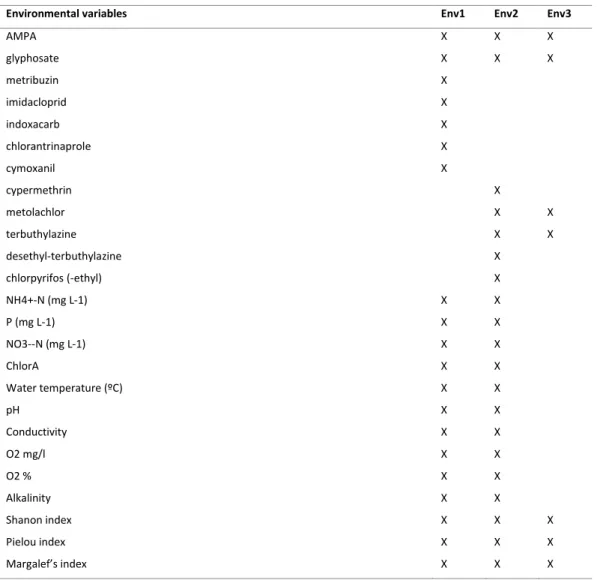
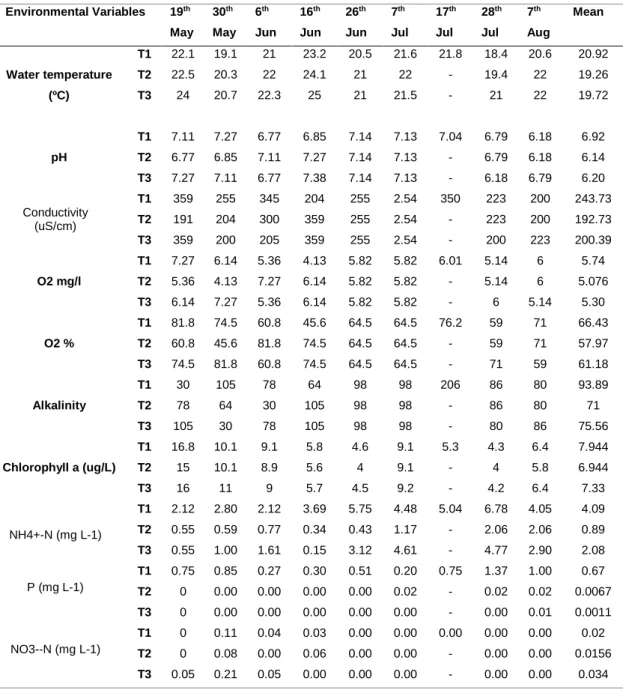
Table III.1: Environmental variables present in the analysis of Env1, Env2 and Env3 environmental matrixes. 38 Table III.2: Average values of environmental variables in tomato sampling sites along time. 39 Table III.3: Average values of environmental variables in maize sampling sites along time. 40 Table III.4: List of observed rotifer species. 42 Table III.5: Rotifer egg count in all sampling sites along time. 47 Table III.6: Correlations of the environmental variables with the canonical axes from sp1 x env1 RDA; influence as a percentage of total variation for the corresponding axis; stronger correlations in bold. 49 Table III.7: Correlations of the environmental variables with the canonical axes from sp2 x env2 RDA; influence as a percentage of total variation for the corresponding axis; stronger correlations in bold. 50 Table III.8: Correlations of the environmental variables with the canonical axes from sp6 x env3 RDA; influence as a percentage of total variation for the corresponding axis; stronger correlations in bold. 51
x List of Figures Page CHAPTER I
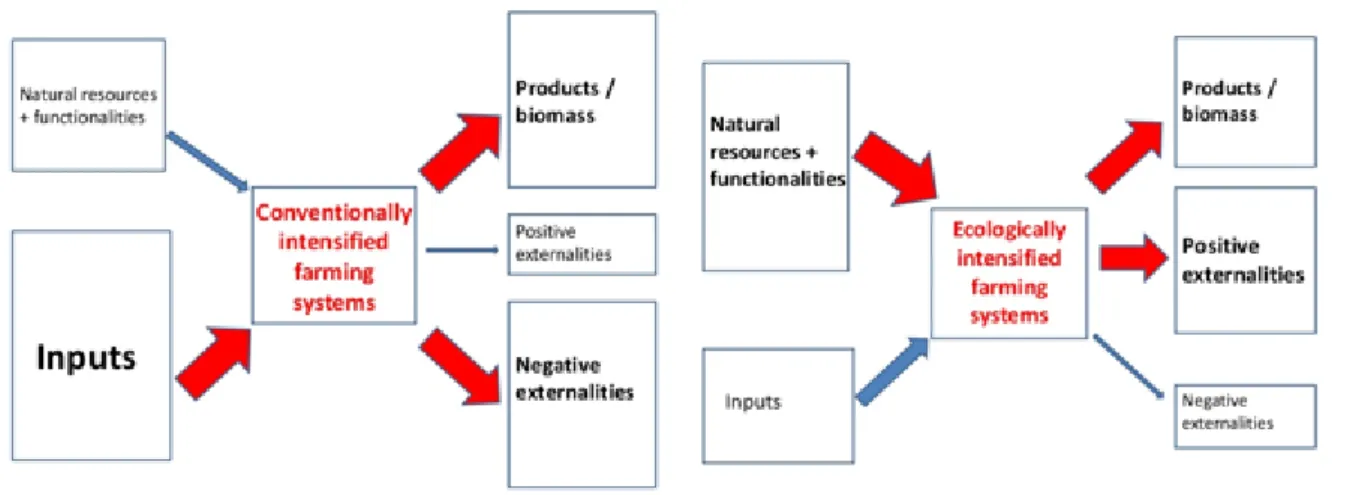
Figure I.1: Compared intensity of cropping systems (Adapted from M. Griffon 2013) 5
Figure I.2: Pesticide movement in the hydrologic cycle including pesticide movement to and from sediment and aquatic biota within the stream. Modified from Majewski and Capel (1995). 12 Figure I.3: The main pathways of carbon and energy flow from algae through zooplankton to fish in lake ecosystems contaminated and uncontaminated with pesticides. Redrawn from Hanazato, 1998. 13
Figure I.4: Two Cladocera from different families [a) Family Chydoridae b) Family Moinidae] (Oliveira, 2015) 14
Figure I.5: Different Copepod life stages [a) Nauplius; b) Copepodite; c) Adult female with eggs (Oliveira, 2015). 15
Figure I.6: Different rotifer species a) Platyias quadricornis (Ehrenberg), b) Keratella tropica (Apstein), c) Filinia brachiata (Rousselet) (Oliveira, 2015). 15
Figure I.7: Ostracods [a) Group of ostracods; b) Ostracod with open shell], (Oliveira, 2015). 17
CHAPTER II Figure II.1 – Main crops in “Lezíria Grande” Spring-Summer 2015 (ABLGVFX, 2015). 23
Figure II.2 – Tomato for industry area in Portugal (INE, 2015). 24
Figure II.3 - Tomato for industry production in Portugal (INE, 2015). 25
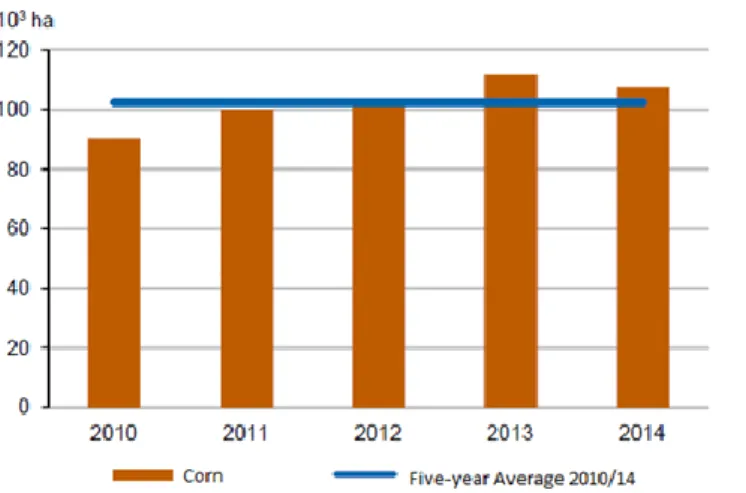
Figure II.4 – Maize area in Portugal 2010-14 (INE, 2015). 26
Figure II.5 – Maize Production in Portugal 2010-14 (INE, 2015). 26
CHAPTER III Figure III.1: Rotifers of the Brachionidae Family a1) Brachionus calyciflorus (Pallas, 1766) Polymorphism 1; a2) Brachionus calyciflorus (Pallas, 1766) Polymorphism 2; b) Brachionus angularis (Gosse, 1851); c) Brachionus urceolaris (O.F. Müller, 1773); d) Brachionus quadridentatus (Hermann, 1783); e) Brachionus rotundiformis (Tschugunoff, 1921); f) Keratella tropica sp; g) Keratella cochlearis (Gosse, 1851); h) Platyias quadricornis (Ehrenberg, 1832), (Oliveira,2015). 43
xi Figure III.2: Rotifers of the Lecanidae Family a) L. quadridentata (Ehrenberg, 1830); b) Lecane sp1; c) Lecane sp2; e) Lecane sp3; f) Lecane sp4, (Oliveira, 2015). 43 Figure III.3: Rotifers of the Family Lepadellidae a) L. patella (O.F. Müller, 1786); b) Colurella sp. (Oliveira, 2015). 44 Figure III.4: Rotifers of the Family Mytilinidae a) M. mucronata var macracantha (Gosse, 1886); b) M. Ventralis sp. (Oliveira, 2015). 44 Figure III.5: Rotifers if the Family Trochosphaeridae a) Filinia cornuta sp.; b) Filinia brachiata (Rousselet, 1901); c) Filinia terminalis (Plate, 1886), (Oliveira,2015). 44 Figure III.6: Rotifer of the Family Hexarthridae a) Hexarthra sp. (Oliveira, 2015). 45
Figure III.7: Rotifer of the Family Gastropodidae a) Ascomorpha sp. (Oliveira, 2015). 45
Figure III.8: Rotifers of the Family Notommatidae a) Cephalodella gibba (Ehrenberg, 1830); b) Cephalodella forficula (Ehrenberg, 1832) (Oliveira, 2015). 45 Figure III.9: Rotifers of the Family Synchaetidae a) Synchaeta sp.; b) Polyartha sp. (Oliveira, 2015). 46 Figure III.10: Rotifer of the Family Trichocercidae a) Trichocerca sp. (Oliveira, 2015). 46 Figure III.11: Other rotifer a) Rsp1; b) Rsp2; c) Rsp3; d) Rsp4; e) Rsp5; f) Rsp6; g) Rsp7; h) Rsp8; i) Rsp9; j) Rsp10, (Oliveira, 2015). 46 Figure III.12: Total average densities in all sampling sites along time (In M2 there was no water for sampling in 28.07.14, in T2 in 17.07.14 and 28.07.14). 48 Figure III.13: RDA plot of zooplankton groups and environmental variables in the 3 tomato sampling sites. 50 Figure III.14: RDA plot of zooplankton groups and environmental variables in the 2 maize sampling sites. 51 Figure III.15: RDA plot of zooplankton groups and environmental variables in the R sampling site.
xii Acronyms List
ABLGVFX – Associação de Beneficiários da Lezíria Grande de Vila Franca de Xira BCPC - British Crop Production Council
BMP – Best Management Practices
CPL - Classification, Labelling and Packaging
DGAV – Direção Geral de Alimentação e Veterinária E.U – European Union
EC – European Commission
EIA –Ecological Intensive Agriculture ERA - Ecological Risk Assessment
FAO – Food and Agriculture Organization INE – Instituto Nacional de Estatística POM – Particulate organic matter UN – United Nations
CHAPTER I
2 1. Food safety and environmental protection in the XXI century. The challenge of Sustainable/Ecological Intensive Agriculture
The United Nations goal to eradicate extreme poverty and hunger all over the world is unfortunately still far behind from being a reality. This organization established as a target to halve, between 1990 and 2015, the proportion of people who suffer from hunger. The fact is that even though the proportion of undernourished people globally decreased from 23.2% in 1990-1992 to 14.9% in 2010-2012, 870 million people are still going hungry. (FAO, 2015). According to FAO by 2050, the world’s population will reach 9.1 billion. The developing countries will be the ones heading this growth. The urban population will continue to grow reaching about 70%, with much higher incomes than it has today. China, Brazil and India, for example, in the last years have raised their middle-class population at notable rates and with this arise in numbers and income, came the demand for more and diverse food products that need to be produced in the global market, since many countries still depend on it to assure their food security. FAO claims that food production (net of food used for biofuels) must increase 70% compared to 2009 numbers. Annual cereal production will need to rise about 3 billion tons from 2.1 billion in 2009 and annual meat production will need to rise by over 200 million tons to reach 470 million (FAO, 2015).
The development model that has been used in the past, has greatly improved production volumes per both area and labor unit. However, this growth has until recently been assessed by only land, capital and intermediate inputs factors. This assessment has ignored for years the quantity of natural resources used for agricultural production. This is mainly due to ignorance of the limits of natural resources exploitation when the economic model was developed in the nineteenth and early twentieth century (Fourastié, 1978)
During decades, natural resources needed for agriculture have been given a second role not considering that they are limited and passive of degradation. Ironically, intensive agriculture has been a “victim” of its own production factors due to their disturbance effect on the ecological balance. By disrupting the ecosystems natural balance, the pesticides contribute to the raise of pest populations and diseases leading to an increase of the frequency and amounts of usage (Daam et al., 2011).
Therefore, the watercourses that surround the agricultural fields have been contaminated due to pesticide spraying, drainage, runoff and accidental leaking (Daam et al., 2011).
3 The ability of soil and water to recover from pesticide contamination is mainly dependent on the existence of an abundant and diverse microbial community with the ability to remove contaminants (Barra Caracciolo et al. 2013).
The association of climate changes and intensive and unsustainable agricultural practices is contributing to soil degradation and loss of biodiversity (Jeffery et al. 2010; Turbé et al. 2010). The increase of drought and flooding frequency and amplitude, temperature increase, loss of natural water depuration, soil erosion leading to loss of carbon content, increase of pest events, changes in the plants phenology, increase sensitivity of crops to stress and diseases, among others (Fisher et al. 2005; Howden et al. 2007), are the manifestation and consequence of the global climate change that is affecting many ecosystems and societies throughout the world. The impact of climate changes will affect all levels of biological organization, from individual species to entire ecosystems (Fisher et al. 2005; Howden et al. 2007), . A considerable amount of studies regarding this subject showed the following results:
- Enhanced toxicity for organisms not adapted to increased temperatures (Ferrando et al. 1987; Lydy et al. 1999; Prato et al. 2008);
- Subtle changes in environmental conditions or key species (e.g. (Levinsky et al. 2007)) as well as impacts on ecological networks (Meerhoff et al. 2007; Woodward et al. 2010; Ledger et al. 2013);
- Exposure of freshwater ecosystems to eutrophication processes due to high
temperatures that will likely increase the overall metabolism and nutrient uptake of these freshwater ecosystems (Demars et al. 2011);
- Collapse of the entire food web structure in the absence of apex predators under drought conditions (Ledger et al. 2013).
- Increased risk of pesticides exposure to the aquatic biota due to the Increase of surface run-off events in periods of high agricultural production (Babut et al, 2013);
- Rise in the biodegradation rates of chemicals for both aquatic and terrestrial ecosystems and in freshwater ecosystems, due to the increase of temperature reducing their ability to cope with increased temperature levels (Friberg et al. 2009; Jeppesen et al. 2010).
In opposition, there is enough convincing evidence that intensive sustainable farming systems can bring economic benefits to farmers and enterprises as well as environmental conservation (Pretty, 1997). This is possible by the lowering of external farming systems inputs, regeneration
4 of local resources, the addition of value to the agricultural production and maintaining local communities’ surpluses (Pretty, 1997). Although there are already, many success cases over the world to achieve a more sustainable use of the land these cases must be replicated. For this to be possible educational communities (communities of participatory learners) are required, not simply distributors of ready-made technologies (Pretty, 1997). So, a new challenge for today’s farmers, enterprises and agronomists: new concepts, values, methods, behavior – in other words, a new professionalism (Pretty, 1997).
According to Pretty (1995) the goals for a Sustainable Agriculture should be the following: - A thorough integration of natural processes such as nutrient cycling, nitrogen fixation, and pest-predator relationships into agricultural production processes, so ensuring profitable and efficient food production;
- A minimization of the use of those external and non-renewable inputs with the potential to damage the environment or harm the health of farmers and consumers, and a targeted use of the remaining inputs used with a view to minimize costs;
- The full participation of farmers and people living in the rural areas in all processes of problem analysis, and technology development, adaptation and extension;
- A more equitable access to productive resources and opportunities, and progress towards more socially just forms of agriculture;
- A greater productive use of local knowledge and practices, including innovative approaches not yet fully understood by scientists or widely adopted by farmers;
- The enhancement of wildlife and other public goods of the countryside;
- An increase in self-reliance amongst farmers and people who inhabit rural areas;
- An improvement in the march between cropping patterns and the productive potential and environmental constraints of climate and landscape to ensure long-term sustainability, of current production levels.
After the Grenelle Environment forum (2007), Michel Griffon initiated the concept of Ecological Intensive Agriculture (EIA). This concept “per se” seems to be paradoxical but the author ensures that an ecologically friendly, sustainable, more productive and fair agricultural development that ensures the worldwide demand for food, while improving environment quality is possible. It is
5 assumed that a more complex management of the agricultural techniques as well as landscaping needs to be more complex than in conventional farming. However, this term still pursues conventional farming goals: maximizing yields and farmers’ incomes. For this to happen animals and plants with important intrinsically potential of production (thus excluding transgenic organism’s), as well as production conditions that maximize the expression of this potential are fundamental, including adding the necessary quantities of inputs for its growth and development (Griffon (2007, 2006)). Therefore, the future challenge is reclaiming the optimization features of ecosystems which mean the reduction of usage of synthetic inputs and non-renewable resources without compromising the viability of farms and their production levels. Natural resources must then be placed in the center of the economic functioning of the agricultural sector considering them factors of production and it is this assumption that distinguishes the approach of EIA from other concepts of agriculture (El Ghali et al. 2012).
Figure I.1 – Compared intensity of cropping systems (Adapted from M. Griffon 2013)
Exposing this concept is very pertinent due to two main reasons. First, this concept does not put preservation of the environment and the maintenance or improve of agricultural yields in opposite sides. Second because its main goal isn’t to introduce a mandatory list of changes but instead a process of gradual evolution of practices implemented by farmers engaged in this innovation process.
6 According to Griffon, (2007) EIA approach is based on two pillars:
- New technology: Production techniques are strongly inspired by the knowledge of the mechanisms of life and the functioning of the nature. An ecologically extensive technology bases on four elements to consider simultaneously i) the quantitative effort where every region of the world must increase its cultivated surfaces or its yields without affecting irreversibly the biodiversity by massive clearings. Europe for example has to maintain its returns, reduce its consumption of fertilizer, pesticides and energy by reducing environmental damage ii) the qualitative effort corresponds to the improvement of the sanitary and gustative quality of food. The sense of change is the phasing out of the standard qualities for the benefit of diversification of products, iii) the production of ecological services namely: maintain the natural cycles such as water, carbon by sequestration of the organic matter in soils and iv) adaptation to climate change.
- A new agricultural policy assuming a redistribution of natural capital, significant investments in ecological restoration, more stable prices, markets and provided tariff protection, when the market competition can only lead to a scenario of under-nutrition and stagnation of food economics.
In sum, the EIA approach leaves the achievement of its environmental and economic goals in a very complex position. Their success will depend on three decisive points: the first one concerns the characterization of the natural resources and the identification of their relationship with agricultural yields. Meaning that the “input-output” relation must be identified in order to determine the production function (El Ghali et al. 2012). The second one regards the contribution of the natural resources regarding the overall efficiency and the environmental and economic efficiency of the production systems (El Ghali et al. 2012). The last one regards the research of new practices and technologies that are able to enhance the functioning of natural resources and improve agricultural yields and economic performance (El Ghali et al. 2012).
7 2. Pesticide use and water resources. Protection of non-target species.
2.1 Brief analysis of pesticide sales in Portugal
The pesticide definition from The Pesticide Manual of the British Crop Production Council, refers to as “the substance or substance mix used to prevent, destroy or attenuate pests or when used as plant growth regulator, defoliant or desiccant” (BCPC,2015).
The sale knowledge of plant protection products contributes for the evaluation of the introduction of these products on the national agricultural territory as well their potential environmental impact. The use of these products varies according to weather conditions, phytosanitary problems and their market price (INE, 2015)
The sales structure of Plant Protection Products in Portugal from 2011 to 2013 is shown on Table I.1
Table I.1 - Plant Protection Products Sales (INE, 2015)
Unit 2011 2012 2013
Plant protection products sales by type of fuction
Fungicides t a.s 9,975 8,517 7,203
- Sulphur t a.s 6,697 6,081 4,905
Herbicides t a.s 1,996 1,769 1,611
Insecticides and acaricides t a.s 880 811 747
Others (a) t a.s 1,175 1,365 566
Total sales t a.s 14,026 12,462 10,127
Kg a.s/ha 3,8 3,4 2,7 Kg a.s/ha 2,0 1,7 1,4
Note: t a.s: tons of active substance; a) Includes soil fumigants, growth regulators, rodenticides and other
Through the analysis of the sales structure it is possible to highlight the fungicide group as the more important, representing in the year 2013 approximately 71,1% of the whole sales volume, followed by herbicides (15,9%) and insecticides and acaricides (7,4%) (INE, 2015).It is important to mention that sulphur, was responsible for 68,1% of the fungicides total sales volume (71,4% in 2012) and for 48,4% of the total volume of plant protection products (48,8% in 2012) (INE, 2015) . The decrease that was verified in the commercialized quantities of this substance in 2013 (less 19,3%), in comparison with 2012, was the main promotor of the decrease in the plant production products in that period (INE, 2015). The amount of Plant protection products used per ha in the year 2011 was 3,8 Kg a.s and decreased to 2,7 Kg a.s in 2013. Considering all Plant
8 protection products apart from Sulphur the amount used per ha in 2011 was 2 Kg a.s and it decreased to 1,4 Kg s.a in 2013 (INE, 2015).
2.2. Legislative requirements regarding Sustainable Pesticide use and Water Management
2.2.1 Sustainable Use and Market Launch of Pesticides
The sustainable use of Pesticides in Agriculture is defined by the European Commission as the use of pesticides without irreversible effects in the natural systems and that doesn’t cause acute or chronical effects to Men, animals and environment (Amaro, 2003; EC, 2001). A sustainable use means reduction of pesticides to the maximum, use restriction or replacement of the most harmful and adoption of the precautionary principle in the homologation processes (Amaro, 2003; EC, 2001).
The introduction of Plant Protection Products in the market is preceded by a technical and scientific evaluation of the risk for Man as an applicator and consumer of agricultural products that have been treated, for animals, for the environment and non-target species (DGAV, 2015). Permits for market commercialization are only conceded to products that regarding these guidelines and that when utilized according to instructions do not have harmful effects on human and animal health (DGAV, 2015). Also, that shouldn’t be able to exercise any kind of harmful influence in the environment and that of course show proper demonstration of effectiveness regarding their proposed usage (DGAV, 2015). The successive scientific knowledge that is being produced worldwide is framed in the evaluation systems, through rising demands with the goal to bring the best benefits for Agriculture without harming the environment and causing public health issues (DGAV, 2015).
Recently was published innovative communitarian legislation regarding plant protection products, constituting what is commonly known in Portuguese as “pacote pesticidas” (DGAV, 2013). Thus, together with the Directive n. º 2009/128/EC, was published the Regulation (EC) n. º 1107/2009 of 21st of October (that substitutes Directives 79/117/CEE and 91/414/CEE), regarding the market launch of Plant Protection Products, establishing rules applicable to:
- Authorization of the commercial forms of Plant Protection Products, their market launch, use and control in the community;
- Approval of active substances, fitotoxicity protectors and synergistic agents that are contained or constitute the Plant Protection Products;
9 The regulation intends to enforce the exigency level regarding protection of human, animal and environment health (EC, 2009; DGAV, 2012). Also, to improve internal market dynamics trough harmonization of norms regarding the market launch of Plant Protection Products, improving simultaneous Agricultural production (EC, 2009; DGAV, 2012). This regulation also intended to eliminate as far as possible barriers to the commerce of Plant Protection Products that arise trough the existence of different Member States realities regarding Plant Protection, thus establishing harmonized rules for active substance approval and Plant Protection Products launch in the market and rules for the mutual recognition of authorizations and parallel commerce with the goal to raise free circulation of this products and guarantee their availability in all Member States (EC, 2009; DGAV, 2012).
The Directive 2009/128/EC of the European Parliament and Council 21st of October, regarding the use of Plant Protection Products, establishes a community level frame of action for the sustainable use of pesticides, trough reduction of risks and effects on human health and in the environment deriving from their use, promoting Integrated Pest Management and alternative approaches or techniques (EC, 2009; DGAV, 2013). . The Directive can’t prevent Member States from applying the so called precautionary principle, to restrain or prohibit the use of pesticides in certain areas or under specific circumstances (EC, 2009; DGAV, 2013).
It was recently published the national law nº 26/2013, 11th April into force on 26 of November 2015, regulating the activities of distribution, sales and use of Plant Protection Products of Professional use and sets the monitoring procedures for their use. This law among the Decree-law n. º 86/2010 of 15th July, transpose the Directive 2009/128/Ec for internal legal order forming the new legal framework concerning sale and use of Plant Protection Products (European Directive 26/2013; Decree-law 86/2010; DGAV, 2013).
In order to achieve a sustainable use of Pesticides, new application technologies are being developed, and they consider many practices, particularly in a landscape context: respect for label recommendations, appropriate application planning, respect for label recommendations, the use of weather and pest forecasting services, an extra water tank for in-field equipment cleaning, using spray drift reduction technology, e.g. anti-drift nozzles, remnant management with bio-purification systems, implementing and respecting multifunctional field margins (Syngenta, 2012). These practices must be accompanied by a proactive on-farm water management to secure the water resources and be able to meet the European requirements for the sustainable use of pesticides. In the last years there have been quick technology development in technology and that makes it mandatory for farmers and agronomists to be
10 continually updated and trained on the handling, use and maintenance of pesticide application equipment’s (Syngenta, 2012).
The challenge of reducing the risks and impacts of pesticide use in Europe remains in the use approach that shouldn’t be too restrictive and focused only on the reduction of used doses because food safety must be guaranteed (Syngenta, 2012).
2.2.2 Water Management
Contamination of surface and ground water may occur by spray drift, drain flow, run off and field leaching. In the last years it has been a key goal of E.U legislation to further improve the way we protect surface and ground water, including those that are sources of drinking water. For this purpose, the European Parliament and the European Union council, created in 2000 a new legal framework that establishes a framework for community action regarding water politics, the Water Framework Directive (Directive 2000/60/EC). This Directive considers the water resource as a heritage that must be protected thus establishing a big change in the way the E.U sees the evaluation, control and management of all ground and surface water based on their chemical and ecological status (EC, 2000; CCE, 2002). The principles and goals mentioned in the Directive 91/414/CEE regarding pesticides were translated into goals for all water sources (CCE, 2002).
The Water Framework Directive (WFD) incorporated the Directives 75/440/CEE (regarding surface water), 76/464/CEE (regarding discharges of hazard substances) and 80/68/CEE (regarding ground water), all these mentioned Directives were revoked in 2013 since WFD was in force (CCE, 2002).
With the purpose of maintaining and improving water environment, WFD sets the framework for the management of superficial and ground water to:
- Prevent the degradation of water resources and improving and protecting the status of aquatic, land and wet zones ecosystems;
- Promote a sustainable use of water based on a long-term protection of the available hydric resources;
- Obtain an enhanced protection and improvement of the aquatic environment through gradual reduction measures and the cessation/elimination of discharges, emissions and loss of priority substances;
- Assure the gradual reduction of groundwater pollution and avoid the aggravation of its pollution.
11 In order to combat water pollution, the substances with priority character that constituted a significant risk for the aquatic environment were identified. According to 2013/39/E.U Directive, there are 45 priority substances identified, this Directive also establishes environmental quality standards (EQCSs) for these substances in surface waters and confirmed their designation as priority or priority hazardous substances. According to Annex V, point 1.4.3 of the WFD and Article 1 of the EQSD, good chemical status is reached for a water body when it complies with the EQSs for all the priority substances and other pollutants listed in Annex I of the EQSD (EC, 2014).
According to the new “Plano Nacional da Água”, only 52% of the Portuguese water courses are in a “good state” according to E. U’s legislation. The report explains that less than half the country’s rivers and bayou’s is still polluted or reasonably changed. The Water Framework Directive previews that a good state of rivers, lakes and bayous would be reached by 2015. But admitted an extension of the deadline until 2027, unjustified cases, if it was technically impossible to achieve the goals in 15 years or if the costs where to high.
The adoption of Best management practices such as field margins, optimized irrigation systems and best in class application technology us crucial to help prevent this problem as well as improving agricultural productivity. This contamination can be prevented by many ways, for example with proper management of spray equipment, regarding filling and cleaning processes. (Syngenta 2012).
12 2.3 Non-target species the importance of zooplankton and it’s recovery
When Plant protection products are used for crop protection, they are directly introduced in the environment having the potential to contaminate soil and water causing mortality in both land and aquatic non-target species (DGAV, 2015). After the application they are subject to distribution processes, biological degradation and dissipation by means of different climate agents that allow the reduction of the residues levels on the different environmental compartments (DGAV, 2015).. On the other hand, being products with an inherent certain level of toxicity the risk they represent to the environment depends on the conjugation the residue level that is present in a certain environmental compartment and its inherent toxicity. (DGAV, 2015).
Figure I.2 - Pesticide movement in the hydrologic cycle including pesticide movement to and from sediment and
aquatic biota within the stream. Modified from Majewski and Capel (1995).
The biological activities of pesticides do not remain restricted to a target organism but are also extended to non-target organisms that often play important roles in the ecosystem they inhabit (Netrawali et al., 1986).
According to (Hanazato, 2001) the effects of pesticides on freshwater zooplankton are multiple: toxicity is shown to vary depending on animal species, genotype, life stage, and size at birth. Natural stresses such as food shortage, oxygen depletion and odors of potential predators can
13 also affect toxicity (Hanazato, 2001). Populations in the growth phase are vulnerable to pesticides but have the potential to recover rapidly from the damage (Hanazato, 2001). Pesticides may affect the population dynamics by controlling individual survival and reproduction, and by altering the sex ratio. Furthermore, toxic chemicals may control predation risk by changing swimming behavior and body morphology, and this in turn influences the population dynamics (Hanazato, 2001) . Many zooplankton organisms display morphological and behavioral responses to predators when exposed to their odor-producing chemicals. However, pesticides induce a maladaptive response to predator odor, and this poses an ecological risk (Hanazato, 2001). The following patterns are recognized as effects of pesticides at the community and ecosystem levels: (1) induction of dominance by small species; (2) a decrease of species richness and diversity; and (3) elongation of the food chain and reduction of energy transfer efficiency from primary producers to top predators (Hanazato, 2001) .
Figure I.3: The main pathways of carbon and energy flow from algae through zooplankton to fish in lake ecosystems
contaminated and uncontaminated with pesticides. Redrawn from Hanazato, 1998.
Aquatic ecosystems are well known for their organism diversity and abundance. Lakes, rivers and reservoirs, regardless of their size they are inhabited by many planktonic organisms (Margalef, 1984). These organisms are the base of the food chain and due to their high metabolism capacity, they can influence fundamental ecological processes such as nutrient cycling and the magnitude of the biological production (Edmondson, 1959). Thus, their knowledge and preservation are fundamental for a balanced and sustainable agricultural ecosystem. Among these organisms is Zooplankton (from the Greek zoo = animal, planktos = floating), Zooplankton is constituted by primary consumers (herbivores) and predators of different trophic levels (Wetzel, 1993).
14 - Picoplankton (0.2-2 µm, mostly bacteria);
- Nanoplankton (2-20 µm, mostly protozoa);
- Microplankton (20-200 µm, protozoa, rotifers and juveniles of microcrustacea); - Macroplankton (>200 µm, larger protozoa, some rotifers and most microcrustacea).
The habitat categories are (Wetzel, 1993):
- Limnoplankton (the plankton of fresh waters especially of lakes); - Heleoplankton (plankton typical of small bodies of still fresh water); - Potamoplankton (plankton living in freshwater streams).
According to (Wetzel, 1993) the three dominant groups of zooplankton in freshwater ecosystems are: Cladocera, Copepods and Rotifers. Ostracods are also very representative (Horne et al., 2002).
Cladocera are small branchiopod crustaceans also known as “water fleas”. They are a significant component of the microfaunal food webs, e.g. as grazers of phytoplankton, as part of the diet of macroinvertebrates or juvenile fish. In size they range from < 250 µm in the chydorid genus Alonella to 4-6 mm in the dahpniid genera Daphnia and Simocephalus (Shiel, 1995). To evaluate pesticide toxicity, standardized acute and chronic toxicity tests have been intensively conducted using cladocerans, in particular the species Daphnia (OECD, 1981; ASTM, 1994).
15 The Copepoda subclass is the largest class of the Crustacea, and it has a predominantly marine affinity, with a large group of species that are fish parasites. Three free-living orders with freshwater representatives are: Calanoida, Cyclopoida and Harpacticoida. Calanoida and Cyclopoida are both common in small ponds. Harpacticoids are benthic in habitat, and rarely collected in open water. Copepods are very important in the aquatic food webs specially their juvenile stages (naupli or copepodites) as a major food supply for young fish (Shiel, 1995).
Figure I.5: Different Copepod life stages [a) Nauplius; b) Copepodite; c) Adult female with eggs (Oliveira, 2015). Forming a separate phylum Rotifers, small organisms (up to 2mm) have at least 2000 species (Howey 1999). They have a multicellular organization and at least the females possess a primitive brain (Hingley, 1993). Known also as wheel animals because of their locomotor systems, they are somehow resistant to extended periods of drought. Rotifers choose substrates according to several factors: water temperature, oxygen content, trophic levels, chemistry, food availability, and presence/absence of predators (Pejler & Bērziņš, 1989). Rotifers may disperse by means of their resting eggs and their biogeography has been subject of intense controversy (Dumont, 1980, 1983; De Ridder, 1981; Shiel et al., 1989; De Manuel et al. 1992). Rotifers have three types of individuals: mictic (mixing) females, amictic females (not reproducing sexually), and males.
Figure I.6: Different rotifer species a) Platyias quadricornis (Ehrenberg), b) Keratella tropica (Apstein), c) Filinia brachiata (Rousselet) (Oliveira, 2015).
16 As generalist feeders, rotifers feed on an array of food items in their natural habitats. There are reports on transfer of pollutants from sediment to rotifers and toxicity of sediment toxicants in rotifers (Cargouet et al., 2004; Garcia et al., 2007). This suggests that rotifers can suitably be used to measure the transfer of pollutants from one environmental compartment and trophic level to another in aquatic systems. Rotifers generally show effects of bioaccumulation and biomagnification (Dahms et al., 2010). Although rotifers are small, they might add substantially to the secondary production in aquatic systems, because of their large population size (Wallace, 2002) that is coupled with high turnover rates due to fast growth and at times parthenogenetic reproduction (Snell and Janssen, 1995). They can regenerate nutrients from plankton and particulate organic matter (POM), efficiently used as food due to their high metabolic rates (Wallace et al., 2006). Since they are very easy to find and cultivate, rotifers became a useful model system for studies in aquatic ecology (Gomez, 2005) and ecotoxicology (Kaneko et al., 2005). Other characteristics that make these organisms appropriate for aquatic ecotoxicity testing and as sensitive bioindicators of water quality changes overtime (Kotani et al., 2001) are: small size, sensitivity to a vast number of toxic substances, predominantly parthenogenetic reproduction (providing genetically and phenologically identical clones for testing), availability of culture techniques, high population density and rapid population growth rates (Hagiwara et al., 1997; Hagiwara et al, 2007). Ecotoxicological testing with rotifers generally includes evaluations under both laboratory and field conditions (Snell and Joaquim-Justo, 2007). Field testing is primarily based on variations in species diversity indices, body size and population densities (Marcial et al., 2005), these evaluations should be supported by hydrological data collected simultaneously. Commonly the toxic substances that are tested with rotifers are natural toxins, pesticides, and heavy metals (Marcial et al., 2005). For all that’s been said, Rotifers are expected to play an increasing role in ecotoxicology and environmental genomics (Denekamp et al., 2009; Suga et al., 2007a,b, 2008) and may assume an equally or more important status than other invertebrate taxa, such as arthropod cladocerans (Dobsikova, 2004). Ostracods are small crustaceans ranging in length from 0.08 to 3 mm, or more. Their entire body is encased in a bivalved, calcified carapace which can be smoothed to various ornaments. The two valves are joined by a dorsal hinge and by a closing muscle (Keyser, 1988). The body is unsegmented and has a reduced number of limbs. The head is larger than both the thorax and abdomen combined. The ostracods bear normally eight pairs of appendages: the first and second antennae, mandible, maxilla and three additional thoracopods, with the abdomen terminating in a pair of caudal rami (Keyser, 1988). The three thoracopods are often used as walking or cleaning legs. The genital organs are situated between the last thoracopods and the
17 caudal rami (Keyser, 1988). The large male copulatory organs which fill up the posterior half of the whole carapace are often obvious (Keyser, 1988). Some 65,000 living and fossil species have been described and grouped into several orders (Horne et al., 2002).
18 3. Ecological Risk Assessment of Pesticides. Placing this thesis into context
The Ecological Risk Assessment is a process that evaluates the likelihood that adverse ecological effects may occur or are already occurring because of exposure to one or more stressors (U.S. EPA, 1992). This process is used to systematically evaluate and organize data, information, assumptions, and uncertainties to help the understanding and prediction of the relationships between stressors and ecological effects in a way that is useful for environmental decision making (U.S. EPA, 1992). The ecological risk assessment process is based on two major elements: characterization of effects and characterization of exposure. These provide the focus for conducting the three phases of risk assessment: problem formulation, analysis, and risk characterization. During the analysis phase, data are evaluated to determine how exposure to stressors is likely to occur (characterization of exposure) and, given this exposure, the potential and type of ecological effects that can be expected (characterization of ecological effects) (EPA. 1998 - Guidelines for Ecological Risk Assessment). To plan this kind of assessment there is a lot of considerations to be done. Sometimes the best theoretical model doesn’t fit to nature constraints, lack of valid data and scientific understanding, expertise, time and financial resources. Estimating the effects of multiple stressors on natural populations of organisms is very challenging. ERA is dependent on ecotoxicological data obtained via laboratory toxicity studies which by their design, sacrifice ecological realism for the sake of reproducibility, commonly describing the effects of a limited number of toxicants on a limited number of species with strict control of environmental conditions (Cairns, 1983). Even though these experiments are needed, the ERA process needs to extrapolate ecosystem level effects from ecotoxicological studies conducted at low levels of biological organization. But with such extrapolations there are numerous assumptions and uncertainties associated. Model test organisms may not be indicative or representative of indigenous species (Reynoldson et al., 1994; LaPoint and Waller, 2000). In natural conditions, organisms may be exposed to complex mixtures instead of individual toxicants (Barnthouse et al., 2000). The natural variation of physical and chemical environmental conditions is largely overlooked as a source of uncertainty in risk estimates (Lozano and Pratt, 1994; Preston et al., 2001). Natural ecosystems are very complex, and this factor limits severely the capacity of ERA to estimate the associated risk of multiple stressors (Moore and Bartell, 2000). Recent attempts have been made in order to integrate multiple risk estimates (Lozano and Pratt, 1994; Preston et al., 2001), but these calculations commonly assume additivity among stressors despite synergistic or antagonistic interactions are frequent (Folt et al., 1999). In a similar way, despite the fact of the effects of water quality, such as pH or dissolved oxygen, have been known for many years (Sprague, 1995), there is frequently
19 insufficient data to account for all such modifying factors in an integrated way. Consequently, ERA’s focus very often solely on the effects of individual toxicants (Solomon et al., 1996; Hall et al., 1998; Cardwell et al., 1999), providing little understanding of net effects or proportional risk regarding other stressors.
Higher tier studies for the environmental risk assessment (ERA) of pesticides in Europe have been mainly performed in Central Europe and their results extrapolated to other countries whit different climates, including the Mediterranean (López-Mancisidor et al., 2008; Daam et al., 2011) where soil, climatic conditions and biota are substantially different, thus possibly leading to risk misestimates (Brock, et al., 2010; Daam et al., 2011; López-Mancisidor et al., 2008; Ramos et al., 2000; Vanderborght et al., 2010). As such, there is an increasing necessity to develop or improve scenarios for ERA of pesticides in this region. The European Food Safety Authority (EFSA) took these concerns into consideration during current revisions of the existing legislation and new uprising topics trough the incorporation of Mediterranean scenarios (EFSA, 2010; 2012). The EU is revising the ERA procedures for pesticides to further update the
ecotoxicological risk assessment guidance documents SANCO/3268/2001 and
SANCO/10329/2002 (EC, 2002) suggesting the definition of specific protection goals at a population level for specific groups of organisms (microbes, algae, non-target vascular plants, aquatic invertebrates, terrestrial non-target arthropods, non-arthropod invertebrates and vertebrates) that play a key role in the ecosystems and are potentially impacted by pesticide use in agricultural landscapes (EFSA, 2010). Temporary impacts on population size or structure resulting from pesticide exposure may be considered acceptable if the impacts are temporary, local, and recovery occurs (Nienstedt et al., 2012). Ecological Recovery is the extent of return of a population or community to relevant aspect(s) of its previous condition or to the status of a control treatment or a reference site, either from outside or from within the affected system (EPPO 2003; US EPA 2015). Full recovery is reached when there is any or only a negligible difference in the properties of the previously affected population or community and that of the control treatment, reference site or the status before the pesticide application for a longer period. Recovery can be internal (i.e., from within the affected area by reproduction), or external (usually termed recolonization; i.e., from outside the affected area by individuals immigrating and thereby increasing the affected or starting a new population) (Liess et al., 2013). Ecological Recovery is essential in ERA of Pesticides to assess if the exposure of organisms to a pesticide or mixture of pesticides present in the water bodies along time is compromising or not the ecosystem.
20 To validate and refine the ERA of pesticides the collection of national field data despite the fact of the limitations posed by natural and spatial variation of zooplankton populations, background levels of contaminants and the expenses of working in larger scales, assumes great relevance. Field studies offer advantages over laboratory toxicity studies, first because the observed field effects are the result of both direct and indirect effects of stressors, so the ecosystem level effects are directly observed rather than extrapolated trough data manipulation. Second the number of stressors that can be considered is much wider than those for which ecotoxicological data exists.
3.1. Thesis main goals
This thesis is integrated in the Doctoral Program of a Researcher still in course that has as main objectives:
i) Increase our understanding of the risk evaluation of environmental realistic pesticide mixtures. The link between results obtained by microcosms with the situation in the field needs to be strengthened, and it is clearly needed for the validation of SSD predictions regarding the effects of toxicant mixtures on biological communities in the field and the relation of effects with the environmental context. ii) Address the lack of model ecosystem studies in South Europe and consequently increase our knowledge on pesticide fate, their direct and indirect effects on ecosystem structure and functioning as well as the recovery potential of impaired ecosystems
iii) Aim the creation of a scientific basis for criteria, linkage pesticide exposure and effects under relevant South European conditions achieving ecological water protection.”
Working with field data is very demanding since it’s difficult to clearly link exposure to possible effects given the number of variables that can influence zooplankton ecology so, a carefully developed research plan was conceived with two main goals:
1- To identify to the maximum extent possible, all zooplankton taxa present in the studied area, thus providing information about the organisms present which can be helpful for other works in terms of identification and data comparison.
2- To establish possible links between the effects of zooplankton exposure to pesticides during two different crop cycles under Mediterranean conditions using biological indexes and multivariate statistical analysis so, some contributions for the improvement of ERA of Pesticides for the aquatic ecosystems under such conditions can be given.
21
CHAPTER II
22 1. Description of the study site
Lezíria Grande de Vila Franca de Xira is one of the most important national agricultural parcel located 25 quilometers north of Lisbon, surrounded by the rivers Tejo and Sorraia who border it from the East and West in the countys of Vila Franca de Xira and Azambuja. The total agricultural area of 13 420 ha is divided in half by the nacional road number 10, which connects Vila Franca de Xira to Porto. The two resulting areas are called “Lezíria Norte” with 6 620 ha of cultivated area and “Lezíria Sul” with 6 800 ha (DGADR, 2014).
“Lezíria Sul” is part of a national natural reserve “Reserva Natural do Estuário do Tejo” which is considered to be the largest and most important wet zone of Portugal and one of the most important in Europe due to its richness in migratory waterfowls. The cultivated areas are an essential winter refugee and nesting place for these birds (EVOA, 2014).
The first hydric intervention in the area was in 1910, when “Canal Principal”, was constructed crossing lengthwise the entire Lezíria region. Because the region experienced drainage and salinity problems collectors, drainage ditches and a defense dike where constructed. Being the region only 1-2 meters above the sea level, the construction of the dike made protection against tides and floods from the rivers Tejo and Sorraia possible. Because of these interventions “Lezíria Grande de Vila Franca de Xira” became a leveled, well drained area which doesn’t suffer influence from tides and floods (COTR, 2014; DGADR, 2014).
The irrigation water comes from the rivers Tejo and Sorraia entering the field’s trough openings in the defense dike. The water is directed to the agricultural parcels trough ditches that both irrigate and drain the soil. The outcome of this processes is somehow negative because affects water quality making the process of water management harder. The drainage of the Leziria’s soils is assured by exit canals mainly located in “Lezíria Sul”, which allows the water flow from the irrigation areas to the rivers Tejo and Sorraia (COTR, 2014).
23 1.1. Main crops
The soils present in “Lezíria de Vila Franca de Xira”, are very fertile and show great agricultural potential for intensive irrigated practices, the crops used in the area have been changing through the years mainly due to the improvement of the water quality and its available amount, because of the opening of drainage ditches (ABLGVFX, 2014). The most cultivated crops during the period
2009-2014 were Tomato, Rice and Maize as shown in Table II.1.
Table II.1 – Evolution of the cultivated area in “Aproveitamento Hidroagrícola Lezíria Grande de Vila Franca de Xira
(ABLGVFX, 2014).
Cultivated Crops “Aproveitamento Hidroagrícola Lezíria Grande de Vila Franca de Xira”
2009 2010 2011 2012 2013 2014 Tomato 1893 2307 2411 2216 2396 2769 Rice** 2553 3197 3742 3860 3826 3818 Maize 1599 1475 1791 2014 1856 1544 Sunflowers 259 90 174 20 196 130 Melon 164 135 173 134 117 149 Sorghum 157 277 180 206 56 41 Others 200 152 174 170 171 160
Fall-Winter Cereals (Irrigated) * 50 35 66 1012 - -
Non Irrigated crops 507 641 379 79 1714 -
Crop Sum 7381 8310 9090 9711 8719 8610 Irrigated Crop Sum 6874 7669 8711 9632 8618 8610 Total usable area in Lezíria 12648 12648 12648 12648 12648 12648 *Area with irrigated Fall-Winter cereals with 2nd crops; **”Área de precários (Mouchão Lombo do Tejo)”
Figure II.1 shows the main crops in “Lezíria Grande” during Spring-Summer 2015, the most representative crops were Tomato and Rice followed by Maize.
24 1.2. Brief analysis of the national tomato and maize production in 2013-14
Tomato
In the 2013-14 Agricultural year, tomato planting for the industry was held with no incidents, registering a raise in the cultivated area of 22,9% in comparison with last year, because of the stimuli promoted by the industry (extension of the reception period and improved contract terms) and favorable perspectives of exports to Spain (INE, 2015). The vegetative growth occurred naturally although the favorable weather conditions to the appearance of mildew and other fungi led to the increase of preventive treatments. The harvest was initiated in the 3rd week of July and went well until de 6th of September, when it started raining, and 30-35% of the cultivated area was still waiting to be harvested (INE, 2015). The access to harvest machines and mainly the transport vehicles for tomato became impossible, so the harvest could only be resumed in the last days of September. However, a significant part of the fruit was left on the ground (in between 10-20%) due to the impossibility of use for industrial processing. In conclusion the increase of the cultivated area was attenuated by the slight reduction in the unitary yield. In comparison with last year, production raised 20, 3%. The country imported in 2013 34 742 tons of tomato and exported 106 904 tons (INE, 2015).
As it can be seen on Figure II.2 the surface occupied by tomato for industry was in 2012 13 895 ha, 14 006 in 2013 and 17 210 in 2014. The cultivated are in 2014 was significantly above the five-year average.
Figure II.2 – Tomato for industry area in Portugal (INE, 2015).
From the analysis of the Figure II.3 we know that tomato for industry production in 2012 was 1 298 902 tons, in 2013 it decreased to 1 089 501 tons and in 2014 it raised to 1 310 366 tons. We
25 can say that in the last five years the production didn’t oscillate much, recording its worst result in 2011 and 2013.
Figure II.3 - Tomato for industry production in Portugal (INE, 2015). Maize
Cereals account for more than 60% of the world’s agricultural production, being maize, rice and wheat the most produced (Pareja et al., 2011)
In the 2013-14 Agricultural year, the adverse climate conditions on early spring, namely the excess of soil moisture, forced the extension of maize sowings. On the other hand, the low temperatures delayed seed germination and the crop’s initial growth (INE, 2015). After, the high moisture content difficult grain maturation, conditioning the harvest and raising the drying costs that allied with the price drop of this commodity on the international markets, contributed to a profitably decrease of corn culture (INE, 2015). Thus, maize surface and the respective registered production a slight decrease compared to 2013. Corn imports registered a value of 1 642 772 tons in 2013 and the exports value was only of 26 168, making the country very dependent of external markets. (INE, 2015).
As it can be seen on Figure II.4 the surface occupied by maize in 2012 was 102 196 ha, in 2013 it raised significantly to 111 792 ha and in 2014 decreased to 107 642 ha. The years of 2013 and 2014 stood significantly above the five-year average.
26 Figure II.4 – Maize area in Portugal 2010-14 (INE, 2015).
From the analysis of the Figure II.5 we can see that Maize production in 2012 was 848 665 tons, in 2013 it raised to 929 538 tons and in 2014 it decreased again to 896 994 tons. Compared to the five-year average and especially to the year 2010 the corn production significantly raised in the country in the last years.
27 1.3 Main diseases, pests and weeds in tomato and maize crops.
Tomato Pests
Pests and diseases are responsible for serious production losses during crop cycles, thus their knowledge and management are essential to minimize their impact. The most important pests in tomato for industry are shown on Table II.2.
Table II. 2 – Most important pests in tomato for industry crop in Portugal (Ibersem, 2011).
Scientific Name Portuguese Common Name
Helicoverpa armígera Aculops lycopersici Tuta absoluta Liriomyza spp. Meloydogyne spp. Frankliniella occidentalis
Aphis fabae; Macrosiphum euphorbiae
“Lagarta do tomate”
“Ácaro do bronzeamento do tomateiro” “ Traça do tomateiro”
“Lagarta mineira” “Nemátodos”
“Tripes” (as a vector of the TSWV) “Afídeos”
From these, the ones that account for more losses during the crop cycle according to (Mexia, A. 2014; Figueiredo, E. 2014) are:
Helicoverpa armigera (Hübner, 1805):
This is the pest that in a direct and frequent form, causes major losses in tomato for industry crop. The caterpillar in the initial stages causes only minor damage because of feeding on leafs from tomato young shoots, later when it enters the fruits the losses are much bigger. Damage from this pest can cause production losses up to 15 tons/ha. To anticipate these losses, producers must monitor male flight curves, count and observe eggs and detect larvae in theirs first stages (L1 and L2) (Syngenta, 2016).
Aculops lycopersici (Tyron, 1917):
Losses arising from the attack of this mite are associated with plant inflorescences. Trough feeding this mite causes damage in the flower chalicesm fruit demorfation and irreversible deformation that tend to get bigger as the fruit grows. The attack on the leaves makes them look leathery promoting their early fall (Agrolynk, 2015)