Adriana Magalhães de Castro Serra
Licenciada em Ciências e Engenharia do Ambiente
Assessment of Daphnia magna as a
toxicity bioindicator for wastewaters
Dissertação para obtenção do Grau de Mestre em
Engenharia do Ambiente, perfil de Engenharia Sanitária
Orientador: Doutor Michiel Adriaan Daam, Investigador de
Pós-Doutoramento, FCT-UNL
Co-orientador: Prof. Doutora Rita Maurício Rodrigues Rosa,
Professora Auxiliar, FCT-UNL
Júri:
Presidente: Professora Doutora Leonor Miranda Monteiro do Amaral Arguente: Professor Doutor António Manuel Fernandes Rodrigues
Vogal: Professor Doutor António Manuel Fernandes Rodrigues Vogal: Doutor Michiel Adriaan Daam
Dezembro de 2019
Assessment of Daphnia magna as a toxicity bioindicator for wastewaters
© Copyright em nome de Adriana Magalhães de Castro de Serra, da FCT e da UNL, 2019.
A Faculdade de Ciências e Tecnologia e a Universidade Nova de Lisboa têm o direito, perpétuo e sem limites geográficos, de arquivar e publicar esta dissertação através de exemplares impressos reproduzidos em papel ou de forma digital, ou por qualquer outro meio conhecido ou que venha a ser inventado, e de a divulgar através de repositórios científicos e de admitir a sua cópia e distribuição com objetivos educacionais ou de investigação, não comerciais, desde que seja dado crédito ao autor e editor.
Acknowledgments
To my supervisor, Doctor Michiel Daam, for always being present and giving me the necessary tools to develop this study, while guiding me from beginning to end, and for the all the motivation, knowledge and professional advice.
To my co-supervisor, Prof. Rita Maurício, for all the guidance and knowledge throughout the elaboration of the experimental work, and for the help in obtaining the wastewater samples. To the laboratory technicians, Luísa Caldeira and Adélia Costa, for all the kindness, patience and support throughout all the experimental work.
To Doctor Raquel Moreira from São Paulo University, for the fundamental support on the statistical analysis.
To my colleague Joana Brito, for sharing her data with me regarding the wastewater characterization, and for all the kind words.
To Prof. Leonor Amaral, for all the motivation and advice since the beginning of my studies. To Chora, Francisco, Lucas, Mari, Mari Chico, Pipa and Rita, for the endless friendship, the happy moments and all the philosophical conversations at our special spot in Warm Up bar. You will always be in my heart no matter what.
To Joji, for all the wise words and the amazing friendship, and for showing me that kindness and being a good person is always the best way.
To Catarina, Inês and Sónia, for always being an example of hard-work, perseverance and excellence, for being the best friends I could ever ask, and for making these last five years the best years of my life. I cannot express in words everything that you mean to me.
To my family, for all the values shared and for making me the person that I am.
To Dinis, for the endless patience and support, for always making me want to be a better person, for the companionship and for always believing in me.
To my mother, for all the love and dedication, and for always being an example of kindness and strength. This dissertation is for you.
Abstract
Toxicity tests on complex wastewater effluents have been considered as an important complement to emission limit values (ELV) based on physico-chemical and microbiological parameters in recent years. However, relatively few studies have been conducted so far evaluating the toxicity of effluents with aquatic organisms, and it remains unclear which test species should be used in such evaluations. The first aim of this dissertation was therefore to assess the potential of the crustacean Daphnia magna as a bioindicator for the toxicity of a domestic effluent disinfected with peracetic acid (PAA), a disinfect that has received increasing attention in recent years as an alternative disinfectant for chloride. To this end, bioassays were performed with D. magna on the secondary effluent from the WWTP of Beirolas, with and without disinfection by 5 mg.L-1, 10 mg.L-1 and 15
mg.L-1 PAA. These PAA concentrations were selected since they were shown in a parallel MSc
study to have high removal efficacy of coliform and faecal bacteria.
Exposure to the secondary effluent without disinfection caused no mortality or immobility on the organisms. Although the disinfected effluent adhered to all the standards set in current Legislation, even the lowest PAA concentration resulted in 100% daphnid mortality within 48h. Subsequently, efforts should be made to evaluate whether lower PAA concentrations or a longer residual time after PAA treatment may ensure disinfection efficacy without exerting toxicity to aquatic organisms like D. magna.
The second aim of this dissertation was to compare the sensitivity of D. magna to wastewater with that of other species commonly used in bioassays. This was done to evaluate which test species are the most appropriate for use in wastewater toxicity testing. To this end, a literature search was conducted by collecting data from papers where the toxicity of effluents was tested to D. magna and at least one other species. This thus allowed to evaluate the relative tolerance (Trel) of these species as compared to D. magna.
The taxonomic groups that appeared to be more sensitive to effluents than D. magna were bacteria and rotifers. On the other hand, macrophytes, insects and fish were found to be generally less sensitive than D. magna. Since no single species was aways the most sensitive species to the wide range of effluents (e.g. different sources, compositions and sampling periods) included in the dataset, a test battery including species from different taxonomic groups is recommended for effluent testing.
Resumo
Os testes de toxicidade em efluentes constituem um importante complemento aos valores limite de emissão (VLE), baseados em análises físico-químicas e microbiológicas, por forma a garantir a conservação do meio recetor. No entanto, poucos estudos foram realizados com o fim de avaliar a toxicidade de efluentes em organismos aquáticos, não tendo ainda sido definidas quais as espécies mais adequadas à realização destes testes. Desta forma, o primeiro objetivo deste trabalho foi avaliar o potencial do crustáceo Daphnia magna como bioindicador de toxicidade para águas residuais domésticas desinfetadas com ácido peracético (PAA). Para tal, foram realizados testes de toxicidade com a D. magna no efluente secundário proveniente da ETAR de Beirolas, e após desinfeção com diferentes concentrações de PAA - 5 mg. L-1, 10 mg. L-1 e 15 mg. L-1. Estas
concentrações foram escolhidas com base num estudo efetuado paralelamente numa dissertação de Mestrado, onde demonstraram elevada eficácia de desinfeção.
A exposição dos organismos ao efluente secundário sem desinfeção não resultou em mortalidade ou imobilidade nos organismos testados, mostrando, aparentemente, ausência de toxicidade do efluente para a D. magna. Por outro lado, relativamente ao efluente desinfetado, obteve-se, para todas as concentrações testadas, uma mortalidade de 100% dos organismos, após um tempo de exposição de 48h. Desta forma, estudos futuros deverão ser desenvolvidos que avaliem se concentrações mais baixas de PAA possam assegurar a eficácia da desinfeção sem provocar efeitos tóxicos em organismos aquáticos como, por exemplo, a D. magna.
O segundo objetivo do presente estudo foi comparar a sensibilidade a águas residuais da D. magna com outras espécies comummente utilizadas em testes de toxicidade. Desta forma, foi realizado um estudo de revisão bibliográfica onde foram recolhidos dados de toxicidade de artigos científicos que avaliassem a toxicidade de efluentes na D. magna e de, pelo menos, mais uma espécie. Posteriormente, perante os dados de toxicidade, foi calculada a tolerância relativa (Trel) aos diferentes tipos de efluente para cada espécie comparativamente com a D. magna.
Os grupos taxonómicos que demonstraram ter uma maior sensibilidade aos efluentes, quando comparados com a D. magna, foram as bactérias (mais especificamente a espécie Vibrio fischeri) e os rotíferos. Por outro lado, os grupos que demonstram ter uma menor sensibilidade comparativamente à D. magna foram os peixes, os insetos e as macrófitas. No entanto, nenhuma espécie demonstrou ter a mesma sensibilidade a efluentes com caraterísticas diferentes (natureza, concentrações ou amostragem do mesmo efluente em períodos distintos, entre outros) sendo recomendada a realização de uma bateria de testes utilizando espécies de diferentes grupos taxonómicos.
List of Abbreviations and Acronyms
BOD Biochemical oxygen demand
ChV Chronic value
CI Confidence Interval
COD Chemical oxygen demand
EC European Commission
EC50 Half maximal effective concentration
ELV Emission limit values
EU European Union
DO Dissolved oxygen
IQR Interquartile range
ISO International Organization for Standardization LC50 Median lethal concentration
LD50 Median lethal dose
LOEC Lowest-observed-effect concentration MAV Maximum allowable value
NOEC No-observed-effect concentration
OECD Organisation for Economic Co-operation and Development
PAA Peracetic acid
RMV Recommended maximum value
Trel Relative tolerance TSS Total suspended solids
US EPA United States Environmental Protection Agency WWTP Wastewater treatment plant
Table of contents
1. Introduction ... 1 1.1. Research scope ... 1 1.2. Document structure ... 3 2. Literature review ... 5 2.1. Wastewater treatment ... 5 2.2. Disinfection ... 82.2.1. Conventional disinfection treatments ... 9
2.2.2. Peracetic Acid ... 10
2.3. Water Framework Directive ... 13
2.4. Legislation and water quality control in Portugal ... 16
2.5. Ecotoxicology and ecotoxicological tests ... 20
2.5.1. Toxicity tests ... 23
2.5.2. Toxicological endpoints ... 26
2.5.3. Toxicity tests organisms ... 27
3. Aim of research ... 35
4. Methods ... 37
4.1. Case study: Wastewater Treatment Plant of Beirolas ... 37
4.2. Experimental design of the laboratory test ... 39
4.2.1. Physico-chemical characterization of the wastewater ... 40
4.2.2. Acute toxicity testing with Daphnia magna ... 41
4.3. Relative tolerance (Trel) calculation... 49
5. Results and Discussion ... 51
5.1. Wastewater characterization ... 51
5.2. Toxicity tests with Daphnia magna ... 54
5.2.1. Reference test ... 54
5.2.2. Test with the effluent ... 56
5.3. Daphnia magna relative tolerance (Trel) study ... 59
6. Conclusions ... 71
7. Future developments ... 73
List of Figures
Figure 2.1 – V. fischeri ... 28
Figure 2.2 – C. vulgaris ... 30
Figure 2.3 – R. subcapitata ... 30
Figure 2.4 – L. minor ... 31
Figure 2.6 - Life cycle of a parthenogenic daphnid ... 33
Figure 2.7 – D. rerio ... 34
Figure 2.8 – O. mykiss ... 34
Figure 4.1 – WWTP of Beirolas ... 37
Figure 4.2 - Simplified diagram of Beirolas WWTP treatment system... 38
Figure 4.3 - Hatching petri dishes with the ephippia ... 43
Figure 4.4 - Multiwell plate used in the reference test ... 45
Figure 4.5 - Multiwell used in the test with the effluent ... 47
Figure 5.1 - Percentage of dead and immobile daphnids in the reference test after 24h ... 54
Figure 5.2 - Percentage of dead and immobile daphnids in the reference test after 48h ... 55
Figure 5.3 - Percentage of dead and immobile daphnids after 24h of exposure to the secondary and disinfected effluent ... 56
Figure 5.4 - Percentage of dead and immobile daphnids after 48h of exposure to the secondary and disinfected effluent ... 57
Figure 5.5 - Boxplot with the Trel (relative tolerance) of each taxonomic group compared to D. magna ... 60
Figure 5.6 - Percentages of Trel (relative tolerance) values within each interval for V.fischeri ... 62
Figure 5.7 - Percentages of Trel (relative tolerance) values within each interval for R. subcapitata ... 63
Figure 5.8 - Percentages of Trel (relative tolerance) values within each interval for L. minor ... 64
Figure 5.9 - Distribution of the Trel (relative tolerance) over the considered intervals for L. quadridentata and B. calyciflorus ... 65
Figure 5.10 - Percentages of Trel (relative tolerance) values within each interval for T. playturus ... 67
Figure 5.11 - Percentages of Trel (relative tolerance) values within each interval for C. tentans . 68 Figure 5.12 - Distribution of the relative tolerance over the considered intervals for D. rerio ... 69
List of tables
Table 2.1 - Principal constituents of concern in wastewater treatment ... 6
Table 2.2 - Levels of wastewater treatment ... 7
Table 2.3 - Common pathogens that may be present in raw domestic wastewater ... 8
Table 2.4 - Common disinfectants and respective characteristics ... 9
Table 2.5 - Water Framework Directive milestones ... 15
Table 2.6 - Emission limit values for physical and chemical parameters of wastewaters ... 16
Table 2.7 - RMV and MAV for total and faecal coliforms regarding bathing waters ... 17
Table 2.8 - Watering quality classes and respective treatment level required ... 18
Table 2.9 - Water quality norms for watering reuse ... 19
Table 2.10 - Summary of current regulatory use of effluent bioassays in several countries ... 21
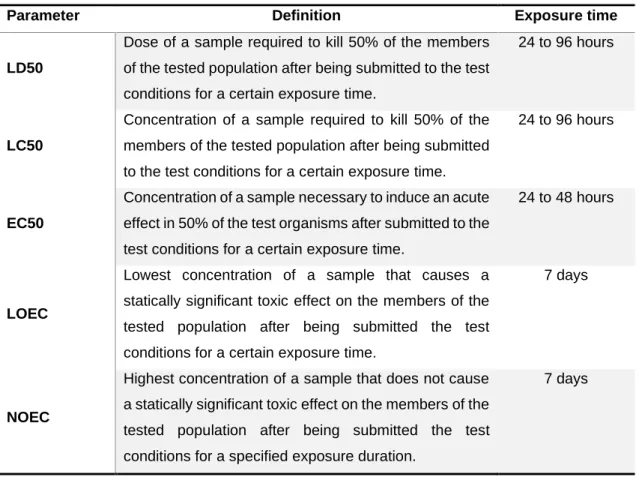
Table 2.11 - Definition and exposure time of some toxicity parameters ... 27
Table 4.1 - Experimental plan ... 39
Table 4.2 - Summary table with the conditions for the hatching of the ephippia procedure ... 43
Table 4.3 - Summary table with the conditions for the reference test ... 45
Table 4.4 - Summary table with the conditions for the test with the effluent ... 47
Table 5.1 - Physico-chemical and characterization of the secondary effluent of Beirolas WWTP (before disinfection) and comparison with the ELV ... 51
Table 5.2 – Total and faecal coliforms before disinfection with PAA ... 51
Table 5.3 - PAA concentrations and contact times ... 52
Table 5.4 – Wastewater characterization after disinfection with different PAA concentrations ... 52
Table 5.5 – Total and faecal coliforms after disinfection with PAA ... 53
Table 5.6 - EC50 for the potassium dichromate reference test on D. magna ... 56
Table 5.7 - Studied species for each taxonomic group ... 59
Table 5.8 - Number of toxicity values within the Trel ranges for the most frequent species of each taxonomic group ... 61
Research scope
1. Introduction
1.1. Research scopeDomestic and industrial wastewaters are a byproduct of anthropogenic activities, being produced everyday around the world. If left untreated, they may negatively affect both human and environmental health. Globally, approximately 80% of the produced wastewater is released in the environment without adequate treatment ( Jackson et al., 2008; UNESCO, 2017).
Untreated wastewater discharges have been identified as one of the major sources of aquatic pollution in industrialized countries, mainly due to the presence of organic matter and nutrients. Carbon, being the primary constituent of organic matter, can negatively impact the aquatic ecosystems, as excessive amounts of oxidizable organic matter can significantly decrease oxygen concentrations. Additionally, excessive nitrogen and phosphorus have been identified as the main causes for water quality degradation in Europe (more specifically, eutrophication) (Lema et al., 2017; Prasse et al., 2015; Sepp et al., 2018).
Poor sanitation management is linked to transmission of diseases such as cholera, diarrhoea, dysentery, hepatitis A, typhoid and polio. Annually, inadequate sanitation is estimated to cause 280 000 diarrhoeal deaths and is a major factor in several neglected tropical diseases (WHO, 2019b).
Wastewater treatment plants (WWTP) aim to receive and treat wastewater effluents and subsequently transfer it to an adequate destination (Águas de Portugal, 2018). The main constituents of concern in wastewater treatment effluents are suspended solids, biodegradable organics, dissolved inorganics, pathogens, nutrients and heavy metals (Metcalf & Eddy, 2003). Additionally, the presence of emerging pollutants in effluents has been increasing in recent decades, with traditional wastewater treatment systems showing to be insufficient in the removal of these pollutants (Deblonde et al., 2011) .
Wastewater effluents quality assessment is currently primarily based on physico-chemical parameters such as pH, chemical oxygen demand (COD), biochemical oxygen demand (BOD), total suspended solids (TSS), total nitrogen and total phosphorus, as well as microbiological parameters, such as faecal and total coliforms (Mara, 2003; Metcalf & Eddy, 2003). In order to counteract the continuous release of organic and inorganic pollutants, the Water Framework Directive requires a good status in terms of quantity and quality (chemical and ecological), by implementing the most efficient technique available to control their emissions in the receptor bodies (Bundschuh et al., 2011).
Since wastewater treatment effluents include a complex mixture of several organic and inorganic compounds, as well as macro and micronutrients, the determination of only some parameters is insufficient for a complete assessment of the effluent quality. Therefore, ecotoxicological bioassays
Research scope
have been suggested as an important supplement to chemical analysis as the means of evaluation of biological effects caused by wastewater treatment effluents to the aquatic ecosystems. WWTP are not able to (fully) eliminate all possible contaminants, so it is important to assess if the cleaning processes in WWTP are sufficient to provide a satisfactory decrease of environmental impact on the species living in the receiving ecosystem (Gargosova & Urminska, 2017).
In Portugal, there is no legislation available on monitoring effluents through bioassays. However, when the conditions of effluent discharge for the aquatic ecosystems are considered, and it is aimed to protect the integrity of the aquatic environment, a methodology based only on ELV for pollutants specifically identified in those effluents, may present some gaps (Picado et al., 2008).
Toxicity tests use several species to assess and characterize acute and chronic effects of toxic agents in receptor bodies. The most common organisms used in ecotoxicology are invertebrates, fish, aquatic plants (i.e. macrophytes), algae and bacteria. The criteria to be considered when choosing the test organism must include the availability, abundance, ecological representativeness, economic viability and knowledge of the species regarding its biology (Magalhães & Ferrão-Filho, 2008; Tothill & Turner, 1996). Ecotoxicological bioassays are not legally applied in the European Union to evaluate effluent toxicity, although many countries have started to implement some toxicity tests in order to assess the impact of wastewater discharges and to establish ELV to protect aquatic ecosystems (Power & Boumphrey, 2004).
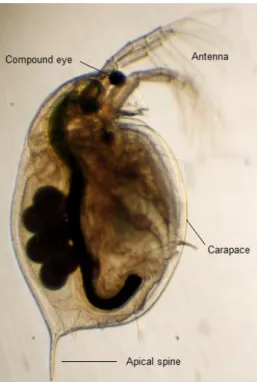
Daphnia magna is one of the most common invertebrate species used in toxicity tests. It is a planktonic crustacean and belongs to the Daphniidae family, being commonly called “water flea”. D. magna inhabits permanent water bodies, such as ponds and lakes and is usually the dominant zooplankter in temperate freshwaters. The frequent use of daphnids in toxicity tests is due to its high sensitivity to environmental changes, short doubling time and simple handling (Hoffman et al, 2003; Movahedian & Bina, 2005).
• l g j r l k j r g
Document structure
1.2. Document structure
This dissertation is structured in 9 chapters.
Chapter 1 presents an introduction to the ecotoxicological tests used in wastewater treatment effluents.
Chapter 2 consists of a literature review. This section presents relevant scientific publications that sustain the elaboration of this dissertation.
Chapter 3 describes the aims of this research work.
Chapter 4 presents the methods adopted to conduct the thesis work. In this section, all the steps and methods conducted during the elaboration of the laboratory and sensitivity analysis studies are detailed.
Chapter 5 comprises the results obtained throughout the development of the dissertation and discusses these results in view of other scientific studies.
Chapter 6 presents the conclusions and limitations of this study.
Chapter 7 discusses possible future studies for further investigation that could be deducted from the thesis work.
Chapter 8 presents the bibliographic references which supported this study.
Chapter 9 contains the annexes, which exhibit additional information of the laboratory experimental work and the bibliographic research study carried out for this dissertation.
Wastewater treatment
2. Literature review
2.1. Wastewater treatmentWastewaters are characterized in terms of their physical, chemical and biological composition, which depend on the domestic and industrial contribution, as well as the precipitation that flows into the sewage systems. Wastewater main constituents are solid matter, nutrients, pathogenic organisms and a large variety of chemical substances. The physico-chemical parameters traditionally used to characterise wastewater effluents are: pH, temperature, colour, turbidity, total and suspended solids (TS and TSS), volatile suspended solids (VSS), biochemical oxygen demand (BOD), chemical oxygen demand (COD), alkalinity and nutrients, such as total nitrogen and total phosphorus (Mara, 2003, Metcalf & Eddy, 2003).
Wastewater treatment
Table 2.1 - Principal constituents of concern in wastewater treatment (Source: Metcalf & Eddy, 2003)
Constituent Reasons for importance
Suspended solids
Suspended solids can enhance the development of sludge deposits and anaerobic conditions when untreated wastewater is discharged in aquatic ecosystems.
Biodegradable organics
Biodegradable organics are composed primarily of proteins, carbohydrates and fats and are most commonly measured in terms of BOD and COD; if discharged untreated in the aquatic systems can lead to the depletion of natural oxygen resources and to the development of septic conditions.
Pathogens Diseases can be transmitted by pathogenic organism that may be present in wastewater effluents.
Nutrients
When discharged to que aquatic environment, nutrients such as nitrogen and phosphorus can lead to the growth of undesirable algae and contribute to the contamination of groundwater, when discharged in excessive amounts on land.
Priority pollutants
Many organic and inorganic compounds suspected of carcinogenicity, mutagenicity, teratogenicity or high acute toxicity are frequently found in wastewater.
Refractory organics
These organics (e.g. surfactants phenols and agricultural pesticides) tend to resist conventional wastewater treatment methods.
Heavy metals
Heavy metals are usually added to wastewater from commercial and industrial activities and it may be recommended to be removed if the wastewater is to be reused.
Dissolved inorganics
Inorganic constituents are added to the original domestic water supply as a result of water use, and may have to be removed if the wastewater is to be reused. Calcium, sodium and sulphate are examples of these constituents.
The protection of surface water and groundwater resources from wastewater pollution is imperative for the effective management of risks posed to both human health and the environment. The discharge of insufficiently treated domestic and/or industrial effluents to aquatic ecosystems may for example lead to excess nutrient enrichment, algal blooms and eutrophication. It can also cause waterborne diseases through outbreaks of WWTP effluents into drinking water sources (Naughton & Hynds, 2014).
Wastewater treatment methods consist of operation units and processes. Operation units include treatment methods in which the application of physical forces predominate, while processes include methods in which the removal of contaminants is brought about by chemical and/or biological
Wastewater treatment
reactions. The type of treatment depends on the influent characteristics and the effluent quality required (Metcalf & Eddy, 2003; Qasim & Zhu, 2018). Table 2.2 lists the principal levels of wastewater treatment with the respective description.
Table 2.2 - Levels of wastewater treatment (Source: Metcalf & Eddy, 2003)
Treatment level Description
Preliminary Removal of solid constituents such as rags, sticks, floatables, grit and grease that may cause problems at a maintenance and/or operational level of the treatment operations and processes.
Primary Removal of a portion of the suspended solids and organic matter from the wastewater.
Advanced primary Enhanced removal of suspended solids and organic matter from the wastewater, usually through chemical addition or filtration.
Secondary Removal of biodegradable organic matter (in solution or suspension) and suspended solids. It might also include removal of nutrients (nitrogen and phosphorus).
Tertiary Removal of residual suspended solids, usually by granular medium filtration or microscreens and/or disinfection.
Advanced Removal of dissolved and suspended materials remaining after normal biological treatment, typically when the effluent is required for carious reuse applications.
Disinfection
2.2. Disinfection
Disinfection is the primary mechanism for inactivation and destruction of disease-causing organisms present in the wastewater, representing a fundamental treatment to guarantee the discharge quality and minimise potential risks to humans and the environment. This treatment level is especially relevant when the discharge is near beaches or is used directly or indirectly for agricultural, domestic or recreational purposes (Qasim & Zhu, 2018; Ragazzo et al., 2017). Nowadays, around 2 billion people do not have access to basic sanitation facilities and 432 000 people living in middle-income countries die annually as a result of bad sanitation through diseases such as cholera, diarrhoea, hepatitis A and typhoid fever (WHO, 2019a). The infectious agents responsible for these diseases include bacteria, viruses, protozoa and a variety of helminths (Shannon et al., 2008; Victoria, 2002).
Table 2.3 summarizes the common pathogens that may be present in raw domestic sewerage, as well as their infectivity and associated diseases.
Table 2.3 - Common pathogens that may be present in raw domestic wastewater (Source: Qasim & Zhu, 2018)
Organism Species Relative
Infectivity
Associated waterborne disease
Bacteria
Escherichia coli, Salmonella spp., Salmonella typhi, Shigella spp., Vibrio cholerae
Low to moderate
Gastroenteritis,
salmonellosis, Typhoid fever, Shigellosis, Cholera
Viruses
Hepatitis A virus,
Parvoviruses, Calciviruses, Enteric viruses, among others
High Infectious hepatitis, gastroenteritis, paralysis, fever. Protozoa Cryptosporidium parvum, Entamoeba histolytica, Giardia lamblia
High Cryptospordiosis, Amebiasis, Guardiasis
Helminths
Ascaris lumbricoides, Schistosoma mansoni, Trichuris trichiura
High Acariasis, Schistosomiasis, Trichuriasis
Coliform bacteria, members of Enterobacteriaceae, are widely used to evaluate microbiological quality of drinking water, specifically as an indicator of water treatment efficiency and distribution system integrity and as a screen for faecal contamination. These bacteria are present in the normal intestinal flora of humans and other warm-blooded animals, and are usually found in large numbers in faecal waste and wastewater. With the exception of a few strains, coliforms are not considered pathogenic and most species are free-living in the environment, thus their presence in water
Disinfection
masses does not necessarily represent a risk. Also, waterborne pathogens are not necessarily present when coliforms are detected. Coliform bacteria are easily detected and quantified and comprise total coliforms and faecal coliforms (Craun et al., 1997; Mara, 2003).
2.2.1. Conventional disinfection treatments
There are several techniques for wastewater disinfection that include chemical, physical and biological processes that aim the neuralization of pathogenic organisms. These techniques can be used individually or in combination, depending on the discharge quality requirements and the influent quality (Eckert, 2013; Luukkonen et al., 2014). Table 2.4 presents some of the most commonly used disinfection methods.
Table 2.4 - Common disinfectants and respective characteristics (Source: Metcalf and Eddy, 2003)
Characteristics Free and combined chlorine species
Chlorine
dioxide Ozone UV light
Hazardous chemicals that threat
surrounding population
Yes (in case of
chlorine gas) No No No
Energy intensive No No Yes Yes
High contact time Yes Yes No No
Effective in the destruction of resistant organic constituents No No No (but can reduce concentration when applied with a higher dosage) Yes (at very high dosages)
Residual disinfectant Yes Yes No No
Chemical disinfectants are commonly used in wastewater treatments, not only because of their high effectiveness in the reduction of microorganisms, but also because of their oxidation potential, enabling the destruction of emerging contaminants (e.g. micropollutants, pharmaceuticals, such as endocrine disrupting chemicals (ECDs)) by converting them into biodegradable and/or less toxic compounds (Acero et al., 2013; Ahmed et al., 2017; Bolong et al., 2009).
Chlorination is the most widely used method for disinfecting effluents from WWTP and from drinking water treatment plants (DWTP), mainly for being one of the most economically advantageous options and for allowing the maintenance of a disinfectant residual in the distribution system. However, in the presence of organic matter, chlorine reacts with the organic compounds and forms
Disinfection
trihalomethanes, which are mutagenic/carcinogenic and other toxic by-products that are potentially harmful to human and aquatic organisms (EPA, 1999; Fiessinger et al., 1981). Even at low concentrations, chlorine is toxic to water life and residual chlorine can persist in the effluent for many hours. Subsequently, the use of chlorine to disinfect wastewater effluents requires dichlorination prior to the effluent release in the receptor body, even though the long-term effects of discharging dechlorinated compounds into the environment are unknown (Collivignarelli et al., 2017; De Souza et al., 2015).
Ultraviolet irradiation is one of the most commonly used alternatives to chlorination with a comparable and often more effective disinfection for viruses and bacteria. UV light penetrates the cell wall of the microorganism and is absorbed by the nucleic acids, which can either prevent replication or cause cell death. The effectiveness of UV radiation as a disinfectant depends on the characteristics of the UV disinfection system, the overall system hydraulics, the presence of particles, the characteristics of the microorganism and the chemical characteristics of the wastewater (Metcalf & Eddy, 2003, Lazarova et al., 1999). Even though UV light has some advantages as compared to chemical disinfectants, such as the absence of disinfection byproducts and improved safety regarding toxicity to humans and aquatic species, it also presents some disadvantages, being relatively expensive and not allowing any residual effect (Koivunen & Heinonen-Tanski, 2005).
The ideal disinfection system should guarantee the maximum efficiency in pathogenic microorganism removal without generating toxic by-products. Moreover, it should be inexpensive and technologically compatible with the other treatment processes. Some of the main characteristics to be considered when choosing a disinfection system are the availability, safety, stability, toxicity to microorganisms and other forms of life, and interaction with extraneous material (Metcalf & Eddy, 2003; Veschetti et al., 2003).
In applying a disinfection system, some factors must be considered that influence its action, namely contact time, concentration of the disinfectant, intensity and nature of the disinfection agent, temperature, types of organism and the nature of the suspending liquid (Metcalf & Eddy, 2003).
2.2.2. Peracetic Acid
Peracetic Acid (PAA) is a strong disinfectant with a wide spectrum of antimicrobial properties. In recent years, it has been used in several industries (including food processes, beverage, medical and pharmaceutical, and as a decolouring agent in textile and pulp and paper industries) demonstrating high bactericidal, virucidal, fungicidal and sporicidal effectiveness. Therefore, the use of PAA as a disinfectant for wastewater effluents has been studied and explored (Gehr et al., 2003; Kitis, 2004).
PAA is commercially available at 5-40% w/w in a quaternary equilibrium mixture containing acetic acid, hydrogen peroxide, peracetic acid and water, as described in the equation below (Gehr et al., 2003; Henao et al., 2018):
Disinfection
CH3CO2H + H2O2 ⟷ CH3CO3H + H20 (1)
Even though the information concerning the mode of action of PAA as an antimicrobial agent is still limited, it is speculated that it functions as other peroxides and oxidizing agents, being that its disinfectant activity is based on the release of active oxygen. It is also suggested that PAA disrupts the chemiosmotic function of the lipoprotein cytoplasmic membrane and transport through dislocation or rupture of the cell wall (Kitis, 2004).
Doses of 1.5 to 2 mg/L with a contact time of 15 to 20 minutes have been proven to be enough for bacteria removal of tertiary effluent wastewater, while a 60 minutes contact time provides coliphage virus removal. For secondary effluents, a dose of 2 to 7 mg/L and a contact time of 30 minutes are required for a 3-log reduction in total coliform number. However, the desired dose and contact time depend on the wastewater effluent quality (Luukkonen et al., 2015).
PAA disinfection may be conducted in the presence of organic matter, since it has been shown that it produces no to little toxic or mutagenic byproducts after reaction with organic material present in wastewater effluents or surface waters used for drinking water. The decomposition products of PAA are acetic acid, hydrogen peroxide, oxygen and water. Although any formation of halogen-containing disinfection by-products (DBP’s) has not demonstrated, this possibility cannot be completely discarded (Kitis, 2004).
Emerging pollutants are new products or chemicals with no regulatory status and whose effects on ecosystems and human health are still not totally known. In recent years, there has been an increasing awareness regarding some of these compounds, such as micropollutants and endocrine disruptors. Therefore, the European Commission has created a list of certain substances that must be monitored. PAA has shown potential in the removal of certain pharmaceuticals (four anti-inflammatory drugs and two lipid-regulating agents) (European Comission, 2018; Deblonde et al., 2011; Hey et al., 2012; Luukkonen et al., 2015) and appeared to be highly efficient in the removal of the sex hormone 17α-ethinylestradiol (EE2) in a study conducted by Maurício et al. (2019). The presence of acetic acid (which is present both in the PAA commercial solution and as a product of its decomposition) has been linked to a potential microbial regrowth. However this can be avoided by using higher doses in the range of 2-15 mg/L (Antonelli et al., 2013). The disinfection with PAA is also linked to an increase in organic matter in treated wastewater effluents, resulting in an increase in TOC and BOD. Additionally, the use of PAA can also cause a decrease in pH values, as peracetic acid is prepared from acetic acid and hydrogen peroxide (Cavallini et al., 2013; Lazarova et al., 1999; Lefevre et al., 1992). Factors such as temperature (microbial reductions increase with increasing water temperature during the disinfection process), pH (PAA activity is greater at neutral or mildly acidic conditions), TSS (disinfection efficiency of PAA increases with decreasing TSS) can affect PAA disinfection efficiency (McFadden et al., 2017; Kitis, 2004).
Disinfection
Pilot plant experiments have shown a higher efficiency in disinfection when PAA is combined with UV radiation, due to the formation of free radicals as a consequence of photolysis of the PAA when in presence of the UV light rays (Caretti & Lubello, 2003).
The cost of a disinfection system depends on its availability, the composition of the wastewater to be treated, the final effluent quality required, the plant size and configuration and the market situation (Liberti & Notarnicola, 1999). The investment cost inherent to disinfection systems with PAA is generally lower than UV light and ozone and higher than chlorine and chlorine dioxide. The investment costs regarding equipment and construction of a new system in order to implement disinfection with PAA are very low when the plant already functions with chlorine, as contact times and handling equipment are similar (Collivignarelli et al., 2000; Nurizzo et al., 2001).
Water Framework Directive
2.3. Water Framework Directive
The European Water Framework Directive (Directive 2000/60/EC of 23rd October of 2000; EC,
2000; WFD) is a legally binding document that requires European Commission member states to implement water management measures and policies in order to achieve good overall quality of water bodies within a 15 years’ timeframe. It aims to complement a number of legislative instruments that existed before its implementation including Bathing (77/160/EEC), Drinking (98/83/EC), Fish (78/659/EEC) and Shellfish (79/923/EEC) Water Directives, as well as those based on chemical substances or sources of pollution (e.g. Dangerous Substances (76/464/EC), Groundwater (80/68/EEC), and Pesticide (91/414/EEC) Directives) .The WFD resulted from a joint decision and policy-making process involving the European Parliament and environmental NGO’s, and is built upon two main approaches: more integrated ecological definitions of water and the introduction of the notion of public participation for policy implementation (Allan et al., 2006; Steyaert & Ollivier, 2007).
The WFD is the main community water policy instrument in the European Union, promoting a transparent, effective and coherent legislative framework, changing the water quality control for all the EU member states (De Stefano, 2010). The Directive aims the maintenance and improvement of the aquatic environment of the Community, being its purpose primarily concerned with the quality of the water within the EU territory, and encourages Member States to achieve the objective of at least good water status, by defining and implementing the necessary measures through integrated programmes. Areas where good water status already exists, it should be maintained. Regarding groundwater, in addition to the requirements of good status, any significant upward trend in the concentration of any pollutant should be identified and reversed (EC, 2000).
The ultimate goal of the WFD is to achieve the elimination of priority hazardous substances and contribute to achieving concentrations in the marine environment near background values for naturally occurring substances based on the precautionary, polluter pays, correction at the source and prevention principles (EC, 2000).
Annex V of the WFD states the quality elements for the classification of ecological status for surface water and groundwater. The classification considers biological, hydromorphological and physico-chemical elements. The biological elements considered in the assessment of water quality are the composition and abundance of phytoplankton, aquatic flora and benthic invertebrate fauna as well as the abundance and age structure of fish fauna. The hydromorphological elements considered are the hydrological regime, continuity and morphological conditions. On the other hand, the general physico-chemical elements accessed are thermal and oxygenation conditions, salinity, acidification status and nutrient conditions. Additionally, some specific pollutants are also considered, such as priority substances identified as being discharged into the body of water. The priority substances are approached in Annex X. Before the implementation of the WFD, water quality monitoring in most EU Member States was mainly based on chemical and physical
Water Framework Directive
parameters, with only about half of the states using biological parameters as part of their water quality assessment system (Hering et al., 2003).
Three modes of monitoring regimes are specified in the Water Frame Directive (Allan et al., 2006): a) surveillance monitoring, which aims long-term assessment of water quality changes and
provides baseline data on river basins, allowing the design and implementation of other types of monitoring;
b) operational monitoring, aimed at providing data on water bodies at risk or failing objectives of the WFD;
c) investigative monitoring aimed at assessing causes of such failure.
The WFD has been transposed into Portuguese law by Law nº 58/2005 from 29th of December,
establishing the institutional frame for the sustainable management of water bodies, being rectified by the Rectification Declaration nº 11-A/2006, from 23rd of February and modified by the
Decrees-Law nº 245/2009 from 22 September, nº 60/2012 from 14th of March, nº130/2012 from 22 of June
and changed by the Laws nº 17/2014 from 10th of April, nº 42/2016 from 28th of December and nº
44/2017, from 19th of June (Law no58/2005 de 29th of December, 2005; Rectification Declaration no
11-A/2006, 2006; D.L. no 245/2009 de 22nd of September, 2009; D.L. no 60/2012 de 14th of March,
2012; D.L. no 130/2012 de 22nd of June, 2012; Law no17/2014 de 10th of April, 2013; Law no 42/2016
de 28th of December, 2016; Law no 44/2017 of 19th de June, 2013). Subsequently, the WFD has
been under constant evaluation and revision over the past two decades.
Until now, water quality monitoring has heavily relied on spot sampling followed by instrumental measurements to determine pollutant concentrations. These procedures can be advantageous; however, it presents limitations in terms of temporal and spatial variation that may be achieved at reasonable costs and the information on bioavailability that might be obtained. Therefore, a successful implementation of the WFD across the EU member states relies on the establishment and use of emerging and low-cost tools as part of monitoring programmes as a complement , providing additional information with the aim to obtain a more representative perspective of water bodies quality (Allan et al., 2006)
When implementing the WFD, the deadlines for each of the requirements were set. The key milestones are listed on Table 2.5.
Water Framework Directive
Table 2.5 - Water Framework Directive milestones (EC, 2019)
Year Issue Reference
2000 Directive entered into force Art. 25
2003 Transposition in national legislation
Identification of River Basin Districts and Authorities
Art. 23 Art. 3 2004 Characterisation of river basin: pressure, impacts and economic
analysis
Art. 5
2006 Establishment of monitoring network Beginning of public consultation
Art. 8 Art. 14
2008 Presentation of draft river basin management plan Art. 13
2009 Finalisation of river basin management plan, including programme of measures
Art. 13 & 11
2010 Introduction of pricing policies Art. 9
2012 Development of operational programme of measures Art 11.
2015 Meeting of environmental objectives End of first management cycle
Second river basin management plan and first flood risk management plan
Art. 4
2021 Ending of second management cycle Art. 4 & 13
2027 Ending of third management cycle, final deadline for meeting objectives
Art. 4 & 13
Despite the effort invested in the coordination of the WFD implementation across the EU Member States and the strict timetable, the implementation process has shown to be challenging towards achieving the WFD objectives and improving ecological status of waters in Europe has been slow across all the Member States. In 2015, nearly half of the EU surface waters did not reach good ecological status and the chemical status of 40% of EU water bodies was unknown. Additionally, 73 infringement cases on non-implementation of water legislation against Member States were open (Giakoumis & Voulvoulis, 2018).
Legislation and water quality control in Portugal
2.4. Legislation and water quality control in Portugal
Wastewater effluent discharges into the receiving environment, under regular operating conditions, are regulated using ELV as set in the reference legislation, the Decree-Law nº 152/97 of 19th of
June (changed by D.L nº 384/98 of the 9th of November, D.L nº 149/2004 of 22nd of June and D.L.
nº 198/2008 of 8th of October) and the Decree-Law nº 238/98 of 1st of August. All discharge licenses,
also called water use licenses, are issued by the Portuguese Environment Agency (APA) (Perdigão, 2018).
D.L. nº 152/97 from 19th of June defines the physical and chemical requirements, namely BOD5,
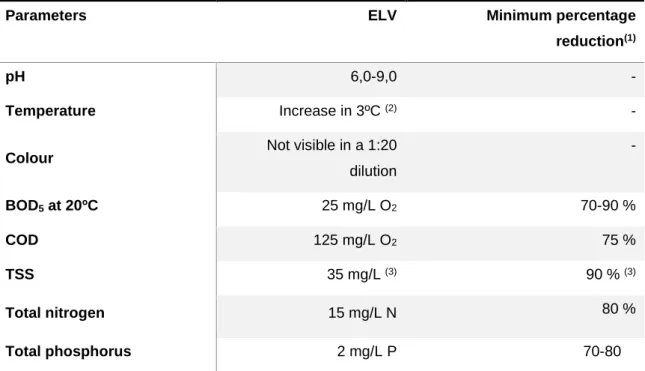
COD, TSS, total nitrogen and total phosphorus, for domestic wastewater treatment plants effluents after secondary treatment. ELV for parameters such as pH, temperature and colour can be found in D.L. nº 236/98 from 1st of August. Table 2.6 presents some of the ELV for physical and chemical
parameters of secondary wastewater effluents, according to the reference legislation Table 2.6.
Table 2.6 - Emission limit values for physical and chemical parameters of wastewaters (Source: D.L n.o
152/97 de 19 de Junho, 1997)
Parameters ELV Minimum percentage
reduction(1)
pH 6,0-9,0 -
Temperature Increase in 3ºC (2) -
Colour Not visible in a 1:20
dilution - BOD5 at 20ºC 25 mg/L O2 70-90 % COD 125 mg/L O2 75 % TSS 35 mg/L (3) 90 % (3) Total nitrogen 15 mg/L N 80 % Total phosphorus 2 mg/L P 70-80
(1)Reduction in effluent load; (2) Temperature in the receptive body after the effluent discharge, measured 30 m downstream the discharge location(3) Optional; BOD
5- Five-day Biochemical oxygen demand; COD – Chemical oxygen demand; ELV – Emission limit values; TSS – Total suspended solids.
The discharge requirements stated in D.L. nº236/98 of 1st of August can be more demanding when
the following situations are observed:
a) The receptive environment is classified as a sensitive zone, according to the D.L. nº 152/97 from 19th of June;
b) When the pollution caused by the effluent discharged is prone to cause long range or transboundary effects;
Legislation and water quality control in Portugal
c) The receptive environment is classified as a vulnerable zone according to the D.L. nº 235/97 of 3rd of September;
d) The receptor body is considered a species and habitat protection area to which the maintenance or increase of the water quality is an important conservation factor;
e) The receptor environment is classified as National Agricultural Reserve according to D-L- nº 196/89 from 14th of June.
Microbiological parameters are not contemplated in the reference legislation regarding the wastewater effluents discharges in water masses. However, D.L. nº 236/98 defines some microbiological parameters and their respective recommended maximum value (RMV) and maximum allowable value (MAW), regarding bathing water quality (Annex XV) and irrigation water quality (Annex XVI).
Table 2.7 presents the RMV and MAV for the microbiological parameters (total and faecal coliforms) in bathing waters as set in the D.L. nº 236/98 of 1st of August.
Table 2.7 - RMV and MAV for total and faecal coliforms regarding bathing waters
Parameters RMV MAV
Total coliforms (MPN/100 ml) 500 10 000 Faecal coliforms (MPN/100 ml) 100 2000
RMV - Recommended maximum value;MAV - Maximum allowable value; MPN – Most probable number.
Disinfected wastewater can have several reuse destinations, such as irrigation, car washes, agriculture and industrial reuse (Angelakis & Bontoux, 2001). D.L. nº 119/2019 of 21st of August
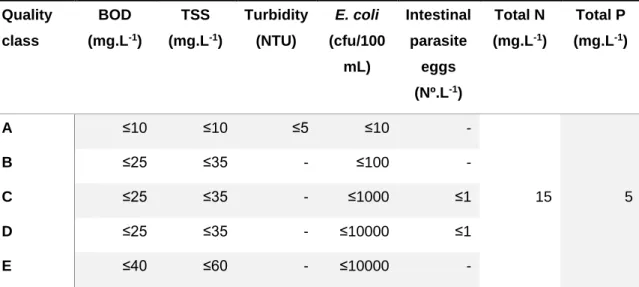
(Annex I) establishes quality classes and the physical, chemical and microbiological limit values for each class. Table 2.8 describes watering quality classes and the respective minimal level of treatment required.
Legislation and water quality control in Portugal
Table 2.8 - Watering quality classes and respective treatment level required (Source: D.L. nº 119/2019 of 21st of August)
Class Possible uses Level of treatment
A
Watering without access restriction (urban and agricultural uses): watering of crops for raw consumption in which the edible part is in direct contact with the water; public and private gardens watering.
More advanced than secondary treatment
(disinfection). B
Watering with access restriction (urban and agricultural uses): watering of crops for raw consumption that grow above ground level in which the edible part is not in direct contact with the water; watering of crops intended for food processing and crops not intended for human consumption, including crops for animal consumption; watering of with access restriction, including leisure and sports areas.
C
Watering with access restriction (agricultural use): watering of crops for raw consumption , that grow above the soil, in which the edible part is in direct contact with the water; watering of crops intended for food processing and crops not intended for human consumption, including crops for animal consumption.
D
Watering with access restriction (agricultural use): seed productions, including seeds for industrial use or energy production.
E
Watering with access restriction (agricultural use): seed production; watering of areas of naturally restricted use. (e.g., hedgerows, containment areas).
Table 2.9 presents the water quality standards for water reuse for watering purposes according to the respective quality class.
Legislation and water quality control in Portugal
Table 2.9 - Water quality norms for watering reuse (Source: D.L. nº 119/2019 of 21st of August)
Quality class BOD (mg.L-1) TSS (mg.L-1) Turbidity (NTU) E. coli (cfu/100 mL) Intestinal parasite eggs (Nº.L-1) Total N (mg.L-1) Total P (mg.L-1) A ≤10 ≤10 ≤5 ≤10 - 15 5 B ≤25 ≤35 - ≤100 - C ≤25 ≤35 - ≤1000 ≤1 D ≤25 ≤35 - ≤10000 ≤1 E ≤40 ≤60 - ≤10000 -
BOD - Biochemical oxygen demand; cfu - Colony forming units; NTU - Nephelometric Turbidity Units; TSS – Total suspended solids.
Ecotoxicology and ecotoxicological tests
2.5. Ecotoxicology and ecotoxicological tests
Ecotoxicology can be defined as the science created to solve problems regarding contamination by natural and synthetic compounds, and its effects on the species as well as all the ecosystems, enabling the prediction of biological responses to the toxicity of chemical compounds, and the evaluation of the ecotoxicological disturbance of the environments, through concentration-effect and concentration-response curves (Hoffman et al., 2003). Thus, aquatic toxicology intends to study the effects of toxic agents on aquatic organisms at cellular, individual, populational and community levels (Magalhães & Ferrão-Filho, 2008).
The pollution of aquatic ecosystems has been increasing due to the industrial development in the last decades. The major issue is the increasing load of domestic and industrial wastes poured into rivers and marine ecosystems. Thus, the assessment of biological effects of effluent discharges in water masses is today considered relevant, and bioassays identifying the ecological hazard have been shown to be useful and increasingly used in several jurisdictions, aiming at the management and reduction of water pollution (Mendonca et al., 2012; Power & Boumphrey, 2004). The trend for many countries has been to start with chemical hazard-based systems, and then add effluent bioassays and receiving environment evaluations to predict or measure impacts at the ecosystem level (Garric et al. , 1993).
In the early 80’s, environmental agencies worldwide, mostly in the United States and Europe, began to develop and implement standardized toxicity tests using aquatic organisms. The “Clean Water Act” is considered a regulatory mark that granted the United States Environmental Protection Agency (USEPA) the authority to implement pollution control programmes and quality standards for all surface waters contaminants. In parallel, USEPA has also established biological monitoring, or biomonitoring, i.e. the use of organisms in order to monitor water quality parameters. On the other hand, the Organisation for Economic Co-operation and Development (OECD) put forth a series of tests and protocols regarding the use of aquatic organisms in ecotoxicological studies, such as algae, crustaceans and fish (Magalhães & Ferrão-Filho, 2008).
Overall, European Union member states do not apply whole wastewater treatment bioassays on a routine regulatory basis (with Germany as an exception), although many countries aim to take that direction. Therefore, toxicity tests have been implemented in some countries in order to assess the impact of domestic and industrial wastewater discharges and establish ELV for aquatic ecosystems protection (Power & Boumphrey, 2004).
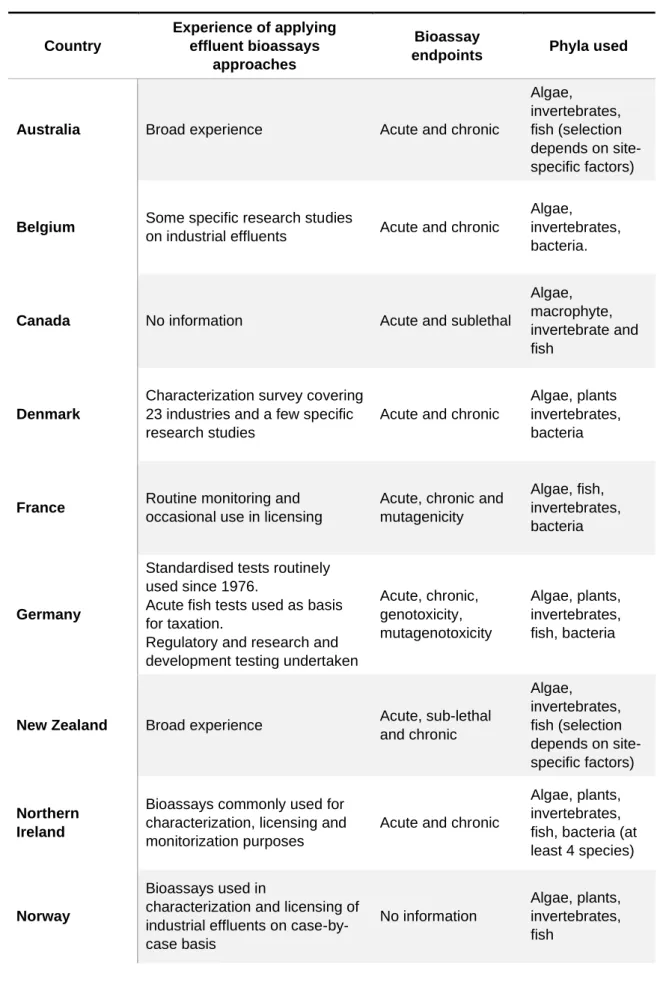
The state of current regulatory use of effluent toxicity tests in some of the EU member states, as well as other countries, are summarized in Table 2.10.
Ecotoxicology and ecotoxicological tests
Table 2.10 - Summary of current regulatory use of effluent bioassays in several countries (Source: Power & Boumphrey, 2004; Agriculture and Resource Management Council of Australia and New Zealand, 2000)
Country
Experience of applying effluent bioassays
approaches
Bioassay
endpoints Phyla used
Australia Broad experience Acute and chronic
Algae, invertebrates, fish (selection depends on site-specific factors)
Belgium Some specific research studies
on industrial effluents Acute and chronic
Algae, invertebrates, bacteria.
Canada No information Acute and sublethal
Algae, macrophyte, invertebrate and fish
Denmark
Characterization survey covering 23 industries and a few specific research studies
Acute and chronic
Algae, plants invertebrates, bacteria
France Routine monitoring and
occasional use in licensing
Acute, chronic and mutagenicity
Algae, fish, invertebrates, bacteria
Germany
Standardised tests routinely used since 1976.
Acute fish tests used as basis for taxation.
Regulatory and research and development testing undertaken
Acute, chronic, genotoxicity, mutagenotoxicity Algae, plants, invertebrates, fish, bacteria
New Zealand Broad experience Acute, sub-lethal
and chronic Algae, invertebrates, fish (selection depends on site-specific factors) Northern Ireland
Bioassays commonly used for characterization, licensing and monitorization purposes
Acute and chronic
Algae, plants, invertebrates, fish, bacteria (at least 4 species)
Norway
Bioassays used in
characterization and licensing of industrial effluents on case-by-case basis
No information
Algae, plants, invertebrates, fish
Ecotoxicology and ecotoxicological tests Country Experience of applying effluent bioassays approaches Bioassay
endpoints Phyla used
Spain
Some specific research studies on industrial wastewater. Experience in regulatory use of Daphnid and Vibrio fischeri tests in wastewater control Acute Algae (less frequent), invertebrates, bacteria Sweden
Bioassays are used in licensing effluents and are a part of the Characterisation Industrial Discharges (CID) guidelines since 1989 Acute, chronic, mutagenicity, enzymatic (plus physiological and morphological for field bioassays Plants, algae, invertebrates, fish, bacteria The Netherlands
No legislative compulsion for bioassay use. Studies
undertaken on industry sectors and frameworks developed
Acute, chronic, mutahenicity, enzymatic, estrogenic effects Algae, plants, invertebrates, fish United Kingdom
No regulatory requirement for bioassays use nationally, however some local use for regulatory compliance monitoring; research and development including a coloborative
Government/industry demonstration programme. Bioassays for receiving water monitoring of coastal waters
Acute and chronic
Algae, plants, invertebrates, fish, bacteria
United States No information Acute and chronic
Algae,
invertebrates and fish.
Regarding the management framework, most countries are primarily focused on the source control, although other frameworks have been increasingly studied and developed regarding the receiving environment monitoring with bioassays (Power & Boumphrey, 2004; Australian and New Zealand Environment and Conservation Council, 2000).
In Portugal, like in other EU member states, a legal basis has been implemented regarding the use of toxicity tests in the risk assessment of certain contaminants (e.g., the use of pesticides in agriculture). However, there is no legislation available on bioassays to be used for wastewater treatment effluents monitoring so that most of the existing regulatory framework is merely based on the establishment of ELV for quality control of effluent discharges (Amaro, 2006; Mendonca et al., 2012).
Ecotoxicology and ecotoxicological tests
WWTP’s are unable to eliminate residues completely – it can only attempt to decrease pollution levels to an acceptable value, therefore it is important to assess if the treatment processes in WWTP are sufficient to provide a satisfactory decrease of environmental impact on the species living in the receiving ecosystem (Gargosova & Urminska, 2017). Physical and chemical analysis can assess many of the pollutants, but it is hardly possible to identify all the compounds that can be present in the wastewater, often in very low concentrations. Additionally, the identification of the compounds does not provide enough information regarding their effects on the environment, specially concerning the possibility of combined effects (additive, synergistic or antagonistic) of the toxicant mixtures. Furthermore, the possible degradation of pollutants to metabolites can lead to an increase or decrease in toxicity, which is also difficult to detect only by chemical analysis. Thus, toxicity assays can be an important supplement to chemical analyses in the evaluation of the negative effects of wastewater discharges to the ecosystems (Bundschuh et al., 2011)
Whole effluent tests include the evaluation of the synergetic, antagonistic and additive effects of all the chemical, physical and biological components which may have a negative effect on the physiological and biological functions of the test organisms. Because the aggregated toxicity of all components of the wastewater effluent is determined, the toxic effect can be limited by only limiting the effluent toxicity, allowing the comparison of effluent toxicity with site specific water quality criteria designed to protect representative and sensitive species, as well as establish discharge limitations that will protect and improve aquatic environments (Metcalf & Eddy, 2003; Silva et al., 2009).
2.5.1. Toxicity tests
Toxicity tests are based on the principle that the response of living organisms to the exposure of toxic agents depends on the dose of the toxic agent. Therefore, aquatic toxicity tests are designed to describe a concentration-response relationship (concentration-response curve). Acute toxicity tests usually evaluate the concentration-response relationship for survival, whereas chronic tests evaluate sublethal effects such as growth, reproduction and behaviour (Hoffman et al., 2003). The type of test to be performed must be chosen according to the test purpose, the test organism requirements, the available resources and the toxic agent characteristics. Some organizations working on environmental protection, e.g. OECD, USEPA, Environment Canada or the International Organization for Standardization (ISO), have been developing and implementing standardized toxicity tests. The standardization of these tests is advantageous since they allow the comparation of data obtained from different laboratories (Costa et al., 2008).
Acute toxicity tests
Acute toxicity tests evaluate the effects on an organism after a single or multiple exposure during a short period of time, in view of the species life span. Usually, the endpoint of acute toxicity tests is mortality. However, other non-lethal manifestations can also be studied, such as immobility or growth inhibition (Costa et al., 2008).
Ecotoxicology and ecotoxicological tests
The main goal of these tests is to determine the median effect concentration (EC50), which
represents the concentration of a certain toxic compound where the response (immobility, growth inhibition and inhibition of luminescence, among others) is obtained for 50% of the test population, and generally last from 0 to 96 hours (Magalhães & Ferrão-Filho, 2008).
Acute toxicity tests with aquatic organisms are broadly used to study the potential toxic effect of several pollutants brought by different sources, from pesticides from intensive agricultural to oil spills and domestic and industrial wastewater discharges, allowing the assessment of the efficiency of wastewater treatment plants (Walker et al., 2001; Magalhães & Ferrão-Filho, 2008).
According to Magalhães & Ferrão-Filho (2008), these toxicity tests can present some limitations, such as:
i. They cannot determine the increase in mortality after the exposure, or access the adverse effects when the latency period is longer than the usual duration of the test; ii. They only evaluate the toxicity to one single species at the time. In a multispecies
context as under real-word conditions, the toxic compound can be transferred through the food chain, leading to bioaccumulation and biomagnification. Additionally, species interactions such as competition and predation can increase the levels of stress on the organism, resulting in higher sensibility;
iii. Only one life stage is tested, while the sensitivity of the organism “in other life stages may be greater;
iv. Different species from the same biological community have different levels of sensibility to a certain pollutant;
v. Sublethal effects that can lead to death of the organism due to prolonged exposure are not considered.
Chronic toxicity tests
Chronic toxicity tests are used to measure the effects of chemical substances on aquatic species for a time period that can comprise a larger part to the entire life cycle of the test-organism. The absence of toxic effects on the organism in acute toxicity tests does not mean that the substance is not toxic for the species after prolonged exposure. Thus, chronic toxicity tests allow to access possible toxic effects of certain substances under prolonged exposures and sublethal concentrations that allow the organism´s survival, but compromise some of its biological functions (Costa et al., 2008).
Chronic toxicity tests depend directly from results acquired from acute toxicity tests, once sublethal concentrations are determined from the EC50 value. These tests are usually more sensitive to the
expected dilution in environmental samples than acute toxicity tests (Magalhães & Filho, 2008). Chronic intoxication can have two different causes: the accumulation of the toxic pollutant in the organism, when the absorbance rate is higher than the elimination rate, and the sum of the effects caused by repeated exposures, without the accumulation of the toxic substance in the organism.