DIFFICULTIES OF PUBLIC LEGISLATION FOR THE
ACQUISITION OF GOODS AND SERVICES
Patrícia Alexandra Marques Costa
Dissertation submitted as a partial requirement for the conferral of master’s
in management
Supervisor:
Prof. Teresa Sofia Sardinha Cardoso de Gomes Grilo, Assistant Professor, ISCTE Business School, Department of Marketing, Operations and General Management
Co-Supervisor:
Prof. Ana Lúcia Henriques Martins, Assistant Professor, ISCTE Business School, Department of Marketing, Operations and General Management
“Something is only impossible until someone doubts and proves otherwise.” Albert Einstein
iii
Acknowledgements
This dissertation was the highest point of my academic life, in which I fulfilled goals that would not have been possible to fulfil, without the support of some people, to whom I would like to begin by thanking.
My greatest thank you to my supervisors, Professor Teresa Grilo and Professor Ana Lúcia Martins, for the excellent guidance, the knowledge imparted, and for always being there for me during the development of this dissertation.
Next, I would like to thank the ISCTE - Instituto Universitário de Lisboa, in particular, the Property and Procurement Unit, for their full availability and for providing me with all the information and data necessary to complete this dissertation.
A special thank you to my boyfriend for all the love, kindness and support in my journey; he always has the right words, at the right times.
Finally, I give my heartfelt thank you to my parents and brother, for the unconditional support and affection they have always given me, and for their patience in the moments of greatest anguish. Without them, my academic journey would not have been possible. I dedicate my victory to them.
My sincere thank you to all who have contributed directly and indirectly to the fulfilment of this great goal.
Abstract
The role of purchasing is increasingly important for companies in the public sector, which are increasingly seek efficiency and effectiveness in their procurement processes. However, public companies need to govern all their activities respecting the legal procedures which sometimes leads to some operational difficulties, resulting in inefficiencies in the procurement process. This dissertation aims to identify opportunities for improvement in the procurement process in the public sector, looking specifically at the difficulties felt as a result of legally imposed procedures.
The adopted methodology is based on a dissertation per case study applied to the public procurement process in the Portuguese context. A public university - ISCTE - Instituto Universitário de Lisboa, was used as an example, but the proposed approach could be applied to other public entities. Direct observations, informal and formal interviews, and necessary documentation were collected for data analysis.
The procurement process was described based on the internal procedures adopted, and based on the legal terms, since these are organizations that are under the jurisdiction of the Public Procurement Code.
The results of the research allowed to conclude that the application of lean thinking in public entities can be useful in the fight against the difficulties felt in the application of the law in the public procurement processes.
To conclude this dissertation, three proposals to improve the procurement process of a public entity were presented. If implemented, these proposals eliminate waste and create value, being in accordance with the philosophy of lean thinking.
Key words: Process improvement, Public Procurement JEL Classification: M10 – Business Administration Y40 – Dissertation
v
Resumo
O papel das compras é cada vez mais importante para as empresas do setor público, as quais procuram cada vez mais eficiência e eficácia nos seus processos de compra. No entanto, as empresas públicas precisam de reger toda a sua atividade respeitando os procedimentos legais, o que por vezes traz algumas dificuldades de operacionalização, resultando em ineficiências no processo de compra. Esta dissertação surge neste contexto, tendo como objetivo identificar oportunidades de melhoria no processo de aquisição no setor público, olhando especificamente para as dificuldades sentidas como resultado dos procedimentos impostos legalmente.
A metodologia adotada baseia-se numa dissertação por estudo de caso aplicado ao processo de contratação pública no contexto português. Uma universidade pública - ISCTE - Instituto Universitário de Lisboa, foi usada como exemplo, podendo, no entanto, a abordagem proposta ser aplicada a outras entidades públicas. Observações diretas, entrevistas formais e informais, e documentação necessária foram recolhidas para análise de dados.
O processo de compra foi descrito com base nos procedimentos internos adotados e com base nos termos legais, uma vez que são organizações sob jurisdição do Código de Contratação Pública.
Os resultados da pesquisa permitiram concluir que a aplicação do pensamento lean em entidades públicas pode ser útil no combate às dificuldades sentidas na aplicação da lei nos processos de compra pública.
Para concluir esta dissertação, foram apresentadas três propostas de melhoria ao processo de compra de uma entidade pública. Se implementadas, estas propostas eliminam desperdícios e criam valor, estando em concordância com a filosofia do pensamento lean.
Palavras-Chave: Melhoria de processos, Compra Pública Classificação JEL: M10 – Business Administration Y40 – Dissertations
Index
Acknowledgements ... iii Abstract ... iv Resumo ... v Index ... vi Figures Index ... ix Tables Index ... x List of abbreviations ... xi Glossary ... xiii Chapter 1 – Introduction ... 1 1.1. Framework ... 11.2. Contextualizing the problem ... 1
1.3. Research question ... 1
1.4. Objectives ... 2
1.5. Methodology ... 2
1.6. Scope ... 2
1.7. Dissertation structure ... 3
Chapter 2 – Literature Review ... 5
2.1. Introduction ... 5
2.2. Value Chain ... 5
2.2.1. Procurement ... 6
2.2.2. Procurement process ... 7
2.3. Process improvement in procurement ... 8
2.4. Lean Thinking ... 11
2.5. Lean Thinking in services area ... 14
2.5.2. Implementation of lean procedures ... 14
vii
2.6. Lean Thinking in the public sector ... 17
2.6.1. Lean application to the public sector... 17
2.6.2. Lean application to the public procurement ... 18
2.7. Conclusions ... 19
Chapter 3 – Public Purchase in Portugal ... 21
3.1. Introduction ... 21
3.2. Portuguese public sector ... 21
3.3. Laws governing the acquisition of goods and services in the Portuguese Public Sector ... 23
3.4. Descriptions and legal mappings of the public procedures ... 24
3.4.1. Direct Adjustment ... 24
3.4.2. Prior consultation ... 25
3.4.3. Public Tender ... 26
3.4.4. Competition limited by prior qualification... 26
3.4.5. Negotiation procedure ... 27
3.4.6. Competitive Dialogue ... 27
3.4.7. Partnerships for innovation ... 28
3.5. Conclusions ... 28
Chapter 4 – Methodology ... 29
4.1. Introduction ... 29
4.2. Case study characterization... 29
4.3. Overview of research steps ... 30
Chapter 5 – Case Study ... 35
5.1. Introduction ... 35
5.2. ISCTE -Instituto Universitário de Lisboa characterization ... 35
5.3. Step 1: Mapping of the ISCTE-IUL procurement process ... 38
5.3.2. Mapping and describing the procurement process for values equal to or less
than € 5,000…... ... 40
5.3.3. Mapping and describing the procurement process for values above 5,000 € 42 5.4. Step 2: Difficulties experienced in the execution of the procurement process .... 44
5.4.1. Data collection: second interview ... 44
5.4.2. The procurement process: difficulties and opportunities ... 45
5.5. Step 3: Proposals and assessment of the improvements in the procurement process ... 49
5.6. Step 4: Validation of proposals for improvement in the procurement process ... 56
5.7. Step 5: Final recommendations ... 57
Chapter 6 – Conclusions ... 59
6.1. Introduction ... 59
6.2. Objective analysis ... 59
6.3. Research question ... 60
6.4. Limitations of research ... 61
6.5. Proposals for further research ... 61
References... 63
Appendix ... 67
Appendix 1 – Legal mapping of direct adjustment ... 67
Appendix 2 – Legal mapping of prior consultation ... 68
Appendix 3 – Legal mapping of public tender ... 69
Appendix 4 – Legal mapping of competition limited by prior consultation ... 70
Appendix 5 – Legal mapping of negotiation procedure ... 71
Appendix 6 – Legal mapping of partnerships for innovation ... 72
Appendix 7 – Semi-structured interview 1 (step 1 of methodology) ... 73
ix
Figures Index
Figure 01: Value Chain ... 5
Figure 02: Procurement process stages ... 7
Figure 03: Principles of lean ... 12
Figure 04: Five main phases of implementation of lean procedures ... 14
Figure 05: Waste in services... 16
Figure 06: Constitution of the Portuguese Public Sector ... 22
Figure 07: Procedures of the Public Procurement Code ... 23
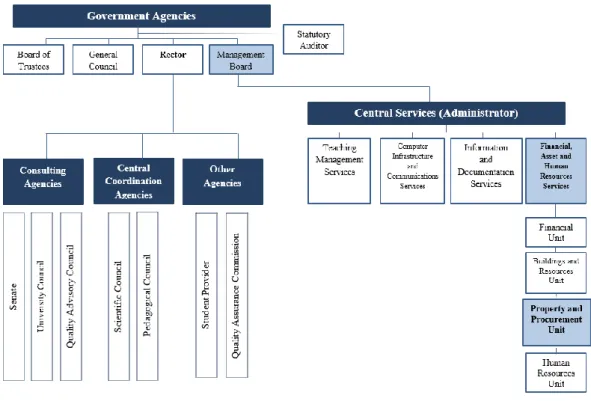
Figure 08: Organizational chart of ISCTE-IUL ... 36
Figure 09: Mapping of the procurement process equal to or less than 5,000 € in ISCTE-IUL ... 42
Figure 10: Mapping of the procurement process above 5,000 € in ISCTE-IUL ... 44
Tables Index
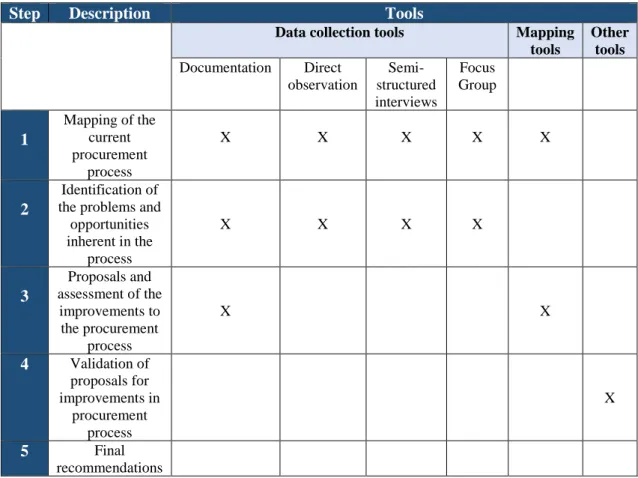
Table 01: European thresholds for public tenders ... 26 Table 02: Overview of research steps ... 30 Table 03: Activities of the departments involved in the ISCTE-IUL procurement process ... 37
Table 04: Sample constitution ... 39 Table 05: Number of people who identified the normality or complexity of the procurement process of ISCTE-IUL... 40
Table 06: Waste identified in the ISCTE-IUL procurement process ... 45 Table 07: Comparison of the amount spent in two different periods with supplier X, as of August 15, 2018 ... 51
Table 08: Impact of the proposals on improving the difficulties found in the procurement process ... 55
Table 09: Impact of the proposals presented in the creation of value for the diverse levels of the value chain ... 55
xi
List of abbreviations
AAS: Administrative Autonomy Services
AFAS: Administrative and Financial Autonomy Services BRU: Business Research Unit
CEI: Centro de Estudos Internacionais
CIES: Centro de Investigação e Estudos de Sociologia CIS:Centro de Investigação e Intervenção Social
CMO: Communication and Multimedia Office CSA: Career Services and Alumni
DINÂMIA: Centro de Estudos sobre a Mudança Socioeconómica e Território ESCH: Escola de Ciências Sociais e Humanas
ESPP: Escola de Sociologia e Políticas Públicas ERP: Enterprise Resource Planning
HRU: Human Resources Unit IBS: ISCTE Business School
ICIS: Information and Communication Infrastructure Service IRO: International Relations Office
ISTA: Escola de Tecnologias e Arquitetura
ISTAR: Information Sciences, Technologies and Architecture Research Centre IT: Delegação do Instituto de Telecomunicações
JIT: Just-In-Time
PPC: Public Procurement Code PPU: Property and Procurement Unit SAS: Social Action Services
TPS: Toyota Production System UBR: Unit Buildings and Resources
xiii
Glossary
Administrator: Entity of the ISCTE-IUL - Instituto Universitário de Lisboa, to which powers are attributed to the authorization of the expenditure.
Budgetary Approach: Captivation of the monetary value necessary to spend on the acquisition of a good or service, in an expense process.
Commitment: Acceptance by the contracting authority of the assumptions inherent in the duties and responsibility of any process of expenditure to suppliers.
Contracts: It is an agreement between two or more parties, with a legal relationship, designed to establish the interests between the parties. Examples of contracts are contracts for maintenance, cleaning and security, software licenses, service providers, among others.
Contract documents: Part of the procedure that contains the clauses to be included in the contract to be celebrated – article 42 of Public Procurement Code.
Expenditure requirement: Document that contains information about the technical and functional characteristics about the product or service to be acquired. It must also contain the amount expected to be spent on the acquisition and the intended date of delivery.
Future value aggregation activity: Activities that in the future provide value to the customer;
Public Procurement Code: Diploma that establishes the discipline of two large groups, which are:
a) Public procurement regime: formation of public contracts and the reporting of procedures that support the conclusion of the contract.
b) Substantive regime of administrative contracts: it determines a set of rules regarding the execution, modification and extinction of the contractual relations administrative.
Payment Authorization: Document representing the authorization to execute the invoice payment, issued by the financial unit.
Public Contracts: All contracts awarded by the contracting entities provided for in Article 2 of Public Procurement Code.
SAP: ERP- Enterprise Resource Planning - software used in the management of ISCTE-IUL – Instituto Universitário de Lisboa.
Support activity: Activities that do not add value to the final product but are necessary to achieve it.
Value-added activity: Activities that add value to the final product and make it more valuable.
Waste activity: Activities that provide no value to the final product and should be eliminated immediately, such as waiting time and double handling.
1 In this chapter, the main goal is to give context to the research, identifying and framing the theme and its objectives. It begins with an approach to the problem of current legislation in public entities, and continues with the objectives of the research, the broad questions to be answered, as well as the methodology, scope and structure to be used throughout this dissertation.
1.2. Contextualizing the problem
All organizations, public or private, develop a set of activities to produce and / or sell their goods or services (Porter, 1992). Public organizations carrying out these activities have limitations, which does not happen with private organizations. One of these limitations occurs in procurement activities and procedures, since public procurement is subject to regulations and standards that are mandatory for many organizations. The integration of law into a company is not always easy, since each organization has a unique internal culture, and difficulties may arise in adapting legal procedures to internal processes.
The integration of the law into Portuguese companies has been a permanent challenge, since it is always intended want to achieve a high level of efficiency, and many companies believe that the current legislation - the Public Procurement Law - requires a lot of bureaucracy and making of decisions that are not always the best and the most adequate for the company, negatively impacting the efficiency of its processes (Agostinho, 2018). Since there were no studies addressing the identification of these difficulties or how they are being overcome by the various public entities in Portugal, this dissertation intends to present topics on this current challenge, developing a study on improving processes in Portuguese public entities.
1.3. Research question
According to the problem presented above, the research question is defined as follows: How can one improve the procurement of goods and services in public entities to make it more efficient, while considering the underlying legal requirements?
1.4. Objectives
The general objective of this dissertation is to improve the procurement process in the public sector. The specific objectives are:
a) Mapping the public procurement process and identifying the value for different stakeholders in the procurement process;
b) Identifying the difficulties experienced by stakeholders during the procurement process with the current legislation;
c) Proposing improvements with the potential to eliminate and/or reduce the difficulties experienced in the procurement process;
d) Evaluating and validating proposals;
e) Final recommendations for improving the public procurement process.
1.5. Methodology
The subject of the present investigation is under explored, and therefore should be analyzed through a case study approach (Yin, 2009). Acording to the same author, there are three essential characteristics that must be verified for case studies:
1) The research question is a "How" and/or "Why" question; 2) Research should be focused on contemporary events;
3) The investigator has no control over the events being analyzed.
As these three characteristics are perceived according to the objectives and issues previously mentioned, this methodology is applied. Furthermore, the research steps to be followed within the scope of this dissertation are as follows:
Mapping the current procurement process;
Identification of the problems and opportunities inherent in the process; Proposal and assessment of the improvements in the procurement process; Validation of proposals for improvements in the procurement process; Final recommendations.
1.6. Scope
To achieve the objectives outlined above, this study intends to analyse the procurement process of public entities using ISCTE - Instituto Universitário de Lisboa as a case study. The investigation will focus on the procurement of goods and services by this
3 public institution, not focusing on internal procedures but only on the implementation of the legal procedures inherent to the processes. The parties involved in the procurement process, in this public entity, are the administration, the procurement unit, the financial unit, and the treasury. In this sense, with the objectives outlined for this dissertation, the investigation will focus on the difficulties of executing the procurement process in the organization. This process begins when the need to acquire goods and/or services is detected and ends when the supplier receives the payment - focusing on the entire procurement process (sourcing and purchasing).
1.7. Dissertation structure
To comply with the objectives set above, and to provide an answer to the research questions, the dissertation will be organised as follows:
Chapter 1 – Introduction: The research will begin with the contextualization, objectives and key questions to be answered throughout this study, as well as methodology and scope, ending with the structure rooted on this dissertation.
Chapter 2 – Literature Review: The literature review is the chapter that supports the dissertation in theoretical terms and contains concepts and tools that need to be investigated for the resolution of this case study. It begins with a brief explanation about the value chain, which integrates procurement as a support activity. After that, the definitions of purchasing and procurement process are presented. Some improvement studies in the area and possible supply chain strategies are described, as well as an explanation of lean's choice for the development of this dissertation. Consequently, some topics on lean are exposed. This chapter ends with a lean approach to procurement of goods and services, specifying some examples of lean in public procurement.
Chapter 3 – Public Purchase in Portugal: In structural terms, in Portugal, there are two major sectors of activity - the public sector and the private sector. This chapter will focus on the public sector in Portugal, more specifically the features of the sector, the entities to which it belongs, and the laws by which the entities are
governed. It will finish with an explanation about the procurement of goods and services by public entities.
Chapter 4 – Methodology: This chapter presents the justifications of the study methodology adopted and the characterization of the case study. Subsequently, the research steps that will be used throughout the production of this master's thesis are presented in detail
Chapter 5 – Case Study: In this chapter, the aim is to describe the case study and the application of the research steps proposed in the methodology. Therefore, it starts with the characterization of the legislation in the procurement ptocess in public entities and description of the ISCTE-IUL procurement process. Sample data are presented along with the analysis of tools that may benefit the activity. Finally, improvement opportunities are suggested.
Chapter 6 – Conclusions: The last chapter, which concludes the present dissertation, presents the main conclusions of the study, verifying if the proposed objectives were reached and the key questions answered successfully. Finally, it includes study limitations, some recommendations that may improve the treatment process, and proposals for future research.
5
Chapter 2 – Literature Review
2.1. Introduction
This chapter is characterized by the support of the research through the bibliographic review on topics and concepts of significant importance for the accomplishment of the objectives drawn for the conclusion of the dissertation.
The chapter begins with a brief explanation of the value chain and its activities, specifying one of the support activities - procurement. Some studies and methods demonstrate that lean thinking brings benefits to the service sector. Thus, lean thinking is subject to literature review about its principles and residues, and the main tools that can be used. It ends with its applicability on improving the procurement process, more specifically, in the public procurement.
2.2. Value Chain
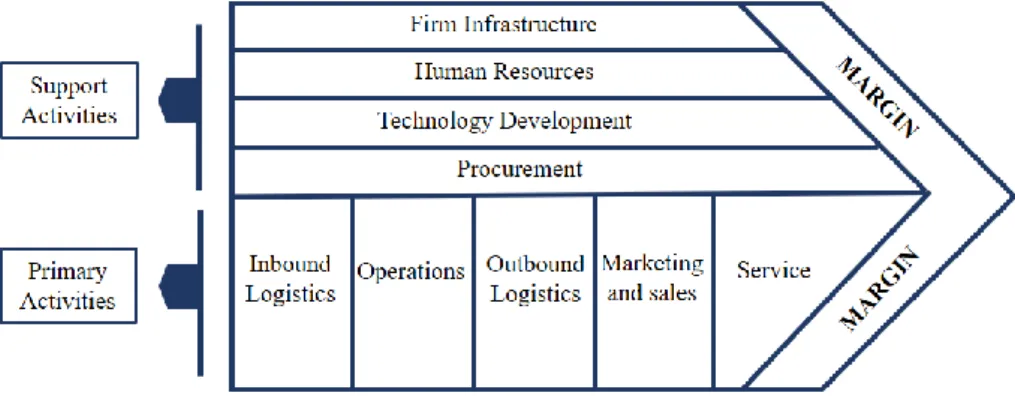
Nowadays, organizations have within their structure a set of activities that are intended for the projection, production, marketing, delivery and sustenance of a product or service (Porter, 1992). All the mentioned activities can be represented using a tool called value chain, shown in Figure 01.
Figure 01: Value Chain
Source: Adapted from Porter, 1992
The whole company intends to have a competitive advantage in the market, and this competitive advantage is only achieved by executing strategically important activities in a cheaper or better way than the competition (Porter, 1992). Therefore, the activities that
generate value to the company should be identified, defining them as strategically important activities.
Value activities can be divided into two groups: primary activities and support activities (Figure 01). Primary activities are activities that allow for the creation and sale of the product, as well as the transfer to the buyer, and the after-sales service. For the primary activities to be carried out, it is necessary to have support activities that are aimed at sustaining the primary activities and themselves (Porter, 1992).
This dissertation will focus only on the support activity - procurement, since this research intends to respond to the current challenge of Portuguese law in the procurement processes of public entities.
2.2.1. Procurement
The two fundamental concepts that must be known are the concept of purchase and procurement. These concepts have evolved over time and have different definitions to different authors. However, it is important to highlight the distinction between them. According to Gonçalves (2002), purchasing is the acquisition of goods or services necessary for the operation of the company, for Waters (2003: 228), the purchase is "a
mechanism to initiate and control the flows of materials through the chain of supply "
sharing Gonçalves 's (2002) opinion that purchases are responsible for acquiring all kinds of materials needed by the organization.
Procurement refers to all activities related to the acquisition of goods and services, not only by mobilizing materials, but also by the full extent of the transfer of goods (Waters, 2003).
Van Weele (2002) argues that the role of procurement is to obtain from external entities goods and / or services and skills and / or knowledge that are necessary for the conduct and management of all primary and supportive activities to the organization under the most advantageous conditions.
It is important to assume that procurement departments should be managed as a core part of the company, since it is a department where a lot of money is handled and where there is also a lot of savings, and it is necessary to look at it as a strategic department (Ferreira et al., 2017).
7
2.2.2. Procurement process
Traditionally, the procurement process was known as a very operational and administrative activity, aiming only at obtaining the product or service, with the desired quality, in the exact quantity, with the exact price, and in the exact moment (Ferreira et al., 2017).
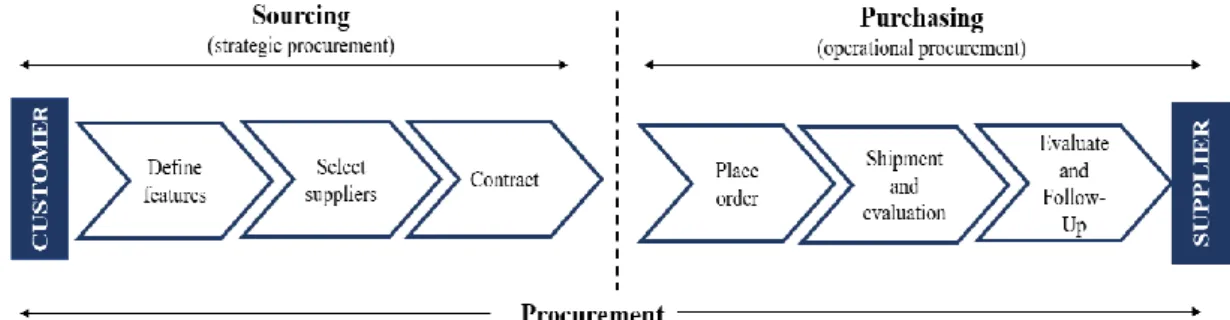
Over the years, the purchasing function has evolved to an activity that is a bit more strategic and with defined stages (Figure 02).
Figure 02: Procurement process stages Source: Adapted from Ferreira et al. (2017)
According to Ferreira et al. (2017), the steps of the procurement process are described in greater detail.
➢ Define features: The procurement process begins with the definition of technical and functional specifications of the items that will be purchased. These two types of specifications are part of an important document called the contract documents. This document should include information on quality specifications, logistical and maintenance specifications, environmental and legal requirements, among others.
➢ Select suppliers: After defining the technical and functional specifications, it is time to start a market research, to select the suppliers. Important issues to be addressed are the methods of subcontracting, types of payment, requirements to be considered in the preliminary evaluation of the supplier, and finally the analysis of the proposals received.
➢ Contract: Once the supplier is selected, it is necessary to draft a contract, and the contract may or may not be sent in writing. This contract contains the terms agreed between the parties, such as: price and payment conditions, delivery terms, penalty clauses, warranty conditions, among others.
As a rule, for routine products or services, the buyer negotiates a long-term contract with the supplier, where all requirements will be met.
➢ Place order: After the contract has been signed by both parties, the order must be made. Often, through an order form that must be clear and specific, leaving no doubt to the chosen supplier, avoiding administrative and logistical problems.
➢ Shipment and evaluation: Ordering a product or service may involve some shipping and evaluation activities, such as: travel and meetings, negotiations, confirmation of the delivery date of the product, or the execution of the service, confirmation if the product has been delivered, if it is the agreed product; and have the responsibility to maintain the correspondence flux.
➢ Evaluate and Follow-Up: The role of the purchasing department does not end after the delivery of the material or the end of the service. There are also activities to develop in the scope of value creation in the response to complaints, activation of penalty clauses, possible success of extra work, document organization for potential future consultation.
Van Weele (2002) states that using the stages of the procurement process, shown in figure 02, can help in the decision making, which in the future can translate into a reduction of organizational costs, but also in the reduction of the costs of products or services purchased.
2.3. Process improvement in procurement
Over the last few years, several studies have been focused on the improvement of processes in general, and several authors have investigated various topics within the theme of process improvement in procurement.
9 Business Process Modeling (BPM), according to Association of Business Process Management Professionals (2013), is a methodology that allows one to identify, design, execute, measure, monitor and control business processes, and to add value leading to improved organizational performance. Through the use of this methodology it is possible to have an enlarged and integrated view of the work, and it allows representing the whole chain of activities and respective roles in the structure of the organization (Association of Business Process Management Professionals, 2013). Chwif and Medina (2007) mention that process simulation methodologies provide dynamic process perspectives, since they allow to simulate various processes improvement scenarios through business process modelling.
With the increasing strategic importance of purchasing and market growth, organizations are looking to increase efficiency and the manageability of their contracts (Rendon, 2008). Rendon (2008) also presents his contribution to the evaluation, measurement and improvement of procurement processes in organizations through the Contract Management Maturity Model (CMMM). Contract management refers to the contract of acquisition of goods or services. This methodology provides a framework for improving performance levels by five levels of application across six key process areas and activities related to the contract management process. The six areas mentioned above are identified by specific activities to be developed throughout the procurement process. This method, combined with other performance metrics, provided an effective and efficient strategy that allowed to improve the overall performance of the procurement process of the organization under study (Rendon, 2008).
Another approach that evidences potential improvement in procurement processes is benchmarking. Benson (1998) states that benchmarking is a process of measuring business performance against other competitors' processes, in order to provide data to help the organization identify, plan and implement improvements. Lawrence (1989) states that benchmarking falls into three distinct categories: strategic, operational, and support benchmarking. The category of operational benchmarking is the most used in purchase, since it focuses on the differences of activities performed. To facilitate the analysis of benchmarking, it is usual to study sub-processes of purchase, since the procurement process involves several functional areas (Lawrence, 1989). Benchmarking directly influences process improvement when it identifies best practice (Lawrence, 1989). These identified practices and methods should be monitored to make it possible
to propose improvements that demonstrate that it is possible to achieve the desired objectives by identifying all the aspects that are causing less performance in the procurement process.
Although the before mentioned approaches have been used for process improvement in procurement, the most widely used methodology in in this area is the lean thinking approach. "lean" relates to a philosophy that aims to identify value and wastes (activities that do not bring added value) in search of perfection, improving the efficiency of the process (Womack and Jones, 2003). Waste was initially categorized for the production area (Womack and Jones, 2003). However, in services in general and in the particular case of procurement, waste can also be identified, classified and reduced, creating enormous potential for the entity and the economy (Maleyeff, 2006).
The traditional concern of the purchasing sector is to provide goods and services with the lowest costs and the highest quality to meet customers' expectations and demand. According to Abbot et al. (2006), lean procurement is a very precise asset, since the objective is to reduce waste that is directly linked to the procurement process - flow of products / services, finances, which is strictly necessary for the satisfaction of the final customer. Ansarri and Modarress (1988) mention that lean procurement uses smaller batches, fewer inspections, and less managed work, conforming to the philosophy of lean thinking - "doing more with less." Finally, it is possible to state that the benefits of lean procurement for the various departments in organization are diverse: more time for purchasing teams to create more value (execution department), improved accountability (financial department), shorter waiting time and a good / service in the right conditions (buyer), and optimization of the value chain (management) (LeanProcurement.Com, 2016).
One of the most discussed and researched topics when it comes to improvements in the procurement process is the impact that suppliers have on the overall performance of the procurement process. The selection of suppliers has been considered by many authors as key to the success of the procurement phase, since it represents an increase in savings (Pal et al., 2013). For this topic, the most useful methodology, and the one with better strategic effects, is the ABC matrix, because it allows the classification of the company’s items, due to the impact they have on the total company turnover (Ramos et al., 2017). Another methodology used is the Kraljic matrix that proposes cost reduction
11 through the classification of the items, considering the supply risk and the financial impact they have within the organization (Kraljic, 1983).
In conclusion, after an analysis of the different methodologies studied to improve the procurement processes - business process modeling, contract management maturity model, benchmarking, ABC and Kraljic matrix, lean thinking, it is possible to verify that there is one with a greater potential, considering the scope of this dissertation: lean thinking .
This research intends to analyse the difficulties of the implementation of the law in the procurement processes in public entities, and for that reason, lean thinking shows a high potential, since it fits within the scope of this dissertation and provides several benefits that other methodologies do not provide. In other words, improving the procurement process involves the analysis of processes and inherent wastes, as well as their consequent elimination in order to increase the efficiency of the process, with lean philosophy being the basis of this improvement.
2.4. Lean Thinking
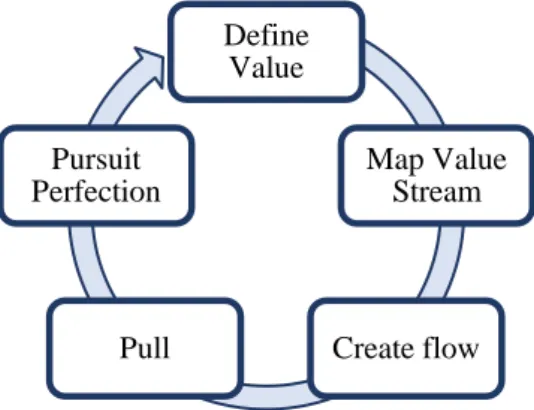
At the time of the creation of the Toyota Production System two very important and crucial concepts emerged - concept of value and waste (Hines, 2016), since it was an integral part of the system. For Womack and Jones (2003), lean thinking avoids waste, specifying value and increasing the fluidity of a process's activities, thus achieving greater efficiency. This lean approach is described to optimize human effort, equipment, time and space, giving customers what they really want (Womack and Jones 2003) Womack and Jones (2003) identified the five key principles guiding the lean thinking approach depicted in Figure 03.
Figure 03: Principles of lean Source: Womack and Jones (2003)
➢ Define Value
The critical starting point for lean thinking is value - as it serves as the basis for the application of the remaining principles. It is a rather complicated variable to be precisely defined for the producer, for several reasons, because the value is defined by the end customer, at a specific time, at a specific price, for a specific product or service (Womack e Jones, 2003). At this stage, it is possible to define the necessary activities to produce value, to guarantee the production of the final product or service desired by the customer and identify those that do not add any value to the customer, to the point of eliminating them(Hines and Rich, 1997).
➢ Map Value Stream
The value stream is the identification of the necessary steps to carry out along the value chain for the design of the product or service. According to Womack and Jones (2003), and Hines et al. (2004) only the activities that are present along the value chain will be identified through the mapping, recording information such as the time spent in each procedure, the material and human resources allocated to each task, among others. Hines et al. (2002) defined four diverse types of activities that can be found in any organization when doing a value flow analysis: value-added activities, future value aggregation activities, support activities and waste activities. Once the process has been mapped out, all activities that do not add value to the product or service must be eliminated, thus achieving a more efficient and effective value chain.
Define Value Map Value Stream Create flow Pull Pursuit Perfection
13 ➢ Create Flow
After defining value and value flow for a product or service, the cycle turns the value chain more fluid (Womack and Jones, 2003). In applying this third principle, organizations need to be aware of the change that will happen - a more continuous process. This flow of continuity can be stopped if one does not abandon the idea of work by functions and departments - the companies were divided by sections with distinct and specific functions and activities, so that there would be no interruptions during the execution of the production, so that if something unexpected happens in some department or in some activity, the complete process would be affected (Womack and Jones, 2003). Thus, many authors advocate non-departmentalization so that tasks are more efficiently grouped where materials are continuously worked from the raw materials to the final product.
➢ Pull
The fourth principle of lean thinking is called pull, since it is based on the premise that a product or service can only be produced if there is a request for need on the part of the end customer (Hines, 2016) . Therefore, it must be produced only when an order is placed - transferring the creation of value to the customer, which contrasts with the "push" production that results in the creation of stock. One thing to keep in mind throughout this process is that the customer, when making an order, expects it to be accessed as quickly as possible, so companies should increase the effectiveness and efficiency of response times - making the process "pulled" by the final consumer and not "pushed" by the producer (Womack e Jones, 2003) .
➢ Pursuit Perfection
Authors such as Hines (2016) and Poksinska (2010), state that the attainment of perfection is achieved through the continuous elimination of waste, as it appears, since only then will the objective of continuous improvement be visible and become the entire enterprise. This improvement is visible from the moment that the four principles mentioned above interact with each other in a vicious cycle. Thus, the process begins to improve with the reduction of time, space, cost and
errors, increasing the capacity to respond to customer requests, raising their expectations regarding the service or product (Womack and Jones, 2003).
2.5. Lean Thinking in services area
Nowadays, the companies' main goal is to concentrate on providing quality services to meet or even exceed customer expectations, since changes in the economy, the market and regulatory policies are barriers to cost cutting, capacity constraints, and dysfunctional operations, affecting service delivery performance that meets customer needs and expectations (Allway & Corbett, 2002).
Allway & Corbett (2002) argue that the lean approach enables better quality service, delivery with lower cost, and lower capital investment, leading to improved operations - delivering tangible customer benefits and cost-effectiveness measurable for the organization. Many companies, knowing this information, are hastening to apply the transformation, however, it is necessary to recognize in advance if the whole organization is committed to change.
2.5.2. Implementation of lean procedures
Allway & Corbett (2002) states that the implementation of lean procedures in service organizations, be they financial, security or health, is characterized by 5 phases, shown in Figure 04.
Figure 04: Five main phases of implementation of lean procedures Source: Adapted from Allway & Corbett (2002)
The first phase begins with the evaluation of the state of the organization: determining the level of operational excellence and the recognition of waste and opportunities in specific areas and throughout the organization. Throughout this step, it is necessary to map the process flows in the model area: determining resources and direct costs for each
1.
Assessment of the current state
2. Determining the target state 3. Stabilizing the operations 4. Optimizing the opportunities 5. Institutionalizing the lean approach
15 effectiveness of the process, conducting the process operational review (Allway & Corbett, 2002).
The second phase will fight the lack of indication of the desired state or the future state, determine the vision according to the strategy and the specific goals, communicating it to the whole organization, so that the commitment and the will to reach the objectives outlined is felt by all (Allway & Corbett, 2002).
The name given to the third stage is the stabilization of operations which means that the organization will have to take the right course, through problem-solving based on historical facts, with the goal of implementing solutions for the organization to progress (Allway & Corbett, 2002).
The penultimate and fourth phase is the arrival to the optimization of the opportunities, creating a continuous flow of growth of materials, people and information (Allway & Corbett, 2002). “The key to any operations improvement— service or manufacturing— is not rigid, dogmatic adherence to the implementation of specific tools or best practices, but the development of the abilities to apply tools and techniques in a systemic process that enables the system to be sustained and improved.” (Allway & Corbett, 2002).
The last phase for implementing lean procedures in service organizations is the institutionalization of the lean approach. At this point, lean needs to become the mantra of the organization, that is, to institutionalize, using continuous improvement practices so that the objectives of cost reduction and quality improvement are fulfilled. This stage includes the assessment of capacity failures and synthesizes relevant learning, so that success may be shaped in areas with major problems. For this to happen, it is necessary to promote dialogue among the whole organization so that the performance increases according to the expectations (Allway & Corbett, 2002).
2.5.2. Waste in services
According to Womack and Jones (2003), the concept of waste refers to any human activity that absorbs resources and creates no value; the Japanese call it "muda”. Ohno (1988) says that waste can manifest itself in seven various aspects in manufacturing: product defects, overproduction of unnecessary goods, inventories of goods awaiting further processing or consumption, unnecessary processing, unnecessary movement of people, unnecessary transport of goods and waiting times.
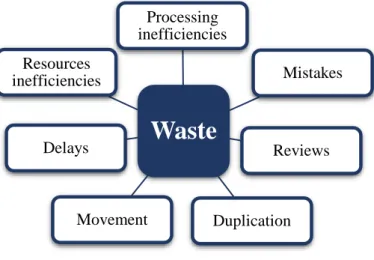
However, the terminology used in a manufacturing company and a service company is different. Some authors have adapted this waste list to a service context. Maleyeff (2006) interprets the seven wastes within the internal service context, and this contribution is presented in Figure 05 and is described below.
Figure 05: Waste in services
Source: Adapted from Maleyeff, 2006
➢ Processing inefficiencies: this waste occurs when there is a sequence of activities that are applied inefficiently in the performance of tasks;
➢ Mistakes: errors or omissions that lead to the reworking of the task;
➢ Reviews: also called inspection, includes activities lost due to detection of errors or omissions;
➢ Duplication: this waste occurs when two processes are performed in the same system;
➢ Movement: unnecessary movements in the transportation of information, people or equipment;
➢ Delays: waste associated with the time spent in queues or waiting for information;
➢ Resources inefficiencies: inadequate management of resources such as personnel, equipment, materials or capital.
Waste
Processing inefficiencies Mistakes Reviews Duplication Movement Delays Resources inefficiencies17
2.6. Lean Thinking in the public sector
Considering the scope of this dissertation, it is important to expose the academic contributions made so far within the research of lean thinking in the public sector. Several authors mention that the application of lean thinking will bring future performance benefits, but it must be borne in mind that there may be constraints derived from the law.
2.6.1. Lean application to the public sector
The service sector is divided into two segments: the public sector and the private sector. This dissertation will focus only on the public sector. This sector has been the subject of several investigations that analyse several alternatives to reduce costs, improve quantity and quality of services provided in a period in which the economic crisis is accentuated using tools and techniques associated with lean thinking (Radnor and Osborne, 2013). Hines and Lethbridge (2008) and Radnor and Johnston (2013) present studies that demonstrate performance benefits, fewer waiting times, reduced costs, and improved efficiency when exploring lean thinking.
According to Radnor and Johnston (2013), the goal is for all improvements to be reflected in customer satisfaction, but authors point out that internal customers have a greater importance compared to external customers, being more complicated to meet expectations and create real value for all customers (Radnor and Osborne, 2013). Another limitation to the implementation of lean in the public sector are legal laws and restrictions, which are not as clear as in the private sector (Scorsone, 2008).
Radnor et al. (2012) states that lean implementation does not have to follow specific rules, and so it may depend from business to business, and the on context in which it is found. One possibility of lean implementation in the public sector is the use of basic waste reduction tools and techniques (Radnor and Johnston, 2013) which produce rapid changes to engage people in changing business philosophy (Hines and Lethbridge, 2008).
Some authors mention that lean thinking in the public sector may not be effective in the future due to the global economic crisis and legal constraints, as companies tend to emphasize cost reduction and forget those constraints to create value, generating in the future the loss of efficiency and effectiveness (Radnor and Johnston, 2013).
2.6.2. Lean application to the public procurement
Process efficiency has always been a hotly debated issue. Nowadays, companies have fewer resources and expect their processes to be more efficient. The conditions of service are increasingly scarce, and it is important to create improvement measures for public sector entities (Waterman and McCue, 2012). To create an overstock, it important to empower companies with the proper tools and techniques that make purchases faster and faster (Waterman and McCue, 2012).
Waterman and McCue (2012) argue that lean thinking should be applied to public procurement as it is possible to analyse processes and identify value and waste in an obvious way.
Several case studies have been applied by several authors to investigate various situations regarding procurement with a lean approach. Schiele and McCue (2006) studied how the application of lean thinking affects the significant involvement of public sector procurement professionals in acquiring professional services. With a case study applied in the United Kingdom, the hypothesis was suggested to develop a set of tools and documentation that support "a standard solution" that is applied throughout the process (Schiele and McCue, 2006). Being a rather utopian view, the authors state that there is immense potential for significant benefits for public purchasing managers and suppliers. However, there is a limitation of stakeholder and activity diversity, and it is not possible to apply lean thinking to public procurement (Waterman and McCue, 2012).
In the implementation of lean in the public sector, particularly in public procurement, tools and techniques for rapid improvement have been used (Radnor & Walley, 2008), as value flow mapping (Hines & Rich, 1997) and six sigma (Proudlove et al., 2008). However, Scorsone (2008) argues that public managers must have a real sense of the inherent legal system, since there are values and requirements to be met. The goal is to achieve the desired efficiency and wait, and not to exceed legal limits nor to comply with pre-established requirements (Scorsone, 2008).
19
2.7. Conclusions
This chapter had as main objective the exposition of the main investigations, such as theoretical reasoning necessary to reach the intended objectives of the present dissertation.
First, it was contextualized and given due importance to the procurement area, within the value chain. Then, alternative approaches applied for process improvement in procurement were presented, and it was concluded that lean thinking would be the most appropriate approach to be used to fulfil the purpose of the present study.
Subsequently, the fundamental principles and the waste associated with the lean methodology were revealed, which will be extremely important during the dissertation. The waste was identified in an internal context of services, agreeing with the context in which this investigation intends to be developed.
Finally, the application of lean thinking in the public sector and in the public procurement is approached, with mention to studies carried out by several authors. Although some studies exist applying lean to improve procurement processes in general, studies using lean thinking to improve the public procurement process were not found. Accordingly, this is the main intended contribution of this dissertation - the application of lean thinking to the procurement process by public entities - since some aspects may have negative implications in the efficiency of public procurement processes.
21
Chapter 3 – Public Purchase in Portugal
3.1. Introduction
This chapter presents the details of public procurement in the Portuguese context. This chapter begins with a brief explanation of the structure of the Portuguese public sector, as well as the difference of objectives between public and private entities. Subsequently, the law governing public entities, specifically the law on public procurement, is presented, since it is necessary to follow it. It will end with the procurement legal process mapping for these entities.
3.2. Portuguese public sector
According to Franco (1999), the public sector is the set of economic activities carried out by public entities - state, associations or public institutions. In Portugal, there is a distinction between entities according to their economic and financial nature, i.e., there are entities that make up the Public Administrative Sector and entities that are part of the State Business Sector (Figure 06) (Gomes and Silva, 2017).
The Public Administrative Sector integrates government activities such as administrative management, defence and security exercises, administration of court justice, management of services that are inherent to the satisfaction of community needs, such as transport, education or medical care (Gomes and Silva, 2017). This sector is composed by Central, Local and Regional Administration, and Social Security.
➢ Central Administration: Includes the entire national territory and comprises the administrative autonomy services (AAS) and administrative and financial autonomy services (AFAS) (Ministry of Economy and Employment, 1992).
o AAS – These entities have a competent, definitive and enforceable authority to authorize expenses and payments under current management.
Examples of such entities are ministerial offices and general directorates. o AFAS – These entities have private budgets and accounting, as well as
their own revenues, and are autonomous.
➢ Local Administration: It integrates the entities whose decision-making power and activities have as objective the collective interests of a part of the population
referring to municipalities and parishes, always respecting the Regional Administration;
➢ Regional Administration: It comprises entities whose objective is the same as the Local Government, but for the autonomous regions of the Azores and Madeira;
➢ Social Security: Integrated in the State Budget Law, it has autonomy, and therefore is governed by a differentiated legal regime having its own funds. On the other hand, the State Business Sector, approved by Finance Ministry (2013) is responsible for the management and constitution of the public infrastructure of an entrepreneurial nature and for the provision of essential public services in the most diverse sectors and domains. It is made up of a group of public enterprises and subsidiaries enterprises:
➢ Public enterprises: business organizations constituted in the form of limited liability companies under the commercial law, in which the State or other public entities exercise a dominant influence, including public business entities.
➢ Subsidiaries enterprises: business organizations in which the State or any other public entity, whether administrative or corporate, holds a permanent participation, provided that all public holdings do not have a dominant influence. By the end of 2017, the State Business Sector contained a total of 119 companies in its overall portfolio.
Figure 06: Constitution of the Portuguese Public Sector PUBLIC SECTOR ADMINISTRATIVE PUBLIC SECTOR
STATE BUSINESS SECTOR Central Administration Regional Administration Local Administration Social Security AAS AFAS
23 All entities mentioned in Figure 06 are designated as contracting entities and may contract in accordance with the contracting regime established in the PPC.
3.3. Laws governing the acquisition of goods and services in the Portuguese Public Sector
The acquisition of goods and services in public entities is governed by the Public Procurement Code (PPC) published by Ministry of Public Works, Transport and Communications (2008), amended and republished by Ministry of Planning and Infrastructure (2017), which "establishes the discipline applicable to public
procurement and substantive regime of public contracts that have the nature of an administrative contract" in its article 1.
According to Article 1 of the PPC, the principles that must be observed are those of pursuing public interest, impartiality, proportionality, good faith, trust, sustainability, and responsibility, as well as the principles of competition, publicity and transparency, equal treatment, and non-discrimination. Contracting entities must also take measures to prevent any conflicts of interest that may arise and must also ensure compliance with the applicable social, labour, environmental, and gender equality rules under international, European, national or regional law.
According to Article 16 of the PPC, there are different types of procurement procedures to be adopted, depending on the circumstances in which the participating entities are concerned and the subject matter of the contract. If the object covers services that are or are likely to be subject to market competition, entities shall adopt the procedures showed in Figure 07.
Figure 07: Procedures of the Public Procurement Code Source: Public Procurement Code
Procedures of the Public Procurement Code
Direct adjustment Prior consultation Public Tender Competition limited by prior qualification Negotiation procedure Competitive dialogue Partnerships for innovation
The descriptions and mappings of the public procedures illustrated in Figure 07 are presented in detail, in the next subchapter.
Another important concept to understand is the concept of "most economically advantageous tender". According to Article 74 of the Public Procurement Code, adjudication of the contract shall be carried out according to the criterion of the most economically advantageous tender, based on one of the following:
a) Best value for money;
b) Price or cost as a single aspect.
In substantiated cases, the entity that intends to award may choose not to subject the price to competition, provided that a fixed price or a maximum price is set out in the specifications. In case of a tie, the invitation to the procedure shall define the tiebreaker criterion.
3.4. Descriptions and legal mappings of the public procedures
This subchapter intends to mention the concepts of all public procurement procedures and present the mapping of the legal procurement process, often taking place on electronic platforms. The mappings are present from Appendix 1 to Appendix 6.
3.4.1. Direct Adjustment
According to Article 112 number 2 of the PPC, the direct adjustment of general regime is "[...]the procedure in which the contracting authority directly invites an entity, at its
option, to submit a proposal and may negotiate with it the aspects of the execution of the contract to be concluded”. In other words, direct adjustment is a public procedure that allows the contracting authority to choose the supplier it intends to contract to ensure the provision of goods.
For this procedure to be adopted it is necessary to comply with the value criterion, which limits the acquisition value, according to the following parameters (articles 17 to 22 of the PPC):
➢ For the acquisition or lease of moveable property, or acquisition of services, the value must be less than € 20,000;
25 ➢ For other types of contracts, the value must be less than € 50,000.
The Public Procurement Code, in addition to providing for a general regime, also provides for a simplified regime (Article 128 and 129 of the PPC), which is adopted when the contractual price of acquisition or rental of moveable property or acquisition of services does not exceed € 5,000, and, in the case of public works contracts, it does not exceed € 10,000. As of public works contracts, the execution may not exceed one year from the date of the award decision, nor may the contract price be revised (this one-year time issue is only applicable under this simplified regime for public works; all other procedures may or may not exceed one contractual year).
The procedural mapping of this simplified regime of direct adjustment is very different compared with the direct adjustment of the general regime. It is a procedure that does not need reporting formalities in public platforms. It is consummated when the competent entity that decided to award the acquisition or lease approves the invoice or equivalent document by the invited entity.
3.4.2. Prior consultation
In the prior consultation procedure, the contracting authority directly invites at least three entities of its choice to submit proposals (Article 112 number 1 of the PPC). The choice of the entities to be invited is the sole responsibility of the entity that decided to award the acquisition. It is possible to negotiate the aspects of execution of the contract to be concluded, if expressly defined in the invitation (article 115 number 2a of the PPC).
For the adoption of these procedures there are two criteria:
a) Value criterion – this is the criterion rule in adopting the prior consultation procedure that limits the value of the contract according to the following circumstances (Articles 17 to 22 of the PPC):
o Acquisition or leasing of moveable property, or acquisition of services: less than € 75,000 (article 20 number 1c) of the PCC);
o For other contracts: less than € 100,000 (article 21 number 1b) of the PPC).
Material criterion – allows for the adoption of the prior consultation procedure regardless of the value of the contract to be concluded. To be formalized, it is necessary that the entity responsible for the decision to contract, clearly and objectively defines the conditions established in articles 24 to 27 of the PPC.
3.4.3. Public Tender
The public tender procedure is characterized by the lack of prior qualification of the tenderers, so that the economic operators are ready to submit tenders. It may be adopted whenever the contracting entity decides.
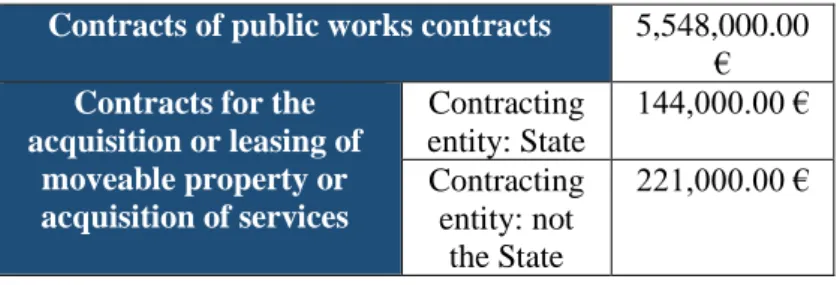
For this procedure, there is an obligation to publish a notice in the Official Gazette, and when the value of the contract to be celebrated is higher than the community thresholds, it must also be announced in the Official Journal of the European Union. For the years 2018 and 2019, the European thresholds shall be as follows:
Contracts of public works contracts 5,548,000.00
€
Contracts for the acquisition or leasing of moveable property or acquisition of services Contracting entity: State 144,000.00 € Contracting entity: not the State 221,000.00 €
Table 01: European thresholds for public tenders Source: Public Procurement Code
The European thresholds exist for all European contracting authorities to fulfil their obligations in a harmonized manner in accordance with the agreement within the framework of the World Trade Organization.
3.4.4. Competition limited by prior qualification
This competitive procedure, much like the public tender, is also published in the Official Gazette and in the Official Journal of the European Union (where the value of the contract is higher than the European threshold). This procedure is characterized by the existence of two consecutive phases:
27 a) Presentation of the applications and qualification of the candidates; and
b) Presentation and analysis of the adjudication proposals.
Contests limited by prior qualification may be adopted where the contracting authority deems it necessary to assess the technical and/or financial capacity of economic operators. As a rule, there is a minimum financial capacity requirement that cannot exceed twice the value of the contract (Article 165 number 3 of the PPC).
3.4.5 Negotiation procedure
Similarly, to the public tender procedure, the negotiation procedure is also characterized by the existence of a qualification phase, but it has a specific character - competitors who have been previously qualified can improve their proposals at a negotiation stage. However, there are requirements to be met to be able to adopt this procedure (Article 29 of the PPC):
a) Needs cannot be met without the adaptation of easily available solutions; b) The goods or services must include innovative solutions;
c) It is not possible to award the contract without prior negotiation due to specific circumstances such as its nature, complexity, legal and financial setting, or associated risks;
d) It is not possible to define precisely the technical specifications by reference to a standard, European technical approval, common technical specifications or technical reference.
3.4.6. Competitive Dialogue
The competitive dialogue is a procedure adopted for situations where the contracting authority does not know how to satisfy the need in question and is thus characterized by the existence of a stage for the presentation of solutions and dialogue with qualified candidates before the tender phase. In this procedure, it is not possible to negotiate proposals from competitors.
The requirements for the adoption of this procedure are the same as the negotiation procedure and are included in article 29 of the Public Contracts Code.
3.4.7. Partnerships for innovation
The partnership procedure for innovation is a procedure for the acquisition of goods, services or public works, subsequently to research activities and developments of these goods, services or public works. However, it is necessary to have a level of agreed prices.
This procurement procedure is carried out when the contracting entity intends to acquire something with certain features, which is not currently available in the market, by finding partners that carry out research and development activities, so that in the future, the result can be acquired.
3.5. Conclusions
This chapter has as main objective the contextualization of the public sector, as theoretical support necessary for a better understanding of the objectives present in this investigation.
The concept of the public sector and the main activities governed by it were introduced, concluding with the presentation and definition of the constitution of the Portuguese public sector.
Subsequently, the law in force in the context of the Portuguese public purchase for public entities was revealed, coming into agreement with the theme of this dissertation. Important topics about this concept were also included such as the procedures to be adopted in the face of a need to acquire goods and services, as well as the method of choosing the proposal to meet the existing need.
Finally, all the conceptual definitions of the public procedures presented previously and the situations in which they are to be adopted, as well as the legal mappings related to each procedure, were clarified.