Submitted4 November 2015
Accepted 27 January 2016
Published25 February 2016
Corresponding author
James D. McNally, [email protected]
Academic editor
Stefan Kuhle
Additional Information and Declarations can be found on page 16
DOI10.7717/peerj.1701
Copyright
2016 Nama et al.
Distributed under
Creative Commons CC-BY 4.0
OPEN ACCESS
A systematic review of pediatric clinical
trials of high dose vitamin D
Nassr Nama1,2, Kusum Menon2, Klevis Iliriani3, Supichaya Pojsupap2,
Margaret Sampson4, Katie O’Hearn2, Linghong (Linda) Zhou1,
Lauralyn McIntyre5, Dean Fergusson6and James D. McNally1,2
1Faculty of Medicine, University of Ottawa, Ottawa, Ontario, Canada
2Department of Pediatrics, Children’s Hospital of Eastern Ontario, Ottawa, Ontario, Canada 3School of Medicine, Trinity College, Dublin, Ireland
4Department of Volunteers, Communication and Information Resources, Children’s Hospital of
Eastern Ontario, Ottawa, Ontario, Canada
5Ottawa Hospital Research Institute, Ottawa, Ontario, Canada
6Clinical Epidemiology Program, Ottawa Hospital Research Institute, Ottawa, Ontario, Canada
ABSTRACT
Background.Due to inadequate UV exposure, intake of small quantities of vitamin D is recommended to prevent musculoskeletal disease. Both basic science and observational literature strongly suggest that higher doses may benefit specific populations and have non-musculoskeletal roles. Evaluating the evidence surrounding high dose supplementation can be challenging given a relatively large and growing body of clinical trial evidence spanning time, geography, populations and dosing regimens. Study objectives were to identify and summarize the clinical trial literature, recognize areas with high quality evidence, and develop a resource database that makes the literature more immediately accessible to end users.
Methods. Medline (1946 to January 2015), Embase (1974 to January 2015), and Cochrane databases (January 2015), were searched for trials. All pediatric (0–18 years) trials administering doses higher than 400 IU (<1 year) or 600 IU (≥1 year) were included. Data was extracted independently by two of the authors. An online searchable database of trials was developed containing relevant extracted information (http://www. cheori.org/en/pedvitaminddatabaseOverview). Sensitivity and utility were assessed by comparing the trials in the database with those from systematic reviews of vitamin D supplementation including children.
Conclusion.The pediatric vitamin D field is highly active, with a significant increase in trials evaluating non-classical diseases and outcomes. Despite the large overall number there are few high quality trials of sufficient size to provide answers on clinical efficacy of high-dose vitamin D. An open access online searchable data should assist end users in the rapid and comprehensive identification and evaluation of trials relevant to their population or question of interest.
SubjectsClinical Trials, Diabetes and Endocrinology, Evidence Based Medicine, Nutrition, Pediatrics
Keywords High-dose, Pediatrics, Vitamin D, Systematic review, Online database
INTRODUCTION
Vitamin D is a steroid-based hormone familiar to health care providers, patients and the media. It is well established that appropriate body stores of vitamin D are essential to musculoskeletal health (Parfitt et al., 1982;Beck-Nielsen et al., 2009;Melamed & Kumar, 2010). As reliance solely on sun (UV) exposure results in high rates of vitamin D deficiency (Robinson et al., 2006;Ahmed et al., 2011;Merewood et al., 2012;Thacher, Fischer & Pettifor, 2014), multiple scientific agencies have recommended daily supplementation with small quantities of vitamin D (Ross et al., 2011). Despite the success of this approach in reducing the incidence of vitamin D deficiency related electrolyte disturbances and rickets, there continues to be significant interest in alternative high dose vitamin D supplementation strategies. Potential explanations include concern that specific pediatric populations remain at risk for vitamin D deficiency despite recommended dosing (Aguirre Castaneda et al., 2012) and that higher doses of vitamin D may protect against or improve outcomes for a wide range of non-musculoskeletal diseases involving the immune, respiratory, and cardiovascular systems (Brehm et al., 2010;Levin et al., 2011;Gray et al., 2012;Abrams, Coss-Bu & Tiosano, 2013;McNally et al., 2015;Tomaino et al., 2015;Cadario et al., 2015). Presumably due to uncertainty surrounding the benefit of and best approach to vitamin D supplementation, there has been a growing body of pediatric clinical trial literature. This work spans time, geography, populations (disease states), dosing regimens, and outcome measures. These factors, combined with the large number of adult trials, animal studies and observational literature make the available evidence difficult to find, synthesize and translate to clinical practice or cutting edge research. To assist clinicians and researchers we have sought to identify, describe, and quantify the existing clinical trial literature of high-dose vitamin D supplementation in children through the completion of a systematic review.
relevant to their specific patient populations, policy development or research areas, we sought to develop an online trial database searchable by keyword and study characteristics.
MATERIAL AND METHODS
Study protocol and objectives were established a priori (PROSPERO protocol registration number: CRD42015016242) and reported here according to the PRISMA guidelines of systematic reviews (Table S1) (Moher et al., 2009).
Eligibility criteria
Studies were eligible for inclusion in this systematic review if they satisfied all of the following criteria: (1) Uncontrolled, controlled non-randomized, or randomized controlled trial (RCT); (2) the study involved children; and (3) the study administered cholecalciferol (D3) or ergocalciferol (D2) above the Institute of Medicine (IOM) age specific Recommended Dietary Allowance (RDA) or Adequate Intake (AI). The AI (infants) has been set at 400 IU, with RDA set at 600 IU for those older than one year. As adequate dosing in low birth weight and premature neonates is less well defined, trials administering any dose were considered eligible in these populations. Only trials published in English, French, Spanish, or German were included. Studies were excluded if: they administered Vitamin D as part of a formula, or mixed with food, and dosage was not controlled or consistently delivered; there were no patients less than or equal to 15 years of age; or the study group included patients older than 18 years and did not present data separately for children and adults.
Identification of studies
The search strategy has been previously described (McNally et al., 2015). Medline (1946), Embase (1970), and the Cochrane Central Register of Controlled Trials (2005) were searched in January 2014 and updated in January 2015 using the Ovid interface. No date, language, or study design limits were applied to the electronic search. The grey literature search included a citation review of all eligible articles, and 24 systematic reviews of vitamin D in children (Appendix S1). The Medline search strategy (Appendix S2) was developed by a librarian (MS) and peer reviewed by another (Lorie Kloda, MLIS, PhD), using the PRESS (Peer Review of Electronic Search Strategies) standard (Sampson et al., 2009).
Data collection and analysis
Data was extracted from eligible articles and reviewed independently by two of the authors (NN, KI, KO, SP, JDM). Data was collected using the REDCap system (Research Electronic Data Capture) (Harris et al., 2009). Any 25-hydroxyvitamin D (25OHD) data reported only in graphs was extracted using DigitizeIt software (http://www.digitizeit.de/, Germany). Study populations were stratified into three groups: (i) Healthy children with the level of 25OHD and/or bone health as a primary outcome, (ii) diseases classically linked to vitamin D or known to affect its pharmacokinetics (prematurity, renal, rickets, malabsorption, epileptic medications) (Canadian Agency for Drugs and Technologies in Health, 2015), and (iii) studies involving children with non-classical diseases or targeting non-classical outcomes. This stratification of classical vs. non-classical diseases follows the guidelines established by several endocrine societies. This separation is relevant as testing for 25OHD levels may only be funded (Canada for example) in patients with one of the conditions classically associated with vitamin D deficiency (Provincial Programs Branch, Goverment of Ontario, 2010;Canadian Agency for Drugs and Technologies in Health, 2015).
Vitamin D dosing regimens were placed into one of three frequency groups (daily, weekly/bi-weekly, and single/intermittent) and 4 dosing groups (<1,000 IU, 1,000–3,999, 4,000–39,999, >40,000 IU) categories. Consistent with our systematic review evaluating change in 25OHD by dosing regimen, results were presented by study arm, as publications frequently evaluated more than one high dose regimen (McNally et al., 2015). Where applicable, we also identified whether and how trials varied the dose (e.g., weight, age or body surface area (BSA)) and determined the maximum dose administered based on the description provided for the study participants in the results. Each study was assessed using Cochrane risk of bias tool (Higgins & Green, 2011). Areas where there might be sufficient high quality research to address clinical efficacy were determined by cross-referencing low risk of bias studies with population-outcome data and number of participants enrolled.
Statistical analysis
Data analysis was performed using SAS (version 9.3; SAS Institute, Cary, NC, USA) and GraphPad Prism (version 6.0.5; GraphPad Software, Inc., La Jolla, CA, USA). Figures were generated using SigmaPlot (version 12.3.0.36; Systat Software, Inc., Germany). Chi-square and Fisher’s exact tests were used to compare features between different decades and/or regions.
Online database
Validity, utility and accessibility
Comprehensiveness of the database was evaluated using the search results from 13 systematic reviews (Table 5) not included in the original literature search (McNally et al., 2015). To be included in the validation, the systematic review had to: (1) assess trials of vitamin D supplementation; and (2) contain at least one prospective pediatric trial. Systematic reviews were excluded if they were published by one of our authors, or the reference list was screened as part of the literature search for our previous systematic review (McNally et al., 2015). Validation was performed by an independent author (LZ), who was not involved in the development of the database, and was blinded to the search results of the individual systematic reviews. This individual was provided with the eligibility criteria for each systematic review and then used the online database to identify the list of trials that would need further screening. Trial eligibility was further confirmed by a second author (NN). Sensitivity of the database was determined by comparing the number of trials in the database to the number identified within the individual systematic reviews (gold standard). The utility of the database was assessed by determining whether application of the database would have reduced the number of abstracts and full text articles for review. This was performed by a blinded author and using the population, age and outcome filters. Finally, accessibility was assessed using the Minervation validation instrument for healthcare websites (LIDA tool). This validation tool has been previously validated and used in several fields (Nankervis, Maplethorpe & Williams, 2011;Pithon & Santos dos, 2014;Carlsson et al., 2015;Redmond et al., 2015;Küçükdurmaz et al., 2015). Accessibility is addressed by looking at page setup, access restrictions, amount of outdated code and compatibility with NHS directives.
RESULTS
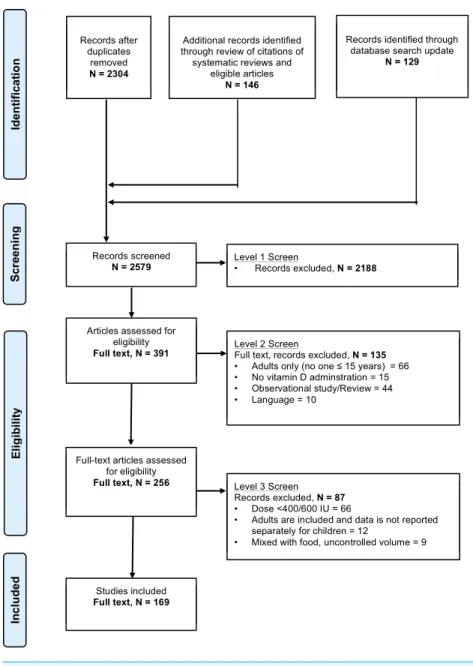
Search resultsFigure 1demonstrates the flow of studies identified by the search strategy. In total, 2,304 unique records were retrieved from the original electronic search with an additional 146 citations found in the reference lists of systematic reviews and eligible articles. Updating the search in January 2015 added an additional 129 records. Of the 2,579 articles, 2,188 were excluded at level one, with an additional 135 excluded at level two screening. In total, we identified 256 publications that reported on the results of a clinical trial administering any dose of ergocalciferol or cholecalciferol to children. From these 256 articles, 169 articles met eligibility criteria (Appendix S3). Further inspection identified 6 instances of double publications of the same trial with reporting of nearly identical findings (Table S3). These duplicate publications were not included in the study, resulting in a total of 163 publications.
Study design, participant number and quality
Figure 1 Flow chart of study selection based on inclusion and exclusion criteria.The stages of a sys-tematic selection scheme include: identification, screening, eligibility, and final included studies.
Table 1 Assessment of study design and methodological quality.Trials enrolled a total of 18,539 pa-tients and a median (IQR) of 49 (25–94). High dose arms enrolled 11,947 papa-tients with a median of 25 (14–42).
Study characteristic Trials/populations %a
Study designb
RCT/qRCT 108 66
Single arm 42 26
Controlled, other 13 8
Randomized trial qualityb,c
Low risk 38 23
Medium risk/unclear 69 42
High risk 56 34
Cochrane risk of biasb,c,d
Generation adequate 56/57 34/35
Concealment adequate 50/62 31/38
Blinding adequate 47/25 29/15
Outcome report complete 124/36 76/22
Outcome not selective 89/6 55/4
Age groupse
Neonates 58 32
Infants 35 19
Toddlers 61 34
Schoole rs 104 57
Adolescents 82 45
Notes.
Abbreviations: (q)RCT, (Quasi randomized controlled trial). aBecause of rounding, percentages may not total 100.
bValues represent the number of trials, and the percentage out of the 163 identified trials.
cStudies were assessed using Cochrane risk of bias tool (Higgins & Green, 2011).
dFor the Cochrane assessment, the number of trials where the risk of bias was unclear, we indicated their numbers after the ‘/’.
eNumbers of populations in each age group out of 181 populations. Numbers will add up to more than 181 populations as
some included children from two or more age groups.
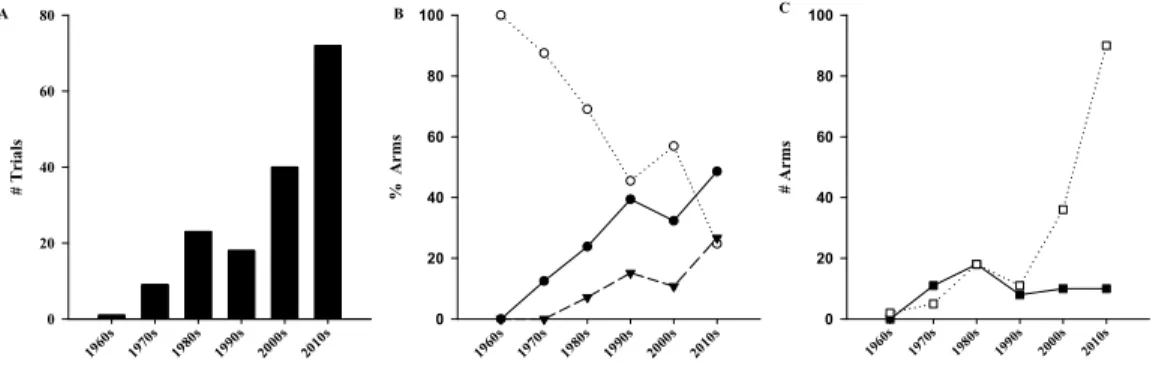
Figure 2 Evolution of pediatrics trials of high dose vitamin D over time.Exponential increase in num-ber of trials (A,R2=0.96,p<0.001). (B) Comparison of studied populations among the different decades
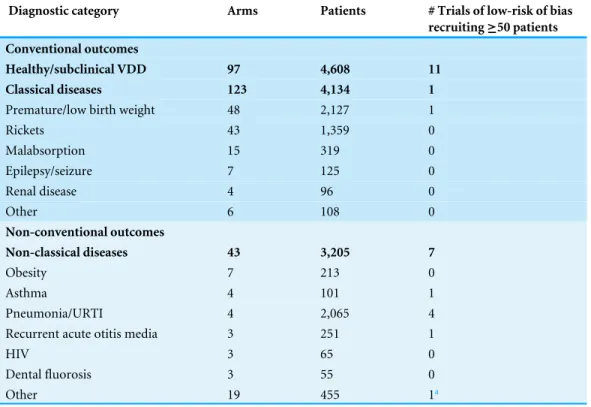
Table 2 Diagnostic categories and outcomes of studied populations.A total of 263 arms were identified as high dose. Populations in these arms were classified as conditions classically or non-classically associ-ated with vitamin D deficiency. Details provided in (Table S4). Last column identifies the number of arms that administered high-dose vitamin D to 50 patients or more, and that were determined to be at a low-risk of bias.
Diagnostic category Arms Patients # Trials of low-risk of bias
recruiting≥50 patients Conventional outcomes
Healthy/subclinical VDD 97 4,608 11
Classical diseases 123 4,134 1
Premature/low birth weight 48 2,127 1
Rickets 43 1,359 0
Malabsorption 15 319 0
Epilepsy/seizure 7 125 0
Renal disease 4 96 0
Other 6 108 0
Non-conventional outcomes
Non-classical diseases 43 3,205 7
Obesity 7 213 0
Asthma 4 101 1
Pneumonia/URTI 4 2,065 4
Recurrent acute otitis media 3 251 1
HIV 3 65 0
Dental fluorosis 3 55 0
Other 19 455 1a
Notes.
Abbreviations: URTI, Upper respiratory tract infections; VDD, vitamin D eficiency. aTuberculosis.
Populations
Table 3 Characteristics of vitamin D supplementation in the 263 high dose study arms.Vitamin D dosing regimens were placed into one of three frequency groups (daily, weekly/biweekly, and single/inter-mittent). Variable dosing regimens administered doses that are dependent on weight, age or body surface area (BSA).
Supplementation Arms %a
Dosing regimen
Constant 224 85.2
Variable 39 14.8
Dosing groups
RDA/AI–999 50 19.0
1,000–3,999 73 27.8
4,000–39,999 33 12.6
≥40,000 107 40.7
Routeb
PO 238 90.5
IM/IV 24 9.1
Formc
D3 162 61.6
D2 57 21.7
Frequency
Daily 137 52.1
Intermittent/single dose 96 36.5
Weekly/biweekly 30 11.4
Notes.
Abbreviations: AI, Adequate intake; BSA, body-surface-area; D2, ergocalciferol; D3, cholecalciferol; PO, enteral dosing; IM, intramuscular; IV, intravenous; RDI, recommended daily intake.
aBecause of rounding, percentages may not total 100.
bIn 1 arm, the route was unclear.
cIn 44 cases vitamin D form was nuclear.
Dosing regimens
Figure 3 Comparison of trials among geographical regions.Number of published trials per region (A,p<0.001), and patients (B,p<0.001). (C– F) North America and Europe () compared to the other regions (), in terms of route (C,p<0.001), form (D,p=0.003), dosage (E,p<0.001),
frequency of supplementation (F,p<0.001), and population (G,p=0.81). AI, Adequate Intake; C/S, Central/southern; D2, Ergocalciferol; D3, Cholecalciferol; IM, Intramuscular; IV, Intravenous; NZ, New Zealand; PO, Oral; RDA, Recommended Dietary Allowance.
Geographical regions
Trials were categorized by geographical region (Fig. 3A) (p<0.001). The area with the most published trials was Europe (n=46/163, 28%) with North America and the Middle East each contributing 35 trials (21%). For comparison, the number of total participants by geographical region is shown inFig. 3B(p<0.001). Difference in dosing regimen preference by geographical region was also evident. Doses higher than 40,000 IU were sparse in Europe (n=14/263, 5.3%) and North America (n=9/263, 3.4%), but represented the most commonly used regimen in every other region (Fig. S3). In addition to dose, statistically significant differences were observed between North America and Europe when compared to the rest of the world for route, form and dosing frequency (Fig. 3). A comparison of the population types studied in these two continents, with the remainder of the world, did not identify statistically significant differences (p=0.81) (Fig. 3G).
Outcomes
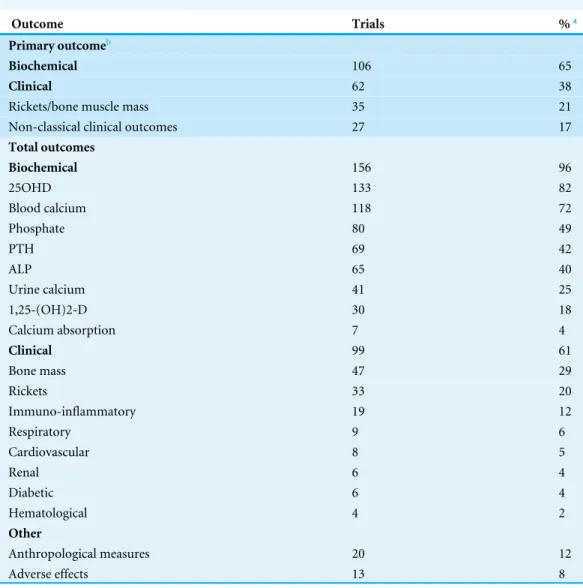
Table 4 Classification of studied outcomes of the 163 identified trials.
Outcome Trials %a
Primary outcomeb
Biochemical 106 65
Clinical 62 38
Rickets/bone muscle mass 35 21
Non-classical clinical outcomes 27 17
Total outcomes
Biochemical 156 96
25OHD 133 82
Blood calcium 118 72
Phosphate 80 49
PTH 69 42
ALP 65 40
Urine calcium 41 25
1,25-(OH)2-D 30 18
Calcium absorption 7 4
Clinical 99 61
Bone mass 47 29
Rickets 33 20
Immuno-inflammatory 19 12
Respiratory 9 6
Cardiovascular 8 5
Renal 6 4
Diabetic 6 4
Hematological 4 2
Other
Anthropological measures 20 12
Adverse effects 13 8
Notes.
Abbreviations: ALP, Alkaline phosphates; PTH, parathyroid hormone. aBecause of rounding, percentages may not total 100.
bPrimary outcomes count exceeds 163, as 5 trials had both clinical and biochemical primary outcomes.
(n=118/163, 72%), phosphate (n=80/163, 49%) and PTH (n=69/163,
42%) being the next most common. For studies focused on non-classical diseases, outcomes evaluating the immunologic, respiratory and cardiovascular systems were studied in 19 (12%), 9 (6%) and 8 (5%) trials.
Database validation
Table 5 Validation of the online database using 13 systematic reviews.Comprehensiveness of the database was evaluated using the search results from 13 systematic reviews not included in the original literature search (2008–2015).
Review Trials in
the reviewa
Eligible trialsb
Trials on
ODBc
RCTs missing
Sensitivity Additional
trials on ODB
1. Bacchetta, J 2008 3 0 0 3: Dose≤RDA 0/0 (NA) 0
2. Das, JK 2013 5 1 2 4: Dose≤RDA 1/1 (100%) 1 (Vervel, 1997)
3. Das, RR 2013 2 2 2 0 2/2 (100%) 0
4. Fares, MM 2015 4 2 2 2: Dose≤RDA 2/2 (100%) 0
5. Zittermann, A 2014 13 10 15 3: Dose≤RDA 10/10 (100%) 5 (Guillemant, 1998; El-Hajj, 2006; Dahifar, 2007; Arabi, 2009; Majak, 2009) 6. Riverin, BD 2015 8 6 5 1 Reference NA
(Darabi, 2013) 2: Dose≤RDA
5/6 (83.3%) 0
7. Ali, SR 2015 5 3 3 2: Dose≤RDA 3/3 (100%) 0 8. Kerley, CP 2015 7 6 5 1: Dose≤RDA
1 Full text NA (Utz 1976)
5/6 (83.3%) 0
9. Hoffmann, MR 2015 1 1 1 0 1/1 (100%) 0
10. Jamka, M 2015 (Sci Rep.) 1 1 5 0 1/1 (100%) 4 (Ashraf, 2011; Kelishadi, 2014; Poomthavorn, 2014; Nader, 2014) 11. Jamka, M 2015 (Eur J Nutr.) 2 2 3 0 2/2 (100%) 1 (Belenchia, 2013)
12. Zittermann, A 2015 4 3 7 1: Dose≤RDA 3/3 (100%) 4 (Morcos, 1998; El-Hajj, 2006; Arabi, 2009; Lewis, 2015)
13. Jiang, W 2015 1 1 1 0 1/1 (100%) 0
Total 56 38 51 18: Dose≤RDA
1 Full text NA 1 Reference NA
36/38 (94.7%) 15
Notes.
Abbreviations: ODB, Online database (http://www.cheori.org/en/pedvitaminddatabaseOverview). aCounting only perspective trials that fell under the pediatrics range and that administered vitamin D.
bTrials that satisfied our inclusion criteria of being controlled prospective trial, administering a high dose of vitamin D to children.
cCounting only those published prior to the search dates of the systematic reviews.
databases or the journal repertoire). The 13 systematic reviews also included an additional 18 trials that provided supplementation with lower doses of vitamin D (≤RDA), and all were present in the list of 256 pediatric clinical trials identified as part of the stage 2 screening. A summary of the utility assessment is shown inTable S5. The literature search of the 4 full pediatric systematic reviews identified between 684 and 1,343 unique records for screening and between 21 and 274 articles for full text review. In comparison, the online database search by the blinded author and using the population, age and outcome filters yielded between 2 and 10 articles for full text review (no eligible studies were missed). The reduction in number of papers for full assessment was reduced by 85.2% (SD 13.4%).
DISCUSSION
This systematic review sought to identify all published pediatric clinical trials of high dose vitamin D supplementation, and determined this to be a large and rapidly expanding area of clinical research. Descriptive analysis identified heterogeneity in important trial design characteristics, including a recent significant increase in studies evaluating a wide range of populations and outcomes not classically related to vitamin D. A comprehensive searchable online database was developed to aid clinicians and researchers in the identification and evaluation of trials relevant to their patient population or area of interest.
Our literature search identified 256 pediatric clinical trials of vitamin D supplementation, of which 169 included one or more study arms meeting our definition of high dose. Evaluation of publications over time further demonstrated high-dose vitamin D supplementation to be a rapidly expanding area of clinical research. With the exception of the 1990s, where a brief decline in publications was observed, the trial number has almost doubled each decade. The decline in publications on high-dose vitamin D may relate to a late 1980’s publication reporting high hypercalcemia rates (34%) in young infants receiving 600,000 IU (Markestad et al., 1987). A detailed comparison of the change in publication rate with other areas in pediatric research was limited by the lack of well-done systematic reviews of similar design and scope. However, one excellent comparator is the recent review published by Duffett and colleagues (2013), wherein they demonstrated a constant linear rise in clinical trials in the pediatric critical care setting. Taken together, the results suggest that pediatric clinical trial literature is steadily increasing. The exponential growth of the randomized controlled trial literature has been previously demonstrated (Tsay & Yang, 2005;Bastian, Glasziou & Chalmers, 2010). Part of the value of systematic reviews is in summarizing the literature, as the rate of publication of RCTs makes it impractical for clinicians to keep up with the primary publications.
with acute and chronic disease may have a blunted response to usual doses of vitamin D (McNally et al., 2015).
As part of the descriptive analysis we also sought out heterogeneity in other trial design features, including dosing regimen characteristics. The main dosing regimen characteristics where uniformity was evident include use of the oral route for drug administration and choice of the cholecalciferol form. Consistency in these areas is expected, given that cholecalciferol has been suggested to have favorable metabolism and greater biological activity, and 25OHD is well accepted as the best biological marker of vitamin D status (Melamed & Kumar, 2010). Outside of route and form, significant heterogeneity in regimen dose and frequency was evident. Further exploration determined that some of the heterogeneity could be explained by the geographical origin of the trial. In North America and Europe, daily supplementation was by far the most common regimen, while the remainder of the world predominantly used single or divided loading doses well in excess of the IOM Daily Upper Tolerable Intake Level. These differences might explain why, in contrast to countries like Australia and New Zealand, guidelines originating out of North America do not offer any strategies based on weekly or less frequent loading doses (Munns et al., 2006;Godel, 2007;Manaseki-Holland et al., 2010). Similar to the shift from ergocalciferol to cholecalciferol over time, a study characteristic anticipated to be changing was the proportion of dosing regimens incorporating patient age or weight into dose selection (Aguirre Castaneda et al., 2012;McNally et al., 2015). Despite being well recognized in other areas of pediatric research, the need for age- or weight-based vitamin D dosing has only recently been acknowledged by agencies such as the IOM. Our analysis demonstrated that 90% of trials used a constant dose, with no evidence of a recent shift towards age or weight based practise.
assist the end user with heterogeneity. Not only was the database designed to be searchable by key study characteristics, but also the outcome page was set-up to present the user with the study design, population, dosing regimen, and outcome data required to evaluate trial relevance. Utility of the database was also evaluated, by comparing with 4 pediatric systematic reviews, and when combined with the search functions, it was determined that the number of full text articles requiring review could have been reduced by 85% (Das et al., 2013;Fares et al., 2015;Riverin, Maguire & Li, 2015;Ali & McDevitt, 2015). These observations, combined with the fact that the database would reduce the time associated with developing and performing a literature search, indicate the database to be a beneficial resource for the field.
Finally, the availability of a comprehensive validated database allowed us to identify those areas where there may be sufficient evidence to answer questions regarding the clinical benefits of high-dose vitamin D. Considering all low-risk of bias studies, regardless of size, there were only two areas (respiratory infection/asthma, n=2,166 and prematurity/low birth weight,n=2,127) with more than 100 total children enrolled in the high-dose arms. Compared to reviews of other areas of pediatric research, the average number of children recruited per study was smaller (Hamm et al., 2010). The reason for this is unclear, but given the recent interest in the non-classical roles of vitamin D, much of the identified work may represent pilot work intended to precede large phase III studies (Randolph & Lacroix, 2002;Nicholson et al., 2003). Of the two areas with a relative breadth of evidence, pediatric respiratory illness and asthma have been recognized by research groups, culminating in multiple systematic reviews (Charan et al., 2012;Das et al., 2013;Pojsupap et al., 2015). Due to heterogeneity in population, dosing regimen and outcome characteristics these reviews were suggestive, but not definitive, for benefit and further research is underway. In contrast to the area of pediatric respiratory illness, there have not been any recent attempts to systematically synthesize the significant clinical trial literature in the area of prematurity and/or low birth weight. A systematic review of the effectiveness and safety in this population may be worthwhile as metabolic bone disease remains a problem and recent observational data suggests that vitamin D deficiency may augment non-musculoskeletal pathophysiology (Onwuneme et al., 2012). This work would benefit nutrition guidelines in NICU and inform dosing regimens for future phase III studies. Finally, it is important to note that with somewhere between one and two dozen new publications per year the areas with sufficient high-quality evidence to address clinical efficacy could change quickly.
and end-users should be able to quickly locate and evaluate the specific population, dosing regimen, outcome and/or study design features of interest. The searchable database also helps address another important study limitation created by the lack of an accepted definition or algorithm for high dose vitamin D. Recognizing the challenges involved with developing such a definition, we chose to use a very inclusive or sensitive threshold. We recognize that the true definition of high dose also incorporates dosing and patient factors including age, disease status, and dose frequency and duration. We have carefully designed the database to ensure that users have the ability to rapidly evaluate these characteristics and apply their own thresholds or algorithm for defining high dose. Finally, a significant limitation of the database is that it is at risk for going out of date. Our goal is to update this list yearly, and provide a data entry page for research groups to provide relevant information on their study.
CONCLUSION
This systematic review identified 169 publications reporting on pediatric trials of high-dose vitamin D, and made relevant trial information available as part of an online searchable database. Importantly, this field has seen an increase in published trials over the past decade, spanning a wide range of populations, dosing regimens and outcomes. To assist the field we developed, validated and demonstrated utility of an online database of pediatric clinical trials of high dose supplementation vitamin D development. The availability of this data-base, combined with search functions and extracted data, should aid clinicians, researchers and policy makers. Using this resource, clinicians will be able to quickly and comprehen-sively identify and evaluate the level of clinical trial evidence for a particular patient population. Finally, the availability of an up-to-date list of published trials, combined with extracted information on population, eligibility criteria, dosing regimen and outcomes should expedite the systematic review process for researchers and policy makers.
ADDITIONAL INFORMATION AND DECLARATIONS
Funding
Nassr Nama received an Undergraduate Research Opportunity Program (UROP) from the University of Ottawa. Nassr Nama and Klevis Iliriani received Summer Studentships from the Children’s Hospital of Eastern Ontario Research Institute. The funders had no role in study design, data collection and analysis, decision to publish, or preparation of the manuscript.
Grant Disclosures
The following grant information was disclosed by the authors: University of Ottawa.
The Children’s Hospital of Eastern Ontario Research Institute.
Competing Interests
Author Contributions
• Nassr Nama and James D. McNally conceived and designed the experiments, performed the experiments, analyzed the data, contributed reagents/materials/analysis tools, wrote the paper, prepared figures and/or tables, reviewed drafts of the paper.
• Kusum Menon, Lauralyn McIntyre and Dean Fergusson wrote the paper, reviewed drafts of the paper.
• Klevis Iliriani, Supichaya Pojsupap and Katie O’Hearn performed the experiments, contributed reagents/materials/analysis tools, wrote the paper, reviewed drafts of the paper.
• Margaret Sampson conceived and designed the experiments, performed the experiments, contributed reagents/materials/analysis tools, wrote the paper, reviewed drafts of the paper.
• Linghong (Linda) Zhou performed the experiments, wrote the paper, reviewed drafts of the paper.
Data Availability
The following information was supplied regarding data availability: The dataset is provided in theSupplemental Information.
Supplemental Information
Supplemental information for this article can be found online athttp://dx.doi.org/10.7717/ peerj.1701#supplemental-information.
REFERENCES
Abrams SA, Coss-Bu JA, Tiosano D. 2013.Vitamin D: effects on childhood health and disease.Nature Reviews. Endocrinology9:162–170 DOI 10.1038/nrendo.2012.259.
Aguirre Castaneda R, Nader N, Weaver A, Singh R, Kumar S. 2012.Response to vitamin D3 supplementation in obese and non-obese Caucasian adolescents.Hormone Research in Pediatrics78:226–231DOI 10.1159/000343446.
Ahmed SF, Franey C, McDevitt H, Somerville L, Butler S, Galloway P, Reynolds L, Shaikh MG, Wallace AM. 2011.Recent trends and clinical features of childhood vitamin D deficiency presenting to a children’s hospital in Glasgow.Archives of Disease in Childhood96:694–696DOI 10.1136/adc.2009.173195.
Ali SR, McDevitt H. 2015.Question 1: does vitamin D supplementation prevent acute lower respiratory tract infections in children?Archives of Disease in Childhood
100:892–895.
Bastian H, Glasziou P, Chalmers I. 2010.Seventy-five trials and eleven system-atic reviews a day: how will we ever keep up?PLoS Medicine7:e1000326
DOI 10.1371/journal.pmed.1000326.
Brehm JM, Schuemann B, Fuhlbrigge AL, Hollis BW, Strunk RC, Zeiger RS, Weiss ST, Litonjua AA, Childhood Asthma Management Program Research Group. 2010.
Serum vitamin D levels and severe asthma exacerbations in the Childhood Asthma Management Program study.Journal of Allergy & Clinical Immunology126:52–58
DOI 10.1016/j.jaci.2010.03.043.
Cadario F, Prodam F, Savastio S, Monzani A, Balafrej A, Bellomo G, Bona G. 2015.
Vitamin D status and Type 1 diabetes in children: evaluation according to latitude and skin colour.Minerva Pediatrica67:263–267.
Canadian Agency for Drugs and Technologies in Health. 2015.Vitamin D testing in the general population: a review of the clinical and cost-effectiveness and guidelines. Ottawa: Canadian Agency for Drugs and Technologies in Health.Available athttps: // www.cadth.ca/ sites/ default/ files/ pdf/ htis/ jan-2015/ RC0626%20Vitamin%20D% 20Testing%20Final.pdf (accessed 01 November 2015).
Carlsson T, Bergman G, Karlsson A-M, Mattsson E. 2015.Content and quality of information websites about congenital heart defects following a prenatal diagnosis. Interactive Journal of Medical Research4:e4DOI 10.2196/ijmr.3819.
Charan J, Goyal JP, Saxena D, Yadav P. 2012.Vitamin D for prevention of respiratory tract infections: a systematic review and meta-analysis.Journal of Pharmacology & Pharmacotherapeutics3:300–303DOI 10.4103/0976-500X.103685.
Das RR, Singh M, Panigrahi I, Naik SS. 2013.Vitamin D supplementation for the treatment of acute childhood pneumonia: a systematic review.ISRN Pediatrics
2013:459160–459167 DOI 10.1155/2013/459160.
Duffett M, Choong K, Hartling L, Menon K, Thabane L, Cook DJ. 2013.Randomized controlled trials in pediatric critical care: a scoping review.Critical Care17:R256
DOI 10.1186/cc13083.
Fares MM, Alkhaled LH, Mroueh SM, Akl EA. 2015.Vitamin D supplementation in children with asthma: a systematic review and meta-analysis.BMC Research Notes
8:23DOI 10.1186/s13104-014-0961-3.
Godel J. 2007.Vitamin D supplementation: recommendations for Canadian mothers and infants.Paediatrics & Child Health12:583–598.
Gray K, Wood N, Gunasekera H, Sheikh M, Hazelton B, Barzi F, Isaacs D. 2012.
Vitamin D and tuberculosis status in refugee children.Pediatric Infectious Disease Journal 31:521–523DOI 10.1097/INF.0b013e3182456c55.
Hamm MP, Hartling L, Milne A, Tjosvold L, Vandermeer B, Thomson D, Curtis S, Klassen TP. 2010.A descriptive analysis of a representative sample of pe-diatric randomized controlled trials published in 2007.BMC Pediatrics10:96
DOI 10.1186/1471-2431-10-96.
Harris PA, Taylor R, Thielke R, Payne J, Gonzalez N, Conde JG. 2009.Research electronic data capture (REDCap)—a metadata-driven methodology and workflow process for providing translational research informatics support.Journal of Biomedi-cal Informatics42:377–381DOI 10.1016/j.jbi.2008.08.010.
Higgins JPT, Green S. 2011.Cochrane handbook for systematic reviews of interventions. Hoboken: John Wiley & Sons.
Küçükdurmaz F, Gomez MM, Secrist E, Parvizi J. 2015.Reliability, readability and quality of online information about femoracetabular impingement.Archives of Bone and Joint Surgery3:163–168.
Levin AD, Wadhera V, Leach ST, Woodhead HJ, Lemberg DA, Mendoza-Cruz AC, Day AS. 2011.Vitamin D deficiency in children with inflammatory bowel disease. Digestive Diseases and Sciences56:830–836DOI 10.1007/s10620-010-1544-3.
Manaseki-Holland S, Qader G, Isaq Masher M, Bruce J, Zulf Mughal M, Chandramo-han D, Walraven G. 2010.Effects of vitamin D supplementation to children diag-nosed with pneumonia in Kabul: a randomised controlled trial.Tropical Medicine & International Health15:1148–1155DOI 10.1111/j.1365-3156.2010.02578.x.
Markestad T, Hesse V, Siebenhuner M, Jahreis G, Aksnes L, Plenert W, Aarskog D. 1987.Intermittent high-dose vitamin D prophylaxis during infancy: effect on vitamin D metabolites, calcium, and phosphorus.American Journal of Clinical Nutrition46:652–658.
McNally JD, Iliriani K, Pojsupap S, Sampson M, O’Hearn K, McIntyre L, Fergusson D, Menon K. 2015.Rapid normalization of vitamin D levels: a meta-analysis.Pediatrics
135:e152–e166DOI 10.1542/peds.2014-1703.
McNally JD, Menon K, Chakraborty P, Fisher L, Williams KA, Al-Dirbashi OY, Doherty DR, Canadian Critical Care Trials Group. 2012.The association of vitamin D status with pediatric critical illness.Pediatrics130:429–436
DOI 10.1542/peds.2011-3059.
Melamed ML, Kumar J. 2010.Low levels of 25-hydroxyvitamin D in the pediatric populations: prevalence and clinical outcomes.Pediatric Health4:89–97
DOI 10.2217/phe.09.72.
Merewood A, Mehta SD, Grossman X, Chen TC, Mathieu J, Holick MF, Bauchner H. 2012.Vitamin D status among 4-month-old infants in New England: a prospective cohort study.Journal of Human Lactation28:159–166
DOI 10.1177/0890334411434802.
Moher D, Liberati A, Tetzlaff J, Altman DG, PRISMA Group. 2009.Preferred reporting items for systematic reviews and meta-analyses: the PRISMA statement.PLoS Medicine6:e1000097DOI 10.1371/journal.pmed.1000097.
Munns C, Zacharin MR, Rodda CP, Batch JA, Morley R, Cranswick NE, Craig ME, Cutfield WS, Hofman PL, Taylor BJ, Grover SR, Pasco JA, Burgner D, Cowell CT, Paediatric Endocrine Group, Paediatric Bone Australasia. 2006.Prevention and treatment of infant and childhood vitamin D deficiency in Australia and New Zealand: a consensus statement.Medical Journal of Australia185(5):268–272.
Nankervis H, Devine A, Williams HC, Ingram JR, Doney E, Delamere F, Smith S, Thomas KS. 2015.Validation of the global resource of eczema trials (GREAT database).BMC Dermatology15:4DOI 10.1186/s12895-015-0024-z.
Trials: a collection of key data on randomized controlled trials of treatments for eczema from 2000 to 2010).BMC Dermatology11:10DOI 10.1186/1471-5945-11-10.
Nicholson CE, Gans BM, Chang AC, Pollack MM, Blackman J, Giroir BP, Wilson D, Zimmerman JJ, Whyte J, Dalton HJ, Carcillo JA, Randolph AG, Kochanek PM. 2003.Pediatric critical care medicine: planning for our research future. Pediatric Critical Care Medicine: a Journal of the Society of Critical Care Medicine and the World Federation of Pediatric Intensive and Critical Care Societies4:196–202
DOI 10.1097/01.PCC.0000059728.63798.DA.
Onwuneme C, Carroll A, McCarthy R, Kilbane M, McKenna M, Murphy N, Molloy EJ. 2012.Towards evidence based medicine for paediatricians. Question 2. What is the ideal dose of vitamin D supplementation for term neonates?Archives of Disease in Childhood97:387–389DOI 10.1136/archdischild-2011-301764.
Parfitt AM, Gallagher JC, Heaney RP, Johnston CC, Neer R, Whedon GD. 1982.
Vitamin D and bone health in the elderly.American Journal of Clinical Nutrition
36:1014–1031.
Pithon MM, Santos dos ES. 2014.Information available on the internet about pain after orthognathic surgery: a careful review.Dental Press Journal of Orthodontics19:86–92
DOI 10.1590/2176-9451.19.6.086-092.oar.
Pojsupap S, Iliriani K, Sampaio TZAL, O’Hearn K, Kovesi T, Menon K, McNally JD. 2015.Efficacy of high-dose vitamin D in pediatric asthma: a systematic review and meta-analysis.The Journal of Asthma: Official Journal of the Association for the Care of Asthma52:382–390DOI 10.3109/02770903.2014.980509.
Provincial Programs Branch, Goverment of Ontario. 2010.OHIP-insured vitamin D testing. Ontario: Ministry of Health and Long-Term Care.Available athttp: // www.health.gov.on.ca/ en/ pro/ programs/ ohip/ bulletins/ 4000/ bul4522.pdf (accessed 01 November 2015).
Randolph AG, Lacroix J. 2002.Randomized clinical trials in pediatric critical care: rarely done but desperately needed.Pediatric Critical Care Medicine: a Journal of the Society of Critical Care Medicine and the World Federation of Pediatric Intensive and Critical Care Societies3:102–106DOI 10.1097/00130478-200204000-00002.
Redmond CE, Nason GJ, Kelly ME, McMahon C, Cantwell CP, Quinlan DM. 2015.
Transrectal ultrasound guided biopsy of the prostate: is the information accessible, usable, reliable and readable?Current Urology8:32–37DOI 10.1159/000365686.
Riverin BD, Maguire JL, Li P. 2015.Vitamin D supplementation for childhood asthma: a systematic review and meta-analysis.PLoS ONE10:e0136841
DOI 10.1371/journal.pone.0136841.
Robinson PD, Högler W, Craig ME, Verge CF, Walker JL, Piper AC, Woodhead HJ, Cowell CT, Ambler GR. 2006.The re-emerging burden of rickets: a decade of experience from Sydney.Archives of Disease in Childhood91:564–568.
from the Institute of Medicine: what clinicians need to know.Journal of Clinical Endocrinology & Metabolism96:53–58DOI 10.1210/jc.2010-2704.
Sampson M, McGowan J, Cogo E, Grimshaw J, Moher D, Lefebvre C. 2009.An evidence-based practice guideline for the peer review of electronic search strategies. Journal of Clinical Epidemiology62:944–952DOI 10.1016/j.jclinepi.2008.10.012.
Thacher TD, Fischer PR, Pettifor JM. 2014.Vitamin D treatment in calcium-deficiency rickets: a randomised controlled trial.Archives of Disease in Childhood 99:807–811
DOI 10.1136/archdischild-2013-305275.
Tomaino K, Romero KM, Robinson CL, Baumann LM, Hansel NN, Pollard SL, Gilman RH, Mougey E, Lima JJ, Checkley W, PURA Study Investigators. 2015.Association between serum 25-hydroxy vitamin D levels and blood pressure among adoles-cents in two resource-limited settings in Peru.American Journal of Hypertension
28:1017–1023DOI 10.1093/ajh/hpu264.