Abstract
Thirty Brangus bulls were used in a 90-d study to assess the effect of artificial shading on the performance and reproductive characteristics of semi-confined cattle. Animals were kept in four one-ha paddocks in two groups of eight for shade treatment (5 m²/animal of 80% solar block shade cloth) and two groups of seven animals in no-shade treatment. Each treatment had two homogeneous groups, each divided into heavy-bulls (351-450 kg) and light-bulls (300-350 kg). Time spent under shade, time standing, average daily gain, testicular development and sperm quality were investigated. Animals spent 24% of the daylight under the shade and no-shaded bulls spent more time standing (P < 0.05). No difference was found in average daily gain (P > 0.05) and testicular development between shaded and no-shaded animals. However, scrotal perimeter was higher for shaded light animals compared to no-shaded light bulls (P < 0.10). Sperm motility increase during the experimental period for shaded animals (P < 0.05) and sperm abnormalities were higher for the shaded ones (P < 0.05). Although the results did not indicate pronounced benefits on cattle performance, this resource was an important alternative because it appears to provide an improvement in some reproductive parameters and ensure a better thermal comfort to the animals.
Keywords: Behavior. Heat stress. Performance. Reproduction. Shade. Resumo
Foi avaliado o efeito do sombreamento artificial sobre o desempenho produtivo e reprodutivo de animais semiconfinados em trinta novilhos Brangus durante o período de 90 dias. Os animais foram mantidos em quatro piquetes de 1 ha cada, divididos em dois grupos de oito animais cada no tratamento sombra (5 m2/animal de tela de sombreamento de polipropileno com 80% de retenção solar) e dois grupos no tratamento sem acesso à sombra com sete animais em cada. As variáveis analisadas foram: o tempo gasto na sombra, o tempo em pé, ganho de peso, desenvolvimento testicular e qualidade espermática. Os animais passaram 24% do dia sob a sombra e os que não tiveram acesso à sombra permaneceram mais tempo em pé (P < 0,05). Não foi encontrada diferença no ganho de peso (P > 0,05) e no desenvolvimento testicular entre animais com acesso à sombra e os que não tinham acesso. No entanto, o perímetro escrotal foi maior para os animais submetidos ao sombreamento comparado com novilhos sem acesso à sombra (P < 0,10). A motilidade espermática aumentou durante o período experimental para os animais com acesso a sombra (P < 0,05), porém as anormalidades espermáticas também foram maiores para este grupo (P < 0,05). Embora os resultados não indiquem claramente os benefícios relacionados ao uso de sombreamento no desempenho produtivo de bovinos semiconfinados, este recurso se mostra como uma alternativa importante, pois proporcionou melhoria de alguns parâmetros reprodutivos e propiciou um melhor conforto térmico para os animais.
Palavras-chave: Comportamento. Estresse por calor. Desempenho. Reprodução. Sombra.
Effect of artificial shading on performance and reproductive
parameters of semi-confined young Brangus bulls
Efeito do sombreamento artificial no desempenho e parâmetros reprodutivos de novilhos
Brangus em semiconfinamento
Marcos CHIQUITELLI NETO¹; Cristiane Gonçalves TITTO²; Evaldo Antonio Lencioni TITTO²; Eliane Vianna da COSTA E SILVA³; José Nicolau Prospero PUOLI FILHO4;
Thays Mayra da Cunha LEME²; Fábio Luís HENRIQUE²; Alfredo Manuel Franco PEREIRA5 ¹ Universidade Estadual Paulista “Júlio de Mesquita Filho”, Faculdade de Engenharia de Ilha Solteira,
Departamento de Biologia Aplicada à Agropecuária, Ilha Solteira – SP, Brazil ² Universidade de São Paulo, Faculdade de Zootecnia e Engenharia de Alimentos,
Laboratório de Biometeorologia e Etologia, Pirassununga – SP, Brazil
³ Universidade Federal de Mato Grosso do Sul, Faculdade de Medicina Veterinária e Zootecnia, Campo Grande – MS, Brazil 4 Universidade Estadual Paulista “Júlio de Mesquita Filho”, Faculdade de Medicina Veterinária e Zootecnia, Botucatu – SP, Brazil
5 Universidade de Évora, Instituto de Ciências Agrárias e Ambientais Mediterrânicas, Évora, Portugal
Correspondence to:
Cristiane Gonçalves Titto
Universidade de São Paulo, Faculdade de Zootecnia e Engenharia de Alimentos (FZEA) Laboratório de Biometeorologia e Etologia
Av. Duque de Caxias Norte, 225
CEP 13635-900, Pirassununga, SP, Brazil e-mail: [email protected]
Received: 28/04/2014 Approved: 19/01/2015
Introduction
Animal production is the result of the individual characteristics of animals, the environmental conditions, and the possible interactions between these two groups of factors (KEARSEY; POONI, 1996; JAMES, 2009). This relationship can be understood by assuming that the genetic variables of individuals will be expressed at varying intensity, depending on the final components that result from interactions with the environment (BRYANT et al., 2005).
Under stress conditions, animals trigger adaptive mechanisms, which directly imply changes in metabolic rate, body temperature, respiratory rate, heart rate, hormones, blood metabolites and behavior (MITLÖHNER; GALYEAN; MCGLONE, 2002; DAVIS et al., 2003; PEREIRA et al., 2008; SULLIVAN et al., 2011). Such changes occur to promote the adaptation of the organism to the environment and generally lead to losses in productivity (GAUGHAN et al., 2010).
Internal physiological disturbances such as high fever or external factors such thermal stress and other stress types, are known to interfere with spermatogenesis and sperm production. These disturbances are also responsible for the presence of abnormal spermatozoa in the semen and this abnormality may be temporary or permanent, depending on time and intensity of the disturbances (HAFEZ; HAFEZ, 2000). Besides high temperatures, solar radiation may also increase sperm anomalies, and can lead to varying degrees of testicular degeneration in the most susceptible reproducers, such as some european breeds (COLAS; GUÉRIN, 1980; KOIVISTO et al., 2009). Moreover, may still occur a reduction in testicular growth rate, followed by a decrease in spermatocytes and spermatid maturation, especially due to the reduced steroidogenic capacity of Leydig cells, leading to a significant decrease in sperm production (EGBUNIKE; TOGUN; AGIANG, 1985).
Under the same approach, the harmful effects of thermal stress are also observed for bovine growth (BACCARI JUNIOR; JOHNSON; HAHN,
1983; PEREIRA et al., 1998). However, there are inconsistences between studies on the effect of shade in increasing performance. Favorable results were obtained for beef cattle subjected to natural shading, including increased average daily gain rate and improved feeding efficiency (FUQUAY, 1981; CHIQUITELLI NETO, 2001). Artificial shade structure had also improved performance (EIGENBERG; BROWN-BRANDL; NIENABER, 2009) and time spent on pasture behavior (TITTO et al., 2011). On the other hand, some studies did not report that access to shade improve cattle performance or dry matter intake (DMI) (CLARKE; KELLY, 1996; BROWN-BRANDL et al., 2005), or showed inconsistent results during confinement period (SULLIVAN et al., 2011).
The effect of shade use on male reproductive efficien-cy is not well reported, but some studies have shown that scrotal insulation increase testicular temperature, which results in abnormal spermatozoa, with recovery dependent upon the duration of thermal insult (KASTELIC et al., 1996; FERNANDES et al., 2008; MENEGASSI et al., 2014). For these reasons, the availability of shade for semi-confined bulls can provide benefits to reproduction, as during the hottest periods, bulls are subject to environmental variations that interfere with their fertility and reproductive effectiveness (BERRY; EVANS; PARLAND, 2011).
Thus, the aim of this study was to evaluate the effects of shading on the growth, testicular development, and sperm quality of semi-confined young Brangus bulls.
Materials and Methods
This essay was carried out at Pedregulho, São Paulo, Brazil (Latitude: 20º 15’ 25” S; Longitude: 47º 28’ 36” W; 1050 m above mean sea level) from February to April of 2001 during summer and early autumn. All procedures were approved by the UNESP Ethics Commission under the Universidade Estadual Paulista, Brazil.
Thirty Brangus bulls with 15 ± 1.5 months of age were used to determine the effects of artificial shading
on 120 days of semi-confined cattle. They were kept in four paddocks of one ha each in two groups of eight for shade treatment; with 5m²/animal of 80% solar block shade cloth and two groups of seven animals kept in no-shade treatment.
All animals were weighed, classified according to hair pigmentation, and divided first into two homogeneous groups. The first one was composed of 15 animals weighing between 351 and 450 kg (heavy), whereas the other included 15 animals weighing from 300 to 350 kg (light). Each treatment was replicated twice, each with one group of heavy animals and another one with a group of light animals.
Both groups (heavy and light ones) were split into those mentioned treatments: with artificial shading (shaded animals) and without artificial shading (no-shaded animals). The paddocks with shading cloths contained eight bulls each, and those for sun had seven bulls. The experimental groups were as follows: HSh (heavy + shade cloth), LSh (light + shade cloth), HSu (heavy + sun), and LSu (light + sun). All four experimental groups were simultaneously monitored for three months and each month included four days of behavior observation from 07:00 to 18:00 hours using the focal sampling method (MARTIN; BATESON, 2007) with instantaneous recordings. Each bull was defined as one replicate in each treatment. Behavior data included use of shade that was defined as at least the head not being in the sun and standing that was defined as a posture in which an animal was upright with all four feet stationary on the ground.
During behavior observation the respiratory rate was also measured four times (09:00, 11:00, 13:00, and 15:00) for each animal.
All animals were kept in their respective paddocks throughout the experimental period, and had free access to a clean trough filled with fresh water and to diet, which was based on pasture of Brachiaria
decumbens, plus a daily supplementation given at
08:00, comprised of concentrated animal food given in the proportion of 2% live weight (dry matter basis).
The total crude protein in the offered diet was 13.3%. Two electronic weather station, one positioned in the sun and one in the shade (Latitude: 20º 15’ 25” S; Longitude: 47º 28’ 36” W; 1050 m above mean sea level) recorded meteorological variables, which included air temperature, relative humidity, wind velocity and black globe temperature every 15 minutes, during the experiment period. From these data the Black Globe Temperature and Humidity Index were calculated (THOM, 1959).
Average daily gain, testicular development, and sperm quality were studied for each individual. To calculate average daily gain rate the bulls were weighed after a 12-hour fasting on the first day and at the end of the experiment. The calculation of testicular development rate involved the testicular volume gain and the scrotal perimeter gain. Similarly, testicular measurements were made on the first day and on the last day of the experiment. To determine testicular volume, both testicles were subjected to biometry, and their length and width were recorded using a caliper graduated in millimeters. The total volume was calculated using the formula proposed by Fields, Burns and Warnick (1979) as follow and expressed in cubic centimeters:
VOL = 2 [(r2) x Π x h]
Where: r = radius calculated from the width (width/2), h = testicle length, and Π (Pi) = 3.14.
Semen samples were collected through electroejaculation (HAFEZ; HAFEZ, 2000) in the first and the last day of the semi-confinement period. The collected material was immediately analyzed regarding its physical aspects, and aliquots were prepared for the morphological test. To assess semen quality, percentage data on total sperm abnormalities and sperm motility were recorded on the first day and on the last day of the experiment (COLÉGIO BRASILEIRO DE REPRODUÇÃO ANIMAL, 2013).
Total morphological sperm defects were observed and 200 spermatozoa per slide were counted for this characteristic. Sperm motility was assessed under an optical microscope at 100 to 400x magnifi cation, using a droplet of semen between the slide and the cover slip, both previously heated at 37ºC and the values expressed as total motility which indicates the overall percentage of sperm that are moving in any direction. Sperm morphology was analyzed by phase-contrast microscopy and Congo red staining, according to Cerovsky (1976).
All data were fi rst tested for normality and homoscedasticity by Kolmogorov Smirnov and Levene tests respectively. Animals were divided in four treatments in a randomized block design. Time spent under shade, time standing, respiration rate, average daily gain, testicular development and sperm quality were analyzed by GLM factorial ANOVA with one fi xed factor (shade or no shade) and a random factor (days of observation). Reproductive parameters were analyzed by nested design with one fi xed factor (Shade) and a nested factor (light and heavy animals) with treatment. When mean diff erences were shown (P < 0.05), post-hoc comparisons were performed by Tukey test. A Pearson correlation test was done between respiratory rate and use of shade. All analysis was performed by SAS package soft ware (SAS, 2000).
Results
Th e meteorological variables including relative humidity, air temperature and black globe temperature
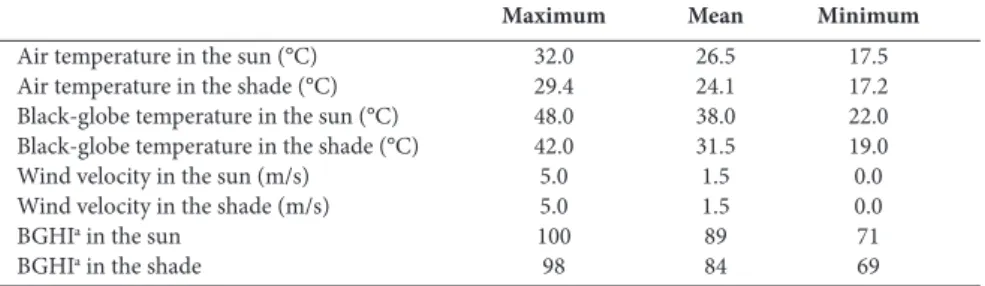
Table 1 – Summary of daytime (07:00-18:00 hours) meteorological records during the three months of experimental period – Pedregulho/SP – 2001
Maximum Mean Minimum
Air temperature in the sun (°C) 32.0 26.5 17.5
Air temperature in the shade (°C) 29.4 24.1 17.2
Black-globe temperature in the sun (°C) 48.0 38.0 22.0
Black-globe temperature in the shade (°C) 42.0 31.5 19.0
Wind velocity in the sun (m/s) 5.0 1.5 0.0
Wind velocity in the shade (m/s) 5.0 1.5 0.0
BGHIa in the sun 100 89 71
BGHIa in the shade 98 84 69
aBGHI (black globe temperature and humidity index)
in the sun and under the shade were recorded every 15 min for all the days when the experiment was carried-out and the average minimum, maximum and mean values are presented in table 1.
Bulls in the shade treatment spent 24% of the daylight time using the artifi cial shade, corresponding to approximately 2.5 hours. Th ey spent in the shade more oft en from 10:00 to 15:00 hours (Figure 1). Time spent in standing posture was 4.4% higher in no-shaded animals (P < 0.05). HSh was the group that mostly used shade during the study period (224 min/ animal/day) followed by LSh group (87 min/animal/ day; P < 0.05).
Figure 1 – Time spent using the shade of Brangus bulls during 90 days of experimentation. Use of shade was defined as at least the head not being in the sun. Animals had free access to artifi cial shade that blocked 80% of solar radiation – Pe-dregulho/SP – 2001
Respiratory rate was higher for no-shaded animals during all day (P < 0.01). Th roughout the day were found higher values at 13:00 for no-shaded bulls and at 11:00 and 13:00 for the no-shaded ones (P < 0.05; Figure 2). A correlation of 0.79 (P < 0.001) was also found between respiratory rate and use of shade. Th e average daily gain observed among experimental groups was not infl uenced by the availability of artifi cial shade (Table 2). No statistical diff erences were found concerning average daily gain; however, the values obtained require further careful evaluation. Both groups receiving artifi cial shading had better performance, 27 g/head/day more than the groups that did not receive this protection.
As for the increase in testicular volume, the values obtained for the shaded and no-shaded animals were not diff erent (P > 0.05); however, when evaluated within groups, the gain in testicular volume was higher for HSh compared with HSu (Table 2).
As regards scrotal perimeter increase during the confi ned period, there were no eff ects of shade available or average daily gain (P > 0.05; Table 2), although they presented a favorable increasing towards animals receiving artifi cial shading, which was higher for LSh compared with LSu (P < 0.10).
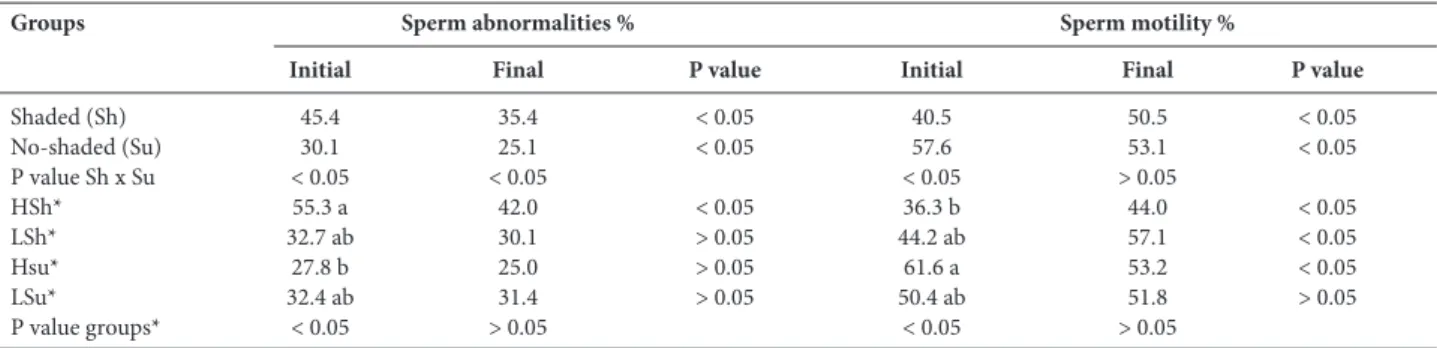
Th ere was a decrease in the percentage of sperm abnormalities during the experimental period for both shaded and no-shaded animals (P < 0.05). When this parameter was related for the four experimental
Figure 2 – Means of respiration rate of Brangus bulls during 90 days of experimentation. Shaded animals have free access to 5 m²/animal of 80% solar block shade cloth. Values on the same line with diff erent uppercase letters diff er for no-shaded animals among time (P < 0.05); Values on the same line with diff erent lowercase letters diff ers for shaded animals between time (P < 0.05). * diff er in each time for shaded and no-shaded animals (P < 0.05) – Pedregulho/SP – 2001
Source: (CHIQUITELLI NETO, 2001)
Table 2 – Gain on performance and reproductive traits of young Brangus bulls during the three-month semi-confi ned period. Values are presented by means ± standard error mean – Pedregulho/SP – 2001
Groups Average daily gain
(kg/animal/day) Testicular volume (cm³/animal) Scrotal perimeter (cm/animal)
Shaded (Sh) 1.15 ± 0.05 270 ± 36.1 2.69 ± 0.24 No-shaded (Su) 1.12 ± 0.03 275 ± 54.2 2.44 ± 0.63 P value Sh x Su P > 0.05 P > 0.05 P > 0.05 HSh* 1.16 ± 0.05 280 ± 65.7ab 2.51 ± 0.41 LSh* 1.17 ± 0.05 250 ± 40.2ab 2.88 ± 0.29 HSu* 1.13 ± 0.08 150 ± 87.6b 2.37 ± 0.34 LSu* 1.12 ± 0.06 380 ± 43.8a 2.43 ± 0.29
Values on the same line with diff erent lowercase letters diff er (P < 0.05) for groups*. Sh: shaded animals; Su: no-shaded animals; HSh: heavy animals with access to artifi cial shade cloth; LSh: light animals with access to artifi cial shade cloth; HSu: heavy animals with no access to artifi cial shade; LSu: light animals with no access to artifi cial shade
groups, it was signifi cantly higher for HSh group (P < 0.05; Table 3). Th e increases of sperm motility were higher for animals in the shade group (P < 0.05), with the highest improvement observed for HSh and LSh (P < 0.05; Table 3). Although the mean value of improvement motility for LSu was signifi cantly lower (P < 0.01) than those obtained for HSh and LSh, there was no diff erence between these values (P > 0.05).
Table 3 – Total sperm abnormalities (%) and sperm motility (%) for semi-confined Brangus bulls with or without access to artificial shade – Pedregulho/SP – 2001
Groups Sperm abnormalities % Sperm motility %
Initial Final P value Initial Final P value
Shaded (Sh) 45.4 35.4 < 0.05 40.5 50.5 < 0.05 No-shaded (Su) 30.1 25.1 < 0.05 57.6 53.1 < 0.05 P value Sh x Su < 0.05 < 0.05 < 0.05 > 0.05 HSh* 55.3 a 42.0 < 0.05 36.3 b 44.0 < 0.05 LSh* 32.7 ab 30.1 > 0.05 44.2 ab 57.1 < 0.05 Hsu* 27.8 b 25.0 > 0.05 61.6 a 53.2 < 0.05 LSu* 32.4 ab 31.4 > 0.05 50.4 ab 51.8 > 0.05 P value groups* < 0.05 > 0.05 < 0.05 > 0.05
Values on the same row with different lowercase letters differs P < 0.05 for groups*: Sh: shaded animals; Su: no-shaded animals; HSh: heavy animals with access to artificial shade cloth; LSh: light animals with access to artificial shade cloth; HSu: heavy animals with no access to artificial shade; LSu: light animals with no access to artificial shade
Discussion
Cattle seek shade in response to increased heat load (TITTO et al., 2011). If there is no shade available, it could result in a reduction in time spent lying and grazing (OVERTON et al., 2002; ZÄHNER et al., 2004; TUCKER; ROGERS; SCHÜTZ, 2008). In this study, no-shaded bulls spent more time standing compared to shaded animals. This behavior was also observed for confined dairy cows (FREGONESI; LEAVER, 2001). The standing posture has been suggested to be the way to maximize the surface area exposed to the environment and also contribute to increase the airflow around the body, reducing heat load (ANSELL, 1981; IGONO et al., 1987).
This work aimed to evaluate the effects of shading on growth, testicular development, and sperm quality in young Brangus bulls. The harmful effects of heat stress on crossbred cattle start from a temperature of 27ºC (ROMAN PONCE et al., 1977; BACCARI JUNIOR; JONHNSON; HAHN, 1983; KHUB; BHATTACHARYYA, 1991) and are even more pronounced at higher temperatures. The air temperature value obtained in the present work, compared with those reported in the literature, suggests that this variable is slightly aggressive and should affect the animals’ thermal comfort. Besides air temperature, wind velocity was also an important factor in the bovine thermoregulation process
(OVERTON et al., 2002) as the experimental site was located in a hilly area where mean velocities during the day were 1.5 m/s with a maximum of 5.0 m/s.
The phenomenon of the wind velocity has a more marked effect on testicular cooling. Even in cases where there is high heat storage, the amount of sweat produced by testicular sweat glands enables a significant evaporative cooling, which together with the heat exchanges by countercurrent allow the temperature stability of the blood that irrigates the testicles, remaining below the rectal temperature (GABALDI; WOLF, 2002).
The artificial shade reduced the respiration rate of Brangus bulls during all daylight. There is an indication that providing shade or other methods of cooling is beneficial for cattle based on changes in respiration rate and body temperature (TUCKER; ROGERS; SCHÜTZ, 2008). Some other work suggests that shade reduce respiration rate and body temperature (BROWN-BRANDL et al., 2005; KENDALL et al., 2007). In the present investigation bulls with access to shade spent most of the time under it between 10:00 to 15:00 hours and it was efficient to reduce respiration rate.
On the other hand, the black globe temperature, mainly influenced by solar radiation, was a preponderant factor in the climate characterization, with maximal and constant values between 10:00 and 15:00 hours.
The average daily gain observed among experimental groups was not influenced by artificial shade availability. Although these results do not agree with those of several authors (FUQUAY, 1981; PEREIRA et al., 1998; CHIQUITELLI NETO, 2001), who found significant differences in average daily gain for cattle receiving shading, the different experimental conditions must be considered. Besides the genetic difference of the cattle used in the above-mentioned studies, the local environmental condition of each experiment was also a preponderant factor for such results. The Brangus breed, as a hybrid breed of Bos indicus, have proven resistant to heat and high humidity, and has probably greater evaporative heat loss, which could be sufficient to limit body hyperthermia. Hence, we found the absence of significant differences in average daily gains, but only a tendency.
Both groups receiving artificial shading presented better performance, gaining on average 27 g/head/ day more than groups not receiving such protection. This value may be low if evaluated from an individual perspective. On the other hand, in intensive raising, a bovine confinement system containing 1000 head for a 100-day period reduce the production around 1450 kg carcasses (carcass yield of 53,7%) at the end of the productive process.
The difference between the heavy groups, HSh and HSu, may be explained by the heat stress hypothesis, which suggests a reduced testicular development rate, as well as a possible testicular degeneration for animals subjected to high temperatures and direct solar radiation (COLAS; GUÉRIN, 1980; KOIVISTO et al., 2009). Heavy animals have a smaller specific surface and a lower heat dissipation capability per unit mass. Thus, the low thermal inertia results in a maintaining transient hyperthermia during a longer time interval (PEREIRA et al., 2008).
HSh was the group that mostly used shade during the study period; this action probably favored the group’s thermoregulation process, providing better physiological conditions for the bulls to express their
testicular growth potential. This behavior highlights the greater necessity for these animals to reduce thermogenesis by reducing the radiant heat load, probably due to thermolytic processes that are not efficient enough to limit heat storage. The LSu group did not present statistically different values for testicular volume growth compared to LSh group. However, this variation may be explained by the puberty effect, i.e., the group presenting the highest testicular volume increase was the one that had the lowest volume at the beginning of the experiment, and therefore these results should be considered with precaution, because the final output present a relevant degree of confounding.
The differences among groups at the beginning of the experiment can be explained by the individual response of each bull during the days preceding the study. As all animals were kept together on the same pasture for 60 days before the beginning of the experiment and had insufficient shade availability, the local climate conditions probably had a harmful effect on the animals most susceptible to heat stress. Most of these individuals, presenting more pronounced physiological responses, were allocated to the HSh group, as the division into groups occurred at random.
Sperm motility improvement was extremely favorable to groups receiving artificial shading. These results are similar to those found in several studies (ERB; ANDREWS; HILTON, 1942; ANDERSON, 1945; ERB; WALDO, 1962; EGBUNIKE; TOGUN; AGIANG, 1985; HANSEN; FUQUAY, 2011), which describe, among several characteristics, an increase in sperm motility during periods of the year when temperature and air humidity are lower.
The mean value of sperm motility improvement for HSu was extremely lower than those values obtained for HSh and LSh. However, when comparing this value with LSu, despite the statistical significance, the difference was much lower. It must be emphasized that this result may have been influenced by the fact that the light group, which did not receive the shade cloth structure, efficiently employed the strategy of
searching for other forms of shade as gatepost, gate, and other animals. It should be noted, however that, the shade quality provided by the shade cloth was superior to the other shade sources.
Since the local climate effects were slightly better than those considered harmful to the thermal comfort of the animals, the performance were not significantly influenced by the use of shade. Interaction between thermal environment and growth potential should also be considered. Lower genetic potential for growth implies a lower metabolic heat production, with effect on thermal stability. So, those animals, like Brangus, present lower heat production and better heat loss capacity than Angus, which could explain the absence
of significant differences on performance. Currently, some reproductive parameters improved with the use of this resource, even under environmental conditions of reduced heat effect.
Conclusion
The use of shade seems to provide improvement in some reproductive parameters and ensure better thermal comfort for the animals.
Acknowledgments
We acknowledge the Chapadão Farm and Prof. Dr. Mateus José Rodrigues Paranhos da Costa.
References
ANDERSON, J. Seasonal variation in the reproductive capacity of bull. Journal of Agricultural Science, v. 35, p. 184-196, 1945. Available from: <http://journals.cambridge.org/action/ displayAbstract?fromPage=online&aid=4657836&fileId =S0021859600049200>. Viewed: 26 Feb. 2015. doi: http://dx.doi. org/10.1017/S0021859600049200.
ANSELL, R. H. Extreme heat stress in dairy cattle and its alleviation: a case report. In: CLARK, J. A. Environmental aspects
of housing for animal protection. London: Butterworths, 1981.
p. 285-306.
BACCARI JUNIOR, F.; JOHNSON, H. D.; HAHN, G. L. Environmental heat effects on growth, plasma T3 and post-heat compensatory effects on Holstein calves. Proceedings of the
Society for Experimental Biology and Medicine, v. 173, n. 3,
p. 312-318, 1983. Available from: <http://ebm.sagepub.com/ content/173/3/312>. Viewed: 26 Feb. 2015. doi: http://dx.doi. org/10.3181/00379727-173-41648.
BERRY, D. P.; EVANS, R. D.; PARLAND, S. M. C. Evaluation of bull fertility in dairy and beef cattle using cow field data. Theriogenology, v. 75, p. 172-181, 2011. Available from: <http://www.sciencedirect.com/science/article/pii/ S0093691X10004164>. Viewed: 26 Feb. 2015. doi: http://dx.doi. org/10.1016/j.theriogenology.2010.08.002.
BROWN-BRANDL, T. M.; EIGENBERG, R. A.; NIENABER, J. A.; HAHN, G. L. Dynamic response indicators of heat stress in shaded and non-shaded feedlot cattle. Part 1: Analyses of indicators. Biosystems Engineering, v. 90, n. 4, p. 451-462, 2005. Available from: <http://www.sciencedirect.com/science/article/ pii/S1537511004002247>. Viewed: 26 Feb. 2015. doi: http:// dx.doi.org/10.1016/j.biosystemseng.2004.12.006.
BRYANT, J.; LÓPEZ-VILLALOBOS, N.; HOLMES, C.; PRYCE, J. Simulation modeling of dairy cattle performance based on knowledge of genotype, environment and genotype by environment interactions: current status. Agricultural Systems, v. 86, p. 121-143, 2005. Available from: <http://www.sciencedirect. com/science/article/pii/S0308521X04001635>. Viewed: 26 Feb. 2015. doi: http://dx.doi.org/10.1016/j.agsy.2004.09.004.
CEROVSKY, J. A new staining procedure for boar spermatozoa.
Zivocisna Vyroba, v. 21, n. 5, p. 351-362, 1976.
COLÉGIO BRASILEIRO DE REPRODUÇÃO ANIMAL. Manual
para exame andrológico e avaliação de sêmen animal. 3. ed.
Belo Horizonte: CBRA, 2013.
CHIQUITELLI NETO, M. Effect of natural shading on performance of feedlot heifer. In: CONGRESSO BRASILEIRO DE ZOOTECNIA, 21., 2001, Goiânia. Anais… Goiânia: Sociedade Brasileira de Zootecnia, 2001. p. 6.
CLARKE, M. R.; KELLY, A. M. Some effects of shade on Hereford steers in a feedlot. Proceedings of Australian Society of Animal
Production, v. 21, p. 235-239, 1996.
COLAS, G.; GUÉRIN, Y. Variations saissoneères de la qualité du sperme chez de bélier Ile-de-France. I. Etude de la morphologie cellulaire e de la motilité massale. Reproducion Nutrition
Development, v. 20, n. 6, p. 1789-1799, 1980.
DAVIS, M. S.; MADER, T. L.; HOLT, S. M.; PARKHURST, A. M. Strategies to reduce feedlot cattle heat stress: effects on tympanic temperature. Journal of Animal Science, v. 81, p. 649-661, 2003. EGBUNIKE, B. N.; TOGUN, V. A.; AGIANG, E. A. Sperm production in ruminants in hot humid climates. World Review
of Animal Production, v. 21, p. 11-17, 1985.
EIGENBERG, R. A.; BROWN-BRANDL, T. M.; NIENABER, J. A. Shade material evaluation using a cattle response model and meteorological instrumentation. International Journal of
Biometeorology, v. 53, n. 6, p. 501-507, 2009. Available from:
<http://link.springer.com/article/10.1007%2Fs00484-009-0238-z>. Viewed: 26 Feb. 2015. doi: http://dx.doi.org/10.1007/ s00484-009-0238-z.
ERB, R. E.; ANDREWS, F. N.; HILTON, J. M. Seasonal variation in semen quality of the dairy bull. Journal of Dairy Science, v. 25, n.9, p. 815-826, 1942.
ERB, R. E.; WALDO, D. R. Seasonal changes in fertility of dairy bull in northwestern Washington. Journal of Dairy
Science, v. 35, p. 245-249, 1962. Available from: <http://www.
journalofdairyscience.org/article/S0022-0302%2852%2993697-7/abstract>. Viewed: 26 Feb. 2015. doi: http://dx.doi.org/10.3168/ jds.S0022-0302(52)93697-7.
FERNANDES, C. E.; DODE, M. A. N.; PEREIRA, D.; SILVA, A. E. D. Effects of scrotal insulation in Nellore bulls (Bos taurus
indicus) on seminal quality and its relationship with in vitro
fertilizing ability. Theriogenology, v. 70, n. 9, p. 1560-1568, 2008. Available from: <http://www.sciencedirect.com/science/article/ pii/S0093691X08004731>. Viewed: 26 Feb. 2015. doi: http:// dx.doi.org/10.1016/j.theriogenology.2008.07.005.
FIELDS, M. J.; BURNS, W. C.; WARNICK, A. C. Age, season and breed effects on testicular volume and semen traits in young beef bulls. Journal of Animal Science, v. 48, n. 6, p. 1299-1304, 1979. Available from: <https://dl.sciencesocieties.org/publications/jas/ abstracts/48/6/JAN0480061299?access=0&view=pdf>. Viewed: 26 Feb. 2015. doi: http://dx.doi.org/10.2134/jas1979.4861299x. FREGONESI, J. A.; LEAVER, J. D. Behaviour, performance and health indicators of welfare for dairy cows housed in strawyard or cubicle systems. Livestock Production Science, v. 68, p. 205-216, 2001. Available from: <http://www.sciencedirect.com/science/ article/pii/S0301622600002347>. Viewed: 26 Feb. 2015. doi: http://dx.doi.org/10.1016/S0301-6226(00)00234-7.
FUQUAY, J. W. Heat stress as it affects animal production. Journal
of Animal Science, v. 52, p. 164-174, 1981. Available from:
<https://dl.sciencesocieties.org/publications/jas/abstracts/52/1/ JAN0520010164?access=0&view=pdf>. Viewed: 26 Feb. 2015. doi: http://dx.doi.org/10.2134/jas1981.521164x.
GABALDI, S. H.; WOLF, A. A importância da termorregulação testicular na qualidade do sêmen em touros. Ciências Agrárias e
Saúde, v. 2, n. 2, p. 66-70, 2002.
GAUGHAN, J. B.; BONNER, S.; LOXTON, I.; MADER, T. L.; LISLE, A.; LAWRENCE, R. Effect of shade on body temperature and performance of feedlot steer. Journal of
Animal Science, v. 88, n. 12, p. 4056-4067, 2010. Available from:
<https://www.animalsciencepublications.org/publications/jas/ abstracts/88/12/4056>. Viewed: 26 Feb. 2015. doi: http://dx.doi. org/10.2527/jas.2010-2987.
HAFEZ, E. S. E.; HAFEZ, B. Reproduction in farm animals. 7. ed. West Sussex: Wiley-Blackwell, 2000. 334 p.
HANSEN, P. J.; FUQUAY, J. W. Heat stress: effects on reproduction. In: FUQUAY, J. W.; FOX, P. F.; McSWEENEY, P. L. H. Encyclopedia of dairy sciences. San Diego: Academic Press, 2011. v. 4, p. 567-574.
IGONO, M. O.; JOHNSON, H. D.; STEEVENS, B. J.; KRAUSE, G. F.; SHANKLIN, M. D. Physiological, productive, and economic benefits of shade, spray, and fan system versus shade for Holstein cows during summer heat. Journal of Dairy Science, v. 70, n. 5, p. 1069-1079, 1987. Available from: <http://www.sciencedirect. com/science/article/pii/S0022030287801133>. Viewed: 26 Feb. 2015. doi: http://dx.doi.org/10.3168/jds.S0022-0302(87)80113-3. JAMES, J. W. Genotype by environment interaction in farm animals. In: WERF, J.; GRASER, H. U.; FRANKHAM, R.; GONDRO, C. Adaptation and fitness in animal populations.
Netherlands: Springer, 2009. p. 151-167. Available from: <http://
link.springer.com/chapter/10.1007%2F978-1-4020-9005-9_10>. Viewed: 26 Feb. 2015. doi: http://dx.doi.org/10.1007/978-1-4020-9005-9_10.
KASTELIC, J. P.; COOK, R. B.; COULTER, G. H.; WALLINS, T. E. Environmental factors affecting measurement of bovine scrotal surface temperature with infrared thermography.
Animal Reproduction Science, v. 41, p. 153-159, 1996.
Available from: <http://www.sciencedirect.com/science/article/ pii/0378432095014608>. Viewed: 26 Feb. 2015. doi: http://dx.doi. org/10.1016/0378-4320(95)01460-8.
KEARSEY, M. J.; POONI, H. S. The genetical analysis of
quantitative trait. London: Chapman & Hall, 1996. 352 p.
KENDALL, P. E.; VERKERK, G. A.; WEBSTER, J. R.; TUCKER, C. B. Sprinklers and shade cool cows and reduce insect-avoidance behavior in pasture- based dairy systems. Journal of Dairy
Science, v. 90, n. 8, p. 3671-3680, 2007. Available from:
<http://www.journalofdairyscience.org/article/S0022-0302%2807%2971823-4/abstract>. Viewed: 26 Feb. 2015. doi: http://dx.doi.org/10.3168/jds.2006-766.
KHUB, S.; BHATTACHARYYA, N. K. Thermosensitivity of Bos
indicus and their F1 crosses with three breeds of Bos taurus. Animal Production, v. 52, n. 1, p. 57-65, 1991. Available from:
<http://journals.cambridge.org/action/displayAbstract?fromPag e=online&aid=7384732&fileId=S0003356100005687>. Viewed: 26 Feb. 2015. doi: http://dx.doi.org/10.1017/S0003356100005687 . KOIVISTO, M. B.; COSTA, M. T. A.; PERRI, S. H. V.; VICENTE, W. R. R. The effect of season on semen characteristics and freezability in Bos indicus and Bos taurus bulls in the southeastern region of Brazil. Reproduction in Domestic Animals, v. 44, n. 4, p. 587-592, 2009. Available from: <http://onlinelibrary.wiley.com/ doi/10.1111/j.1439-0531.2008.01023.x/abstract>. Viewed: 26 Feb. 2015. doi: http://dx.doi.org/10.1111/j.1439-0531.2008.01023.x. MARTIN, P.; BATESON, P. Measuring behaviour: an introductory guide. 3. ed. Cambridge: Cambridge University Press, 2007.
MENEGASSI, S. R. O.; BARCELLOS, J. O. J.; DIAS, E. A.; KOETZ JR., C.; PEREIRA, G. R.; PERIPOLLI, V.; McMANUS, C.; CANOZZI, M. E. A.; LOPES, F. G. Scrotal infrared digital thermography as a predictor of seasonal effects on sperm traits in Braford bulls. International Journal of Biometeorology, v. 59, n. 3, p. 357-364, 2014. Available from: <http://link.springer.com/ article/10.1007%2Fs00484-014-0847-z>. Viewed: 26 Feb. 2015. doi: http://dx.doi.org/10.1007/s00484-014-0847-z.
MITLÖHNER, F. M.; GALYEAN, M. L.; MCGLONE, J. J. Shade effects on performance, carcass traits, physiology, and behavior of heat-stressed feedlot heifers. Journal of Animal Science, v. 80, p. 2043-2050, 2002.
OVERTON, M. W.; SISCHO, W. M.; TEMPLE, G. D.; MOORE, D. A. Using time-lapse video photography to assess dairy cattle lying behavior in a free- stall barn. Journal of Dairy Science, v. 85, p. 2407-2413, 2002. Available from: <http://www.sciencedirect.com/ science/article/pii/S0022030202743233>. Viewed: 26 Feb. 2015. doi: http://dx.doi.org/10.3168/jds.S0022-0302(02)74323-3. PEREIRA, A. F.; ALVES, A.; MIRA, M.; ROQUETE, C.; TITTO, E. A. L.; BACCARI JUNIOR, F. Effect of shade availability on behavior and performance of feedlot Limousin cattle. In: BRAZILIAN BIOMETEOROLOGY CONGRESS, 2., 1998, Goiânia. Anais… Piracicaba: FEALQ, 1998.
PEREIRA, A. M. F.; ALMEIDA, J. A.; TITTO, E. A. L.; BACCARI JUNIOR, F. Effect of thermal stress on physiological parameters, feed intake and plasma thyroid hormone levels in Alentejana, Mertolenga, Frisian and Limousine cattle breeds. International
Journal of Biometeorology, v. 52, n. 3, p. 199-208, 2008. Available
from: <http://link.springer.com/article/10.1007%2Fs00484-007-0111-x>. Viewed: 26 Feb. 2015. doi: http://dx.doi.org/10.1007/ s00484-007-0111-x.
ROMAN-PONCE, H.; THATCHER, W. W.; BUFFINGTON, D. E.; WILCOX, C. J.; VAN HORN, H. H. Physiological and production responses of dairy cattle to a shade structure in a subtropical environment. Journal of Dairy Science, v. 60, n. 3, p. 424-430, 1977. Available from: <http://www.journalofdairyscience.org/ article/S0022-0302%2877%2983882-4/abstract>. Viewed: 26 Feb. 2015. doi: http://dx.doi.org/10.3168/jds.S0022-0302(77)83882-4. STATISTICAL ANALISYS SYSTEM. (SAS). Institute Incorporation. User’s guide. Release 8.2 ed. Cary: SAS Institute, Inc, 2000.
SULLIVAN, M. L.; CAWDELL-SMITH, A. J.; MADER, T. L.; GAUGHAN, J. B. Effect of shade area on performance and welfare of short-fed feedlot cattle. Journal of Animal
Science, v. 89, n. 9, p. 2911-2925, 2011. Available from:
<https://www.animalsciencepublications.org/publications/jas/ abstracts/89/9/2911>. Viewed: 26 Feb. 2015. doi: http://dx.doi. org/10.2527/jas.2010-3152.
THOM, E. C. The discomfort index. Weatherwise, v. 12, n. 2, p. 57-59, 1959. Available from: <http://www.tandfonline.com/doi/ abs/10.1080/00431672.1959.9926960#.VPCoTvnF_A0>. Viewed: 26 Feb. 2015. doi: http://dx.doi.org/10.1080/00431672.1959. 9926960.
TITTO, C. G.; TITTO, E. A. L.; TITTO, R. M.; MOURÃO, G. B. Heat tolerance and the effects of shade on the behavior of Simmental bulls on pasture. Animal Science Journal, v. 82, p.
591-600, 2011. Available from: <http://onlinelibrary.wiley.com/ doi/10.1111/j.1740-0929.2011.00872.x/abstract;jsessionid=F722 00F84A7DF6E1E5C847B6F8C14D1D.f04t04>. Viewed: 26 Feb. 2015. doi: http://dx.doi.org/10.1111/j.1740-0929.2011.00872.x. TUCKER, C. B.; ROGERS, A. R.; SCHÜTZ, K. E. Effect of solar radiation on dairy cattle behaviour, use of shade and body temperature in a pasture-based system. Applied Animal
Behaviour Science, v. 109, n. 2-4, p. 141-154, 2008. Available
from: <http://www.sciencedirect.com/science/article/pii/ S0168159107001037>. Viewed: 26 Feb. 2015. doi: http://dx.doi. org/10.1016/j.applanim.2007.03.015.
ZÄHNER, M.; SCHRADER, L.; HAUSER, R.; KECK, M.; LANGHANS, W.; WECHSLER, B. The influence of climatic conditions on physiological and behavioural parameters in dairy cows kept in open stables. Animal Science, v. 78, p. 139-147, 2004.