Conceptual Design and Characterization of Composite
Systems for Housing
Diana Filipa Lobão Pais
Dissertação de Mestrado Master Dissertation
Orientador na FEUP: Prof. António Torres Marques Teacher at FEUP: Prof. António Torres Marques
Mestrado Integrado em Engenharia Mecânica Mechanical Engineering Master
Aos meus pais, mana, e avó.
“It is only in a shared belief and insistence that there are practical alternatives that the balance of forces and chances begins to alter. Once the inevitabilities are challenged, we begin gathering our resources for a journey of hope. If there are no easy answers there are still available discoverable hard answers, and it is these that we can now learn to make and share. This has been, from the beginning, the sense and the impulse of the long revolution.”
Resumo
Este projeto visa a criação e caracterização de um sistema compósito concebido a partir de uma base onde se tem em consideração fatores como o reaproveitamento de materiais de desperdício e os recursos serem provenientes de fontes renováveis.
Para a elaboração desde projeto foram reutilizadas fontes de desperdício florestal e desperdícios de plástico. Encontrando, deste modo, uma solução mais sustentável e ecológica, visando a área da construção ou outras aplicações de produtos de valor acrescentado, está-se simultaneamente a promover a limpeza das florestas e recolha de biomassa florestal e a contribuir para a redução do risco de incêndios florestais.
Respondendo também ao Projeto Floresta e Biomassa, no qual o objetivo é agir localmente de forma a encontrar soluções para problemas ecológicos específicos, nomeadamente incentivos à limpeza florestal, este projeto promove uma forma de valorização de desperdícios florestais para produtos ecológicos de valor acrescentado para reduzir o risco de incêndio
Neste sentido, foi concebido um material compósito constituído por uma matriz de policloreto de vinil (PVC) reciclado e fibras de eucalipto., da espécie Eucalyptus globulus. Para caracterizar este compósito e a sua própria matriz, que o ainda não estava, foram realizados provetes de prova posteriormente ensaiados nos laboratórios da FEUP através de: ensaios mecânicos, térmicos e acústica.
A seleção dos materiais sintéticos é fundamentada com o facto de serem reciclados, o que constitui um ponto-chave sob o ponto de vista ecológico, e o facto de provirem de empresas portuguesas, e a seleção dos materiais naturais como reforço prende-se com o facto de serem renováveis, biodegradáveis, abundantes em Portugal, e mecanicamente promissores. Os fornecedores de ambos os materiais são empresas portuguesas.
Abstract
This project aims to create and characterize a composite designed from a base that takes into account factors such as the recycling and renewability of the material resources.
In this project, it was seen an opportunity on the reutilization of the forest waste and waste of plastics. By creating a more sustainable and ecological solution, regarding the field of construction or further applications in other areas with value added products, this solution is promoting the cleaning of the wasted biomass on fields and, therefore, the forest cleaning which will contribute to reduce the fire risk.
To respond to the Forest and Biomass Project, which objective is to act locally to improve solutions for specific forest ecological problems, this project provides what could be the means to forest products and by-products valorisation as a tool to reduce fire risk.
Following this path, a composite made with recycled polyvinylchloride matrix filled with
Eucalyptus globulus fibres was prepared. To characterize the behaviour of the so designed
composite system and its subsequent applications, samples were prepared and specimens machined for testing. Experiments have been carried out at FEUP laboratories, such as flexion, tensile, compression, impact, reaction to fire, acoustic, water absorption and dilatometry tests. The selection of synthetic materials is justified on the fact that they are recycled, which is a key point from an ecological point of view, and the selection of the natural fibres concerns the fact that they are a renewable, biodegradable, cheap, easily accessible, abundant source in Portugal and mechanically promising. Portuguese companies supplied both materials.
Agradecimentos
(Acknowledgments)Gostaria de agradecer ao Professor António Torres Marques, com quem foi um prazer trabalhar, por toda a dedicação e acompanhamento durante a elaboração deste projeto, e pelas oportunidades que me deu e que me deram a oportunidade de crescer, pessoal, académica e profissionalmente.
Agradeço também às empresas Sucatas DR, Navigator Group e RAIZ, que foram os fornecedores do material necessário à elaboração deste projeto.
Ao Professor Miguel Figueiredo e Rui Silva dos laboratórios LET na FEUP, ao João Pedro e Fábio Neto do sector de produção do INEGI, aos professores Paulo Nóvoa e José Esteves, por toda a disponibilidade demonstrada, e a todos os diretamente envolvidos na realização desta dissertação.
Obrigada ao meu querido Gustavo, Ana Maria e Carlos Machado pela presença e companhia, ajuda e disponibilidade, e tudo o resto.
À Maria Gabriel, e a todos aqueles que sempre me incentivaram a terminar este projeto, meus caros e amigos e família, obrigada.
Finalmente, às pessoas mais importantes, os motores da minha vida, e a quem dedico o meu sucesso: pai, mãe, mana e avó, obrigada. Pelo apoio incondicional e por serem sempre um incentivo à superação de todos os meus desafios.
Index of Contents
1. INTRODUCTION ... 13
1.1. Background and motivation ... 13
1.2. Objectives ... 15
1.3. Structure of the dissertation ... 15
2. STATE OF THE ART ... 16
2.1. Sustainable development ... 16
2.1.1. Development ... 16
2.1.2. Sustainability ... 16
2.1.3. Sustainable Development ... 17
2.1.4. Education and sustainable development ... 17
2.1.5. Models of economy ... 18
2.1.6. Waste Management ... 23
2.1.7. Waste For Life ... 25
2.2. Composites and sustainable development ... 26
2.2.1. Composites ... 26
2.2.2. Bio-composites and Eco-composites ... 28
2.2.3. Wood and Wood polymer composite (WPC) ... 29
2.2.4. Natural fibres ... 32
2.2.5. Natural Matrix ... 37
2.2.6. Case Study ... 39
2.3. Eucalyptus tree ... 40
2.3.1. Panorama in Portugal ... 45
2.4. Companies dealing with natural fiber composite ... 47
2.5. Manufacturing processes of composites ... 48
2.6. Composite materials recycling ... 50
2.6.1. Recycling Processes... 50
2.6.2. Primary recycling ... 51
2.6.3. Secondary recycling... 51
2.6.4. Tertiary recycling ... 52
2.6.5. Quaternary recycling ... 52
2.6.6. Other recycling processes ... 52
2.6.7. Biological degradation of plastic ... 54
3. MATERIALS USED ... 55
3.1. Recycled PVC ... 55
3.1.1. Sucatas DR ... 56
3.2. Cellulose ... 60
3.2.1. The Navigator Company ... 64
3.2.2. Manual obtainment of cellulose eucalyptus fibres ... 65
4. METHODOLOGY ... 68
4.1. Specimens preparation ... 68
4.1.1. Recycled PVC and recycled PVC filled with Eucalyptus globulus fibres ... 68
4.1.2. Recycled Polyethylene... 71 5. RESULTS ... 72 5.1. Hardness tests ... 72 5.2. Tensile tests ... 73 5.3. Flexural tests ... 77 5.4. Impact tests ... 79 5.5. Compression tests ... 80 5.6. Dilatometry tests ... 82
5.7. Acoustic tests ... 85
5.8. Permeability test ... 86
5.9. Reaction to fire ... 87
5.10.Scanning Electron Microscopy ... 88
6. CONCLUSIONS ... 92
6.1. Future approaches ... 92
7. REFERENCES ... 95
8. ANNEXES ... 99
8.1. Annex 1 Comparison between linear and circular economy ... 99
8.2. Annex 2 SEM images of RPVC_50LCEL ... 100
8.3. Annex 3 SEM images of Eucalyptus globulus ... 102
8.4. Annex 4 SEM images of Eucalyptus globulus’ Bark ... 103
8.5. Annex 5 SEM images of Giniesta ... 104
8.6. Annex 6 Concrete sound absorption coefficients ... 105
8.7. Annex 7 Dilatometry results ... 106
List of figures
Figure 1 Linear economy model (adapted from The Value Loop Economy, 2010) ... 17
Figure 2 Circular economy model (Pre-sustainability, “Complementing The Circular Economy with LCA”, website acceded 12/09/2016) ... 18
Figure 3 Outline for a circular economy (Ellen MacArthur Foundation 2015) ... 19
Figure 4 Initial water bottle and the final tile obtained (a) and flatted full coloured water bottle (b) ... 22
Figure 5 System of locally application of the cover ... 22
Figure 6 The Waste Management Hierarchy Diagram (Acceleratio, Waste & Resource Management, accessed 12/09/2016) ... 23
Figure 7 Wind turbine blades upcycled to a playground at Netherlands (Denis Guzzo, NoTechMagazine) ... 24
Figure 8 Products made by WFL workers, from discarded plastic and cardboard (wasteforlife.org, 2016) ... 24
Figure 9 Classification of composites based on reinforcement, (RAJPUT et al. 2015) ... 27
Figure 10 Examples of different bio-composites made with the same natural reinforcement: hemp... 28
Figure 11 Some examples of wood to fulfil WPC: a) Wheat Straw; b) Bamboo; c) Rosewood; d) Olive Waste; e) Rice Husk; f) Hard Wood. (Rotexmaster) ... 31
Figure 12 Applications of WPC manufactured from granulated WPC: (a) containers made by injection moulding (FKuR, Fibrolon); (b) outdoor decking boards made by extrusion (ProTechWood) ... 32
Figure 13 Ornanogram of composite fibres (Saba, Tahir, and Jawaid 2014) ... 34
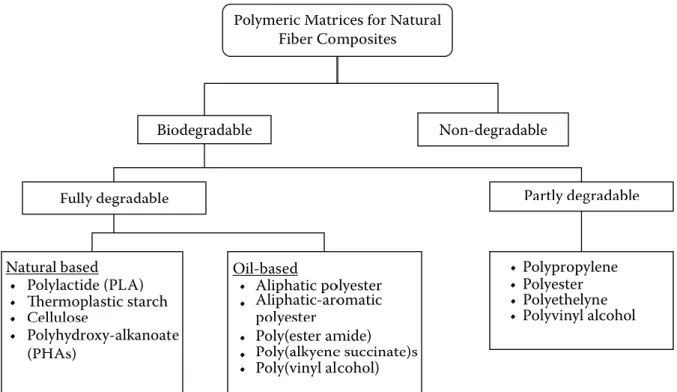
Figure 14 Organogram of polymeric matrices for biocomposites (Taylor & Francis Groups 2016) ... 39
Figure 15 Classification of biodegradable polymers, in Averous (2004) ... 39
Figure 16 FKuR biomaterials (FKuR biobased) ... 40
Figure 17 KTH car lignin-based prototype (KTH, research news, 2016) ... 41
Figure 18 Kraft pulping process (Tran and Vakkilainnen 2016) ... 44
Figure 19 Diagram of the constitution of eucalyptus trunk (Wood Chip Marine Lumber) ... 44
Figure 20 Bark of E.globulus (Mount Sutro Open Space Reserve) ... 45
Figure 21 Harvesting operations with bark peeling (Illingworth Ingham M/Cr), (AFM-Forest 2016) ... 45
Figure 22 Soaked eucalyptus poles on water: (a) 7 days; (b) 60 days ... 45
Figure 23 Distribution of the main species in Portugal (a); Distribution of Eucalyptus in Portugal (b) (CNF, 2013) 46 Figure 24 Growth of Eucalyptus’ area during time (CNF, 2013) ... 46
Figure 25 Contribution of the cellulose industry on Portuguese exports ... 47
Figure 26 Eucalyptus tree with new poles growing ... 47
Figure 27 Differences between cellulose materials and polyethylene (J. RETTENMAIER & SÖHNE, 2016) ... 48
Figure 28 Recycling processes for thermoplastic and thermosetting composites (Otheguy et al. 2009) ... 51
Figure 29 Mechanical recycling steps as described by Aznar et al. 2006 ... 53
Figure 30 Micronization process (Ashton et al. 2016) ... 54
Figure 31 Applications examples of PVC: (a) rigid PVC; (b) flexible PVC ... 57
Figure 32 - Discarded electric wires for recycling at Sucatas DR ... 58
Figure 33 Electric wire - metal and plastic (Electric wire and cable, 2016) ... 58
Figure 34 The metal tank where the plastics are separated by density ... 59
Figure 35 (a) detail of air transport system from the tank; (b) air system transportation to the bags; (c) a full bag ready for transportation and another being filled ... 59
Figure 37 (a) Detail of the extruder; (b) Cutting blades of the extruded material; (c) Extruder ... 59
Figure 38 Packing system - air system transportation ... 59
Figure 39 Granulated recycled PVC from Sucatas DR ... 60
Figure 40 Recovery/recycling system ... 60
Figure 41 Representative scheme of a cell wall (Lignofuel Wordpress, 2010) ... 61
Figure 42 From a glucose monomer to a plant cell wall (adapted from The Molecules of Life, 2011)... 62
Figure 43 Examples for typical structures in lignin's chemical formula (ILI 1992) ... 63
Figure 44 From cellulose fibres to nanocellulose (3dprint, 2015) Figure 45 MFC gel (Innventia AB, Sewden) .. 64
Figure 46 Potential uses of NFC and NCC (Notícias de Nanotecnologia 2014) ... 64
Figure 47 Manually extracted fibres of (a) abaca; (b) jute; (c) sisal; (d) hemp ... 65
Figure 48 Location of Espiunca at Portugal ... 65
Figure 49 Espiunca: (a) Terrain perspective; (b) Detail of Eucalyptus poles; (c) Cutting of the eucalypt poles ... 66
Figure 50 Peeling of the eucalypt bark and cutting the poles for better fibre extraction ... 66
Figure 51 A tool to fibre extraction ... 66
Figure 52 Manual extraction of the fibres: (a) Dry pole; (b) Wet pole; (c) Filaments extracted ... 67
Figure 53 Stronger toll to manual fibre extraction (a) and some results of the extraction (b) ... 67
Figure 54 Recycled PVC ... 69
Figure 55 (a) Measurements of the materials to make P#2; (b) Final P#2 composite: RPVC_25LCEL ... 69
Figure 56 Measurements for the P#3: (a) RPVC and LCEL; (b) Result P#3 ... 70
Figure 57 Granulated polyethylene (a); separation of PE by floatation method (b); injection machine – MIEQ, FEUP (c) ... 71
Figure 58 Unsuccessful PE tensile test specimens and waste material ... 71
Figure 59 Durometer (a) and specimen after being subjected to shore D test (b) ... 72
Figure 60 The machining of the specimens with the respective gloves and glasses of security. ... 73
Figure 61 Tensile tests equipment and result specimens of (a) RPVC and (b) RPVC_25LCEL ... 74
Figure 62 Flexural test equipment and result specimens of (a) RPVC (b) RPVC_25LCEL ... 78
Figure 63 Instrumented falling weight impact tester (a) and detail of a specimen under testing (b) ... 79
Figure 64 Specimens #3 after the impact test: (a) RPVC with penetrating crack and (b) RPVC_25LCEL with very soft crack ... 80
Figure 65 Photographs showing the cutting of the specimens for the compression testes ... 80
Figure 66 Specimens after compression tests: (a) strength and (b) modulus ... 81
Figure 67 Specimens for sound and water absorbance tests: (a) RPVC; (b) RPVC_25LCEL set up on the support of the Standing Wave Tube ... 85
Figure 68 Sound absorption equipment: standing wave tube Bruel & Kjaer, model 4002 ... 85
Figure 69 Set up of permeability tests on RPVC and RPVC_25LCEL ... 86
Figure 70 Specimens for reaction to fire test of (a) RPVC and (b) RPVC_25LCEL ... 87
Figure 71 Single flame test equipment (a) and ongoing single flame test (b) ... 87
Figure 72 Specimens after single flame test: (a) RPVC and (b) RPVC_25LCEL ... 88
Figure 73 Samples for SEM analysis ... 89
Figure 74 SEM images of the RPVC_25LCEL, scale: (a) 1mm; (b) 300 µm; (c) 50 µm; (d) 20 µm; (e) 5 µm ... 90
Figure 76 Tyre graveyards at Sulabiya (photo by: Mohammed Alsultan, 2012) ... 94
List of tables
Table 1 Main characteristics that differ hardwood from softwood differ ... 30Table 2 Estimated 2013global volume production of different natural fibres (EchoTech Alliance, 2014) ... 34
Table 3 Mechanical properties of some common natural and synthetic fibres (adapted from Becerra et al. 2014) 35 Table 4 Wood components (Sjostron, E., 1993; Rowell, R., 1993) ... 36
Table 5 Chemical composition of common lignocellulosic fibres (Dai and Fan 2014) ... 36
Table 6 Advantages and disadvantages or dangers of eucalyptus plantation (adapted from (Peter Holland 2009; Liu and Li 8152; João Lé 2012)... 41
Table 7 Plantation area 1990-2005, by function 1 000 ha (FAO, 2006) ... 41
Table 8 Average width and length of commercial South Africa Eucalyptus and North America hardwoods (Clarke et. al 2008) ... 42
Table 9 Terminology used in different types of plastics recycling, (Hopewell et. al 2009), (Raj 2015). ... 51
Table 10 Plastic types and their applications, (Michaud, Farrant, and Jan 2010) ... 55
Table 11 Abbreviations names do the materials used on the project ... 68
Table 12 Composite material composition ... 68
Table 13 Hardness measurements values ... 72
Table 14 Measures of the specimens for tensile tests and tensile tests results for RPVC ... 75
Table 15 RPVC from Franco-Urquiza and Maspoch 2014 ... 75
Table 16 Measures of the specimens for tensile tests and tensile tests results for RPVC_25LCEL ... 76
Table 17 Measures of the specimens for flexural tests and flexural tests results for RPVC ... 78
Table 18 Measures of the specimens for flexural tests and flexural tests results for RPVC_25CEL... 77
Table 19 Energy applied to specimen’s impact tests and respective high of drop ... 79
Table 20 Peak and failure values from impact test ... 79
Table 21 Results from the compression test ... 81
Table 22 Limits to specimens for dilatometry tests ... 82
Table 23 Dilatometry coefficient ... 84
Table 24 Sound absorption coefficients ... 86
List of graphics
Graphic 1 Examples of renewable and non-renewable natural resources ... 13
Graphic 2 Venn diagram representing the three spheres of sustainability (Sustainability Matters Blog, 2013) ... 16
Graphic 3 Global GDP along time (WBG 2014) ... 18
Graphic 4 Raw materials used by the chemical industry in historical perspective: a) renewable feedstocks; b) coal; c) natural gas, oil. (Lichtenthaler 2010). ... 26
Graphic 5 Distribution of types of natural products in biomass (Lichtenthaler, 2010)... 36
Graphic 6 PVC applications on EU on 2014, (The European Council of Vinyl Manufacturers 2014) ... 56
Graphic 7 Dilatometry curve of RPVC Specimen #1 ... 82
Graphic 8 Dilatometry curve of RPVC Specimen #2 ... 82
Graphic 9 Dilatometry curve of RPVC_25LCEL Specimen #1 ... 83
Graphic 10 Dilatometry curve of RPVC_25LCEL Specimen #2 ... 83
Graphic 11 Determination of the dilatometry coefficients ... 84
Graphic 12 EDX spectrum from Z1 of RPVC_25LCEL ... 90
13
1. INTRODUCTION
1.1. Background and motivation Resources
The 8th of August of 2016 was the last “Earth overshoot day”, meaning that the resources that the planet can renew in a year have reached its limits, so the planet is literally living “credit” until December 31st of 2016, according to NGO Global Footprint Network. The expectations are that every year this day comes earlier. The very high consumption of products derived from non-renewable resources has been a great concern all over the world, once the humanity has already reached the limits of the Earth.
Also, the non-environmentally friendly life cycles of products and the “throwaway society” of today, constitute a dramatic source of waste grow, leading to accumulation of non-biodegradable refuse products, mostly plastic, in landfills when they reach their end of life time. Landfills have terrible and numerous impacts, such as costly conveyance of trash and access roads rapidly damaged by the heavy vehicles, scavengers1 being killed, nuisances such as pests, dust, noise and odours. Besides those inconveniences, there is one rather large impact that landfills have got: these cause pollution to the local environment by contaminating the soil, the groundwater and aquifers, and producing methane2 (Live Life Green 2009). The direct effects
of landfills on soils and water, atmosphere, fauna and flora and consequently the human life leads to an urgent necessity to avoid this decadent tendency, and most important: solve the problem from its beginning by creating eco-friendly designing, from renewable resources.
1 An animal or other organism that feeds on decaying organic matter or refuse; a person who searches through and collects items from discarded material; a person employed to clean the streets.
2 CH4 – a greenhouse gases (GHG) 21 times more powerful and trapping 84 times more heat than CO2. According to the Intergovernmental Panel on Climate Change (IPCC) scientists were more than 95% certain that global warming is mostly being caused by increasing concentrations of GHG.
14
Individuals, cooperatives and industries are all responsible for the researching of alternative solutions: less pollutant, ecological, more recyclable materials and designs using renewable sources of raw materials.
On the following topics are the materials that are part of the spur of this project. Biomass
Sources of bioenergy called “biomass” include agricultural and forestry residues, municipal solid wastes, industrial wastes, and terrestrial and aquatic crops grown solely for energy purposes. Hence, bioenergy is the energy generated from the organic material of living or recently deceased plants or animals. If are considered as plant-based materials, it is called lignocellulosic biomass. Biomass is a good petroleum alternative once it is a renewable resource that is more squarely distributed over the planet than finite energy sources, and may be exploited using more environmentally friendly technologies. Also very important is the carbon neutral exchange of biomass, meaning the carbon absorbed during the lifetime of the organisms from which is created counters the carbon released by the combustion of the biofuel. Today, biomass resources are used via combustion to produce heat, to generate electricity and power, and to produce biodiesel and ethanol, or to process new bio-based polymers. Actually, among the natural fibre reinforced polymer composites, cellulose-based polymer composites have emerged as a potential environmentally friendly and cost-effective alternative to synthetic fibre reinforced composites.
Forest waste
Cellulose industry harvests the trees, mainly eucalyptus trees (the most abundant specie in Portugal), and often leaves at the field the small poles, branches, barks and leafs, which are considered no-value products, except for biomass energy production. Those, concurrently with the broom species, also very abundant in Portugal and also considered not to have economic value, create conditions to be a strong natural fire propagator. To appraise feasible solutions such as creation of value-added products, i.e. composite materials reinforced or filled with natural fibres for bio-polymers to substitute plastics derived from fossil fuels.
Plastic
Due to its hazards factors, such as the presence of chlorine, PVC is sometimes not even put under consideration when it is about to recycle. However, it needs to be recycled like all the other materials. Findings to new applications for this material will ultimately increase its recycling and selling.
Rubber
One specific problem of our so called “throwaway society” (Gartner 2015) of not recycling non-biodegradable waste is the stockpiles of tyres left in fields and forests, all over the world. The widely different chemical and ecologically problematic components and the cross-linked structures make tyres highly resistant to biodegradation. They are also easily inflammable and can trap methane gases, causing air, surface, ground water and soil contamination. The large volume produced annually - 1.4 billion units - and their cheap availability, places them among the most problematic sources of waste, that led to a 4 billion uselessly stockpiled tyre dumps (Sienkiewicz et al. 2012). It is established an urgent necessity to turn around this outrage to Earth. In fact, among their characteristics are their bulk and resilience, which make them attractive targets for recycling (Myhre and MacKillop 2002).
15
1.2. Objectives
In order to satisfy the increasing demand for new eco-designed products with higher performances, eco-friendly alternative materials need to be explored. Starting with renewable sources, the focus on replacing synthetic fibres boosters by natural fibres is considered with primary interest.
The spur of the present project follows this path: focusing specifically on natural vegetable fibres derived from forest waste, and recycled materials, the objective of this project is the conceptual design and mechanical characterization of a new bio-eco-composite system to improve what could be the means to forest products and by-products valorisation as a tool to reduce fire risk. While responding to specific environmental problems, such as the fires, it creates a possible new source of income.
1.3. Structure of the dissertation
The first chapter is the introduction where the background, motivation, objectives and structure are presented.
The second chapter is the state of the art where the background is deeply descripted to better understanding the pertinence of the subject of this project. The themes discussed are the composite systems and sustainable development, the use of natural materials on composites and the particular case of the eucalyptus, processing methods of composite materials and their recycling.
The third chapter is the description of the materials used to make the composite and the respective companies with which the development process was carried out.
The fourth chapter is the procedure explanation where the assembly of the sample’s material to machine the test specimens is described
The fifth chapter is about the tests realized to obtain some properties and characteristics of the so designed composite system.
The sixth chapter is about the conclusions and future approaches. The seven chapter presents the references.
16
2. STATE OF THE ART
2.1. Sustainable development 2.1.1. Development
Development is a multi-dimensional process involving reorganization, restructuration and reorientation of the so-current economic and social system. Development is the process of improving the quality of everything, from products or services to the lives of human and all living beings.
Development is sometimes directly related to modernization – it emphasizes the process of change on social and political processes, which are required to produce economic advancement, hence leading to development – a better state of being.
Development in its way to improve people’s life is not a fully truly achievement, neither a great advancement, if it is not durable and likely to achieve lasting satisfaction of human needs. So, development should sustain as long the new improved state of things interact in harmony with earth and every kind of life. It means that development is a process that ought to be temporally efficient and transversal to the globe to be considered as well. The implemented development appearing as new status with new tools should be enough to adapt to new circumstances. It is a concept that starts early in the process of product conception.
2.1.2. Sustainability
Sustainability has got three main pillars that are interdependent and mutually reinforcing and not mutually exclusive. They are economical sustainability, environmental sustainability, social sustainability and, as seen on Graphic 2.
17
Environmental sustainability reflects the full understanding of the natural gentle flow of the Earth’s natural resources to resettle, and its eventual scarcity. Among other unsustainable attitudes, we, as human beings - the unique responsible ones for every problem in the world - are globally extracting natural resources faster than the earth can replenish.
The concept of resource efficiency may consign sustainability. Resource efficiency is about the reduction of the environmental impact from the raw material extraction, to later use and latest disposal, passing through the production and consumption. Resource efficiency comprehends that the current, global, economic growth and development cannot be sustained with the current production and consumption patterns (Mark Hyman 2013).
Social sustainability is the gentle interaction between the environmental and economic sustainability and economical sustainability should beneficiate from the environmental sustainability through a circular economy.
2.1.3. Sustainable Development
The sustainable development is a concept transversal to environment, economy and social issues (Ferrão 2012). This concept found its success and international relevance after the World Commission on Environment and Development (Brundtland Commission) published its report in 1987, presenting the most famous definition of the so new concept: “Sustainable development is a development which meets the needs of current generations without compromising the ability of future generations to meet their own needs” (Kaj Bärlund 2016).
2.1.4. Education and sustainable development
The United Nations Decade for Education for Sustainable Development (ESD), initiated in 2005, demonstrates the great influence of education for sustainable development. Education, in its all transversal areas, from humanities to art or engineering, has a role of importance on transmitting the sustainable development matter to all ordinary citizens as (or not) future decision-makers.
ESD promotes the sharing of knowledge to every human being, from learner to teacher, for having the necessary competences to act sustainably today, led by the will of shaping a sustainable future. By including into both teaching and learning the basic fundamental subjects about the sustainable development issue, such as the climate change and disaster risk reduction, sustainable consumption strategies, biodiversity or poverty reduction, it stimulates competencies like critical thinking about the today’s decisions of upper commissions and governments on what concerns a sustainable future, and the making of decisions in a collaborative way. This noble focus requires the inclusion of participatory and interacting teaching and learning methods that allow the individuals to acquire values and motivations, empowering them to change their daily behaviour and take action for a sustainable future (© UNESCO 2014).
For this simple but powerful purpose, education requires far-reaching changes in the way it is often practised today. Sustainable development absolutely needs democratic thinking, but then again it can also help strengthen democratic institutions through consensus-based public participation.
18
2.1.5. Models of economy Linear Economy
The last century of industrial evolution has been following a one-way model of production and consumption: the linear model of production, or linear economy. Raw materials are collected, goods are manufactured, later they are sold and used, and after being used, those goods are discarded or incinerated as waste, as it can be observed on Figure 1.
Figure 1 Linear economy model (adapted from The Value Loop Economy, 2010)
Apparently, the system had been successful in terms of providing affordable products to consumers, as can be seen on Graphic 3, the global GDP3 has been growing since ever, and created hitherto unknown levels of material welfare. Even though the economic downturn provoked a great depression reducing the demand, since 2009 resource prices have recovered faster than global economic output.
Graphic 3 Global GDP along time (WBG 2014)
Within this linear model, resources needed for production and consumption are extracted from Earth as faster as possible, in order to respond to the demand on the best time, whenever and wherever it is geographically and economically possible. Yet, this approach is creating a world of soon 9 billion consumers (Ranjani 2014) who are actively buying manufactured goods within a one-way track linear model with no plans for reuse or active regeneration of the natural systems from which they have been taken.
The linear model worked perfectly when resources were plentiful and waste was thoughtless to dispose. Today, with the continuous growth in population, GDP and consumption, climate change getting worst, regulation and cutting edge technology improved each day, there is a direct moral motivation but also economic incentives to rethink the old practices of "take-make-dispose" consumption habits. Those have been working since the 1760’s (Export Leadership Forum 2015) and are still followed by most supply chains.
The current linear “take-make-dispose” economy came to a point where it approached results in massive waste with worrisome consequences, reaching its limits. According to the book “Rubbish!” (Girling 2005) 90% of the raw materials used in manufacturing become waste before the product leaves the factory, while 80% of products made get thrown away within the first six months of their life. This, coupled with growing tensions around geopolitics and supply
19
risk, is contributing to volatile commodity prices. This will threaten and encumber companies, hinder the world
A circular economy is an attractive and viable alternative, presented as a functional economic model that can be a real solution to the planet's emerging resource problems and landfill disposals. Business has already started exploring it.
Circular Economy
The circular economy is a redesign of our current production and consumption model by seeing waste as resource and an opportunity. Circular economy suggestion is by inducting an eco-friendly solution to industrial economy by bringing back into the supply chain the products after their end of life, as a resource. It envisions no waste. It means that reuse rather than disposing closes the loop, as seen on Figure 2. Besides benefiting the economy by producing no waste, it also means no pollution. For that reason, circular economy is a model that promotes a sustainable economic flow whilst improves environmental sustainability.
Figure 2 Circular economy model (Pre-sustainability, “Complementing The Circular Economy with LCA”, website acceded 12/09/2016)
The concept distinguishes two types of material flows: technical and biological cycles. In the bio-cycle, all life processes regenerate discarded materials and resources despite or without human intervention. It is prepared to re-enter the biosphere safely. In the technical cycle, materials are recovered and restored by human intervention, that recreates order in any timescale considered.
Following there are some principles and characteristics (Ellen MacArthur Foundation 2015): Eradicates waste and optimise resource yield through careful design: products are
designed thoughtfully to fit a cycle for remanufactured, disassembly or repurposing to keep components and materials circulating in and contributing to the economy and avoiding the generation of waste;
Aims to run on renewable energy, renewable sources of energy and raw materials; Minimises, tracks, and hopefully eliminates the use of toxic chemicals;
20
Thinks in systems: the ability to understand how parts influence one another within a whole, and the relationship of the whole to the parts, is crucial;
Thinks in cascades: the opportunity to extract additional value from products and materials is the essence of value creation, by cascading bio materials through more applications;
Thinks in modulus: modularity, versatility and adaptability together build the resilience necessary to face unexpected external changes or internal problems;
Preserves and enhances natural capital and fosters system effectiveness: dematerialising utility delivering it virtually whenever possible, selecting the resources technologies and processes wisely, and reducing damage to human utility, such as food, mobility, shelter, education, health, and entertainment, and managing externalities, such as land use, air, water and noise pollution, release of toxic substances and climate change.
Then, once recycling offers limited appeal as its processes are energy-intensive and can downgrade materials, ultimately leading to demand for virgin materials, the circular economy goes beyond recycling and reusing. Based around a restorative industrial system, it is geared towards designing out from waste. The graphic shown on Figure 3, shows how recycling is an 'outer circle' of the circular economy, requiring more energy input than the 'inner circles' of repair, reuse and remanufacture.
21
Besides the eco-design, it is important, in accordance with the waste hierarchy, and for the purpose of reduction of greenhouse gas emissions originated from waste disposal on landfills, to simplify the separate collection and proper treatment of bio-waste in order to produce environmentally safe compost and other bio-waste based materials.
As seen, the circular economy aims to eradicate waste right from the manufacturing processes methods, as lean management aspires to do, but never forgets the impact of the material itself, throughout the life cycles of products, and their components and their use and reuse. This aided by smart product design, help define the concept of a circular economy. It is restorative and regenerative by principle, seeking to rebuild capital, whether this is financial, manufactured, human, social or natural. This ensures enhanced flows of goods and services.
The Europe 2020 strategy for smart and sustainable growth established that reaching circular economy was the major part of the resource efficiency agenda, expecting on that date recycling should be on 50%, the circular economy releases 2 million jobs on Europe and that productivity from resources increase 30% until 2030. Circular economy could increase companies’ profits by over 50% and reduce waste by over 95%. Some experts say that if circular economy is not already on one company, it will be within the next 3 – 5 years, predicting it will be the greatest shift in production and consumption since the start of the Industrial Revolution. (Export Leadership Forum 2015).
For the companies to know how much advanced they are on their transition from linear to circular economy, The Circularity Indicators Project provides companies with methodology and tools that allows them to assess and estimate how well a product performs in the context of a circular economy. These indicators consist of both a Material Circularity Indicator that measures how restorative the material flows of a product or company are, and complementary indicators that allow additional impacts and risks to be taken into account. The full Circularity Indicators methodology, together with a project overview report and a collection of non-technical case studies, are available for download.
Members of the European Commission and the aerospace, automotive, shipbuilding, rail, construction sectors intend to outline a strategy for transitioning from a linear to a circular economy. While the challenge seems difficult, it can be motivating to hear the success stories of others as well as learn from the challenges they faced along the way. There are many companies that have already made the transition from linear to circular economy, all of them with benefits on profits and savings:
Circular economy design: Bralform, Evocative, Agency of Design, Active Disassembly; New business models: Bundles, Philips & Turntoo, Splosh, Desso;
Reverse cycles: Re-Tek, Mazuma Mobile, Caterpillar, Rype Office
The circular economy is a framework that draws upon and encompasses principles from biomimicry, industrial ecology or blue economy. There are also other relating’s to this model i.e. cradle to cradle or upcyling, explained on the following (Shilling 2013):
Biomimicry – A name coined by Otto Schmitt in the 1950s, is a discipline that observes and studies the nature’s processes, and then transfer the ideas and analogues from biology to technology to solve human problems, (Vincent et al. 2006);
Industrial Ecology – Sometimes considered as the science of sustainability, is the study of material and energy flows through industrial systems;
22
Blue Economy – Initiated by Former Ecover CEO and Belgian businessman Gunter Pauli, states “using the resources available in cascading systems, the waste of one
product becomes the input to create a new cash flow”;
Cradle to cradle system – Created by Michael Braungart and American architect Bill Mc Donough, it considers that all material involved in industrial and commercial processes can be seen as nutrients, of which there are two main categories: technical and biological. Technical nutrients should include only materials that do not have a negative impact on the environment. Biological nutrients are organic and can be returned to the soil without specific treatment to decompose and eventually become food for the ecosystem; so, it means designing products so when they are at the end of their useful lives their components can be used for some other productive purpose that doesn’t negatively affect the environment;
Upcycling – refers to the reuse of objects or materials that are at the stage of being discarded, but which can be turned into new value products;
Cradle to grave – this means the product is eventually left in the environment with no useful means and/or negative consequences, i.e., as hazardous waste.
According to the latest report by the World Economic Forum and Ellen MacArthur Foundation, with analytical support from McKinsey & Company, applying circular economy principles to global plastic packaging flows could considerably reduce negative externalities such as leakage into oceans. Given projected growth in consumption in a “business-as-usual scenario”, by 2050 oceans are expected to contain more plastics than fish (by weight), and the entire plastics industry will consume 20% of total oil production, and 15% of the annual carbon budget (Ellen MacArthur Foundation 2015). The report New Plastics Economy: Rethinking the future of
plastics, that aims to accelerate business-driven innovations to help scale the circular economy,
provides a vision of a global economy in which plastics never become waste, and outlines concrete steps towards achieving the systemic shift needed.
Case Study of circular economy: A’gua bottle,
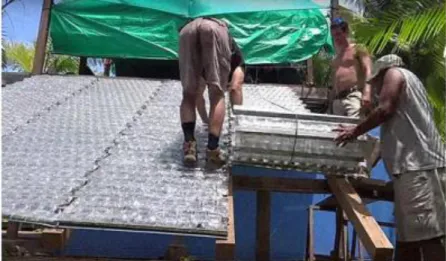
Donald Thomson, a Canadian constructor and self-taught entrepreneur have started giving lessons on a music school to children. Once, he had organized a beach cleaning with his students on Costa Rica and observed that when plastic bottles were flattened and put in line they looked like slate tiles. From hete began a long journey that is called today “Bottle-to-tile project”. Thomson created a new company - Center for Regenerative Design and Collaboration – that began to work "backwards". They first made the tile design, and then thought about what was the shape of the bottle needed to do it quickly, which ultimately led to the design of the so-called A'Gua bottle. This bottle is made from 100% plastic recycled and the water comes from Juan Blanco National Park. In conclusion this project recycles plastic bottles into a new product that is a tile of a roof. This transformation is possible due to an eco-design of the original product, needed for adaptation and creation of another product with a long life cycle (up to 50 years), as seen on Figure 4. The colouring that fulfills the bottle can be made of wasted plastic, card, papers and porous cement. At the end of its life, the plastic tile can be recycled again. The bottles are easily implemented to a system that is locally applied in roofs or the chosen coverage by unrolling a scroll of tiles previously fixed on a roll, and can be assembled 400 bottles per minute, as seen on Figure 5. (Pais, Diana and Luís Pinto, 2015).
23
(a) (b)
Figure 4 Initial water bottle and the final tile obtained (a) and flatted full coloured water bottle (b)
Figure 5 System of locally application of the cover
2.1.6. Waste Management
Waste Management is the process required to manage waste from its inception to its final disposal. All processes and resources for proper handling of waste materials, from the collection, transportation to dumping facilities in compliance with health codes and environmental regulations, disposal of waste products.
It can be considered a policy which aim is mostly radicalize the problem of waste generation from its core by worrying about avoiding the waste stream, instead of giving solutions to it after it’s done. It means stopping the waste stream from the very beginning, reducing the use of resources and favour the practical application of the waste hierarchy.
The central principles of waste management lead to specialised concepts: Waste hierarchy;
Life cycle assessment (LCA); Resource efficiency;
24
The EU Waste Management Hierarchy4 is usually presented diagrammatically and indicates by
a descendent order of preference the most preferred action to reduce and manage waste, as shown on Figure 6, the waste hierarchy is presented as an inverted pyramid.
Figure 6 The Waste Management Hierarchy Diagram (Acceleratio, Waste & Resource Management, accessed 12/09/2016)
Therefore, at the top of the pyramid representing the essential thrust of the policy is to take action first. Occupying the bigger and most important step is the avoidance of the waste generation. This step refers to the prevention that must be towards the waste generation, by avoiding it, e.g., buy loose food avoids and have a unique eco-plastic shopping bag5. It consists on the most efficient way to counteract every tendency of an emergent waste stream and will, ultimately, lead to conservation of resources.
The next preferred action is to reuse the waste. Go through the first step and the impossibility of avoiding completely the waste generation, individuals and industries should worry and gather their efforts towards the reduction of the waste generated through, e.g., re-use fitness. It consists on giving a new purpose to a product or its by-products when achieving the end of their life cycle. Actually, due to their long life cycles, composites often outlive as an upcycled product, rather than the one it was created for. That means composites are often reusable, depending on the product’s flexibility, consumer’s necessities, imagination and know-how.
Recycling, the third most favoured option to take, is any recovery operation by which waste materials are reprocessed into products, materials or substances whether for the original or other purposes. It includes composting or anaerobic digestion and it does not include incineration. The waste hierarchy strongly lies upon the “3 R’s” reduce, reuse and recycle, which help hierarchize waste management strategies in a descendent order of their convenience (Romero 2016).
Following the downstream steps of waste hierarchy diagram, there is materials recovery as waste-to-energy. If energy is recovered from processes such as combustion or pyrolysis, or incineration from landfill, it also belongs at this level of the hierarchy. (Mark Hyman 2013). Disposal of waste is the last and the least desirable choice, either in landfills or through incineration without energy recovery, especially due to their environmental hazardous effects and very low sustainable economic flow generation. This final step is a last resort for waste which has not been able to be prevented, diverted, or recovered in the preceding steps (Mark Hyman 2013).
4 Different versions of the hierarchy have been adopted by different countries, although they are all broadly similar to that one referred on this document
25
Ben Drogt (Biinc6) have truly shown how the reusing of materials can be applied to everything:
in the Netherlands reusable wind turbine blades were upcycled to make playgrounds for children adding to the multiple uses for composite materials, as it can be seen on Figure 7 (EuCIA 2016).
Figure 7 Wind turbine blades upcycled to a playground at Netherlands (Denis Guzzo, NoTechMagazine)
Also at our daily lives there can be seen on internet do it yourself (DIY) great ideas with endless home made products reusing waste materials
2.1.7. Waste For Life
There are now some networks developed to respond to specific ecological problems, such as the Waste For Life (WFL) network. WFL is a network not interested in profit, led by a diverse group of people like scientists, engineers, educators, architects, artists, designers, and cooperatives, all working together to develop poverty-reducing solutions. By teaching communities how to deal with their local environmental problems regarding the garbage and the biggest sources of waste, WFL aims to is to provide access to technology and scientific knowledge for everyone, especially to non-privilege people. Based upon principals of solidarity, cooperative interchange, and social justice, WFL put impoverished communities in control to promote self-sufficiency, autonomy and economic security.
WFL uses scientific knowledge and low-threshold/high-impact technologies to add value to resources that are commonly considered harmful or without worth, but are often the source of livelihood for society’s poorest members. Their twin goals are to reduce the damaging environmental impact of non-recycled plastic waste products and to promote self-sufficiency and economic security for at-risk populations who depend upon waste to survive. This double goal in which while they reduce the available waste, they transform it to create a source of income to the scavengers, is adapted locally to the kind of waste available, technologies needed and the will of population.
Figure 8 Products made by WFL workers, from discarded plastic and cardboard (wasteforlife.org, 2016)
6 BiinC is a Dutch company (founder: Ben Drogt, 2010) that promotes composite materials as the material of choice regarding performance and sustainability in many different applications
26
2.2. Composites and sustainable development
The inevitable necessity of the changeover of the chemical industry to renewable feedstocks for obtaining raw materials is growing, because our fossil raw materials derived from prehistoric organic matter are irrevocably decreasing, and the pressure on our environment is intensifying. Even tough fossil oil will be around for a long time, the prevailing issue is when will be the end of cheap oil. Experts realistically predict this to occur within the next two to three decades. Accordingly, the curve for the utilization of biofeedstocks shown in Graphic 4 will have to rise that much that it meets that of fossil raw materials somewhere around 2030–2040.
Graphic 4 Raw materials used by the chemical industry in historical perspective: a) renewable feedstocks; b) coal; c) natural gas, oil. (Lichtenthaler 2010).
2.2.1. Composites
Composites are made from at least two materials that complement each other. The individual materials that constitute composites have significant different properties from each other. When these materials are combined, they create a composite material with characteristics that are better and different to the initial properties of the individual components. Better characteristics on the weight and mechanical strength are the most common ones.
A composite material can be defined as a combination of a matrix and a reinforcement. The reinforcement is used to fortify the matrix in terms of strength and stiffness. The matrix, normally a form of a resin, keeps the reinforcement in the desired orientation and protects it from environment and chemical attacks. The matrix also bonds the reinforcement so that applied loads can be effectively transferred to it.
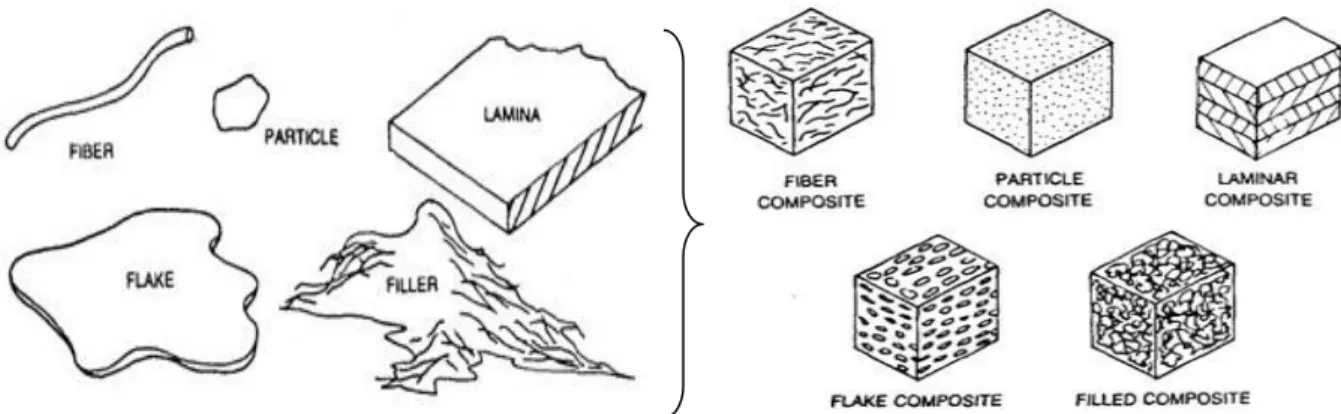
On Figure 9, there is shown a representation of the five basic types of composites materials based on the kind of the reinforcement, and the respective representative aspects on materials. The reinforcements are:
Fibre; Particle;
Laminar or layered; Flake;
Filled composites.
Today, the most common reinforcement is the fibre. Fibres can be short, cut, long, aligned or placed in different ways to affect the properties of the resulting composite.
27
Figure 9 Classification of composites based on reinforcement, (RAJPUT et al. 2015)
Regarding the type of matrix, the classification of composites lies upon three main categories: Metal matrix composite;
Ceramic matrix composite; Polymer matrix composite.
From all the thermoplastic polymers (TPS) used in the manufacture of composite materials employing natural fibres as reinforcement, standout polypropylene (PP), poly-ethylene (PE), polystyrene (PS), and polyvinyl chloride (PVC). From the thermosets polymeric matrices that are used in the manufacture of composite materials, standouts are epoxy, phenolic, and polyester resins. Both kinds on the petroleum-based polymers field. On chapter 2.2.5 2.2.5Natural Matrix, bio-composites natural matrices, biodegradable matrices, and from renewable resources are described.
Composite materials, acknowledged as 'space-age' materials, are finding their way to a great place in the world, being used on conveyance sector reducing the weight for increased fuel efficiency, replacing wood on places where weather and environment act scarcely, or in building systems. Composites have a long life, and for all stated they represent a very important role and enormous mass all around the world.
The European Composites Industry Association (EuCIA7) held a conference in Brussels on 19th of January of 2016 to examine the increasing role that composites will play in creating a more sustainable Europe. The members of the European Commission and the aerospace, automotive, shipbuilding, rail, construction sectors attended the event as the ECI intends to outline a strong strategy for transitioning from a linear to a circular economy (EcoComposites 2016).
The EcoComposites website is dedicated to provide technical and commercial news and features on new innovative composite materials that have a minimal impact on the environment by using renewable raw materials or are manufactured with as little environmental impact as possible. Ideally, these products should biodegrade at the end of their useful life or be able to be recycled and preferably, upcycled into useful new products.
7EuCIA is the Brussels based leading Association of the European Composites Industry, representing European
National Composite Associations as well as Industry Specific Sector Groups, such as those targeting end segments like automotive or those promoting particular product groups or processes.
28
2.2.2. Bio-composites and Eco-composites
Composites may be synthetic or not. However, the development of high-performance materials made from natural resources is increasing worldwide. Due to environmental and sustainability issues, there are remarkable achievements in green technology in the field of materials’ science, through the development of eco-composite, bio-composites and bio-industry.
Bio-composite and Ecocomposite
Bio-composite is a composite material where at least one of the constituents is derived from biomass, (Carruthers and Quarshie 2014), whether they are made of natural fibres with synthetic resins, natural resins with synthetic fibres, or both natural components.
An eco-composite may also be constituted by natural polymer, or be reinforced with natural fibres (Bogoeva-Gaceva et al. 2007).
Also, there are included on this nomination (Faruk et al. 2012):
Composites from which the raw materials that are on their origin are renewable resources;
Composites which waste can be managed within an eco-friendly way at the end of their life, like composting, biomethanation, recycling or other;
Composites where the successive transformation processes from the raw materials to the final products are environmental-friendly: low energy consumption, low emissions. Ecocomposite materials are presented with ecological advantages over conventional composites, such as the following benefits:
Lower costs because of reduced cost of raw materials, smaller cycle times, lower weights, and reduction in the fuel consumption (vehicle parts);
Identical mechanical properties of glass-reinforced parts, with fabrication advantages such as smaller tool wear, good sound insulation, and geometrical stability;
Eco-friendliness, renewability of the raw materials, recyclability, no toxicity, and CO2
neutrality
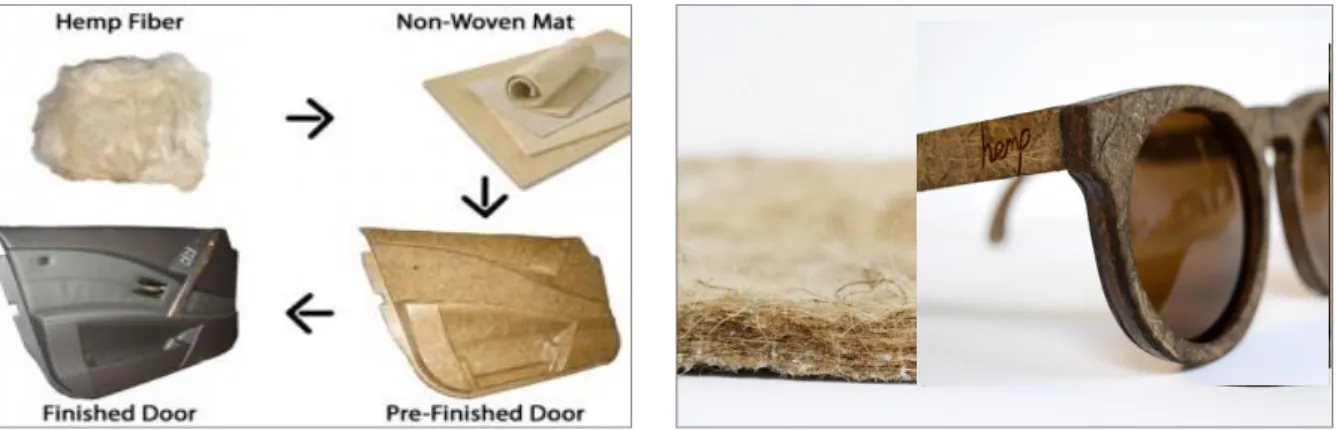
On Figure 10 is an example of how versatile bio-composites can be. They find applications in many fields from construction, automotive, biomedicine, goods, and much more.
29
When one cares about ecology, this renewable resources and the ease on the composting or recycling of the materials win against the conventional construction materials and hence to construction and demolitions residues. In addition, they weigh less and are cheaper. Studies regarding their use as load-bearing components are also encouraging, (Taylor & Francis Groups 2016).
As an emerging material, measuring the impact of composites on the environment remains fundamental. There are multiple tools to help to transit to the circular economy, to have more sustainable actions, get to know our carbon footprint, get informed about the impact of our actions. It’s up to each one to decide what option to take next. An example among many others is an innovative release of an application announced by Roberto Frassine, the (EuCIA 2016) president, EcoCalculator. It allows members to measure the environmental impact of composite materials without the need for Life Cycle Assessment (LCA) know-how. EcoCalculator creates a so-called EcoFactsheet for clients and stakeholders based on quality data and the reports generated by the tool will be compatible with the major analysis programs in the market
2.2.3. Wood and Wood polymer composite (WPC) Hardwood and Softwood
The wood is often classified as either a hardwood or softwood, related with to its physical structure and so it is tempting to think of hardwoods as being hard and durable compared to soft and workable softwoods. However, is not necessarily like this, such as in the cases of wood from yew trees (a softwood that is relatively hard) and wood from balsa trees (a hardwood that is softer than softwoods). The distinction between hardwood and softwood actually has to do with plant reproduction. All trees reproduce by producing seeds, but the seed structure varies. Hardwood trees are angiosperms: plants that produce seeds with some sort of covering, this might be a fruit, such as an apple, or a hard shell, such as an acorn.
Softwoods, on the other hand, are gymnosperms: plants that produce seeds with no covering. In conifers like pines, these seeds are released into the wind when they are mature. This spreads the plant's seed over a wider area.
Both hardwood and softwood unitary cells are tubular structures and can be pulped. The chemistry and fibre morphology of hardwood and softwood pulps are significantly different. The average length of hardwood and softwood fibres is approximately 1 and 3 mm, respectively. The width of the fibres may vary between 10 and 50 μm and the wall thickness between roughly 1 and 5 μm, (Santos et al. 2015).
However, the main differences that happen to be true between those two kinds of woods are presented on
Wood Polymer Composite
Wood fibre polymer composites, wood polymer composite or wood plastic composites (WPC) are composites that contain wood particles or other fibrous materials (even nonwood) combined with polymer resins (thermosets or thermoplastics). Some examples of utilised woods are shown on Figure 11.
30 Table 1 Main characteristics that differ hardwood from softwood differ
Figure 11 Some examples of wood to fulfil WPC: a) Wheat Straw; b) Bamboo; c) Rosewood; d) Olive Waste; e) Rice Husk; f) Hard Wood. (Rotexmaster)
SHEDDING OF LEAVES
SOFTWOOD HARDWOOD
Angiosperm Gymnosperm
Coniferous trees: Needle-leaved evergreen tree: does not shed its leaves
Decidious trees:
Broad-leaves tree: sheds its leaveas in autumn and winter
WOOD PROPERRTIES Softwood Hardwood
Colour Lighter Darker
Weight Lighter Heavier
Density Low High
Growth Faster Slower
Annual rings Distinct Indistinct
Fire resistance Poor fire resistor Good fire resistor
Endurance Less durable Highly durable
Ease on working Easy to work with Hard to work with Heartwood & sap wood Indistinguishable Distinguishable
Resin content Few soft wood are resins Less
Price Less expensive More expensive
31
The plastics PVC, PP and PE are the three most widely used thermoplastics on WPC. PVC provides the greatest strength and stiffness for WPC composites, followed by PE and PP. Currently, WPCs have become good substitutes for solid wood, once they have similar appearance, are more durable while requiring little maintenance.
Plastic processors see wood as good and relatively inexpensive filler, readily available, that can lower resin costs, improve stiffness, increase profile extrusion rates, and act as an environmentally friendly method by which the use of petroleum-based plastics could be decreased. Forest product companies see waste wood and wood of low-commercial value as a source to produce WPCs and increase the added value for the utilisation of forest waste, (Taylor & Francis Groups 2016).
WPC permits more complex shapes in comparison to wood materials, because the principal manufacturing processes of WPCs are generally extrusion and injection moulding usually for PVC or PE matrix-based profiles, Injection moulding is finding its way on into furniture, technical parts, consumer goods and household electronics. Dashboards, car door panels and airline service trolleys are just more three of the various areas where bio-composites are now finding success in lightweight construction designs. More common applications for these composites are in decking, fences, railings and outdoor landscaping features, and other goods.as shown on Figure 12, as well as furniture and automotive products.
(a) (b)
Figure 12 Applications of WPC manufactured from granulated WPC: (a) containers made by injection moulding (FKuR, Fibrolon); (b) outdoor decking boards made by extrusion (ProTechWood)
Additives
PVC base polymers used in wood polymer composites for decking and railing systems can have additives to improve performance, for example: the mixture between PVC and a plasticizer is essential for good performance.
Other examples are PHA additives, that because of their miscibility with PVC, the PHA additives will not migrate out of the PVC and are easy to handle and process. The data generated by the company Metabolix, says that the addition of PHA i6003 during processing, even at a low level, improved wood filler incorporation and dispersion and made it possible to increase the proportion of wood flour used while decreasing the amount of PVC needed. Moreover, it acted as an efficient fusion promoter, reducing torque in the extrusion. For railing applications, the end-product also exhibited significantly improved mechanical properties and surface finish (Metabolix 2014).
32
Mundial Panorama (2012) (EcoComposites 2013)
According to a report by the Nova Institute, 350,000 tons of wood and natural fibre composites were produced in the European Union in 2012, representing between 10-15% of the total worldwide natural fibre composite market, that was around 2.5 million tons. Relatively to the wood-plastic composites (WPCs), the total volume produced in Europe was 260,000 tons from which around 90,000 tons of natural fibres composites for the automotive industry. China has the strongest growth rates, with a production volume of 900,000 tons in 2012 and Germany leads in terms of the number of manufacturers as well as in production volumes.
2.2.4. Natural fibres
Some decades ago, when thermoplastic replaced metal, their prices increased, which ultimately led to the need of including fillers to make compounds and reduce costs. Among those fillers there are the fibres that can be divided in two main groups: the man-made ones and natural ones.
The natural fibres can have animal origins, lignocellulosic basis or have mineral source. The lignocellulose natural fibres, on which relies the pertinence of this project, are often referred to as vegetable fibres. They are extracted from plants and classified into different categories, depending on the part of the plant they are extracted from, as it can be seen on Figure 13. Natural cellulose/lignocellulose fibres can be used for composite materials as a reinforcement or filler, or they can be used as raw materials for cellulose production, often to produce the cellulose pulp being on the origins of cardboard and paper, as the fibres from wood. Bast fibres are generally found in the stems of plants. They provide the plant its strength and usually they run across the entire length of the stem, therefore they are long fibres. The fibres extracted from the leaves are rough and sturdy and form part of the plant's transportation system. On the other hand, fruit fibres, extracted from the fruits of the plant, are light and hairy, allowing the wind to carry the seeds. Agricultural fibres include crop residuals, such as straw, stems, hulls, and by products from wheat, corn, soybean, sorghum, oat, barley, rice, and other crops.
Advantages
There is a growing interest to use these fibres as fillers and/or reinforcements in plastics and composites. The main factors that make them attractive to manufacturers can be their flexibility during processing, highly specific stiffness, and low cost (on a volumetric basis) Additional advantages of the use of natural fibres in composites are:
They have a low density;
They are abundant and renewable; They are environmentally friendly.
They have a high degree of flexibility during processing and generally do not damage the equipment;
Their renewability, biodegradability, nontoxicity, and good insulation properties. Also, compared with glass fibre composites, natural fibre composite have got advantages such as no abrasiveness to equipment and freedom from health problems due to skin irritation during handling and processing.
33 Figure 13 Ornanogram of composite fibres (Saba, Tahir, and Jawaid 2014)
By way of example of the advantages of natural fibres, there are presented next some reasons that make them environmentally superior to the glass fibre composites, (Joshi et al. 2004):
Natural fibre production has lower environmental impacts compared to glass fibre production;
Natural fibre composites have higher fibre content for equivalent performance, reducing more polluting base polymer content;
The light-weight natural fibre composites improve fuel efficiency and reduce emissions in the use phase of the component, especially in auto applications;
End of life incineration of natural fibres results in recovered energy and carbon credits. For those and other reasons, natural fibres are growing on production. Table 2 shows different natural fibres used in composites, these ones especially used in concrete, which were produced annually globally.
34 Table 2 Estimated 2013global volume production of different natural fibres (EchoTech Alliance, 2014) Fibre Source Production per year (10^3 ton) Main producer countries
Jute 2.5 India, Bangladesh
Kenaf 0.45 China, India, Thailand
Sisal 0.30 Brazil, China, Tanzanya, Kenya
Hemp 0.10 China
Ramie 0.15 China
Abaca 0.10 Philippines, Equator
Cotton 25 China, USA, India, Pakistan
Silk 0.10 China, India
Disadvantages
The main disadvantages of natural fibres in respective composites are:
The poor compatibility between the fibre and the matrix and their relatively high moisture absorption - what some surface treatment could improve the problem;
Thermal and mechanical degradation during processing - what make them undesirable for certain applications;
Poor wettability.
However, broad varieties of fibres with different thermal and mechanical properties are abundantly synthesized in nature and are available for the development of high-performance composites.
It is required, to be utilised properly, to know some of that properties of those fibres. When determining the properties, it is crucial to understandthat natural products have properties that are strongly influenced by their growing environment. Conditions such as temperature, humidity, the composition of the soil and the air all have effect at the height of the plant, strength of its fibres, density, etc. Also where the plant fibres are sourced, the way the plants are harvested, collected and processing methods result in a variation of properties, (K. van Rijswijk, W.D. Brouwer, and Beukers 2003).
For comparison between the synthetic and natural fibres, there is shown on Table 3 some properties.