UNIVERSIDADE DE LISBOA
FACULDADE DE FARMÁCIA
DEPARTAMENTO DE MICROBIOLOGIA E IMUNOLOGIA
M
YCOBACTERIOPHAGE
M
S
6:
EXPLORING THE INVOLVEMENT OF
GP1 ON LYSA EXPORT
Francisco André de Lemos Martins
Dissertação de Mestrado
MESTRADO EM CIÊNCIAS BIOFARMACÊUTICAS
UNIVERSIDADE DE LISBOA
FACULDADE DE FARMÁCIA
DEPARTAMENTO DE MICROBIOLOGIA E IMUNOLOGIA
M
YCOBACTERIOPHAGE
M
S
6:
EXPLORING THE INVOLVEMENT OF
GP1 ON LYSA EXPORT
Francisco André de Lemos Martins
Dissertação de Mestrado orientada pela Prof.ª Doutora Madalena Pimentel
MESTRADO EM CIÊNCIAS BIOFARMACÊUTICAS
ii
Acknowledgments
This master dissertation reflects the support of many people who influenced the work in different ways and to whom I would like to thank.
First of all, I would like to express my gratitude to my supervisor, Prof. Madalena Pimentel, for the continuous support during these last 2 years, for her patience, motivation and immense knowledge. Thank you for sharing your wisdom and for allowing me to learn with your experience. Without your supervision and constant help this dissertation would not have been possible.
I am grateful to CPM-URIA of Faculty of Pharmacy, University of Lisbon for allowing me to use their facilities to develop my work.
I want to thank all my CPM colleagues, Adriano, Diane, Pedro and Sofia for all the great moments that we spent together during this journey and for always providing a good working environment.
I also would like to thank the members of Prof. Carlos São-José Lab for sharing their experience, helpful advices and for having proportioned some of the best moments in the lab while we were going through difficult times.
I want to express my absolute gratitude to my friends and family, for being so supporting and understanding during this period of my life.
A sincere thank you to the friends I have made during my academic years, especially to Carlota, Catarina S., Joana F., Joana M., Mafalda, Rafael, Sofia and Vera. Thank you for your unconditional friendship during the last 6 years and for always being by my side. Thank you so much Rafael for all your patience and constantly motivating words encouraging me to move forward.
A very special acknowledgment to my parents and brother for always support my decisions and for being there for me, whenever I needed.
Finally I also would like to thank Dr. Michael Niederweis for providing the anti-MspA antibody that was essential for the completion of this work.
iii
Abstract
Mycobacteriophage Ms6 is a temperate double-stranded DNA (dsDNA) phage that infects the non-pathogenic Mycobacterium smegmatis. Similarly to what happens with all other dsDNA phages studied so far, Ms6 must compromise host cell integrity in order to release its progeny at the end of the lytic cycle. Ms6 lytic operon is organized into five genes. In addition to the endolysin (lysA) and holin-like genes (gp4 and gp5), two accessory lysis genes are found, gp1 and gp3 (lysB), which reflects a novel mechanism of phage-mediated lysis. lysB encodes an enzyme with lipolytic activity whereas gp1 encodes a chaperone-like protein. Gp1 interacts with the N-terminal region of LysA and enables its access to the peptidoglycan layer in a holin-independent manner. However, some aspects concerning Gp1 role in the lytic process are not completely clear. In this work we present data obtained using a recombinant Ms6 carrying gp1 and lysA fused to tag sequences. Subcellular fractionation of M. smegmatis infected cells revealed that Gp1 is present on the cell wall and cell membrane fractions, while LysA seems to be restricted to the cell wall. Despite the association of Gp1 with the cell envelope, translational fusions with the E. coli alkaline phosphatase gene have shown that Gp1 is not endowed with a signal sequence. These results together with the observation that Gp1 is not able to promote the export of the first 60 amino acids of LysA fused to PhoA’ suggest that Gp1 and LysA are exported as a complex. The association between the two proteins may be important to keep LysA inactive until the proper time of lysis. The study of bacteriophages opens new perspectives regarding the treatment of bacterial infections and, in this case, it may also contribute to a better understanding of the diverse mechanisms employed by bacteriophages to lyse their hosts.
iv
Resumo
Os bacteriófagos, ou fagos, são os vírus que infectam bactérias. Estima-se que os fagos constituem a entidade biológica mais abundante do planeta Terra, desempenhando um papel importante na ecologia e evolução microbianas. Os fagos podem apresentar uma grande variedade de morfologias, no entanto, até à data, a maioria dos fagos descritos apresenta cauda e um genoma de DNA em dupla cadeia (dsDNA). Tal como todos os vírus, os bacteriófagos requerem células hospedeiras para se poderem multiplicar de forma a gerar descendência. De acordo com o seu ciclo de infecção, os bacteriófagos de dsDNA podem ser divididos em virulentos, se realizarem um ciclo lítico, ou temperados, se concretizarem um ciclo lítico ou lisogénico. Durante o ciclo lítico o fago infecta células hospedeiras e multiplica-se, produzindo novas partículas virais no seu interior que vão poder infectar outras células. Para iniciar a infecção o fago deve adsorver à superfície da célula bacteriana através do reconhecimento de receptores específicos presentes no envelope celular e posteriormente injectar o seu genoma na célula hospedeira. Depois da injecção do genoma fágico, este utiliza a maquinaria do hospedeiro de forma a gerar novas partículas virais, que são libertadas durante a lise celular induzida pelo fago. Durante o ciclo lisogénico, o DNA fágico, depois de ser injectado para o interior da célula tal como acontece com os fagos virulentos, é geralmente integrado no genoma do seu hospedeiro, sendo transmitido as células-filhas aquando da divisão celular. Sob determinadas condições o ciclo lítico pode ser induzido e nesse caso o metabolismo do hospedeiro é redireccionado para produzir novas partículas virais. O fim do ciclo lítico culmina com a lise da célula hospedeira para que os viriões recém-sintetizados possam infectar novas células e assim gerar nova descendência fágica. Para que isto aconteça os fagos devem comprometer as estruturas responsáveis pela integridade da célula hospedeira, nomeadamente a parede celular.
Os bacteriófagos de dsDNA, como o fago λ, induzem a lise através da síntese de 2 proteínas essenciais: uma endolisina e uma holina. As endolisinas são enzimas com capacidade de hidrolisar o peptidoglicano, enquanto que as holinas são proteínas membranares de pequenas dimensões que conduzem a uma alteração do potencial de membrana e à formação de lesões na membrana citoplasmática, permitindo o acesso da endolisina ao substrato ou a sua activação. As holinas estão descritas como sendo essenciais para determinar o tempo óptimo da lise, de modo a que a libertação de fagos seja produtiva
v
para a sobrevivência do fago. O modelo de lise, holina-dependente, usado pelo fago λ foi por muito tempo considerado universal, no entanto estudos mais recentes realizados com outros fagos têm revelado que o transporte das endolisinas pode ser feito de forma independente das holinas, nomeadamente através dos sistemas de secreção bacterianos. As endolisinas cujo transporte para o meio extracitoplasmático é independente da holina geralmente apresentam uma sequência sinal que permite a translocação da proteína, através da membrana citoplasmática, utilizando o sistema Sec do hospedeiro. A primeira descrição de uma endolisina contendo uma sequência sinal teve origem em estudos com o fago fOg44 de Oenococcus oeni. Neste caso a endolisina (Lys44) é sintetizada com um péptido sinal que é clivado durante o processo de secreção. Mais recentemente têm sido descritas outras endolisinas, nomeadamente de fagos que infectam bactérias Gram-negativas, que apresentam na sua extremidade N-terminal uma região de carácter hidrofóbico, designada por Signal-Arrest-Release (SAR), que permite, da mesma forma, o transporte da endolisina através da membrana celular com o auxílio do sistema Sec. Nestes casos, apesar da holina não apresentar um papel activo no transporte da endolisina, esta apresenta um papel crítico na activação das endolisinas e consequente determinação do tempo de lise ideal.
Os fagos que infectam especificamente micobactérias designam-se micobacteriófagos. Este trabalho debruçou-se sobre o bacteriófago Ms6, um micobacteriófago temperado com um genoma de dsDNA que infecta Mycobacterium smegmatis. Tal como todos os outros fagos de dsDNA, o fago Ms6 utiliza a estratégia holina-endolisina para comprometer a integridade celular do seu hospedeiro de forma a libertar a progenia fágica no fim do seu ciclo lítico, no entanto o acesso da endolisina ao peptidoglicano é diferente de todos os modelos descritos até à data. O seu operão lítico está organizado em 5 genes. Para além da endolisina (lysA) e das holinas (gp4 e gp5), existem dois genes adicionais, gp1 e lysB, que são reflexo de um novo mecanismo de lise. lysB codifica uma enzima com actividade lipolítica, enquanto que o gene gp1 codifica uma proteína com características semelhantes às das chaperonas moleculares. O produto do gene gp1, designado Gp1, interage com os primeiros 60 aminoácidos (aa) da região N-terminal da LysA, auxiliando o acesso desta última ao peptidoglicano de forma independente das holinas. No entanto, alguns aspectos relacionados com o papel da Gp1 no processo de lise não são completamente conhecidos. Nomeadamente não se conhece o mecanismo responsável pela manutenção da endolisina
vi
num estado inactivo até ao momento da lise determinado pelas holinas. Com este trabalho pretendemos determinar a localização celular da Gp1 e da LysA durante uma infecção de forma a compreender melhor papel da Gp1 no processo de lise. Usando a técnica Bacteriophage Recombineering of Electroporated DNA (BRED) foi construído um micobacteriófago Ms6 recombinante contendo a extremidade 3’ do gene gp1 fundida com um tag c-Myc e a extremidade 3’ do gene lysA com um tag de 6 histidinas (His6). Depois de submeter células de M. smegmatis infectadas com o fago Ms6 gp1-c-Myc lysA-His6 a um protocolo de fraccionamento celular foi possível verificar, por Western-blot, a localização de ambas as proteínas. Apesar da sequência aminoacídica da Gp1 não prever a existência de uma sequência sinal foi possível observar que esta proteína se localiza na parede e membrana celulares. Por outro lado a localização da LysA está restrita à parede celular, o que não é surpreendente uma vez que a endolisina do fago Ms6 possui um domínio de ligação ao peptidoglicano (PGRP) entre os aminoácidos 168 e 312. Para além disso, os resultados mostram que ambas as proteínas começam a ser produzidas antes do tempo de lise e estão ausentes da fracção solúvel. Para verificar a possível existência de um péptido sinal na sequência da Gp1 gerou-se uma estirpe recombinante em que a extremidade 3’ da gp1 está fundida com o gene da fosfatase alcalina sem a sequência sinal (phoA’). Fusões com o gene phoA’ são amplamente usadas para determinar a localização celular de proteínas e a existência de sequências sinal, uma vez que esta enzima só é funcionalmente activa no ambiente oxidativo do periplasma. A ausência de actividade enzimática em meio contendo um substrato cromogénico, bem como em ensaios de quantificação em meio líquido indicam que a Gp1 está desprovida de uma sequência sinal. Por último averiguou-se ainda se a Gp1 tem a capacidade de promover a translocação dos primeiros 60 aa da LysA através da membrana citoplasmática, uma vez que estudos prévios mostram que esta região é essencial para o processo de exportação. Usando a mesma estratégia, construiu-se um plasmídeo em que a sequência que codifica os primeiros 60 aa da LysA está fundida com o gene phoA’ na presença de gp1. Os resultados obtidos indicam que apesar da região N-terminal da LysA ser essencial, esta não é suficiente para promover o transporte da PhoA’ para o espaço periplasmático de M. smegmatis na presença da Gp1.
Os resultados obtidos com este estudo parecem sugerir que a Gp1 e a LysA são exportadas em conjunto tal como acontece com outras proteínas secretadas pelas micobactérias. Para além disso, a formação do complexo Gp1-LysA parece ser importante
vii
para o processo de translocação. De acordo com estas observações colocamos a hipótese de que a Gp1 poderá estar envolvida na manutenção da LysA num estado inactivo até ao momento de lise, uma vez que ambas as proteínas são exportadas enquanto estão a ser sintetizadas, no entanto são necessários estudos adicionais para confirmar esta hipótese. O estudo dos mecanismos de lise usados pelos bacteriófagos abre novas perspectivas no que diz respeito ao tratamento de infecções bacterianas. Para além disso, o estudo da cassete de lise do micobacteriófago Ms6 contribui para uma melhor compreensão dos diversos mecanismos usados pelos bacteriófagos para lisar os seus hospedeiros e lança novas questões relativamente aos mecanismos de secreção usados pelas micobactérias.
Palavras-chave: Micobacteriófago Ms6; micobactérias; lise; Ms6 Gp1; endolisinas secretadas.
viii
Table of Contents
Acknowledgments ...ii Abstract ... iii Resumo ... iv Abbreviations ... ix I. Introduction ... 1Bacteriophages: Classification and Life cycle ... 1
1. Phage mediated lysis ... 5
2. 2.1. The phage λ paradigm ... 7
2.2. Sec-mediated Lysis ... 9
Mycobacteriophages ... 11
3. 3.1. The Lysis Model of Mycobacteriophage Ms6 ... 12
Objectives ... 17
4. II. Material and Methods ... 18
Bacterial strains, phages and growth conditions ... 18
1. Preparation and transformation of electrocompetent cells ... 18
2. Phage DNA extraction ... 19
3. DNA manipulation and purification... 20
4. Construction of the recombinant Ms6 gp1-c-Myc lysA-His6 phage ... 21
5. One-step growth curves ... 22
6. Gp1-c-Myc and LysA-His6 expression in M. smegmatis infected cells and subcellular 7. fractionation ... 24
Protein analysis by SDS-PAGE and Western-blot ... 24
8. Plasmid construction ... 26
9. Detection and quantification of Alkaline phosphatase activity ... 28
10. III. Results ... 29
Construction of the recombinant Ms6 gp1-c-Myc lysA-His6 phage ... 29
1. Detection and localization of Gp1 and LysA in M. smegmatis infected cells ... 32
2. Gp1 localization in M. smegmatis cells using translational fusions with PhoA’... 33
3. Ability of Gp1 to translocate the first 60 aa of LysA to the extracytoplasmic environment ... 38
4. IV. Discussion ... 41
ix
Abbreviations
aa amino acid
ATCC American Type Culture Collection BCIP 5-bromo-4-chloro-3-indolyl phosphate
bp Base pair
BRED Bacteriophage recombineering of electroporated DNA DNA Deoxyribonucleic acid
ds Double-stranded
Fig Figure
GSP General secretion pathway
His6 Hexahistidine
ICTV International Committee on Taxonomy of Viruses
kan Kanamycin
kb Kilobase
LB Luria-Bertani broth
mAGP Mycolyl arabinogalactan-peptidoglycan MOI Multiplicity of infection
mRNA Messenger ribonucleic acid
OD Optical density
PAGE Polyacrylamide gel electrophoresis
PBS Phosphate-buffered saline
PCR Polymerase chain reaction
PGRP Peptidoglycan recognition protein PhoA Alkaline phosphatase
pI Isoelectric point
pmf Proton-motive force
pNPP p-nitrophenyl phosphate
RBS Ribosome binding site
RNA Ribonucleic acid
SAR Signal-arrest-release
x
SP Signal peptide
ss Single-stranded
TAT Twin-Arginine Transporter
TBE Tris-borate-EDTA
TBS Tris-buffered saline
TDM Trehalose dimycolate
TMD Transmembrane domain
TTS Type III secretion
tRNA Transfer ribonucleic acid
TTS Type III secretion
1
I. I
NTRODUCTION
Bacteriophages: Classification and Life cycle 1.
Bacteriophages, or simply phages, as commonly designated, are the viruses that infect bacteria. Bacteriophages were discovered twice at the beginning of the 20th century. In 1915, the English bacteriologist Frederick Twort described a transmissible lysis in a “micrococcus” and, in 1917, the Canadian Felix d’Herelle, at the Pasteur Institute in Paris, described the lysis of Shigella cultures. Twort abandoned his discovery while D’Herelle devoted the rest of his scientific life to bacteriophages and the phage therapy of infectious diseases (Ackermann, 2003). Bacteriophages occur everywhere in the biosphere and have colonised the most inhospitable habitats, such as volcanic hot springs, being among the most abundant biological entities on Earth. It has been estimated that the total number of phages in the biosphere is on the order of 1031 particles (Hendrix, 2003). Consequently, they have a major impact on the ecological balance and dynamics of microbial life (Rodriguez-Valera et al., 2009). At the same time, bacteriophages constitute key players in the evolution of bacteria by shaping their genome through horizontal gene transfer (Canchaya et al., 2003; Brüssow et al., 2004).
There are a variety of different morphological types of bacteriophages and taxonomy is based on their shape and size, as well as on the nature of their nucleic acid. The International Committee on Taxonomy of Viruses (ICTV) currently recognizes one order, 14 families and 37 genera (Ackermann, 2009). Bacteriophages are composed of a protein shell, the capsid, often in the shape of icosahedrons that contains the viral genome. Usually it
2
comprises dsDNA (double-stranded DNA), but there are small phage groups with ssDNA (single-stranded DNA), ssRNA (single-stranded RNA) or dsRNA (double-stranded RNA) genomes. The great majority of phages carry a more or less complex tail to which a base plate, spikes, or tail fibers can be attached. These structures are involved in recognition and attachment to phage receptors present at the bacterial surface (Ackermann, 2009). Tailed dsDNA phages constitute the order Caudovirales, which includes 3 families according to the morphological features of the tail: Myoviridae (contractile tail), Siphoviridae (long noncontractile tail) and Podoviridae (short tail). The remaining phages are classified into 11 families, separated by profound differences in nucleic acid content and structure (Ackermann, 2009).
Because phages consist of a nucleic acid molecule wrapped in a protective coat, they do not have their own metabolism and depend on a host to replicate. Its genome carries genes that direct the synthesis of more phage and can have variable sizes, depending on the phage complexity. For instance, the small RNA phage MS2 has only four genes while the DNA phage T4 has a larger genome comprising more than 200 genes (Snyder and Champness, 2007). Due to their small size, they are usually detected only by the plaques they form on lawns of susceptible host bacteria. Each type of phage makes plaques on only certain host bacteria, which define its host range. Some are very specific and infect only one species of bacteria, while others have multiple hosts (Snyder and Champness, 2007).
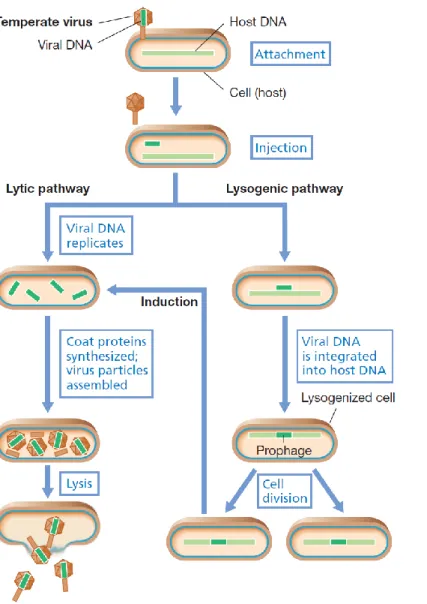
According to their cycle of infection, dsDNA phages can be classified as virulent or temperate. Virulent phages undergo a lytic cycle that ends with lysis and death of the host bacteria cell, whereas temperate phages may follow a lytic or a lysogenic cycle (Weinbauer, 2004). During lytic development (Fig. 1), the phage infects a cell and multiplies, producing more phage that can infect other cells. To start the infection, the phage adsorbs to the bacterial surface, throughout the recognition of specific receptors on the cell envelope and injects its genome into the host cell. Then, transcription of the phage genes begins, usually
3
by the host RNA polymerase. However, not all the phage genes are transcribed simultaneously. Those transcribed soon after infection are called the early genes and encode mostly enzymes involved in DNA synthesis that will help in DNA replication. The rest of the genes, or the late genes, encoding essentially structural components, are transcribed later. After the production of these elements, the viral genome is encapsidated and the phage particles are accumulated in the cytoplasm of the host cell. Finally, the newly synthesized phages are released after host cell lysis and are ready to infect other cells (Weinbauer, 2004; Snyder and Champness, 2007).
In contrast, some phages are able to maintain a stable relationship with the host cell in which they neither multiply nor are lost from the cell. Such a phage is called a temperate phage and its cycle of infection is shown in Figure 1. In the lysogenic state, the phage DNA either is integrated into the host chromosome or replicates as a plasmid. The phage DNA in the lysogenic state is called a prophage, and the bacterium harbouring a prophage is a lysogen for that phage. The first steps of the lysogenic cycle, such as adsorption and injection of viral DNA, are common to the lytic development. However, in this case, phage DNA is integrated into the host genome and it is spread to the daughter cells during host cell division. Under inducing conditions, the prophage is excised from the bacterial chromosome and it can start a lytic cycle (Weinbauer, 2004; Snyder and Champness, 2007).
The final step of the lytic cycle culminates with the release of the newly assembled virions to the extracellular environment, which is extremely important for the phage “survival”. If the cell lyses too early, no or very few phages will have been produced. But in contrast, if it lyses too late, time will be lost and the phage will take too long to spread through a population of bacteria to compete effectively. Therefore, the timing of phage progeny release is crucial to maximize both the burst-size, i.e., the number of virions released, and the opportunity to infect new hosts (São-José et al., 2007).
4
Most of the tailed dsDNA phages achieve the proper time for lysis by the consecutive use of two lysis proteins – holin and endolysin, whereas phages with simpler and smaller genomes use another strategy, involving the action of only one protein which compromises the synthesis of the peptidoglycan (Young and Wang, 2006). There are still the filamentous phages with ssDNA genomes that do not achieve host lysis in order to complete its cycle of infection. These phages are released from their hosts as part of their phage morphogenetic pathway, by a secretion-related mechanism, which maintains bacterial cell structural integrity (Russel, 1995).
Figure 1. Life cycle of a temperate bacteriophage. The alternatives
upon infection are replication and release of mature viruses (lysis) or lysogeny, often by integration of the virus DNA into the host genome, as shown here. The lysogen can be induced to produce mature viruses and lyse. Figure adapted from Madigan et al., (2010).
5 Phage mediated lysis
2.
Most bacteria have a murein cell wall, also known by peptidoglycan, which represents a major challenge to host lysis. Thus, it is fundamental to compromise its integrity to reach the goal of the lytic process. There are two main strategies to accomplish lysis of the host (Young and Wang, 2006). Phages with double-stranded nucleic acid genomes, like phage λ, use the holin-endolisin strategy. The phage elaborates a peptidoglycan hydrolase, an endolysin, specifically dedicated to attack one or more of the three types of peptidoglycan covalent bonds, and a second, membrane-embedded protein, the holin (Young, 2005).
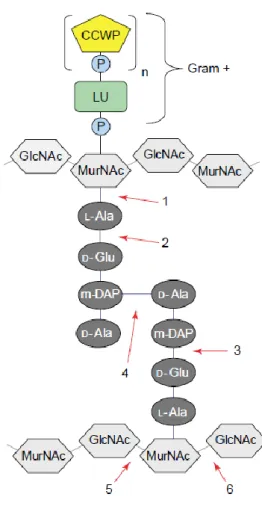
Endolysins can exhibit five major peptidoglycan degrading activities: N-acetyl- -D-glucosaminidases, lytic transglycolases and N-acetyl--D-muramidases (lysozymes), all hydrolyze the -1, 4 glycosidic bonds in the murein; N-acetylmuramoyl-L-alanine amidases degrade the amide bond connecting the glycan strand to oligopeptide crosslinking chains; and endopeptidases act on the peptide bonds in the same chains (Loessner, 2005; São-José et al., 2007) (Fig. 2).
Figure 2. Bacterial cell wall structure and endolysin targets. Detailed structure of the type of
peptidoglycan found in Escherichia coli. The bonds potentially attacked by endolysins of different enzymatic specificities are indicated by numbers: 1,
N-acetylmuramoyl-L-alanine amidase; 2,
L-alanoyl-D-glutamate endopeptidase; 3, D-glutamyl-m-DAP endopeptidase (this activity has not yet been identified in a phage endolysin); 4, interpeptide bridge-specific endopeptidases; 5, N-acetyl-β-D-glucosaminidase; and 6, N-acetyl-β-D-muramidase (also known as muramoylhydrolase and “lysozyme”) and lytic transglycosylase. Abbreviations: CCWP, carbohydrate cell wall polymer; GlcNAc, N-acetyl glucosamine; LU, linkage unit; m-DAP, meso-diaminopimelic acid; MurNAc, N-acetyl muramic acid; P, phosphate group. Figure adapted from Loessner (2005).
6
In general, endolysins from phages of Gram-positive hosts are modular, containing a cell wall binding domain at the C terminus and a catalytic domain at the N-terminus. Moreover, some have two different catalytic domains. The cell wall binding domain directs the enzyme to their substrates and may restrain the enzyme lytic action to a particular type of cell wall (São-José et al., 2007). This binding domain may also prevent the collateral damage of lysis of neighboring cells, since the endolysin is retained in the debris of the lysed host cell and cannot act on other cells (Loessner et al., 2002). With few exceptions described in the literature (Briers et al., 2007; Walmagh et al., 2012), endolysins from phages of Gram-negative hosts are generally small and globular comprising a single domain responsible for the cleavage of a specific peptidoglycan bond (Schmelcher et al., 2012). Recent findings have also shown that some endolysins may be endowed with an N-terminal secretion signal, which targets them to the extra-cytoplasmic media through the host general secretion pathway.
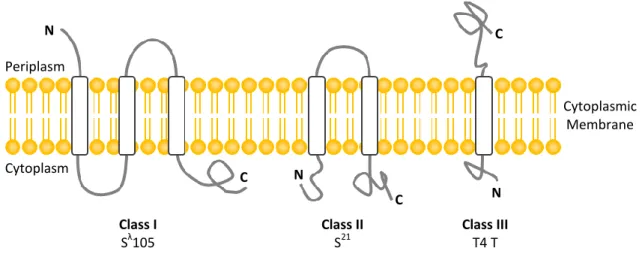
Holins are small, phage-encoded membrane proteins which accumulate in the cytoplasmic membrane of the host. Holins are currently grouped into three classes according to their membrane topology (Fig. 3). The two major classes are class I, with three transmembrane domains (TMDs) (N side out, C side in), and class II, with two TMDs (N side in, C side in). Class III comprises only one gene family and it has only one TMD (N side in, C side out) (São-José et al., 2007). During late gene expression, holins accumulate in the membrane until, at a precise, allele-specific time, a triggering event occurs, resulting in membrane disruption that leads directly, and usually very rapidly, to destruction of the cell wall by the phage-encoded muralytic enzymes. Holins can be prematurely triggered by membrane depolarization with energy poisons such as cyanide and dinitrophenol (Gründling et al., 2001; Young, 2005). This observation together with recent experiments conducted by Young and colleagues (Young and Wang, 2006) led to a model for holin timing. According to these authors, holin molecules accumulate in one or few large two-dimensional aggregates,
7 N N N C C C Cytoplasmic Membrane Cytoplasm Periplasm Class I Sλ105 Class II S21 Class III T4 T
or “death rafts”. The rafts maintain the integrity of the membrane until, at some point, a spontaneous aqueous channel develops within the raft. The local collapse of the proton-motive force (pmf) is envisioned to cause the nearby holins to be triggered, just as if an uncoupler had been applied to the cell, and thus the triggered state rapidly propagates throughout the initially triggered raft and other rafts in the cell (Dewey et al., 2010; White et al., 2011).
Figure 3. Schematic representation of known topologies of described phage holins. Examples of
bacteriophages encoding the different classes of holins are indicated. Figure adapted from São-José
et al. (2007).
In contrast to the holin-endolysin strategy, icosahedral phages with small, single-stranded genomes, such as phage фX174, achieve lysis without encoding a muralytic enzyme. In this case, the phage produces a protein, termed amurin, that causes lysis by acting as a specific inhibitor of an enzyme in the process of murein biosynthesis. This strategy requires actively growing cells and lysis appears to be a consequence of rupture of the cell wall at the developing septum (Bernhardt et al., 2001; Bernhardt et al., 2002).
2.1. The phage λ paradigm
Phage λ is the most well studied phage and its mechanism of lysis was for long considered as a model for most dsDNA phages employing a holin-endolysin lysis strategy. It is a temperate dsDNA phage and infects the Gram-negative Escherichia coli. Phage λ lysis
8
cassette is located immediately downstream of the single late promoter of λ , pR’, and is composed of 4 genes translated as a single mRNA, encoding the S107 antiholin, the S105 holin, the R endolysin and lysis adjuvants Rz and Rz1 (Young, 2002; São-José et al., 2007).
Gene R encodes the endolysin which is a 18 kDa (Young and Wang, 2006) murein transglycosylase that accumulates in the cytosol and is suddenly released to the periplasm, at a precise time, through the holes formed by the S holin. The presence of the S107 antiholin merely delays lysis onset, allowing for a larger burst-size.
S105 holin and S107 antiholin are encoded in frame in the same S gene and share the same 105 amino acid (aa) sequence, but S107 has two extra residues in the N-terminus, Meteonine and Lysine. These extra residues in S107 confer two extra positive charges comparing to S105, what results in the altered topology of the antiholin compared to the holin. The S105 holin exhibits 3 TMD whereas in the antiholin the first hydrophobic segment is unlikely to span the membrane. It is this difference in topology that confers the phenotype of antiholin and holin. It is worth noting that the dissipation of membrane pmf triggers the translocation of the first TMD of S107 which then becomes a topologic homolog of S105 with similar hole/lesion-forming properties. The differential expression of S107 and S105 is due to a Structure Directed Intitiation loop overlapping the Shine-Dalgarno sequence in the S mRNA which prevents translation initiation at the S107 start codon (Bläsi and Young, 1996).
Genes Rz and Rz1 occupy the distal end of the lysis cassete. Rz is a class II inner-membrane protein, whereas Rz1 gene is embedded in Rz, but in a different frame, and encodes an outer-membrane lipoprotein. These two gene products interact with each other and promote the fusion of the inner- and outer-membranes, which facilitates the disruption of the latter (Berry et al., 2008). Both proteins are only essential if the culture medium is supplemented with milimolar concentrations of divalent cations (Zhang and Young, 1999).
Summarizing, the sequence of events during phage λ mediated lysis can be separated in three steps. The first step is the temporally programmed permeabilization of the cytoplasmic
9
membrane through the formation of micron-scale holes by the holin, which results in the release of the cytoplasmic endolysin (Fig. 4a). The second stage consists on the endolysin-dependent degradation of the murein layer that is followed by the action of Rz and Rz1. The removal of the peptidoglycan meshwork allows lateral, coiled-coil oligomerization of the Rz-Rz1 complexes, which somehow facilitates the disruption of the host outer-membrane, enabling the release of the newly-synthesized virions (Berry et al., 2008; Berry et al., 2010; Berry et al., 2012).
2.2. Sec-mediated Lysis
Despite the fact that phage λ lysis mechanism was considered to be universal, recent studies have shown that endolysins may be transported across the cytoplasmic membrane in a holin-independent manner.
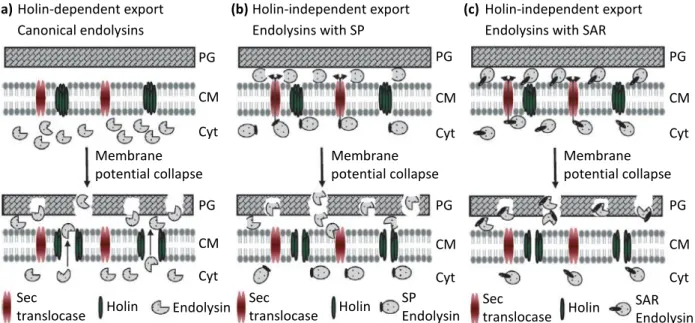
The first indication showing that phage endolysins can exert its functions in a holin-independent way came from the studies on the Oenococcus oeni temperate phage fOg44. fOg44 endolysin (Lys44) is synthesized with a typical cleavable signal peptide (SP) that allows its exportation through the bacterial general secretion pathway (GSP) (São-José et al., 2000). Lys44 does not accumulate in the cytoplasm like λ endolysin, but is continuously exported during assembly to the extracytoplasmic environment by the Sec translocon. This raises the important question of how lysis timing is regulated. Surprisingly, all phages that synthesize secreted endolysins or are proposed to do so, seem to encode a holin-like protein as well. If endolysins can use host endogenous pathways to reach the murein cell wall, it would be expected that holins were dispensable. However, in the phage fOg44, a holin function was experimentally demonstrated. Thus, the authors have proposed a model where the activity of the targeted endolysins would be inhibited in the cell wall until dissipation of the membrane potential by the cognate holins. Holins would activate, probably by collapsing the membrane potential, the exported endolysins rather than allowing their release (Fig. 4b).
10
(a) Holin-dependent export
Canonical endolysins
(b) Holin-independent export
Endolysins with SP
(c) Holin-independent export
Endolysins with SAR
Membrane potential collapse Membrane potential collapse Membrane potential collapse Sec translocase Sec translocase Sec translocase
Holin Endolysin Holin SP Endolysin Holin SAR Endolysin PG CM Cyt PG CM Cyt PG CM Cyt PG CM Cyt PG CM Cyt PG CM Cyt
According to this model, membrane potential is considered a critical parameter in lysis regulation, as seen for the lysis mechanism (São-José et al., 2007).
Figure 4. Models for export and activation of phage endolysins. (a) In phages such as λ the export of
the active endolysin to the cell wall is done through the holes formed by holins. Holin-independent, Sec-mediated export of endolysins is observed in: (b) phages producing endolysins with typical SP, such as oenophage fOg44; and (c) in phages synthesizing signal-arrest-release (SAR) endolysins, as observed in coliphage P1. When endolysins are exported through the Sec translocase, they are maintained in an inactive state in the cell wall compartment until holins dissipate the membrane pmf. The endolysin activation upon pmf collapse is schematically represented by the change of the enzyme spherical form to a “pacman” shape. Abbreviations: CM, cytoplasmic membrane; Cyt, cytoplasm; PG, peptidoglycan. Figure from Catalão et al., (2013).
More recently, Xu et al. (2004) reported the existence of an atypical signal sequence named SAR (signal-arrest-release) in the N-terminal domain of phage P1 endolysin (LyzP1). LyzP1 export does not require holin action, but is mediated by the N-terminal transmembrane domain and, like fOg44 endolysin, requires host Sec function. However, unlike fOg44, the SAR motif is not proteolytically cleaved. This sequence operates, in a first step, as a signal-arrest domain, directing the endolysin to the periplasm in a membrane-tethered form where it remains enzymatically inactive or restrained from access to the peptidoglycan. In a second step, membrane depolarization triggered by the holin facilitates the instantaneous release of the SAR endolysin from the membrane and its consequent
11
activation (Xu et al., 2004) (Fig. 4c). Upon release from the membrane, activation of SAR endolysins may be done by an intramolecular thiol-disulfide isomerization involving cysteine residues located at the N-terminal SAR domain, as it happens with P1 Lyz and Lyz103 of the Erwinia amylovora phage ERA103, which unlocks the enzyme active site (Xu et al., 2005; Kuty et al., 2010). On the other hand, the activation of R21, the endolysin of coliphage 21, does not involve cysteine residues but results from refolding of the SAR domain, which assembles the catalytic triad (Sun et al., 2009).
Sequence comparison has identified additional endolysins with N-terminal hydrophobic sequences in phages infecting Gram-negative hosts. Analysis of these sequences suggests that they could function as a signal anchor and, like LyzP1, could engage the Sec system (Young and Wang, 2006).
Mycobacteriophages 3.
Mycobacteriophages are viruses that specifically infect mycobacterial hosts. The interest in these phages derives in large part from the medical significance and biological idiosyncrasies of their hosts (Hatfull, 2000; Hatfull, 2006). Mycobacteria are acid-fast staining bacteria with characteristic waxy cell walls that can be readily divided into two groups based on their growth rate: slow-growers such as Mycobacterium tuberculosis and fast-growers such as Mycobacterium smegmatis. Several mycobacterial species are important human and animal pathogens, the most notorious being M. tuberculosis and Mycobacterium leprae, the causative agents of tuberculosis and leprosy, respectively (Hatfull and Jacobs, 1994; Hatfull, 2006).
Currently, more than 4700 mycobacteriophages have been isolated, most of them having M. smegmatis as their host, which leads to the existence of more than 349 complete genome sequences available in GenBank (http://www.phagesdb.org). Based on gross nucleotide sequence similarity, these phages have been grouped into 36 clusters and
12
subclusters (A-O) and eight singletons that have no close relatives (Hatfull, 2012a; Hatfull, 2012b; Catalão et al., 2013). To date, only mycobacteriophages with a dsDNA genome have been described (Hatfull, 2010; Hatfull et al., 2010; Hatfull, 2012a) and, like all dsDNA phages, they have to face the host cell barriers to release progeny virions at the end of a lytic cycle.
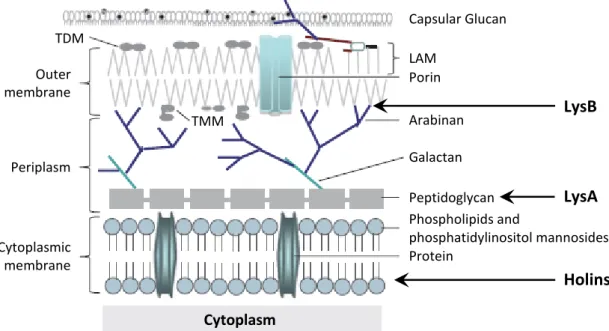
The structure of the mycobacteria cell envelope is much more complex than that of Gram-positive or Gram-negative bacteria. The cytoplasmic membrane, which is structurally and functionally similar to other bacterial cytoplasmic membranes (Daffé et al., 1989), is surrounded by a cell wall core that is composed of peptidoglycan covalently attached to arabinogalactan. This, in turn, is esterified to a mycolic acid layer forming the mycolyl arabinogalactan-peptidoglycan (mAGP) complex (Brennan, 2003). These covalently linked mycolic acids constitute all or part of the inner leaflet of a true outer membrane. The outermost leaflet is composed of various glycolipids, including trehalose mono- and dimycolate, phospholipids and species-specific lipids (Hoffmann et al., 2008; Zuber et al., 2008). Finally, outside of the outer membrane is a layer of proteins, polysaccharides and a small amount of lipids known as the capsule (Lemassu and Daffé, 1994; Lemassu et al., 1996; Sani et al., 2010) (Fig. 5).
Until recently, little was known about the mechanisms underlying mycobacteriophage-induced lysis of mycobacteria, however studies on mycobacteriophage Ms6 provided new insights into the way phages achieve lysis of their hosts. The first report came from the work of Garcia et al. (2002), who described the genetic organization of the lysis module of mycobacteriophage Ms6.
3.1. The Lysis Model of Mycobacteriophage Ms6
Mycobacteriophage Ms6 is a temperate phage, isolated from M. smegmatis strain HB5688 (Portugal et al., 1989). Ms6 is a dsDNA phage and the length of the genome is over 50 kb with a GC content of 62%. Electronic microscopy studies revealed that phage particles
13 Capsular Glucan LAM Porin Arabinan Galactan Peptidoglycan Protein Phospholipids and phosphatidylinositol mannosides Cytoplasmic membrane Periplasm Outer membrane TDM TMM Cytoplasm LysB LysA Holins are composed by an isometric polyhedral head with 80 nm in diameter, hexagonal in shape, and a long non-contractile tail with 210 nm long. These characteristics allowed its classification in the Siphoviridae family (Portugal et al., 1989).
Figure 5. Schematic representation of the mycobacteria cell envelope. The targets of Ms6 lysis
proteins are indicated by arrows. LAM, lipoarabinomannan; TDM, trehalose dimycolate; TMM, trehalose monomycolate. Figure adapted from Catalão et al. (2013) and Pimentel (2014).
Although the complete analysis of the nucleotide sequence is still not available, some genomic regions are already characterized. The site specific integration locus was identified within a 4.8 kb BglII Ms6 DNA fragment. The integrase gene encodes a protein of 372 aa residues that drives integration into the 3’ end of the M. smegmatis tRNAAla gene. The core site, a fragment of 26 bp where the recombination between the phage DNA and the bacterial genome occurs, is positioned near the 5’ end of the integrase gene (Freitas-Vieira et al., 1998). 65 bp downstream the integrase gene, and transcribed in the opposite direction, gene pin encodes a membrane protein involved in a phage resistance mechanism (Pimentel, 1999). The genetic organization of the lysis module of mycobacteriophage Ms6 was described for the first time in 2002 (Garcia et al., 2002). The Ms6 lysis cassette is composed of five genes clustered downstream of two σ70-like promoters (Fig. 6). This
14
promoter region (Plys) is separated from the first lysis gene by a leader sequence of 214 bp, in which a transcriptional termination signal was detected, suggesting that an antitermination mechanism is involved in the regulation of Ms6 lysis gene transcription (Garcia et al., 2002).
Figure 6. Genetic organization of the Ms6 lytic operon. The promoter region, Plys, is separated from
gp1 by a leader sequence (L). Direction of the transcription is indicated by an arrow from the Plys. The
hairpin shape represents the localization of a transcription termination signal. The beginning of lysA overlaps the gp1 stop codon in a different reading frame. lysA encodes two proteins, the full-length Lysin384 and the N-terminal truncated version Lysin241, which are indicated separately. Figure from
Pimentel (2014).
Like all dsDNA phages, Ms6 uses the holin-endolysin strategy to achieve host cell lysis, but the model of lysis is different from all those described so far. In addition to the endolysin (lysA) and holin-like genes (gp4/gp5), two accessory lysis genes were also identified, gp1 and gp3 (lysB), which led to the development of a peculiar mechanism of endolysin export and specialized functions related to the particular nature of the mycobacteria cell envelope.
Gene gp1 was identified as encoding a chaperone-like protein that specifically interacts with the N-terminal region of LysA and is involved in its delivery to the peptidoglycan in a holin-independent manner (Catalão et al., 2010). Analysis of the physical and structural properties of Gp1 shows that it shares the properties of molecular chaperones, particularly type III secretion (TTS) system chaperones. gp1 is positioned immediately upstream of the endolysin gene and overlapped with it, and encodes a small protein of 8.3 kDa with an acidic isoelectric point (pI) of 4.6. Gp1 has the ability to oligomerize and its N-terminal region interacts with the first 60 aa of its effector, LysA (Catalão et al., 2011b). Although not essential for plaque formation, Gp1 is necessary to achieve an efficient lysis, since its absence results in a decrease of approximately 70% in the burst size (Catalão et al., 2010).
15
The Ms6 endolysin is an enzyme with N-acetylmuramoyl-L-alanine amidase activity, holding a central peptidoglycan recognition protein (PGRP) conserved domain, localized between amino acid residues 168 and 312 (Catalão et al., 2011c). Even though lysA was recently shown to encode two proteins designated Lysin384 and Lysin241 according to the size of the polypetides chain, only Lysin384 interacts with Gp1 (Catalão et al., 2011c). Lysin241 results from an internal, in-frame second translation initiation site within lysA and consequently the N-terminal region that interacts with Gp1 is absent from its amino acid sequence. Despite Ms6 mutants producing only one of the forms of LysA were shown to be viable, both proteins are required for the normal timing, progression and completion of host cell lysis (Catalão et al., 2011c).
Even though Ms6 Lysin384 is exported in a holin-independent manner, lysis of M.
smegmatis infected cells does not occur until holin triggering. Achievement of the correct lysis timing was shown to be dependent on the interaction and concerted action of two membrane proteins with holin-like features, which are encoded by the last two genes comprised in the lytic cassette, gp4 and gp5 (Catalão et al., 2011a). gp4 encodes a small protein of 77 aa, sharing structural characteristics with class II holins. Gene gp5 is located immediately downstream of gp4 and produces a 124 aa protein with a predicted TMD at the N-terminus and a highly charged C-terminal, fitting the structural characteristics of class III holins. Ms6 mutated on either of these genes confirms that Gp4 and Gp5 have regulatory roles in determining the timing of lysis. The observation that Gp4 interacts with Gp5 supports the idea that the holin function results from the combined action of Gp4 and Gp5, contributing to the precise adjustment of the timing of hole formation.
As mentioned previously, despite being considered Gram-positive, mycobacteria have a complex cell envelope, including an outer membrane, which imposes an additional challenge to phage release. To overcome this last barrier, Ms6 encodes an enzyme with lipolytic activity, LysB, that cleaves the ester bond between mycolic acids and the arabinogalactan of
16
the mAGP complex, releasing free mycolic acids (Gil et al., 2008; Gil et al., 2010). Indeed, Ms6 LysB was also shown to hydrolyze other mycobacterial lipid components of the cell envelope, namely the trehalose dimycolate (TDM), a glycolipid involved in the virulence of pathogenic species. Nevertheless, due to the importance of mAGP complex for the stability of the mycobacteria cell envelope it is proposed that the cleavage of the mycobacterial outer membrane from the arabinogalactan-peptidoglycan layer is the primary role of LysB, acting at a later stage of the infection (Gil et al., 2010).
In contrast to what happens with other endolysins exported in a holin-independent manner, mycobacteriophage Ms6 seems to employ a novel and unique mechanism. In this case, the endolysin (LysA) does not possess an N-terminal signal sequence which would allow the transport via the host Sec system. Instead, translocation of Ms6 LysA is assisted by the gene product of gp1, a chaperone-like protein. Gp1 specifically binds the Ms6 endolysin and allows the enzyme access to its substrate, the peptidoglycan, by somehow facilitating its secretion across the cytoplasmic membrane. However, how Ms6 endolysin is kept inactive until holin triggering occurs is a question that remains to be elucidated.
17 Objectives
4.
The main goal of this work is to contribute to a better understanding of the role of Gp1 in the export of Ms6 endolysin, LysA, during an infection. Although the organization of the mycobacteriophage Ms6 lytic cassette is well characterized, there are still some missing points concerning the mechanism of lysis, namely the way LysA reaches the peptidoglycan layer and how it is kept inactive until the proper time of lysis.
Does Gp1 have a role in the maintenance of LysA in an inactive state until the correct time of lysis? To provide some insights into this question it is necessary to determine if Gp1 is exported together with LysA. Therefore, with this project we aim to:
Detect Gp1 and LysA localization in M. smegmatis infected cells, by constructing a recombinant phage where gp1 and lysA are fused to epitope tags;
Determine the presence of export signal sequences in Gp1;
Test the ability of Gp1 to promote the export of the N-terminal region of LysA.
The study of bacteriophages, with a special focus on its lysis mechanisms, has been growing in the recent years. The emergent problem of antibiotic resistance together with the environmental burden caused by the unrestricted use of antibiotics provides sufficient motivation for developing alternative solutions. Due to its lytic activity, phages could play an important role in treating bacterial infections in humans, animals, aquaculture and crops, as well as in decontaminating food supplies and communal environments (Kutateladze and Adamia, 2010). Even though this study has no direct application in therapeutics or biotechnology, the constantly growing knowledge about bacteriophages lysis systems and its targets on the bacterial cell wall can provide us with some insights into the designing of new therapeutic tools in the future. In addition, in this particular case of secreted endolysins, it may raise new questions regarding mycobacteria protein secretion mechanisms, which still remain poorly understood.
18
II. M
ATERIAL AND
M
ETHODS
Bacterial strains, phages and growth conditions 1.
Bacterial strains, phages and plasmids used in this study are listed in Table 1. E. coli was routinely grown at 37ºC in Luria-Bertani (LB) broth with shaking or agar, supplemented with 30 μg mL-1 kanamycin (Sigma) or 250 μg mL-1 hygromycin (Roche), when appropriated. Unless otherwise indicated, M. smegmatis was grown at 37ºC in Middlebrook 7H9 (Difco) with vigorous shaking or in Middlebrook 7H10 (Difco) containing 0.5% glucose and 1 mM CaCl2. When needed, antibiotics were used at the following concentrations: 50 μg mL-1 hygromycin and 15 μg mL-1 kanamycin.
Phage stocks were obtained by elution of several confluent lysis plates for at least 4 hours at 4ºC with SM buffer (8 mM MgSO4, 100 mM NaCl, 50 mM Tris-HCl, pH 7.5), filter-sterilized and stored at 4ºC. Phage titer was determined by plating serial dilutions of the phage suspension with M. smegmatis, as top agar lawns.
Preparation and transformation of electrocompetent cells 2.
Preparation of electrocompetent cells of E. coli was performed according to Smith et al. (1990). Briefly, a culture reaching an optical density at 600 nm (OD600) of 0.6-0.7 in LB was pelleted by centrifugation and washed 3 times with 10% ice-cold Molecular Biology grade Glycerol (AppliChem). After the last centrifugation step, cells were concentrated 250 fold in 10% ice-cold glycerol, frozen and stored at -80ºC.
19
Induced electrocompetent M. smegmatis mc2155:pJV53 cells were prepared as described previously (van Kessel and Hatfull, 2007). After growth to an OD600 of approximately 0.4 in Middlebrook 7H9 (Difco) containing 0.2% succinate and 15 μg mL-1 kanamycin, cells were induced with 0.2% acetamide, grown for more 3 hours and then kept on ice for 1 hour and a half. After that period cells were washed three times with ice-cold 10% (v/v) glycerol, concentrated 100-fold and stored at -80ºC. To prepare competent M. smegmatis mc2155 cells, a similar procedure to that described above was used, with the exception of the inducing step.
Electroporation was carried out in a Gene Pulser® Electroporation System (Bio-Rad) using a pulse of 2500 V, 25 μF and 1000 Ω for 0.2 cm cuvettes or 1800 V, 25 µF and 200 Ω for 0.1 cm cuvettes.
Phage DNA extraction 3.
Phage DNA extraction was adapted from Sambrook and Russel (2001). A phage stock sample was incubated with 50 μg mL-1 of proteinase K (AppliChem) and 0.5% (w/v) SDS for 1 hour at 56ºC to disrupt the phage capsid. The mixture was washed three times with an equal volume of Phenol:Chloroform:Isoamyl alcohol 25:24:1 (AppliChem) and one last time with chloroform. The aqueous phase was recovered and the DNA was precipitated by the addition of 3M sodium acetate and cold isopropanol. After incubation at -20ºC for at least 30 min, the DNA was collected by centrifugation at 4ºC (maximum speed for 45 min), washed with 70% (v/v) ethanol and dried at 37ºC. DNA was resuspended in sterile distilled water and stored at -20ºC.
20
Table 1. Strains, bacteriophages and plasmids used in this study.
Strains, bacteriophages,
plasmids Description
Reference/ Source
Escherichia coli
JM109 recA1 endA1 gur96 thi hsdR17 supE44 relA1 Δ(lac-proAB)
[F’ traD36 proAB lacIqZΔM15] Stratagene Mycobacterium smegmatis
mc2155 High-transformation-efficiency mutant of M. smegmatis ATCC607
Snapper et al. (1990)
mc2155:pJV53 M. smegmatis mc
2
155 carrying a plasmid expressing recombineering functions; KanR
van Kessel and Hatfull (2007) Bacteriophage Ms6
wt Temperate bacteriophage from M. smegmatis Portugal et
al. (1989) lysA-His6 His6-tag insertion at the C-terminus of Ms6 LysA
Catalão et al. (2010)
gp1-c-Myc lysA-His6 c-Myc and His6-tag insertion at the C-terminus of Ms6 Gp1
and LysA, respectively This study
Plasmids
pSMT3[19-phoA] Mycobacteria plasmid containing the structural gene for E.
coli PhoA; HygR
Herrmann et
al. (1996)
pVVAP Mycobacteria shuttle vector carrying the acetamidase promoter; KanR
V. Visa and M. McNeil, unpublished pFM1 gp1-phoA’ fusion cloned in pVVAP This study pFM2 19kDa50aa-phoA’ fusion cloned in pVVAP This study
pFM3 phoA’ cloned in pVVAP This study
pFM4 gp1 and the sequence encoding the first 60 aa of LysA
fused to phoA’ cloned in pVVAP This study pFM5 The sequence enconding the first 60 aa of LysA fused to
phoA’ cloned in pVVAP This study
pFM6 gp1 and phoA’ cloned in pVVAP This study
DNA manipulation and purification 4.
DNA fragments were amplified by PCR using the NZYTaq 2x Green Master Mix (NZYTech) or the Pfu DNA Polymerase (Promega) when high fidelity PCR products were required. PCR amplifications were carried out in accordance to the manufacturer instructions, in a standard thermocycler (VWR DOPPIO Thermal Cycler). The amplification products were analysed by electrophoresis in 0.7 to 1.2% (w/v) agarose gels containing GreenSafe Premium
21
(NZYTech) and using 0.5X Tris-Borate-EDTA (TBE) as electrophoresis buffer (Sambrook and Russel, 2003). Gels were analysed under ultraviolet light and pictures were acquired using ChemiDoc/GelDoc system (BIO-RAD). The size of the fragments was estimated by comparison with DNA ladders (NZYDNA Ladder VI, NZYTech; GeneRuler 100 bp Plus, Fermentas or GeneRuler 1 kb DNA Ladder, Thermo Scientific) run along with DNA samples.
Purification of DNA fragments obtained from PCR amplification or enzymatic restriction was performed using MinElute® PCR Purification Kit (QIAGEN) or Invisorb® Spin DNA Extraction Kit (Invitek). Plasmid DNA purification was carried out using the NZYMiniprep (NZYTech) according to the protocol recommended by the manufacturer. DNA was eluted in a minimal volume of sterile distilled water and stored at -20ºC. Restriction enzymes (FastDigest®, Fermentas) and T4 DNA ligase (New England Biolabs) were used according to supplier’s instructions. All oligonucleotides were from Thermo Scientific and are listed in Table 2.
When necessary, DNA concentration was determined by spectrophotometry using NanoDrop® ND-1000 Spectrophotometer (Thermo Scientific). Samples purity was evaluated based on A260/A280 ratio.
Construction of the recombinant Ms6 gp1-c-Myc lysA-His6 phage 5.
Construction of the Ms6 double mutant phage was performed according to the Bacteriophage Recombineering of Electroporated DNA (BRED) technology described by Marinelli et al. (2008).
10 ng of a 110-base oligonucleotide designated Prgp1c-Myc, containing the c-Myc tag sequence flanked by 40-base of homology upstream and downstream to the Ms6 lysA-His6 genome region to be altered, was extended by PCR using two 75-base primers designated PrExtgp1c-MycFwd and PrExtgp1c-MycRv. These primers overlap 25-base on the ends of the 110-mer oligonucleotide and add additional 50 bp of homology to each end, generating a
22
210-bp recombineering substrate. The final 210-bp dsDNA PCR product was purified using MinElute® PCR Purification Kit (Qiagen) following manufacturer’s instructions.
120.5 ng of the purified recombineering substrate were co-electroporated with 1330 ng of Ms6 lysA-His6 genomic DNA into electrocompetent M. smegmatis mc2155:pJV53 previously induced for recombineering functions using 0.2 cm cuvettes. Cells were resuspended in 7H9 with 0.5% glucose and 1 mM CaCl2, incubated at 37ºC for 2 hours and plated as top agar lawns with M. smegmatis. After overnight (ON) incubation at 37ºC phage plaques were picked into 100 μL of SM buffer, eluted for 2 hours at room temperature and analysed by PCR with primers Prc-MyctagFwd and PrlysARv to detect the c-Myc tag insertion. Mixed primary plaques containing both the recombinant and the wt phage were eluted as described above and serial dilutions were plated with M. smegmatis. Secondary plaques were screened by PCR for mutant detection and re-plated with M. smegmatis. This process was repeated until only pure recombinant phages were detected in plaques.
One-step growth curves 6.
One-step growth curves were carried out essentially as described previously (Catalão et al., 2010). M. smegmatis cells were grown to an OD600 of 0.5, pelleted and resuspended in 1 mL of phage suspension (Ms6wt or Ms6 gp1-c-Myc lysA-His6) supplemented with 1 mM CaCl2, using a multiplicity of infection (MOI) of 1. The mixture was incubated 50 min at 37°C for phage adsorption, and then 100 μL of 0.4% H2SO4 were added for 5 min to inactivate non-adsorbed phages. The suspension was neutralized with 100 μL of 0.4% NaOH and diluted 100-fold into fresh pre-warmed 7H9 with 0.5% glucose and 1 mM CaCl2. 1 mL samples were collected every 30 min for a period of 240 min and 100 μL of serial dilutions of each sample were plated with 200 μL of M. smegmatis cells on 7H10 supplemented with 0.5% glucose and 1 mM CaCl2, as top agar lawns. Phage titer for each sample was
23
determined after an ON incubation at 37°C. Results are averages of three independent experiments.
Table 2. Oligonucleotides used in this study.
Primer Sequence 5’ 3’ Features
Primers used to construct the recombinant Ms6 gp1-c-Myc lysA-His6 phage
Prgp1c-Myc
CTCCATCCCCGTCCTCGGCGGAATCCTCGGGAGCAAACGGGAACA GAAACTGATCAGCGAAGAGGATCTGTGACGGGAGCAAACGGTGA CCACGAAAGATCAAGTCGCCC
c-Myc tag sequencea
PrExtgp1c-MycFwd CTGACCAACCTTCCAGCGCAAGTCATGGACATCATCGACAGCGCG CTGCGCTCCATCCCCGTCCTCGGCGGAATC
Overlaps the 5’ end of Prgp1c-Myc PrExtgp1c-MycRv GCATTCGCTGCGGGTGTAGCCGCGCGCCTTGGCTTCGGCGATGGT
GATTTGGGCGACTTGATCTTTCGTGGTCAC
Overlaps the 3’ end of Prgp1c-Myc Prc-MyctagFwd CTCGGGAGCAAACGGGAACAGAAACTG Primer specific to
c-Myc tag PrlysARv GTCGAAGCGGTGTGGGTAGGAGCCG Flanking primer
Primers used to clone in pVVAP
PrphoABamHIFwd GCCGGATCCCCTGTTCTGGAAAACC BamHI sitea PrphoAHis6HindIIIRv GTAAGCTTTTTCAGCCCCAGAGCGG HindIII sitea PrATGgp1NdeIFwd GATCATATGGACCGCTTAGGCATCG NdeI sitea
Prgp1-SGGGS-BamHIRv CTAGGATCCGCTGCCGCCGCCGCTCCGTTTGCTCCCGAG
BamHI site and SGGGS 3’ linkera,b PrATG19kDaNdeIFwd CTTCATATGAAGCGTGGACTGACGGTC NdeI sitea PrATGphoANdeIFwd CATCATATGCCTGTTCTGGAAAACCG NdeI sitea PrlysA60aaKpnIRv CAGGTACCGTGTGGGTAGGAGCCGTCC KpnI sitea PrATGlysANdeIFwd GATCATATGACCACGAAAGATCAAGTCGC NdeI sitea PrphoAKpnIFwd CAGGTACCCCTGTTCTGGAAAACCG KpnI sitea Prgp1KpnIRv CAGGTACCTCACCGTTTGCTCCCGAG KpnI sitea PrRBSphoAKpnIFwd CAGGTACCAGGAGCACAGGGTGCCTGTTCTGGAAAACC KpnI sitea PrpVVAPFwd GCAGTTGTTCTCGCATACCCCATC Flanking primer PrpVVAPRv GGCCCAGTCTTTCGACTGAGCCT Flanking primer
a
Underlined nucleotides indicate the sequence encoding the c-Myc tag and restriction sites;
b
24 Gp1-c-Myc and LysA-His6 expression in M. smegmatis infected cells and 7.
subcellular fractionation
A mid-log phase (OD600 between 0.8-1) growing culture of M. smegmatis was infected with Ms6 gp1-c-Myc lysA-His6 at an approximate MOI of 100 and incubated at 37ºC for 50 minutes. 100 mL samples were collected at 30 min intervals for a period of 2 hours. Cells were washed once in the same volume of ice-cold phosphate-buffered saline (PBS), pelleted by centrifugation and frozen at -20ºC. After thawing, cells were resuspended in 10 mL of PBS containing a cocktail of protease inhibitors (Protease Inhibitor Cocktail Set I, Calbiochem) and lysed using a French press (4 passages at 15000 pounds). Unbroken cells were pelleted at 3000 x g for 20 min to generate a clarified whole-cell lysate.
Preparation of crude cell wall, membrane and soluble fractions by differential ultracentrifugation was adapted from Rezwan et al. (2007) and Gibbons et al. (2007). All the centrifugation steps were performed at 4ºC using an Optima™ L-100 XP ultracentrifuge (Beckman Coulter™). Clarified whole-cell lysates were centrifuged at 50 000 x g for 30 min to pellet the cell wall. The resulting supernatants were centrifuged at 100 000 x g for 4 hours to separate the membrane fraction from the soluble fraction. Cell wall and membrane fractions were washed once in the same volume of PBS and resuspended in 500 µl of PBS.
Protein concentrations were estimated using the Bio-Rad protein assay and 10 µg of total protein from each fraction were separated by SDS-PAGE (Sodium Dodecyl Sulfate PolyAcrylamide Gel Electrophoresis). For the anti-MspA blot, 100 ng of each subcellular fraction were analysed.
Protein analysis by SDS-PAGE and Western-blot 8.
Protein extracts were mixed with Laemmli buffer 5x (25% β-mercaptoethanol, 1% Bromophenol blue, 50% Glycerol, 10% SDS, 300 mM Tris-HCl) and denatured at 100ºC for 10 min. The same protein amount or the same volume of protein sample was loaded on a
SDS-25
PAGE gel and protein separation was performed by electrophoresis at 120 V (Mini-PROTEAN® 3 Cell, BIO-RAD). Total proteins were directly visualized by staining polyacrylamide gels after electrophoresis with BlueSafe (NZYTech), a safer alternative to the traditional Coomassie Blue staining.
For immunoblotting, proteins were transferred to a 0.45 μm pore size nitrocellulose membrane (Amersham™ Hybond C-extra, GE Healthcare) at 250 mA for 1 hour in a wet transfer System (Mini Trans-Blot® Electrophoretic Transfer Cell, BIO-RAD). Membranes were blocked in TBS-T (137 mM NaCl, 20 mM Tris-HCl, 0.1% Tween 20, pH 7.6) containing 5% non-fat dried milk (Molico®, Nestlé) overnight at 4ºC or for 1 hour at room temperature with shaking. Incubation with appropriate antibodies (Table 3) was done for 1 hour at room temperature with shaking in TBS-T containing 1% non-fat dried milk. Membranes were washed 4 to 6 times in TBS-T and, when necessary, incubated with the secondary antibodies for 1 hour at room temperature with shaking and then washed again. Blots were developed using the Amersham™ ECL™ Prime Western blotting detection reagent (GE Healthcare) according to manufacturer’s instructions and exposed to X-ray film (Amersham Hyperfil™, GE Healthcare). Protein molecular masses were calculated using the prediction programme Compute pI/Mw from the Expasy Proteomics Server of the Swiss Institute of Bioinformatics (http://www.expasy.org).
Table 3. Antibodies used for immunoblotting.
Antibody Dilution Supplier
Anti-His6-Peroxidase 1:2000 Roche
Anti-c-Myc-Peroxidase 1:5000 Roche
Mouse Monoclonal Anti-Mycobacterium tuberculosis
KatG (Gene Rv1908c) 1:1000 BEI Resources
Rabbit Polyclonal Anti-MspA antiserum 1:5000 Michael Niederweis
Goat Anti-Mouse IgG Horseradish Peroxidase Conjugate 1:5000 Bio-Rad Goat Anti-Rabbit IgG Horseradish Peroxidase Conjugate 1:10000 Bio-Rad
26 Plasmid construction
9.
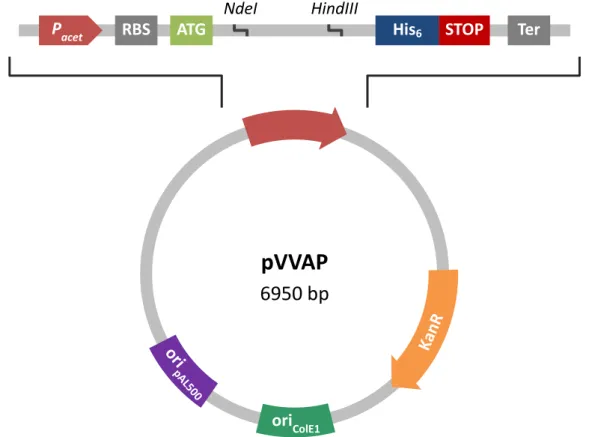
To express translational fusions to the E. coli alkaline phosphatase gene (phoA) in M. smegmatis, DNA fragments were cloned in pVVAP (Fig. 7). pVVAP is a replicating shuttle vector that allows the expression of C-terminally His6-tagged proteins driven by the acetamidase promoter (Parish et al., 1997). In addition, for optimal expression in mycobacteria, pVVAP contains a consensus ribosomal binding site (RBS) and an ATG start codon which is embedded in NdeI restriction site.
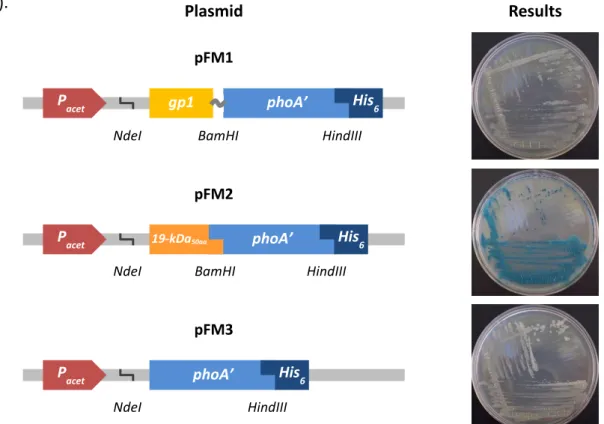
To construct a Gp1–PhoA hybrid protein, pSMT3 [19-phoA] (Herrmann et al., 1996) was used as template to amplify phoA gene omitting the PhoA signal peptide (phoA’), using primers PrphoABamHIFwd/PrphoAHis6HindIIIRv. gp1 lacking its start codon was amplified by PCR from Ms6wt genomic DNA using the forward primer PrATGgp1NdeIFwd, which includes a NdeI restriction site, and the reverse primer Prgp1-SGGGS-BamHIRv, carrying a SGGGS 3’ linker and a BamHI restriction site. gp1 and phoA’ PCR products were digested with NdeI/BamHI and BamHI/HindIII, respectively, and ligated in a single ligation reaction with pVVAP previously digested with NdeI/HindIII to generate pFM1. Control plasmids carrying 19kDa50aa-phoA’ fusion or phoA’ alone were constructed directly from pSMT3 [19-phoA] using the pair of primers PrATG19kDaNdeIFwd/PrphoAHis6HindIIIRv and PrATGphoANdeIFwd/PrphoAHis6HindIIIRv, respectively. Both PCR products were double-digested with NdeI/HindIII and inserted into the corresponding sites of pVVAP, generating pFM2 and pFM3, respectively.
DNA fragments containing gp1 and the sequence encoding the first 60 aa of LysA (gp1-lysA60aa), or the first 60 aa of LysA alone (lysA60aa) were PCR amplified from Ms6wt DNA using
the pair of primers PrATGgp1NdeIFwd/PrlysA60aaKpnIRv or
PrATGlysANdeIFwd/PrlysA60aaKpnIRv, respectively. Both fragments were digested with NdeI and KpnI. phoA’ was obtained by PCR from pSMT3 [19-phoA] with primers PrphoAKpnIFwd/PrphoAHis6HindIIIRv and digested with KpnI and HindIII. gp1-lysA60aa or