UNIVERSIDADE DE LISBOA FACULDADE DE CIÊNCIAS DEPARTAMENTO DE BIOLOGIA VEGETAL
The study of the reprogramming of metabolism of
Trincadeira grapes upon infection with Botrytis cinerea
João Miguel da Costa Coelho
Mestrado em Biologia Molecular e Genética
Dissertação orientada por:
Professora Ana Margarida Fortes
III
Acknowledgements / Agradecimentos
À professora Margarida, por me ter dado a oportunidade de trabalhar neste projeto e por todo o apoio, conselhos e dicas que me foi dando ao longo deste último ano, tanto a nível de organização de trabalho como até a nível pessoal. Agradeço também pela extrema paciência que foi precisa para aturar a minha falta de habilidade no laboratório nos primeiros meses e os meus infames hábitos procrastinadores.
À Diana e ao Flávio, porque falando de paciência não posso deixar de vos agradecer. Ninguém merece almoçar às três da tarde por causa dos meus erros, mas ainda assim estiveram presentes. Obrigado também pela disponibilidade - por sacrificarem tanto do vosso tempo para me ensinarem quase tudo o que precisei de saber no laboratório, que com certeza será útil no futuro.
Ao Fernando, por me fazer rir mesmo nos dias em que me sentia mais sonolento e pela grande ajuda durante a escrita desta tese. À professora Ana Cristina Figueiredo pela disponibilidade em ajudar sempre que preciso. Um obrigado também à Rita e à Rute, pela ótima companhia nas horas de trabalho.
Aos meus pais, ao meu irmão e ao meu padrinho, por estarem sempre lá ao fim do dia para que eu me sentisse em casa. Nunca deve ser subvalorizado o quão bom é chegar a um local familiar ao fim de um dia de trabalho.
Obrigado ao pessoal da licenciatura, pelas palavras de apoio e por terem estado sempre disponíveis para me ouvirem quando era preciso. Obrigado também pelos ocasionais jantares, que foram ótimas oportunidades para reabastecer baterias e conviver entre sessões de trabalho.
Aos amigos que fiz durante estes anos de mestrado, por partilharem comigo esta etapa. Em especial:
- ao Miguel, por partilhares tantos interesses comigo e pelas nossas conversas sobre o sempre fantástico mundo dos videojogos, onde nos conseguíamos rir sem que mais ninguém percebesse do que estávamos a falar;
- à Bárbara, pela companhia durante os almoços e por seres uma amiga genuína com quem eu pude sempre desabafar. Se há algo mais importante do que ter alguém com quem falar sobre as partes boas, é ter alguém com quem falar sobre as partes más;
- à Carolina, por estares (quase) sempre bem disposta e por me teres transmitido esse otimismo em ocasiões em que o meu já se tinha esgotado. E por tu própria teres tido a capacidade de ultrapassar os teus maus momentos durante este ano com um sorriso na cara.
Um enorme obrigado aos meus grandes amigos Carapinha, Fábio, Vasco, Primo, Mike, por me mostrarem que algumas amizades são mesmo para durar, querem tenham sido formadas no ensino secundário ou mesmo na escola primária. Obrigado pelas sessões de cinema, jantares, brincadeiras, noitadas, discussões em bares às duas da manhã e, sobretudo, pelos ótimos conselhos e por me ajudarem a estabelecer prioridades. À Sara, pelo excelente e incondicional apoio que me tens dado ao longo dos últimos sete anos.
IV
Resumo
As uvas (espécie Vitis) são, a nível económico, o fruto mais importante à escala mundial. No entanto, as videiras são suscetíveis a várias doenças, sendo que os fungos são a principal causa para a redução de qualidade em uvas e do seu respetivo rendimento. A Trincadeira é uma variedade de videira muito importante em Portugal, pois dá origem a excelentes vinhos em alguns anos. No entanto, é também extremamente suscetível a doenças derivadas de fungos como o bolor cinzento causado por
Botrytis cinerea, que é uma das doenças mais perigosas para as uvas. Esta tese de mestrado tem como
objetivo aumentar o conhecimento relativo à forma como o metabolismo das uvas, bem como a qualidade do vinho, é afetado pela infeção com B. cinerea, complementando estudos recentes. A iniciação dos mecanismos de defesa contra patógenos necrotróficos, biotróficos e hemibiotróficos está já bem documentada no estudo de tecidos vegetativos, enquanto outros órgãos como os frutos (neste caso, a uva) ainda não foram bem estudados nesse aspeto. Aquando a infeção, o metabolismo hormonal das uvas é reprogramado graças ao envolvimento putativo de jasmonatos, ácido abcísico, auxinas e outras fito-hormonas, ao passo que o ácido salicílico não aparenta estar envolvido neste processo. Como tal, estamos interessados em estudar a forma como o metabolismo hormonal é regulado em uvas infetadas com B. cinerea, especialmente tendo em conta o papel desempenhado por estas hormonas tanto no amadurecimento do fruto como na resposta a stress biótico. Com este trabalho, temos como objetivo revelar nova informação relativamente às respostas das uvas durante interações patógeno-hospedeiro. Isto será feito através de uma análise combinada de perfis metabólicos de bagos infetados com análise da expressão de alguns genes envolvidos no metabolismo de hormonas. Pretendemos comparar as mudanças observadas no metabolismo hormonal aquando infeção com B. cinerea entre uma variedade suscetível (Trincadeira) e uma variedade resistente (Syrah). Por outro lado, o estudo da forma de como o aroma das uvas é influenciado por este tipo de infeção (em particular, o estudo do metabolismo de terpenos), e quais as consequências na qualidade do vinho são aspetos importantes neste contexto.
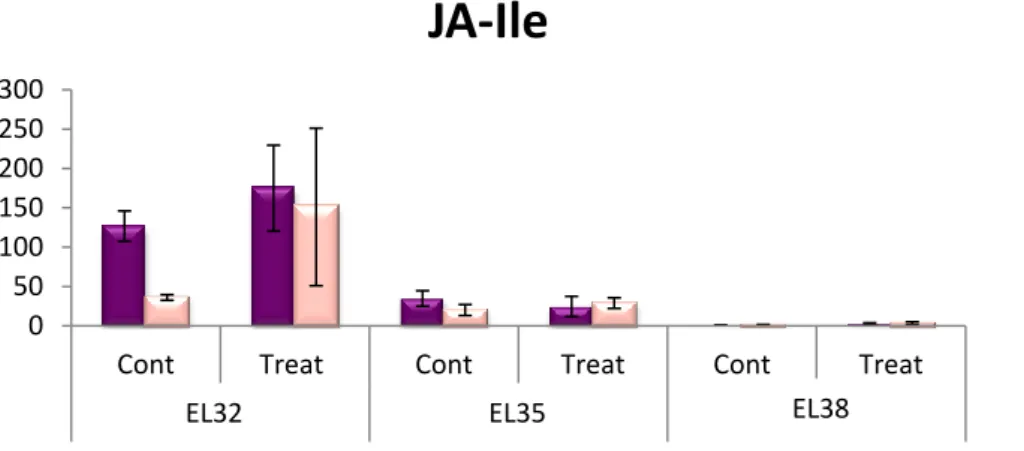
De modo a conseguir estes resultados, bagos de uva controlo e infetados em três estágios de amadurecimento (green, EL32; veraison, EL35; harvest, EL38) foram colhidos para podermos efetuar quantificação de hormonas, análise de expressão de genes envolvidos no metabolismo hormonal e identificação de voláteis. Para fazer a análise de voláteis, foram usadas amostras liofilizadas a -40ºC. No entanto, foi concluído que, através do uso desta abordagem, muito poucos compostos conseguem ser detetados no processo e que uma grande quantidade inicial de material é necessária, de preferência proveniente de amostras frescas. Relativamente ao metabolismo de hormonas, os resultados obtidos mostram que os jasmonatos (OPDA e JA-Ile) estão envolvidos na resposta das uvas contra stress biótico proveniente da infeção. Estas hormonas já tinham sido caracterizadas como estando envolvidas no amadurecimento através do crescimento e do desenvolvimento de coloração dos bagos. Estudos prévios indicam que os jasmonatos são também responsáveis pela regulação de respostas de defesa como respostas contra stress oxidativo e stress por dessecação. Neste caso, as uvas da variedade Syrah apresentaram um elevado conteúdo basal de jasmonatos, ao passo que as uvas da variedade
Trincadeira apresentaram um grande aumento na concentração de JA-Ile após estarem infetadas. As
mudanças observadas na expressão dos genes envolvidos na biossíntese de JA-Ile (genes que codificam para as proteínas allene oxide synthase e 12-oxophytodienoate reductase 1) apoiam este aumento observado na quantidade de jasmonatos, já que uma baixa expressão destes genes a nível basal significa que não são necessários nas primeiras fases de crescimento devido ao já elevado conteúdo em jasmonatos. O metabolismo relativamente ao ácido abcísico apoia o já conhecido papel desta hormona no amadurecimento. É sabido de estudos anteriores que o ácido abcísico tem um papel importante no amadurecimento das uvas, sendo responsável por processos importantes na acumulação
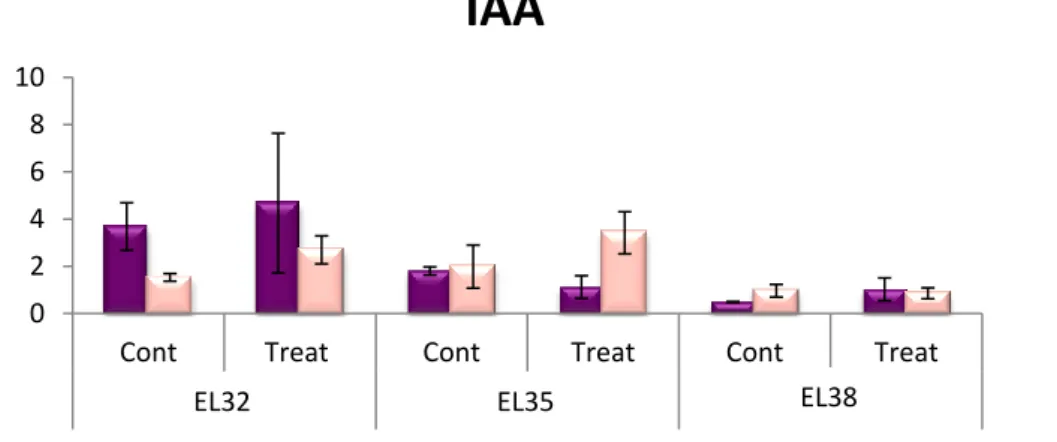
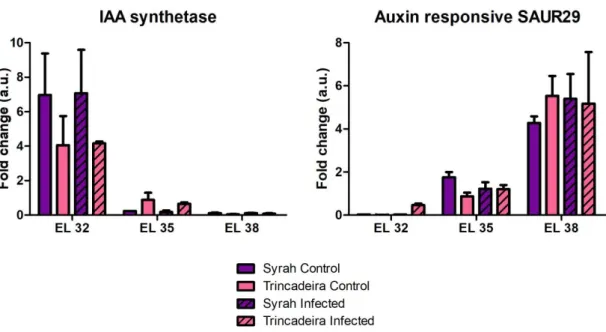
V de açúcares e aumento da coloração dos bagos. Estes dados foram apoiados pelo aumento de ABA que observámos durante o início do amadurecimento. Para além do amadurecimento, os resultados que obtivémos sugeriram ainda que esta hormona possa estar também envolvida na defesa das uvas contra a infeção por Botrytis cinerea. Esta observação advém do facto de que o teor em ácido abcísico tende a aumentar após a infeção e de que se verificou uma maior expressão dos genes envolvidos na síntese e na sinalização desta hormona (genes que codificam para a 9-cis-epoxycarotenoid dioxygenase e para o ABA receptor PYL4 RCAR10, respetivamente). No entanto, observou-se também um conteúdo basal em ABA baixo na variedade Syrah, que é resistente contra a infeção. Como tal, futuras investigações terão de ser feitas relativamente ao papel do ácido abcísico aquando a infeção. Relativamente ao papel das auxinas, sabe-se que estas hormonas estão presentes em baixas concentrações no início do amadurecimento, pois níveis elevados de auxinas atrasam a acumulação de açúcares que é essencial nesta fase. Estes dados estão de acordo com os resultados que obtivemos relativamente à expressão génica. No que toca ao seu papel na defesa, foram observados níveis basais elevados em uvas da variedade Syrah (que podem sugerir a existência de uma resposta acelerada quando infetadas) e aumentos de concentração em uvas da variedade Trincadeira após estas serem infetadas. Ambos estes fatores podem ser interpretados como indicadores de que as auxinas estão envolvidas na resposta das uvas contra o patógeno. Foram ainda observadas mudanças na expressão de genes envolvidos na síntese, sinalização e transporte de auxinas (genes que codificam para a IAA-amido synthetase e para o
auxin-responsive SAUR29), em especial durante o início do amadurecimento. Estas mudanças
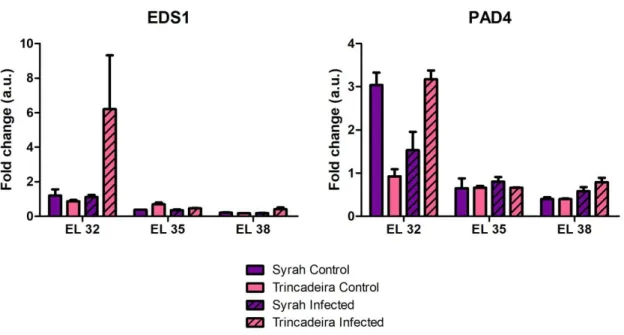
sugeriram que as auxinas têm um papel importante tanto no crescimento como no amadurecimento das uvas. No que toca à importância do ácido salicílico, esta hormona tinha sido, devido a estudos anteriores, associada apenas à resposta contra fungos biotróficos. Estudos prévios estudaram o seu envolvimento na resposta contra fungos necrotróficos e foi colocada a hipótese de que, aquando a infeção, um fungo como Botrytis cinerea ativa alguns dos mecanismos de defesa da uva mas inibe as vias relacionadas com o ácido salicílico. No entanto, ao contrário do sugerido, também aparenta estar envolvida na resposta à infeção por fungos deste tipo, devido aos resultados obtidos em que a variedade de vinha resistente apresentou um alto conteúdo basal de ácido salicílico, o que pode significar uma resposta rápida contra a infeção. A expressão de genes envolvidos na sinalização mediada por ácido salicílico (genes que codificam para a proteína enhanced disease susceptibility 1 e para o seu co-regulador, phytoalexine deficient 4) mostrou ter uma progressão que, inicialmente, apoiava estes resultados. No entanto, foi observado que esta expressão decresceu em uvas da variedade Syrah durante os primeiros estágios de crescimento, o que não está de acordo com os resultados obtidos pela quantificação de hormonas. Desta forma, serão precisos estudos mais desenvolvidos no que toca ao papel do ácido salicílico na defesa contra patógenos necrotróficos. Em conclusão, este trabalho permitiu efetuar uma análise de um modo mais detalhado do papel desempenhado por algumas fito-hormonas tanto no crescimento e amadurecimento de uvas como na defesa relativamente a stress biótico. Permitiu também a sugestão de mecanismos, tanto moleculares como metabólicos, que podem estar envolvidos na regulação de ambos os processos.
Palavras-chave: Botrytis cinerea, videira, metabolismo de hormonas, amadurecimento, resposta ao
VI
Abstract
Grapes (Vitis species) are economically the most important fruit crop worldwide. However, grapevines are prone to several diseases, with fungi being the major cause of reduction in grape quality and yield. Trincadeira is a very important Portuguese grapevine cultivar, giving rise to unique and excellent wines in certain years. However, it is extremely susceptible to fungal diseases such as grey mold caused by Botrytis cinerea, which is one of the most dramatic diseases for grapes. This master thesis aims at further elucidating how the metabolism of grapes, as well as wine quality, is affected upon infection with Botrytis cinerea, complementing recent studies. The initiation of defense mechanisms against necrotrophic, biotrophic and hemibiotrophic pathogens has been documented mostly for vegetative tissues, while organs like the fruits have not been well studied in that regard. Upon infection, hormonal metabolism is reprogrammed with the putative involvement of jasmonates, abscisic acid, auxins and other phytohormones, whereas salicylic acid does not seem to play a role in the process as assessed by microarray. As such, we are interested in studying how hormonal metabolism is regulated in infected grapes given the role of hormones in both fruit ripening and biotic stress response. With this work, we aim at bringing novel insights into the responses of grapes during a pathogen-host interaction by a combined metabolic profiling analysis of infected fruits together with an analysis of the expression of genes involved in hormonal metabolism. We want to compare the changes in hormonal metabolism in a susceptible (Trincadeira) and a resistant (Syrah) variety upon infection with Botrytis cinerea. Furthermore, we want to study how the aroma of grapes is influenced by the infection, in particular the metabolism of terpenes, with consequences on wine quality. To this end, control and infected berries at the green, veraison and harvest stages were collected for hormonal quantification, analysis of gene expression regarding the metabolism of hormones and volatile identification. Regarding volatile analysis using samples lyophilized at -40ºC, it was concluded that few compounds can be detected using this approach and that a great quantity of starting material is needed and preferably fresh samples. In what concerns hormonal metabolism, our results showed that jasmonates were heavily involved in biotic stress response, as not only did Syrah grapes have a high basal content in jasmonates, but Trincadeira grapes displayed a significant increase in JA-Ile concentration upon infection. Changes in the expression of genes involved in JA-Ile biosynthesis accompanied this increase in quantity. Abscisic acid metabolism, while mostly cementing its role in ripening, also suggested an involvement in grape defense against B. cinerea, mainly due to increases in ABA content upon infection, as well as heightened expression of genes involved in its synthesis and signaling. However, due to the low basal content in ABA in the Syrah variety, further investigation will be pursued. Regarding auxins, the high basal levels in Syrah grapes and increased concentration in infected Trincadeira grapes were indicators of the hormone’s involvement in response to the pathogen. Changes in the expression of genes involved in IAA synthesis, signaling and transport, especially during the onset of ripening, also suggested an important role of auxin regulation during grape growth and ripening. Salicylic acid, which had only been previously suggested to be involved in response against biotrophic fungi, also appears to play a part during Botrytis cinerea infection due to elevated basal SA content in the resistant cultivar. Expression of genes involved in SA-mediated signaling, although in accordance with these results at first, decreases in Syrah grapes during earlier stages, which does not support the obtained results from hormonal quantification. As such, further studies might be needed concerning the role of salicylic acid in response to necrotrophic pathogens. In conclusion, this work allowed a more detailed analysis of the role played by hormones in both grape ripening and defense and suggested molecular and metabolic mechanisms that might regulate both processes.
VII
Index
Acknowledgements / Agradecimentos ... III Resumo ... IV Abstract ... VI Table Index ... IX Figure Index ... IX 1. INTRODUCTION ... 1 1.1. Grape ripening ... 1
1.2. Hormonal metabolism during grape ripening ... 2
1.3. Hormonal metabolism during grape defense ... 4
1.4. Volatiles and grape quality ... 5
1.5. Impact of Botrytis cinerea infection in grape quality ... 7
1.6. Scope and objectives of the study ... 8
2. MATERIALS & METHODS ... 9
2.1. Infection of berries and sample collection ... 9
2.2. Sample preparation and conservation ... 9
2.3. Hormone quantification ... 9
2.4. DNA extraction ... 10
2.5. RNase A preparation ... 10
2.6. Assessment of Botrytis cinerea infection with PCR ... 11
2.7. RNA extraction ... 11
2.8. Sample purification ... 12
2.9. Reverse transcriptase protocol ... 12
2.10. Real-time quantitative PCR ... 13
2.11. Identification of volatiles ... 13
3. RESULTS ... 14
3.1. Optimization of RNA extraction protocol ... 14
3.2. Hormonal metabolism ... 15
3.2.1. Metabolism of jasmonates ... 15
3.2.1.1. Content in oxo-phytodienoic acid and jasmonic acid ... 15
3.2.1.2. Expression of allene oxide synthase and 12-oxophytodienoate reductase 1 ... 16
3.2.2. Metabolism of abscisic acid (ABA) ... 17
3.2.2.1. Content in ABA ... 17
VIII
3.2.3. Metabolism of auxins ... 19
3.2.3.1. Content in auxins ... 19
3.2.3.2. Expression of IAA-amido synthetase GH3.2 and auxin-responsive SAUR29 ... 19
3.2.4. Metabolism of salicylic acid (SA) ... 20
3.2.4.1. Content in SA ... 20
3.2.4.2. Expression of PAD4 and EDS1 ... 21
3.3. Identification of volatiles ... 21
4. DISCUSSION ... 22
4.1. Role of jasmonic acid and oxo-phytodienoic acid (OPDA) ... 22
4.2. Role of abscisic acid ... 22
4.3. Role of auxins ... 23
4.4. Role of salicylic acid ... 24
REFERENCES ... 25
IX
Table Index
Table 3.1 – RNA quantification after extraction and purification………..14
Figure Index
Figure 1.1 – Grape clusters of Trincadeira through different stages of development……….1Figure 3.1 – Hormonal quantification of jasmonates (JA-Ile and OPDA)……….16
Figure 3.2 – Gene expression of AOS and OPR1………...17
Figure 3.3 – Hormonal quantification of abscisic acid (ABA)………...18
Figure 3.4 – Gene expression of 9-cis-epoxycarotenoid dioxygenase and ABA receptor……….18
Figure 3.5 – Hormonal quantification of indole-3-acetic acid (IAA)……….19
Figure 3.6 – Gene expression of IAA-amido synthetase GH3.2 and auxin-responsive SAUR29…….20
Figure 3.7 – Hormonal quantification of salicylic acid (SA)……….20
1
1.
INTRODUCTION
1.1. Grape ripening
Grapevine is a fruit species of worldwide economic importance, mainly due to its use for vinification and distillation. It is classified as a non-climacteric fleshy fruit and is made up of three tissue layers and its seeds (Kuhn et al., 2014). Grapevine growth and development has been extensively studied, with the berries displaying changes in composition, size, color, texture and susceptibility against biotic stress during the process (Conde et al., 2007). It is a complex process, normally represented by a double sigmoid growth curve that results from the existence of two different stages of growth separated by a lag phase, during which berry growth is slow or nonexistent.
The first phase of berry development, which according to the BBCH identification system (COOMBE, 1995) encompasses the stages EL31 to EL34, is a phase marked mainly by rapid berry growth through cell division and enlargement. No further cell division occurs during berry development. While the berries remain green in color due to the presence of chlorophyll and sugar levels remain low, there is a large accumulation of organic acids in the vacuoles and precursors of other important compounds, such as phenols, are synthesized (Dokoozlian, 2000; Kuhn et al., 2014). The lag phase, whose duration depends on grape variety and climacteric conditions, is where the berries’ chlorophyll content begins to drop. It is also marked by accumulation of organic acids. After the lag phase, the second phase of rapid berry growth begins with a short period known as véraison (stage EL35 in the BBCH identification system), characterized by sugar accumulation and pigmentation of berries by anthocyanins. The stages EL36 to EL38 makes the phase of berry development known as ripening, where red pigments accumulate further, the berries lose chlorophyll and compounds related to the aroma are created (Lund and Bohlmann, 2006). During this phase of development, sugars begin to accumulate, organic acids concentration declines and berries also become softer in texture and resume a rapid growth rate through cell enlargement (Dokoozlian, 2000). The amount of accumulated sugar and organic acids will ultimately influence the taste and other characteristics of the grape berries after the harvest stage (Conde et al., 2007).
Figure 1.1 – Grape clusters of the Trincadeira cultivar through different stages of development: green (stage EL32; A),
veraison (stage EL35; B) and harvest (stage EL38; C).
While the first rapid growth period contributes to the final quality of the grape berry, ripening is the most important phase for its development do to it containing massive increases in important compounds such as glucose and fructose, and it is heavily influenced by grape variety, crop level and
2 the environment. Temperature, water content, light conditions and pathogen intervention are the most important environmental factors, being able to enhance or delay ripening. Low temperatures, moderate water deficit and certain types of radiation such as UV-B can enhance the ripening process, while high temperatures or seasonal drought, lack of sunlight and biotic stress derived from pathogens are inhibitors of ripening (Kuhn et al., 2014). For example, a slight water deficit in earlier stages of berry development usually results in the increase of the concentration of anthocyanins and sugars, and some metabolites and transcripts are positively under these conditions (Deluc et al., 2009). On the other hand, light exclusion causes significant decreases in anthocyanin content through down-regulation of genes related to its biosynthesis (Matus et al., 2009).
Environmental conditions are also associated with changes in overall hormone content in grape berries, which is directly affects the process of ripening. One such example is abscisic acid, as its content increases in conditions of water deficit, which is beneficial for berry ripening.
1.2. Hormonal metabolism during grape ripening
Hormones play a key role in the development and ripening of grapes and other fleshy fruits. Depending on the phase of growth of a given fruit, different hormones can act either independently or in cooperation, by means of a complex hormonal crosstalk, to ensure the regulation of the fruit’s development through all of its growth phases.
Across berry development, the synthesis of different hormones is controlled depending on the phase of growth and climacteric conditions, with some of them promoting the process of ripening and others inhibiting it. Ethylene synthesis, for example, is essential for several types of fruits known as climacteric fruits, being the main driving force behind the ripening process (Alkan and Fortes, 2015). During grape ripening, however, the peak of ethylene production observed in climacteric fruits does not happen. Instead, enzymes involved in ethylene biosynthesis have increased expression before
veraison, and this hormone is suggested to influence berry diameter and anthocyanin accumulation
(Chervin et al., 2004).
Abscisic acid (ABA) is a key hormone during in the maturation of both climacteric and non-climacteric fruits, but more importantly during grape ripening. Abscisic acid accumulation peaks at
veraison, at the same time as berry softening and skin coloration, suggesting that it may help
controlling these processes related to the ripening stage (Kuhn et al., 2014). Increases in the level of ABA also influence the accumulation of sugars by enhancing their uptake and storage, which can be stimulated earlier on by exogenous ABA application before veraison (C. Davies and Böttcher, 2009). Treating grape berries with ABA at veraison can also help improving anthocyanin levels and the biosynthesis of certain polyphenol compounds (Lacampagne, Gagné, and Gény, 2010).
Brassinosteroids are helpful for overall plant maturation and act towards the promotion of ripening in grapes and other non-climacteric fruits. During a previous study, genes involved in brassinosteroid synthesis revealed increased expression levels at the beginning of grape ripening, which was consistent with a larger content in the hormone at that stage. The application of a brassinosteroid isolate, epibrassinolide (Epi-BL), resulted in berry coloration and higher levels of sugar, leading to enhanced berry ripening. On the other hand, an inhibitor of brassinosteroid synthesis caused ripening to be delayed (Symons et al., 2006).
Auxins have an important role in fruit growth, but act as inhibitors of ripening in both climacteric and non-climacteric fruits (Kumar, Khurana, and Sharma, 2014). Indole-3-acetic acid (IAA), an important compound within the auxin class, has been observed as being present in higher amounts during early developmental stages of grape berries and in lower amounts in latter stages, including during berry ripening (X. Zhang et al., 2003). The onset of berry ripening is associated with
3 low levels of auxin, since this hormone causes delays in the accumulation of sugars, anthocyanins and in the increase of berry diameter. Low levels of auxin are directly connected to the inactivation of IAA by conjugation, which is realized by specific enzymes involved in IAA regulation mostly during grape ripening of several different cultivars (Fortes et al., 2011). The regulation of this hormone is also controlled by auxin response factors (ARFs), transcription factors that regulate the expression of responses mediated by auxin and that have an important role during veraison and initiation of grape berry ripening (Gouthu and Deluc, 2015).
Like auxins, cytokinins are involved in berry growth, but decrease in concentration during
veraison and further maturation, because of which they act as promoters of early development but
inhibitors of ripening (Böttcher et al., 2015). Treatment with cytokinins is often used as a way to reduce anthocyanin content in vineyards (Ferrara et al., 2014). Accordingly, previous studies have reported the down-regulation at stage EL36 of genes coding for cytokinin dehydrogenase 5, involved in cytokinin degradation, and for a purine permease involved in cytokinin transportation (Agudelo-Romero et al., 2013).
Gibberellins follow a similar pattern, being essential for early plant development. This hormone is often applied on plants due to its function as a regulator of cell division and expansion. Due to this, active gibberellins are found in higher concentrations during early stages but in lower concentration during further berry development (X. Zhang et al., 2003), and their abundance is regulated by the abundance of gibberellins oxidase transcripts. A previous study showed that, during ripening, some genes coding for these oxidases were up-regulated when compared to stage EL32, but others were down-regulated, which makes the metabolism of gibberellins harder to understand (Fortes
et al., 2011).
In non-climacteric fruits, jasmonic acid levels are higher during early development and decrease during ripening, which appears to enable the beginning of this stage. This observation was supported by the lesser amount of jasmonic acid biosynthesis-related mRNAs during and after
veraison (Fortes et al., 2011). Jasmonates are also involved in the synthesis of methyl jasmonate,
which when applied in grapevine increases the production of a compound that acts during plant defense against pathogens (Almagro et al., 2014).
The role of polyamines during ripening is harder to classify due to lack of information. Polyamines have been suggested to be inducers of flowering and fruit set in grapes during earlier developmental stages (Aziz, Brun, and Audran, 2001), and their content has been shown to decrease at the beginning of ripening, because of which this hormone’s role has been exclusively associated with early fruit development. However, previous studies have shown that genes coding for enzymes involved in polyamines synthesis, such as arginine decarboxylase, increased their expression during the ripening stage (Fortes et al., 2011). Products originated from the catabolism of polyamines, such as γ-aminobutyric acid (GABA), have also been observed as being accumulated during grape ripening (Agudelo-Romero et al., 2014). By further analysis of the polyamine pathway, it was noticed that, indeed, the content in free polyamines decreased during ripening and was accompanied by an increase in activity of polyamine catabolic enzymes, namely polyamine oxidase and diamine oxidase. This increase in polyamine catabolism leads directly to a larger content in hydrogen peroxide. Polyamine catabolism can then be seen as a way to produce reactive oxygen species that are important in plant defense against stress during ripening (Fortes, Teixeira, and Agudelo-Romero, 2015) Grape
ripening is, therefore, controlled by crosstalk between these hormones. The study of hormonal crosstalk has revealed several hormonal interactions, such as the one between ethylene and abscisic acid. Through an experiment based on blocking the synthesis and the signaling of ethylene, Sun et al. (2010) discovered that the effects of ethylene inhibition vary according to the berry’s developmental stage and that both ethylene and ABA are important for starting berry ripening, which is achieved through hormonal interplay.
4 Auxins, on the other hand, appear to inhibit ripening processes induced by ABA. A previous study revealed that the treatment of berries with naphthaleneacetic acid delayed ripening onset, which was confirmed by transcriptomic analyses. The expression of genes related to ABA biosynthesis also decreased as a consequence of this delay, as opposed to ethylene biosynthetic genes, which had their expression increased (Ziliotto et al., 2012). Treatment of berries with artificial auxins also caused delays in the increase of ABA content (Christopher Davies, Boss, and Robinson, 1997).
Application of gibberellins promotes several interplays with different hormones such as brassinosteroid, ethylene, cytokinin and ABA. In this study, crosstalk between gibberelins and ABA was observed in the down-regulation of genes related to ABA signaling and synthesis, while in the case of ethylene it was observed in the regulation of the amount of ethylene transcription factors (Chai
et al., 2014).
1.3. Hormonal metabolism during grape defense
Another factor that plays a part in the process of growth and ripening of fleshy fruits is stress. Stress can be caused by environmental conditions, availability of nutrients or infections from organisms such as bacteria or fungi.
One such fungal pathogen is grey mold, caused by Botrytis cinerea, which, in grapevines, is the main cause of infection, damage and loss in grape quality (Agudelo-Romero et al., 2015). Botrytis
cinerea is a necrotrophic fungus to which several varieties of grapevine are susceptible, and it achieves
a drop in grape quality by penetrating its host with specialized enzymes that degrade the cell wall and by using compounds such as reactive oxygen species to kill the cell (Tatsuki et al., 2013).
In fruit-pathogen interactions such as the one between tomato fruit and B. cinerea, stress hormones, prone to changes in their relative expression, act as regulators and heavily influence the fruit’s susceptibility to infection. The influence of ethylene regarding fruit ripening is especially important in these scenarios because it contributes to fruit ripening, a state in which it becomes more susceptible to infection (Cantu et al., 2009). Ethylene-related signaling components, such as receptors for ethylene, and the way they react to the presence of the hormone are also of note, as some fruits that have mutations for reduced receptor sensitivity are less susceptible to infection by B. cinerea (Cantu et
al., 2009).
Experiments were conducted involving the exposure of ethylene receptors to specialized inhibitors: high inhibitor levels were able to halt the function of ethylene receptors and, therefore, the plant’s resistance mechanisms, showing that plant responses to ethylene depend on the receptors’ ability to perceive it during tomato fruit infection (Blanco-Ulate et al., 2013). Moreover, ethylene synthesis in the host can be caused by pathogen infection, which was suggested by an augmented expression of two genes related to the ripening of tomato, after the microarray analysis of fruits infected with B. cinerea. Pathogens such as B. cinerea can also synthesize it independently in order to promote earlier ripening and facilitate the infection (Cantu et al., 2009). Salicylic acid is also an important hormone, and tomato lines that do not accumulate this hormone have been shown to be more susceptible to infection than regular tomato lines, proving that salicylic acid-mediated plant responses contribute to fruit resistance (Blanco-Ulate et al., 2013).
Based on microarray analysis by Blanco-Ulate et al. (2013), the role of jasmonic acid during tomato fruit infection is not clear due to the lack of changes in expression of important components from the jasmonic acid signaling pathway, which may suggest the existence of different signaling pathways through which jasmonic acid-related responses in fruit occur. It is known, however, that the signaling pathways of jasmonic acid and salicylic acid are generally antagonistic, and that the interplay between them, mainly influenced by hormone concentration, allows plants to regulate their
5 defense mechanisms and adapt to the pathogen in question (Pieterse et al., 2009). However, pathogens like B. cinerea can bypass this interplay and inactivate specific genes necessary for plant resistance. Abscisic acid synthesis is mainly related to increased fruit susceptibility. During infection, certain plant pathogens can directly produce ABA or induce its synthesis in the host in order to accelerate fruit ripening (Siewers, Smedsgaard, and Tudzynski, 2004). Overall perception and synthesis of different stress hormones, along with their relative concentrations, are the main driving forces behind plant resistance against pathogens.
A research was conducted by Agudelo-Romero et al. (2015) in order to obtain information concerning the way B. cinerea affects grape metabolism and overall functioning. It was revealed that
B. cinerea causes not only a decrease in berry weight and an increase in pigmentation, but it also
influences grape metabolism to a point where several metabolites are present in different contents when comparing between control berries and infected berries. For example, some organic acids such as tartaric and malic acid decreased in infected berries.
On the other hand, adding to the increase in pigmentation due to anthocyanin, the content in certain sugars such as fructose and glucose also increased upon infection. In this study, it was also seen that the infection by B. cinerea activates influences the reprogramming of metabolism regarding the activation of defense mechanisms in different growth phases of the berries, with some examples being the oxidative stress response and the activation of heat-shock proteins. Other types of suppression of the infected berries’ activated defenses were the downregulation of resistance genes involved in pathogen recognition, genes related to the organization of the cytoskeleton and the metabolism of lipids, showing that B. cinerea does indeed reprogram the metabolism of its host in order to facilitate infection.
1.4. Volatiles and grape quality
Directly tied to the development and ripening of berries is the production of volatile compounds, which is one of the most important factors influencing the aroma development of grape cultivars and, consequently, the characteristics and quality of wine (Palomo et al., 2007). Even though most of these volatile organic compounds exist in odorless and inactive forms (Hjelmeland and Ebeler, 2015), some grape compounds such as terpenes, mainly those belonging to the monoterpenes, sesquiterpenes and norisoprenoids sub-families, are the ones more directly linked to wine aroma, even if still present in trace amounts (Dunlevy et al., 2009). In grapevine, important volatile compounds that have been identified include varietal aroma-responsible monoterpenes and rotundone, which belongs to the sesquiterpenes sub-family (Siebert et al., 2008). Several other volatile organic compounds belong to different chemicals groups, and the proportions in which these are present is largely dependent on the grape variety and berry developmental stage (Slegers et al., 2015), while environmental factors have a lesser impact.
Besides terpenes, the volatile compounds that are most relevant to aroma development are aldehydes, ketones, alcohols of various kinds, including unsaturated alcohols and aromatic alcohols, esters of acetic acid, chlorophylls, carotenoids and compounds derived from amino acids or fatty acids (Rambla et al., 2016). All these aroma-related compounds have been reported to be present in both free and glycosylated non-volatile forms, with monoterpenes being the most abundant ones included in this group (Agudelo-Romero et al., 2013).
Volatiles derived from amino acids are mostly synthesized from phenylalanine, and a large amino acid profile has been established as being directly connected with higher alcohol content and, consequently, wine aroma (Hernández-Orte, Cacho, and Ferreira, 2002). Their biosynthesis begins with the enzyme phenylalanine ammonialyase and latter steps involve catabolyzation by an
O-6 methyltransferase (Mageroy et al., 2012). Amino acid-derived volatiles fall into the categories of aldehydes, esters or alcohols. Volatile aldehydes and phenols, with phenylacetaldehyde being an example of the latter, are responsible for distinct aromas of some grape varieties (Wang and Kays, 2000).
Those derived from fatty acids have a poorly understood process of biosynthesis, although it is known to involve the catabolization of free fatty acids through the lipoxygenase pathway. Common lipidic precursors used catabolized during this pathway are linoleic and linolenic acids (Rambla et al., 2016). Metabolites resulting from this pathway can also be reduced to alcohols through the activity of alcohol dehydrogenases (Tesniere et al., 2006).
Terpenes, most importantly monoterpenes and sesquiterpenes, play a major role in influencing the overall aroma of grape varieties, and are synthesized by means of two distinct pathways known as the isoprenoid pathways. These pathways are sources of the five-carbon precursor isopentenyl diphosphate and its isomer, dimethylallyl diphosphate, which are then used to create volatile terpenoid compounds (Rambla et al., 2016), including the aforementioned monoteprenes and sesquiterpenes, and others such as sterols, phytols and carotenoids (Agudelo-Romero et al., 2013). Volatile terpenes like norisoprenoids can also be derived from the carotenoids formed during these pathways, an action that is carried out by the activity of carotenoid cleavage dioxygenases.
Terpene evolution throughout berry development can be studied by comparing terpene profiles from different developmental stages, with the most relevant ones being early development,
pre-veraison, veraison and post-pre-veraison, which takes into account the harvest stage (Zhang et al., 2016).
A study conducted by Zhang et al. (2016) has shown that terpene concentration was lower during the
veraison stage when compared to both pre-veraison and post-veraison. During early development, a
high production of terpenes is present in grape berries, be it in concentration or variety. The early developmental stage shows the highest concentration of volatile compounds out of all relevant stages of berry development, both when it comes to overall terpene and, more specifically, monoterpene and sesquiterpene concentrations.
A significantly different profile can be observed during the pre-veraison stage, as the grape berries show a large decrease in terpene concentration. This happens mostly due to a much lower concentration of volatiles from the sesquiterpene sub-family, while monoterpene concentration was only slightly reduced. Norisoprenoid concentration, however, reaches its peak in this stage.
A lower concentration of total volatile compounds is observed at veraison, during which the monoterpene and sesquiterpene sub-families reach their lowest concentration levels and several compounds were unable to be detected (Coelho et al., 2007). A less drastic decrease in concentration is observed for the norisoprenoid sub-family, which contributes for most of the total terpene concentration in the berries during this stage.
During a post-veraison stage where the grape berries display intermediate ripeness, overall terpene concentration increases, even though the monoterpene and sesquiterpoene concentrations remained at low levels, which coincided with the observations from a previous study by Coelho et al. (2006).
At harvest, berries showed a very different terpene profile when compared to the previous developmental stage. Overall terpene concentration increases, mainly due to a significant rise in sesquiterpene concentration, since monoterpenes and norisoprenoids decrease during this period. Therefore, the late period of ripening appears to be crucial to the development of sesquiterpenes at harvest. Previous observations made by Kalua and Boss (2009) have confirmed similar patterns in terpene profiles in all relevant developmental stages. These compounds belong in the group of secondary metabolites and are distributed through the pulp and skin of the berry, with several studies showing volatile compound storage predominantly in the skin tissue (Perestrelo et al., 2011).
7 Harvesting at the correct growth stage is, then, important to optimize the overall quality of the grape wine aroma.
1.5. Impact of Botrytis cinerea infection in grape quality
Most previous studies have focused on the mechanisms of volatile compounds and how they affect aroma development and grape quality, which are directly related to primary metabolites such as amino acids or polyphenols pe -Rituerto et al., 2010). Because of this, the study of how infection by Botrytis cinerea affects the production of primary metabolites in grapes can greatly help the understanding of how fungal infection is related to alterations in grape and wine quality (Hong et al., 2011).
B. cinerea infection of grape berries happens with greater intensity from the beginning of
ripening until the stage of harvest, and leads to reductions in grape and wine quality by influencing the chemical composition of the berries. A previous study was focused on analyzing metabolic variations of pulp and skin metabolites upon infection, comparing healthy and infected grape clusters (Hong et
al., 2012). In infected clusters it was observed a greater content in several aminoacids such as fructose
and glucose in berry skin, while phenolic compounds were not detected when compared with healthy clusters. Regarding the berry pulp, infected clusters showed larger concentrations of GABA and arginine, for example. Healthy berries present in infected clusters were also analyzed, containing a greater content in a larger number of metabolites when compared to those of healthy clusters in both berry skin and pulp. These metabolic variations ultimately show that B. cinerea does affect the metabolome of both infected berries and even healthy berries when present in an overall infected grape cluster.
The study of Hong et al. (2012) also allowed the analysis of the accumulation of several primary metabolites related to plant defense strategies, both on healthy berries collected from infected bunches and infected berries collected from infected bunches. Proline accumulation in infected grape berries resulted from its involvement in strengthening the cell-wall during plant defense against pathogen infection (Haudecoeur et al., 2009). The accumulation of arginine is a result of the need to synthesize polyamines that conjugate with phenolic compounds and are helpful in the defense response against B. cinerea. Arginine acts as a precursor to these polyamines, and the resulting products of conjugation have also been shown as accumulated in infected plants. In conjunction with proline and arginine accumulations, another compound that accumulated in grape berries was glutamate, which serves a precursor to both these stress-related metabolites and GABA (Forde and Lea, 2007). Accumulation of alanine in scenarios of biotic stress has also been observed, although its exact role is unclear. GABA accumulation accompanies that of alanine, since the catabolism of the former by means of a GABA transaminase leads to the formation of the latter (Hong et al., 2012). Alterations of the overall metabolome were reported in a study, conducted by Hong et al. (2011), regarding champagne base wines when influenced by B. cinerea. Differences in the metabolites were seen between wines based on healthy berries and botrytized ones, therefore allowing to assess not only the grape quality but also the quality of the wine. Increased concentrations in gluconic acid were observed in infected grapes and wines, as well as higher pH values when compared to those of healthy samples. These results were in accordance with a previous study, demonstrating that gluconic acid content can be seen as an indicator of B. cinerea infection and that a lower pH value is directly linked to degradation of organic acids by the pathogen (Cilindre et al., 2007).
Variations regarding glucose levels in wine were also analyzed, by comparing glucose contents between base wines derived from healthy berries and botrytized berries at different levels of infection. Due to glucose and infection levels not being linearly correlated, it was concluded that the
8 amount glucose consumed during the process of fermentation was not influenced by B. cinerea infection of grape berries.
Succinate, an important component for grape and wine quality, was found at lower levels in botrytized base wines when compared to wines derived from healthy grapes. This can be explained by the fact that, in a previous study, B. cinerea-infected grape berries showed a reduction in overall amino acid content, since amino acids contribute to the formation of succinate through fermentation (BELL and HENSCHKE, 2005). Reduced succinate levels in infected base wines are directly related to a flawed tricarboxylic acid cycle when compared to healthy base wines. This was seen as an indicative that B. cinerea inhibits alcoholic fermentation since succinate is a major component of this process, therefore causing a quality loss in wine (Hong et al., 2011). This research showed that metabolome analysis is crucial do the understanding of metabolic modifications in infected grape berries, and therefore in overall grape and wine quality.
1.6. Scope and objectives of the study
In the same segment of the work realized by Agudelo-Romero et al. (2015), this study has the objective of exploring how the metabolism of grape berries is affected by infection with the necrotrophic fungus Botrytis cinerea, and how these changes affect not only grape quality, but also wine quality.
Besides assessing grape and wine quality, it is also known that how defense mechanisms in plants are triggered when infected by necrotrophic, biotrophic and hemi-biotrophic pathogens has mostly been documented for vegetative tissues (Blanco-Ulate et al., 2013). As such, this work will allow for novel insights into the response of other organs, namely fruits, during an interaction between host and pathogen. Previously, a combined analysis of the transcriptome and metabolome of infected grape berries was conducted and suggested that hormonal metabolism play an important role in the interaction (Agudelo-Romero et al., 2015). In this thesis, the expression of genes related to hormonal metabolism and signaling, as well the analysis of their content was carried out. It is known from previous studies that hormones play an important role during fruit berry ripening and as a response to biotic stresses such as infection by B. cinerea (Blanco-Ulate et al., 2013). Genes related to aroma development will also be analyzed in the future, mainly those related to the biosynthesis of volatile compounds during grape development. The latter study will allow to deepen the understanding of how grape infection can be directly linked to wine quality and, consequently, its production worldwide. To this end, analyzing a susceptible variety (Trincadeira) and a resistant variety (Syrah) of grape is essential, allowing to deepen the understanding of hormone regulation and aroma development. Studies of both varieties were conducted with control samples and samples infected with
Botrytis cinerea, and these samples were distributed across three time points according to the BBCH
identification system (COOMBE, 1995): green stage (EL32), véraison (EL35) and harvest stage (EL38).
9
2.
MATERIALS & METHODS
2.1. Infection of berries and sample collection
Infections of grapevine berries with Botrytis cinerea were made in June 2016 at the Instituto Superior de Agronomia, University of Lisbon, Portugal. The infections were made by spraying berry clusters with a conidial suspension at the developmental stage of peppercorn size (stage EL29), following the procedure by Agudelo-Romero et al. (2015). Collection of Trincadeira and Syrah samples was performed at three different stages of development: green (stage EL32), veraison (stage EL35) and harvest (stage EL38) (COOMBE, 1995). Five to six replicates were obtained for each stage of development and for each treatment (control and infected), and all berry clusters were transported to the laboratory in dry ice and then conserved at -80C until further use.
2.2. Sample preparation and conservation
With the use of a mortar and pestle, berries were smashed in liquid nitrogen, the seeds were removed and frozen samples were grinded into a fine powder, organized according to their stages of development and transferred to falcon tubes, which were then kept at -80C. During grinding, liquid nitrogen was carefully used in order to consistently keep the samples in a frozen state. The materials used in the grinding and transference of samples were sterilized by leaving them in contact with sodium hydroxide overnight, followed by extensive washing in tap water and DEPC water (previously prepared by adding 0,1% of DEPC to Mili-Q ultrapure water) and further sterilized in the oven at 180C for a minimum of 2 hours.
2.3. Hormone quantification
Stock solutions of each original phytohormone standard were prepared at 1 mg/mL in MeOH at Max Planck Institute for Chemical Ecology (Jena, Germany). For deuterated compounds, stock solutions were prepared in acetonitrile at 100 µg/mL. Working solutions of original phytohormones standards were prepared by diluting stock solutions in MeOH:water (7:3), at different concentration for each phytohormone depending on the range of the calibration curve: ABA and IAA at 100 µg/mL; JA and SA at 200 µg/mL; OPDA at 50 µg/mL; and JA-Ile at 40 µg/mL. The internal standard stock solutions (d5-JA, d6-ABA, d4-SA, and d5-IAA) were combined and diluted in MeOH:water (7:3) ratio, resulting in the extraction solution. The final concentrations were 10 ng/m for both d4-SA and d5-IAA, and 20 ng/mL for both d5-JA and d6-ABA.
The samples (5 to 6 biological replicates) were transferred to Falcon tubes, which then contained grounded plant material up to the 25mL mark, and freeze dried at -40C for three days.
Eppendorf tubes containing approximately 25mg of material were sent to Max Planck Institute for
Chemical Ecology. 1mL of extraction solution containing the internal standards (JA, d6-ABA, d5-IAA, and d4-SA), prepared as described previously, was directly added. The samples were briefly mixed with a vortex, and spiked with phytohormones standards as described in Trapp et al. (2014). The spiked samples were shaken for 30 minutes and centrifuged at 16000g and 4C for 5 minutes. The supernatant was transferred into a new micro-centrifuge tube and dried in speed vac. After drying, 100µL of MeOH were added to each sample, which were then mixed with a vortex and centrifuged at
10 16000g and 4C for 10 minutes. The supernatant was analyzed by HPLC-MS/MS (high performance liquid chromatography-mass spectrometry).
2.4. DNA extraction
DNA extraction was done according to Lodhi et al. (1994). In order to isolate DNA, 5 mL of DNA extraction buffer (20 mM sodium EDTA, 100 mM Tris-HCl at pH 8.0, 1.4 M NaCl, CTAB 2.0% w/v, β-mercaptoethanol 0.2%) were added to each sample, which were then incubated at 60C for 25 minutes. After letting the samples cool down at room temperature, an extraction with 6 mL of chloroform:octanol 24:1 (v/v) was performed, right before a centrifugation at 5000 g for 20 minutes at 4C. The supernatant was recovered to a new tube, and 1/2 volume of 5 M NaCl was added and thoroughly mixed. DNA precipitation was performed by the addition of 2 volume of ethanol 95% at -20C, after which the samples were incubated at -20C for 10 minutes, followed by approximately 1 hour at 4C. Two 4-minute centrifugations at 4C were performed next, at 3000 g and 5000 g respectively. The supernatant was discarded and the pellet was washed with 10 mL of cold ethanol 76%. This was followed by a centrifugation at 5000 g for 5 minutes at 4C, after which the samples were incubated at 37C for 25 minutes in order to completely remove the ethanol. Approximately 250
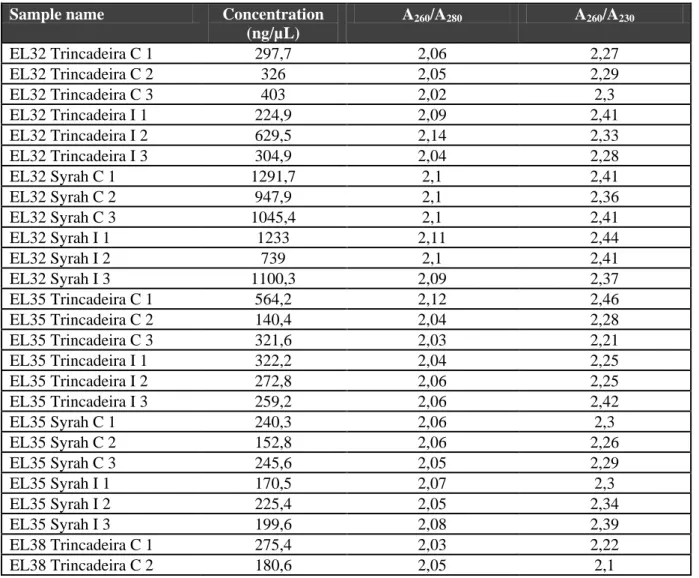
L of TE buffer (10 mM Tris-HCl, 1 mM EDTA) at pH 8.0 were added, and the samples are incubated at 4C overnight. The samples were transferred to eppendorf tubes and 1/10 volume of 2 M potassium acetate was added, which was followed by an 45-minute incubation on ice (this procedure was not included in the initial protocol). After incubation, a centrifugation at 10000 g for 10 minutes at 4C was performed, and then the supernatant was recovered. RNase A at 1 L/100 L was added to the pellet, and the eppendorf tubes were incubated at 37C during 15 minutes. A second extraction with chloroform:octanol 24:1 (v/v), now with 1 volume being added, was performed, after which the tubes were centrifuged at 10000g for 10 minutes. The largest amount of sample possible was transferred into a new eppendorf tubes and a new precipitation step occurred with the addition of 1/10 volume of sodium acetate and 2 volumes of ethanol 100%. After 1 hour at -20C, the tubes were centrifuged at 10000g during 10 minutes. The supernatant was then discarded and the pellet washed by adding approximately 200 L of ethanol 76% at -20C, followed by another 5-minute centrifugation at 10000g. The ethanol was discarded and, after incubating the tubes for 15 minutes at 37C, 15 L of TE buffer were added before leaving the eppendorf tubes conserved at 4C. After the extraction, a 0,8% agarose gel was used to verify the quality of the DNA. The DNA purity and concentration were measured using a spectrophotometer (Appendices, Table 1)
2.5. RNase A preparation
The RNase A solution used in the extraction of DNA was prepared according to the Ribonuclease A from bovine pancreas preparation protocol from Sigma-Aldrich, with minor alterations. A 10 mg/mL stock solution in 10 mM of sodium acetate buffer was prepared for 50 mL, and the pH was adjusted to 5.2 with the addition of HCl 37%. The solution was heated to 100C during 15 minutes and then allowed to cool down to room temperature. The pH was adjusted to 7.4 by adding 1 M Tris-HCl at pH 7.4, after which the solution was aliquoted and stored at 20C.
11 2.6. Assessment of Botrytis cinerea infection with PCR
Detection of samples infected with Botrytis cinerea was made by visual inspection and through PCR. After DNA extraction and quantification, the PCR reaction was prepared by mixing 3
L of DNA:water (containing 100 ng of DNA) with 22 L of a previously prepared master-mix: 16,76
L of DEPC water, 0,6 L of a dNTP mix, 0,14 L of DreamTaq DNA polymerase, 2,5 L of the appropriate buffer (10x) and 2 L of forward and reverse primers specific for amplification of fungal DNA. Primers for species-specific amplification of B. cinerea DNA were previously reported (Rigotti
et al., 2002) and are as follows: C729+: AGCTC-GAGAGAGATCTCTGA; C729-:
CTGCAATGTTCT-GCGTGGAA.
The samples were submitted to a PCR program (35 cycles with an initialization step at 95C for 3 minutes, a denaturation step at 95C for 30 seconds, an annealing step at 55C for 45 seconds, an extension step at 72C for 45 seconds and a final elongation step for 10 minutes at 72C for the extension of any remaining single-strand) and then loaded in a 1,2% agarose gel in order to evaluate the level of infection.
Using this approach, it was possible to confirm the samples that were infected and those that would serve as controls without natural infections (Appendices, Figure 1). It is noteworthy that
Botrytis cinerea was only slightly detected in Syrah grapes at green and veraison stages. Certain
samples were later pooled so that, for RNA extraction, 3 biological replicates would be used.
2.7. RNA extraction
Small scale RNA extraction was performed following the RNeasy Plant Mini Kit protocol. A different extraction buffer (300 mM Tris-HCl at pH 8.0, 25 mM EDTA, 2 M NaCl, CTAB 2% w/v, PVPP 2% w/v, β-mercaptoethanol 2%) was used for this extraction, and it was prepared beforehand and incubated at 60C for 20 minutes in agitation. The samples had a maximum of 100 mg of tissue powder, and 450 L of the extraction buffer were added to each one. The samples were then vigorously agitated. The resulting lysate was transferred to a lilac QIAshredder spin column in a 2 mL collection tube, which was centrifuged at full speed during 2 minutes. The supernatant of the flow-through was transferred to a new tube, to which 0.5 volume of highly concentrated ethanol (96% to 100%) was added and mixed by pipetting. The resulting sample was transferred in its entirety to an RNeasy Mini pink spin column in a 2 mL collection tube. The tube was centrifuged at 10000 g for 15 seconds and the flow-though was discarded. 700 L of Buffer RW1 (wash buffer) were added to the RNeasy spin column, and the tube was centrifuged at 10000g during 15 seconds before discarding the flow-through. The same procedure was done for the addition of 500 L of Buffer RPE (buffer for washing membrane-bound RNA; requires the addition of ethanol). A third centrifugation at 10000g was done, after adding another 500 L of Buffer RPE, but this time for 3 minutes in order to dry the membrane. The column was placed in a new 1.5 mL collection tube and 30 L of RNase-free water were directly added to the column membrane, which was then centrifuged at 10000g for 1 minute to elute the RNA. The extracted RNA quantification was conducted using a spectrophotometer.
A large scale RNA extraction protocol was used for larger samples. A new extraction buffer (1 M Tris-HCl at pH 9.0, SDS 1%, PVP 0.8%, β-mercaptoethanol 5%) was used, and approximately 12 mL were added to each falcon tube containing powder tissue up to the 16.5 mL mark. Using the vortex, the samples were agitated for 1 minute and then put on ice. An extraction with chloroform:isoamyl alcohol was performed, after which the tubes were centrifuged at 7300 rpm for 10 minutes. Approximately 20 mL of the aqueous phase of each sample were transferred to a new set of
12
falcon tubes and 1.6 mL of 2 M potassium chloride were added for protein precipitation. The tubes
were mixed and left on ice during 1 hour. After a centrifugation at 9800 rpm for 15 minutes, the supernatant was recovered to Corex tubes. 1/10 volume of 3M sodium acetate and 0.8 volume of cold isopropanol were added to each sample to precipitate nucleic acids, followed by mixing the tubes thoroughly and a centrifugation at 10000 rpm during 15 minutes. The supernatant was discarded and two washes with 70% ethanol were performed, after which the tubes were left drying in the fume chamber for 15 minutes. The pellet was then dissolved in approximately 1.4 mL of DEPC water, and all the samples were transferred to eppendorf tubes. 1/10 volume of 2 M potassium acetate was added to aid in the precipitation of polissacharides, and the tubes were left on ice for 60 minutes, followed by a centrifugation at 10000g for 15 minutes. The supernatant of each sample was transferred to two separate eppendorf tubes, with 1 volume of 4 M of lithium chloride being added to each tube. The samples were left overnight at 4C for precipitation, after which they were centrifuged at 10000g for 15 minutes. The supernatants were discarded. Two washes using 70% ethanol were performed and the tubes were left drying for 30 minutes in the fume chamber. The pellet was later dissolved in 50 L of DEPC water and stored at -20C for a short period. The extracted RNA quantification was conducted using a spectrophotometer. RNA integrity was verified through agarose gel electrophoresis (Appendices, Figure 2).
2.8. Sample purification
In order to purify the extracted samples, a treatment with DNase was conducted. To new
eppendorf tubes, 24,5 L of each RNA sample were transferred, along with 1,5 L of RNase inhibitor, 3 L of buffer (10x) and 1 L of Turbo DNase Ambion. The samples were mixed and then diluted in 100L of DEPC water. Then the Spectrum™ Plant Total RNA Kit was used, and 250 L of binding solution were added, after which the samples were mixed with a pipette. The mixture was transferred to a binding column in a collector tube, which was centrifuged at 10000g for 1 minute. 500 L of wash solution 1 were added to the mixture, followed by another centrifugation at 10000g for 1 minute. Two more identical centrifugations were executed after adding 500 L of wash solution 2. After each centrifugation, the binding column was removed and the collector tube was dried. The column was then dried by centrifuging during 1 minute at 10000g, after which it was put in a new collector tube. 50 L of elution solution were carefully added to the center of the membrane, followed by 1 minute at room temperature and a short centrifugation at 10000g to elute the sample. After the purification step, a 1,2% agarose gel was used to verify the quality of the RNA. The quantification of the newly purified RNA samples was conducted using a spectrophotometer.
2.9. Reverse transcriptase protocol
First-strand cDNA was synthesized from 2g of total RNA as described previously in Ana M Fortes et al. (2011). The Thermo Scientific RevertAid H Minus Reverse Transcriptase protocol was followed in order to obtain cDNA from the extracted RNA. For each sample, 11,5 L of RNA with DEPC water and 1 L of oligo(dT) primers were added to a sterile eppendorf tube. The tubes were mixed gently, briefly centrifuged at 10000g and incubated at 65C during 5 minutes, after which they were put on ice and centrifuged a second time. 4 L of reaction buffer (5x) were added to each tube, as well as 0,5 L of RNase inhibitor, 2 L of a dNTP mix and 1 L of RevertAid H Minus reverse
13 transcriptase. The tube were mixed gently, centrifuged at maximum speed and incubated at 42C during 60 minutes, after which they were stored at -20C.
2.10. Real-time quantitative PCR
Samples to be analyzed were diluted either 40x or 80x according to the level of expression. Before the final qPCR essays, all primer pairs were tested using two samples of each cultivar and a negative control. A dilution series was also prepared, with either a 1:10 dilution factor or, alternatively, 1:5 (for less expressed genes). Plates with 48 wells were used: the first wells were used for the dilution series (1:1, 1:10, 1:100, 1:1000 or 1:1, 1:5, 1:25, 1:125, 1:625), with each one having three replicates; the remaining wells were used for the samples, with three biological replicates for each time point and grape variety, and for the negative control. Additionally, each qPCR essay was repeated in a separate plating, yielding two technical replicates.
A master-mix was prepared for a total of 51 reactions to avoid pipetting errors, so that each well would contain 10 L of Sybr Green, 0,7 L of each primer (forward and reverse, diluted to a stock solution of 100 M), 4,6 L of ultra-pure water and 4 L of the appropriate cDNA sample. In these essays, the preparation of the master-mix and its distribution were done inside a UV chamber.
Data were normalized using the expression of the actin gene (VIT_04s0044g00580) and elongation factor 1α gene VIT_06s0004g03220), which are the most stable genes according to NormFinder software (Agudelo-Romero et al., 2015). The quantitative PCR program used in these essays consisted of 42 cycles with an initialization step at 95C for 10 minutes, a denaturation step at 95C for 15 seconds, an annealing step for 40 seconds whose temperature was based on the calculated melting temperature of the primers being used (generally one degree lower), an extension step at 95C for 15 seconds and an elongation step at 60C for 1 minute. All primer pairs used in the qPCR were designed using the PrimerSelect software (Appendices, Table 2). qPCR essays were carried out using the StepOne Real-Time PCR System (Applied Biosystems).
2.11. Identification of volatiles
In order to identify volatile compounds, approximately 1-2g of two harvest samples, one control and one infected, of each cultivar were used, and divided by two smaller tubes. A solution of 0,2 g NaCl/1 mL was prepared, and 500 L were added to each tube. After adding the solution, each tube was left in a water bath at 50C for 30 minutes to stimulate the emission of volatiles. For another 30 minutes, the volatiles compounds were analyzed using solid-phase microextraction and gas chromatography-mass spectrometry (GC-MS). astly, the en yme β-glycosidase was added and left to act overnight at 37C, and then analyzed again.