SOCIAL MODULATION OF ANDROGENS IN HUMANS: PSYCHOLOGICAL MECHANISMS AND ADAPTIVE FUNCTION
Gonçalo Aires de Oliveira
Tese submetida como requisito parcial para obtenção do grau de Doutoramento em Psicologia
Área de especialidade...Psicobiologia
SOCIAL MODULATION OF ANDROGENS IN HUMANS: PSYCHOLOGICAL MECHANISMS AND ADAPTIVE FUNCTION
Gonçalo Aires de Oliveira
Dissertação orientada por Professor Doutor Rui Filipe Pais de Oliveira (ISPA – Instituto Universitário)
Tese submetida como requisito parcial para obtenção do grau de
Doutoramento em Psicologia
Área de especialidade...Psicobiologia
2015
Tese apresentada para cumprimentos dos requisitos necessários à obtenção do grau de Doutor em Psicologia na área de especialização de Psicobiologia realizada sob a orientação de Professor Doutor Rui Filipe Pais de Oliveira, apresentada no ISPA- Instituto Universitário no ano de 2015.
O presentado trabalho foi financiado pelo Programa Operacional Ciência e Inovação (POCI 2010) da Fundação para a Ciência e Tecnologia
Acknowledgements
First and foremost, my sincere gratitude to Dr. Rui Oliveira (PhD), for the all opportunities and challenges over the years I’ve spent working in his research group. Without his expertise, guidance and valuable insight, this thesis would not have been possible.
I am also extremely thankful to Dr. Teresa Garcia-Marques (PhD), for challenging me to take Experimental Psychology in the first place. Her encouragement and rigorous scientific thinking contributed greatly to this thesis.
I also would like to thank all co-authors, past and current members of the Integrative Behavioural Biology Group that I had the pleasure to work with. Thank you all for your kindness and for sharing your knowledge with me. May you all be blessed with p-values below the alpha!
A special thank you goes to Tatiana Santos. I’m very humbled and grateful for her unwavering and continuous support over the years.
Finally, thank you to Oscar and Luisa Pazuzi. Their enthusiasm made everything much more interesting.
Palavras-chave
Competição; Testosterona; Hipótese do desafio; Modelo biosocial do estatuto; Avaliação cognitiva
Key words:
Competition; Testosterone; Challenge hypothesis; Biosocial model of status; Appraisal
Categorias de Classificação da tese 2300 Human Experimental Psychology
2400 Animal Experimental & Comparative Psychology 2440 Social & Instinctive Behavior
RESUMO
Esta tese procura clarificar os processos subjacentes às discrepâncias entre a direcção da resposta de androgénios à competição encontrada em estudos empíricos e as predicções das teorias para a modulação social de androgénios. Sugerimos que estes resultados imprevistos podem resultar de interacções com variáveis cognitivas e elegemos especificamente a avaliação cognitiva como um forte candidato a moderador da resposta de testosterona (T) aos desafios sociais. Várias experiências foram realizadas para testar esta hipótese. No Capítulo II e III, testou-se o efeito da familiaridade do oponente e da avaliação do resultado da competição como ameaça/desafio, na resposta de T a uma competição contra um membro do mesmo sexo. Nas mulheres foi encontrado um maior aumento dos níveis de T quando eram derrotadas por um oponente não familiar e quando o resultado era avaliado como ameaçador. Este efeito de moderação não foi detectado para os homens. Continuou-se a investigação sobre os efeitos da familiaridade do oponente e avaliação de ameaça no Capítulo IV, mas com um ciclídeo. Num paradigma de repetidas invasões territoriais por machos estranhos e familiares, encontrou-se uma maior resposta de androgénios no macho residente para as intrusões realizadas por um estranho, comparada com as de um macho familiar. O efeito do componente de expectativas da avaliação cognitiva, na resposta de T à competição em mulheres, foi testado através da manipulação das expectativas dos participantes em relação ao resultado da competição antes da tarefa competitiva (Capítulo V). Os vencedores inesperados baixaram os níveis de T depois da competição, mostrando uma inversão da resposta predicta pelos modelos teóricos. No Capítulo VI, testou-se o efeito directo das alterações afectivas nos níveis de T usando excertos de filmes emocionais. Um decréscimo significativo de T foi observado nos participantes da condição de tristeza, numa direcção congruente com as predicções da literatura. Finalmente, no Capítulo VII, abordou-se a função adaptiva das mudanças de androgénios induzidas pela competição proposta pelos modelos teóricos. Especificamente, testou-se o efeito do resultado da competição e dos níveis pós-competitivos de T na capacidade do individuo detectar faces emocionais ameaçadoras. Os nossos resultados sugerem que os vencedores foram mais rápidos e melhores a discriminar faces de raiva do que os perdedores. A discriminação de raiva foi também melhorada quando os níveis de T pós-competição eram elevados. No geral, estes resultados apoiam a hipótese de uma moderação cognitiva da resposta de T em mulheres. As implicações destes resultados para as teorias de modulação social de andrógenios são discutidas numa perspectiva comparada e integrativa.
ABSTRACT
This thesis aims to clarify the processes underlying the discrepancies between the direction of the androgen response to competition found in empirical studies and predictions of the theories for the social modulation of androgens. We suggest that these unpredicted results could result from interactions with cognitive variables and specifically select appraisal as a strong candidate to moderate the testosterone (T) response to social challenges. Several experiments were conducted to test this hypothesis. On Chapter II and III, we have tested the effect of opponent familiarity and the evaluation of the competition outcome as a threat/challenge on the T response to a competition with a member of the same sex. We have found that women show greater increases in T levels when they were defeated by an unfamiliar opponent and evaluated the outcome as threat. This moderation effect was not detected for men. We have continued the research on the effects of opponent familiarity and threat assessment on Chapter IV, but this time using a cichlid fish. In a paradigm of repeated territorial intrusions by stranger and familiar males, the resident male’s androgen response was higher for the intrusions performed by a stranger compared to those performed by a familiar male. The effect of the expectations component of appraisal on the T response to competition in women was tested by manipulating the expectations of the participants on the outcome of the competition before the competitive task (Chapter V). We have found that the unexpected winners decreased their T levels, showing a reversal of response predicted by the theoretical models. On Chapter VI, we have tested the direct effect of affective changes on T levels using emotional film clips. T significantly decreased for those participants assigned to the sadness condition, a direction that is congruent with predictions of the literature. Finally, on Chapter VII, we have addressed the adaptive function of the androgen changes elicited by the competition, as proposed by the theoretical models. Specifically, we have tested the effect of the competition outcome and post-competition T levels on the individual’s capacity to detect threatening emotional faces. Our findings suggest that winners were faster and better in discriminating angry faces than losers. Anger discrimination was also enhanced when post-competition T levels were high. Together these findings support the hypothesis of a cognitive moderation of the T response to competition in women. Results are discussed in terms of their implication to the theories for the social modulation of androgens in a comparative and integrative perspective.
Thesis Index
Chapter I - Social Modulation of Androgens: theories, mechanisms and functions 1
Introduction 2
Theoretical Models for the Social Modulation of Androgens 2 Mechanisms of Androgen Response to Social Challenges 4
Testosterone Response to Competition in Humans 5
The Dual-hormone Hypothesis of Neuroendocrine Response to Social Challenges
12 Function of the Androgen Response to Social Challenges 13 Modulation of Social Decision-Making Mechanisms in the Brain by Peripheral
Hormones
19
Summary 23
Objectives and Description of the Empirical Chapters 23
References 25
Chapter II - Threat perception and familiarity moderate the androgen response to competition in women
39
Introduction 41
Material and Methods 44
Results 48
Discussion 52
References 55
Chapter III - Testosterone response to competition in male losers is unrelated to
opponent familiarity and threat appraisal 61
Material and Methods 65
Results 69
Discussion 72
References 75
Chapter IV - Dear enemies elicit lower androgen responses to territorial challenges than
unfamiliar intruders in a cichlid fish 81
Introduction 83
Material and Methods 85
Results 89
Discussion 93
References 95
Chapter V - Unexpected winners decrease testosterone levels after a competition 101
Introduction 103
Material and Methods 105
Results 112
Discussion 116
References 119
Chapter VI Non-threatening negative affect decreases testosterone levels in females 125
Introduction 127
Material and Methods 128
Results 132
Discussion 136
Chapter VII - Social modulation of androgens and threat detection in humans 145
Introduction 147
Material and Methods 149
Results 154
Discussion 160
References 164
Chapter VIII - General Discussion 171
Cognitive modulation of the testosterone response to competition 172 Predictions of the theoretical models for the social modulation of androgens 176
Concluding remarks 180
References 181
Table Index
Chapter II - Threat perception and familiarity moderate the androgen response to competition in women
Table 1 - Absolute values for all sampling points of the measured hormones 47 Table 2 - Pearson correlation coefficients between threat, familiarity and
hormone levels 20 minutes after the competition for Winners (n=17) and Losers (n=17)
51
Chapter III - Testosterone response to competition in male losers is unrelated to opponent familiarity and threat appraisal
Table 1 - Baseline and post-competitive hormone levels for Winners and Losers 69 Table 2 - Pearson correlation coefficients between threat, familiarity and 72
hormone levels 20 minutes after the competition for Winners (n=18) and Losers (n=18)
Chapter IV - Dear enemies elicit lower androgen responses to territorial challenges than unfamiliar intruders in a cichlid fish
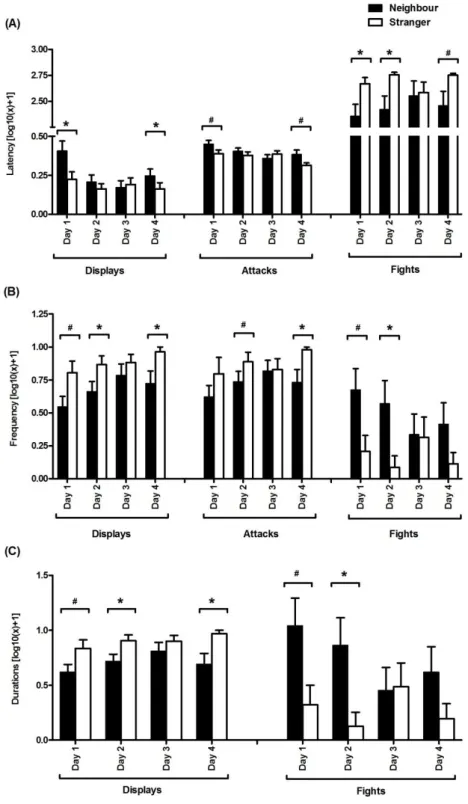
Table 1 - Statistical values for the differences in the resident males’ aggressive behaviours towards neighbour and stranger intruders over the course of the experiment
90
Chapter V - Unexpected winners decrease testosterone levels after a competition Table 1 - Testosterone levels for winners and losers in the confirmation and
violation of expectations conditions (pg/ml) 110
Table 2 - Cortisol levels for winners and losers in the confirmation and violation
of expectations conditions (μg/dl) 110
Chapter VI - Non-threatening negative affect decreases testosterone levels in females Table 1 - Mean and standard error of the mean for the testosterone levels before
and after the emotional film 132
Table 2 - Post-hoc comparisons for the participants’ scores on psychological
measures between the neutral group and the other emotional conditions 134 Chapter VII - Social modulation of androgens and threat detection in humans
Table 1 - Testosterone and cortisol concentrations for winners and losers before and after the competition
154
Figure Index
Chapter I - Social Modulation of Androgens: theories, mechanisms and functions Figure 1 - Representation of the androgen changes proposed by the challenge
Figure 2 - Hypothetical representation of the interaction between hormones and cognition, from contest appraisal to behavioral response 7 Figure 3 - Schematic representation of the situated-dynamic-embodied
framework with adaptive behavior resulting from the emergent characteristics of brain-body-environment coupling and not from singular contribution of the components
21
Chapter II - Threat perception and familiarity moderate the androgen response to competition in women
Figure 1 - Competition outcome appraisal rating as a Threat/Challenge (Mean±SEM) for participants in the winner and loser condition with familiarity of the opponent as a covariate.
49
Figure 2 - Log-transformed hormone levels (Mean±SEM) measured at baseline level, and 20 minutes after the competition for participants in the winner and loser condition with familiarity of the opponent as a covariate.
50
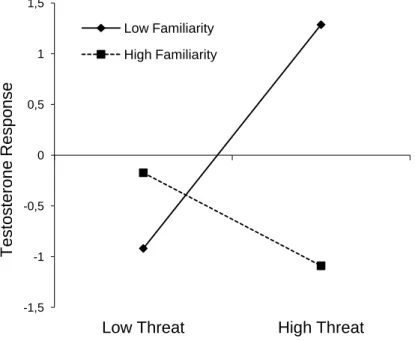
Figure 3 - Regression slopes predicting testosterone response (unstandardized residuals) in function of threat and familiarity for women that lost the competition
52
Chapter III Testosterone response to competition in male losers is unrelated to opponent familiarity and threat appraisal
Figure 1 - Competition outcome appraisal rating as a Threat/Challenge
(Mean±SEM) for participants in the winner and loser condition with familiarity of the opponent as a covariate
69
Figure 2 - Hormone levels (Mean±SEM) measured at baseline (pre-competition) and 20 minutes after the competition (post-competition) for participants in the winner and loser condition with familiarity of the opponent as a covariate
71
Chapter IV - Dear enemies elicit lower androgen responses to territorial challenges than unfamiliar intruders in a cichlid fish
and neighbour intruders during the 4 days of the experiment
Figure 2 - Resident males’ escalation index for intrusions by neighbours and
strangers 92
Figure 3 - Resident males’ 11-ketotestosterone response to intrusions by strangers and neighbours on the first and last days of the experiment 93 Chapter V - Unexpected winners decrease testosterone levels after a competition
Figure 1. Ratings for the appraisal of the competition outcome as a threat and
challenge 114
Figure 2. Hormone response to the competition (unstandardized residuals) 115 Chapter VI Non-threatening negative affect decreases testosterone levels in females
Figure 1 - Changes in the emotions targeted by the emotional film clips. 133 Figure 2 - Changes in positive and negative affect as measured by the
Differential Emotions Scale (DES) 134
Figure 3 - Testosterone response to the emotional film clips (unstandardized
residuals; Mean±SEM). 136
Chapter VII - Social modulation of androgens and threat detection in humans
Figure 1 - Overview of the experimental procedure 152 Figure 2. Log-transformed hormone levels (Mean±SEM) measured at baseline and 15 minutes after the end of the competition for winners and losers. 156
Figure 3. Emotion identification task parameters 158
Figure 4. Initial and final model for the path analysis on the emotion recognition task parameters sensitive to the competition outcome. 159
Appendix A - Summary of humans studies reporting effects of competition on androgen
levels (sorted by year of publication) 189
Appendix B - Scores for the Differential Emotion Scale measures 197 Appendix C - Coefficients and significance for each path of the initial model
Chapter I
Introduction
Over the last decades, accumulated evidence has revealed a reciprocal relationship between androgen levels and the social environment. As a result, androgens are no longer seen exclusively as sex steroids involved in reproduction, but rather as modulators of social behaviour. Early models for the interaction between hormones and behavior (Leshner, 1975, 1979; Mazur, 1976), already presented the core ideas that would be further developed in subsequent formal explanations, namely that androgen levels influence the behavioral response to social stimuli and that changes in androgens can be elicited by the social environment, thus creating a reciprocal interaction between androgens and behavior.
Theoretical Models for the Social Modulation of Androgens
The reciprocal model of androgens and social behavior has been formalized in two different hypotheses, each presenting different theoretical constraints and generating its own predictions. The biosocial model of status (BMS), initially proposed by Mazur (Mazur & Booth, 1998; Mazur, 1985), establishes a dynamic and mutual reinforcing relationship between androgens and social dominance. According to this model, androgens promote status seeking behaviors, and the achievement of higher status through dominance contests feeds back on the individuals' androgen levels, according to the individual's new position in the social hierarchy. Therefore, the BMS predicts that dominant individuals should have higher baseline levels of androgens than subordinates and while it is expected that winning an agonistic interaction results in increased androgen levels, establishing a positive feedback loop between status and androgens, losing such an interaction should result in decreased androgens and an inhibition of the individuals' engagement in further dominance contests (Mazur & Booth, 1998).
While the BMS focused essentially on androgens and social dominance, Wingfield and co-workers proposed the “challenge hypothesis” with the goal of providing an explanation for the interspecific seasonal variation of androgen levels, linking fluctuations in androgen levels with its functions in reproductive and aggressive contexts (Wingfield, Hegner, Dufty, Jr., & Ball, 1990). The “challenge hypothesis” (Figure 1) predicts that androgen levels increase from a non-breeding constitutive baseline (level A) to breeding
season levels (level B) to allow for the expression of secondary sex characters and reproductive behaviors; short term further increases in androgen levels up to a maximum physiological level (level C) may occur in response to agonistic encounters (e.g. territorial intrusions). Recent revisions of the “challenge hypothesis” have shown that B to C increases do not reflect the effect of social challenges and in fact, across species, no correlation was found between seasonal androgen responsiveness and the androgen response to an experimental territorial challenge (Goymann, Landys, & Wingfield, 2007). These two time scales of the androgen response to the social environment are expected to rely on different mechanisms (e.g., non-genomic and genomic steroid action: (Baker, 2003; Balthazart, Baillien, & Ball, 2006), and thus should be seen as separate phenomena. For example, while the dynamic reciprocal changes of the BMS and of the acute response to a territorial intrusion in the “challenge hypothesis,” are acute and short-lived and therefore are expected to rely on either non-genomic or on transient changes in gene expression, seasonal changes in androgen responses are gradual and long-lasting, and therefore are expected to rely on genomic and epigenetic mechanisms.
Figure 1. Representation of the androgen changes proposed by the challenge hypothesis: (A)
constitutive androgen levels; (B) breeding baseline levels needed for successful reproduction; and (C) maximum physiological levels.
In conclusion, the BMS and the “challenge hypothesis” generate different predictions for the T response to a social challenge. While the BMS explicitly predicts outcome-dependent T changes for winners and losers, the “challenge hypothesis” predicts an increase in T levels for the participants involved in an agonistic encounter, without specifying the direction of the T changes when the interaction reaches a resolution. However, in both models, the T response to a social challenge is expected to be acute, short-lived and contribute to the adjustment of behavioral and cognitive processes to the changes in the social context and influence future social interactions.
Mechanisms of Androgen Response to Social Challenges
In males, most androgen production results from the activation of the hypothalamic-pituitary-gonadal (HPG) axis in which a sequential pulsatile hormonal cascade targets the Leydig cells in male gonads, to elicit testosterone (T) production and its release into circulation (Gleason, Fuxjager, Oyegbile, & Marler, 2009). In human males, a small part of the circulating levels of T originates from the adrenal glands (Laue & Cutler, 1997). In contrast, in premenopausal women, the adrenal zona fasciculata and the ovarian stroma contributes in equal parts to the circulating levels of T, with the remaining 50% resulting from the conversion of androstenedione (Burger, 2002; Longcope, 1986). Androgens can also be produced de novo in the brain from cholesterol and converted into other hormones (Schmidt et al., 2008) and both processes can be modulated by social context (Cornil, Ball, & Balthazart, 2012; Pradhan et al., 2010). In fact, studies in several taxa (fish, birds, mammals) suggest that the effects of androgens on agonistic behavior are mediated by their rapid aromatization into estrogens in the brain (Charlier et al., 2011; Huffman, O’Connell, & Hofmann, 2013; Soma, Schlinger, Wingfield, & Saldanha, 2003; Trainor, Kyomen, & Marler, 2006). Additionally, tissue sensitivity to androgens can also be socially modulated through rapid changes in the expression of androgen receptors (Burmeister, Kailasanath, & Fernald, 2007; Fuxjager et al., 2010).
The adjustment of androgen levels according to the social environment requires mechanisms that can translate and integrate multi-modal social information relevant to the organism and modulate neuroendocrine activity responsible for the production of androgens. Cichlid fish have been a very successful study model in this respect. Experiments with cichlid
fish have shown how changes in social status can induce rapid changes in HPG axis activity leading to changes in circulating androgens (for comprehensive reviews see (Maruska & Fernald, 2013; R. F. Oliveira, 2009). When opportunities to ascend in social status arise subordinates can rapidly exhibit the traits of dominant fish (e.g., coloration and aggressive behavior), and sequentially increase the expression of GnRH1 in the preoptic area, pituitary gonadotropins and androgen levels (Maruska, Zhang, Neboori, & Fernald, 2013). Conversely, dominant males experiencing a decrease in social status present a reduced expression of GnRH1 and pituitary gonadotropins, and a decrease of androgen levels (Maruska et al., 2013). Furthermore, the social information signaling social opportunity seems to be conveyed by changes in the expression of the immediate early gene egr-1 in high density GnRH1 neuron areas of the anterior preoptic area, indicating that egr-1 is interfacing social information with the activity of the HPG (Burmeister, Jarvis, & Fernald, 2005).
Testosterone Response to Competition in Humans
In humans, sports competition and laboratory tasks have been used as a proxy for the agonistic encounters studied in non-human animals. Early research on this topic was conducted almost exclusively with men (see Appendix A) and allowed the extension of the theories for the social modulation of androgens from non-human animals to human males. On one notable exception (Mazur, Susman, & Edelbrock, 1997), women were also tested in a competition using a videogame and the general decrease of T throughout the experiment, led the authors to conclude that the T dynamics to competition could be different between the sexes. These findings along with the need to control for additional sources of T variation in women (e.g. phase of the menstrual cycle, use of oral contraceptives) and the higher levels of circulating T in men, may have contributed to a lack of investment in researching women’s T response to competition. More recent studies have shown that T levels are relatively stable across the phases of the menstrual cycle (Dabbs & Rue, 1991; Liening, Stanton, Saini, & Schultheiss, 2010) and although the use of oral contraceptives may decrease the baseline T levels, they do not impair the reactivity of this hormone or change the direction of the T response to a social challenge (Edwards & O’Neal, 2009). As a consequence, the number of studies with female samples has significantly increased. Overall, these studies have shown an inconsistent pattern in both sexes, with T levels increasing in winners and decreasing in losers (as predicted by the BMS), increasing both in winners and losers, or not showing significant
changes in response to the competitive event (Appendix A). It has been suggested that these heterogeneous androgen responses to competition may reflect a mediation/moderation of the androgen response by cognitive variables, such as perceived threat/challenge, mood changes, etc. (Salvador & Costa, 2009; Salvador, 2005). This interaction between cognitive processes and the androgen response is valid for both sexes and may help to explain some of the null findings reported in some female studies that had previously been attributed to differential androgen effects in women (Kemper, 1998; van Anders & Watson, 2006). Unexpected results have also been reported in male studies (Filaire, Maso, Sagnol, Ferrand, & Lac, 2001; van der Meij, Buunk, Almela, & Salvador, 2010) and therefore, it is premature to downplay the role of T in women based on competition studies that did not find results according to the predictions of the theoretical models, especially since in women, T has also been linked to status and dominance, (Cashdan, 2003; Edwards, Wetzel, & Wyner, 2006; Grant & France, 2001; Wirth & Schultheiss, 2007) and has been shown to predict the reaction to winning and losing (Mehta, Jones, & Josephs, 2008; Mehta & Josephs, 2006). Moreover, recent studies with females have shown a clear T response to competition in the direction predicted by the BMS (Jiménez, Aguilar, & Alvero-Cruz, 2012; T. F. Oliveira, Gouveia, & Oliveira, 2009), with no observed sex difference in the direction of the T response for winners and losers (Jiménez et al., 2012).
The suggested interaction between cognitive processes and the triggering of the endocrine response to competition should be seen as bidirectional, that is, not only do cognitive processes modulate the androgen response to competition but also, competition-driven changes in androgens should affect subsequent cognitive processes that are relevant to competition for status (Edwards, 2006; Mazur & Booth, 1998; Mazur, 1985). For example, the T increase after a social challenge predicted dominance and willingness to engage in competitive interactions even after losing a previous competition, and has also been linked to choosing aggression instead of behaviors that lead to economic rewards (Carré, Gilchrist, Morrissey, & McCormick, 2010; Carré, Putnam, & McCormick, 2009; Carré & McCormick, 2008; Klinesmith, Kasser, & McAndrew, 2006; Mehta & Josephs, 2006). Interestingly the behavioral effects of these heightened T levels are not necessarily associated with winning the interaction, which is contrary to what would be predicted by the BMS (ie, losers increase T, Mehta & Josephs, 2006; no effect of the perceived outcome, Carré & McCormick, 2008).
Psychological moderators and mediators of androgen response to competition
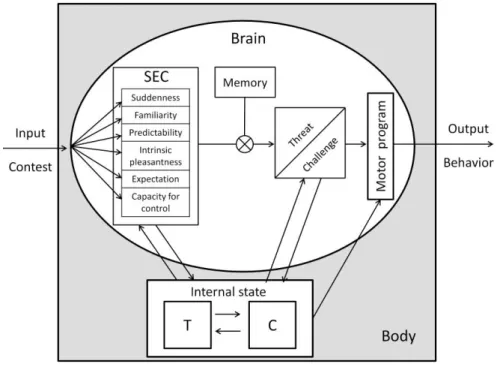
The proposed interaction between the physiological response and cognitive variables can already be found in the BMS (Edwards, 2006; Mazur, 1985). Among the suggested modulators of the T response to competition, appraisal has been mentioned as a major candidate since it is known to be a key mechanism in the activation of the physiological response to challenges in animals and humans (Edwards, 2006; Salvador & Costa, 2009) (Figure 2). According to this hypothesis, it is not only the objective characteristics of the social interaction that triggers a physiological response but rather, the evaluation of what that event means to that organism at that moment in time. As a consequence, the same exact event may elicit different responses, depending on the way it is appraised by different individuals or by the same individual at different moments in time (e.g, in different social contexts).
Figure 2. Hypothetical representation of the interaction between hormones and cognition,
from contest appraisal to behavioral response. Abbreviations: C, cortisol; SEC, stimulus evaluation checks; T, testosterone.
Definition and models of appraisal
Currently, appraisal is defined as a transactional process between the individual and the environment, in which the individual must detect and assess the significance of an event (Moors, Ellsworth, Scherer, & Frijda, 2013; Smith & Kirby, 2009). In this interactive process, the objective characteristics of the stimuli are combined with the individual’s motivational and physiological state, resulting in a circumstantial evaluation that is permeable to the individual’s needs, goals and resources (Scherer, 2009a, Smith & Kirby, 2009, Roseman & Smith, 2001). Moreover, in order to generate adaptive responses, appraisal must be understood as a fundamentally dynamic and recursive process in which previous evaluations are monitored and updated based on the constant inflow of sensorial information originating from the environment and/or from changes in the internal state (K. R. Scherer, 2001, 2009b).
Historically, the first appraisal theory was proposed by Magda Arnold (1960) and according to this author an event must be evaluated across three appraisal dimensions: the evaluation of the object per se (beneficial, harmful), its presence or absence and the difficulty of attaining or rejecting the object. The combined outcome of these appraisal dimensions would lead to action tendencies and physiological reactions (not simple reflexes), experienced by the individual as emotions, that should not be (Arnold, 1960). Perhaps the most influential of the appraisal theorists, Lazarus (1966, 1991) proposed a cognitive-motivational-relational theory composed by primary and secondary appraisal. In primary appraisal, the individual must evaluate the event on a set of three components (goal relevance, goal congruence and type of ego-involvement) in order to assess the relevance of the event for its well-being (Lazarus, 1966). Secondary appraisal consists of an evaluation of the resources and coping options available to deal with the motive-relevant event. Blame or credit, coping potential and future expectations are the components proposed for secondary appraisal (Lazarus, 1991). It has been suggested (Reisenzein, 2006) that the structural differences between these theories are mostly terminological, since Lazarus’s secondary appraisal matches Arnold’s third dimension of appraisal and primary appraisal could be understood as a combination of Arnold’s first two appraisal dimensions (evaluation and presence-absence).
Later theories of appraisal (Frijda, 1987; Roseman, Spindel, & Jose, 1990; Scherer, 1984; Smith & Ellsworth, 1985) substantially agree on the structure of appraisal, although the number of components, terminology (e.g. predictability - Scherer, 1984; certainty - Smith & Ellsworth, 1985) and operationalization (e.g. categorical vs. dimensional) of these variables
may differ. Most appraisal theories include a form of novelty, intrinsic pleasantness, predictability, goal significance, agency, coping potential and compatibility with personal and social standards as dimensions of appraisal (Ellsworth & Scherer, 2003). Other theorists, besides the breaking down of appraisal into components, postulate a supra-ordinate dimension that emerges from a set of appraisal dimensions as an integrated synthesis and therefore cannot be reduced to its’ composing parts (Smith & Lazarus, 1993).
Although the models mentioned above recognize a bi-directional mutual feedback relationship between components, the order in which these components are activated for information processing is still debated. A fixed order of activation from the preliminary closure of simpler appraisals, to more complex appraisals has been justified from a perspective of system economy and logical dependency (K. R. Scherer, 1984, 2009b), while other authors argue that processing efficiency requires a flexible order of evaluations, to avoid structural looping and to focus on the more ambiguous components (Smith & Lazarus, 1993). Ellsworth (1991) proposed a middle ground theory according to which the early components must be activated first to start the appraisal process and all subsequent evaluations can take place in flexible order.
In parallel with the structural specifications of appraisal, a theory of appraisal cannot be complete without satisfying the requirement of identifying the cognitive and physiological mechanisms that underlie the evaluations taking place in each appraisal component. Given the abundance of structural models of appraisal, it is perhaps surprising that much less research has been devoted to this aspect. For example, it has been suggested that priming and spreading of activation have been suggested as the mechanisms enabling fast, automatic and memory based forms of appraisal (Smith & Kirby, 2000). The component process model (K. R. Scherer, 2009a, 2009b) updates a previous theoretical proposal aiming to establish a phylogenetic and ontogenetic continuity of appraisal process (Leventhal & Scherer, 1987), making it particularly innovative and relevant to comparative research. Along with the structural components already discussed, in the component process model the stimulus evaluation checks (SEC) taking place in the appraisal components can be performed with different degrees of complexity and processing requirements (sensorimotor, associative and conceptual), facilitating the operationalization and research of appraisal processes in non-human animals (a proposal for the study of appraisal in non-non-human animals can be found in Faustino, Oliveira, & Oliveira, 2015). This proposal, along with other models already discussed, heavily contrasts with the misconception of appraisal as an exclusively deliberate
and controlled process. It has been suggested that given the widespread influence of Lazarus’s work the term “cognitive appraisal” might have led to a misunderstanding of the process of appraisal (e.g. Kappas, 2006). Notably, starting from Arnold’s theory (Arnold, 1960) to the current models (reviewed in Moors et al., 2013), appraisal has been conceived as encompassing automatic and deliberate processes. While Lazarus’s (1991) nomenclature of “cognitive appraisal” emphasizes a research focus on the more controlled processes of appraisal, but should not be interpreted as a denial of the existence of automatic processes in appraisal (Lazarus, 2001).
Evidence for appraisal in competition
The influence of appraisal on the activation of the androgen response to agonistic interactions was highlighted in an experiment with cichlid fish using mirror elicited fights, allowing the decoupling of the effects of expressing aggressive behavior from those related to the assessment of the fight outcome. In this experiment, males engaged in mirror fights and therefore with no information on the outcome of the interaction did not exhibit the androgen response observed in males fighting real opponents (R. F. Oliveira, Carneiro, & Canário, 2005; see also R. F. Oliveira & Canário, 2011). Other experiments are congruent with these findings, suggesting that the expression of aggression is not sufficient, per se, to increase androgen levels, and that animals need to assess social information about the interaction outcome and/or social context in order to trigger an androgen response (Hirschenhauser, Taborsky, Oliveira, Canário, & Oliveira, 2004; Hirschenhauser, Wittek, Johnston, & Möstl, 2008). In human competition, an experiment using a cognitive laboratory task found a connection between increases of T after the competition and opponent self-efficacy, indicating that the information gathered about the opponent was used to adjust the endocrine response (van der Meij et al., 2010). These results are compatible with the abovementioned role of appraisal and opponent assessment in animal agonistic encounters (Hirschenhauser et al., 2004, 2008; R. F. Oliveira et al., 2005). In sports, there is also correlational evidence for the effects of cognitive appraisal on T response, mostly related to the causal attribution of the competition outcome, which can be interpreted as part of the implication-assessment component of cognitive appraisal (Lazarus, 1991a). The association between post-match T and external attribution of the competition outcome has been reported as being negative for winners and positive for losers, (González-Bono, Salvador, Ricarte, Serrano, & Arnedo, 2000;
González-Bono, Salvador, Serrano, & Ricarte, 1999), while another study found no hormonal differences when the sample was split by appraisal of performance and satisfaction with the outcome (Suay et al., 1999).
Effect of territoriality and group membership on the testosterone response
Some results from human experiments suggest that men have higher T levels before matches taking place at their home venue than at away venues and also that these higher T levels are associated with higher team rivalry (Carré, Muir, Belanger, & Putnam, 2006; Neave & Wolfson, 2003). Yet another study showed that a home field victory led to higher postgame T than when victory was achieved at the opponent’s venue, but the aforementioned effect of game location on pre-game T levels was not found (Carré, 2009). The same authors proposed that the absence of this effect could be due to the sample, which consisted of amateur rather than elite players.
The identified connection between territorial behavior and team rivalry also brings into question what role is played by the individual group membership when facing a dominance contest. Early evidence of the moderating effect of group membership was found in a domino competition between neighboring Caribbean villages. In this study, the teams competed against familiar men and also against strangers, and although the effect did not reach statistical significance, T tended to increase more before matches against neighboring villages than against teams of their own village (Wagner, Flinn, & England, 2002). Trumble et al organized a soccer tournament among the Amazonian Tsimané and attributed the lack of a winning effect on T response to the interference of in-group factors arising from a relative acquaintance between players of the opposing teams (Trumble et al., 2012). Perhaps the clearest effect of group membership on the T response to competition can be found in a study by Oxford et al that used a video game tournament, with teams competing against each other (between groups) and also, team members competing against their own team mates (within group) (Oxford, Ponzi, & Geary, 2010). Among the findings of this experiment, it was shown that men who contributed more to the team score, and thus was considered as high ranking, had a T response that was different between in-group and out-group competition (Oxford et al., 2010). The high-ranking winners had a higher T after the match when the between-groups competition was played first, but high-ranking players showed a lower T and higher cortisol
(C), independently of winning or losing the match, in the within-group competition (Oxford et al., 2010).
Effect of individual characteristics on the testosterone response
Along with the social and cognitive variables, individual characteristics have also been proposed to play some role in the endocrine response to competition. Power-motivated individuals use assertiveness to achieve an impact on others, while obtaining reward and reinforcement from those actions. Thus, implicit power motivation predicts many of the dominance behaviors usually associated with high T (Stanton & Schultheiss, 2009). Experiments using a contrived competitive task showed that individuals with high power motivation had the highest T levels after winning, but no association was found between personalized power and high T for losers (Schultheiss, Campbell, & McClelland, 1999). Furthermore, high implicit power motivation predicted stronger increases of T post-contest for male winners with low activity inhibition (used as a measure of impulse control) and also enhanced implicit learning (Schultheiss & Rohde, 2002). Sex differences and similarities for the effect of implicit power motivation on T have also been reported (Schultheiss et al., 2005). In these experiments, high implicit power motivation predicted increases of T after the contest for men and women in the winner condition, but the T response in the loser condition was moderated by sex, where power motive was a negative predictor of T for men and a positive predictor of T for women (Schultheiss et al., 2005). The increased T levels found in women in the loser condition were interpreted as readiness to reengage in competition, after the power goal was not achieved (Schultheiss et al., 2005).
The Dual-hormone Hypothesis of Neuroendocrine Response to Social Challenges
Besides the role of psychological variables in the androgen response to social challenges, there is growing evidence that both dominance behavior and T levels change after a contest and that both could be moderated by baseline levels of C and T, reflecting an endocrine interaction between the hypothalamic–pituitary–gonadal and the hypothalamic– pituitary–adrenal axis (Viau, 2002). For example, basal T levels have been shown to predict
the C response to winning or losing a competition (Mehta et al., 2008), positive correlations between T and overt aggression have only been found when C levels are low (Popma et al., 2007) and a T/C ratio has been proposed as a marker for the propensity for aggressive behavior (Terburg, Morgan, & Van Honk, 2009). This set of results led to the recent proposal of a dual-hormone hypothesis for the regulation of dominance (Mehta & Josephs, 2010). The proposers of this hypothesis found evidence that the association between T and dominance was moderated by basal C levels in both sexes, with higher T predicting higher dominance scores only when baseline C levels were low. Furthermore, high dominance after losing a competition was predicted by high pre-competition T and low pre-competition C and this relationship was reversed when individuals showed high C levels before the competition (Mehta & Josephs, 2010). This hypothesis received further support in a recent study that found the same pattern of response in the winners of a video game contest; in this study, an increased post-competition T was found when the winning participants presented a high baseline T and low baseline C (Zilioli & Watson, 2012). Together, these results support the idea that the promotion of status-seeking behaviors by high T only occurs when C levels are low. It should be noted here that the dual-hormone hypothesis establishes the interaction between T and C based on acute responses to social challenges, and this mutual regulatory pattern may not account for the changes in hormone levels occurring under chronic events (Gettler, McDade, & Kuzawa, 2011).
Function of the Androgen Response to Social Challenges
The fact that androgen levels change in response to the perceived outcome of an interaction, and not merely by experiencing an agonistic interaction raises the hypothesis that socially driven changes in androgen levels will not directly affect the current interaction, for which the outcome has already been established, but should rather modulate behavioral expression in subsequent social interactions (R. F. Oliveira, 2009). Interestingly, Leshner's (1975) proposal for the reciprocal model had already hinted that the hormone response should modify future behavior when the individuals are facing a similar challenge, and both the BMS and the challenge hypothesis have also implicitly assumed that the adaptive function of the social modulation of androgen levels is to fine tune the expression of androgen-dependent behavior according to the perceived social environment.
More recently, this view has been formalized as the Winning hypothesis (Oyegbile & Marler, 2005) according to which changes in the probability of winning future interactions driven by the success in previous ones (i.e., winner/loser effect; Hsu, Earley, & Wolf, 2006), could be mediated by post-contest transient changes in androgen levels. This hypothesis is currently supported by several lines of evidence. In cichlid fish winner effects can be blocked (i.e., reduction of the winning probability of previous winners from ca. 90% back to chance levels) by the exogeneous administration of the anti-androgen cyproterone acetate to the winners of the first interaction between the agonistic encounters (R. F. Oliveira, Silva, & Canário, 2009). In California mice (Peromyscus californicus), in the emergence of the winner effect during successive social interactions is paralleled by increased levels of androgens after cumulative winning experience (Oyegbile & Marler, 2005). Furthermore, unlike the California mice, the white-footed mouse (Peromyscus leucopus) does not form a winner effect or respond to a contest with increased T, but a robust winner effect can be induced in this species via a post-contest administration of T (Fuxjager, Montgomery, & Marler, 2011). As it has been previously suggested, it is possible that these effects could result from the aromatization of T in the brain (Trainor et al., 2006). In humans, there is preliminary evidence showing that the winner effect is also present in human males (Zilioli & Watson, 2014) and it is known that increased androgen levels after a competition predict the willingness to engage in further contests, even after losing the first interaction (Carré & McCormick, 2008; Mehta & Josephs, 2006).
Effects of androgens on psychological parameters relevant to performance in competition
One assumption of the Winning hypothesis is that socially driven changes in androgen levels modulate the expression of variables relevant for success in subsequent social contests. Given the time frame of this response these variables are expected to be of the cognitive (i.e., information-processing) domain. Most of the evidence for the effects of androgens on cognitive variables comes from research using paradigms that involve the administration of exogenous T to animals and humans (for a review see Bos, Panksepp, Bluthé, & Van Honk, 2012). The effects of T on social cognition have also been investigated, using endogenous baseline measures of T or via environmental manipulations that induced a change in androgen levels within the physiological range of the individual. Results from these experiments should
be compared with those arising from paradigms involving exogenous administration of T – with exogenous administration of T, the dose-response curve follows an inverted U-function, and this procedure may lead to pharmacologically induced supraphysiological hormone levels (Adkins-Regan, 2005).
Given the importance of T in social challenges, experiments have been planned to investigate the relationship between T and the variables involved in threat detection. In a social environment, the rapid detection of threatening stimuli is critical for survival, and the presence of an efficient threat detection system can be seen as an evolutionary adaptive advantage since it allows the appropriate selection of a fight-or-flight response. In humans, facial expressions of fear and anger have been used as signals of threat and are known to elicit an adaptive response on the observer (Parkinson, 2005). Research shows that there is an attentional bias toward threat stimuli and that anxiety and vigilant behavior play a role in this effect (Bradley, Mogg, Falla, & Hamilton, 1998; Bradley, Mogg, & Millar, 2000). The fear-reducing properties of T have already been demonstrated in animals (Aikey, Nyby, Anmuth, & James, 2002; Frye & Seliga, 2001) and the convergence of experiments using different paradigms suggests that this T effect on fear is also present for humans. Participants who had their levels of T experimentally increased showed a decreased unconscious vigilant emotional response to masked fearful faces when compared with a placebo group, but T had no effect on self-reported measures of anxiety (Van Honk, Peper, & Schutter, 2005). Furthermore, exogenous T reduced the fear-potentiated startle reflex and lowered the electrodermal response to negative stimuli, which can be interpreted as an attenuation of the sympathetic components of the stress response (Hermans, Putman, Baas, Koppeschaar, & van Honk, 2006). This effect was also enhanced in participants with initial anxiety and high-reactivity to affective startle modulation (Hermans et al., 2007). Moreover, in an experiment using a video morphing a neutral to angry facial expression, anger was consciously detected at a later stage for the participants on the T administration condition compared to placebo (van Honk & Schutter, 2007). Overall, these experiments suggest that the impaired unconscious threat perception, as measured by decreased selective attention to threatening faces after administration of T, might be mediated by the fear reduction properties of T (Hermans, Putman, Baas, et al., 2006; Hermans et al., 2007; Van Honk et al., 2005). Social aggression may be also be facilitated by T, for example, it has been found to increase the cardiac response in participants exposed to angry faces, which can be seen as readiness to aggressively engage in status contests (Van Honk, Tuiten, & Hermans, 2001) and to increase
risk-taking behavior by increasing reward and lowering punishment sensitivity (Van Honk et al., 2004).
In all the studies mentioned above, T was increased to supraphysiological levels and only female participants were included. However, Wirth and Schultheiss found similar patterns with endogenous T for men and women. In this study (Wirth & Schultheiss, 2007), basal morning T levels were related to a greater interference with supraliminal angry faces, in an emotional Stroop task, congruent with previous research (Van Honk et al., 1999; van Honk et al., 2000). T also predicted an attentional bias away from angry faces in a dot-probe task (Wirth & Schultheiss, 2007), consistent with the anxiolytic effect of T (Hermans, Putman, Baas, et al., 2006; Hermans et al., 2007; Van Honk et al., 2005). Raising androgens to supraphysiological levels has also been shown to affect interpersonal factors. In fact, T down-regulated interpersonal trust in over-trusting individuals, preparing them for possible competition for status and resources (Bos, Terburg, & van Honk, 2010), and reduced facial mimicry, a critical function in communicating empathy toward conspecifics (Hermans, Putman, & Van Honk, 2006). Furthermore, sublingual T administration induced a marked impairment on the Reading the Mind in the Eyes Task (a test that has been used as a measure of social intelligence and cognitive empathy), but this effect was only found in individuals with high fetal exposure to T, as measured using the ratio of the length of the second and fourth finger of the right hand (2D:4D) (van Honk et al., 2011). These results should be noted with caution since it is still questionable whether the 2D:4D finger index is a valid biomarker of prenatal androgen exposure. For example, the 2D:4D ratios of women with complete androgen insensitivity syndrome are not significantly difference from a control group with normal women, despite the ineffective androgen exposure in utero (Berenbaum, Bryk, Nowak, Quigley, & Moffat, 2009).
Effects of androgens on economic behavior
The effect of T in the context of economic behavior and decision making has been studied, mostly using the “ultimatum game” (UG). In this game, a proposer makes an offer to a responder on how to divide an endowment and the receiver has to decide whether to accept or reject the offer. Acceptance implies the division of the sum as suggested by the proposer, whereas rejection implies that none of the participants will receive any money. In this
paradigm, offers of less than 20% of the total sum are considered unfair and are frequently rejected by the receiver (Camerer, 1997). In men, a positive associations was found between baseline T and the rejection of low game offers, suggesting that in settings with repeated interactions, punishment may enhance the reputation of the punisher and alter the behavior of the punished (Burnham, 2007). Likewise, another study found a positive correlation between T and unfair offer rejection, and this effect of T was similar in men and women (Mehta & Beer, 2010).
To clarify the effects of T on fair offers, experiments involving the administration of T have been conducted, with mixed results. An experiment by Zak et al. (2009), used a gel carrying 1% of T and found an effect of this androgen on offer generosity, wherein proposers who received T made offers 27% lower than those who received placebo. However, this difference between groups disappeared with repeated play. In contrast, another experiment with female participants who were given a sublingual administration of T, reported that T had no effect on rejection behavior but also, that the group given T presented higher offers to the receiver than did the placebo group (Eisenegger, Naef, Snozzi, Heinrichs, & Fehr, 2010). This study also found an interference of the participants’ beliefs about the effects of T, since lower offers in the UG were presented by individuals in the placebo condition who believed they were given T. A recent paper analyzing the dynamics of T absorption when administrated by a gel (Eisenegger, von Eckardstein, Fehr, & von Eckardstein, 2012), suggested that the study by Zak et al. (2009) tested subjects 13 hours after the peak of T levels. Although these results reveals a mishap in the sampling time of the Zak et al. (2009) experiment, it cannot fully explain the contradictory results concerning the effects of T on fair bargaining, since the experimental subjects in this experiment still presented free T levels that were 97% higher than their baseline measure.
The prosocial dimensions of T hinted in a previous experiment (Eisenegger et al., 2010), that suggested that T could enable the individual to secure important resources and a high status through cooperation, found supporting evidence in a recent study using the “public goods game” as an experimental task (van Honk, Montoya, Bos, van Vugt, & Terburg, 2012). Using this economic game, the authors removed the possibility that the fair behavior found in the UG could be due to the threat of financial punishment. This experiment showed that the effect of T on cooperation was moderated by the 2D:4D ratio, since only participants with a
high 2D:4D ratio (hypothetically with low fetal androgen exposure) contributed more monetary units after receiving exogenous T (van Honk et al., 2012).
As mentioned in a previous section, it has previously been shown that T administration elicited increased risk taking and that this was associated with changes in punishment and reward sensitivity (Van Honk et al., 2004). Risk-taking has also been positively correlated with endogenous salivary T levels, in men playing an investment game (Apicella et al., 2008), and risk-aversion has been negatively correlated with T levels, in women (Sapienza, Zingales, & Maestripieri, 2009; for a debate on these results see also Joel & Tarrasch, 2010). Recently, a study with a sample of both sexes, also found a nonlinear U-shaped association of endogenous T with risk taking and with ambiguity preference in economic decision-making (Stanton et al., 2011). In this experiment, a similar pattern of response was found for men and women – individuals presenting low and high T (ie, below and above 1.5 standard deviations from their sex mean, respectively) were neutral to risk and ambiguity, whereas risk and ambiguity aversion were found in those with mid levels of endogenous T (Stanton et al., 2011).
Functional neuroimaging evidence for the action of androgens in psychological parameters
Recently, studies that have employed functional magnetic resonance imaging (fMRI) helped to shed light on: 1) how the endocrine system interacts with target brain areas when individuals are presented with threatening stimuli; 2) how the changes in neural activity may explain the relation between hormones and behavior. For example, female participants with high T and C have a stronger subcortical response to social threat and that after T administration, there is a greater activation of the amygdala and the hypothalamus compared to placebo (Hermans, Ramsey, & Van Honk, 2008). Moreover, the administration of T to middle-aged women with an age-related decrease in androgen levels restored the amygdala activation in response to threatening stimuli to the levels found in younger women, supporting the hypothesis of T regulating amygdala activity (van Wingen et al., 2009).
Studies with endogenous T are congruent with the findings described above and have also found a positive association between T and amygdala activation, specifically for angry
and fearful faces (Derntl et al., 2009; Manuck, Marsland, Flory, & Gorka, 2010). However, differences in amygdala reactivity have been found to depend on the variation in length of the trinucleotide cytosine-adenine-guanine (CAG) in the androgen receptor gene. Activation of the dorsal amygdala was not affected by the number of CAG repeats, but a high number of CAG repeats was associated with low ventral amygdala reactivity (when corrected for salivary T levels), suggesting that the androgen effect on the activation of this area of the amygdala may be moderated by variations in the length of CAG in the androgen receptor gene (Manuck et al., 2010).
The orbitofrontal cortex (OFC), a brain region involved in impulse control and emotional regulation that is functionally and anatomically connected with the amygdala, has also been identified as a possible moderator of the effect of T in amygdala reactivity (Coccaro, McCloskey, Fitzgerald, & Phan, 2007; Ochsner & Gross, 2005). After T administration to women, participants showed a reduced functional connectivity between the amygdala and the OFC, suggesting that T may reduce the inhibitory control of the OFC over the amygdala (van Wingen, Mattern, Verkes, Buitelaar, & Fernández, 2010). This finding is also congruent with a previous experiment, that measured endogenous T in both sexes, reporting that the effect of T on aggression is mediated by the activity of the OFC, with T increasing the propensity for aggressive behavior, due to reduced activation of the OFC (Mehta & Beer, 2010). Evidence has also been found for the effects of T in activating the mesolimbic dopaminergic circuits involved in reinforcement regulation and incentive processing. In one study, female participants with low intrinsic motivation showed an increased activation of the ventral striatum (a target area of the mesolimbic dopaminergic system) in anticipation of a reward after T administration, while those with high motivation showed no further enhancement by T (Hermans et al., 2010).
Modulation of Social Decision-Making Mechanisms in the Brain by Peripheral Hormones
One major question to the adaptive value of the peripheral (e.g. gonadal) changes in androgens induced by social challenges is why should the central nervous system, that controls the production of these hormones through the HPG axis, be open to the influence of the peripheral hormones in order to regulate its social-decision making processes.
If one considers that the social environment is sensed by the brain and that the androgen response to it is a top-down process conveyed by the HPG axis, then, under classical models of cognition, the involvement of peripheral androgens in the modulation of a central decision-making process seems redundant, since the decision-making mechanism already has the relevant information on the social environment and could provide a faster and more economic response per se. However, if one shifts perspective toward embodiment as an essential component of cognition, then neuroendocrine axes can be seen as an example of brain-body-environmental coupling, in which upstream and downstream information relevant for the expression of appropriate social behavior are integrated, and therefore can function as a pathway for coordinated convergent adaptive responses to social change (Adkins-Regan, 2012; R. F. Oliveira, 2009). This view follows a soft definition of embodiment, since it still assumes the brain as a central processor that is merely permeable to bodily as well as environmental raw inputs. A more stringent definition of embodiment goes further, by proposing a distributed cognitive system that goes beyond the brain to include the body (therefore spreading the computational load) in an interacting goal-oriented, problem-solving system, that can be exploited by the agent replacing the need for complex internal mental representations (Beer, 2009; Wilson & Golonka, 2013).
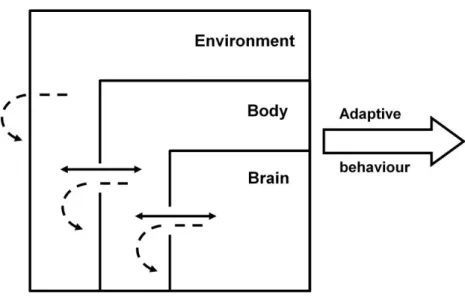
However, just as the brain is embedded in a body, the body is embedded in an environment. This implies a connection between the behavioral agent and the physical or social environment (situatedness) and therefore the characteristics of the environment and the properties arising from this interaction can also be used by the agent to solve adaptive problems (Beer, 2009; Nolfi, 2011). What arises from this situated-embodied-dynamic framework (Figure 3) is a multi-level complex system in which adaptive behavior and cognition cannot be inferred from any of the elements in isolation as it emerges from the non-linear, dynamic interactions between and within these three foundational elements (Chiel & Beer, 1997; Nolfi, 2011; Williams & Beer, 2013). Examples of this multi-level coupling can be seen in animals, in which adequate locomotion depends not on simple neural commands, but on a multimodal integration of information that must include body and environment feedback (Dickinson, Farley, Full, & Koehl, 2000). Also supporting this idea, the body and the morphological characteristics of artificial agents do not simply feed the control center (e.g., brain) with sensory inputs; instead they allow the agent to create or elicit appropriate inputs by actively self-structuring flows of multimodal and temporally specific environmental
information into sensorimotor networks, linking information structure from motor activity and information processing in the brain (Lungarella & Sporns, 2005, 2006).
Figure 3. Schematic representation of the situated-dynamic-embodied framework with
adaptive behavior resulting from the emergent characteristics of brain-body-environment coupling and not from singular contribution of the components. Full arrows represent dynamic processes between the components. Dashed arrows represent the dynamic processes within the components.
Therefore in embodied agents, a neuromodulatory system, such as the androgen reciprocal model discussed here, must be able to continually guide plasticity, while stabilizing and maintaining previously acquired adaptive structures, and to adapt the agent to variation in behavior, physiology, and external stimuli (Alexander & Sporns, 2002). This definition is compatible with the current hypothesis for the role of androgens on social decision-making mechanisms that has lost the assumptions of causality to focus more on a systems perspective. Empirical evidence for this process can be found in the examples described above (section IV) referring to the effects of T administration, which within a situated-embodied-dynamical framework, can be seen as an experimental manipulation of the information carried by the
peripheral signaling of T that is being translated into systemic changes in the brain-body-environment coupling.
Although the neuromodulatory effects of peripheral androgens are well documented, a challenging puzzle arises when one has to account for the dynamics of evolution and the function that peripheral androgens have in this process. If adaptive behavior emerges from brain-body-environment continuous and dynamical interaction, evolution should not select individual components but variations of systemic couplings responsible for the emergent characteristics that originated behavioral efficacy (Beer, 2009). Androgens may play a role in this process by stabilizing the system via pleiotropic effects on neural-dynamics and on relevant body components that could be rapidly enhanced by transient increases in androgens (R. F. Oliveira, 2009). Evidence for non-genomic effects on bodily components can be found in the literature (e.g., review by Rahman & Christian, 2007). For example, acute increases of T enhanced 2-deoxyglucose uptake in cultured myotubules within 1 min (Tsai & Sapolsky, 1996) and increased the intracellular concentration of calcium suggesting the existence of a G protein-linked membrane receptor in skeletal muscle cells (Estrada, Espinosa, Müller, & Jaimovich, 2003). Also, rapid effects of T on vasorelaxation at micromolar concentrations have been reported in several species (Jones, Hugh Jones, & Channer, 2004).
In conclusion, the apparent paradox of social challenges eliciting increases in peripheral androgen levels at a greater cost (Wingfield, Lynn, & Soma, 2001) when brain androgen synthesis is available to the organism, may be better understood by integrating its' action both on neural circuits and on bodily parameters relevant to behavioral performance, influencing the emergent characteristics of the brain-body-environment coupling itself and thus reducing the fitness variability of the expressed phenotypes. Although further research is required to support these claims, previous work (Johnson & Whalen, 1988) proposed that in male mice the signaling of gonadal hormones on brain areas is required to regulate and reduce the inter-individual differences in aggressive behavior observed in gonadectomized animals, that are not present in gonadally-intact or castrated mice treated with T. In our view, these experiments can be seen as an example of how the characteristics of the systemic coupling can be skewed into more variable behavioral outputs when body signaling is disrupted, and restored to a finer context dependent response by restituting the signal to congruent levels. This suggests that body signaling is necessary for effective couplings that generate more adaptive patterns of response and this goal could be achieved by narrowing the degrees of