UNIVERSIDADE TÉCNICA DE LISBOA
Faculdade de Medicina Veterinária
VETERINARY PHARMACOVIGILANCE, FROM REGULATION TO SCIENTIFIC EXPLANATION. CASE STUDIES OF CANINE MDR1 MUTATION
RITA ISABEL COSTA BENTO
ORIENTADOR Dr. Xavier Pineau
CO-ORIENTADOR
Profª Doutora Berta Maria Fernandes Ferreira São Braz
2012 LISBOA CONSTITUIÇÃO DO JÚRI
Profª Doutora Anabela de Sousa Santos da Silva Moreira
Prof. Doutor Victor Diogo de Oliveira Alves Profª Doutora Berta Maria Fernandes Ferreira São Braz
UNIVERSIDADE TÉCNICA DE LISBOA
Faculdade de Medicina Veterinária
VETERINARY PHARMACOVIGILANCE, FROM REGULATION TO SCIENTIFIC EXPLANATION. CASE STUDIES OF CANINE MDR1 MUTATION
RITA ISABEL COSTA BENTO
ORIENTADOR Dr. Xavier Pineau
CO-ORIENTADOR
Profª Doutora Berta Maria Fernandes Ferreira São Braz
2012 LISBOA CONSTITUIÇÃO DO JÚRI
Profª Doutora Anabela de Sousa Santos da Silva Moreira
Prof. Doutor Victor Diogo de Oliveira Alves Profª Doutora Berta Maria Fernandes Ferreira São Braz
À professora Berta, mais do que uma professora, uma amiga. Obrigada por toda a sua dedicação. Espero que continue a inspirar os seus alunos como me inspirou a mim.
A todas as pessoas que contactaram comigo na DGAV. Obrigada pelo vosso apoio, dedicação e simpatia. Nunca vos esquecerei! Ao Dr. Henrique Costa, à Drª. Maria da Luz Grencho e à Drª. Lourdes Lopes um obrigada especial por serem uma inspiração, como profissionais e como pessoas. Luísa Fernandes, muito obrigada pela ajuda!
A todos os meus colegas e amigos da FMV. Como foram bons estes anos! Em especial, à A. Braz, à C. Ramos e à L. Feteira, por todas as noites de estudo desesperadas e por encontrar sempre amizade, conforto e entreajuda, em vós. À J. Carvalho, M. Neves, F. Mira, S. Spínola, S. Soares, I. Ferreira e S. Curado. Nós sempre! À minha querida V. Fernandes. Tu sabes a amizade que nos une e o que vivemos as duas já mais se esquecerá. Aos teus tios que me receberam como família. Aos membros do CPVL/CNITV, por serem “ma petite famille francaise” e a todos os meus amigos de Lyon. Como foi bom este Erasmus!
Aos “amigos do Pedro” do IST, que com os anos se tornaram os “nossos amigos”. Não poderia deixar de salientar aqui a minha querida Maria Vicente. Aos meus amigos de longa data, como é bom ter a vossa amizade: W. Mália, R. Duarte, R. Fernandes e H. Vitória. A. Alícia, M. Conceição e C. Oliveira, como é bom poder contar convosco!
Ao Vítor, à Sílvia e ao Paulo por sempre me acolherem tão bem em sua casa. Obrigada por todo o vosso carinho.
Às minhas duas queridas avós que infelizmente tão cedo partiram. À minha tia Edla, pois tu sabes que minha paixão pela Medicina Veterinária nasceu contigo. Aos meus tios, à minha prima e aos meus avós. Quem seria eu sem a minha família?
Aos meus pais, os melhores do mundo! Mãe, obrigada por toda a tua dedicação na minha educação. Obrigada por seres a mulher mais bonita e culta que conheço. Obrigada por seres, além de tudo, uma amiga e confidente! Pai, obrigada por me ensinares a lutar como se não houvesse amanhã. A minha persistência? A ti te devo, “um último pico”? Sempre! À minha irmã Laura, tão nova e já com uma força de espírito contagiante! A vida já te ensinou tanto querida, mas tu também já ensinaste tanto à vida! E, por fim, a ti Pedro, a nós. Por tudo o que és, por tudo o que significas para mim. Por tudo o que sou quando estou contigo e por tudo o que não sou quando estás longe…
“If a man knows what harbor he seeks, any wind is the right wind. If one does not know to which port one is sailing, no wind is favorable”(Lucius Annaeus Seneca).
VETERINARY PHARMACOVIGILANCE, FROM REGULATION TO SCIENTIFIC EXPLANATION. CASE STUDIES OF CANINE MDR1 MUTATION
Veterinary pharmacovigilance is the science and activities related to the detection, assessment, understanding and prevention of adverse effects or any other medicine-related problem associated to veterinary medicinal products. It seems that some breeds are more sensitive than others to this type of events and understanding this sensitivity is permitted by the pharmacogenetics discipline.
Nowadays, there is a national legislation for all countries of EU to implement a veterinary pharmacovigilance system. However, situations and philosophy vary from one country to another and, for example, in France the system works very differently.
The Collie breed is known for having a special sensitivity to the ivermectin drug and this will be taken as an example to explain the existence of genetic particularities among breeds, such as, in this case, a mutation in the multidrug resistance gene 1 that encodes a large transmembrane protein cell, namely P-glycoprotein. Using data from the Sentinel-Vet software, it was investigated the existence of a superior number of adverse drug reactions reported to CPVL (Veterinary Pharmacovigilance Center of Lyon) related with breeds which have present the referent mutation within their population. It was also made a study with an innovative treatment based on intravenous lipid emulsions, applied in 7 cases after intoxication with avermectins.
Keywords: pharmacovigilance, pharmacogenetics, breed sensitivities to medicines, multidrug resistance gene 1, P-glycoprotein, intravenous lipid emulsions.
FARMACOVIGILÂNCIA VETERINÁRIA, DA REGULAMENTAÇÃO À SUA APLICAÇÃO CIÊNTIFICA. ESTUDO DE CASO DA MUTAÇÃO CANINA MDR1.
A farmacovigilância veterinária é definida como uma ciência que envolve as atividades relacionadas com a deteção, avaliação, compreensão e prevenção de efeitos adversos ou quaisquer problemas relacionados com o uso de medicamentos veterinários. Nos diferentes indivíduos da mesma espécie parecem existir raças mais sensíveis que outras a este tipo de eventos, e a compreensão desta sensibilidade é abordada pela farmacogenética.
Atualmente existe uma legislação nacional para a implementação de um sistema de farmacovigilância em todos os países da EU. Contudo, este pode variar conforme a filosofia do país.
A raça canina Collie é conhecida por ter uma sensibilidade especial à ivermectina, e este facto é tomado como exemplificativo para a existência de particularidades genéticas dentro de determinadas raças, tais como, neste caso, uma mutação no gene da multiresistência 1 que codifica uma grande proteína transmembranar, a glicoproteína P. Através da análise dos dados do programa Sentinel-Vet foi investigada a existência de um número superior de reações adversas, reportadas ao CPVL (Centro de Farmacovigilância Veterinária de Lyon), relacionadas com as raças que têm presente na sua população a mutação referida. Foi realizado, igualmente, um estudo para o tratamento de intoxicações através do uso de emulsificações lipídicas intravenosas, tendo sido analisados 7 casos após intoxicação por avermectinas.
Palavras-chave: farmacovigilância, farmacogenética, sensibilidades raciais a medicamentos, gene da multiresistência 1, glicoproteína P, emulsões lipídicas intravenosas.
The internship which served as base to write this dissertation was performed in the area of Pharmacology and Toxicology, more specifically, on Veterinary Pharmacovigilance. Corresponding to the sixth year of a Masters in Veterinary Medicine, by the Faculdade de Medicina Veterinária da Universidade Técnica de Lisboa, it was divided into two parts:
1) The first part, between the 3rd of October and the 7th February 2011/2012, took place under the Erasmus program in Lyon, France. The École Nationale Vétérinaire de Lyon allowed the realization of the internship on CPVL (Veterinary Pharmacovigilance Centre of Lyon) and on CNITV (National Centre for Veterinary Toxicological Information) under the supervision of Dr. Xavier Pineau. CPVL collects reports of suspected adverse reactions to veterinary medicinal products in animals and humans, provided by all health professionals. It has an assessment cases mission, improvement of knowledge and transmission of this information to the National Competent Authority, the Agence Nationale du Médicament Vétérinaire (ANMV or French Agency for Veterinary Medicinal Products) - frame of the new French Agency for Food, Environmental and Occupational Health Safety. This center also provides training of pharmacovigilance for all professionals concerned. This center, founded in 1976, benefits from the 36 years of pharmacovigilance experience realized by CNITV and has represented the French concept of veterinary pharmacovigilance since 2001. This concept differs from other European countries, where the notifications have an administrative character. The center runs 24 hours a day. At CPVL/CNITV the system works as mutualism association giving diagnostics, advice treatments and prognostics to the caller. In turn, the center has the best database of pharmacovigilance cases.
The intern participated in all these areas, including working with the Sentinel-Vet software, cases assessment and telephone support to several cases reported to CPVL. This active participation allows a better understanding of the reciprocal French pharmacovigilance system. Additionally, the intern made a guided visit to the pharmaceutical company Merial in Lyon.
2) The second part was performed at Direção Geral de Alimentação e Veterinária in the department of Medicamentos veterinários, produtos de uso veterinário e biocidas de uso veterinário on Sistema Nacional de Farmacovigilância Veterinária (SNFV or National Veterinary pharmacovigilance system), under the supervision of Dr. Henrique Ramos da
Costa. The internship lasted approximately 2 months (16 February to 27 April) and had the purpose to contact with the Portuguese reality in terms of pharmacovigilance, as well as its legal basis. Here, the student had an active role in the valuation and assessment of reports of suspected adverse reactions and in the evaluation of Periodic Safety Update Reports, submitted by marketing authorizations holders, for medicinal veterinary products with national procedures. The student also participated in decision-making about possible risk management measures (resulting from the reporting of adverse events), contact with Eudravigilance software and contribution in other activities related to the processes of regulation of veterinary medicines, such as: publicity, quality defects and licensing procedures (wholesale distribution and retail sale) with Dr. Maria da Luz Grencho. The official internship report is in annexe 1 (Portuguese).
Acknowledgements ... iii
Abstract ... v
Resumo ... vi
Brief description of the activities carried out in the curricular internship ... vii
List of Abbreviations and Symbols ... xv
1 Introduction ... 1
2 Literature Review ... 3
2.1 Veterinary Pharmacovigilance ... 3
2.1.1 Definition of veterinary pharmacovigilance ... 3
2.1.2 Importance of veterinary pharmacovigilance ... 3
2.1.3 Regulation of pharmaceutical products ... 4
2.1.3.1 Centrally Authorised Product ... 4
2.1.3.2 Decentralised procedure ... 4
2.1.3.3 Mutual recognition procedure ... 4
2.1.4 Legal Framework for Pharmacovigilance ... 5
2.1.5 Harmonization of the causality assessment for ADRs ... 5
2.1.6 EudraVigilance: the European common system for monitoring veterinary drugs safety...7
2.1.7 Veterinary pharmacovigilance in France: a different approach ... 7
2.1.7.1 History of French pharmacovigilance ... 7
2.1.7.2 French concept of veterinary pharmacovigilance and elements involved .... 8
2.1.7.3 Notification, the basis of French pharmacovigilance system ... 9
2.1.7.4 The role of pharmaceutical companies localized in France ... 9
2.1.7.5 Monitoring results of VMP by CPVL ... 9
2.2 Veterinary Pharmacogenetics ... 11
2.2.1 Linking pharmacovigilance and pharmacogenetics ... 11
2.2.2 Genetic polymorphisms ... 11
2.2.2.1 Multidrug resistant: the best-characterized ABC transporter (MDR1) ... 13
2.2.3 Discovery of MDR1 in canine specie ... 15
2.2.3.1 MDR1 gene deletion in mice ... 16
2.2.3.2 Discovery of MDR1 mutation in Collies ... 16
2.2.3.3 Causes for the presence of MDR1m allele within the canine specie…….. 17
2.2.4.1 P-glycoprotein structure and ATPase fraction ... 19
2.2.4.2 P-glycoprotein tissue distribution and possible roles ... 21
2.2.4.3 Multidrug resistance to anticancer treatments ... 24
2.2.4.4 Substrates and inhibitors of P-glycoprotein ... 25
2.2.5 Ivermectin and Collies sensitivity to this drug ... 28
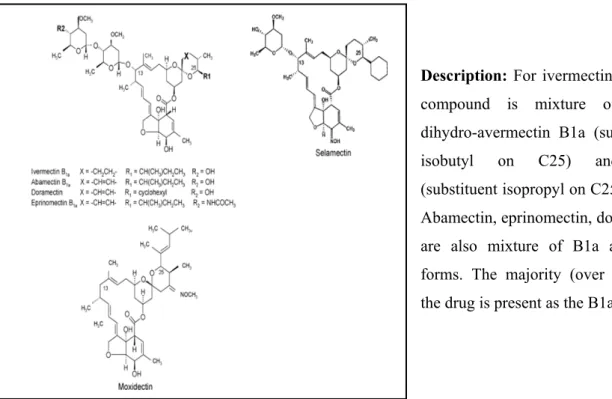
2.2.5.1 Family of avermectins ... 28
2.2.5.2 Structure ... 29
2.2.5.3 Properties of ivermectin ... 30
2.2.5.4 Use of ivermectin in dogs ... 30
2.2.5.5 Symptoms and toxic doses ... 31
2.2.5.6 Research of physiopathogeny: implications in CNS ... 31
2.2.5.7 Physiopathogeny in Collies ... 32
2.2.5.8 The blood-brain barrier ... 33
2.2.5.9 Physiology and functions of the blood-brain barrier ... 33
2.2.6 Phylogenetic studies ... 35
2.2.6.1 Exploring the phylogeny of breeds ... 35
2.2.6.2 MDR1m and history of a common origin ... 37
2.2.6.3 Autosomal recessive transmission ... 38
2.2.6.4 Prevalence in each breed and impact on their selection ... 40
2.2.6.5 Genetic screening tests ... 42
2.2.6.6 Breeding Strategies ... 43
2.3 Therapeutic approach for treatment of avermectins poisoning ... 45
2.3.1 A general approach for cases of poisoning ... 45
2.3.1.1 Different approaches to avermectins intoxication ... 46
2.3.2 Intravenous lipid emulsion: a potential novel antidote ... 47
2.3.2.1 Action mechanism ... 47
2.3.2.2 Proposed protocols ... 49
2.3.2.3 Adverse effects ... 49
2.3.3 Clinical applications ... 51
3 Practical approach to pharmacovigilance and pharmacogenetics contexts ... 52
3.1 Analysis of data from the Sentinel-Vet software ... 52
3.1.1 Objectives ... 52
3.1.2 Material and methods ... 52
3.1.3 Results and discussion ... 53
3.1.3.2 Loperamide ... 57
3.1.3.3 Emodepside ... 59
3.1.4 A global analysis of data ... 61
3.2 Intravenous lipid emulsions to manage avermectins intoxication ... 62
3.2.1 Objectives ... 62
3.2.2 Material and methods ... 63
3.2.3 Results ... 63
3.2.4 Discussion ... 67
4 Conclusion ... 69
5 References ... 71
Annex ... 84
Figure 1: The veterinary pharmacovigilance centres in France and their interrelationships with other organisations involved (adapted from: Pineau X., 2012). ... 8 Figure 2: Percentage of notification reports relatively to the type of specie concerned- CPVL, 2010 (adapted from: Pineau X., 2012). ... 10 Figure 3: Distribution of reported cases concerning dogs by therapeutic classes – CPVL, 2010 (adapted from: Pineau X., 2012). ... 10 Figure 4: Multidrug/ ABC transporters (from: Staud F., Ceckova M., Stanislav M. & Pavek P., 2010). ... 15 Figure 5: Comparison of two genetic sequences: with the mutation and without it, (from: Mealey et al. 2001). ... 18 Figure 6: Space-filling model of Pgp in the nucleotide-bound form based on cryoelectron microscopy data and with all residues modeled as alanine (from: Rosenberg M. et al., 2005). ... 20 Figure 7: Structures of macrocyclic lactones (from: Edwards G., 2003). ... 29 Figure 8: Different modalities of passage of molecules and cell types present at the BBB (from: Abbott N.J., 2005). ... 34 Figure 9: Collie Family Tree, a composite of subjective breed histories (From: Neff M. et al., 2004). ... 36 Figure 10: Design of the allele-specific PCR (From: Baars C. et al., 2007). ... 43 Figure 11: Amiodarone concentrations (mg/L) in uncentrifuged plasma of the lipid and control groups and in plasma of the lipid group (from: Niiya T., Litonius E., Petäjä L., Neuvonen P. & Rosenberg P., 2010). ... 49 Figure 12: Percentages of ADRs related with ivermectin reports by breeds (n= 166, CPVL, 2005-2011). ... 54 Figure 13: Percentages of serious ADRs related with ivermectin reports by breeds, (n=25, CPVL, 2005-2011). ... 55 Figure 14: Reasons of ivermectin administration according the reports (n= 166, CPVL, 2005-2011). ... 56 Figure 15: Numbers of ADRs related with ivermectin according its causuality assesment and person which administred (n= 166, CPVL, 2005-2011). ... 56 Figure 16: Percentages of serious ADRs related with loperamide reported by breeds (n=45, CPVL, 2005-2011). ... 58
Figure 17: Numbers of ADRs related with loperamide according its causality assessment and person which administered (n= 45, CPVL, 2005-2011). ... 58 Figure 18: Reasons for loperamide administration according the reports (n=45, CPVL, 2005-2011). ... 59 Figure 19: Percentages of serious ADRs related with emodepside reported by breeds (n=154, CPVL, 2005-2011). ... 60 Figure 20: Time to onset the clinical signs associated with administration of emodepside (n= 154, CPVL, 2005-2011). ... 60 Figure 21: Percentages of ADRs reported concerning the molecules ivermectin, loperamide and emodepside, considering the total of drug reports (n= 5529, CPVL, 2005-2011). ... 62
List of Tables
Table 1: Criteria for causality assessment of an ADR (adapted from: Woodward K., 2009). ... 6 Table 2: Some examples of breed related metabolic differences (adapted from: Fleischer S. et al, 2008). ... 13 Table 3: Multigenetic MDR family (adapted from: Musset S., 2002). ... 14 Table 4: Comparison of the tissue expression pattern of P-glycoprotein in human and dog, (adapted from: Conrad S. et al., 2001). ... 21 Table 5: Normal canine tissues selected for Pgp immunostaining (adapted from: Ginn P., 1996). ... 23 Table 6: Canine neoplasms selected for immunostaining (adapted from: Ginn P.E., 1996). ... 24 Table 7: Summary of Pgp substrates (adapted from: Mealey K. et al., 2006; Sakaeda T., Nakamura T. & Okumura K., 2002). ... 26 Table 8: Selective inhibitors of Pgp (adapted from: Mealey K., 2004; Mealey K. et al., 2006). ... 28 Table 9: Resume of breeds which MDR1 mutation has been documented (adapted from Mealey K. et al., 2006). ... 37 Table 10: Advices for therapeutic use of some drugs in heterozygous and homozygous mutant dogs (adapted from: “Veterinary Clinical Pharmacology Lab” of Washington State University). ... 40 Table 11: Frequency (%) and average of MDR1m gene in different populations of Collies, from distinct countries (adapted from: Geyer J. et al 2005; Hugnet C., Bentjen S., Mealey K.,
2004; Kawabata A., Momoi Y., Inoue-Murayama M. & Iwasaki T., 2005; Mealey K., Bentjen S. & Waiting D., 2002; Mealey K., Munyard K. & Bentjen S., 2005; Neff M. et al., 2004). . 41 Table 12: The average frequency (%) of MDR1m gene in different breeds (adapted from: Neff M. et al., 2004; Cunningham F. et al., 2010). ... 41 Table 13: Resume of the Sentinel-vet data in order of the most reported substances concerning dogs (n = 5529, CPVL, 2005-2011). ... 53 Table 14: Frequency of reported symptoms in dogs after an ADR related with ivermectin use (n= 166, CPVL, 2005-2011). ... 54 Table 15: Frequency of reported symptoms in dogs after an ADR related with loperamide use (n=45, CPVL, 2005-2011). ... 57 Table 16: Frequency of reported symptoms in dogs after an ADR related with emodepside use (n= 154, CPVL, 2005-2011). ... 59 Table 17: Resume of clinical cases with ILE admistration (CPVL, 2011-2012). ... 64 Table 18: Lipid products used as treatment and their composition (adapted from: Velde V. et al, 1996). ... 67
ABC: ATP-binding cassette. ADR: adverse drug reaction.
ANMV: Agence nationale du médicament vétérinaire.
ANSES: Agence nationale de sécurité sanitaire de l'alimentation, de l'environnement et du travail.
CNITV:Centre National d'Informations Toxicologiques Vétérinaires. CPVL: Centre de Pharmacovigilance Vétérinaire de Lyon.
EEA: European Economic Area.
EFTA: European Free Trade Association. EU: European Union.
EVVet: Eudravigilance- Vet. ILE: Intravenous Lipid Emulsion. MA: Marketing authorization. MDR: multidrug resistance. MDR1: multidrug resistance 1.
MIA: Market Introduction Authorization. MS: Member State.
NCA: National Competent Authorities. Pgp: P-glycoprotein.
PSUR: Periodic safety updates report. SAR: Suspected adverse reaction.
SPC: Summary of Product Characteristics. VMP: Veterinary medicine product.
Veterinary medicine has the unique challenge of having to treat a large number of domestic animal species, namely mammals, birds, reptiles, amphibians, fishes and others.
A great number of doctor appointments are related with toxicology and part of them is due to molecules commonly used. However, some breeds seem more sensitive than others to this type of events and understanding this sensitivity, previously described as idiosyncratic, is permitted by the pharmacogenetics discipline. Veterinary pharmacogenetics is a new branch of veterinary science that has the purpose to identify the genetic variations (polymorphisms) responsible by differences in the drug response of individuals within a given species (Cunningham F., Elliott J. & Lees P. 2010).
A breed is defined as a group of animals having common ancestry and certain distinguishable characteristics developed by artificial selection and maintained by controlled propagation (Licinio J. & Wong M., 2002). The first animal species to be domesticated and subsequently selected bred for thousands of years were dogs, which leads into a wide variety of more than 400 breeds worldwide with differing anatomical, physiological, and behavioural traits (Cunningham et al., 2010).
The fixation of phenotypic appearance and the mating of closely related individuals have resulted in breed specific disease patterns and great variations in life expectancy. Therefore, with this large genetic diversity within the canine species it is not surprising that there are both metabolic and physiologic idiosyncrasies that can influence not only the propensity for certain disease conditions, but also drug pharmacokinetics, pharmacodynamics and the characteristics of responses to xenobiotics (Fleischer S., Sharkey M., Mealey K., Ostrander E. & Martinez M., 2008). Studies have shown that the occurrence of adverse drug reactions (ADRs) is due to many factors including genetics ones (Nicholas T., et al 2009).
In humans only 5% to 10% of genetic variation has been shown to be associated with populations or ethnicities, although in dogs 27% of genetic variation is associated with differences in breeds (Fleischer et al, 2008). The existence of a genetic variation among dog breeds results in a risk of breed-related differences in the effectiveness and toxicological responses to drugs. Therefore, it is possible to consider that the existence of a pharmacovigilance system is indispensable for detecting these genetic and hereditary different sensitivities, interspecies and even within them, to some drugs.
The following thesis, in its first part, will conduct a literature review about the importance of veterinary pharmacovigilance in the detection of certain sensitivities to xenobiotics within a given species. Collies, and related breeds, will be taken as an example since they have present
among their population some individuals with a mutation in the multidrug resistance gene 1 (MDR1) that encodes a large transmembrane protein cell, P-glycoprotein (Pgp), that can conduct to adverse reactions to some drugs.
Furthermore, in one second and practical part, it will be investigated the existence, or not, of a superior number of adverse drug reactions reported to CPVL related with these breeds. These data was obtained from the Sentinel-Vet software and the three substances of study are ivermectin, loperamide and emodepside, since they are Pgp subtracts. As well, it is required that CPVL specialists advise veterinarians, who are contacted by phone, for the necessary follow-up after intoxication. Taking this into account an innovative treatment based in intravenous lipid emulsions (ILE) is presented by the description of 7 cases which used ILE as an antidote after overdose with lipophilic drugs.
2.1 Veterinary Pharmacovigilance
When a new veterinary medicinal product is put into the market, adverse drug reactions may become apparent. This can be seen in the treated animal patients, in exposed users or as adverse effects on the environment. Moreover, they might be evident for excess of drug residues in food with animal origin. Consequently, legislation and regulatory approaches were established across the globe to address these issues and to guarantee that the constant safety of these products can be monitored and, where necessary, that regulatory actions can be followed to solve any concerns. The single term “pharmacovigilance” can cover all of these issues (Woodward K., 2009) and the Veterinary pharmacovigilance has shown a remarkable development in recent years (Keck G. & Ibrahim C., 2001).
2.1.1 Definition of veterinary pharmacovigilance
Defined by the World Health Organization, pharmacovigilance is the science and activities relating to the detection, assessment, understanding and prevention of adverse effects or any other medicine-related problem. This principle also applies to medicinal products for veterinary use (VMPs) (EMEA, 1996).
2.1.2 Importance of veterinary pharmacovigilance
Before a company can place a VMP in the market there is a requirement, under European Union (EU) or national legislation, for a Marketing Authorisation (MA). This MA is just approved after several laboratory and then preclinical and clinical studies. Obvious reasons of time, cost, and studies rationalization, lead to studies performed directly on target species applying a small number of animals. However, on the market, the medicine will be used on an infinitive number of animals and several different clinical conditions. It will be used in diverse breeds with their particular metabolic characteristics or different sensitivities, on variable grades pathologies, in animals with medical history or other drugs therapy. Furthermore, the drug will not be administered just by professionals but also by animal’s owners. As a result, only the daily practice conditions can lead to the drug safety and pharmacovigilance should allow the collection of each SAR in animals or, when in contact with treated animals, in humans.
Subsequent to the collection of cases, each of them should be performed, evaluated and recorded in a database. The analysis of these cases can provide a better understanding of
possible side effects, their frequency, risk factors occurrence and prognosis relating to a specific specie or breed (Woodward K., 2009).
Some species have a very low therapeutic variation, as it is the case of many “new pets” and the experience of all is then necessary to allow the prescription of the most appropriate, use and dose, to generate the less possible risk for the treated animal. Thus, even with “of-label use”, every incident or accident that may have medication origin should be constituted as pharmacovigilance case (Pineau X., 2012).
Pharmacovigilance has gradually gained new fields of activity covering not only clinical safety but also other aspects of post-authorisation surveillance. These include: lack of expected efficacy and misuses of a veterinary medicine, human reactions to veterinary medicines, epidemic-surveillance of resistance, potential environmental problems and reported violations of approved residue limits (EMEA, 1996).
2.1.3 Regulation of pharmaceutical products
Any pharmaceutical product needs a MA, and to be sold in one or more EU countries needs to follow one of the legal options in order to be registered:
2.1.3.1 Centrally Authorised Product
A product for which the MA is granted, in agreement with the Directive 2001/83/EC and 2004/28/EC, regulation (EC) No 726/2004, by the European Commission. The grant is valid in all EU and “European Free Trade Association States” (EFTA) (Iceland, Liechtenstein and Norway).
2.1.3.2 Decentralised procedure
A procedure used in order to obtain MA in several Member States, where the VMP has not yet received a MA in any Member State at the time of application (Directive 2001/83/EC). 2.1.3.3 Mutual recognition procedure
A procedure whereby concerned MSs recognize the MA already decided by a reference MS. The placing on the market of the product in their national territory, as outlined by Directive 2001/82/EC and 2004/28/EC is authorized.
As well as these three ways, there are national authorisations (National procedure) which allows a product to be marketed in a particular member state or states granting them. This can be useful to apply for authorisation under the Mutual Recognition Procedure. Wherever the single national MA is, it will become the country which assumes responsibility for monitoring and safety assessment for that particular product (Barton J., 2009).
2.1.4 Legal Framework for Pharmacovigilance
The legal basis for pharmacovigilance of VMP in the EU is presented in Directive 2001/82/EC2, as last amended by Directive 2004/28/EC3, Regulation (EC) No 726/2004. For all VMPs authorised in the EU, counting those authorised before 1 January 1995 and whatever procedure was used for their authorization, must follow pharmacovigilance regulations.
The duties of the National Competent Authorities (NCA) of MS to govern a system for pharmacovigilance is, in order, to collect, collate and evaluate information about SARs. The obligation of MAHs for the creation and maintenance of a pharmacovigilance system is described in Article 74 of Directive 2001/82/EC and Article 48 of Regulation (EC) No 726/2004. NCA and marketing authorization holders (MAH) must share, among them, all important information in order to allow all parties involved in pharmacovigilance activities to assume their obligations and responsibilities.
The European Medicines Agency (EMA), subsequently stated as Agency, and the NCAs collaborate to incessantly develop pharmacovigilance systems able to achieve public health protection for all VMPs, regardless of routes of authorisation, including the use of collaborative approaches, to maximise use of resources available within the EU, in agreement with Article 53 of Regulation (EC) No 726/2004. To operate this system is necessary an intensive exchange of information between the MAH, the NCA, the Agency and the European Commission, as well as procedures to prevent duplication, maintain confidentiality and ensure the quality of the systems and data.
An “Agreement of the European Economic Area” (EEA) was done within some countries, adopting the complete acquis communautaire on medicinal products, and they are consequently parties to the EU procedures, as Iceland, Liechtenstein and Norway (Woodward K., 2009).
2.1.5 Harmonization of the causality assessment for ADRs
The regulatory schemes for spontaneous adverse reports of human or veterinary medicines include a requirement to assign causality and to report unexpected adverse drug reactions. Consequently, there is a necessity to identify if a particular product was responsible for a particular adverse reaction and, if so, whether that reaction was unexpected, or otherwise, listed on the label and product literature. In the Volume 9B (EMA, 2011) important issues of causality and the application of the ABON system were addressed (Woodward K., 2009). The classification of causality of adverse reactions is resumed on the table 1.
However, it should be noted that this classification is not fixed since the drug knowledge kept bound with scientific knowledge (molecules, pathogenic mechanisms or metabolic), clinical cases publications and registration of similar notification in pharmacovigilance system database (Pineau X., 2012).
Table 1: Criteria for causality assessment of an ADR (adapted from: Woodward K., 2009).
Classification Criteria
“A” - probable
All of the following:
• Reasonable association in time between drug administration and onset and duration of the adverse effect;
• Positive challenge/dechallenge;
• Clinical or pathological phenomena must be reliable with the adverse reaction, or reasonable, according the known pharmacology and
toxicology;
• No similarly plausible explanation. Simultaneous use of other drugs or intercurrent disease, exclusion of other causes;
• Where any of the above cannot be satisfied, consider B, N or O or O1.
“B” - possible • Drug causality is one of other possible or plausible causes;
• Data do not meet inclusion criteria for A.
“O”-Unclassifiable • Insufficient data to make any conclusions.
“O1” – Inconclusive • Other factors prevented a conclusion. However, an association with
product treatment cannot be eliminated.
“N” - Unlikely • Unlikely to be product related.
In causality assessment the following factors should be taken into account:
1) Associative connection: on time (including dechallenge and rechallenge following repeated administration) and on anatomic sites.
2) Pharmacological explanation, blood levels and previous knowledge of the drug. 3) Presence of clinical characteristics or pathological phenomena.
4) Exclusion of other causes, completeness and reliability of data in case reports.
5) Quantitative measurement of the contribution degree of a drug to the reaction development (dose-effect relationship).
2.1.6 EudraVigilance: the European common system for monitoring veterinary drugs safety
EudraVigilance (EVVet) is a central EU database for electronic reporting of suspect adverse reactions to veterinary medicines, used by the national competent authorities. There are 32 competent authorities registered with a total of 217 different users, and Luxemburg, Maltese and Romanian authorities are requested to progress with the final registration to EVVet production system. In relation to pharmaceutical industry, 203 organisations are registered (MAHs and third parties) with a total of 364 different users. This software allows an electronic exchange of SAR reports (referred to as Individual Case Safety Reports) between the EMA, NCAs, MAHs and sponsors of clinical trials in the EEA. Furthermore, this software facilitates the process of risk analysis at different levels including aspects of risk detection, risk assessment, risk minimisation and risk communication. The reporting obligations of the various stakeholders are defined in the Community legislation, particularly, in the Directive 2001/83/EC, Regulation (EC) No 726/2004 (Woodward K., 2005a).
2.1.7 Veterinary pharmacovigilance in France: a different approach
National legislation exists now in all EU to implement a veterinary pharmacovigilance system. Though, the situation and philosophy vary from one country to another (Keck G. & Ibrahim C., 2001). In Portugal, the veterinary pharmacovigilance system rests only at authority’s level, in the named Direção Geral de Alimentação e Veterinária, corresponding to the Portuguese National Authority for Animal Health. However, in France a different system exists.
2.1.7.1 History of French pharmacovigilance
In France, serious cases of ADRs in human highlighted the need for a reliable pharmacovigilance system to detect the earliest possible unintended effects of medicinal products and to enable authorities to respond immediately. The first Symposium on Veterinary Pharmacovigilance was held at the veterinary School of Lyon, on April 24-25, 1990, organized by the CNITV, under the auspices of French Ministry of Agriculture and the Ministry of Health and Welfare (Keck G., 1992).
The legal basis of French veterinary pharmacovigilance was established in 1999, and the pharmacovigilance scheme has been fully operational since January 2002. The Agence Nationale du Médicament Vétérinaire (ANMV or French Agency for Veterinary Medicinal Products) is responsible for organising and managing the pharmacovigilance scheme under the framework of French Agency for Food, Environmental and Occupational Health Safety
(ANSES). In 1999, occurred a transposition of European regulations and an adaptation to the Human French pharmacovigilance legislation (Pineau X., 2012).
2.1.7.2 French concept of veterinary pharmacovigilance and elements involved
Here, the pharmacovigilance system is an “interactive” concept with the unique center of pharmacovigilance in Europe, the CPVL, located in the Veterinary School of Lyon (Woodward K., 2009). Most of the time (95%), reports are made by telephone and information is exchanged directly between the reporter and trained pharmacovigilance personnel. The center gives an immediate answer to questions raised by the caller (information related with the first evaluation of clinical plausibility of drug action, relevant therapy and prognosis) while the center registers the notification report (Keck, G., 1992). All information is recorded in a standard computerised form, the Sentinel-Vet software, and data are regularly evaluated by the ANSES-ANMV, which recommends to the authorities the steps to be taken in order to minimise the risks of adverse effects (Keck G. & Ibrahim C., 2001).
Figure 1: The veterinary pharmacovigilance centres in France and their interrelationships with other
2.1.7.3 Notification, the basis of French pharmacovigilance system
Veterinary practitioners are the basis of veterinary pharmacovigilance: they provide 89.6% of the notifications received by the CPVL and 67.33% of total recorded statements to ANMV, well ahead of doctors and pharmacists with 4.71% and 0.23% respectively. To notify, the French veterinary practitioners have at their disposal several models and they can choose the one that best suits their daily practice like telephone, written notification in a defined declaration form and by email. This center collects and evaluates all notifications, except from pharmaceutical companies, and is supported by the CNITV, which ensures a permanently 24 hours per day and 7 days per week of operation, through a common telephone access. To transform a case into a pharmacovigilance notification it is necessary: an identified “notifier”, at least one species and one drug, and clinical signs correctly described. If anything is missing the file will be closed without further developments (Pineau X., 2012).
2.1.7.4 The role of pharmaceutical companies localized in France
The pharmaceutical companies in France have their own pharmacovigilance and notification system and it is also controlled by ANMV. Information is collected from the field reported by the veterinary practitioners, sometimes with an indirect reason as claims and diagnostic support. Companies are legally obliged to inform ANMV of serious adverse reactions within 15 days, and non-serious adverse reactions are included in PSURs. These are fundamental and complementary parts because they relate adverse effects that fail to CPVL or ANMV.
2.1.7.5 Monitoring results of VMP by CPVL
In 2010, there were 2 377 reports of adverse reactions recorded by the CPVL. Plus, 175 inquiries and 424 cases that remained asymptomatic.
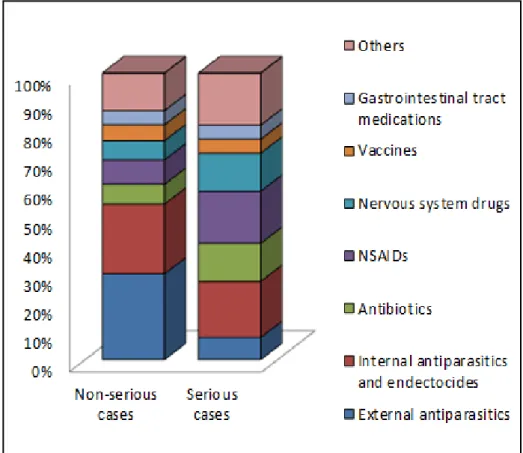
The domestic carnivores represent 69% of all pharmacovigilance notifications recorded in 2010 (figure 2). This fact is logical because they are the most supervised by the owners and with more access to a veterinary clinic. As far as the canine species is concerned, the accidental ingestions of drugs are also common. In dogs, the most common notified products are the external antiparasitics associated to an overdose or accidental ingestion. Following, are the internal antiparasitics and endectocides (figure 3).
Figure 2: Percentage of notification reports relatively to the type of specie concerned- CPVL, 2010
(adapted from: Pineau X., 2012).
Figure 3: Distribution of reported cases concerning dogs by therapeutic classes – CPVL, 2010
Briefly, Veterinary pharmacogenetics can be defined as the result of converging pharmacology and genetics, which deals with genetically determined responses to drugs. Despite the lack of genetic information in veterinary medicine, specific differences within breeds, named genetic subgroups, in response to endogenous and exogenous substances have been reported. The high genetic variety leads to metabolic and physiologic idiosyncrasies, which are consequences of the existence of genetic polymorphisms that can influence not only the propensity for certain disease conditions but can also modify the pharmacokinetic and pharmacodynamics of one drug, reducing or increasing it bioavailability (Fleischer S. et al, 2008). In other words, the genetic variation that exists between breeds of dogs results in a risk of breed-related differences in the effectiveness and toxicological responses to several xenobiotics (Licinio J. & Wong M., 2002).
2.2.1 Linking pharmacovigilance and pharmacogenetics
It is possible to say that these two scientific branches, pharmacogenetics and pharmacovigilance, in their essence aim to understand the "heterogeneity" and population substructure of drug efficacy and safety signals. In Humans pharmacovigilance drugs which are frequently cited in ADR studies (59%) are reportedly metabolized by at least one enzyme with a genetically polymorphic variant allele, known to be associated with altered drug metabolism (Alvarado I., Wong M. & Licinio J., 2002). So, it is obvious the existence of benefits for both scientific brands: pharmacogenetics analysis can add a more mechanistic insight on pharmacovigilance reports and contribute to causality assessments; pharmacovigilance system collects data that may give clues about the possible existence of genetic polymorphisms between some breeds. Thus, the common aim is recognizing genetic factors associated with ADRs with all drugs, and effectively incorporate pharmacogenetics into the practice of pharmacovigilance (Alfirevic A. & Pirmohamed M., 2007).
According to current definitions described above, the objectives of pharmacovigilance are perfectly consistent with pharmacogenetics definition because they allow the detection and prediction of ADRs and are a tool that can reduce the risks associated with ADRs.
2.2.2 Genetic polymorphisms
Genetic polymorphism is defined when there are two or more allelic forms in the same population and the commonest allele locus is polymorphic with a frequency of 0.99 or less. Defined in these terms, this implies that at least 2% of the Human population will be
heterozygous at a polymorphic locus (Hilfiker R., 2006). The main forms of polymorphism consists in: single base polymorphism (SNP - single nucleotide polymorphism), variation in copy numbers of DNA segments (CNV - copy number variation), insertion and deletion variation (INDEL) and variable number of tandem repeats (VNTR - variable number of tandem repeats). The SNPs are the most common form of polymorphism and the mutation takes place in a single pair of nucleotide bases of the DNA molecule which change a single amino acid. This is sufficient to modify, for example, the expression of an enzyme (catalytic activity and stability) and / or specificity of the enzyme substrates (Martignoni M., Groothuis G. & Kanter R., 2006; Harris H., Hopkinson D. & Luffman J., 2006; Chaves A., 2011).
The field of pharmacogenetics began with a focus on drug metabolizing enzymes, but it has been extended to membrane transporters that influence drug absorption, distribution, and excretion (Kerb R., 2006). Taking the drug metabolizing enzymes as an example, the different mutations that occurs give rise to different phenotypes between populations, for example, different individuals can have diverse levels of activity of some enzymes. Several individuals may be poor metabolizers, when there is lack of the active enzyme (in quality or quantity), usually associated with autosomal recessive characteristics; others can be extensive metabolizers, associated with autosomal dominant traits and whose enzyme activity is normal or increased; finally it can exist the ultra-rapid-metabolizers, which have multiple copies of the gene encoding a particular enzyme (Harris H. et al, 2006; Chaves A., 2011). Some examples of genetic polymorphisms within breeds of dogs, which can result in different responses to drugs, are presented on table 2.
Relatedly to membrane transporters, Pgp is the best-characterized ABC transporter (MDR1, ABCB1). However, new polyspecific drug transporters are being investigated and have the potential for overlapping substrate specificities and for tissue-selective expression. Developments in high throughput DNA sequencing technologies gave an affluence of information on the occurrence and frequency of drug transporter polymorphisms. Perhaps, the greatest impact of genetic transporter variants is in determining the individual susceptibility for toxic injury under some extreme circumstances, for example, during intoxication cases or during chemotherapy treatments (Kerb R., 2006).
Pharmacogenetics research of human drug-metabolizing enzymes has afforded valuable insights into the clinical pharmacokinetics of a wide range of drugs and led to a clearer understanding of the metabolic basis of drug interactions and individual susceptibility to drug toxicity and efficacy. The same impact is likely expected, relatively to the clinical implications of genetic variations in drug transporters.
Table 2: Some examples of breed related metabolic differences (adapted from: Fleischer S. et al,
2008).
Breed Enzyme or Gene Linked Genetic Finding/Metabolic Effects
Beagle CYP1A
Genetic polymorphisms on CYP1A2 result in a variance of this enzyme expression. Poor metabolizers
and extensive metabolizers result in significant polymorphic hydroxylation of a novel benzodiazepine.
Greyhound CYP2B11 Deficient on CYP2B11. Canine CYP2B11 is
responsible for propofol hydroxylation in dogs.
Labrador
Retriever TPMT
Statistically considerably higher RBC thiopurine Retriever S-methyltransferase activity than other breeds. TPMT detoxifies azathioprine metabolites. Low
TPMT activity puts animals at risk for toxicity when using thiopurines. Nine unequivocal haplotypes are
identified in dogs.
Bedlington
Terrier Murr-1
Affected dogs have chronic hepatitis resulting from a primary defect in copper excretion and abnormal copper retention in the hepatocytes. May affect drugs
metabolized by the liver.
Mixed
breeds CYP2B11
14-fold variance on CYP2B11 activity in mixed breed dogs. Mixed breed dogs tended to span range of Vmax
seen in Beagles (high) and Greyhounds (low). Abbreviations: CYP: Cytochrome P450 oxidative enzymes. For example, the nomenclature, CYP2D6 refers to the enzyme (CYP), gene family (e.g., 2) subfamily (D), and individual gene (6); Vmax: Maximum velocity of an enzymatic reaction, RBC: Red blood cell; TPMT: Thiopurine methyltransferase.
2.2.2.1 Multidrug resistant: the best-characterized ABC transporter (MDR1)
At the beginning, multidrug resistant cells were defined as having drug accumulation deficit and the responsibility was attributed to a membrane glycoprotein. At first the deficit was thought to be due to a fault in permeation and the glycoprotein was named P because “permeability”. The gene for this, MDR, has been cloned and sequenced, the amino acid has been sequenced and amino acid sequence has been derived (Ferry D. & Kerr D., 1994; Sakaeda T., 2005).
The identification of MDR1 gene showed the presence of polymorphisms. The different forms codify a diversity of Pgps, designated isoforms and in the Human species there are two types: MDR1 or ABCB1 and the MDR3 or ABCB4 genes (Chin J., Soffir R., Noonkan K., Choi & K. Roninson I., 1989; Mealey K, 2006). However, a large sequence homology between Pgp codified by different MDR genes is noticed (more than 70%), and they can be classified in two or three classes, according to the author (Georges E., Bradley G. Gariepy J. & Ling V., 1990; Musset S., 2002).
Table 3: Multigenetic MDR family (adapted from: Musset S., 2002).
Specie/ Class I II III
Humans MDR1 Ø MDR2/3
Hamsters Pgp1 Pgp2 Pgp3
Mice mMdr1a (mdr3) mMdr1b (mdr1) mMdr2
Rat rMdr1a (Pgp1) rMdr1b (Pgp2) rMdr2
Multidrug resistance transporters belong to the evolutionarily conserved family of the ATP binding cassette (ABC) proteins, present in almost all living organisms from prokaryotes to mammals. MDR transporters are large, membrane-bound proteins, built from a combination of characteristic domains, including membrane-spanning regions and cytoplasmic ATP-binding domains. On the basis of a great deal of clinical and experimental work, it has been established that these pumps recognize a very wide range of drug substrates. Although recognized substrates are mostly hydrophobic compounds, but MDR pumps are also capable of extruding a variety of amphipathic anions and cations.
These proteins play indeed an important role in cancer drug resistance. However, the biology system did not develop these multidrug transporters to protect cancer cells from medical interventions, of course, they are only co-opted and “misused” by the rapidly dividing cancer cells, especially when a population of malignant cells over-expressing an MDR transporter selected by drug treatment. With regard to their physiological role, MDR transporters most probably evolved as complex cellular defense systems, for the recognition and the energy-dependent removal of toxic agents entering the living cells or organisms from their environment (Sarkadi B., Homolya L., Szakács G. & Váradi A., 2006).
Figure 4: Multidrug/ ABC transporters (from: Staud F., Ceckova M., Stanislav M. & Pavek P., 2010). Description: Multidrug/ ABC transporters reside in the plasma
membrane and extrude various hydrophobic and/or amphipathic xenobiotics and metabolic products. MDR1/Pgp transports hydrophobic compounds (X).
The MDR1 or ABCB1 gene is located at chromosome 7q21 and this gene is not only expressed in cancer cells but also in normal tissues with excretory function and it is assumed that it has a protective function against xenobiotics (Staud F. et al., 2010). For example, one study shows that intestinal Pgp in humans limit the absorption of the immunosuppressant cyclosporine, cardiac glycoside digoxin and talinolol (Pang K., 2003).
Subsequently in this thesis the long known sensitivity of Collies and related breeds to the central nervous system (CNS) depressant side effect of ivermectin will be taken as an example. Previous studies had shown no important differences in pharmacokinetics of ivermectin between sensitive and non-sensitive Collies, suggesting a role for either enhanced CNS sensitivity or enhanced brain penetration of drug in susceptible animals or even both (Geyer J. et al, 2005). In these cases, despite the widely use of avermectins in veterinary medicine, veterinarians have followed the adage “white feet, don’t treat.” when refers to the known sensitivity of Collies (both rough and smooth). The adage has also been applied to many other herding breeds and has prevented veterinarians from using these drugs in situations where they would have been ideal (Dowling, P., 2006).
2.2.3 Discovery of MDR1 in canine specie
Rapidly, the scientists tried to find a homologue of Human Pgp in dogs, whose purpose was to use the canine specie as a scientific model to human.
In 1989, a monoclonal antibody C219 which recognizes Pgp in plasma membranes of multidrug-resistant Chinese hamster ovary cell lines was used to assay renal brush border membrane for the presence of cross-reactive polypeptide (Lieberman et al., 1989). The corresponding human kidney brush border membrane and dogs kidney brush border membrane proteins had molecular weights, respectively, of 170 kDa and 160 kDa. The molecular weight, antibody cross-reactivity, glycosidase sensitivity and lectin binding, demonstrated that this protein is a normal kidney analogue of the Pgp induced in multidrug
resistant cell lines in Humans (Lieberman et al., 1989). Later, in another study intended to characterize the canine MDR1 mRNA Human homologue, concluded that canine transcript was 4.5 Kb with 93% sequence homology to human MDR1, and 90% homology to mouse and hamster equivalent genes (Steingold S. et al., 1998). More, starting by documenting the MDR1 cDNA wild-type canine sequence the scientists concluded that Human and dog proteins display 91% overall homology, with nonconsensus residues being located outside the functional segments (Roulet A. et al., 2003; Bourassi G., 2008).Then, the MDR1/Pgp exists in canine specie and it is similar to Humans.
2.2.3.1 MDR1 gene deletion in mice
Given the importance of MDR in tumor cells resistance to chemotherapy, through the Pgp, several studies have tried to find a way to inhibit this gene (Kankesan J. et al., 2004; Kankesan J. et al., 2003). One article describes the experimental work where the MDR1a gene in mice was disrupted and its consequences were observed. The knockout mice were viable and fertile and appeared phenotypically normal, however, they displayed an increased sensitivity to the centrally neurotoxic pesticide ivermectin (100-fold) and to the carcinostatic drug vinblastine (3-fold). It was also observed that in mutated mice there were high drug levels in many tissues, especially noticed in the brain (Schinkel A. et al., 1994).
2.2.3.2 Discovery of MDR1 mutation in Collies
Subsequently to the results obtained above, a quick parallelism was made with the Collie breed and their extreme sensitivity to ivermectin and other molecules.
During a famous and unplanned experiment, in Netherlands Cancer Institute’s animal department, the animal cages were sprayed with ivermectin routinely used to treat mite infestation. Ivermectin was supposed to kill only nematodes and arthropods, but the treatment left all the knockout mice, for MDR1, dead. The scientists reproduced the experiment and verified a 50- to 100 fold more sensitivity of MDR1a homozygous mutated mice, due to an increased accumulation of the drug in the brain. Afterwards, two independent groups searched and found this 4-bp deletion (AGAT) in the MDR1 gene on ivermectin-sensitive Collies. According to Roulet et al. (2003) this nt230 (del4) MDR1 involves a frame shift at amino acid position 75, followed by a premature stop codon at 91 amino acid position. This severely truncated protein is nonfunctional, so Adenosine triphosphate (ATP) hydrolysis, which provides the energy for active drug transport, can function against steep concentration gradients. Furthermore, it was demonstrated in 17 Collies that all dogs with a homozygous MDR1 mutation showed the ivermectin-sensitive phenotype but none of the Collies with a
heterozygous MDR1 mutation or the wild-type genotype, pointing to an autosomal recessive inheritance pattern (Mealey K., Bentjen S., Gay J. & Cantor G., 2001).
Similar to Humans, the canine specie has two alleles for each trait. These alleles can be dominant or recessive and there are three possibilities for the MDR1 canine gene: they can be homozygous recessive (mutant/mutant), heterozygous (normal/mutant), or wild-types (normal/normal). Dogs which are homozygous recessive for the MDR1 mutation have nonfunctioning Pgp and, therefore, they have a slight but crucial altered pharmacokinetic and toxicity profiles for Pgp substrates. This glycoprotein can also impact canine medicine in ways unrelated to the MDR1 mutation, as for example, the failure of prednisolone to successfully treat naturally occurring chronic canine enteropathies, in various dog breeds, that could be predicted by the over-expression of Pgp in the dog’s lamina propria lymphocytes during steroid exposure (Mealey et al.,2001).
2.2.3.3 Causes for the presence of MDR1 mutation allele within the canine specie
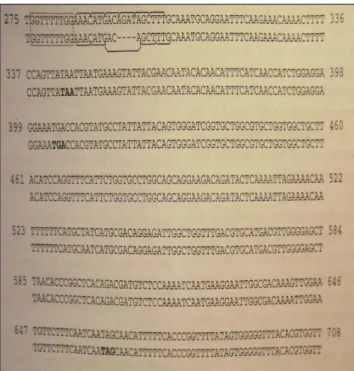
The cause for this mutation is unknown, however, it has been reported that unusual DNA structures, named palindrome, are the main reason for the existence of genetics instabilities. Mealey et al. (2001) noted that a palindrome is located in 9 bp upstream of the MDR1 gene mutation and that sequences sometimes provide mutational hot spots. Additionally, in this study was also verified that all Collies have the same mutation. Given that and the fact that they were not close relatives it was concluded that mutated alleles have a common origin, which will take place within the palindrome, but also close to it. To test allelic associations, MDR1 was mapped by radiation hybrid analysis and the four closest markers were selected to genotype individuals from affected breeds. Only one type of MDR1 mutation has emerged in this canine breeds (Geyer J. et al, 2000).
Figure 5: Comparison of two genetic sequences: with the mutation and without it, (from: Mealey et al
2001).
Description: Sequence (bases 275- 708)
comparison of wild-type (top) and mutant (bottom) MDR1 canine DNAs. A 4-bp deletion is present in the mutant canine DNA. Codons in the vicinity of the deletion are indicated by brackets for both the wild-type and mutant canine DNAs. Bold letters shows stop codons created in the mutant canine DNA as a result of the frame shift. The dashed box shows the palindromic sequence in the immediate area of deletion mutation.
The sensitivity to ivermectin and other drugs was finally linked to a single mutation on MDR1 gene, that encodes a particularly glycoprotein which has a central role. Its absence or its modification leads to an accumulation of the molecule in the CNS and to the neurotoxic effects that will be detailed later. Following, this glycoprotein will be described in more detail.
2.2.4 The important role of P-glycoprotein in pharmacogenetics
The ATP-binding cassette transporters belong to a super-family composed of more than 100 membrane transporters/channels and the members of this family play a central role in cellular physiology. They are highly expressed in numerous organisms, from bacteria and plants to mammals. In humans, 48 ABC transporters have been identified, and classified on the basis of phylogenetic analysis into 7 subfamilies, and Pgp is a member of the ABCB subfamily (Ambudkar S., Kim I. & Sauna Z., 2006; Hennessy M. & Spiers J., 2007).
As mentioned above, there are different Pgp isoforms, which have more than 70% sequence homology, encoded by a small family of closely related genes. In humans, Pgp is encoded by two multidrug resistance genes, MDR1/ABCB1 and MDR3/ABCB4, but the multidrug-resistant phenotype is associated only with the first (Gottesman M., Pastan I. & Ambudkar S., 1996; Hennessy M. & Spiers J., 2007). In dogs only one gene has been identified, the MDR1 (Musset S., 2002).
One study produced by Bendayan et al. (2006) due to the high sensitivity of immunocytochemical, allowed the knowledge about Pgp biosynthesis. This synthesis takes place within rough endoplasmic reticulum, as a core glycosylated intermediate with a molecular weight of 150 kDa. Subsequently, within the Golgi complex, glycosylation and phosphorylation occur and their roles are not well identified. Probably, these phenomena are associated with Pgp stabilization, function and capacity to export to the cell surface (Ambudkar et al., 2006; Bendayan R., Ronaldson P., Gingras D. & Bendayan M., 2006).
2.2.4.1 P-glycoprotein structure and ATPase fraction
Studies were mainly done in the Human species but the high homology of Pgps between Humans and dogs permits an extrapolation. Human and canine Pgps are very similar and the difference between them relies in the glycosylation process. Consisting of 1280 amino acids organised in two tandem repeats of 610 amino acids and joined by a linker region of approximately 60 amino acids (Gottesman M. et al, 2006; Johnstone R., Ruefli A. & Smyth M., 2000), the protein has arisen by a gene duplication event, fusing two related half molecules, each consisting of one nucleotide-binding domain and one transmembrane domain (Hennessy M. & Spiers J., 2007).
The secondary and tertiary structures of Pgp have not been fully elucidated. Many models have been suggested, some of them contradictory. All these models are suspected to exist in different proportions in the cells, or that certain forms exist only in certain tissues. Another possibility is that some studied models were not representative of what happens in vivo.
However, recently the first three-dimensional propose structure of Pgp was constructed. At 0,8 nm resolution, Pgp is comprised of two transmembrane domains made up of six α-helices and, five of the six α-helices from each transmembrane domain, displays a pseudo-two-fold symmetry, while the sixth breaks symmetry. It also suggests the presence of two globular areas at the cytoplasmic side of the protein, representing the nucleotide-binding domains, figure 6 (Henessey, 2007; Rosenberg M., Callaghan R., Modok S., Higgins C., & Ford R., 2005).
Figure 6: Space-filling model of Pgp in the nucleotide-bound form based on cryoelectron microscopy
data and with all residues modelled as alanine (from: Rosenberg M. et al., 2005).
Description: Lateral view of the protein with the
nucleotide-binding domains (violet) at the bottom. Below, a top view. The 12 putative membrane-spanning α-helices have been colored in pairs to specify the 2 halves of the transporter. A pseudo-symmetry relationship is seen. The gray-colored helices do not show an obvious symmetry relationship. Scale bar = 5 nm.
Drugs interact with Pgp in different targets according to their chemical classes. The results and analyses of site-directed mutants of Pgp that influence, substrate binding or specificity, support the view that drug-substrate binding occurs mostly in the trans-membrane domains (Ambudkar S. et al., 2006). Multiple experiments showed structures with a single large cavity comprising a “drug-binding pocket” where individual “drug-binding sites” are generated by each ligand using a different subset of residues for drug-binding. The high affinity binding site or the narrow region of the funnel appears large enough to accommodate two different drugs at the same time. In addition, while these studies provide an understanding of how the drug-binding pocket may be occupied, it is not understood how the transport of these drugs occurs under conditions where more than one drug or modulator is present (Ambudkar S. et al., 2006).
Pgp is a curious translocating ATPase, the reason is because its purified protein exhibits a high level of basal ATPase activity in the absence of substrate. The substrate-inducer of ATPase activity is frequently biphasic, with stimulation at low drug concentrations, and inhibition at higher concentrations (Hiroshi O., Marwan K. & Al-ShawiHilfiker R., 2006). Recent experiments have demonstrated that 2 to 3 molecules of ATP are hydrolyzed per molecule of substrate transported and these results are close to the others values on energy-dependent-transport (Ruetz S. & Gros P., 1994).
Several models have been advanced to understand the mechanism by which Pgp and other ABC transporters couple the hydrolysis of ATP to move drugs across the plasma membrane. Resulting of experimental data, we have: the “hydrophobic vacuum cleaner”, the “flippase” and the “pore” models (Ambudkar S. et al., 2006; Hennessy M. & Spiers J.P., 2007). According to “hydrophobic vacuum cleaner” theory, Pgp is envisaged as an extracting hydrophobic compounds embedded in the inner leaf of the plasma membrane and pumping
them straight to the external aqueous medium (Ambudkar S. et al., 2006). Alternatively, in the “flippase” model, the substrates are flipped from the inner leaflet of the lipid bilayer, to either the outer leaflet of the plasma membrane or straightly to the extracellular environment to the extracellular environment. In the "pore model", which has less supporters, the Pgp functions as a simple canal (Higginsa C., Gottesmanb M., 1992).
Therefore, it is assumed in both models that substrates partition into the lipid phase is prior to interacting with Pgp. This possible clarify the curiously broad substrate specificity of Pgp, since the primary determinant of specificity would be the capacity of a substrate to intercalate into the lipid bilayer appropriately, with subsequent interaction with the substrate-binding site being of secondary importance.
2.2.4.2 P-glycoprotein tissue distribution and possible roles
Pgp can be detected in human tissues by hybridization techniques, immunoblotting or immunohistochemical methods (Cunningham F., 2010).
Ginn P. in 1996 had some pertinent objectives in his study: determining if it was possible or not to detect Pgp expression with immunohistochemical methods in canine tissues, routinely processed for histopathology. Also, they determine the tissue distribution and intracellular location of Pgp expression in normal canine tissues and compare these findings with those reported in the literature for Pgp in human tissues. Monoclonal mouse-antibodies C494 (specific for MDR1), C2 19 and JSB1 (recognize both MDR1 and MDR3 according to the distributor) were used (Conrad S. et al., 2001). Consensus recommendations for Pgp recognition have been established and suggest as useful the use of multiple antibodies with at least two different epitopes recognition, one extracellular and another intracellular (Beck W. et al., 1996). The use of this method allowed the comparison of Pgp distribution in human and dog tissues, which are very similar (Conrad S. et al., 2001).
Table 4: Comparison of the tissue expression pattern of P-glycoprotein in human and dog, (adapted
from: Conrad S. et al., 2001; Sugawara et al. 1997).
Tissue Dog Pgpa Human Pgpa
Liver ++ + Kidney ++ ++ Small intestine ND + Duodenum (+) ND Jejunum + ND Ileum (+) ND Large intestine ND + Colon + ND Lung + + Brain ++ + Testis + +
a Data in the references were adjusted as follows: ++, high expression; +, medium expression; (+), weak expression/weak immunoreactivity; ND, not determined.
Quantification of Pgp expression by immunohistochemistry is problematic, mostly in small clinical samples with low Pgp expression. However, it has been shown that reverse transcription polymerase chain reaction (RT-PCR) is appropriate for quantification of MDR1 gene expression in various human tissues, even in small clinical samples with low MDR1 expression. Currently, the establishment of quantitative RT-PCR has been very laborious. Though, the introduction of fluorescence-based detection of real-time RT-PCR products has simplified the process of generating accurate, reproducible and highly sensitive quantitative data on mRNA expression levels. A real-time RT-quantitative PCR method was established, with accurately and reproducibly, to quantify the expression level of MDR1 in normal and neoplastic canine tissues (Culmsee K., Gruber A., Samson-Himmelstjerna G. & Nolte I., 2004).
Pgp is located primarily in the intestine, liver, kidney and brain and the tissue distribution of a protein can yield important clues to understand its function. Pgp is found in polarized epithelial cell layers, where they normally localize to the apical or luminal membrane domain of the cell. This localization proposes that Pgp is mainly involved in the extrusion of some substrate from the epithelial cell layer into the adjacent luminal space (Ginn P.,1996).
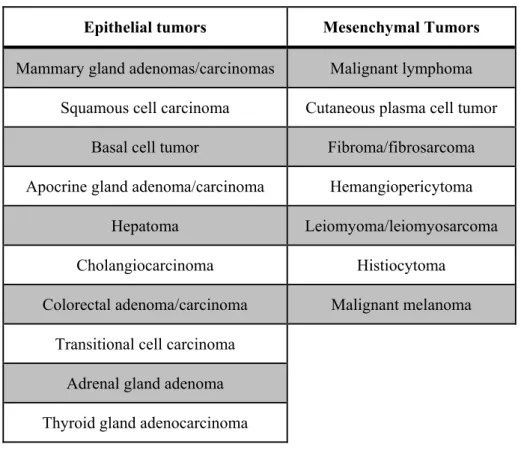
Table 5: Normal canine tissues selected for Pgp immunostaining (adapted from: Ginn P., 1996).
Epithelial Tissues Mesenchymal Tissues
Skin Cardiac muscle
Mammary glands Smooth muscle
Liver Skeletal muscle
Prostate Lymph node
Esophagus Spleen
Stomach Tonsil
Small/large intestine Fibrous connective tissue
Pancreas Blood vessels of brain
Gallbladder Lung Uterus Kidney Urinary bladder Testis/ovary Thyroid Adrenal
Because of Pgp particularly distribution and function, it is possible to deduce its body protector role against xenobiotics, by limiting the entry of toxic substances in the organism (digestive tract), remove substances from the organism (kidney and biliary system), allowing the removal of substances from the tissues (placenta, blood-brain barrier) and protecting cells against substances present in interstitial space (Schinkel A. et al., 1994; Schinkel A., 1997). Given the protective character of Pgp, in human patients carriers of the MDR1m, have been described some susceptibilities to diseases such as Parkinson's disease, inflammatory bowel disease, refractory seizures, and others (Mealey K., 2004).In homozygous knockout mice for the MDR gene a particular sensitivity to the development of inflammatory colitis, resembling those seen in Crohn's disease in humans, is noticed in these animals. These findings conducted to the hypothesis of the same predispositions in dogs that are affected by the identical mutation (Karen, L., 2008). More, patient with MDR1 homozygous mutation brings clinical implications to the veterinary medicine, because normal clinical doses can be toxic for them (Mealey K. et al., 2006). So, its absence/modification increases the tissues exposure to several toxic xenobiotics, with their consequences, as it has already been mentioned in this thesis.