ISABEL MENDES DA
SILVA
ANÁLISE DA MATÉRIA ORGÂNICA ASSOCIADA AO
SAL MARINHO
Definição de potenciais marcadores moleculares
com base na composição volátil e presença de
derivados glicosilados e polissacarídeos
ANALYSIS OF THE ORGANIC MATTER ASSOCIATED
TO SEA SALT
Definition of potential molecular markers based on
the volatile composition and presence of glycosidic
derivatives and polysaccharides
Ano 2014
ISABEL MENDES DA
SILVA
ANÁLISE DA MATÉRIA ORGÂNICA ASSOCIADA AO
SAL MARINHO
Definição de potenciais marcadores moleculares
com base na composição volátil e presença de
derivados glicosilados e polissacarídeos
Tese apresentada à Universidade de Aveiro para cumprimento dos requisitos necessários à obtenção do grau de Doutor em Química, realizada sob a orientação científica do Doutor Manuel António Coimbra Rodrigues da Silva, Professor Associado com Agregação do Departamento de Química da Universidade de Aveiro e da Doutora Sílvia Maria da Rocha Simões Carriço, Professora Auxiliar do Departamento de Química da Universidade de Aveiro.
Apoio financeiro POPH - QREN - Tipologia 4.1 - Formação Avançada, comparticipado pelo FSE e por fundos nacionais do MCTES
Apoio financeiro da FCT e do FSE no âmbito do III Quadro Comunitário de Apoio
Dedico este trabalho à minha família e em especial ao meu marido, pelo incansável apoio.
«Há vários milhares de anos caíram aqui as célebres janelas do palácio do Céu. Ficaram intactas as vidraças nos respectivos caixilhos, porque as janelas caíram sobre a relva verdinha. Hoje são as salinas.»
o júri
presidente Prof. Doutor Paulo Jorge de Melo Matias Faria de Vila Real professor catedrático da Universidade de Aveiro
Prof. Doutor Armando da Costa Duarte professor catedrático da Universidade de Aveiro
Prof.ª Doutora Ivonne Delgadillo
professora associada com agregação da Universidade de Aveiro
Prof. Doutor Manuel António Coimbra Rodrigues da Silva professor associado com agregação da Universidade de Aveiro
Prof. Doutor José Manuel Florêncio Nogueira
professor auxiliar com agregação da Faculdade de Ciências da Universidade de Lisboa
Prof.ª Doutora Sílvia Maria da Rocha Simões Carriço professora auxiliar da Universidade de Aveiro
Prof. Doutor Fernando Hermínio Ferreira Milheiro Nunes professor auxiliar da Universidade de Trás-os-Montes e Alto Douro
Prof.ª Doutora Paula Guedes de Pinho
Investigadora auxiliar do REQUIMTE/Laboratório Associado para a Química Verde – Tecnologias e Processos Limpos
agradecimentos Ao Professor Doutor Manuel António Coimbra e Professora Doutora Sílvia Rocha, meus orientadores, por todo o apoio, entusiasmo, confiança e dedicação com que me acompanharam ao longo deste trabalho, pelos conhecimentos transmitidos e por todas as sugestões de melhoria e aperfeiçoamento.
Ao Projecto SAL “Sal do Atlântico” (INTERREG IIIB) na figura da Professora Doutora Filomena Martins e Mestre Margarida Silva, pelo fornecimento das amostras de sal marinho, por todo o apoio e informação disponibilizadas e pelo interesse demonstrado nesta área de trabalho.
À empresa SunSalt pelo fornecimento das amostras de sal provenientes da Murray Darling Basin, na Australia.
À Fundação para a Ciência e a Tecnologia (FCT) pelo apoio financeiro, através da bolsa de doutoramento (SFRH/BD/31076/2006) e à Unidade de Investigação 62/94 QOPNA.
Ao Professor Doutor Philip Marriott, por me ter dado a oportunidade de trabalhar durante três meses no seu grupo de investigação, proporcionando-me uma enriquecedora experiência de trabalho e a possibilidade de ficar a conhecer um pouco da Austrália. Agradeço ao Mr. Paul Morrison pela assistência técnica prestada e também aos restantes elementos deste grupo de investigação pelo excelente acolhimento e por todo o apoio prestado.
Ao Doutor António Barros e à Doutora Alexandra Nunes pelo apoio e pela análise multivariada de dados resultantes deste estudo.
À Mestre e técnica de laboratório Sandra Magina pelas análises de termogravimetria que se realizaram neste estudo.
Aos meus colegas Rosa Perestrelo e Ângelo Salvador pelo apoio na análise de dados resultantes deste estudo.
Ao Professor Doutor Augusto Tomé e à Professora Doutora Ana Cavaleiro pelo apoio na nomenclatura dos compostos orgânicos e inorgânicos, respetivamente.
Aos meus colegas de trabalho por todo apoio e companheirismo que sempre reinou no laboratório ao longo destes anos, pela amizade, boa disposição e encorajamento.
À minha família e ao meu marido, por todo o amor, carinho, paciência, força e dedicação com que me acompanharam ao longo deste percurso. Sem o vosso apoio e encorajamento não seria possível ter chegado aqui.
palavras-chave Sal marinho, matéria orgânica, potenciais marcadores moleculares, compostos voláteis, cromatografia de gás bidimensional abrangente (GCGC), material polimérico, polissacarídeos sulfatados, proteína, triacilglicerídeos, fatores ambientais
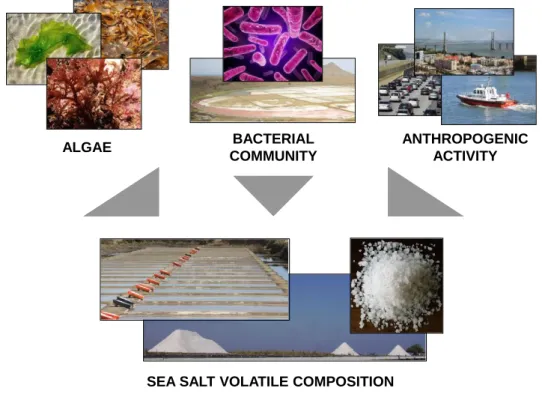
resumo O sal marinho é um produto natural que deriva da evaporação da água do mar nas salinas pela ação do vento e da luz solar. Atualmente existe um interesse crescente na proteção e revalorização das salinas, o que está intrinsecamente associado à qualidade do sal, que pode ser avaliada pelas suas características físico-químicas. Estes sistemas construídos pelo homem podem encontrar-se em diferentes áreas geográficas, apresentando diferentes envolventes ambientais. Durante o processo de cristalização, compostos orgânicos provenientes da envolvente ambiental podem ficar incorporados nos cristais de sal, influenciando a sua composição. A matéria orgânica associada ao sal marinho é proveniente de três principais origens: algas, comunidade bacteriana envolvente e atividade antropogénica.
Com base na hipótese de que o sal marinho contém compostos orgânicos associados que podem ser utilizados como marcadores do próprio sal marinho, incluindo as condições ambientais envolventes das salinas, o objetivo desta tese de doutoramento foi identificar estes compostos no sal. Para tal, procedeu-se a: 1) uma caracterização detalhada da composição volátil do sal marinho por microextração em fase sólida do espaço de cabeça combinada com cromatografia em fase gasosa bidimensional abrangente acoplada à espectrometria de massa por tempo de voo (HS-SPME/GCGC–ToFMS), proporcionando a identificação de potenciais marcadores voláteis; 2) ao desenvolvimento de uma metodologia que permitisse isolar material polimérico potencialmente presente no sal marinho, em quantidades suficientes para a sua caracterização em termos de polissacarídeos e proteína; e 3) à exploração da possível presença de triacilglicerídeos.
A elevada resolução cromatográfica e sensibilidade da GC×GC–
ToFMS possibilitou a separação e identificação de um maior número de compostos voláteis do sal marinho, cerca do triplo, em comparação com a cromatografia unidimensional (GC–qMS). Os cromatogramas bidimensionais revelaram a presença de 165 compostos, pertencentes a 11 famílias químicas, o que mostra a complexidade da composição volátil do sal marinho. O perfil cromatográfico em duas dimensões, resultante da separação por volatilidade em 1D e por polaridade em 2D, permite a dispersão dos compostos no espaço cromatográfico bidimensional em que os compostos estruturalmente similares ocupam o mesmo espaço cromatográfico (cromatograma estruturado), o que permitiu maior fiabilidade nas identificações de acordo os tempos de retenção (1tR e
2
tR) e espetro de massa.
Os resultados da análise de sal proveniente de dois locais do salgado de Aveiro, recolhido ao longo de três anos, sugerem a perda de compostos voláteis ao longo do tempo de armazenamento do sal.
geográficas, todos produzidos em 2007, foi possível identificar um conjunto de dez compostos presentes em todos os sais, nomeadamente: 6-metil-5-hepteno-2-ona, 2,2,6-trimetil-ciclo-hexanona, isoforona, cetoisoforona, 5,6-epóxi-β-ionona, di-hidroactinidiolida, 6,10,14-trimetil-pentadecanona, 2-metilpropanoato de 3-hidroxi-2,4,4-trimetilpentilo, bis(2-2-metilpropanoato) de 2,4,4-trimetilpentano-1,3-diilo e 2-etil-1-hexanol. Estes dez compostos foram considerados como potenciais marcadores voláteis do sal marinho. Sete destes compostos são derivados dos carotenoides e os restantes três poderão resultar da integração de compostos provenientes da atividade antropogénica no metabolismo dos organismos marinhos.
Com o presente trabalho foi isolado e caracterizado, pela primeira vez, o material polimérico presente no sal marinho. Foram usados 16 sais do Oceano Atlântico. Foi desenvolvida uma metodologia baseada num processo de diálise, que permitiu isolar material polimérico a partir de sal marinho em quantidades suficientes que permitissem a sua caracterização. O conteúdo de material polimérico isolado a partir dos 16 sais foi, em mediana, 144 mg por kg de sal seco, i.e. 0,014% (m/m). A espetroscopia de infravermelho médio e a termogravimetria revelaram a presença maioritária de polissacarídeos sulfatados no material polimérico do sal marinho e também a presença de proteína. Os polissacarídeos do sal marinho mostraram ser ricos em resíduos de ácido urónico (21 mol%), glucose (18), galactose (15) e fucose (13). O conteúdo em sulfato representou, em mediana, 45 mol%, sendo a mediana do conteúdo em polissacarídeos sulfatados de 461 mg/g de material polimérico, o que representa 66 mg/kg de sal seco. As ligações glicosídicas encontradas indicaram que os resíduos de açúcares maioritários que poderiam conter um ou mais grupos sulfato eram a fucose e a galactose. Este facto leva a propor que os polissacarídeos do sal marinho tenham origem principalmente em algas, tendo em conta a sua composição e abundância. O perfil em aminoácidos do material polimérico dos 16 sais em estudo revelou como resíduos maioritários, em mediana, a alanina (25 mol%), a leucina (14) e a valina (14), que têm em comum a sua hidrofobicidade, sendo a mediana do conteúdo em proteína de 35 mg/g, i.e. 4,9 mg por kg de sal seco.
Para além da fração hidrofóbica volátil, também foram detetados compostos hidrofóbicos não voláteis no sal marinho. Foram isolados triacilglicerídeos por extração com soxhlet, usando n-hexano. A composição em resíduos de ácidos gordos revelou como ácido maioritário o ácido palmítico (43 mol%), seguido do esteárico (13), linolénico (13), oleico (12) e linoleico (9). O conteúdo, em mediana, de triacilglicerídeos foi de 1,5 mg por kg de sal seco. Dada a sua composição e abundância, tanto a proteína como os triacilglicerídeos parecem ter origem em macro e microalgas, fitoplacton e cianobactérias.
Apesar da variabilidade resultante do ambiente envolvente das salinas, a presente tese de doutoramento permitiu identificar um perfil em compostos orgânicos característico do sal marinho com base nos compostos voláteis, polissacarídeos, proteína e triacilglicerídeos.
keywords Sea salt, organic matter, potential molecular markers, volatile compounds, comprehensive two-dimensional gas chromatography (GC GC), polymeric material, sulfated polysaccharides, triacylglycerides, protein, saltpans surrounding environment
abstract Sea salt is a natural product obtained from the evaporation of seawater in saltpans due to the combined effect of wind and sunlight. Nowadays, there is a growing interest for protection and re-valorisation of saltpans intrinsically associated to the quality of sea salt that can be evaluated by its physico-chemical properties. These man-made systems can be located in different geographical areas presenting different environmental surroundings. During the crystallization process, organic compounds coming from these surroundings can be incorporated into sea salt crystals, influencing their final composition. The organic matter associated to sea salt arises from three main sources: algae, surrounding bacterial community, and anthropogenic activity.
Based on the hypothesis that sea salt contains associated organic compounds that can be used as markers of the product, including saltpans surrounding environment, the aim of this PhD thesis was to identify these compounds. With this purpose, this work comprised: 1) a deep characterisation of the volatile composition of sea salt by headspace solid phase microextraction combined with comprehensive two-dimensional gas chromatography time-of-flight mass spectrometry (HS-SPME/GCGC–
ToFMS) methodology, in search of potential sea salt volatile markers; 2) the development of a methodology to isolate the polymeric material potentially present in sea salt, in amounts that allow its characterisation in terms of polysaccharides and protein; and 3) to explore the possible presence of triacylglycerides.
The high chromatographic resolution and sensitivity of GC×GC–
ToFMS enabled the separation and identification of a higher number of volatile compounds from sea salt, about three folds, compared to unidimentional chromatography (GC–qMS). The chromatographic contour plots obtained revealed the complexity of marine salt volatile composition and confirmed the relevance of GC×GC–ToFMS for this type of analysis. The structured bidimentional chromatographic profile arising from 1D volatility and 2D polarity was demonstrated, allowing more reliable identifications.
Results obtained for analysis of salt from two locations in Aveiro and harvested over three years suggest the loss of volatile compounds along the time of storage of the salt.
From Atlantic Ocean salts of seven different geographical origins, all produced in 2007, it was possible to identify a sub-set of ten compounds present in all salts, namely 6-methyl-5-hepten-2-one, 2,2,6-trimethylcyclohexanone, isophorone, ketoisophorone, β-ionone-5,6-epoxide,
dihydroactinidiolide, 6,10,14-trimethyl-2-pentadecanone, 3-hydroxy-2,4,4-trimethylpentyl 2-methylpropanoate, 2,4,4-trimethylpentane-1,3-diyl bis(2-methylpropanoate), and 2-ethyl-1-hexanol. These ten compounds were considered potential volatile markers of sea salt. Seven of these compounds
integration of compounds from anthropogenic activity as metabolites of marine organisms.
The present PhD work also allowed the isolation and characterisation, for the first time, of polymeric material from sea salt, using 16 Atlantic Ocean salts. A dialysis-based methodology was developed to isolate the polymeric material from sea salt in amounts that allowed its characterisation. The median content of polymeric material isolated from the 16 salts was 144 mg per kg of salt, e.g. 0.014% (w/w). Mid-infrared spectroscopy and thermogravimetry revealed the main occurrence of sulfated polysaccharides, as well as the presence of protein in the polymeric material from sea salt. Sea salt polysaccharides were found to be rich in uronic acid residues (21 mol%), glucose (18), galactose (16), and fucose (13). Sulfate content represented a median of 45 mol%, being the median content of sulfated polysaccharides 461 mg/g of polymeric material, which accounted for 66 mg/kg of dry salt. Glycosidic linkage composition indicates that the main sugar residues that could carry one or more sulfate groups were identified as fucose and galactose. This fact allowed to infer that the polysaccharides from sea salt arise mainly from algae, due to their abundance and composition. The amino acid profile of the polymeric material from the 16 Atlantic Ocean salts showed as main residues, as medians, alanine (25 mol%), leucine (14), and valine (14), which are hydrophobic, being the median protein content 35 mg/g, i.e. 4,9 mg per kg of dry salt.
Beside the occurrence of hydrophobic volatile compounds in sea salt, hydrophobic non-volatile compounds were also detected. Triacylglycerides were obtained from sea salt by soxhlet extraction with n-hexane. Fatty acid composition revealed palmitic acid as the major residue (43 mol%), followed by stearic (13), linolenic (13), oleic (12), and linoleic (9). Sea salt triacylglycerides median content was 1.5 mg per kg of dry salt. Both protein and triacylglycerides seem to arise from macro and microalgae, phytoplankton and cyanobacteria, due to their abundance and composition.
Despite the variability resulting from saltpans surrounding environment, this PhD thesis allowed the identification of a sea salt characteristic organic compounds profile based on volatile compounds, polysaccharides, protein, and triacylglycerides.
Publications in international journals with referees:
Silva, I.; Rocha, S. M., Coimbra, M. A., Marriott, P. J. (2010) Headspace solid-phase microextraction combined with comprehensive two-dimensional gas chromatography time-of-flight mass spectrometry for the determination of volatile compounds from marine salt. Journal of Chromatography A, 1217, 5511-5521.
Silva, I.; Marriott, P. J.; Coimbra, M. A.; Rocha, S. M. (2014) Can volatile organic compounds be markers of sea salt? Submitted.
Silva, I.; Nunes, A.; Rocha, S. M.; Coimbra, M. A. (2014) Characterisation of food grade Atlantic salts according to their triacylglycerides, polysaccharides, and protein content. Submitted.
Silva, I.; Quitério, P.; Maricato, E.; Nunes, C.; Rocha, S. M.; Coimbra, M. A. Characterisation of the highly sulfated polysaccharides from sea salt. Under preparation.
Abstracts of communications in scientific meetings:
Silva, I.; Rocha, S. M.; Coimbra, M. A. (2011) “Extracção e caracterização do material polimérico presente no sal marinho”. XXII Encontro Nacional da Sociedade Portuguesa de Química, Braga, Portugal, pp. 69.
Silva, I.; Rocha, S. M.; Coimbra, M. A.; Marriott, P. (2009) “Comprehensive two-dimensional gas chromatography time-of-flight mass spectrometry analysis of volatile compounds from marine salt”, 6º Encontro Nacional de Cromatografia, Madeira, Portugal, pp. 167.
Silva, I.; Rocha, S. M.; Coimbra, M. A.; Marriott, P. (2008) “Characterisation of the volatile composition of marine salt by comprehensive two-dimensional gas chromatography”, ACROSS Symposium on Advances in Separation Science, Tasmania, Australia, pp.105.
INTRODUCTION AND BACKGROUND ● CHAPTER I ... 1
1.1. SEA SALT ... 3
1.2. SALTPANS SURROUNDING ENVIRONMENT ... 8
1.3. SEA SALT ORGANIC MATTER ... 9
1.3.1. Volatile fraction ... 10
1.3.2. Non-volatile fraction ... 16
1.4. MAIN GOALS ... 20
EXPERIMENTAL PROCEDURES ● CHAPTER II ... 23
2.1. SAMPLES ... 25
2.2. HS-SPME METHODOLOGY ... 30
2.3. GC×GC–TOFMS ANALYSIS ... 31
2.4. SEA SALT MOISTURE CONTENT ... 33
2.5. ISOLATION OF POLYMERIC MATERIAL FROM SEA SALT ... 34
2.6. MID-INFRARED SPECTROSCOPY ... 36
2.7. THERMOGRAVIMETRIC ANALYSIS ... 36
2.8. SUGAR COMPOSITION AND LINKAGE ANALYSIS ... 36
2.9. DETERMINATION OF SULFATE ... 38
2.10. AMINO ACID COMPOSITION AND PROTEIN CONTENT ... 39
2.11. TRIACYLGLYCERIDES EXTRACTION AND FATTY ACID COMPOSITION ... 40
2.12. DATA ANALYSIS ... 41
III.A. HEADSPACE SOLID-PHASE MICROEXTRACTION COMBINED WITH COMPREHENSIVE TWO-DIMENSIONAL GAS CHROMATOGRAPHY TIME-OF-FLIGHT MASS SPECTROMETRY FOR THE DETERMINATION OF VOLATILE COMPOUNDS FROM
MARINE SALT ... 45
III.A.1.CHROMATOGRAM CONTOUR PLOT ANALYSIS ... 46
III.A.2.VOLATILE COMPOUNDS IDENTIFIED IN DIFFERENT SAMPLES OF SEA SALT ... 55
III.A.3.CONCLUDING REMARKS ... 57
III.B. CAN THE TYPICAL SURROUNDING MARINE ENVIRONMENT OF SALTPANS LEAD TO VOLATILE MARKERS OF SEA SALT? ... 59
III.B.1.VOLATILE PROFILE OF SEA SALTS ... 60
III.B.2.POTENTIAL VOLATILE MARKERS OF SEA SALT ... 69
III.B.3.CONCLUDING REMARKS ... 73
III.C. HIGHLY SULFATED POLYSACCHARIDES FROM SEA SALT: ISOLATION AND CHARACTERISATION ... 75
III.C.1.ISOLATION OF POLYMERIC MATERIAL FROM SEA SALT ... 76
III.C.2.MID-INFRARED PROFILE OF POLYMERIC MATERIAL FROM SEA SALT ... 76
III.C.3.THERMAL ANALYSIS OF THE POLYMERIC MATERIAL FROM SEA SALT ... 78
III.C.4.CHARACTERISATION OF POLYSACCHARIDES FROM SEA SALT ... 79
III.C.5.CONCLUDING REMARKS ... 87
III.D. ANALYSIS OF PROTEIN AND TRIACYLGLYCERIDES IN SEA SALT: AN EXPLORATORY STUDY ... 89
III.D.1.AMINO ACIDS COMPOSITION AND PROTEIN CONTENT ... 90
III.D.2.FATTY ACIDS COMPOSITION AND TRIACYLGLYCERIDES CONTENT ... 93
III.D.3.PCA OF MID-INFRARED SPECTRA OF POLYMERIC MATERIAL FROM SEA SALT ... 96
CONCLUSIONS AND FUTURE WORK ● CHAPTER IV ... 97
REFERENCES ● CHAPTER V ... 103
LIST OF FIGURES
Figure 1.1. Ionic composition and crystalline structure of sodium chloride. ... 3Figure 1.2. Physical appearance of different sea salts. ... 3
Figure 1.3. Schematic example of the structure of a saltpan: (a) Seawater supply; (b) Concentration ponds; (c) Crystallization ponds ... 4
Figure 1.4. Schematic example of an inland saltpan. ... 5
Figure 1.5. Salt, once a highly valued trade item. ... 5
Figure 1.6. Aveiro saltpans active in 1956 and in 2011. ... 6
Figure 1.7. Example of a label from a sea salt package (Ria Formosa, Portugal) ... 7
Figure 1.8. Saltpans surrounding environment. ... 8
Figure 1.9. Influence of the surrounding environment in the sea salt volatile composition.. 10
Figure 1.10. Example of a degradation pathway for -carotene. ... 11
Figure 1.11. Chemical structure of -ionone. ... 12
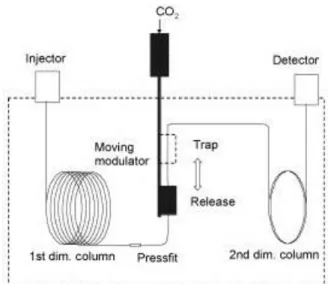
Figure 1.12. Schematic design of a comprehensive two-dimensional gas chromatograph including lcms modulator. (addapted from Adahchour et al., 2008)... 13
Figure 1.13. Schematic design of a LMCS modulation process. ... 13
Figure 1.14. Generation and visualisation of a GC×GC chromatogram. ... 14
Figure 1.15. Example of a structured GCGC chromatogram of fatty acids with different number of unsaturations and carbon chains (C16 – C22). ... 15
Figure 1.16. Examples of repeating structures of sulfated polysaccharides. (a) κ, ι, and
λ-carrageenans (Jiao et al., 2011), (b) ulvan (Jiao et al., 2011), and (c) fucoidan
(Li et al., 2008). ... 18
Figure 1.17. Main goals scheme of the present phd thesis. ... 21
Figure 2.1. Map showing the sea salt sampling sites in the atlantic ocean. Île de Ré – IR; Aveiro - AV; Figueira da Foz – FF; Castro Marim – CM; Cádiz – CD; La Palma island – LP; Sal island – S. The Atlantic Ocean currents are also highlighted: North Atlantic Drift, Canary, North Equatorial. ... 25
Figure 2.2. Satellite image showing Aveiro saltpans location. Peijota – PJ; 18 dos Caramonetes – 18C; Grã Caravela – GCa. ... 26
Figure. 2.3. Satellite image showing Figueira da Foz saltpans location. ... 27
Figure 2.4. Satellite image showing Castro Marim saltpans location. ... 27
Figure 2.5. Satellite image showing Cádiz saltpans location. ... 28
Figure 2.6. Satellite image showing Île de Ré saltpans location. ... 28
Figure 2.7. Satellite image showing La Palma island saltpans location. ... 29
Figure 2.8. Satellite image showing Sal island saltpans location. ... 29
Figure 2.9. Satellite image showing Australia saltpans location. ... 30
Figure 2.10. Photo of a HP 6890-Pegasus III GCGC–ToFMS instrument. ... 33
Figure 2.11. Dialysis-based methodology to isolate polymeric material from sea salt. ... 35
Figure 3.1. GCGC contour plot of the volatile composition of sea salt from saltpan Peijota 2007. The white spots indicate the position of the series of alkanes (C9 -C20). Bands and cluster formed by structurally related compounds are indicated (attribution of peak numbers shown in Table 3.1). ... 47
Figure 3.2. Blow-up of a part of the GCGC contour plot presented in Fig. 3.1. Compounds numbered according to Table 3.1. ... 54
Figure 3.3. Heatmap representation of GC×GC peak areas from sea salt volatile
Marim – CM; Cádiz – CD; LaPalma island – LP; Sal island – S. Areas are
normalized by applying a logarithm function. ... 66
Figure 3.4. Dendrograms from GC peak areas of sea salt volatile compounds. (a) All
volatile compounds (165) detected in Atlantic Ocean sea salts under study. (b) Sub-set of ten potential volatile markers common to all Atlantic Ocean salts. (Île de Ré – IR; Aveiro - AV; Figueira da Foz – FF; Castro Marim – CM;
Cádiz – CD; LaPalma island – LP; Sal island - S) ... 68
Figure 3.5. Chemical structures of the ten tentatively identified compounds common to all
Atlantic Ocean salts. (1) 6-methyl-5-hepten-2-one; (2)
2,2,6-trimethylcyclohexanone; (3) isophorone; (4) ketoisophorone; (5) -ionone-5,6-epoxide; (6) dihydroactinidiolide; (7) 6,10,14-trimethyl-2-pentadecanone; (8)
3-hydroxy-2,4,4-trimethylpentyl 2-methylpropanoate; (9)
2,4,4-trimethylpentane-1,3-diyl bis(2-methylpropanoate); (10) 2-ethyl-1-hexanol. .... 70
Figure 3.6. Potential sources of the chemical groups of sea salt volatile compounds. ... 72 Figure 3.7. MIR spectra overlap (4000 – 500 cm-1) of the polymeric material isolated from
different sea salts. ... 77
Figure 3.8. Overlap of (a) TGA and (b) DTG profiles of the polymeric material isolated
from different sea salts... 79
Figure 3.9. GC-FID chromatogram of the sugar composition of PM from sea salt FF04.
(I.S.- Internal standard) ... 80
Figure 3.10. GC-qMS chromatogram of the glycosidic linkages composition of
polysaccharides from sea salt 18C04. ... 82
Figure 3.11. GC-FID chromatogram of the amino acid composition of PM from sea salt
18C04. (I.S.- Internal standard) ... 90
Figure 3.12. GC-qMS chromatogram of the fatty acids composition of sea salt 18C04. ... 93 Figure 3.13. PCA analysis based on the mid-infrared spectra (1800-700 cm-1) fingerprint
region of polymeric material isolated from 16 Atlantic Ocean salts. (a) scores plot, (b) loadings plot. ... 97
LIST OF TABLES
Table 2.1. Sea salt samples analysed in the present study. ... 26 Table 3.1. Volatile compounds identified by GC×GC–ToFMS in sea salt from two
saltpans of Aveiro (Peijota – PJ and 18 dos Caramonetes – 18C) obtained over three years (2004, 2005, and 2007). ... 48
Table 3.2. Volatile composition of sea salts from several origins (IR, AV, FF, CM, CD,
LP, and S) and inland salts (CG and PF). ... 61
Table 3.3. Sugar and sulfate composition of the polymeric material isolated from different
sea salts. ... 81
Table 3.4. Methylation analysis (mol %) of the polymeric material isolated from different
sea salt samples. ... 83
Table 3.5. Amino acids profile and protein content of the polymeric material of 16 Atlantic
Ocean salts. ... 92
I
ABBREVIATIONS
18C 18 dos Caramonetes 1D One dimension 1 D First dimension 1tR Retention time for the first dimension
2D Two dimensions
2
D Second dimension
2EH 2-Ethyl-1-hexanol 2
tR Retention time for the second dimension
3HPP 3-Hydroxy-2,4,4-trimethylpentyl 2-methylpropanoate 6MHO 6-Methyl-5-hepten-2-one AA Amino acid Ala Alanine Ara Arabinose Asn Asparagine
Asp Aspartic acid
AV Aveiro C14:0 Myristic acid C15:0 Pentadecylic acid C16:0 Palmitic acid C18:0 Stearic acid C18:1 Oleic acid C18:2 Linoleic acid C18:3 Linolenic acid C20:0 Arachidic acid C22:0 Behenic acid C23:0 Tricosylic acid C24:0 Lignoceric acid C26:0 Cerotic acid CAR Carboxen CD Cádiz CG Coarse Gold CM Castro Marim CW Carbowax df Film thickness DHA Dihydroactinidiolide
II DMSO Dimethyl sulfoxide
dRib Deoxyribose
DTG Derivative thermogravimetry
DVB Divinylbenzene
FA Fatty acid
FF Figueira da Foz
FID Flame ionization detector
Fuc Fucose
Gal Galactose
GC Gas chromatography
GCa Grã Caravela
GC×GC Comprehensive two-dimensional gas chromatography
Glc Glucose
Gln Glutamine
Glu Glutamic acid
Gly Glycine
HCA Hierarchical Cluster Analysis
HS Headspace
I.D. Internal diameter
IEC Ion extraction chromatography
Ile Isoleucine
Leu Leucine
LMCS Longitudinally modulated cryogenic system
LP La Palma Island
Man Mannose
MS Mass spectrometry
MUFA Monounsaturated fatty acid
nP Non-polar
P Polar
PCA Principal component analysis
PDMS Polydimethylsiloxane
PF Pink Flakes
Phe Phenylalanine
PJ Peijota
PM Polymeric material
PMAA Partially methylated alditol acetates
Pro Proline
PUFA Polyunsaturated fatty acid
III
Rha Rhamnose
RI Retention index
Rib Ribose
RSD Relative standard deviation
S Sal Island
Ser Serine
SFA Saturated fatty acid
SPME Solid phase microextraction
TCA Trichloroacetic acid
TCH 2,2,6-Trimethylcyclohexanone
TFA Trifluoroacetic acid
TG Triacylglyceride
TGA Thermogravimetric analysis
THF Tetrahydrofuran
Thr Threonine
TIC Total ion current
TMPP 2,4,4-Trimethylpentane-1,3-diyl bis(2-methylpropanoate)
ToFMS Time-of-flight mass spectrometry
TPD 6,10,14-Trimethyl-2-pentadecanone
UA Uronic acid
Val Valine
VII
The present thesis begins with an introduction and background (Chapter I) on the subject to be studied, the organic matter associated to sea salt. The chapter starts with a brief description of the sea salt composition and how it is obtained from nature in saltpans. After some historical references, it is shown how important is the revalorisation of the product “sea salt” and survival of the natural and cultural heritage associated to it, and what has been done, particularly in legal terms, to distinguish the salt from natural sources from industrial salt. A description of the saltpans surrounding environment is also presented, followed by a background about the organic matter associated to sea salt, namely what is already known in terms of its volatile fraction. Based on the hypothesis that sea salt contains organic compounds associated to their crystals that can be used as markers of the sea salt itself, including saltpans surrounding environment, and with the aim of identifying these compounds, the main goals of this PhD thesis were established and are presented at the end of Chapter I.
Sea salt samples under study and experimental procedures performed are described in Chapter II.
The results of this PhD thesis along with their discussion are presented in Chapter III. This is divided in four sections, according to the different subjects discussed. The first section (III.A) refers to the development of a methodology to characterise the volatile and semi-volatile compounds of sea salt by headspace solid-phase microextraction (HS-SPME) combined with comprehensive two-dimensional gas chromatography - time-of-flight mass spectrometry (GCGC–ToFMS). Samples from two saltpans of Aveiro, in Portugal, with diverse locations, obtained over three years (2004, 2005, and 2007) were used in this study. Then, in section III.B, the search of potential volatile markers of sea salt was performed using sea salts from seven origins: France, Portugal, Continental Spain, Canary Islands, and Cape Verde, which were analysed by the HS-SPME/GC×GC–ToFMS developed methodology. The following two sections explore the non-volatile organic fraction of sea salt. Section III.C presents a dialysis-based methodology to isolate polymeric material from sea salt in amounts that allow its characterisation. This section focuses on the analysis and characterisation of polysaccharides, based on polymeric material isolated from 16 Atlantic salts. The last section of this chapter (section III.D) is an exploratory study dedicated to the presence of protein and triacylglycerides in sea salt, in which these two
VIII
important groups of biomolecules are characterised for the same 16 Atlantic salts used in section III.C.
The origin of all the organic compounds found in sea salt, volatiles and non-volatiles, was explored based on information found in literature about the surrounding environment of saltpans. This lead to the proposal of the existence of a typical pattern regarding the organic matter associated to sea salt and the presence of potential molecular markers of this natural product.
In summary, Fig. 0.1 shows the overview scheme of the present PhD thesis, including the samples used, the target, the chemical families analysed, and the outputs.
3
1.1. SEA SALT
Sea salt is a crystalline mineral primarily composed of sodium chloride (NaCl). Besides NaCl, sea salt contains a small percentage of other components such as salts of calcium (e.g. CaCO3, CaSO4), potassium (e.g. KCl) and magnesium (e.g. MgCl2, MgSO4),
trace elements including iodine, iron, and zinc, and also an organic fraction of volatile compounds (Silva et al., 2009; Silva et al., 2010). The crystals of NaCl, present in large majority, have a face-centered cubic lattice with four sodium and four chloride ions per unit cell of the cubic structure (Fig. 1.1).
Na+ Na+ Na+ Na+ Na+ Na+ Na+ Na+ Na+ Na+ Na+ Na+ Cl -Cl -Cl -Cl -Cl -Cl -Cl -Cl -Cl -Cl -Cl -Cl -Cl -Cl -Cl -Cl -Cl -Cl -Cl -Cl
-Figure 1.1. Ionic composition and crystalline structure of sodium chloride.
(http://commons.wikimedia.org/wiki/File:NaCl_crystal_structure.png; http://commons.wikimedia.org/wiki/File:Nacl-structure.jpg)
Sea salt may present different granulometries and colours (Fig. 1.2), characteristics related with its way of production and geographical origin. For example, crystals of fleur
de sel are usually smaller than crystals of common sea salt and, depending on the minerals
present in seawater, sea salts may present different colours.
Figure 1.2. Physical appearance of different sea salts.
4
Since the ocean contains a virtually inexhaustible supply of NaCl (about 3.5%, w/w of salinity), man-made systems were developed to obtain this crystalline mineral from seawater. These systems where salt is produced by the evaporation of seawater due to a combined effect of wind and sunlight are named saltpans (Fig. 1.3). In saltpans the seawater circulates by gravity, flowing through different ponds with increasing levels of salinity due to a continuous evaporation. Along the way, decantation of silt and algae occurs. The harvest of the salt is possible when the point of crystallisation is achieved
(s(NaCl) = 35.92 g / 100 g of aqueous solution at 25ºC) and the salt crystals precipitate
(Burgess, 1978). Fleur de sel are the first crystals formed in the seawater surface which are carefully collected before being deposited. This man-made production usually involves minimal but prolongued processing, such as manual washing, natural drying, crushing, and sieving of sea salt.
(a) (c) (b) (b) (a) (c) (b) (b)
Figure 1.3. Schematic example of the structure of a saltpan: (a) Seawater supply; (b)
Concentration ponds; (c) Crystallization ponds
(http://www.aquasel.fr/index.asp?ID=371&idl=381)
Sea salt may also occur naturally in the so-called inland saltpans (Fig. 1.4), located in inland places near the coast, where seawater emerges spontaneously forming salt crystals at the surface.
5
Figure 1.4. Schematic example of an inland saltpan.
Before saltpans became common man-made systems for the production of salt from seawater, this mineral was not so easy to obtain. Given its importance, namely, being essential for life1, and one of the oldest, most ubiquitous food seasonings that still represents a great importance in food preservation, salt represented a highly valued trade item (Fig. 1.5), such that, salarium, the Latin origin of the word ‘salary’, has the etymology in the name given to the payment in salt to Roman legionnaires.
=
Figure 1.5. Salt, once a highly valued trade item.
(http://www.panoramio.com/photo/81666996?tag=Ria%20de%20Aveiro%20-%20Locais; http://fernandonogueiracosta.files.wordpress.com/2013/02/monte-de-sacos-de-dinheiro.jpg)
In Portugal, Aveiro is one of the regions where it is possible to find active saltpans. Situated in the Vouga river lagoon, these are dedicated to the production of common sea
1
According to new guidelines issued by the World Health Organization (WHO) of 31 January 2013, adults should consume less than 2000 mg of sodium, or 5 g of salt per day.
6
salt and also fleur de sel. Nevertheless, the number of active saltpans in Aveiro, similarly to what happened in other Portuguese regions, suffered an expressive decrease during the last 60 years, as it is possible to see in Fig. 1.6. Between 1956 and 2011 more than 100 saltpans were inactivated. This is related to the fact that from the mid-19th century, the rock salt (halite) obtained from salt mining gained expression. Also, the use of salt as a preserving agent decreased and the improvement of land transportation took place. However, the production of sea salt is still a reality in many different regions of the world. In Portugal, the main sea salt productions are in Figueira da Foz, Alcochete, Ria Formosa, and Castro Marim.
Figure 1.6. Aveiro saltpans active in 1956 and in 2011.
(Adapted from an image provided by the Department of Environment and Planning from University of Aveiro)
Aiming the revalorisation of the product "sea salt" and the survival of the natural and cultural heritage associated to it, a project entitled SAL – Sal do Atlântico -
7
“Revalorisation of the Atlantic traditional saltpans identity. Recovery and promotion of the biological, economical, and cultural potential of the humid zones from the coast”, supported by the European Commission (INTERREG IIIB Programme) was carried on from 2004 to 2007. This was a support for the research on this field, namely in areas such as engineering, biology, and chemistry. Another important step on the valorisation of traditional saltpans and sea salt was the establishment of specific legislation regarding the use of salt for food purposes. In Portugal, the legislation was published in 2007, establishing a legal framework for the production and marketing of salt for food purposes (Decreto-Lei n.º 350/2007). This differentiates sea salt and other forms to obtain salt from natural sources (‘sal tal qual’), from salt that was submitted to appropriate industrial treatment after its extraction (‘sal tratado’). Manual washing, natural drying, crushing, and sieving of sea salt are not considered industrial treatment. On the other hand, processes such as cleaning, refining, and enrichment of salt, with iodine for example, are recognized as industrial treatments. All these salts have to contain a minimum of 90% of NaCl, on a dry basis. In the case of ‘sal tal qual’ technical standards were established, as well as the characteristics and conditions for the production, marketing, and commercialization of this natural product (Portaria n.º 72/2008).
8
For example, sea salt packages usually highlight the local of origin, reinforce the idea of a minimally or even non processed product, and have mentions to the content in some trace elements (Fig. 1.7).
1.2. SALTPANS SURROUNDING ENVIRONMENT
Saltpans can be located in geographical areas presenting different environmental surroundings. They are present in estuarine zones, i.e. transition zones between river and sea environments, which may present substantial intertidal habitats with an extensive benthic fauna and flora (McLusky & Elliott, 2007). Saltpans can also be located in non-estuarine zones such as inland saltpans near the sea or seaside saltpans, which can be either arid zones or surrounded by vegetation, in the coast and inland sites of continents and islands. Thus, the surrounding environment of these systems comprise seawater that supplies saltpans, halophilic organisms that usually colonize these hypersaline habitats, vegetation that may be present near saltpans, and the surrounding atmosphere (Fig. 1.8).
SURROUNDING ENVIRONMENT
SALTPAN
SEA
SALT
HALOPHILIC MICROORGANISMS SEAWATER ATMOSPHERE VEGETATIONFigure 1.8. Saltpans surrounding environment.
9
Saltpans are hypersaline habitats where only certain living organisms can survive. There are several previous studies focusing the habitat of hypersaline environments, including plants, algae, or bacterial communities. In these environments it is possible to find halophytes, plants that grow in high salinity waters (Baron, 1979), such as Salicornia europaea,
Halimione portulacoides (Meziane et al., 1997), Limoniastrum monopetalum, and Spartina densiflora (Simões et al., 2011); halophilic microalgae, namely of Dunaliella spp. such as Dunaliella salina (Kaçka & Dönmez, 2008; Donadio et al., 2011); halophilic bacteria, as for
example Lentibacillus salicampi (Yoon et al., 2002) and Salirhabdus euzebyi (Albuquerque et
al., 2007), and cyanobacteria (Evans, 1994). In the seawater that surrounds and supplies
saltpans, a wide range of marine organisms may be also present, including seaweeds, microalgae, phytoplankton, marine invertebrates, and bacteria, among others. With respect to surrounding vegetation, this can be very diverse, according to the geographical location of the saltpan. Plants such as grass Dactylis glomerata, and bushes Sueda vera and Quercus ilex have already been identified nearby these habitats (Biorede, 2001). The surrounding atmosphere can also interfere with saltpans, since atmospheric components may undergo a deposition process. Another aspect that sometimes may not be disregarded is the presence of human activity or the proximity of saltpans to urban zones.These may involve issues such as boat traffic, aquaculture, proximity to roads or industries, and contamination by sewage.
1.3. SEA SALT ORGANIC MATTER
The inputs of organic matter into the salt matrix arise from the surrounding environment of saltpans. For example, seawater that maintain saltpans carries organic components coming from marine living organisms (Bravo-Linares & Mudge, 2009; Engel & Händel, 2011), such as algae, phytoplankton, marine invertebrates, and microorganisms. This is the case of estuarine zones, sometimes inhabited by large populations of seaweeds. These represent a source of organic compounds that can be released into the media by cell lysis, apoptosis, or exudation (Giani et al., 2005; Urbani et al., 2005; Engel & Händel, 2011). All the surrounding players mentioned in section 1.2 represent a potential contribution to the organic matter associated to sea salt, either in terms of its volatile composition (Evans, 1994),
10
or/and presence of polymeric material (Jiao et al., 2011) or/and triacylglycerides (van Ginneken et al., 2011), among others.
1.3.1. Volatile fraction
In a previous study, a headspace solid-phase microextraction method combined with one-dimensional gas chromatography–quadrupole mass spectrometry (HS-SPME/GC–qMS) methodology was developed to study the volatile composition of sea salt (Silva et al., 2009). This first investigation on volatile compounds of sea salt revealed the presence of volatile and semi-volatile organic compounds distributed over the chemical groups of hydrocarbons, alcohols, phenols, aldehydes, ketones, esters, terpenoids, and norisoprenoids. According to the literature, these compounds arise from three main sources: algae, surrounding bacterial community, and anthropogenic activities (Silva et al., 2009) (Fig. 1.9). More recent studies on the volatile composition of sea salt also describe
ALGAE BACTERIAL
COMMUNITY
ANTHROPOGENIC ACTIVITY
SEA SALT VOLATILE COMPOSITION
11
these as possible origins (Donadio et al., 2011; Serrano et al., 2011). Namely, the presence of norisoprenoids in fleur de sel was related to the concentration of the microalgae
Dunaliella salina (Donadio et al., 2011), and the detection of plasticizers and fragrances in
different samples of sea salts was related to the anthropogenic activity (Serrano et al., 2011). Among the volatile compounds identified in sea salt, the norisoprenoid β-ionone (a carotenoid-derived aroma compound) (Fig. 1.10), which exhibits a violet odour descriptor, was considered a potential contributor to the sea salt aroma (Silva et al., 2010b).
-Carotene O O O O O 5,6-epoxy--ionone -ionone Dihydroactinidiolide
Figure 1.10. Example of a degradation pathway for -carotene.
β-Ionone was quantified in sea salt samples from different geographical origins (Portugal, France, and Cape Verde), ranging from 241 to 888 ng/kg of salt (Silva et al., 2010). Other carotenoid-derived aroma compounds, such as -ionone and -ionone-5,6-epoxide, were previously identified in sea salt (Silva et al., 2009). Carotenoids are significant potential sources of volatile compounds in nature. These are polyene hydrocarbons biosynthesized from eight isoprene units (tetraterpenes) and their biosynthesis only occurs in bacteria, fungi, algae and plants (Belitz et al., 2004; Rodriguez-Bustamante & Sanchez, 2007). Carotenoids are unstable lipophilic unsaturated structures, and their double bonds are highly susceptible to non-enzymatic (photo-oxygenation, auto-oxidation, thermal degradation) and enzymatic degradation (co-oxidation). The volatile carotenoid derivatives resulting from these degradation processes are called norisoprenoids (Rodriguez-Bustamante & Sanchez, 2007) (Fig. 1.11).
12
O O
Figure 1.11. Chemical structure of -ionone.
In spite of the useful data extracted from GC–qMS, the complexity of the volatile composition of sea salt exceeds the capacity of one single separation process, and the observed chromatographic co-elution limited reliable MS identification. This suggests that if a more powerful separation technique is used, a better characterisation of the sea salt volatile compounds can be obtained. In addition, the presence in sea salt of compounds in trace amounts also demands the use of a more sensitive technique. Comprehensive two-dimensional gas chromatography (GCGC) should represent a suitable powerful tool for this study.
In recent years considerable research has been dedicated to the combination of independent techniques with the aim of strengthening resolving power (Kidwell et al., 2004; Tranchida et al., 2004). GCGC combined with time-of-flight mass spectrometry (ToFMS) detection represents a successful example of this combination. GC×GC employs two orthogonal mechanisms to separate the constituents of the sample within a single analysis, based on the application of two GC columns coated with different stationary phases. Thus, a non-polar / polar phase combination, connected in series through a modulator interface, achieves this goal (Fig. 1.12).
The modulator has three main functions: (i) accumulate and trap, (ii) refocus, and (iii) rapidly release the adjacent fractions of the 1D column (Adahchour et al., 2008). The interface samples small (several seconds) portions of the first dimension (1D) eluate by cryofocusing, and re-injects them into the second column (2D). Each 1D peak is modulated several times, largely preserving the 1D separation. The second column is very short and narrow and, consequently, each modulated portion is “flash” separated before the next modulation. There are several types of jet-base modulators with either carbon dioxide or
13
Figure 1.12. Schematic design of a comprehensive two-dimensional gas chromatograph
including LCMS modulator. (Addapted from Adahchour et al., 2008)
(liquid) nitrogen for cooling. Fig. 1.12 shows a longitudinally modulated cryogenic system (LMCS), used in this PhD thesis. This modulator involves four steps, as illustrated in Fig.
1.13: (i) entrance of the broad peak into the trap, (ii) entrapment and focusing, (iii) moving
the trap toward the injector, (iv) heating and remobilization (Marriott & Kinghorn, 1997).
(i)
(ii)
(iii)
(iv)
14
Figure 1.14. Generation and visualisation of a GC×GC chromatogram. (Dallüge et al., 2003)
Using this instrumental approach, compounds co-eluting from 1D undergo additional separation on 2D (Górecki et al., 2006). The process for the generation and visualisation of a GC×GC chromatogram, are shown in Fig. 1.14 (Dallüge et al., 2003). This shows the first step of modulation, in which the 1D chromatogram is sliced in a large series of high-speed 2D chromatograms, the second step of transformation, where these are placed side by side to form a 2D chromatogram, and the visualisation step where peaks are displayed in a 2D plane by means of colour, shading or contour lines to indicate the signal intensity (Dallüge et al., 2003). Therefore, separation potential is greatly enhanced when compared to one-dimensional GC (1D-GC). Sensitivity and limits of detection (LoD) are
15
improved due to focusing of the peak in the modulator and separation of analytes from chemical background (Zrostlíková et al., 2003). Signal-to-noise ratio is enhanced for GCGC, compared to 1D-GC (Dallüge et al., 2003; Marriott et al., 2002).
Narrow peaks with width at half height of 0.1 s or less are preferably recorded by using high data acquisition speed of ToFMS to provide sufficient data density required for GC×GC separations (Shellie et al., 2001). ToFMS brings other advantages such as full mass spectra acquisition at trace level sensitivity and mass spectral continuity, which allows for deconvolution of spectra of co-eluted peaks.
Figure 1.15. Example of a structured GCGC chromatogram of fatty acids with different number of unsaturations and carbon chains (C16 – C22). (Adahchour et al., 2008)
Regarding data analysis, the software developed for GCGC–ToFMS
(ChromaTOFTM) employs advanced True Signal Deconvolution® and automated peak find algorithms, comparison, and classification functions. All these features represent advantages in the data processing and analysis. Another advantage, allowing more reliable identifications, is the structured GCGC (2D) chromatogram. When, the GC×GC analysis
16
was performed on a system comprising a non-polar (nP) 1D column and a 2D column polar (P) stationary phase, two almost independent separations (orthogonality) was observed. On the nP column, analytes were separated according to their vapour pressure/volatility, and on the P column, analytes were separated according to their polarity. Thus, chemically-related compounds have chemically-related spatial distributions in 2D chromatogram, as illustrated in
Fig. 1.15.
GCGC–ToFMS has been successfully used in several fields of analysis, including food and environment (Cardeal et al., 2008; Humston et al., 2009; Perestrelo et al., 2011; Petronilho et al., 2013; Rocha et al., 2007; Rocha et al., 2012; Tran et al., 2007; Tranchida
et al., 2004). This methodology has never been reported before to study the volatile
components of sea salt.
1.3.2. Non-volatile fraction
No references were found about the presence of non-volatile organic matter in sea salt. However, as volatile compounds are retained during sea salt crystallization, other organic compounds arising from the surrounding environment of saltpans could also remain associated to this natural product. In view of the possible sources described above, the present study focused on the occurrence of polymeric material, including polysaccharides and proteins, as well as in the presence of triacylglycerides. These represent important biomolecules that constitute, and are also produced, by the majority of organisms.
Polysaccharides
Polysaccharides containing neutral sugars (e.g. glucose, galactose, mannose, rhamnose, arabinose, xylose, ribose, and fucose), amino sugars (e.g. galactosamine and glucosamine) (Kaiser & Benner, 2000), and acidic sugars (Mopper, 1977; Leppard, 1995), mainly uronic acids (e.g. glucuronic acid and galacturonic acid), phosphorylated and sulfated sugars (Kaiser & Benner, 2000) have already been found in seawater (Engel & Händel, 2011). Present in marine organisms such as phytoplankton (Englel et al., 2011), algae (Innamorati, 1995), and bacteria (Al-Nahas et al., 2011), as structural components
17
and for energy storage (Engel & Händel, 2011), polysaccharides could be released into the medium by cell lysis, apoptosis or exudation (Innamorati, 1995; Giani et al., 2005; Urbani
et al., 2005; Engel & Händel, 2011). These may end, for example, as mucilaginous
aggregates drifting in seawater (complex mixture of organic matter) (Giani et al., 2005; Cappiello et al., 2007; Sartoni et al., 2008). Besides seawater that supplies saltpans, polysaccharides are also found in microorganisms colonizing these same saltpans. Previous studies reported the production of polysaccharides by halophilic microalgae (Mishra et al., 2011) and bacterial species (Philippis et al., 1993; Cojoc et al., 2009). Glucose, galactose, fructose, and xylose were identified as constituents of polysaccharides from microalga
Dunaliella salina (Mishra et al., 2011), glucuronic acid, galacturonic acid, galactose,
glucose, mannose, xylose, and fucose, as constituents of polysaccharides from cyanobacterium (Philippis et al., 1993), and polysaccharides containing amine and sulfate groups, found in halophilic bacteria (Cojoc et al., 2009).
An important group of polysaccharides that may be present in seawater, and that comes mainly from macroalgae, are sulfated polysaccharides (Mollet et al., 1998; Jiao et
al., 2011). These are also abundant in marine invertebrates (Bondu et al., 2010;
Mestechkina & Shcherbukhin, 2010). The major sulfated polysaccharides synthesised by algae are galactans (e.g. agarans and carrageenans), associated to red algae, ulvans, associated to green algae, and fucoidans, associated to brown algae (Jiao et al., 2011). For instance, there are at least 15 different carrageenan structures, including κ, ι, and λ-carrageenan (Fig. 1.16a) (Jiao et al., 2011). The main repeating disaccharide structures of ulvan contain sulfated rhamnose linked to either glucuronic acid or iduronic acid (Fig.
1.16b) (Jiao et al., 2011). Fucoidans, well studied sulfated fucans, have mostly complex
chemical compositions, although for some algae, such as Fucus vesiculosus, they exhibit a simple structure (Fig. 1.16c) (Li et al., 2008).
18 O OSO3 -O H O CH2OH O O OSO3 -O H O3 -SO
k
O OH OSO3 -O CH2OH O O OSO3 -Ot
O OH OSO3 -O CH2OH O O OH Ol
(a)
(b)
(c)
O O OH O H COO -O O O3 -SO HO O O O H -OOC O O3 -SO HO O OH O OH O C H3 O OH O O H C H3 O OH O O3 -SO C H3 O OH O O H C H3 O OFuc O O3 -SO C H3 OFucFigure 1.16. Examples of repeating structures of sulfated polysaccharides. (a) κ, ι, and
λ-carrageenans (Jiao et al., 2011), (b) ulvan (Jiao et al., 2011), and (c) fucoidan (Li et al., 2008).
High molecular weight material from algae was already obtained by means of extraction with cold water (Murano et al., 1997). In this study, water soluble polysaccharides were then isolated after treatment with amylase, alcohol precipitation, dialysis and freeze drying (Murano et al., 1997). A dialysis-based methodology seems to be suitable to extract polymeric material from sea salt.
Proteins
Such as polysaccharides, proteins are present in seawater (Lee et al., 2000; Dittmar
et al., 2001; Sommerville & Preston, 2001; Tsukasaki & Tanoue, 2010), where they
constitute 20-80% of the dissolved organic nitrogen (Sommerville & Preston, 2001). Representing also the greater reservoir of organic nitrogen of most organisms (Lee et al., 2000), they can be released into the media by marine organisms, such as phytoplankton
19
(Sommerville & Preston, 2001; Metaxatos et al., 2003), cyanobacteria (Giani et al., 2005), bacteria (Pistocchi et al., 2005), and algae (Leppard, 1995). As for polysaccharides, these may be released into the medium by means of cell lysis, apoptosis or exudation. Regarding amino acids composition, alanine, glycine, valine, threonine, serine, leucine, isoleucine, proline, aspartic acid, phenylalanine, glutamic acid, methionine, arginine, histidine, tyrosine, and lysine, coming from protein, have already been identified in seawater (Lee et
al., 2000; Dittmar et al., 2001; Sommerville & Preston, 2001; Tsukasaki & Tanoue, 2010).
For example, arginine and glutamic acid were previously identified as predominant in mucilage material of phytoplankton (Metaxatos et al., 2003), while aspartic and glutamic acids are among the major amino acids in algae (Dawczynski et al., 2007; Kumar & Kaladharan, 2007; Gressler et al., 2011) and phytoplankton (Granum et al., 2002). Proteins are also found in microorganisms living in hyper saline habitats, such as microalgae and bacterial species (Mishra et al., 2008; Bardavid & Oren, 2012; Yildiz et al., 2012). For instance, amino acids such as glutamic acid, aspartic acid, lysine, arginine, glutamine, and asparagine were previously identified in proteins of halophilic bacteria (Bardavid & Oren, 2012).
Triacylglycerides
Triacylglycerides (TG) are esters derived from glycerol and three fatty acids, and represent part of a larger group of biomolecules known as lipids. These are neutral lipids. Lipids are structural components and a form of energy storage of plants and animals (Napolitano et al., 1997), and so, widely present in the marine environment. Composed by saturated (SFAs), monounsaturated (MUFAs), and polyunsaturated fatty acids (PUFAs), triacylglycerides are known constituents of the marine biota, including algae (Gressler et
al., 2011; van Ginneken et al., 2011; Guedes et al., 2011), phytoplankton (Napolitano et al., 1997; Chen, 2012), and cyanobacteria (Guedes et al., 2011), and could be released into
the medium by the same way as the polysaccharides and proteins. Despite the numerous possible natural sources, the presence of lipids in seawater can also derive from contaminations, consequence of anthropogenic activities, such as urban wastes (Marty et
al., 1996). TG have already been found as the major lipid class of marine organisms such
20
There are several studies on fatty acid composition of lipids extracted from marine organisms, whereas studies focusing in particular triacylglycerides are few. For instance, large amounts of palmitic acid (C16:0) (Gressler et al., 2011; van Ginneken et al., 2011), oleic acid (C18:1), arachidonic acid (C20:4), and eicosapentaenoic acid (C20:5) (van Ginneken et al., 2011) were already identified in macroalgae. PUFAs are often found in great majority (Dawczynski et al., 2007; van Ginneken et al., 2011). High proportions of palmitic (C16:0), palmitoleic (C16:1), oleic (C18:1), and eicosapentaenoic (C20:5(n-3)) fatty acids, were previously identified in TG from marine microalgae (Alonso et al., 1998). Palmitic acid (C16:0), linoleic acid (C18:2), and α-linolenic acid (C18:3) are among the main fatty acids of cyanobacteria (Guedes et al., 2011). A study on fatty acids in marine atmosphere, obtained from lipid analysis of aerosol samples, showed a positive correlation of the amount of lower molecular weight (C14-C19) SFAs, likely originated from marine
biota, with sea salt concentration, suggesting that these are released from the ocean surface to the atmosphere with sea salt particles. Palmitic, myristic (C14:0), and stearic acids were the three major SFAs identified (Mochida et al., 2002). As a result of anthropogenic activity, C16:0 along with C18:0 were already identified in seawater, being the main components of the triacylglycerides present due to urban wastes (Marty et al., 1996).
1.4. MAIN GOALS
The growing concern for the protection and revalorisation of saltpans identity and survival of the natural and cultural heritage associated to them is intrinsically associated to the quality of the sea salt. This can be evaluated by its physico-chemical proprieties, representing a step towards a deeper differentiation of this natural product. Based on the hypothesis that sea salt contains organic compounds associated to their crystals that can be used as markers of the sea salt itself, including saltpans surrounding environment, the aim of this PhD thesis was to identify these compounds. With this purpose, three main goals were established for the present work (Fig. 1.17):
To obtain a deep characterisation of the volatile composition of sea salt by means of HS-SPME combined with comprehensive two-dimensional gas chromatography
21
time-of-flight mass spectrometry (GC×GC–ToFMS) methodology, in search of potential volatile markers;
To develop a methodology to isolate the polymeric material potentially present in sea salt, in amounts that allow its characterisation in terms of polysaccharides and protein;
To explore the possible presence of triacylglycerides in sea salt.
The achievement of these goals will allow to evaluate the possibility of a typical pattern regarding the organic matter associated to sea salt, and the presence of potential molecular markers of this product.
25
2.1. SAMPLES
Sea salt samples from several geographical origins were analysed in this study (Fig.
2.1). Although all saltpans are located in the Atlantic Ocean, according to their geographical
origin they can be influenced by different Ocean currents (Fig. 2.1). Sea salts coming from 9 locations and produced from 2004 to 2009 were analysed (Table 2.1).
S LP CMCD AV FF IR AFRICA SPAIN FRANCE CAPE VERDE P O RT UG AL CANARIAS ATLANTIC OCEAN N. Atlan tic Drift Cana ry N. Equ atorial S LP CMCD AV FF IR AFRICA SPAIN FRANCE CAPE VERDE P O RT UG AL CANARIAS ATLANTIC OCEAN N. Atlan tic Drift Cana ry N. Equ atorial
Figure 2.1. Map showing the sea salt sampling sites in the Atlantic Ocean. Île de Ré – IR;
Aveiro - AV; Figueira da Foz – FF; Castro Marim – CM; Cádiz – CD; LaPalma island –
LP; Sal island – S. The Atlantic Ocean currents are also highlighted: North Atlantic Drift,
26
Table 2.1. Sea salt samples analysed in the present study.
ORIGIN YEAR OF PRODUCTION ANALYSIS PERFORMED
1 (YEAR) AVEIRO (AV) PJ 18C GCa 2004/ 2005/ 2007 2004/ 2005/ 2007 2007
Volatiles; Sugar; Sulfate; Protein; Triacylglycerides (2008) (2011) (2011) (2010) (2011)
FIGUEIRA DA FOZ (FF)
2004 2005 2007
Sugar; Sulfate; Protein; Triacylglycerides Sugar; Sulfate; Protein; Triacylglycerides Volatiles; Sugar; Sulfate; Protein; Triacylglycerides
CASTRO MARIM (CM) 2007 Volatiles; Sugar; Sulfate; Protein; Triacylglycerides
CÁDIZ (CD) 2007 Volatiles; Sugar; Sulfate; Protein; Triacylglycerides
ÎLE DE RÉ (IR) 2007 Volatiles; Sugar; Sulfate; Protein; Triacylglycerides
LA PALMA (LP) 2007
2009
Volatiles; Sugar; Sulfate; Protein; Triacylglycerides Sugar; Sulfate; Protein; Triacylglycerides
SAL (S) 2007 Volatiles; Sugar; Sulfate; Protein; Triacylglycerides
1 Each analysis was performed at the same time for all sea salts under study
Aveiro (AV) saltpans are located in the north coast of Portugal, more exactly in Vouga river lagoon (Ria de Aveiro), at 8 km from the sea (Fig. 2.2). The samples of sea salt from Aveiro came from three different saltpans, namely Peijota (PJ), 18 dos Caramonetes (18C) and Grã Caravela (AV or GCa).
1 km
GCa PJ
18C
Figure 2.2. Satellite image showing Aveiro saltpans location. Peijota – PJ; 18 dos
Caramonetes – 18C; Grã Caravela – GCa.
27
Also from the north coast of Portugal, in the Mondego river margins, is located the Figueira da Foz (FF) saltpan, at 3 km from the sea, more precisely in Murraceira island (Fig.
2.3).
Figure. 2.3. Satellite image showing Figueira da Foz saltpans location.
(Satellite image obtained from Google maps)
In Guadiana river margins, Algarve, south of Portugal, at 5 km from the sea, and with Mediterranean sea influence, is located the Castro Marim (CM) saltpan (Fig. 2.4).
Figure 2.4. Satellite image showing Castro Marim saltpans location.