Supporting Public Participation through Interactive
Immersive Public Displays
Geoinformatics
Supporting Public Participation through
Interactive Immersive Public Displays
Inaugural dissertation in fulfillment of the academic degree of
Doctor of Natural Sciences (Dr. rer. nat.)
in the Department of Geosciences
of the Faculty of Mathematics and Natural Sciences of the Westfälische Wilhelms-Universität Münster
Submitted by Guiying D
European Joint Doctorate in Geoinformatics: Enabling Open Cities
Marie Skłodowska-Curie Action (ITN-EJD)
Dean: Prof. Dr. Harald Strausß
First supervisor: Prof. Dr.-Ing. Christian KRAY(first reviewer)
Second supervisor: Prof. Dr. Marco PAINHO(second reviewer)
Third supervisor: Prof. Dr. Oscar BELMONTEFERNÁNDEZ
Day of defence: 15th, Nov, 2018 Day of promotion: 31st, August, 2018
Abstract
Citizen participation as a key priority of open cities, gives citizens the chance to influence public decision-making. Effectively engaging broader types of citizens into high participation levels has long been an issue due to various situational and tech-nical constrains. Traditional public participation technologies (e.g. public hearing) usually are blame for low accessibility by the general public. The development of Information Communication Technology brings new methods to engage a broader spectrum of citizens in deeper participation level during urban planning processes. Interactive public displays as a public communication medium, hold some key advan-tages in comparison to other media. Compared to personal devices, public displays make public spaces into sociable places, where social communication and interaction can be enriched without intentionally or unintentionally excluding some groups’ opinions. Public displays can increase the visibility of public events while it is more flexible and up-to-date regarding showing information. Besides, they can also foster a collective awareness and support group behavioral changes. Moreover, due to the public nature of public displays, they provide broad accessibility to different groups of citizens.
Public displays have a great potential in bringing new opportunities to facilitate public participation in an urban planning process. In the light of previous work on public displays, the research goal is to investigate a relatively new form of citizen participation known as Public Display Participation. This participation form refers to the use of public displays for citizen participation in the context of urban planning. The main research question of the thesis is how public displays can be used for facilitating citizen consultation in an urban planning process. First, a systematic literature review is done to get an understanding of the current achievements and gaps of research on public displays for public participation. Second, an elicitation study has been conducted to design end user centered interactions with public displays for citizens’ consulting activities. Finally, we run a usability to evaluate the usability of public displays for citizen consultation and their user experience. The main contributions of this thesis can be summarized as: (1) the identification of key challenges and opportunities for future research in using public displays for public participation in urban contexts; (2) two sets of user-defined gestures
for two sets of user-defined phone gestures and hand gestures for performing eleven consulting activities, which are about examining the urban planning designs and giving feedback related to design alternatives, are also identified. (3) a new approach for using public displays for voting and commenting in urban planning, and a multi-level evaluation of a prototypical system implementing the proposed approach. Designers and researchers can use the contributions of this thesis, to create interactive public displays for supporting higher public participation, i.e. citizen collaboration and empowerment.
Acknowledgement
First of all, I would like to thank my supervisor Christian Kray for giving me the opportunity to work on this topic, guiding me to try different ideas, always being available for questions and discussions. Similarly, I want to express my thanks to our postdoc Auriol Degbelo. Both of them did a great job. They gave me a lot of invaluable help on structuring my thoughts, focusing on the main points of my research, and keeping me making progress on my research. This work would not have been possible without them. I would also like to thank my second supervisor Marco Painho for hosting me in NOVA IMS, discussing ideas with me, and helping me to improve my papers. I appreciate my third supervisor Oscar Belmonte Fernández, who gave helpful guidance to my research proposal and quarterly reports of my Phd study.
I have greatly enjoyed working at the situated computing and interaction lab with a great group of people: Anita, Max, Mehrnaz, Samuel, Holger, Matthias, Champika, and Markus, whose knowledge and experiences broadened my views. There are also warm thanks I want to send: to our student assistants, Nicholas, Albert, Lasse for their assisting work on running studies, and programming parts of the prototype presented in this thesis; to Jakub for his valuable guidance and discussion on designing my user studies; to Karsten and Heike, who are always so nice and helpful. I would especially thank Meng, who encouraged me a lot during my Phd study. Finally, I owe a lot of thanks to my family for their unconditional love and support as always. Whenever I need them, they are always there. I would also like to thank my friends for their priceless friendship, and I hope they will understand that I could not list all of them here by name.
This dissertation is funded by the European Commission within the Marie Skłodowska-Curie Actions (ITN-EJD). Grant Agreement num. 642332 - GEO-C - H2020-MSCA-ITN-2014.
List of Papers
The core chapters of this thesis consist of following manuscripts:
1. Public displays for public participation in urban settings: a survey Du, Guiying, Auriol Degbelo, and Christian Kray. Proceedings of the 6th ACM international symposium on pervasive displays. ACM, 2017.
2. Gestural Interaction with 3D Objects Shown on Public Displays: an
Elici-tation Study
Du, Guiying, Auriol Degbelo, Christian Kray, and Marco Painho. Interaction Design and Architecture(s) Journal (IxDA).Accepted
3. User-generated Gestures for Voting and Commenting on Immersive
Dis-plays in Urban Planning
Du, Guiying, Auriol Degbelo, and Christian Kray. Submitted to the 2019 ACM CHI Conference on Human Factors in Computing System
4. Interactive Immersive Public Displays as Facilitators for Deeper
Participa-tion in Urban Planning
Du, Guiying, Christian Kray, and Auriol Degbelo. Submitted to International Journal of Human–Computer Interaction.
Contents
1 Introduction 1
1.1 Motivation . . . 1
1.1.1 Citizen Engagement in Urban Planning Processes . . . 2
1.1.2 Enhancing Citizen Engagement through ICT . . . 4
1.1.3 Public Displays for Citizen Engagement . . . 5
1.2 Objectives . . . 8
1.2.1 Research questions . . . 8
1.2.2 Scope . . . 9
1.3 Methodology . . . 10
1.4 Thesis Outline . . . 12
2 Public Displays for Public Participation in Urban Settings: a Survey 13 2.1 Introduction . . . 13 2.2 Related Work . . . 15 2.3 Data Collection . . . 16 2.4 Analysis . . . 21 2.5 Discussion . . . 24 2.6 Conclusion . . . 26
3 Gestural Interaction with 3D Objects Shown on Public Displays: an Elicitation Study 27 3.1 Introduction . . . 27
3.2 Related Work . . . 29
3.2.1 Public Displays for Public Participation . . . 29
3.2.2 Gestural Interaction . . . 30
3.3 User Study . . . 31
3.3.1 Overview and Rationale . . . 31
3.3.2 Selection of Tasks . . . 33
3.3.3 Apparatus and Materials . . . 33
3.3.4 Participants . . . 34
3.3.5 Procedure . . . 35
3.4 Results . . . 35
3.4.1 Taxonomy used in the analysis . . . 36
3.4.2 User-Defined Gesture Sets and Agreement Scores . . . 39
3.4.3 Subjective Ratings . . . 40
3.5 Discussion . . . 43
3.5.1 User-Defined Gestures . . . 44
3.5.2 Implications for System Design . . . 45
3.5.3 Implications for User Interface Design . . . 46
3.5.4 Limitations of the Study . . . 47
3.6 Conclusion . . . 47
4 User-generated Gestures for Voting and Commenting on Immersive Displays in Urban Planning 49 4.1 Introduction . . . 49
4.2 Related Work . . . 51
4.2.1 Public displays for public participation . . . 51
4.2.2 Gestural interaction with public displays . . . 52
4.2.3 Mobile interaction with public displays . . . 53
4.3 User Study . . . 54
4.3.1 Study Design . . . 54
4.3.2 Participants . . . 55
4.3.3 Tasks . . . 56
4.3.4 Apparatus and Materials . . . 56
4.3.5 Procedure . . . 57
4.4 Results . . . 58
4.4.1 Gesture Analysis Method . . . 59
4.4.2 Gesture Types and Frequency . . . 62
4.4.3 Gesture sets . . . 62
4.4.4 User Ratings . . . 63
4.4.5 User Feedback . . . 65
4.5 Discussion . . . 67
4.5.1 Implications for system design . . . 69
4.5.2 Implications for interface design . . . 70
4.5.3 Limitations . . . 70
4.6 Conclusion . . . 71
5 Interactive Immersive Public Displays as Facilitators for Deeper Partic-ipation in Urban Planning 73 5.1 Introduction . . . 73
5.2 Related work . . . 75
5.2.1 Public participation in urban planning . . . 75
5.2.2 Public displays for public participation . . . 77
5.2.3 Mobile interaction with public displays . . . 78
5.3 A public display-based approach to facilitate deeper participation in
urban planning . . . 79
5.3.1 Design goals and rationale . . . 79
5.3.2 Key components of the proposed approach . . . 80
5.3.3 Prototypical implementation . . . 80
5.4 User Study . . . 81
5.4.1 Study design . . . 82
5.4.2 Participants . . . 82
5.4.3 Apparatus and material . . . 83
5.4.4 Procedure . . . 83 5.5 Results . . . 84 5.5.1 Usefulness . . . 85 5.5.2 Ease of use . . . 86 5.5.3 Ease of learning . . . 86 5.5.4 User satisfaction . . . 87
5.5.5 Participants’ comments on urban planning projects . . . 87
5.5.6 Pros and cons of the system according to users . . . 89
5.6 Discussion . . . 91
5.6.1 Usability . . . 91
5.6.2 User interface . . . 92
5.6.3 Immersive public displays and public participation . . . 92
5.6.4 Limitations . . . 93
5.7 Conclusion . . . 93
5.8 Appendix-Scenarios used during the user study . . . 94
6 Reflections 101 6.1 Summarized Results . . . 101
6.2 Discussion . . . 105
6.2.1 Potentials and challenges of using public displays in urban planning domain . . . 105
6.2.2 PD-participation and Urban planning . . . 107
6.2.3 Limitations . . . 109 6.3 Conclusion . . . 110 6.3.1 Contribution . . . 110 6.3.2 Future work . . . 112 Bibliography 115 ix
List of Figures
2.1 Author keywords of relevant papers from PerDis on public participation
in an urban context. . . 17
2.2 Distribution of the studies according to countries. . . 20
3.1 Study setup: The participant with the transparent mockup prototype (C) stood on the footprint mark in front of the IVE showing the 3D objects (B), while the GoPro Hero4 camera (A) and the Canon camera (D) recorded the participant’s behaviors. . . 34
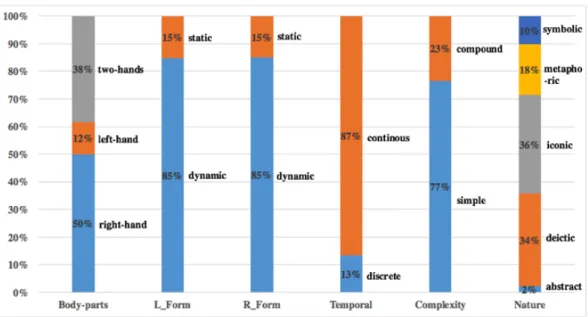
3.2 The overall taxonomy distribution for all the elicited hand gestures. . . 39
3.3 The overall taxonomy distribution for all the elicited phone gestures. . 39
3.4 Agreement scores for user-defined gestures. . . 43
3.5 User ratings for the appropriateness of the proposed gestures for the seven tasks. . . 44
3.6 User ratings for the easiness of the proposed gestures for the seven tasks. 44 4.1 Study setup: the participant with the transparent mock-up prototype (C) standing on the footprint mark (not shown) in front of the IVE with the urban planning material (B), and an example of a piece of comment (E), while the GoPro Hero4 camera (A) and the Canon camera (D) were recording their behaviors. . . 57
4.2 The other stimulus played on the display in our study . . . 57
4.3 Distribution of the elicitated hand gestures. . . 62
4.4 Distribution of the elicitated phone gestures. . . 63
4.5 Agreement scores for user-defined gestures in two conditions. . . 65
4.6 Appropriateness ratings for the gestures proposed for the four tasks. . . 66
4.7 Easiness ratings for the gestures proposed for the four tasks. . . 66
5.1 Prototypical implementation of the proposed approach: immersive video environment consisting of three large screens; central screen shows panoramic video and planned building; side screens show voting results and comments; user votes/comments using simple web app on mobile phone. . . 81
5.2 Classification of the 378 comments participants provided on the pre-sented urban planning projects; a single comment could refer to multi-ple features. . . 89
List of Tables
2.1 Selected outlets and paper frequencies . . . 18
2.2 Types of the main research contributions of the papers surveyed. . . 21
2.3 Papers surveyed according to the types of public displays examined, their purpose, and the type of space where they are studied. . . 24
3.1 Taxonomy for user-defined hand gestures. . . 37
3.2 Taxonomy for user-defined phone gestures. . . 38
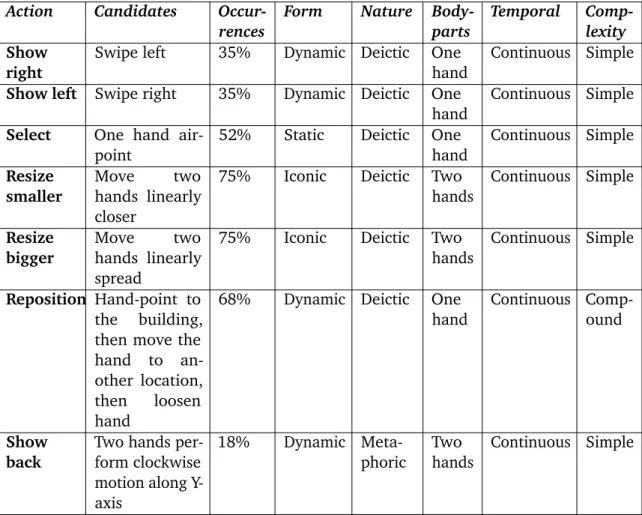
3.3 Gesture candidates for performing the seven tasks by hands. . . 41
3.4 Gesture candidates for performing the seven tasks by smartphone (First part). . . 42
3.5 Gesture candidates for performing the seven tasks by smartphone (Sec-ond part). . . 42
4.1 Distribution of use of interaction modalities. . . 59
4.2 Taxonomy for user-defined hand-gestures. . . 60
4.3 Taxonomy for user-defined phone-gestures. . . 60
4.4 Gesture candidates for four tasks by hands . . . 64
4.5 Gesture candidates for four tasks by smartphone . . . 64
5.1 User scores for questions related to the prototype’s usefulness, as well as their standard deviations. . . 85
5.2 User scores for questions related to the prototype’s ease of use, as well as their standard deviations. . . 86
5.3 User scores for questions related to the prototype’s ease of learning, as well as their standard deviations. . . 87
5.4 User satisfactions scores and their standard deviations. . . 87
5.5 Dimensions and classes for categorising participants’ comments on proposed urban planning projects. . . 88
1
Introduction
Digital signage provides dynamic real-time, near-real-time, or non-real-time information that may be individually adapted to the location, time, situation, and who is actually watching the screen. Using simultaneous screen elements such as regions, layers and tickers (or “crawlers”), several messages, originating from different sources (and places), may be combined on one single screen. Though providing information in a fully automated way, the medium also allows for inter-action with the viewer, using touch screens or other means of user control. —Lars-Ingemar Lundstrom, author, Digital Signage Broadcasting:
Broadcasting, Content Management, and Distribution Techniques, by NAB-Focal Press
1.1 Motivation
When we try to introduce the research of public displays to non-experts, the first question most people ask is "what is it". Public displays are everywhere in our daily lives. In shopping malls or streets, public displays are used for advertising, which is a major application domain for public displays (Davies, Clinch, et al., 2014). Another major use of public displays is as information boards, e.g. in the airports or train stations, public displays are showing arrival and departure information. Street signs are another kind of public displays, on which nationally or internationally agreed on symbols are shown to remind drivers of the speed limits or road hazards. People also use public displays for art and entertainment purposes, e.g. artists made public displays as an innovative use of showing art information or during the 2018 World Cup1, during which big screens were particularly popular for large groups of people
to watch football matches at city locations together.
However, as a still relatively new, undeveloped, and untested branch of computer science (Davies, Clinch, et al., 2014), public displays lack a standard definition to describe their features and capabilities adequately. According to the Oxford
1https://www.st-christophers.co.uk/travel-tips/blogs/2017/
where-to-watch-the-football-world-cup-2018-in-berlin (last accessed: July 31th, 2018).
English Dictionary2, a terminological definition of pervasive displays is described
as: “electronic devices for visual presentation” (displays) which "spreading widely throughout an area or a group of people" (pervasive). But to acquire a more accurate understanding of public displays for readers, in our thesis, a public display is a sub-segment of electronic signage in public space that is "centrally managed and individually addressable for display of text, animated or video messages for advertising, information, entertainment, and merchandising to targeted audiences" (Schaeffler, 2012). It’s worth pointing out that, due to diverse research communities working on public displays from the outset, there is a number of different terms for the same concept, in this thesis, digital signage, pervasive displays, and public displays are used interchangeably to mean the same thing, i.e. "collections of digital displays deployed in public or semi-public spaces" (Davies, Clinch, et al., 2014). As we described in the first paragraph, advertising, information presentation, sig-nature or entertainment are four major application domains for all existing public displays. However, the key challenge for designers of future public displays is more about creating innovative new systems that deliver real value to people (Davies, Clinch, et al., 2014). This encourages us to explore the possibility of expanding the use of public displays to citizen participation in the urban planning domain.
1.1.1 Citizen Engagement in Urban Planning Processes
The realisation of a smart city vision calls for empowering citizens to enable them to participate and benefit from the city (Degbelo et al., 2016). Citizen participation aims to incorporate concerns, needs, and values from the public (e.g. citizens and communities) into the governmental decision-making processes. Implementing public participation in governmental decision-making process is thought to be vitally important to reflect public interests, manage conflicts, and achieve better decision-making results (Pateman, 1970; Fagence, 2014; Berry et al., 2002). With citizen participation, decisions might be more realistically rooted in citizen interests, the public might become more sympathetic partners to reveal hidden facts for tough decisions, and the improved support from the public might improve the quality of decisions. Though incorporating citizens into decision-making process needs effort, the potential benefits from the political, social, and economic perspectives give essential reasons to initiate citizen participation in decision-making processes (Pateman, 1970; Fagence, 2014; Berry et al., 2002). In the thesis, we follow the definition of citizen engagement from Sheedy et al. (2008), "Above all, citizen engagement values the right of citizens to have an informed say in the decisions that affect their lives". This definition emphasises the right of citizens, i.e. to be informed and heard to finally influence the decisions, which is consistent with
our understanding of the citizen engagement in this thesis. The term of citizen participation and citizen engagement are sometimes interchangeably used in the thesis.
A critical part of public participation theory is redistribution of power among dif-ferent stakeholders, e.g. government, institutions, communities, and citizens. The concept of public participation is, however, too broad, leaving room for diverse interpretations, for the reason that citizens may be involved in a number of levels. Sherry Arnstein’s ladder of citizen participation (Arnstein, 1969)is one of the most well-known theories in citizen engagement research. As a typology, his theory sug-gests how much power citizens get at five different participation levels. Another related public engagement typology was proposed by Rowe and Frewer (2005). This typology identified three public engagement levels, which were defined based on the direction of the information flow and the nature of information. However, we are go-ing to use the public participation spectrum3from the International Association for
Public Participation (IPA2), which defines five levels of realizing citizen participation: informing, consulting, involving, collaborating with, and empowering citizens. Our reasons for this decision are as follows: first, compared to other public participation theories, each of public engagement levels in the spectrum has an obvious goal and promise for the public. It provides our research with useful guidance for us to study public displays for facilitating public participation from the low level to higher levels in an urban planning process. Second, as Fechner (2016) describe in his work, the spectrum is actively referenced in the literature (Sheedy et al., 2008; Head, 2007; Creighton, 2005) and commonly used in the open government context. It is in line with the scope of the thesis, which focuses on public participation in open cities, i.e. "smart cities that are open to all citizens and facilitate participation on all level"4.
Since the 1950s empowering citizens in decision-making processes has been in-tensively proposed with rapid development of participation theories and models (Arnstein, 1969; Godschalk et al., 1994; Innes, 1996; Forester, 1999; Straus, 1999; Wondolleck and Yaffee, 2000). As an important part of decision-making, public participation is also demanded in spatial urban planning, such as regional develop-ment, transport and mobility, design and use of open spaces in a city/community. Planners have also published a vast number of theories, models and case studies in the past decades (Lowry et al., 1997; Innes and Booher, 2004). Citizens usu-ally acquire knowledge about planning projects from information in situated scene with certain circumstances (Healy, 2009). Fostering high-quality information flow among citizens and other stakeholders is one essential part to achieve a successful public participation (Rowe and Frewer, 2005; Gudowsky and Bechtold, 2013). The
3https://sustainingcommunity.wordpress.com/2017/02/14/spectrum-of-public-participation/
(last accessed: July 20th, 2018).
4http://www.geo-c.eu/goals (last accessed: July 20th, 2018).
scoping of this thesis focuses on citizen participation in Germany, which is a typical example of democratic countries. In Germany, a typical urban planning project usually involves two kinds of public participation: formal participation and informal participation. Formal participation is mandatory and encompasses "all forms of legal and usual possibilities of influence and decision-making. They differ depending on current forms of democracy" (E. Müller et al., 2011). Informal participation permits and allows for "the inclusion, on certain issues, of groups who cannot (e.g. migrants) or are not yet able (e.g. children and teenagers) to formally take part in decision-making processes. It also enables interest groups or persons concerned to contribute, depending on the issue or problem" (E. Müller et al., 2011). Our research in this thesis intends to support both formal participation and informal participation for showing urban planning design alternatives to citizens and collecting feedback from them through public displays.
Citizens conventionally contribute their information in verbal or written form during specific events that are organised by local governments or planning institutions such as public hearing, workshops, and face-to-face dialogues (Sanoff, 2000; Creighton, 2005). In practice, though it is vital to integrate citizens, the cost of participation, e.g. the cost of educating oneself about the issue sufficiently, seems a severe bar-rier drawing citizens back from participation (Krek, 2005). The development of Information Communication Technology brings new methods to facilitate public participation in urban planning. These new possibilities are introduced in the next section.
1.1.2 Enhancing Citizen Engagement through ICT
Since it is no longer a question whether public participation is needed in urban planning processes or not (Irvin and Stansbury, 2004), the question is when and how to involve citizens. Traditional public participation technologies (e.g. public hearing) usually are blamed for low accessibility by the general public (Conroy and Evans-Cowley, 2006). For many reasons, such as work pressure and family responsibilities, citizens who are willing to participate in the urban planning process may not be able to participate. Furthermore, an important measure to ensure the success of an urban planning project is to involve a broad range of citizens in the process; which is also a major challenge (Münster et al., 2017). By traditional public participation technologies, usually only a subset of the potentially affected citizens can be reached. Further, for those who do become involved, their level of participation is often very low. Besides, Howard and Gaborit (2007) pointed out that key roadblocks to generating public interest in deeper public involvement, i.e. citizen consultation in urban planning, were three limitations: lack of interactivity; lack of a feeling of immersion; the comments are limited.
In recent years, people are trying to use Information and Communication Technolo-gies (ICT) to deal with the challenges of traditional public participation methods and align citizen participation with the society’s changes. Therefore, the notion of electronic participation (eParticipation) has been proposed and developed. Among these ICT technology forms, main attentions were put on opportunities offered by mobile technologies and computer technologies for engaging citizens in the urban planning process and overcoming the barriers and challenges of traditional public participation (Houghton et al., 2014). As each coin has two sides, technologies not only provide new opportunities for enhancing public participation, but also build potential barriers. These barriers may occur due to a lack of facilities or devices (e.g. no internet connection or no smartphone) and the complexity of technologies them-selves, as stated by Gordon and Koo (2008). Besides, due the quick development of various ICT, we are in an era of information explosion. That means how to help people quickly get informed what happened without losing in the vast information ocean is another challenge. So it can be an opportunity for ICT to be useful to show selected information to citizens.
1.1.3 Public Displays for Citizen Engagement
The great civic potential of public displays has been increasingly explored by various academic communities, such as the urban planning community. For instance, Hosio and his colleagues (Hosio, Goncalves, Kostakos, and Riekki, 2015) argued that public displays, and especially interactive public displays, have great importance in gathering and diffusing information to support civic engagement in the urban planning process. Nowadays, public displays become commonly seen in public or semi-public spaces. They are getting more and more attention as a promising communication medium (Davies, Langheinrich, et al., 2012). They often serve as ambient information providers in shopping malls, schools, museums, airports, train stations and stadiums. More and more networked and interactive displays are developed and deployed (J. Müller, Alt, et al., 2010). Public displays are thought to be able to change current city life dramatically (Kuikkaniemi et al., 2011). The unique characteristics of public displays (Kuikkaniemi et al., 2011) make themselves have amazing potentials to become powerful citizen engagement tools for overcoming barriers and challenges of traditional public participation methods in the planning process.
Public displays can make public spaces into sociable places (Kuikkaniemi et al., 2011), where social communication and interaction can be enriched without in-tentionally or uninin-tentionally excluding some groups’ opinions. With the rapid development of computer and mobile technologies, people’s social life has under-gone profound changes in the last ten years. The place, such as cafes or bars, where
"homes away from home, where unrelated people relate" (Oldenburg, 1999), were quintessential third places. These third places provide "neutral spaces in which diverse people with divergent views can serendipitously encounter and engage with one another". However, the prevalence of mobile or computer technologies makes those places “physically inhabited but psychologically evacuated" (Fakhry, 1973). People, especially young people, become more and more having communications with their families, friends, or even strangers via digital communication, such as Facebook, Whatsapp, and Wechat. The kind of digital communication makes ana-logue interaction with strangers, which helps people hear other opinions, get rarer. It is also not helpful in providing "the full spectrum of local humanity" (Memarovic and Langheinrich, 2010), creating opportunities for connecting people with different backgrounds and interest. Public displays offer an opportunity to show that digital media can not only separate people but, quite the opposite, bring people together. McCarthy et al. (2009) presented the CoCollage system, which was designed to promote community conversation in a café. Their study showed that the situated public display improved sense of community over time. Both Rubegni et al. (2011) and Wouters, Huyghe, and Vande Moere (2013)’s research revealed that public displays could act as conversation starters between both strangers and acquaintance. Moreover, Memarovic and Langheinrich (2010) illustrated the great potential of public displays for enhancing community interaction through four short scenarios. Later, they (Memarovic, Langheinrich, and Alt, 2012) presented their effort on creating the Interacting Places Framework for networked public displays aiming for promoting community interaction and place awareness. Besides, social spaces created by public displays offer the inclusive sociability and ease of association, which benefits the whole community by enabling people to participate in public decision-making process McCarthy et al. (2009).
Public displays can foster a collective awareness and support group behavioural changes. As we described above, in the context of citizen engagement, some researchers put public displays as a communication channel within groups of people. Under this research scenario, public displays even became a collaboration device, by which people constantly adapted their behaviours by observing other people’s behaviours or through feedback they received (Drochtert et al., 2015). For instance, Rogers and Brignull (2002) observed a honeypot effect around public displays. They built and placed a shared display, known as Opinionizer, which acted as the magnet drawing people together and enable them to be communally changed from being onlookers to interactors and back again. As large public displays become more affordable, more and more research effort are put on them for studying group collaboration and behaviors. Moraveji et al. (2009) found that the shared display performed better than the private display on a collaborative learning task in two science classes. To explore how people use large public displays, Peltonen et al. (2008) developed and deployed CityWall, a large interactive public display. By they
observed its usage over one month, they found that people were attracted to begin using it by watching other people using it. Furthermore, a collection of models was proposed to analyse user behaviour around a public display. Examples are multi-user interaction models and ‘Audience Funnel’ (Ju et al., 2008; Memarovic, Langheinrich, Alt, et al., 2012; Wang et al., 2012). Memarovic, Gehring, et al. (2015) reviewed these models by examining the relationship between different interaction types and locations around public displays.
Public displays can act as a feedback channel, which supports behaviour change by providing persistent feedback about users’ behaviours. This can be explained by Green Cloud 5, which is a city-scale display. By showing the city’s electricity
consumption level, the display helped people make some public decision, such as cutting electricity consumption. Hosio, Goncalves, Kostakos, and Riekki (2015) also found that getting feedback from groups of users is often easier than from individuals. Besides, public displays also have the potential of encouraging civic discourse and discussion (Ananny, Strohecker, and Biddick, 2004). Schroeter et al. (2012) developed an application ‘DIS’ to collect citizens’ ideas about local topics in
Melbourne. TexTales (Ananny and Strohecker, 2009) was designed to encourage European young people to share photos and SMS annotation of daily city events or discussion on controversial public issues. Similarly, Hosio, Kostakos, et al. (2012) presented Ubinion, a service that utilises large public interactive displays to enable young people to give personalised comments on municipal issues to local youth workers. Their field trials illustrated the effectiveness of public displays in collecting comments in youth.
Public displays can increase events visibility. During 2018 World Cup this summer, university canteens, pubs, and even churches across Germany are screening matches to bring people flocking. For hundreds of thousands of people in Germany, 2018 was very much a communal experience. People chose this way to participate in such significant events happened in another side of the world. Large public displays are commonly used as an extended stage in large concerts or other kinds of public events to make events visibility. Public displays can also make smaller events more visible by their everywhere deployments and their public nature, i.e. public displays can be easily accessible and available for the full spectrum of local humanity. For instance, public displays sometimes have been deployed in semi-public spaces, such as working places, to broadcast institution news or notification. Paper-based posters have the similar function as digital displays, but one advantage of public displays is that public displays can be interactive so the content shown on the displays could be easily updated. Even the manipulation of changing contents on public displays can be done remotely (Davies, Clinch, et al., 2014).
5http://hehe.org2.free.fr/?language=en (last accessed: July 20th, 2018).
As can be seen from previous work, the growing attention has been placed on using public displays for citizen participation in urban scenarios. However, little research has deeply investigated this topic from citizen participation theory perspectives. More research should be needed to fill this gap.
1.2 Objectives
The previous section mainly presented the motivation that drives this thesis. This chapter consists of two parts: the first part presents the main research questions and the corresponding sub-questions. The second part describes the scope of this thesis into details.
1.2.1 Research questions
The thesis investigates how public displays can be used for supporting citizen par-ticipation in urban planning processes. We break down the whole research into three parts, which make the research more manageable. The first part discusses the challenges and opportunities in the research of using public displays for citizen participation. The second part focus on designing interactions with public displays for citizen consultation in urban planning. The third part is concerned with the design and evaluation of the prototype of realising the public display consultation, i.e. voting and commenting. Hence research questions are phrased as follows:
RQ1: What are the main challenges and opportunities of using public displays to
support citizen participation in urban settings? (chapter 3)
RQ2: How to design interactions with public displays for citizens’ consulting
activi-ties in urban planning processes?
• How do citizens envision interacting with public displays to scrutinize urban planning designs? (chapters 4)
• How do citizens envision interacting with public displays to give their voting and commenting? (chapter 5)
RQ3: How to enable citizen consultation using interactive public displays in urban
planning? (chapter 6)
Two sub-questions are proposed to give a comprehensive understanding of RQ2. They together contribute the completed answer to RQ2. The final results obtained
from these research questions indicates the contributions, which will be presented in 6.3.1, 6.
1.2.2 Scope
This thesis explores the use of public displays for citizen consultation in urban planning scenario. To make our research manageable in three yearsthe scopes of the thesis have to be limited.
A large body of research are available that investigate the public participation from different viewpoints, the scope of which is quite broad. The public participation theory we have followed in our research is from the International Association for Public Participation (IAP2). IAP2 developed the spectrum including five different levels of public participation to help groups define the public’s role in any public participation process. Compared to the other public participation theories, this typology defines clear public participation goals for each public participation level. Moreover, it sets out the promise being made to the public at each participation level. Hence, we chose this typology to be in line with our research purpose: using public displays to achieve higher levels of public participation, i.e. Consult, in urban planning processes through public displays.
In terms of urban planning, firstly we need to point out that our focus of the thesis is the urban planning process in Germany involving both informal participation and formal participation (E. Müller et al., 2011), which is our working country. But we believe the obtained results of our research should be adaptable insights, since open cities are supposed to be open to all citizens and facilitate participation on all level. For instance, we found Austria has almost the same public participation system of the urban planning as Germany (Arbter et al., 2007). Secondly, urban planning is a quite a big and complicated topic, as it is defined as "technical and political process concerned with the development and use of land, protection and use of the environment, public welfare, and the design of the urban environment, including air, water, and the infrastructure passing into and out of urban areas such as transportation, communications, and distribution networks" 6. To make
the research more manageable in the research context of urban planning, in this thesis, the urban planning scenarios are used with a focus on the design and use of open spaces in the city of Muenster in North Rhinge-Westphalia of Germany in particular.
6https://mcgill.ca/urbanplanning/planning (last accessed: August 22, 2018).
1.3 Methodology
Research motivation and objectives were described in previous chapters. This section firstly provides an overview of the research methodology of this thesis, then describes how the research methods should be applied to each sub research question with the justification about the applied methods. In all aforementioned research questions, public displays and the human are two common threads. As public displays can be grouped to one kind of designed artefacts or machines, which are used by the human, we position our research in the research area of Human-Computer Interaction with a focus on the urban planning scenarios.
Alt, Schneegaß, et al. (2012) reviewed study types for evaluating public displays and they found descriptive, relational, and experimental studies are three principal types of research for evaluating public displays. Since the relationships between different dependent variables in our research are not our primary research interest, the relational research has not been applied in this thesis. To answer the second research question, we investigated two interaction modalities to see which one would be more suitable for interacting with the large immersive public display in our study. Alt, Schneegaß, et al. (2012) pointed out that experimental research "aims at determining causality, i.e., that one variable directly influences another variable". Thus, we chose the experimental research as the approach for getting the answer to the second research question. The descriptive research was applied to answer the third research question in our thesis. The justification for choosing this study type is that, as Alt, Schneegaß, et al. (2012) note, "descriptive research is the only of the three types of where variables do not need to variate, e.g. multiple prototypes to be compared are not needed". Moreover, we applied multiple methods, i.e. interviews, questionnaires, observations, and logging, for data collection in this thesis. In the remainder of this section, we will give a detailed explanation of how these approaches and methods are used in our research.
The first research question is concerned with identifying the challenges and opportu-nities of using public displays for public participation in urban settings. The answer to this question is based on a literature review drawing and combining multiple research areas, public displays, citizen engagement/public participation, and urban planning. We categorised previous work along eight dimensions, as described in Chapter 2, to gather insights on the topic of this survey, i.e. public displays for public participation in urban settings. Based on the results from our analysis, we identified two key challenges and opportunities for future research in using public displays for public participation in urban contexts. Especially, we found that current research on public displays is targeting the low level of public participation, i.e. addressing the inform level of the IPA2’S public participation spectrum. Involving citizens at
higher levels of participation has so far received little attention. The literature review provides an understanding of the current achievements and gaps of research on public displays for public participation,
The second research question is answered in part and informed by each sub research question. By these two sub-questions, we want to explore from end users’ perspective, how they envision their interactions with public displays to support their consultation activities during an urban planning process. To find the answers for them, we conducted an elicitation study which belongs to the experimental study mentioned in the second paragraph of the chapter. The user-elicitation study incorporates citizens into the design process, which is a specific type of participatory design (Schuler and Namioka, 1993). This kind of user-elicitation study is used for designing two interaction interface types in this thesisnamely phone gestures and hand gestures. We want to use this methodology to produce gestures preferred by citizens, rather than gestures designed by HCI professionals who are not end-users. During the study, we used questionnaires and automated observations for collecting data during the study. The questionnaires are customised and used to ask users their background information and their personal views about two different interaction modalities. Automated observations are observed by two cameras from different views to record users’ behaviours when they are performing all tasks. For analyzing the video footage data, two taxonomies are respectively applied for user-centred phone gestures and user-centred hand gestures.
Finally, the third research question strives to design and evaluate the public display prototype for citizen consultation, i.e. voting and commenting. A usability study has been designed to find the answer for this question. The study aims to validate a large interactive public display prototype, i.e. an interactive immersive video environment consisting of a mobile application plus the immersive video environment, evaluating its usability to explore how it can be improved for citizen consultation. Both qualitative data and quantitative data are collected in the study. There are also two questionnaires being used in the study, one of which is customised questionnaire collecting users’ background information, and the other one is the questionnaire Usefulness, Satisfaction and Ease of Use (USE). The USE questionnaire has been developed by Arnie Lund (Lund, 2001), including 30 questions with seven-point Likert scales. All the questions are split in 4 groups: Usefulness, Satisfaction, Ease of Learning, and Ease of Use. We believe these four factors are the most important for our prototype, the aim of which is supporting citizens with diverse backgrounds and technology experience in the consulting process of the urban planning. Besides, the user interactions are also logged, e.g. time to perform the task, their specific votes and comments during the study. These log files are post-study analyzed. A semi-structured interview has also been conducted at the end of the study to investigate their perceptions of specific features of the interactive public display.
1.4 Thesis Outline
Chapter 2
Chapter 2 reviews the current research state of using public displays for public participation in urban settings. The main opportunities and challenges of using public displays for public participation are identified. Especially, one of the key challenges is that current research on public displays is targeting low levels of public participation. The first research question is answered in this chapter.
Chapter 3
Chapter 3 is more specific about exploring suitable interaction methods from users’ perspective for the large public display. A study for eliciting user-defined gestural interactions is introduced. Two interaction modalities, smartphone and hands, for supporting examining urban planning materials are explored in this study. Two user-defined sets of gestures are identified, the consistency and user acceptance of which are also assessed. This chapter provides the answer to the first subquestion of the second research question.
Chapter 4
Chapter 4 provides the other part of the answer to the second research question. This part of research continually investigates the same two interaction modalities mentioned in chapter 3, for voting and commenting. Similarly, two user-defined sets of interactions with hands and smartphone, respectively, are also identified. Chapter 3 and chapter 4 together presented a study case of using user-centred approach to decide the suitable interaction method for the large public display supporting a specific public participation level, i.e. citizen consultation, in urban planning.
Chapter 5
Chapter 5 presents an usability study of a public display participation prototype with smartphone interactions. The study evaluates if the general public would be able to use it for public consultation in urban planning processes. This study also investigates user perceptions on the features of the prototype.
Chapter 6
Chapter 6 reviews the main findings of the thesis and reflects on the significance of the findings. The contributions, limitations, and the aspects of future works are discussed.
2
Public Displays for Public Participation in
Urban Settings: a Survey
This chapter reviews the current research state of using public displays for public participation in urban settings. It has been published in preparation for the 6th ACM international symposium on pervasive displays as Du, Guiying, Auriol Degbelo, and Christian Kray. (2017). "Public Displays for Public Participation in Urban Settings: a Survey". In Proceedings of the 6th ACM international symposium on pervasive displays. ACM
Abstract. Public displays can be used to support public participation in urban
settings. This article provides a survey of the use of public displays for public participation in an urban context, covering articles on this topic published between 2012 and 2016. 36 papers were selected and analysed along eight dimensions: type of political context, type of scientific contribution, standalone displays vs displays with a device, single vs multi-purpose displays, shape of displays, lab vs field study, deployment in public vs semi-public space, and the level of public participation addressed. Our analysis revealed a number of trends regarding public displays and public participation in urban settings. Inspecting these articles also led to the observation that current research on public displays is mainly targeting lower levels of public participation and that the evaluation of public displays for public participation in urban settings remains a challenge.
2.1 Introduction
Nowadays a wide range of online technologies are available for public participation, such as e-mail, web forums, chat rooms and bulletin boards (Coleman and Gøtze, 2002). However, due to the private nature of these tools, parts of the population may become marginalized if facts and information about urban life were only delivered through these channels. Public displays are a technology that has the potential to transform our urban environments and to dramatically change current city life (Kostakos and Ojala, 2013; Urban et al., 2011). Specifically, they can be used to encourage local participation by informing citizens about available opportunities
– in their immediate vicinity – to contribute to the urban life. As Goncalves et al. (2014) pointed out, public displays are useful in generating interest in a particular topic, and in channeling respondents to other mediums. There is already some research exploring a variety of ways to stimulate public participation amongst certain communities, e.g., through a sentiment dashboard that gives citizens the opportunity to express their mood about local challenges (Moritz Behrens, Valkanova, Schieck, et al., 2014), by collecting citizens’ feedback via voting systems (Claes, Slegers, and Vande Moere, 2016; Schiavo et al., 2013) or by using tangible interaction to explore different forms of community engagement (Claes and Vande Moere, 2015). Public displays as pervasive technologies have the potential to reach a broader group of stakeholders. The well-known honeypot effect (Brignull and Rogers, 2003) is one factor that public displays can use to draw more attention from potential participants. However, up to now there has been comparatively little research looking into how public displays are used for public participation in urban settings. This is the main motivation for the present work as it reports on a systematic literature survey on this topic.
Public participation can be defined in different ways. Throughout this article, we will use the definition from the European Institute for Public Participation (European Institute for Public Participation (EIPP), 2009), which defines public participation as: “the deliberative process by which interested or affected citizens, civil society organizations, and government actors are involved in policy-making before a political decision is taken. By deliberation we mean a process of thoughtful discussion based on the giving and taking of reasons for choices”. This definition emphasizes the involvement of stakeholders to come to a shared understanding of issues and solutions. While public participation can bring great value to all stakeholders, more efforts are needed to facilitate public participation and realize its full potential. Developing and emerging information technologies have great potential to support citizen participation in decision-making processes (Hanzl, 2007). As one kind of information technology, public displays have proven to be able to facilitate participation opportunities for citizens through interactions such as questionnaires, voting, and discussion via simple text entry (Hosio, Goncalves, Kostakos, and Riekki, 2014; Steinberger et al., 2014; Moritz Behrens, Valkanova, Schieck, et al., 2014).
In this paper, we report on a survey on the current development of public displays for supporting public participation in urban environments. We focus on studies published on the ACM digital library between 2012 to 2016, and try to give a thorough analysis of the papers surveyed to give some inspiration for future research on public displays in this context. Our contribution is two-fold. First, we provide a review of recent research progress of using public displays for public participation in urban settings by analysing various research dimensions of public displays in these
papers. Second, we summarise the challenges and opportunities for future studies on achieving higher levels of public participation by using public displays.
The paper is organized as follows. We first briefly review related work on surveying research in the public display field. We then describe our data collection process in detail, including the inclusion criteria we used for selecting papers from ACM digital library. The main part of the paper reports on the analysis of the collected papers, points out current research trends, challenges and opportunities, and reflects on the limitations of our work. The paper concludes by briefly summarizing our main contributions.
2.2 Related Work
An early survey1on large high-resolution displays was carried out by (Tao Ni et al.,
2006). The survey covered aspects such as hardware configurations, rendering, steaming, as well as application areas of large high-resolution displays. Tao Ni et al. (2006) mentioned several challenges with respect to research on large displays. These included overcoming variations of color and luminosity which may easily break the illusion of a single seamless display; building large-scale, high-resolution headtracked stereoscopic displays; creating displays that can easily be reconfigured and support diverse form factors (e.g., flat, curved); the development of effective interaction techniques for large public displays; and presenting empirical evidence as to the benefits and limitations of large high resolution for a range of tasks. Surveys focusing specifically on interaction techniques for large displays were pre-sented in (Bierz, 2006; Khan, 2011). In his article, Bierz (2006) discussed gaze tracking, head tracking, body tracking and gesture interfaces as possible interaction techniques. Khan (2011) listed at least four means of conveying information to, and receiving information from a large display: speech, tracking, gestures and haptics. Ardito et al. (2015)’s comprehensive survey was concerned with the evolution of the use of interactive large displays over the years. Ardito et al. (2015) proposed five classification dimensions for previous research on public display: visualization technology (e.g., projection or monitor), display setup (e.g., horizontal, vertical, diagonal, or floor display), interaction modality (e.g., external devices, touch or other body movements), application purpose (e.g., productivity, entertainment, social interaction, gaming and advertising), and location (e.g., city, office, university/school, conference).
1‘Survey’ in this section refers to academic writings on public displays (i.e., overview of work done in
the field), not to survey research (i.e., data collection about a group of people through interviews or questionnaires).
According to their findings, before 2004, both projections and monitors were used. Since 2004, however, projections have been more frequent than monitors. In addi-tion, the vertical setup is still the most popular and currently trailed by the horizontal setup. There are commercial solutions available for the vertical and horizontal setup, but all other setups are still in an experimental phase. As for interaction modalities, touch-based interaction is the oldest and still most used modality, but there is a growing number of systems tracking the users’ body movements to realize interaction with large displays. Most public displays are designed to provide a specific utility to their users (i.e., they are designed for productivity). Regarding location, installations of displays in offices prevailed in the earlier years. However, as Ardito et al. (2015) observed, systems are increasingly installed in cities, universities, schools, and sites of cultural interest in recent years. Challenges for large displays that were mentioned in (Ardito et al., 2015) include blended interaction in ubiquitous environments, bet-ter understanding the potential of large displays to fosbet-ter collaboration, making public displays accessible to disabled people, and the evaluation of public display research.
As this section illustrates, previous surveys looked at various aspects, produced a set of different insights and identified a series of challenges revolving around public displays research. None of them has however specifically looked at the benefits and challenges of utilizing public displays for public participation in urban settings. This paper aims to fill that gap.
2.3 Data Collection
In order to ensure the analysis of relevant papers in our survey, we organized the selection process by steps as described in this section. At the beginning, we defined inclusion criteria of the papers to be surveyed: the main criteria for including a paper in our survey were (a)the paper uses public displays as an object of study; (b) the paper is related to public participation; and (c) the context of the paper is related to urban space. Next, keywords were selected.
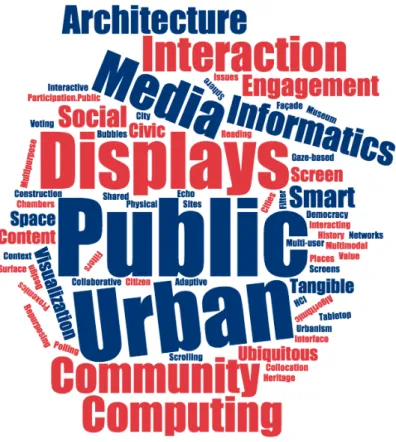
We screened all the papers from the PerDis conference from 2012 to 2016 manually. We read all the papers’ abstracts, the introduction and conclusion, while applying our inclusion criteria. After this step, 12 papers were selected. After reading these 12 papers carefully, 10 papers were kept which really fit our purpose. We analysed the author keywords of these 10 papers using Wordclouds2. It turned out that authors
publishing at PerDis use the keyword "engagement" (instead of "participation") as Figure 2.1 shows. Based on this, we used two groups of keywords to search for
Fig. 2.1: Author keywords of relevant papers from PerDis on public participation in an urban context.
relevant papers in the ACM digital library: (public display, urban, participation) and (public display, urban, engagement). The time frame was limited to 2012-2016 to catch the most recent trends since the PerDis conference series started. The search on the ACM digital library was performed in January 2017.
This keyword searches returned 40 papers from various outlets as raw materials for our review. After a thorough reading, a total of 36 papers were identified as falling within the scope of the study, namely using public displays in urban settings for public participation (or citizen engagement). In Table 2.1, we sketch the distribution of all the papers over conferences and journals. Additionally, we built an online repository that is publicly available3and also contains the meta-data of the selected
papers. The meta-data includes the paper title, publication year, and the conference or journal informations. The data collected was organized along the following dimensions:
Type of political context: as indicated in (European Institute for Public Participation
(EIPP), 2009), "any approach to understand the use of public participation must take into account the cultural and political context”. Therefore, special attention
3https://github.com/robinhood747/Papers-list
Outlets Frequency Percentage
ACM International Symposium on Pervasive Displays (PerDis)
11 30.5%
ACM CHI Conference on Human Factors in Computing Systems (CHI)
5 13.9%
Media Architecture Biennale (MAB) 4 11.1%
ACM Conference on Computer-Supported Cooperative
Work and Social Computing (CSCW) 2 5.5%
ACM International Joint Conference on Pervasive and
Ubiq-uitous Computing (UbiComp) 2 5.5%
International Conference on Communities and
Technolo-gies (C&T) 2 5.5%
International Conference on Mobile and Ubiquitous Multi-media (MUM)
2 5.5%
Nordic Conference on Human-Computer Interaction
(NordiCHI) 2 5.5%
ACM International Conference on Interactive Surfaces and
Spaces (ACM ISS) 1 2.8%
Australian Conference on Human-Computer Interaction
(OzCHI) 1 2.8%
British Human Computer Interaction Conference (British HCI)
1 2.8%
Conference on Human-Computer Interaction with Mobile
Devices and Services (MobileHCI) 1 2.8%
Participatory Design Conference (PDC) 1 2.8%
Personal and Ubiquitous Computing (JPUC) 1 2.8%
Total 36 99.8%
was given to the countries where the studies presented in the papers surveyed were conducted.
Type of scientific contribution: Jacob O. Wobbrock and Kientz (2016) proposed
seven research contribution for the field of Human Computer Interaction (HCI) which are re-used in this article. These are (1) empirical (i.e., they provide new knowledge through findings based on observation and data gathering), (2) artifact (i.e., prototypes which reveal new possibilities and facilitate new insights), (3) methodological (new knowledge that informs how research is carried out), (4) theoretical (i.e., improved concepts, definitions, models, principles, or frameworks), (5) dataset (i.e., useful corpora for the research community), (6) surveys (i.e., synthesis of work done on a research topic with the goal of exposing trends and gaps), and (7) opinion (i.e., essays which seek to change the mind of the reader through persuasion).
Type of public display: Buerger (2011) distinguished between two types of
in-teractive public displays: "standalone public display" (where no additional device is required to interact with the screen) and "public displays in combination with mobile devices" (where mobile phones are used to interact with the display). This distinction, with some slight change, was adopted for the classification. Instead of "public displays in combination with mobile devices" (which is restriced to mobile phones), "public displays in combination with additional devices" was chosen as a dimension to include devices such as tablets, physical push buttons, physical cursors, microphones, tangible user interfaces and mouse devices.
Single-purpose vs multi-purpose displays: according to previous work (Katsanos
et al., 2014), if a public display just provides one single "application" or interface, it can be understood as a single-purpose display. In contrast, a multi-purpose public display is a display that provides multiple types of applications or services (e.g., information browsing, games, galleries, and polls) concurrently (Katsanos et al., 2014). The essential difference between single-purpose and multi-purpose public displays is the number of applications on public displays (Kostakos and Ojala, 2013).
Shape of the display: the shape of a public display can vary between the most
common shape (a single rectangular and flat shape) to unconventional shapes (e.g. circular or 3D displays). The display shape can influence the design of interaction and visualization methods of a public display.
Type of space where the display has been deployed: two types of spaces are
considered, namely public and semi-public. Semi-public spaces are defined after (Bødker et al., 2014) as "spaces that are owned and controlled by a private entity
or institution, but open for the public (e.g., a café, a train, a movie theatre)". Public spaces are in contrast, owned and controlled by the government or local authorities.
study vs field study: to denote whether the study was conducted in a laboratory or
in the real world. In the context of public participation, there is arguably a very big difference in terms of ecological validity between the two options.
Level of public participation addressed: While Arnstein’s eight rungs on the ladder
of citizen participation (Arnstein, 1969) are a common approach to describe the levels of citizens engagement, this paper uses the International Association for Public Participation (IPA2)’s Public Participation Spectrum4. This spectrum defines five
types of engagement with stakeholders and communities: inform, consult, involve,
collaborate, and empower. The spectrum has been developed from the perspective of
the government, and the five types of participations should be considered from that perspective. According to the IPA2, inform refers to transmitting information from the government to the public; consult means giving the public the possibility to give feedback on the information provided; involve denotes working directly with the public throughout the decision process to ensure that public concerns and aspirations are consistently understood and considered; collaborate refers to partnering with the public in each aspect of a decision, including the development of alternatives and the identification of a preferred position; and empower means that the goverment places the final decision-making into the hands of the public.
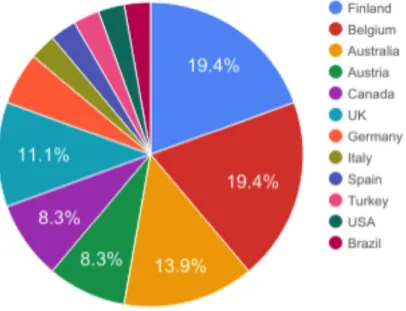
Fig. 2.2: Distribution of the studies according to countries.
Main research contribution (s) (1) (1) & (2) (1) & (3) (1) & (4) (3)
Frequency 18 13 2 2 1
Percentage 50.0% 36.1% 5.6% 5.6% 2.7%
Tab. 2.2: Types of the main research contributions of the papers surveyed.
2.4 Analysis
Using the dimensions detailed in the previous section, we analysed the papers we collected to gather insights on the topic of this survey, i.e. public displays for public participation in urban settings. This analysis yielded a number of insights and trends that we report on in the following.
Type of political context: as Figure 2.2 illustrates, the overwhelming majority of
the papers surveyed report on research done in developed regions of the world (i.e., Europe, North America, Australia). Lessons learned about deployments of public displays in other regions of the world, e.g., Asia and Africa, are rare. This suggests that research on public displays for public participation still needs to expand to embrace a wider audience, and a greater diversity of political contexts. HCI4D (HCI for development, see Dell and Kumar (2016)) already has documented studies in Asia, Africa, as well as Central and South America.
Type of scientific contribution: The main contributions of the surveyed papers
are summarised in Table 2.2. The collected papers show the fundamental role of empirical studies for the topic of interest in this paper. HCI as a research field has an inclination towards empirical contributions (see for example (Oulasvirta and Hornbæk, 2016)), and research on public displays for public participation seems to be no exception. In order to broaden the existing body of knowledge, it would be desirable to see more theoretical, methodological, artifact, opinion and survey contributions. In addition, though artifacts are "often accompanied by empirical studies but do not have to be, and sometimes should not be" (Jacob O. Wobbrock and Kientz, 2016), there seems to be a close association between artifact and empirical contributions with respect to public participation.
Type of public display: among the 36 papers surveyed, three were about exploring
people’s awareness of public displays, about their use for e-participation through a workshop (Thiel, 2015), about presenting arguments by analyzing works empirically grounded in field observations and design research (Foth et al., 2016), and about focusing on describing certain participatory design methods (Baumann et al., 2016). Since these did not specifically study public display as artifact, they are not included in the current discussion. In the remaining 33 papers, the number of studies on the two types of public displays (standalone and with device) were approximately
equal. This may indicate that both types are equally relevant for public participation. The dataset did not allow to infer clear trends over time in this respect. In addition, touch, air gestures and body gestures were the most common interaction methods used for standalone public displays. Different kinds of physical buttons and handheld devices were the most common additional devices that were combined with public displays.
Single vs multi-purpose displays: Table 2.3 shows that there is currently little
research on multi-purpose public displays. Compared to public displays with a single purpose (e.g., supporting citizen voting in (Schiavo et al., 2013)), few papers dealt with multi-purpose public displays. A notable exception is Jurmu et al. (2013), who implemented two different services for different purposes. One service is a slot machine application, which provides shopping information, while the other one displays recent tweets around the display in a map-based view. Hosio, Goncalves, Kostakos, and Riekki (2014) pointed out that multi-purpose public displays (MPDs) – which can be "customized to offer something for everyone" – are envisioned to be popular in the future. The potential of MPDs is to "offer something for everyone", which could be an attractive feature in an urban context. They can indeed be calibrated to offer participation opportunities to diverse user groups. Deploying MPDs for public participation might come at a price though: as Hosio, Goncalves, and Kostakos (2013) observed, popular applications on MPDs proportionately attract fewer targeted users. The data collected (Table 2.3) does not give enough evidence to claim that the apparent tension between popularity and target users’ attraction is the reason for the very low number of studies on MDPs for public participation. It rather suggests that this tension could benefit from further investigations. Future studies should also shed light on the respective effectiveness of both types of displays (single and multi-purpose) for citizen engagement.
Shape of the display: according to our analysis, most previous studies (25) have
dealt with public displays with rectangular shape. Still, there were a few uncon-ventional shapes such as different appearances of lightings (Luke Hespanhol and Tomitsch, 2012), chained public displays (Sodangi et al., 2013), or a large multi-dimensional media facade (Moritz Behrens, Valkanova, Schieck, et al., 2014). Ten Koppel et al. (2012) performed a field study comparing three types of chained displays: flat, concave, and hexagonal. They observed that flat displays created the strongest honeypot effect and attributed this to the users being able to see manipulations and effects of actions at the same time.
Type of space: Table 2.3 shows that several investigations were conducted in public
spaces while few studies took place in semi-public spaces or in both places together. For instance, one paper (Memarovic, Langheinrich, Alt, et al., 2012) reported two field studies conducted in a main library and the center of the city at the same time.