UNIVERSIDADE TÉCNICA DE LISBOA
INSTITUTO SUPERIOR DE ECONOMIA E GESTÃO
PHD THESIS IN MANAGEMENT
UNDERSTANDING ORGANIZATIONAL STAKEHOLDER COMMITMENT TO ENSURE INFORMATION SYSTEMS/ INFORMATION TECHNOLOGY BENEFITS IN PORTUGUESE
HOSPITALS: AN ANALYSIS BASED ON THE THEORY OF TECHNOLOGICAL FRAMES
Irene Rebelo Cardoso
SUPERVISORS:
Professor Mário Fernando Maciel Caldeira Professor Gurpreet Dhillon
THESIS COMMITEE
PRESIDENT
Reitor da Universidade Técnica de Lisboa
COMMITEE MEMBERS
Doutor Mário Fernando Maciel Caldeira, Professor Catedrático do Instituto Superior de Economia e Gestão da Universidade Técnica de Lisboa
Doutor Gurpreet Dhillon, Professor Catedrático convidado do Instituto Superior de Economia e Gestão da Universidade Técnica de Lisboa
Doutor Rui Filipe Cerqueira Quaresma, Professor Auxiliar da Universidade de Évora
Doutor Mário José Batista Romão, Professor Auxiliar do ISCTE - Instituto Universitário de Lisboa (ISCTE-IUL)
Doutora Cristiane Debres Pedron, Professora Auxiliar do Instituto Superior de Economia e Gestão da Universidade Técnica de Lisboa
UNIVERSIDADE TÉCNICA DE LISBOA
INSTITUTO SUPERIOR DE ECONOMIA E GESTÃO
PHD THESIS IN MANAGEMENT
PhD Program in Management
UNDERSTANDING ORGANIZATIONAL STAKEHOLDER COMMITMENT TO ENSURE INFORMATION SYSTEMS/ INFORMATION TECHNOLOGY BENEFITS IN PORTUGUESE
HOSPITALS: AN ANALYSIS BASED ON THE THEORY OF TECHNOLOGICAL FRAMES
Irene Rebelo Cardoso
SUPERVISORS:
Professor Mário Fernando Maciel Caldeira Professor Gurpreet Dhillon
THESIS COMMITEE
PRESIDENT
Reitor da Universidade Técnica de Lisboa
COMMITEE MEMBERS
Doutor Mário Fernando Maciel Caldeira, Professor Catedrático do Instituto Superior de Economia e Gestão da Universidade Técnica de Lisboa
Doutor Gurpreet Dhillon, Professor Catedrático convidado do Instituto Superior de Economia e Gestão da Universidade Técnica de Lisboa
Doutor Rui Filipe Cerqueira Quaresma, Professor Auxiliar da Universidade de Évora Doutor Mário José Batista Romão, Professor Auxiliar do ISCTE - Instituto Universitário de Lisboa (ISCTE-IUL)
Doutora Cristiane Debres Pedron, Professora Auxiliar do Instituto Superior de Economia e Gestão da Universidade Técnica de Lisboa
ABSTRACT
The unique context of healthcare organizations provides opportunities to develop or refine theory relating to organizational change and information systems. This research looks at the role stakeholder commitment plays in the realisation of expected benefits for an information system project in a healthcare setting. Case studies, relating to an organization-wide information systems (IS) project, were conducted in two Portuguese hospitals, allowing a study of the perceptions and behaviours of stakeholders, their commitment to the Information System and Information Technology (IS/IT), organizational change and the achievement of business benefits. A qualitative, interpretative, case-based research strategy was implemented based on semi-structured interviews and document analysis. The Three Component Model of Organizational Commitment and Technological Frames of Reference (TFR) provided the theoretical grounding for analysing the collected data. A resulting theoretical framework is proposed to reduce the many issues associated with the implementation of Healthcare Information Systems (HIS) in healthcare organizations, enabling them to quickly achieve the expected benefits. A contribution to TFR theory is made by extending the development of frame structure to include the shaping of perceptions by stakeholders. As part of the conceptual model, a set of frames is identified that healthcare professionals hold regarding Information Technology.
RESUMO
O contexto único das organizações de saúde oferece oportunidades para desenvolver ou aperfeiçoar teoria relacionada com a mudança organizacional e sistemas de informação. Esta pesquisa, propõe uma análise do papel que o compromisso dos stakeholders desempenha na realização dos benefícios esperados com a implementação de um Sistema de Informação no sector da saúde. Nesta pesquisa, foram estudadas as percepções e os comportamentos dos profissionais de saúde, a fim de compreender o seu compromisso com os Sistemas e Tecnologias de Informação (SI/TI), a mudança organizacional e a obtenção de benefícios com os investimentos em SI/TI. Foi adoptada uma estratégia de investigação qualitativa e interpretativa, baseada em estudos de caso. A recolha de dados baseou-se em entrevistas semiestruturadas e análise documental.
The Three-Component Model of Organizational Commitment e Technological Frames of Reference (TFR) fornecem a base teórica para analisar os dados recolhidos. É
proposto um quadro teórico para reduzir as muitas questões associadas à implementação
de Sistemas de Informação na Saúde(SIS) nas organizações de saúde, permitindo-lhes
uma obtenção mais rápida dos benefícios esperados. Uma contribuição para a teoria dos TFR resulta da extensão da estrutura de frames tecnológicos dos stakeholders. Como
parte do modelo conceptual, é identificado um conjunto de percepções que os profissionais de saúde detêm sobre as TI.
ACKNOWLEDGEMENTS
As a good friend said, “a thesis represents much more than just an academic effort!” When I started the PhD course I was not aware of the effort, commitment and on occasions, the need to abdicate some aspects of life. Today I recognize that this effort was worth it. However I also recognize that this journey would not have been possible without the encouragement, support and assistance that I received from many people.
First of all I would like to thank my supervisors, Professor Mário Caldeira and Gurpreet Dhillon, for their contributions, comments and insights. To my Professor and mentor, Mário Caldeira, I offer special thanks for your availability, care, tolerance, support and encouragement.
I am grateful to all my professors, especially Luís Moutinho, Landeiro Vaz, James Werbel and Robert Dyer, who in one way or another showed me the way, so that
I could see my own “road”.
Thank you to all my friends who made me believe that the "goal was already there". I am especially grateful to my colleagues and friends Rita Fuentes and Cristiane Pedron for reading my essays and offering valuable advice.
Thank you Julian Tice for your willingness and subtle, but important contributions that you made throughout the reading and correction of my thesis.
I am deeply grateful to all organizations that have received me and the members of those organizations that allowed me to better understand the issues related to the implementation of information systems in healthcare.
To my mother, brothers and sisters, thank you for your love, tolerance, care and support.
My thanks also go to Educator DeRose for his valuable Method and techniques that enabled me to maintain lucidity, focus, physical ability and strength to continue on.
Finally, to my partner in life Rui, thank you for your love, support and harsh words that have much contributed to my persistence in attaining this important goal.
Lisbon, November, 2012
CONTENTS
LIST OF TABLES ... ix
LIST OF FIGURES ... x
LIST OF ACRONYMS ... xi
Chapter I Introduction ... 13
1.1 The Problem under Consideration ... 15
1.2 Research Rationale ... 19
1.3 The Research Questions... 21
1.4 Thesis Structure ... 22
Chapter II Organizational Commitment and Benefits Management: A Literature Review ... 24
2.1 Introduction ... 24
2.2 Organizational Commitment and IT/IS Benefits ... 24
2.2.1 Organizational Commitment ... 26
2.2.2 Commitment and Information Systems ... 33
2.2.3 Commitment, Organizational Context and IT/IS Benefits ... 35
2.2.4 Commitment versus Resistance to IS/IT Adoption ... 37
2.3 Benefits Management ... 43
2.3.1 IT Benefits Realization ... 47
2.3.2 Organizational Change and Benefits Management ... 48
2.4 Summary ... 54
Chapter III Healthcare and Hospital Information Systems ... 56
3.1 Introduction ... 56
3.2. The Organizational Context of Hospitals versus Commitment ... 56
3.3 Healthcare Information Systems/ Healthcare Information Technology... 61
3.3.1 Benefits of Healthcare Information Systems ... 64
3.3.2 Issues Related to Clinical Information Systems’ Implementation ... 68
3.4 Summary ... 70
Chapter IV Philosophical Perspective and Research Strategy ... 71
4.1 Introduction ... 71
4.2 Research Paradigm ... 73
4.2.1 Ontology and Epistemology ... 74
4.2.2 The Adopted Research Paradigm ... 78
4.3 Research Strategy ... 81
4.3.1 Case Study ... 86
4.4. Research Design ... 92
4.4.1 Overall Strategy ... 93
4.4.2 Research Design ... 94
4.4.3. Data Collection ... 96
4.4.4 Data Analysis Method ... 104
4.5 Theoretical Framework ... 107
4.5.1 The Theory of Technological Frames ... 108
4.5.2 Conceptual Model ... 112
4.6 Summary ... 114
Chapter V Case Studies ... 115
5.2 Description of Case 1 (A) ... 120
5.2.1 Introduction ... 120
5.2.2 Characteristics of the Site ... 122
5.2.3 Organizational Context ... 124
5.2.3.1 External Context ... 124
5.2.3.2 Internal Context ... 125
5.2.4 Infrastructure and Strategy for the IS/IT ... 128
5.2.5 Implementation of PFSS: Technological Frames of Users... 129
5.2.5.1 Implementation ... 131
5.2.5.2 Technology-in-Use ... 148
5.2.5.3 Impact of the System ... 155
5.2.6 Usage ... 160
5.2.7 Commitment ... 162
5.2.7.1 Commitment dimensions ... 162
5.2.7.2 Commitment antecedents ... 165
5.2.7.3 Project commitment ... 170
5.2.8 Discussion of the Case ... 175
5.3 Description of Case 2 (B) ... 178
5.3.1 Introduction ... 178
5.3.2 Characteristics of the Site ... 180
5.3.3 Organizational Context ... 182
5.3.3.1 External Context ... 182
5.3.3.2 Internal Context ... 184
5.3.4 Infrastructure and Strategy for the IS/IT ... 187
5.3.5 Implementation of PFSS: Technological Frames of Users... 188
5.3.5.1 Implementation ... 190
5.3.5.2 Technology-in-Use ... 206
5.3.5.3 Impact of the System ... 213
5.3.6 Usage ... 216
5.3.7 Commitment ... 220
5.3.7.1 Commitment dimensions ... 220
5.3.7.2 Commitment Antecedents ... 222
5.3.7.3 Project Commitment ... 230
5.3.8 Discussion of the Case ... 234
Chapter VI Case Study Analysis – The Research Contribution ... 239
6.1 Introduction ... 239
6.2 General Description ... 239
6.3 Discussion of Case Studies and Contributions ... 241
6.3.1 Usage ... 241
6.3.2 Technology-in-Use... 243
6.3.3 Implementation ... 247
6.3.4 Impact of System ... 251
6.3.5 Commitment ... 255
6.3.6 Relationship between TFR, Commitment and Benefits ... 262
6.3.7 Other Research Contributions ... 267
6.4 Summary ... 270
Chapter VII Conclusions ... 271
7.1. Background and Summary of Research Undertaken ... 271
7.2 Key Research Findings ... 273
7.3 Knowledge Contribution ... 275
7.4 Implications for Practice ... 277
7.5 Study Limitations and Opportunities for Further Research ... 279
7.5.1 Limitations ... 279
7.5.2 Further Research ... 281
Appendices ... 283
Appendix A - Formal request for case studies ... 284
Appendix C – List of Categories of Case A ... 291
Appendix D – List of Relationships between Categories of Case A ... 295
Appendix E – List of Categories of Case B ... 298
Appendix F – List of Relationships between Categories of Case B ... 302
Appendix G - Presentation of data included in NVivo Software ... 305
LIST OF TABLES
Table 1 A Summary of Principles for Interpretive Field Research ... 85
Table 2 Examples of Generalizations from IS Case Studies ... 91
Table 3 Advantages and Disadvantages of Record Interviews. ... 100
Table 4 Sources of Data ... 117
Table 5 Interviews Realized ... 118
Table 6 Examples of Verbatim Identification ... 120
Table 7 Relevant Categories ... 121
Table 8 List of Perceived Benefits ... 157
Table 9 Commitment of Professionals ... 164
Table 10 List of Perceived Benefits ... 214
LIST OF FIGURES
Figure 1 A Three-Component Model of Organizational Commitment ... 28
Figure 2 The benefits dependency network ... 45
Figure 3 The Combined Framework ... 50
Figure 4 Research Methods/Strategies ... 83
Figure 5 Research Design ... 96
Figure 6 Conceptual Model ... 113
Figure 7 Distribution of Staff by Professional Groups on 31 December 2010 ... 122
Figure 8 Relationships between Categories ... 130
Figure 9 Distribution of the Frame Control by Professional Groups ... 149
Figure 10 Distribution of Frame ‘Protection’ by Professional Groups ... 151
Figure 11 Relationships between TFR and Commitment Antecedents ... 177
Figure 12 – Tree of Categories ... 179
Figure 13 Distribution of Staff by Professional Groups on June 2011 ... 181
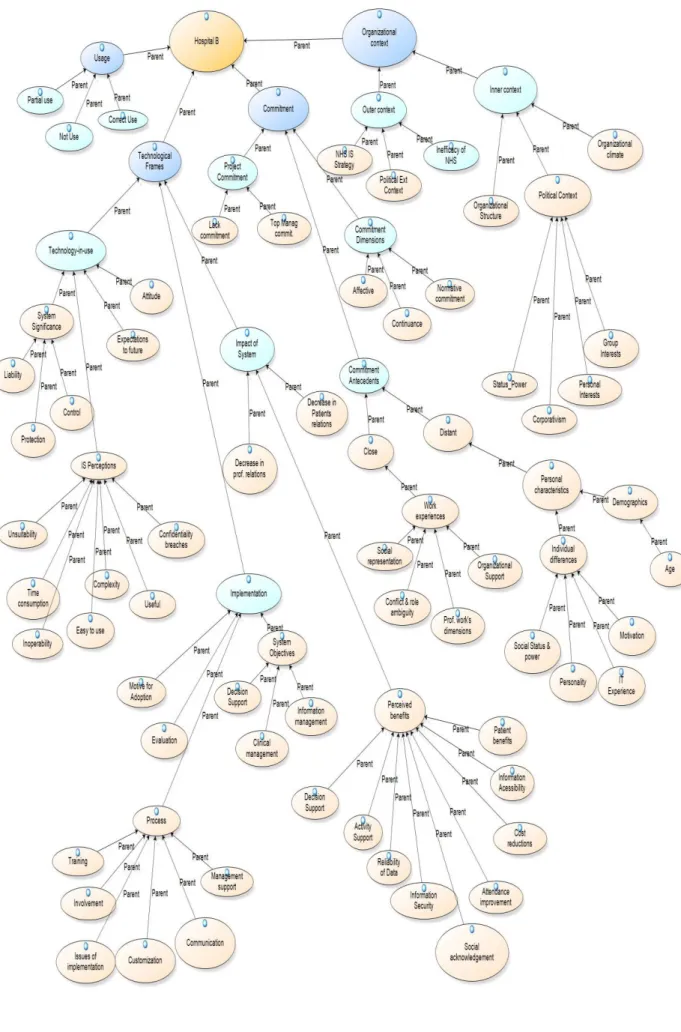
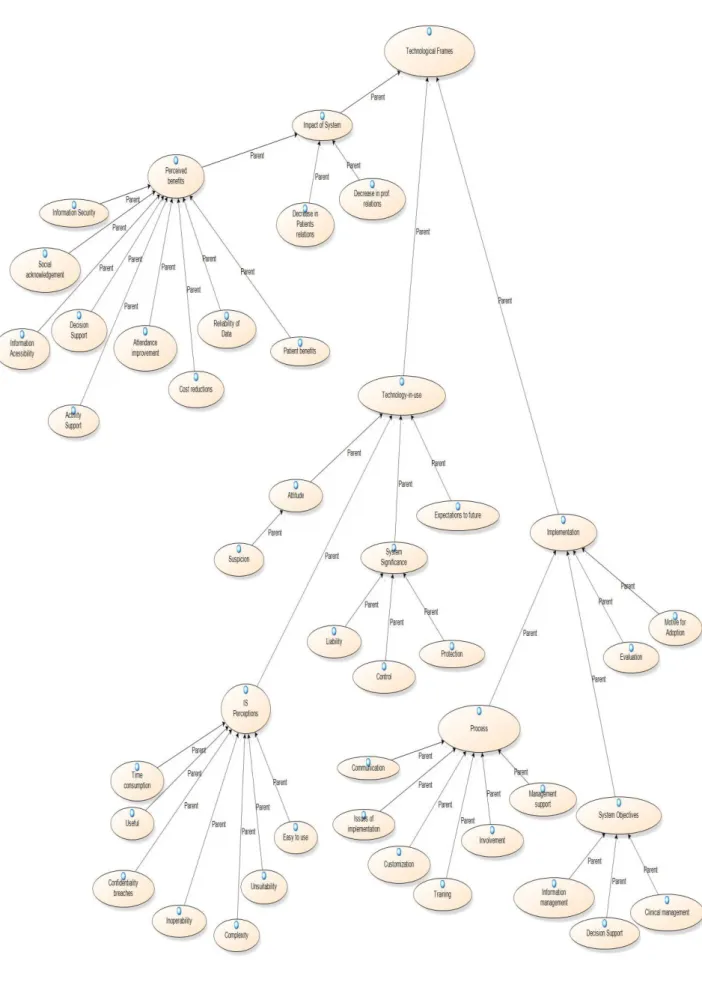
Figure 14 Technological Frames for Hospital B Professionals ... 189
Figure 15 Distribution of the Frame ‘Control’ by Professional Groups ... 207
Figure 16 Distribution of Frame ‘Complexity’ by Professionals ... 210
Figure 17 Distribution of the Frame ‘Time Comsumption’ by Professional Groups . 212 Figure 18 Distribution of Affective Commitment by Profession ... 221
Figure 19 Principal Relationships Between Categories ... 238
Figure 20 Virtuous Cycle of Commitment and Perceived Benefits ... 255
Figure 21 Conceptual Model of Commitment to a HIS ... 265
LIST OF ACRONYMS
AC Administration Council
MT Monitoring Team
BEUs Basic Emergency Units – (UBUs)
BOD Board of Directors
CAHS Central Administration of the Health System
CDSS Clinical Decision Support Systems
CMDT Complementary Methods for Diagnostics and Therapy
CMR Computerized Medical Record
CPOE Computerized Physician Order Entry
CRM Customer Relationship Management
CSF Critical Success Factors
DSS Decision Support Systems
DW Data Warehouse
EDI Electronic Data Interchange
EHR Electronic Health Record
EMR Electronic Medical Records
EPR Electronic Patient Record
ER Emergency Room
ES Enterprise Systems
HBM Health Belief Model
HC Hospital Centre
HIEM Higher Institute of Economics and Management
HIS Healthcare Information System
HIT Healthcare Information Technology
HR Human Resources
ICNP International Classification for Nursing Practice
IS Information Systems
IS/IT Information Systems and Information Technology
ISCPN Information System for Classifying Patients in Nursing
JCAHO Joint Commission for Accreditation of Healthcare Organizations
MSS Medical Support System
NCCMERP The National Coordinating Council for Medication Error and Prevention
NCDP National Commission for Data Protection
ND Nurse Director
NHS National Health Service
OD Out-patient Department
OR Observation Room
PC Personal Computer
PDA Personal Digital Assistant
PFSER Paper Free Solution for Emergency Room
PFSS Paper Free Software Solution
RHA Regional Health Authority
ROA Return On assets
ROI Return On Investment
SSNP Support System for Nursing Practice
TF Technological Frames
TFR Technological Frames of Reference
US United States
VMER Vehicle of Medical Emergency and Resuscitation
Chapter I Introduction
Information Systems and Information Technology (IS/IT) have been seen as a
way to improve organizational performance (Bhattacherjee et al., 2007; Markus,
2004; Ward et al.,1996; Harris and Katz, 1991) due to their ability to enhance the
productivity of existing processes, as well as to produce new, more effective and
efficient ones. However, the IS/IT impact on productivity within organizations depends
to a large extent on the managerial and organizational changes that accompany its
implementation (Peppard et al., 2007; Ward and Daniel, 2006; Hillestad et al., 2005)
and the level of individual commitment to implement those changes (Shum et al., 2008;
Swailes, 2004; Lau and Herbert, 2001).
There is a growing consensus that organizational issues (e.g., structure, business
processes, stakeholder interests, power relationships, human and organizational aspects
as well as organizational culture) are more critical than technical considerations related
to IS/IT (Ward et al., 2005; Doherty and King, 2005; Markus et al., 2000; Davenport,
2000). As a result, although in most cases technical implementation is relatively
successful, many of the initiatives have failed to deliver the expected benefits (Peppard
et al., 2007; Ward et al., 2005; Markus, 2004).
In order to strategically manage information systems (IS) and information
technology (IT), it is important to understand the role of technology-based
information systems in organizations, as well as their impact on the social structures
of the organization and the forces that act upon it (Ward and Peppard, 2002). Of
particular significance is the commitment employees have to organizational change
The high failure rate (over 70%) of IS/IT projects is well recognized by both
scientific and practitioner communities (see for example, Fowler and Horan, 2007;
Highsmith, 2006; Fitzgerald and Russo, 2005; The Standish Group International
Report, 1994; Jiang and Klein, 1999).
Much research has been done on IS implementation and its critical factors, both
in cases of failure or success (Fowler and Horan, 2007; Fitzgerald and Russo, 2005;
Dhillon, 2004; Caldeira and Ward, 2003; Akkermans and Helden, 2002).
Some studies have been concerned with the resistance to change in IS/IT
projects (Marakas and Hornik, 1996; Martinko et al., 1996; Joshi, 1991; Marcus, 1983)
some specific to hospitals (Lapointe and Rivard, 2006, 2005; Dhillon, 2005; Doolin,
2004), but little research was found in the literature concerning the influence of
organizational commitment to IS implementation (Shum et al., 2008; Sabherwal et al.,
2003; Stone and Henry, 2003; Newman and Sabherwal, 1996), and more specifically, to
IS implementation in hospitals (Marchal et al., 2010; Stone and Henry, 2003; Lau and
Herbert, 2001).
Researchers whose work was conducted in the hospital settings have described
some relevant issues that prevent successful adoption of IS/IT, such as: lack of
communication between managers and system analysts; lack of harmonization between
business and clinical objectives and organizational power (Dhillon, 2005), as well as
control over clinical activity (Doolin, 2004). Bhattacherjee and Hikmet (2007) present a
model of technology acceptance that increases the perception of usefulness as measure
of user resistance.
Lapointe and Rivard (2006), in their study of IS implementation in hospital
settings, point out other aspects that affect the success of IS implementation, such as:
(1) system design features, (2) internal factors relating to people that use such systems
organizational distribution of power, and especially (5) the result of interaction between
the specific system design features and aspects of organizational context.
Few studies were also found with a focus on organizational commitment in the
context of professional organizations, in particular, relating to the adoption and
development of IS/IT in Portuguese public hospitals.
Public healthcare organizations, such as hospitals, are very complex
organizations, and they present a set of specific characteristics (their non-profit nature, a
subordination to government or state, an existence of cultures and subcultures (Quinn,
1996) and, a large and varying number of stakeholders) (Ward and Daniel, 2006),
making them excellent fields for investigation (LeRouge et al., 2007). According to
Chiasson and Davidson (2004), the unique institutional context of healthcare
organizations provides opportunities to develop or refine IS theory.
People individually, and society in general, see health as an important and
critical resource that is difficult to put a price on and difficult to access. In 2007 and
2008 many conflicts, debates and protests were observed by the population when some
healthcare services were closed under the ongoing restructuring of the network of
emergency units integrated into the health reforms conducted by the Portuguese
Government.
1.1 The Problem under Consideration
As in other industries and government organizations, the healthcare sector is
concerned with efficiency and cost saving and has also seen technology adoption as a
way to improve organizational performance, quality of patient care (Reardon and
Davidson, 2007; Hillestad et al., 2005; Baus, 2004; Chiasson and Davidson, 2004),
patient safety (Bates et al., 2001) and knowledge development (McKee and Healy,
management are often cited as major problems within the US healthcare system (Porter
and Teisberg, 2004; Kohn et al., 1999).
Mantzana et al. (2007) consider that IT has become a strategic necessity for
developing an integrated healthcare IT infrastructure that can improve services and
reduce medical errors. IT investments in the health sector have increased dramatically
(Carpenter, 2005) and are expected to rise further over the near term (HIMSS Analytics,
2007).
Healthcare Information Systems (HIS) could contribute significantly to
improving the health of the population (McKee and Healy, 2000). According to Marietti
(1998), the improvement in quality of care, is a primary concern and driving force in the
use of HIS, whose use has been recommended by various healthcare bodies as a strategy
for improving the quality of patient records (Institute of Medicine, 2001; Ball et al.,
1999).
The patient’s record is the basis of HIS (Burton et al., 2004; Rashbass, 2001;
Kaihara, 1998), and consists in a set of medical data and information collected for a
particular patient in its numerous forms (words, numbers and images) (Kaihara, 1998).
Despite high expectations for the value of IT in healthcare, the use of Healthcare
Information Technology (HIT) in the US has had a slow uptake, not being universally
implemented (Blumenthal et al., 2006; Johnston et al., 2002). Moreover, in many cases,
attempts at HIS implementation have failed (Dhillon, 2005; Lapointe and Rivard, 2005;
Doolin, 2004; Wilson and Howcroft, 2000; Berg, 1999).
Introducing HIS into a clinical setting involves a certain degree of change in the
way the work is done. Therefore overall reasonable expectations for the benefits of HIS
must be defined and understood by all users (Wager et al., 2000). Time, training, and/or
monetary investments as well as resource allocation are all necessary for providers and
Research made on implementation of Electronic Medical Records (EMR) shows
that EMR systems have a profound effect on organizational workflow and practices, and
some physicians experience a steep learning curve to achieve effective use (Gans et al.,
2005; Miller et al., 2003).
As argued by Slack (2001), providers will use computer based IS and HIS if
there is considerable benefit to their practice in the sense of time savings, increased ease
in locating patient data, and speedy analysis of specific patient data. So, providers’
belief that there is no improvement in quality of healthcare arising from IS/IT, can
contribute to development of resistance to change (Burton et al., 2004).
Reardon and Davidson (2007) view EMR systems as a type of complex
organizational technology. In turn, Attewell (1992) states that the organizational
know-how and technical knowledge required to utilize a complex organizational technology,
creates knowledge barriers to adoption.
Hospitals are placed at the top of the health system and carry considerable
weight in terms of the public budget in healthcare [about 50% in many Western
European countries (OCDE, 2007; Simões, 2004; Mckee and Healy, 2002)]. In Portugal
in 2009, the expenditure on healing and rehabilitation accounted 69% of the current
health spending (OCDE, 2011).
The increasing age of population associated with new patterns of illness that are
difficult to cure are responsible for an increase in expenditure (Mahesh et al., 2005;
Mckee and Healy, 2002). On the other hand, the separation between primary and
specialist care has also been the cause of an increased demand for hospitals’ emergency
rooms, which causes an inevitable over-use of these areas and a great loss of efficiency
and overall quality in the provision of healthcare to the patients (Carapinheiro, 1998).
These issues point to a pressing need to increase efficiency in the execution of the
The management of patient or customer information is a particularly important
part of hospitals' activity as health care providers (Baus, 2004), and this also applies to
the Portuguese public hospitals which are increasingly being seen as enterprises (public
enterprises).
As it has been said before, the achievement of many of the benefits enabled by
IS is dependent on changing the traditional ways of working and standards of
organizational practice which can be seen by stakeholders as threatening or
disadvantageous results from the changes (Ward and Daniel, 2006). The term
stakeholders refers to individuals or groups of people who are directly or indirectly
affected by the project or programme of change and are usually identified as
‘stakeholders’ in relation to a project or change programme (Ward and Daniel, 2006;
Jurison, 1996).
According to Coetsee (1999), prerequisites for change management include
achieving stakeholder commitment and actively managing resistance to change. He
considers commitment as acceptance of change and resistance as the opposite, or in
other words, rejection of change.
Although the concept of organizational commitment can be further developed
based on the perspective of the three-dimensional model of Meyer and Allen
(1991,1997), here this work aligns with the perspective provided by Coetsee (1999),
when analysing the concepts of resistance to change and commitment related to the
project of implementing IS.
There have been a number of studies that have advocated the need to attain
greater commitment from all levels throughout the implementation and some studies
have demonstrated that organizational commitment could be an important issue for
2001; Benjamin and Levinson, 1993), with healthcare organizations not being an
exception.
1.2 Research Rationale
A review of literature found that organizational commitment has positive effects
on large-scale organizational change programmes (Lau and Herbert, 2001), principally
change derived from IT Implementation (Shum et al., 2008), and employees with strong
affective commitment are willing to do everything to ensure the success of a change
initiative (Meyer and Herscovitch, 2001).
Shoemaker (2001) demonstrated the critical role of stakeholder commitment
during an IT implementation, while Swailes (2004, p. 187) in the same vein stated that
an employee’s level of affective commitment is indeed “a determinant in the
management of change”. Further, Shum et al., (2008) reaffirm this argument with an
exploratory research in three banks. They found that employees’ commitment to the
Customer Relationship Management (CRM) initiative contributed to the positive
outcomes of a bank’s performance.
Additionally, one study concerning “Experiences from Healthcare Information
System Implementation Projects Reported in Canada between 1991 and 1997” by Lau
and Herbert (2001) revealed that the two most repeatedly mentioned lessons learned
over the years from the implementation projects were: the need to have organizational
commitment and training/resource support (Lau and Herbert, 2001). As referred by Lau
and Herbert (2001, p. 22), “organizational commitment is needed to provide the
leadership, resources and support necessary to implement the systems”.
Lau and Herbert (2001) obtained their findings through the analysis of the
of Health Informatics in Canada in the 1990s and twenty-four interviews with authors of
these projects.
Considering the critical role that stakeholders’ commitment has for IT
implementation, one can say that the success of any change initiative, particularly the
one introduced by an IS implementation, is highly dependent on employees having a
high level of affective commitment to change (Shum et al., 2008; Swailes, 2004;
Shoemaker, 2001; Meyer et al., 1998). Furthermore, if the organization’s positive
outcomes related to the investment in IS/IT could be seen abroad as potential business
benefits from IS/IT (Peppard et al., 2007), one can say that organizational stakeholder
commitment is an important factor in obtaining the benefits from IS/IT (Shoemakers,
2001; Benjamin and Levinson, 1993).
According to Baus (2004), there appears to be a gap between the quality of care
improvements made possible by HIS and the skills or willingness among healthcare
professionals to use these systems. The reasons of this problem are diverse, and reflect
many factors. Generally there is no unique cause for difficulties and failures in the
implementation of HIS (Wager et al., 2000; Lorenzi et al., 1997).
Clinical activities rely heavily on the gathering and analysis of medical data for
decision-making regarding the diagnosis and treatment of patients (Hersh, 2002), where
HIS could make an excellent contribution (Institute of Medicine, 2001; Marietti, 1998).
However, applications such as Computerized Physician Order Entry (CPOE) systems,
Electronic Health Records (EHR) versus Electronic Medical Record (EMR), and
electronic prescriptions are frequently strongly resisted by the same community that is
expected to benefit from its use (Bhattacherjee et al., 2007).
As the various studies above have demonstrated, it is possible to argue that by
organization or to the implementation of the HIS project, is conducive to realising the
expected benefits.
So, to understand how this happens, a research was carried out in the healthcare
sector, focusing on a hospital setting and seeking to answer the following research
questions.
1.3 The Research Questions
The research questions in this study are as follows:
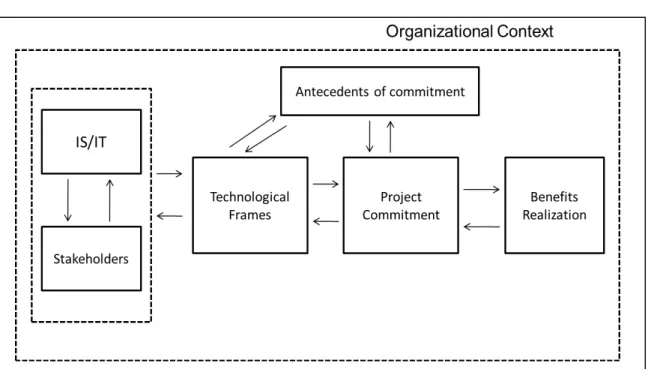
1. How does the commitment of stakeholders affect the realization of expected benefits for the implementation of clinical information systems?
2. What is the role of technological frames of users in the development
of commitment towards a project?
3. How do technological frames of reference and commitment to a
project interact to influence the achievement of desired benefits?
These research questions start from an understanding of existing problems with
HIS implementations as well as the extensive literature on organizational commitment
and on the technological frames (TF) perspective of Orlikowski and Gash (1994) that
helped analyse the data.
Understanding how an organization’s members make sense of technology is
critical to influencing their actions and to achieving planned outcomes. Therefore, in
this research, stakeholder perceptions and behaviours were studied in depth in order to
understand their commitment to the IS/IT project, organizational change related to it,
and the achievement of business benefits.
For the purpose of answering these questions, the TF analysis of Orlikowski and
Gash (1991, 1994) was applied. This perspective, which is rooted in social cognitive
The theoretical framework of Technological Frames of Reference (TFR),
investigate interpretive processes related to IT in organizations. Orlikowski and Gash
(1994) define TF as the “subset of members’ organizational frames that concern the
assumptions, expectations, and knowledge they use to understand technology in
organizations. This includes not only the nature and role of the technology itself, but the
specific conditions, applications and consequences of that technology in particular
contexts” (Orlikowski and Gash, 1994, p.178). In this way, TF are the knowledge and
expectations that guide actors' interpretations and actions related to IT.
The TFR framework has been cited in a varied range of published work
(Aguilar-Zambrano and Gardoni, 2012; Lin and Silva, 2005; Ovaska, et al., 2005;
Davidson, 2002, 2006; Orlikowski and Gash, 1991, 1994), and has formed the basis for
a genre of studies on the interpretive aspects of IT and organizational change (Davidson,
2006).
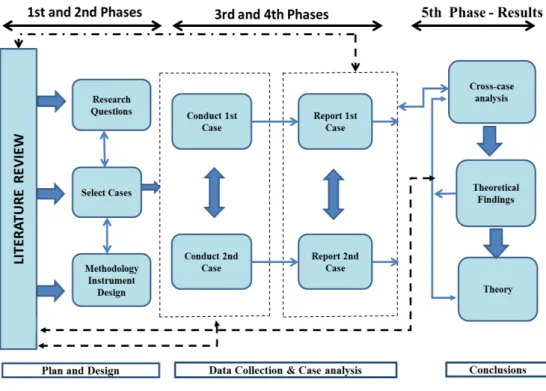
This research adopts the case study as a research strategy in order to provide
answers to the research questions. An analysis was made of two different Portuguese
hospitals aiming to become paper free that adopted the same software package. The
research findings from this work contribute to a theoretical framework and help provide
useful insights for practitioners.
1.4 Thesis Structure
The structure of the thesis has seven chapters. The first chapter contains a brief
description of the subject under study, the reasons for undertaking this research and the
research questions. In the second chapter a literature review of organizational
commitment, benefits management and organizational change is presented. Chapter 3
presents the literature review for hospitals and HIS, their features and issues related to
are discussed taking into consideration the nature of the research questions. This chapter
also discusses the theoretical lens used to analyse the data (the framework of TF) as
well as its suitability for the subject under study.
Chapter 5 describes and highlights the relevant issues found in each case while
Chapter 6 espouses the interpretation and analysis of the cases that resulted from the
cross-case analysis, in which common patterns were searched for and new insights to
theory generated. In the seventh chapter, the findings are presented and comparisons are
made with previous empirical literature on the subject, following which some research
conclusions are drawn. In addition, the contribution to the literature and practitioners’
experience is identified. Finally, the study's limitations are acknowledged and possible
Chapter II Organizational Commitment and Benefits Management: A
Literature Review
2.1 Introduction
The literature reviewed presented here centers mainly on theoretical perspectives
and the central values that guiding this thesis. To this end, the focus here lies on the
study of organizational commitment, benefits, change management and issues related to
it. This is due to the fact that the introduction of IS is widely recognized as an inducer of
organizational changes, as Davidson and Chismar (2007, p.739) affirm when they state
that “Information technologies are viewed widely as enablers of organizational
transformation”.
In this research IS is considered to be an organizational concept that must be
studied using research methods which analyse its social component effectively (Caldeira
and Romão, 2002). This perspective is supported by several authors who have studied
the issues associated with the introduction of new IT and IS in organizations, including
social interaction, politics and organizational environment (see, for example, Fitzgerald
and Russo, 2005; Lapointe and Rivard, 2005; McGrath, 2002).
2.2 Organizational Commitment and IT/IS Benefits
When an IS/IT is introduced in an organization, numerous issues within or
outside the project can affect stakeholders perspectives (their perceptions, interests and
priorities), which can in turn, change their commitment to the project (Jurison, 1996).
For instance, individuals or groups whose roles will be changed considerably can see
their jobs threatened and hence develop resistance to change behaviours
(Bhattacherjee and Hikmet, 2007; Lapointe and Rivard, 2005; Doolin, 2004; Markus,
operational problems (Symons, 1991), increase commitment to organizational change
and enable the accomplishment of expected business benefits (Ward and Daniel, 2006).
The involvement of stakeholders in the identification of potential benefits either
for individuals or organizations could increase their commitment, reduce their
resistance, and facilitate the IS Implementation and IS/IT enabling changes (Ward and
Daniel, 2006; Jung, 2006; Dhillon, 2005; Keen, 1981).
According to Jurison (1996), it is important to verify if the balance between
"disbenefits” and "advantages" resulting from organizational change is satisfactory to
each stakeholder's viewpoint and for the organization overall.
“An important challenge for management is to find a fair balance of benefits between the firm and its
stakeholders (…) to implement the system effectively it needs the cooperation of stakeholders... with no apparent benefits to them they are likely to resist the new system” (Jurison, 1996 p.271).
Empirical studies have demonstrated that communication during the initial phase
of an IS/IT project, establishing an agreement about the investment objectives and
attainable benefits is beneficial to stakeholders when they agree as to how
implementation will proceed (Ward et al., 2005; Markus et al., 2000). And, on the other
hand contributes to an increase in user engagement (commitment). According to Jensen
and Aanestad (2007, p.675), “the introduction of new technology requires conscious
work in securing acceptance, as well as, commitment among users”.
Very few studies have addressed the organizational commitment from the
stakeholder’s perspective as a key element in delivering benefits (Shum et al., 2008), in
part because many studies on organizational change have been focused excessively at
the macro level, such as enterprise-wide issues, whereas they ignore micro level issues
such as individuals’ commitment to change (Fedor and Herold, 2004; Wanberg and
Banas, 2000).
The literature on organizational commitment has long been associated with the
more recent studies exist (Valéau et al., 2012; Bagraim, 2010; Shum et al., 2008; Meyer
et al., 2002, 2007; Brockner et al., 2004; Bartlett, 2001; Meyer and Allen, 1991, 1997)
In the area of IS, some empirical studies on organizational commitment have
been made, both from the perspective of managers (Sabherwal et al., 2003; Newman
and Sabherwal, 1996) and users (Bagraim, 2010; Shum et al., 2008;Lacity et al., 2008;
Stone and Henry, 2003).
The literature concerning benefits and benefits management has become more
prevalent (e.g., Caldeira et al., 2010; Ward and Daniel, 2006; Peppard et al., 2007; Lin
and Pervan, 2003; Ward and Peppard, 2002; Sedera et al., 2001).
2.2.1 Organizational Commitment
Empirical research has been important in demonstrating relationships between
the various elements of organizational commitment and the results/work behaviours
potentially relevant to the company (Shum et al., 2008; Meyer and Herscovitch, 2001).
Commitment has been defined as a state of mind that holds people and
organizations in line with conforming behaviour (Sabherwal et al., 2003; Meyer and
Allen, 1991). It involves psychological forces that attach an individual to an action, as
well as structural conditions that make a behaviour irreversible or difficult to change. It
has been argued that commitment greatly affects the persistence of behaviour (Meyer
and Herscovitch, 2001).
The first typologies of organizational commitment were developed by Etzione
(1961) who argued that commitment is based on the degree of conformity that an
individual experiences in compliance with organizational guidelines, adopting one of
the following that constitute the three different states of an attitude towards continuous
commitment: (1) the moral, in which there is a positive and intense orientation to the
principles and identification with authority, (2) the calculating, characterized by a less
intense connection that emerges from the trade relationship that takes place between the
company and its members. In this case, the individual commitment depends on belief
that the deal with the firm is both beneficial and fair. As such, there is a correspondence
between the value of the contribution that individuals give the company through their
work and the amount of reward they receive; and, (3) the alienating, which is
characterized by an overall negative view of the organization, developed as a result of
situations in which behaviour of individuals is severely conditioned.
The Etzione (1961) concept of commitment has a uni-dimensional nature,
contrary to later definitions. The latest empirical studies on the subject, do not take into
account the implications of alienating or negative forms of commitment to the
organization, and have demonstrated the multidimensional nature of the organizational
commitment concept (Meyer et al., 2002; Meyer and Allen 1991, 1997).
The best known model, that is also representative of the multidimensional nature
of the organizational commitment concept, is that developed by Meyer and Allen (1991,
1997). This approach of commitment and the developments provided by subsequent
research (Meyer and Herscovitch, 2001) was partially adopted in this work. The
three-component model of Organizational Commitment of Meyer and Allen (1991, 1997),
Figure 1 A Three-Component Model of Organizational Commitment
Source: Meyer et al., (2002, p.22)
This model of the three components of commitment of Meyer and Allen (1991,
1997) has been broadly used and has received the most extensive empirical evaluations
to date (Bryant et al., 2007; Thatcher et al., 2002-2003; Meyer et al., 2002; Bartlett,
2001; Paré et al., 2000, 2001).
Meyer and Allen (1991, 1997) describe organizational commitment as a
psychological state that characterizes the relationship between the employee and the
company, and they consider that this state has a strong influence on the worker's
decision to remain a member of the organization. According to these authors, the
organizational commitment includes, simultaneously, in variable degrees, the three
components or dimensions of organizational commitment which reflect the intensity of
the psychological connection that binds the employee with the company: 1) the affective
commitment, 2) the continuance commitment and 3) the normative commitment (Meyer
and Allen, 1991, 1997).
The affective commitment refers to the employee's emotional attachment,
implies the recognition by the employee of the costs associated with leaving the
organization. In this type of commitment the individual is conscious that there are costs
associated with the abandonment of the company where he or she works. In respect to
the normative commitment, there is a sense of moral obligation that the employee feels
to continue in the organization.
To date, most of the research on this subject has investigated the association
between organizational commitment and turnover intention (Lacity et al., 2008;
Thatcher et al., 2002-2003; Lum et al., 1998; Igbaria and Guimarães, 1993), training
(Bartlett, 2001), positive outcomes and success of CRM projects (Shum et al., 2008),
professional commitment (Bryant et al., 2007; Wallace, 1995) and peer mentoring
(Bryant et al., 2007). Other researchers have been concerned with other organizationally
valid issues, such as strategic planning success (Basu et al., 2002).
According to Meyer and Allen (1997), the numerous factors that were
considered as antecedents of organizational commitment can be grouped into two
categories: the ‘close’ and ‘distant’ causes. The first are those that seem to have a direct
influence on any component of organizational commitment. The second exercise their
influence on the commitment through their impact on close causes (Meyer and Allen,
1997).
The close antecedents
The close antecedents comprise:
a) The characteristics of work and work experience that are developed (the scope
of work; the level of challenge that involves the degree of autonomy, skills and
techniques applied; organizational support perceived by employees in the development
b) The level of conflict and role ambiguity experienced by employees. Role
ambiguity is the difference between what is expected of an individual at work and what
he/she feels he/she should do (Igbaria and Siegel, 1992).
c) The type of psychological contract. The psychological contract is an
agreement (underlying the non-formal, subjective and dynamic) between the employee
and the company, which adjusts the behaviours of both parties and creates a common tie
between them. It defines the relationship between the employer and the employee, and
reflects the beliefs and expectations of both the employee and the company, respect of
duties and reciprocal obligations - a basic point of theory of organizational commitment.
Therefore, if employees become conscious that the employer does not fulfil this
contract, this will influence their behaviour, attitudes and respect for the organization,
leading probably to a decrease in their level of commitment (Meyer and Allen, 1997).
The distant causes of organizational commitment include the organizational
characteristics, the employee's personal characteristics, environmental conditions and
the strategies and practices of human resources (Meyer and Allen, 1997).
Researches on this topic still lack a strong theoretical and empirical
systematization, particularly in relation to the antecedents of continuance commitment
and normative commitment. The empirical findings are limited, whereas the approach to
the antecedents of affective commitment has been more extensive (Meyer et al., 2002;
Meyer and Herscovitch, 2001).
Many studies have examined the specific relationships between affective
commitment and some variables considered as its antecedents (precursors) (Bishop et
al., 2005; Stone and Henry, 2003; Meyer et al., 2002; Tu et al., 2001; Coleman et al.,
1999).
“Any personal or situational variable that contributes to the likelihood that an individual will (a) become involved (intrinsically motivated, absorbed) in a course of action, (b) recognize the value-relevance of association with an entity or pursuit of a course of action, and/or (c) derive his or her identity from association with an entity, or from working toward an objective, will
contribute to the development of affective commitment” (Meyer and Herscovitch 2001, p. 316).
Theoretically, it will be highlighted only the variables that have the greatest
impact on the employee's affective commitment (Meyer and Herscovitch, 2001).
The distant antecedents
The set of distant variables that have traditionally been studied, as having
influence on affective commitment are: personal, organizational characteristics, and the
human resource strategies.
a) Personal Characteristics
Individuals differ in their predisposition to compromise which, of course, could
influence the level of emotional commitment that they feel for the organization (Lee et
al., 1992).
Research on personal characteristics that can be considered as a distant cause of
affective commitment are focused on sex, age, seniority, marital status, number of
children, educational level, etc. However, the most significant positive relationships
have been established between affective commitment, age and seniority (Salami, 2008;
Meyer et al., 2002)
b) Organizational Characteristics
The organizational characteristics most studied and reported in the literature, as
factors which influence commitment are the company size and its degree of
formalization and decentralization (Meyer and Allen, 1991, 1997; Wallace, 1995).
However, the empirical support for any relationship with affective commitment is
neither strong nor consistent (Meyer and Allen, 1991, 1997). This can be explained by
commitment through their impact on certain close antecedents, such as work experience
or the role definition (the same ones that have a greater impact in shaping attitudes to
the organization and are also more closely related to the daily work).
c) Human Resources Strategies Faced by Employees
In light of the literature review, one can say that the human resources strategies
and practices are those antecedents with stronger and more consistent relationships with
affective commitment, exercising a greater degree of influence on all the close
antecedents of organizational commitment, that is, on the experiences of work, job
characteristics, the definition of roles and the characterization or modification of
psychological contracts (Meyer et al., 2002; Meyer and Allen, 1991, 1997).
At the theoretical level, some human resource practices seem to have more
potentially positive effects for affective commitment, such as recruitment policies
related to job security and compensation strategies (above average) linked to
organizational performance.
Recruitment policies related to job security can increase the belief of the worker
in the organization's core values and, on the other hand, high compensation strategies
confer to employees feelings of self-esteem that facilitate emotional attachment and
identification with the company, because it may be perceived by employees as a sign of
the value that the company confers tothem.
These policies are likely to develop in the employee a certain level of emotional
commitment. They encourage the worker to put in an additional effort for the company
and the projects that it develops [including the implementation of IS] (Shum et al.,
2008; Meyer et al., 2002; Meyer and Allen, 1991, 1997).
Similarly there is also a positive relationship between the training policy of the
philosophy centred on human resources as a valuable investment. This allows the
employee to respond to the company’s investments with a psychological adherence
adjusted to his/her aims and goals (McElroy, 2001).
According to Wallace (1995), organizational commitment is highly dependent
on perceived opportunities for career advancement and the criteria used in the
distribution of rewards. Being a professional typically involves a life-long career, and if
the employing organization does not facilitate the advancement of one's professional
career, then professionals can be less loyal to the organization (Wallace, 1995).
This research bases its definition of commitment on that stated by Meyer and
Herscovitch (2001) in their work regarding commitment in the workplace. This choice
is founded on the fact that these authors, although recognizing the three distinguishable
components of commitment of Meyer and Allen (1991), extend the definition of
commitment to include the nature of the targets to which employees become committed.
Meyer and Herscovitch (2001), define commitment as “... a force that binds an
individual to a course of action of relevance to one or more targets and can be
accompanied by different mind-sets [affective, continuance and normative commitment]
that play a role in shaping behaviour” ( p. 299). This target can be an entity, “an abstract
concept or the intended outcome of a course of action- it is that to which the behavioural
consequences of the commitment are perceived by the actor to be relevant” (p.310).
According to Meyer and Herscovitch (2001) the employees can commit to both
entities (e.g., organizations, occupations and unions) and behaviours (e.g., attainment of
a specific goals and implementation of policies).
2.2.2 Commitment and Information Systems
It is widely accepted that commitment to an information system development
Sabherwal 1996; Weill and Olson, 1989). Problems arising from low commitment have
also been mentioned (Shum et al., 2008). However, there has been little research on the
factors that influence the level of commitment within IS projects (Sabherwal et al.,
2003; Newman and Sabherwal, 1996).
Much of the research analysed in the IS area has been related with managers'
commitment (particularly on escalation of commitment) (Sabherwal et al., 2003;
Newman and Sabherwal 1996) but fewer researchers have studied commitment from
other stakeholders’ perspectives, that is, from the users’ perspective (Shum et al., 2008;
Fedor and Herold, 2004; Tu et al., 2001; Wanberg and Banas, 2000). The primary
interest of this study is to analyse organizational commitment from the user’s
perspective.
According to Sabherwal et al. (2003), the level of commitment could vary over
time and during the course of a project, because its determining factors are affected by
changes in the organization and its environment.
In line with the definitions of commitment given by Meyer and Herscovitch
(2001) and Coetsee (1999) and considering the scope of this work, the concept of
commitment to an IS project implementation is seen as an acceptance of it and a higher
affinity, identification and engagement in achieving the expected benefits, from it.
Top management commitment is rated as the most important factor in planning
and the implementation of IS (Basu et al., 2002) as well as in the influence it has on the
commitment of other stakeholders (Sabherwal et al., 2003; Jarvenpaa and Ives, 1991).
Top management support also influences the organization's effectiveness in
converting IT investments into useful outputs (Weill and Olson, 1989). Conversely, lack
of commitment of top managers could lead to indifference or deliberate resistance
(Coetsee, 1999) and may even cause the project to be abandoned (Doolin, 2004;
does not support a project, commitment of other stakeholders may also be diminished”
(Sabherwal et al., 2003, p. 785-786).
2.2.3 Commitment, Organizational Context and IT/IS Benefits
Information Systems are complex social objects that are inseparable from the
organizational context within which they are introduced and from the infrastructure
supporting them, as well as, being products of history and human agency (Symons,
1991). In this way, it “requires an interactionist approach, taking the effects of
information technology to be a product of neither the technical nor the social aspects
alone, but of their interaction” Symons (1991, p.206).
Dhillon (2005) defends that both the choice of an appropriate methodology and
the observation of organizational context in which the information system is being
developed is essential to ensure project success.
The lack of attention paid to contextual and historical factors by many
researchers is redressed by focusing on the context of interaction, and by integrating the
action of humans with the on-going flow of social practices that produce and reproduce
social systems over time (Orlikowski and Robey, 1991).
The changes that an organization needs to make when it wants to achieve any
benefits made possible by IS/IT will depend on its present status, that is, the current
performance level of the organization in relation to its competitors or business goals.
This means that the organizational context is unique, and it is not feasible to develop a
generic set of benefits and related changes for certain application types, or kinds of
organizations and units, even if they pertain to the same enterprise or public
institutional system (Ward and Daniel, 2006).
Pettigrew (1985) distinguishes outer from inner context. Outer context is the
operates; inner context refers to the structure, corporate culture, and political context
within the organization through which ideas for change have to proceed.
The nature or type of organization is a key element in helping to define the
context. Thus, when the firm operates in the public (as opposed to the private) sector,
the main business drivers (for investing in IS) are different from the private sector. The
business drivers for public sector organizations are regularly imposed by government
policies, making them sometimes, strangers to the stakeholders. “The drivers are often
in the form of a requirement to meet a specific target and by a given deadline, whether
or not this is feasible or appropriate for that organization” (Ward and Daniel 2006, p.
280).
Ward and Daniel (2006) highlight several aspects of the organizational context,
such as the characterization of the company in terms of size, number of employees and
type of employment contracts, physical structure (single entity or multiple entities),
geographic location, or nature of its organizational structure (public/private,
professional, semi-professional or bureaucratic).
Some of these macro-level variables, such as the size, type of employment
contracts, physical structure, degree of formalization and decentralization of
organizations may influence organizational commitment, through the impact they have
on some antecedents of affective commitment (Meyer and Allen, 1991, 1997), such as
work experience or the role definition that employees experience, which can in turn
affect the satisfaction of worker personal needs and shape employee attitudes towards
the organization (Meyer and Allen,1997; Wallace,1995).
Another factor also associated with size is the presence of internal labour market
conditions that may allow better work conditions, job rewards and career opportunities
provide more promotional opportunities for their professional members than, the
nonprofessional organizations (Nelson and Trubek, 1992).
2.2.4 Commitment versus Resistance to IS/IT Adoption
According to Markus (1983), explanations of resistance are important since,
“informal or implicit, they guide the behaviour and influence the actions taken by
managers and systems analysts concerned with implementing computer-based
applications” (Markus, 1983, p.430).
Leana and Barry (2000) consider that stability and change are simultaneously
present in organizations, and both are a necessary part of an organization’s effective
functioning over the long term. At the same time that organizations and individuals are
pursuing change, there are several individual, organizational, and societal forces
promoting stability in work and employment relations.
To explain the causes of social inertia (or apathy), associated with IS/IT
implementation Keen (1981, p.24) pointed out the following: (1) Information is just a
small part of the organizational decision making processes; (2) The human method of
processing information is usually experimental and simple, organizations are complex
and change is incremental and evolutionary; large steps are avoided, even resisted; (3)
Data are not only an intellectual product but a political resource, whose repositioning
through new IS affects the interests of particular groups.
Research has shown that IT-enabled changes generate particular sets of issues
according to the perceptions that are often assumed in relation to the overall effects of IT
orthe repercussions of a particular change on individual responsibilities or organizational
relationships (Ward et al., 2005; Lin and Silva, 2005; Markus, 1983). Some of these
or technology that is introduced in an organization, reducing therefore, the commitment to
the project.
Resistance surfaces because the achievement of many of the benefits depends
on changing traditional ways of working and standardization of organizational
practices which can be seen as “a significant “disbenefit” [disadvantage] of the
changes by those affected” (Ward and Daniel, 2006, p. 204).
However, it is not always the explicit changes that provoke the resistance but,
the real or perceived secondary effects of the changes. Examples of these perceived
effects are: increases or decreases in job security (Walton, 1989); improved
accountability with less discretion and autonomy of decision making; higher visibility of
individual performance and loss of autonomy in its responsibility area (Ward and
Daniel, 2006; Doolin, 2004); inequity of benefits distribution (Jurison, 1996; Joshi,
1991); and loss of power (Lapointe and Rivard, 2005; Markus, 1983).
Information systems' researchers have for a long time been studying IS
implementation and recognized resistance as a critical variable that can undermine
success (Lapointe and Rivard, 2005; Maracas and Hornick, 1996; Joshi, 1991; Markus,
1983; Keen, 1981). Thus, IS/IT are frequently seen as menacing, described by Keen
(1981, p.25), as “an intrusion into the world of the users who see these unfamiliar and
[irrelevant] techniques as a criticism of themselves”.
According to Lauer and Rajagopalan (2003), people express their resistance to
change brought by the implementation of IT in various ways. The most common is the
expression of opinion in opposition to the new system. In a more extreme reaction, the
resister could abandon the organization in protest.
Resistance has been defined as an adverse reaction to a proposed change
(Hirschheim and Newman, 1988), as a perception of inequity or loss of equity by users
with a new system (Maracas and Hornik, 1996), as behaviours intended to prevent the
implementation or use of a system or prevent system designers from achieving their
objectives (Markus, 1983), or yet as a signal from a system in equilibrium where the
costs of change are perceived as greater than the likely benefits ( Keen, 1981, p. 27).
The actions of the resister are apparently visible and relatively simple to detect
in active forms of resistance. By contrast, passive forms of resistance are not simple to
identify and are more difficult to deal with, as is the case of reluctant acceptance. In this
case, the resister apparently shows no signs of frustration or rejection of the system, but
is constantly seeking ways to avoid using it and in many cases uses it in ways that are
less effective than originally intended. Another kind of passive resistance occurs when
an individual feels he can beat the system by simply finding ways of working around it.
Finally, there is the crusader against the system who silently conspires and uses every
chance to interrupt the system functioning, like sabotage (Lauer and Rajagopalan,
2003).
Some assumptions about resistance to IS/IT are associated with the technical
aspects of the system. The main assumption relating to IS/IT’s capacity to provoke
resistance is the objective/intention of the system designers (intention of the system)
(Markus, 1983), many times interpreted (inferred) by the users from the characteristics
of the system (usually directly related). This aspect is also presented by Lapointe and
Rivard (2005) as system significance.
According to Dent and Goldberg (1999), people do not resist change per se.
Resistance occurs when employees believe that change will cause either loss of status,
loss of revenue, or loss of power (Lapointe and Rivard, 2005; Dent and Goldberg, 1999;
Markus, 1983).
Politics often play a key part in IS development (Symons, 1991) and any new IS
et al., 2002). Therefore, organizational power is one of the important variables that
should be properly understood and leveraged in order to ensure the achievement of
required benefits and IT implementation success (Lapointe and Rivard, 2005; Dhillon,
2004; Markus, 1983).
Some reasons for resistance described by diverse authors are: (1) incapacity or
fear to deal with technology (e.g., Fitzgerald and Russo, 2005); (2) the need to learn
new skills or apparent depreciation of their current role; (3) lack of additional resources
during the transition; (4) concerns about the ability to introduce changes and
simultaneously maintain current levels of performance; (5) fear of reductions in staff
(Ward and Daniel, 2006); (6) new systems being too prescriptive (with lose of
autonomy); (7) measurements of individual performance (Doolin, 2004); (8) and
scepticism that the new system will actually work, based on previous experience (e.g.,
Fitzgerald and Russo, 2005; McGrath, 2002). For Swanson and Ramiller (1997),
resistance often appears as the result of a lack of common understanding of the purpose
of change.
Regarding what has been said, it might appear that the resistance is a bad thing,
preventing organizations from obtaining the potential benefits of an IT implementation
but many of the authors previously mentioned (e.g., Lapointe and Rivard, 2005; Lauer
and Rajagopalan, 2003; Markus, 1983) consider that the resistance to change can have
both positive and negative effects. Resistance can be destructive because it causes
conflict, hostility and consumes time and attention. However, it can also be useful for
organizations because it can avoid negative consequences of the system’s installation,
which could emerge with the on-going use of the system (e.g., stress, turnover, reduced
performance) (Markus, 1983).
In the literature, the concepts of user acceptance and resistance have been