vol. 41, n. 1, jan./mar., 2005
Effects of medicinal plant extracts on growth of
Leishmania (L.)
amazonensis
and
Trypanosoma cruzi
Patrícia Shima Luize
1, Tatiana Shioji Tiuman
1, Luis Gustavo Morello
2, Paloma Korehiza Maza
2,
Tânia Ueda-Nakamura
2, Benedito Prado Dias Filho
2, Diógenes Aparício Garcia Cortez
1, João
Carlos Palazzo de Mello
1and Celso Vataru Nakamura
2*
1Departamento de Farmácia e Farmacologia, Pós-Graduação em Ciências Farmacêuticas; 2Departamento de Análises Clínicas, Universidade Estadual de Maringá, Paraná
This study describes the screening of extracts obtained from 19 species of plants used in Brazilian traditional medicine for treatment of a variety of diseases. The extracts were tested against
axenic amastigote and promastigote forms of Leishmania (L.)
amazonensis, and epimastigote forms of Trypanosoma cruzi in vitro at a concentration of 100 µg/ml. Baccharis trimera, Cymbopogon citratus, Matricaria chamomilla, Mikania glomerata, Ocimum gratissimum, Piper regnellii, Prunus domestica, Psidium guajava, Sambucus canadensis, Stryphnodendron adstringens, Tanacetum parthenium, and Tanacetum vulgare showed significant effects against one or both parasites, with a percentage of growth inhibition between 49.5 and 99%. The extracts showed no cytotoxic effect on sheep erythrocytes. These medicinal plants may be sources of new compounds that are clinically active against L. amazonensis
and T. cruzi.
*Correspondence: C. V. Nakamura
Departamento de Análises Clínicas Universidade Estadual de Maringá Avenida Colombo, 5790 87020-900 - Maringá – PR - Brazil E-mail: [email protected]
Uniterms
• Leishmania (L.)
• amazonensis
• Trypanosoma cruzi
• Plant extracts • Pharmacological • screening
INTRODUCTION
Leishmaniasis is a disease with diverse clinical manifestations that depends on both infecting species of
Leishmania and the immune response of the host. Several
syndromes are subsumed under the term leishmaniasis: most notably visceral, cutaneous and mucosal leishmaniasis (Herwaldt, 1999). The first-choice treatment for the several forms of leishmaniasis is pentavalent antimonials, which are potentially toxic and often ineffective. Second-line compounds used in treatment of unresponsive cases generally include pentamidine and
amphotericin B, which may be very toxic (Hepburn et al., 1994; Berman et al., 1996; Croft et al., 1997).
Trypanosoma cruzi is the etiological agent of
are not consistently effective and have serious side effects, including cardiac and renal toxicity, and fail to cure most patients with chronic disease (Maya et al., 1997; Veloso et al., 2001). More efficacious drugs are urgently needed to treat patients with leishmaniasis and Chagas’ disease.
Although the idea that herbal drugs are totally safe and free from side effects is erroneous, adverse effects of phytotherapeutic agents are less common compared with synthetic drugs. Over the last 15 years, interest in herbal medicines has increased worldwide in both developed and developing countries (Calixto, 2000). Because of the immense flora and cultural aspects the use of plants in the form of crude extracts, infusions or plasters, is a usual practice to treat common infections in Brazil (Calixto, 2000). There is a rich local ethnobotanical bibliography describing the species most frequently used to cure gastrointestinal, respiratory, and urinary problems and skin infections (Corrêa, 1932;Cruz, 1979; Plantas que curam, 1983; Oliveira and Kisue, 1989; Silva and Sant’ana, 1995; Newall et al., 1996; Biazzi, 1996). However, there is still a lack of experimental scientific studies confirming the antibiotic properties of many of these remedies. In vitro antimicrobial screening methods furnish the preliminary observations that are necessary to select, among the crude plant products, those with potentially useful properties for further chemical and pharmacological studies.
The immense chemical diversity and range of bioactivity of plants has led to the development of hundreds of pharmaceutical drugs. Studies in several countries including Brazil, Argentina, Bolivia, Mexico, and Colombia have shown that many plants show activity against T. cruzi
(Muellas-Serrano et al., 2000; Weniger et al., 2001; Abe
et al., 2002; Igweh et al., 2002) and Leishmania (Fournet
et al., 1992; Torres-Santos et al., 1999; Delorenzi et al., 2001; Ferreira et al., 2002; Salvador et al., 2002).
Extracts derived from plants offer novel possibilities to obtain new compounds that are active against protozoans. We report the results of preliminary screening tests for leishmanicidal and trypanocidal activities of crude extracts from 19 plants used in Brazilian folk medicine for treatment of various diseases: Achillea millefolium, Anacardium occidentale, Baccharis trimera, Cymbopogon citratus, Erythrina speciosa, Eugenia uniflora, Lippia alba, Matricaria chamomilla, Mikania glomerata, Ocimum gratissimum, Piper regnellii, Prunus domestica, Psidium guajava, Punica granatum, Sambucus canadensis, Spilanthes acmella, Stryphnodendron adstringens, Tanacetum parthenium,
and Tanacetum vulgare.
MATERIAL AND METHODS
Plant material
The plants were collected in Maringá, State of Paraná in southern Brazil, and identified by comparison with authenticated specimens and the voucher of each species was deposited at the herbarium of the State University of Maringá. Bark of S. adstringens was collected in São Jerônimo da Serra, Paraná and a voucher herbarium specimen was deposited in the same herbarium. Aerial parts of T. parthenium (Lot 166871) was furnished by Herbarium Laboratório Botânico Ltda.
Preparation of extracts
The plant parts were dried at room temperature, pulverised, and then macerated in ethanol:water (90:10) for 48 h at 25 ºC in the dark. The hydroalcoholic extract thus obtained was evaporated under vacuum and lyophilised, and the residue was directly assayed against the microorganisms. Bark samples from S. adstringens were dried in the dark at room temperature, powdered, and extracted by turbo-extraction in 70% acetone. Next, the crude acetone extract was evaporated under reduced pressure and lyophilised (Mello et al., 1996).
Leishmanicidal activity in vitro
For experiments, promastigote forms of the MHOM/ BR/75/Josefa strain of L. amazonensis were inoculated in Warren´s medium (brain-heart infusion plus hemin and folic acid) supplemented with 10% of inactivated fetal bovine serum (Gibco Invitrogen Corporation, New York, USA) containing different extracts (100 µg/ml), which were added only once to the cultures. Cells were grown in a 24-well plate with each well containing 1 ml of the medium. The starting inocula consisted of protozoansin logarithmic growth phase (1 x 10⁶ cells/ml). After 72 h at
28 ºC, cell growth was estimated by counting in a haemocytometer (Improved Double Neubauer). All experiments were performed in duplicate, and the results expressed as log number cells/ml and as the percentage of growth inhibition. The extracts tested were dissolved in dimethyl sulfoxide (DMSO), of which the final concentration did not exceed 1% (Yong et al., 2000).
Axenic amastigote cultures, obtained by in vitro
Trypanocidal activity in vitro
Epimastigote forms of T. cruzi Y strain were grown in liver infusion tryptose (LIT) medium supplemented with 10% inactivated fetal bovine serum and assayed with crude extracts (100 µg/ml). The extracts were dissolved in 1% DMSO, a concentration which did not affect the growth of the parasites. Next, 1x10⁶ protozoa/ml was introduced into
24-well plate each containing 1 ml of diluted extract. Cell growth was determined by counting the parasites with a Neubauer haemocytometer after incubation for 96 h at 28 oC. Assays were performed in duplicate on separate
occasions.
Red blood cell (RBC) lysis assay
A suspension of freshly defibrinised sheep blood was prepared by adding 2.0 ml of blood to 48.0 ml sterile 5% glucose. Stock solutions of crude extracts solubilized in DMSO were further diluted with sterile 5% glucose to yield final test concentrations of 10 to 1,000 µg/ml. One millilitre of RBC suspension was added and gently mixed, and the tubes were incubated at 37 oC. Haemolysis of
erythrocytes was indicated by + 25%; ++ 50%; +++ 75%; and ++++ 100% lysis. Minimum lytic concentration (MLC) is
defined as the lowest concentration of a test compound which produces complete or partial lysis of erythrocytes. These tests were performed in duplicate on separate occasions.
RESULTS AND DISCUSSION
This study demonstrated that crude extracts from several species of plants inhibited the growth of both
Leishmania (L.) amazonensis and Trypanosoma cruzi.
The 19 plant species evaluated, all traditionally used for treatment of various diseases, are listed in Table I. Numerous extracts of Brazilian medicinal plants have been screened for their antibacterial, antifungal, molluscicidal, antiprotozoal or antiviral activities (Mendes
et al., 1999; Alves et al., 2000; Holetz et al., 2002; Bedoya
et al., 2002). The ethnobotanical screening tests of crude extractson growth inhibition of L. amazonensis and T.
cruzi are shown in Table II.The hydroalcoholic extracts
of the plants C. citratus, M. chamomilla, P. regnellii, T. parthenium, and T. vulgare were the most active against both protozoans, reaching high levels of growth inhibition (over 90%) at 100 µg/ml. Previous studies have demonstrated that these plants exhibit antimicrobial and anti-inflammatory activity. The essential oil and sesquiterpene lactones of T. vulgare displayed
antibacterial activity (Abad et al., 1995). Holetz et al. (2002) demonstrated antimicrobial activity of extracts of
P. regnellii against the gram-positive bacteria
Staphylococcus aureus and Bacillus subtilis. Recently,
Pessini et al. (2005) isolated 4 neolignans from leaves of the P. regnellii var. pallescens and reported the antifungal activity of the compound conocarpan. Eupomatenoid-7 (neolignan) and fragransin E1 (lignan) isolated from
Aristolochia taliscana immobilized epimastigote forms of
T. cruzi (Abe et al., 2002). Extract of M. chamomilla
showed anti-inflammatory activity on intact rats inhibiting 41.1% of the paw edema volume. The major constituents of this plant are volatile oils, apigenin, choline umbelliferone, tricontane, phytosterol, anthemic acid, anthemidin azulene, tannin and nicotinic acid (Al-Hindawi
et al. 1989). Two hydroxyflavones isolated from leaves
and flowers of T. vulgare inhibit the pathways of arachidonate metabolism in mixed peritoneal leucocytes from Wistar rats and reduced inflammation (Williams et al., 1999). Laboratory evidence indicates that T. parthenium
extract causes vasodilatation; inhibit phagocytosis, platelet aggregation and secretion of inflammatory mediators (Heptinstall et al., 1985).
Against amastigote forms of L. amazonensis, extracts from three other plants, M. glomerata, O. gratissimum, and P. domestica also gave excellent results, with 97.5, 91.5, and 90.0% growth inhibition, respectively. These plants are antimicrobial and anti-inflammatory agents. An ethanol extract of M. glomerata is effective in inhibiting immunologic inflammation (Fierro et al., 1999), essential oil from O. gratissimum exhibits antibacterial activity in vitro (Nakamura et al., 1999), and extracts from fruits of P. domestica are effective against
Staphylococcus aureus and the fungi Scopulariopsis
spp. (Stacewicz-Sapuntzakis et al., 2001). Baccharis
trimera showed moderate activity against both axenic
amastigote and promastigote forms of L. amazonensis
and the epimastigote form of T. cruzi, with 64.6, 58.3, and 65.8% growth inhibition, respectively.
Leishmania (L.) amazonensis appeared to be more
sensitive than T. cruzi to some of the extracts assayed. Extracts of O. gratissimum, P. domestica, P. guajava,
and S. canadensis showed growth inhibition between 52
and 91.5% in L. amazonensis, whereas these extracts were only weakly active against T. cruzi. In preceding studies, Muelas-Serrano et al. (2000) observed that aqueous extracts of B. trimera and P. guajava showed no activity against T. cruzi and Trichomonas vaginalis. On the other hand, S. adstringens showed growth inhibition of 51.9% for T. cruzi, and was weakly active against L.
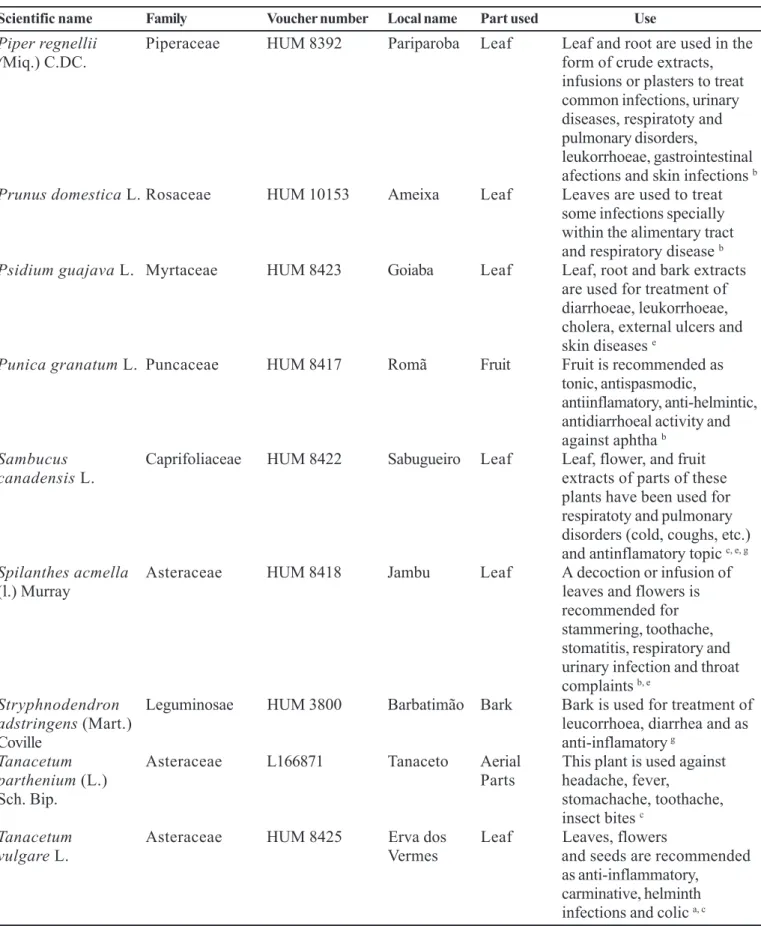
TABLE I - Traditional use of species selected for antiprotozoan investigation
Scientific name Family Voucher number Local name Part used Use
Achillea . Asteraceae HUM8424 Mil folhas Leaf Flowers and leaves are used
millefolium L to treat wounds, ulcers,
diarrhoeae, skin injuries, gastrintestinal disorders, flu, fever and urinary afectionsc,d,e
Anacardium Anacardiaceae HUM 10154 Caju Leaf This plant is used to treat
occidentale L. gastrointestinal, respiratory
and skin infection b
Baccharis trimera Asteraceae HUM 10152 Carqueja Leaf Leaf are used for treatment
(Less.) DC. of gastrointestinal and
respiratory afections, fever and rheumatism b
Cymbopogon Gramineae HUM 520 Capim limão Leaf Used to treat fever and
citratus (DC.) gastrointerstinal diseases a
Stapf
Erythrina speciosa Leguminosae HUM 8416 Eritrina Stem The tradicional
Andrews Papilionidae usage indicates that Erythrina
species could have analgesic, anti-inflamatory and
antibacterial activiy d
Eugenia uniflora L. Myrtaceae HUM 8419 Pitanga Leaf Leaves are used for
treatment of throat complaints, rheumatism, diarrhoeal, inflammatory afections, and helmintic infections b, e
Lippia alba (Mill.) Verbenaceae HUM 8421 Erva-cidreira Leaf Its leaves are
N.E.Br. brasileira employed as an infusion or
decoction to treat gastrointestinal disorders, dysentery, fever and respiratory disease e
Matricaria Asteraceae HUM 10043 Camomila Flower Flowers are recommended as
chamomilla L. anti-inflammatory,
carminative, sedative, antipeptic, anti-helmintic and are used for treatment of fever, and skin injuries b, c
Mikania Asteraceae HUM 8420 Guaco Leaf Leaves infusion used as
glomerata Spreng. antiseptic, anti-inflamatory
and antibacterial e, f, g
Ocimum Labiatae HUM 10151 Alfavaca Leaf Leaves infusion are used for
gratissimum L. treatment of upper respiratory
TABLE I - cont.
Scientific name Family Voucher number Local name Part used Use
Piper regnellii Piperaceae HUM 8392 Pariparoba Leaf Leaf and root are used in the
(Miq.) C.DC. form of crude extracts,
infusions or plasters to treat common infections, urinary diseases, respiratoty and pulmonary disorders,
leukorrhoeae, gastrointestinal afections and skin infections b
Prunus domestica L. Rosaceae HUM 10153 Ameixa Leaf Leaves are used to treat
some infections specially within the alimentary tract and respiratory disease b
Psidium guajava L. Myrtaceae HUM 8423 Goiaba Leaf Leaf, root and bark extracts
are used for treatment of diarrhoeae, leukorrhoeae, cholera, external ulcers and skin diseases e
Punica granatum L. Puncaceae HUM 8417 Romã Fruit Fruit is recommended as
tonic, antispasmodic,
antiinflamatory, anti-helmintic, antidiarrhoeal activity and against aphtha b
Sambucus Caprifoliaceae HUM 8422 Sabugueiro Leaf Leaf, flower, and fruit
canadensis L. extracts of parts of these
plants have been used for respiratoty and pulmonary disorders (cold, coughs, etc.) and antinflamatory topic c, e, g
Spilanthes acmella Asteraceae HUM 8418 Jambu Leaf A decoction or infusion of
(l.) Murray leaves and flowers is
recommended for stammering, toothache, stomatitis, respiratory and urinary infection and throat complaints b, e
Stryphnodendron Leguminosae HUM 3800 Barbatimão Bark Bark is used for treatment of
adstringens (Mart.) leucorrhoea, diarrhea and as
Coville anti-inflamatory g
Tanacetum Asteraceae L166871 Tanaceto Aerial This plant is used against
parthenium (L.) Parts headache, fever,
Sch. Bip. stomachache, toothache,
insect bites c
Tanacetum Asteraceae HUM 8425 Erva dos Leaf Leaves, flowers
vulgare L. Vermes and seeds are recommended
as anti-inflammatory, carminative, helminth infections and colic a, c
a Corrêa, M. P., 1932; b Plantas que curam, 1983; c Newall et al., 1996; d Cruz, C. N., 1979; e Silva I.; Sant’ana, D. M.
Herzog-Soares et al. (2002) demonstrated that an ethanol extract of stem bark from S. adstringens decreased the number of trypomastigote forms of T. cruzi in the blood of mice treated with this extract.
Hydroalcoholic extracts of A. millefolium, A. occidentale, E. speciosa, E. uniflora, L. alba, P. granatum, and S. acmella were inactive against both L. amazonensis and T. cruzi, at 100 µg/ml. An ethyl-acetate extract of E. uniflora had the highest activity against both a drug-sensitive and a multi-drug-resistant clone of
Trypanosoma congolense (Adewunmi et al., 2001). The
medium containing 1% DMSO, negative control, did not affect the growth of the protozoa. Amphotericin B was used as positive control against L. amazonensis and showed 90% of growth inhibition at concentration of 0.116 µg/ml. The positive control against T. cruzi was Benznidazole at 10 µg/ml that showed 80% of growth inhibition.
Natural products such as alkaloids, terpenes, quinones, and polyphenols have shown potent growth inhibition of T. cruzi or Leishmania brasiliensis (Wright and Phillipson, 1990). Some Nigerian medicinal plants have been screened for trypanocidal properties (Adewunmi et al., 2001). Their extracts showed good activity against
Trypanosoma brucei and Trypanosoma congolense,
suggesting that they might be a potential source of new and selective agents for the treatment of diseases caused by these protozoans. Recently, Weniger et al. (2001) reported on antiprotozoal activity of Colombian plants against several strains of Plasmodium falciparum, Leishmania
sp. and T. cruzi.
An important criterion in the search for compounds active against L. amazonensis and T. cruzi with therapeutic potential, is to determine whether they show toxic effects on mammalian host cells. For this purpose, a test of cytotoxicity to sheep erythrocytes was performed in order to determine the ratio of selectivity to biological activity. The haemolytic effects of the crude extracts on sheep blood are shown in Table III. Except B. trimera, none of the crude extracts showed any haemolytic effect at 100 µg/ml after 60 minutes of incubation.
We suggest that the biological efficacy at this concentration is not due to in vitro cytotoxicity. B. trimera,
M. glomerata, and T. parthenium showed no more than
25% lysis after 120 min of incubation. However, the extracts of A. occidentale, B. trimera, C. citratus, L. alba, M. chamomilla, M. glomerata, O. gratissimum, P. regnellii, and T. parthenium showed haemolytic activity TABLE II- Effect of plant extracts on the growth of Leishmania (L.) amazonensis and Trypanosoma cruzi
% Growth inhibition
Leishmania (L.) amazonensis Trypanosoma cruzi Promastigote Amastigote Epimastigote
Achillea millefolium L. 11.6 ± 0.3 48.2 ± 6.3 39.8 ± 4.5
Anacardium occidentale 5.4 ± 7.2 32.3 ± 10.4 9.4 ± 0.5
Baccharis trimera (Less) D.C. 58.3 ± 8.2 64.6 ± 8.4 65.8 ± 1.1
Cymbopogon citratus 98.0 ± 0.5 95.2 ± 5.6 79.5 ± 6.4
Erythrina speciosa Andrew 5.1 ± 3.6 28.4 ± 8.0 26.0 ± 2.8
Eugenia uniflora L. 38.0 ± 3.8 51.6 ± 0.8 34.3 ± 4.6
Lippia alba (Mill.) N.E.Br 8.5 ± 5.9 57.5 ± 8.3 36.5 ± 0.7
Matricaria chamomilla 98.1 ± 0.6 92.7 ± 2.0 95.0 ± 2.8
Mikania glomerata Spreng 52.5 ± 11.2 97.5 ± 2.6 49.5 ± 3.5
Ocimum gratissimum 54.7 ± 0.6 91.5 ± 2.0 28.3 ± 4.2
Piper regnellii Miq. 98.2 ± 0.5 96.8 ± 3.7 89.7 ± 6.7
Prunus domestica 42.2 ± 5.0 90.0 ± 7.1 5.9 ± 5.2
Psidium guajava L. 65.4 ± 5.4 52.0 ± 2.1 15.6 ± 4.4
Punica granatum L. 69.1 ± 4.4 9.1 ± 3.0 11.2 ± 1.8
Sambucus canadensis L. 65.7 ± 6.4 54.9 ± 0.6 13.8 ± 6.8
Spilanthes acmella Mart. 4.3 ± 0.8 18.1 ± 7.1 9.3 ± 4.6
Stryphnodendron adstringens Mart 36.5 ± 0.5 21.0 ± 0.6 51.9 ± 0.2
Tanacetum parthenium 96.5 ± 0.2 94.3 ± 4.0 93.0 ± 1.4
Tanacetum vulgare L. 96.4 ± 3.4 99.0 ± 1.0 95.5 ± 3.5
at concentrations of more than 500 µg/ml. As reported by
Lee et al. (1999), amphotericin B showed strong
haemolytic activity with 50% lysis at 25 µg/ml within 60 min of incubation. The control with Triton X-114 showed a strong haemolytic effect with 100% lysis after 60 min, while 1% DMSO did not cause lysis.
CONCLUSION
The results of the present study confirmed that the use of medicinal plants in folk medicine contributes significantly to primary health care, and that natural products are potential sources of new and selective agents for the treatment of important tropical diseases caused by protozoans. Further laboratory and clinical studies of these plants are required in order to understand their antiprotozoal principles. Therefore, the most promising extracts were prioritised for further phytochemical analysis on the isolation and the identification of the active
compounds with antiprotozoal activity, a work that is already under way.
RESUMO
Efeito de extratos de plantas medicinais no cresci-mento de Leishmania (L.) amazonensis e
Trypanosoma cruzi
Este estudo descreve a triagem de extratos obtidos de 19 espécies de plantas usadas na medicina tradicional brasileira para o tratamento de várias doenças. Os extratos foram testados contra formas amastigota
axênica e promastigota de Leishmania (L.)
amazonensis, e formas epimastigota de Trypanosoma cruziin vitro na concentração de 100 µg/ml. Baccharis trimera, Cymbopogon citratus, Matricaria chamomilla, Mikania glomerata, Ocimum gratissimum, Piper regnellii, Prunus domestica, Psidium guajava, Sambucus canadensis, TABLE III - Haemolytic properties of 19 crude extracts and amphotericin B
Incubation Time (min)
6 0 120
Concentration µµµµµg/ml
1000 500 100 1000 500 100
Achillea millefolium 0 0 0 0 0 0
Anacardium occidentale 0 0 0 ++ ++ 0
Baccharis trimera ++++ ++ + ++++ +++ +
Cymbopogon cytratus 0 0 0 ++ 0 0
Erythrina speciosa 0 0 0 + 0 0
Eugenia uniflora 0 0 0 + 0 0
Lippia alba ++++ +++ 0 ++++ +++ 0
Matricaria chamomilla 0 0 0 +++ 0 0
Mikania glomerata + 0 0 +++ ++ +
Ocimum gratissimum + 0 0 +++ 0 0
Piper regnellii 0 0 0 +++ + 0
Prunus domestica 0 0 0 0 0 0
Psidium guajava 0 0 0 + 0 0
Punica grantum 0 0 0 0 0 0
Sambucus canadensis 0 0 0 +++ 0 0
Spilanthes acmella 0 0 0 +++ 0 0
Stryphnodendron adstringens 0 0 0 0 0 0
Tanacetum parthenium +++ +++ 0 +++ +++ +
Tanacetum vulgare 0 0 0 ++ + 0
Amphotericin B* ++++ ++++ +++ ++++ ++++ +++
Stryphnodendron adstringens, Tanacetum parthenium, e
Tanacetum vulgare apresentaram efeito significante contra um ou ambos parasitas, com a porcentagem de inibição de crescimento entre 49,5 e 99%. Os extratos não mostraram efeito citotóxico em hemácias de car-neiro. Essas plantas medicinais podem ser fontes alter-nativas de novos compostos clinicamente ativos con-tra L. amazonensis e T. cruzi.
UNITERMOS: Leishmania (L.) amazonensis.
Trypanosoma cruzi. Extratos de plantas. Triagem farmacológica.
ACKNOWLEDGEMENTS
This study was supported through grants of the Conselho Nacional de Desenvolvimento Científico e Tecnológico – CNPq, Capacitação de Aperfeiçoamento de Pessoal de Nível Superior –CAPES, and Programa de Pós-graduação em Ciências Farmacêuticas da Universi-dade Estadual de Maringá.
REFERENCES
ABAD, J.M.; BERMEJO, P.; VILLAR, A. An approach to the genus Tanacetum L. (Compositae): phytochemical and pharmacological review. Phytother. Res.,London, v. 9, p. 79-92, 1995.
ABE, F.; NAGAFUJI, S.; YAMAUCHI, T.; OKABE, H.; MAKI, J.; HIGO, H.; AKAHANE, H.; AGULAR, A.; JIMENEZ-ESTRADA, M.; REYES-CHILPA, R. Trypanocidal constituents in plants 1. Evaluation of some mexican plants for their trypanocidal activity and active constituents in guaco, roots of Aristolochia taliscana.
Biol. Pharm. Bull., Tokyo, v. 25, p. 1188-1191, 2002.
ADEWUNMI, C.O.; AGBEDAHUNSI, J.M.; ADEBAJO, A.C.; ALADESANMI, A.J.; MURPHY, N.; WANDO, J. Ethno-veterinary medicine: screening of Nigerian medicinal plants for trypanocidal properties. J. Ethnopharmacol., Limerick, v. 77, p. 19-24, 2001.
AL-HINDAWI, M.K.; AL-DEEN, I.H.S.; NABI, M.H.A.; ISMAIL, M.A. Anti-inflammatory activity of some Iraqi plants using intact rats. J. Ethnopharmacol., Limerick, v. 26, p. 163-168, 1989.
ALVES, T.M.A.; SILVA, A.F.; BRANDÃO, M.; GRANDI, T.S.M.; SMÂNIA, E.F.; SMÂNIA JR A.; ZANI, C.L. Biological screening of Brazilian medicinal plants. Mem. Inst. Oswaldo Cruz, Rio de Janeiro, v. 95, p. 367-373, 2000.
BEDOYA, L.M.; SANCHES-PALOMINO, S.; ABAD, M.J.; BERMEJO, P.; ALCAMI, J. Screening of selected plant extract for in vitro inhibitory activity on human immunodeficiency virus. Phytother. Res., London v. 16, p. 550-554, 2002.
BERMAN, J.D. Treatment of New World cutaneous and mucosal leishmaniasis. Clin. Dermatol., v. 14, p. 519-522, 1996.
BIAZZI, E.S. Saúde pelas plantas. Tatuí: Casa Publicadora Brasileira, 1996. p. 176.
CALIXTO, J.B. Efficacy, safety, quality control, marketing and regulatory guidelines for herbal medicines (phytotherapeutic agents). Braz. J. Med. Biol. Res., Ribeirão Preto, v. 33, p. 179-189, 2000.
CORRÊA, M.P. Dicionário das plantas úteis do Brasil, Rio de Janeiro: IBDF. 1932, v.I p. 577, v.II pp. 72-74.
CROFT, S.L.; URBINA, J.A.; BRUN, R. Chemotherapy of human leishmaniasis and trypanosomiasis. In HIDE, G.; MOTTRAN, J.C.; COOMBS, G.H.; HOLMES, P.H. (Eds.). Trypanosomiasis and leishmaniasis. London: CAB International, United Kingdom, 1997. p. 245-247.
CRUZ, C.N. Dicionário de plantas úteis no Brasil. Rio de Janeiro: Civilização Brasileira: 1979. p. 599.
DELORENZI, J.C.; ATTIAS, M.; GATTASS, C.R.; ANDRADE, M.; REZENDE, C.; PINTO, A.C.; HENRIQUES, A.T.; BOU-HABIB, D.C.; SARAIVA, E.M.B. Antileishmanial activity of indol alkaloid from
Peschiera australis. Antimicrob. Agents Chemother., Bethesda, v. 45, p. 1349-1354, 2001.
FERREIRA, M.E.; ARIAS, A.R.; ORTIZ, S.T.; INCHAUSTI, A.; NAKAYAMA, H.; THOUVENEL, C.; HOCQUEMILLER, R.; FOURNET, A. Leishmanicidal activity of two canthin-6-one alkaloids, two major constituents of Zanthoxylum chiloperone var.
FIERRO, I.M.; SILVA, A.C.B.; LOPES, C.S.; MOURA, R.S.; BARJA-FIDALGO, C. Studies on the anti-allergic activity of Mikania glomerata. J. Ethnopharmacol., Limerick, v. 66, p. 19-24, 1999.
FOURNET, A.; ANGELO, A.; MUÑOZ, V.; ROBLOT, F.; HOCQUEMILLER, R.; CAVÉ, A. Biological and chemical studies of Pera benensis, a Bolivian plant used in folk medicine as a treatment of cutaneous leishmaniasis. J. Ethnopharmacol., Limerick, v. 37, p. 159-164, 1992.
HEPBURN, N.C.; SIDDIQUE, I.; HOWIE, A.F.; BECKETT, G.J.; HAYES, P.C. Hepatotoxicity of sodium stibogluconate therapy of American cutaneous leishmaniasis. Trans. R. Soc. Trop. Med. Hyg., London, v.88, p. 453-455, 1994.
HEPTINSTALL S.; WHITE A.; WILLIAMSON L.; MITCHELL J.R. Extracts of feverfew inhibit granule secretion in blood platelets and polymorphonuclear leucocytes. Lancet, London, v. 1, p. 1071-1074, 1985.
HERWALDT, B.L. Leishmaniasis. Lancet, London, v. 354, p. 1191-1199, 1999.
HERZOG-SOARES, J. D’ARC; ALVES, R.K.; ISAC, E.; BEZERRA, J.C.B.; GOMES, M.H.; SANTOS, S.C.; FERRI, P.H. Atividade tripanocida in vivo de
Stryphnodendron adstringens (Barbatimão verdadeiro)
e Caryocar brasiliensis (pequi). Rev. Bras.
Farmacogn., São Paulo, v. 12, suppl, p. 1-2, 2002.
HOLETZ, F.B.; PESSINI, G.L.; SANCHES, N.R.; CORTEZ, D.A.G.; NAKAMURA, C.V.; DIAS FILHO, B.P. Screening of some plants used in the Brazilian folk medicine for the treatment of infectious diseases. Mem. Inst. Oswaldo Cruz, Rio de Janeiro, v. 97, p. 1027-1031, 2002.
IGWEH, A.C.; AGUIYI, J.C.; OKWUASABA, F.K. Antitrypanosomal effects of the aqueous extract of
Brassica oleracea. Fitoterapia, Milan, v. 73, p. 17-21, 2002.
LEE, S.H.; LEE, J.R.; LUNDE, C.S.; KUBO, I. In vitro
antifungal susceptibilities of Candida albicans and other fungal pathogens to polygodial, a sesquiterpene dialdehyde. Planta Med., Stuttgart, v. 65, p. 204-208, 1999.
MAYA, J.D.; REPETTO, Y.; AGOSIN, M.; OJEDA, J.M.; TLLEZ, R.; GAULE, C.; MORELLO, A. Effects of nifurtimox and benznidazole upon glutatione and trypanothione content in epimastigote, trypomastigote and amastigote forms of Trypanosoma cruzi. Mol. Biochem. Parasitol., Amsterdam, v. 86, p. 101-106, 1997.
MELLO, J.C.P.; PETEREIT, F.; NAHRSTEDT, A. Flavan-3-ols and Prodelphinidins from Stryphnodendron adstringens. Phytochemistry, New York, v. 41, p. 807, 1996.
MENDES, N.M.; QUEIROZ, R.O.; GRANDI, T.S.M.; ANJOS, A.M.G.; OLIVEIRA, A.B.; ZANI, C.L. Screening of Asteraceae (Compositae) plant extracts for molluscicidal activity. Mem. Inst. Oswaldo Cruz, Rio de Janeiro, v. 94, p. 411-412, 1999.
MUELLAS-SERRANO, S.; NOGAL, J.J.; DÍAZ, R.A.; ESCARIO J.A.; MARTÍNEZ-FERNÁNDEZ, A.R.; GOMEZ-BARRIO, A. In vitro
screening of American plants extracts on Trypanosoma cruzi and Trichomonas vaginalis. J. Ethnopharmacol., Limerick, v. 71, p. 101-107, 2000.
NAKAMURA, C.V.; UEDA-NAKAMURA, T.; BANDO, E.; MELO, A.F.N.; CORTEZ, D.A.G.; DIAS FILHO, B.P. Antibacterial activity of Ocimum gratissimum L. essencial oil. Mem. Inst. Oswaldo Cruz, Rio de Janeiro, v. 94, p. 675-678, 1999.
NEWALL, C.A.; ANDERSON, L.A.; PHILLIPSON, J.D. Plantas medicinais: guia para profissional de saúde. São Paulo: Premier, 1996. p. 59-248.
OLIVEIRA, P.; KISUE, G. Fundamentos de
Farmacobotânica. Rio de Janeiro: Ateneu, 1989. 412 p.
Plantas que curam – a natureza a serviço de sua saúde. In ALZREGARAY D.; ALZREGARAY C. (Eds.). São Paulo: Três Livros e Fascículos, 1983. v. I – IV.
PESSINI, G.L.; DIAS FILHO, B.P.; NAKAMURA, C.V.; CORTEZ, D.A.G. Antifungal activities of the extracts and neolignans from Piper regnellii (Miq.) C. DC. var.
pallescens (C. DC.) Yunck. J. Braz. Chem. Soc.,
SALVADOR, M.J.; FERREIRA, E.O.; PRAL, E.M.F.; ALFIERI, S.C.; ALBUQUERQUE, S.; ITO, I.Y.; DIAS, D.A. Bioactivity of crude extracts and some sonstituents of Blutaparon portulacoides
(Amaranthaceae). Phytomedicine, Stuttgart, v. 9, p. 566-571, 2002.
SILVA I.; SANT’ANA, D.M.G. Noções sobre o organismo
humano e a utilização de plantas medicinais.
Cascavel: Assoeste Editora Educativa, 1995. p. 203.
STACEWICZ-SAPUNTZAKIS, M.; BOWEN, P.E.; HUSSAIN, E.A.; DAMAYANTI-WOOD, B.I.; FARNSWORTH, N.R. Chemical composition and potential health effects of prunes: a functional food? Crit. Rev. Food Sci. Nutr., Boca Raton, v. 41, p. 251-286, 2001.
TORRES-SANTOS, E.C.; MOREIRA, D.L.; KAPLAN, M.A.C.; MEIRELLES, M.N.; ROSSI-BERGMANN, B. Selective effect of 2’,6’-dihydroxy-4’-methoxychalcone isolated from Piper aduncum on
Leishmania amazonensis. Antimicrob. Agents
Chemother., Bethesda, v. 43, p. 1234-1241, 1999.
UEDA-NAKAMURA, T.; ATTIAS, M.; DE SOUZA, W. Megasome biogenesis in Leishmania amazonensis: a morphometric and cytochemical study. Parasitol. Res., Würzburg, v. 87, p. 89-97, 2001.
VELOSO, V.M.; CARNEIRO, C.M.; TOLEDO, M.J.O.; CHIARI, E.; TAFURI, W.L.; BAHIA, M.T. Variation in susceptibility to benznidazole in isolates derived from
Trypanosoma cruzi parenteral strains. Mem. Inst.
Oswaldo Cruz, Rio de Janeiro, v. 96, p. 1005-1011, 2001.
VIOTTI, R.; VIGLIANO, C.; ARMENTI, H.; SEGURA, E. Treatment of chronic Chagas’disease with benznidazole: clinical and serological evolution of patients with long term follow-up. Am. Heart J., St. Louis, v. 127, p. 151-162, 1994.
WENINGER, B.; ROBLEDO, S.; ARANGO, G.J.; DEHARO, E.; ARAGÓN, R.; MUÑOZ, V.; CALLAPA, J.; LOBSTEIN, A.; ANTON, R. Antiprotozoal activities of Colombian plants.
J. Ethnopharmacol., Limerick, v. 78, p. 193-200, 2001.
WHO World Health Organization. Chagas disease. Thirtheenth Programme Report UNDP/WB/TDR, Geneve, p. 112-23, 1997.
WILLIAMS, C.A.; HARBONE, J.B.; GEIGER, H.; HOULT, J.R.S. The flavonoids of Tanacetum parthenium and T. vulgare and their anti-inflammatory properties. Phytochemistry, New York, v. 51, p. 417-423, 1999.
WRIGHT, C.W.; PHILLIPSON, J.D. Natural products and the development of selective antiprotozoal drugs.
Phytother. Res., London, v. 4, p.127-139, 1990.
YONG, V.; SCHMITZ, V.; VANNIER-SANTOS, M.A.; LIMA, A.P.C.A.; LALMANACH, G.; JULIANO, L.; GAUTHIER, F.; SCHARFSTEIN, J. Altered expression of cruzipain and a cathepsin B-like target in a
Trypanosoma cruzi cell line displaying resistance to
synthetic inhibitors of cysteine-proteinases. Mol. Biochem. Parasitol., Amsterdam, v. 109, p. 47-59, 2000.