Management of emergency situations in patients
undergoing tracheostomy
Gerenciamento de situações de emergência em pacientes
traqueostomizados
INTRODUCTION
Tracheotomy is one of the surgical procedures most often performed in the intensive care unit (ICU).(1) Decision of the adequate moment
to perform tracheostomy is not well defined. However, it has to be adjusted for each patient considering base pathology, recovery expecta-tions, deleterious effects of prolonged orotracheal intubation and risk of a surgical procedure.(2) Other indications for tracheostomy include:
extubation failure, upper airways obstruction and constant need of bronchial toilet.(3)
Currently, rates of complication incidence are relatively low (2.7-4.3%)(4-6) and seldom lead to death of patients. Nevertheless, in cases
Paulo Eugênio Silva1, Milena
Carolina Martins da Cruz2, Lucas
Montano Paternostro Saback3, Júlio
Leal Bandeira Neves4
1. Physiotherapist of the Hospital da Cidade - Salvador (BA), Brazil. 2. Physiotherapist of the Hospital Santa Izabel - Salvador (BA), Brazil.
3. Physiotherapist of the Hospital Santa Izabel - Salvador (BA), Brazil.
4. Physician of the Intensive Care Unit of the Hospital da Cidade - Salvador (BA), Brazil.
ABSTRACT
Objectives: The aim of this study was to evaluate the level of knowl-edge of health care professionals in an emergency situation related to tra-cheostomy tube displacement
Methods: a descriptive and ex-ploratory study was carried out with the intensive care unit health profes-sionals of a university hospital in Sal-vador, Brazil, from July to September 2007. For this purpose, a question-naire was translated and adapted from a previous study. Questions were: 1- Have you dealt with this emergency? 2 - What is the first thing you do? 3- Do you know what the stay sutures are for? 4 - How are they used in an emergency setting? 5 -Do you know what to do with the introducer?
Results: the sample comprised 41 professionals (nine physicians, 20 nurses and 12 physiotherapists). A
descriptive analysis showed that 63% of professionals had never experi-enced such complications. Analysis of a subgroup showed that 42% of phys-iotherapists, 56% of physicians and 69% of nurses would act inappropri-ately. Analyzing the level of knowl-edge about the importance of stay sutures, the study showed that 78% of the sample did not know what they were or how to use them, and 63.4% did not know how to use the intro-ducer correctly.
Conclusions:, regarding the use of a tracheostomy tube in a situation of emergency, the level of knowledge of the professionals evaluated was in-sufficient. The greatest shortcoming was detected in the level of knowl-edge about stay sutures.
Keywords: Emergencies; Intensive care; Tracheostomy/methods; Intuba-tion, intratracheal/methods
Received from the Multiprofessional Residence Program - SESAB from the Intensive Care Unit of Hospital da Cidade - Salvador (BA), Brazil.
Submitted on July 21, 2008 Accepted on April 14, 2009
Author for correspondence:
Paulo Eugênio Silva
Rua Humberto de Campos, 233 CEP: 40150-130 - Salvador (BA), Brazil.
of accidental displacement of the tube at the early post-surgery stage (incidence of 0.8 – 1.5% of all complications)(7) mortality rate may reach 100%.(8)
Tracheotomy can basically be carried out by two approaches, percutaneous or open surgery. The per-cutaneous was reintroduced with the Ciaglia, tech-nique in 1985,(9) and became very popular in the
nineties.(10)
For the open surgical approach, there are various techniques, however stay sutures are always recom-mended. Two circumferential sutures are made sur-rounding the lateral side of the approached ring and are secured on the patient’s chest for the purpose of causing traction on the trachea and facilitating pas-sage of the tube into the lumen.(11) When inserting
the tube, the opening must be filled by the obtura-tor, a device functioning as a guide for passage with lesser risk of opening a false track.(3)
After open surgery, as the tract remains unstable for 3 to 5 days an effort to replace the tube at this time is usually frustrated endangering the patient.(3)
Multiple factors including obesity, short neck, ana-tomic anomalies, and abundant secretion in the re-spiratory tract and excessive amount of granulation tissue may even complicate replacement in a stable airway.(12)
In the hospital setting, many health care profes-sionals are directly involved in the management of tracheostomized patients. As such, the main objective of this study was to assess the level of knowledge of the multidisciplinary team in an emergency situation related to exposure of the tracheostomy tube in the early stage of open surgery. The secondary objective was to identify possible key areas where inadequate maneuvers are being performed.
METHODS
A descriptive exploratory study was carried out to establish the level of knowledge of health care professionals (physicians, physiotherapists and nurses) regarding management of tracheotomy in an emergency situation. A representative sample of professionals stationed in the intensive care unit of a university hospital in Salvador-BA was interviewed. This unit is classified as a general ICU with clinical as well as surgical patients. Sample size (41 inter-viewed) was established based upon the calculation of the sample Z for nominal or ordinal variables and finite population (59 professionals) where n =
z2.p.q.N/d2 [d2 (N-1) + z2.p.q].(13) Data collection
was carried out from July to September of 2007, by a single interviewer, duly trained and acquainted with the proposed subject.
For data collection a semi-structured question-naire , translated and adapted from a former study was used.(3) Variables in the questionnaire were
pro-fession, level of specialization, time of experience, and a short clinical case, illustrating an emergency situation followed by five questions (Appendix 1). Data analysis was carried out with the SPSS 15.0 program in a descriptive manner for the purpose of verifying the level of knowledge of the surveyed sample.
At the time of interview the objective of the sur-vey was emphasized and a term of informed consent was signed assuring anonymity, confidentiality of data and the right to interrupt the interview at any time. The questionnaire was completed in the pres-ence of the examiner immediately after signing the term of consent.
RESULTS
The sample comprised 41 professionals (nine physicians, 20 nurses and 12 physiotherapists). Most professionals (56%) had some specialization, 26.8% were residents and only one had a master’s degree. Regarding time of graduation, 65.9% had less than four years of experience.
When queried if they had already experienced some emergency situation involving displacement of the tracheostomy tube at an early stage of surgery, 63.4% of professionals replied that they had never experienced this complication.
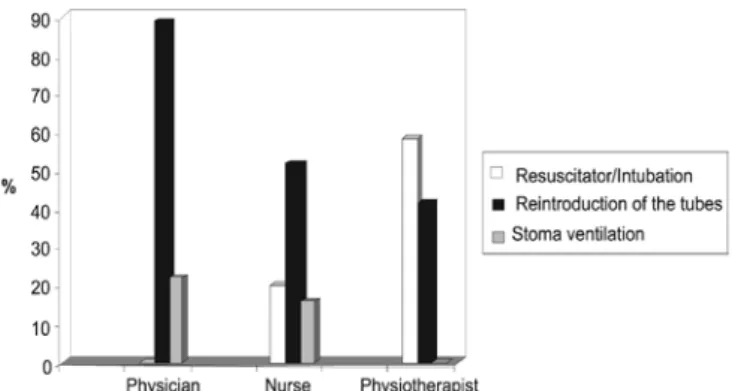
Figure 1 – Which would be the first thing you would do to reestablish patient ventilation?
DISCUSSION
A shortcoming in the level of knowledge of health care professionals in relation to management of tra-cheostomy in a situation of total exteriorization of the tube at the early stage of surgery became evident.
O displacement of the tube may take place at any time, regardless of the surgical technique(12) and
al-though the incidence is low (0.8-1.5%), it is associate with high mortality rates.(8,14) This survey disclosed a
high prevalence of professionals who have experienced this situation, 36.6 %, which contrasts with the mere 18.5% found in other studies.(3)
In cases of accidental displacement of the tube at the early stage of tracheotomy the safest conduct is to set up orofacial ventilation with manual resusci-tator and perform a translaryngeal intubation before reintroducing the tube in the stoma.(3,14)In this study
only 29.2% of the professionals chose this alterna-tive, while in a former survey,(3) a 37% was found This
higher value that had been presented may be related to inclusion of head and neck surgeries in the sample, which attained higher rates of correct replies, raising the overall percentage.
Reintroduction of the tube is only feasible if the professional knows how to use stay sutures and has an obturator available at the time of reintroduction. However, even with all these resources, chances of this procedure being successful are poor.(3,15,16) Of the
twenty three interviewees (56%) who chose reintro-duction of the tube, 18 professionals (78.3%) did not know how to use stay sutures and or the obturator.
The obturator is a guide which adapts and adjusts the tracheostomy tube for appropriate reintroduction in the stoma. Its rounded tip permits repositioning of the tube, reducing the probability of generating a
false track and injury to the structures involved in the surgery.(3,15)
The stay sutures directly placed on both sides of the tracheal wall may facilitate repositioning of the tracheostomy tube. Exerting an upward and sideway traction the sutures bring the tracheal orifice to the surface, minimizing possible false tracks and hemor-rhages related to repositioning of the tracheostomy tube. However, if crossed or tangled, stay sutures may narrow the stoma producing obstruction.(11,14,16)
Deficient level of knowledge of professionals re-garding emergency procedures involving tracheotomy was common in all surveys found on the subject. In a study published in 2004,(17) health care professionals
were assessed in a ventilatory emergency with tracheo-stomized patients. This survey interviewed approxi-mately 885 professionals, physicians and nurses with a method similar to this study. It was shown that less than 50% of the interviewees were able to correctly complete the questionnaire, which substantiates the current survey where only 41.5% of professionals re-sponded correctly.
The main limitation of this survey is related to the structure of the questionnaire used, which could cover more variables, However, this was chosen because it had been previously published.(3) This does not
invali-date current results, as it was possible to objectively examine the level of knowledge of the interviewed professionals. To our knowledge this is the first work in Brazil, to verify the level of understanding of ICU professionals about management of tracheotomy in an emergency situation.
CONCLUSION
RESUMO
Objetivos: O objetivo principal deste estudo foi avaliar o ní-vel de conhecimento dos proissionais de saúde com relação ao gerenciamento de uma situação de emergência envolvendo deslo-camento acidental da cânula de traqueostomia.
Métodos: Foi realizado um estudo descritivo exploratório com proissionais de saúde (médicos, isioterapeutas e enfermei-ros) da unidade de terapia intensiva de um hospital universitário, em Salvador-BA, no período de julho a setembro de 2007. Para tanto, foi traduzido e adaptado um questionário semi-estruturado retirado de um estudo prévio. As perguntas foram: 1- você já li-dou com esta situação? 2- Qual seria a sua primeira conduta? 3 - Você sabe o que são as suturas de ancoragem? 4 - Como as suturas de ancoragem devem ser utilizadas em uma emergência? 5 - Você sabe o que é e como deve ser utilizado o obturador?
Resultados: A amostra foi composta por 41 proissionais
(nove médicos, 20 enfermeiros e 12 isioterapeutas). A análise descritiva demonstrou que 63% dos proissionais nunca viven-ciaram esta intercorrência. Uma análise dos subgrupos evidenciou que 42% dos isioterapeutas, 56% dos médicos e 69% dos enfer-meiros agiriam de forma inadequada nesta situação. Uma análise global, com relação ao nível de conhecimento sobre as suturas de ancoragem, demonstrou que 78% dos entrevistados não sabiam o que eram e como utilizá-las, assim como 63,4% airmaram desco-nhecer a forma correta de utilização do obturador.
Conclusões: O nível de conhecimento dos proissionais ava-liados, referente ao manejo da traqueostomia em uma situação de emergência, foi insuiciente. Uma maior deiciência foi detectada com relação ao conhecimento e a utilização das suturas de anco-ragem.
Descritores: Emergências; Cuidados intensivos; Traqueosto-mia/métodos; Intubação intratraqueal/métodos
REFERENCES
1. Aranha SC, Mataloun SE, Moock M, Ribeiro R. Estudo comparativo entre traqueostomia precoce e tardia em pa-cientes sob ventilação mecânica. Rev Bras Ter Intensiva. 2007;19(4):444-9.
2. Groves DS, Durbin CG Jr. Tracheostomy in the critically ill: indications, timing and techniques. Curr Opin Crit Care. 2007;13(1):90-7.
3. Casserly P, Lang E, Fenton JE, Walsh M. Assessment of he-althcare professionals’ knowledge of managing emergency complications in patients with a tracheostomy. Br J Anaes-th. 2007;99(3):380-3.
4. Dulguerov P, Gysin C, Perneger TV, Chevrolet JC. Percuta-neous or surgical tracheostomy: a meta-analysis. Crit Care Med. 1999;27(8):1617-25. Comment in: Crit Care Med. 1999;27(8):1684-5. Crit Care Med. 2000;28(9):3369-71. Crit Care Med. 2000;28(9):332000;28(9):3369-71. Crit Care Med. 2000;28(9):3372-3.
5. Gysin C, Dulguerov P, Guyot JP, Perneger TV, Abajo B, Che-vrolet JC. Percutaneous versus surgical tracheostomy: a dou-ble-blind randomized trial. Ann Surg. 1999;230(5):708-14. 6. Perfeito JAJ, Mata CAS, Forte V, Carnaghi M, Tamura N,
Leão LEV. Traqueostomia na UTI: vale a pena realizá-la? J Bras Pneumol. 2007;33(6):687-90.
7. King C, Moores LK. Controversies in mechanical venti-lation: when should a tracheotomy be placed? Clin Chest Med. 2008;29(2):253-63, vi.
8. Goldenberg D, Ari EG, Golz A, Danino J, Netzer A,
Joachims HZ. Tracheotomy complications: a retrospec-tive study of 1130 cases. Otolaryngol Head Neck Surg. 2000;123(4):495-500.
9. Ciaglia P, Firsching R, Syniec C. Elective percutaneous di-latational tracheostomy. A new simple bedside procedure; preliminary report. Chest. 1985;87(6):715-9. Comment in: Chest. 2005;128(5):3774-5.
10. Simpson TP, Day CJ, Jewkes CF, Manara AR. he impact of percutaneous tracheostomy on intensive care unit prac-tice and training. Anaesthesia. 1999;54(2):186-9.
11. Durbin CG Jr. Techniques for performing tracheostomy. Respir Care. 2005;50(4):488-96.
12. Toye FJ, Weinstein JD. Clinical experience with percu-taneous tracheostomy and cricothyroidotomy in 100 pa-tients. J Trauma. 1986;26(11):1034-40.
13. Fonseca JS, Martins GA. Curso de estatística. 6th ed. São Paulo: Atlas; 1996. 320p.
14. Rajendram R, McGuire N. Repositioning a displaced tracheostomy tube with an Aintree intubation cathe-ter mounted on a ibre-optic bronchoscope. Br J Ana-esth. 2006;97(4):576-9. Comment in: Br J AnaAna-esth. 2007;98(2):276.
15. Seay SJ, Gay SL, Strauss M. Tracheostomy emergencies. Am J Nurs. 2002;102(3):59, 61, 63.
16. Burke A. he advantages of stay sutures with tracheostomy. Ann R Coll Surg Engl. 1981;63(6):426-8.
Appendix 1 – Model of the questionnaire used for data collection
QUESTIONNAIRE
Profession: Physician Physiotherapist Nurse
Experience: Up to 4 years > 4 years
Specialization: Resident Assistant Specialist Master Ph.D.
Clinical Case:
Patient admitted to the ICU on the second postoperative day, after tracheotomy, because of prolonged mechanical ventilation due to brain injury. Patient presenting with acute lung injury requiring a FiO2 > 60% PEEP > 10 cmH2O and Glasgow of 6. An efective cough caused displacement with total exteriorization of the tracheotomy tube.
1 - Have you ever dealt with some situation of exteriorization of the tracheotomy tube at early postoperative?
Yes No
2 - What would be the irst thing you would do in this situation?
Ventilate with manual resuscitator and or facial mask until the time to intubation.
Immediately replace the tracheostomy tube
Ventilate the surgical route with the manual resuscitator
3 - Do you know what stay sutures are?
Yes No
4 - How should stay sutures be used in an emergency?