Inoculation of maize with
Azospirillum brasilense
in the seed furrow
1Inoculação do milho com
Azospirillum brasilense
no sulco de semeadura
Tâmara Prado de Morais2*, Césio Humberto de Brito3, Afonso Maria Brandão4 and Wender Santos Rezende5
ABSTRACT - Several studies addressing the inoculation of cereals with diazotrophic microorganisms can be found
in the literature. However, in many experiments, investigators have overlooked the feasibility of applying these microorganisms to the furrow together with the seed, and the effect of bacterial concentration on phytostimulation. The aim of this work was to evaluate the effect of doses of an inoculant based on Azospirillum brasilense, applied to the
seed furrow when planting maize, combined with different doses of nitrogen fertiliser. The experiment was carried out in the field, in soil of the cerrado region of Brazil. An experimental design of randomised blocks in bands was adopted, comprising nitrogen (40, 100, 200 and 300 kg ha-1) and doses of an A. brasilense-based liquid inoculant applied to
the seed furrow (0, 100, 200, 300 and 400 mL ha-1). The dose of 200 mL ha-1Azospirillum was noteworthy for grain
production. This is the first report of the effective application ofAzospirillum in the seed furrow when planting maize
in the cerrado region of Brazil.
Key words: Diazotrophic bacteria. Nitrogen doses. Bacterial concentration.Zea mays L..
RESUMO -Diversos estudos abordando a inoculação de cereais com micro-organismos diazotróficos são encontrados
na literatura. Porém, em muitos experimentos os pesquisadores têm negligenciado a viabilidade da aplicação desses micro-organismos no sulco de semeadura, juntamente com as sementes, e o efeito da concentração das bactérias na fitoestimulação. Este trabalho teve como objetivo avaliar o efeito de doses de inoculante à base de Azospirillum brasilense aplicadas no sulco de semeadura do milho em combinação com diferentes doses de adubação nitrogenada. O
experimento foi realizado em campo, em solo de cerrado. Adotou-se o delineamento estatístico de blocos ao acaso em esquema de faixas, composto por doses de nitrogênio (40; 100; 200 e 300 kg ha-1) e doses de inoculante líquido à base de
A. brasilense aplicadas no sulco de semeadura (0; 100; 200; 300 e 400 mL ha-1). A dose de 200 mL ha-1 deAzospirillum
se destacou na produção de grãos de milho. Este é o primeiro relato da aplicação eficiente deAzospirillum no sulco de
semeadura do milho no cerrado brasileiro.
Palavras-chave:Bactéria diazotrófica. Doses de nitrogênio. Concentração bacteriana. Zea mays L..
DOI: 10.5935/1806-6690.20160034 * Autor para correspondência
1Recebido para publicação em 06/06/2013; aprovado em 25/05/2015
Trabalho desenvolvido com apoio da empresa Syngenta Seeds
2Programa de Pós-Graduação em Agronomia/Fitotecnia, Universidade Federal de Uberlândia, Avenida Amazonas, s/n, Uberlândia-MG, Brasil,
38.400-902, [email protected]
3Instituto de Ciências Agrárias, Universidade Federal de Uberlândia, Avenida Amazonas, s/n, Uberlândia-MG, Brasil, 38.400-902,
4Syngenta Seeds, BR 452, Km 142,5, Uberlândia-MG, Brasil, 38.405-232, [email protected]
5Programa de Pós-Graduação em Genética e Melhoramento, Universidade Federal de Viçosa, Edifício Arthur Bernardes, Subsolo, Sala 12,Campus
INTRODUCTION
The genus Azospirillum includes bacteria
which are demonstrably capable of promoting plant growth. Several processes of phytostimulation have been identified, and include plant hormone synthesis (DOBBELAERE; VANDERLEYDEN; OKON, 2003), atmospheric nitrogen fixation (BASHAN; HOLGUIN; BASHAN, 2004), nitric oxide production (CREUS
et al., 2005) and the control of phytopathogens
(RAAIJMAKERSet al., 2009).
Tests of inoculation with Azospirillum have
been reported for different crops (mainly cereals) under different conditions of soil and climate, mostly resulting in increases in production (JOEet al., 2012;
PEDRAZA et al., 2009). Other beneficial effects
include greater development of the root system (EL
ZEMRANYet al., 2007), and a higher percentage of
seed germination and seedling vigour (CASSÁN et
al., 2009; GHOLAMI; SHAHSAVANI; NEZARAT,
2009).
In some countries, including Brazil, inoculation has been considered as an environmentally friendly alternative for reducing the use of synthetic nitrogen fertilisers, but without compromising crop yields
(HAGH et al., 2010; HUNGRIA et al., 2010).
However, adoption of this practice in Brazilian agricultural systems is still in its infancy, due to the type of application technology and the inconsistency of research results, which can vary depending on various biotic and abiotic factors.
Traditionally, Azospirillum inoculation is
carried out by treating the seeds. Countless studies prove the efficiency of this application technology
(BAUDOIN et al., 2009; EL ZEMRANY et al.,
2006, 2007). However, this technique has become unworkable in the field, as maize seed is generally commercialised treated with phytosanitary products, and the need to treat the seed again with the bacteria is of no interest to the farmer.
With the aim of making this technology viable in the field, alternative ways of applying inoculants are
needed. In soybeans, for example, Zilli et al. (2010)
suggested inoculation in the seed furrow instead of applying the inoculant to the seeds, this being the technically recommended practice (EMBRAPA, 2011). However, there is still little information on the benefits of seed-furrow inoculation in maize (FALLIK; OKON, 1996), and studies are scarce concerning the concentrations of bacteria which are able to promote maximum growth and plant production due to this new application technology.
It should be noted that the inoculant dose is one of the main factors that interfere with the success
of phytostimulation by Azospirillum. Nevertheless, the
majority of publications found in the literature focus only on the physiological response of the plants in the presence of the bacteria, regardless of the concentration. When that variable is evaluated, some studies report
conflicting results (CASSÁN et al., 2009; PUENTE;
GARCÍA; ALEJANDRO, 2009).
The correct dosage of an inoculant based on
Azospirillum is therefore important in a sustainable
context for inoculating cereals. Starting with the assumption that information on the monitoring and quantification of bacteria after inoculation is scarce, and that available techniques typically require
sophisticated equipment (COUILLEROT et al., 2010),
the concentration of Azospirillum can be determined
indirectly by the analysis of plant development and production, varying the doses of inoculant.
The aim of this study therefore was to evaluate the effect of doses of an inoculant based onA. brasilense and
applied in the planting furrow on maize plants grown in the cerrado region of Brazil, also considering the supply of mineral N to the crop.
MATERIAL AND METHODS
Location description
The experiment was carried out during the 2010/2011 crop year in the municipality of Iraí de Minas, in the State of Minas Gerais, Brazil, located at 18º59’02’’ S and 47º27’39’’ W, at an altitude of
1,006.4 m, in the Triangulo Mineiro/Alto Paranaíba
region. The climate is considered tropical highland,
Cwa, according to the Köppen classification, with an average air temperature of 22.8 °C and rainfall of around 1,539 mm per year, the rains being concentrated from September to May.
The terrain in the experimental area is flat, with
the soil classified as a Red-Yellow Latosol (SANTOSet
al., 2013), originally under cerrado vegetation. Before
setting up the experiment, soil samples were taken at a depth of 0 to 20 cm, which indicated the chemical and physical characteristics shown in Table 1.
Experimental design
A randomised block design (RBD) in bands was used in the experiment, comprising doses of nitrogen
(40, 100, 200 and 300 kg ha-1) and doses of a liquid
Table 1 - Chemical and physical properties of the soil from samples taken at a depth of 0-20 cm - Iraí de Minas, 2010
Chemical Physical
pH P meh-1 K+ Ca2+ Mg2+ Al3+ Al+H CEC T
CEC BS O.M. clay
(H2O) (mg dm-3) (cmol
c dm-3) (%) (dag kg-1) (g kg-1)
5.5 15.12 0.37 2.4 0.65 0.0 3.6 7.0 3.42 48 3.4 411
furrow (0, 100, 200, 300 and 400 mL ha-1), with 12
replications, giving a total of 240 experimental plots. Each experimental plot consisted of eight crop rows, 6.0 m in length and spaced 0.6 m apart, covering an area of 28.8 m2 per plot and giving an experimental area of 6,912.0 m2. The usable area was considered to be the four central rows, disregarding 1.0 m at each end.
Inoculant application technology
Inoculation was carried out in the seed furrow,
using a commercial product based on the bacterium A.
brasilense, at a minimum concentration of 2x10⁸ viable cells mL-1. The inoculant contains the Ab-V5 and Ab-V6 strains selected by the Federal University of Paraná, tested by Embrapa and approved by the Laboratory Network for the Recommendation, Standardisation and Diffusion of Microbial Inoculant Technology of Agricultural Interest
[RELARE -Rede de Laboratórios para a Recomendação,
Padronização e Difusão de Tecnologia de Inoculantes Microbianos de Interesse Agrícola].
A Micron Combat spray with a tank capacity of 200 L was used attached to the seeder to inoculate the bacteria into the seed furrow at the time of seed distribution. The spray was equipped with a transverse bar having four nozzles spaced 0.6 m apart (one nozzle for each row of the seeder, inserted between the planting discs for application in the furrow) and half-inch thick piping. Flat fan spray nozzles, model Teejet 8001, were used. After planting and spraying the seeds, the furrows were covered with a layer of approximately 0.3 m of soil.
A balanced plant population was employed, comprised equally of eight maize hybrids from the breeding programs of four companies, all the material being of high productive potential, genetically modified and recommended for cultivation under the conditions found in the cerrado.
Except for the control treatment (noAzospirillum
inoculation), the maize hybrids were inoculated with the dose recommended by the manufacturer for seed application (equivalent to 100 mL of commercial inoculant ha-1) and increasing doses of the product (200,
300 and 400 mL ha-1), thereby obtaining theoretical
estimates of 285,714; 571,428; 857,142 and 1,142,857 bacteria cells per plant respectively.
Conducting the experiment
About 20 days before sowing, desiccation was
carried out in the experimental area using 4 L ha-1
glyphosate + 0.3 L 2,4-D ha-1. Sowing was done on
November 20, 2010, employing a no-tillage system, with a vacuum seeder adapted for trials. Inoculation of
the furrow with Azospirillum was performed with the
help of a spray attached to the seeder, by applying the liquid inoculant, diluted with water to a volume of 80 L ha-1, over the seeds at an operating pressure of 45 psi. Fertilisation corresponded to the application of 500 kg
ha-1 of formulation 08-20-20 + 0.5% Zn at the time of
sowing, and 60 kg ha-1 K
2O as topdressing when the
maize plants were at stage V6. Applied together with
the potassium fertiliser were 300 kg ha-1 ammonium
sulphate; 300 kg ha-1 sulphate + 220 kg ha-1 urea; and 300 kg ha-1 sulphate + 440 kg ha-1 urea, for treatments where the final dose of nitrogen was equal to 100, 200
and 300 kg ha-1. All cropping practices necessary for
the full development of the plants were carried out with the aim of achieving high productivity.
Variables analysed
The plants in each plot were counted pre-harvest, and the stand extrapolated for one hectare. The number of lodged plants and the number of broken plants were also counted.
When the crop was ready for harvest (grain moisture content of 23%), the ears from each experimental plot were collected and processed mechanically. The weight and moisture content were determined with a system of scales and a moisture tester, both installed on the harvester. The data were extrapolated for an area of one hectare, and corrected for 13% moisture, thereby arriving at values for productivity in t ha-1.
grains. As proposed by law, grains (or pieces thereof) were considered rot, that presented discolouration covering the entire grain, due to the action of heat, humidity or advanced fermentation (BRASIL, 2010). The ears were threshed and the grains weighed. A 250 g sample was used in a visual assessment, the data obtained being expressed as a percentage of rot grains. Values for the weight of the 20 ears (healthy grains + rot grains) were added to the data from the mechanical harvesting (corresponding to each plot) to calculate productivity.
Statistical analysis
The evaluated characteristics were submitted to the analysis of variance F-test, followed by polynomial regression for studying the inoculant and nitrogen doses. When the quantitative factors were significant, but with no adjustment of the regression models, Tukey’s test was applied using complex variances for a comparison between means. The analyses were carried out using the SISVAR statistical program v.5.3, at a significance level of = 0.05.
It is noteworthy that all the assumptions required for the analysis of variance were verified. Normality of the residuals was assessed with the Kolmogorov-Smirnov test; homogeneity of variance by Levene’s test; and additivity by Tukey’s test, using the SPSS software (Statistical Package for Social Sciences) v. 17.0. For the purposes of analysis, it was necessary to transform some of the data when they did not meet the assumptions.
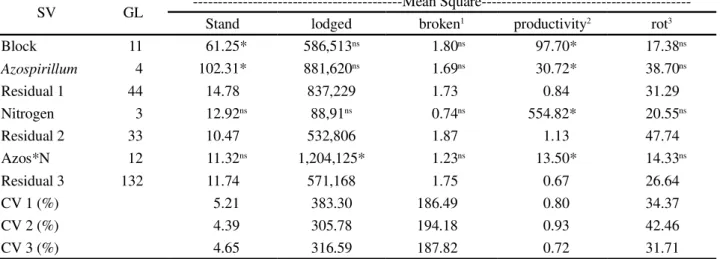
Table 2 - Analysis of variance of the data for stand, lodged plants, broken plants, productivity and rot maize grains, for doses of
Azospirillum and nitrogen
* andns: significant and not significant respectively at 5% by F-test;1data transformed bylog
10 (x + 1) ;
2data transformed by x;3data
transformed by arcosen x/100).
SV GL ---Mean
Square---Stand lodged broken1 productivity2 rot3
Block 11 61.25* 586,513ns 1.80ns 97.70* 17.38ns
Azospirillum 4 102.31* 881,620ns 1.69ns 30.72* 38.70ns
Residual 1 44 14.78 837,229 1.73 0.84 31.29
Nitrogen 3 12.92ns 88,91ns 0.74ns 554.82* 20.55ns
Residual 2 33 10.47 532,806 1.87 1.13 47.74
Azos*N 12 11.32ns 1,204,125* 1.23ns 13.50* 14.33ns
Residual 3 132 11.74 571,168 1.75 0.67 26.64
CV 1 (%) 5.21 383.30 186.49 0.80 34.37
CV 2 (%) 4.39 305.78 194.18 0.93 42.46
CV 3 (%) 4.65 316.59 187.82 0.72 31.71
RESULTS AND DISCUSSION
Interaction of the doses of Azospirillum and
nitrogen was significant for the variables: number of lodged plants and grain productivity. Final stand was influenced only by doses of the inoculant, while the number of broken plants and the percentage of rot grains were independent of the factors under study (Table 2).
The application of doses of nitrogen and
Azospirillum in the sowing furrow did not alter the
number of broken maize plants nor the percentage of rot grains. For the inoculant, the number of broken plants and the percentage of rot grains varied between 151.91 and 477.43 plants per hectare and between 7.47% and 9.79% respectively. At the levels of nitrogen being studied, mean values ranged from 225.69 to 399.31
broken plants ha-1 and between 7.87% and 9.38% for
rot grains (data not shown). These results suggest that the supply of nitrogen, either mineral nitrogen or from diazotrophic microorganisms, does not result in better stalk quality in the maize plants, unlike reports
in the literature on potassium (DU et al., 2007).
Furthermore, despite the proven antagonistic effects
on phytopathogenic (RAAIJMAKERS et al., 2009),
bacteria of the genus Azospirillum did not protect the
maize grain against infestation by fungi that favour the
occurrence of rot grains. Novakowiski et al. (2011)
also found no effects from fertilisation with mineral
N or from seed inoculation with A. brasilense on the
The dose of 200 mL inoculant ha-1 applied in the sowing furrow enhanced seed germination and early development of the maize, resulting in a greater
number of plants ha-1 (Table 3). This increase in the
final stand was 4.7% compared to the treatment with no inoculation. In a trial carried outin vitro, maize seeds
inoculated with A. brasilense DSM 1690 showed an
increase in germination rate of 18.5% compared to the control, with increased seedling vigour (GHOLAMI; SHAHSAVANI; NEZARAT, 2009). Improvements in the parameters for seed germination and seedling growth have also been reported for other cereals, such
as millet (RAJ et al., 2003) and wheat (SHAUKAT;
AFFRASAYAB; HASNAIN, 2010) inoculated with rhizobacteria.
1mean values followed by different letters differ by Tukey’s test at 0.05
significance;2F (Tukey); K-S; F: statistics for Tukey’s test for additivity,
Kolmogorov-Smirnov test and Levene’s test respectively; values in bold indicate respectively treatments and blocks with additive effects, error normality and homogeneity of variance
Azospirillum (mL ha-1) 1Stand (plants ha-1)
0 72,833 b
100 73,458 b
200 76,292 a
300 73,375 b
400 72,752 b
2F (Tukey) =0.546 MSD = 2,233
2K-S =0.051 2F =1.252
Table 3 - Average number of maize plants (ha-1) for doses of
Azospirillum
The beneficial effect ofAzospirillum in the early
stages of plant development, such as germination and seedling establishment, was attributed by Cassánet al.
(2009) to the production of phytohormones by bacteria. The synthesis of gibberellins by theAzospirillum possibly
triggers the activity of specific enzymes that promote germination, such as amylase, providing carbohydrates for embryo growth, while the development of seedlings is greater due to auxin synthesis. Given the above, and considering the obtained results, it can be inferred that the ideal concentration of synthesised hormones which is able to increase percentage germination, initial development and therefore the stand in maize,
depends on a concentration of 5.7x10⁵ colony-forming
units per plant, achieved when the inoculant is applied
at a dose of 200 mL ha-1 in the seed furrow. Doses
of less than 200 mL Azospirillum ha-1 apparently
have no effect on the initial development of maize plants due to the low concentration of synthesised phytohormones, or by competition of the bacteria with the other inhabitants of the rhizosphere. Conversely, high concentrations of inoculant exert an inhibitory effect due to an imbalance in the microbial population of the soil, removing microorganisms which may have a beneficial association with the rhizosphere in maize. Analyses of soil microflora, and quantification of the bacteria and synthesised phytohormones are necessary for a better understanding of the direct and indirect
effects of Azospirillum levels on maize, considering
the technology of seed-furrow application.
Root resistance in the maize was determined from the number of lodged plants. Less lodging was seen with the application of 300 kg nitrogen
ha-1 together with the inoculation of Azospirillum,
independent of the dose (Table 4). It is therefore likely that this characteristic is not necessarily related to the
concentration of bacteria as proposed by Cassánet al.
1mean values followed by different lowercase letters on a line and uppercase letters in a column differ by Tukey’s test at 0.05 significance;2F (Tukey);
K-S; F: statistics for Tukey’s test for additivity, Kolmogorov-Smirnov test and Levene’s test respectively; values in bold indicate respectively treatments and blocks with additive effects, error normality and homogeneity of variance
Nitrogen (kg ha-1) Azospirillum (mL ha
-1)1
0 100 200 300 400
40 86.80 a 0.00 a A 260.42 a A 607.64 a A 173.61 a A
100 347.22 a 86.80 a A 173.61 a A 0.00 a A 434.03 a A
200 260.42 a 434.03 a A 86.80 a A 694.44 a A 0.00 a A
300 1,041.67 a 0.00 b A 0.00 b A 0.00 b A 86.80 b A
MSDAzos = 899.12 MSDN = 795.57
2F (Tukey) = 19.764 2K-S = 0.283 2F = 4.139
(2009). According to those authors, plant response to inoculation can occur only in the presence of bacteria. The morphological and biochemical changes in the root system caused by bacteria of the genus
Azospirillum are well known and have already been
proved in other studies (BASHAN; HOLGUIN;
BASHAN, 2004; EL ZEMRANYet al., 2007). There
is a resistance to lodging, due to the plants becoming more fixed in the ground, which results not only from development of the root system in the presence of auxin secreted by theAzospirillum, but also due to the increased
rigidity of the roots (EL ZEMRANYet al., 2007).
The contribution of nitrogen fertiliser has also been reported. It has been suggested that an increase in the accumulation rate of dry matter in maize plants
inoculated with A. brasilense occurs mainly in the
presence of high doses of N (STANCHEVAet al., 1992).
This result appears to be related to an increase in the activity of photosynthetic enzymes and in the assimilation of the nutrient, thereby contributing to the development of the shoots and the root system of the plant.
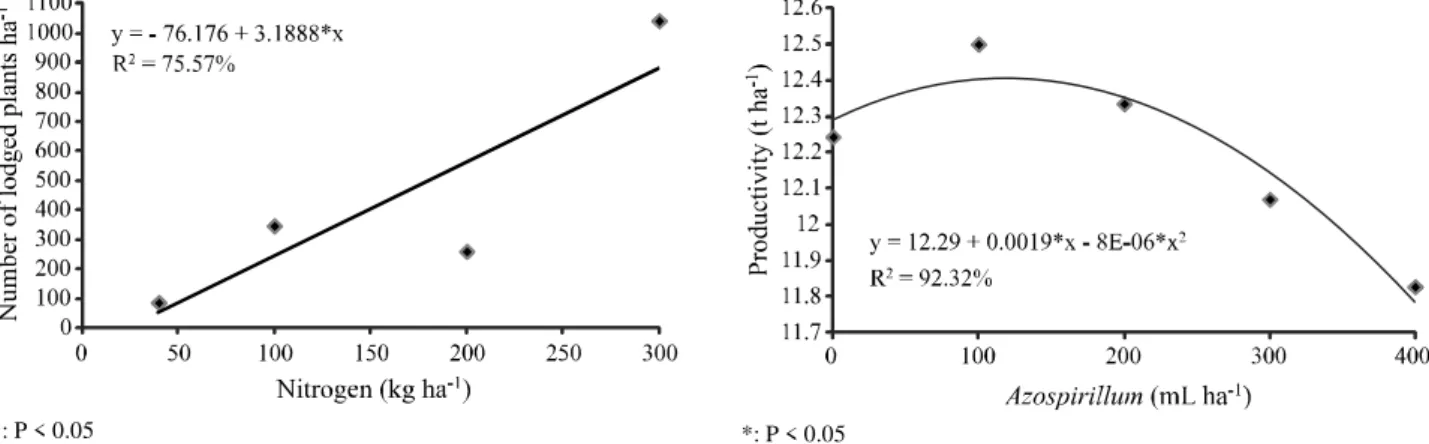
With the absence of inoculation, an increase was seen in the number of lodged maize plants for increases in the nitrogen dose. This increase was at a rate of 160 lodged plants ha-1 for every 50 kg ha-1 of N applied (Figure 1).
It is known that nitrogen fertilisation promotes plant growth, and in the present case it is suggested that with the absence of bacteria, the plants directed a greater proportion of their growth energy to the formation of shoots, in detriment to the root system. For wheat, Zagonel
et al. (2002) state that high doses of nitrogen can result in
lodging due to increased plant height, particularly under adverse weather conditions (strong winds). In contrast, when Azospirillum was applied in the seed furrow, no
Figure 1 - Average number of lodged maize plants (ha-1) for
doses of nitrogen and in the absence ofAzospirillum inoculation
*: P < 0.05
differences were seen in the number of lodged plants with increasing doses of nitrogen (Table 4).
For productivity in the maize, at a dose of 40 kg nitrogen ha-1 there was an increase in crop yield, with a maximum of 12.4 t ha-1, expected with the application of 120 mLAzospirillum ha-1. As of this dose, the response of
the maize to inoculation tended to fall (Figure 2).
With no inoculation, grain yield in the maize was
compromised at doses of 200 and 300 kg nitrogen ha-1.
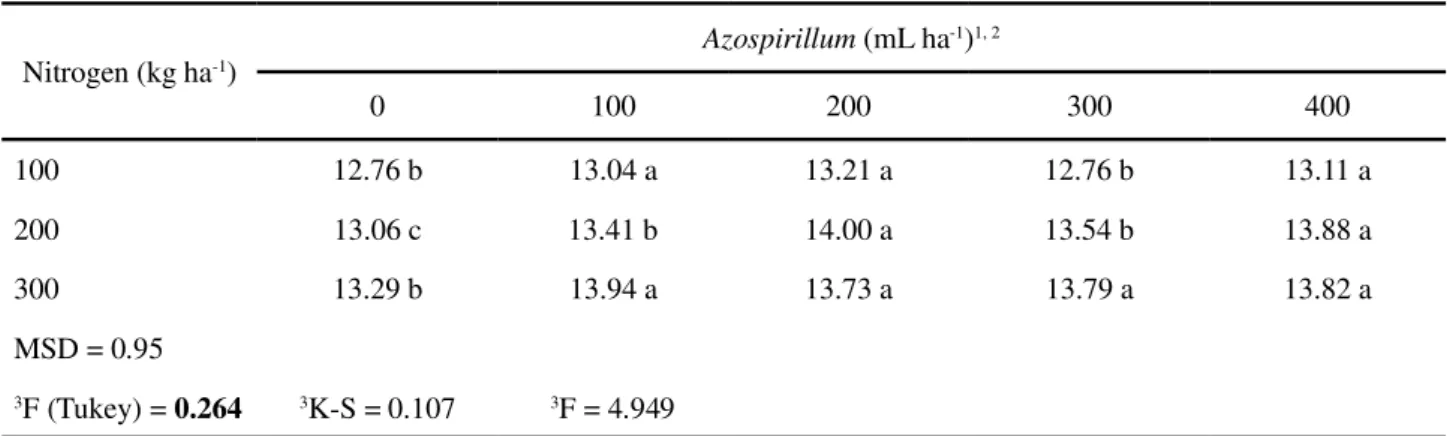
With the application of 100 kg fertilizer ha-1, productivity varied. Lower yields were found for both the absence of inoculant and the application of 300 mLAzospirillum ha-1 in the seed furrow (Table 5).
These results are consistent with studies into the effect of inoculating seeds with bacteria of the genus
Azospirillum on an increase in productivity in maize
(HUNGRIA et al., 2010; JOE et al., 2012.). It can
therefore be inferred, that seed-furrow inoculation is as efficient as inoculation of the seeds in increasing grain production in maize.
This increase in production is related to the phytostimulatory effects of inoculation with
Azospirillum, mainly resulting from the synthesis of
plant hormones (DOBBELAERE; VANDERLEYDEN; OKON, 2003) and the fixation of atmospheric nitrogen (BASHAN; HOLGUIN; BASHAN, 2004) by the bacteria.
For the nitrogen doses of 40, 100, 200 and
300 kg ha-1 under study, increases in productivity of
2.1, 3.5, 7.2 and 4.9% were achieved respectively due to inoculation. The efficiency of applying
Azospirillum to the seed furrow in maize was
also verified by Fallik and Okon (1996) in
light-Figure 2 - Productive performance of maize plants for doses of
Azospirillum with the application of 40 kg nitrogen ha-1
textured soils. According to these authors, the use of inoculants in the furrow resulted in increases of 10% to 14% in crop yield. Moreover, an average
increase of 963 kg grain ha-1 was seen in treatments
where application of the bacteria was carried out in the seed furrow, compared to treatments using conventional inoculation (via seed) (FALLIK; OKON, 1996). Interestingly, even under different experimental conditions, such results demonstrate that the seed-furrow inoculation of maize is an efficient technique.
The advantage of seed-furrow inoculation refers to its practicality in the field (dispensing with any new treatment of the seeds) and a reduction in pesticide incompatibility (which can cause toxicity in the bacteria due to direct contact with other products used to treat the seeds), thereby increasing the number of viable cells per plant. Furthermore, dilution of the inoculant in water for application in the seed furrow improves the distribution of Azospirillum on the seed and in the soil, moving it
away from the surface to where there is less fluctuation of temperature and humidity, so that it is better placed to colonise the roots of the maize plants.
At the highest applied dose of nitrogen (300 kg ha-1), the concentrations of bacteria did not interfere with productivity. The lowest dose of inoculant under
study (equivalent to 2.8 x 10⁵ colony-forming
units per plant) was possibly sufficient to ensure phytostimulation, confirming data in the literature (BENIZRI; BAUDOIN; GUCKERT, 2001; OKON; ITZIGSOHN, 1995). Puente, García and Alejandro
(2009) also found that inoculation withAzospirillum,
regardless of bacterial population, increased maize yield at harvest.
Nitrogen (kg ha-1) Azospirillum (mL ha
-1)1, 2
0 100 200 300 400
100 12.76 b 13.04 a 13.21 a 12.76 b 13.11 a
200 13.06 c 13.41 b 14.00 a 13.54 b 13.88 a
300 13.29 b 13.94 a 13.73 a 13.79 a 13.82 a
MSD = 0.95
3F (Tukey) =0.264 3K-S = 0.107 3F = 4.949
Table 5 - Average grain productivity in maize (t ha-1) for doses ofAzospirillum and nitrogen
1mean values followed by different letters on a line differ by Tukey’s test at 0.05 significance;2data transformed by x;3F (Tukey); K-S; F: statistics
for Tukey’s test for additivity, Kolmogorov-Smirnov test and Levene’s test respectively; values in bold indicate respectively treatments and blocks with additive effects, error normality and homogeneity of variance
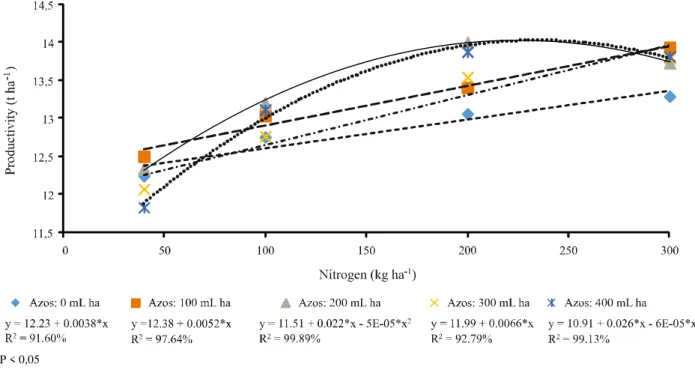
As the supply of nitrogen to the crop increased (up to 300 kg N ha-1), a linear increase was seen in grain production, both for no inoculant and for applications
of 100 and 300 mL inoculant ha-1. The dose of 200 ml
Azospirillum ha-1, in turn, required a smaller amount of N to achieve maximum productivity (225 kg
nutrient ha-1) compared to the greatest concentration
of bacteria, which needed more nitrogen fertilizer (235 kg N ha-1) (Figure 3).
The results shown suggest that even if part of the demand for N of the maize is met by association with diazotrophic bacteria, as indicated by some authors
(EL ZEMRANY et al., 2006; HAGH et al., 2010;
HUNGRIA et al., 2010), reducing the application of
nitrogen fertilisers to the crop is not recommended under the conditions of the Brazilian cerrado region. The explanation is based not only on the increased productivity of inoculated plants in the presence of mineral fertiliser (seen at doses of 100 and 300 mL
inoculant ha-1), but also on a possible interaction
between these factors to promote plant growth.
It is proposed that inoculation withAzospirillum
should not replace nitrogen fertiliser but improve its use, which could result in the same productivity for the crop when subjected to lower levels of nitrogen. However, it should be noted that due to a large demand for N, greater grain productivity and a larger protein content can be obtained in maize by increasing the levels of nitrogen fertiliser, even in plants inoculated with Azospirillum, and that these responses depend
Figure 3 - Regression models adjusted for productivity (t ha-1), for doses of nitrogen andAzospirillum
*: P < 0,05
CONCLUSIONS
1. The dose of 200 mLA. brasilense ha-1 was exceptional
at increasing the production of maize grains;
2. Maintaining the nitrogen dose ensures greater productivity for maize in the cerrado region, even in the presence of bacteria;
3. Seed-furrow inoculation is a viable alternative for the use ofA. brasilense in maize.
REFERENCES
BASHAN, Y.; HOLGUIN, G.; BASHAN, L. E.Azospirillum
-plant relationships: physiological, molecular, agricultural, and environmental advances (1997-2003). Canadian Journal of Microbiology, v. 50, n. 8, p. 521-577, 2004.
BAUDOIN, E. et al. Impact of inoculation with the phytostimulatory PGPR Azospirillum lipoferum CRT1 on the
genetic structure of the rhizobacterial community of field-grown maize.Soil Biology and Biochemistry, v. 41, n. 2, p. 409-413, 2009.
BENIZRI, E.; BAUDOIN, E.; GUCKERT, A. Root colonization by inoculated plant growth-promoting rhizobacteria.
Biocontrol Science and Technology, v. 11, n. 5, p. 557-574,
2001.
BRASIL. Ministério da Agricultura, Pecuária e Abastecimento. Secretaria de Defesa Agropecuária. Portaria nº 4, de 6 de janeiro
de 2010. Regulamento Técnico de Milho. Diário Oficial da União, Brasília, n. 04, seção 01, p. 05, 2010.
CASSÁN, F. et al. Azospirillum brasilense Az39 and Bradyrhizobium japonicum E109, inoculated singly or in combination, promote seed germination and early seedling growth in corn (Zea mays L.) and soybean (Glycine max L.).
European Journal of Soil Biology, v. 45, n. 1, p. 28-35,
2009.
COUILLEROT, O. et al. Assessment of SCAR markers to
design real-time PCR primers for rhizosphere quantification of Azospirillum brasilense phytostimulatory inoculants of maize.Journal of Applied Microbiology, v. 109, n. 2, p. 528-538, 2010.
CREUS, C. M. et al. Nitric oxide is involved in the Azospirillum brasilense-induced lateral root formation in
tomato.Planta, v. 221, n. 2, p. 297-303, 2005.
DOBBELAERE, S.; VANDERLEYDEN, J.; OKON, Y. Plant growth-promoting effects of diazotrophs in the rhizosphere.
Critical Reviews in Plant Sciences, v. 22, n. 2, p. 107-149, 2003.
DU, X. et al. Effects of potassium application on nutrient absorption dynamics,biomass and quality formation of forage maize. Plant Nutrition and Fertilizer Science, v. 13, n. 3, p. 393-397, 2007.
EL ZEMRANY, H.et al. Early changes in root characteristics of maize (Zea mays) following seed inoculation with the
EL ZEMRANY, H.et al. Field survival of the phytostimulator
Azospirillum lipoferum CRT1 and functional impact on maize
crop, biodegradation of crop residues, and soil faunal indicators in a context of decreasing nitrogen fertilisation. Soil Biology and Biochemistry, v. 38, n. 7, p. 1712-1726, 2006.
EMPRESA BRASILEIRA DE PESQUISA AGROPECUÁRIA.
Tecnologias de produção de soja - região central do Brasil 2012 e 2013. Londrina: Embrapa Soja, 2011. 261 p.
FALLIK, E.; OKON, Y. The response of maize (Zea mays) to
Azospirilluminoculation in various types of soils in the field.
World Journal of Microbiology and Biotechnology, v. 12, n. 5, p. 511-515, 1996.
GHOLAMI, A.; SHAHSAVANI, S.; NEZARAT, S. The effect of plant growth promoting rhizobacteria (PGPR) on germination, seedling growth and yield of maize.World Academy of Science, Engineering and Technology, v. 25, p. 19-24, 2009.
HAGH, E. D.et al. The role ofAzospirillum lipoferum bacteria
in sustainable production of maize. International Journal of Food, Agriculture and Environment, v. 8, n. 3-4, p. 702-704, 2010.
HUNGRIA, M. et al. Inoculation with selected strains of
Azospirillum brasilense and A. lipoferum improves yields
of maize and wheat in Brazil.Plant and Soil, v. 331, n. 1-2,
p. 413-425, 2010.
JOE, M. M. et al. Survival of Azospirillum brasilense
flocculated cells in alginate and its inoculation effect on growth and yield of maize under water deficit conditions.
European Journal of Soil Biology, v. 50, p. 198-206, 2012.
NOVAKOWISKI, J. H. et al. Efeito residual da adubação nitrogenada e inoculação deAzospirillum brasilensena cultura
do milho. Semina: Ciências Agrárias, v. 32, p. 1687-1698, 2011. Suplemento 1.
OKON, Y.; ITZIGSOHN, R. The development ofAzospirillum as
a commercial inoculant for improving crop yields.Biotechnology Advances, v. 13, n. 3, p. 415-424, 1995.
PEDRAZA, R. O.et al.Azospirillum inoculation and nitrogen fertilization effect on grain yield and on the diversity of endophytic bacteria in the phyllosphere of rice rainfed crop.
European Journal of Soil Biology, v. 45, n. 1, p. 36-43, 2009.
PUENTE, M. L.; GARCÍA, J. E.; ALEJANDRO, P. Effect of the bacterial concentration ofAzospirillum brasilense in the
inoculum and its plant growth regulator compounds on crop yield of corn (Zea mays L.) in the field.World Journal of Agricultural Sciences, v. 05, n. 5, p. 604-608, 2009. RAAIJMAKERS, J. M.et al. The rhizosphere: a playground and battlefield for soilborne pathogens and beneficial microorganisms.Plant and Soil, v. 321, n. 1-2, p. 341-361,
2009.
RAJ, N. S.et al. Comparative performance of formulations
of plant growth promoting rhizobacteria in growth promotion and suppression of downy mildew in pearl millet. Crop Protection, v. 22, p. 579-588, 2003.
SANTOS, H. G. et al.Sistema brasileiro de classificação de solos. 3 ed. rev. ampl. Brasília: Embrapa, 2013. 353 p. SHAUKAT, K.; AFFRASAYAB, S.; HASNAIN, S. Growth responses of Triticum aestivum to plant growth promoting rhizobacteria used as a biofertilizer. Research Journal of Microbiology, v. 5, n. 10, p. 1022-1030, 2010.
STANCHEVA, I.et al. Effects of inoculation withAzospirillum brasilense on photosynthetic enzyme activities and grain yield in
maize.Agronomie, v. 12, n. 4, p. 319-324, 1992.
ZAGONEL, J.et al. Doses de nitrogênio e densidades de plantas com e sem um regulador de crescimento afetando o trigo, cultivar OR-1.Ciência Rural, v. 32, n. 1, p. 25-29, 2002.
ZILLI, J. E.et al. Inoculação da soja comBradyrhizobium no
sulco de semeadura alternativamente à inoculação de sementes.