Universidade de Lisboa
Faculdade de Ciências
Departamento de Química e Bioquímica
Correction of the ion transport defect in
Cystic Fibrosis by small molecules
Marisa Isabel Lopes de Sousa
Doutoramento em Bioquímica
(Especialidade: Genética Molecular)
Universidade de Lisboa
Faculdade de Ciências
Departamento de Química e Bioquímica
Correction of the ion transport defect in
Cystic Fibrosis by small molecules
Marisa Isabel Lopes de Sousa
Tese co-orientada pela Prof. Doutora Margarida D. Amaral e pelo
Prof. Doutor Karl Kunzelmann e especialmente elaborada
para a obtenção do grau de Doutor em Bioquímica,
especialidade de Genética Molecular
Aos meus pais
e também aos meus avós
Marisa Isabel Lopes de Sousa foi bolseira de doutoramento da Fundação para a Ciência e Tecnologia do Ministério da Ciência, Tecnologia e Ensino Superior
De acordo com o disposto no artigo 40º do Regulamento de Estudos Pós Graduados da Universidade de Lisboa, Deliberação nº 961/2003, publicada no Diário da República – III Série nº 153 – 5 de Julho de 2003, foram utilizados nesta dissertação resultados dos seguintes artigos:
Sousa M, Servidoni MF, Vinagre AM, Bonadia LC, Ramalho AS, Felício V, Ribeiro MA, Uliyakina I, Marson FA, Kmit A, Cardoso SR, Ribeiro JD, Bertuzzo C, Kunzelmann K, Ribeiro AF, Amaral MD. CFTR-mediated Cl- Secretion in
Human Rectal Biopsies as a Robust Biomarker for Cystic Fibrosis Diagnosis and Prognosis (2012). (Submitted to PLoS one).
Servidoni MF, Sousa M, Vinagre AM, Cardoso SR, Ribeiro MA, Meirelles L, Carvalho R, Kunzelmann K, Ribeiro AF, Ribeiro JD, Amaral MD. Rectal Biopsies Procedure in Cystic Fibrosis: Technical Aspects and Patients Perspective for Clinical Trials Feasibility (2012). (Submitted to J Gastroenterology).
Sousa M, Vinagre AM, Servidoni MF, Uliyakina I, Lopes AI, Malaquias J, Castelo HB, Ribeiro AF, Barreto C, Kunzelmann K, Amaral MD. Pre-clinical evaluation of small molecule compounds efficacy to restore mutant-CFTR activity in native tissues (2012). (Manuscript in preparation).
No cumprimento do disposto da referida deliberação, a autora esclarece serem da sua responsabilidade, excepto quando referido em contrário, a execução das experiências que permitiram a elaboração dos resultados apresentados, assim como a interpretação e discussão dos mesmos. Os resultados obtidos por outros autores foram incluídos com autorização dos mesmos para facilitar a compreensão dos trabalhos e estão assinalados nas respectivas metodologias.
Outros artigos publicados em revistas internacionais contendo resultados obtidos durante o doutoramento:
Da Paula AC, Sousa M, Xu Z, Dawson ES, Boyd AC, Sheppard DN and Amaral MD. Folding and Rescue of a Cystic Fibrosis Transmembrane Conductance Regulator Trafficking Mutant Identified Using Human-Murine Chimeric Proteins. J Biol Chem 285: 27033–044 (2010).
Luz S, Kongsuphol P, Mendes AI, Romeiras F, Sousa M, Schreiber R, Matos P, Jordan P, Mehta A, Amaral MD, Kunzelmann K and Farinha CM. The Contribution of Casein Kinase 2 and Spleen Tyrosine Kinase to CFTR Trafficking and Protein Kinase A-Induced Activity. Mol Cell Biol 31: 5517-11
(2011).
Tian Y, Schreiber R, Kongsuphol P, Sousa M, Uliyakina I, Palma M, Faria D, Traynor-Kaplan AE, Fragata JI, Amaral MD and Kunzelmann K. Control of TMEM16A by INO-4995 and other inositolphosphates (2012). (British J Pharmacology – in review).
Almaça J, Faria D, Sousa M, Conrad C, Huber W, Schreiber R, Kunzelmann K, Pepperkok R and Amaral MD. High-content RNAi Screens reveal Phosphoinositides Cycle as a Portential Target for ENaC Inhibition and Treatment of Cystic Fibrosis (2012). (Submitted to Cell).
Moniz S, Sousa M, Moraes B, Mendes AI, Palma M, Barreto C, Fragata José I, Jordan P, Amaral MD and Matos P. HGF treatment enhances apical anchoring and retention of chemically corrected F508del-CFTR via Rac1 signaling (2012). (Submitted to PNAS).
Farinha CM, King-Underwood J, Sousa M, Roxo-Rosa M, Da Paula AC, Correia AR, Williams J, Gomes C, Hirst S and Amaral MD. Folding, traffic and kinetic defects account for F508del-CFTR retention in the endoplasmic reticulum (2012). (Manuscript in preparation).
Ramalho AS, Sousa M and Amaral MD. An unsual splicing pattern resulting from a CFTR missense mutation. (2012). (Manuscript in preparation).
PREFACE
i
Preface
“Woe to that child which when kissed on the forehead tastes salty. He is bewitched and soon must die.” This adage is an early reference from Northen European folklore to the disease today known as Cystic Fibrosis.
Cystic fibrosis is the most common lethal inherited disorder in the Caucasian population and is caused by mutations in the Cystic Fibrosis Transmembrane Conductance Regulator (CFTR) gene. Because CFTR encodes a chloride transporter, the manifestations of this disease are due to abnormalities in salt and water transport in the epithelia of many organs. It causes the body to produce thick, sticky mucus that clogs the lungs, leading to bacterial infections, and blocks the pancreas, stopping digestive enzymes from reaching the intestines. Also most male patients are infertile due to the early blockage of the spermatic duct. Abnormally high salt content in sweat is characteristic of cystic fibrosis and also used to diagnose the disease.
For years “Sixty-Five Roses” has been used by children to name their disease because the words are much easier for them to pronounce. It started in 1965, when a mother discovered her three little boys had the disease. She became a volunteer for the Cystic Fibrosis Foundation and her duty was to call and raise money in supporting research for a cure. Her four-year-old son overheard his mother making many phone calls and told his mom, “I know what you are working for”. She was surprised because she had not told her children what she was doing, nor that they had cystic fibrosis. “What am I working for, Ricky?”, she asked. “You are working for Sixty-Five Roses”, he answered so innocently. She hugged her son tightly so he could not see the tears streaming down her cheeks, “Yes Ricky, I’m working for Sixty-Five Roses” [http://www.65roses.com].
The survival of cystic fibrosis patients has increased constantly during past decades due to improvements in the healthcare and the average life span is now over 25 years. Until very recently the only treatment for a great majority of the patients was symptomatic: daily physiotherapy and mucolytic agents to remove the viscous mucus from the airways, frequent hospitalisation to treat repeated bacterial infections, dietary regulations and pancreatic enzyme supplementation. But in the beginning of the present year the first drug to tackle the basic defect this disease, arising from the joint efforts of both Cystic Fibrosis
PREFACE
ii
Foundation and a pharmaceutical company (Vertex), was released for a minority of cystic fibrosis patients, showing very promising clinical results.
There is currently great demand for a good cystic fibrosis biomarker, since extended newborn screening programs identify increasing numbers of asymptomatic babies as having the disease, which creates major clinical challenges for clinicians to establish a definite cystic fibrosis diagnosis. In the following pages I will show that ex vivo measurements of colonic CFTR function (as chloride channel) can be used as a sensitive biomarker for diagnosis and prognosis of the cystic fibrosis disease. And that, with this same method, we can probably develop a personalized-medicine approach involving those new promising CFTR-modulators.
The rose has become a symbol of hope for those living with cystic fibrosis and my hope is that basic research continues to enlarge our knowledge and keeps leading to innovative therapies that will improve and extend lives.
ACKNOWLEDGMENTS /AGRADECIMENTOS
iii
Acknowlegments / Agradecimentos
À Professora Doutora Margarida Amaral por me ter proporcionado a excelente oportunidade de trabalhar no seu laboratório e por toda a confiança em mim depositada ao longo destes anos. É indubitavelmente um exemplo de dedicação, entusiasmo, determinação e rigor para mim e para a comunidade científica que integra…agradeço também toda a sua paciência e desafios propostos!
To Karl Kunzelmann I am grateful for introducing me to the field of physiology, which I appreciate so much, and for the invaluable support in interpreting results. Also for all the shared discussions and ideas, and for his guidance through science.
Ao ministério da Ciência e Ensino Superior e à Fundação para a Ciência e a Tecnologia, por terem possibilitado a realização deste trabalho, através da concessão da bolsa de doutoramento de que fui recipiente.
À Faculdade Ciências da Universidade de Lisboa e ao Instituto Nacional de Saúde Dr. Ricardo Jorge (INSA) por me acolher durante este projecto e pelas condições necessárias à sua realização. Ao Departamento de Genética, na pessoa do Doutor João Lavinha por me ter recebido neste departamento, sempre com grande entusiasmo e interesse no trabalho desenvolvido.
O doutoramento acaba por ser uma jornada em que as pessoas que vão estando ao nosso lado vão sendo sempre um pouco mestres do nosso caminho. Assim, quero agradecer a todos os colegas e amigos com que me fui cruzando e partilhando ideias desde a minha entrada no INSA em 2005… obrigada a todos pela vossa força, apoio, ideias e ensinamentos…ao André e à Ana Carina que me acolheram de braços abertos e que, para além do Manual de Higiene e Segurança, me transmitiram muitos ensinamentos científicos. Igualmente à Filipa (a minha “mãe” emprestada, cujo apoio sempre foi fundamental), à Anabela (que é a madrinha e a voz da consciência) e ao Carlos (ao professor que tem muito para ensinar), que fizeram sempre parte do caminho de uma forma mais consolidada e sapiente. To Toby for all the shared discussions about physiology and for seeing “coisinhas” at the cell culture…to Pedro for all the dialogues about science and support.. and to Luka for its valuable points of view and specially for help with the review of parts of this thesis! Marta e Inna, pela vossa amizade! Às sempre lindas Joana Raquel e Joana Almaça…e aos nossos primeiros passos em Regensburg..e igualmente ao René e à Joana
ACKNOWLEDGMENTS /AGRADECIMENTOS
iv
Garcia! Also a big “thank you” to Rainer and Ji that taught me some much about Ussing chambers! Ao Simão.. como poderia não falar de ti..?..afinal fomos sempre seguindo os caminhos da ciência lado a lado… à Verónica, cujo todo o esforço e dedicação estão também representados aqui…à Mónica e à Susana que foram também um apoio importante com toda a sua alegria, ao Mário pelo espírito encantor e ao Francisco, que toca maravilhosamente! Ainda no Departamento de Genética, quero agradecer ao Zé Manel pelo seu apoio, e ao Paulo pelas discussões sobre imunofluorescências e revistas científicas…! Quero deixar também uma palavra especial de agradecimento e reconhecimento a todos os colegas na UniCamp…pois sem eles este trabalho não seria possível: ao Fernando, ao Dirceu, à Maria Ângela, à Lu e à Carmen, obrigada por me proporcionarem as condições necessárias à realização deste trabalho e por partilharem os seus resultados… À Fátima um muito obrigado do fundo do coração…é também uma força da natureza que inspira este trabalho… à Dri por toda a amizade, apoio e trabalho científico… ao Arthur (e à sua família) e à D. Neide também pela amizade e apoio.
Um muito obrigado muito grande a todos os doentes que participaram corajosa e voluntariamente neste trabalho…que visitaram o laboratório e que tornam este trabalho real!
Não posso deixar de expressar a minha gratidão aos meus amigos…aos da faculdade…queridas Inês e Patrícia…aos da tuna… aos lindos Clone e Zé Panado… às lindas Sylvie e Inês…aos padrinhos Quim e Biseu…aos afilhadinhos e todos os “filhotes”...à de Benavente… e de sempre... querida amiga irmã, companheira e mais que tudo, Filipa..tu estás sempre aqui!
Quero sobretudo agradecer a quem me torna quem sou…às pessoas mais especiais da minha vida…à minha família…! A todos sou grata eternamente, mas vou deixar um xi-coração às minhas ti-tias que me apoiaram nestas fases complicadas…à tia Rosário e à tia Nã…e aos seus filhotes (meus priminhos queridos Ricky, Caty e Filipe)… à Marisinha que é a felicidade pura…também ao Doggie e a Doggita, que estiveram sempre presentes!
Ao meu maninho André, que é também a boa disposição e a simplicidade em pessoa…adoro-te e estás sempre comigo! A todos os meus avós e aos meus pais dedico este trabalho… em especial aos meus pais, por não haver palavras que expressem o que significam para mim. Pelo vosso amor, compreensão, apoio, paciência e confiança…por estarem sempre ao meu lado…
TABLE OF CONTENTS
v
Table of Contents
PREFACE I
ACKNOWLEGMENTS / AGRADECIMENTOS III
SUMMARY IX RESUMO XII ABBREVIATIONS XVII I. GENERAL INTRODUCTION 1 1 Cystic Fibrosis 3 1.1 Historic Introduction 3 1.2 Clinical Phenotypes 4
1.3 Diagnosis & Prognosis 5
1.3.1 Sweat-test 8
1.3.2 Genetic Testing 9
1.3.3 Nasal Potential Difference 9
1.3.4 Intestinal Current / Voltage Measurements 10
1.3.5 Neonatal Screening 11
1.4 CFTR-related Disorders 12
2 Molecular Basis of Cystic Fibrosis 13
2.1 CFTR Gene 13
2.1.1 Frequencies and Distribution of CFTR Mutations 13
2.1.2 Functional Classes of CFTR Mutations 14
2.2 CFTR Protein 15
2.2.1 Structure 15
2.2.2 Biosynthesis, Degradation and Localization 17
2.3 CFTR Function as a Chloride Channel 19
2.4 CFTR as Regulator of Epithelial Ion Transport 21
2.4.1 Sweat Gland 22
2.4.2 Airways 22
2.4.3 Gastrointestinal Tract 23
2.5 Other CFTR Functions 26
3 Cystic Fibrosis Therapies 28
3.1 The “Bypass” Approach 28
3.2 Mutation-Specific Approaches 29
3.2.1 Preclinical functional readouts to assess the activity of CFTR-modulators 32 3.2.2 Clinical trials: CFTR biomarkers and outcome measures 33
4 Objectives of the present work 34
II. MATERIALS & METHODS 35
1 Clinical Parameters 37
1.1 Subjects 37
1.2 Clinical Assessment 37
1.3 Shwachman-Kulczycki scores 37
1.4 Pulmonary Function 38
1.5 Questionnaire used for patients’ assessment of the rectal biopsy
TABLE OF CONTENTS
vi
2 Laboratorial Diagnosis Techniques 41
2.1 CFTR Genotyping 41
2.2 Sweat-test 41
2.3 Fecal Elastase Test 42
2.4 Rectal Biopsies Procedure 42
2.4.1 Sedation 43
2.4.2 Bowel Preparation 43
2.4.2 Macroscopic Evaluation and Preparation 44
2.4.3 Histology Preparations 44
3 Cell Culture Techniques 46
3.1 Culture Conditions for BHK cells 46
3.2 Organotypic Cultures of CFBE41o- Cells Stably Expressing F508del- and
wt-CFTR 46
3.3 Isolation, Production and (organotypic) Culture of Primary Human
Bronchial Epithelial Cells 46
4 Functional Methods 49
4.1 Iodide Efflux 49
4.2 Micro-Ussing chamber Experiments 49 4.2.1 Protocol for the Assessment of cAMP-mediated CFTR Function in Human
Rectal Biopsies 50
4.2.2 Assessment of CFTR Cl- Secretion in Organotypic Cultures Following Small
Molecules Treatment 51
5 Biochemical and Cell Biology Techniques 52
5.1 Western blot 52
5.2 Immunohistofluorescence 53
6 Statistical analyses 54
III. RESULTS & DISCUSSION 57
Chapter 1 Measurements of CFTR-mediated Cl- Secretion in Human Rectal Biopsies Constitute a Robust Biomarker for Cystic Fibrosis
Diagnosis and Prognosis 59
1 Summary 59
2 Introduction 60
3 Results 62
3.1 Subjects under study and overview of clinical data 62 3.2 Assessment of CFTR-mediated Cl- secretion in rectal biopsies 63 3.3 Confirmation / Exclusion of a CF diagnosis and correlation with genotypes 65 3.4 Correlation between CFTR-mediated Cl- secretion and clinical outcomes 69 3.5 Evaluation of the best tool for discriminating CF patients from Non-CF
individuals 75
4 Discussion 76
Chapter 2 Rectal Biopsies Procedure in Cystic Fibrosis: Technical Aspects and Patients Perspective for Clinical Trials Feasibility 83
1 Summary 83
2 Introduction 84
3 Results 86
TABLE OF CONTENTS
vii 3.2 Histological and macroscopic evaluation of rectal tissues and biochemical
analysis 90
3.3 Patient safety and comfort with overall procedure 92
4 Discussion 95
Chapter 3 Correction of the Ion Transport Defect in Cystic Fibrosis by
Small Molecules 99
1 Summary 99
2 Introduction 100
3 Results 103
3.1 Channel Activity Rescue of Heterologous F508del-CFTR by VRT-325, VRT-532, VRT-640, C4a and Low Temperature in BHK cells 104 3.2 Channel Activity Rescue of Heterologous F508del-CFTR by VRT-325, C4a and
Low Temperature in Polarized CFBE cells 106
3.3 Channel Activity Rescue of Endogenous F508del-CFTR by VRT-325, C4a and VX-809 in Human Primary Bronchial Epithelial Cells 107 3.4 Channel Activity Rescue of Endogenous F508del-CFTR by VRT-325, C4a and
VRT-532 on Human Rectal Biopsies Ex vivo 110
4 Discussion 113
IV. CONCLUSIONS & PERSPECTIVES 119
V. REFERENCES 127
SUMMARY
ix
Summary
Cystic fibrosis (CF) is the most common life-shortening genetic disorder amoung Caucasians, affecting about 1 in 2500-6000 live births and with a carrier frequency of 1 in 25 individuals. More than 1900 CF mutations have already been reported on the Cystic Fibrosis Transmembrane Conductance Regulator (CFTR) gene, but one single mutation, named F508del, is responsible
for 70% of CF chromosomes worldwide.
CFTR is expressed at the apical membrane of epithelial cells to control salt and water transport. Clinically, CF is characterized by multiple manifestations in different organs, but is dominated by the respiratory disease, the main cause of morbidity and mortality. Bacterial infections, especially by Pseudomonas aeruginosa, cause inefficient mucociliary
clearance, originating thick mucus, and recurrent infections give rise to an exacerbated inflammatory response contributing to impairment of respiratory function and ultimately to death. Other CF classical symptoms include exocrine pancreatic insufficiency (85%), intestinal obstruction (meconium ileus in 15-20% of CF newborns and/or distal intestinal obstruction syndrome at a later age), elevated sweat electrolytes and male infertility (95%). Besides this classic picture of the CF disease, there is a minority of patients presenting non-classic phenotypes and being diagnosed from child to adulthood. Moreover the increasing numbers of asymptomatic patients identified in recent newborn CF screens have posed major challenges to clinicians for the establishment of CF diagnoses, prognosis and adequacy of therapeutics.
High-throughput screens have identified several novel small molecules with potential to treat the basic defect in CF and some are starting hit the clinical setting. These include correctors (like VX-661 and VX-809-Lumacaftor, both in Phase IIb clinical trial) that partially rescue the trafficking defect of F508del-CFTR, and a potentiator (like VX-770-, Ivacaftor (FDA-approved drug) that corrects the gating defect of G551D-CFTR, which underwent pre-clinical validation in CF airway primary cultures. However, to accelerate the entry of novel compounds into the clinic, the respective mechanism of action should be established, which usually requires studies in cellular systems with heterologous expression. Comparative efficacy assessment between heterologous expression systems and airway primary cutures/native human
SUMMARY
x
tissues is thus of the ultimate importance before CFTR modulators reach the clinical setting.
In the first part of this work, we aimed to further establish measurement of CFTR function as a sensitive and robust biomarker for diagnosis and prognosis of CF. To this end, we assessed cholinergic and cAMP-CFTR-mediated Cl- secretion in 524 freshly excised rectal biopsies from
118 individuals, including patients with confirmed CF clinical diagnosis (n=51), individuals with clinical CF suspicion (n=49) and age-matched non-CF controls (n=18). Conclusive measurements were obtained for 96% of cases. Patients with "Classic CF", presenting earlier onset of symptoms, pancreatic insufficiency, severe lung disease and were found to lack CFTR-mediated Cl
-secretion (≤5%). Individuals with milder CF disease presented residual CFTR-mediated Cl- secretion (10-57%), and non-CF controls show CFTR-mediated Cl
-secretion above 30-35%. Moreover, this data was well correlated with various clinical parameters and proved to be the best discriminator among Classic/Non-Classic CF and non-CF groups. Determination of CFTR-mediated Cl- secretion in rectal biopsies is demonstrated here to be a sensitive,
reproducible and robust predictive biomarker for the diagnosis and prognosis of CF.
In the second part, our goals were: first, to evaluate technical aspects of this procedure regarding the viability of the rectal specimens for ex vivo
bioelectrical and biochemical laboratory analyses; and secondly, to evaluate the overall assessment (comfort, invasiveness, pain, sedation requirement, etc) of the rectal biopsy procedure from the patients perspective, in order to assess its feasibility as an outcome measure for (pre-)clinical trials. Regarding the technical aspects of biopsing, we compared three solutions for bowel preparation (NaCl 0.9%, glycerol 12% and oral mannitol), and two biopsy forceps (standard and jumbo) in 580 rectal specimens. As to the assessment of the overall rectal biopsy procedure, telephone surveys were applied to 75 individuals. Our data shows that disruption and friability of the specimens obtained correlate with their transepithelial resistance and are also influenced by the solution used for bowel preparation and biopsy forceps, with NaCl 0.9% proving to be the most compatible with the analysis and jumbo the best forceps. The great majority of the individuals (76%) did not report high levels of discomfort due to the short time (max 15 min) and relatively painless procedure (79%). Moreover, this procedure was shown to be well tolerated by
SUMMARY
xi patients with or without sedation: most (53%) accept repeating it four more times, demonstrating the feasibility of the current approach as an outcome measure for (pre-)clinical trials.
Finally, in the last chapter of this thesis we proposed to evaluate the impact of different small molecules correctors and potentiators on CFTR-protein maturation and Cl- channel activity in heterologous cellular systems,
so as to better understand their mechanism of action; and also to comparatively determine efficacy of those compounds in modulating CFTR activity in those systems and directly in primary cultures of human airway cells/and in native human tissues ex vivo. Functional data for F508del-CFTR
rescue by iodide efflux on heterologous systems (BHK cells) shows that VRT-325, C4a, VRT-640 and VRT-532 are all able to rescue CFTR function to at varying levels (26, 33, 19 and 35%, respectively of wt-CFTR function), with both VRT-325 and C4a having additive effects to the low temperature. On polarized F508del-transduced CFBE cells, VRT-325 and C4a treatment resulted 3.32 and 8.5% in CFTR function, respectively, relative to wt-CFTR monolayer cells. In contrast, preliminary data resulting from the functional analysis conducted in primary airway cells indicates that the efficiency of the correctors VRT-325 and C4a is reduced (4.18% and 3.16% of wt-CFTR function, respectively). Remarkably, VX-809 treatment resulted in a ~5.7-fold increase in CFTR-mediated Cl- secretion, which represents a recovery of ~16%
of the CFTR function observed in primary non-CF HBE monolayers cells. Preliminary results in biopsies from F508del/F508del and F508del/G542X patients did not provide evidence for a clear effect for VRT-325 and nor C4a correctors, but showed a modest effect for a novel corrector compound (TS-01-02-D8) which we recently identified. All together, these results suggest that the effects of a given compound in rescuing F508del-CFTR activity in heterologous systems are poorly predictive of its rescuing capacity in native tissues, which indicates that further pre-clinical validation in native tissues ex vivo is highly
recommended.
Keywords: CFTR function; CF biomarkers; outcome measures innovative
therapeutics; diagnosis-algorithm prediction; patient comfort; CFTR modulators; rectal biopsies; cellular systems.
RESUMO
xii
Resumo
A Fibrose Quística (FQ) é a doença autossómica recessiva letal mais comum na população Caucasiana, afectando cerca de 1 em 2500-6000 nados vivos, dependendo da região geográfica, e com uma frequência de portadores de 1 em cada 25 indivíduos. Esta doença é causada por mutações no gene
CFTR (do inglês Cystic Fibrosis Transmembrane Conductance Regulator)
localizado no cromossoma 7. Até à data, foram já descritas mais de 1900 mutações neste gene. No entanto, uma única mutação denominada por F508del (representando a deleção do aminoácido fenilalanina na posição 508 da proteína) é responsável por 70% dos cromossomas FQ mundiais. A proteína CFTR é expressa na membrana apical das células epiteliais onde funciona como um canal de cloreto (Cl-), regulando o transporte de sais e de água.
Clinicamente, a FQ é caracterizada por múltiplas manifestações em diferentes órgãos, sendo contudo a doença a nível pulmonar a principal causa de morbilidade e mortalidade. A desidratação das vias respiratórias e a produção de secreções brônquicas extremamente viscosas devido a infecções bacterianas de repetição e persistentes, levam a um transporte/limpeza muco-ciliar ineficiente o que resulta na obstrução das glândulas exócrinas e, consequentemente, das vias respiratórias. Estas infecções bacterianas contribuem ainda para uma resposta inflamatória exacerbada que, por sua vez, origina o agravamento da insuficiência respiratória e, finalmente, à morte. Outros sintomas clássicos da FQ incluem insuficiência pancreática exócrina (85%), obstrução intestinal (íleo meconial em 15-20% dos recém-nascidos e/ou síndrome de obstrução intestinal distal na idade adulta), infertilidade masculina (95%) e concentração elevada de electrólitos no suor (característica utilizada no principal teste de diagnóstico).
A apresentação dum quadro clínico grave, em conjunto com a demonstração de que a proteína CFTR é disfuncional, no geral, através de dois testes do suor alterados ou da detecção de duas mutações no gene CFTR, permitem o diagnóstico da maioria dos doentes ainda na primeira infância. No entanto, nem todos os doentes apresentam este quadro clássico da doença, existindo um grupo de doentes que apresenta fenótipos não-clássicos, resultando no seu diagnóstico tardio, o que pode prejudicar o seu tratamento. Mais recentemente, os números crescentes de doentes FQ assintomáticos, identificados através dos programas de rastreio neonatal, têm colocado
RESUMO
xiii grandes desafios clínicos no que toca ao estabelecimento do diagnóstico FQ definitivo, prognóstico e adequadas estratégias terapêuticas. É crucial implantar um método que permita discriminar estes dois grupos de doentes através do seu diagnóstico diferencial.
A FQ apesar de todos os avanços clínicos e científicos é actualmente ainda uma doença letal, sendo a esperança média de vida acima dos 25 anos. Felizmente, nos últimos anos têm vindo a ser identificadas, em screens de alto rendimento, diversas pequenas moléculas com potencial terapêutico para corrigir o defeito básico na FQ estando já algumas aprovadas para uso clínico. Como exemplo, existem: i) os compostos “correctores” como o 661 e o VX-809-Lumacaftor (ambos em ensaio clínicos de fase IIb) que visam corrigir os defeitos básicos de folding e tráfego da proteína mutada, F508del-CFTR; e b) os compostos “potencializadores” (como o VX-770-Ivacaftor (recentemente aprovado pela Food and Drug Administration (FDA), nos Estados Unidos da América) que pretendem restaurar o defeito de gating do canal de Cl- mutado,
G551D-CFTR. Para poderem entrar em ensaios clínicos, todos estes compostos sofreram uma pré-validação clínica em culturas primárias de células epiteliais brônquicas humanas. No entanto, para acelerar a entrada de novos compostos em ensaios clínicos, os respectivos mecanismos de acção destas moléculas deverão ser determinados, o que, regra geral, exige estudos em sistemas celulares de expressão heteróloga. Deste modo, estudos que pretendam comparar a avaliação da eficácia destes compostos em sistemas de expressão heteróloga e em culturas primárias ou em tecidos nativos humanos são da máxima importância.
A primeira parte deste trabalho procura consolidar a medição da função do canal CFTR como um marcador biológico sensível e robusto para o diagnóstico e prognóstico da doença FQ. Para este fim, avaliaram-se as secreções de Cl- através da CFTR com estimulação colinérgica e mediada pelo
AMP cíclico (cAMP) em 524 biópsias rectais de 118 indivíduos. Este estudo incluiu pacientes com diagnóstico clínico de FQ (n = 51), indivíduos com suspeita clínica de FQ (n = 49) e indivíduos controlos não-FQ (n = 18). No decorrer do estudo, foram obtidos resultados bioeléctricos conclusivos para 96% dos casos. Nos doentes clinicamente caracterizados com a forma clássica da doença, ou seja, apresentando um início mais precoce dos sintomas clínicos, insuficiência pancreática e doença pulmonar grave, observou-se uma ausência de secreção de Cl- mediada pela CFTR ou apenas existência de níveis
RESUMO
xiv
muito baixos (≤ 5%). Para os indivíduos que apresentavam uma doença mais suave (não-clássica) e um diagnóstico mais tardio, foi possível a detecção de uma secreção de Cl- residual mediada pela CFTR (10-57%) e, no que diz
respeito aos indivíduos controlo não-FQ, a secreção de Cl- mediada pela CFTR
situou-se acima dos 30-35%. Mais ainda, estes dados bioeléctricos evidenciaram boas correlações com os diversos parâmetros clínicos estudados, demonstrando constituír o melhor discriminador entre as formas clássica e não clássica da doença e estes e os indivíduos não-FQ. Assim, podemos concluir que a determinação da secreção de Cl- mediada pela CFTR em
biópsias rectais é um marcador biológico sensível, reprodutível e robusto, e ainda preditivo prognóstico da FQ.
O foco da segunda parte deste trabalho doutoral foi, por um lado, avaliar os aspectos técnicos deste procedimento em relação à viabilidade das amostras rectais para a realização das análises laboratoriais bioeléctricas e bioquímicas ex vivo; e, por outro lado, avaliar globalmente o procedimento de
sigmoidoscopia para recolha da biópsia rectal (conforto, grau de invasão, dor, requisito de sedação, etc) sob a perspectiva do paciente, com o objectivo último de estimar a sua viabilidade como forma para avaliar a eficácia terapêutica de novas pequenas moléculas em ensaios (pré-)clínicos.
Quanto aos aspectos técnicos deste procedimento, foram comparadas três soluções para a preparação intestinal (cloreto de sódio 0,9%, glicerol 12% e manitol oral) e duas pinças de biópsia (padrão e jumbo) em 580 biópsias rectais. Os dados recolhidos mostram que a integridade e friabilidade dos tecidos obtidos está correlacionada com a sua resistência transepitelial, ou seja, com a sua viabilidade, sendo que quanto maior a integridade e menor friabilidade da biópsia, maior a resistência observada. Estas características dos tecidos colhidos são influenciadas pela solução utilizada durante a preparação intestinal e pinça de biópsia, sendo a preparação com cloreto de sódio e a pinça jumbo as que permitem uma maior viabilidade do tecido, logo mais compatíveis com a análise bioeléctrica .
Quanto à avaliação global do procedimento de colheita da biópsia rectal, foram feitas entrevistas telefónicas a 75 indivíduos que tinham sido submetidos ao procedimento de sigmoidoscopia e colheita de biópsia. A grande maioria dos indivíduos (76%) não relatou níveis elevados de desconforto devido ao curto período de tempo requerido (máximo 15 minutos) e ao facto deste procedimento ser praticamente indolor (79%). Além disso, este exame mostra
RESUMO
xv ser bem tolerado pelos pacientes com ou sem sedação visto que maioria dos entrevistados (53%) aceitam repeti-lo mais quatro vezes, demonstrando a viabilidade desta abordagem como uma ferramenta para medir em ensaios (pré-)clínicos, a eficácia de novas moléculas com potencial terapêutico para a FQ.
Finalmente, no último capítulo desta tese, avaliou-se o impacto de diferentes pequenas moléculas correctoras e potencializadoras da maturação e função da proteína CFTR mutada em sistemas celulares de expressão heteróloga, de modo a compreender melhor seu mecanismo de acção. Os dados funcionais resultantes da técnica de efluxo de iodeto em células BHK (sistema de expressão heteróloga) que expressam estavelmente a proteína mutante, F508del-CFTR, mostram que os compostos VRT-325, C4a, VRT-640 e VRT-532 são capazes de resgatar a função CFTR em níveis diferentes: 26, 33, 19 e 35% da função observada em wt-CFTR, respectivamente. Verificou-se ainda que tanto o VRT-325 como o C4a têm efeitos aditivos ao tratamento com baixa temperatura. Fez-se também uma análise comparativa da eficácia de tais compostos na actividade moduladora da CFTR em sistemas heterológos, em culturas primárias de células brônquicas humanas e em tecidos nativos (biópsias rectais). Em células CFBE transduzidas com um vector viral que expressa o mutante F508del-CFTR e polarizadas, o tratamento com os compostos VRT-325 e C4a resultou na correcção de 3.32 e 8,5% da função observada em wt-CFTR, respectivamente. Em contraste, os dados preliminares resultantes da análise funcional em células primárias do epitélio brônquico indicam que a eficiência dos correctores VRT-325 e C4a é reduzida neste sistema (4.18% e 3.16% da função observada em wt-CFTR, respectivamente). Notavelmente, o tratamento com o corrector VX-809-Lumacaftor resultou num aumento de cerca de 6 vezes da secreção de Cl- mediada pela CFTR
relativamente a células CFBE F508del-CFTR controlo, este valor representa uma recuperação de ~16% da função da proteína CFTR observada em células primárias brônquicas não-FQ. No que diz respeito às medições da secreção de Cl- mediada pela CFTR em biópsias rectais de pacientes F508del/F508del e
F508del/G542X, os resultados preliminares desta pesquisa não evidenciam um efeito claro dos correctores VRT-325 e C4a, mas mostram um efeito modesto para um outro composto corrector (TS-01-02-D8), recentemente identificado noutros estudos realizados no nosso laboratório. Os resultados apresentados para os compostos aqui estudados sugerem que a análise da
RESUMO
xvi
correcção da actividade da proteína mutante F508del-CFTR como canal de Cl
-em sist-emas heterólogos se revela pouco preditiva da sua capacidade real de restaurar esta função em culturas primárias e em tecidos nativos. Indicando, assim que a validação pré-clínica dos moduladores do canal CFTR em tecidos nativos (ex vivo) é de extrema importância para a avaliação correta do seu
potencial interesse terapêutico.
No global, o trabalho realizado nesta tese doutoral permitiu validar técnica de análise funcional da proteína CFTR como canal de cloreto em biópsias rectais com meio de diagnóstico discriminante e correcto prognóstico da doença FQ. Esta técnica revela-se ainda de grande interesse para a validação pré-clínica de terapias com novas moléculas com potencial para corrigir ou potencializar a função da CFTR em doentes FQ. Em conjunto, estes resultados poderão no futuro permitir um diagnóstico correcto da FQ e antecipar a validação de novas formas eficazes de terapia, o que tem uma importância crucial para a escolha da terapêutica mais eficaz e, consequentemente, para a melhoria de vida dos doentes com FQ.
Palavras-chave: função da CFTR; marcadores biológicos na FQ; outcomes da
eficácia terapêutica; ferramentas preditivas do diagnóstico FQ; conforto do paciente; moduladores da CFTR; biópsias rectais; sistemas celulares.
ABBREVIATIONS
xvii
Abbreviations
1-EBIO 1-ethyl-2-benzimidazolone aa Amino acid
ABC ATP-binding cassette
ABPA Allergic bronchopulmonary aspergillosis
ACTV Amphotericin, ceftazidime, tobramycin, and vancomycin (antibiotics cocktail)
ALI Air liquid interface ASL Airway surface liquid ATP Adenosine 5’Triphosphate BHK Baby hamster kidney cell line BMI Body mass index
C4a N-[2-(5-Chloro-2-methoxy-phenylamino)-4’-methyl- [4,5’]bithiazolyl-2’-yl]-benazmide
Ca2+ Calcium ion
CaCC Calcium-activated Chloride Channel cAMP cyclic Adenosine 5’Monophosphate
CBAVD Congenital bilateral absence of the vas deferens CCH Carbachol
CF Cystic fibrosis
CFBE41o- Cystic fibrosis human bronchial cell line
CFTR Cystic Fibrosis Transmembrane Conductance Regulator CFTR Gene encoding CFTR
CFTR-RD CFTR-Related disorders CF-RDM CF-related diabetes mellitus Cl- Chloride ion
DAPI 4’,6-diamidino-2-phenylindole dihydrochloride DIOS Distal intestinal obstruction syndrome
DMSO Dimethyl sulfoxide DTT Dithiothreitol
EDTA Ethylenediamine tetraacetic acid ENaC Epithelium Sodium Channel ER Endoplasmic reticulum
ERAD Endoplasmic reticulum associated degradation ERQC Endoplasmic reticulum quality control
FDA Food and Drug Administration FEE Fecal Elastase E1
ABBREVIATIONS
xviii
FRT Fisher rat thyroid cell line Fsk Forskolin
FVC Forced vital capacity GI Glucose intolerance GSH Glutathione
H+ Hydrogen ion
HBE Human Bronchial Epithelial cells HCO3- Bicarbonate
Hdj Human DnaJ homologue HE Heamatoxilin-Eosin
HEPES N-(2-hydroxyethyl)-piperazine-N-(2-etanesulphonic acid) HPOA Hypertrophic pulmonary osteoarthritis
Hsp Heat shock protein
HTS High Throughput Screening IBMX 3-isobutyl-1-methylxanthine IRT Immunoreactive trypsinogen Isc Short-circuit current
K+ Potassium ion
LT Low temperature (26ºC) MI Meconium ileus
MoA Mechanism of Action
MSD Membrane-spanning domain Na+ Sodium ion
NBD Nucleotide binding domain NH3 Na+/H+ exchanger
NHERF1 Na+/H+ exchanger regulatory factor isoform-1 NKCC1 Na+-K+-2Cl- cotransporter
NMD Non-sense mediated decay NPD Nasal Potential Difference
ORCC Outwardly Rectifying Chloride Channel PCL Periciliary layer
PBS Phosphate buffered saline PDE Phosphodiesterases PGE Prostaglandins PK Protein kinase
PI Pancreatic Insufficiency PS Pancreatic Sufficiency
PTC Premature termination codon
PTC124 (3-[5-(2-fluorophenyl)-[1,2,4]oxadiazol-3-yl]-benzoic acid RD Regulatory domain
ABBREVIATIONS
xix ROMK Renal outer medullary K+ channel
RT Room Temperature Rte Transepithelial resistance SCFA Short-chain fatty acids SDS Sodium Dodecyl Sulfate SLC26 Solute carrier 26 family SK (score) Shwachman-Kulczycki (score)
SNARE Soluble NSF Attachment Protein Receptor SOP Standardized operating procedure
SPD Sweat potential difference TMAO Trimethylamine-N-oxide
Tris-HCl Tris(hydroxymethyl)aminomethane-hydrochloric acid Ubc Ubiquitin-conjugating enzymes
UPP Ubiquitin Proteasome Pathway UTP Uridine 5’Triphosphate
VRT-325 4-cyclohexyloxy-2-{1-[4-(4-methoxy-benzenesulfonyl) Piperazin-1-yl]ethyl}quinazoline VRT-532 4-methyl-2-(5-phenyl-1H-pyrazol-3-yl)-phenol VRT-640 2-{1-[4-(4-chloro-benzensulfonyl)-piperazin-1-yl]-ethyl} -4-piperidin-1-yl-quinazoline Vte Transepithelial voltage
% v/v Percentage expressed in volume/volume WB Western blot
wt-CFTR Wild-type CFTR
G e n e ra l In tr o d u c ti o n C y s ti c F ib ro s is 3
1 Cystic Fibrosis
1.1 Historic Introduction
Cystic fibrosis (CF) is the most common life-shortening genetic disorder amoung Caucasians, affecting about 1 in 2500-6000 live births and with a carrier frequency of 1 in 25 individuals (Collins, 1992).
Although first medical reports of CF symptoms (e.g. meconium ileus) date
back to the mid 17th century, CF as a unique disorder probably remained
unrecognized in the late 1930’s. In 1936, Fanconi (Switzerland) described the disease as “muskoviszidose” (German term that means “thickened mucus”)
and in 1938 Dorothy Anderson (US) gave the first clear pathophysiological description of CF and named it as “cystic fibrosis of the pancreas” (Anderson 1938).
Almost a decade later, while Anderson and Hodges deduced that CF should be an autosomal recessive disease (Anderson & Hodges, 1946), Sydney Faber observed that “a generalised state of thickened mucus” was the main cause of CF morbidity and mortality (Farber, 1943).
During the 1950’s, Paul Di Sant’Agnese reported a major clinical finding: the identification of an increased salt content in the sweat of CF patients; which allowed the establishment of the sweat chloride test as a diagnostic tool that is still used today (Di Sant’Agnese et al. 1953).
During the 1980’s, Quinton and Bijman developed work focused on the ducts of sweat glands that explained the Cl- impermeability in these epithelial
cells (Quinton & Bijman, 1983). It was also shown that the basic electrolytic defect was localised in the apical membrane of CF epithelial cells with diminished chloride (Cl-) and increased sodium (Na+) transport in CF airways
(Knowles et al. 1981, 1986; Boucher et al. 1986; Frizzell et al. 1986). Finally in 1989 by the joint efforts of three laboratories, the gene was cloned and the protein encoded named as Cystic Fibrosis Transmembrane Conductance Regulator (CFTR) (Kerem et al., 1989; Riordan et al., 1989; Rommens et al., 1989), later shown to function as a Cl- channel (Bear et al., 1992; Welsh &
Smith, 1993).
The high frequency of CF and F508del mutation (responsible for 70% of CF chromosomes worldwide) in the Caucasian population suggests that mutant CF alleles confer a selective advantage. There is a hypothesis that
C y s ti c F ib ro s is G e n e ra l In tr o d u c ti o n 4
F508del heterozygotes may be protected against CFTR-mediated secretory diarrhoea induced by the cholera toxin, typhoid fever or other enterotoxins, which is supported by experimental results (Gabriel et al. 1994; Pier et al., 1998).
1.2 Clinical Phenotypes
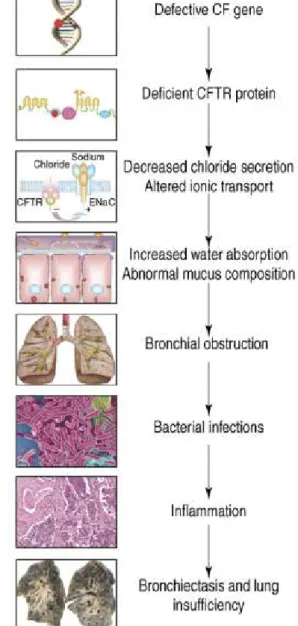
The CF pathogenesis cascade starts by the presence of two defective
CFTR genes previously associated with the CF phenotype (Figure I.1.1). At the
cellular level, the CF phenotype most commonly identified is the lack or reduction of cAMP-mediated Cl- secretion: the cells from CF patients do not
have the ability to transport Cl- to the same extent as normal cells (Amaral &
Kunzelmann, 2007). In view of the emerging functions of CFTR, testing for the CF phenotype should also include testing of these new features.
CFTR is expressed at the apical membrane of epithelial cells to control salt and water transport (Rich et al., 1990). Due to the fact that water follows the direction of salt transport across the epithelia, the CF defect is also associated with enhanced water reabsorption, which according to some authors leads to increased salt concentration in the airway surface liquid (ASL) (Puchelle, et al. 2002).
Clinically, CF is characterized by multiple manifestations in different organs, but is dominated by the respiratory disease, the main cause of morbidity and mortality (Collins, 1992). Bacterial infections, especially by
Pseudomonas aeruginosa, cause mucociliary clearance to be inefficient,
originating thick mucus, and recurrent infections originate an exacerbate inflammatory response contributing to impairment of respiratory function and ultimately to death (Figure I.1.1) (Amaral & Kunzelmann, 2007).
Other CF symptoms include exocrine pancreatic insufficiency (PI, 85%), intestinal obstruction (meconium ileus-MI in 15-20% of CF newborns and/or distal intestinal obstruction syndrome-DIOS at a later age), elevated sweat electrolytes and male infertility (95%) (Collins, 1992; Jarvi et al., 1995; Welsh & Smith, 1995; Zielenski & Tsui, 1995). Other manifestations include hepatobiliary disease (7%) and diabetes mellitus (Welsh & Smith, 1995).
Despite the fact that CF is a monogenic disease, the genotype-phenotype correlation is very complex. Homozygosity for the common mutation F508del causes the classic phenotype: progressive obstructive lung disease, pancreatic insufficiency, male infertility and elevated sweat Cl- concentrations. Each
G e n e ra l In tr o d u c ti o n C y s ti c F ib ro s is 5 organ affected in CF requires a different level of CFTR function. Decreasing levels of CFTR function are associated with progressive involvement of more organs or systems and with a more severe phenotype, in the following sequence of sensitivity: vas deferens > lungs > sweat duct > pancreas > intestine.
Figure I.1.1 – CF Pathogenesis Cascade: From primary gene defect to lung disease.
Reproduced from Amaral and Kunzelmann 2007.
1.3 Diagnosis & Prognosis
For the vast majority of patients, the diagnosis of classic forms of CF is established early in life and suggested by one or more characteristic clinical features, a history of CF in a sibling or, more recently, by a positive newborn
C y s ti c F ib ro s is G e n e ra l In tr o d u c ti o n 6
screening result (Rosenstein & Cutting 1998; Farrell et al. 2008; Moskowitz et al. 2008) (Table I.1.1).
Table I.1.1 – Cystic Fibrosis diagnosis criteria established by presence of CF characteristic features and evidence of a CFTR abnormality (adapted from
Moskowitz et al. 2008).
Diagnosis criteria for Cystic Fibrosis
One or more characteristic
phenotypic features and
Evidence of CFTR dysfucntion
Phenotypic features: CFTR dysfunction:
Chronic sinopulmonary disease Presence of two CFTR-disease causing mutations
Obstructive azoospermia Gastrointestinal/nutritional abnormalities (MI, DIOS, PI with malabsorption, steatorrhea)
Two abnormal quantitative pilocarpine iontophoresis sweat-Cl- values (> 60mmol/L) Salt-loss syndrome (with or
without metabolic alkalosis)
NPD measurements characteristic of CF Failure to thrive Recurrent pancreatitis Hepatobiliary disease Hypoproteinemia
Fat-soluble vitamin deficiencies A history of CF in siblings A positive newborn screening test
Such diagnosis is usually supported by evidence of CFTR dysfunction through identification of two CF-disease causing mutations, two abnormal sweat-Cl- tests (≥60mEq/L), and/or distinctive transepithelial nasal potential
difference (NPD) measurements (Rosenstein & Cutting 1998; Farrell et al. 2008) (Table I.1.1).
However, depending on the ethnic background of the populations tested (Bobadilla et al. 2002), there is a portion of patients being diagnosed from infancy to adulthood that present “non-classical” symptoms, or a milder disease (Figure I.1.2), representing 2% to 10% (Boyle, 2003) of all CF diagnoses. Most non-classic CF patients meet the same diagnostic criteria as
G e n e ra l In tr o d u c ti o n C y s ti c F ib ro s is 7 classic CF patients; however they may have a later presentation or have involvement of only one or two organ systems (Boyle, 2003). The majority of patients with nonclassic CF carry one severe and one mild or two mild CFTR mutations, with mild mutations categorized as those allowing varying degrees of residual CFTR function (Groman et al. 2005; Noone & Knowles 2001).
Figure I.1.2 - Approximate age of onset of clinical manifestations of cystic fibrosis. ABPA, allergic bronchopulmonary aspergillosis. CBAVD, congenital bilateral
absence of the vas deferens. CF-RDM, cystic fibrosis-related diabetes mellitus. DIOS, distal intestinal obstruction syndrome. HPOA, hypertrophic pulmonary osteoarthritis. Adapted from O’Sullivan and Freedman 2009.
In addition, there are also some individuals showing conflicting results from the diagnostic tools available, such as inconclusive genetic testing, borderline sweat tests or NPD measurements with both non-CF and CF features (De Boeck et al. 2006; Boyle 2003). For such individuals with clinical phenotypes not fully meeting the CF diagnostic criteria it is also difficult to exclude CF. Some of these patients have described as having "CFTR-opathies" (Noone & Knowles 2001) or CFTR-related disorders (CFTR-RD) (Bombieri et al., 2011; Paranjape & Zeitlin, 2008).
Moreover, the recently implemented extensive newborn screening programs identify increasing numbers of asymptomatic CF patients merely identified by elevated serum concentrations of immunoreactive trypsinogen (IRT), posing new challenges to the CF diagnosis paradigm (Farrell et al. 2008;
C y s ti c F ib ro s is G e n e ra l In tr o d u c ti o n 8
Parad and Comeau 2005; Taylor et al. 2009), especially when associated with borderline sweat [Cl-] and/or inconclusive CFTR genotypes (Boyle 2003; Parad and Comeau 2005; Taylor et al. 2009; De Boeck et al. 2006).
As referred above, CF is associated with defective cAMP-mediated (CFTR) Cl- secretion and an accelerated rate of basal Na+ transport across epithelial
membranes resulting in a change in transepithelial potential difference (PD) that can be measured in both airway and intestinal epithelia (Taylor et al. 2009).
Thus, besides NPD, investigators have also been using intestinal current or voltage measurements to demonstrate CFTR dysfunction and establish a diagnosis of CF in patients with atypical presentations (Taylor et al. 2009; de Jonge et al. 2004; Mall et al. 2004a; Hirtz et al. 2004). This subject will be further discussed below.
Despite impressive advances in our understanding of the molecular basis of CF, life expectancy and quality of life for CF patients are still limited (Rowe et al. 2005).
1.3.1 Sweat-test
Since Gibson and Cooke (1959), measurement of sweat electrolyte concentrations have been the gold standard test for CF diagnosis. In the normal sweat gland adrenergic stimulation induces an isosmolar flow of sweat into the sweat duct where activation of CFTR and Epithelium Na+ Channel
(ENaC) leads to a reabsorption of Na+, Cl- and water resulting in the flow of a
small volume of sweat containing, on average, 16 mmol/l of Cl- and 23
mmol/L of Na+ (Di Sant’Agnese et al., 1953; Di Sant’Agnese & Powell, 1962).
On the other hand, mean sweat Cl- concentrations in CF patients with known
genotypes ranged from 97.6–100 mmol/L (Farrell and Koscik 1996). It was then established that Cl- concentrations above 60 mmol/L are abnormal and
that values between 40mmol/L and 60mmolL are borderline, requiring further evidence of CFTR dysfunction (Taylor et al. 2009).
Although the ability to test for CFTR gene mutations gave a new dimension to diagnosing CF, the sweat Cl- test remains the most accessible
and reliable test for CF, if performed by qualified personnel and if samples are carefully handled to avoid contamination or evaporation. False positive sweat Cl- results may be associated with other conditions, most notably
G e n e ra l In tr o d u c ti o n C y s ti c F ib ro s is 9 False negative sweat chloride results may occur in the setting of acute CF-related salt losses (Bosco et al. 1999).
1.3.2 Genetic Testing
Genotyping usually starts with the search for F508del mutation – the most common mutation in the CFTR gene. In addition, if a family member has been previously diagnosed to have CF and the respective CFTR mutations
identified, the child can also be screened for these specific mutations. If those mutations are not found or found in just one allele, genetic screening should be carried out for the most common CF mutations (mutation panels, Watson et al., 2004) in the patient’s ethnic group (Girodon-Boulandet et al. 2000).
Nevertheless, establishment of a definite CFTR genotype can be difficult if
it involves very rare CFTR mutations. For such cases, some laboratories
already offer direct sequencing of the entire CFTR gene coding sequences, in
spite of the costs involved. Notwithstanding, there is still the possibility of missing large gene deletions and mutations in CFTR introns, that are not
sequenced because of their extensive length.
1.3.3 Nasal Potential Difference
Active transport of ions across the nasal epithelium results in a potential difference (PD), which can be measured by a voltmeter between two electrodes: 1) an exploring electrode placed on the surface of the nasal epithelium and 2) a reference electrode (generally subcutaneous), which represents the internal surface (Knowles et al. 1981).
Basal values for NPD in non-CF individuals are usually situated between -15 and -25 mV (Knowles et al. 1981). These negative values reflect transepithelial absorption of Na+, which is the dominant ion movement in the
airway.
NPD is often assessed using a perfusion protocol which allows examination of different components of airway ion transport. Thus, addition of amiloride will block ENaC mediated Na+ absorption and result in a reduction
in the magnitude of negative PD. Subsequent removal of Cl- (low Cl- solution)
from the perfusate will provide a driving force for Cl- secretion (mainly through
CFTR) resulting in hyperpolarisation. Addition of a β-adrenergic agonist (such as isoprenaline), that raises intracellular cAMP, further increases CFTR
C y s ti c F ib ro s is G e n e ra l In tr o d u c ti o n 10
chloride secretion. Other stimulators, like ATP, can also be used to activate alternative Cl- conductances (such as Calcium-Ca2+-activated Cl-
channels-CaCC) (Boucher et al. 1991).
CF patients usually present an increased magnitude of baseline PD (reflecting Na+ hyperabsorption), a dramatic response to amiloride, a transient
or blunted response to low Cl- solution and isoprenaline and an exaggerated
response to ATP (reflecting Cl- secretion through CaCC) (Taylor et al. 2009).
1.3.4 Intestinal Current / Voltage Measurements
Bioelectrical measurements on rectal epithelia can be applied as a functional diagnostic tool to aid in establishing a diagnosis of CF, if sweat test results are equivocal and/or if CFTR-disease causing mutations are not readily identified by genetic testing. In the past 20 years, several research groups developed modified Ussing chambers to study the CF ion transport defect in freshly excised native tissues (Hardcastle et al. 1991; Veeze et al. 1991; Mall et al. 1998a; Taylor et al. 1987). CFTR is present in abundance in the intestinal epithelium where it is localised at the luminal membrane of the enterocytes (Crawford et al. 1991; Mendes et al. 2004a).
In the CF intestine, Cl- secretion is impaired (Taylor et al. 1987; Taylor et
al. 1988) while Na+ and Na+-linked nutrient absorption are enhanced (Mall et
al. 1999). As the mechanism of Cl- secretion is electrogenic, its activity can be
monitored by measuring transintestinal electrical activity in response to secretagogues. Moreover, in the CF intestine, this activity is not subject to the confounding effects of inflammation, haemorrhage or infection, seen in the airway.
Measurements can be carried out on suction or forceps biopsy tissue obtained from either the small intestinal or colonic mucosa. Biopsy tissue is mounted in an Ussing chamber and the transepithelial electrical activity can be monitored by either short-circuit current measurements (Rotterdam protocol, de Jonge et al. 2004) or transepithelial voltage measurements, with further calculation of the equivalent short-circuit currents (Freiburg protocol, Mall et al. 2004a).
Studies from Mall and collaborators (Mall et al. 1998b; Mall et al. 2000) demonstrated that cAMP-mediated and Ca2+-dependent agonists act
co-operatively to determine the magnitude of colonic Cl- secretion. Agonists
G e n e ra l In tr o d u c ti o n C y s ti c F ib ro s is 11 in non-CF tissues, while cAMP-dependent Cl- secretion is typically defective in
CF tissues. Cholinergic co-activation increases the driving force for CFTR-mediated Cl- secretion and may be of value in determining low levels of
residual function of mutant CFTR (Mall et al. 1998a; Mall et al. 1998b; Mall et al. 2004a).
In CF rectal epithelia, the readouts from those approaches include enhanced amiloride-sensitive Na+ transport, defective cAMP-dependent Cl
-secretion and defective cholinergic Cl- secretion. This subject will be further
discussed in 2.4.3 Gastrointestinal Tract and in Chapters 1 and 2 of the III. Results & Discussion section.
1.3.5 Neonatal Screening
Newborn screening using immunoreactive trypsinogen (IRT) assays performed on blood spots was long been suggested (Audrezet et al., 1993). In CF, the trypsinogen release into the circulation appears to be enhanced by abnormal pancreatic duct secretions. Thus, IRT levels found to be elevated in CF and determination of newborns IRT levels constitutes the CF neonatal screening (Audrezet et al., 1993). IRT values tend to remain raised for several months in newborns with CF, whereas in false positives they usually return to normal within the first weeks of life.
Abnormal IRT results are therefore evaluated through sweat testing and/or molecular genetic testing of CFTR and/or assessment of pancreatic function (Boyne et al. 2000; Castellani et al., 2009; Gregg et al., 1997; Massie et al., 2000).
This approach has demonstrated such long-term benefits as early nutritional treatment, reduced hospitalizations (due to pulmonary exacerbations) and improved survival (Grosse et al., 2004; Sontag et al. 2005).
C y s ti c F ib ro s is G e n e ra l In tr o d u c ti o n 12
1.4 CFTR-related Disorders
A CFTR-related Disorder (CFTR-RD) is defined as: “a clinical entity associated with CFTR dysfunction that does not fulfil the diagnostic criteria for CF” (Bombieri et al., 2011).
Three main clinical entities illustrate these phenotypes when associated with CFTR dysfunction: CBAVD (congenital bilateral absence of the vas deferens), acute recurrent or chronic pancreatitis and disseminated bronchiectasis. Careful attention should be paid to exclude other known aetiologies, to the degree of screening for CFTR mutations and to the evaluation of CFTR function in these patients (Bombieri et al. 2011; Noone & Knowles 2001; Paranjape & Zeitlin 2008).
G e n e ra l In tr o d u c ti o n M o le c u la r B a s is o f C y s ti c F ib ro s is 13
2 Molecular Basis of Cystic Fibrosis
2.1 CFTR Gene
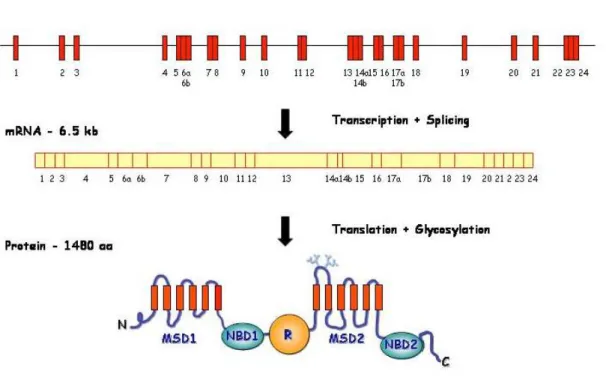
The CFTR gene or ABCC7 is located on the long (q) arm of chromosome 7, band 31 (7q31-7q32), covering 189 kb. It contains 27 exons that after splicing result in a 6.5 kb mRNA, translated into a protein with 1480 aa residues (J R Riordan et al., 1989) (Figure I.2.1).
Figure I.2.1 – Scheme representing the CFTR gene, mRNA and protein. N –
N-terminus; MSD – membrane-spanning domain; NBD – nucleotide-binding domain; R – regulatory domain; C – C-terminus (more details in section 2.2.1). Adapted from Zielenski and Tsui 1995.
2.1.1 Frequencies and Distribution of CFTR Mutations
CF birth prevalence varies from country to country, and also with ethnic background (O’Sullivan & Freedman, 2009). CF is most common in populations of northern European descent with a prevalence of 1 in 3,000 births; the same for white Americans. For Latin Americans and African Americans the disease presents lower birth prevalences: 1 in 4,000-10,000 and 1 in 15,000-20,000, respectively (O’Sullivan & Freedman, 2009). In the Brazilian population, ethnic background varies from north to south, as does
M o le c u la r B a s is o f C y s ti c F ib ro s is G e n e ra l In tr o d u c ti o n 14
CF prevalence: from 1 in aproximately 10,000 in the north to 1 in 3,000 in the south (Raskin et al. 1999; 2007). For Africans and Asians the CF disease is very uncommon, with a reported frequency of 1 in 350 000 in Japan (Yamashiro et al., 1997); with 3120+1G>A being a very common mutation among African populations (Dork et al., 1998; Macek Jr. et al., 1997). In Europe the F508del mutation predominates in the northwest, and decreases in frequency towards the southeast; the most common mutation in Israel is W1282X (O’Sullivan & Freedman, 2009).
2.1.2 Functional Classes of CFTR Mutations
More than 1900 CF mutations have already been reported on the CFTR Mutation Database (http://www.genet.sickkids.on.ca/cftr/), thus making it difficult to ascertain how they affect processing and/or function of CFTR protein and how to repair each single defect.
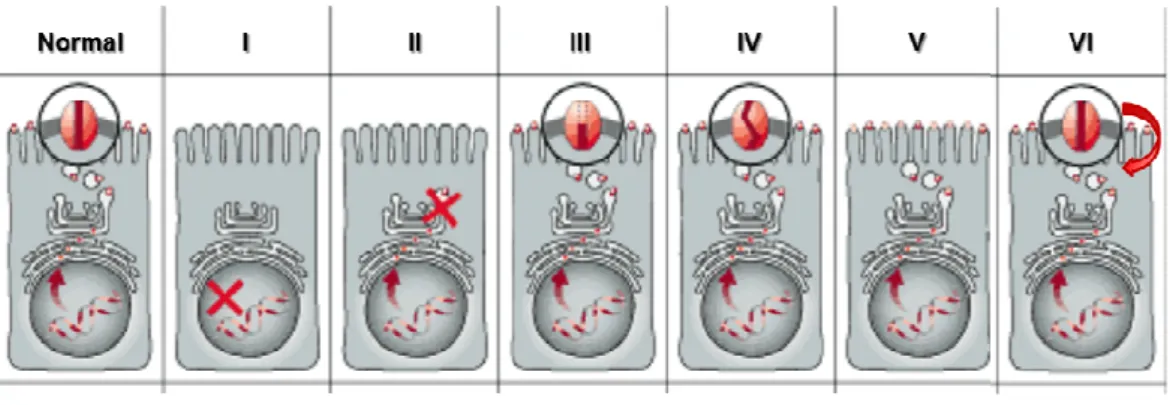
Therefore, Tsui (Tsui, 1992), subsequently Welsh and Smith (Welsh & Smith, 1993) and later Lukacs (Haardt et al. 1999) proposed six mechanisms by which mutations disrupt CFTR Cl- channel function (Figure I.2.2).
This classification is important for the development of therapeutic strategies, as mutations in the same class will likely need the same approach aimed at correcting their basic defects.
Figure I.2.2 – Classes of CFTR mutations. (Normal) CFTR protein in the plamas
membrane of cells functioning as a Cl- channel; (I) class I mutation: prevent translation; (II) class II: defective processing; (III) class III: defective regulation; (IV) class IV: defective conductance; (V) class V: reduced synthesis; (VI) class VI: decreased stability. Adapted from Zielenski and Tsui 1995.
Class I mutations cause premature termination of CFTR mRNA translation in the nucleus, resulting in severely decreased or absent CFTR protein production. A number of class I mutants are due to nonsense,
G e n e ra l In tr o d u c ti o n M o le c u la r B a s is o f C y s ti c F ib ro s is 15 frameshift or aberrant splicing. As examples of mutations belonging to this class we have G542X and W1282X.
Class II mutations lead to degradation of the protein within the endoplasmic reticulum (ER) and little or no functional protein is transferred to the cell membrane. Mutants in this class include F508del and A561E. The disease severity in this class correlates with the amount of correctly processed protein that is able to reach the apical membrane.
Class III mutants, such as G551D or S549R, are located correctly at the cell membrane but are unable to function as a cAMP-activated Cl- channel.
Class IV mutants are also properly located but have altered conductance or gating properties causing a reduced Cl- efflux rate through the CFTR
channel, like R334W or P205S, associated with a milder CF disease.
Class V mutants cause a reduction in the levels of functional CFTR often due to alternative splicing or recycling. In this case, disease severity will also correlate with the levels of normal transcripts – as an example we have 3272-26A>G and G576A, associated with milder CF phenotypes.
Class VI mutants lead to reduced stability of CFTR at the cell surface, caused by C-terminal truncations. Whereas the biosynthesis, processing, and macroscopic chloride channel function of truncated CFTR protein are essentially normal, the degradation rate of the mature, complex-glycosylated form is 5-6-fold faster than the wild-type (wt) CFTR. C-terminal truncations, like 4326delTC, are thus associated with severe CF phenotypes.
Interestingly, little correlation between mutation classes and severity of airway disease has been described. This indicates that the progression of CF lung disease may be significantly influenced by environmental factors, modifier genes or immunological events that are not influenced directly by the specific CFTR genotype. In patients who are compound heterozygotes for CF, the "milder" mutation acts as dominant; this resembles the no-disease condition of carriers of a CF-disease causing mutation.
2.2 CFTR Protein
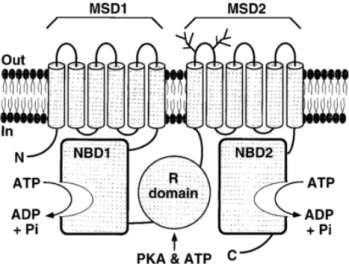
2.2.1 StructureAs mentioned above, CFTR is a multidomain protein containing 1480 aa residues and functioning as a cAMP-activated and phosphorylation-regulated chloride (Cl-) channel at the apical membrane of epithelial cells. CFTR is a