Luciane Cruz LopesI Silvio Barberato-FilhoI Augusto Chad CostaII
Claudia Garcia Serpa Osorio-de-CastroIII
I Programa de Pós-graduação em Ciências Farmacêuticas. Universidade de Sorocaba (Uniso). Sorocaba, SP, Brasil
II Curso de Graduação em Farmácia. Uniso. Sorocaba, SP, Brasil
III Núcleo de Assistência Farmacêutica. Escola Nacional de Saúde Pública Sérgio Arouca. Fundação Oswaldo Cruz. Rio de Janeiro, RJ, Brasil
Correspondence:
Luciane Cruz Lopes
Programa de Pós-Graduação stricto sensu em Ciências Farmacêuticas
Rod. Raposo Tavares, km 92.5 18023-000 Sorocaba, SP, Brasil E-mail: [email protected] Received: 4/22/2009 Approved: 12/20/2009
Article available from: www.scielo.br/rsp
Rational use of anticancer
drugs and patient lawsuits
in the state of São Paulo,
Southeastern Brazil
ABSTRACT
OBJECTIVE: To assess the rationality of legal suits and administrative requests requiring anticancer drugs fi led against and submitted to the São Paulo State Department of Health, in view of scientifi c evidence on effi cacy and safety.
METHODS: A descriptive cross-sectional study was carried out based on information on lawsuits fi led by cancer patients requiring anticancer drugs were furnished by the Department of Health. These drugs are among those having the greatest fi nancial impact on the Brazilian Health System in 2006 and 2007. The drugs were assessed according to clinical evidence on effi cacy and safety, based on Micromedex® categorization, on systematic reviews and
meta-analyses. Indications present in the legal documentation were compared to the indications approved by regulatory agencies.
RESULTS: Bevacizumab, capecitabine, cetuximab, erlotinib, rituximab, imatinib, and temozolomide accounted for expenses over R$ 40 million to meet 1220 requests and lawsuits, at an average cost of R$ 33,500 per patient. Selected studies do not recommend all the indications for the prescribed drugs. Approximately 17% of requests and lawsuits did not provide evidence for the required indication, and these amounted to inappropriate expenses of, at least, R$ 6.8 million.
CONCLUSIONS: The results reinforce the need for technical expertise in dealing with legal suits and for capacity-building of health professionals in approaching the scientifi c literature, in order to appropriately select drugs and to ensure the best therapeutic decision for each clinical condition, and thus guarantee access to safe and effective health technologies and, therefore, to enhance the quality of the Brazilian pharmaceutical services model in oncology.
2 Anticancer drugs and lawsuits Lopes LC et al
The Sistema Único de Saúde (SUS – Brazilian National Healthcare System) provides full and comprehensive healthcare to Brazilian citizens, including pharmaceu-tical services.a However, regardless of the fact that full
and comprehensive mean high, mid, and low comple-xity medical assistance, many different interpretations of the term insist in understanding comprehensiveness as any and all kinds of known therapies, available or not under SUS. This results in distortions in terms of the strategies of access to technologies, among which access to medication.13
In Brazil, management problems concerning pharma-ceutical services are common in the three branches of government. This combined with the constant pressure infl icted by the incorporation of new technologies under SUS, have resulted in an increase of court decisions ordering the supply of certain medicines. These lawsuits
fi led against the State have become an alternative means of having access to medication within SUS.9
On the other hand, the cost of complying with these court decisions is not budgeted for, thus consuming considerable resources from other areas of the budget and making it diffi cult to ensure the purchase of other medicines which are provided for under statute and agreed to by Inter-management Commissions.b,c On
many occasions the medicines under the scope of these lawsuits are not considered essential according to the National Medicines Policy, nor have they had their safety and effi cacy proven.d
Across the country, according to information from the Ministry of Health, the amounts spent with lawsuits in 2007 were over 500 million Brazilian reais in the
federal, state and local administrations.e In the Ministry
of Health alone the amount spent yearly went from R$ 188 thousand in 2003,a to R$ 52 million in 2008.f In
the state of Paraná, southern region, between 2002 and 2007, the amount spent with lawsuits increased from R$ 200 thousand to R$ 14 million.g
INTRODUCTION
These lawsuits have been on the media, above all in terms of the amount spent by the State and Local Health Departments and the Ministry of Health with the acquisition of medication.The unrestricted supply of medication through legal suits privileges segments of health service users with more fi nancial resources to pay for attorney’s fees, or that have more access to information, in detriment of the needy segment of the population.4 In this context, the public health
manage-ment has required consistent information on the benefi ts of new technologies and the fi nancial repercussions on the public arena, with the goal of fostering new health policies and effective decision-making.3
The fi eld of oncology has a large demand for this, due to its high cost and use of sophisticated technology.h
In the city of São Paulo, Southeastern Brazil, in 2005, the number of lawsuits to obtain anticancer medicines accounted for 7.2% of the total number of items sought after through legal suits, resulting in expenses of R$ 661 thousand, representing 75% of the total expenses with medication obtained through court orders.12
Therefore, the objective of this study was to assess the rationality of lawsuits aimed at obtaining anticancer drugs, considering the scientifi c evidence based on effi cacy and safety of these medicines. In addition, the cost of supplying these drugs in cases not grounded on the scientifi c literature was also estimated in order to contribute to a pharmaceutical services model for oncology in SUS.
METHODS
A cross-sectional study was carried out. The unit of analysis was the State of São Paulo, Southeastern Brazil, and the object lawsuits aimed at obtaining anticancer drugs. The period of investigation was from January 2006 to December 2007.
a Brasil. Lei nº 8.080, de 19 de setembro de 1990. Dispõe sobre as condições para a promoção, proteção e recuperação da saúde, a organização e o funcionamento dos serviços correspondentes e dá outras providências. In: Vieira JL, editor. Código sanitário do Estado de São Paulo. Normas técnicas e legislação complementar. Bauru: Edispro; 2000. (Série Legislação).
b Ministério da Saúde. Portaria nº 2.981, de 26 de novembro de 2009. Aprova o componente especializado da assistência farmacêutica.
Diario Ofi cial Uniao. 30 nov 2009;Seção1:725.
c Ministério da Saúde. Portaria nº 2.982, de 26 de novembro de 2009. Aprova as normas de execução e de fi nanciamento da assistência farmacêutica na atenção básica. Diario Ofi cial Uniao. 30 nov. 2009;Seção1:771.
d Nogueira RWL. Saúde, medicamentos, desenvolvimento social e princípios orçamentários. Jus Navigandi. 2005[cited 2009 Jan 20]9(542). Available from: http://jus2.uol.com.br/doutrina/imprimir.asp?id=6127
e Jungmann M. Ministério da Saúde classifi ca de “epidêmico” volume de ações judiciais contra o SUS. Brasília; 2007[cited 2009 Sep 10]. Available from: http://www.aids.gov.br/main.asp?View=%7BDA56F374-128A-40FB-B16F-D08A1F5DD07B%7D&Team=¶ms=itemID=% 7B9016699E-670E-4209-B9DD-06C65CA88037%7D%3B&UIPartUID=%7BD90F22DB-05D4-4644-A8F2-FAD4803C8898%7D
f Conselho Regional de Farmácia do Estado do Rio de Janeiro. Ministério defende equilíbrio nas ações judiciais de saúde. Rio de Janeiro; 2009[cited 2009 Sep 10]. Available from: http://www.crf-rj.org.br/crf/noticia/2009/5/minist%C3%A9rio_defende_equil%C3%ADbrio_ nas_a%C3%A7%C3%B5es_judiciais_de_sa%C3%BAde.htm
g Ministério da Saúde. Ações judiciais colocam em risco o Sistema Único de Saúde. Brasília; 2007[cited 2009 Jan 03]. Available from: http:// portal.cnm.org.br/003/00301009.asp?ttCD_CHAVE=71155
The Secretaria Estadual de Saúde de São Paulo (SES-SP – State Health Department of the State of São Paulo) was asked to point out the seven anticancer drugs most sought after through legal suits with the highest fi nan-cial impact on SUS. The sample of lawsuits was built based on the drugs on the SES-SP list. These drugs are indicated for the treatment of several types of cancer and are part of the anticancer therapy aimed at specifi c molecular targets, thus representing a new approach to the treatment of cancer.5 In addition to the lawsuits,
administrative requests – formal requests of medica-tions patients were not able to obtain at SUS units to the government entity – containing the drugs scope of this study, according to the entries in the Sistema de Controle Jurídico (Court Control System) of the SES-SP. The study variables were: clinical indication, prescribing physician, attorney and origin of case. To estimate the cost of acquiring these medications, the amount purchased during the period of study and the price paid were calculated based on the Banco das Atas de Registro de Preços (Price Registration Minutes Database) of the SES/SP.
Therapeutic indications expressed in the legal claims were compared to the evidence supplied by the medical literature in PubMed, LILACS, SciELO, and Cochrane BVS, in the form of systematic reviews and meta-analyses. Papers were selected if they assessed at least one of the seven drugs studied, for any therapeutic indication, in which the intervention was compared to another treatment or to placebo. Forty meta-analyses and 38 systematic reviews, published until July 2008, were selected. The fi ndings of these studies coincide with the evidence described in Thomson Micromedex®.
The data on the approval of the drugs were obtained with regulatory agencies, such as the Agência Nacional de Vigilância Sanitária (Anvisa – National Sanitary Surveillance Agency), the Food and Drug Administration (FDA), and the European Medicines Agency (EMEA), thus enabling the clinical indication expressed on the legal claims to be compared to the ones approved by the regulatory agencies.
The data on the lawsuits were obtained from an SES-SP software called Court Control System. Data confi -dentiality was ensured concerning the identity of all the individuals identifi ed during the study. This study was approved by the Ethics in Research Committee of the Universidade de Sorocaba on December 20, 2007 (Document 052/2007).
RESULTS
This study included 1,220 requests of the following anti-cancer drugs: bevacizumab, capecitabine, cetuximab, erlotinib, rituximab, imatinib, and temozolomide.
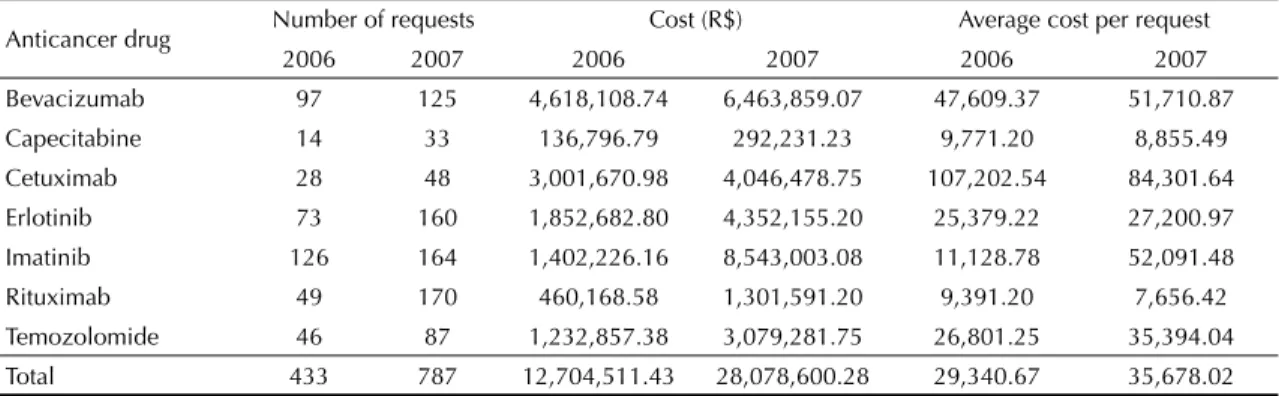
Table 1 shows the number of lawsuits fi led against the SES-SP between 2006 and 2007, the total cost and the average cost per lawsuit. The total amount spent by the Department with these seven drugs was 120% higher in 2007 than in 2006. This increase is explained by the one in the number of requests. In some cases, despite the increase in the number of requests, the average amount spent decreased (capecitabine, cetuximab, rituximab). On the other hand, the average amount spent per imatinib request almost increased fi ve-fold. Table 2 shows the characteristics of the administrative requests and legal suits. With some exceptions resulting from the incorporation of medications by the SES-SP, the requests are mostly made via the courts. A share of the lawsuits originated from prescriptions made by SUS professionals not complying with the protocols in force. The origin of the requests was concentrated in nine prescribing physician and seven lawyers. One single physician was responsible for almost 40% of erlotinib prescriptions and one single lawyer was responsible for 70% of the lawsuits requesting cetuximab.
Prescriptions written by fi ve physicians cost R$ 7 million in two years. Five attorneys responsible for most of the lawsuits fi led against the SES-SP cost almost R$ 16 million. Table 3 shows the itemized amounts per prescribing physician and attorneys.
Each of the drugs studied has been employed in several therapeutic indications, some of which have not been approved by the consulted regulatory agencies. Out of the 16 indications for bevacizumab, two met the criteria of evidence and degree of recommendation considered acceptable. About 30% of the requests were related to other kinds of cancer, for which there is no evidence that support its indication. capecitabine was used for treating colorectal cancer in 30% (in 2006) and 40% (in 2007) according to the lawsuits and the administrative requests fi led against the SES/SP. Requests for capeci-tabine to treat breast cancer dropped from 46.2% (2006) to 28.1% (2007), whereas off-label indications
(indica-tions not approved by regulatory agencies) have been increasing (23.0% of the requests in 2006 and 31.2% in 2007 contained other indications, such as, pancreatic cancer, for which there is not a single registration in any of the consulted regulatory agencies).
More than 80% of the legal suits and administrative requests for cetuximab required the drug for colo-rectal cancer treatment. Despite metastatic colocolo-rectal cancer treatment benefi ting from the EGFR-receptor inhibitors, and the indication having been approved by the FDA and by EMEA,7 in Brazil the indication
4 Anticancer drugs and lawsuits Lopes LC et al
the administrative requests and lawsuits requesting the drug were related to types of head and/or neck cancer. On the other hand, the use of the drug in unapproved indications by the regulatory agencies consulted was around 14% in 2006 and 10% in 2007.
Erlotinib indication for pancreatic cancer, although not approved by Anvisa, has been approved by the FDA and the EMEA, in addition to there being defi ned benefi t for locally advanced or metastatic pancreatic cancer, as
fi rst-line therapy, in combination with gencitabine. About 12% in 2006 and 6% in 2007 of the administra-tive requests and legal suits were related to some kind of pancreatic cancer. The use of erlotinib in indications not yet approved by the consulted regulatory agencies was under 5% in 2006 and 2007.
Approximately 86% of the administrative requests and lawsuits seeking imatinib were related to chronic myeloid leukemia (CML). There is defi ned benefi t for the use in Philadelphia chromosome-positive CML recently diagnosed or after failed therapy using alpha interferon, which is one of the indications approved by Anvisa, the FDA, and the EMEA.7 Imatinib indications
not supported by evidence of effi cacy or safety incre-ased from 10.4% (2006) to 14.4% (2007).
In 2006, rituximab was the aim of about 90%of the court and administrative requests and, in 2007, 75% corresponded to indications for non-Hodgkin’s treat-ment. Although Rituximab has been approved by the three regulatory agencies for the treatment of rheuma-toid arthritis (moderate to severe, in combination with methotrexate in patients responding inadequately to other therapies with TNF antagonists), the indication is not grounded on evidence in the literature in order for it to be incorporated to class IIb (recommended for some cases, but not for the majority of cases). There was an increase in the number of administrative requests and lawsuits aimed at obtaining this drug for this indication, from 1.1% in 2006 to 17.1% in 2007. And 4.7% and
8.1% of the requests in 2006 and 2007, respectively, were for indications with no clinical evidence of effi -cacy or safety.
Lawsuits and administrative requests for temozolomide (80% in 2006 and 86% in 2007) aimed at treating glio-blastoma and astrocytoma. Temozolomide indication for metastatic melanoma has only been approved in Brazil, despite the lack of clinical evidence suppor-ting its use for this indication. However, 1.6% of the lawsuits and administrative requests for temozolomide in 2007 were based on this indication. There are no records of lawsuits or administrative requests of this kind in 2006.
The fi ndings show that part of the lawsuits and admi-nistrative requests lack scientifi c grounds supporting the effective and, above all, safe use of anticancer drugs on patients.
Table 4 shows the clinical indication of the seven anti-cancer drugs object of this study with levels of evidence (A and B) and degree of recommendation (classes I and IIa) and their respective approvals by the Anvisa, the FDA, and the EMEA. Some indications approved by other regulatory agencies have not been approved in Brazil and, nevertheless, there are lawsuits and admi-nistrative requests for such uses.
The assessment of the rates of lawsuits and adminis-trative requests fi led by patients to obtain anticancer drugs for indications that lack clinical evidence account for the inappropriate amount of R$ 6,870,926.83 in expenses to the SES-SP. Bevacizumab (59.5%) and rituximab (31%) were the drugs with use not based on clinical evidence with the highest request rate during the period of study (Table 5).
DISCUSSION
The seven drugs addressed in this study were selected by the SES-SP, according to the following criteria: cost
Table 1. Number of administrative requests and lawsuits fi led by patients to obtain anticancer drugs and corresponding cost to the State Health Secretariat. State of São Paulo, Southeastern Brazil, 2006-2007.
Anticancer drug Number of requests Cost (R$) Average cost per request
2006 2007 2006 2007 2006 2007
Bevacizumab 97 125 4,618,108.74 6,463,859.07 47,609.37 51,710.87
Capecitabine 14 33 136,796.79 292,231.23 9,771.20 8,855.49
Cetuximab 28 48 3,001,670.98 4,046,478.75 107,202.54 84,301.64
Erlotinib 73 160 1,852,682.80 4,352,155.20 25,379.22 27,200.97
Imatinib 126 164 1,402,226.16 8,543,003.08 11,128.78 52,091.48
Rituximab 49 170 460,168.58 1,301,591.20 9,391.20 7,656.42
Temozolomide 46 87 1,232,857.38 3,079,281.75 26,801.25 35,394.04
Total 433 787 12,704,511.43 28,078,600.28 29,340.67 35,678.02
5
Variable
Bevacizumab Erlotinib Capecitabine Rituximab Imatinib Cetuximab Temozolomide 2006
(n = 97) (n = 125)2007 (n = 73)2006 (n = 160)2007 (n = 14)2006 (n = 33)2007 (n = 49)2006 (n = 170)2007 (n = 126)2006 (n = 164)2007 (n = 28)2006 (n = 48)2007 (n = 46)2006 (n = 87)2007
Lawsuits 99 96.8 100 97.5 100 90.9 100 80 59.3 61.6 100 100 93.3 88.5
Administrative
requests 1 3.2 0 2.5 0 9.1 0 20 40.7 38.4 0 0 6.7 11.5
Origin of request:
private sector 81.7 86. 1 52.1 52.2 64.2 75.8 18.8 22.7 44.9 45.9 92.6 75 60.9 62.1
Origin of request:
public sector 18.3 13.9 47.9 47.8 35.8 24.2 81.2 77.3 55.1 54.1 7.4 25 39.1 37.9
Main prescribing
physician Phys. 123.7 Phys. 19.6 Phys. 238.4 Phys. 231.3 Phys. 314.3 Phys. 112.1 Phys. 422.4 Phys. 516.3 Phys. 613.0 Phys. 611.0 Phys. 717.9 Phys. 710.6 Phys. 813.0 Phys. 911.5 Lawyer
representing patient
48. 4
Lawyer 1 Lawyer 133.3 Lawyer 239.7 Lawyer 231.4 Lawyer 133.3 Lawyer 135.7 Lawyer 360.4 Lawyer431.3
15. 7 Lawyer 5 Lawyer 6
12.6
Lawyer 6 Lawyer 170.4 Lawyer 143.8 Lawyer 716.7 9.5 Lawyer 1 Lawyer 7 Source: São Paulo State Health Department.
Table 3. Expenditure with prescribed medication in relation to t o prescribing physician and lawsuit. State of São Paulo, Southeastern Brazil, 2006-2007.
Bevacizumab Capecitabine Cetuximab Erlotinib Imatinib Rituximab Temozolomide Total
2006 2007 2006 2007 2006 2007 2006 2007 2006 2007 2006 2007 2006 2007
Prescribing physician
1 1,094,491.77 620,530.47 35,359.97 213,118.63 343,950.69 227,879.98 326,411.64 2,861,743.18
2 711,430.19 1,362,224.57 2,073,654.77
6 182,289.40 939,730.33 1,122,019.74
8 160,271.45 212,470.44 372,741.90
9 80,135.72 354,117.40 434,253.13
Subtotal 6,864,412.72
Lawyer
1 2,235,164.63 2,152,465.07 45,553.33 104,326.55 2,113,176.37 1,772,357.69 329,777.54 500,497.85 292,531.77 9,545,850.79
2 735,515.07 1,366,576.73 2,102,091.80
6 193,960.57 271,482.08 75,959.99 195,846.98 220,149.51 1,076,418.39 146,710.03 249,421.82 2,429,949.37
5 220,149.40 990,988.35 1,211,137.86
9 147,779.48 213,307.35 335,857.74 696,944.56
6 Anticancer drugs and lawsuits Lopes LC et al
Table 4. Clinical indication (classifi ed under levels of evidence A and B and degrees of recommendation I and IIa) and respective approval by regulatory agencies. State of São Paulo, Southeastern Brazil, 2006-2007.
Anticancer drug/Indication Approved
Anvisa FDA Emea Bevacizumab
Metastatic colorectal cancer, in combination with 5-fl uorouracil-based therapy for fi rst or
second line treatment Yes Yes Yes
Lung cancer: small cell, resectable, locally advanced, recurrent or metastatic,
non-squamous cell disease, fi rst line treatment, in combination with paclitaxel and carboplatin NA Yes Yes
Capecitabine
In combination with docetaxel is indicated for treating patients with locally advanced or
metastatic breast cancer Yes Yes Yes
Metastatic breast cancer, as monotherapy, when resistant to regimes containing paclitaxel/ antracicline or resistant to paclitaxel and not to a candidate for later treatment with antracicline
Yes Yes Yes
Colon cancer, Adjuvant, Dukes C, when treatment with fl uoropyrimidine alone is preferred NA Yes Yes
Esophagogastric cancer, advanced or metastatic, in combination with chemotherapeutic
agents NA NA NA
Gastric cancer, fi rst line treatment for advanced or metastatic disease, in combination with
epirubicin and oxaliplatin or cisplatin NA NA NA
Cetuximab
Metastatic colorectal cancer, with EGFR, as monotherapy in patients who do not respond to
treatment with irinotecan and oxaliplatin NA Yes Yes
Metastatic colorectal cancer, with EGFR, in association with irinotecan, in patients refractory
to isolated irinotecan NA Yes Yes
Head and neck cancer: locally or regionally advanced squamous cells, in combination with
radiotherapy Yes Yes Yes
Erlotinib
Lung cancer: non-small cells, locally advanced or metastatic (for patients who have failed
prior chemotherapy) Yes Yes Yes
Pancreatic carcinoma, locally advanced, non-resected, or metastatic, fi rst line therapy in
combination with gencitabine NA Yes Yes
Imatinib
Chronic myeloid leukemia, Philadelphia chromosome-positive, chronic stage, after failed
Alpha-interferon therapy Yes Yes Yes
Chronic myeloid leukemia, Philadelphia chromosome-positive, chronic stage, recently
diagnosed Yes Yes Yes
Acute lymphoblastic leukemia, Philadelphia chromosome-positive, recently diagnosed, as part
of combined chemotherapy NA NA Yes
Rituximab
Non-Hodgkin lymphoma, diffuse large B-cell lymphoma, CD20-positive, in combination for
fi rst line therapy Yes Yes Yes
Non-Hodgkin lymphoma, recurrent or refractory, low-grade or follicular, CD20-positive,
B-cells Yes Yes Yes
Chronic lymphoblastic leukemia, in combination with fi rst line therapy NA NA NA Temozolomide
Brain cancer: glioblastoma multiforme, recently diagnosed, simultaneously with radiotherapy
and following as maintenance Yes Yes Yes
Brain cancer: anaplastic astrocytoma, refractory (After progression of the disease after
nitrosourea and procarbazine) Yes Yes Yes
and demand in 2006 and 2007. In another biennium the requested drugs will probably be different, because the process is dynamic and needs change, thus constantly requiring new assessments.
The results do not enable an accurate assessment of the economic impact of the drugs on the SES-SP, because information was not provided on the amount spent with medication and with compliance to court orders in the State of São Paulo during 2006 and 2007.
The number of lawsuits and administrative requests increased twofold in the study period. In 2006, for each administrative request, about seven lawsuits were fi led against the SES-SP. This proportion was the same in 2007. Administrative requests were mostly for treating CML and non-Hodgkin´s lymphoma, whereas the lawsuits were aimed at obtaining drugs for trea-ting colorectal and lung cancer. Taking into account cancer prevalence in Brazil,i it is recommended that
the SES-SP continue to carry out studies on clinical evidence on the treatment of these kinds of cancer, since they result in administrative and fi nancial pressure on the State of São Paulo.
The seven drugs under the scope of this study reach almost R$ 30 million of the state healthcare 2007 budget. In the case of cancer treatment, therapy costs have increased by 450% since 1995, but have not improved the survival rates of patients or increased the cure rate for the disease.j
Findings show that patient lawsuits to obtain the anti-cancer drugs examined in this study are prescribed by a
small number of physicians and fi led by a small number of lawyers. This fi nding suffi ces to justify auditing the prescriptions, prescribing physicians and lawyers, so as to identify their direct and indirect relations with the pharmaceutical industry.
Several studies point out the infl uences prescribing physicians suffer in order to decide on possible thera-peutic alternatives: concepts on the health-disease process; quality of education, sociocultural and economical conditions of the population they treat; availability of the drugs in the service for which they work; access to information, requirements by the phar-maceutical industry, among others1,2,10
In addition, a number of Brazilian organizations defen-ding the rights of healthcare service users are funded by the pharmaceutical industry aiming at having the drugs they manufactured included under the SUS list. An entity representing lymphoma and leukemia patients headquartered in São Paulo, received R$ 1,5 million from eight multinational companies in 2007.k
The pharmaceutical industry is widely known for provi-ding funprovi-ding for scientifi c research across all areas of Medicine. This is a necessary and invaluable alliance. However, studies funded by pharmaceutical companies have a higher probability of reporting fi ndings that favor their products when compared to independent studies. Friedberg et al6 (1999) found unfavorable results in 5%
of the studies funded by pharmaceutical companies manufacturing drugs for oncology; whereas, in inde-pendent studies this rate was 38%.
Table 5. State expenditure with lawsuits and administrative requests without substantiated clinical evidence. State of São Paulo, Southeastern Brazil, 2006-2007.
Anticancer drug State spending (R$)
% of non-evidence based requests and lawsuits
Cost of supplying drugs resulting from of non-evidence based
requests and lawsuits (R$)
2006 2007 2006 2007 2006 2007
Bevacizumab 4,618,108.74 6,463,859.07 28.1 31.4 1,297,688.56 2,029,651.75
Capecitabine 136,796.79 292,231.23 17.4 19.2 23,802.64 56,108.40
Cetuximab 3,001,670.98 4,046,478.75 13.9 10.1 417,232.27 408,694.35
Erlotinib 1,852,682.80 4,352,155.20 2.8 4.4 51,875.12 191,494.83
Imatinib 1,402,226.16 8,543,003.08 10.4 14.2 145,831.52 1,213,106.44
Rituximab 460,168.58 1,301,591.20 5.8 25.2 26,689.78 328,000.98
Temozolomide 1,232,857.38 3,079,281.75 20.0 14.1 246,571.48 434,178.73
Total 12,704,511.43 28,078,600.28 - - 2,209,691.36 4,661,235.47
Source: São Paulo State Health Department.
i Ministério da Saúde. Secretaria de Atenção à Saúde. Instituto Nacional de Câncer. Coordenação de Prevenção e Vigilância de Câncer. Estimativas 2008: Incidência de Câncer no Brasil. Rio de Janeiro; 2007. [cited 2009 Sep 10]. Available from: http://bvsms.saude.gov.br/bvs/ publicacoes/estimativa_incidencia_cancer_2008.pdf
j Castilhos WO. Impacto do câncer no SUS. São Paulo: Agência FAPESP; 2007. [cited 2008 Jul 27]. Available from: http://www.agencia.fapesp. br/materia/8104/especiais/o-impacto-do-cancer-no-sus.htm
8 Anticancer drugs and lawsuits Lopes LC et al
Critical assessment of the literature determines the quality, strength and boundaries of clinical evidence. In this way, public policies that actually contribute to the rationalization of the use of medical technologies could be drafted, based on good quality scientifi c data. The incorporation of new technologies in healthcare should be based on correct assessment of their effi cacy and safety, as well as of their effects on public spending in the health services. It should also be based on what is necessary, opportune, reasonable, convenient, and essential in ensuring individual and collective health and not on the mere market availability of these new technologies.l
More than 50% of the lawsuits and approximately 40% of the administrative requests came from the private sector. Therefore, it is recommended that SES-SP keep track of the claims and requests coming from the private sector. Furthermore, requests coming from public hospitals and/or hospitals accredited by the public health system should be systematically audited by the SES-SP, because the supply of medications must comply with SUS regulations.
The clinical use of a drug in different indications from those to which the literature has provided evidence of effi cacy and safety is not recommended. Among the consequences is the possibility of employing a therapy of uncertain effi cacy, with signifi cant adverse effects, and the burdening of SUS. Moreover, to register a new indication with the regulatory agencies, the pharmaceu-tical company must provide evidence, through strict clinical trials, of effi cacy and safety of the drug in regard to a certain condition. Supplying medication for non-formulary indication by means of court orders means placing an undue burden on SUS to fund studies that should be funded by the innovating manufacturer. The fi nding that approximately 17% of the lawsuits and administrative requests were not based on evidence of
the indications informed in the proceedings amounts to inappropriate spending of at least R$ 6.8 million during the study period. The limitations of this study in terms of the imprecise diagnosis provided in the prescription – instead of supplying the International Classifi cation of Diseases – underestimates the rate of requested non-evidence based clinical indications, because the strength of the recommendation of use is specifi c to each condition. Therefore, the amount spent by the SES-SP in supplying medication for which there is no scientifi c evidence of effi cacy and safety may be much higher than the amount estimated in this study. Well-planned health policies result in effective actions to promote health and prevent health conditions, thus being translated as preventive medicine. In contrast, in curative medicine, medicines play an overly important role in healthcare.8,11 Moreover, considering an
equi-table distribution of resources, which is one of the most complex dilemmas faced by SUS, there is an obvious need of technical expertise to deal with patient lawsuits. Therefore, this requires capacity building to enable appropriately selecting the drugs used in therapies and choosing the best therapeutic action for a certain clinical condition.m
Providing sound information on the use of medication and clinical data on the actual condition of the patient are essential to assessing the request and orders deter-mining SUS to provide certain medicines to patients. Establishing clinical protocols for the use of immu-nobiologicals, that have limited indications and pose high risks, could rationalize the use of these drugs, thus contributing to improved pharmaceutical services for oncology in SUS.
ACKNOWLEDGEMENT
To the State Health Department for supplying the data.
l Santos L. Saúde: conceito e atribuições do Sistema Único de Saúde. Jus Navigandi. 2005[cited 2009 Jan 21]9(21). Available from: http://jus2. uol.com.br/doutrina/imprimir.asp?id=7378
1. Arnau JP, Laporte JR. Promoção do uso racional dos medicamentos e preparação de guias farmacêuticos. In: Laporte JR, Tognoni G, editores. Epidemiologia do medicamento: princípios gerais. São Paulo: Hucitec; 1989. p.57-74.
2. Barros JAC. Propaganda de medicamentos: Atentado à saúde? São Paulo: Hucitec/Sobravime; 1995.
3. Ministério da Saúde. Secretaria de Ciência, Tecnologia e Insumos Estratégicos. Departamento de Ciência e Tecnologia. Avaliação de Tecnologias em saúde: institucionalização das ações no Ministério da Saúde.
Rev Saude Publica. 2006;40(4):743-7. DOI:10.1590/
S0034-89102006000500029
4. Conselho Nacional dos Secretários Municipais de Saúde. A saúde no banco dos réus. Rev Conasems. 2004;(8):25-31.
5. Del Debbio CB, Tonon LM, Secoli SR. Terapia com anticorpos monoclonais: uma revisão de literatura. Rev
Gaucha Enferm. 2007;28(1):133-42.
6. Friedberg M, Saffran B, Stinson TJ, Nelson W, Bennett CL. Evaluation of confl ict of interest in economic analyses of new drugs used in oncology. JAMA. 1999;282(15):1453-7. DOI:10.1001/ jama.282.15.1453
7. Klasco RK, editor. Drugdex System. Thomson Micromedex. Greenwood Village: Thomson; 2008. 8. Lefévre F. O medicamento como mercadoria
simbólica. São Paulo: Cortez; 1991.
9. Messeder AM, Osorio-de-Castro CGS, Luiza VL. Mandados judiciais como ferramenta para garantia do acesso a medicamentos no setor público: a experiência do Estado do Rio de Janeiro, Brasil. Cad
Saude Publica. 2005;21(2):525-34. DOI:10.1590/
S0102-311X2005000200019
10. Santos V, Nitrini SMO. Indicadores do uso de
medicamentos prescritos e de assistência ao paciente de serviços de saúde. Rev Saude Publica. 2004;38(6):819-26. DOI:10.1590/S0034-89102004000600010 11. Scott DK, Ferner RE. The strategy of desire and rational
prescribing. Br J Clin Pharmacol. 1994;37(3):217-9. 12. Vieira FS, Zucchi P. Distorções causadas pelas ações
judiciais à política de medicamentos no Brasil. Rev
Saude Publica. 2007;41(2):214-22. DOI:10.1590/
S0034-89102007000200007
13. Vieira FS. Qualifi cação dos serviços farmacêuticos no Brasil: aspectos inconclusos da agenda do Sistema Único de Saúde. Rev Panam Salud
Publica. 2008;24(2):91-100.
DOI:10.1590/S1020-49892008000800003
REFERENCES
This study was funded by the São Paulo State Health Department/Health Minsitry and the National Council for Scientifi c and Tehcnological Development/ São Paulo Research Foundation (edital PPSUS 2006/2007, Processo No. 2006/61512-5). Costa AC was sponsored by the Universidade de Sorocaba (Young Researchers Scholarship).
This study was presented at the Latin-American Pharmacology Conference in Coquimbo, Chile, in 2008; at the I Symposium on Research on the Rational Use of Medication in Sorocaba, São Paulo, in 2008; at the I Brazilian Conference on Evidence-Based Medicine and the Right to Health in Brasília, DF, in 2009; and at the 12th World Congress on Public Health, Istanbul, Turkey, in 2009.