Biological characteristics and probiotic effect of
Leuconostoc lactis
strain isolated
from the intestine of black porgy fish
Wei Zhang, Mingqi Liu, Xianjun Dai
College of Life Sciences, China Jiliang University, Hangzhou, China
Submitted: May 25, 2011; Approved: June 5, 2012.
Abstract
A strain of lactic acid bacteria,Leuconostoc lactis, was isolated from the intestinal tract of black porgy,Sparus macrocephalus, and identified by conventional biochemical characteristics and 16S rDNA gene sequence analysis. The isolated strain had the ability of bile tolerance and resistance to low pH, and survived well in the trypsinase and pepsin solution. But the highly concentrated dose of trypsinase and pepsin affect the viability of the isolated strain. The isolate was resistant to several an-tibiotics, including Cephalothin, Ceftriaxone, Imipenem and Tobramycin. The isolate could auto-aggregate itself and coauto-aggregate with other bacteria in vitro. The autoaggregation percentage increased to 23.29% after 20 h of incubation. The percentage of coaggregation were respectively 31.21%, 29.44%, 10.74%, 16.49%, 24.36%, 24.41% and 20.99% forVibrio parahaemolyticus, Liste-ria monocytogenes, Escherichia coli O157, Salmonella typhimurium, Shigella, Staphylococcus aureusandProteusbacillus vulgarisafter 20 h incubation of a mixed suspension.The supernatant of the strain inhibited the growth of several pathogens, such as V.parahaemolyticus,Vibrio harveyi, Vibrio alginolyticus,Staphylococcus aureus, Escherichia coliO157,Salmonella typhimurium, Ba-cillus subtilis, Proteusbacillus vulgaris and Shigella. These results indicated that the isolate, Leuconostoc lactis, might be an attractive candidate for perspectival strain for probiotics in marine aquaculture.
Key words:black porgy,Leuconostoc lactis, lactic acid bacteria, biological characteristic, probiotic.
Introduction
With the development of commercial scale aqua-culture, it has become apparent that disease can be a signifi-cant limiting factor for the fish in sea water. Chemothe-rapeutic agents,i.e.antibiotics, could lead to the evolution of resistance among pathogenic bacteria (Angulo 2000; Balcázaret al., 2006) and should be minimized in the pre-vention of disease of marine fish. Probiotic, a kind of live microorganism, may reduce the incidence of disease or lessen the severity of disease outbreaks as the substitution for chemotherapeutic agents (Reidet al., 2003).
Probiotics are defined as microbial dietary adjuvants that beneficially affect the host by modulating mucosal and systemic immunity, as well as improving nutritional and microbial balance in the intestinal tract. Lactic acid bacteria (LAB) is generally used as the probiotics in aquaculture,
and have not been found to cause infectious disease for fishes (Verschuereet al., 2000). The mechanisms of LAB used as probiotic include the production of inhibitory sub-stances against pathogens, competition for essential nutri-ents, adhesion sites and tolerance for pH and bile in stom-ach-intestinal tract. As a ‘Generally Recognized As Safe’ (GRAS) classification, the role of LAB has been exten-sively studied in the digestive tract of larvae and juvenile fish (Ringøet al., 1998) .
The black porgy, Sparus macrocephalus, had been widely cultured in eastern China for its fast growth rate, readily adaptation to different environment, and better re-sistance to disease. In the study, a strain of lactic acid bacte-ria from the intestine of the fishes, had been isolated and identified, and its biological characteristics and probiotic effect were evaluated for the potentially applications in ma-rine aquaculture.
Send correspondence to X. Dai. College of Life Sciences, China Jiliang University, 258 Xueyuan Street, Xiasha, 310018 Hangzhou, People’s Republic China. E-mail: [email protected].
Materials and Methods
Fish and bacteria sampling
Ten healthy black porgies (about 50 g) were collected from a commercial fish farm without antibiotic in the fish feeds at Zhoushan islands, Zhejiang province, China, in June 2010. Each fish was dissected aseptically after cap-ture, and its intestine was taken out and washed in use of sterile 50% artificial seawater (Rei-Sea, Tokyo, Japan). The intestine samples were grinded and serially diluted with sterile artificial seawater (Rei-Sea, Tokyo, Japan). Then solutions were plated onto MRS-agar medium con-taining 2% agar for selection of lactic acid bacteria. The MRS broth (BD, Franklin Lakes, NJ, USA) was prepared with artificial seawater. The plates were incubated at 30 °C for 3 days under aerobic conditions. Subsequently, the loopful clones from the MRS-agar medium were inocu-lated in MRS broth and incubated at 30 °C in an anaerobic jar.
All isolates were examined for phenotypic properties including Gram reaction, cellular morphology and colony pigmentation. To be tested for gas production, the isolates were inoculated into phenol red broth (Ishidaet al., 2000) containing 1% glucose, 1% peptone, 0.5% sodium chloride and 0.0018% phenol red with a Durham tube (pH 6.28), and incubated at 30 °C for 48 h.
PCR amplification of 16S rDNA sequence and phylogenetic tree
The genomic DNA of the isolated strain was ex-tracted by TaKaRa Mini BEST Bacterial Genomic DNA Extraction Kit Ver.2.0 (Takara, Dalian, China). PCR-me-diated amplification primers were respectively a forward primer (5’-GAGCGGATAACAATTTCACACAGG-3’) and a reverse primer (5’-CGCCAGGGTTTTCCCAGTC ACGAC-3’) and DNA polymerase was Takara Ex Taq (Takara, Dalian, China). The PCR amplifications reaction was carried out in sterile seal tubes with cap locks and per-formed in the following conditions: initial denaturation of template DNA at 94 °C for 4 min; then 30 cycles consisting of denaturation at 94 °C for 30 s, annealing at 55 °C for 30 s, extension at 72 °C for 50 s, and a final extension at 72 °C for 10 min. The PCR-products were purified and ligated into a pMD18-T vector. The inserted DNA was analyzed by an automatic sequencer. The BLAST programs were applied in order to search the sequences similarity in 16S rDNA da-tabases. Sequences were then aligned with GenBank (Stoesseret al., 2001) and phylogenetic trees were drawn after distances had been determined by neighbor-joining al-gorithm (Saitouet al., 1987) using the same software.
Effect of pH on survival rate of the isolate
The bacterial suspension of the isolate was serially di-luted in sterile PBS and flooded with 100mL on the surface of MRS agar with the pH of 1.5, 2.5, 3.5 and 4.5,
respec-tively. The MRS agar with pH 5.5 was used as control. The plates were incubated for 24 h at 30 °C in an anaerobic con-dition. After incubation, the viable bacteria on every plate were counted. For each assay in this study, triplicate was performed to correct for intra-assay variation.
Tolerance for the bile salt
The bacterial were prepared with sterile PBS contain-ing 0, 1, 2, 3, 4 (g/L) bile, and then incubated for 6 h at 30 °C in an anaerobic condition. After incubation, the sus-pensions were serially diluted in sterile PBS and counts of viable bacteria were determined by plate count using MRS agar (De Manet al., 1960) incubated in an anaerobic condi-tion at 30 °C.
Survival in trypsinase and pepsin juicein vitro
The isolate was evaluated by checking the tolerance of the simulated gastric juice and the simulated intestinal juicein vitro. Trypsinase and pepsin were purchased from Shanghai songon Company (songon, Shanghai, China). The bacterial suspension (107 cfu/mL of the isolate) was prepared with sterile PBS containing trypsinase of 1, 3, 5, 7 g/L at pH 6.8, respectively. Tolerance for pepsin juice was determined using a bacterial suspension (107cfu/mL of the isolate) in sterile PBS containing pepsin of 0, 4, 6, 8,10 g/L respectively at pH 3.0, respectively. After incuba-tion for 6 h at 30 °C in an anaerobic jar condiincuba-tion, each bac-terial suspension of 100mL was flooded on the surface of the MRS agar and then was counted.
Antibiotic susceptibility of the isolate
The microorganism, Staphylococcus aureus (ATCC29213) strain was employed as reference strain. Antimicrobial susceptibility was studied by employing the method described in reference (Baueret al., 1966). The minimum inhibitory concentration (MIC) was defined as the lowest concentration of an agent that yielded no growth or a marked change in the appearance of growth, compared to the growth on a control plate. The isolate was cultured in MRS at 30 °C in an anaerobic jar for 24 hours. The concen-tration of suspensions was adjusted to 108cfu/mL and the isolate was disseminated on the surface of MRS agar plates. Antibiotic discs were placed on the surface of the MRS (three discs in each plate) and the plates were incubated for 24 hours at 30 °C in an anaerobic jar. After the incubation, the diameter of the halos was measured.
Autoaggregation assay in vitro
0.05 (Colladoet al., 2008). The autoaggregation assay was done by the bacterial suspension. The bacterial suspension of 4 mL was mixed for 10 s and incubated at room tempera-ture for different times (0 h ,2 h ,4 h ,6 h ,8 h ,10 h, 20 h). The absorbance (A) of bacterial suspension was measured at OD600.The autoaggregation percentage is expressed as:
A% = (A0 - At)/A0 x 100, where At represents the
absorbance at time t = 2, 4 ,6, 8, 10, 20 h and A0represents
the absorbance at t = 0.
Coaggregation assayin vitro
The method for preparing the cell suspensions for coaggregation was the same as that for autoaggregation as-say. The bacterial pathogens used in this study wereVibrio parahaemolyticus(V. parahaemolyticus),Staphylococcus aureus (S.aureus), Shigella, Listeria monocytogenes (L. monocytogenes), Escherichia coli O157 (E.coli O157), Salmonella typhimurium(S.typhimurium),Proteusbacillus vulgaris(P.vulgaris). Then equal volumes (2 mL) of the isolate bacterial suspension and pathogen bacterial suspen-sion were mixed together for 10 s. The absorbance (A) at OD600of the suspension was measured after 0 h, 2 h, 4 h,
6 h, 8 h, 10 h, 20 h of incubation at room temperature(Kos, 2003). The coaggregation percentage is expressed as: A% = (1 - Amix/A0) x 100,where Amix represents the
absorbance at time t = 2, 4, 6, 8, 10, 20 h; A0represents the
absorbance at t = 0. And each assay was performed in tripli-cate to correct for intra-assay variation.
Antimicrobial activity assay
The bacterial pathogens,V. parahaemolyticus,Vibrio Harveyi (V. Harveyi), Vibrio alginolyticus (V. alginolyticus), S. aureus, Shigella, E. coli O157, S. typhimurium,P. vulgarisandBacillus subtilis(B. subtilis), were cultured in LB at 37 °C for 24 h.L. monocytogenes was cultured in BHI at 37 °C for 24 h.Lactococcus lactis subsp. cremoris(L. lactis subsp. cremoris) was cultured in MRS for 24 h in an anaerobic jar at 37 °C.Aspergillus niger (A. niger) was cultured in PDA at 37 °C for 24 h. The supernatant from cultures of the isolate was prepared by centrifugation at 5000gfor 15 min, sterilized by passage through 0.45 mm Millipore membrane (Millipore, USA) (Balcázar et al., 2008). Antimicrobial activity assay was measured by Oxford Cup. The indicator strains subcultured in culture medium agar plates were flooded with 100mL of indicator bacteria. The Oxford Cups including the super-natant of 200mL were placed on the surface of the agar (four Oxford Cup in each plate, one was used for control with no fermentation MRS).Then the plates were incubated in the agar according to their requirements for 24 hours. Af-ter the incubation, the diameAf-ter of the halos displayed the inhibitory activity.
Result and Discussion
Isolation and identification of the bacterial strain from the fish intestine
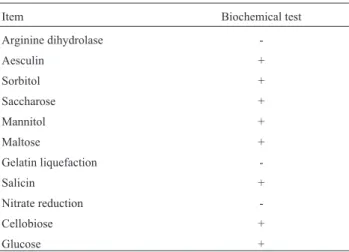
50 strains were isolated from the fish intestines sam-ples, of which 1 isolate strain was considered to be lactic acid bacteria according to the morphological, biochemical characteristics and the lactic acid metabolic products. The isolate strain showed initial characterization of Gram-po-sitive and no spore formation, and could produce small col-onies without pigment and grow well in MRS broth at 30 °C. The strain could produce acid by pH determination after fermentation, gas from glucose and dextran from su-crose, and hydrolyze arginine (Harrigan 1990). The metab-olism was consistent with facultative anaerobes. The strain was able to ferment saccharose, mannitol, maltose, cello-biose, glucose and sorbitol. The result of biochemical tests were showed in Table.1. The characteristics of the strain were the same as those of lactic acid bacteria.
PCR amplification of 16S rDNA sequence and phylogenetic tree
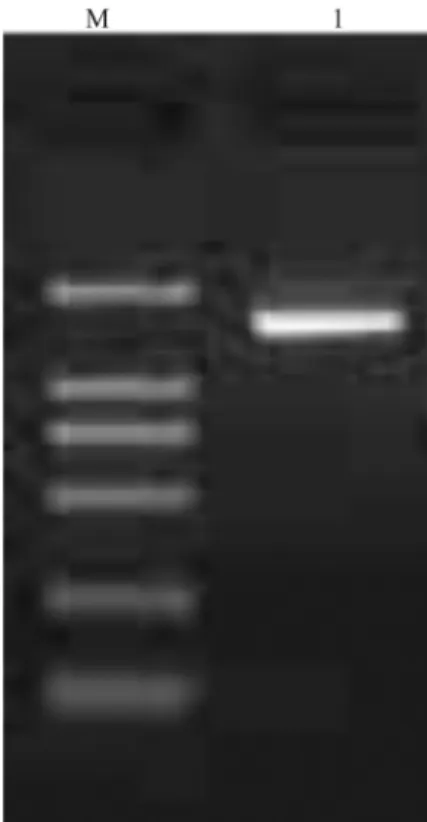
Judgement from the bands of the PCR amplification using two primers in an ethidium stained agarose gel, the length of PCR product was about 1500 bp (Figure 1).The phylogenetic analysis was performed with the 16S rDNA gene sequences of the 19 taxa most closely related to the presumed LAB. The phylogenetic tree based on maximum likelihood was shown in Figure 2. The strain of highest similarity was Leuconostoc citreum strain W-4 (FJ378896.1 in GenBank), and the second highest similar-ity wasLeuconostoc garlicum(AY456086.1 in GenBank). It eventually became clear that the isolate could be assigned to species. Sequencing result established the character of Leuconostoc lactis, so that the isolate in the study was available. Based on 16S rDNA sequence analysis, the iso-late above was identified as a strain of lactic acid bacteria, Leuconostoc lactis.
Table 1- Biochemical characteristics of the isolates.
Item Biochemical test
Arginine dihydrolase
-Aesculin +
Sorbitol +
Saccharose +
Mannitol +
Maltose +
Gelatin liquefaction
-Salicin +
Nitrate reduction
-Cellobiose +
Glucose +
Effect of pH on survival rate of the isolate
pH value was one of factors influencing survival of bacteria in gastric juice, and so the different pH values were investigated about its effect on the survival of bacteria. When pH was 1.5, the number of living bacteria was only 0.43x10⁶cfu/mL, obviously less than the 6.8x10⁶cfu/mL living bacteria in control group that pH was 5.5 (Figure 3). The result indicated that pH value could have the key effect on the isolated strain and the viable counts of the isolate came down with pH value decreasing, but the isolate still could survive well in acid condition.
The isolate tolerance for the bile salt
Tolerance to bile is important for the probiotic strains to grow and survive in the digestive tract. In this experi-ment, the number of living bacteria was showed in Figure 4. Compared to the control (0 g/L), the viable bacteria de-creased from 6.3x10⁶to 1.7x10⁶cfu/mL when the bile con-centration was 4 g/L. The isolate could tolerate bile, but high bile concentration could affect the survival of the iso-late.
Survival in Trypsinase and Pepsinin vitro
The survival of the bacterial strain in pepsin solution is showed Figure 5 at pH 3.0. The number of viable bacteria
Figure 2- Phylogenetic relationship of Leuconostoc lactis and the isolated strain based on maximum-likelihood analysis of 16S rDNA sequences.
Figure 1- Agarose gel electrophorsis of PCR product of 16S rDNA (M:DL 2,000 DNA Marker,1: 16S rDNA PCR product).
Figure 3- Survival of the isolate strain at different H values, as deter-mined by viable counts.
Figure 5- Survival of the isolate in Pepsin at different concentrations.
could maintain at 106cfu/mL. But different pepsin concen-trations had an effect on the survival of the bacterial. When the pepsin concentration was 10 g/L, the viable counts of the strain decreased to 1.7x10⁶cfu/mL, compared to the control (0 g/L) 3.3x10⁶cfu/mL. According to the result, the isolate could survive well under the action of pepsin, but the pepsin could influence survival of the bacteria to a certain extent.
Tolerance of the isolate to trypsinase was examined in PBS containing trypsinase concentrations from 0 to 7 g/L with incubating 6 h. Compared with the control group (0 g/L), the viable bacteria reached to 106cfu/mL at the trypsinase concentrations 1, 3, 5, 7 g/L. The result (Figu-re 6) showed that the isolate could survive better in trypsi-nase condition. When the trypsitrypsi-nase concentrations in-creased, the viable counts of the strain decreased. The trypsinase concentration 0 g/L responded to the viable count, 38x106 cfu/mL, and the trypsinase concentration 7 g/L responded to the viable count, only 3.33x10⁶cfu/mL. In Figure 6, the trypsinase concentrations were 0 to 3 g/L, the number of the viable count decreased rapidly, then tended to steady from 3 to 7 g/L.
If Lactic acid bacteria was used as dietary adjunct, it must tolerate the stomach acidity and survive in the enzyme solution of digestive tract (Conwayet al., 1987). The iso-late,Leuconostoc lactis, survived well under the action of pepsin and trypsinase in the experiment.
Antibiotic susceptibility of the isolate
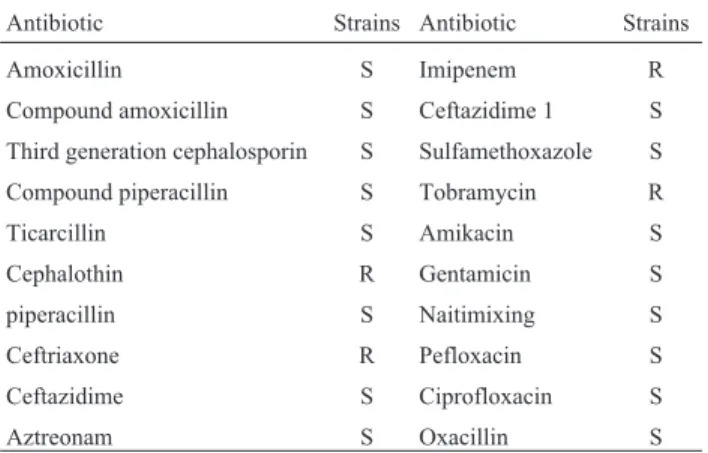
Antibiotic resistance is an increasing worldwide problem. The LAB is considered as generally recognized as safe (GRAS) by the FDA (Food and Drug Administration, USA) (Svensson 1999). With the antibiotic being used widely, some of the LAB appeared antimicrobial resis-tance. Resistance or susceptibility to antibiotic had de-served a special consideration in terms of classification of lactic acid bacteria for its association with human infec-tions (Feltenet al., 1999). For the antibiotics assayed, inhi-bition halos had been compared to results published for NCCLS reference. The isolate was sensitive to common an-tibiotic used in clinical applications, however represented resistence against cephalothin, ceftriaxone, imipenem and tobramycin (Table.2). The observation indicated that the isolate showed low probability of antibiotic resistance.
Autoaggregation assay
Autoaggregation of probiotic strains appeared to be related to adhesion to intestinal epithelial cells (Boriset al., 1997; Del Reet al., 2000; Reid et al., 1988). The auto-aggregation percentage was measured by the sedimentation rate. Result showed that the isolate could autoaggregate it-self and the autoaggregation percentage increased from 7.8% to 23.29% during 2-20 h (Figure 7). Compared with other probiotic strains, autoaggregation ability of the iso-late was very normal. The percentage of autoaggregation of Bifidobacteria.animalis subsp.lactic BB12 and Lactobacillus caseiShirota were respectively 36.7% and 17.9% (Yonget al., 2010).
Coaggregation assay
Coaggregation abilities may form a barrier that pre-vents colonization by pathogenic microorganisms (Boriset al., 1997; Del Re et al., 2000; Reid et al., 1988). Coag-gregation with pathogens, may constitute an important host defense mechanism against infection (Rickardet al., 2003). In the study, coaggregation of the isolate with seven entero-pathogens was examined. Results showed that the isolate
Figure 6- Survival of the isolate at different trypsinase concentrations.
Table 2- 2 Antibiotic Susceptibility in MRS agar for the isolate.
Antibiotic Strains Antibiotic Strains
Amoxicillin S Imipenem R
Compound amoxicillin S Ceftazidime 1 S
Third generation cephalosporin S Sulfamethoxazole S
Compound piperacillin S Tobramycin R
Ticarcillin S Amikacin S
Cephalothin R Gentamicin S
piperacillin S Naitimixing S
Ceftriaxone R Pefloxacin S
Ceftazidime S Ciprofloxacin S
Aztreonam S Oxacillin S
Note: “S”was sensitive, “R” was resistant.
coaggregated seven enteropathogens and coaggregation percentage would increase with the prolongation of incuba-tion time. After 20 h of incubaincuba-tion of a mixed suspension (Figure 8), the isolate coaggregated the enteropathogens with the high percentage forV. parahaemolyticus(31.21%) andL. monocytogenes(29.44%), the middle coaggregation percentages forShigella(24.36%),S.aureus(24.41%) and P. vulgaris(20.99%), and the low coaggregation percent-ages for E. coli O157 (10.74%) and S.typhimurium (16.49%). The autoaggregation percentage was higher than the coaggregation percentage of seven enteropathogens at 2 h, 4 h, 6 h. But at 20 h, the percentage of coaggregation with V. parahaemolyticus (31.21%), L. monocytogenes (29.44%),Shigella(24.36%) andS.aureus(24.41%) were higher than isolate itself (Figure 8).
The abilities of bacterial autoaggregation and coag-gregation were beneficial properties, which were respec-tively related to cell adherence and inhibitation against pathogen, and played an important role in intestinal tract (Jankovicet al., 2003). The isolate could have the ability of aggregating itself and coaggregating other bacteria, which could be helpful for the healthy of fish in aquaculture.
Antimicrobial activity assay
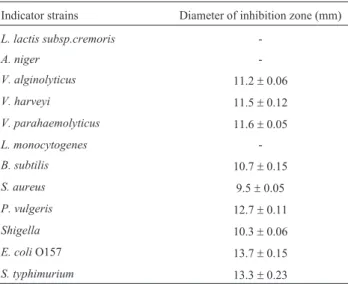
The ability to inhibition against pathogenic bacteria is used to select potentially probiotic bacteria. In this experi-ment, the indicator strains contained Gram-positive bacte-ria, Gram-negative bacteria and Fungi. The supernatant of the isolate didn’t showed inhibition toL. monocytogenes,L. lactis subsp.cremoris,A.niger, most effectively inhibition towardE.coli O157,S. typhimurium,B. subtilis,p.vulgaris, V. parahaemolyticus, V. alginolyticus, V. harveyi and Shigella, low inhibition towardS. aureus, as can be seen from Table 3. The metabolite of LAB, such as H2O2,
etha-noic acid, lactic acid and lactein were found to inhibit a wide variety of pathogens (Ocana et al., 1999). But it needed to be studied which metabolite played an important role in inhibiting pathogens for the isolate.
Conclusion
In this study, the strain of lactic acid bacteria, Leuconostoc lactis, isolated from marine fish, could be better adaptive to survivorship and colonization in the in-testinal tract in accordance with its aggregation ability and tolerance for pH, bile, trypsinase and pepsin conditions. The inhibition effect on the growth of pathogens, the antibi-otic little susceptibility and coaggregation assay indicated its potentially probiotic properties. The above result indi-cated that the isolate,Leuconostoc lactis, could be used as the perspectival strain for probiotics in marine aquaculture.
References
Angulo FJ (2000) Antimicrobial agents in aquaculture: Potential impact on health. APUA Newsletter 18:1-6.
Balcázar JL, Blas ID, Ruiz-Zarzuela I, Cunningham D, Vendrell D, Múzquiz JL (2006) The role of probiotics in aquaculture. Vet Microbiol 114:173-186.
Balcázar JL, Vendrell D, De Blas I, Ruiz-Zarzuela I, Muzquiz JL, Girones O (2008) Characterization of probiotic properties of lactic acid bacteria isolated from intestinal microbiota of fish. Aquaculture 278:188-191.
Bauer AWKW, Sherris JC, Turck M (1966) Antibiotic suscepti-bility testing by a standardized single disk method. Tech Bull Regist Med Technol 36:49-52.
Boris S, Suárez JE, Barbés C (1997) Characterization of the ag-gregation promoting factor fromLactobacillus gasseri, ava-ginal isolate. J Appl Microbiol 83:413-420.
Collado M, Meriluoto J, Salminen S (2008) Adhesion and aggre-gation properties of probiotic and pathogen strains. Eur Food Res Technol 226:1065-1073.
Conway PL, Gorbach SL, Goldin BR (1987) Survival of lactic acid bacteria in the human stomach and adhesion to intesti-nal cells. J Dairy Sci 70:1-12.
Figure 8- Comparison of percentage of autoaggregation and coaggre-gation with the isolate and seven pathogens Error bars represent standard deviations of the mean values of results from three replicate experiments.
Table 3- Antimicrobial activities of the isolated towards indicator bacte-ria.
Indicator strains Diameter of inhibition zone (mm)
L. lactis subsp.cremoris
-A. niger
-V. alginolyticus 11.2±0.06
V. harveyi 11.5±0.12
V. parahaemolyticus 11.6±0.05
L. monocytogenes
-B. subtilis 10.7±0.15
S. aureus 9.5±0.05
P. vulgeris 12.7±0.11
Shigella 10.3±0.06
E. coliO157 13.7±0.15
S. typhimurium 13.3±0.23
De Man JC, Rogosa M, Sharpe ME (1960) A medium for the cul-tivation oflactobacilli. J Appl Microbiol 23:130-135.
Del Re B, Sgorbati B, Miglioli M, Palenzona D (2000) Adhesion, autoaggregation and hydrophobicity of 13 strains of
Bifidobacterium longum. Lett Appl Microbiol 31:438-442.
Felten A, Barreau C, Bizet C, Lagrange PH, Philippon A (1999)
Lactobacillusspecies identification, H2O2production, and antibiotic resistance and correlation with human clinical sta-tus. J Clin Microbiol 37:729-733.
Harrigan WF (1990) Laboratory Methods in Food and Dairy Mi-crobiology. Academic Press, London.
Ishida Y, Sugita H (2000) Methods in Microbiology for Marine Environmental Assessment. Koseisha-Koseikaku, Tokyo.
Jankovic I, Ventura M, Meylan V, Rouvet M, Elli M, Zink R (2003) Contribution of aggregation-promoting factor to maintenance of cell shape in Lactobacillusgasseri4B2. J Bacteriol 185:3288-3296.
Kos B, SuSkovic J, Vukovic S, Simpraga M, Frece J, MatoSic S (2003) Adhesion and aggregation ability of probiotic strain
Lactobacillus acidophilusM92. J Appl Microbiol 94:981-987.
Ocana VS, Pesce De Ruiz Holgado AA, Nader-Macias ME (1999) Characterization of a bacteriocin-like substance produced by a vaginalLactobacillus salivariusstrain. Appl Environ Microbiol 65:5631-5635.
Reid G, McGroarty JA, Angotti R, Cook RL (1988)Lactobacillus
inhibitor production againstEscherichia coliand
coaggre-gation ability with uropathogens. Can J Microbiol 34:344-351.
Reid G, Sanders ME, Gaskins HR, Gibson GR, Mercenier A, Rastall R, Roberfroid M, Rowland I, Cherbut C, Klaenham-mer TR (2003) New scientific paradigms for probiotics and prebiotics. J Cl Gastroenterol 37:105-118.
Rickard AH, Gilbert P, High NJ, Kolenbrander PE, Handley PS (2003) Bacterial coaggregation: An integral process in the development of multi-species biofilms. Trends Microbiol 11:94-100.
Ringø E, Gatesoupe FJ (1998) Lactic acid bacteria in fish: A re-view. Aquaculture 160:177-203.
Saitou N, Nei M (1987) The neighbor-joining method: A new method for reconstructing phylogenetic trees. Mol Biol Evol 4:406-425.
Stoesser G, Baker W, Van Den Broek A, Camon E, Garcia-Pastor M, Kanz C, Kulikova T, Lombard V, Lopez R, Parkinson H, Redaschi N, Sterk P, Stoehr P, Tuli MA (2001) The EMBL nucleotide sequence database. Nucleic Acids Res 29:17-21. Svensson U (1999) Probiotics: A Critical Review. Horizon
Scien-tific Press, UK.
Verschuere L, Rombaut G, Sorgeloos P, Verstraete W (2000) Probiotic bacteria as biological control agents in aquacul-ture. Microbiol Mol Biol Rev 64:655-671.
Yong L, Yong Z, Yan B, Heping Z (2010) Study on cell surface properties and inhibitory effects on pathogens of four pro-biotic strains. Journal of Chinese Institute of Food Science and Technology. 10:28-34.