2019
DEPARTAMENTO DE QUÍMICA E BIOQUÍMICA
Screening for New Psychoactive Substances (NPS) without
reference standards on High Resolution Mass Spectrometers
(HR-MS)
Maria Estevão Fidalgo von Cüpper
Mestrado em Química
Especialização em Química
Dissertação orientada por:
Professor Dr. Med. Kristian Linnet
ii
“We must have perseverance and above all confidence in ourselves. We must
be-lieve that we are gifted for something and that this thing must be attained.”
iii
ACKNOWLEDGMENTS
This master’s thesis represents the culmination of an important stage in my academic life. Thanks to the Erasmus Traineeship Programme, I had the opportunity to take two semesters abroad and venture into the world of forensics, a field that I have always been passionate about. The project was carried out at the Sec-tion of Forensic Chemistry at the Department of Forensic Medicine, University of Copenhagen, Denmark. First of all, I would like to thank Prof. Dr. Med. Kristian Linnet, for giving me the possibility to do this research within the Forensic Chemistry field at the Institute.
I would like to express my sincere gratitude to Dr. Petur Dalsgaard, my external supervisor who intro-duced me to the world of New Psychoactive Substances (NPS) and high-resolution mass spectrometry, for his willingness to offer a stimulating environment, continuous support in the development of my thesis, his patience, motivation, immense knowledge, and for providing me with practical tips.
I am very grateful to my internal supervisor Dr. Helena Gaspar, who initially guided my enthusiasm to work with NPS. I also would like to thank you for the firm support, the encouraging comments and for al-ways taking time for me by sharing your expertise.
I also greatly appreciate Dr. Carolina Noble and Dr. Christian Mollerup for their knowledge in mass spec-trometry and patience in helping me with the fragmentation pathways of synthetic cannabinoids and fentanyl analogues.
My thanks also go to the group members involved in this project, as well as to the entire staff and my co-workers for welcoming me and for the great time spent together.
Lastly but not least, I must express my very profound gratitude to my family, specially my mother, for always believing in me and having provided me with unfailing support as well as continuous encouragement for embarking on this adventure abroad. To my friends for the amazing years of friendship and for always cheering me up. This accomplishment would not have been possible without them and the guidance of God.
iv
RESUMO
As novas substâncias psicoativas, designadas por NSP, são consideradas um fenómeno mundial constitu-indo uma ameaça para a saúde pública. No término de 2017, mais de 670 NSP foram reportadas pelo Obser-vatório Europeu da Droga e da Toxicodepência (European Monitoring Centre for Drugs and Drug Addition, EMCDDA).
O conceito NSP pode induzir em erro, dado que o termo “novas” pode levar à conclusão que se trata de substâncias recentemente introduzidas no mercado, contudo muitas delas foram desenvolvidas há mais de 40 anos por investigadores tendo em vista, normalmente, o desenvolvimento de novos fármacos. É o caso de John Huffman que pretendeu estudar as interações dos recetores canabinóides, de modo a testar os efeitos da canábis no cérebro humano. Estes compostos pretendem mimetizar os efeitos produzidos por substâncias psicoativas (cocaína, anfetaminas, ecstasy, entre outras), que se encontram sob controlo internacional, tendo um grande impacto nos seus consumidores. O que define as NSP? Segundo o Gabinete das Nações Unidas contra a Droga e o Crime (United Nations Office on Drugs and Crime, UNODC), estas são descritas como “novos estupefa-cientes ou substâncias psicotrópicas, na forma pura ou em preparação, que não são controladas pelas conven-ções das Naconven-ções Unidas referentes aos estupefacientes (1961) e psicotrópicos (1971), mas que podem repre-sentar um risco à saúde pública”. As NSP são caracterizadas por pequenas modificações na estrutura química de substâncias (normalmente ilícitas), a substituição de apenas um átomo pode contribuir para um efeito mais poderoso, permitindo também contornar a legislação. Estas substâncias podem ser facilmente sintetizadas por qualquer pessoa que detenha conhecimentos em química e os laboratórios clandestinos onde a produção toma lugar situam-se predominantemente na China e em menor escala na Índia. A Internet é considerada o maior mercado de proliferação das NSP. Estas substâncias podem ser adquiridas nas chamadas “smartshops” como “bath salts” e “research chemicals” ou por “street dealers” que as obtêm em mercados online e depois são vendidas em discotecas, festivais de música e escolas, podendo ser designadas “party pills”. É de salientar que, estes produtos são geralmente vendidos, contendo nos rótulos a descrição “não adequado para consumo hu-mano”, como uma estratégia de contornar as leis nacionais e internacionais. Os efeitos associados ao seu con-sumo, podem ser diversos e por vezes imprevisíveis. Podendo estes, variar entre efeitos estimulantes, alucino-génios e analgésicos. O consumo de NSP tem levado a intoxicações severas, bem como casos fatais.
O surgimento destes compostos, sob marcas e embalagens apelativas, estimula especialmente a curiosidade da geração mais jovem devido à sua acessibilidade e anonimato. De notar que, o ritmo acelerado com que as NSP aparecem nos mercados de drogas torna complicado o seu controlo. Quando uma substância chama a atenção das autoridades e, acaba finalmente por ser inserida na lista de substâncias controladas, rapidamente uma nova toma a sua posição, com o intuito de substituir aquela que foi banida do mercado.
A identificação destas substâncias revela-se desafiante para os analistas que estão dispostos em encontrar uma resposta eficaz para os casos que surgem, isto deve-se sobretudo às diferenças estruturais e à ausência de padrões de referência. De modo a enfrentar estas questões, um grupo de investigadores Dinamarqueses tiveram a ideia de desenvolver uma base de dados que compreendesse novas substâncias psicoativas como também compostos relacionados reportados por laboratórios de todo o mundo. Assim, o mesmo composto pode conter mais do que uma entrada, o que de certo modo contribui para a sua validação, podendo desta forma certificar-se que a informação fornecida é coerente. Atente-certificar-se que esta bacertificar-se de dados contempla elementos que são de cariz tanto experimental como não-experimental. Nesse sentido, esta tese consistiu em melhorar e testar esta biblioteca online universal (HighResNPS) destinada às NSP, quando os padrões de referência não se encon-tram disponíveis, utilizando a cromatografia líquida de ultra eficiência acoplada à espectrometria de tempo-de-voo (ultra-high-performance liquid chromatography quadrupole time-of-flight mass spectrometry,
v UHPLC-QTOF-MS). O presente trabalho compreendeu duas partes fundamentais: a biblioteca e o método de
screening. Relativamente à primeira, foi necessário assegurar que a informação apresentada no HighResNPS
estava correta, em termos de iões fragmento, nomes IUPAC, classes de drogas, entre outros parâmetros. Graças à inclusão de duas features na base de dados, foi possível assinalar e corrigir 290 erros associados à massa do ião precursor e iões fragmento, encontrar a fórmula molecular em falta para alguns dos fragmentos e retificar 61 nomes IUPAC. É importante ter em consideração, que através do nome IUPAC pode ser gerado o In-ChIKey, que é um parâmetro de relevância máxima, visto que é característico de um único composto, permi-tindo facilmente a sua identificação. Além disso, pode ser útil para proceder a uma pesquisa na Internet, isto é, noutras bases de dados online. Note-se, que as substâncias podem apresentar diferentes designações, do mesmo modo, os nomes IUPAC também podem sofrer ligeiras variações, pelo que o InChIKey é crucial para reconhecer a identidade do composto em questão. Verificou-se que nem sempre, foi possível, encontrar o nome IUPAC e consequentemente o InChIKey, o que pode ser crítico especialmente quando isómeros posicionais estão presentes.
O constante aparecimento de duas classes específicas de NSP requereu uma especial atenção. Duas sub-bibliotecas foram criadas, a primeira contendo 51 análogos do fentanil e a segunda, 215 canabinóides sintéti-cos. Por forma, a que fornecessem uma visão geral quanto aos padrões de fragmentação, sendo estes posteri-ormente comparados com os resultados presentes na base de dados. Em geral, o estudo da fragmentação para ambos os grupos de compostos, revelou que novos derivados podem ser previstos, tendo em conta, os princí-pios estabelecidos. No que diz respeito à segunda parte, a aplicabilidade do método de screening foi avaliada tendo como base o HighResNPS. Durante este processo, foi explorada uma nova perspetiva, em como usar o HighResNPS sem necessidade de o importar. Assim, foi utilizada como uma base de dados espectral online, possibilitando o acesso imediato às informações mais recentes. De modo a testar o HighResNPS, 36 amostras confiscadas pelas autoridades Dinamarquesas durante o período de 2015 e 2019 foram analisadas utilizando UHPLC-QTOF-MS. Contudo, apenas 14 amostras de NSP desconhecidas foram selecionadas, uma vez que as restantes deram origem a resultados idênticos ou indicaram a presença de drogas tradicionais, tal como heroína e MDMA.
No âmbito deste trabalho, a ionização por electrospray, no modo positivo, foi utilizada como fonte de iões. A deteção foi realizada com base numa aquisição de alta resolução de massa exata, através de um espectróme-tro de massa de tempo-de-voo. Todos os dados foram processados com recurso ao UNIFI 1.9.2 e adquiridos por meio de um varrimento completo, com base numa aquisição independente de dados (AID) (data
indepen-dent acquisition, DIA). O processo de fragmentação foi induzido por uma rampa de energia de 10 a 40 eV.
Para todas as 14 amostras, o ião precursor foi investigado no HighResNPS, utilizando pelo menos uma décima, de modo a reduzir, assim o número de potenciais candidatos, tendo como base a massa exata do composto. De seguida, o perfil de fragmentação foi examinado, correlacionando os dados obtidos com a informação dispo-nível na biblioteca. Em suma, esta abordagem permite obter uma informação preliminar, podendo conduzir-nos frequentemente à NSP certa. Contudo, em alguns casos nem sempre é possível definir uma estrutura quí-mica rigorosa do composto, especialmente quando estamos perante isómeros posicionais. No entanto, podemos ter uma noção clara da classe de drogas a que este deve pertencer. Sendo, assim necessário nestas situações recorrer a outras metodologias como por exemplo, espectroscopia de ressonância magnética nuclear (RMN) (nuclear magnetic ressonance, NMR) ou adquir os padrões de referência, de modo a conseguir um resultado o mais exato possível.
vi
ABSTRACT
New Psychoactive Substances, commonly referred to as NPS, are continuously emerging on the recrea-tional drug market under appealing trade names and packages, sparking especially the curiosity of the youngest generation. These compounds are designed to mimic the effects of traditional illicit drugs and characterised by slightly modifications in their chemical structures. In this way, NPS represent a global concern to the public health owing to their unpredictable pharmacological and toxicological effects, thus leading to severe intoxica-tions that might culminate in deaths.
The term “new” could misleadtheir real definition, since some of them have been manufactured more than 40 years ago for distinct purposes and recently, they have been reintroduced on the drug scene thanks to their psychoactive properties. In addition, they hold a label “not for human consumption”, in order to divert the attention from their actual composition and therefore, avoiding national and international laws. The identifi-cation of NPS poses a challenge for the analysts that are willing to give an effective answer to the cases at hand, this is mainly due to structure similarity and lack of reference standards. In this way, this thesis aimed at improving and testing a universal online library named HighResNPS for NPS, when reference standards are not readily available, using ultra-high-performance liquid chromatography quadrupole time-of-flight mass spectrometry (UHPLC-QTOF-MS). Hence, the presented work was composed by two main parts: the database and the screening method. It was essential to ensure that the information contained on the HighResNPS was correct, in terms of fragment ions, IUPAC names, drug classes, among other parameters; in addition, the steady emergence of two specific NPS drug classes forced us to create two additional sub-libraries containing 51 fentanyl analogues and 215 synthetic cannabinoids that could provide an insight into their fragmentation pat-terns, which were further compared with the data available on the database. In general, the fragmentation study for both groups revealed to be successful and therefore, novel derivatives can be predicted based on the estab-lished principles.
Regarding the second part, the applicability of a screening method for NPS in seizures was evaluated using HighResNPS as an online mass spectral database. This analysis was performed exclusively to 14 seizures that were confiscated by the Danish authorities between 2015 and 2019 containing unknown compounds. Further-more, the mass spectral was acquired in positive mode and in data-independent acquisition (DIA), being the fragmentation process induced by a ramp of collision energy (CE) from 10 to 40 eV. For all the aforementioned samples, the precursor ion was searched on HighResNPS by selecting at least one decimal, in order to reduce the number of potential candidates based on the accurate mass and then, the fragmentation profile was exam-ined, correlating the data obtained with the one available on the database. In conclusion, the approach provides a preliminary information and it might often lead us to the correct NPS. However, in some cases it is not always possible to define the exact structure of the compound, nevertheless we can have an idea concerning the drug class within it might be included, this is observed for positional isomers when it is required to resort to other methodologies such as, nuclear magnetic resonance (NMR) spectroscopy or purchase the reference standards to obtain an unambiguous result.
vii
TABLE OF CONTENTS
ACKNOWLEDGMENTS ... iii
RESUMO ... iv
ABSTRACT ... vi
TABLE OF CONTENTS ... vii
LIST OF FIGURES... ix
LIST OF TABLES... xii
LIST OF CHARTS ... xiii
LIST OF APPENDICES ... xiv
1 INTRODUCTION ... 1
1.1 Into the world of NPS ... 1
1.2 The control of NPS in Europe ... 2
1.3 NPS categories... 3 1.3.1 Synthetic cannabinoids ... 3 1.3.2 Synthetic cathinones ... 5 1.3.3 Ketamines ... 8 1.3.4 Phenethylamines ... 9 1.3.5 Piperazines ... 12 1.3.6 Plant-based substances ... 13 1.3.7 Miscellaneous group ... 15 1.4 Identification Methods of NPS ... 19 1.5 HighResNPS database ... 22
2 AIMS OF THE STUDY ... 24
3 MATERIALS AND METHODS ... 25
3.1 Materials ... 25
3.1.1 Chemicals and reagents ... 25
3.1.2 Seized material ... 25
3.2 Screening method ... 25
3.2.1 Sample preparation ... 25
3.2.2 Ultra-performance liquid chromatography ... 25
3.2.3 Mass spectrometry ... 25
3.3 Software ... 26
viii
3.3.2 Chemical Drawing Software ... 26
3.3.3 OPSIN ... 26
3.4 Database ... 26
3.4.1 mzCloudTM... 26
3.5 Additional libraries... 26
3.5.1 TiHKAL ... 26
3.5.2 RESPONSE and EMCDDA ... 27
4 RESULTS AND DISCUSSION ... 28
4.1 Part I – HighResNPS database ... 28
4.2 Part II – Screening for NPS in seizures ... 54
5 CONCLUSION AND FUTURE PERSPECTIVES ... 79
6 REFERENCES ... 81
ix
LIST OF FIGURES
Figure 1.1 | Examples of the main SCs series. ... 4
Figure 1.2 | APICA. ... 5
Figure 1.3 | Examples of compounds belonging to the main SCs sub-groups: (a) naphthoylindoles, (b) naphthylmethylindoles, (c) naphthoylpyrroles, (d) phenylacetylindoles, (e) cyclohexylphenols and (f) classical cannabinoids. ... 5
Figure 1.4 | (a) Natural cathinone and (b) amphetamine. ... 6
Figure 1.5 | (a) Methcathinone and (b) mephedrone. ... 6
Figure 1.6 | General structure of synthetic cathinones. ... 7
Figure 1.7 | Examples of cathinone derivatives for each group. ... 7
Figure 1.8 | (a) Ketamine and (b) phencyclidine (PCP). ... 8
Figure 1.9 | Methoxetamine. ... 9
Figure 1.10 | Examples of new ketamine analogues: (a) 2-methoxyketamine and (b) N-ethylnorketamine (N-EK). ... 9
Figure 1.11 | Mescaline. ... 9
Figure 1.12 | (a) Methamphetamine and (b) MDMA. ... 9
Figure 1.13 | General structure of 2C series. R1 represents the possible substituents 72. ... 10
Figure 1.14 | Examples of 2C series compounds from the book “PIHKAL: A Chemical Love Story” 72. ... 10
Figure 1.15 | General structure of D series. R1 represents the possible substituents... 11
Figure 1.16 | Examples of D series. ... 11
Figure 1.17 | The benzodifurans sub-group – an example for each series: (a) 2C-X-fly and (b) “Dragonfly” 76. ... 11
Figure 1.18 | (a) General structure of NBOMe series where R1, R2 and R3 are the substituents, (b) and (c) that correspond to novel representatives 77. ... 12
Figure 1.19 | (a) BZP and (b) TFMPP 80,82. ... 12
Figure 1.20 | General structures of (a) piperazines, (b) benzylpiperazines and (c) phenylpiperazines, where R1, R2 and R3 are the substituents 85. ... 13
Figure 1.21 | Examples of piperazine derivatives for each sub-group: benzylpiperazines (a and b) 13 Figure 1.22 | Cathine 87. ... 14
Figure 1.23 | (a) Mitragynine and (b) 7-hydroxymitragynine 95. ... 14
Figure 1.24 | Salvinorin A 86. ... 15
Figure 1.25 | (a) The 2-AI backbone structure, (b), (c), (d) and (f) represent some examples of AIs 104,105. ... 16
Figure 1.26 | Examples of PCP analogues: (a) 3-MeO-PCP and (b) 3-HO-PCP 62. ... 16
Figure 1.27 | Structures of (a) tryptamine and (b) amino acid tryptophan... 17
Figure 1.28 | Tryptamines classification: unsubstituted indole ring (a and b), 4-substituted (c and d) and ... 17
Figure 1.29 | (a) General structure of fentanyls, where R1,R2,R3,R4, R5, R6, R7 and R8 represent the substituents, (b), (c), (d) and (e) are fentanyl analogues 113,117. ... 18
Figure 1.30 | Pyrazolam 119. ... 19
Figure 1.31 | Some benzodiazepines sub-classes: (a) 1,4-benzodiazepines, (b) triazolobenzodiazepines, (c) imidazobenzodiazepines, (d) oxazolobenzodiazepines, (e) thienodiazepines and (f) trienotriazolodiazepines. R represents the substituents 122. ... 19
x
Figure 1.32 | DIA and DDA acquisition modes. ... 21
Figure 1.33 | HighResNPS overview: front-page. ... 22
Figure 1.34 | Drug classes on HighResNPS database with a characteristic compound: (a) aminoindanes, (b) arylalkylamines, (c) arylcyclohexylamines, (d) benzodiazepines, (e) cannabinoids, (f) cathinones, (g) indolalkylamines, (h) opioids, (i) phenethylamines, (j) piperazine derivates, (k) piperidines & pyrrolidines and (l) plants & extracts. ... 23
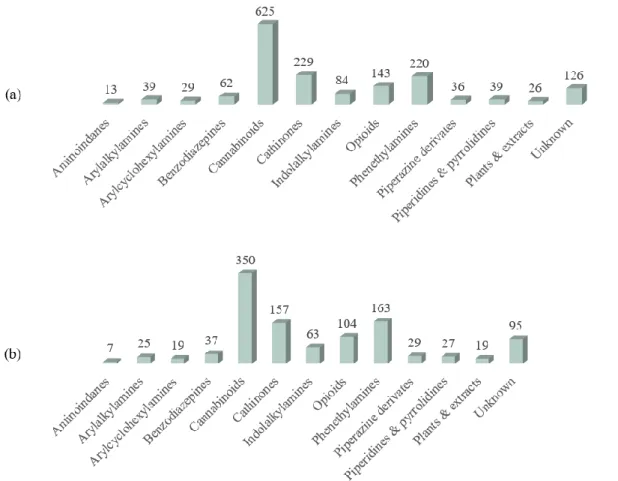
Figure 4.1 | HighResNPS database in October 2018: (a) number of entries and (b) number of compounds per drug class. ... 29
Figure 4.2 | Alpha-Methylfentanyl (opioid): first fragment mass with the right value highlighted in red (201.1512 Da). ... 30
Figure 4.3 | Nitracaine (unknown): list of fragment masses and respective molecular formulae. .... 30
Figure 4.4 | (a) Modafinil and (b) alfentanil: fragment ions (green circle) and their respective molecular formulae were obtained from mzCloudTM spectra. ... 31
Figure 4.5 | (a) AB-CHMINACA, (b) benzylpiperazine, (c) PV8 and (d) UR-144 N-pentanoic acid: fragment ions (green circle) and their respective molecular formulae were obtained from mzCloudTM spectra. ... 31
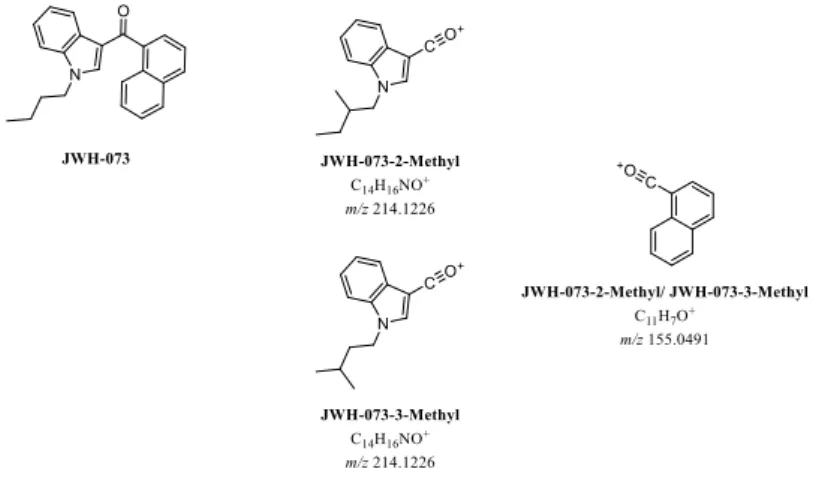
Figure 4.6 | Possible findings for JWH-073-2-Methyl and JWH-073-3-Methyl based on their fragmentation patterns (methyl group in the tail). ... 33
Figure 4.7 | Proposed fragmentation pathways for fentanyl analogues (Appendix D). ... 36
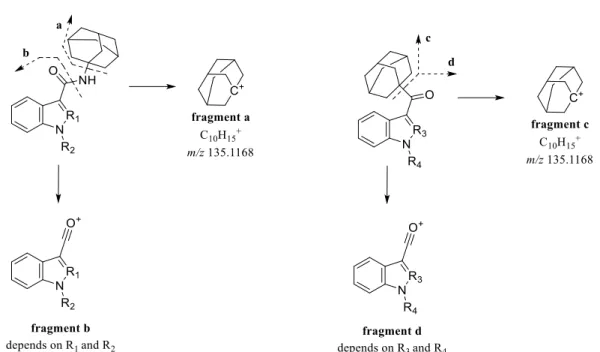
Figure 4.8 | Fragmentation pathways for SCs with adamantly ring: carboxyamide function (scheme A) and carbonyl function scheme B) (Appendix F). ... 40
Figure 4.9 | Proposed fragmentation pathways for SCs containing a naphthalene ring and a carbonyl group (Appendix G). ... 41
Figure 4.10 | Proposed fragmentation pathways for SCs containing a naphthalene/quinoline ring and a carboxyl group ... 42
Figure 4.11 | Proposed fragmentation pathways for SCs containing a naphthalene/quinoline ring and a carboxyamide group (Appendix I). ... 43
Figure 4.12 | Proposed fragmentation pathways for SCs with a TMCP moiety (Appendix J)... 44
Figure 4.13 | Proposed fragmentation pathways for PINACA compounds (Appendix K). ... 45
Figure 4.14 | Proposed fragmentation pathways for FUBINACA compounds (Appendix L). ... 45
Figure 4.15 | Proposed fragmentation pathways for CHMINACA compounds. (Appendix M). ... 46
Figure 4.16 | Proposed fragmentation pathways for three compounds that do not fit into any of the aforementioned sub-groups: (a) 5-fluoro PY-PICA, (b) ADBICA and (c) MDMB-CHMICA. ... 47
Figure 4.17 | HighResNPS database in March 2019: (a) number of entries and (b) number of compounds per drug class. ... 52
Figure 4.18 | (a) LC-QTOF-MS total ion chromatogram (TIC), MSE collision spectra of the unknown sample 1 at (b) low energy (LE) and (c) high energy (HE). ... 55
Figure 4.19 | Possible candidates on HighResNPS with a precursor ion at m/z 208.1332. ... 56
Figure 4.20 | Mexedrone: structure of its three fragments. ... 57
Figure 4.21 | (a) LC-QTOF-MS total ion chromatogram (TIC), MSE collision spectra of the unknown sample 2 at (b) low energy (LE) and (c) high energy (HE). ... 57
Figure 4.22 | Possible candidate on HighResNPS with a precursor ion at m/z 338.2227. ... 58
Figure 4.23 | ETH-LAD: structure of the fragments obtained from HighResNPS 149. ... 58
Figure 4.24 | (a) LC-QTOF-MS total ion chromatogram (TIC), MSE collision spectra of the unknown sample 3 at (b) low energy (LE) and (c) high energy (HE). ... 59
xi
Figure 4.26 | The three hints: structure of the main fragments. ... 60 Figure 4.27 | (a) LC-QTOF-MS total ion chromatogram (TIC), MSE collision spectra of the unknown
sample 4 at (b) low energy (LE) and (c) high energy (HE). ... 61 Figure 4.28 | Possible candidates on HighResNPS with a precursor ion at m/z 220.1696. ... 62 Figure 4.29 | N-ethylhexedrone: structure of its three fragments. ... 63 Figure 4.30 | (a) LC-QTOF-MS total ion chromatogram (TIC), MSE collision spectra of the unknown
sample 5 at (b) low energy (LE) and (c) high energy (HE). ... 63 Figure 4.31 | Possible candidate on HighResNPS with a precursor ion at m/z 375.2067. ... 64 Figure 4.32 | Furanyl fentanyl: structure of the three fragments. ... 64 Figure 4.33 | (a) LC-QTOF-MS total ion chromatogram (TIC), MSE collision spectra of the unknown
sample 6 at (b) low energy (LE) and (c) high energy (HE). ... 65 Figure 4.34 | Possible candidate on HighResNPS with a precursor ion at m/z 377.2235. ... 65 Figure 4.35 | 5F-MDMB-PICA: structure of the two fragments. ... 66 Figure 4.36 | (a) LC-QTOF-MS total ion chromatogram (TIC), MSE collision spectra of the unknown
sample 7 at (b) low energy (LE) and (c) high energy (HE). ... 67 Figure 4.37 | Possible candidate on HighResNPS with a precursor ion at m/z 329.0622. ... 67 Figure 4.38 | Metizolam: structure of the two fragments. ... 68 Figure 4.39 | (a) LC-QTOF-MS total ion chromatogram (TIC), MSE collision spectra of the unknown
sample 8 at (b) low energy (LE) and (c) high energy (HE). ... 69 Figure 4.40 | Possible candidates on HighResNPS with a precursor ion at m/z 378.2187. ... 69 Figure 4.41 | (a) LC-QTOF-MS total ion chromatogram (TIC), MSE collision spectra of the unknown
sample 9 at (b) low energy (LE) and (c) high energy (HE). ... 71 Figure 4.42 | Possible candidate on HighResNPS with a precursor ion at m/z 327.0807. ... 71 Figure 4.43 | Flualprazolam: structure of the two fragments. ... 72 Figure 4.44 | (a) LC-QTOF-MS total ion chromatogram (TIC), MSE collision spectra of the unknown
sample 10 at (b) low energy (LE) and (c) high energy (HE). ... 73 Figure 4.45 | Possible candidates on HighResNPS with a precursor ion at m/z 364.9687. ... 73 Figure 4.46 | (a) LC-QTOF-MS total ion chromatogram (TIC), MSE collision spectra of the unknown
samples 11 and 12 at (b) low energy (LE) and (c) high energy (HE). ... 74 Figure 4.47 | Possible candidates on HighResNPS with a precursor ion at m/z 260.2009. ... 74 Figure 4.48 | 3-HO-PCP: structure of the three fragments. ... 75 Figure 4.49 | (a) LC-QTOF-MS total ion chromatogram (TIC), MSE collision spectra of the unknown
sample 13 at (b) low energy (LE) and (c) high energy (HE). ... 76 Figure 4.50 | Possible candidates on HighResNPS with a precursor ion at m/z 182.1339. ... 76 Figure 4.51 | The two hints: structure of the main fragments based on scientific articles 110. ... 77 Figure 4.52 | (a) LC-QTOF-MS total ion chromatogram (TIC), MSE collision spectra of the unknown
sample 14 at (b) low energy (LE) and (c) high energy (HE). ... 77 Figure 4.53 | Possible candidates on HighResNPS with a precursor ion at m/z 198.0680. ... 78 Figure 4.54 | The two hints: structure of the main fragments based on scientific articles 144. ... 78
xii
LIST OF TABLES
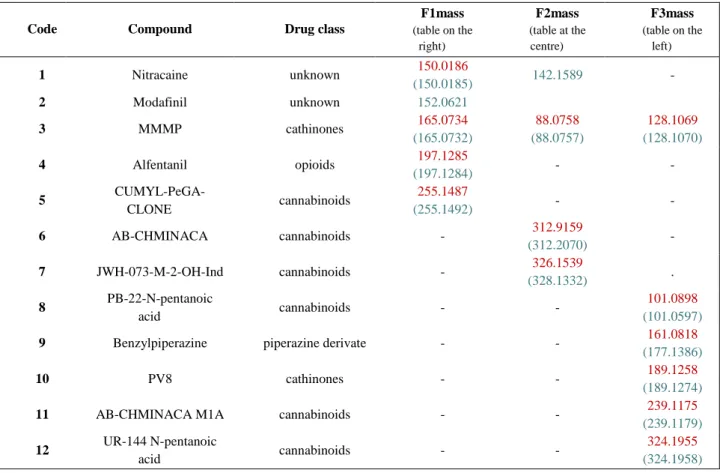
Table 4.1 | List of compounds missing the fragment molecular formulae. The blue colour represents
the right values, whereas the dark red corresponds to the non-accurate ones. ... 32
Table 4.2 | Available information on the database for JWH-073-2-Methyl and JWH-073-3-Methyl. ... 33
Table 4.3 | Fragment ions for JWH-073-2-Methyl and JWH-073-3-Methyl with methyl group on the naphthalene ring. ... 34
Table 4.4 | Available information on the database for mitragyna alkaloid 1 and mitragyna alkaloid (Paynantheine). ... 34
Table 4.5 | Example of 5-IT and its two additional entries. ... 34
Table 4.6 | First example: acetyl norfentanyl. ... 38
Table 4.7 | Second example: FIBF... 39
Table 4.8 | Third example: valeryl fentanyl. ... 39
Table 4.9 | Example for SCs containing an adamantly group: JWH 018 adamantly carboxamide. 48 Table 4.10 | Example for SCs comprising a naphthalene ring: JWH-210. ... 48
Table 4.11 | Example of SCs with a TMCP moiety: UR-144. ... 49
Table 4.12 | Example from PINACA sub-group: 5F-CUMYL-PINACA. ... 49
Table 4.13 | Example from FUBINACA sub-group: ADB-FUBINACA. ... 50
Table 4.14 | Example from CHMINACA sub-group: AB-CHMINACA... 50
Table 4.15 | Example from other SCs: 5-fluoro PY-PICA. ... 51
Table 4.16 | Example 1: 2-fluoroamphetamine, 3-fluoroamphetamine and 4-fluoroamphetamine (phenethylamines). ... 53
Table 4.17 | Example 2: 2-APB, 4-APB, 5-APB and 6-APB (arylalkylamines). ... 53
Table 4.18 | APP-PICA and CUMYL-THPINACA: the exact same mass but different fragment ions. ... 54
Table 4.19 The product ions available on HighResNPS database, on mzCloudTM and in the literature for each candidate. ... 56
Table 4.20 | The product ions available on HighResNPS database, on mzCloudTM and in the literature for ETH-LAD 149. ... 58
Table 4.21 | The product ions available on HighResNPS database, on mzCloudTM and in the literature for each candidate. ... 60
Table 4.22 | The product ions available on HighResNPS database, on mzCloudTM and in the literature for each candidate. ... 62
Table 4.23 The product ions available on HighResNPS database, on mzCloudTM and in the literature for furanyl fentanyl 143. ... 64
Table 4.24 | The product ions available on HighResNPS database, on mzCloudTM and in the literature for 5F-MDMB-PICA 154. ... 66
Table 4.25 | The product ions available on HighResNPS database, on mzCloudTM and in the literature for metizolam. ... 68
Table 4.26 | The product ions available on HighResNPS database, on mzCloudTM and in the literature for flualprazolam. ... 72
Table 4.27 | The product ions available on HighResNPS database, on mzCloudTM and in the literature for each candidate. ... 73
xiii
Table 4.28 | The product ions available on HighResNPS database, on mzCloudTM and in the literature
for each candidate. ... 75 Table 4.29 | The product ions available on HighResNPS database, on mzCloudTM and in the literature
for each candidate. ... 77 Table 4.30 | The product ions available on HighResNPS database, on mzCloudTM and in the literature
xiii
LIST OF CHARTS
Chart 4.1 | Number of compounds containing fragments and no fragments in October 2018. ... 32 Chart 4.2 | Number of fentanyl analogues and synthetic cannabinoids (no method) used for fragment prediction, in comparison with the available entries on the database containing a method. ... 35
xiv
LIST OF APPENDICES
Appendix A | 58 novel compounds monitored in six drug websites. The green colour represents where
the substances were found. ... 92
Appendix B | Masses corresponding to first, second and third fragments (on the right, at the centre and on the left, respectively). The green colour represents the values to rectify and the red ones are not able to find. ... 94
Appendix C | Fentanyl analogues used for fragmentation prediction. ... 95
Appendix D | Fentanyl analogues: common theoretical masses for fragments a, b, b2, c, c2 and d 143,144. ... 96
Appendix E | Synthetic cannabinoids used for fragmentation prediction. ... 98
Appendix F | Common theoretical masses for SCs with adamantyl ring containing a carboxyamide or carbonyl functions. ... 99
Appendix G | Common theoretical masses for SCs containing a naphthalene ring and a carbonyl group. ... 100
Appendix H | Common theoretical masses for SCs containing a naphthalene ring and a carboxyl group. ... 101
Appendix I | Common theoretical masses for SCs containing a naphthalene ring and a carboxyamide group. ... 102
Appendix J | Common theoretical masses for SCs with TMCP moiety: fragment c... 103
Appendix K | Common theoretical masses for PINACA-SCs. ... 104
Appendix L | Common theoretical masses for FUBINACA-SCs. ... 105
Appendix M | Common theoretical masses for CHMINACA-SCs. ... 106
Appendix N | List of 36 unknown samples with their respective elemental compositions, precursor ions, fragments and a tentative identification of the substance present in the samples. ... 107
Appendix O | Sample 1: theoretical fragments for MBDB, MDDMA and MDEA 110. ... 110
Appendix P | Sample 4: product ions available on HighResNPS (A) and theoretical fragments for NEiH, NiPP and N-propylnorpentedrone (B) 151,153. ... 110
Appendix Q | Sample 8: theoretical fragments for 5F-MDMB-P4AICA 44. ... 111
Appendix R | Sample 8: structure of product ions (A) and information on fragmentation available on HighResNPS (B) for 2-fluoro ADB, 3-fluoro ADB, 4.fluoro ADB, 5-fluoro ADB and 5-fluoro AEB. . 112
Appendix S | Sample 10: theoretical fragments for 3-hydroxyphenazepam and phenazepam 4-oxide 156. ... 114
xv
ABBREVIATIONS
% v/v Volume per volume
⁰C Degrees Celsius
4-MMC Mephedrone
ACMD Advisory Council on the Misuse of Drugs
AIs Aminoindanes AM Alexandros Makriyannis AU Australia BZP 1-Benzylpiperazine CA Canada CAT Methcathinone
CB1/CB2 Cannabinoid receptor type 1/ type 2
CE Collision energy
CID Collision-induced dissociation
CNS Central nervous system
CP Charles Pfizer
Da Dalton
DAT Dopamine transporter
DDA Data dependent acquisition
DE Germany
DIA Data independent acquisition
DK Denmark
DOB 2,5-Dimethoxy-4-bromoamphetamine
DOC 2,5-Dimethoxy-4-chloroamphetamine
DOI 2,5-Dimethoxy-4-iodoamphetamine
e.g. exempli gratia
EMCDDA European Monitoring Centre for Drugs and Drug Addiction
ES Spain
ESI Electrospray ionization
EU European Union
Europol European Union Agency for law enforcement coop-eration
eV Electron volt
EWS Early Warning System
F1mass/ F2mass
/F3mass Mass of the three most intense fragments F1MF/ F2MF/
F3MF
Molecular formula of the three most intense frag-ments
FI Finland
GC-MS Gas chromatography-mass spectrometry
GR Greece
h Hour
xvi
HSS Hollow structure section
HU Hebrew University
i.e. id est
InChIKey International Chemical Identified Key
IT Italy
IUPAC International Union of Pure and Applied Chemistry
JWH John W. Huffman
L/h Litre per hour
LC-MS Liquid chromatography-mass spectrometry
LGBT Lesbian, gay, bisexual and transgender
m/z Mass-to-charge ratio
MDMA 3,4-Methylenedioxymethamphetamine (ecstasy)
mg Milligram min Minute mL Mililiter mM Milimolar mm Milimetre MS Mass spectrometry
MSE Type of broadband data-independent acquisition
mode
MXE Methoxetamine
NAT Noradrenaline transporter
NMR Nuclear magnetic resonance
NO Norway
NPS New Psychoactive Substances
PCP Phencyclidine
PEA Phenethylamines
QTOF Quadrupole time-of-flight
rpm Revolutions per minute
Rt Retention time
SCs Synthetic cannabinoids
SERT Serotonin transporter
TFMPP 3-Trifluoromethylphenylpiperazine
THC Delta-9-tetrahydrocannabinol
TIC Total ion chromatogram
TMCP 2,2,3,3-Tetramethylcyclopropyl
UHPLC-QTOF-MS
Ultra-high-performance liquid chromatography quadrupole time-of-flight mass spectrometry
UK United Kingdom
UNODC United Nations Office on Drugs and Crime
USA United States of America
V Volt
μg Microgram
1
1 INTRODUCTION
In this chapter, a literature review is presented comprising the relevant topics regarding the conducted work. The control of NPS in Europe, their classification system, the use of a database (HighResNPS) and the analyt-ical tools applied for the screening of these drugs in seized material are described.
1.1 Into the world of NPS
New Psychoactive Substances, the so-called NPS, are a worldwide phenomenon that poses a threat to the public health 1. In the end of 2017, more than 670 NPS were recorded by the European Monitoring Centre for
Drugs and Drug Addiction (EMCDDA) 2.
The NPS concept might mislead its real definition, i.e. the term “new” could lead naturally to the conclu-sion that these substances are novel, however some of them were synthesized more than 40 years ago by researchers (e.g. John W. Huffman) in an attempt to improve the medical properties of cannabis3. More
re-cently, their recreational use came into play 4. The main purpose of these drugs is to mimic the effects generated
by well-known substances (e.g. cocaine, ecstasy, amphetamines and fentanyls 5), which are under control,
producing a stronger impact on their users 1. Hereupon, what define NPS? According to the United Nations
Office on Drugs and Crime (UNODC), they are described as “substances of abuse, either in a pure form or a preparation, that are not controlled by the 1961 Single Convention on Narcotic Drugs or the 1971 Convention on Psychotropic Substances, but which may pose a public health threat” 6. In other words, NPS also referred
to as designer drugs, are characterized by a modification in their chemical structure; sometimes a replacement of a hydrogen for a halogen is enough to contribute to a more powerful effect and consequently, to circumvent the legislation 7. These substances can be easily manufactured by people who have an expertise in chemistry
and the clandestine laboratories where their synthesis takes place, are predominantly based in China and less frequent in India 1. Afterwards, the drugs are distributed through the borders, maritime, air and terrestrial 8;
until reach their destination, which is mainly Europe or America 1. Thus, the proliferation of NPS is evident
all over the Internet 9, the major marketplace, but not only; they can also be purchased on smartshops as “bath
salts” and “research chemicals” or by “street dealers” who obtain them from online shopping and then sell them in clubs, at music festivals and schools 1. In this way, they could be described as “party pills” 10. In
addition, the products on sale hold a label “not for human consumption” as a strategy, in order to avoid national and international laws 11. The effects associated to its intake, may be diverse and sometimes unpredictable, but
might range between stimulant, hallucinogenic and analgesic side effects, just to name a few 12.
The rising wave of “legal highs” 13 has sparkedthe curiosity among the youngest generation specially owing
to their affordability and anonymity 1. Besides that, the trade names given, and the packages used to sell NPS
can also be attractive factors that make people want to try them out 8. In general, males are the most common
consumers of these substances 6,14. Recently, a study carried out in six European countries (Ireland, Germany,
Hungary, the Netherlands, Poland and Portugal) reported that males between 18 and 24 years old are in fact, the typical NPS users and depending on their living place (big or small cities) as well as, education level, they can be categorized into three groups (marginalized, nightlife and online users) 6. Therefore, the population
target includes not just students and clubbers, but also LGBT, psychonauts, homeless and prison communities
15,16.
The fast-pace at which NPS emerge on the drug markets, makes it challenging to control them. When a drug comes to the attention of the authorities and finally is added on the list of controlled substances, a new one appears with the aim to replace it 17. This situation is rising frustration for the policy makers who are
2 willing to find an effective approach to regulate NPS 18. So, why is this so complex? The problem is that these
drugs are recent on the market and therefore, their characterization is still under investigation once there is scarce analytical information on NPS and lack of reference standards 8. In this way, how can we detect NPS
in seized material? This thesis aims at building a universal NPS screening library that can be employed by all high resolution mass spectrometers (HR-MS) without the use of reference standards.
1.2 The control of NPS in Europe
The rapid growth of NPS on the European drug market forced the authorities to find a reasonable method to tackle this issue and consequently, to protect the health of EU citizens 19. Thus, the EMCDDA in
collabora-tion with the European Union Agency for law enforcement cooperacollabora-tion (Europol) implemented in 1997 the European Union Early Warning System termed EWS, which is responsible for monitoring and detecting these novel drugs. In addition, this advisory system comprises 30 national early warning systems (28 member states, Norway and Turkey) and law enforcement networks such as, the European Medicine Agency and the European Commission providing risk assessments on NPS and communicating the information collected to the member states, so they can define their own preventive actions 20.
In Europe, the NPS legislation system consists of a three-step process: 1) early warning or information exchange, 2) risk assessment and 3) control measures. The EMCDDA oversees the first two stages, which includes the management of the EWS and the risk assessments, while the last action is ruled by the European Commission, the Council of the European Union and the European Parliament 21. This approach was
strength-ened in November 2017 with the purpose to improve the Union’s response to NPS 22. So, how does it work?
Considering the analysis of seized material, if any compound is suspected to be a NPS, the national early warning system should announce immediately the EMCDDA and provide chemical and analytical information, besides that the circumstances of the event may also be investigated. In case the suspicion is right, a formal notification is issued by the respective country 23. This comprises the following relevant aspects: the name and
identifiers of the substance, the properties (chemical and physical), as well as the analytical methodologies for its identification, the pharmacology and toxicology 24. At this point, the monitoring of the substance takes
place. In this way, the member states are aware about the new drug and therefore, ready to act accordingly. For example, in forensic laboratories it might be essential to include the substance in their analytical screening, particularly when the recent information can be helpful in analysing data that might have been missed during previous studies owing to the lack of knowledge 20. The first stage is completed after the evaluation of the need
of a formal risk assessment, which means that the information regarding the novel substance is investigated and it will be documented on the so-called Joint Report (initial report). In this way, the Council may decide whether to undertake a risk assessment of the substance or not 24. It is also during this process that the potential
risks and implications of adding it on the controlled substances list are examined. Furthermore, this drug is further subjected to a comparison with the compounds under control as well as others containing similar fea-tures. However, when the substance reveals therapeutic benefits or it is applied in industry for developing medical products there is no need to conduct a risk assessment 24. This step is complete after the formulation
of a report by the Scientific Committee. It should encompass an analysis description and any opinions regard-ing the compound, more specifically: chemical and physical characteristics of the NPS in consideration, as well as the mechanisms of action, which may also include the medical value; potential risks for health and society; information concerning any detection by the authorities and its manufacture; definition of control measures in the member states and the chemical precursors used for its fabrication 25. Lastly but not least, the
introduction of control measures which is decided by the Council and represents the final step. At this level, the member states need to define the rules and criminal penalties, they have one year from the date of the
3 decision to act in accordance with their national law 24. In this way, what is the criteria to add a certain
com-pound under control? Firstly, it is important to make sure that its psychoactive properties are clear, as well as the probability of generating abuse or dependence, which may result in hallucinations or disturbances in be-haviour or perception, and the impact on public health. Furthermore, its use in medical therapy should be also taken into account 26.
1.3 NPS categories
The UNODC classifies NPS into six main categories: synthetic cannabinoids, synthetic cathinones,
ket-amines, phenethylket-amines, piperazines and plant-based substances. Besides these classes, a seventh
cate-gory can be mentioned – the miscellaneous, which corresponds to substances that do not fall into any of the indicated groups, such as aminoindanes, phencyclidine-type substances, tryptamines and benzodiazepines 27.
This classification system is based on the chemical structure which characterizes the different compounds and allows the development of analytical methods for a proper identification 28. A general description for each
category is presented below.
1.3.1 Synthetic cannabinoids
According to the EMCDDA, synthetic cannabinoids are widely controlled in Europe 29. This class of
com-pounds also referred to as SCs 30, emerged in the early 1960s with the purpose of boosting the
anti-inflamma-tory and analgesic properties of delta-9-tetrahydrocannabinol (THC)a 31,32, which is the main psychoactive
component in the plant Cannabis sativa, also known as marijuana 33. Along the years, cannabis has been
doc-umented thanks to its medical benefits (e.g. 500 years ago the extracts of marijuana were applied to alleviate cramps and to treat malaria in ancient China) 30. However, more recently its recreational use has restrained the
initial purpose 33. Thus, it is considered a narcotic drug and is forbidden by the United Nations Single
Con-vention on Narcotic Drugs mainly due to its uncertain pharmacological effects and psychoactive properties 30.
SCs bind to cannabinoid receptors of the organism, cannabinoid receptor type 1 (CB1) and cannabinoid receptor type 2 (CB2)generating effects, which are like the ones occurring in THC e.g. relaxation, disinhibi-tion, euphoria and distorted perception 34. These receptors can be found in different parts of the body, CB1 is
mostly present in the central nervous system whereas CB2 is predominantly located in the cells of the immune system 35. Although SCs and THC stimulate the same receptors, it is reported that the consume of SCs leads
to a great number of hospital entrances as well as, a higher level of toxicity 31. This can be explained in terms
of affinity 32, i.e. the measure of how strongly a drug molecule binds to a receptor 36. In light of above, the
cannabinoid receptors have a higher affinity for SCs, which are recognized as full agonists 32, this means that
SCs bind to receptors producing a full response 36, while THC is a partial agonist 32, in other words it acts as
an agonist however, the effect generated is not as great 36, thus being less potent 37.
It is worth noting that SCs are synthesised in laboratories (as powders) and not coming from Cannabis, which is sometimes misunderstood 37. Instead, most of these compounds are chemically fabricated in China
and shipped to Europe, where their aspect is modified with the use of herb mixtures and solvents e.g. acetone or methanol, in order to disguise their real composition and therefore, make people think that the product is provided by natural sources 32. As a result, the consumers should suspect of the content, since unknown
chem-ical compounds can be added and in different compositions, which may lead to unpredictable effects 37.
4 In the 2000s, new variations of SCs started to arise on Internet drug markets. Most of these novel com-pounds are commercialized under the brand names such as “Spice”, “K2” or “Kronic”, depending on the part of the globe where they are sold. The first designation is more common in Europe; the second in the USA and the last one in Australia and New Zealand 32. They are usually on sale as legal highs and with a label describing
that they are not for human consumption; additionally, no information regarding the health risks is mentioned
32. However, the drug users’ who are mainly young people 38, report their preference for SCs specially because
they can obtain these substances easily on Internet websites and smartshops on the condition of anonymity at a low price and they are a legal alternative to marijuana; besides that, the lack of reference standards make difficult their detection during a drug testing which is therefore limited to THC 32. Concerning the way of
administration, they can be rolled in a paper cigarette, inhaled through an electronic cigarette or taken as an herbal infusion 32. It is important to highlight that the consume of SCs is strongly associated with acute
intox-ications and sometimes overdose deaths may take place 39. However, other side effects may occur but not as
severe as aforementioned such as, tachycardia, chest pain, lethargy, nausea, hallucinations, amnesia, paranoia, panic attacks, shaking and renal damage 32,34.
In 2010, an array of SCs started to be international banned 32. Nevertheless, the efforts were not enough to
control the rapid emergence of these compounds, since every year a diversity of structures is launched on Internet drug markets 32. In this way, it is challenging to regulate this type of substances 32. The drugs available
on online shopping and smartshops are homologues of SCs, which were first manufactured in the 1960s by researchers from different institutions or companies and to distinguish them, they have associated a code name derived from their initials 32. “HU” series comes from the Hebrew University in Jerusalem, “CP” corresponds
to Charles Pfizer & Company, “JWH” belongs to John W. Huffman and “AM” to Alexandros Makriyannis just to name a few 40. In Figure 1.1, some examples of the structures are given: HU-210 (a), CP 47497-C8 (b),
JWH-018b (c) and AM-2201b (d), respectively 30.
Figure 1.1 | Examples of the main SCs series.
More recently, the EMCDDA stablished a method for naming compounds containing a long chemical name that can also be applied to emerging novel substances on the black market 40. In order to simplify, the code
names are based on the International Union of Pure and Applied Chemistry (IUPAC) name of SCs and are given accordingly to the initials representing the structures present in the compound 40. For example, APICA
5 illustrated in Figure 1.2, has the following systematic name N-(1-adamantyl)-1-pentyl-1H-indole-3-carbox-amide which confirms the criteria i.e. A stands for adamantyl, P denotes pentyl, I designates indole and CA represents carboxamide. Furthermore, SCs can be characterized by four units: core, tail, linker and linked group 40.
Figure 1.2 | APICA.
The Advisory Council on the Misuse of Drugs (ACMD) reported that SCs can be classified into the main sub-groups: naphthoylindoles, naphthylmethylindoles, naphthoylpyrroles, phenylacetylindoles, cyclohex-ylphenols and classical cannabinoids (Figure 1.3) 30,41-43. These categories have been in use until recently,
however the rapid growth of SCs contributed to an outdated classification system. Since then, a number of chemical modifications have been stated, for example: the indole ring, which is common to JWH compounds was replaced by an indazole ring; furthermore, the carboxamide group and adamantane or quinoline ring make now part of their structure 44.
Figure 1.3 | Examples of compounds belonging to the main SCs sub-groups: (a) naphthoylindoles, (b) naphthylmethylin-doles, (c) naphthoylpyrroles, (d) phenylacetylinnaphthylmethylin-doles, (e) cyclohexylphenols and (f) classical cannabinoids.
1.3.2 Synthetic cathinones
Synthetic cathinones are recognized as the second predominant group of NPS monitored in Europe right after SCs 45. This class of drugs consists of chemical analogues of natural cathinone (Figure 1.4a), which is a
6 psychostimulant alkaloid present in the leaves of a plant named Catha edulis also known as khat, mainly found in northeast Africa and Arabia Peninsula 46. In addition, natural cathinone produces amphetamine-like effects;
the relationship between this substance and amphetamine is illustrated in Figure 1.4.
Figure 1.4 | (a) Natural cathinone and (b) amphetamine.
Thanks to their ability to generate stimulant effects on the central nervous system (CNS), cathinones were originally applied for medical purposes, especially to treat patients with Parkinsonism 47. However, in the past
few years their recreational use became relevant with the first appearance of two compounds, methcathinone (CAT) (Figure 1.5a) and mephedrone (4-MMC) (Figure 1.5b) 48. Nevertheless, the psychoactive properties
of these derivatives were soon identified and consequently, their consume was forbidden 47. In this way,
mod-ifications in the structure of these drugs took place and hence, novel analogues started to emerge 49.
Figure 1.5 | (a) Methcathinone and (b) mephedrone.
In light of above, synthetic cathinones exert their action on CNS by inhibiting monoamine transporters such as, dopamine transporter (DAT), noradrenaline transporter (NAT) and serotonin transporter (SERT) 47,50. The
affinity to these transporters might be different from derivative to derivative due primarily to variations in its chemical structure. Besides that, it should also be taken into account that the age, health condition, use of medication, intake of other substances of abuse and alcohol could influence the length of its action 47.
These novel drugs commonly referred to as “bath salts” are sold under attractive brand names: “White Lightning”, “Bloom”, “Vanilla Sky”, among others 51. They can be found in the form of a powder, brown or
white crystal-like, inside a plastic package holding a label “not for human consumption”, although “jewellery cleaner” and “phone screen cleaner” are also typical designations 51,52. In addition, it is important to reinforce
that these packages might contain not only one compound, but instead a mixture of substances - caffeine and other illegal drugs - can be identified 53.
It is worth noting that these drugs are intended for users that seek for legal substitutes of illicit psychostim-ulants such as, cocaine, methamphetamine and MDMA (“ecstasy”) 54. Concerning the way of administration,
they can be orally, intravenously and intranasal administered 13. Consequently, serious side effects to the
hu-man health can arise no matter the exposure degree: panic, hallucinations, paranoia, aggression and violence (i.e. suicide and homicide might be committed), chest pain, nausea, tachycardia and therefore, could culminate into death due mainly to liver and kidney failure 54,55. The latter reactions could last approximately 3 to 4 hours 56. Over the course of the years, several fatalities have been linked to the consumption of these drugs, especially
7 These legal highs came originally from natural cathinone and are considered chemical analogues of methcathinone 57. Based on their generic chemical structure (Figure 1.6), synthetic cathinones are
character-ized by a carbonyl group attached at the beta position on the amino alkyl chain, thus they are usually described as “bk-amphetamines” 58.
A diversity of novel chemical entities can be easily generated by including new functional groups to the core skeleton, replacing one or more substituents on the phenyl ring (R1 and R2), at the alpha-carbon position
(R3) and at the N-alkyl chain (R4 and R5) 59.
Figure 1.6 | General structure of synthetic cathinones.
Currently, the cathinone derivatives can be divided into the four groups as depicted in Figure 1.7 47,49:
1. Consists of N-alkyl compounds or alkyl and halogen substituents in any position of the aromatic ring (e.g. flephedrone and 4-chloroethcathinone);
2. Considers compounds with methylenedioxy groups in any position of the phenyl ring (e.g. methylonec
and pentylone);
3. Includes analogues of natural cathinone with a pyrrolidinyl substitution at the nitrogen atom (e.g. MPHP and 4-fluoro-PV9);
4. Contains the methylenedioxy and N-pyrrolidinyl substituents (e.g. MDPPP and 3,4-MDPVc).
Figure 1.7 | Examples of cathinone derivatives for each group.
8
1.3.3 Ketamines
The scientist responsible for the first appearance of ketamine (Figure 1.8a) was Calvin Stevens from the Parke-Davis Pharmaceutical Company (Michigan, USA), which synthesized this compound in 1962 with the aim to discover an alternative to the hallucinogenic agent phencyclidine (PCP) (Figure 1.8b) 60. Thanks to its
anaesthetic properties and rapid onset action, ketamine was primarily applied in the clinical field e.g. to treat problems with alcohol, heroin addiction, anorexia and depression 60,61. However, it was later found that this
substance would be linked to psychedelic episodes, affecting the perception and mental state of patients 61. In
this way, its use hasbeen restrained 62.
Figure 1.8 | (a) Ketamine and (b) phencyclidine (PCP).
In the 1970s, this group of compounds emerged on the illegal drug market 62. At first, the users were
healthcare professionals who could easily have contact with the drugs, but this scenario has changed a few years later and ketamines started to be a trend among club goers; in other words, they were commonly seen on the “rave scene” as an adulterant to ecstasy pills 62,63. The effects induced by its intake rely on the dose 61:
▪ speech disorder, disorientation, anxiety and irrational behaviour (low doses);
▪ respiratory disturbances, complications in moving, seizures and nausea (high doses);
Lastly, loss of consciousness and paranormal experiences may occur at excessive dosage that may not ex-ceed 2 mg/kg 61. Thus, ketamine is sometimes referred to as “dissociative drug” 64 due to the sense of
discon-nection of the mind from the body experienced by its users 65. However, overdose deaths are unlikely to take
place owing to its broad therapeutic window 65 .
These drugs of misuse are available on the black market as white powders and tablets 61 and are
commer-cialized under appealing street names such as, “Special K”, “Vitamin K”, and “Kit Kat” 66. Likewise in other
NPS, ketamines are usually adulterated or combined with other components e.g. PCP, MDMA, cocaine, diaz-epam and paracetamol 61. Concerning the administration routes, they can be intravenously, orally and intranasal
administered 65.
Ketamine belongs to the arylcyclohexylamines group 67. This class of compounds consists of a
cyclohex-ylamine unit with an aryl moiety (e.g. phenyl ring) attached to the atom to which the amine group is also linked
67.
The urge to manufacture novel analogues became relevant when ketamine started to be controlled in dif-ferent countries 64,68. In this way, methoxetamine (MXE) (Figure 1.9) was one of the outstanding substances
produced. This compound differs from ketamine in the following aspects 63:
▪ the inclusion of the N-ethyl group that could boost the potency as well as its duration of action; ▪ the replacement of the 2-chloro with the 3-methoxy group which could suggest the mitigation of its
9 Figure 1.9 | Methoxetamine.
However, MXE was later banned from the drug market 62. Hence, new analogues were fabricated (Figure 1.10) 62.
Figure 1.10 | Examples of new ketamine analogues: (a) 2-methoxyketamine and (b) N-ethylnorketamine (N-EK).
1.3.4 Phenethylamines
Phenethylamines (PEA) 69 are famous for their hallucinogenic properties 70. Mescalined (Figure 1.11) is
the first alkaloid reporting these effects, which are produced by the peyote cactus (Lophophora williamsii) 71.
In order to achieve a full reaction, it is recommended a high dose between 250-500 mg, which means that its effectiveness is poor. Nevertheless, this substance is believed to be the foundation to which new molecules are designed 71.
It is worth noting that this class of compounds comprises amphetamine (see Figure 1.4b), methamphetamine
(Figure 1.12a) and MDMA (Figure 1.12b), which are controlled under the 1971 Convention on Psychotropic
Substances 72, therefore not considered NPS. They are usually found in the form of powders and tablets, being
generally ingested 27. In addition, they are defined by different street names such as, “RDJ” and “Europa” 27.
Figure 1.12 | (a) Methamphetamine and (b) MDMA.
In terms of side effects, PEA are responsible for hallucinogenic and stimulant responses in the CNS, which can lead to disorientation, vertigo, nausea, headaches, among other symptoms 73. Concerning the fatalities
record, the cases of heart attack stated are not many 74.
d Controlled under the Schedules of the Convention on Psychotropic Substances of 1971 80 Figure 1.11 | Mescaline.
10 PEA are part of a major family of NPS named arylalkylamines 75 that encompass some of the following
sub-groups: “2C series”, “D series”, NBOMe and benzodifurans 72. A brief description for each one is
pre-sented below.
“2C series” (Figure 1.13) demonstrate a certain resemblance to the chemical structure of MDMA and it is
suggested that they correspond to analogues of mescaline 72. Alexander Shulgin was the organic chemist
re-sponsible to give this designation to these substances, in order to represent the two carbons between the ben-zene ring and amino group (see Figure 1.11) 70. Apart from that, he was the author of a book entitled “PIHKAL:
A Chemical Love Story”, which comprises the information concerning the effects and dosages along with guidelines for the synthesis of more than 200 hallucinogenic compounds 72.
Figure 1.13 | General structure of 2C series. R1 represents the possible substituents 72.
In 1991, its publication led to a rise in popularity of the substances documented (e.g. 2C-B, 2C-T-7, 2C-E, 2C-D, 2C-C, 2C-I, 2C-T-2, 2C-T-4, 2C-H, 2C-N and 2C-P) and consecutively to their restriction 72. This
sub-group can be characterized by a methoxy sub-group at the positions 2 and 5 on the aromatic ring and a substituent (e.g. a halogen, alkyl and alkylthio moiety) at the para-position, which might produce an unlimited number of derivatives (Figure 1.14) 70. The potency of each substance may vary according to the substitution at the
po-sition 4 on the aromatic ring 72. It is reported that derivatives containing halogen substitutes are more powerful
(i.e. the hallucinogenic effects are stronger) than the ones without these electronegative elements 72.
Figure 1.14 | Examples of 2C series compounds from the book “PIHKAL: A Chemical Love Story”72.
From the chemical point of view, “D series” (Figure 1.15) involve the inclusion of a methyl group on the alpha carbon of the side chain, which differs slightly from the “2C series” 27.
11 Figure 1.15 | General structure of D series. R1 represents the possible substituents.
DOBe, DOC and DOI are some examples that make part of this sub-group (Figure 1.16) 27.
Figure 1.16 | Examples of D series.
Afterwards, some adjustments were made on the “2C series”, therefore resulting in novel analogues 72.
These new compounds correspond to the 2C-X-fly series, to which X refers to any substitute at the position 8 and fly is attributed to two dihydrofuran rings attached to both opposite sides of the benzene ring (Figure
1.17a) 72. Further, the aromatization of these heterocyclic compounds produced a different series named “drag-onfly”; this term suggests that the chemical structures can be compared to an insect (Figure 1.17b) 72. Besides
that, this group of drugs are reported to be extremely potent 72.
Figure 1.17 | The benzodifurans sub-group – an example for each series: (a) 2C-X-fly and (b) “Dragonfly” 76.
In 2011, the 25-X-NBOMe derivatives of the “2C series” emerged on the recreational market 12. These
series are of major concern 70, since their intake can result in hallucination and delirium, which can be felt in
a greater degree than in other 2C compounds 77. In addition, they are associated to repeated serious
intoxica-tions and deaths may occur 77. The NBOMe series consists of methoxy groups at the positions 2 and 5 on the
benzene ring and replacement of one hydrogen (R3) from the amino group by an N-2-methoxybenzyl moiety (Figure 1.18a) 77. However, further structural modifications were performed 77. For example,
2,3-methylene-dioxy or hydroxy groups were used in placed of the methoxy group from the N-2-methoxybenzyl moiety 77.
12 Moreover, 2,5-dimethoxybenzene is replaced by benzofurane (5-APB-NBOMe) (Figure 1.18b) or 3,4,5-tri-methoxybenzene (mescaline-NBOMe) (Figure 1.18c) giving rise to novel representatives 77.
Figure 1.18 | (a) General structure of NBOMe series where R1, R2 and R3 are the substituents, (b) and (c) that correspond
to novel representatives 77.
1.3.5 Piperazines
At first, these compounds were developed for therapeutic purposes but rapidly their psychoactive properties came into play 27. In the late 1990s, this class of substances appeared on the drug market 78 with the aim to
mimic the stimulant effects of MDMA; however, its potency is inferior 12. In this way, piperazines derivatives
can be generally found in ecstasy tablets 79. Currently, these drugs are not included in any of the United Nations
Conventions (1961 and 1971) 5,80, except 1-benzylpiperazine (BZP) (Figure 1.19a) which is already under
international control 80.
Figure 1.19 | (a) BZPand (b) TFMPP 80,82.
These drugs are available in tablets or powders 81 and they can be consumed alone or as a blend 74 (i.e. a
combination with other substances, such as a second piperazine, caffeine, cocaine and MDMA) 82, which may
be taken orally or by snorting 81. In addition, they are usually found under some of the following trade names:
“Bliss”, “Rapture”, “Legal X” 83. In case of BZP, this chemical is commonly mixed with
3-trifluoro-methylphenylpiperazine (TFMPP) (Figure 1.19b), another piperazine derivative, to promote a long-term re-action, usually up to 8 hours 82. Concerning the side effects, they may depend on the dosage; high portions
could lead to hallucinations, disorientation, headaches and difficulties in breathing. In addition, seizures, kid-ney failure and fatal intoxications are also reported 84.
Piperazines (Figure 1.20a) consist of a six-membered ring containing two nitrogen atoms in opposite po-sitions 85. From this structure, novel derivatives might be produced by introducing different functional groups
at R1 and R2. In this way, two sub-groups can be generated: benzylpiperazines (Figure 1.20b) and