TEMA - Centre for Mechanical Technology and Automation
Pursuing excellence, cutting-edge and impact Research & Innovation since 1996
Based on its Human Capital and Capacities, the Centre for Mechanical Technology and Automation (TEMA)
embraces a mission aiming to contribute to a sustainable industry, with specially focus on the surrounding
SMEs, and to the wellbeing of society. Sustainable manufacturing aims to contribute to the development of a
sustainable industry by developments and innovations on manufacturing engineering and technologies, to
increase productivity, improve products quality and reduce waste in production processes. Technologies for the
Wellbeing wishes to contribute to the wellbeing of society by the development of supportive engineering
systems focusing on people and their needs and intending to improve their quality of life.
TEMA intends to maximize its national and international impact in terms of scientific productivity and its
transfer to society by tackling the relevant challenges of our time. TEMA is aware of the major challenges of
our days, not only confined to scientific issues but also the societal ones, (a strategic pillar of the Horizon 2020
program), at the same time placing an effort to have its research disseminated, in high impact journals to the
international scientific community.
The strategic scientific plan is grounded in six major goals:
- A strong focus on pursuing funding by means of European projects, also in order to enforce the
internationalization of the research unit and foster strong international networks;
- Responsible and active participation of TEMA members in pursuing the indicators and objectives
defined in the mission and strategy of the research unit, improving dissemination and communication
of excellent science;
- Improvement of research through grants and contracts, enhancing the range of income sources;
- Tackle critical societal challenges and issues by means of fundamental and applied research that
requires cross inter- and multi-disciplinary cooperation, stimulating entrepreneurial mindsets among
researchers;
- Continuous professional development with effective connection to society, at the national and
international levels, as part of a strategy aiming to boost growth and competitiveness in expertise areas
aligned with the European Research and Innovation agenda;
- To promote outreach activities that effectively integrates the society in TEMA's research and goals.
TEMA aims to: contribute to sustainability in its broad sense through new products, technologies and
techniques, being able to respond to new challenges for Portugal and Europe as defined in P2020 and
HORIZON 2020 and assisting product market entrance; be an institution of reference not only for young
engineers and scientists, but also for senior world-wide recognized professionals; engage in strategic
international collaborations around areas in which knowledge and competencies are crucial to the development
of TEMA and contribute to the development of competitive as well as responsive research.
Aveiro, July 11
th, 2019
The Coordinator,
António Manuel de Bastos Pereira
2nd International Conference on
TEMA: Mobilizing Projects
Book of Abstracts
2nd International Conference on
TEMA: Mobilizing Projects
Title:
Book of abstracts of the 2
ndInternational Conference of TEMA: Mobilizing Projects
Editors:
António Pereira, Paula Marques, Margarida Coelho, António Completo, Fernando Neto
Support team:
Ana Quintã, Diana Fidalgo, Kátia Silva, Maria Relvas, Nuno Almeida, Raul Simões
Publisher:
UA Editora
Universidade de Aveiro
1
stEdition
– July 2019
ISBN: 978-972-789-603-5
This book is supported by the projects:
UID/EMS/00481/2019-FCT - FCT - Fundação para a Ciência e a Tecnologia; and
CENTRO-01-0145-FEDER-022083 - Centro Portugal Regional Operational Programme (Centro2020), under the
PORTUGAL 2020 Partnership Agreement, through the European Regional Development Fund
Contents
Sustainable Manufacturing Solutions ... 7
Bending response of thin-walled tubular structures filled with cellular metals ... 8
Data acquisition and storage platform for injection moulding processes: an IoT approach .... 9
Design and sustainability: transforming plastic waste into new long-life products ... 10
Design of an Additive Manufactured Part by Topology Optimisation ... 11
Development of a cost-effective multi-axis force sensor for robotics automation ... 12
Development of products based on mixtures of polymeric residues ... 13
Enabling closed loop additive manufacturing through an on-demand feedstock material
customization system ... 14
Enhancing the heterogeneity of a uniaxial test using topology optimization ... 15
Influence of process parameters in asymmetric rolling ... 16
Influence physical fields on structure and properties of epoxy composites ... 17
Inverse analysis procedures for elastoplastic parameter identification using combined
optimisation strategies... 18
Life Cycle Assessment of Heat Recovery System ... 19
Morphing Shapes by 3D Printing ... 20
Prediction of performance of cutting environments in turning process of Ti-6Al-4V alloy .. 21
Spatially-selective femtosecond laser precipitaion of silver clusters and nanoparticles in
oxide glass ... 22
Structural and optical study of evaporated cerium-doped silicon layers ... 23
TAMAZ3D-A New Tool for Technical Ceramics 3D-Printing ... 24
The use of Plane-Stress Formulation: ... 25
Thermo-mechanical analysis of PVC-based Wood Plastic Composite decking boards ... 26
Weldability of an advanced high strength steel ... 27
Technologies for the Well-Being ... 28
Acoustic emission due to road traffic ... 29
Adsorption heat pumps for space and water heating: from component to complete system . 30
Application of Intelligent Supervised Predictive Control in Smart Green Buildings ... 31
Chondrocyte incorporation onto electrospun scaffolds for cartilage tissue engineering ... 33
Could CAVs be future eco-driving agents to influence the environmental performance of
road traffic? ... 34
Development of a virtual bench for simulation and monitoring of water heating devices .... 35
Effect of porosity variation on the physical properties of porous silicon ... 36
Electrical Properties of Pd/Ag Nanoparticles Modified Silicon Nanowires for CO
2Detection
... 37
From the beginning of life to nanotechnology: the vital role of carbon ... 38
Impact of the storage system through batteries in the finite networks with penetration of
wind energy ... 39
Innovative architecture optimization of electromagnetic energy harvesters ... 40
Interaction between motor vehicles and bicycles at two-lane roundabouts: a driving volatility
based analysis ... 41
Life Cycle Thinking of Active Mobility ... 42
Low GWP heat pump water heaters ... 43
Modelling of NOx degradation in a continuous stirred-tank reactor ... 44
Multifunctional lightweight cellular materials ... 45
New magnetic stimulator for instrumented implants ... 46
PCM in thermal energy storage
– a CFD approach ... 47
Photocatalytic reduction of CO
2using amorphous SiC thin films ... 48
Predictive control for tankless gas water heaters ... 49
Project Ghisallo: A mobile multi-sensor in the city ... 50
Project Ghisallo: Mecahnical development of a new smart soft-mobility concept ... 51
Real-time Prevention Tool Integrating Volatility and Environmental Impacts ... 52
Statistical Methodologies to Support Road Safety Analysis involving Vulnerable Road Users
... 53
The relevance of on-road emission monitoring in different type of roundabouts in rural roads
... 54
Bending response of thin-walled tubular structures filled with
cellular metals
Isabel Duarte
Department of Mechanical Engineering, TEMA
University of Aveiro
Aveiro, Portugal
[email protected]
Matej Vesenjak, Zoran Ren
Faculty of Mechanical Engineering
University of Maribor
Maribor, Slovenia
Joachim Baumeister
Fraunhofer Institute for Manufacturing Technology and
Advanced Materials, IFAM
Bremen, Germany
Hartmut Göhler
Fraunhofer Institute for Manufacturing Technology and
Advanced Materials, IFAM
Dresden, Germany
Lovre Krstulović-Opara
Faculty of Electrical Eng., Mechanical Eng. and Naval
Architecture
University of Split
Split, Croatia
Abstract— Thin-walled tubular structures filled with cellular
metals [1-3] have been developed and tested for impact energy absorbers of vehicles to replace the current empty thin-walled metal tubes with various cross sections. The lightweight cellular metals are excellent energy absorber as they can convert impact energy into deformation energy. Herein, a comparative study on the crashworthiness characteristics of thin-walled tubular structures filled with various cellular metals under quasi-static and dynamic three-point bending was performed. Closed-cell metal foams, advanced pore morphology (APM) foam [4], hybrid APM foam [5], and metallic hollow spheres structure (MHSS) [6] were studied as filler of the thin-walled tubular structures. The load–deflection characteristics, deformation and failure modes and energy absorption characteristics of different filled thin-walled tubular structures (Fig. 1) were investigated. Results indicate that the hybrid APM foam and ex-situ foam filled tubes achieved the highest values of the peak load, exhibiting an abrupt failure and a rapid load drop and once the composite structure has reached the peak load. The APM, MHSS and in-situ foam filled tubes show much more ductile crushing deformation, with a predictable failure, showing a lower scatter of bending properties. Results have also demonstrated [2-3] that the structural changes of the outer thin-walled tube induced by the heating treatment ensure higher ductility, avoiding the formation of the cracks. However, the heat treatment of the outer tubes decreases the bending performance in terms of peak load and energy absorption capacity. On the other hand, the strong bonding between the filler and the outer thin-walled tube is a pre-requisite for a good crashworthiness.
Keywords—cellular metals; filled tubes; advance pore morphology foam; metallic hollow sphere structure; three-point bending; energy absorption.
Figure 1: Specimens (from left to right): empty tube, APM, hybrid APM and MHSS foam filled tubes.
ACKNOWLEDGMENT
This
work
was
supported
to
the
projects
UID/EMS/00481/2019-FCT
and
CENTRO-01–0145-FEDER-022083.
TOPIC
1) b.: Sustainable Manufacturing Solutions – Nanoengineering
& Bio-inspired manufacturing.
REFERENCES
[1] I. Duarte, M. Vesenjak and L. Krstulović-Opara, “Dynamic and quasi-static bending behaviour of thin-walled aluminium tubes filled with aluminium foam,” Compos. Struct., vol. 109, pp. 48-56, 2014.
[2] I. Duarte, M. Vesenjak, L. Krstulović-Opara, I. Anžel and J.M.F. Ferreira, “Manufacturing and bending behaviour of in situ foam-filled aluminium alloy tubes,” Materials & Design, vol. 66, pp. 532-544, 2014.
[3] I. Duarte, M. Vesenjak and L. Krstulović-Opara, “Axial crush behaviour of the aluminium alloy in-situ foam filled tubes with very low wall thickness,” Compos. Struct., vol. 192, pp. 184-192, 2018.
[4] K. Stöbener, J. Baumeister, G. Rausch, M. Rausch, “Forming metal foams by simpler methods for cheaper solutions,” Met. Powder Rep., vol. 60, pp. 12-16, 2005.
[5] J. Baumeister, M. Monno, M. Goletti, V. Mussi, J. Weise, “Dynamic Behavior of Hybrid APM (Advanced Pore Morphology Foam) and Aluminum Foam Filled Structures,” Metals (Basel), vol. 2, 211-218, 2012.
[6] H. Göhler, U. Jehring, J. Meinert, R. Hauser, P. Quadbeck, K. Kuemmel, G. Stephani, B. Kieback, “Functionalized Metallic Hollow Sphere Structures,” Adv. Eng. Mater., vol. 16, pp. 335-339, March 2014
Data acquisition and storage platform for injection moulding
processes: an IoT approach
Renato Rocha
1, Jorge Ferreira
1,2, Mónica Oliveira
1,21
Departament of Mechanical Engineering
University of Aveiro
2
Centre for Mechanical Technology & Automation (TEMA)
Aveiro, Portugal
[email protected], [email protected], [email protected]
Vítor Santos
1,33
Institute of Electronics and Informatics Engineering of
Aveiro (IEETA)
Aveiro, Portugal
[email protected]
Abstract— The continuous rise in plastic injection industry
scale and requirements results in increasing demand for the performance of injection tools. High quality standards, as well as high cadence production, associated with the growing complexity of plastic components to inject, results in increasingly aggressive injection cycles for injection molding tools. The systematic overuse applied to injection tools such as high-pressure cycles leads to premature degradation and compromises the quality of the final product [1].
Data provided by the continuous monitoring of process variables regarding plastic injection molding, can be found extremely useful not only for the gauging of the quality of the product being injected, but also for the prediction of tool failure and maintenance [2]. With the rise of Industry 4.0 and IoT technologies, the centralization of information and data gathered from industrial processes has become a primary approach for companies that want to keep up with the fast-evolving competition. This technological paradigm enables the storage and easy access of data that contains abundant information which can be used for multiple purposes such as prediction or optimization [3].
This paper provides an IoT approach for the monitoring of multiple plastic injection machines. The system presented in this work enables the implementation of multiple acquisition modules that store acquired data on a dedicated server over the Internet. Also, the proposed solution provides an API for data fetch over the web, as well as remote control and monitoring of the installed modules.
Having a centralized storage system with a proper API is mandatory when the monitoring of multiple remote processes is intended. The API provides a way of accessing the data stored in the database server, which allows for the usage of large amounts of data being acquired in real-time and in any part of the globe. Stored data can then be processed with classic or machine learning methods. Data processing will provide the tools for process evaluation, being for predicting injection tool maintenance or to assure final product quality.
This work presents the necessary tools, including hardware, software, firmware as well as architecture concepts, required to monitor multiple injection processes and storing the acquired data
in the referred centralized system. This consists in the primary step for data management, storage and conditioning for the application of future processing algorithms.
Keywords—Injection Molding; Acquisition system; Variable Monitoring; IoT; Industry 4.0.
A
CKNOWLEDGMENTThis work was funded by the project “In Mould
Monitoring 4.0” (University of Aveiro and SF Moldes, SA), It
was also supported by the Centre for Mechanical Technology
& Automation (UID/EMS/00481/2019-FCT and
CENTRO-TOPIC
1) a.: Sustainable Manufacturing Solutions – Manufacturing
processes & Simulation.
R
EFERENCES[1] C. Hopmann, A. Ressmann, M. Reiter, S. Stemmler, D. Abel, A selfoptimising injection moulding process with model-based control system parameterisation, International Journal of Computer Integrated Manufacturing (2015).
[2] Y. Farouq, C. Nicolazo, A. Sarda, R. Deterre, Temperature measurements in the depth and at the surface of injected thermoplastic parts, Measurement: Journal of the International Measurement Confederation (2005).
[3] Radu F. Babiceanu, Remzi Seker, Big Data and virtualization for manufacturing cyber-physical systems: A survey of the current status and future outlook (2006).
Design and sustainability: transforming plastic waste into
new long-life products
Catarina Marques
1,2, Teresa Franqueira
2, Victor Neto
11
Department of Mechanical Engineering,
2Department of Communication and Art
University of Aveiro
Aveiro, Portugal
[email protected], [email protected], [email protected]
Abstract— The plastic industry and the dependence that
currently exists on plastic has generated an enormous amount of waste, that consequently, pollutes the environment. It has been estimated that 8300 million metric tons (Mt) of virgin plastics have been produced and if the trend continues, roughly 12000 Mt of plastic waste will be in landfills or in the natural environment by 2050 [1]. This problem has rapidly grown to the point where the current era is characterized as "Age of plastics" [2].
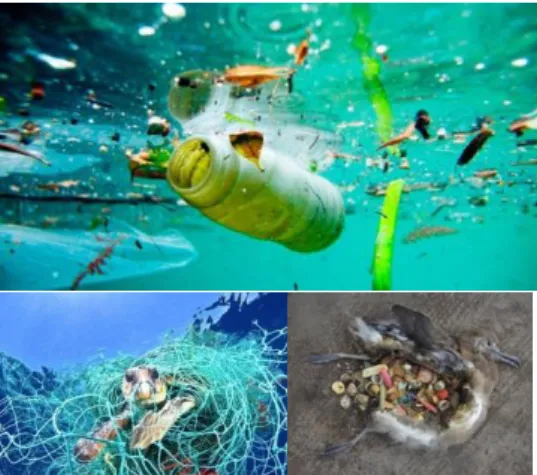
Overconsumption and discard habit, together with poor lifecycle management contribute to the deposition of these wastes into the environment, especially in the ocean [3]. Therefore, the ocean becomes the final receiver of some plastic materials, that are considered the most abundant and the most problematic for the environment, economy, and health of ocean habitats. That way, it is estimated that each year, 8 million tons of plastic have been ended up in the ocean [4]. The main problem is that it is harmful to marine life which has been imprisonment or has ingested plastic [5], which leads to transference through the food chain, affecting the health and well-being of humans [6].
In this context, the challenge and goal of this work are minimizing this problem by developing products from ocean plastic or likely to get in there one day. In this sense, the work focuses the use of recycled Polyethylene terephthalate (PET), Polypropylene (PP) and High-density polyethylene (HDPE), due to the fact that they are the most used materials and easy to find in the ocean, according to an analysis made during the study. The work consists of doing some experimental procedure with domestic and ocean plastic in two different manufacturing processes, injection molding, and 3D printing. Thus, it’s possible to draw conclusions from the behavior and limitations of each material submitted to reprocessing, and consequently satisfy the requirements for each product that will be developed. The results obtained show that the material coming from the ocean presents less tensile strength than the domestic one.
Therefore, will be designed a plant cultivation system for the interior of houses with domestic waste plastic and an item of urban furniture with plastic from the ocean. Also, the products are accompanied by a service with the aim of developing a basis for the process chain, from the collection of the raw material until its new life, based on a sustainable attitude.
In conclusion, the aim of this research is to strategically design to increase the life cycle of the materials by giving them a new life, through the transformation of plastic waste, in order to mitigate the environmental impact resulting from the excessive consumption of disposable products. It should be noted that this current excessive use of products will not be sustainable unless the industry develops more innovative and ecological approaches.
Keywords— Plastic recycling; Ocean plastic; Product design; Circular economy.
A
CKNOWLEDGMENTThe research here presented was supported by the projects
UID/EMS/00481/2019-FCT - FCT - Fundação para a Ciência
e a Tecnologia; and CENTRO-01-0145-FEDER-022083 -
Centro Portugal Regional Operational Program (Centro2020),
under the PORTUGAL 2020 Partnership Agreement, through
the European Regional Development Fund. The authors also
acknowledge the support of Professors Filomena Cardoso
Martins and Ana Paula Gomes, from the Department of
Environment and Planning, and of Catarina Lemos, from the
UACoopera unit, for the handling of the sea plastic residues.
TOPIC
1) c.: Sustainable Manufacturing Solutions – Manufacturing
for Circular Economy.
R
EFERENCES[1] Geyer, R., Jambeck, J. R., & Law, K. L., “Production, use, and fate of all plastics ever made” Science Advances. vol. 3, pp. 1-5, July 2017.
[2] Moore, C. J., “How much plastic is in the ocean? You tell me!” Marine Pollution Bulletin. vol. 92, pp. 1-3, 2015.
[3] Martins, J., and Sobral, P., “Plastic marine debris on the Portuguese coastline: A matter of size?” Marine Pollution Bulletin. vol. 62, pp. 2649-2653, 2011.
[4] European Environment Agency, “Marine Litter Watch: Citizens collect plastic and data to protect Europe′s marine environment.” Marine Litter Watch. 2014.
[5] Allsopp, M., Walters, A., Santillo, D., & Johnston, P., “Plastic Debris in the World’s Oceans.” The Netherlands. 2006. [6] Sobral, P. et al., “Lixo Marinho: um problema sem fronteiras.”
Parceria Portuguesa para o Lixo Marinho., Lisboa, pp. 1-65, 2015.
Design of an Additive Manufactured Part by Topology
Optimisation
B. Barroqueiro
Department of Mechanical Engineering
Centre for Mechanical Technology & Automation
University of Aveiro
3810-193 Aveiro, Portugal
Active Space Technologies, Actividades Aeroespaciais
S.A.
A. Andrade-Campos; R.A.F Valente
Department of Mechanical Engineering, Centre for
Mechanical Technology & Automation
University of Aveiro
3810-193 Aveiro, Portugal
Parque Industrial de Taveiro, Lote12, 3045-508 Coimbra,
Portugal
Abstract— Additive Manufacturing (AM) is a process of
joining bulk raw materials to make parts from 3D model data, usually layer upon layer, as opposed to subtractive manufacturing and formative methodologies. It is an inherent part of the parts development or production process. It is used to manufacture prototypes and production parts"[1]. Furthermore, AM allows unprecedented design freedom, which can be explored by the Topology Optimization (TO) algorithm. Their interplay allows a new engineering cycle with the potential to design and manufacture disruptive concepts [2]. For instance, in the space industry, there are successful examples, where the interplay of TO and AM allows the reduction of the number of parts, assembling operations, mass and, therefore, cost (e.g. [3, 4]). Thus, a systematic methodology for designing AM parts is presented, being the main goal of this study. The methodology is subdivided into several phases, each phase contains several tasks. Moreover, the data flow between phases is considered and solutions are provided. Finally, the methodology is applied to a space case study and preliminary results of the AM engineering cycle (TO, part design and structural analysis) are analyzed. The obtained solution proved to be efficient in terms of stress distribution and ratio of stiffness/mass.
Keywords—Topology Optimization; Additive Manufacturing; Case Study; Space Industry.
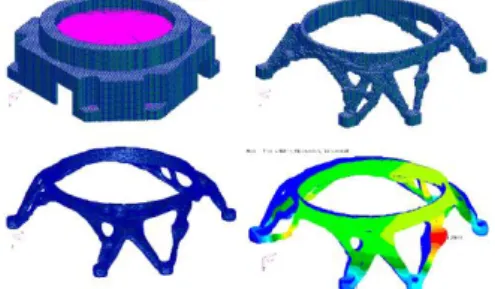
Figure 1: Overview of Design Stages: Design Domain, TO result, Laplacian Smoothing and 1st eigen value and shape of Stiffness Analysis.
A
CKNOWLEDGMENTThe authors gratefully acknowledge the financial support
of the Portuguese Foundation for Science and Technology
(FCT) under the projects CENTRO-01-0145-FEDER-029713
COMPETE 2020, and UID/EMS/ 00481/2013-FCT under
CENTRO-01-0145-FEDER-022083. Financial support of
program CENTRO 2020 and UE/FEDER is acknowledged
through the project CENTRO-01-0247-FEDER-024039,
designated as ADVANSS. B. Barroqueiro also acknowledges
the financial support by the FCT through the scholarship
SFRH/BD/120779/2016.
TOPIC
1) a.: Sustainable Manufacturing Solutions – Manufacturing
processes & Simulation.
R
EFERENCES[1] ISO International Standard, ISO 17296: Additive manufacturing General principles Part 3: Main characteristics and corresponding test methods, 2014.
[2] Clausen, Anders. Topology Optimization for Additive Manufacturing. Technical University of Denmark (DTU), 2016. 154 p. (DCAMM Special Report; No. 214).
[3] S. Kébreau, D. P. Cambr´esy, A. Drose, V. Grone, K. Schimanski, F. Syassen, Maturation of additive manufacturing for implementation into Ariane secondary structures: Overview and status of “ALM ISCAR”, in: 14th European Conference on Spacecraft Structures, Materials And Environmental Testing, 27-30 September, 2016.
[4] G. Pommatau, F. Montredon, A. Carlino, M. Salvi, E. Kot, F. Clement, S. Abed, Engineering design cycle for an additive layer manufactured secondary structure, from concept to final validation, in: Thales Alenia Space Communication, 27-30 September, 2016.
[5] Aremu A, Ashcroft I, Hague R, Wildman R, Tuck C, Suitability of SIMP and BESO Topology Optimization Algorithms for Additive Manufacture, Wolfson School of Mechanical and Manufacturing Engineering, May, 2016.
[6] ASTM International, West Conshohocken, ASTM WK47031: New Guide for Non-destructive Testing of Additive Manufactured Metal Parts Used in Aerospace Applications, 2014.
Development of a cost-effective multi-axis force sensor for
robotics automation
Ricardo Guincho
School of Design, Management and Production
Technologies Northern Aveiro
University of Aveiro
Oliveira de Azeméis
Daniel Afonso
TEMA - Centre for Mechanical Technology and Automation
University of Aveiro
Aveiro
Abstract— The industry 4.0 revolution centers itself around
the automation of industrial processes, with a focus on interconnected manufacturing units and autonomous process control, among others [1]. As industrial robots take the place of human workers in monotonous, repetitive and even dangerous tasks, a need appears for a robotic solution for more intuitive lines of manufacturing, which often depend on human expertise, such as polishing, grinding and assembly [2]. A cost-effective force sensor is developed as a base solution for the automation of such operations. While this sensor is being developed as a part of a mold polishing automation project, it is being designed to be able to be used in any force sensing implementation, within the sensor’s own limitations.
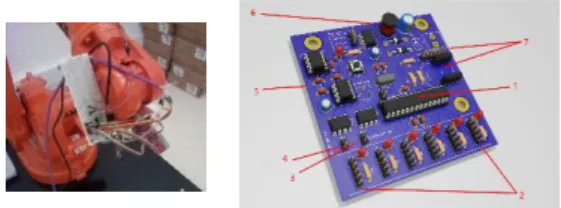
The currently developed system (Figure 1) is capable of detecting (linear) forces in two axes, with the possibility of detection of forces in three orthogonal axes with a slight design modification.
Force calculations are performed within a signal conditioning/controller board (Figure 2) that can communicate directly with the industrial robot system, reducing the computational load on the latter. The use of standard, off-the-shelf, components for the signal conditioning board attempts to ensure the low cost and ease of part repair/replacement, and the controller board allows for one dimensional Analog (DAC) and Digital (PWM) output as a direct communication method with the input cards of an industrial robot controller, as well as Serial TTL, and Serial-USB communication for a more in depth control of the sensor-robot system, allowing for custom robot responses to the measured forces, as well as individual load cell gain adjustment and calibration.
The development of an active response force sensing tool is also underway. It will enable the usage of the tool as a self-correcting closed system that does not require real-time control or direct communication with the robot system, improving ease of implementation in different types of robots.
Figure 2: Left: Force Sensor CAD drawing. 1 – Polishing tool module; 2 – Force sensor; 3 – Load cell amplifier structure; Right: Force sensor coupled to a ABB IRB1600 robot.
Figure 2: Left: Sensor control board prototype for testing; Right: Sensor control board. 1 – ATMega328 processor unit; 2 – Connection for up to six HX711 load cell amplifiers; 3 – 24V digital output for robot logic; 4 – 0V to 5V Analog output; 5 – 16bit DAC; 6 – Internal regulated power supply; 7 – Serial/USB terminals.
Keywords—force; sensor; automation; robotics; polishing; lowcost.
A
CKNOWLEDGMENTThe authors would like to acknowledge the Simoldes S.A.
company for supporting the project.
TOPIC
1) a.: Sustainable Manufacturing Solutions – Manufacturing
processes & Simulation.
R
EFERENCES[1] Pranab K. Muhuri, Amit K. Shukla, Ajith Abraham, “Industry 4.0: A bibliometric analysis and detailed overview”, Engineering Applications of Artificial Intelligence, vol. 78, pp. 218-235, 2019.
[2] Abd El Khalick Mohammad, Jie Hong, Danwei Wang, Design of a force-controlled end-effector with low-inertia effect for robotic polishing using macro-mini robot approach, Robotics and Computer-Integrated Manufacturing, vol. 49, pp. 54-65, 2018.
[3] Kalt, Eugene & Monfared, Radmehr & Jackson, Michael, “Towards an automated polishing system - Capturing manual polishing operations”, International Journal of Research in Engineering and Technology, vol. 5, pp. 182-192, 2016.
Development of products based on mixtures of polymeric
residues
Adriana Costa
1,2, Victor Neto
1, Gonçalo Gomes
21
Department of Mechanical Engineering,
2Department of Communication and Art
University of Aveiro
Aveiro, Portugal
[email protected], [email protected], [email protected]
Abstract— With the beginning of mass production only sixty
decades ago the growth was so fast, that Jenna Jambeck states that "this kind of increase would break any system that was not prepared to receive it and that is why we have witnessed a leakage of global waste systems to the ocean ". The plastic takes about 400 years to decompose and the ones that do not come to the recycling, are subject 12% to the incineration and 79% are directed to the landfill or dragged to the environment [1].
The thematic of resources and environmental issues are currently the focus of intense discussion. These issues have led to the argument of improvements by global and business institutions, involving the study and progress of a more sustainable development model, as defined by Per Becker as "development that meets the needs of the present without compromising the ability of future generations to meet their own needs"[2] combining the three assumptions of sustainable development (society, economy and environment).
Also like the biological system, the concept of industrial ecology is based on the principle of organizing the production system, in order to combine the flow of matter and energy dispensed, in order to create a completely closed circuit, using the waste itself or the products already used as raw material, with the objective of reducing the amount of reducing the material consumed [3].
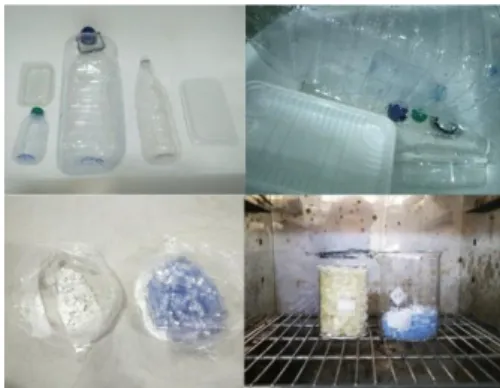
Arises the need to develop products from recycled raw material, namely from industrial polymer waste. However, the conditions under which this type of raw material is obtained, creates a variability of characteristics that hinder its incorporation into new products, especially when produced in mass, where the main goal is to incorporate into new products, not adding any separation processes, creating value and placing them in environments that positively and conscientiously affect the community.
In the present research work it will be studying the transformation process of recycled plastics, through the recognition of case studies and the technologies, techniques and materials used in their transformation. The work will also go through trials of processing of the various materials provided by the recycling company Lifepoly (Oiã, Portugal), which would target the landfill, in order to understand the times, temperatures, volumes and compatibilities of the materials for their reprocessing.
For the creation of new products, the work explores two different manufacturing processes, compression molding and rotomolding. Each process has an associated product (hanger and piggy bank respectively) that will be carried out by prototyping it, which includes the characterization of the reprocessing of the various wastes.
In conclusion, this project aims to consolidate and make feasible the material, designing new products, increasing its life cycle. The main problem involving the reprocess of this type material was the thicknesses, melting points and the time spent.
For the improvement of the quality of the waste, it is foreseen the necessity to create metrics like orders of production and careful storage.
The project also will allow this element to incorporate the circular economy enabling the products to be reused, remodeled, remanufactured or recycled, creating a new life to the materials used, contributing to the sustainability of ecosystems.
Keywords— Circular Economy; Sustainability; Non-Recyclable Waste; Compression Molding; Rotational Molding.
A
CKNOWLEDGMENTThe research here presented was supported by the projects
UID/EMS/00481/2019-FCT - FCT - Fundação para a Ciência
e a Tecnologia; and CENTRO-01-0145-FEDER-022083 -
Centro Portugal Regional Operational Program (Centro2020),
under the PORTUGAL 2020 Partnership Agreement, through
the European Regional Development Fund.
TOPIC
1) c.: Sustainable Manufacturing Solutions – Manufacturing
for Circular Economy.
R
EFERENCES[1]
Becker, P , “Conceptual Frames for Risk, Resilience and
Sustainable Development”, Sustainability Science, pp.
123–148, 2014.
[2] National Geografic, “91%: A Chocante Percentagem de
Plástico que Não é Reciclado”, www.natgeo.pt, 2018.
[3] Zanin, M., & Mancini, S. D., “Resíduos plásticos e
Enabling closed loop additive manufacturing through an
on-demand feedstock material customization system
Tiago Gomes, Mylene Cadete, João Dias-de-Oliveira, Victor Neto
Centre for Mechanical Technology and Automation (TEMA), Department of Mechanical Engineering
University of Aveiro
Aveiro, Portugal
[email protected], [email protected], [email protected], [email protected]
Abstract— Consciousness about the need for circular production models has been growing, derived from alarming issues such as the amount of plastic waste that is ending up in the ocean. Recycling plastics may reintroduce them into the production cycle but there are drawbacks, namely material properties degradation and variability. Those issues often discourage the use of recycled feedstock in traditional mass production technologies. On the other hand, extrusion-based additive manufacturing is promising for integration of those materials, since it requires smaller batches. However, when functionality and consumer-oriented products are considered, the issues stated before may still be a hindrance [1,2].
In this work, the objective is the creation of conditions for reliably printing recycled thermoplastics, with their reparation, accounting for the feedstock properties variability, on demand and in situ. To make it possible, multiple dimensions of the problem will be approached. To begin with, ways of upgrading the feedstock polymer will be explored, studying suitable additives and specific modifiers and stabilizers that may range from polymeric chain extenders [3] to plasticizers [4], among others. Through their use, it is possible to or upgrade material properties. To cope with the feedstock variability, the second phase will explore ways of assessing the material condition in a non-invasive manner, in situ. This has been done to an extent in the literature through spectroscopy techniques like Raman [5]. Handheld spectrometers have also been developed [6]. Complementarily, prediction models that consider factors like number of reprocessing cycles, structure-property, material degradation, 3D printing parameters and final required properties to calculate the amount and type of additive needed to achieve them shall be developed.
Providing a further step on this subject, this work will build on the concept of FGAM (Functionally Graded Additive Manufacturing) [5,6] to achieve high level of control over material composition and distribution, allowing the reliable use of recycled materials. No single system has been reported to integrate material scanning, property prediction and customization capabilities like those targeted for this project. Such a system will facilitate the decision to use recycled material for extrusion-based additive manufacturing, simultaneously extending the freedom of engineers and designers by unlocking intelligent material customization.
Keywords— Additive manufacturing; Predictive models; Additives; Customized feedstock.
A
CKNOWLEDGMENTThe research here presented was supported by the projects
UID/EMS/00481/2019-FCT - FCT - Fundação para a Ciência
e a Tecnologia; and CENTRO-01-0145-FEDER-022083 -
Centro Portugal Regional Operational Program (Centro2020),
under the PORTUGAL 2020 Partnership Agreement, through
the European Regional Development Fund.
TOPIC
1) c.: Sustainable Manufacturing Solutions – Manufacturing
for Circular Economy.
R
EFERENCES[1] Lee D, Lee Y, Lee K. Development and Evaluation of a Distributed Recycling System for Making Filaments Reused in Three-Dimensional Printers. 2019;141(February):1–8. [2] Anderson I. Mechanical Properties of Specimens 3D Printed
with Virgin and Recycled Polylactic Acid. 3D Print Addit Manuf [Internet]. 2017;4(2):110–5.
Available from:
http://online.liebertpub.com/doi/10.1089/3dp.2016.0054 [3] Tuna B, Ozkoc G. Effects of Diisocyanate and Polymeric
Epoxidized Chain Extenders on the Properties of Recycled Poly ( Lactic Acid ). J Polym Environ. 2017;25(4):983–93. [4] Yang Y, Xiong Z, Zhang L, Tang Z, Zhang R, Zhu J. Isosorbide
dioctoate as a “ green ” plasticizer for poly ( lactic acid ). JMADE [Internet]. 2016;91:262–8.
Available from: http://dx.doi.org/10.1016/j.matdes.2015.11.065 [5] Ghosh S, Bowmaker GA, Cooney RP, Seakins JM. Infrared and Raman spectroscopic studies of the electrochemical oxidative degradation of polypyrrole. Synth Met. 1998;95:63–7. [6] Pruett E. Latest developments in Texas Instruments DLP
near-infrared spectrometers enable the next generation of embedded compact, portable systems. In: ProcSPIE [Internet]. 2015. Available from: https://doi.org/10.1117/12.2177430.
Enhancing the heterogeneity of a uniaxial test using topology
optimization
Filipe Almeida, João Dias-de-Oliveira, A. Gil Andrade-Campos
Centre for Mechanical Technology and Automation (TEMA), Department of Mechanical Engineering
University of Aveiro
Aveiro, Portugal
[email protected]; [email protected]; [email protected]
Abstract— The frequent development and production of new
metals in the sheet metal forming industry results in an ever-increasing demand for an accurate prediction of the material’s behavior and, consequently, its behavior on sheet forming processes [1,2]. Heterogeneous tests are crucial to swiftly characterize numerically the material and identify the parameters of the constitutive models, as they provide a wider spectrum of stress and strain states per test [1,3].
In the present work, a different approach is proposed for the development of a heterogeneous specimen. Using topology optimization, the goal is to find the optimal geometry of the specimen which maximizes the incidence of all stress states over the area. A criterion was developed in order to measure the heterogeneity value of a test, which was then used as the objective function for the topology optimization problem. The boundary conditions were defined as a simple uniaxial tensile test, and the goal was to obtain maximum heterogeneity on a single test. The finite difference method is applied to evaluate the local sensitivities and to guide the design optimization method, while using a volume constraint. In addition, some heterogeneous specimens’ designs were analyzed, evaluated and ranked under the defined criterion for comparison purposes.
It was concluded that this criterion is accurate when used to rank and compare different specimens in terms of their heterogeneity. Nonetheless, the evaluation of this criterion as an objective function is still under development. The algorithm developed by the author successfully enhances the heterogeneity of a rectangular specimen, covering almost all the required range of heterogeneity for the stress states, while respecting the restrictions of the problem. A final solution for the specimen has not yet been obtained, as the material distribution is still not manufacturable, but current results are promising and will be discussed over this work.
Keywords— Heterogeneous specimen; Topology
Optimisation; Characterization of sheet metals
A
CKNOWLEDGMENTThe authors acknowledge the financial support of FCT
under the projects PTDC/EME-APL/29713/2017
(CENTRO-0 1-(CENTRO-0145-FEDER-(CENTRO-029713), PTDC/EMS-TEC/64(CENTRO-0(CENTRO-0/2(CENTRO-014
(POCI
-01-0145-FEDER-016876),
PTDC/EME-EME/31243/2017 (P OCI-01-0145-FEDER-031243) and
PTDC/EME-EME/30592/ 2017
(POCI-01-0145-FEDER-030592) by UE/FEDER through the programs CENTRO 2020,
COMPETE 2020, and UID/EM S/00481/2013-FCT under
CENTRO-01-0145-FEDER-022083.
TOPIC
1) a.: Sustainable Manufacturing Solutions – Manufacturing
processes & Simulation.
R
EFERENCES[1] N. M. Souto, Computational design of a mechanical test for material characterization by inverse analysis. PhD thesis, University of Aveiro, 2015.
[2] P. A. Prates, A. F. Pereira, N. A. Sakharova, M. C. Oliveira, and J. V. Fernandes, “Inverse Strategies for Identifying the Parameters of Constitutive Laws of Metal Sheets” Advances in Materials Science and Engineering, vol. 2016, no. Dic, 2016. [3] S. Cooreman, D. Lecompte, H. Sol, J. Vantomme, and D.
Debruyne, “Identification of mechanical material behavior through inverse modeling and DIC” Experimental Mechanics, vol. 48, no. 4, pp. 421-433, 2008.
Influence of process parameters in asymmetric rolling
M. Pasadidehpoor
1, G. Vincze
1, A.B. Pereira
1, A.B. Lopes
2, M.C. Butuc
11
Centre for Mechanical Technology and Automation, Department of Mechanical Engineering, University of Aveiro
Campus Universitário de Santiago, 3810-193, Portugal
2
CICECO, Department of Materials and Ceramic Engineering, University of Aveiro
Campus Universitário de Santiago, 3810-193, Portugal
Abstract— Aluminum alloys are widely used in the
automotive industry because they offer high strength to low weight. These characteristics are crucial for car manufacturing. It is well known that the mechanical behavior of aluminum alloys is strongly depended on texture evolution. Thus, controlling the texture of the aluminum sheet it is possible to design specific material properties.
One useful method to change the texture components is by asymmetric rolling. This type of rolling introduces shear components, which contributes to the improvement of formability in deep drawing due to the fact that during recrystallization do not transform into the cube component.
The aim of this work is to analyses by finite element method the effect of different process parameters such as speed ratio, thickness reduction per pass and rolling route on the shear strain and on the equivalent strain of the material. Part of the theoretical results is compared with the experimental data obtained for AlMgSi alloys.
Keywords—aluminum alloys; anisotropy; hardening behaviour
A
CKNOWLEDGMENTThe authors acknowledge the support from the projects
POCI-01-0145-FEDER-0323628
(PTDC/EME-ESP/32362/2017), UID/EMS/00481/2013 and
CENTRO-01-0145-FEDER-022083.
TOPIC
1) a.: Sustainable Manufacturing Solutions – Manufacturing
processes & Simulation.
Influence physical fields on structure and properties of epoxy
composites
Yuliia Bardadym
Department of Polymer Modification
Institute of Macromolecular Chemistry of NAS of Ukraine
Kiev, Ukraine
[email protected]
Oleksandr Naumenko
Department of equipment and technology of food
production
Ukrainian State University of Chemical Technology
Dnipro, Ukraine
Edward Sporyagin
Department of Chemical Technology of
Macromolecular Compounds
Oles Honchar Dnipro National University
Dnipro, Ukraine
Abstract— Thesis is devoted to the study of the effect of
external permanent magnetic or electric fields on the structure, thermophysical, dielectric properties of epoxy polymers and their nanocomposites with lead (II) oxide. System studies of structure, thermophysical, thermomechanical and dielectric properties of nanocomposites with metal oxide formed under the influence of external constant physical fields were carried out for the first time. The ideas of constructing mathematical models and mechanisms of the influence of permanent magnetic and electric fields on epoxy polymers and their nanocomposites containing metal oxide have been developed. Based on the results obtained, the method of calculating an electromagnet and a capacitor using the software «Elcut» has been improved.
Keywords— epoxy nanocomposite, elecrtric field, magnetic field, metal oxide, computer, mathematical, simulation.
Polymers are widely used for their relatively low
production cost, light weight and ease of processing.
Considerable progress has been made over the preceding
decade in the development of high-performance polymers. The
incorporation of inorganic particles into a polymer matrix takes
advantage of both components to create original composite
materials with new properties. The most commonly used
polymer matrices include amorphous thermoplastics (e.g.,
polymethylmethacrylate, polycarbonate) and thermosets (e.g.,
epoxy). Different kinds of inorganic fillers are currently
incorporated in those matrices, in particular oxides (e.g., SiO
2,
TiO
2, CdO
2, Cr
2O
3, PbO, ZnO), semiconductors (e.g., CdS,
PbS, CdTe, CdSe), minerals (e.g., clays, CaCO
3), metal and
metal alloys (e.g., Au, Ag, Cu, Ge, Fe) [1].
The use of mathematical (computer) simulation
plays an important role along with experimental research
methods. Modeling using digital computers is one of the most
powerful means of research. It enables to calculate and
simulate experiments at the design stage. [2].
Therefore, this thesis is devoted to the study of the
effect of external permanent magnetic or electric fields on the
structure, thermophysical, dielectric properties of epoxy
polymers and their nanocomposites containing metal oxide
Samples of composites were formed from epoxy resin ED-20
and triethylenetetramine. Stoichiometric ratio was 1 mole of
epoxy resin to 0,18 mole triethylenetetramine. Powder PbO
was used as fillers. The content of metal oxide was 3 vol. %.
The influence of constant magnetic and constant electric fields
was 2·10
5A/m and 1.5·10
4V/m respectively. All curing
processes were done at 293
– 297 K for 24 hours. It was
established that the use of external physical fields allows to
change the relative deformation of the studied filled epoxy
composite materials from 5% to 15%. For samples of EP
–
СdO, formed under the influence of external constant physical
fields, a decrease in the temperature of destruction up to 50 K
is observed, the total number of gaseous products registered in
the mass spectrum up to 87 units and 18% of the total ion
current. However, samples of EP
– PbO an increase in the
temperature of decomposition maxima of 50 K and up to
13.8% of the total ion current is characteristic. The influence
of physical fields on samples of EP – Cr
2O
3provokes reduction
of total ion current by 25%, specific intensity of ion fragments
up to 20%. The ideas of constructing mathematical models and
mechanisms of the influence of permanent magnetic and
electric fields on epoxy polymers and their composites
containing metal oxide were developed. Based on the results
obtained, the method of calculating an electromagnet and a
cylindrical capacitor using the software «Elcut» has been
improved.
TOPIC
1) a.: Sustainable Manufacturing Solutions – Manufacturing
processes & Simulation.
REFERENCES
[1] J. Loste, J. Lopez-Cuesta, L. Billon, H. Garay, M. Save, “Transparent polymer nanocomposites: An overview on their synthesis and advanced properties,” Progress in Polymer Science, vol. 89, pp. 133-158, 2019.
[2] Yu. Bardadym, E. Sporyagin, “The influence of the constant physical fields on structure of polymer composites with cadmium oxide and polyaniline,” 7th International Conference
Nanomaterials: Application and Properties. – Zatoka, 2017, pp. 03NNSA13-1 – 03NNSA13-4.
Inverse analysis procedures for elastoplastic parameter
identification using combined optimisation strategies
B Coelho
1, A Andrade-Campos
2and J M P Martins
3Centre for Mechanical Technology and Automation (TEMA), Department of Mechanical Engineering
University of Aveiro
Aveiro, Portugal
1
[email protected],
2[email protected],
3[email protected]
Abstract— Ensuring accurate and efficient models for the
representation of the elastoplastic behavior of sheet metals is one of the main issues in manufacturing simulation processes. Nowadays, there are a few solid numerical methodologies for predicting the material parameters from full-field strain measurements using digital image correlation (DIC) techniques. External methods, such as the Finite Element Model Updating (FEMU), search for the parameter set that minimizes the gap between the experimental and numerical observations. In these methods, a total separation between the experimental and the numerical data occurs. Equilibrium methods, such as the Virtual Fields Method (VFM), search for the parameter set that balances the internal and external work according to the principle of virtual work, where the internal work is calculated using the constitutive model applied to the experimental strain field [1-5]. Both described methods are still expensive and non-robust, which is closely related with the adopted single-stage optimization strategies. Such optimization strategies can undergo problems of initial solution’s dependence, non-uniqueness of solution, local and premature convergence, physical constraints violation, etc. Therefore, the choice of an optimization algorithm is not straightforward.
The aim of this work is to implement and analyze advanced optimization strategies with sequential, parallel and hybrid approaches in a parameter identification problem using both the VFM and the FEMU methods. The performance of a gradient least-squares (GLS) optimization algorithm, a metaheuristic (MH) algorithm and their combination is compared. Moreover, the definition of the objective functions of both VFM and FEMU methods is discussed in the framework of optimization.
Table 1, for instance, provides results of a parallel strategy that combines FEMU and VFM. In this strategy, the objective function is given by the sum of the weighted objective functions of each method (multi-objective approach).
No noise Noise FEMU weight Objective Function Parameters average error Objective Function Parameters average error 0.0 5.50E-07 0.707% 1.78E-03 42.994% 0.2 5.35E-06 0.355% 7.05E-03 9.936% 0.5 6.94E-06 0.207% 7.35E-03 -2.127% 0.8 4.06E-06 0.080% 6.48E-03 -6.341% 1.0 3.70E-02 17.243% 4.47E-03 -9.409% Table 1: Results considering data with and without noise.
The parallel strategy presents significantly lower average errors in the identification of parameters when compared to the
single VFM or FEMU approaches (FEMU weight equal to 0 or 1, respectively).
Keywords — calibration of constitutive models; metal plasticity; full-field measurments; finite element model updating; virtual fields method; gradient-based optimisation algorithm; metaheuristic optimisation algorithm.
A
CKNOWLEDGMENT
The authors acknowledge the financial support of FCT
under the projects PTDC/EME-APL/29713/2017
(CENTRO-0 1-(CENTRO-0145-FEDER-(CENTRO-029713), PTDC/EMS-TEC/64(CENTRO-0(CENTRO-0/2(CENTRO-014
(POCI
-01-0145-FEDER-016876),
PTDC/EME-EME/31243/2017 (P OCI-01-0145-FEDER-031243) and
PTDC/EME-EME/30592/ 2017
(POCI-01-0145-FEDER-030592) by UE/FEDER through the programs CENTRO 2020,
COMPETE 2020, and UID/EM S/00481/2013-FCT under
CENTRO-01-0145-FEDER-022083.
TOPIC
1) a.: Sustainable Manufacturing Solutions – Manufacturing
processes & Simulation
R
EFERENCES[1] Cooreman S, Lecompte D, Sol H, Vantomme J, Debruyne D (2008) Identification of Mechanical Material Behavior Through Inverse Modeling and DIC. Experimental Mechanics 48: 421– 433.
[2] Haddadi H., Belhabib S. (2012) Improving the characterization of a hardening law using digital image correlation over an enhanced heterogeneous tensile test. Int. J. Mech. Sci. 62(1): 47-56.
[3] Martins JMP, Andrade-Campos A, Thuillier S (2018) Comparison of inverse identification strategies for constitutive mechanical models using full-field measurements. Int. J. Mech. Sci. 145: 330-345.
[4] Kim J-H, Serpantié A, Barlat F, Pierron F, Lee M-G (2013) Characterization of the post-necking strain hardening behavior using the virtual fields method. Int. J. Solids Struct. 50(24): 3829–3842.
[5] Marek A, Davis FM, Rossi M, Pierron F (2019) Extension of the sensitivity-based virtual fields to large deformation anisotropic plasticity. Int. J. Mat. Forming 12(3): 457-476.
[6] Nocedal, J, Wright, S. (2006) Numerical Optimization, Springer-Verlag New York.
Life Cycle Assessment of Heat Recovery System
A Comparative Study Between Aluminium and Polystyrene
Marques, Hugo
Mechanical Engineering Department
University of Aveiro
Aveiro, Portugal
[email protected]
Oliveira, Mónica & Martins, Nelson
Mechanical Engineering Department
University of Aveiro
Aveiro, Portugal
[email protected] & [email protected]
Abstract— The exploitation of resources associated with the
production of electric power reveals a preponderant influence on environmental sustainability. In the OECD countries, electricity consumption in the residential sector corresponds to 31.1% of total electricity consumption, with indoor air heating accounting for 50% of that consumption [1]. In compact envelope buildings, mechanical ventilation is responsible for the loss of 50% of thermal loads [3]. Air-to-air heat recovery systems (HR) are an effective way to reduce ventilation losses as they may pre-heat outdoor air recovering wasted heat from the exhaust air [4]. Currently, most HR systems are made from aluminum alloys. However, the incorporated energy in an aluminum HR system during the production stage is much higher than that required if polymeric materials are used. [5]. The present study focuses on the analysis of sustainable manufacturing solutions for air-to-air HR devices. In this sense, a life cycle assessment (LCA) of an air-to-air HR was done considering two different materials: aluminum and polystyrene. In addition, for the polystyrene LCA two manufacturing technologies were compared: injection molding and extrusion. The LCA evaluates the carbon footprint of a product from the extraction of the raw material to the recycling of the product, in a cradle to grave perspective. The scope of LCA covers the stage of extraction of the raw material, the process of production of materials and product, of the utilization and recycling. The functional unit is defined by the production of a single HR unit.
The input data expresses the energy consumed at each stage throughout the LCA. The analyzed output data represent greenhouse gas emissions and fossil fuels consumption. These parameters are indicators of environmental impacts, therefore, they deserve a careful analysis during the design phase of the product development cycle.
As for the inventory analysis, only the primary production of aluminum was considered by the Bayer process. The production of polystyrene is based on the polymerization of styrene free radicals. In the manufacture of the air-to-air HR systems, metal forming and laser cutting processes were considered for aluminum, while the injection molding and extrusion were analyzed for the polystyrene. The production of aluminum sheets is considered in the production of aluminum as final product. During product utilization, no energy consumption is taken into consideration. Moreover, both material recycling or its reintegration in the production cycle were disconsidered in both scenarios studied. It should be referred that, except when considering the raw materials stage, transportation distances are within the European scale. Also, the electric consumption is based on the European average values. The method used to assess the environmental impact was IMPACT 2002+ with SimaPro software. The environmental impact analysis is based on the categories of the global warming potential (GWP), namely, non-renewable energy and CO2eq emissions, as summarized in Figure
1.
Figure 1: Aluminium GWP and polystyrene.
Keywords—Aluminium; Heat Recovery System; IAQ; Life Cycle Assessment; Polystyrene
A
CKNOWLEDGMENTThe authors acknowledge the support of TEMA research
unit integrated projects UID/EMS/00481/2019-FCT and
CENTRO-01-0145-FEDER-022083.
TOPIC
1) c.: Sustainable Manufacturing Solutions – Manufacturing
for Circular Economy.
R
EFERENCES[1] International Energy Agency, “Energy Efficiency Indicators: Highlights,” 2018.
[2] ASHRAE, Handbook - HVAC Systems and Equipment. Atlanta, GA, 2008.
[3] C. Roulet, F. D. Heidt, F. Foradini, and M. Pibiri, “Real heat recovery with air handling units,” Energy Build., vol. 33, pp. 495–502, 2001.
[4] M. Rafati, M. Fauchoux, R. W. Besant, and C. J. Simonson, “A review of frosting in air-to-air energy exchangers,” Renew. Sustain. Energy Rev., vol. 30, pp. 538–554, 2014.
[5] C. T. Joen, Y. Park, Q. Wang, A. Sommers, X. Han, and A. Jacobi, “A review on polymer heat exchangers for HVAC&R applications,” Int. J. Refrig., vol. 32, pp. 763–779, 2009.