http://dx.doi.org/10.1590/1806-9061-2018-0741
Perfringens
Author(s)
Liu NI,II
https://orcid.org/0000-0003-1134-0839 Deng XII
https://orcid.org/0000-0002-2555-3619 Liang CI
https://orcid.org/0000-0001-8975-0753 Cai HIII
https://orcid.org/0000-0001-5078-6417
I Department of Animal Production, Henan
University of Science and Technology, Luoyang 471023, China.
II National Engineering Research Center of
Biological Feed, Beijing100081, China.
III Feed Research Institute, Chinese Academy of
Agricultural Sciences, Beijing 100081, China.
Mail Address
Corresponding author e-mail address Ning Liu
Room 525, Dongke Building, Kaiyuan Avenue No. 263, Luoyang, Henan, 471023, China.
Phone: +86 379 64282341 Email: [email protected]
Keywords
Broilers; broccoli residues fermented with probiotics; growth performance; gut health; immunity.
Submitted: 20/January/2018 Approved: 12/March/2018
ABSTRACT
This study aimed at investigating the effects of broccoli residues fermented with probiotics (BF) on the growth performance, immunity,
and gut health in broilers challenged with Clostridium perfringens
(C. perfringens). A total of 600 broilers (one day old) were randomly allotted into five treatments with six replicates of 20 birds each and were reared until 42 days of age. The treatments included a positive control (PC, fed a basal diet and reared on uncontaminated litter),
a negative control (NC, birds reared on litter contaminated with C.
perfringens and fed a basal diet), and NC plus BF at 25, 50 or 75 g/kg of diet. The BF contained yeast 3.1 × 10⁷cfu/g, lactic acid bacteria 9.5
× 106cfu/g and Bacillus subtilis 3.5 × 10⁶cfu/g. Birds in the NC group
showed lower (p<0.05) feed intake and body weight gain, whereas BF
supplementation recovered (p<0.05) the growth performance to the
levels of PC group. Dietary BF at 50and 75 g/kg reduced (p<0.05) broiler mortality. Similarly, compared to the NC group, BF increased (p<0.05) immune organ weights and serum immunoglobulins A, G, and M to the levels of PC group. The ileal populations of Escherichia coli and Gram-negative bacteria were decreased (p<0.05) by BF to the levels of PC, and C. perfringens was also decreased (p<0.05) by BF. The serum profiles of mono- and di-amine oxidase were decreased (p<0.05) by BF. BF at 75 g/kg reduced (p<0.05) monoamine oxidase compared with the other BF doses. The results suggest that broccoli residues fermented with probiotics can be a novel biological feed additive to protect the performance and health of broilers against C. perfringens infection.
INTRODUCTION
Broccoli as an excellent source of essential nutrients and it is a popular vegetable food item in Eastern and Western cultures (Mahn & Reyes, 2012; Williamson, 2017). However, its residues (stems and leaves), which account for a major section of its total yield, are seldom used. Studies have shown that dried broccoli floret residues improved the growth performance and meat quality of broilers, providing more intense skin pigmentation and lower breast meat drip loss (Hu et al.,
2012; Mustafa & Baurhoo, 2016). In addition of being a protein source, broccoli residues fermented with probiotics (BF) present high contents of probiotics, organic acids, and small molecular proteins (Parvez et al.,
2006).
Due to the recent ban of antibiotics, enteric diseases induced by
Clostridium perfringens (C. perfringens) are the leading cause of death and economic losses in the broiler industry, and probiotics and organic acids have been increasingly used as antibacterial growth promoters
and immune enhancers in farm animals (Lee et al., 2015; Ragaa &
Based on the knowledge of the use of unfermented broccoli by-products in animals, coupled with its probiotic and organic acid contents after fermentation, the present study investigated the effects of BF as a biological additive on the growth performance, immune organs, immunoglobulins, gut harmful bacteria and endotoxins of broilers reared on litter contaminated with C. perfringens.
MATERIALS AND METHODS
Animal ethics statement
All animal procedures were approved by the Animal Care Committee of the College of Animal Science of Henan University of Science and Technology (Luoyang, China).
Broccoli residues fermented with pro-biotics and experimental diets
The BF additive was produced using broccoli stem and leaves, according to the following steps: a) green broccoli stems and leaves were ground, squeezed, and the residues were filtered (mesh size of 1.98 mm); b) the collected filter residues were mixed with wheat bran, corn flour and a probiotic product at a ratio of 75:15:9:1; and c) the mixture was placed in asealed container and anaerobically fermented for 7d to obtain the BF additive. The probiotic product was composed
of lactic acid bacteria, Saccharomyces cerevisiae,
Bacillus subtilis (B. subtilis), and brown sugar at 2 × 10¹⁰, 4 × 10¹⁰, 2 × 10¹⁰cfu/kg and 50 g/kg, respectively.
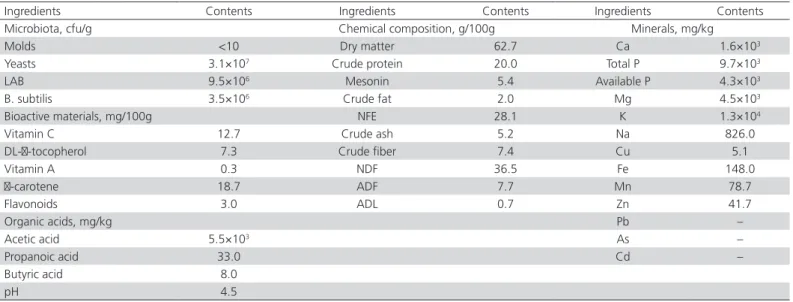
The components of BF are listed in Table 1.
Table 1 – Composition of broccoli residues fermented with probiotics.
Ingredients Contents Ingredients Contents Ingredients Contents Microbiota, cfu/g Chemical composition, g/100g Minerals, mg/kg
Molds <10 Dry matter 62.7 Ca 1.6×10³
Yeasts 3.1×10⁷ Crude protein 20.0 Total P 9.7×10³
LAB 9.5×10⁶ Mesonin 5.4 Available P 4.3×10³
B. subtilis 3.5×10⁶ Crude fat 2.0 Mg 4.5×10³
Bioactive materials, mg/100g NFE 28.1 K 1.3×10⁴
Vitamin C 12.7 Crude ash 5.2 Na 826.0
DL--tocopherol 7.3 Crude fiber 7.4 Cu 5.1
Vitamin A 0.3 NDF 36.5 Fe 148.0
-carotene 18.7 ADF 7.7 Mn 78.7
Flavonoids 3.0 ADL 0.7 Zn 41.7
Organic acids, mg/kg Pb –
Acetic acid 5.5×10³ As –
Propanoic acid 33.0 Cd –
Butyric acid 8.0
pH 4.5
ADF, acid detergent fiber; ADL, acid detergent lignin; B. subtilis, Bacillus subtilis; LAB, lactic acid bacteria; NDF, neutral detergent fiber; NFE, nitrogen-free extract. –, not detectable.
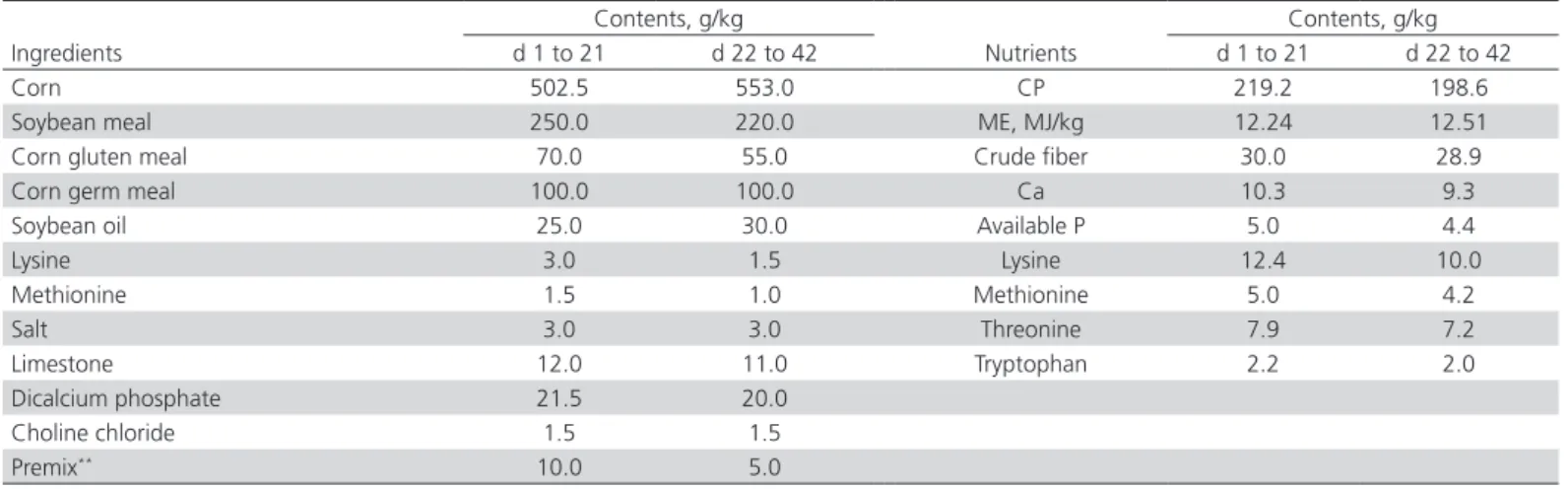
The basal diet was formulated according to the nutritional recommendations of the Arbor Acres Broiler Management Handbook in China. The diets were stored in a cool, dry, dark and well-ventilated place and fed as mash on air-dry basis. No antibiotics were offered to broilers via either feed or water throughout the trial. The formulation of the basal diet is shown in Table 2.For the convenience of customers, the BF additive is recommended to be supplemented on top of a complete diet. Therefore, in the present study, the BF was added at 25, 50 or 75 g/kg of basal diet.
Birds, litter contaminated with C. perfringens, and sample collection
In total, 600 one-day-old male Arbor Acres broilers were randomly distributed into five treatment groups
with six pens of 20 chicks each. All chicks were reared on floor pens (1.2 m × 2.0 m) in an environmentally-controlled facility at the Research Center of the Henan University of Science and Technology and given ad libitum access to feed and water throughout the trial. Birds were housed in an environmentally controlled room under a 20L:4D lighting cycle. A standard temperature regimen was followed: the house temperature was gradually decreased from 32 to 22ºC by 21 d of age, which was maintained for the remainder of trial.
The broilers were monitored twice a day throughout the experiment.
The treatments consisted of a positive control group (PC), which was reared on uncontaminated, new litter and fed the basal diet; a negative control group (NC), which was reared on litter contaminated
with C. perfringens from 1 d old and fed the basal
diet), and three groups reared on litter contaminated with C. perfringens from 1 d old and fed the basal diet with the inclusion of BF at 25, 50 or 75 g/kg of diet.
Birds in the NC and BF groups were placed on litter previously used by a flock of broilers challenged via
feed with C. perfringens type A CVCC52 cultures
(China Veterinary Culture Collection Center, China Institute of Veterinary Drug Control, Beijing, China).
Approximately 1 mL of the stock of C. perfringens
was cultured in 250 mL of thioglycolate broth for 18 h at 39 °C, and then the C. perfringens cultures were produced according to the method by China National Food Safety Standard (GB 4789.13-2012). The suspension of C. perfringens cultures were then adjusted with thioglycolate broth to approximately 1.5 × 10⁵colony forming units (cfu)/mL. The bacterial
suspension was evenly spread on the top of the feed. Approximately 109 cfu/broiler of C. perfringens were
administrated in the feed when broilers were 14 and 18 d old. The litters of the challenged birds were used for the present study.
Birds were weighed on d 1, 21 and 42, and feed intake, body weight gain, and feed efficiency were adjusted for mortality on a pen basis.
At 42 d of the trial, six birds per pen were randomly selected, weighed, euthanized by CO2, and dissected. Blood was immediately collected from the heart with a syringe and aliquoted into sterile vials for the preparation of the serum according to the method by Liu et al. (2008). Thymus, spleen and bursa were collected and weighed. Ileal digesta was collected and stored at −40 ºC for microbiota enumeration.
Chemical and biological analysis
The chemical analysis of nutrients, minerals and volatile fatty acids in BF was carried out according to the method by Zhang (2016). Mesonin content was detected according to China National Standard (GB/T 22492-2008). Bioactive ingredients were detected according to China National Food Safety for vitamin A and D (GB 5009.82-2016), vitamin C (GB
14754-2010), β-carotene (GB 8821-2011), and flavonoids
(GB/T 20574-2006).
Serum parameters were measured using commercial kits (Nanjing Jiancheng Bioengineering Institute, Jiangsu, China), and included endotoxin (H178), diamine oxidase (DAO, A088-3), monoamine oxidase (MAO, A034), IgA (H107), IgG (H106), and IgM (H109).
Enumeration of the microbiota
The microbiota in BF and ileal digesta were enumerated according to the methodsof the China National Food Safety Standard, and included molds and yeasts (GB 4789.15-2016), lactic acid bacteria
(GB4789.35-2016), B. subtilis (GB/T 26428-2010),
Escherichia coli (E. coli, GB 4789.38-2012), and C.
Table 2 – Ingredients and nutritional levels of the basal diet* (air-dried basis).
Contents, g/kg Contents, g/kg Ingredients d 1 to 21 d 22 to 42 Nutrients d 1 to 21 d 22 to 42
Corn 502.5 553.0 CP 219.2 198.6
Soybean meal 250.0 220.0 ME, MJ/kg 12.24 12.51
Corn gluten meal 70.0 55.0 Crude fiber 30.0 28.9
Corn germ meal 100.0 100.0 Ca 10.3 9.3
Soybean oil 25.0 30.0 Available P 5.0 4.4
Lysine 3.0 1.5 Lysine 12.4 10.0
Methionine 1.5 1.0 Methionine 5.0 4.2
Salt 3.0 3.0 Threonine 7.9 7.2
Limestone 12.0 11.0 Tryptophan 2.2 2.0
Dicalcium phosphate 21.5 20.0
Choline chloride 1.5 1.5
Premix** 10.0 5.0
*Calculated by Chinese Feed Database (25th ed, 2014); The broccoli residues fermented with probiotics contained crude protein, yeasts, lactic acid bacteria and Bacillus subtilis at
200 g/kg, 3.1×10⁷, 9.5×10⁶ and 3.5×10⁶cfu/g, respectively, and was supplemented at 25, 50 or 75 g/kg of diet based on the basal diet.
**Provided per kg diet: vitamin A (retinyl acetate), 9,000 IU; cholecalciferol, 4,000 IU; vitamin E (DL-tocopheryl acetate), 50 IU; vitamin K, 2 mg; thiamin, 2 mg; riboflavin, 5 mg;
d-pantothenic acid, 15 mg; niacin, 40 mg; pyridoxine, 2 mg; biotin, 0.1 mg; folic acid, 0.55 mg; vitamin B12, 0.01 mg; manganese, 120 mg; iodine, 1.2 mg; iron, 40 mg; copper, 16
perfringens (GB 4789.13-2012).Total Gram-negative bacteria (Gram–)were enumerated using Gram– Selective
Medium (HB8643) and incubated at 37ºC for 24 h. The media were purchased from Qingdao Hopebio Co., Ltd. (Qingdao, China). All microbiological analyses were performed in triplicate, and the average values were used in statistical analysis. After the incubation periods, colonies of the respective bacteria were counted. The count of cfu was expressed as a logarithmic (log10) transformation per gram of intestinal digesta.
Statistics
Data were analyzed using one-way analysis of variance (IBM SPSS, Armonk, NY, USA). Pen was used as the experimental unit for growth performance parameters, and the average of six birds per pen was the statistical unit for immune organ weights, serum parameters, and ileal bacteria populations. Means were compared using Tukey’s honest significant difference test at p<0.05 level of significance, and the Tamhane T2 test was used in case of equal variances not assumed.
RESULTS
Growth performance and mortality
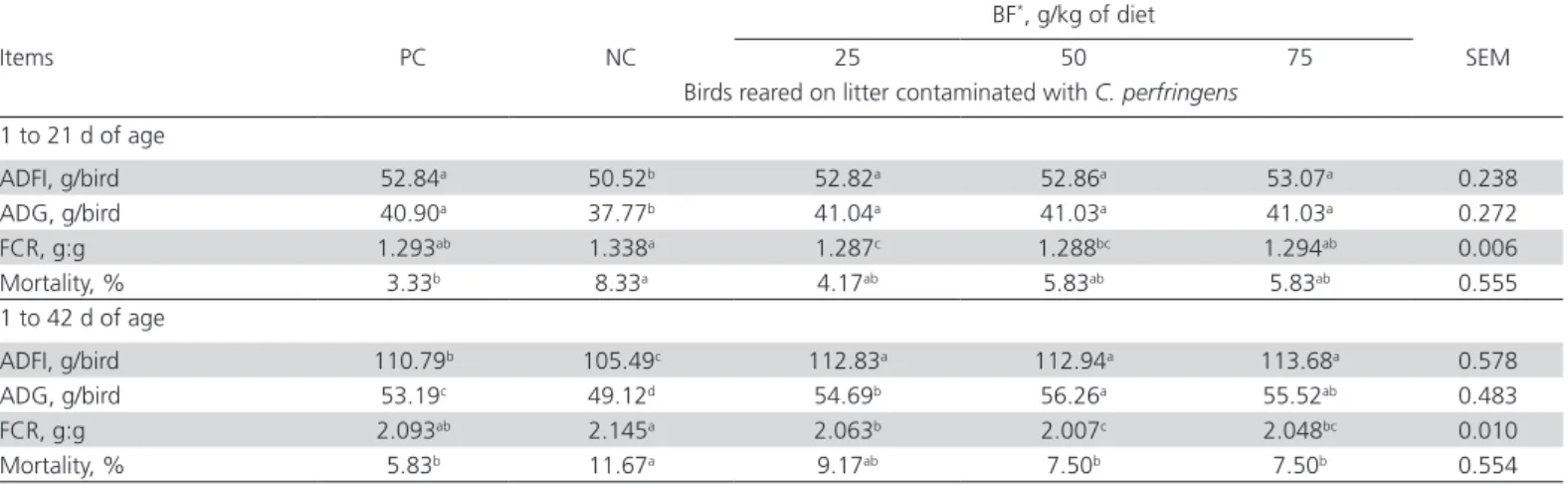
As shown in Table 3, from 1 to 21 d of age, NC birds showed lower (p<0.05) average daily feed intake (ADFI) and average daily body weight gain (ADG), and higher (p<0.05) mortality, compared with the PC birds. The inclusion of BF at 25, 50 or 75 g/kg in the basal diet of the NC group recovered (p<0.05) ADFI and ADG to the levels of PC group but did not affect mortality. There were no ADFI or ADG differences among birds fed the three doses of BF.
From 1 to 42 d of age, the inclusion of BF increased (p<0.05) ADFI and ADG and exceeded (p<0.05) the values obtained in the PC group. The FCR of birds fed BF at 50 g/kg was lower (p<0.05) than those fed 25 g BF/kg. The mortality of the birds fed BF at 50 or 75 g/kg was lower than that of the NC group. These findings indicated that the addition of BF at 50 g/kg diet improved broiler ADFI and ADG and reduced their FCR and mortality.
Table 3 – Effect of broccoli residues fermented with probiotics (BF) on the growth performance and mortality of broilers.
BF*, g/kg of diet
Items PC NC 25 50 75 SEM
Birds reared on litter contaminated with C. perfringens
1 to 21 d of age
ADFI, g/bird 52.84a 50.52b 52.82a 52.86a 53.07a 0.238
ADG, g/bird 40.90a 37.77b 41.04a 41.03a 41.03a 0.272
FCR, g:g 1.293ab 1.338a 1.287c 1.288bc 1.294ab 0.006
Mortality, % 3.33b 8.33a 4.17ab 5.83ab 5.83ab 0.555
1 to 42 d of age
ADFI, g/bird 110.79b 105.49c 112.83a 112.94a 113.68a 0.578
ADG, g/bird 53.19c 49.12d 54.69b 56.26a 55.52ab 0.483
FCR, g:g 2.093ab 2.145a 2.063b 2.007c 2.048bc 0.010
Mortality, % 5.83b 11.67a 9.17ab 7.50b 7.50b 0.554
a-d Means within a row not sharing a superscript are significantly different (p<0.05).
* The BF contained crude protein, yeasts, lactic acid bacteria and Bacillus subtilis at 200 g/kg, 3.1×10⁷, 9.5×10⁶ and 3.5×10⁶cfu/g, respectively.
ADFI, average daily feed intake; ADG, average daily body weight gain; C. perfringens, Clostridium perfringens; FCR, feed:gain; NC, negative control; PC, positive control; SEM, standard error of mean.
Immune organ weights and serum immu-noglobulins
The relative weights of thymus, spleen and bursa were lower (p<0.05) in the NC group (Table 4) and higher (p<0.05) in the groups fed BF at 25, 50 or 75 g/ kg. The BF groups had the same immune organ weights as the PC group. There were no dose advantages in terms of immune organ weights.
The NC group showed lower (p<0.05) serum IgA,
IgG and IgM compared with PC group. The dietary inclusion of BF increased (p<0.05) these levels of these
immunoglobulins, except for the birds fed BF at 75 g/ kg, compared with the NC group. No immunoglobulin differences were detected between the PC and BF groups or among BF doses.
Ileal toxigenic bacteria and endotoxins
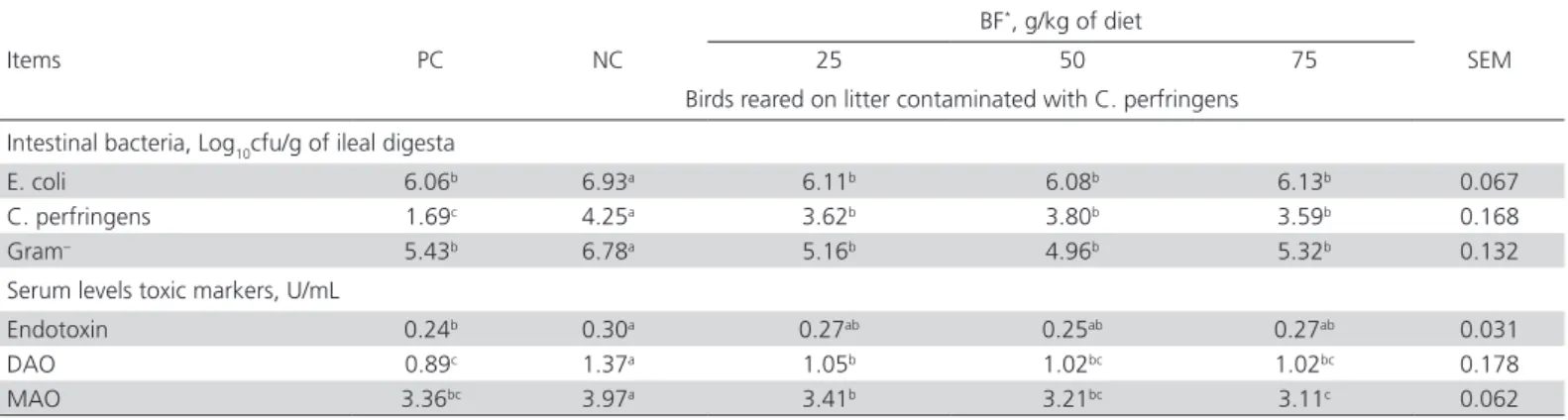
The NC group presented larger (p<0.05) populations of E. coli, C. perfringens, and Gram– bacteria, whereas
the dietary inclusion of BF decreased (p<0.05) the populations of E. coli and Gram–bacteria to the levels
were reduced compared with the NC group, they did not reach to the level of the PC group. The modulating effect of BF on the microbiota did not change as BF doses increased.
Relative to the serum profiles of enterotoxic markers, the NC group presented higher (p<0.05) endotoxin, DAO, and MAO levels when compared with the PC group. The dietary inclusion of BF at 25, 50 or 75 g/kg
decreased (p<0.05) DAO and MAO levels compared
with the NC group, and the doses at 50 or 75 g/kg
showed stronger (p<0.05) effects than 25 g/kg of BF.
The NC group presented higher (p<0.05) endotoxin
level compared with the PC group, whereas the groups fed BF at all doses presented intermediate and not statistically different endotoxin levels compared with NC and BC. The decreased DAO and MAO levels indicate that BF may prevent intestine and liver damage induced by C. perfringens, but the lack of effect on endotoxins implies that BF has no effect on toxic stress in the serum.
Table 4 – Effect of broccoli residues fermented with probiotics (BF) on the immune organ weights and serum immunoglobulins of broilers at 42 d of age.
BF*, g/kg of diet
Items PC NC 25 50 75 SEM
Birds reared on litter contaminated with C. perfringens Organ weight/body weight, g/kg
Thymus 2.40a 1.70b 2.27a 2.20a 2.31a 0.051
Spleen 1.41a 1.10b 1.44a 1.38a 1.44a 0.030
Bursa 0.52a 0.40b 0.51a 0.50a 0.52a 0.011
Serum immunoglobulins, mg/dL
IgA 55.43a 44.00b 55.47a 53.03a 54.19a 0.938
IgG 27.65a 20.82b 27.20a 25.33a 24.51ab 0.598
IgM 286.96a 172.14b 266.12a 278.47a 291.93a 8.698
a-b Means within a row not sharing a superscript are significantly different (p<0.05).
* The BF contained crude protein, yeasts, lactic acid bacteria and Bacillus subtilis at 200 g/kg, 3.1×10⁷, 9.5×10⁶ and 3.5×10⁶cfu/g, respectively.
C. perfringens, Clostridium perfringens; NC, negative control; PC, positive control; SEM, standard error of mean.
Table 5 – Effect of broccoli residues fermented with probiotics (BF) on the intestinal harmful bacteria and toxins of broilers at 42 d of age.
BF*, g/kg of diet
Items PC NC 25 50 75 SEM
Birds reared on litter contaminated with C. perfringens Intestinal bacteria, Log10cfu/g of ileal digesta
E. coli 6.06b 6.93a 6.11b 6.08b 6.13b 0.067
C. perfringens 1.69c 4.25a 3.62b 3.80b 3.59b 0.168
Gram– 5.43b 6.78a 5.16b 4.96b 5.32b 0.132
Serum levels toxic markers, U/mL
Endotoxin 0.24b 0.30a 0.27ab 0.25ab 0.27ab 0.031
DAO 0.89c 1.37a 1.05b 1.02bc 1.02bc 0.178
MAO 3.36bc 3.97a 3.41b 3.21bc 3.11c 0.062
a-c Means within a row not sharing a superscript are significantly different (p<0.05).
* The BF contained crude protein, yeasts, lactic acid bacteria and Bacillus subtilis at 200 g/kg, 3.1×10⁷, 9.5×10⁶ and 3.5×10⁶cfu/g, respectively.
C. perfringens, Clostridium perfringens; E. coli, Escherichia coli; DAO, diamine oxidase; Gram–, Gram-negative bacteria; MAO, monoamine oxidase; NC, negative control;
PC, positive control; SEM, standard error of mean.
DISCUSSION
In the present study, the dietary inclusion of BF at 25, 50 or 75 g/kg improved the ADFI and ADG of broilers, but there were no significant dose effects. Notably, lower mortality was observed in the groups fed BF at 50 or 75than at 25 g/kg from 1 to 42 d of age. These findings support the wide use of
fermentation by the food and feed industries to improve nutritional values, and to produce bioactive ingredients, probiotics and organic acids (Wang
In the present study, dietary BF inclusion increased the relative weights of immune organs and serum immunoglobulin levels of broilers reared on litter
contaminated with C. perfringens, although no
differences were found among the evaluated BF doses. These findings indicate that BF enhances humoral and cellular immunity. The effect of BF on the immune function may be attributed to the beneficial functions of components, which include yeasts, lactic acid bacteria, bacilli, organic acids, and flavonoids. The immunomodulation effects of probiotics and organic acids have already been demonstrated in broilers (Lee et al., 2015; Ragaa & Korany, 2016). In addition, broccoli, as a cruciferous vegetable, is also rich in secondary metabolites that are beneficial to health, such as glucosinolates and S-methylcysteine sulfoxide, flavonoids, anthocyanins, coumarins, carotenoids, antioxidant enzymes, terpenes and other minor compounds (Manchali et al., 2012).
There are several controversial findings about broccoli residues on gut flora. Hubbard et al. (2017) reported that consumption of broccoli heightened intestinal aryl hydrocarbon receptor activity, decreased microbial abundance of the family Erysipelotrichaceae
and attenuated colitis in mice. Pezeshkpour et al.
(2018) observed that broccoli extract inhibited the growth of standard and clinical Pseudomonas aeruginosa
strains. On the other hand, Mustafa & Baurhoo (2016) reported that broccoli floret residues did not affect presumptive bacterial populations in the cecal digesta of broilers.
Studies have shown that fermented feeds were able to prevent dysbiosis of gut microbiota. Ashayerizadeh
et al. (2017) found that fermented rapeseed meal was effective in controlling Salmonella enterica serovar Typhimurium infection and improving the growth performance of broilers. Consuming fermented distillers’ dried grains with solubles feed revealed a shift in the fecal microbiota of pigs (Wang et al.,
2017). In the present study, the populations of E. coli, C. perfringens and total Gram– were decreased in the diets containing BF, and the lower harmful bacteria population may be caused by the competition of probiotics and bacteriostasis of broccoli bioactive components. However, how the BF impacts specific bacteria of Gram– needs further study.
In the present study, the lowered serum profiles of endotoxin, MAO and DAO indicated that the BF can decrease toxic stress of broilers. Endotoxin and DAO are the markers of intestinal toxic damage, and MAO is an indicator of necrotic status of liver. As
known, the broccoli contains bioactive ingredients, and its fermented by-products contain probiotics and organic acids, all of which also possess antioxidant
activity. Hu et al. (2012) found that broilers fed
dried broccoli stem and leaf meal presented better total antioxidant capacity, lower malondialdehyde concentration, and dietary 80 and 120 g/kg broccoli stem and leaf increased the activities of superoxide dismutase and catalase of breast muscle compared with the controls. Tomofuji et al. (2012) reported that
the supplementation of broccoli or Bifidobacterium
longum-fermented broccoli suppressed serum lipid peroxidation and osteoclast differentiation on the alveolar bone surface in rats fed a high-cholesterol diet. In the jejunum, broccoli extract increased the expression of xenobiotic enzymes and of the antioxidant enzyme heme-oxygenase regulated by an antioxidant response element (Muller et al., 2012).
In summary, the broilers reared on litter
conta-minated with C. perfringens presented poor growth
performance, whereas BF added at 25, 50 or 75 g/ kg to the basal diet recovered these losses to the levels of birds in the PC group. The doses of BF at 50 and 75 g/kg reduced the mortality of birds between 1 and 42 d of age. The immune organ weights and serum immunoglobulins were increased by dietary BF inclusion, but there were no differences among doses. The harmful ileal bacterial population and their toxicity to the intestine and liver were also decreased by BF feeding, and the effects of BF doses of 50 or 75 g/ kg on the intestinal toxic marker DAO reached to the levels of PC group. The results suggest that broccoli residues fermented with probioticsis a novel biological protein feed supplement that added at 25, 50 and 75 g/kg improves the growth performance, immunity, and intestinal microbiota f broilers.
ACKNOWLEDGEMENTS
This research was supported by China Agricultural Research System (CARS-41) and National Natural Science Foundation of China (31272466).
REFERENCES
Akinola OS, Onakomaiya AO, Agunbiade JA, Oso AO. Growth performance, apparent nutrient digestibility, intestinal morphology and carcass traits of broiler chickens fed dry, wet and fermented-wet feed. Livestock Science 2015;177:103-109.
Ashayerizadeh A, Dastar B, Shargh MS, Mahoonak AS, Zerehdaran S. Fermented rapeseed meal is effective in controlling Salmonella enterica
serovar Typhimurium infection and improving growth performance in
Hu CH, Wang DG, Pan HY, Zheng WB, Zuo AY, Liu JX. Effects of broccoli stem and leaf meal on broiler performance, skin pigmentation, antioxidant function, and meat quality. Poultry Science 2012;91(9):2229-2234.
Hubbard TD, Murray IA, Nichols RG, Cassel K, Podolsky M, Kuzu G, et al. Dietary broccoli impacts microbial community structure and attenuates chemically induced colitis in mice in an Ah receptor dependent manner. Journal of Functional Foods 2017;37:685-698.
Lee KW, Kim DK, Lillehoj HS, Jang SI, Lee SH. Immune modulation by Bacillus subtilis-based direct-fed microbials in commercial broiler chickens. Animal Feed Science and Technology 2015;200:76-85.
Li CY, Lu JJ, Wu CP, Lien TF. Effects of probiotics and bremelain fermented soybean meal replacing fish meal on growth performance, nutrient retention and carcass traits of broilers. Livestock Science 2014;163:94-101.
Liu N, Ru YJ, Li FD, Cowieson AJ. Effect of diet containing phytate and phytase on the activity and messenger ribonucleic acid expression of carbohydrase and transporter in chickens. Journal of Animal Science 2008;86:3432-3439.
Mahn A, Reyes A. An overview of health-promoting compounds of broccoli
(Brassica oleracea var. italica) and the effect of processing. Food Science
and Technology International 2012;18:503-514.
Manchali S, Murthy KNC, Patil BS. Crucial facts about health benefits of popular cruciferous vegetables. Journal of Functional Foods 2012;4(1):94-106.
Mustafa AF, Baurhoo B. Effects of feeding dried broccoli floret residues on performance, ileal and total digestive tract nutrient digestibility, and selected microbial populations in broiler chickens. Journal of Applied Poultry Research 2016;25(4):561-570.
Pezeshkpour V, Khosravani SA, Ghaedi M, Dashtian K, Zare F, Sharifi A, et al. Ultrasound assisted extraction of phenolic acids from broccoli vegetable and using sonochemistry for preparation of MOF-5 nanocubes: Comparative study based on micro-dilution broth and plate count method for synergism antibacterial effect. Ultrasonics Sonochemistry 2018;40:1031-1038.
Parvez S, Malik KA, Ah Kang S, Kim HY. Probiotics and their fermented food products are beneficial for health. Journal of Applied Microbiology 2006;100:1171-1185.
Ragaa NM, Korany RM. Studying the effect of formic acid and potassium diformate on performance, immunity and gut health of broiler chickens. Animal Nutrition 2016;2(4):296-302.
Tomofuji T, Ekuni D, Azuma T, Irie K, Endo Y, Yamamoto T, et al. Supplementation of broccoli or Bifidobacterium longum-fermented broccoli suppresses serum lipid peroxidation and osteoclast differentiation on alveolar bone surface in rats fed a high-cholesterol diet. Nutrition Research 201;32(4):301-307.
Wang J, Han Y, Zhao J, Zhou Z, Fan H. Consuming fermented distillers’ dried grains with solubles (DDGS) feed reveals a shift in the faecal microbiota of growing and fattening pigs using 454 pyrosequencing. Journal of Integrative Agriculture 2017;16(4):900-910.
Wang JP, Liu N, Song MY, Qin CL, Ma CS. Effect of enzymolytic soybean meal on growth performance, nutrient digestibility and immune function of growing broilers. Animal Feed Science and Technology 2011;169:224-229.
Williamson G. The role of polyphenols in modern nutrition. Nutrition Bulletin 2017;42:226-235.