Pós-operatório de revascularização do miocárdio:
complicações e implicações para enfermagem
Post-operative myocardial revascularization: complications and implications for
nursing
Post-operatorio de revascularización del miocardio: complicaciones e
implicaciones para enfermeira
Kaiomakx Renato Assunção Ribeiro1
How to quote this article:
Ribeiro KRA. Post-operative myocardial revascularization: complications and implications for nursing. Rev Fund Care Online. 2018 jan/mar; 10(1):242-247. DOI: http://dx.doi.org/10.9789/2175-5361.2018.v10i1.242-247
ABSTRACT
Objective: To discuss through literature on complications in the postoperative period of coronary artery bypass grafting. Method: This is a review of the literature with search of articles published from 2006 to 2017, indexed in the SciELO, BIREME, LILACS, MEDLINE. After the search was performed at reading, analysis and description of the results. Results: There are several complications that arise during the postoperative period of coronary artery bypass graft surgery affecting especially the circulatory system, respiratory and renal failure. Among some of the complications are the hemorrhage, respiratory insufficiency, acute renal failure, among others. The knowledge of these complications directs nursing care for as far as the rapid identification and early treatment of these complications. Conclusion: the knowledge and identification of complications associated with post-operative coronary artery bypass graft surgery favors a best treatment to patients revascularized and contributes to reducing the need to hospitalization and hospital costs.
Descriptors: Coronary Artery Bypass Surgery, Complications, Surgery.
1 Nurse Specialist in cardiology and hemodynamics, Resident of Intensive Care Nursing by the State Department of Health of the
RESUMO
Objetivo: Discutir por meio da literatura sobre as complicações presentes no pós-operatório de revascularização do miocárdio. Método: Trata-se de uma revisão da literatura com busca dos artigos publicados entre 2006 a 2017, indexados nas bases de dados SciELO, Bireme, Lilacs, MEDLINE. Após a busca foi realizado a leitura, análise e descrição dos resultados.
Resultados: São várias as complicações que surgem durante o pós-operatório de revascularização do miocárdio atingindo principalmente o sistema circulatório, respiratório e renal. Dentre algumas complicações estão as hemorragias, insuficiência respiratória, insuficiência renal aguda, dentre outros. O conhecimento dessas complicações direciona a assistência de enfermagem de no que se refere a rápida identificação e inicio precoce do tratamento dessas complicações. Conclusão: o conhecimento e identificação das complicações associadas ao pós-operatório de revascularização do miocárdio favorece uma melhor terapêutica aos pacientes revascularizados e contribui para redução do tem de internação e dos custos hospitalares.
Descritores: Revascularização Miocárdica, Complicações, Cirurgia.
RESUMEN
Objetivo: Discutir a través de la literatura sobre las complicaciones en el postoperatorio de cirugía de revascularización miocárdica. Método: Se trata de una revisión de la literatura con búsqueda de artículos publicados desde 2006 a 2017, indizada en SciELO, BIREME, LILACS, MEDLINE. Después de la búsqueda se realiza en la lectura, el análisis y la descripción de los resultados. Resultados: Existen varias complicaciones que surgen durante el postoperatorio de la cirugía de injerto de derivación de la arteria coronaria que afectan especialmente al sistema circulatorio, respiratorio y fallo renal. Entre algunas de las complicaciones son la hemorragia, insuficiencia respiratoria, insuficiencia renal aguda, entre otros. El conocimiento de estas complicaciones se encarga de los cuidados de enfermería en cuanto a la rápida identificación y tratamiento precoz de estas complicaciones.
Conclusión: el conocimiento y la identificación de complicaciones en el postoperatorio de la cirugía de injerto de derivación de la arteria coronaria favorece un mejor tratamiento a los pacientes revascularizada y contribuye a reducir la necesidad de hospitalización y los costos hospitalarios.
Descriptores: La Cirugía de Derivación de la Arteria Coronaria, Complicaciones de la Cirugía.
INTRODUCTION
According to data from the World Health Organization (WHO), the leading cause of death in the world, and consequently in Brazil, has as a factor, diseases of the heart, which represent 33% of mortality in the country. These are all causes related to diseases affecting the blood vessels.1
The different symptoms that may manifest in the appearance of heart diseases, are characterized as fatigue, chest pain, tingling in the upper limbs and dyspnea. However, the cardiovascular diseases can be asymptomatic, emerging as first manifestation, sudden death or in the form of an acute myocardial infarction. In this sense, preventing these diseases, is still as a mediated
life-saving, even with all the advances tragos currently in medicine for treatment of heart disease.1
The prevalence with constant increase of ischemic heart diseases led to the emergence of a large number of studies aiming to improve its treatment, diagnosis and prevention. Despite the great success of the angioplasties, coronary artery bypass grafting (CABG) is still considered today, the method of treatment for many of these patients.2
However, these surgical therapies are complex, regardless of the stage which are which requires a proper treatment in all these phases. However, the postoperative (PO) of cardiac surgeries, during which we observe and we watch the patient’s recovery in post-anesthesia and post-surgical stress is marked by instability of the clinical status of the patient, being full of notes, mainly because this is a period of critical care.3
The improvements in surgical techniques and advances in cardiac anesthesia with improvement in postoperative care intensive care has resulted in a decrease in the mortality rate in patients after coronary artery bypass grafting.4 With this, it is up to you to nurses direct care to patients to criticize, you must have a closer attention by this professional to such patients, since they may present different alterations in developing the disease.
However, for the nurse to perform a health care practice efficiently it is necessary an attention to identifying and addressing the specific needs of each patient and in the best possible way. So, for the routing of their pipelines, nurses use scientific methods as the systematization of nursing care (SAE), which provides subsidies for the development of healthcare plans, implementation of interventions and evaluation in accordance with the needs of the customer and his/ her Family.3,5 In this sense, the present study started from the following guiding question: What are the complications may be present in the postoperative period of coronary artery bypass graft surgery?
This study is justified by the importance of knowing and identify such complications to conduct a quick and effective way to the entire team, among them the nursing team. These complications can bring several harm to patients, being the biggest of them, Death, besides contributing to the increase in hospital costs. And the knowledge of the nursing team, in particular nurses, allows this professional interpreting and prescribe care based on nursing diagnoses (DE) that will collaborate directly in the treatment of these patients, thus favoring a standardization in communication between the nursing team.
However, the present study aimed to discuss through literature about the complications that may be present in the postoperative period of coronary artery bypass grafting.
METHODS
It is an integrative review of the literature that consists in a research method that runs the following steps:6 identification of the theme and selection of research questions, establishment of inclusion and exclusion criteria, selection of studies, definition of the information to be extracted from the selected studies, assessment of evidence and analysis (categorization), discussion and presentation of the synthesis of knowledge evidenced in the studies analyzed.
The search has developed in the data bases: Latin American and Caribbean Health Sciences (LILACS), US National Library of Medicine (Pubmed), Scientrfic
Electronic Library Online (SciELO) and database of Nursing (BDENF). The search strategy in LILACS, BDENF and SciELO databases were used the Descriptors (DeCS): “myocardial revascularization surgery” AND “complications” AND “surgery”. In Pubmed, it was used as a search strategy “Myocardial Revascularization” (MESH) AND “Postoperative
Complications” (MESH) AND “surgery’.
Table 1 - Structure of the development of the study of revision. LILACS, SciELO and BDENF, Pubmed, 2017 Electronic search in the LILACS, PUBMED, SciELO and BDENF
Identification of 77 articles Reading the title and summary (74 exclusions by clipping) Theme
241 Productions Search for articles in full (235 exclusions for not being available online for free). 46 Productions Reading in full (42 exclusions for not responding to the research question).
6 Productions Analysis of the database (5 Exclusions by estrem available in 2 or more database of more).
14 Productions CORPUS OF RESEARCH
Source: Author.
The survey of the studies occurred in February 2017. The inclusion criteria were: original studies that address the postoperative complications resulting from coronary artery bypass grafting, published in Portuguese, English or Spanish, in the period 2006 to 2017, which were available online in full charge. Articles with dual publication were considered only once. Table 1 shows the results of the search.
We found 370 studies, being 74 excluded because they did not address the topic of interest, 235 were excluded due to not being available online in full charge, 42 for not responding to the research question and two for presenting replicates in two or more databases. The articles selected for analysis, 14 responded to the research question and formed the corpus of study (Table 1).
After exhaustive reading, the primary studies were submitted the same extraction and data collection, through the completion of a table type flowchart. The articles were identified by the letter “article”, followed by a numbering
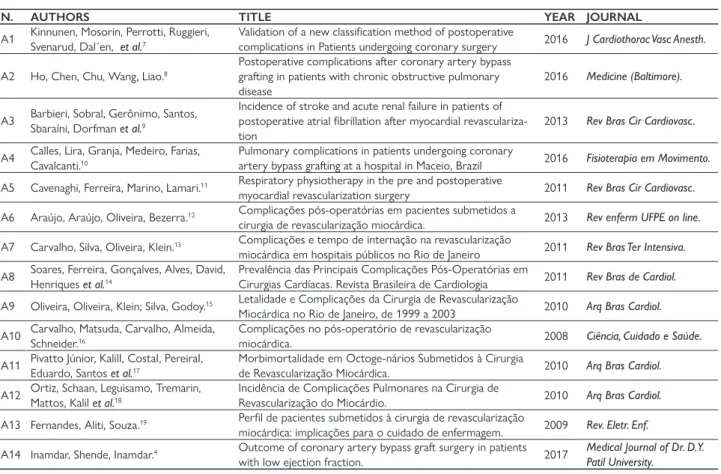
Table 2 - Articles that compose the corpus of research, by author, title, year and journal
N. AUTHORS TITLE YEAR JOURNAL
A1 Kinnunen, Mosorin, Perrotti, Ruggieri, Svenarud, Dal´en, et al.7
Validation of a new classification method of postoperative
complications in Patients undergoing coronary surgery 2016 J Cardiothorac Vasc Anesth. A2 Ho, Chen, Chu, Wang, Liao.8
Postoperative complications after coronary artery bypass grafting in patients with chronic obstructive pulmonary disease
2016 Medicine (Baltimore).
A3 Barbieri, Sobral, Gerônimo, Santos, Sbaraíni, Dorfman et al.9
Incidence of stroke and acute renal failure in patients of postoperative atrial fibrillation after myocardial revasculariza-tion
2013 Rev Bras Cir Cardiovasc.
A4 Calles, Lira, Granja, Medeiro, Farias, Cavalcanti.10
Pulmonary complications in patients undergoing coronary
artery bypass grafting at a hospital in Maceio, Brazil 2016 Fisioterapia em Movimento. A5 Cavenaghi, Ferreira, Marino, Lamari.11 Respiratory physiotherapy in the pre and postoperative
myocardial revascularization surgery 2011 Rev Bras Cir Cardiovasc. A6 Araújo, Araújo, Oliveira, Bezerra.12 Complicações pós-operatórias em pacientes submetidos a
cirurgia de revascularização miocárdica. 2013 Rev enferm UFPE on line. A7 Carvalho, Silva, Oliveira, Klein.13 Complicações e tempo de internação na revascularização
miocárdica em hospitais públicos no Rio de Janeiro 2011 Rev Bras Ter Intensiva. A8 Soares, Ferreira, Gonçalves, Alves, David, Henriques et al.14
Prevalência das Principais Complicações Pós-Operatórias em
Cirurgias Cardíacas. Revista Brasileira de Cardiologia 2011 Rev Bras de Cardiol. A9 Oliveira, Oliveira, Klein; Silva, Godoy.15 Letalidade e Complicações da Cirurgia de Revascularização
Miocárdica no Rio de Janeiro, de 1999 a 2003 2010 Arq Bras Cardiol. A10 Carvalho, Matsuda, Carvalho, Almeida,
Schneider.16
Complicações no pós-operatório de revascularização
miocárdica. 2008 Ciência, Cuidado e Saúde.
A11 Pivatto Júnior, KalilI, CostaI, PereiraI, Eduardo, Santos et al.17
Morbimortalidade em Octoge-nários Submetidos à Cirurgia
de Revascularização Miocárdica. 2010 Arq Bras Cardiol.
A12 Ortiz, Schaan, Leguisamo, Tremarin, Mattos, Kalil et al.18
Incidência de Complicações Pulmonares na Cirurgia de
Revascularização do Miocárdio. 2010 Arq Bras Cardiol.
A13 Fernandes, Aliti, Souza.19 Perfil de pacientes submetidos à cirurgia de revascularização
miocárdica: implicações para o cuidado de enfermagem. 2009 Rev. Eletr. Enf. A14 Inamdar, Shende, Inamdar.4 Outcome of coronary artery bypass graft surgery in patients
with low ejection fraction. 2017 Medical Journal of Dr. D.Y. Patil University.
(A1, A2, A3, successively). With regard to ethical issues, were respected the precepts of authorship.
RESULTS AND DISCUSSION
As to the origin of the studies, the United States has concentrated the majority of publications (78.6%). The population studied in articles included patients who were in the postoperative period. The scenario of the surveys was hospitals that perform surgeries for cardiovascular diseases. On the methodological design there was a predominance of quantitative studies. Table 2 presents the identification, author, title, year of publication and journal of studies.
From the analysis of the studies revealed that several complications resulting from coronary artery bypass grafting in the postoperative period. These complications have been described almost always so grouped according to area or organ affected.
A study conducted in 2016 with 2764 patients pointed out that there are a number of complications resulting from coronary artery bypass grafting. Complications were found as the atrial fibrillation (AF), need for transfusion of platelets, plasma frozen or fresh, 2 to 4 units red blood cells, deep infection in the sore on his leg, implantation of a pacemaker, pericardial fenestration for effusion, acute renal failure (ARF) with and without the need for dialysis, transfusion of 5 to 10 units of red blood cells, reoperation for bleeding, infection of the wound deep sternal, tomba intra-aortic balloon pump after surgery, mediastinitis, coronary artery bypass graft surgery or percutaneous coronary intervention for technical failure, reoperation for hemodynamic instability, ventricular fibrillation/ asistolia, surgery for gastrointestinal complications, extracorporeal membrane oxygenation postoperative pain.7
Another study published in 2016 showed postoperative complications of coronary artery bypass graft surgery in patients with chronic obstructive pulmonary disease (COPD) as acute myocardial infarction, acute respiratory failure, coronary artery bypass graft surgery, chronic obstructive pulmonary disease, stroke, deep venous thrombosis, pulmonary embolism.8
In the study of Barbieri and his colleagues, to evaluate 2628 patients were divided into 2 groups and that they were in the postoperative period of coronary artery bypass grafting (Group I- not presented AF in post-operative MRI with 2302 (87.6%) patients; and group II, with 326 (12.4%) patients who developed postoperative AF of RM), pointed out that the incidence of 1.1% in patients without postoperative atrial fibrillation and 4% incidence of stroke in patients with atrial fibrillation (P <0.001).9
The same author pointed out that the IRA in these patients, showed an incidence of 12% in patients with postoperative atrial fibrillation and 2.4% in the group without postoperative atrial fibrillation (P <0.001), showing a relationship 5 times greater in group 2 compared to group 1.9 Therefore, patients
who develop postoperative AF of MRI has a higher risk of developing bird and anger.
In a study conducted in 2013, which was composed by 183 patients who underwent coronary artery bypass grafting, described several complications after CABG. These complications were found in 44.8% of the patients, and of this total, 23.5% had cardiovascular complications, 21.9%, 8.7% renal and 7.7%. Other complications presented, as operative wound infection, mediastinitis, bleeding and subcutaneous emphysema, was observed in 9.3% of patients who developed any complications and 10.4% progressed to death.10
Studies show some pulmonary complications after surgery for CABG, among them is the pleural effusion, atelectasis, pneumothorax, pulmonary embolism, acute respiratory insufficiency; bronchopneumonia, reduced lung volume and lung capacity, changes in trade of chromatography with consequent hypoxemia and decreased diffusing capacity.11-12
Another study conducted in 2011 showed that the complications found post-CABG, were: hyperglycemia, blood transfusion, low cardiac arrhythmia, intra-aortic balloon, ventilatory prosthesis > 24 hours.13
In a study by Soares and his collaborators, published in 2011, pointed out complications according to the organ or the affected area. These complications were distributed in:11 pulmonary complications which have been found to tracheal intubation or mechanical ventilation for more than 48 hours after surgery, atelectasis, bronchoconstriction, hypoxemia, acute respiratory distress syndrome (ARDS), acute respiratory failure (PACA), pleural effusion, ventilator-associated pneumonia (VAP), acute lung edema, pneumothorax. The cardiac complications presented as low cardiac output syndrome, acute myocardial infarction.14
With regard to neurological complications were reported as more frequent the altered level of consciousness or coma occurring in association with neurological injury during surgery, changing sensory, motor or reflections at any time post-op, bird. Already in the renal complications, were often the percentage increase of serum creatinine = 50% (1.5 x baseline), reduction of urine (<0.5 ml/kg/h for more than 6 hours), increase of serum creatinine ≥0.3mg/dl, the need for dialysis at any moment of the postoperative period.14
As regards the treatment of hematological complications were found to be thrombotic events and bleeding. The digestive complications led to the mesenteric ischemia and gastrointestinal bleeding. And the hydroelectrolytic disorders often form hypernatremia, hypokalemia, hyperkalemia, hypocalcemia, hyponatremia, HYPERMAGNESEMIA. Other common complications were the pulmonary infections, urinary tract infections, surgical site, endocarditis and mediastinitis.14
Following this same method, Oliveiira and his collaborators, in his article published in 2010, found
following postoperative complications of RM: hemorrhage or low cardiac output after the procedure (bleeding, syndrome of low cardiac output, cardiac tamponade, etc.) The ischemic complications and cardiopulmonary, arose the AMI, unstable angina, cardiac arrest; cardiological complications not: ischemic heart failure, pericarditis, arrhythmias, pulmonary thromboembolism, acute mitral insufficiency, communication intraventricular hemorrhage, rupture of the free wall, pneumonia, ARDS, ventilatory prosthesis for more than 24 hours.15
Among renal changes were mainly to acute renal failure. Between the neurological disorders were the cerebrovascular accident (CVA) (ischemic, hemorrhagic stroke or trobótico), eat of any etiology seizures of any etiology, psychiatric alterations such as delirium, disorientation, hallucinations.15
The same author also found infectious complications related to post-operative MRI, such as superficial infection of the soft tissues, infection of the mediastinum, sepsis, septic shock, infection in other sites. Already the vascular complications peripheral areas, have been identified as deep vein thrombosis, amputation, chronic peripheral arterial revascularization of the state; multiple organ failure.15
Another study has described the changes cardiovascular complications as the alteration of normal sinus rhythm to atrial fibrillation, supraventricular tachycardia, anterior ischemia on the electrocardiogram, ventricular fibrillation with low cardiac output syndrome, atrial arrhythmia, ST segment elevation of the lateral wall in the electrocardiogram, chest pain, cardiac arrest, external cardiac massage, arrhythmia, implantation of intra-aortic balloon pump, high doses of inotropic agents, probable failure of the right ventricle, bradycardia with hypotension, echocardiography with severe dysfunction of the left ventricle, cardiorespiratory reanimated.1
In relation to the pulmonary alterations, it was identified as complications at low saturation, pneumothorax, inspiratory flow of oxygen (FiO2) High, reintubation due to hypoxia, left pleural effusion, respiratory insufficiency, drain with air leakage, bronchospasm, mechanical ventilation, drain water”. As regards the complications related to neurological system, so found the stroke with aphasia, behavioral change, amendment of conduct, abstinence Crisis, Turmoil, apathy, cerebral injury diffuse without location and mental confusion”. Gastrointestinal changes showed the abdominal distension, vomiting in ink, endoscopy, abdominal pain, and laparotomy . And finally, the complications related to renal function were the worsening of renal function and dialysis patients.16
Other authors found similar complications with the authors. These complications presented as: sternal instability, the left- hand side, low cardiac output, renal dysfunction, prolonged ventilatory support, use
of intra-aortic balloon, reintervention for bleeding, sepsis, cerebral vascular accident (CVA), infection of the lower limb, pleural effusion, atelectasis, pneumonia, and died, atrial fibrillation, ventricular fibrillation, hemodynamic instability, postoperative AMI, ventilatory insufficiency, cardiac arrest, pleural effusion.4,17-19
Implications for nursing practice
The non-identification of complications in the postoperative MRI, or even the delay in its identification, can bring to the patient other complications. This situation can be due to the lack of training, skill and attention of these professionals. These factors, which are essential in day-to-day care practice of nursing.
The non-systematic observation, the poor training in day-to-day, or even the lack of it, are the main causes of failures in care to surgical patients, in particular, the patient in the postoperative period of RM.20
Before modifying the clinical profile of these patients and the various complications that may be present at this stage of the surgery, it is necessary for the qualification of nursing professionals, including nurses, to be held liable by law to take care directly of critical patients and the person responsible for drawing up the plan of nursing care on the basis of.
In this context, objectives and rehabilitate the health of revascularized patients, and returns it to society, should be established ahead to these patients and can be reached from the essential actions such as: training, health education, institution of clinical protocols, defining roles within the team. Having always as parameters to be followed, the systematization of nursing care, so this allows expressing the autonomy of nurses through, during the reception and treatment of patients in the postoperative period of coronary artery bypass graft surgery, and this and other steps, be prepared and sequentially specified by a nurse, so that you can ensure the best possible care.
FINAL CONSIDERATIONS
It is concluded that the post-CABG can reach several body systems, directing the looks not only to the area of cardiology, but also for the other adjacent areas and that inter-relate to such a body.
Postoperative complications of RM can develop and reach from the head to the feet of the patient revascularized. Among some of the complications we can mention the sepsis, the cardiac output decreased, low peripheral perfusion, stroke, hemorrhage, pericarditis, death, among others.
With this, the nurse must intensify their surveillance, due to these and other complications in different organs and systems of the human body, making a tool to guide the nursing care provided in order to facilitate the communication between the team and the correct identification of complications not only heart, but also complications of other adjacent areas.
Thus, we suggest further research to increase nursing care based on the systematization of nursing care (SAE), alongside better identification and targeting of the ducts to be developed by these professionals, thus ensuring better effectiveness of surgical therapy and consequently reducing the duration of hospitalization and hospital costs.
REFERENCES
1. Wainstein MV, Wainstein RV. Prevenção da doença isquêmica do coração: o que é mais importante? Revista HCPA. 2012; 32(3):387-8. 2. Luchesa CA, Greca FH, Guarita-Souza LC, Santos JLV, Aquim
EE. Papel da eletroanalgesia na função respiratória de pacientes submetidos à operação de revascularização do miocárdio. Rev Bras Cir Cardiovasc. 2009; 24(3):391-6.
3. Duarte SCM, Stipp MAC, Mesquita MGR, Silva MM. O cuidado de enfermagem no pós-operatório de cirurgia cardíaca: um estudo de caso. Esc Anna Nery. 2012; 16(4):657-65.
4. Inamdar K, Shende SP, Inamdar AS. Outcome of coronary artery bypass graft surgery in patients with low ejection fraction. Medical Journal of Dr. D.Y. Patil University. 2017; 10(2):162-6.
5. Ribeiro KRA, Silva LP, Lima MLS. Conhecimento do infarto agudo do miocárdio: implicações para assistência de enfermagem. Rev Enferm UFPI. 2016; 5(4):63-8.
6. Souza MT, Silva MD, Carvalho R. Revisão integrativa: o que é e como fazer. Einstein. [Internet] 2010; 8(1):102-6. [acesso em 01 jun 2014]. Disponível: http://www.astresmetodologias.com/material/O_ que_e_RIL.pdf.
7. Kinnunen EM, Mosorin MA, Perrotti A, Ruggieri VG, Svenarud P, Onorati MDF, et al. Validation of a New Classification Method of Postoperative Complications in Patients Undergoing Coronary Surgery. J Cardiothorac Vasc Anesth. 2016; 30(2):330-7.
8. Ho CH, Chen YC, Chu CC, Wang JJ, Liao KM. Postoperative Complications After Coronary Artery Bypass Grafting in Patients With Chronic Obstructive Pulmonary Disease. Medicine (Baltimore). 2016; 95(8): e2926.
9. Barbieri LR, Sobral MLP, Gerônimo GMS, Santos GG, Sbaraíni E, Dorfman FK, et al. Incidence of stroke and acute renal failure in patients of postoperative atrial fibrillation after myocardial revascularization. Rev Bras Cir Cardiovasc. 2013; 28(4):442-8. 10. Calles ACN, Lira JLF, Karolyne Soares Barbosa Granja KSB,
Medeiro JD, Farias AR, Cavalcanti RC. Pulmonary complications in patients undergoing coronary artery bypass grafting at a hospital in Maceio, Brazil. Fisioter Mov. 2016; 29(4):661-7.
11. Cavenaghi S, Ferreira LL, Marino LH, Lamari NM. Respiratory physiotherapy in the pre and postoperative myocardial
revascularization surgery. Rev Bras Cir Cardiovasc. 2011;26(3):455-61.
12. Araújo NR, Araújo RA, Oliveira RC, Bezerra SMMS et al. Complicações pós-operatórias em pacientes submetidos a cirurgia de revascularização miocárdica. Rev enferm UFPE online. 2013; 7(5):1301-10. [acesso em 13 dez 2016]. Disponível em: file:///C:/ Users/biare_000/Downloads/4103-40142-1-PB%20(7).pdf. 13. Carvalho MRM, Silva NAS, Oliveira GMM, Klein CH.
Complicações e tempo de internação na revascularização miocárdica em hospitais públicos no Rio de Janeiro. Rev Bras Ter Intensiva. 2011; 23(3):312-20.
14. Soares GMT, Ferreira DCS, Gonçalves MPC, Alves TGS, David FL, Henriques KMC et al. Prevalência das Principais Complicações Pós-Operatórias em Cirurgias Cardíacas. Revista Brasileira de Cardiologia. 2011; 24(3):139-46.
15. Oliveira TML, Oliveira GMM, Klein CH; Silva NAS, Godoy PH. Letalidade e Complicações da Cirurgia de Revascularização Miocárdica no Rio de Janeiro, de 1999 a 2003. Arq Bras Cardiol. 2010; 95(3):303-12.
16. Carvalho ARS, Matsuda LM, Carvalho MSS, Almeida RMSSA, Schneider DSLG. Complicações no pós-operatório de revascularização miocárdica. Ciência, Cuidado e Saúde. 2008; 5(1):50-9.
Received on: 06/18/2017 Reviews required: 09/13/2017 Approved on: 09/13/2017 Published on: 05/01/2018
Author responsible for correspondence:
Kaiomakx Renato Assunção Ribeiro Rua 3 norte, Lote 4, s/n, Águas Claras Brasília/DF, Brazil ZIP-code: 71928-720
17. Pivatto Júnior F, KalilI RAK, CostaI AR, PereiraI EMC, Eduardo Z, Santos EZ, et al. Morbimortalidade em Octogenários Submetidos à Cirurgia de Revascularização Miocárdica. Arq Bras Cardiol. 2010; 95(1):1-6.
18. Ortiz LDN, Schaan CW, Leguisamo CP, Tremarin K, Waldo L. L. D. Mattos WLLD, et al. Incidência de Complicações Pulmonares na Cirurgia de Revascularização do Miocárdio. Arq Bras Cardiol. 2010; 95(4):441-7.
19. Fernandes MVB, Aliti G, Souza EN. Perfil de pacientes submetidos à cirurgia de revascularização miocárdica: implicações para o cuidado de enfermagem. Rev. Eletr. Enf. 2009; 11(4):993-9. 20. Chianca TCM. Falhas de enfermagem no pós-operatório
imediato de pacientes cirúrgicos. Rev Latino-am Enfermagem. 2006;14(6):879-86.