Covilhã September 2010
FACULDADE DE CIÊNCIAS DA SAÚDE
Preparation and
Characterization of polysaccharide multilayered capsules
for tissue engineering applications
Master thesis
Universidade da Beira Interior
Faculdade de Ciências da Saúde
Pd
Characterization of polysaccharide multilayered capsules for tissue
engineering applications
Dissertação de Mestrado em Ciências Biomédicas
Nazua Lima Ferreira da Costa
Trabalho efectuado sob orientação do
Professor Doutor João Filipe Colardelle da Luz Mano
Co-Orientadores
Professora Doutora Luiza Augusta Tereza Gil Breintenfeld Granadeiro Post Doc. Praveen Sher
“The path to wisdom is
not being afraid to make
Acknowledgements
I dedicate this thesis to the person who made this walk possible in almost every ways. The woman who passed me a pen and a notebook full of letters for me to cover when I was just five years of age. The woman I swore so many times in thought because I was abhorred to cover the alphabet that occupied my time playing. Grandmother, today I know that 7x7 is 49 because it was the only paddle you gave me while you were teaching me the multiplication table. Today I was able to write and entire thesis with the same capacity and with all the little letters that once I dislike covering. For all this and all the support you always gave me, and specially for having made me who I am today my sincerely Thanks.
To my parents, the great friends of a lifetime, thanks for the hours on the phone, for the unconditional support and for always believing in me when I doubted myself so many times. Thank you for having made me grow in so many ways and manly for letting me always be your “spoiled little girl”.
To my sisters and brother, the best siblings in the world, thanks for letting me be your example of strength and courage. Thank you for your understanding and support that you have always given me over these five years of “pseudo-absence” of your life. Thanks for the silly phone calls and conversations that helped make shortest the distance.
To my cousins, enlightened souls, who were always there for fun times and “seriously in good” moments.
To my uncles and godparents, thank you for believing and being always on my side during the most important moments.
To my friends (Marokinhax, Paulinha, Cinha, Bé, Tone, Pouco, Sara Manela, Vidiu, Valter, Di and Raquel) guys, without you this would not be possible. A special thanks to you Marokinhax for being my conscience and
good sense in those moments when I feel like “I am going to send the towel down”. Thanks Cinha by pats and just making me happy. Thanks to “ìssimos”, “Assembleia” and all those that were part of my academic history, who laughed, cried and shared countless experiences. May of you were for life, know it well.
To my babes Designers (Charlotte, Deni and Rachel), thanks for the wonderful year, full of emotions and lots of fun adventures. You have been true companions and friends. And to my Mariazinha for being a fantastic new roommate and great companion too.
Thanks to Futejantas Taipas the best Portuguese league football team. You were the best companions of the latter year, who have received and integrated me with open arms and smiley faces. I am grateful for every little time spent in your company, because wherever he went, with you the party was guaranteed.
To all members of the Group 3B’s, thank you for availability, friendliness and help. A special thanks to Ana Frias, Tírcia Santos, Alexandra Marques, Gabriela Martins, Anabela Alves, Rita Duarte and Vitor Correlo for the tips and teachings of some laboratory practices.
Thanks to my "teacher" and friend Praveen Sher for the hours of layer-by-layer and discussion of results. But above all, thank you for left me walk and learn by my own methods.
I also thank Professor Rui Reis for the availability and kindness with which he has responded to my request for a internship Master’s.
To my supervisor Professor João Mano my thanks for having accepted me in his team and for the confidence you have placed in my work since the very beginning.
Thank you also to the University of Beira Interior and the city of Covilhã for being my home along this short but intense walk.
To my teachers, who have cultivated in me the passion for investigation and knowledge.
A special thanks to my co-advisor Luiza Granadeiro for all the support, help and for thought me that we can always do better if we just think in a simple and concise way.
To Drª Fernada, from the social services, for the support and friendship shown from the first day I arrived in this city.
Finally, I thank all those who although not mentioned, I do not forget their contribution in my learning and growth as a human being.
Abstract
Cell encapsulation has been widely studied as an alternative therapy for almost every human diseases and disorders. This technique enables the inclusion of various types of living cells inside spherical systems which, among other capabilities, mimic the environment provided by the extracellular matrix. This new therapeutic approach has already proved to be successful either in vitro or in vivo studies, thus becoming one of the most promising tools in tissue engineering and regenerative medicine.
The main goal of this thesis was to explore some of the potential of cell encapsulation using simple and versatile techniques that can be performed in physiological and friendly conditions to the cells.
In a first approach, cells were encapsulated in liquid-core capsules using a three step methodology: (i) the precipitation of a polymer solution of alginate into a bath of calcium chloride (ionotropic gelation), (ii) deposition of polyelectrolyte multilayers onto the surface of the beads, in a process called layer-by-layer. (iii) use of EDTA to liquefy the alginate core. Two different natural-based polymers were used, alginate, the most studied copolymer for cell encapsulation and chitosan, a polymer widely explored in a variety of biomedical applications. Both polymers were proved to be biocompatible, biodegradable and can be manipulated under physiological conditions.
All the capsules produced exhibited spherical shape, smooth surface and liquid-core. The results shown that encapsulated cells were viable and
proliferating few days after the alginate-chitosan multilayer buildup, which suggests that the develop capsules posses a semipermeable membrane which allows the correct diffusion of nutrients and metabolites.
A preliminary study was started to test the feasibility of culturing anchorage-dependent cells in PLLA solid microparticles previously treated with human serum fibronectin followed by the encapsulation of the whole set in alginate-chitosan liquid-core capsules. The results are still very incipient but very promising.
Resumo
O encapsulamento de células tem sido amplamente estudado como alternativa terapêutica para quase todas as doenças e distúrbios que afectam a humanidade. Esta técnica permite a inclusão de vários tipos de células vivas dentro de sistemas esféricos que, entre outras capacidades, mimetizam o ambiente criado pela matriz extracelular. Esta nova abordagem terapêutica já deu provas do seu sucesso em estudos quer in vitro ou in vivo, tornando-se um dos instrumentos mais promissores na engenharia de tecidos e medicina regenerativa.
Esta tese teve como principal objectivo a exploração de alguns dos potenciais de encapsulamento de células recorrendo a técnicas simples e versáteis passíveis de serem realizadas em condições fisiológicas e favoráveis para as células.
Numa primeira abordagem, foram encapsuladas células em cápsulas de núcleo líquido usando uma metodologia trifásica: (i) precipitação de uma solução de polimérica de alginato num banho de cloreto de cálcio (gelificação ionotrópica), (ii) deposição de multicamadas polieletrólitas na superfície das partículas, num processo denominado layer-by-layer (iii) liquefacção do núcleo de alginato com recurso a uma solução de EDTA. Dois polímeros naturais diferentes foram utilizados, o alginato, o copolímero mais estudado para encapsulamento de células e o quitosano, um polímero amplamente explorado nas mais variadas aplicações biomédicas. Ambos os polímeros já mostraram
ser biocompativeis, biodegradaveis podendo ser manipulados em condições fisiológicas.
Todas as cápsulas produzidas exibem uma forma esférica, lisa e núcleo liquefeito. Os resultados mostraram que as células encapsuladas eram viáveis e proliferavam poucos dias após a construção das multicamadas de alginato-quitosano, o que sugere que as cápsulas desenvolvidas possuem uma membrana semipermeável que permite a difusão adequada de nutrientes e metabólitos.
Um estudo preliminar foi iniciado com o intuito de testar a viabilidade do cultivo de células dependentes de ancoragem em micropartículas sólidas de PLLA previamente tratados com fibronectina humana seguido do encapsulamento de todo o conjunto em cápsulas líquidas de alginato-quitosana. Os resultados são ainda muito incipientes, mas bastante promissores.
Abbreviations
AAC – alginate/chitosan capsules ADC – anchorage dependent cells ALG/CHI multilayers – 8 polyelectrolyte alginate/chitosan multilayer
APA – alginate/poly(L-lysine) capsules B
Ba2+ - barium cation
BSA – bovine serum albumin C
Ca2+ - calcium cation CHO –
CO2 – carbon dioxide D
DMEM – Dulbecco’s Modified Eagle Medium
DNA - Deoxyribonucleic acid E
ECM – extracellular matrix
EDTA - Ethylenediamine tetraacetic acid
F
FBS – fetal bovine serum H HPC – high polyelectrolyte concentrated solution I IG – ionotropic gelation L LbL – layer by layer
LPC – low polyelectrolyte concentrated solution
L929 – mouse fibroblastic lung cell line M
Mg2+ - magnesium cation Min - minutes
MTS -
MWCO – molecular weight cut off N
NaCl – sodium chloride NaOH – sodium hydroxide O
O.D – optical density P
PBS – phosphate saline buffer PEC – polyelectrolyte coating PLL – poly(L-lysine)
PLLA – poly(L-lactic) acid Q
QCM – D – quartz crystal microbalance with dissipation
R
RGD – Arginine – Glycine – Aspartic acid
S
SaOs-2 – human sarcoma osteoblastic cell line
Symbols
∆f (n) – normalized frequency ∆D – dissipation
µ - CT – micro computerized tomography w/v – weight/volume
List of tables
Table1.1: Cell encapsulation approaches using ionotropic gelation and polyelectrolyte coating. ... 12
Table3.1: Concentration of the sodium alginate and calcium chloride solutions used to prepare the different liquid core capsules. ... 56
List of Figures
Figure1. 1: schematic representation of a typical bioencapsulation system. (A) semipermeable membrane allowing the free bidimensional diffusion of nutrients and metabolites. (B): microcapsules used for cell transplantation in a tissue engineering approach. Adapted from [10] ... 3 Figure1. 2: schematic representation of the different types of microcapsules ... 5 Figure1.3: under mild conditions. A: ionotropic gelation of a polymeric cell suspension in a multivalent ionic bath B: Polyelectrolyte coating for capsule wall formation; C: liquid-core capsule obtained after core treatment with a chelator agent. ... 11 Figure1.4: layer-by-layer under spherical templates. Adapted from [79] ... 13
Figure2.1: Chemical structure of alginate. (A) α-L-guluronic acid (G-blocks) (B) β-D-mannuronic acid monomers (M-blocks) (C) interspaced M and G blocks. Adapted from [1] ... 24 Figure2. 2: chemical structure of chitosan. Adapted from [44] ... 26 Figure2.3: schematic representation of the procedure used for capsule production using ionotropic gelation (1) and layer-by-layer polyelectrolyte assembly (2). ... 31 Figure2.4: schematic representation of cell encapsulation procedure in liquid-core capsules. .. 35 Figure3.1: schematic representation of the three-step alginate-chitosan microcapsules production. ... 48 Figure3.2: QCM-D results showing the deposition of 8 ALG/CHI layers films at pH 7 with low polyelectrolyte concentration (LPC –circles) and high polyelectrolyte concentration (HPC – squares). (A) Normalized frequency (∆f/n) and (B) dissipation (∆D) variations are recorded as a function of time. Steps 1 and 3 represent chitosan and alginate deposition, respectively, and step 2 is related to rinsing with saline buffer NaCl. Plots represent the 7th, 9th, and 11th
harmonics for HPC frequency (solid squares) and dissipation (open squares) and the 7th, 9th and
11th harmonics for LPC frequency (solid circles) and dissipation (open circles) at pH 7.0. ... 54
Figure3.3: (A) – Calcium-alginate bead observed by optical microscopy; (B) – alginate organization observed by μ-CT analysis; (C) – SEM of the interior of Ca-ALG beads; (D) – alginate-chitosan liquid core capsule observed by optical microscopy; (E) – SEM of the alginate-chitosan coating organization of the AC capsules; ... 56 Figure3.4: The effect of the mechanical impact of rotation at 200rpm and 4500rpm on the integrity of the four types of liquid core capsules as function of time. ... 57
Figure3.5: (A) –Cells encapsulated in 8LbL AC capsules after 1day (A1) and 3 days (A2) of culture seen by optical microscopy; (B) – MTS viability assay of encapsulated cells after 1 day and 3 days of culture. (*) – Significance level of 95% (p < 0.05)... 59 Figure4.1: schematic representation of the procedure used for seeding and culturing SaOs-2 and L929 cell lines onto PLLA microparticles treated and untretaed with human fibronectin. ... 70 Figure4.2: Schematic representation of the procedure used to prepare liquid-core alginate/chitosan capsules containing cells seeded onto PLLA microparticles. ... 71 Figure4.3: Optical microscopy cells cultured onto untreated PLLA microparticules (A – SaOs-2 and D – L929) and fibronectin treated PLLA microparticles (B – SaOs-2 and E – L929) after 72h. C and F represents, respectively, SaOs-2 cells and L929 cells cultured for 72h at 37ºC (positive control). A, B, C and F were obtained using a magnification of 40X. D and E were obtained using a magnification of 20X. ... 72 Figure4.4: Cell viability and proliferation of SaOs-2 cells and L929 cells cultured onto untreated and treated PLLA microparticles. The results were obtained using MTS assay after 24h, 48h and 72h. ... 74 Figure4.5: Alginate-chitosan liquid core capsules containing PLLA microparticules with cells seeded onto. A – Capsule with 0.05mg of PLLA microparticles, magnification of 40X; B – capsule with 1mg of PLLA microparticles, magnification of 20x; C – PLLA microparticles dispersed within liquid-core matrix, magnification of 40x. ... 75
Contents
Chapter I: Bioencapsulation in liquid-core capsules- General Introduction ... 1
1.1 – Motivation ... 1
1.2 – Bioencapsulation ... 2
1.3. – Liquid-core capsules for cell encapsulation... 6
1.3.1. Techniques for cell encapsulation under mild conditions ... 9
1.4. – Layer-by-layer electrostactic assembly as a vehicle to obtain liquid core capsules ... 12
1.5. Conclusion ... 15
1.6. References ... 16
Chapter II – Materials and Methods ... 23
2.1. Polymers used ... 23
2.1.1. Alginate ... 23
2.1.2. Chitosan ... 26
2.2. Methods ... 29
2.2.1. - Building and characterization of alginate-chitosan multilayers by Quartz-Crystal Microbalance with Dissipation Monitoring (QCM - D)... 29
2.2.2. Microcapsules production and characterization ... 30
2.2.2.1. Production of calcium-alginate microparticules ... 30
2.2.2.2. LbL self assembly deposition ... 31
2.2.2.3. Morphological characterization ... 32
2.2.2.4. Assessment of alginate-chitosan microcapsules mechanical stability by centrifugation ... 33
2.2.3. In vitro studies ... 34
2.2.3.2. Microscopy observations ... 36
2.2.3.3. Evaluation of Alginate-chitosan encapsulated SaOs-2 like-cells viability by MTS assay ... 36
2.3. References ... 38
Chapter III: Liquefied capsules for cell immobilization coated with multilayered polyelectrolyte films ... 44
Abstract ... 44
3.1. Introduction ... 45
3.2. Materials and Methods ... 48
3.2.1. Materials ... 48
3.2.2. Quartz crystal microbalance with dissipation monitoring (QCM-D) ... 49
3.2.3. Preparation of Alginate-Chitosan capsules ... 50
3.2.4. Capsule characterization ... 51
3.2.4.1. Micro-computerized tomography (μCT) ... 51
3.2.4.2. Scanning electron microscopy (SEM) ... 51
3.2.4.3. Alginate-Chitosan capsules stability test ... 51
3.2.5. Cell culture and encapsulation ... 52
3.2.5.1. Cell viability assay ... 52
3.3. Results and discussion ... 53
3.3.1. Quartz crystal microbalance with dissipation monitoring (QCM-D) ... 53
3.3.2. Alginate-Chitosan capsules morphologic characterization ... 54
3.3.3. Alginate-Chitosan capsules stability test ... 56
3.3.4. Cell viability assay ... 58
3.4. Conclusions ... 59
Chapter IV: Preliminary study on the encapsulation of PLLA microparticles seeded with
cells onto liquefied capsules ... 64
4.1. Introduction ... 64
4.2. Materials and Methods ... 66
4.2.1. PLLA particles processing ... 66
4.2.2. Cell culture studies ... 67
4.2.3. Seeding and culturing osteoblast like-cells and fibrobroblast like-cells into PLLA microparticules with and without fibronectin treatment ... 68
4.2.4. Staining procedure for microscopy analysis ... 69
4.2.5. MTS quantification of viable cells ... 69
4.2.6. Encapsulation of PLLA microparticules with cells in alginate-chitosan capsules 70 4.3. Results and Discussion ... 72
4.3.1. Cellular adhesion and proliferation ... 72
4.3.2. MTS quantification of viable cells ... 73
4.3.3. Encapsulation of PLLA microparticules with cells in alginate-chitosan capsules 75 4.4. Conclusions ... 76
4.5. References ... 77
1
Chapter I: Bioencapsulation in liquid-core capsules- General
Introduction
1.1 – Motivation
During the last decades the biomedical field has been experiencing a new approach regarding the development of systems to encapsulate living cells or tissues. Each of these systems through their possible application follows a specific pattern that results from a combination of materials with particular physical, chemical and biological behaviors.
For these systems be considered ideal for biomedical application is necessary to provide properties such as biocompatibility, adequate mass transport properties and mechanical characteristics, and, in some cases, biodegradability. The size, shape and chemical composition of such devices should also be adequate to be possible their implantation within the host organism without triggering any excessive immune response.
Numerous encapsulation techniques have been developed over the years. These techniques are generally classified as microencapsulation (involving small spherical vehicles and conformably coated tissues) and macroencapsulation (involving larger flat-sheet and hollow-fiber membranes)[1]
A wide range of polymeric materials, both natural and synthetic, has been proposed for these encapsulation systems, being the alginic acid, PLL and chitosan the most representative polymers used in this approach.
2
Cell encapsulation makes possible a number of biological advantages formerly impartibly, in particular enables the transplantation of xenogenic animal and human cells, allows the transplantation of genetically modified cells without the commitment of the entire genome of the host and is a process in which factors potentially toxic are reduced once the capsule acts as an insulation system.
Regarding their structural and mechanical properties, encapsulated systems have been first proposed for immunoprotection of grafted cells in living organs.[2] Nowadays, much more applications have been proposed, ranging
from therapeutic treatments, cell delivery molecules until cellular biosensors.[3]
This review will focus on different methodologies to obtain liquid-core capsules for cell encapsulation. First we will make a general overview about the bioencapsulation and the properties required to create a suitable cell encapsulation system. Second we will describe the techniques that allow obtaining liquid-core capsules under mild conditions. Finally, we will introduce a new methodology to encapsulate living cells in liquid-core capsules using the LBL technology.
1.2 – Bioencapsulation
Bioencapsulation or encapsulation of living cells and biological active compounds within a semipermeable membrane is a promissing technique which provides added possibilities for complex cell-based therapies, once it allows
3
allogenic and xenogenic cell transplantations without the further need of
immunesuppressive therapy.[4-9] The semipermeable membrane have two main
functionalities: on one hand it protects the inner cells from both mechanical stress and the host immune system, by preventing the direct contac with immune cells (immunoglobulins and other immunological constituints)[10-12], on
the other hand it allows the free and bidirectional exchange of nutrients, oxygen, bioactive products and cell metabolites into the host physiological environment.[13, 14]
Since it was first introduced in 1964 by Chang[15], encapsulation of living
cells in spherical vehicles have become the most investigated technique for producing biological agents such as monoclonal antibodies by immobilized hybridoma cells[16], enzymes and peptides entrapping genetically modified
Figure1. 1: schematic representation of a typical bioencapsulation system. (A) semipermeable membrane allowing the free bidimensional diffusion of nutrients and metabolites. (B): microcapsules used for cell transplantation in a tissue engineering approach. Adapted from [10]
4
cells.[8]Researches in pharmacology recently set up these devices as promising
systems for continuous cells delivery of therapeutic products in vivo.[6, 13, 17]
Over the past decade, a wide variety of spherical cell encapsulation vehicles have been developed. Considering their structural properties, they can be classified in three different categories. The first one comprises currently designated as “microparticules” - vehicles with a solid-core, where the cells enclosed are surrounded by a solid gel matrix. Usually in solid gel matrix only few and small porous are formed inside the solid network inhibiting the cell proliferation by exerting a microscopic stress around the enclosed cells.[18, 19]
However, the mechanical stability is high in solid microparticles which makes them suitable for long term in vivo studies or in cases where it is necessary to control the quantity of therapeutic protein provided to the body from the transplanted cells.[17, 20]
The second category includes vehicles with a liquid core matrix called “microcapsules”. Two main types of capsules can be produced from this concept point of view. (1) Hollow-core capsules, where the cells are surrounded by liquid that permeates through the capsule membrane from the surrounding medium or body fluid[17, 21] and (2) liquid-core capsules, where the original solid
core is solubilized giving rise to a an aqueous liquid matrix, which surrounds the entrapped cells[22-25]. In both microcapsules cell entrapped are not subjected to
above mentioned microscopic stress so, the cells faces a more preferable environment for cellular proliferation and preferred protein secretion.[26, 27]
5
The third category includes systems, generally designated as “macrocapsules”, which are normally much larger than microcapsules and possess a planar or cylindrical geometry. Macrocapsules generally possess diameters >1mm and are very useful as a basic research tool for primary understanding of fundamental immunological an biological behavior of the implanted devices.[1, 28]
From a biological and structural point of view, microcapsules have (1) higher surface-to-volume ratio providing considerable improve in mass transport and (2) lower volume implant comparatively with macrocapsules. On the other hand macrocapsules have high loading capacity and high rate of recovery.
Along with the type of vehicle selected for cell encapsulation many other parameters has to be considered. The immunological isolation conditions as well as the materials used to produce the semipermebale membrane are closely related with the further application of the system and will be crucial for its success after implantation. Over the last 20 years several natural and synthetic
6
polymers have been studied as potential devices for bioencapsulation[29-33]
being the microcapsules for pancreatic islets encapsulation the most researched device applied.[34-36] Nowadays a new range of implantable systems
based on biencapsulation has been applied in a wide range of therapies
approaches such as hypoplastic anemia[37], immunoisolation in cancer
therapies[38-40], treatment of hyperparathyroidism[41] and in central nervous
system disorders.[42] The great majority of these therapies involve the
production and release of de novo proteins like growth factors [21], DNA [43, 44],
enzymes[45, 46], and antibodies.[16]
Molecular weight cut of (MWCO), i.e., the upper limit of capsule permeability, is another important property with regard to bioencapsulation since it specifies the inflow and outflow of the products across the membrane.[1, 20] The encapsulation fabrication process, which will be discussed later in this
review, is another factor of great importance in bioencapsulation.
1.3. – Liquid-core capsules for cell encapsulation
The encapsulation of living and functional cells or bioactive compounds usually requires a matrix capable of providing a water-rich environment. Most commonly, this matrix is a hydrogel frequently produced in a spherical geometry.[29]
Hydrogels are networks of water-soluble polymers that can be produced by different crosslinking methods compatible with cell viability which usually
7
involves non-covalent crosslinking.[47, 48] Generally hydrogels present reversible
structures which can be disrupted in response to changes in temperature, ion
concentration and pH.[49] These polymers provide some advantages properties
for living cells encapsulation such as (1) softness and malleable environment that reduce the friction between surfaces of the capsules and the surroundings (2) hydrophilic behavior, which theoretically reduces the surface tension between the capsule and the surrounding liquid medium, thus reducing the affinity of proteins and host cell adhesion on the surface of the material and (3) enables a selective permeability to the extent that it only allows the diffusion of low molecular weight substances at the expense of others high molecular weight.[1, 48, 50, 51] Moreover, due to the ease with which they can be manipulated
hydrogels usually are tailored to be biocompatible and biodegradable for biological applications.[52]
Microparticles with solid-core were the first and most common way of producing bioencapsulation systems based on hydrogels. There are a plenty of studies where solid-core microparticles were used to encapsulate bone marrow stem cells[53], cartilage precursors[54], hepatocytes[55], myoblasts[8] among
others. Due to their small implant site which requires nothing more than a small and non-invasive surgical procedure and their feasibility to conveniently adjust to the implantation site microcapsules became a very attractive alternative as cell carriers for tissue engineering. However, in a solid spherical structure, the
8
cells in the inner zone are subjected to a lower intake of oxygen and nutrients thus becoming necrotic.[12, 18]
In recent years liquid-core capsules has been receiving great attention as an alternative for cell encapsulation instead of solid-core microcapsules. The, higher diffusivities of oxygen, nutrients, and metabolites in a liquid than in a gel seem to be a strong reason for the higher cellular growth and survival in liquid-core microcapsules.[24, 49] Sun et al. have demonstrate that cell enclosed in
liquid-core capsules are more resistant to hyperosmotic stress, oxidative stress and heat shock stress than cells encapsulated in solid-core capsules.[24] In a
different study, Breguet and its coworkers demonstrate that CHO cells growth more when encapsulated in a batch of liquid-core capsules.[27]
Up to now there are very few techniques that allow the encapsulation of living cell in liquefied capsules. Interfacial phase polymerization was the first technique proposed to encapsulate cells in core. In this approach liquid-core capsule are formed using monomers dissolved in the respective immiscible phases. Briefly, a polymeric aqueous solution containing cells can be dispersed into an oil phase by stirring. The capsule is immediately formed by addition of another organic solvent soluble into the continuous organic phase (oil).[46]
However, this technique requires always the use of organic solvents that can compromise cell viability and it is only used for encapsulation of microbial cells or biocatalysts.[22] To overcome these adversities, new alternatives for cell
9
techniques that currently allow encapsulating living cells in liquid-core capsules under physiological conditions without the further use of harsh treatments.
1.3.1. Techniques for cell encapsulation under mild conditions
In the design of novel capsules the perfect adaptation of the construct device to the cell properties are the basis for cell survival and encapsulation success. Methodologies that can ensure a microenvironment that could mimic the extracellular matrix or the culture conditions, in which the cells are used to live, must be preferred. Ionotropic gellation[56] and capsule wall formation by
polyelectrolyte[49] deposition are two simple techniques widely used in cell
encapsulation studies in liquid-core capsules.
Ionotropic gelation (IG) is a phenomenon that occurs when a polyelectrolyte solution (anionic or cationic) is brought into contact with an multivalent counterion in a receiving bath[57] - see Fig.2A. The gelation is
instantaneous and the resulting structure depends on both molecular and physico-chemical properties of polyelectrolyte and also on the type of counterion used in the process.[58] Usually the gelation takes place at the
interface between the both solutions therefore theoretically the capsule interior remains liquid or semi-liquid[49]. However, the most studied polymer for cell
encapsulation is the alginate which in a presence of a divalent counterion bath such as calcium or barium forms rigid beads.[59-61] In order to obtain liquid-core
10
gels from these solid beads a treatment with divalent chelator like EDTA or sodium citrate is always required - see Fig.2C.
Ionotropic gelation is a gentle gelation and cell compatible process which can be performed under room temperature at mild conditions so the living cells can be suspended in the polymer solution even before the encapsulation procedure takes place.
Ionotropic gels generally suffer degradation by slow exchange of divalent and monovalent cations, leading to the dissociations of ionic bridges[59].so, most
of the time, these gelified structure must be stabilized using adjuvant polymers, such as poly(L-lysine)[43, 62], poly(ethyleneglycol)[11]our chitosan[6, 63] among
others. Orive et al have produced alginate and poly(methylene-co-guanidine) (PMCG) microcapsules for cell encapsulation. According to their study, PMCG is a polycationic methylol amid which improves the uniformity of size beads, wall thickness and mechanical stability of the cell encapsulation devices.[20]
Capsule wall formation by PE deposition or PE coatings (PEC) is a simple coating methodology based on the alternatively dipping of oppositely charged polymers (polycationic or polianionic) in order to form a polyelectrolyte film (see Fig.2B).[64] The success for such technique relies on the choice of the
oppositely charged polyelectrolytes and in the deposition conditions[65]. Several
polyelectrolytes can be used to form layered structures onto the surface of solid or liquid materials by means of simple electrostatic adsorption. Thickness of this
11
PECs can range from few nanometers up to several micrometers depending on the number of deposited layers.[44]
PEC is the major contributor for the success of bioencapsulation. These coatings can be performed around encapsulated cells for liquid-core capsules fabrication[16, 19, 20] or directly around the cells[5, 66-68] for “single” cell coating. The
formation of a polyelectrolyte membrane will provide and additional mechanical stabilization and reduces nonspecific hosts response, thus enhancing the biocompatibility.[57, 65]
The versatility and universal character of PEC does not impose any limitation on the type of polyelectrolyte applied. Until now, several charged
macromolecules such as synthetic and natural polymers, proteins[7],
Figure1.3: under mild conditions. A: ionotropic gelation of a polymeric cell suspension in a multivalent ionic bath B: Polyelectrolyte coating for capsule wall formation; C: liquid-core capsule obtained after core treatment with a chelator agent.
12
immunoglobulins[69] and nucleic acids[43] have been used as films building
blocks. Diaspro et al have encapsulated single living yeast cell by alternate adsorption of labeled polyelectrolytes.[70] Germain et al coated MELN cells using
oppositely charged polyelectrolytes, proving that it is possible to directly coat living mammalian cells with more than 5 bilayers in a cell friendly environment.[3]
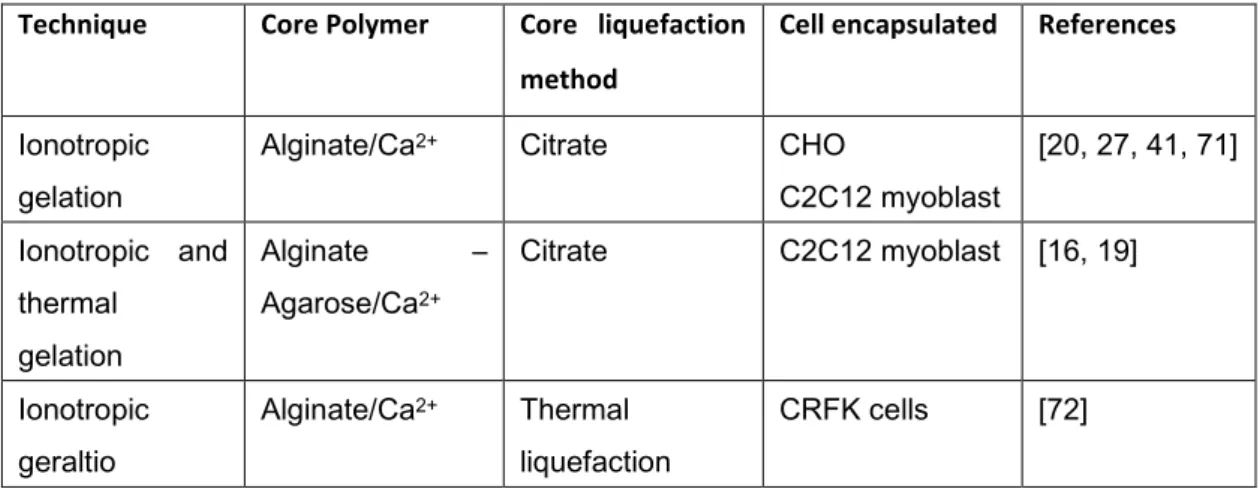
Table 1 summarizes a few studies where IG and PEC were combined to produce liquid-core capsules under mild conditions.
Table1.1: Cell encapsulation approaches using ionotropic gelation and polyelectrolyte coating.
1.4. – Layer-by-layer electrostactic assembly as a vehicle to obtain liquid core capsules
As mentioned above, the coating of microparticles is a powerful tool in obtaining encapsulated systems with better physical and chemical properties. The deposition of polyelectrolyte multilayer films [64] represents an alternative
solution for biomaterial coating.[73] Matching cells to multilayers assemblys is a
relatively recent activity that has revealed some of the most promising
properties of multilayered membranes, where hydrophobicity[74, 75]
Technique Core Polymer Core liquefaction
method
Cell encapsulated References
Ionotropic gelation
Alginate/Ca2+ Citrate CHO
C2C12 myoblast [20, 27, 41, 71] Ionotropic and thermal gelation Alginate – Agarose/Ca2+ Citrate C2C12 myoblast [16, 19] Ionotropic geraltio Alginate/Ca2+ Thermal liquefaction CRFK cells [72]
13
composition[76, 77], and stiffness[78] may be tuned by the components, conditions,
and sequence of layering. The adhesion, proliferation and differentiation of cells are directed in a large extent by the multilayer constructs.
The layer-by-layer (LbL) assembly was first introduced in early 1990’s by Decker and co-workers[77, 79] for the preparation of nanoscaled controlled films
for biomedical applications.[68, 80] The LbL methodology may be employed in the
production of capsules through the sequential deposition of polymers assembled by complementary interactions (e.g., electrostatic, hydrogen bonding, and covalent linkages) on template particles, followed by removal of the templates. This facile yet versatile technique can incorporate a large variety of polymers.[79], templates[69] and also allows the buildup of multilayers from
nutrients, ligands, and genetic material.[81]
14
Mechanical stable capsules can be obtained by LbL assembly.[45, 80, 82]
The multilayers produced will act as a shielding structure with the ability to protect bioactive molecules in a define volume while creates a special defined microenvironment for the loadings.[83] In the case of liquid-core capsules LbL
allows obtaining structures with improved mechanical strength whose toughness of the membranes will be greater the higher the number of multilayers deposited. To date only few studies about the encapsulation of cells in liquid-core capsules constructed using the LBL technique has been reported (see table 1). So far, those capsules were made with no more than 4 layers.[27]
In principle such methodology could be use to produce capsules containing cells coated with nanostructured multilayers proving that the cells can be incorporated inside the initial template particles and that they can be eliminated under mild conditions.[67,68]. This possibility could allow to produce
coatings with tunable thickness (and thus controllable permeability) and surface characteristics that could be very attractive for cell isolation and transplantation.[16,69]
Our group recently investigated the combination of two different techniques to achieve a suitable cell encapsulation system for further use in tissue engineering and regenerative medicine. Merging encapsulation techniques with LbL self assembly, liquid core capsules whose walls are composed by nanostructured multilayers were successfully produced. Cells were entrapped inside the conceived capsules and cultured for a certain period
15
of time to evaluate its biological ability. With this formulation it is expected to obtain a permeable and tight mechanical structured system which could be able to ensure the cell viability and provide effective cell immunoisolation. Moreover, it is also expect that with this versatile technique some membrane features like mechanical properties and biological behavior could be tuned by varying the composition and number of layers, or by introduction of bioactive molecules.
1.5. Conclusion
Biencapsulation in liquid-core capsules is gaining enormous interest in the field of tissue engineering and regenerative medicine. The combination of basic encapsulation methodologies like ionotropic gelation with layer-by-layer technique may lead to obtain capsules with versatile and tunable mechanical and biological properties. Although to ensure the cell viability inside these devices, material properties must be controlled to facilitate the desired metabolic functionality. Many efforts have been made along the past few years to develop tunable materials that will impart the correct biological and mechanical signals to the cells. Up to now, liquid-core capsules prove to be a suitable system in which the cells can grow and proliferate correctly. However a lot of work remains to be done in this field, which makes it an attractive research area with increasing interest for the future.
16
1.6. References
1. Uludag, H., P. De Vos, and P.A. Tresco, Technology of mammalian cell
encapsulation. Advanced Drug Delivery Reviews, 2000. 42(1-2): p. 29-64.
2. Sakai, S., I. Hashimoto, and K. Kawakami, Development of alginate-agarose subsieve-size capsules for subsequent modification with a polyelectrolyte
complex membrane. Biochemical Engineering Journal, 2006. 30(1): p. 76-81.
3. Germain, M., et al., Protection of mammalian cell used in biosensors by coating
with a polyelectrolyte shell. Biosensors & Bioelectronics, 2006. 21(8): p.
1566-1573.
4. Wilson, J.T. and E.L. Chaikof, Challenges and emerging technologies in the
immunoisolation of cells and tissues. Advanced Drug Delivery Reviews, 2008.
60(2): p. 124-145.
5. Zhi, Z.L., et al., Polysaccharide Multilayer Nanoencapsulation of Insulin-Producing beta-Cells Grown as Pseudoislets for Potential Cellular Delivery of
Insulin. Biomacromolecules. 11(3): p. 610-616.
6. Baruch, L. and M. Machluf, Alginate-chitosan complex coacervation for cell encapsulation: Effect on mechanical properties and on long-term viability.
Biopolymers, 2006. 82(6): p. 570-579.
7. Breguet, W., et al., Formation of microcapsules from polyelectrolyte and
covalent interactions. Langmuir, 2005. 21(21): p. 9764-9772.
8. De Castro, M., et al., Biocompatibility and in vivo evaluation of oligochitosans as
cationic modifiers of alginate/Ca microcapsules. Journal of Biomedical Materials
Research Part A, 2009. 91A(4): p. 1119-1130.
9. de Vos, P., et al., Multiscale requirements for bioencapsulation in medicine and
biotechnology. Biomaterials, 2009. 30(13): p. 2559-2570.
10. Murua, A., et al., Cell microencapsulation technology: Towards clinical
application. Journal of Controlled Release, 2008. 132(2): p. 76-83.
11. Haque, T., et al., Superior cell delivery features of poly(ethylene glycol)
incorporated alginate, chitosan, and poly-L-lysine microcapsules. Molecular
Pharmaceutics, 2005. 2(1): p. 29-36.
12. Munarin, F., et al., Structural properties of polysaccharide-based microcapsules
for soft tissue regeneration. Journal of Materials Science-Materials in Medicine.
17
13. Wang, X.L., et al., Proliferation and differentiation of mouse embryonic stem cells in APA microcapsule: A model for studying the interaction between stem
cells and their niche. Tissue Engineering, 2006. 12(4): p. 194.
14. Mazumder, M.A.J., et al., Core-Cross-Linked Alginate Microcapsules for Cell
Encapsulation. Biomacromolecules, 2009. 10(6): p. 1365-1373.
15. Chang, T.M.S., Semipermeable microcapsules. Science, 1964. 146(364): p. 524-&.
16. Orive, G., et al., Microencapsulation of an anti-VE-cadherin antibody secreting
1B5 hybridoma cells. Biotechnology and Bioengineering, 2001. 76(4): p.
285-294.
17. Sakai, S., I. Hashimoto, and K. Kawakami, Production of cell-enclosing hollow-core agarose microcapsules via jetting in water-immiscible liquid paraffin and formation of embryoid body-like spherical tissues from mouse ES cells enclosed
within these microcapsules. Biotechnology and Bioengineering, 2008. 99(1): p.
235-243.
18. Helmlinger, G., et al., Solid stress inhibits the growth of multicellular tumor
spheroids. Nature Biotechnology, 1997. 15(8): p. 778-783.
19. Orive, G., et al., Survival of different cell lines in alginate-agarose
microcapsules. European Journal of Pharmaceutical Sciences, 2003. 18(1): p.
23-30.
20. Orive, G., et al., Development and optimisation of alginate-PMCG-alginate
microcapsules for cell immobilisation. International Journal of Pharmaceutics,
2003. 259(1-2): p. 57-68.
21. Itoh, Y., et al., Locally controlled release of basic fibroblast growth factor from
multilayered capsules. Biomacromolecules, 2008. 9(8): p. 2202-2206.
22. Wyss, A., U. von Stockar, and I.W. Marison, Production and characterization of liquid-core capsules made from cross-linked acrylamide copolymers for
biotechnological applications. Biotechnology and Bioengineering, 2004. 86(5):
p. 563-572.
23. Sakai, S., S. Ito, and K. Kawakami, Calcium alginate microcapsules with spherical liquid cores templated by gelatin microparticles for mass production of
multicellular spheroids. Acta Biomater. 6(8): p. 3132-7.
24. Sun, Z.J., et al., Differential role of microenvironment in microencapsulation for
improved cell tolerance to stress. Applied Microbiology and Biotechnology,
18
25. Luna, S.M., et al., Development of a Novel Cell Encapsulation System Based
on Natural Origin Polymers for Tissue Engineering Applications. Journal of
Bioactive and Compatible Polymers. 25(4): p. 341-359.
26. Thu, B., et al., Alginate polycation microcapsules .2. Some functional
properties. Biomaterials, 1996. 17(11): p. 1069-1079.
27. Breguet, V., et al., CHO immobilization in alginate/poly-L-lysine microcapsules:
an understanding of potential and limitations. Cytotechnology, 2007. 53(1-3): p.
81-93.
28. Khademhosseini, A., M.H. May, and M.V. Sefton, Conformal coating of
mammalian cells immobilized onto magnetically driven beads. Tissue
Engineering, 2005. 11(11-12): p. 1797-1806.
29. Cellesi, F., et al., Towards a fully synthetic substitute of alginate: Optimization of, a thermal gelation/chemical cross-linking scheme ("Tandem" gelation) for
the production of beads and liquid-core capsules. Biotechnology and
Bioengineering, 2004. 88(6): p. 740-749.
30. Meunier, C.F., P. Dandoy, and B.-L. Su, Encapsulation of cells within silica
matrixes: Towards a new advance in the conception of living hybrid materials. J
Colloid Interface Sci. 342(2): p. 211-24.
31. Zielinski, B.A. and P. Aebischer, Chitosan as a matrix for mammalian
encapsulation. Biomaterials, 1994. 15(13): p. 1049-1056.
32. Lim, F., Microencapsulation of living cells and tissues - 1983 review and update.
Applied Biochemistry and Biotechnology, 1984. 10: p. 81-85.
33. Lohr, J.M., et al., Therapy with Cell Encapsulation for Substitution of Organ
Function and Tumor Treatment. Advanced Engineering Materials, 2009. 11(8):
p. B129-B135.
34. Opara, E.C. and W.F. Kendall, Immunoisolation techniques for islet cell
transplantation. Expert Opinion on Biological Therapy, 2002. 2(5): p. 503-511.
35. Clayton, H.A., R.F.L. James, and N.J.M. London, Islet microencapsulation - a
review. Acta Diabetologica, 1993. 30(4): p. 181-189.
36. Lim, F. and A.M. Sun, Microencapsulated islets as bioartificial endocrine pancreas.. Science, 1980. 210(4472): p. 908-910.
37. Murua, A., et al., Xenogeneic transplantation of erythropoietin-secreting cells
immobilized in microcapsules using transient immunosuppression. Journal of
Controlled Release, 2009. 137(3-4): p. 174-178.
38. Cirone, P., et al., Immuno-isolation in cancer gene therapy. Current Gene Therapy, 2006. 6(2): p. 181-191.
19
39. Hao, S.G., et al., A novel approach to tumor suppression using
microencapsulated engineered J558/TNF-alpha cells. Experimental Oncology,
2005. 27(1): p. 56-60.
40. Lohr, J.M., et al., Microencapsulation of genetically engineered cells for cancer
therapy. Gene Therapy Methods, 2002. 346: p. 603-618.
41. Picariello, L., et al., Microencapsulation of human parathyroid cells: An "in vitro"
study. Journal of Surgical Research, 2001. 96(1): p. 81-89.
42. Heile, A.M.B., et al., Cerebral transplantation of encapsulated mesenchymal stem cells improves cellular pathology after experimental traumatic brain injury.
Neuroscience Letters, 2009. 463(3): p. 176-181.
43. Wang, Z.J., et al., Construction of hollow DNA/PLL microcapsule as a dual
carrier for controlled delivery of DNA and drug. Colloids and Surfaces
a-Physicochemical and Engineering Aspects, 2008. 326(1-2): p. 29-36.
44. Jewell, C.M. and D.M. Lynn, Multilayered polyelectrolyte assemblies as platforms for the delivery of DNA and other nucleic acid-based therapeutics.
Advanced Drug Delivery Reviews, 2008. 60(9): p. 979-999.
45. Jiang, Y.J., et al., Capsules-in-bead scaffold: a rational architecture for spatially
separated multienzyme cascade system. Journal of Materials Chemistry, 2009.
19(47): p. 9068-9074.
46. Park, J.K. and H.N. Chang, Microencapsulation of microbial cells.
Biotechnology Advances, 2000. 18(4): p. 303-319.
47. Sakai, S. and K. Kawakami, Synthesis and characterization of both ionically and
enzymatically cross-linkable alginate. Acta Biomaterialia, 2007. 3(4): p.
495-501.
48. Hoffman, A.S., Hydrogels for biomedical applications. Advanced Drug Delivery Reviews, 2002. 54(1): p. 3-12.
49. Rabanel, J.M., et al., Progress Technology in Microencapsulation Methods for
Cell Therapy.Biotechnol Progr, 2009. 25(4): p. 946-963.
50. Lin, C.C. and A.T. Metters, Hydrogels in controlled release formulations:
Network design and mathematical modeling. Advanced Drug Delivery Reviews,
2006. 58(12-13): p. 1379-1408.
51. Rabanel, J.M., et al., Polysaccharide hydrogels for the preparation of
immunoisolated cell delivery systems, in Polysaccharides for Drug Delivery and
Pharmaceutical Applications, R.H. Marchessault, F. Ravenelle, and X.X. Zhu,
20
52. Gomes, M.E. and R.L. Reis, Tissue engineering: Key elements and some
trends. Macromolecular Bioscience, 2004. 4(8): p. 737-742.
53. Endres, M., et al., Microencapsulation and chondrogenic differentiation of human mesenchymal progenitor cells from subchondral bone marrow in
Ca-alginate for cell injection. Acta Biomaterialia. 6(2): p. 436-444.
54. Fan, J.B., et al., In vitro engineered cartilage using synovium-derived
mesenchymal stem cells with injectable gellan hydrogels. Acta Biomaterialia.
6(3): p. 1178-1185.
55. Xie, J.W. and C.H. Wang, Electrospray in the dripping mode for cell
microencapsulation. Journal of Colloid and Interface Science, 2007. 312(2): p.
247-255.
56. Patil, J.S., et al., Ionotropic gelation and polyelectrolyte complexation: the novel techniques to design hydrogel particulate sustained, modulate drug delivery
system: a review. Digest Journal of Nanomaterials and Biostructures. 5(1): p.
241-248.
57. Bhatia, S.R., S.F. Khattak, and S.C. Roberts, Polyelectrolytes for cell
encapsulation. Current Opinion in Colloid & Interface Science, 2005. 10(1-2): p.
45-51.
58. Peniche, C., et al., Chitosan: An attractive biocompatible polymer for
microencapsulation. Macromolecular Bioscience, 2003. 3(10): p. 511-520.
59. Bajpai, S.K. and S. Sharma, Investigation of swelling/degradation behaviour of
alginate beads crosslinked with Ca2+ and Ba2+ ions. Reactive & Functional
Polymers, 2004. 59(2): p. 129-140.
60. Chai, Y., et al., Gelation conditions and transport properties of hollow calcium
alginate capsules. Biotechnology and Bioengineering, 2004. 87(2): p. 228-233.
61. Gaserod, O., O. Smidsrod, and G. Skjak-Braek, Microcapsules of alginate-chitosan - I - A quantitative study of the interaction between alginate and
chitosan. Biomaterials, 1998. 19(20): p. 1815-1825.
62. Goren, A., et al., Encapsulated human mesenchymal stem cells: a unique
hypoimmunogenic platform for long-term cellular therapy. Faseb Journal. 24(1):
p. 22-31.
63. Marsich, E., et al., Alginate/lactose-modified chitosan hydrogels: A bioactive
biomaterial for chondrocyte encapsulation. Journal of Biomedical Materials
Research Part A, 2008. 84A(2): p. 364-376.
64. Decher, G., Fuzzy nanoassemblies: Toward layered polymeric multicomposites.
21
65. Antipov, A.A. and G.B. Sukhorukov, Polyelectrolyte multilayer capsules as
vehicles with tunable permeability. Advances in Colloid and Interface Science,
2004. 111(1-2): p. 49-61.
66. Krol, S., et al., Multilayer nanoencapsulation. New approach for immune
protection of human pancreatic islets. Nano Letters, 2006. 6(9): p. 1933-1939.
67. Guillaume-Gentil, O., et al., Polyelectrolyte coatings with a potential for
electronic control and cell sheet engineering. Advanced Materials, 2008. 20(3):
p. 560-+.
68. Wilson, J.T., W.X. Cui, and E.L. Chaikof, Layer-by-layer assembly of a
conformal nanothin PEG coating for intraportal islet transplantation. Nano
Letters, 2008. 8(7): p. 1940-1948.
69. Ai, H., et al., Electrostatic layer-by-layer nanoassembly on biological
microtemplates: Platelets. Biomacromolecules, 2002. 3(3): p. 560-564.
70. Diaspro, A., et al., Single living cell encapsulation in nano-organized
polyelectrolyte shells. Langmuir, 2002. 18(13): p. 5047-5050.
71. Zhi-jie, S., et al., Metabolic response of different osmo-sensitive Sacchromyces
cerevisiae to ACA microcapsule. Enzyme and Microbial Technology, 2008.
42(7): p. 576-582.
72. Sakai, S. and K. Kawakami, Development of Subsieve-Size Capsules and
Application to Cell Therapy, in Therapeutic Applications of Cell
Microencapsulation, Springer-Verlag Berlin: Berlin. p. 22-30.
73. Chluba, J., et al., Peptide hormone covalently bound to polyelectrolytes and embedded into multilayer architectures conserving full biological activity.
Biomacromolecules, 2001. 2(3): p. 800-805.
74. Mendelsohn, J.D., et al., Rational design of cytophilic and cytophobic
polyelectrolyte multilayer thin films. Biomacromolecules, 2003. 4(1): p. 96-106.
75. Salloum, D.S., et al., Vascular smooth muscle cells on polyelectrolyte
multilayers: Hydrophobicity-directed adhesion and growth. Biomacromolecules,
2005. 6(1): p. 161-167.
76. Elbert, D.L., C.B. Herbert, and J.A. Hubbell, Thin polymer layers formed by
polyelectrolyte multilayer techniques on biological surfaces. Langmuir, 1999.
15(16): p. 5355-5362.
77. Richert, L., et al., Cell interactions with polyelectrolyte multilayer films.
22
78. Schneider, A., et al., Polyelectrolyte multilayers with a tunable Young's
modulus: Influence of film stiffness on cell adhesion. Langmuir, 2006. 22(3): p.
1193-1200.
79. Quinn, J.F., et al., Next generation, sequentially assembled ultrathin films:
beyond electrostatics. Chemical Society Reviews, 2007. 36(5): p. 707-718.
80. Wang, Y., A.S. Angelatos, and F. Caruso, Template synthesis of
nanostructured materials via layer-by-layer assembly. Chemistry of Materials,
2008. 20(3): p. 848-858.
81. Schlenoff, J.B., Retrospective on the Future of Polyelectrolyte Multilayers.
Langmuir, 2009. 25(24): p. 14007-14010.
82. Tang, Z.Y., et al., Biomedical applications of layer-by-layer assembly: From
biomimetics to tissue engineering (vol 18, pg 3203, 2006). Advanced Materials,
2007. 19(7): p. 906-906.
83. Szarpak, A., et al., Multilayer assembly of hyaluronic acid/poly(allylamine):
Control of the buildup for the production of hollow capsules. Langmuir, 2008.
23
Chapter II – Materials and Methods
Polysaccharides are a very important group in the field of water soluble polymers where they play a major role as “thickening, gelling and emulsifying hydrating and suspending” materials. Most of these polymers give rise to physical gels at mild conditions under specifically thermodynamic circumstances.[1] Natural-based polysaccharides have been widely recognized
for biomedical applications due to their similarity to biological macromolecules namely the extracellular matrix (ECM) ones. This property may represent an immunological advantage for these polymers because when implanted in human host, they may avoid the stimulation of immune cells and consequent citotoxic reaction. Moreover, they can be frequently degraded in vivo.[2, 3]
In this chapter, the key features of the materials used in the development of this work as well as all the procedure for their manipulation and characterization will be described in detail.
2.1. Polymers used
2.1.1. Alginate
Alginate has been widely employed as polymeric matrix in cell immobilization procedures.[4] It is considered a suitable polymer for
microcapsules fabrication since it is not harmful for host tissue and because of its high ability to form rigid gels under mild and physiological conditions in the presence of few amounts of divalent cations.[5-7] In tissue engineering
24
applications alginate has shown to provide mechanical integrity while simultaneously transmits initial mechanical signals to cells and surrounding tissues.[8]
Alginate is a naturally derived polysaccharide very abundant in structural
components of marine brown algae and capsular components of soil bacteria.[3]
The term alginate is referred to a range of polysaccharide block copolymers composed of both (1) sequential regions of β-D-mannuronic acid monomers (M-blocks) and α-L-guluronic acid (G-(M-blocks) (2) interspaced M and G blocks – see Fig.2.1.[1, 9, 10] This polymer can be reversible gelled in aqueous solutions when
mixed with divalent cations (Ca2+,Mg2+, Ba2+) [11, 12]. At mild conditions, divalent
cations interacts with the carboxyl groups located on the polymer backbone, namely G-blocks, creating a three dimensional network by ionic inter-chain bridges. The ratio of M/G contents as well as the individual distribution of both M and G units along the chain will establish the physical properties of alginate in
Figure2.1: Chemical structure of alginate. (A) α-L-guluronic acid (G-blocks) (B) β-D-mannuronic acid monomers (M-blocks) (C) interspaced M and G blocks. Adapted from [1]
25
aqueous solutions.[1] Also the stiffness of the alginate chains and further calcium
complex formation depends on the mannuronic and guluronic ratio and distribution along the polymer chain.[13]
Alginate gel matrix surface can be modified by income of macromolecules which are capable to establish ionic interactions with its carboxilate ions.[10] This surface modification may provide additional mechanical
integrity to the matrix.[14] Alginate is been largely used as a matrix to prepare
microcapsules to be used as cell immobilization matrix[15-18], involving different
cell sources such as stem cells[19-22], pancreatic islets[23-25] and a wide range of
human and microbial cells.[26-31] Moreover alginate microcapsules have been
used in means of cell delivery vehicles[32-35], cells transplantation context[36-40]
and even in food and flavors encapsulation.[41]
Alginate in its purest form could be an extremely biocompatible barrier.[42]
The pure form of this polymer has shown to have a high content of impurities and mitogenic fractions, which may lead to overgrowth fibrotic tissue when implanted in animal models.[12] Purification substantially reduces the host
response to the material. On the other hand, an additional coating with polycationic in the outer shell of alginate microcapsules could lead to a better biocompatibility of the implanted material.[14] Besides this drawback, alginate is
one of the most studied and applied polymer in the field bioencapsulation, due to its promising properties as a natural-based polymer.[43]
26
For this work, low viscosity sodium alginate seaweed from brown algae was purchased from Sigma-Aldrich, Portugal. Alginate solutions prepared with different concentrations. A 1% (w/v) alginate solution was obtained by polymer dissolution in 0.15M sodium chloride (NaCl Sigma-Aldrich, Portugal) aqueous solution. The alginate solutions used for the layer-by-layer polyelectrolyte assembly were prepared with both 0.05% (w/v) and 0.1% (w/v) in 0,15M NaCl aqueous solutions. The pH was adjusted up to 7 with 1M of sodium hydroxide (NaOH) or 1M citric acid (C6H8O7). All the polymer solutions were prepared in
distilled water, autoclaved (121ºC, 30min) and vacuum-filtered in a 22µm pore-size filter (Schleicher & Schuell Microscience, Germany) to sterilize. The solutions were then stored at 4ºC for further use.
2.1.2. Chitosan
Chitosan is a natural and linear copolymer of D-glucosamine and N-acetyl-D-glucosamine linked in β (1-4) (Fig.2.2). Usually it derives from chitin, the main organic polymer found in crustaceous shells, cuticles of insects and cell walls of some fungi.[1, 45, 46] Considering its wide and variable application,
27
chitosan has been formulated as powders, gels, films and spherical micro and nanoparticules, among others.[46] Nowadays chitosan have been investigated as
surface modifier for a wide range of biomedical applications.[47] Song et al used
this polymer to enhance the biocompatibility of self-assembled membranes[48],
Antipov and co-workers used chitosan as core-shell structures[33, 49] and many
other groups has been exploring the chitosan as a local drug delivery[50, 51] and
bioactive nanocoatings for endovascular devices.[52]
Solubility is a crucial characteristic for chitosan. As a naturally positively charged polymer with a high charge density in acidic medium chitosan usually forms insoluble complexes with water-soluble polyanionic species at neutral conditions.[53] Qin et al (2006) reported that at physiological pH water-insoluble
chitosan molecules can precipitate and stack on the microbial cell surface, thereby forming an impermeable layer around the cell which can be fatal for living cells. The formation of such layer can block the transport of essential moieties and may also destabilize the cell wall causing its severe leakage leading ultimately to cell death.[45] So, improving the chitosan solubility will
largely facilitate its application in medicine and food industry.[54] Moreover,
Chung et al (2003) confirmed that chitosan possess a broad spectrum of antimicrobial activities but, regarding its low solubility at neutral pH, its application can be limited.[55] On the other hand, soluble chitosan showed
higher antimicrobial activity against E. coli, B.subtilis and S. aureus than crude chitosan[56] have found out that water soluble chitosan promote growth of
28
C.albicans at physiological pH, even though the optimal ph for C.albicans growth is 5.5, thus proving the low cell – toxicity. Moreover, it has been reported in several studies that water soluble chitosan had better physiological performance in antitumor activity and immune-enhancing in vivo effects. [57, 58]
Considering aforementioned, water soluble chitosan seems to be a suitable formulation to be applied in systems for cells.
Currently, many companies are now suggesting different procedures to enhance the chitosan solubility[1], among them pure chitosan for medical
application are the most interesting ones, since they are able to be prepared under physiological pH at room temperature. Protosan UP Chitosan from NovaMatrix (FMC Norway) is an example of a water soluble chitosan which can be manipulated under mild conditions.[59]
For this work, Protosan Ultrapure Chitosan (Novamatrix, FMC Norway) was used according to previous results obtained by Martins et al (2009).
Ultrapure chitosan PROTOSAN UP CL213, viscosity 107mPa.s,
molecular weight Mw=2,7x10⁵g/mol and degree of deacetylation DDA=83% was
used to prepare the polyanionic LbL polyelectrolyte solutions. Briefly, both 0.05% (w/v) and 0.1% (w/v) chitosan solutions were obtained in a 0,15M NaCl aqueous solution. After complete dissolution, the solutions were vacuum-filtered with 0.45µm) pore size filter (Schleicher & Schuell Microscience, Germany. The pH was adjusted up to 7 using 1M NaOH or 1M citric acid and the solutions were stored at 4ºC before microcapsule production.
29 2.2. Methods
2.2.1. - Building and characterization of alginate-chitosan multilayers by Quartz-Crystal Microbalance with Dissipation Monitoring (QCM - D)
In order to evaluate the LbL assembly of alginate and chitosan polyelectrolytes, a Q-Sense E4 system (Q-Sense AB, Sweden) was used. This system enables the monitoring of small masses deposition on top of its gold-coated crystals. The crystals are previously cleaned in an ultrasound bath at 30ºC, successively immersed in acetone, ethanol and isopropanol to ensure that all the impurities are eliminated. Then the crystals are rinsed with distilled water and dried with nitrogen gas. Before starting the deposition processes, an equilibration step with the rinsed solution is recommended, for approximately 60 min, to establish the frequency and dissipation baselines. The polyelectrolyte solutions were prepared at 0.05% (w/v) and 0.1% (w/v) in 0,15M NaCl. Deposition occurred at room temperature (approximately 25ºC) at pH 7.0 in a constant flow rate of 100µL/min. Both chitosan and alginate solutions were pumped alternatively for 10min each, followed by a 5min wash step with rinsed solution of NaCl. The resonant frequency (∆f/n) and energy dissipation (∆D) was monitored in real time.
30
2.2.2. Microcapsules production and characterization
There are two main methods to produce alginate/chitosan capsules in mild conditions. The first one is the one-step procedure where the capsules is produce by simply letting the alginate droplets fall into a aqueous solution of calcium chloride with chitosan. The other is the two-step procedure where the calcium-alginate bead is produced by dropping an alginate solution into a gelling solution of calcium chloride. The beads were then coated with chitosan.[14, 60, 61]
For this work, it will be used only the two stage procedure, once it has been shown that it may result in the binding of 100 times more chitosan than the one stag procedure.[60]
2.2.2.1. Production of calcium-alginate microparticules
The Calcium-alginate microparticules were produced by ionotropic gelation method as described in literature [61, 62]. Briefly, 1% (w/v) alginate solution was prepared in 0.15M NaCl. By adding nongelling sodium ions to the gelling solution, beads with more homogeneous surface will be produced.[63]
Then, 1ml of the polymer solution was extrude through a 27G needle (B Braun, AG- Germany), using a syringe pump (B Braun, AG – Germany), into 30 ml of two calcium chloride (CaCl2 Sigma-Aldrich, Portugal) solution containing 0.5%
(w/v) or 0.75% (w/v) and 0.15M NaCl. The distance between the needle tip and the gelling solution was 10mm. The resulting microparticules were allowed to