Master of Science in Viticulture & Enology
Joint diploma “EuroMaster Vinifera” awarded by:INSTITUT NATIONAL D'ETUDES SUPERIEURES AGRONOMIQUES DE MONTPELLIER AND
INSTITUTO SUPERIOR DE AGRONOMIA DA UNIVERSIDADE DE LISBOA
Master thesis
Comparison between six different Carboxymethylcelluloses used as enological products
for the tartaric stabilization of red wines
Elisabetta PITTARI
2014-2016
supervisor : J. M., RICARDO DA SILVA, Instituto Superior de Agronomia, Universidade de Lisboa
supervisor : M., CALDEIRA ANDRADE, Consultor winemaker
Jury:
President: Carlos Manuel Antunes Lopes (Phd), Associated Professor, Instituto Superior de Agronomia,
Universidade de Lisboa
Members: Emilio Celotti (Phd), Associated Professor, Università di Udine
Jorge Manuel Rodrigues Ricardo da Silva (Phd), Full Professor, at Instituto Superior de
Agronomia, Universidade de Lisboa
Sofia Cristina Gomes Catarino (Phd), Invited Auxiliary Professor, Instituto Superior de
Agronomia, Universidade de Lisboa
1
Abstract
The carboxymethylcellulose (CMC) is a cellulose derivative authorized in white and sparkling wines production as a tartaric salts crystallization inhibitor. Previous studies report negative effects of the product when added to red wines; more specifically, it has been seen that the CMC decreases the content of total phenols, flavonoid and non-flavonoid phenols, reducing the colour intensity; it interacts with the phenolic compounds, promoting turbidity and colorant matter precipitation.
In order to evaluate if these effects characterize all the red wines when in contact with the product, we studied in detail the impact of six different CMCs, coming from six Portuguese oenological companies on the same Portuguese red wine, Castelão variety. The research has been focused on the evaluation of the wine responses in terms of tartrate and colouring matter stability, turbidity, phenolic compounds, tannins’ composition, tannin power, chromatic and sensory characteristics.
The CMC resulted as a strong inhibitor of tartaric salts crystallization, even after 5 months from the addition. It generally reported an increase in the colour intensity of the wines, as such as in the coloured anthocyanins concentration. Therefore, the CMCs treated wines revealed a stronger and powerful colour. No colouring matter precipitation occurred. The total phenols concentration of the CMCs added samples did not completely differ from the control wine, as such as the tannins’ composition in terms of monomeric, oligomeric and polymeric fractions content. In terms of sensorial quality, the CMC treated wines did not reveal any important differences compared to the control.
The study revealed that the CMC represents a valid sustainable enological alternative to stabilize the red wines in terms of tartaric salts crystallization. The positive results achieved are in opposition with the ones obtained in most of the previous studies, opening new prospective and scenarios concerning the effects of the CMC utilization on red wines.
Key words: Carboxymethylcellulose, Tartaric stabilization, Red wines, Phenolic composition, Chromatic
2
Resumo
A carboximetilcelulose (CMC) é um derivado da celulose autorizada na produção de vinhos brancos e espumantes como inibidor da cristalização dos sais tartáricos. Estudos anteriores reportam alguns efeitos negativos do produto quando adicionado aos vinhos tintos; mais especificamente, tem sido observado que a CMC diminui o teor de fenóis, fenóis flavonóides e não flavonóides, reduzindo a intensidade da cor; o produto interage com os compostos fenólicos, promovendo a precipitação da matéria corante e turbidez.
Neste estudo foram avaliadas seis diferentes CMCs num vinho Português, casta Castelão. A investigação tem sido focada na avaliação das respostas do vinho em termos de estabilidade tartárica, matéria corante, compostos fenólicos, composição dos taninos, poder tanante, e das características cromáticas e sensoriais. A CMC resultou como um forte inibidor da cristalização dos sais tartáricos. Geralmente, as CMCs reportaram um aumento na intensidade e nos pigmentos vermelhos. Portanto, os vinhos tratados com as CMCs reportaram uma forte cor vermelha e nenhuma precipitação da matéria corante ocorreu. A concentração de fenóis totais nas amostras com a adição da CMC não se demonstrou completamente diferente do vinho testemunha, como a composição dos taninos em termos de frações monoméricas, oligoméricas e poliméricas. Em termos de qualidade sensorial, os vinhos tratados com as CMCs não revelaram diferenças importantes em relação ao controlo.
O estudo revelou que a CMC representa uma alternativa enológica sustentável válida, para estabilizar os vinhos tintos em termos de cristalização dos sais tartáricos. Os resultados positivos alcançados estão em oposição com os obtidos na maioria dos estudos anteriores, abrindo novas perspectivas e cenários sobre os efeitos da utilização CMC em vinhos tintos.
Palavras-chave: Carboximetilcelulose , Estabilização tartárica , Vinhos tintos, Composiçao fenolica,
3
Extended abstract
The carboxymethylcellulose (CMC) is a widely used oenological product and it represents one of the possible treatments applied in winemaking to stabilize the wines in terms of tartaric salts precipitations, mainly potassium bitartrate (KHT) and calcium tartrate (CaT). It is considered as a sustainable alternative to most of the stabilization treatments because of its advantages to be cheaper, less energy consuming, easier to apply compared to, for example, cold stabilization, ion exchange resins and electrodialysis.
However, its addition is only allowed to treat white and sparkling wines (Commission Regulation (EC) N° 606/2009). According to previous studies, the CMC utilization has been noticed to negatively affect the red
wines’ quality. More specifically, being a polysaccharide with protective colloidal characteristics, it has been seen that the CMC interacts with the phenolic compounds and with the unstable proteins, decreasing the content of total phenols, flavonoids and non-flavonoids, reducing the colour intensity and promoting turbidity, change in colour and colorant matter precipitation.
In order to evaluate if these responses can characterize all the red wines when in contact with the product, the effectiveness of six different CMCs on a Portuguese red wine, Castelão 2015, has been analysed.
The study, conducted over a 5- months period, represents a wide and complete research, considering that several analytical estimations, followed by a sensorial evaluation of the wines, have been performed.
The initial wine has been characterized considering the conventional oenological parameters described by the O.I.V. methods: pH, total acidity, volatile acidity, alcoholic strength, reducing substances content, SO2
concentration (total and free).
After the addition of the products and one-week period of contact, the effects of the treatments on the following oenological parameters have been evaluated: i) the tartaric stability has been estimated using a modified mini-contact test described by Angele (1992); ii) the turbidity assessment has been performed applying a method exposed by the O.I.V. (1990); iii) the colouring matter stability has been tested referring to the method displayed by Claus et al. (2014); vi) the proanthocyanidins fractionation has been characterized following the Sun method (Sun et al., 1998); v) the tannin power has been evaluated using the method exposed by Freitas & Mateus (2001); vi) the colour intensity and tonality, the anthocyanins (total and coloured) content and the pigments (total and polymerized) content have been estimated according to the methodology described by Somers & Evans (1977); v) the phenols (total, flavonoids and non-flavonoids) content has been determined using the method shown by Singleton et al. (1971).
A sensory analysis has been set up to understand how the quality of the wine in terms of aroma and mouthfeel sensations could have been effected by the presence of the products.
The results obtained during the research have shown that, in opposition with most of the previous studies, the CMCs reported general positive effects on the wines’ composition. It has been found that all the products were highly efficient as tartaric salts crystallization inhibitors, even after a 5-months contact period. The colour intensity, as such as the coloured anthocyanins and the polymerized pigments content, generally increased. Furthermore, no colouring matter precipitation occurred. However, the turbidity of the treated wines has slightly increased. Regarding the total phenols concentration of the CMCs added samples, it did not completely differ from the control wine, as such as the tannins’ composition in terms of monomeric, oligomeric and polymeric fractions content.
Moreover, in terms of sensorial quality, the CMC appeared to not strongly affect the aromatic characterization of the wine and its mouthfeel sensation. All the treated wines have been described as similar to the control sample, with a slightly decreased aromatic intensity and a higher acidity concerning the taste. However, all the samples have been described with positive characteristics.
In conclusion, according to the results obtained in this study, it can be said that the CMC has been found to be a valid alternative to stabilize the red wines in terms of tartaric salts crystallization. Furthermore, the positive results achieved are in opposition with most of the previous studies, opening new prospective and scenarios concerning the effects of the CMC utilization on red wines.
4
Resumo alargado
A carboximetilcelulose (CMC) é um produto enológico amplamente utilizado e representa um dos possíveis tratamentos aplicados na produção de vinhos para estabilização em termos de precipitações de sais tartáricos, principalmente bitartarato de potássio (KHT) e tartarato de cálcio (CAT). Pelas suas vantagens de ser um produto mais económico, fácil de aplicar, e com menores custos associados, em comparação com outras tecnologias, como a estabilização a frio, eletrodiálise e resinas de troca iônica, a CMC é considerada como uma alternativa sustentável para a maioria dos tratamentos.
No entanto, a sua adição atualmente é apenas permitida para tratar os vinhos brancos e espumantes (Regulamento (CE) N° 606/2009). De acordo com estudos anteriores, a utilização da CMC tem sido associada a efeitos negativos na qualidade dos vinhos tintos. Mais especificamente, sendo um polissacarído com características coloidais de proteção, tem sido observado que a CMC interage com os compostos fenólicos e com as proteínas instáveis, diminuindo o teor de fenóis, flavonóides e não flavonóides, reduzindo a intensidade da cor e promovendo a turbidez, a mudança de cor e a precipitação da materia corante.
A fim de avaliar se estas respostas podem caracterizar todos os vinhos tintos, quando em contato com o produto, a eficácia de seis CMCs diferentes num vinho tinto Português, Castelão 2015, foi analisada.
O estudo, realizado ao longo de 5 meses, representa uma ampla e abrangente pesquisa, considerando a análise de vários parâmetros, seguida de uma avaliação sensorial dos vinhos. O vinho inicial caracterizou-se considerando os parâmetros enológicos convencionais utilizando os métodos da O.I.V.: pH, acidez total, acidez volátil, teor alcoólico, teor de substancias redutoras, concentração de SO2 (total e livre). O efeito da
aplicação da CMC no vinho foi avaliado após uma semana de contacto. Para cada CMC aplicada, foram avaliados os seguintes parâmetros enológicos: i) estabilidade tartarica: utilizou-se um teste de mini-contato modificado, descrito por Angele (1992); ii) turbidez: aplicou-se o método de referência da O.I.V. (1990); iii) estabilidade da matéria corante: aplicou-se o método apresentado por Claus et al. (2014); iv) fracionamento das proantocianidinas: aplicou-se o método Sun (Sun et al, 1998).; v) poder tanante: foi avaliado utilizando o método exposto por Freitas & Mateus (2001); vi) intensidade da cor, tonalidade, antocianinas (totais e coloridas) e os pigmentos (totais e polimerizados) foram estimados de acordo com a metodologia descrita por Somers & Evans (1977); vii) os fenóis (totais, flavonóides e não flavonóides) determinaram-se pelo método de Singleton et al. (1971). A análise sensorial efetuou-se, com o objetivo de perceber se a qualidade dos vinhos, em termos de aroma e sabor, tinham sido afetados pela adição das CMCs aplicadas.
Os resultados obtidos durante a pesquisa mostraram que, em oposição com a maioria dos estudos anteriores, os CMCs relataram efeitos positivos na composição dos vinhos. Verificou-se que todos os produtos foram altamente eficientes como inibidores da cristalização dos sais tartáricos, mesmo depois de um período de contacto de 5 meses. Em relação a intensidade da cor, as antocianinas coradas e o teor de pigmentos polimerizados, verificou-se um aumento. Além disso, não ocorreu precipitação da matéria corante, mas a turbidez dos vinhos tratados aumentou ligeiramente. A concentração de fenóis das amostras adicionadas com a CMC, não se verificou completamente diferente do vinho controlo, tal como a composição dos taninos em termos de conteúdo em fracções monoméricas, oligoméricas e poliméricas.
Além disso, em termos de qualidade sensorial, a CMC pareceu não afetar fortemente a caracterização aromática do vinho e o seu sabor. Todos os vinhos tratados têm sido descritos como semelhante ao controlo, com uma diminuição da intensidade aromática e uma acidez ligeiramente superior. No entanto, todas as amostras foram descritas com características positivas.
Em conclusão, de acordo com os resultados obtidos no presente estudo, pode afirmar-se que a CMC é uma alternativa válida à estabilização dos vinhos tintos em termos de cristalização dos sais tartáricos. Além disso, os resultados positivos alcançados estão em oposição com a maioria dos estudos anteriores, abrindo novos cenários e perspetivas sobre os efeitos da utilização da CMC nos vinhos tintos.
5
Acknowledgments
I wish to thank the following people and organisations for their contribution to this project: J.M. Ricardo da Silva and Mario Caldeira Andrade for supporting this study, following the researches; Daniel Duarte, Diana Faria, Francisco Amorim, Juliane Oliveira and the Instituto Superior de Agronomia for facilitating the analytical work; AEB Bioquìmica Portuguesa S.A., Agrovin S.A., Angelo Coimbra & Ca. Lda, Ecofiltra Lda, Proenol Indùstria Biotecnològica Lda, SAI, for supplying the products analysed; and Sociedade Agrìcola de Rio Frio S.A. for providing the wine used for the experiments. .
Furthermore, I would love to thank the jury (Professor Carlos Lopes, Professor Sofia Catarino and Professor Celotti Emilio) and all the Vinifera EuroMaster members: directors, secretaries and professors, to have given me the possibility to be part of this important experience and moreover to have followed me during the whole master period.
A special thanks goes to the people that always encourage and support my decisions: my family and my friends.
6
Table of contents
I.
INTRODUCTION
1.
Introduction
102. State of art
12
2.1. Tartaric instabilities phenomena
12
2.1.1. Formation of the salts 12
2.1.2. Crystallization and precipitation kinetics 12 2.1.3. Factors affecting the crystallization of KHT and CaT 14
2.2. Tests to assess the tartaric stability
14
2.2.1. Refrigerator test 14
2.2.2. Conductivity tests 15
2.2.2.1. Mini-contact test 15
2.2.2.2. Modified mini-contact test 15
2.2.3. Saturation temperature test (Wurdig test) 15
2.3. Tartaric stabilization treatments
17
2.3.1. Evolution of the tartaric stabilization treatments 17
2.3.2. Physical treatments 18
2.3.2.1. Cold treatment 18
2.3.2.2. Ion exchange resins 21
2.3.2.3. Electrodialysis 22
2.3.3. Chemical treatments 23
2.3.3.1. Metatartaric acid (MTA) 23
2.3.3.2. Yeast mannoproteins (YMP) 24
2.3.3.3. Carboxymethylcellulose (CMC) 25
2.3.3.3.1. Synthesis 25
2.3.3.3.2. Addition in wines and oenological characteristics 25
2.3.3.3.3. CMC effects on wines 26
2.4.
Main red wine’s phenolic compounds
28
3. Research objectives
30
II.
MATERIALS AND METHODS
1.
Wine’s characteristics
31
2. CMCs addition and characteristics
31
3. Analyses of conventional oenological parameters
32
4. Tartaric stability test: modified mini-contact test
33
5. Turbidity analysis
33
6. Colouring matter stability
33
7.
Wines’ phenolic composition analyses
34
7.1. Characterization of wine proanthocyanidins 34
7.2. Tannins power analysis 35
7.3. Chromatic characterization and other phenolic compounds analyses 36 7.4. Quantification of flavonoids phenols and non-flavonoids phenols 37
8. Sensory evaluation
38
7
III.
RESULTS AND DISCUSSION
1.
Wine’s conventional oenological characteristics
40
2.
Effects of CMCs addition on tartaric stability
41
3.
Effects of CMCs addition on turbidity
42
4.
Effects of CMCs addition on colouring matter stability
43
5.
Effects of CMCs addition on wines’ phenolic composition
44
5.1. Effects on tannin power 45
5.2. Effects on tannins (monomers, oligomers, polymers) composition 45
5.3. Effects on chromatic characteristics 49
5.3.1. CMCs effects on the absorbances at 420,520,620 nm, intensity and tonality 49 5.3.2. CMCs effects on anthocyanins’ and pigments’ content 50
5.3.3. CMCs effects on total phenols 52
6. CMCs impact on the sensorial characteristics
53
7. Economic impact of the CMC utilization
55
IV.
CONCLUSIONS
57
V.
REFERENCES
59
VI.
ANNEXES
Annex 1: Laboratory and statistical results
65
8
List of tables
Table 1: Solubility of H2T, KHT, CaT in a) H2O and b) hydro alcoholic solution (10% vol.) at 20° C
(Ribérau-Gayon et al., 1988) 13
Table 2: Main characteristics (concentration of CMC, DS, [SO2] and pH) of the CMCs 31
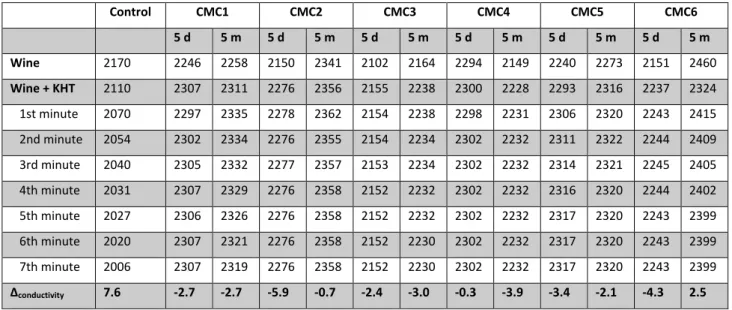
Table 3: Physicochemical characteristics of the Control wine 40 Table 4: Results of modified mini-contact test applied on wines after 5 days and after 5 months
from the treatment with carboxymethylcelluloses 41
Table 5: Turbidity of the wines. Comparison between the values obtained after 2 and after
5 months from the treatment with carboxymethylcelluloses 43 Table 6: Phenolic and chromatic characteristics of the Control wine 44 Table 7: Overview over chromatic characteristics of six young wines vintage 1975
(Somers & Evans, 1977) 44
Table 8: Tannin power of the wines 45
Table 9: Proanthocyanidins fractions in the wines 46 Table 10: Total phenols quantification of the carboxymethylcelluloses 48 Table 11: Absorbances analyses at 420, 520 and 620 nm of the wines 49 Table 12: Colour intensity and tonality of the wines 50 Table 13: Total anthocyanins and total pigments content, polymerization and ionization indexes
of the wines 50
Table 14: Total phenols content (flavonoids and non-flavonoids) of the wines 52
Table 15: Total acidity and pH of the wines 53
Table 16: Costs of tartrate stabilization (Lasanta & Gòmez, 2012) 55
List of figures
Figure 1: Experimental determination of the saturation temperature of a wine by the temperature
method (Wurdig et al., 1982; Ribérau-Gayon et al., 2006) 16 Figure 2: Schematic diagram of a cold stabilization installation (Ribérau-Gayon et al. 2006) 19 Figure 3: Schematic diagram of a continuous cold stabilization system (Ribérau-Gayon et al. 2006) 21 Figure 4: Scheme of an electrodyalisis equipment (Guerif et al., 1993) 23 Figure 5: Effects of oenological additives on wine tartaric stability of two white wines (A-Vinho Verde;
B-Douro) (Guise et al., 2014) 26
Figure 6: Mean variation (n = 4) of the saturation temperature (ΔTsat) after 10 d at -4 °C in the treatments
added with different doses of CMC and mean variation (n = 8) of the saturation temperature (ΔTsat) in the
control and in the treatments added with 2 types of CMC (Bosso et al., 2012). 27 Figure 7: Interval plot for monomeric, oligomeric, polymeric fractions and total tannins’ concentration 47
10
I.
INTRODUCTION
1. Introduction
The tartaric precipitation phenomena have been more and more studied in the past years, because of the increasing wine production and quality need and for the greater importance of wine business and marketing researches.
The tartaric precipitation event under natural conditions is an unreliable, unpredictable phenomenon that occurs during the entire period of the wine’s production, from the fermentation to the conservation period. Its occurrence in bottled wines, in form of sediments, can have negative consequences to the final aspect of the wine. Even if the tartaric salts do not represent a risk for human’s health and do not cause any organoleptic deterioration, some inexpert consumers doubt about the authenticity of the product, not appreciating it in terms of visual characteristics. Therefore, it can represent a cause of wine depreciation by some consumers. In the less serious cases, the presence of few and small crystals can be observed, that especially in the red wines do not represent a risk. In other cases, abundant and important crystallizations can occur becoming really evident, especially in white and rosé wines. The problem is all the more serious when it comes to traditional methods, where the crystals can be a source of “garbage” (gushing), i.e. sparkling wines produced with Champenoise method. As an example, in Champagne, over 90% of the Chateaux stabilize their wines in terms of tartaric salts (www.institut-oenologique.com).
The tartaric precipitation phenomena have a common origin: the presence of tartaric acid (H2T) and of the two
cations potassium (K+2) and/or calcium (Ca+).
The tartaric acid is considered the “wine acid”, being the specific acid of the grapes; its concentrations in the musts are variable from 2-3 g/l when they come from southern vineyards, to 6 g/l in the ones coming from northern vineyards (Ribéreau – Gayon et al., 2006).
The potassium (K+2) is the major cation taken up by grapevines and, therefore, the principal cation present in
the wine. Its concentration varies from 0.5 to 2 g/l (Boulton et al., 1996; Ribéreau – Gayon et al., 2006). Regarding the calcium (Ca+), according to Boulton et al. (1996) and Ribéreau – Gayon et al. (2006), its
security limit concentration in wines is equal to 80 mg/l. A high presence of this cation is due to: i) deacidification of the must with calcium carbonate; ii) storage of the wine in concrete tanks; iii) addition of oenological products containing calcium (i.e. Ca bentonite); iv) filtration with equipment containing calcium; v) accidental contaminations.
The major physical instabilities related to tartrates precipitations are linked to potassium bitartrate (KTH) and calcium tartrate (CaT) presence. However, other salts can be responsible for the precipitation in a less extent, such as potassium tartrate, double potassium calcium tartrate and calcium tartromalate.
The reasons that could lead to tartaric precipitation phenomena are several (Boulton et al., 1996):
- Initial instability of the salts that is enhanced by high ethanol content, low temperatures used for storage and high pH values
11
- Use of non- representative samples for the stability tests - Use of non- appropriate stability tests
- Removal of colloidal materials that were preventing the precipitation.
Despite the fact that some producers decide not performing any stabilization treatments to their wines, i.e. natural wines or high quality wines for niche markets, the choice of stabilization before bottling became almost imperative for most of the producers in the last years.
Nevertheless, it is known that the stabilization could lead to flat wines or could negatively affect the product in terms of sensorial characteristics; as a result, it is important to choose the more suitable treatment (i.e. length, concentration of the additives) to the wine.
One of the treatments used to stabilize the wines in terms of tartaric precipitations is the application of Carboxymethylcellulose (CMC), an additive with the property to be a salts crystallization inhibitor.
It is already widely used as food additive but only recently, in 2009 (Commission Regulation (EC) N° 606/2009), it has been allowed to treat white and sparkling wines. Several are the advantages that
characterize this product: it is cheaper, less energy consuming, more sustainable and easy to apply compared to other methods (i.e. cold stabilization, use of ion exchange resins, electrodialysis) (Lasanta & Gòmez, 2012). In the paragraph 2.3.3.3. its synthesis, its application method, its oenological characteristics and finally its effects on wine will be reported.
In reference to the introductory part of the work, it was considered necessary, in the interests of a greater internal consistency, making the state on some issues, as reported below.
In the paragraph 2.1., considering the importance of potassium bitartrate (KHT) and calcium tartrate (CaT) in tartrates precipitation, the formation and the eventual sedimentation of these salts is exposed.
In the paragraphs 2.2. and 2.3., the different tests to assess the tartaric stability of a wine and the different methods to achieve it are exposed.
In the paragraph 2.4., the wine’s phenolic composition is exposed. In the paragraph 3, the research objectives are reported.
12
2. State of art
2.1. Tartaric instabilities phenomena
2.1.1. Formation of the salts
As reported by Lasanta & Gòmez (2012): “Different equilibriums related to the dissociation of tartaric acid (H2T) and the precipitation of potassium bitartrate (K2T) and calcium tartrate (CaT) coexist in wines”.
The dissociation of the tartaric acid is regulated by the thermodynamic equilibrium of its three forms:
i) undissociated form (H2T); ii) hydrogen tartrate form (TH-)
and iii) tartrate form (T2-) (Boulton et al., 1996).
The ratio of each tartaric acid ion present in solution depends on the pH conditions and can be determined using the three expressions (Lasanta & Gòmez, 2012):
Therefore, it appears clear that according to pH, alcoholic strength and temperature conditions, the tartaric acid is more or less salified with K+2 and Ca+ in the five forms above mentioned (potassium bitartrate, calcium
tartrate, potassium tartrate, double potassium calcium tartrate and calcium tartromalate).
2.1.2. Crystallization and precipitation kinetics
As reported by Boulton et al. (1996), the crystallization of KHT and CaT involves three phases: 1. Saturation phase
2. Nucleation phase 3. Growth phase
1. Saturation phase
The solubilisation of the KHT and CaT salts is regulated by the equilibriums:
KHT
cryst↔
K
++ HT
-H
2T
↔
H
++ TH
-TH
-↔
H
++ T
2-Where c= [H2T] + [HT-] + [T2-]
K1 and K2 = thermodynamic dissociation constants based on alcoholic strength and temperature
13
CaT
cryst↔
Ca
+2+ T
2-1. CP = [HT
-]
r[K
+]
rSP = [HT
-]
ex [K
+]
e2. CP = [T
2-]
r[Ca
+2]
rSP = [T
2-]
ex [Ca
+2]
eWhere CP = concentration of the product
r = real concentrations SP = solubility product
e = concentrations obtained at the thermodynamic equilibrium of the: 1. KHT/ dissolved KHT
2. CaT/dissolved CaT
under temperature and pressure conditions of the wine.
When the concentration of the product of the real concentrations (CP) is higher than the solubility product (SP), the wine is defined as supersaturated. In a supersaturation condition, the excess salts precipitate until the CP equals the SP. In other words, the precipitation stops when the equilibrium between CP and SP is reached.
In the table below (table 1), the solubility of tartaric acid, potassium bitartrate and calcium tartrate in a) H2O and b) hydro alcoholic solution (10% vol.) at 20 ° C is reported.
Table 1: Solubility of H2T, KHT, CaT in a) H2O and b) hydro alcoholic solution (10% vol.) at 20 ° C.
Tartaric acid Potassium bitartrate Calcium tartrate
L(+)-C4H6O6 KHC4H4O6 CaC4H4O6, 4H2O
Solubility in H20 at 20 °C 4.9 g/l 5.7 g/l 0.53 g/l
Solubility in 10% vol. hydro alcoholic solution
Data not shown 2.9 g/L Data not shown
Adapted from Ribérau – Gayon et al. (1998).
It is clear that the solubility of the potassium bitartrate drastically decreases in ethanol conditions.
3. Nucleation phase
This phase consists in the formation of a small crystal, known as nucleous. It represents an interface between solid and liquid phases, which is responsible of all the exchange reactions.The creation of the nucleous is a highly- energy required phase (Ribéreau-Gayon et al., 2006).
Two types of nucleation phenomena can occur:
- Spontaneous or primary nucleation: it corresponds to the spontaneous formation of a nucleous when TH- and K+, or T2- and Ca+2 are present in the wine at the supersaturation limit.
- Induced or secondary nucleation: it corresponds to the formation of a nucleous induced by the presence of small particles in the wine. When the small particles have the same chemical nature as the salt, homogenous secondary nucleation occurs; on the contrary, when they have different nature as the salt, the phenomenon is known as heterogeneous secondary nucleation.
14
4. Growth phase
Once formed, the nuclei become stable and start growing. During the growth, the ions K+ and TH- or Ca+2 and
T-2 are incorporated. Because of the higher presence of K+ and/or Ca+2 cations on their surface, the crystals
are defined as positively charged nuclei, attracting negatively charged molecules. Higher the nucleous surface, higher the crystallization rate.
2.1.3. Factors affecting the crystallization of KHT and CaT
Several factors affect differently the crystallization kinetics of the two salts KHT and CaT.
- pH: the solubility of the two salts strongly depends on the pH. Higher is the pH, lower is the solubility because the dissociation of the acidic functions is higher (Sicheri, 2015).
For the KHT, the crystallization is facilitated when the pH value is between 3.5 and 4 because of the maximal TH- proportion (Boulton et al., 1996; Ribéreau–Gayon et al., 2006).
- Temperature: the KHT solubility, compared to the CaT, is more influenced by the temperature conditions. T decreases promote the KHT insolubilization (Boulton et al., 1996; Ribéreau–Gayon et al., 2006).
- Alcoholic strength: KHT and CaT solubility is inversely proportional to the alcoholic strength. According to Sicheri (2015), a wine with 12-13% vol. of alcohol dissolves half of the tartaric salts, compared to the initial must.
- Ionic strength: KHT and CaT solubility is directly proportional to the ionic strength of the wine (Boulton et al., 1996; Ribéreau – Gayon et al., 2006).
- Stirring: by increasing the nucleation speed, stirring increases the crystallization rate (Boulton et al., 1996; Ribéreau – Gayon et al., 2006).
- Colloidal composition of the wine: the colloids play an important role in the crystallization of the salts. They inhibit the crystallization. The inhibition effect is more important in red wines because of the higher concentration of colloidal particles, such as condensed tannins (Boulton et al., 1996; Ribéreau – Gayon et al., 2006).
2.2. Tests to assess the tartaric stability
During the years, the oenological research has worked worldwide trying to find tests that could assess the tartaric stability. Nowadays there are several analytical options available for evaluating cold stability, the two most commonly used methods are concentration product and conductivity.
2.2.1. Refrigerator test
The traditional and simplest test, called “Refrigerator test” is based on the storage of the wine (100 ml), taken before or after artificial cold stabilization, in a refrigerator for 4-6 days at 0° C and then inspected for crystals. If crystals are observed the wine is considered unstable. It is a simple, practical and easy-to-perform method that does not require special equipment.
15
Nevertheless, it is a long and qualitative process that does not provide information about the instability degree of the wines; therefore, studies have been conducted to find tests that could lead to faster and more precise results (quantitative) (Boulton et al., 1996; Ribérau-Gayon et al., 2006).
2.2.2. Conductivity tests
In the respect of what exposed above, the conductivity tests have been developed.
As reported in www.etslabs.com (2013): “All the conductivity methods are based on indirect measurement of potassium ion concentration changes. Potassium ions are primarily responsible for the electrical conductivity in wine. When potassium bitartrate crystals form, potassium ion concentration drops, along with the conductivity. This change is used to estimate a wine’s cold stability. Conductivity test methods vary based on temperature, time, seeding method, and interpretation of results. A wine sample is chilled, and seeded with finely ground potassium bitartrate (KHT) crystals, also known as cream of tartar. Potassium bitartrate naturally present in the wine attaches to these added crystals, causing a corresponding drop in the wine’s electrical conductivity. Large drops in a wine’s conductivity indicate that it is more likely to form KHT crystals at cold temperatures and is less likely to be cold stable”.
2.2.2.1. Mini- contact test
The first conductivity test used to assess the tartaric stability is represented by the Mini- contact test (Müller-Spath, 1979; Angele, 1992). This test consists in the addition of 4 g/l of potassium bitartrate, maintaining the wine at a temperature of 0° C for 2 hours, constantly agitating. The increase in weight of the KHT collected (exogenous KHT and endogenous KHT) is assessed. The test is based on homogeneous induced nucleation, faster than primary nucleation. As exposed by Boulton (1996), the test tends to overestimate the wine’s stability. It was observed that after the 2 hours’ contact, only 60-70% of the endogenous tartrate has crystallized.
Despite the fact that this is a simple and moderately reliable test, it is relatively long, it does not take into account the size of the seed tartrate particles and it defines the stability of the wine at 0 °C at the time of testing, making no confirmation about the colloidal reorganization during storage and wine aging.
2.2.2.2. Modified mini- contact test
This test is run seeding the wine with 10 g/l of KHT and measuring the drop in conductivity at 0 °C after a 5-10-minute time period. When conductivity drops by less than 5% over the test period, the wine is generally considered stable, although wineries often use a more stringent criterion of 3% (Angele, 1992; Ribérau-Gayon et al., 2006; www.etslabs.com, 2013). Wines falling within this 5% change window can be considered stable only at or above the specified conductivity test temperature. Lack of a standardized test temperature is a limitation of the conductivity tests. In addition, it does not take into account the particles’ size and it is based on a relatively short test time.
16
2.2.3. Saturation temperature test (Wurdig test)
The Wurdig test is also defined as “Saturation temperature test” because it is based on the concept that the lower is the saturation temperature of a wine, the more potassium bitartrate it is capable of dissolving at low temperature, the less supersaturated it is and therefore, the more stable it is considered in terms of tartaric precipitations (Ribérau-Gayon et al., 2006).
The Wurdig test consists in the assessment of the saturation temperature. The saturation temperature, according to Wurdig et al. (1982), Boulton et al. (1997) and Ribérau-Gayon et al. (2006), is determined using a two-step experiment:
1st step: the wine is cooled to a temperature of approximately 0 °C in a thermostat controlled bath equipped
with sources of heat and cold. The temperature is then raised to 20 °C in 0.5 °C increments and the wine’s conductivity is measured after each temperature change.
2nd step: the wine is brought to a temperature close to 0 °C, 4 g/l of KHT crystals are added and the
temperature is raised to 20 °C in 0.5 °C increments and the wine’s conductivity is measured after each temperature change.
As a result, the experiment gives two conductivity curves. As shown in the Figure 1, the intersection point of the two curves is considered as the Saturation Temperature (Ribérau-Gayon et al., 2006).
Fig. 1: Experimental determination of the saturation temperature of a wine by the temperature gradient method (Wurdig et al., 1982). a) Example of a wine that is not highly supersaturated, in which no induced crystallization occurs immediately after the addition of calcium potassium tartrate crystals; b) Example of a highly supersaturated wine, in which induced crystallization occurs immediately after the addition of calcium potassium tartrate crystals;
17
Being the Wurdig test long, complex and difficult to perform, an adaptation of the method is used on the production scale. It consists in the utilization of two equations (the first for the white wines and the second for rosé and red wines), based on statistical studies on several hundreds of wines.
1
st:T
sat
= 20 -
(𝜟𝑳)𝒂𝒕 𝟐𝟎°𝑪 𝟐𝟗.𝟑
It is only applicable to wines where the solubilization temperature of KHT is between 7 and 20 °C.
2
nd: T
sat= 29.91
(𝜟𝑳)𝒂𝒕 𝟑𝟎°𝑪𝟓𝟖.𝟑
Where ΔL = variation in the conductivity of a wine at 20°C or 30°C before and after the addition of
4 g/l of KHT
Therefore, it appears clear that lower the saturation temperature, higher the wine tartaric stability.
2.3. Tartaric stabilization treatments
2.3.1. Evolution of the tartaric stabilization treatments
In the last decades, the tartaric stabilization treatments have been characterized by an important evolution. In the second edition of the book “Analyse et contrôle des vins” (1958), Ribéreau – Gayon & Peynaud write:
“Dans le vins jeunes, blanc ou rouges, il peut se déposer sous l’action du froid du tartrate acide de potassium ou crème de tartre, sous forme de petits cristaux lamellaires ou massifs, faciles à reconnaître à leur aspect microscopique, à leur solubilité à chaud et à leur réaction acide. Leur chute est très rapide et permet de les séparer par un simple décantage. Pour prévoir cette précipitation, on expose un échantillon à basse température, au- dessous de 0° C et un voisinage du point de congélation du vin, en prenant soin d’ensemencer avec une trace de poudre de cristaux de bitartrate de potassium. On laissera au froid plusieurs semaines. On a intérêt à opérer sur un vin filtré au préalable”.
In few words, these two authors considered the cold treatment with addition of traces of potassium bitartrate powder as the only procedure to stabilize the wine in terms of KHT precipitation.
Being the cold stabilization a time and energy consuming process (Boulton et al., 1996; Ribéreau–Gayon et al., 2006; Lasanta & Gòmez, 2012), the research continuously worked on new treatments, cold treatment alternatives, aiming the reduction of environmental impact and time requirement. In other words, studies have been conducted trying to find faster and environmental sustainable options, in terms of energy saving.
For this reason, around the 1990s, the electrodialysis treatment has been developed (Gavach, 1992; Guerif, 1993), as such as the ion exchange resin one (Mourgues, 1993).
Furthermore, studies have been reported based on the addition of substances that prevent crystal precipitation: addition of metatartaric acid (MTA), carboxmelhylcellulose (CMC) and yeasts’ mannoproteins (YMP) are the three treatments allowed.
Therefore, it appears clear that since 1950s an important evolution occurred, completely changing the tartaric stability treatments scene.
18
The tartaric stability can be achieved with:
- Physical methods i) using treatments based on the removal of the tartaric acid and the related salts, as the Cold treatment or ii) using treatments that remove cations K+ and Ca2+, necessary for the
precipitation of the tartaric acid, as Ion exchange resins and Electrodialysis.
- Chemical methods, adding substances that prevent the crystals formation: metartaric Acid (MTA), yeasts mannoproteins (YMP), carboxymethylcellulose (CMC).
Nevertheless, while they are all effective against KHT precipitation, some of them do not have the same effects when the CaT instability is treated.
The CaT instability is more difficult to predict, control and avoid than KHT. Its nucleation time is longer; therefore, its precipitation tends to occur later, usually after various years in the bottles.
Furthermore, while the CaT crystallization can induce the KHT one, the contrary is not true (Ribéreau–Gayon et al., 2006).
2.3.2. Physical treatments
The physical treatments represent the most ancient methods developed to achieve the tartaric stability and, therefore, to remove the tartaric acid and the related salts.
The three physical treatments are represented by the cold treatment, the ion exchange resins system and the electodialysis.
The three treatments are based on the removal of the tartaric acid, the tartaric salts or the ions present in super-saturated form from the wine.
2.3.2.1. Cold treatment
As reported by Blouin (1982) and Lasanta & Gomez (2012): “Cold treatment is the most widely used technique for stabilization by cooling the wine to a temperature close to its freezing point and storing it for a time between 3 days and 3 weeks, being 1 week the most common”.
As already mentioned in the paragraph 3.3: “the KHT solubility, compared to the CaT, is more influenced by the temperature conditions. T decreases promote the KHT insolubilization”. Therefore, the cold treatments are not really effective for CaT (Maujean et al., 1984) and for some red and sweet wines with high colloidal content (Usseglio-Tommaset et al., 1980).
The cold stabilization can be performed with three possible procedures: 1. Slow cold stabilization, without tartrate crystal seeding
2. Rapid cold stabilization with tartrate crystal seeding: static contact process 3. Rapid cold stabilization: dynamic continuous contact process
These three treatments have a common base concept: cooling down the wine to a temperature near the freezing point to reduce the solubility of the tartrate salts far below their solubility constant and to force the crystallization, precipitation and successive separation of excess salts (Blouin, 1982, Lasanta & Gomez, 2012).
19
The freezing temperature of the wine is empirically determined according to the expression:
Freezing temperature (°C) =
− [𝒂𝒍𝒄𝒐𝒉𝒐𝒍𝒊𝒄 𝒔𝒕𝒓𝒆𝒏𝒈𝒉𝒕−𝟏]𝟐
Usually, it is between -4 °C and -5 °C.
Fig. 2. Schematic diagram of a cold stabilization installation: A, untreated wine (+ 14 °C); B, treated wine (+ 5 °C); C, wine during stabilization (- 5 °C); 1, untreated wine pump; 2, treating wine at - 5 °C (refrigeration system and plate heat exchanger); 3 filter at the end of the cold treatment; 4, filtered wine pump; 5, heat exchanger for precooling wine to be treated by using it to warm treated wine.
Extracted from Ribéreau-Gayon et al. (2006).
1. Low cold stabilization, without tartrate crystal seeding
This process consists in cooling the wine close to the freezing temperature to induce spontaneous nucleation (endogenous KHT nucleous). The refrigeration of the wine is usually carried out by a cooling equipment (shown in Figure 2) composed by a heat interchanger in direct contact with the evaporation chamber (ultracooler), which instantly chills the wine. This thermal shock is necessary to increase the effectiveness of the treatment (Blouin, 1982; Gomez et al., 2004).
To achieve the goal, tanks with insulating layer ensuring a maximum temperature increase of 0.8 - 1.0 °C per week are used, or, otherwise, the tanks are located in a thermally insulated chamber with a cooling unit. Therefore, it appears clear that this cold treatment method is a very slow process: 2-3 weeks are needed to achieve the tartaric stabilization.
20
Furthermore, using this technique there is i) a risk of excessive oxidation as oxygen dissolves more rapidly at low temperature and ii) a decrease of the colour intensity due to the simultaneous precipitation of the polyphenols together with the KHT salts (Ribereau-Gayon et al., 2006).
2. Rapid cold stabilization with tartrate seeding: static contact process
In order to increase the effectiveness of the slow cold treatment, finely divided crystals of KHT can be added to the wine.
This technique was proposed by Müller-Spath in 1979 and it consists in the addition of a dose equal to 4 g/l of KHT and constant stirring. The temperature is kept between 0 and 1 °C and the optimum duration is 5 hours. In this way, the temperature of the treatment increases and time required is largely reduced. According to Blouin et al. (1979), the KHT can be reused at least twice for red wines and up to 8 times for white wines, although a reduction in the effectiveness in each reuse estimated in 20 µS/cm can characterize the treatments (Garcia et al., 1991). The size of the KHT crystals used should be between 50 and 100 µm, since crystals smaller than 10 µm do not have any effect (Blouin, 1982). According to this author, the contact method has similar results to the conventional treatment and does not produce any adverse effect on the sensorial characteristics of the wine.
The same method can be applied adding CaT crystals; this process also induces the precipitation of KHT (Minguez & Hernandez, 1998), although it is expensive and requires a duration between 2 and 7 days (Viaux et al., 1996; Müller et al., 1997; Lasanta & Gòmez, 2012).
The crystals added act as crystallization nuclei, therefore their action is to attract K+ and TH- or Ca+2 and T
2-on the surface (Blouin et al., 1979; Lasanta & Gòmez, 2012).
3. Rapid cold stabilization: dynamic continuous contact process
This treatment is a continuous KHT stabilization process.
The contact time of crystals (4 g/l) with wine (under agitation), is regulated by the volumetric flow rate of the crystallizer, and by the supersaturation state of wine (i.e. throughput= 60 hl/h; volume of crystallizer= 90 hl; treatment time = 1 h 30 min). As for the “Rapid cold stabilization with tartrate seeding: static contact process”, the used KHT crystals should have a size between 50 and 100 µm (generally 60 µm) (Blouin, 1982).
In the figure below (Figure 3), the scheme of a Rapid cold stabilization treatment in dynamic contact is shown. This treatment, being continuous, is more demanding than the other processes in terms of operational control (Ribéreau-Gayon et al., 2006):
- The particle size of contact tartrate and the level in the crystallizer must be monitored by sampling after a few hours.
- A method of monitoring the effectiveness with a very short response time is required; if the treatment is insufficiently effective, wine can be recycled through crystallizer.
21
Fig. 3: Schematic diagram of a continuous cold stabilization system: 1-intake of wine to be treated; 2-heat exchanger; 3-refrigeration system; 4-insulation; 5-mechanical agitator; 6-recycling circuit (optional); 7-outlet of treated wine; 8-filter (earth); 9-drain; 10-overflow.
Extracted from Ribéreau- Gayon et al. (2006).
2.3.2.2. Ion exchange resins
Ion exchange resins treatment is based on an electro physical principle, as exposed by Lasanta & Gòmez (2012): the resins have a polymeric matrix and several covalently attached ionized functional groups; these groups can be electrically neutralized by mobile ions of opposite electrical charge or “against-ion” that can be exchanged with the ions of the wine.
There are two types of resins:
- Cationic resins that exchange cations having sulphonate (-SO3 -) or carboxylic (–COO-) as functional
groups
- Anionic resins that exchange anions having -NR3+, NHR2+, -NH
2R+ as functional groups.
Several studies (Mourgues, 1993; Mira et al., 2006), over the years, report that the possible ion resins exchange treatments are the following:
- Replacement of potassium by hydrogen in potassium bitartrate, with a cationic resin in acid cycle - Replacement of the tartrate anion by a hydroxyl group with an anionic resin in basic cycle
- Mixed treatment: replacement of potassium by hydrogen and tartrate by hydroxyl with two resins, one cationic and another anionic.
However, the only ones authorized for wines treatment by the EU are the cationic resins in acid cycle (Commission Regulation (EC) N° 606/2009), and the most used are the ones with a sulphonate functional group (-SO3 -).
The efficacy of the treatments depends on the characteristics of the resins (Ribéreau–Gayon et al., 2006): porosity, grain size, distensibility, valence of the ion exchanger (the ease of exchange increases with the valence of the exchanger ion: Na+ < Ca2+ < Al3+) and atomic number of the ion exchanger (the ease of
22
To be used in winemaking, the resins should be characterized by mechanical strength, total insolubility in wine and the absence of off-flavours, furthermore, they should be capable of being regenerated many times (Ribéreau–Gayon et al., 2006).
As shown by several researchers (Mourgues, 1993; Gòmez et al., 2002, Ribéreau–Gayon et al., 2006), the treatments with cationic resins in acid cycle effect the pH and the cations concentrations, decreasing their values. Thus, in recent years, this technique has been used not only for tartaric stabilization treatments, but also to modify the pH of red and white wines (Benítez et al., 2002; Walker et al., 2002; Mira et al., 2006; Bruijn et al., 2009; Lasanta et al., 2013; Ibeas et al., 2015).
Nevertheless, this property leads to the necessity of mixing treated wines with untreated wine in order to obtain an equilibrated and stable wine. Mourgues (1993) and Gòmez et al. (2002) suggest mixing 10–20% of treated wine with the rest. With a higher percentage of treated wine, as exposed in a study conducted by Ibeas et al. (2015), the taste persistence decreases, as well as the aroma fineness, the aroma intensity, the taste body and the taste equilibrium.
However, even if the use of the resins can have a slight effect on aromas and on the colour of red wines, decreasing total and individual anthocyanin (Walker et al., 2002; Mira et al., 2006), these treatments are effective; furthermore, being characterized by a reduction in time and energy consuming, they are seen as a sustainable physical alternative to cold treatments.
2.3.2.3. Electrodialysis
Several researchers have exposed the principle behind the electrodialysis treatments (Moutounet et al., 1994; Ribéreau – Gayon et al., 2006; Lasanta & Gòmez, 2012): “the ions present in the wine in a super-saturated form can move under the action of an electric field with the help of membranes permeable only of anions on one hand, and membranes permeable only to cations on the other hand”.
The Figure 4 represents the scheme of an electrodialysis equipment: a large number of elementary cells (up to 500) composes it; each cell has two compartments, a dilute chamber and a concentrate chamber, delimited by an anionic and a cationic membrane arranged alternately. Two electrodes are placed at the end of the stacking chambers; a difference of potential is applied to the electrodes, producing the migration of cations and anions from the wine to the electrolyte.
Hence, the wine flows parallel to the membrane in the dilution chambers, and the ions contained are moved into the adjacent chambers (concentrate), where are retained. Thus, the wine as it flows in the dilute chambers is progressively depleted in K+ ions, whereas in the concentrate chamber, its concentration
increases.
The treatment is stopped when the concentration of ions is reduced to the desired level.
The ions reduction is determined measuring the conductivity of the wine, more specifically using the deionization rate (DR) percentage. Therefore, the DR measures the intensity of the treatment; it is also used to regulate the intensity of the treatment (Lasanta & Gòmez, 2012).
23
As an example, in a study conducted by Moutonet et al. (1997), DR of 24.5%, 26.7% and between 8.4 and 13.2% were needed, respectively for white, rosé and red wines.
At the end of the treatment, the wine should be characterized by: - A maximum alcohol content reduction of 0.1% vol
- A maximum pH reduxtion of 0.25
- A maximum volatile acidity reduction of 0.11 g/l of acetic acid.
Fig. 4: Scheme of an electrodialysis equipment. A: Anionic membrane; C: Cationic membrane. Extracted from Guerif et al. (1993).
2.3.3. Chemical treatments
Tartaric stabilization could also be achieved by the addition of substances that prevent crystals precipitation, either by inhibiting their formation or by modifying their properties (i.e. shape) and making them soluble at lower temperatures.
The additives’ action takes place in the nucleation phase of the crystallization kinetic.
2.3.3.1. Metatartaric acid (MTA)
Metatartaric acid has been the first additive used as tartaric stabilization treatment, concerning the chemical methods (Goertges & Stock, 2000).
MTA is the product of a partial esterification of tartaric acid produced by heating it at 170°C; this procedure is responsible for the prevention of the nuclei’s growth. Preventing the nuclei’s growth, the crystals stabilization and successive precipitation is blocked (Ribéreau-Gayon et al., 2006).
The esterification reaction of the tartaric acid is reversible; this means that tartaric acid may be formed again by hydrolysis, consecutively causing instability. It appears clear that the main drawback of a treatment with
24
MTA is represented by its low stability in the wine over time (Ribéreau-Gayon et al., 2006; Gerbaud et al., 2010).
Hence, the MTA effectiveness is strongly dependent on (Ribéreau-Gayon et al., 2006): - The esterification rate: it is more affective at higher rates
- The temperature: it may last from one week at 30 °C to 2 years at 0°C, being from 1 year to 18 months at common cellars’ temperatures (10°C – 18°C)
For these reasons, the MTA treatments are performed on wines to be consumed in a short period and stored at low temperatures (Ribéreau-Gayon et al., 2006; Lasanta & Gòmez, 2012).
According to Maujean et al. (1985), 10 g/hl of MTA is the maximum dose to make the wine stable in terms of KHT and CaT precipitations.
2.3.3.2. Yeast Mannoproteins (YMP)
Yeast mannoproteins are polysaccharides that present a protein portion about 100 kDa in apparent size. They are the major polysaccharide group present in wine, being part of the cell walls of Saccharomyces cerevisiae. They can be present in wine for several reasons:
- Yeast’s liberation during the fermentation (Escot et al., 2001; Ribéreau-Gayon et al., 2006; Quiròs et al., 2010)
- Yeast’s liberation during ageing sur lees by autolysis (Ribéreau-Gayon et al., 2006)
- They can be added to the wine as commercial preparation to i) prevent protein haze; ii) enhance and interact with some wine aromas; iii) soften the astringency and v) inhibit tartaric salts crystallization (Ribéreau-Gayon et al., 2006; Bouisson et al., 2007).
According to Gerbaud et al. (2007), when added to treat the tartaric instability, YMP act binding to nucleation points and preventing the expansion of the crystal structure, therefore affecting the crystal growth.
As exposed by Moine-Ledoux & Dubordieu (2002), the YMP application is not characterized by the MTA drawback: it is considered stable over time; in addition, as mentioned above, it can improve other features of wine quality, such as protein stability, polyphenolic stability and sensory attributes, especially aromas.
25
2.3.3.3. Carboxymethylcellulose (CMC)
2.3.3.3.1.
Synthesis
CMC is a cellulose derivative that is synthesised by the reaction of cellulose with chloroacetic acid in basic solution. It is obtained by the etherification of the free primary alcohol groups of the glucopyranose units linked by β (1-4) glycosidic linkages.
CMC is widely used as additive in food industry as it is not degraded or reabsorbed by humans.
2.3.3.3.2.
Addition in wines and oenological characteristics
CMC use in wine for tartrate stabilization has been studied since the 1980s (Asvany, 1986; Gerbaud et al., 1996) as an economic and environmental sustainable alternative to cold stabilization.
CMC effect in wine is based on the inhibition of the tartaric salts crystallization. Its mechanism of action has been studied over the years, and according to the Institut Œnologique de Champagne, as soon as the crystals are created, CMC deposits on certain surfaces, altering their dimensions: two of the seven crystal faces are lost. The potassium or bitartrate ions can no longer increase the size of the salts and the crystal is flattered. Furthermore, being defined as a negatively charged molecule at the wine pH, CMC acts by binding with electropositive surface of the KHT crystals or by complexing potassium, decreasing the amount of free ions involved in the salts crystallization (Rodriguez-Clemente & Corea-Gorospe, 1988; Chachereau et al., 2001).
In other words, being the CMC (as MTA and MP) a protective colloid, it binds the crystals to the nucleation points, inhibiting the growth.
According to Ribéreau-Gayon et al. (2006), the CMC action and effectiveness are strongly linked to two properties known as DS (substitution degree) and DP (polymerization degree). The DS value expresses the number of carboxylate groups present on the molecule, therefore, the number of anchor sites involved in cation complexation (Lubbers et al., 1993): higher the DS, higher the CMC’s effectiveness. When applied in winemaking, the CMC has to be characterized by a DS between 0.60 and 0.95 (OIV resolution Oeno 366-2009) (OIV, 2015a). The DP indicates the molecule’s size and it has an important influence on the product’s viscosity; in the specific, higher the DP and the molecule’s weight, higher the viscosity and the facility to apply the product (Bosso et al, 2010).
Nevertheless, as exposed by Moutounet et al. (2010) and Guise et al. (2014), the ions composition characterizing the CMC plays an important role in its effectiveness: high concentrations of divalent cations, such as calcium, magnesium and iron could lead to an interfering effect on the CMC activity.
It can be added to the wine in two forms: i) granular/fibrous powder form; ii) liquid form: can be diluted with wine to the required volume of the product, which can then be added to the wine tank with homogenisation. As reported in the OIV resolution (OIV-Oeno 366-2009), the solutions applied must contain at least 3.5% of CMC and the maximum legal dose allowed is equal to 100 mg/l; therefore, prior to use, the products in granular form are generally diluted in water to reach concentrations of 50 g/l or 100 g/l equal to 5% or 10% of
26
CMC; however, when in liquid forms, the products are already prepared and present concentrations of 50 -100 g/l.
2.3.3.3.3.
CMC effects on wines
The use of CMC is allowed since 2009 (Commission Regulation (EC) N° 606/2009), although until now only for white and sparkling wines to a maximum dose of 100 mg/l. The following, the effects on white, rosé and red wines are reported.
According to several researchers (Bosso et al., 2012; Greeff et al., 2012; Guise et al., 2014), the CMC’s addition is effective preventing the formation of the crystals.
Guise et al. (2014) analysed the CMC’s effect on white wines coming from two Portuguese wine regions: Douro Valley and Vinho Verde. They reported a positive effect of CMC, in terms of tartaric stabilization of the wines, as shown in the Figure 5.
During the study, Guise and the team used a mini contact test to assess the tartaric stability of the wines.
Fig. 5: Effect of oenological additives on wine tartaric stability of two white wines (A – Vinho Verde, B – Douro). Untreated wine (T), CMC solution at 20% (CMCa), CMC solution at 4% (CMCb), CMC solution at 5% (CMCc), CMC solid power (CMCd), Arabic gum (AGA) Arabic gum (AGB), Mannoprotein (MPA); Mannoprotein (MPB); Metatartaric acid (MTA), 1 – medium concentration, 2 – high concentration. The variation of electric conductivity (Dx), expressed in ls/cm, indicated the level of stability (Dx), < 30 very stable, 30–50 stable, 50–70 warning and >70 not stable. Means for each wine followed by the same letter are not significantly different (Tukey, p < 0.05).
27
According to the wines and the CMC’s composition (potassium content, DS etc…), its addition can be more or less effective. It appears clear that, as represented in the Figure 5, all the CMCs treatments were effective for Douro Valley wines. This is due to the lower potassium concentration and higher calcium and magnesium content characterizing the wines.
On the contrary, some CMCs were not effective for Vinho Verde wines. Therefore, it is important to choose the right dose and type of CMC to add.
Moreover, it is important to consider the wine that has to be treated, in order to be conscious about the results and to not lose money. In that respect, Bosso et al. (2012) conducted a study on CMC’s addition on Chardonnay and Pinot Blanc wines. As shown in the Figure 6, the effects “Dose of CMC” and “Kind of CMC” were more significant for Pinot Blanc than for Chardonnay, due to the lower pH and alcoholic content characteristics of the Pinot Blanc wines.
Fig. 6: Mean variation (n = 4) of the saturation temperature (ΔTsat) after 10 d at -4 °C in the treatments added with different doses of CMC (Effect of the dose of CMC: Control=0 g/hl; D5=5 g/hl; D10=10 g/hl; D15=15 g/hl and D20=20 g/hl), and mean variation (n = 8) of the saturation temperature (ΔTsat) in the control and in the treatments added with 2 types of CMC (Effect of the kind of CMC). 1st experiment. Different letters indicate significant statistical difference (P ≤ 0.05), separately for the 2 studied factors (dose and kind of CMC).
Extracted from Bosso et al. (2012).
Greeff et al. (2012) evaluated the CMC’s efficiency as a crystallisation inhibitor when added to different Pinotage wines (white wine with no skin contact and Blanc de Noir with skin contact for 6 hours) made from the same grapes. The CMC tested, as exposed by the team, “showed a good efficiency for most of the samples, with a higher dosage of CMC required to prevent a significant loss of K+ concentration in Blanc de
Noir wines”. Furthermore, Greeff et al. (2012) analysed the effect of CMC’s addition on aged commercial wines (Sauvignon blanc and Chenin blanc wines aged for 12 months): the results showed that K+
concentration was significantly higher for the CMC-treated wines, compared with the control, proving the CMC’s efficiency as a crystallisation inhibitor.
Nevertheless, Guise et al. (2014) showed that CMC generally decreases the content of total phenols, flavonoid and non-flavonoid phenols, reducing the colour intensity. More specifically, in the red wines, CMC interacts with the phenolic compounds, promoting turbidity, change in colour and colorant matter precipitation (Claus et al., 2014). It is for this reason that the CMC addition is not yet allowed for red wines treatments.







![Table 2: Main characteristics (concentration of CMC, DS, [SO 2 ] and pH) of the CMCs.](https://thumb-eu.123doks.com/thumbv2/123dok_br/18903041.935517/32.892.83.811.875.1025/table-main-characteristics-concentration-cmc-ds-ph-cmcs.webp)