Memorial Lecture
246 Rev Bras Hematol Hemoter. 2012;34(3):246-7
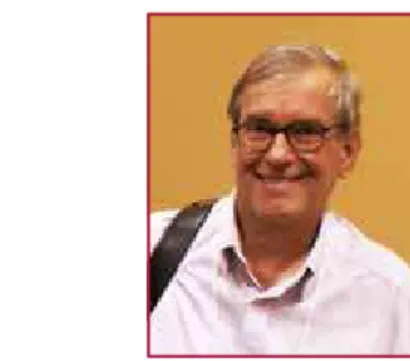
Julio Cesar Voltarelli
1948-2012
Milton Artur Ruiz
Editor-in-Chief
Revista Brasileira de Hematologia e Hemoterapia
Conflict-of-interest disclosure:
The authors declare no competing financial interest
Submitted: 4/11/2012 Accepted: 4/12/2012
Corresponding author: Milton Artur Ruiz Editor-in-Chief
Revista Brasileira de Hematologia e Hemoterapia
Rua Catarina Nucci Parise, 760
15090-470 São José do Rio Preto, SP, Brazil Phone: 55 17 3226 7091
www.rbhh.org or www.scielo.br/rbhh
DOI: 10.5581/1516-8484.20120060
Graduated from the Faculdade de Medicina de Ribeirão Preto da Universidade de São Paulo
(FMRP-USP) (1967-1972), resident in internal medicine and hematology of Hospital das Clínicas da FMRP-USP (1973-74), M.Sc. (1975-1978) and Ph.D. (1978-1981) degrees in internal medicine (hematology and clinical immunology) from FMRP-USP. Post-doctorate at the University of California, San Francisco, USA (1985-86), the Fred Hutchinson Cancer Research Center in Seattle, USA (1987-88) and Scripps Research Institute in San Diego, USA (1999-2000). Julio Cesar Voltarelli was appointed full professor of the Internal Medicine Department at USP-FMRP, and coordinator of both the Immunogenetics Laboratory (HLA) and the Bone Marrow Transplant Unit of Hospital das Clínicas da USP-FMRP. Researcher in the Centro de Terapia Celular (CEPID-FAPESP) and the Instituto Nacional de Ciência e Tecnologia em Células Tronco e Terapia Celular of the Conselho Nacional de Desenvolvimento Científico e Tecnológico (INCTC - CNPq) located in the Centro Regional de Hemoterapia of HC-FMRP-USP. Expert in clinical immunology, hematology and transfusion medicine, in particular in hematopoietic stem cell transplantation for autoimmune diseases, and benign and malignant hematologic diseases and diagnosis and treatment of rheumatic diseases.
Table 1 - Scientific production
Published articles: 132
Articles accepted for publication: 5 Works presented at congresses: 28
Abstracts published in congress proceedings: 22 Masters degree tutorships: 17
Doctorate degree tutorships: 9
The numbers presented as his scientific production (Table 1) do not reflect the magnitude of Júlio’s work in hematology, bone marrow transplantation, and hematology over all these years. More recently he has been working in the area of regenerative cell therapy. Active, irreverent, controversial, without trying to evade, he always stated his opinion. He maintained the motto to do much with little and constantly wanted to do something big. I always remember this forcefulness in private conversations and in the first meetings in Ribeirão Preto which helped him to decide to work with the treatment of chronic autoimmune diseases using hematopoietic stem cell transplantation, a little explored field with controversial results.
This occurred after 2000 with the start of his publications on rheumatic diseases(1); later
the greatest focus of his research was type 1 diabetes mellitus(2) but he continued to treat other
less well known chronic diseases with transplantation(3).
Júlio published 19 articles on type 1 diabetes mellitus in national and international journals and has always been a collaborator of the Revista Brasileira de Hematologia e Hemoterapia, of which he was a member of its editorial board and contributed with 14 articles.
247 Julio Voltarelli - 1948-2012
Rev Bras Hematol Hemoter. 2012;34(3):246-7
for the examination in the Associação Brasileira de Hematologia, Hemoterapia e Terapia Celular that certifies physicians in the field of transplantation. Additionally, Júlio was one of the promoters of the consensus on bone marrow transplantation in the country. He participated in debates of national councils to authorize research on embryonic stem cells and was forced to participate in discussions involving a whirlwind of opinions on the theme. He presented his results on diabetes abroad and was often obliged to rebut opinions that were contrary to his work.
Recently elected President of SBTMO for 2012, unfortunately Júlio will not be able to take advantage of what he produced; he leaves a priceless scientific legacy and a legion of friends who, on feeling his loss in future congresses, will discuss his long and enjoyable stories and adventures.
References
1. Voltarelli JC. Transplante de células tronco hematopoéticas para doenças auto-imunes no Brasil. Rev Bras Hematol Hemoter. 2002;24(1):9-13.
2. Voltarelli JC. Transplante de células tronco hematopoéticas no diabete melito do tipo I. Rev Bras Hematol Hemoter. 2002;26(1):43-5.
3. Voltarelli JC. Perspectivas da terapia celular na esclerose lateral amiotrófica. Rev Bras Hematol Hemoter. 2004;26(3):155-6.