RESUmo
Este estudo compara a qualidade de vida das víimas que apresentaram amnésia pós --traumáica de longa duração com as demais e analisa a relação entre qualidade de vida e duração da amnésia pós-traumáica, com -putando ou não o período de coma. Estudo de coorte prospecivo, com coleta de dados durante a internação hospitalar e avaliação da qualidade de vida no período de esta -bilidade da recuperação pós-traumáica. Pariciparam desta invesigação víimas de trauma crânio-encefálico contuso, maiores de 14 anos, sem antecedentes de demência ou trauma crânio-encefálico, internadas em hospital de referência para atendimento de trauma nas primeiras 12 horas pós-evento. Os resultados referentes à qualidade de vida foram mais desfavoráveis em três domínios do grupo com amnésia de longa duração. Correlações entre duração da amnésia e domínios de qualidade de vida foram mais expressivas quando excluído o período de coma, indicando que este tempo não deve ser computado na duração da amnésia pós --traumáica.
dEScRitoRES
Traumaismos craniocerebrais Amnésia
Amnésia global transitória Qualidade de vida
Post-traumatic amnesia and
post-trauma quality of life
O
r
i
g
i
n
a
l
a
r
ti
c
le
AbStRAct
The present study aims to compare quality of life of vicims with long and short term post-traumaic amnesia and to analyze the relaion between quality of life and length of amnesia, including or not the comatose period. This prospecive cohort study, ga -thered data during the hospital stay and 3 and 6 months post- trauma. Blunt trau -maic brain injury paients, over 14 years old, with no prior diagnosis of demenia or brain injury, admited to a trauma center 12 hours post-trauma were included. The results were unfavorable among paients with long term amnesia. Correlaion be -tween length of post-traumaic amnesia and quality of life domains were more ex -pressive when excluded comatose period, indicaing that it must not be computed in the length of post-traumaic amnesia.
dEScRiPtoRS Craniocerebral trauma Amnesia
Amnesia, transient global Quality of life
RESUmEn
Este estudio tuvo compara la calidad de vida de las vícimas que tuvieron amnesia post-traumáica a largo plazo, con los (las) demás y analizar la relación entre la cali -dad de vida y duración de la amnesia post --traumáica, computando o nó el periodo de estado de coma. Estudio prospecivo de cohorte uilizando datos de hospita -les y de la calidad de vida de vícimas de traumaismo craneoencefálico, internados en un hospital de referencia para la aten -ción del trauma. Los resultados relaivos a la calidad de vida eran más desfavorables en el grupo a largo plazo de amnesia. Las correlaciones entre la duración de la am -nesia post-traumáica y los dominios de la calidad de vida fueron más signiicaivos cuando se excluyó el periodo de estado de coma, lo que indica que este iempo no debe ser contado en la duración de la am -nesia post-traumáica.
dEScRiPtoRES
Traumaismos craneocerebrales Amnesia
Amnesia global transitoria Calidad de vida
Silvia cristina Fürbringer e Silva1, cristina Helena constanti Settervall2,
Regina marcia cardoso de Sousa3
AmnésiA pós-trAumáticA e quAlidAde de vidA pós-trAumA
AmnesiA pOst-trAumáticA Y cAlidAd de vidA pOst-trAumA
1registered nurse. phd in nursing. professor of the são camilo university center. são paulo, sp, Brazil. 2registered nurse. doctoral student of the
post-graduate program in Adult Health of the university of são paulo school of nursing. são paulo, sp,Brazil. 3Full professor of the medical-surgical nursing
intRodUction
Closed traumaic brain injury (CTBI) is frequently fol
-lowed by the post-traumaic amnesia (PTA), deined as a transitory state of confusion and disorientaion, character
-ized for anterograde amnesia and behavioral disturbances, including sleeplessness, psychomotor agitaion, faigue, confabulaion and occasionally serious afecive and psy
-choic symptoms(1-2). Post-traumaic amnesia is considered
an indicator of the severity of the CTBI and an important element in predicing funcional outcomes(1,3); the longer
the post-traumaic amnesia period, the more severe the CTBI and the worse the expected funcional outcome(2).
Brain injuries, due to the range of the funcions of the nervous system, result in impairments and disabiliies that are characterized as causing losses or alteraions in both the physical and mental spheres, with the mental capacity of the paients altered not only in cogniive, but also be
-havioral areas. Regarding the evoluion, the consequenc
-es of brain injury go beyond the impact in the acute phase of treatment, extending and modifying for a long period ater the traumaic event(4). Consequently, the ime of six
months ater the trauma has been recom
-mended for evaluaing the consequences in surviving vicims, however, the risk of loss of large numbers of paients during longitudi
-nal studies has indicated the period of three months for this evaluaion, especially in studies which include mild trauma vicims(5).
Researchers have highlighted that the relaionship between disability and social disadvantage is complex and the result of the use of objecive measures of physical and mental funcions which oten correlate poorly with the individual percepion of
harm from the trauma, therefore they consider the mea
-sure of quality of life to be potenially beter to express the post-trauma consequences(6). In seeking to encompass
the diferent consequences of the CTBI and to portray the result of their interacion, this study used the quality of life evaluaion to characterize the consequences of the CTBI, since the physical, behavioral and cogniive impair
-ments that occur as brain injury sequelae are capable of causing signiicant alteraions in the life of the paient(4).
Although quality of life is being extensively studied in many areas of medicine, in Brazil there are few stud
-ies on quality of life ater CTBI. Furthermore, no stud-ies were found in the literature regarding the relaionship between duraion of PTA and post-trauma quality of life. Consequently, to contribute to this knowledge was one of the aims of the present study. Another focus of this study was the diference in the criteria for deining the duraion of the PTA. The tradiional criteria, includes the period of the coma in its duraion(7). However, for some research
-ers, including the duraion of the coma is inadequate, since this makes the duraion of APT equal for individu
als who remain unconscious for long periods and those who present a short coma period, but a long period of post-traumaic confusion. These researchers recommend that the iming of PTA is started from the moment when the paient recovers from the coma. The frequent use of sedaion as a therapeuic tool for paients with traumaic brain injury (TBI) also is presented as an argument for this criterion. Although the reasoning of these authors is valid, this new proposiion is not universally accepted(8). Thus, in
some studies, the duraion of PTA is the interval between the trauma and the return of the coninuous memory, while in others the beginning of this ime interval is the end of the coma(7-9). This divergence undoubtedly results
in losses in the knowledge of this phase of post-traumaic recuperaion. The literature is extensive on PTA ater CTBI, however, many results can not be compared due to the diferences in the ways of measuring its duraion.
There is no obvious evidence for the deiniion that should be used to determine the duraion of the PTA. Studies which compare the two methods of determining the duraion of the PTA are needed to establish a single operaional concept that can be safely used. Consider
-ing the issues raised, the aims of this study were: to compare the quality of life (QoL) of vicims who presented long and short du
-raion PTA and to analyze the relaionship between post-trauma quality of life and the duraion of the post-traumaic amnesia, in
-cluding or not the coma period.
mEtHod
This is a prospecive cohort study, with a descripive correlaional approach with two disinct data collecion stages. The irst stage, which aimed to characterize the duraion of the PTA period was performed during the hospitalizaion due to brain injury. The second step, which aimed to evaluate the QoL ater discharge was performed between 3 and 6 months ater the CTBI, the period in which the vicims of this type of injury begin to present stability in their post-traumaic recovery(5).
The study was conducted in the Clinical Hospital of the University of São Paulo Faculty of Medicine (HCFMUSP), government insituion, located in São Paulo city and a reference center for the care of trauma vicims. The tar
-gets of this invesigaion were CTBI vicims, treated in the irst 12 hours ater the traumaic event in the Emergency Unit of the hospital and hospitalized between December 2006 and October 2007. Vicims with a history of demen
-ia or TBI were excluded from the sample, as were those under 14 years of age, taking into account the restricion of the applicaion of the Medical Outcome Study 36-Item Short Form Health Survey (SF-36) instrument for individu
-als in this age group(10). ...no studies
were found in the literature regarding
the relationship between duration
In this study, the Galveston Orientaion Amnesia Test (GOAT)(9,11) was used for the evaluaion of the PTA and
SF-36(10) was applied to measure the QoL of the vicims. The
GOAT is an instrument which consists of 10 quesions that assess orientaion and amnesia of CTBI vicims ater the in
-jury. In addiion to the temporal orientaion of the paient (quesions 6 to 10), as the paient recovering from a CTBI of
-ten gets confused about basic informaion, the GOAT pres
-ents quesions regarding name, address and date of birth (quesion 1). Memory distorions may involve alteraions in geographic orientaion, so the instrument also poses ques
-ions about that aspect (quesion 2). Quesion 3 refers to the date of admission to hospital and quesions 4 and 5 ask the vicim about events that happened before and ater the injury, respecively. In the applicaion of the GOAT, all this informaion must be conirmed through the paient’s medi
-cal records or family members. The PTA is considered over when the vicim achieves, for two consecuive days, scores greater than or equal to 75 in the test(1,7,9).
The SF-36 is a quesionnaire consising of 36 items, di
-vided into eight domains: funcional capacity (ten items), physical acivity limitaions (four items), pain (two items), general health status (ive items), vitality (four items), so
-cial aciviies (two items), emoional aspects (three items), mental health (ive items) and one evaluaion quesion that allows the comparison of the current health condi
-ion with that of a year before(10). In this study this ques
-ion was adapted for cases of trauma and the focus was modiied for the comparison of the current health status with that of the period preceding the trauma.
The study was approved by the Research Ethics Com
-mitee (Protocol No. 1050/06). The inclusion of the vic
-ims in the study occurred only in cases in which there was consent of the paient or their family members and signing the Terms of Free Prior Informed Consent. The monitoring of the CTBI vicims, treated in the Emergency Unit of the Central Insitute of the HCFMUSP in irst the 12 hours ater the traumaic event and hospitalized in the hospital was carried out daily. The ideniicaion of the study paricipants was performed through means of daily consultaion of the medical records of the inpaients in this hospital area and, also, consultaion with the nurses and physicians of the sector.
In the irst phase, the paients were evaluated daily, preferably at the same hour, from their inclusion in the study unil the moment of hospital discharge or transfer, death or end of the period of PTA. The Glasgow Coma Scale (GCS) was applied with all paients included in the study. The GOAT was also applied, ater the GCS, with the paients with preserved verbal contact capacity. In the second data collecion phase, the paients were in
-terviewed by telephone or at the Neurology Outpaient Clinic, on a date set at a previous contact with the paient or family member. This interview was scheduled, on aver
-age, 154 days ater the trauma, considering the period be
-tween three and six months ater the event and aiming to
measure the quality of life of the vicims in a period close to the stability of the recovery process. Regarding these telephone contacts, it was established that ater two un
-successful atempts to interview the paient by telephone the individual would be excluded from the monitoring.
The duraion of the PTA was determined, in days, using two diferent criteria. In the irst, the duraion of the am
-nesia was determined as the diference in days between the date of the trauma and the irst two consecuive days in which the vicim scored ≥75 in the GOAT(7). The second
value was determined as the diference in days between the irst of two days in which the paient achieved a score of 6 in the Best Motor Response (BMR) parameter of the GCS and the irst of two sequenial days with scores great
-er than or equal to 75 in the GOAT(7). In this study, PTA
over 24 hours was considered to be of long duraion, since in the classiicaions of severity of the CTBI according to the duraion of the PTA a period longer than 24 hours is indicaive of a signiicant lesion, i.e. moderate or severe gravity of trauma(1). In the comparison between the short
and long duraion groups, the length of APT was estab
-lished excluding the period of coma, as the results of the present study indicate that this is the best measurement method.
Upon compleion of the data collecion, the data were stored in a computerized database. For the data analysis, SPSS for Windows 12.0 e Stata 8.0 were used. Descrip
-ive staisics were performed for all variables, aiming for the general characterizaion of the study paricipants and descripion of the QoL of the vicims. The Pearson’s Chi-square test was used to compare the group of vicims who paricipated in the irst phase (187 paricipants) of this study with those who had their quality of life evaluated between three and six months post-trauma (68 parici
-pants) . In these analyzes, the numerical variables related to the severity of the trauma were categorized according to indicaion of the indices used and the age, conforming to the categories presented in Table 1. The reliability of the SF-36 was analyzed using the Cronbach’s alpha test, which produced values ranging between 0.74 and 0.95, with the lowest value being for the General Health Status domain and the highest for the Funcional Capacity do
-main. The Kolmogorov-Smirnov normality test was used to test the hypothesis of normality for the total score of the SF-36 domains and for the duraion of the PTA in days, determined by the two previously described methods.
A comparison of the means of the SF-36 domains be
-tween the groups with short and long duraion PTA was performed using the Student’s t-test, where the data pre
-sented normal distribuion and by the Mann-Whitney test where the hypothesis of normality of the total score of the domains was rejected. Spearman’s Rank Correlaion Coeicient was used to evaluate the associaion between the total score of the SF-36 domains and duraion in days of the PTA including or not the coma period. All the stais
RESULtS
Of the 187 patients evaluated during the hospital
-ization phase, 68 (36.4%) had their quality of life evalu
-ated between three and six months after the traumatic event. There were 29 victims who could not be located after discharge (erroneous contact information); five died between hospital discharge and the telephone call; and 85 were excluded from the second stage of the research, refusing to participate or not being avail
-able for the interview at the two telephone contact mo
-ments. Although the study group evaluated by the SF-36 was composed of only SF-36.4% of the participants of the first phase, the results of Person’s Chi-Square test confirmed the similarity of the participants of the two phases of the study regarding the variables: gender, age, external cause, severity of the TBI according to the GCS and Maximum Abbreviated Injury Scale (MAIS) re
-lated to the head region; type (diffused or localized), area (intra or extra axial) and quantity (single or mul
-tiple) of craniocerebral injuries, and use of medication with central nervous system action in the acute phase of the trauma treatment. The proportion of individuals with short and long duration PTA was also similar in the two phases of this study.
The analysis of the characterisics of the 68 interview
-ees in the second step of the study showed that the most common external causes that provoked CTBI were traic accidents (60.3%), followed by falls (30.9%). Assaults ac
-counted for only 8.8% of the cases. The iniial results of the GCS of these 68 paricipants indicated that the major
-ity of the cases presented mild TBI (57.3%), 17.6% moder
-ate and 25% severe TBI. However, the MAIS rel-ated to the head region indicated the presence of at least one major injury (MAIS ≥3) in 73.5% of the vicims. Furthermore, the majority of these paients presented localized brain inju
-ries (85.3%) and the number of vicims with intra-axial in
-juries was similar to those who presented only extra-axial injuries (50.0%). Phenytoin (Hidantal) or Midazolam Ma
-leate (Dormonid) were the central nervous system acing
drugs most commonly used in the acute phase of treat
-ment of the vicims, in 64.7% of the cases. Other drugs with this acion were used with approximately 7% of the vicims.
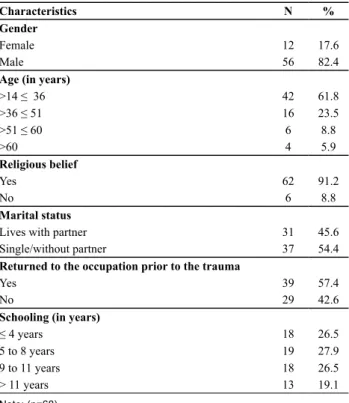
Table 1 shows that the majority of the vicims, 82.4%, were male, aged between 14 and 36 years (61.8%). The vast majority of the vicims (91.2%) reported having some religious belief; regarding the marital status, 45.6% of the paients were living with a partner, with no changes re
-ported in the marital status ater the trauma. Of the 68 paients, 39 (57.4%) had returned to their previous occu
-paion when the quality of life of the vicims was evalu
-ated. With regard to schooling, there was a balance in the distribuion of the vicims among the diferent categories, however, it is noteworthy that the majority (54.4%) had only atended elementary educaion.
Table 1 - Victims evaluated with the SF-36 according to socio-demographic characteristics - São Paulo, 2006-2007
Characteristics N %
Gender
Female 12 17.6
Male 56 82.4
Age (in years)
>14 ≤ 36 42 61.8
>36 ≤ 51 16 23.5
>51 ≤ 60 6 8.8
>60 4 5.9
Religious belief
Yes 62 91.2
No 6 8.8
Marital status
Lives with partner 31 45.6
Single/without partner 37 54.4
Returned to the occupation prior to the trauma
Yes 39 57.4
No 29 42.6
Schooling (in years)
≤ 4 years 18 26.5
5 to 8 years 19 27.9
9 to 11 years 18 26.5
> 11 years 13 19.1
note: (n=68)
Table 2 summarizes the results of the applicaion of the SF-36 quesionnaire that was used in the second data collecion stage of this study, i.e. between 3 and 6 months ater the trauma.
Table 2 - Descriptive measures of the values obtained for each domain of the SF-36 questionnaire - São Paulo, 2006-2007
Domains Mean
(SD) Variation Median
Functional Capacity 75.2 (± 32.6) 0 – 100 90.0
Physical Activity Limitations 58.9 (± 43.9) 0 – 100 75.0
Pain 75.3 (± 24.3) 20 – 100 74.0
General Health Status 86.0 (± 13.3) 45 – 100 89.5
Vitality 73.6 (± 14.26) 45 – 100 75.0
Social Aspects 80.3 (± 23.9) 0 – 100 87.5
Emotional Aspects 78.9 (± 36.4) 0 – 100 100
Mental Health 75.4 (± 15.9) 28 – 100 76.0
note: (n=68)
From the descripive measurements related to the SF-36 domains, presented in Table 2, it can be seen that the lowest mean value (58.9) and greater variability of results (SD = 43.9) were observed in the Physical Acivity Limita
-ions domain. The variability of the score in the analyzed group was also high in the Emoional Aspects (SD = 36.4) and Funcional Capacity (SD = 32.6) domains, however, it was observed that half of the vicims reached maximum or near to maximum scores in these domains (median = 90.0 and 100, respecively). The domain that achieved the highest mean score was the General Health Status (86.0) domain, followed by the Social Aspects (80.3) do
Aspects and Mental Health domains presented mean scores of around 75. Between 3 and 6 months ater the trauma, when asked about their health compared to the period prior to the trauma, 53% of the respondents con
-sidered themselves to be in the same health condiion as they were before the accident and 29.4% reported being worse than before. A beter current health condiion was reported by 12 paients (17.6% of the individuals).
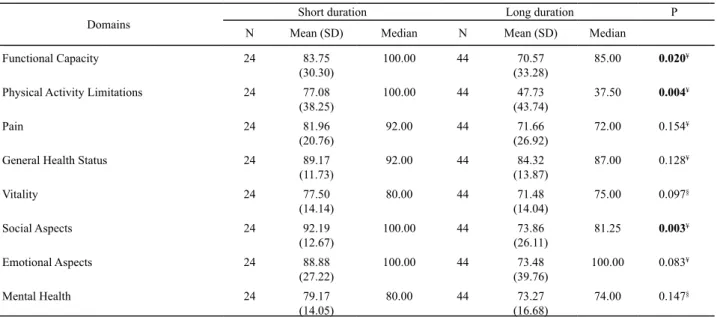
Table 3 - Descriptive statistics and comparison test between the short and long duration PTA* groups for the SF-36 domains - São
Paulo, 2006-2007
Domains
Short duration Long duration P
N Mean (SD) Median N Mean (SD) Median
Functional Capacity 24 83.75 (30.30)
100.00 44 70.57
(33.28)
85.00 0.020¥
Physical Activity Limitations 24 77.08 (38.25)
100.00 44 47.73
(43.74)
37.50 0.004¥
Pain 24 81.96
(20.76)
92.00 44 71.66
(26.92)
72.00 0.154¥
General Health Status 24 89.17
(11.73)
92.00 44 84.32
(13.87)
87.00 0.128¥
Vitality 24 77.50 (14.14)
80.00 44 71.48
(14.04)
75.00 0.097§
Social Aspects 24 92.19 (12.67)
100.00 44 73.86
(26.11)
81.25 0.003¥
Emotional Aspects 24 88.88 (27.22)
100.00 44 73.48
(39.76)
100.00 0.083¥
Mental Health 24 79.17
(14.05)
80.00 44 73.27
(16.68)
74.00 0.147§
* ptA duration excluding coma period; ¥ comparison test between groups according to mann-Whitney test (data without normal distribution); § comparison test between groups according to student’s t-test (data with normal distribution)
Table 3 shows that there were staisically signiicant
diferences between the short and long duraion PTA groups for the domains: Funcional Capacity, Physical Acivity Limitaions and Social Aspects (p<0.05).
-**Correlation signiicant to the level of 0.01; *Correlation signiicant to the level of 0.05
Table 4 - Pearson’s correlation coeficient for the SF-36 domains and the durations of PTA including or not the coma period - São
Paulo, 2007
Domain
PTA in days from the date of the trauma
PTA in days from the BMR score of 6
Pearson’s Correlation P Pearson’s Correlation P
Functional Capacity -0,402** 0,001 -0,445** <0,001
Physical Activity Limitations -0,422** <0,001 -0,437** <0,001
Pain -0,187 0,126 -0,256* 0,035
General Health Status -0,107 0,387 -0,051 0,682
Vitality -0,222 0,069 -0,184 0,133
Social Aspects -0,410** 0,001 -0,450** <0,001
Emotional Aspects -0,240* 0,049 -0,320** 0,008
Mental Health -0,207 0,091 -0,202 0,098
Table 4 presents the Pearson’s correlaion coeicients between the scores of the SF-36 domains and the dura
-ion of amnesia (from the day of the trauma and from the Best Motor Response score of 6 in the GCS). It was ob
-served that the coeicients of all the domains were nega
-ive, i.e. for the two methods, as the duraion of the PTA increased, the score obtained by the vicims in the SF-36 evaluaion decreased. In the comparaive analysis of the Pearson’s correlaion coeicients for the SF-36 domains and the PTA duraions, including or not the period of co
-ma, similar values were noted, however, regarding those
in which the level of signiicance was reached, a slightly stronger correlaion was observed in the results that analyzed the duraion of PTA excluding the period of the coma. Furthermore, in the Pain domain, the correlaion only reached signiicance when the period of coma was excluded from calculaing the PTA duraion. As menioned in the method of this study, in the analysis presented in Table 3, the period of coma was excluded when categoriz
diScUSSion
The comparison of the quality of life of vicims who had long and short duraion PTA was proposed in this study considering two important perspecives that pervade the knowledge about TBI and its consequences. The irst indi
-cates that the duraion of the PTA is an important indica
-tor of the severity of the CTBI, short duraion PTA, ime ≤24 hours, is indicaive of mild/moderate trauma and long duraion (>24 hours) severe trauma(1). Furthermore, the
duraion of the PTA has repeatedly proven the best single indicator to predict problems in cogniive funcions or ac
-iviies of daily living(1). Therefore, knowing the duraion of
the PTA and its implicaions ater the CTBI is of consider
-able clinical importance, as this helps in the planning and evaluaion of rehabilitaion programs and allows addiion
-al informaion to be provided to the family and paient regarding the post-trauma recovery. Another perspecive suggests that the TBI afects the individual in the physical, cogniive and behavioral sphere, indicaing the relevance of the evaluaion of the QoL in the clinical monitoring of pa
-ients with this type of injury(4,6).
Quality of life is a mulidimensional concept that in
-cludes diferent domains, such as physical, psychological and social funcions(12). Moreover, it is an essenially sub
-jecive measurement and can be inluenced by personal, cultural, religious and social characterisics(13). In this
sense, it is worth highlighing the low educaional level of the sample, the fact that almost all of the individuals were aged ≤60 years (94.1%) and held some religious belief (91.2%), the male predominance (82.4%) and the return to the previous occupaion by 57.4% of the paricipants. In the naional literature, two studies using the WHOQOL-BREF to evaluate quality of life in TBI vicims, showed an associaion between the outcomes and the sociodemo
-graphic variables of the vicims. In one of these(14) the low
-est values in the physical domain were associated with females and those of older age, in the other(15), moderate
correlaions, though signiicant, were observed between overall quality of life and educaional level (p≤ 0.05) and return to work or study (p≤ 0.01).
The return to the occupaion prior to the injury repre
-sents one of the aspects that contribute more decisively to the quality of life of the TBI vicim. In a way, it is the basis for full social reintegraion, as it plays a key role in personal saisfacion and self-esteem, as well as being a fundamental element in the acquisiion and maintenance of social relaionships. The inability of the individual to return to work is directly related to the social aspects of the individual’s life, afecing their self-image and sense of inferiority within society(4,16-17). The vast majority of the
vicims (91.2%) reported some religious belief and some of them reported greater religiosity ater the trauma, due to a feeling of graitude for being alive and for not hav
-ing had worse post-trauma outcomes. A literature review on the quality of life of TBI vicims indicates that qualita
-ive studies also reported this feeling among some of their paricipants(17). In the analysis of the marital status of the
study paricipants, it was observed that 45.6% lived with a partner before the CTBI and coninued to reside with them ater the traumaic event. Although the literature has shown a high incidence of divorce and low occurrence of marriages ater TBI(17) this result was not veriied, per
-haps because the period of 6 months is sill too early to observe these consequences.
The mean scores of the domains displayed in Table 2 were compared with Brazilian studies(18-19) that pre
-sented results of the SF-36 with groups of normal sub
-jects(18) and nonsmoking university students(19). Compar
-ing the means of the domains, higher values were noted in these groups in two domains, Funcional Capacity and Physical Acivity Limitaion. Regarding the other do
-mains, the mean values observed in the current study were very close to those found in these studies. The evaluaion of the quality of life of TBI vicims in the city of Ribeirão Preto(14), six months post-trauma, showed the
negaive impact of the trauma in these vicims. In this study the WHOQOL-BREF was the instrument used and the results also showed diferences among the quality of life domains that were impacted by the TBI. The physical domain was the most afected, the scores of the psycho
-logical and environmental domains were also dissimilar to the general populaion, however, the social relaion
-ships domain was not signiicantly diferent in relaion to normal standards.
Studies performed in other countries that applied the SF-36 with TBI vicims and compared the results with groups of individuals of the general populaion (without speciic diseases) showed lower means in groups of TBI vicims in all eight domains of the instrument(17). The se
-lecivity of the afected domains, presented in the Bra
-zilian studies is probably related to social, religious, and cultural characterisics and may indicate prioriies in the organizaion and rehabilitaion of TBI vicims and the as
-sistance provided for their inclusion the community. Comparing the quality of life of vicims who had long and short duraion PTA, it was concluded that vicims with APT >24 hours (long duraion) presented signiicant difer
-ence in the Funcional Capacity, Physical Acivity Limita
-ion and Social Aspects domains regarding the results of the assessment of quality of life between three and six months ater the CTBI. In these three domains, the group that presented long duraion PTA showed more unfavor
-able results than the group of short duraion. This result is consistent with studies that indicate that the longer the period of PTA, the worse the consequences of the CTBI for the vicim and also reairms the importance of the Func
The results in Table 3 show that the Physical Aciv
-ity Limitaion domain presented the greatest diference between the mean values of the two groups. This do
-main evaluates the limitaions in relaion to the type and amount of work, as well as how these limitaions make it diicult to carry out work and aciviies of daily living(10)
and is probably related to the producivity of the vicim ater the trauma in this study: 45.4% of the paients with long duraion PTA returned to the occupaion prior to the trauma, while this percentage was 79.2% in the vicims with short duraion PTA. The Social Aspects domain seems not to have been afected in the TBI vicims in general, however, difered in those with severe traumas. The re
-ducion of social contacts ater the trauma in the vicims of serious TBI is a frequent and undesirable event(20), since
relaives, friends and neighbors can provide important so
-cial and emoional support for these vicims.
The answers to quesion 2 of the SF-36 showed that in the majority of the cases (70.6%) the comparison of the health status before and ater CTBI resulted in the indicaion by the vicims of similarity or improvement in the health status ater this event. Although the litera
-ture emphasizes the impairments resuling from the TBI, some studies describe gains resuling from this event that should not be overlooked, such as behavior that denotes new internal personal strengths, appreciaion of the sim
-ple things in life, and the disrupion of the self-destrucive abusive use of drugs(17). Therefore, in the post-CTBI reha
-bilitaion process it is important to remember that the adaptability of both paients and their families is individ
-ual and depends on personal factors, as well as social and cultural ones.
The esimaion of the duraion of the PTA inevita
-bly depends on the criterion used to deine it. In this sense, it becomes problemaic to compare diferent in
-vesigaions since a large number of aricles in the lit
-erature do not clearly specify the criteria used for this measurement and whether the PTA has been esimated from the date of the trauma or from the terminaion of
coma(7-8). Furthermore, in the clinical pracice this mea
-sure should be objecive and standardized, considering its usefulness to esimate the severity of the CTBI and to predict the cogniive and funcional recovery of the pa
-ient. Regarding the controversy in the operaional con
-cept of this measurement, the relaionship between the results of the SF-36 and duraion of the PTA, including or not the period of coma, was veriied in this study. Sig
-niicant correlaions were observed with both methods in the analysis of the following domains: Funcional Ca
-pacity, Physical Acivity Limitaions, Social Aspects and Emoional Aspects. In these four domains the correla
-ion coeicients were slightly higher when the measure
-ment was performed excluded the coma period from the duraion of the PTA, furthermore, the Pain domain was signiicant in the correlaion only when this form of measurement of the duraion of the PTA was used. These results indicate that the measurement of the du
-raion of PTA, as a subsidy for the process of rehabilita
-ion and recovery of paients with CTBI, should exclude the coma period.
Litle has been discussed in the literature regarding this diference in measuring the PTA, however, research
-ers from Glasgow Univ-ersity, in 1993, showed results that indicated that the duraion of the PTA can be calculated considering or not the coma period. The authors showed that there was a similar signiicant correlaion between brain injuries diagnosed by MRI and duraion of PTA with and without the coma period(21). The results of the two
studies difer and indicate the need for further research leading to unanimity in how to measure the duraion of PTA ater the traumaic event.
REFEREncES
1. Silva SCF, Sousa RMC. Galveston Orientaion and Amnesia (GOAT). Rev Esc Enferm USP [Internet]. 2009 [cited 2012 Apr 22];43(n.spe):1027-33. Available from: htp://www.scielo.br/ pdf/reeusp/v43nspe/en_a06v43ns.pdf
2. De Guise E, Leblanc J, Feys M, Thomas H, Gosselin N. Efect of an integrated reality orientaion programme in acute care on post-traumaic amnesia in paients with traumaic brain injury. Brain Inj. 2005;19(4):263-9.
3. Ladera-Fernandez V. Síndrome amnésico postraumáico. Rev Neurol. 2001; 32(5):467-72.
4. DePalma JA. Measuring quality of life of paients of traumaic brain injury. Crit Care Nurs Q. 2001;23(4):42-51.
5. Kashluba S, Paniak C, Blake T, Reynolds S, Toller-Lobe G, Nagy J. A longitudinal, controlled study of paient complaints fol
-lowing treated mild traumaic brain injury. Arch Clin Neuro
-psychol. 2004;19(6):805-16.
6. Guilfoyle MR, Seeley HM, Corteen E, Harkin C, Richards H, Menon DK, et al. Assessing quality of life ater traumaic brain injury: examinaion of the short form 36 health survey. J Neu
-rotrauma. 2010;27(12):2173-81.
7. Ellemberg JH, Levin HS, Saydjari C. Post-traumaic amnesia as a predictor of outcome ater severe closed head injury. Arch Neurol. 1996;53(8):782-91.
9. Levin HS, O’Donnell VM, Grossman RG. The Galveston Orien
-taion and Amnesia Test: a pracical scale to assess cogniion ater head injury. J Nerv Ment Dis. 1979; 167(11):675-84.
10. Ciconelli RM, Ferras MB, Santos W, Meinão I, Quaresma MR. Brazilian-Portuguese version of the SF-36: a reliable and valid quality of life outcome measure. Rev Bras Reumatol. 1999;39(3):143-50.
11. Silva SCF, Sousa RMC. “Galveston Orientaion and Amnesia Test”: tradução e validação. Acta Paul Enferm. 2007;20(1): 24-9.
12. Mailhan L, Azouvi P, Dazord A. Life saisfacion and disability af
-ter severe traumaic brain injury. Brain Inj. 2005;19(4):227-38.
13. McMillan TM, Herbert CM. Further recovery in a potenial treatment withdrawal case 10 years ater brain injury. Brain Inj. 2004;18(9):935-40.
14. Alves ALA, Salim FM, Marinez EZ, Passos ADC, De Carlo MMRP, Scarpelini S. Qualidade de vida de víimas de trau
-ma seis meses após a alta hospitalar. Rev Saúde Pública. 2009;43(1):154-60.
15. Silva CB, Dylewski V, Rocha JS, Morais JF, Neves RCM. Aval
-iação da qualidade de vida de pacientes com trauma cra
-niencefálico. Fisioter Pesq. 2009;16(4):311-5.
16. Avesani R, Salvi L, Rigoli G, Gambini MG. Reintegraion af
-ter severe brain injury: a retrospecive study. Brain Inj. 2005;19(11):933-9.
17. Dijkers MP. Quality of life ater traumaic brain injury: a re
-view of research approaches and indings. Arch Phys Med Rehabil. 2004;85 Suppl 2:S21-35.
18. Genta PR, Jatene FB, Terra-Filho M. Qualidade de vida antes e após tromboendarterectomia pulmonar: resultados pre
-liminares. J Bras Pneumol. 2005; 31(1):48-51.
19. Marinez BAJ, Mota AG, Vianna ESO, Terra Filho J, Silva GA, Rodrigues Junior AL. Impaired quality of life of healthy young smokers. Chest. 2004;125(2):425-8.
20. Hora EC, Sousa RMC. Mudanças nos papéis sociais: uma conseqüência do trauma crânio-encefálico para o cuidador familiar. Rev Laino Am Enferm. 2006;14(2):183-9.
21. Wilson JTL, Teasdale GM, Hadley DM, Wiedmann KD, Lang Dl. Post-traumaic amnesia: sill a valuable yardsick. J Neu
-rol Neurosurg Psychiatry. 1994;57(4):198-201.