1 Physiotherapist, Master’s Student of the Graduate Program of Movement Sciences, INISA Integrated Institute of Health, Federal University of Mato Grosso do Sul (UFMS). Campo Grande
(MS), Brazil. Orcid iD: https://orcid.org/0000-0001-7468-3156
2 Physiotherapist, Master’s Student of the Graduate Program in Heatlh and Development of Midwest Region, UFMS. Campo Grande (MS), Brazil. Orcid iD:
https://orcid.org/0000-0002-9965-7330
3 Student of the Physiotherapy Course of the INISA Integrated Institute of Health, UFMS. Campo Grande (MS), Brazil. Orcid iD: https://orcid.org/0000-0002-1918-1118
4 PhD, Professor of the Graduate Program of Movement Sciences, INISA Integrated Institute of Health, UFMS. Campo Grande (MS), Brazil. Orcid iD: https://orcid.org/0000-0002-4872-2139 5 PhD, Professor of the Graduate Program of Movement Sciences, INISA Integrated Institute of Health, UFMS. Campo Grande (MS), Brazil. Orcid iD: https://orcid.org/0000-0002-8895-9456 6 PhD, Professor of the Graduate Program of Movement Sciences, INISA Integrated Institute of Health, UFMS. Campo Grande (MS), Brazil. Orcid iD: https://orcid.org/0000-0002-7879-239X 7 PhD, Professor of the Graduate Program of Movement Sciences, INISA Integrated Institute of Health, UFMS. Campo Grande (MS), Brazil. Orcid iD: https://orcid.org/0000-0002-6958-5719 Corresponding author: Ana Beatriz Gomes de Souza Pegorare. UFMS Integrated School Clinic. University City. PO Box 549. Av. Costa e Silva, s/no. Bairro Universitário - Campo Grande (MS), Brazil. CEP 79070-900. E-mail: [email protected]
Effect of the Pilates Method on Sexual Function, Pelvic floor Muscle Strength and
Quality of Life of Breast Cancer Survivors
https://doi.org/10.32635/2176-9745.RBC.2020v66n2.844
Efeito do Método Pilates sobre a Função Sexual, a Força da Musculatura do Assoalho Pélvico e a Qualidade de Vida em
Mulheres Sobreviventes do Câncer de Mama
Efecto del Método Pilates sobre la Función Sexual, la Fuerza Muscular del Piso Pélvico y la Calidad de Vida de las
Sobrevivientes de Cáncer de Mama
Vanessa de Souza Ferraz1; Arthur Duarte Fantesia Costa Cruz2; Milena Aparecida Maldonado Ferreira3; Thomaz Nogueira Burke4;
Silvio Assis de Oliveira Júnior5; Gustavo Christofoletti6; Ana Beatriz Gomes de Souza Pegorare7 Abstract
Introduction: Surgical treatment of breast cancer and anti-estrogenic hormone therapy negatively impact quality of life and female sexual function. Considering that physical activity provides important benefits to minimize the physical and emotional impact of the treatment, the Pilates Method is a modality of physical exercises that could increase the quality of life parameters of women survivors of breast cancer. Objective: To study the impact of Pilates Method on pelvic floor muscle (PFMS) strength, sexual function (SF), and health related quality of life related (HRQL) of BC survivors. Method: Randomized clinical trial in which 24 mastectomized women were divided into two groups: Pilates (G1) and control group (G2) exercises for 8 weeks. SF was assessed by the FSFI questionnaire and HRQV by the EORTC QLQ-C30 questionnaire. PFMS was assessed by perineometry and contractility using the PERFECT scheme. Values are expressed as mean ± standard deviation. Inferential analysis was performed using repeated measures ANOVA and Bonferroni post-test. Results: Women of the G1 showed better performance than those of the G2 for the following variables: sexual function, degree of muscle contraction; all items of the PERFECT scheme; QLQ-C30 questionnaire domains: global health status, physical functioning, emotional functioning; symptom scale items fatigue, nausea, and pain, and perception of financial difficulties (p < 0.05). Conclusion: The results show benefits of supervised Pilates exercises on pelvic floor muscle contractility, sexual function, and quality of life after cancer.
Key words: Breast Neoplasms/therapy; Quality of Life; Exercise Therapy; Pelvic Floor; Exercise Movement Techniques. Resumo
Introdução: O tratamento cirúrgico do câncer de mama e a hormonioterapia antiestrogênica impactam negativamente a qualidade de vida e a função sexual feminina. Considerando que a atividade física proporciona benefícios importantes para minimizar o impacto físico e emocional do tratamento, o método Pilates é uma modalidade de exercícios físicos que poderia incrementar os parâmetros de qualidade de vida das mulheres sobreviventes do câncer de mama. Objetivo: Estudar o impacto do método Pilates na força dos músculos do assoalho pélvico (FMAP), na função sexual (FS) e na qualidade de vida relacionada à saúde (QVRS) de mulheres sobreviventes de câncer de mama. Método: Ensaio clínico randomizado, no qual 24 mulheres mastectomizadas foram divididas em dois grupos: Pilates (G1) e grupo controle (G2) por oito semanas. A FS foi avaliada pelo questionário FSFI e a QVRS, pelo questionário EORTC QLQ-C30. A FMAP foi avaliada por perineometria e contratilidade usando o esquema PERFECT. Os valores foram expressos como média ± desvio-padrão. A análise inferencial foi realizada utilizando medidas repetidas Anova e pós-teste de Bonferroni. Resultados: As mulheres do G1 apresentaram melhor desempenho do que as do G2 nas seguintes variáveis: FS, grau de contração muscular; em todos os itens do esquema PERFECT; domínios do questionário QLQ-C30: status global de saúde, funcionamento físico, funcionamento emocional; itens da escala de sintomas fadiga, náusea e dor e percepção de dificuldades financeiras (p<0,05). Conclusão: Os resultados mostram benefícios dos exercícios supervisionados de Pilates na força dos músculos do assoalho pélvico, função sexual e qualidade de vida após o câncer.
Palavras-chave: Neoplasias da Mama/terapia; Qualidade de Vida; Terapia por Exercício; Diafragma da Pelve; Técnicas de Exercício e de Movimento.
Resumen
Introducción: El tratamiento quirúrgico del cáncer de mama y la terapia hormonal antiestrogénica tienen un impacto negativo en la calidad de vida y la función sexual femenina. Teniendo en cuenta que la actividad física proporciona importantes beneficios para minimizar el impacto físico y emocional del tratamiento, el método Pilates es una modalidad de ejercicios físicos que podría aumentar los parámetros de calidad de vida de las mujeres sobrevivientes de cáncer de mama. Objetivo: Estudiar el impacto do método Pilates en la fuerza muscular del piso pélvico (FMPP) la función sexual y (FS) la CV de las sobrevivientes de cáncer de mama. Método: Ensayo clínico aleatorizado, en el que 24 mujeres mastectomizadas se dividieron en dos grupos: Pilates (G1) y grupo de control (G2) durante ocho semanas. La FS evaluó mediante el cuestionario FSFI y la CV a mediante el cuestionario EORTC QLQ-C30. La FMPP pélvico se evaluó mediante perineometría y contractilidad utilizando el esquema PERFECTO. Los valores se expresan como media ± desviación estándar. El análisis inferencial se realizó utilizando medidas repetidas Anova y la prueba posterior de Bonferroni. Resultados: Las mujeres en el G1 obtuvieron mejores resultados que las del G2 en las siguientes variables: índice de función sexual, grado de contracción muscular; todos los elementos en el esquema PERFECTO (potencia, repeticiones, resistencia y contracciones rápidas); Dominios del cuestionario QLQ-C30: estado de salud global, funcionamiento físico, funcionamiento emocional; ítems sobre la escala de síntomas de fatiga, náuseas y dolor y percepción de dificultades financieras (p<0,05). Conclusión: Los resultados muestran los beneficios de los EP en la contractilidad muscular del piso pélvico, FS y la CV después del cáncer.
Palabras clave: Breast Neoplasms/therapy; Quality of Life; Exercise Therapy; Pelvic Floor; Exercise Movement Techniques.
INTRODUCTION
Breast cancer is the leading cause of cancer-related death among women worldwide. In 2018, there were 1.2 million new cases, equivalent to 11.6 % of all estimated cancers1. In Brazil, 66,280 new cases of breast cancer are anticipated for each year of the 2020-2022 triennium, with an estimated incidence of 61,61 cases per 100,000 women2. The prevalence of the disease is expected to grow due to population aging and behavioral and lifestyle-related risk factors. There is not only one risk factor for breast cancer, however, age over 50 years is considered the most important. Other factors that contribute to the increased risk of developing the disease are genetic factors (mutations in genes BRCA1 and BRCA2) hereditary factors (cancer in the family), in addition to late menopause, obesity, physical inactivity and exposure to ionizing radiation3.
Fortunately, advances in diagnosis and treatment have resulted in increasing numbers of women who survive breast cancer. Survival rates have increased by 88% over the last 5 years in industrialized countries4. Consequently, breast cancer research has been focusing on quality of life analysis, especially female self-esteem and sexuality, which are complex factors after breast cancer5. Most of them show women with breast cancer such as decreased body functionality, lymphedema and upper limb functional deficit after surgery6. In addition, psychological and mental aspects inherent to the treatment cause distress and depression7. These effects lead to decreased quality of life for women during and after breast cancer treatment.
In addition to physical and psychic symptoms, these women also feel low self-esteem and loss of femininity. Women experience a feeling of not being physically attractive to their partner due to breast loss, causing alteration of self-image and femininity7,8. A previous study found that 61.1% of women who survive hormone therapy breast cancer have sexual dysfunction8, a fact possibly caused by tamoxifen treatment, associated with the psychic repercussions of surgery on self-image. Regarding sexuality there are a variety of complaints, such as dyspareunia, vaginal lubrication deficit, hypoactive desire and loss of breast sensitivity, which have been reported as a consequence of estrogen deficit generated by breast hormonetherapy9.
In view of the previously described weaknesses resulting from breast cancer post-treatment, the Pilates method aims to aid in symptom relief by helping patients regain functionality, improve performance in daily life activities, reduce fatigue, and enhance quality of life. This method was developed by Joseph Pilates and is based on principles of movement such as concentration, control,
accuracy, movement fluidity, breathing, and powerhouse activation10. The exercises can be performed on the floor or on specific equipment and aim to integrate the mind and body, stimulating body awareness, muscle recruitment and postural alignment during movement10.
Pilates exercises are used to improve physical (muscle strength, endurance, core stability, breathing), psychological and mental (motivation, body awareness, mood), and motor functions (coordination, balance, muscle control, posture)11. Force center muscles, also called “powerhouse”, refer to the region of specific muscle groups: abdominal muscles, spine extensors, hip extensors, hip flexors, and pelvic floor muscles (PFM)11. The recruitment of the “powerhouse” muscles, if well executed, can produce a significant increase in the strength of these muscles12,13.
Two recent systematic literature reviews investigated the effectiveness of Pilates in cancer patients and demonstrated that this method alleviates the impact of breast cancer-related symptoms. The method exerts significantly greater effects in terms of pain relief and improvement of upper extremity function than other therapies14.
Regarding the rehabilitation of women after cancer treatment there are no studies demonstrating the benefits of the Pilates method on perineal contraction, and further studies are needed to determine whether Pilates can actually be used to treat pelvic floor and/or sexual dysfunction. Therefore, the aim of this study is to evaluate the effect of Pilates exercises on the degree of perineal contraction, sexual function score, and quality of life of women who underwent modified radical mastectomy (MRM) or conservative surgery (CS) for breast cancer. METHOD
A prospective clinical trial carried out at the Alfredo Abrão Cancer Hospital, located in Campo Grande, Mato Grosso do Sul, Brazil. This trial was formed by two independent groups: an experimental group and a control group. Ethical approval was obtained from the Institutional Review Board (Approval number: 61369716.0.0000.0021) and the project is registered at the Brazilian Clinical Trials Registry (Identifier: RBR-95XDZH).
The volunteers were recruited through medical chart survey based on inclusion criteria and subsequent telephone contact, from June 2018 to July 2019. Prior to inclusion, they were clarified about the objectives, risks and benefits of the research, and those who wished to participate signed the Informed Consent Form (ICF), according to Resolution no. 466/2012 of CONEP (National Ethics Committee).
Inclusion criteria were: sedentary women (whose self-reported daily activities do not increase the metabolic equivalent of task (MET) by three times the baseline, age over 33 years, sexually active (at least one intercourse in the last month); had undergone MRM or CS in the last 5 years; having been treated with adjuvant chemotherapy and radiation therapy and using tamoxifen, for at least six months; non-smoker, non-alcohol user (self-reported), no clinical diagnosis of pelvic floor disorder such as dystopia and urinary incontinence, no history of urinary tract infection or recent gynecological surgery (less than 5 years ago), and no neurological or endocrine-metabolic disorders. The exclusion criteria were: cognitive impairment; illiteracy; sexual abstinence in the last month; disease recurrence; metastasis and breast reconstruction. Women who were allergic to latex present in gloves or condoms, pregnant women, women who had previously submitted to pelvic floor exercises, women who underwent abdominal surgery less than 6 months ago, and women who had previously used antimuscarinics and/or antidepressants were also excluded.
THERAPEUTIC PROTOCOLS
This study selected 24 participants divided into an experimental group – G1 (n = 14, mean age 55.1±9.3 years old) and a control group – G2 (n = 10, mean age 55.0±11.9 years old). The patients were allocated to the groups using opaque envelopes and considering the possibility of participation in both activities.
Two therapeutic protocols were applied to women undergoing hormone therapy for malignant neoplasms after total breast removal surgery at the Alfredo Abrão Cancer Hospital (HCAA), Campo Grande, Mato Grosso do Sul, Brazil. Women of G1 underwent group sessions conducted by Pilates instructor with 12 years of experience at the Gym of the Teaching Clinic of UFMS. Women of G2 performed kinesiotherapeutic activities by themselves at home.
In G1, the women underwent 16 physical therapy sessions twice a week, each session lasting 60 minutes, for 8 weeks. Women of G2 were informed that they would perform the training protocol without supervision of the responsible physical therapist. These women received instructions on how to perform the Pilates exercises in three positions (supine, four-legged, and standing) at home twice a week, with a 1-hour circuit, for a period of 8 weeks. To ensure that the activities were executed correctly, the participants used an explanatory folder on how to perform the Pilates home exercises and the physical therapist maintained constant contact with the patients. The absence of activities for 2 weeks (regardless of the group) would result in the exclusion of the study participant.
The Pilates protocol performed in the present study consists of 11 different Pilates postures: bent knee fall out,
pelvic clock, adductor squeeze, abductor squeeze, shoulder bridge, dead bugs and femur arcs, roll up, frog, sidekick, cat, and legwork standing. Exercise progression was based on increasing the number of exercise repetitions and variations from beginner to intermediate and advanced postures for each exercise. The movements were repeated six to eight times each.
EVALUATION PROCEDURES
The HCAA in Campo Grande, Carmen Prudente Foundation of Mato Grosso do Sul (FCPMS), is the only hospital specialized in oncology in Mato Grosso do Sul, which attends 98% of SUS (National Health System) patients. The HCAA provides care for cancer diagnosis, treatment, and rehabilitation.
All participants underwent previous evaluation at the HCAA where anthropometric (weight, height), sociodemographic data (age, occupation, marital status, religion and education) and clinical data were collected (blood pressure, heart rate, blood glucose).
The QLQ-30 (Quality of Life Questionnaire) was proposed by the European Organization for Research and Treatment of Cancer (EORTC) by Aaronson et al.15and validated and translated into Portuguese by Pais-Ribeiro et al16. It consists of 30 questions, which are subdivided into three groups of scales: 1. The overall state of health and quality of life (QL2); 2. Functional scale, consisting of physical functioning (PF2), functional limitations (RF2), emotional functioning (EF), cognitive functioning (CF) and social functioning (SF); 3. The symptomatic scale, consisting of the subscales fatigue (FA), nausea and vomiting (NV), pain (PA), shortness of breath (DY), insomnia (SL), lack of appetite (AP), constipation diarrhea (DI) and financial difficulties (FI). Scores are calculated separately for each scale, all ranging from 0 to 100. On the global health scale, the higher the score, the better the quality of life; for the functional scale, the higher the score, the better the function; and for the scale of symptoms, the higher the score, the worse the symptoms.
Next, the Female Sexual Function Index (FSFI) was applied to investigate female sexual function. The FSFI questionnaire, constructed in the English language by Rosen et al.17 was validated and translated into Portuguese by Thiel et al.18. The questionnaire consists of 19 questions, which addresses six domains of sexual response: desire and subjective stimulus; excitement; lubrication; orgasm; satisfaction; and pain or discomfort. Individual scores are obtained by summing the items that comprise each domain (simple score), which are multiplied by the factor of that domain and provide the weighted score. The final score (total score: minimum of 2 and maximum of 36) is obtained by the sum of the weighted scores of
each domain. A total score lower than 26.5 is defined as sexual dysfunction19.
Finally, the PERFECT scheme (power, endurance, repetitions, fast contractions, and every contraction timed)20 was applied to monitor particularly the progression of perineum strength and resistance of the patients during the period in which the therapeutic protocols were administered (before and after 8-weeks). The strength was measured by palpation with one-two fingers, and the pelvic floor muscle function was evaluated according to the power, endurance, number of repetitions, and number of fast contractions. The power was graded from 0 to 5, according to the Oxford grading system. Perina equipment from the Quark medical products brand was used to assess the degree of contraction of the pelvic floor muscles in cmH2O (centimeter of water). Three repeated measures of maximum contraction were performed with an interval of 1 minute between each of them.
The evaluation procedures (interview and the perineal assessment) were applied by a single, independent evaluator before and after the 8 weeks intervention.
SAMPLE SIZE
The sample size was calculated assuming a type 1 (alpha) error of 5% and statistical power (1-beta) of 80%. Using the design of a clinical trial with two independent
groups and two assessment times and assuming an effect size of 0.6 as previously reported by Lausen et al.21, the minimum sample size was 20 participants.
STATISTICAL ANALYSIS
Descriptive and inferential approaches were used for statistical analysis of the data. The qualitative variables of the sample are reported as absolute and relative frequency and chi-square test was used to compare the groups. The quantitative variables as means and standard deviation. For inferential analysis, it were applied two-way repeated measures ANOVA, followed by Bonferroni’s multiple comparisons test. Rejection of the null hypothesis (hypothesis of equality between pre and post-intervention evaluations) in relation to the alternative hypothesis (hypothesis of difference between pre and post-intervention evaluations) was based on a significance level of 5% (p < 0.05).
RESULTS
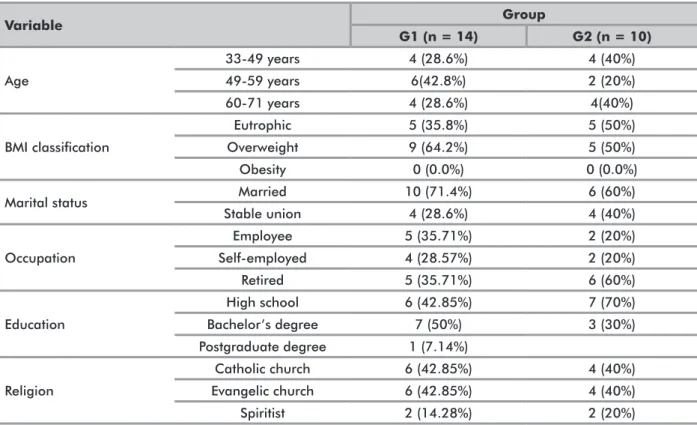
The characteristics of the sample including age, marital status, body mass index (BMI), and dystopia are shown in Table 1; both groups presented similar proportions in terms of general, anthropometric and clinical characteristics (p>0.05). Twenty-four postmenopausal
Table 1. Sociodemographic and anthropometric characteristics of participants of the experimental (G1) and control (G2) groups
Variable Group G1 (n = 14) G2 (n = 10) Age 33-49 years 4 (28.6%) 4 (40%) 49-59 years 6(42.8%) 2 (20%) 60-71 years 4 (28.6%) 4(40%) BMI classification Eutrophic 5 (35.8%) 5 (50%) Overweight 9 (64.2%) 5 (50%) Obesity 0 (0.0%) 0 (0.0%)
Marital status Married 10 (71.4%) 6 (60%)
Stable union 4 (28.6%) 4 (40%) Occupation Employee 5 (35.71%) 2 (20%) Self-employed 4 (28.57%) 2 (20%) Retired 5 (35.71%) 6 (60%) Education High school 6 (42.85%) 7 (70%) Bachelor’s degree 7 (50%) 3 (30%) Postgraduate degree 1 (7.14%) Religion Catholic church 6 (42.85%) 4 (40%) Evangelic church 6 (42.85%) 4 (40%) Spiritist 2 (14.28%) 2 (20%)
Table 2. Comparison of maximum voluntary contraction (MVC) and sexual function (FSFI) pre- and post-intervention
Variable Group Time Factors (p value)
Pre Post Group Time Interaction
MVC (cmH2O) G1 14.4 ± 11.6 27.4 ± 14.3 * 0.333 0.020 0.003 G2 17.6 ± 10.7 15.6 ± 8.6 FSFI (score) G1 19.7 ± 8.9 24.4 ± 8.9 * 0.027 0.072 0.005 G2 13.5 ± 10.8 12.3 ± 10.2
Captions: Values are expressed as mean ± standard deviation. G1, experimental group undergoing a supervised Pilates protocol; G2, control group. * p < 0.05 vs. pre-intervention (repeated measures two-way ANOVA and Bonferroni post-test).
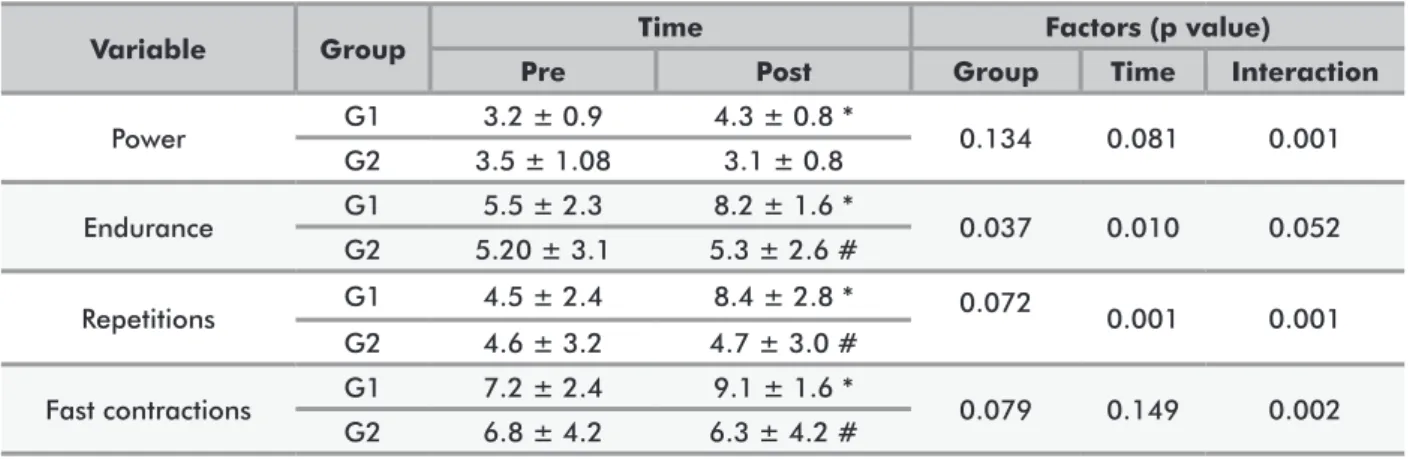
Table 3. Analysis of PERFECT scheme items in G1 and G2 during the evaluation period
Variable Group Time Factors (p value)
Pre Post Group Time Interaction
Power G1 3.2 ± 0.9 4.3 ± 0.8 * 0.134 0.081 0.001 G2 3.5 ± 1.08 3.1 ± 0.8 Endurance G1 5.5 ± 2.3 8.2 ± 1.6 * 0.037 0.010 0.052 G2 5.20 ± 3.1 5.3 ± 2.6 # Repetitions G1 4.5 ± 2.4 8.4 ± 2.8 * 0.072 0.001 0.001 G2 4.6 ± 3.2 4.7 ± 3.0 # Fast contractions G1 7.2 ± 2.4 9.1 ± 1.6 * 0.079 0.149 0.002 G2 6.8 ± 4.2 6.3 ± 4.2 #
Captions: Values are expressed as mean ± standard deviation. G1, experimental group undergoing a supervised Pilates protocol; G2, control group. * p < 0.05 vs. pre-intervention; # p < 0.05 vs. G1 (repeated measures two-way ANOVA and Bonferroni post-test).
eutrophic (41.66%) and overweight grade I (58.33%) women were evaluated. The mean age was 53.9±10.8 years (range 31 to 71 years); most of them were married (66.6%) or in a stable union (33.3%). The data show that the groups were homogeneous, with a predominance of overweight according to the BMI and absence of genital dystopia and urinary incontinence in both groups.
Table 2 presents the results of the analysis of maximum voluntary contraction (MVC) and sexual function (FSFI) according to group and evaluation period. A statistically significant interaction was observed for both variables. Analysis of MVC showed an increase in perineal pressure post-intervention compared to the pre-intervention period in G1. A similar finding was observed for sexual function, with only G1 showing a significant increase in the total FSFI score.
Table 3 shows the results of the PERFECT scheme items. A significant increase in all variables (power, endurance, repetitions, and fast contractions) was observed in G1 after the intervention compared to the pre-intervention measurements. Intergroup comparison showed greater endurance and a larger number of repetitions and fast contractions in G1 compared to G2 after the intervention.
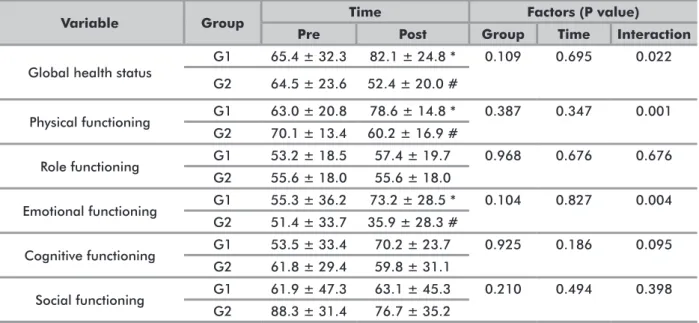
The results of comparative analysis of the QLQ-30 domains between G1 and G2 are shown in Table 4. There was a statistically significant interaction for global health status and for the functional scales emotional functioning and physical functioning, with an increase in the scores of these domains in G1 after the intervention compared to pre-intervention scores. No significant differences between groups or time points were observed for the other domains.
Table 5 shows the comparative analysis of the symptom scale scores of the QLQ-30 between G1 and G2. A statistically significant interaction was observed for the fatigue, nausea and pain symptom scales. Women of G1 had lower fatigue, nausea and pain scores after the intervention and when compared to G2 post-intervention. In addition, there was a decrease in the perception of financial difficulties by G1 after the intervention period.
DISCUSSION
The results from this research indicate that implementation of Pilates group with interventions had a substantial influence on the quality of life in women
Table 5. Analysis of symptom scale scores of the quality of life questionnaire (EORTC-QLQ-C30) in G1 and G2 during the evaluation period
Variable Group Time Factors (P value)
Pre Post Group Time Interaction
Fatigue G1 35.5 ± 21.8 19.7 ± 18.6 * 0.077 0.640 0.001 G2 32.4 ± 21.5 52.1 ± 23.9 # Nausea G1 10.1 ± 13.8 10.5 ± 5.9 * 0.107 0.277 0.026 G2 16.6 ± 28.3 28.3 ± 34.2 # Pain G1 35.7 ± 28.3 21.4 ± 18.9 * 0.002 0.767 0.001 G2 51.5 ± 27.8 68.2 ± 20.0 # Dyspnea G1 20.3 ± 9.5 17.8 ± 4.7 0.507 0.839 0.217 G2 0.0 ± 0.0 20.8 ± 6.6 # Insomnia G1 26.1 ± 32.4 16.6 ± 28.4 0.009 0.377 0.377 G2 56.6 ± 35.3 56.6 ± 35.3 Loss of appetite G1 16.6 ± 25.3 20.3 ± 9.5 0.158 0.562 0.064 G2 23.3 ± 38.6 36.6 ± 39.9 Constipation G1 30.9 ± 46.1 28.5 ± 41.0 0.861 0.641 0.641 G2 26.6 ± 40.6 26.6 ± 40.9 Diarrhea G1 26.7 ± 7.1 19.2 ± 7.1 0.103 1.00 1.00 G2 23.3 ± 27.4 23.3 ± 27.4 Financial difficulties G1 40.4 ± 41.7 23.8 ± 40.1 * 0.575 0.028 0.132 G2 43.3 ± 41.7 39.9 ± 43.8
Captions: Values are expressed as mean ± standard deviation. G1, experimental group undergoing a supervised Pilates protocol; G2, control group. * p < 0.05 vs. pre-intervention; # p < 0.05 vs. G1 (repeated measures two-way ANOVA and Bonferroni post-test).
Table 4. Analysis of the quality of life questionnaire domains (EORTC-QLQ-C30) in G1 and G2 during the evaluation period
Variable Group Time Factors (P value)
Pre Post Group Time Interaction
Global health status G1 65.4 ± 32.3 82.1 ± 24.8 * 0.109 0.695 0.022 G2 64.5 ± 23.6 52.4 ± 20.0 # Physical functioning G1 63.0 ± 20.8 78.6 ± 14.8 * 0.387 0.347 0.001 G2 70.1 ± 13.4 60.2 ± 16.9 # Role functioning G1 53.2 ± 18.5 57.4 ± 19.7 0.968 0.676 0.676 G2 55.6 ± 18.0 55.6 ± 18.0 Emotional functioning G1 55.3 ± 36.2 73.2 ± 28.5 * 0.104 0.827 0.004 G2 51.4 ± 33.7 35.9 ± 28.3 # Cognitive functioning G1 53.5 ± 33.4 70.2 ± 23.7 0.925 0.186 0.095 G2 61.8 ± 29.4 59.8 ± 31.1 Social functioning G1 61.9 ± 47.3 63.1 ± 45.3 0.210 0.494 0.398 G2 88.3 ± 31.4 76.7 ± 35.2
Captions: Values are expressed as mean ± standard deviation. G1, experimental group undergoing a supervised Pilates protocol; G2, control group. * p < 0.05 vs. pre-intervention; # p < 0.05 vs. G1 (repeated measures two-way ANOVA and Bonferroni post-test).
after breast cancer surgery. Based on the results of the 8-weeks monitoring, it was found that using supervised Pilates solo group sessions is more effective for improving several aspects of quality of life: global health perception,
functional scale items (physical functioning and emotional functioning), and decreasing negative symptoms items (nausea, pain and fatigue). These findings corroborate those found in the literature. Previous studies have
observed the effect of Pilates on cancer survivors. Eyigor et al.22 found improvement in quality of life, functional capacity, fatigue symptom, and emotional problems such as depression in the supervised Pilates group. Martin et al.23 demonstrated good adherence to, safety and effectiveness of resistance training with Pilates chair equipment for breast cancer survivors. Odynets et al.24 compared Pilates training with other physical activity modalities and found that water exercise intervention is more effective for improving emotional well-being and decreasing negative symptoms associated with breast cancer treatment compared with Pilates.
However, various intervention methods, duration, and intensity of exercises create some difficulties in comparing the results obtained in the context of the current research. Previous studies applied these interventions frequencies of 2 to 3 sessions per week, durations from 3 to 8 weeks with different combinations of intensity for breast cancer patients. The proposed Pilates exercise intervention with a rational combination of breathing, strengthening of core muscles, and stretching exercises has been claimed to be beneficial in improving quality of life among breast cancer survivors in this research.
In the present study, the supervised Pilates workouts show benefits on sexual dysfunction among breast cancer survivors. Sexual dysfunction affects 73.4%25 of breast cancer women and main symptoms are dryness of vagina, pain or discomfort during sexual intercourse, lubrication deficit and dyspareunia26,27.Critical to understand muscle tension that may occur with sexual arousal is the involvement of the pelvic floor. The pelvic floor consists of a bed of muscles underneath the pelvis, and it provides structural support for the internal organs. Consisting of both superficial and deep muscles, the pelvic floor prevents urinary and fecal incontinence (leakage) but can be damaged by pregnancy, vaginal delivery and pelvic surgeries. There is a large body of literature examining the role of the PFMs in sexual function28,29.
The G1 group showed an increase in the degree of muscle contraction (cmH2O) determined with the perineometer, as well as in endurance and in slow and fast repetitions. The slow-twitch (type I) fibers are responsible for maintaining constant tone and continence at rest, and fast-twitch (type II) fibers, responsible for vigorous and reflex contractions, which respond to the sudden increase in intra-abdominal pressure30,31.
We believe that, possibly the greater activation of the powerhouse in the group under direct supervision promoted an increase in PFM contractility, specifically fast-twitch type II fibers. A former research identified the PFMs as being critical to sexual function, showing that the PFMs are activated during sexual arousal (i.e., magnetic resonance imaging, and sEMG activity)32. PFM strength in women is positively related to sexual
satisfaction and arousal. In part, this may occur because the PFM influences the position of the clitoral erectile tissue, particularly the contraction of the superficial PFMs (e.g., ischiocavernosus and bulbocavernosus muscles)33. The verbal command of the physical therapist is important to give instruction on the correct activation of the powerhouse during execution of the Pilates movement34. Other previous studies had demonstrated that Pilates method is as effective as conventional pelvic floor muscle exercise in increasing the degree of contraction and endurance EMG activity of the PFM in adult women35,36, and after prostatectomy37. However, another study that evaluated Pilates practitioners and non-practitioners found no difference in strength of pelvic floor muscle between bot38. The divergence of results might be explained by the fact that in the present study, PFM assessments occurred in two different moments: before and after the proposed protocol was completed. During pelvic floor assessment, the volunteer is taught how to correctly perform PFM contraction without interference from the accessory muscles. This provides information and body awareness to execute pelvic floor recruitment during the Pilates exercises. During the sessions, the instructor gives verbal commands for activation of the “powerhouse” to increase the effectiveness of the technique.
The groups were homogeneous in terms of age. Regarding BMI, women of G2 tended to be more overweight than those of G1. Although present, this difference did not interfere with the pelvic characteristics of the participants in the two groups since previous physical evaluation showed that the groups were homogeneous in terms of urogenital function (incontinence, genital dystopia, and voluntary contraction). Furthermore, the integrity of urogenital functions in the two groups indicates unchanged motor characteristics. This fact is important so that the women can respond to the stimuli proposed by the treatment protocol.
Other studies in the literature compared home versus supervised exercise programs for the rehabilitation of chronic diseases and found that the latter has additional benefits such as increased adherence compared to home exercises39. These results can be explained by the monitoring, instructions and motivation provided by the professional during the exercises. The presence of the professional monitoring the execution of all exercises, as well as of classmates, provides an extra motivation to perform Pilates exercises36. Sluijs et al.40 showed greater adherence of patients to training programs that provide positive feedback and minimal interruption in activities of daily living. Thus, it is possible to infer that supervised Pilates training provides positive feedback and good adaptation to daily routines, which is necessary to keep patients motivated. It is emphasized that group interventions are options that favor the patient’s adherence
to treatment, especially for this type of homogeneous population that has undergone breast cancer treatment. Pilates exercises can be used in combination with other treatments, are relatively inexpensive, and have few side effects41.
Despite all efforts, some limitations of the study should be mentioned. First, only participants who were sexually active were included. The exclusion of non-active participants was due to the objective to evaluate female sexual function, as well as the effect of the proposed therapy. The former is greatly impaired by surgical treatment and hormone therapy of the disease. This fact resulted in a small sample size. Another limitation of this study was the practice of physical exercise without supervision. It was not possible to know if the exercises were performed correctly, according to the principles of Joseph Pilates technique: breathing, control and fluidity of movement and guarantee of activation of the core muscles during movements. Finally, the bias caused by the absence of a control group that did not undergo any physical therapy treatment must be recognized. Although, the ethical aspects were considered and it was decided to not leave any patients untreated.
CONCLUSION
Supervised Pilates exercises were found to be beneficial in breast cancer survivors, reducing the negative impact of treatment and side effects on quality of life. The results showed that this modality, performed under professional supervision, had some benefits for reducing symptoms of nausea, pain and fatigue after cancer. In addition, the presence of the professional monitoring the execution of all exercises and verbal commands enhance activation of the powerhouse and increase perineal contraction, thus improving sexual function among women after breast cancer. Furthermore, the study demonstrates the importance of the professional supervising the exercises for a good prognosis and the need for further studies investigating the Pilates method as a complementary tool for post-cancer rehabilitation.
ACKNOWLEDGMENTS
Support from the Federal University of Mato Grosso do Sul.
CONTRIBUTIONS
The authors contributed equally and substantially in all the phases of the study and approved the final version to be published.
DECLARATION OF CONFLICT OF INTEREST There is no conflict of interests to declare.
FINANCIAL SUPPORT
This study was supported in part by the Coordination for the Improvement of Higher Education Personnel (CAPES) – Finance Code 001.
Support from the Federal University of Mato Grosso do Sul, Brazil.
REFERENCES
1. Bray F, Ferlay J, Soerjomataram I, et al. Global cancer statistics 2018: GLOBOCAN estimates of incidence and mortality worldwide for 36 cancers in 185 countries. CA Cancer J Clin. 2018;68(6):394-424. doi: https://doi. org/10.3322/caac.21492
2. Instituto Nacional de Câncer José Alencar Gomes da Silva. Estimativa 2020: incidência de câncer no Brasil. Rio de Janeiro: INCA; 2019.
3. Rugo HS. Highlights in breast cancer from the 2017 American Society of Clinical Oncology Annual Meeting. Clin Adv Hematol Oncol. 2017;15(8):607-14.
4. Cook ED, Iglehart EI, Baum G, et al. Missing documentation in breast cancer survivors: genitourinary syndrome of menopause. Menopause. 2017;24(12):1360-64. doi: https://doi.org/10.1097/GME.0000000000000926 5. World Health Organization. Cancer control: knowledge
into action: WHO guide for effective programmes: early detection. Geneva: WHO; 2007.
6. Giray E, Akyüz G. Assessment of family caregiver burden and its relationships between quality of life, arm disability, grip strength, and lymphedema symptoms in women with postmastectomy lymphedema: a prospective cross-sectional study. Eur J Breast Health. 2019 Feb 15;15(2):111-18. doi: https://doi.org/10.5152/ ejbh.2019.4385
7. Boing L, Pereira GS, Araújo CDCR, et al. Factors associated with depression symptoms in women after breast cancer. Rev Saude Publica. 2019 Apr 1;53:30. doi: https://doi.org/10.11606/S1518-8787.2019053000786 8. Pegorare ABGS, Silveira KR, No APS, et al. Assessment
of female sexual function and quality of life among breast cancer survivors who underwent hormone therapy. Mastology. 2017;27(3):237-44. doi: https:// doi.org/10.5327/Z2594539420170000161
9. Gilbert E, Ussher JM, Perz J. Sexuality after breast cancer: a review. Maturitas. 2010 Aug;66(4):397-407. doi: https://doi.org/10.1016/j.maturitas.2010.03.027 10. Wells C, Kolt GS, Bialocerkowski A. Defining Pilates
2012;20(4):253-62. doi: https://doi.org/10.1016/j. ctim.2012.02.005
11. Espíndula RC, Nadas GB, Rosa MI, et al. Pilates for breast cancer: a systematic review and meta-analysis. Rev Assoc Med Bras. 2017;63(11):1006-12. doi: https://doi. org/10.1590/1806-9282.63.11.1006
12. Souza LM, Pegorare ABGS, Christofoletti G, et al. Influência de um protocolo de exercícios do método Pilates na contratilidade da musculatura do assoalho pélvico de idosas não institucionalizadas. Rev Bras Geriatr Gerontol. 2017;20(4):485-93. doi: https://doi. org/10.1590/1981-22562017020.160191
13. Culligan PJ, Scherer J, Dyer K, et al. A randomized clinical trial comparing pelvic floor muscle training to a Pilates exercise program for improving pelvic muscle strength. Int Urogynecol J. 2010;21(4):401-8. doi: https://doi.org/10.1007/s00192-009-1046-z
14. Pinto-Carral A, Molina AJ, Pedro A, et al. Pilates for women with breast cancer: a systematic review and meta-analysis. Complement Ther Med. 2018 Dec;41:130-140. doi: https://doi.org/10.1016/j.ctim.2018.09.011 15. Aaronson NK, Ahmedzai S, Bergman B, et al. The
European Organization for Research and Treatment of Cancer QLQ-C30: a quality-of-life instrument for use in international clinical trials in oncology. J Natl Cancer Inst.1993;85(5):365-76. doi: https://doi.org/10.1093/ jnci/85.5.365
16. Pais-Ribeiro J, Pinto C, Santos C. Validation study of the portuguese version of the QLC-C30-V.3. Psic Saúde Doenças [Internet]. 2008 [cited 2017 Mar 6];9(1):89-102. Available from: https://repositorio-aberto.up.pt/ bitstream/ 10216/84903/2/84662.pdf 11
17. Rosen R, Brown C, Heiman J, et.al. The Female Sexual Function Index (FSFI): a multidimensional self-report instrument for the assessment of female sexual function. J Sex Marital Ther. 2000;26(2):191-208. doi: https://doi. org/10.1080/009262300278597
18. Thiel RRC, Dambros M, Palma PCR, et al. Tradução para português, adaptação cultural e validação do Female Sexual Function Index. Rev Bras Ginecol Obstet [Internet]. 2008 Oct [cited 2017 Mar 6];30(10):504-10. Available from: http://www.scielo.br/pdf/rbgo/v30n10/ v30n10a05.pdf
19. Giannantoni A, Proietti S, Giusti G, et al. OnabotulinumtoxinA intradetrusorial injections improve sexual function in female patients affected by multiple sclerosis: preliminary results. World J Urol. 2015 Dec;33(12):2095-101. doi: https://doi.org/10.1007/ s00345-015-1578-4
20. Laycock J, Jerwood D. Pelvic floor assessment: the PERFECT scheme. Physiotherapy. 2001;87(12):631-42. doi: https://doi.org/10.1016/S0031-9406(05)61108-X 21. Lausen A, Marsland L, Head S, et al. Modified Pilates
as an adjunct to standard physiotherapy care for urinary
incontinence: a mixed methods pilot for a randomised controlled trial. BMC Womens Health. 2018;18(1):16. doi: https://doi.org/10.1186/s12905-017-0503-y 22. Eyigor S, Karapolat H, Yesil H, et al. Effects of Pilates
exercises on functional capacity, flexibility, fatigue, depression and quality of life in female breast cancer patients: a randomized controlled study. Eur J Phys Rehabil Med. 2010;46(4):481-7.
23. Martin E, Battaglini C, Groff D, et al. Improving muscular endurance with the MVe Fitness ChairTM in
breast cancer survivors: a feasibility and efficacy study. J Sci Med Sport. 2013;16(4):372-6. doi: https://doi. org/10.1016/j.jsams.2012.08.012
24. Odynets T, Briskin Y, Todorova V. Effects of different exercise interventions on quality of life in breast cancer patients: a randomized controlled trial. Integr Cancer Ther. 2019;18:1-8. doi: https://doi. org/10.1177/1534735419880598
25. Jing L, Zhang C, Li W, et al. Incidence and severity of sexual dysfunction among women with breast cancer: a meta-analysis based on female sexual function index. Support Care Cancer. 2019 Apr;27(4):1171-80. doi: https://doi.org/10.1007/s00520-019-04667-7
26. Rojas KE, Matthews N, Raker C, et al. Body mass index (BMI), postoperative appearance satisfaction, and sexual function in breast cancer survivorship. J Cancer Surviv. 2018;12(1):127-33. doi: https://doi.org/10.1007/ s11764-017-0651-y
27. Gass JS, Onstad M, Pesek S, et al. Breast-specific sensuality and sexual function in cancer survivorship: does surgical modality matter?. Ann Surg Oncol. 2017;24(11):3133-40. doi: https://doi.org/10.1245/ s10434-017-5905-4
28. Omodei MS, Marques Gomes Delmanto LR, Carvalho-Pessoa E, et al. Association between pelvic floor muscle strength and sexual function in postmenopausal women. J Sex Med. 2019 Dec;16(12):1938-46. doi: https://doi. org/10.1016/j.jsxm.2019.09.014
29. Both S, van Lunsen R, Weijenborg P, et al. A new device for simultaneous measurement of pelvic floor muscle activity and vaginal blood flow: a test in a nonclinical sample. J Sex Med. 2012 Nov;9(11):2888-902. doi: https://doi.org/10.1111/ j.1743-6109.2012.02910.x
30. Constantinou CE, Govan DE. Spatial distribution and timing of transmitted and reflexly generated urethral pressures in healthy women. J Urol. 1982;127(5):964-969. doi: https://doi.org/10.1016/S0022-5347(17)54148-8 31. Marques A, Stothers L, Macnab A. The status of pelvic
floor muscle training for women. Can Urol Assoc J. 2010;4(6):419-24. doi: https://doi.org/10.5489/ cuaj.10026
32. Schultz WW, van Andel P, Sabelis I, et al. Magnetic resonance imaging of male and female genitals during
coitus and female sexual arousal. BMJ 1999;319:1596. doi: https://doi.org/10.1136/bmj.319.7225.1596 33. Hannah-Leith MN, Dayan M, Hatfield G, et al. Is Pelvic
Floor sEMG a measure of women’s sexual response?. J Sex Med. 2019 Jan;16(1):70-82. doi: https://doi. org/10.1016/j.jsxm.2018.10.013
34. Mazzarino M, Kerr D, Wajswelner H, et al. Pilates method for women´s health: systematic review of randomized controlled trials. Arch Phys Med Rehabil. 2015;96(12):2231-42. doi: https://doi.org/10.1016/j. apmr.2015.04.005
35. Chmielewska D, Stania M, Kucab-Klich K, et al. Electromyographic characteristics of pelvic floor muscles in women with stress urinary incontinence following sEMG-assisted biofeedback training and Pilates exercises. PLoS One. 2019;14(12):e0225647. doi: https://doi. org/10.1371/journal.pone.0225647
36 Hein JT, Rieck TM, Dunfee H, et al. Effect of a 12-week pilates pelvic floor-strengthening program on short-term measures of stress urinary incontinence in women: a pilot study. J Altern Complement Med. 2020;26(2):158-161. doi: https://doi.org/10.1089/acm.2019.0330
37. Pedriali FR, Gomes CS, Soares L, et al. Is Pilates as effective as conventional pelvic floor muscle exercises in the conservative treatment of post-prostatectomy urinary incontinence? A randomised controlled trial. Neurourol Urodyn. 2016;35(5):615-21. doi: https:// doi.org/10.1002/nau.22761
38. Ferla L, Paiva LL, Darki C, et al. Comparison of the functionality of pelvic floor muscles in women who practice the Pilates method an sedentary women: a pilot study. Int Urogynecol J. 2016;27(1):123-8. doi: https:// doi.org/10.1007/s00192-015-2801-y
39. Tomas-Carus P, Garrido M, Branco JC, et al. Non-supervised breathing exercise regimen in women with fibromyalgia: a quasi-experimental exploratory study. Complement Ther Clin Pract. 2019 May;35:170-6. doi: https://doi.org/10.1016/j.ctcp.2019.02.006
40. Sluijs EM, Kok GJ, van der Zee J. Correlates of exercise compliance in physical therapy. Phys Ther. 1993;73(11):771-82. doi: https://doi.org/10.1093/ ptj/73.11.771
41. Stan DL, Collins NM, Olsen MM, et al. The evolution of mindfulness-based physical interventions in breast cancer survivors. Evid Based Complement Alternat Med. 2012;2012:758641. doi: https://doi. org/10.1155/2012/758641
Recebido em 28/1/2020 Aprovado em 17/4/2020