Deise Noriko Matsui Nishimura
EFFECT OF ACUPUNCTURE AS COMPLEMENTARY THERAPY IN
PATIENTS WITH ESSENTIAL HYPERTENSION-
A CLINICAL RESEARCH PROTOCOL
Dissertação de Candidatura ao grau de Mestre
em Medicina Tradicional Chinesa submetida ao
Instituto de Ciências Biomédicas de Abel
Salazar da Universidade do Porto.
Orientador
-Prof. Doutor Henry Johannes Greten
Categoria - Professor Associado
Afiliação – Instituto de Ciências Biomédicas
Abel Salazar da Universidade do Porto
Co-orientadores
-Prof. Doutor Jorge Machado
Categoria – Professor Associado
Afiliação - Instituto de Ciências Biomédicas Abel
Salazar da Universidade do Porto
-Dr. Nuno Cândido Maia Correia
Categoria – Médico
DEDICATION
To my parents Lea and Mauro for their love.
To Alexandre, Isabella and Gabriella my greatest gifts in life.
Agradecimentos / Acknowledgments
Em primeiro lugar gostaria de agradecer a minha mãe Sunao Mizukami
Matsui, que infelizmente partiu deste mundo precocemente, e a meu pai Mauro
Matsui por toda a coragem, força e dedicação, por todo o cuidado que sempre
tiveram em oferecer a melhor educação possível a mim e a meus irmãos, sem
eles não seria possível estar hoje aqui a elaborar minha tese de mestrado.
Agradeço a meu marido e sempre companheiro Alexandre Nishimura , pelo
amor, carinho, dedicação e paciência, e também por me dar os grandes amores
de minha vida, nossas filhas Isabella e Gabriella.
Thanks to my supervisor Professor Henry Johannes Greten, for his
encouragement, support and to introduce me to this wonderful world of Chinese
Medicine and to show us that it is possible to integrate the western and eastern
medicine.
Thanks to Petra for all her support always, a Great example of kindness
and efficiency.
Agradeço ao Professor Dr. Jorge Machado pelo seu apoio sempre e por ter
sido o meu grande incentivador neste árduo caminho do mestrado.
Agradeço a amiga Maria João Rodrigues Ferreira Rocha dos Santos pelo
seu altruísmo e mão amiga, sempre disposta a ajudar a todos.
Agradeço a amiga Maria Manuela Padrão Pinho por receber-me em sua
casa e no seio de sua família acolhendo-me nos dias de aula do curso. E a seu
filho João, que foi parar no sofá da sala para que eu tivesse mais conforto.
Agradeço ao Dr. Nuno Correia pelo apoio e colaboração.
Agradeço amigas Karla, Marília, Luísa, Elsa, Isabel, veterano professor
Antonio companheiros que fizeram com que minha adaptação a Portugal fosse
mais fácil.
Agradeço a meus irmãos Regina Matsui Patrocínio, Mauro Matsui Júnior e
Sílvio Matsui por, apesar da distância, estarem sempre presentes, a me dar forças
nas horas difíceis e compartilhar os momentos felizes.
Agradeço também a meu segundo pai, Haruo Nishimura e sua esposa
Gina Nishimura pelo imenso carinho e amor com que me acolheram, pela mão
forte sempre ao meu lado.
Agradeço a Regina Kátia Lima de Menezes pela ajuda sempre e por cuidar
tão bem de meu pai.
E a todos os meus professores que com certeza muito contribuíram para
que eu me tornasse a médica que sou hoje.
RESUMO
Introdução: A hipertensão arterial é a principal causa de mortalidade na população em geral. Ela é um importante fator de risco para doença vascular cerebral, principal causa de morte de um adulto e de incapacitância em muitos países desenvolvidos. A sua prevalência é estimada em cerca de um bilião de pessoas e pode estar relacionada com até 7 milhões de morte por ano. Em Portugal estima-se que cerca de 42% da população adulta (três milhões) de pessoas sejam hipertensos. Muitos deles não conhecem a sua situação e apenas 11% destes são tratados adequadamente. A prevalência de hipertensão aumenta com a idade e atinge cerca de 78% entre as pessoas com mais de 64 anos, o que motiva um maior número de consultas médicas, gerando altos custos para o sistema nacional de saúde. Segundo a literatura, o primeiro ano de tratamento 40% irão abandonar a terapia e após 5-10 anos até 60% irão interromper o uso da sua prescrição para hipertensão. O uso da acupuntura poderá ajudar a superar estas dificuldades ao diminuir ou substituir a quantidade de droga necessária e também porque as visitas frequentes à clínica melhoram a aderência ao tratamento (medicamentos e/ou mudanças no estilo de vida).
Objetivo: Estudar o efeito agudo da acupuntura nos pacientes com hipertensão arterial essencial utilizando o monitoramento de pressão arterial de 24 horas. (MAPA).
Métodos: Um protocolo clínico preliminar, prospectivo, randomizado, controlado, duplo-cego. Pacientes com idade inferior a 70 anos, com hipertensão essencial classificada com normal alta, grau1 ou grau 2 de acordo com as recomendações da ESH/ESC serão avaliados com um MAPA inicial (basal) e a análise do risco cardiovascular será realizada. Eles serão então randomizados para acupuntura ‘verdadeira’ ou acupuntura sham- a acupuntura verdadeira será os pontos selecionados como úteis no contexto da medicina tradicional chinesa, no caso deste estudo: F39, Pc 6, Rg14, F20, Rs12, L6, R7 e acupunctura sham aqueles pontos considerados sem ação para hipertensão orientada por artigo previamente publicado. Os pacientes serão submetidos a 3 sessões ( Terça, quarta e quinta) de terapia acupuntura (verdadeira ou sham). A tensão arterial e a frequência cardíaca serão mensuradas de acordo com os critérios da ESH/ESC antes e após cada intervenção. Um outro MAPA será realizado após o término das
3 sessões. O principal parâmetro será a média das pressões arteriais sistólica e diastólica. Paramêtros secundários serão as médias das tensões arteriais sistólica e diastólica durante o dia e durante a noite, e também a variabilidade das tensões arteriais (standard deviation em torno do valor médio).
Resultados: Dois grandes contribuintes para a hipertensão arterial são o sistema renina-angiotensina-aldosterona e a ativação crónica do sistema nervoso simpático. Alguns estudos experimentais recentes relataram que a acupuntura reduz a atividade neural no rVLM, com isso reduzindo a atividade simpática. Há também trabalhos dizendo que a acupuntura pode reduzir os níveis plasmáticos de renina-angiotensina-aldosterona. Deste modo, este estudo pode revelar um decréscimo significantivo nos níveis de tensão arterial. Também como um parâmetro secundário, a variabilidade da tensão arterial pode ter um valor prognóstico no tratamento da hipertensão , ao analisar este parâmetro poderemos avaliar também, indiretamente, o efeito da acupuntura na piora das lesões de órgão alvo da hipertensão e incidência de eventos cardiovasculares. Discussão: Resultados deste estudo podem auxiliar um maior estudo , prospectivo, randomizado, multi-cego, com follow up mais prolongados e indicar a possibilidade de termos uma outra ferramenta interessante para tratar esta doença que é responsável por um grande número de incapacitados e também mortes ao redor do mundo.
ABSTRACT:
Introduction: Hypertension is the first cause of death worldwide. It is also an important risk factor for cerebral vascular disease, main cause of adult death and disability in many developed countries. Hypertension prevalence in the world is estimated to be almost 1 billion individuals and it can be related to as much as 7million deaths per year. It is estimated that in Portugal about 42% of the adult population(3million people) have hypertension. Many of them unaware of their condition, and only about 11% are treated adequately. The prevalence of hypertension increases with the age of the people, reaching about 78% among older than 64 years and motivates more clinical consultation, generating high costs to the National Health System. According to the literature, in the first year of therapy 40% will abandon the treatment and after 5-10 years as much as 60% will interrupt their prescription for hypertension. The use of acupuncture could help overcome these difficulties, by either diminishing or substituting the amount of drug required, and also because frequent visits to the clinic eases the compliance to the treatment (drugs and/or adjustment of lifestyle).
Objective: Study the acute effect of the acupuncture in patients with essential hypertension using 24 –Ambulatory Blood pressure monitor results.
Methods: A clinical protocol of preliminary, prospective, randomized, controlled, double-blinded clinical trial design. Patients aged < 70 years, with essential hypertension classified as high normal, grade1 or grade 2 hypertensive patients according to ESH/ESC 2007 guidelines will be evaluated with an initial (baseline) 24-ABPM and assessment of cardiovascular risk will be made. Then they will be randomized to either ‘real’ acupuncture or sham acupuncture. –‘real’ acupuncture being points selected as useful in the context of Chinese medicine-in this study F39, Pc 6, Rg14, F20, Rs12, L6, R7 and sham acupuncture those points considered inactive for hypertension, oriented by previous published trial. The patients will be submitted to 3 sessions (Tue.Wed,Thur) of acupuncture treatment (real or sham). BP and heart rate will be measured according to ESH/ESC criteria before and after each intervention. Another 24-ABPM will be made after the completion of the 3 sessions. Main parameter will be the average systolic and diastolic blood pressure. Secondary parameters will be average daytime and nighttimes systolic and diastolic blood pressure, and also the blood pressure variability (standard deviation around mean values).The acute effect of the blinded acupuncture will be done on the first day of treatment.
Results: Acupuncture exerts sympatholytic, pro-vagotonic, and action on the renin, angiotensin aldosterone system effects according to recent literature. It was discovered a specific neurological pathway participating in acupuncture inhibition of excitatory cardiovascular reflexes at the rostral ventrolateral medulla cardiovascular center . All of which acts in the pathophysiology of the hypertension .The study may reveal a significant decrease in both systolic and diastolic blood pressure, compared to the sham group. By analysing the 24-ABPM data we could get more accurate, reproducible measurement of the extent of the reduction induced by the treatment, in addition, it can provide information regarding to in which part of the 24 hours (day or night) the results were more pronounced.
Discussion: Results from this study may in the future grant a larger prospective, controlled, multi-blinded, randomized protocols, with longer follow up periods, to have another interesting tool to treat this awful disease, responsible for a great number of disabilities and deaths worldwide.
Table of Contents
List of abbreviations... IX
Index of Figures: ... 11
Index of Tables:... 11
1. INTRODUCTION ... 12
1.1Epidemiology...12
1.2 Pathophysiology of Hypertension ...13
1.2.1 Intravascular Volume ...14
1.2.2 Autonomic Nervous System...14
1.2.3 Renin-‐Angiotensin-‐Aldosterone (see Figure 2) ...15
1.2.4 Vascular mechanisms ...17
1.3 Target Organs in Hypertension...18
1.3.1 Heart...18
1.3.2 Brain...19
1.3.3 Kidney...19
1.3.4 Peripheral arteries...19
1.4 Diagnosis of Hypertension ...20
1.4.1 Recommendations when measuring the blood pressure:...21
1.4.2 Ambulatory blood pressure ...21
1.5 Classification of Hypertension...22
1.5.1 According to BP levels ...22
1.5.2 According to aetiology...24
1.5 Conventional Therapy of Hypertension (ESH/ESC, 2007): ...25
2.The Heidelberg Model of TCM or TCM as novel vegetative medicine ... 29
3.Acupuncture ... 37
3.1 Electro acupuncture...39
3.2.Acupuncture and Cardiovascular System ...40
3.2.1 Acupuncture and coronary heart disease...41
3.2.2 Acupuncture and Heart Failure...42
3.2.3 Acupuncture in arrhythmias ...43
3.2.4 Acupuncture and Hypertension ...44
4. Hypertension in TCM view... 51
4.1 Acupuncture for the treatment of Hypertension/ TCM view:...51
4.1.1 The theory of acupoints or how to choose an acupoint:...52
CLINICAL RESEARCH PROTOCOL... 73
Bibliography ... 89
ANNEXES... 97
List of abbreviations
ABPM- Ambulatory Blood Pressure Monitoring
AT1- angiotensin II type 1 receptor AT2- angiotensin II type 2 receptor ACC -American College of Cardiology ACE -angiotensin conversor enzyme) ACE (angiotensin conversor enzyme) AHA -American Heart Association ALT- Algor Laedens Theory
BP-blood Pressure
C- cardial conduit (“heart”) CHD-coronary heart disease CHF-congestive heart failure CNS- central nervous system CO- Cardiac Output
CVD-Cardiovascular Disease DA- Dopamine
DBP- Diastolic Blood pressure
DGTCM-German Society of Traditional Chinese Medicine
DPN Deep Peroneal Nerve EA- Electro acupuncture ECG Eletrocardiogram EDCF-endothelium derived contraction factors
EDRF Endothelium Derived Relaxation Factor
EP-epinephrine
eNOS -endothelial nitric oxide synthetase
EHT- Essential Hypertension
ESC -European Society of Cardiology ESH -European Society of
Hypertension
Ex-HN-Extra point head and neck F- Felleal conduit (“gallbladder”) GABA ∂aminobutiric Acid
GC- Guiding Criteria H+ - hydrogen ion
H- hepatic conduit (“liver”) HT-hypertension
HD –Heidelberg HF-Heart Failure HR heart rate
ICBAS-Instituto de Ciências Biomédicas Abel Salazar INCOR-Instituto do Coração It- Tenuintestinal conduit IC –intestini crassi conduit K+ - potassium ion
L- Lienal conduit (“spleen”) LV left ventricle
MAPA- Monitoramento de Pressão Arterial Ambulatorial
Na- sodium
NaCl- sodium chloride NE- Norepinephrine
NIH – National Institute of Health NO- nitric oxide
nNOS neuronal nitric oxide synthetase
NR: nuclei raphe
NRP-medullary nucleus raphé pallidus P- pulmonar conduit (“lung”)
PAG- periaqueduct gray PR- Peripheral resistance Pc- Pericardial conduit Pc6-Pericardium 6
R – renal conduit (“kidney”)
Rg- Regens sinartery ( “governing vessel- dumo)
Rs –Respondens sinartery ( “controlling vessel”- renmo)
rVLM-rostral ventral lateral medulla S –stomach conduit
SBP- Systolic Blood Pressure
SHR-Spontaneous Hypertensice Rat TCM-Traditional Chinese Medicine Tk- tricaloric conduit
UP-Universidade do Porto USP-Universidade de São Paulo V- Vesical conduit (“bladder”) vlPAG: ventrolateral periaqueductal gray
WHO- World Health Organization
WKS-Winstar-Kyoto Rat
Index of Figures:
Figure 1-‐ Components of Blood Pressure...13
Figure 2-‐ Renin-‐Angiotensin-‐Aldosterone axis...16
Figure 3-‐ Recommendations for Blood Pressure Measurement ...21
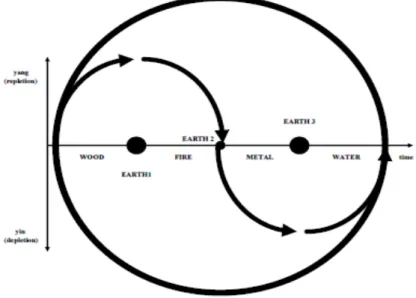
Figure 4-‐ Taiji Sign...30
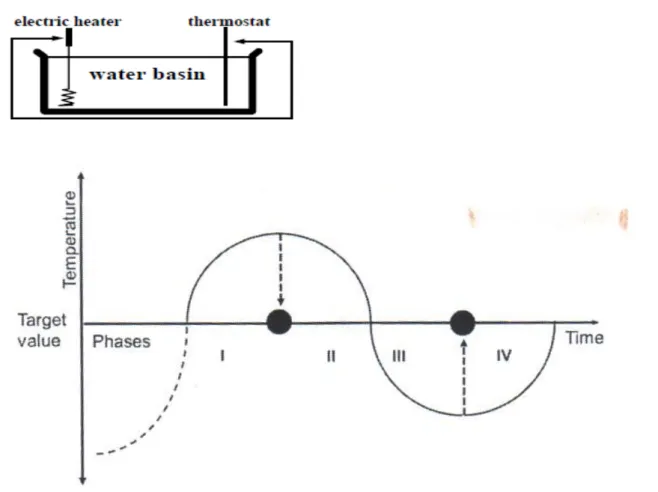
Figure 5-‐ Regulation as a sinusoidal curve ...31
Figure 6-‐ Phases in TCM and western physiology...32
Figure 7-‐Four Components of Functional Diagnosis in TCM ...33
Figure 8-‐ Phases/Orbs and the principal problem of regulation ...35
Figure 9-‐ Example of tatoos on the Tyrolean Iceman ...37
Figure 10-‐ Probable pathway for acupuncture action in CVD...41
Figure 11 Neural circuits of acupuncture's action in reflex blood pressure modulation
...45
Figure 12 Neuroendocrine modulation of Blood Pressure by acupuncture ...47
Figure 13-‐Coupled conduits and alocated phases ...54
Figure 14-‐ Algor Laedens Theory-‐ Shan han lun...58
Figure 15-‐Pathophysiology of Calor ...59
Figure 16-‐ Distance Measurement in Acupuncture ...60
Figure 17-‐ Blinding in the study protocol ...77
Figure 18 -‐ STUDY DESIGN ...80
Index of Tables:
Table 1-‐Classification of Hypertension (ESH/ESC 2007)...22
Table 2-‐Stratification of Cardiovascular Risk...23
Table 3-‐Recommended Conventional therapy for Hypertension...25
Table 4-‐ Agents in TCM...34
Table 5-‐ Phase-‐Internal and External Orbs ...53
1. INTRODUCTION
1.1Epidemiology
Hypertension is the first cause of death worldwide not only due to its high prevalence among the population but also because it is the major risk factor for many cardiovascular and related diseases, and can also lead to other diseases that increase the cardiovascular risk as well. (Ezzati, Lopez, Rodgers, Vander Hoorn, Murray, & Group., 2002)(Kearney, Whelton, Reynolds, Muntner, Whelton, & He, 2005)(Martiniuk AL, 2007) As such it is also an important risk factor for cerebral vascular disease, main cause of adult death and disability in many developed countries.(Flachskampf, et al., 2007). Hypertension is also associated with an increase in the risk of dementia.(Skoog, et al., 1996)
Hypertension prevalence worldwide is estimated to be almost 1 billion individuals and it can be related to as much as 7million deaths per year.(WHO, 2002)
It is also estimated that in Portugal around 42% of the adult population aged 18-90 years has hypertension. That number corresponds to approximately 3 million people. Among those patients only 36% are aware of their high blood pressure and only about 11% are treated adequately. The prevalence of hypertension increases with the age of the people, reaching about 78% among older than 64 years(Macedo, Lima, Silva, Alcantara, Ramalhinho, & Carmona, 2005), and motivates more clinical consultation, generating higher costs to the national health system.(Zurro & Pérez, 2008)
There are some racial differences in the incidence of hypertension, both environmental and genetic factors may contribute to this factor. Migrants tend to develop the rates of hypertension similar to the new resident zone and studies with before the age of 55 high blood pressure occurs almost 4 times more frequently among those with family history of high blood pressure (BP). But for most individuals the hypertension is probably a multigenic disorder and the environment seems to play a big role in its development. Essential hypertension is a polygenic thus different patients may carry different phenotypes (obesity, dyslipidaemia, insulin resistance) depending on the different subset of genes involved (Fauci, et al., 2008)
Among the environmental factors are obesity and weight gain, dietary sodium intake, low intake of calcium and potassium, alcohol consumption, psychosocial stress, low levels of physical activity and others.(Fauci, et al., 2008)
1.2 Pathophysiology of Hypertension
BP= CO X PR
Equation 1- Blood PressureWhere: BP= blood pressure CO= Cardiac Output PR= Peripheral Resistance And:
Stroke Volume Heart Rate Vessel Vascular (SV) (HR) structure vasodilation
Cardiac Output Peripheral Resistance (CO) (PR)
Blood Pressure Figure 1- Components of Blood Pressure
Mechanisms to increase BP: • Increase in SV
• Increase in HR
1.2.1 Intravascular Volume
The increase in BP is related to sodium linked to choride but not to the sodium without the cholide. Increase in NaCl intake and/or decreased capacity of excretion leads to an increase in the intravascular volume thus increasing the cardiac output. Over time there is an adaptation with increase in vascular resistance, releasing of natriuretic peptide (that augment the renal sodium excretion) , high BP leads to a higher glomerular filtration rate , decreasing the absorbing in the renal tubules, thus increasing sodium excretion, all these making the CO normal again. When an impaired capacity of Na excretion exists, higher BP are required to induce natriuresis and reach sodium balance.
Increased neural activity to the kidney elevates renal tubular reabsorption of sodium. The higher concentration in plasma sodium in its turn may also lead to an increase in BP to try to augment the glomerular filtration rate in order to balance the sodium, thus making a vicious cycle.
Also some organs (brain, kidney) have an autoregulation of flow,i.e. they keep the flow to the organ steady, even when the intravascular volume is augmented. They manage to do it by increasing the resistance of the afferent arteries, but then this resistance is transmitted to the other vessels and leads to a higher BP.
1.2.2 Autonomic Nervous System
Short term BP are modulated by adrenergic reflexes while long term regulation are regarded as derived from adrenergic function (hormonal, volume factors).
Cardiovascular homeostasis are maintained due to pressure, volume and chemoreceptors. Norepinephrine (NE), epinephrine (EP) and dopamine (DA) are the endogenous cathecolamines and all of them are important in this process and they have different affinities to different receptors, but also the receptors has different functions. Thus, it is important to understand it in order to comprehend the action of different anti-hypertensive drugs.
Norepinephrine has greater affinity to α receptors:
α 2 receptors are a negative feedback to NE release, ie inhibits the NE release when linked to NE
Epinephrine has better affinity to ß receptors
ß 1 receptors stimulates increase in HR and strengthens the cardiac contraction, increasing CO, also this receptor increases the rennin release from the kidney
ß 2 receptors relaxes the smooth muscle and leads to a vasodilation
Also there is a downregulation of receptors when there is higher concentration of circulating catecholamines (the more catecholamine, the lower number of receptors and vice versa)
The reflex action on the blood pressure regulation occurs on a minute-to-minute basis. There are baroceptors in the carotid sinuses and in aortic arch. So when the BP increases, there is an increase in these receptors firings leading to a decrease in the sympathetic outflow resulting in decreases in BP and HR. This effect is quite rapid and is the main responsible for the adjustment of the BP during postural changes, stress and changes in blood volume such as in a hemorrhage. But also this reflex is susceptible to adaptations, so in hypertensive patients this receptors tend to respond to higher BP levels.
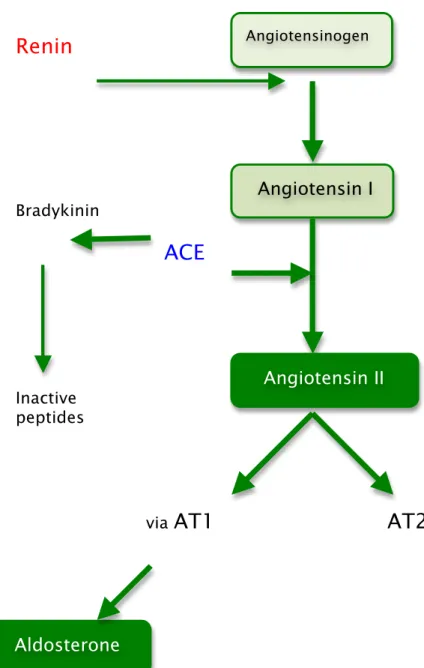
1.2.3 Renin-‐Angiotensin-‐Aldosterone (see Figure 2)
Renin is a substance that is produced in the segment of justaglomerular cells –in the segment of the renal afferent arteriole and in the macula densa close to the distal loop of Henle. There are 3 main stimuli to renin release:
1. Decrease in NaCl transport in the loop of Henle-also indicating low BP (sodium balance mechanism)
2. Decrease pressure or decreased strech in the renal afferent arteriole (baroceptor)indicating low pressure and needs to elevate BP
3. Sympathetic nervous stimulation via ß 1 receptors
Renin activates the angiotensinogen to form angitensin I. An angiotensin converting enzyme (ACE) will , mainly in the pulmonary circulation, convert the angiotensin I in angiotensin II. This ACE also inactivates another vasodilator, the bradykinin.
Angiotensin II has important role in hypertension due to many mechanisms:
• Acts primarily via angiotensin II type 1 receptor (AT1), leading to aldosterone secretion by the adrenal mucosa. Aldosterone is a mineralocorticoid that acts in the sodium reabsorption on the renal cortical collecting duct. It acts in the Na+/H+K+, increasing sodium reabsorption eliminating H+ and K+ resulting in hipocalemia and alkalosis. Moreover aldosterone also is a potent mitogen stimulating vascular smooth-muscle cell and myocyte growth.And it can also participate in the cardiac hypertrophy and congestive heart failure, independent of its action increasing the blood pressure.
• May also play a role in the pathogenesis of atherosclerosis through a direct action on the vessel wall. And can cause vasoconstriction. Whereas angiotensin II receptor type 2 has the opposite effects, such as vasodilation, Na excretion and inhibition of cell growth and matrix formation and improves remodelling by stimulating vascular smooth cells apoptosis and contributes to the regulation of the glomerular filtration rate. Blockade of AT1 ellicits AT2 activity.
The renin-angiotensin-aldosterone axis is not always the villain, when there is a situation of volume contraction or reduced NaCl intake, the homeostasis of the BP are achieved via this axis.
Renin
Bradykinin
ACE
Inactive peptides
via
AT1 AT2
1.2.4 Vascular mechanisms
Vascular compliance and the diameter are important determinants of BP and even small changes in vascular diameters leads to a significantly increase resistance.
In hypertension there is structural, mechanical and functional changes that may reduce the lumen diameter in the arteries and arterioles.
The lumen diameter also is dependent on the elasticity of the vessel- the higher the elasticity the higher the compliance, i.e. vessels with high elasticity
Angiotensinogen
Angiotensin I
Angiotensin II
Aldosterone
can take an increase in blood volume without changing very much the pressure. Hypertensive patients usually have arteriosclerosis making the arteries stiffer, and the stiffness of the arteries has a predictive value for cardiovascular events.
The alterations in the vascular tone and vascular growth, modulated by intracellular pH, in hypertensive patients can be explained by :
1. Increased Na leads to a increase in intracellular calcium (by action in the permeability ), increasing the vascular tone
2. Alterations in pH caused by the Na+/H+ pump leads to a greater sensibility to calcium by contractile apparatus, also the activity in this pump also increase the sensitivity to mitogens, thus stimulating the smooth muscle cell growth.
The vascular tone also is dependent on many vasoactive substance produced by the endothelial cells, such as the nitric oxide (NO) , a potent vasodilator. In hypertension this endothelium dependant vasodilation is impaired.
It is not known yet if these vascular abnormalities in hypertensive patients are primary or secondary to increased arterial BP, but weight loss, aerobic exercise and anti-hypertensive medicaments can improve them.
1.3 Target Organs in Hypertension
Hypertensive patients is at greater risk to all artheriosclerosis manifestations. And hypertension is an independent risk for heart failure, coronary artery disease, stroke, renal disease and peripheral artery disease.
1.3.1 Heart
Compromise of this organ is the principal cause of death among hypertensive population.
Heart disease in hypertension is due to both structural and functional adaptations leading to left ventricular (LV) hypertrophy, diastolic dysfunction, congestive heart failure (CHF), atherosclerotic coronary disease , microvascular disease and cardiac arrhythmias.
Patients with LV hypertrophy have an elevated risk for coronary heart disease (CHD), CHF, stroke and sudden death. Adequate control can revert this process by reducing the LV hypertrophy.
1.3.2 Brain
Hypertensive patients have an increased risk to have stoke either by brain infarction (85%) or hemorrhage - intracerebral or subarachnoid -(15 %). And the incidence is proportional to the level of BP, particularly the systolic BP among those older than 65 years. Lowering the level of BP decreases the risk for stroke.
Another burden of hypertension is the impairment of cognition in aging population may be due to either strategic localized infarct or multiple lacunar (subcortical white matter) infarction. Studies are investigating the extent of the benefit of treating hypertension for prevention of dementia.
In malignant hypertension, failure in autoregulation of brain flow may lead to encephalopathy with severe headache, nausea and vomiting and constitute an emergency situation as it can progress to stupor, coma, seizures and death within hours.
1.3.3 Kidney
Hypertension is a risk factor for renal damage and can lead to end stage renal disease (ESRD), and here also the risk is proportional to the increase in BP levels above optimal, and also has racial differences, being the black men at higher risk than white men at the same BP level.
Microalbuminuria (urine albumin/creatine ratio 30- 300mg/g) and also macroalbuminuria ( urine albumin/creatine ratio >300mg/g) are early markers for kidney injury and are risk factoer for progression of the disease.
1.3.4 Peripheral arteries
Alterations in structure and/or function of the arteries are part of the pathogenesis of hypertension, but to make matters worse, blood vessels can be also a target for damages by long term elevated BP leading to a vicious cycle. Those patients with lesion in arteries of the legs has greater risk of CVD.
1.4 Diagnosis of Hypertension
Diagnosis of Hypertension should:
1) Establish the blood pressure levels- as the level of blood pressure is not constant , the diagnosis should be based on multiple blood pressure measurements, taken in different occasions over a period of time. Nevertheless if the patient has a marked high blood pressure, has a high or very high cardiovascular risk profile, signs of damage in hypertension related organ, then the revaluation should be done in a shorter period (weeks or days)(ESH/ESC, 2007)
2) Identify secondary causes of hypertension (as related above)
3) Assessment of overall cardiovascular risk factors, target organ damage and concomitant diseases (blood pressure level, diabetes mellitus, metabolic syndrome, one or more of the following subclinical organ damages: ECG with strain pattern; ecocardiographic (concentric) left ventricular (LV) hypertrophy; ultrasound with evidence of thickening of carotid artery wall or plaque; increased arterial stiffness; moderate increase in serum creatinine clearance; microalbuminuria or proteinuria or with cardiovascular or renal disease.
1.4.1 Recommendations when measuring the blood pressure:
Figure 3- Recommendations for Blood Pressure Measurement
From:(ESH/ESC, 2007)
1.4.2 Ambulatory blood pressure
Provides information on 24-hour average blood pressure as well as on mean values over more restricted periods such as the day, night or morning. The physician should not substitute the conventional BP measure but some reports showed that office taken BP has limited relation with the 24-hour average(Mancia, et al., Twenty-four hour ambulatory blood pressure in the Hypertension Optimal Treatment (HOT)study, 2001)(Mancia, Omboni, Ravogli, Parati, & Zanchetti, 1995)(Mancia, et al., 2007).
Some advantages of 24-ABPM over office only measure:
-It has a higher reproducibility over time(Coats, Radaelli, Clark, Conway, & Sleight, 1992)(Mancia, Ulian, Parati, & Trazzi, 1994) -Absent or insignificant ‘white coat’ and placebo effect(Staessen, et al., 1994)(Mancia, Omboni, Parati, Ravogli, Vilani, & Zanchetti, Lack of placebo effect on ambulatory blood pressure, 1995)
-Better prognostic value(ESH/ESC, 2007)
-Gives information on blood pressure variability-
(
standard deviationaround mean values),
the variability of blood pressure may have a accurately than clinic blood pressure the extent of bloodpressure reduction induced by treatment, because of a higher reproducibility over time97,98and an absent or
negli-gible ‘white coat’99 and placebo effect.100,101 Although
some of the above advantages can be obtained by increasing the number of office blood pressure measurements,82,98
24-hour ambulatory blood pressure monitoring may be useful at the time of diagnosis and at varying intervals during treatment. Effort should be made to extend ambulat-ory blood pressure monitoring to 24 hours in order to obtain information on both daytime and nighttime blood pressure profiles, day-night blood pressure difference, morning blood pressure rise and blood pressure variability. Daytime and nighttime blood pressure values and changes by treat-ment are related to each other,78,79 but the prognostic
value of nighttime blood pressure has been found to be superior to that of daytime blood pressure.87,89–92,94 In
addition, subjects in whom nocturnal decrease in blood pressure is blunted (non-dippers)102have been reported to
have a greater prevalence of organ damage and a less favourable outcome, although in some studies the prog-nostic value of this phenomenon was lost when multi-variate analysis included 24-h average blood pressure.87,88,90,92,93,103–106 Evidence is also available that
cardiac and cerebrovascular events have a peak prevalence in the morning,107–110possibly in relation to the sharp blood
pressure rise occurring at awaking from sleep,72,111–113 as
well as to an increased platelet aggregability, a reduced fibrinolytic activity and a sympathetic activation.114–118 Worsening of organ damage and the incidence of events have also been related to blood pressure variability as quan-tified by the standard deviation around mean values.119–121
pressure variability has recently been confirmed by a long-term observational study.122
When measuring 24-hour blood pressure75care should be
taken to:
† Use only devices validated by international standardized protocols.
† Use cuffs of appropriate size and compare the initial values with those from a sphygmomanometer to check that the differences are not greater than +5 mmHg. † Set the automatic readings at no more than 30 min
inter-vals to obtain an adequate number of values and have most hours represented if some readings are rejected because of artefact.
† Automatic deflation of the equipment should be at a rate of no more than 2 mmHg/s.
† Instruct the patients to engage in normal activities but to
Box 2 Blood pressure (BP) measurement
When measuring BP, care should be taken to:
† Allow the patients to sit for several minutes in a quiet room before beginning BP measurements
† Take at least two measurements spaced by 1– 2 minutes, and additional measurements if the first two are quite different
† Use a standard bladder (12–13 cm long and 35 cm wide) but have a larger and a smaller bladder available for fat and thin arms, respectively. Use the smaller bladder in children
† Have the cuff at the heart level, whatever the position of the patient
† Use phase I and V (disappearance) Korotkoff sounds to identify systolic and diastolic BP, respectively
† Measure BP in both arms at first visit to detect possible differences due to peripheral vascular disease. In this instance, take the higher value as the reference one † Measure BP 1 and 5 min after assumption of the
stand-ing position in elderly subjects, diabetic patients, and in other conditions in which postural hypotension may be frequent or suspected
† Measure heart rate by pulse palpation (at least 30 sec) after the second measurement in the sitting position
Box 3 Position statement: Ambulatory and home BP measurements
Ambulatory BP
† Although office BP should be used as reference, ambu-latory BP may improve prediction of cardiovascular risk in untreated and treated patients
† Normal values are different for office and ambulatory BP (Table 5)
† 24-h ambulatory BP monitoring should be considered, in particular, when
- considerable variability of office BP is found over the same or different visits
- high office BP is measured in subjects otherwise at low total cardiovascular risk
- there is a marked discrepancy between BP values measured in the office and at home
- resistance to drug treatment is suspected
- hypotensive episodes are suspected, particu larly in elderly and diabetic patients
- office BP is elevated in pregnant women and pre-eclampsia is suspected
Home BP
† Self-measurement of BP at home is of clinical value and its prognostic significance is now demonstrated. These measurements should be encouraged in order to:
- provide more information on the BP lowering effect of treatment at trough, and thus on therapeutic coverage throughout the dose-to-dose time interval - improve patient’s adherence to treatment regimens - there are doubts on technical reliability/
environmental conditions of ambulatory BP data † Self-measurement of BP at home should be
discouraged whenever:
- it causes anxiety to the patient
- it induces self-modification of the treatment regimen † Normal values are different for office and home BP
(Table 5)
ESC and ESH Guidelines 1470
by guest on September 24, 2012
http://eurheartj.oxfordjournals.org/
prognostic value in hypertension treatments. (Mancia, et al., 2007)(Mancia, Prognostic value of long-term blood pressure variability:the evidence is growing, 2011)
1.5 Classification of Hypertension
1.5.1 According to BP levels
According to the 2003 and 2009 ESH (European Society of Hypertension)/ESC (European Society of Cardiology) the blood pressure is classified as this table shows:
Table 1-Classification of Hypertension (ESH/ESC 2007)
(ESH/ESC, 2007)
Also there are some points to be considered when classifying the blood pressure level:
-When systolic blood pressure (SBP) and diastolic blood pressure (DBP) are in different categories, always consider the higher category for all purposes
-Isolated systolic blood pressure should be graded according to the same systolic blood pressure value indicated for systolic-diastolic hypertension,
and the aorta, is a more precise assessment and may
improve on these limitations.
In practice, classification of hypertension and risk
assess-ment (see sections 2.2 and 2.3) should continue to be based
on systolic and diastolic blood pressures. This should be
defi-nitely the case for decisions concerning the blood pressure
threshold and goal for treatment, as these have been the
criteria employed in randomized controlled trials on isolated
systolic and systolic-diastolic hypertension. However, pulse
pressure may be used to identify elderly patients with
systo-lic hypertension who are at a particularly high risk. In these
patients a high pulse pressure is a marker of a pronounced
increase of large artery stiffness and therefore advanced
organ damage
28(see section 3.6).
2.2 Classification of hypertension
Blood pressure has a unimodal distribution in the population
29as well as a continuous relationship with cardiovascular risk
down to systolic and diastolic levels of 115–110 mmHg and
75–70 mmHg, respectively.
7,11This fact makes the word
hypertension scientifically questionable and its classification
based on cutoff values arbitrary. However, changes of a
widely known and accepted terminology may generate
con-fusion while use of cutoff values simplifies diagnostic and
treatment approaches in daily practice. Therefore the
classi-fication of hypertension used in the 2003 ESH/ESC Guidelines
has been retained (Table 1) with the following provisos:
1. when a patient’s systolic and diastolic blood pressures
fall into different categories the higher category should
apply for the quantification of total cardiovascular risk,
decision about drug treatment and estimation of
treat-ment efficacy;
2. isolated systolic hypertension should be graded (grades 1,
2 and 3) according to the same systolic blood pressure
values indicated for systolic-diastolic hypertension.
However, as mentioned above, the association with a
low diastolic blood pressure (e.g. 60–70 mmHg) should
be regarded as an additional risk;
3. the threshold for hypertension (and the need for drug
treatment) should be considered as flexible based on
the level and profile of total cardiovascular risk. For
example, a blood pressure value may be considered as
unacceptably high and in need of treatment in high risk
states, but still acceptable in low risk patients.
Support-ing evidence for this statement will be presented in the
section on therapeutic approach (Section 5).
The USA Joint National Committee Guidelines (JNC 7) on
hypertension published in 2003
30unified the normal and
high normal blood pressure categories into a single entity
termed ‘prehypertension’. This was based on the evidence
from the Framingham study
31,32that in such individuals the
chance of developing hypertension is higher than in those
with a blood pressure ,120/80 mmHg (termed ‘normal’
blood pressure) at all ages. The ESH/ESC Committee has
decided not to use this terminology for the following
reasons: 1) even in the Framingham study the risk of
develop-ing hypertension was definitely higher in subjects with high
normal (130–139/85–89 mmHg) than in those with normal
blood pressure (120–129/80–84 mmHg)
32,33and therefore
there is little reason to join the two groups together; 2)
given the ominous significance of the word hypertension for
the layman, the term ‘prehypertension’ may create anxiety
and request for unnecessary medical visits and examinations
in many subjects;
343) most importantly, although lifestyle
changes recommended by the 2003 JNC 7 Guidelines for all
prehypertensive individuals may be a valuable population
strategy,
30in practice this category is a highly differentiated
one, with the extremes consisting of subjects in no need of
any intervention (e.g. an elderly individual with a blood
pressure of 120/80 mmHg) as well as of those with a very
high or high risk profile (e.g. after stroke or with diabetes)
in whom drug treatment is required.
In conclusion, it might be appropriate to use a classification
of blood pressure without the term ‘hypertension’. However,
this has been retained in Table 1 for practical reasons and
with the reservation that the real threshold for hypertension
must be considered as flexible, being higher or lower based
on the total cardiovascular risk of each individual. This is
further illustrated in section 2.3 and in Figure 1.
2.3 Total cardiovascular risk (Box 1)
2.3.1 Concept
For a long time, hypertension guidelines focused on blood
pressure values as the only or main variables determining
the need and the type of treatment. Although this approach
was maintained in the 2003 JNC 7 Guidelines,
30the 2003
ESH-ESC Guidelines
3emphasized that diagnosis and
manage-ment of hypertension should be related to quantification of
total (or global) cardiovascular risk. This concept is based
on the fact that only a small fraction of the hypertensive
population has an elevation of blood pressure alone, with
the great majority exhibiting additional cardiovascular risk
factors,
35–39with a relationship between the severity of the
blood pressure elevation and that of alterations in glucose
and lipid metabolism.
40Furthermore, when concomitantly
present, blood pressure and metabolic risk factors potentiate
each other, leading to a total cardiovascular risk which is
greater than the sum of its individual components.
35,41,42Finally, evidence is available that in high risk individuals
thresholds and goals for antihypertensive treatment, as
well as other treatment strategies, should be different from
those to be implemented in lower risk individuals.
3In order
Table 1 Definitions and classification of blood pressure (BP)
levels (mmHg)
Category
Systolic
Diastolic
Optimal
,120
and
,80
Normal
120–129
and/or
80–84
High normal
130–139
and/or
85–89
Grade 1 hypertension
140–159
and/or
90–99
Grade 2 hypertension
160–179
and/or
100–109
Grade 3 hypertension
!180
and/or
!110
Isolated systolic
hypertension
!140
and
,90
Isolated systolic hypertension should be graded (1, 2,3) according to systolic blood pressure values in the ranges indicated, provided that dias-tolic values are ,90 mmHg. Grades 1, 2 and 3 correspond to classification in mild, moderate and severe hypertension, respectively. These terms have been now omitted to avoid confusion with quantification of total cardiovascular risk.
ESC and ESH Guidelines
1465
by guest on September 24, 2012
http://eurheartj.oxfordjournals.org/
23
however the association with low diastolic blood pressure (60-70mmHg) should be regarded as an additional risk
-Threshold for hypertension should be considered based on the level and profile of total cardiovascular risk.(ESH/ESC, 2007)
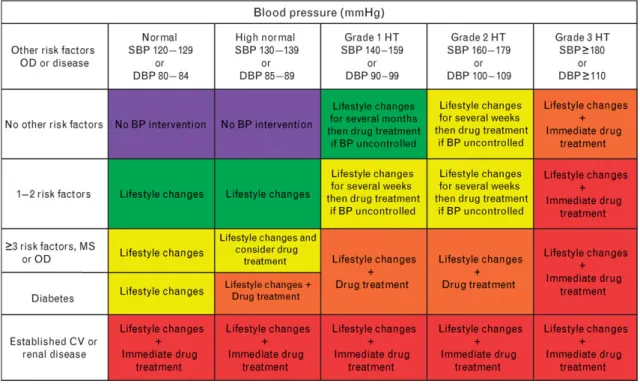
Moreover, different from the previous recommendations, the ESH/ESC now states that the blood pressure should not be evaluated as an isolate factor but in relationship to their total cardiovascular risk, i.e. associated concomitantly with metabolic risk factors because the risk to end organ damage and disease is greater than the sum of the individual components, this may occur because obesity, particularly abdominal obesity is very frequently associated with hypertension, dyslipidaemia and insulin resistance. The constellation of hypertension, dyslipidaemia and insulin resistance is the metabolic syndrome. Insulin resistance is also linked to an alteration in endothelium, dysbalancing the production of mediators that regulate platelet aggregation, coagulation and fibrinolysis and vessel tone. So when these risk factors cluster its potentiates the risk for CHD, stroke, diabetes making the mortality due to CVD even higher. Table 2-Stratification of Cardiovascular Risk
“ Stratification of CV Risk in four categories. SBP: systolic blood pressure; DBP: diastolic blood pressure; CV: cardiovascular; HT: hypertension. Low, moderate, high and very high risks refer to 10-‐year risk of a CV fatal or non-‐fatal event. The term ‘added’ indicates that in all categories risk is greater than average. OD: subclinical organ damage; MS: metabolic syndrome. The dashed line indicates how definition of hypertension may be variable, depending on the level of total CV risk. “
(European Heart Journal (2007) 28, 1462–1536 doi:10.1093/eurheartj/ehm236 )
to maximize cost-efficacy of the management of hyperten-sion the intensity of the therapeutic approach should be graded as a function of total cardiovascular risk.43,44
diabetes, and 4) individuals with severely elevated single risk factors. In all these conditions the total cardiovascular risk is high, calling for the intense cardiovascular risk redu-cing measures that will be outlined in the following sections. However, a large number of hypertensive patients does not belong to one of the above categories and identification of those at high risk requires the use of models to estimate total cardiovascular risk so as to be able to adjust the inten-sity of the therapeutic approach accordingly.
Several computerized methods have been developed for estimating total cardiovascular risk, i.e. the absolute chance of having a cardiovascular event usually over 10 years. However, some of them are based on Framingham data45 which are only applicable to some European
popu-lations due to important differences in the incidence of cor-onary and stroke events.12More recently, a European model
has become available based on the large data-base provided by the SCORE project.46SCORE charts are available for high
and low risk countries in Europe. They estimate the risk of dying from cardiovascular (not just coronary) disease over 10 years and allow calibration of the charts for individual countries provided that national mortality statistics and esti-mates of the prevalence of major cardiovascular risk factors are known. The SCORE model has also been used in the Heart-Score, the official ESC management tool for implementation of cardiovascular disease prevention in clinical practice. This is available on the ESC Web Site (www.escardio.org).
The 2003 ESH/ESC Guidelines3classified the total
cardio-vascular risk based on the scheme proposed by the 1999 WHO/ISH Guidelines on hypertension2 with the extension
to subjects with ‘normal’ or ‘high normal’ blood pressure. This classification is retained in the present Guidelines (Figure 1). The terms ‘low’, ‘moderate’, ‘high’ and ‘very high’ risk are used to indicate an approximate risk of cardi-ovascular morbidity and mortality in the coming 10 years, which is somewhat analogous to the increasing level of
Figure 1 Stratification of CV Risk in four categories. SBP: systolic blood pressure; DBP: diastolic blood pressure; CV: cardiovascular; HT: hypertension. Low, moderate, high and very high risk refer to 10 year risk of a CV fatal or non-fatal event. The term ‘added’ indicates that in all categories risk is greater than average. OD: subclinical organ damage; MS: metabolic syndrome. The dashed line indicates how definition of hypertension may be variable, depending on the level of total CV risk.
Box 1 Position statement: Total cardiovascular risk
† Dysmetabolic risk factors and subclinical organ damage are common in hypertensive patients.
† All patients should be classified not only in relation to the grades of hypertension but also in terms of the total cardiovascular risk resulting from the coexistence of different risk factors, organ damage and disease. † Decisions on treatment strategies (initiation of drug
treatment, BP threshold and target for treatment, use of combination treatment, need of a statin and other non-antihypertensive drugs) all importantly depend on the initial level of risk.
† There are several methods by which total cardiovascular risk can be assessed, all with advantages and limitations. Categorization of total risk as low, moderate, high, and very high added risk has the merit of simplicity and can therefore be recommended. The term ‘added risk’ refers to the risk additional to the average one. † Total risk is usually expressed as the absolute risk of
having a cardiovascular event within 10 years. Because of its heavy dependence on age, in young patients absolute total cardiovascular risk can be low even in the presence of high BP with additional risk factors. If insufficiently treated, however, this dition may lead to a partly irreversible high risk con-dition years later. In younger subjects treatment decisions should better be guided by quantification of relative risk, i.e. the increase in risk in relation to average risk in the population.
ESC and ESH Guidelines 1466
by guest on September 24, 2012
http://eurheartj.oxfordjournals.org/
1.5.2 According to aetiology
Essential or Primary Hypertension is when there is no identifiable cause (80-95% of the cases) or Secondary Hypertension when it is secondary to another pathology such as:
• Renal disease (parenchymal diseases, renal cysts, polycystic renal disease, renal tumours)
• Genetic causes, Reno vascular hypertension (atherosclerotic, fibro muscular dysplasia)
• adrenal (primary hyperaldosteronism, Cushing’s syndrome, 17α hydrolase deficiency, 11ß hydrolase deficiency, 11-hydroxysteroid dehydrogenase deficiency-liquorice, pheocromocytoma)
• Aorta coarctation
• Obstructive sleep apnoea
• Associated with pregnancy (eclampsia, preeclampsia)
• Neurogenic (psychogenic, diencephalic syndrome, familial dysautonoma, polyneuritis –acute porphyria, lead poisoning-, acute increased intracranial pressure, acute spinal cord section)
• Endocrine (Hypothyroidism, hyperthyroidism, hypercalemia, acromegaly) • medications (high dose estrogens, adrenal steroids, decongestants,
appetite suppressants, cyclosporine, tricyclic antidepressants, monoamine oxidase inhibitors, erythropoietin, nonsteroidal anti-inflammatory agents, cocaine)
The essential hypertension is the most common form of hypertension, occurring in general after the 4th decade of life, and its actual cause is unknown,
and a multifactorial hypothesis is probable. Many unknown factors interact to lead to an increase in total peripheral resistance due to a change in the arterioles, thus leading to an elevation of diastolic pressure that leads to an increase also in systolic pressure in response to a pressor stimulus. When there is decrease compliance in the arteries, there is an increase in systolic pressure and decrease in diastolic pressure (as we see in some elderly patients in the isolated systolic hypertension)(Randal, 1991). Before the structure of the arterioles and/or arteries changes there is a functional alteration and the vasoconstriction can due to an excessive production or low decrease in ‘hypertensive’ factors such as rennin/angiotensin/aldosterone, vasopressin, endotelin, sympathetic nervous system-adrenalin, norepinephrine.
1.5 Conventional Therapy of Hypertension (ESH/ESC, 2007):
As seen above, the therapy of hypertension has to consider not only the blood pressure levels but also the patient age, associated morbidities (diabetes mellitus, renal disease, coronary artery disease, end organs damage etc.), thus accessing the overall cardiovascular risk. An observational study of more than 1 million subjects indicated that death from both coronary heart disease and stroke increases linearly with the blood pressure levels.(Lewington, Clarke, Qizilbash, Peto, & Collins, 2002)
Table 3-Recommended Conventional therapy for Hypertension
(ESH/ESC, 2007)
Lifestyle change includes smoking cessation, weight reduction (and stabilization), reduction in alcohol and salt intake, physical exercise, increase in fruit and vegetable consumption, decrease in saturated and total fat intake, periodically reinforced recommendations, close follow up.
to a recent meta-analysis,460 which reports less new
dia-betes in the placebo than either in the diuretic or the b-blocker group. Other placebo controlled trials in con-ditions different from hypertension (high cardiovascular risk, chronic heart failure) have also shown a lower new diabetes incidence in patients treated with ACE inhibi-tors306,461,462or angiotensin receptor antagonists463than in
placebo patients, but in all these trials placebo (as well as the active agent) was added on top of multiple drug thera-pies, among which diuretics and b-blockers predominated at baseline and could be varied to an unknown extent during the trial. The same confounding factor makes interpretation of the recent negative finding of the DREAM trial464 difficult: in this trial administration of ramipril to
subjects with impaired glucose tolerance was not associated with a lower subsequent incidence of diabetes than admin-istration of placebo. However, almost half of DREAM sub-jects had hypertension and one third dyslipidaemia, and a large number of them received various types of antihyper-tensive agents and lipid lowering drugs. A very recent network meta-analysis of 22 trials with more that 160,000 participants460has calculated that the association of
antihy-pertensive agents with new diabetes is lowest for angioten-sin receptor antagonists and ACE inhibitors followed by calcium antagonists and placebo, b-blockers and diuretics in rank order.
It has been suggested that treatment-related new dia-betes may not have the same adverse prognostic effect as ‘spontaneously’ occurring diabetes. This claim is based on the observation that during controlled trials patients devel-oping diabetes have not had a greater morbidity than patients without new onset diabetes.322 However, it is
known that cardiovascular complications follow the onset of diabetes after a time delay (more than 10 years) longer than that possible in controlled randomized trials.465
Longer term (16–30 years) observational studies have shown a significantly higher incidence of cardiovascular complication in patients having developed diabetes during antihypertensive treatment predominantly with diuretics and/or b-blockers.466–470 A notable exception is a 14-year
follow up of the SHEP study,459during which newly occurring
diabetes among actively treated patients (chlorthalidone plus, eventually, atenolol) was reported not to be associated with increased mortality. A limitation of the above long-term follow-up studies is that microvascular endpoints, i.e. complications highly related to hyperglycaemia, were not assessed. Furthermore, in long-term studies follow-up cannot be done under controlled conditions and confounding factors may be frequent and unknown. Therefore the claim that treatment-induced and ‘spontaneous’ onset diabetes may be prognostically different appears impossible to confirm or confute. In the absence of more compelling evidence of an innocuous nature, the increased diabetes incidence with some antihypertensive agents currently raises concerns that would be imprudent to disregard.
5. Therapeutic approach
5.1 When to initiate antihypertensive treatment The decision to start antihypertensive treatment should be based on two criteria, i.e. 1) the level of systolic and dias-tolic blood pressure as classified in Table 1, and 2) the level of total cardiovascular risk. This is illustrated in Figure 2.
All patients in whom repeated blood pressure measure-ments show grade 2 or 3 hypertension are definite candi-dates for antihypertensive treatment because, as detailed in the 2003 ESH/ESC Guidelines,3 a large number of
placebo controlled trials have conclusively demonstrated that in patients with these blood pressure values blood
Figure 2 Initiation of antihypertensive treatment.
ESC and ESH Guidelines 1486
by guest on September 24, 2012
http://eurheartj.oxfordjournals.org/
An important message from the newest ESH/ESC Guidelines 2011 is that the management of individual components of cardiovascular risk such as smoking, diet, exercise, blood pressure and lipids have impacts on the total risk, than if the control of one of them is not optimal (i.e. hypertension in the elderly) the total risk can still be reduced by reducing other risk factors such as smoking or lipids. (ESH/ESC, 2011)
There are five main classes of drugs to be used, alone or in combination, always aiming to lower the BP: Thiazide diuretics, calcium antagonists, ACE (angiotensin conversor enzyme) inhibitors, angiotensin receptor antagonists and ß-blockers. In patients with diabetes or metabolic syndrome ß-blockers especially with thyazide diuretic should be avoided. The drug choice should be made taking into account the compliance (once a day is better than 3 times a day), side effects, and there are some pathologies that have some preferred drugs to be used as antihypertensive.
According to ESH/ESC the therapy in hypertension aims to achieve maximum reduction in long term total cardiovascular disease risk, treating not only the blood pressure but all others reversible factors involved, thus reducing it at least to 140/90mmHg and even to lower values if tolerated, lower than 130/80 in diabetic patients and others with very high risk for CVD cardiovascular disease (stroke, myocardial infarction, renal dysfunction, proteinuria), and to achieve the goal level of BP, the treatment should start before significant damage develops.
The American Heart Association (AHA) and the American College of Cardiology (ACC) in its Expert Consensus Document on Hypertension in the Elderly in 2011, recommended a different approach to patients above 55years, considering their comorbilities, according to this fluxogram:
Figure 4-AHA/ACC recommendations for BP in patients above 55 years
(ACC/AHA, 2011)
Various publications have shown poor compliance to prescribed antihypertensive medicament, being this fact responsible for the lack of BP control(Yiannakopoulou, 2005). In the first year of therapy only 60% of the patients will continue the medication (Caro, Speckman, Raggio, & Jackson, 1999)(Massaglia, et al., 2005), and after 5-10 years as much as 60% will abandon their prescription for hypertension(Caro, Speckman, Raggio, & Jackson, 1999). In the ALLHAT trial, prospectively, about 34% of the patients remained with unsatisfactory blood pressure control in spite of in average 2 medications and overall nearly half of the patients would have required 3 or more drugs, and at the end only2/3 of the participants had their SBP lowered to 140mmhg although 92% has the DBP of 90mmHg.(ALLHAT officers and col, 2002). As hypertension is
amiloride was equivalent to nifedipine gastrointestinal
thera-peutic system in preventing CV adverse outcomes in
IN-SIGHT (Intervention as a Goal in Hypertension Treatment)
560among patients 55 to 80 years of age with hypertension.
4.2.2.1.2. Beta-Adrenergic Blockers.
Although beta blockers
have been used for hypertension in the elderly for years, evidence
for benefit has not been convincing.
14–16,18,327A meta-analysis of 10
studies comparing beta blockers and diuretics in patients !60 years
Figure 10. Algorithm for treatment of
hypertension in the elderly. ACEI indi-cates angiotensin-converting enzyme inhibitor; ALDO ANT, aldosterone an-tagonist; ARB, angiotensin receptor blocker; BB, beta blocker; CA, calcium antagonist; CAD, coronary artery dis-ease; CVD, cardiovascular disdis-ease; DBP, diastolic blood pressure; RAS, renin-angiotensin system; SBP, systolic blood pressure; and THIAZ, thiazide diuretic. Modified from Chobanian
et al.22
Table 6. Continued
Drug Class/Drug Interacting Drug Mechanism Consequence Prophylaxis
Angiotensin-converting enzyme inhibitor
ACEI class effect Excess diuretics; rare in hypertension
High renin levels in overdiuresed patients; volume depletion
First-dose hypotension; risk of renal failure
Reduce diuretic dose; correct volume depletion
Potassium-sparing diuretics; spironolactone
Added potassium retention Hyperkalemia Avoid combination or use with care
NSAIDs Less vasodilation Less BP and 2 less antifailure effect Avoid if possible
Aspirin Less vasodilation Less HF effects Low-dose aspirin
Loop diuretics Possible interference with tubular secretion
Lessened diuretic effect of furosemide Consider alternate ACEI Captopril (C) Immunosuppressive drugs,
procainamide-hydralazine
Added immune effects Increased risk of neutropenia Avoid combination; check neutrophils
Probenecid (P) P inhibits tubular secretion of C Small rise in C levels Decrease C dose Angiotensin receptor blockers
ARB class effect Excess diuretics; rare in hypertension
High renin levels in overdiuresed patients; volume depletion
First-dose hypotension; risk of renal failure
Reduce diuretic dose; correct volume depletion
Vasodilators Beta blockers (hepatically metabolized)
Hepatic shunting Beta-blocker metabolism 2; blood levels 1
Propranolol; metoprolol dose 2
Hydralizine Nitrates (N) Renal blood flow 1; added vasodilation; free radicals scavenged
Less N tolerance (benefit); risk of excess hypotension
Start with low dose of an alpha blocker or dihydropyridine; calcium blocker
Verapamil Hepatic metabolism Synergistic antihypertensive effect Adjust doses Cilostazol (C) Inhibition of P450 3A4; diltiazem,
verapamil, erythromycin, ketoconazole, cyclosporine
2 hepatic interaction 1 C levels, risk of increased mortality in HF
Lessen C dose or avoid
ACEI indicates angiotensin-converting enzyme inhibitor; ARB, angiotensin receptor blocker; AV, atrioventricular; BP, blood pressure; CHF, congestive heart failure; CYP2D6, cytochrome P450 2 D6; ECG, electrocardiogram; HB, heart block; HF, heart failure; IV, intravenous; LV, left ventricle; NSAIDs, nonsteroidal anti-inflammatory drugs; SA, sinoatrial; 1, increase; and 2, decrease.
Modified from Opie and Frishman.540
2472
Circulation
May 31, 2011
by guest on September 24, 2012
http://circ.ahajournals.org/
a chronic disease, the treatment is required for a lifetime. The more increases the number pills and the complexity of dosage the poorer is the adherence to the treatment. Also when more drugs are combined it increases the possibility of side effects. Moreover change the life style is another difficult goal to reach. Frequent visit to the clinic augments adhesion to the treatment.(Stason, et al., 1994)
The use of acupuncture could help overcome these difficulties, by either diminishing or substituting the amount of drug required, and also because with frequent visits to the clinic it eases the compliance to the treatment (drugs and/or adjustment of lifestyle).