FACULDADE DE CIÊNCIAS BIOLOGIA VEGETAL
"Pulmonary and systemic endothelial function in diabetic animal models: effect of
carotid sinus nerve denervation"
Andreia Marlene Dantas Cabral
Mestrado em Biologia Molecular e Genética
Dissertação orientada por:
Orientadora Interna: Profº Doutora Margarida Ramos Orientadora Externa: Profº Doutora Sílvia Conde
ii
Acknowledgements
I dedicate this space to acknowledge to all the people, which in some way, went along with me in this journey that lead to the concretization of this project.
In the first place, I want to express my gratitude to Professor Dra. Silvia Conde, which accepted to be my advisor and allowed me to elaborate this project in her installations. Her availability, dedication and wisdom were essential for the realization of this work. The enthusiasm and love for the job and investigation it is a true inspiration.
To Professor Dra. Margarida Ramos, I want to thank her, for the preoccupation and availability that she always demonstrated, since she accepted to be my internal advisor.
To Jesus Prieto-Lloret, I want to thank him for all the knowledge that he taught me, the patient to show me how to dissect the arteries and the persistence in the long hours in the NOA and miograph. To my colleagues’ future master, Cláudia Soares e Miguel Correia thank you for being present at all times, thank you for the silly conversations, for all the help you have given me, for all the patient and support. It was a great pleasure to have been working at their side every day, even though we had difficult days, those days were better with them.
To my laboratory colleagues, Joana Sacramento, Bernardete Melo I appreciated all the assistance, support, and patient that they had towards me, and for all the knowledge, that they transmitted to me, that will be helpful in my future academic and professional journey. I cannot imagine better persons to go along day by day in the laboratory, with such joy and good mood.
To all my friends, that were present by my side in the last years. For the unconditional support and incentives that they gave me. For believing in me and gave me strength to continue this journey. To André Silva, thank you for being along my side every step, to put up with me, to make me smile even when I was down, and for being my pillar all this years.
To all my family, father and mother, thank you for the preoccupation and curiosity demonstrated in knowing how the work was going. Without them nothing of this were possible. Thank you for the support in all the steps of my live and for being always present, even though they were miles away, I never felt helpless.
iii
Resumo
As doenças metabólicas afetam milhares de indivíduos em todo o mundo e representam um grupo de doenças crónicas de elevada prevalência. A diabetes mellitus tipo 2 (DMT2) é um dos maiores problemas mundiais que afetou, em 2015, aproximadamente 415 milhões de pessoas e acredita-se que a sua prevalência vai continuar a aumentar nos próximos anos. Esta patologia é uma condição metabólica crónica, caracterizada pela incapacidade de os tecidos periféricos usarem a insulina, produzida pelas células β, resultando numa condição designada de resistência à insulina, o que leva a hiperinsulinemia e consequentemente a hiperglicemia. Esta é a principal característica da DMT2 e é também um fator de risco para o desenvolvimento de doenças cardiovasculares, como a hipertensão e aterosclerose, sendo fulcral na disfunção endotelial. As complicações vasculares da diabetes dividem-se em microvasculares e macrovasculares.
O óxido nítrico (NO) é um potente vasodilatador e tem sido identificado pela sua participação na regulação do tónus vascular, fluxo sanguíneo e na modelação da libertação de mediadores do endotélio. O NO é produzido pelo NO endotelial juntamente com o cofator tetrahidrobiopterina, pela conversão da L-arginina em L-citrulina, nas células endoteliais, num processo regulado pelo stress, condições de oxigénio e inflamação. Foram identificadas três isoformas do NO sintase: NO neuronal sintase (nNOS), NO endotelial sintase (eNOS) e NO induzível sintase (iNOS).
A hipertensão sistémica é um dos principais fatores de risco para as doenças cardiovasculares e contribui para uma elevada resistência vascular periférica. Demonstrou-se que em animais hipertensos a vasodilatação está reduzida e que essa diminuição pode estar relacionada com a redução da disponibilidade de óxido nítrico (NO). Também a hipertensão arterial pulmonar tem vindo a ser cada vez mais associada à DMT2 e à disfunção endotelial, e esta relação tem sido descrita como estando relacionada com o aumento da produção de superóxido, que por sua vez reage com o NO, reduzindo a sua difusão, o que leva a um aumento da vasoconstrição. A prostaglandina F2α (PGF2α) é um dos mais
frequentes prostanoides estudados pela sua ação contráctil no musculo liso. O recetor FP é um recetor específico da PGF2α, que está associado a diferentes condições fisiopatológicas como a resistência à
insulina, problemas cardiovasculares e diabetes.
A disfunção endotelial é definida como um desequilíbrio entre a vasodilatação e a vasoconstrição do endotélio, por ação das substâncias produzidas neste. Uma das características usadas para detetar se há complicações na função endotelial, é investigar se a resposta fisiológica aos vasodilatadores está comprometida. Para tal é usualmente utlizada a resposta vasodilatadora à acetilcolina (ACh), que medeia a vasodilatação através do NO, produzido pelo endotélio. Na literatura, também é igualmente aceite que a disfunção endotelial está associada à diminuição da disponibilidade de NO. Esta diminuição pode ser causada pela redução na produção de NO pelo endotélio ou pelo aumento da sua inativação, pelas espécies reativas de oxigénio.
O eNOS mantém várias funções homeostáticas nos vasos sanguíneos, como o relaxamento do endotélio, no entanto uma diminuição no eNOS pode levar ao desenvolvimento de resistência à insulina e problemas metabólicos, que são complicações que estão na génese de patologias, como a diabetes e hipertensão. Por outro lado, a expressão da iNOS é ativada por patologias de doenças inflamatórias, incluído a diabetes e a aterosclerose, sendo esta proteína identificada como essencial na resistência à insulina, na obesidade e nas disfunções contrácteis cardíacas e vasculares. O NO foi proposto como sendo um modulador inibitório do corpo carotídeo (CB).
iv Os CBs são quimiorrecetores periféricos que detetam alterações no oxigénio, dióxido de carbono e níveis de pH no sangue arterial. Sabe-se que a sua atividade está aumentada em modelos de roedores com resistência à insulina e o nosso grupo mostrou anteriormente, que a resseção bilateral do nervo do seio carotídeo (CSN), previne por completo a resistência à insulina, hiperglicemia, dislipidemia e hipertensão arterial.
Assim, dado que a disfunção endotelial pode resultar ou contribuir para o desenvolvimento de várias doenças como a hipertensão e DMT2 e sabendo que a hiperativação do CB está associada a estas doenças, o principal objetivo deste trabalho foi avaliar o impacto da resseção do CSN, na função endotelial da artéria pulmonar e no sistema vascular sistémico, como a artéria aorta.
As experiências foram realizadas em ratos Wistar machos com 3 meses de idade. Estes animais foram submetidos a uma dieta hipercalórica (HFHSu) (60% de gordura) juntamente com 35% de sacarose na água durante 25 semanas. Este modelo é considerado uma fase inicial da DMT2, desenvolvendo assim resistência à insulina, intolerância à glucose e hipertensão. Estes animais foram comparados com um grupo controlo da mesma idade submetidos a uma dieta padrão. Após 14 semanas de dieta HFHSu, foi confirmada a resistência à insulina através dos testes de sensibilidade à insulina e de tolerância à glucose. Em seguida, os animais foram divididos aleatoriamente, em que metade foram submetidos a uma ressecção bilateral do CSN, e a outra metade submetidos ao mesmo procedimento cirúrgico, mas sem corte do CSN (grupo sham). Depois da cirurgia, os animais foram mantidos nas respetivas dietas e passado duas e onze semanas após a resseção do nervo, a sensibilidade à insulina e tolerância à glucose foram avaliadas.
Passado este período, os animais foram submetidos a uma experiência terminal, onde os animais foram anestesiados com pentobarbital (60mg/kg, i.p.). O sangue foi recolhido por punção cardíaca para medir os níveis de NO por quimiluminescência. A artéria pulmonar e a aorta foram excisadas e dissecadas para estudos da função vascular, através de miografia, e para posterior homogeneização e análise da expressão, por Western Blot, e quantificação de NO.
A sensibilidade à insulina foi avaliada pelo teste da tolerância à insulina (ITT), a tolerância à glucose pelo teste da tolerância à glucose oral e a pressão arterial foi registada através do transdutor e amplificador de pressão. Para além disso a função endotelial foi avaliada através da miografia, sendo as respostas contráteis com estímulo ao K+ e prostaglandina F
2α (PGF2α) e as respostas
vasodilatadoras induzidas pela ACh. Os níveis de NO no plasma, artéria pulmonar e aorta foram medidos através quimiluminescência e por fim a expressão das isoformas do NO sintase: eNOS e iNOS e do recetor da PGF2α (FP) foram analisados por Western Blot.
Observou-se que a dieta HFHSu diminui a sensibilidade à insulina e aumentou a intolerância à glucose e a pressão arterial. A dieta hipercalórica aumentou os níveis de NO no plasma e as repostas contrácteis à PGF2α na aorta. Aumentou ainda os valores da expressão, tanto do iNOS, em ambas as
artérias, como do recetor FP, na artéria pulmonar. No entanto, a dieta HFHSu, diminui a resposta contráctil à PGF2α na artéria pulmonar, o relaxamento à ACh em ambas as artérias e o nível de NO na
aorta. Por outro lado, a resseção do CSN, restaurou para valores normais a sensibilidade à insulina, a tolerância à glucose e a pressão arterial. A resseção do CSN ainda normalizou os valores do NO no plasma e diminui as repostas ao K+ na artéria pulmonar e na aorta. Por fim, ainda restaurou por
completo a vasodilatação dos animais HFHSu e normalizou os valores de expressão da iNOS, em ambas as artérias, e restabeleceu os níveis de expressão do recetor FP na artéria pulmonar. Os níveis de expressão do eNOS, em ambas as artérias, não sofreram nenhuma modificação nem pela dieta nem pela resseção do CSN.
v Neste estudo foi demonstrado pela primeira vez que a resseção do CSN nos animais HFHSu restaurou a função endotelial na artéria pulmonar e na aorta. Verificou-se também que a resseção do CSN nos animais HFHSu diminuiu os níveis de NO no plasma e que normalizou os valores da expressão do iNOS na artéria pulmonar e na aorta, bem como os valores da expressão do recetor FP na artéria pulmonar.
Palavras-Chaves: corpo carotídeo, diabetes tipo 2, disfunção endotelial, nervo do seio carotídeo, óxido nítrico
vi
Abstract
Diabetes mellitus type 2 (DT2M) is a metabolic disease characterized by the inability of peripheral tissues to use insulin in the target organs, resulting in a condition known as insulin resistance, which leads to elevated levels of insulin and consequently glucose in blood.
Systemic hypertension and arterial pulmonary hypertension have been associated, over the years, with DT2M and endothelial dysfunction, and it has been shown that hypertensive animals, exhibit a reduction in the vasodilation which in turn is related to a diminished nitric oxide (NO) levels, leading to a vasoconstriction in the vessels. Prostaglandin F2α (PGF2α) is a powerful vasoconstrictor which
have been implicated in several pathological states. PGF2α cause vasoconstriction primarily through
the FP receptor.
There are numerous mechanisms that could cause endothelial dysfunction, but the most consensual is the decreased bioavailability of NO levels. NO is a vasodilator that helps to regulate the vascular tone and blood flow. It is produced by the endothelial NO with the cofactor tetrahydrobiopterin, through the conversion of L-arginine in L-citrulline. NO has been proposed to be an inhibitory modulator of the carotid body (CB) chemosensory process.
The CBs are peripheral chemoreceptors that are known to be involved in several cardiometabolic pathologies, as essential hypertension, chronic heart failure and metabolic syndrome. It has been recently described that CBs activity is raised in models of insulin resistance and that carotid sinus nerve (CSN) resection can restore insulin resistance, hyperglycaemia, dyslipidaemia and arterial hypertension.
Therefore, the main goal of this project was to evaluate the impact of CSN resection on the endothelial dysfunction in pulmonary artery and systemic vessels. Experiments were performed in 3 months old Wistar rats, fed with a high-fat and high-sucrose diet (HFHSu) during 25 weeks, or fed with a standard diet (CTL) during the same period. To evaluate the impact of CSN denervation, the animals were submitted to CSN resection at the fourteen weeks of diet. Insulin sensitivity, glucose tolerance, mean blood pressure, endothelial function in pulmonary artery and aorta, plasmatic NO levels and the expression of NO synthase isoforms in the pulmonary artery and aorta: endothelial nitric oxide synthase (eNOS) and inducible nitric oxide synthase (iNOS) and also PGF2α receptor (FP) were
evaluated in CTL and HFHSu animal models.
Herein, HFHSu diet modify all the parameters above describe, except the contractile responses to K+
in both arteries, the NO levels in the pulmonary artery and the levels of expression of FP receptor on aorta. On the other hand, the CSN resection almost completely restored all the changes caused by the HFHSu diet-induced, apart from the NO levels in both arteries and the expression levels of FP receptor in the aorta. eNOS expression levels in both arteries were not modified nor by the diet neither by CSN resection.
We demonstrated for the first time, that CSN resection restores completely endothelial function in the pulmonary artery and in the aorta. It was also shown that CSN resection decreased NO levels in plasma and normalized the levels the expression of iNOS, in both arteries, as well as the levels of expression of the FP receptor in the pulmonary artery.
vii
Table of Contents
Figures ... viii
Abbreviation list ... ix
1. Introduction ... 1
1.1 Metabolic syndrome and diabetes mellitus ... 1
1.1.1 Type 2 Diabetes Mellitus... 2
1.2 Insulin Resistance ... 2
1.3 Systemic hypertension ... 3
1.4 Pulmonary arterial hypertension ... 3
1.5 Endothelial Dysfunction ... 3 1.5.1 Vascular contractility ... 4 1.5.1.1 Pronstanglandin F2α...4 1.6 Nitric Oxide ... 5 1.6.1 eNOS ... 7 1.6.2 iNOS ... 7 1.7 Carotid body ... 7 2. Aims ... 9 3. Methods ... 10
3.1 Animals and experiments ... 10
3.1 Insulin Tolerance Test ... 10
3.2 Oral Glucose Tolerance Test ... 11
3.3 Evaluation of endothelial function ... 11
3.4 Nitric Oxide Quantification ... 11
3.5 Western Blot analyses of eNOS, iNOS, PGF2α R in aorta and pulmonary artery ... 12
3.6 Statistical analysis ... 12
4. Results ... 13
4.1 Effect of HFHSu diet and CSN resection in insulin sensitivity ... 13
4.2 Effect of HFHSu diet and CSN resection on glucose tolerance ... 13
4.3 Effect of HFHSu diet and of CSN resection on mean blood pressure ... 14
4.4 Effect of HFHSU diet and of CSN resection on vasoconstrictor responses in pulmonary artery and aorta ... 14
4.5 Effect of HFHSu diet and of CSN resection on endothelial function of pulmonary artery and aorta………….. ... 15
4.6 Effect of HFHSU diet and of CSN resection on NO levels in plasma, aorta and pulmonary artery...17
4.7 Effect of HFHSu diet and of CSN resection on eNOS, iNOS and FP receptor expression levels in the pulmonary artery and aorta ... 18
5. Discussion ... 22
6. Conclusion ... 27
viii
Figures
Figure 1.1- Estimated number of people with diabetes mellitus worldwide per region in 2015 and 2040 . ... 1 Figure 1.2- Natural history of type 2 diabetes, since the progressive impaired glucose tolerance to overt type 2 diabetes.. ... 2 Figure 1.3-The response of the endothelium to the cumulative effects of risk factors contributing to the development and progression of cardiovascular disease events. ... 4 Figure 1.4- Normal endothelial function vs endothelial dysfunction. ... 6 Figure 1.5- Carotid artery bifurcation (A), structured of a cellular cluster of the carotid body (B) and stimulation of carotid body produces several responses (C).. ... 8 Figure 4.1- Effect of HFHSu diet and of CSN resection in insulin sensitivity assessed by the ITT and expressed by the KITT, the constant obtained from the ITT. ... 13
Figure 4.2- Effect of HFHSu diet and of CSN resection on glucose tolerance, expressed as the area under the curve (AUC) obtained from the glucose excursion curves determined by the OGTT. ... 14 Figure 4.3-Effect of HFHSu diet and of CSN resection on mean blood pressure. ... 14 Figure 4.4- Effect of HFHSu diet and of carotid sinus nerve (CSN) resection on vasoconstrictor responses to 80mM of K+ (KPSS) in the pulmonary artery (A) and aorta (B) ... 15
Figure 4.5- Concentration response curves for contractions to PGF2α in the pulmonary artery and aorta
rings ... 16 Figure 4.6- Concentration-responses curves for relaxation to ACh in pulmonary artery and aorta ... 17 Figure 4.7- Effect of HFHSu diet and of CSN resection in NO levels in plasma ... 17 Figure 4.8- Effect of HFHSu diet and of carotid sinus nerve (CSN) resection on NO levels in pulmonary artery (A) and aorta (B). ... 18 Figure 4.9 - Effect of HFHSu diet and of carotid sinus nerve (CSN) resection on eNOS expression levels in the pulmonary artery (A) and aorta (B). ... 19 Figure 4.10 - Effect of HFHSu diet and of carotid sinus nerve (CSN) resection on iNOS expression levels in the pulmonary artery (A) and aorta (B). ... 20 Figure 4.11 - Effect of HFHSu diet and of carotid sinus nerve (CSN) resection on FP receptor expression levels in the pulmonary artery (A) and aorta (B). ... 21
ix
Abbreviation list
ACh – Acetylcholine
ADMA – Asymmetric Dimethyl Arginine AUC – Area under the Curve
BH4 – Tetrahydrobiopterin CB – Carotid Body
cGMP – Cyclic Guanosine Monophosphate CRC – Concentration–Response Curve CSN – Carotid Sinus Nerve
CTL – Control
DM – Diabetes Mellitus
EDCF – Endothelium-derived Contracting Factor EDRF – Endothelium-derived Relaxing Factor ET-1 – Endothelin-1
eNOS – Endothelial Nitric Oxide Synthase GTP – Guanosine-5'-Triphosphate
iNOS – Inducible Nitric Oxide Synthase IR – Insulin Resistant
ITT – Insulin Tolerance Test
KITT – Constant Rate for Plasma Glucose Decline
KPSS – Physiological Salt Solution HFHSu – High-fat/ High-sucrose
MAPK – Mitogen Activated Protein Kinase MBP – Mean Blood Pressure
NADPH – Nicotinamide Adenine Dinucleotide Phosphate nNOS – Neuronal Nitric Oxide Synthase
NO – Nitric Oxide
OGTT – Oral Glucose Tolerance Test O2- – Superoxide
ONOO- – Peroxynitrite Anion
PAH – Pulmonary Arterial Hypertension PGF2α – Prostaglandin F2 α
PSS – Krebs-Henseleit buffer
FP receptor – Prostaglandin F2 α receptor (FP) PI3K – Phosphatidylinositol 3 Kinase
ROS – Reactive Oxygen Species
SDS-PAGE – Dodecylsulfate-Polyacrylamide Gel Electrophoresis S1177 – Serine 1177
SNS – Sympathetic Nervous System T2DM – Type 2 Diabetes Mellitus
TBST – Tris-buffered Saline with Tween 20 TNF-α – Tumor Necrosis Factor-α
1
1. Introduction
1.1 Metabolic syndrome and diabetes mellitus
Metabolic syndrome is a defined cluster of metabolic abnormalities (including visceral obesity, dyslipidaemia, hypertension and impairment of glucose metabolism) that rise the risk for developing type 2 diabetes mellitus (T2DM), cardiovascular disease and coronary heart disease 1. This type of
syndrome is becoming more common due to an increase of risk factors including alcohol abuse, insufficient physical activity, aging, stress and a sugar rich diet 2.
Diabetes mellitus (DM) is a widespread metabolic disorder that is characterized by insufficient production of insulin or the incapacity to use the insulin that the β-cells produce 3. Insulin is a
hormone produced in the pancreatic β-cells that acts on its target tissues (mainly liver, muscle and fat) in response to glucose ingestion 4. Insulin stimulates the glucose transport from the bloodstream
through the cell membrane of the target tissues with the cooperation of glucose transport proteins in order to maintain low glucose levels in blood 4. The ineffectiveness of insulin to stimulate glucose
uptake, leads to an increased concentration of glucose in the blood (hyperglycaemia) 5.
People with diabetes have a higher risk for developing several complications, including, cardiovascular disease, blindness, kidney failure and lower limb amputation due to the high levels of glucose in blood 5.
According to International Diabetes Federation, DM affected in 2015 at least 415 million people worldwide and it is expected to reach 642 million people by the year 2040 (see Figure 1.1). In the Portuguese population, it is estimated that the prevalence of diabetes in adults between the ages of 20-79 is 13.6%. It was assessed that 7896 deaths was related with diabetes 6.
There are three predominant types of diabetes such as type 1 diabetes, that results from an autoimmune pancreatic β-cells destruction which leads to absolute insulin deficiency; type 2 diabetes, characterized by insulin resistance (IR) and relative insulin deficiency; and gestational diabetes, defined as any slight degree of glucose intolerance during the pregnancy 4.
2
1.1.1 Type 2 Diabetes Mellitus
T2DM is the most prevalent type of DM and over the past few years had increased significantly. There are several risk factors that influence the emerging of T2DM such as excess body weight, poor nutrition, physical inactivity, genetics, older age and family history of diabetes 6.
This type of diabetes is characterized by the inability to use insulin efficiently in the target organs and an inadequate compensatory insulin secretory response to elevated glucose concentration 4, resulting in
a condition known as IR 7. T2DM evolved from an asymptomatic stage with IR, to a slight
postprandial hyperglycaemia. The chronic hyperglycaemia plays a major role in the initiation of diabetes with microvascular (including retinopathy, nephropathy and neuropathy) and macrovascular (including ischemic heart disease, peripheral vascular disease and cerebrovascular disease) complications (figure 1.2) 8.
Figure 1.2- Natural history of type 2 diabetes, since the progressive impaired glucose tolerance to overt type 2 diabetes. Initially the β-cell manage to compensate insulin resistance by increasing the insulin secretion, which results in
hyperinsulinemia. Over time the impaired glucose tolerance progresses to mild postprandial hyperglycaemia. When β-cell begins to fail, insulin deficiency, fasting hyperglycaemia and type 2 diabetes with microvascular and macrovascular complications develops 9.
1.2 Insulin Resistance
IR is a pathological condition in which the ability of peripheral tissues to use the hormone insulin is affected 10, leading to elevated levels of insulin in blood (hyperinsulinemia) and consequently, when
the pancreas does not have the ability to secrete more insulin to maintain normoglycemia, results in an impaired peripheral glucose utilization (hyperglycaemia) 11. It is a complex metabolic abnormality,
that is implicated in T2DM, obesity, hypertension, dyslipidaemia 12 and is indispensable for
endothelial dysfunction in T2DM 13.
The intracellular signalling pathways critical for vascular responses, activated through insulin, are counterbalanced between phosphatidylinositol 3 kinase (PI3K)-Akt kinase, a dependent insulin signalling pathway effector, which mediate the metabolic actions of insulin and phosphorylate endothelial nitric oxide synthase (eNOS) at serine 1177 (S1177), and through mitogen activated protein kinase (MAPK), a dependent insulin signalling pathway effector, that regulates the secretion of the vasoconstrictor endothelin-1 (ET-1) 14. In IR circumstances, disturbances in the balance of the
pathway of PI3K-Akt, can cause a decrease in eNOS activity, leading to less NO generated and decreased insulin-mediated vasodilation 15. Nevertheless ET-1 and MAPK effects persist and promote
3 proinflammatory actions, which could develop vascular disease 16, ultimately leading to endothelial
dysfunction 14.
1.3 Systemic hypertension
Systemic hypertension is a main risk factor for cardiovascular diseases and is defined as high systemic arterial blood pressure 17. In the scientific community, there is not a consensus if endothelial
dysfunction is a cause or consequence of hypertension. Since endothelial dysfunction can appear at early stage of hypertension contributing this way to an augment of arterial blood pressure, or it can be a consequence and contribute to more peripheral vascular resistance and systemic cardiovascular complications, aggravating the progress of the disease 18.
It was shown in isolated arteries, from different animal models of hypertension, that the endothelium-dependent vasodilation is diminished 16. Similarly the endothelium response to vasodilators is reduced
in hypertensive humans 16. Hypertension decreases the bioavailability of NO increasing the oxidative
stress due to augmented ROS generation 19. This reduction in NO availability has been attributed to
elevated circulating levels of asymmetric dimethyl arginine (ADMA) in both hypertensive animals and humans 16.
1.4 Pulmonary arterial hypertension
Pulmonary arterial hypertension (PAH) is a syndrome characterized by progressive obliteration of pulmonary arterioles and proliferation of pulmonary vascular endothelial and smooth muscle cells, that in the most aggravated prognostic leads to increased pulmonary vascular resistance, progressive right heart failure and death 20. PAH has recently been associated with T2DM and was shown that
T2DM patients have significantly higher prevalence of PAH 21. Despite the fact that IR and obesity are
strongly related with systemic cardiovascular diseases, a recent study suggested that these pathological features can increase the susceptibility to PAH and can be associated with the severity of the disease 20,22.
When endothelial dysfunction is present simultaneous with diabetes and PAH, there is a greater vascular production of superoxide, which in turn will react with NO, reducing NO diffusion 21,23. In
pulmonary vascular diseases associated with endothelial dysfunction, there are several evidences that point to a diminished bioavailability of L-arginine and tetrahydrobiopterin (BH4) or to higher levels of ADMA 17. These changes lead to a decrease in the NO synthase expression, which consequently
endorse the vasoconstriction and cell proliferation 24. 1.5 Endothelial Dysfunction
Endothelium is formed by a monolayer of squamous epithelium, covering the internal lumen of all blood and lymphatic vessels 25. Three layers constitute the arterial vessels: the tunica intima, a unique
layer of endothelial cells; the tunica media, that includes the vascular smooth muscle cell (VSMC); and tunica adventitia, an elastic lamina with terminal nerve fibres adjacent to connective tissue 25. This
semi-permeable membrane plays an essential role in maintaining vascular health and conserving metabolic homeostasis 26. For a necessary normal vascular function, the endothelium, produces and
releases numerous endothelium derived relaxation factors (EDRF), that regulate vascular tone, modulate immune responses, coagulation and control the vascular cell growth 27. These EDRF include
NO, endothelium derived hyperpolarizing factor, prostacyclin, angiotensin II, adhesion molecules and cytokines 25.
Any slightly disturbance in the homeostasis of the endothelium, may cause endothelial dysfunction 28,
that is widely described as an imbalance between vasodilation and vasoconstricting substances, produced by endothelial cells 29. Endothelial dysfunction is recognized as an essential intermediary for
4 development of cardiovascular diseases covering vascular diseases associated with diabetes and hypertension 30. Current evidences suggest that endothelial dysfunction is linked with TD2M, through
impaired endothelial-dependent vasodilation 31. It has been recognized that systemic hypertension and
PAH associated with impaired vasorelaxation 18,21, diabetes mellitus, obesity, hypercholesterolemia or
sedentary lifestyle, significant enhance the risk for endothelial dysfunction, atherosclerosis and systemic cardiovascular diseases 26 (see figure 1.3). Nevertheless new reports states that changes in
lifestyle plus the implementation of modulatory drug therapies, including HMG CoA reductase inhibitors, angiotensin-converting enzyme inhibitors and BH4, appears to improve, or even reverse, endothelial dysfunction 32.
1.5.1 Vascular contractility
Vascular contractions can be initiated by the endothelium cells of the vascular smooth muscle. It was demonstrated that endothelium-derived contracting factors (EDCF) (including ET-1, thromboxane A, endoperoxides and superoxide anions 33) are the main factors accountable for these increases in
vasomotor tone. The vascular homeostasis is maintained by a subtle balance between endothelium-dependent relaxations and contractions, but when combined by a reduced production of relaxing signals and a higher secretion of EDCF this can lead to endothelium dysfunction 34.
It is well known that diabetes is associated with the accumulation of calcium in the vascular cells and with the decrease in their elasticity, which could result in the reduction of the vascular lumen and in hypertension 35. An abnormal endothelial function or expression of potassium channels has been
associated with excessive vasoconstriction 36.
ROS plays an important role in the regulation of the vascular tone 34. This is demonstrated when the
superoxide anions inactivates the EDRF-NO, which reduced the NO bioavailability and consequently increased the endothelium-dependent contractions 34.
Even though is complicate to assess all alterations that lead to endothelial dysfunction, one hallmark commonly used is to investigate whether the physiological vasodilator responses are undamaged 15.
The acetylcholine (ACh), a muscarinic cholinergic agonist, as the ability to relax VSMC indirectly by stimulating the release of EDRF 37. The vasodilation mediated by ACh is determined by the NO
produced by the endothelium 15, and an impairment in the endothelium-dependent vasorelaxation in
Figure 1.3-The response of the endothelium to the cumulative effects of risk factors contributing to the development and progression of cardiovascular disease events 90.
5 response to ACh, is constantly observed in human patients and experimental animal models of hypertension 18.
1.5.1.1 Prostaglandin F2α
Through the short-lived of endoperoxides, various eicosanoids are formed, such as the subclass prostanoids, consisting in prostaglandins, prostacyclins and thromboxanes 38. Prostanoids are involved
in the endothelium function, as mediators in the control of vascular tone, the remodelling of the vascular wall, in thrombosis and platelet aggregation 39, being potent vasoconstrictors the
prostaglandin F2α (PGF2α), prostaglandin B2 and prostaglandin E2 40. They have been associated in the
pathogenesis of different disorders disturbing cardiac and cerebral blood flow 41. It was demonstrated
that PGF2α increases pulmonary arterial pressure and pulmonary vascular resistance in lung rats 42.
PGF2α receptor (FP receptor) is expressed in endothelium and in VSMC 40. FP receptor coupled with a
Gq protein, stimulate the DAG/IP3, which is involve in calcium mobilization as well increases in
calcium concentration 42, leading to the smooth muscle contraction 40,43. The FP receptor has been
associated with different conditions, such as IR, diabetes and cardiovascular complications, and it is known that the FP receptor is overexpressed in an IR state 42.
1.6 Nitric Oxide
NO is an endothelium-dependent vasodilator and has been shown to play a key role in the regulation of vascular tone, blood flow and modulation of the release of other endothelium-derived mediators 44.
NO also protects the endothelium by preventing abnormal constriction, inhibiting the aggregation of platelets, assisting the adhesion and penetration of white blood cells and releasing vasoconstrictors and mitogenic ET-1. NO is the most significant EDRF 34.
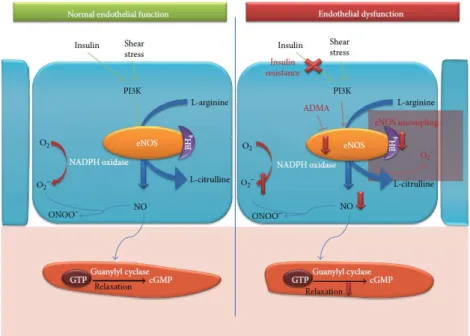
NO is produced through the enzymatic conversion of L-arginine to L-citrulline by eNOS together with the cofactor BH4 (see Figure 1.4). The enzyme activity of eNOS requires calcium, calmodulin, BH4 and nicotinamide adenine dinucleotide phosphate (NADPH) 34. eNOS monomers constituted by the
reductase domain, transfer electrons from NADPH to flavin adenine dinucleotide and flavin mononucleotide. The stimulation of the enzyme activity, occurs by shear stress and by the activation of other receptors-that mediate the action of different stimulus like insulin, oestrogens, vascular endothelial growth factor and ACh 16.
Tree isoforms of NO synthase have been identified: two constitutive isoforms, the neuronal nitric oxide synthase (nNOS), that produces NO that act as a neuronal messenger regulating synaptic neuronal transmitter release, and the eNOS, that is mainly expressed in endothelial cells; and one inducible nitric oxide synthase (iNOS) which is calcium-independent and is only expressed in cells that were previously exposed to injuries, activating macrophages or inflammatory mediators 44. eNOS
is the main enzyme isoform responsible of circulating NO in physiological conditions 25.
NO diffuses into the VSMC, by activating soluble guanylyl cyclase, then converting guanosine-5'-triphosphate (GTP) into cyclic guanosine monophosphate (cGMP), in the VSMC 31. This increase in
cGMP, activates cGMP-dependent protein kinase, which endorses an increased extrusion of Ca2+ ions
from VSMC, inhibiting the contractile machinery and initiating the vascular relaxation 25 (see Figure
1.4). Therefore, problems in NO synthesis, and therefore its availability to allow vascular relaxation, may be a significant cause in the pathogenesis of hypertension 45.
In fact, a decrease in the bioavailability of NO is an important factor to endothelial dysfunction and atherosclerosis, and it is well demonstrated that could be caused through different mechanisms, such as the absence of enzymatic cofactors for eNOS, the inactivation of NO by the reaction of superoxide (O2-) culminating in peroxynitrite anion (ONOO-) formation, through the effect of superoxide NADPH
6 NO is available when exists a balance between NO production through eNOS and ROS inactivation 47.
The hyperglycaemia in DM has been proved to develop endothelial dysfunction by enhancing oxidative stress, which uncouples the mitochondrial oxidative phosphorylation and eNOS activity, resulting in a decrease in NO availability and in the production of more ROS 47. It has also been
shown that the diminished endothelium-dependent vasodilation in diabetic subjects, results from the inactivation of NO due to the increased of oxidative stress, instead of the decreased of NO production from vascular endothelium, which this anomalous NO metabolism is associated to severe diabetic microvascular complications 25. It is well known that the synthesis of BH
4 is rate limited by GTP
cyclohydrolase, so when this pathway is absent, electron transport through eNOS can become uncoupled, resulting in O2- generation 15. In addition, ROS can cause S-glutathionylation of eNOS
leading to the inactivation of the enzyme 16.
Although the main precursor of NO is arginine, NO cannot be limited by the circulation of L-arginine since the regulation of NO production is multifactorial. However is limited by a metabolite of L-arginine, ADMA (an endogenous competitive inhibitor), that decreases NO production by competing with L-arginine for the binding to eNOS, contributing to NO deficiency 48. In isolated
arteries from animal models of systemic hypertension and PHA, the endothelium-dependent relaxations are decreased 34. This has been attributed to a reduced NO bioavailability due to higher
levels of ADMA 34,17. L-arginase can also be metabolized by arginase, and by competing with the
same substrate arginase is an important regulator of NO bioavailability, and can be involved, in this way, in endothelial dysfunction 25.
Endothelial function as shown to be improved through the supplementation with BH4 or its precursor sepiapterin (restores the endothelium-dependent relaxation 34) or by the reduction of oxidative stress
by targeting uncoupled NOS in patients with hypertension, diabetes, hypercholesterolemia and coronary artery disease 46. In some studies, where diabetic vessels have been tested in vivo,
enhancements in NO-mediated vasodilation in response to anti-oxidants like superoxide dismutase have been demonstrated 31. Moreover it was also established that insulin can enhance the expression of
eNOS in native endothelial cell in vitro and assists NO-dependent vasodilation in vivo and in vitro 34.
Figure 1.4- Normal endothelial function vs endothelial dysfunction. In a normal endothelial vessel, the response to insulin
signaling or shear stress, through PI3K pathway is activated to phosphorylate eNOS. eNOS associated with BH4 converts
L-arginine to L-citrulline producing NO. NO interacts with guanylyl cyclase, which increases the production of cGMP through GTP, inducing VSMC relaxation. In an overview of endothelial dysfunction, insulin resistance impaired insulin-mediated NO
7 production which in turn leads to a decrease in vasodilation. Superoxide reacts with NO to form peroxynitrite reducing NO bioavailability that has oxidant properties. ADMA acts as an endogenous competitive inhibitor. Furthermore in a situation where the BH4 is diminished, eNOS became uncoupled which increased ROS generation that ultimately contributes to reduce
bioavailability of NO and relaxation (adapted from 19).
1.6.1 eNOS
eNOS is localized in the luminal cell membrane of vascular endothelial cells 17 and has different
physiological roles in vascular homeostasis, such as the regulation of vascular tone (key mediator of endothelium-dependent vasodilation), prevention of endothelial cell apoptosis, inhibition of platelet aggregation and, downregulation of chemoattractant proteins and inhibition of growth factors 16.
eNOS activation is endorsed by the interaction with heat shock protein 90, this protein can displace the inhibitory protein caveolin-1 from eNOS 15,16. eNOS can be phosphorylated at several serine and
threonine residues, however the phosphorylation of S117 appears to be an important regulator of its enzymatic activity augmenting the electron flux and impairing calmodulin dissociation, resulting in an overactivation of eNOS and subsequently in an increase in the NO production 15.
Some studies have shown that eNOS-deficient animals develop insulin resistance and metabolic abnormalities, similar to what is observed in T2DM 16. Variants of eNOS polymorphisms may
participate in the pathogenic pathway developing to diabetic vascular complications 25, such as
hypertension, increased diet-induced atherosclerosis and increased VSMC proliferation in response to vessel damage 15. Although the possible mechanisms of decreased NO bioavailability comprises an
impairment in eNOS mRNA or protein expression levels, some studies in animal models and humans proposed that the decrement in the amount of total eNOS is not essentially associated with diabetes and atherosclerosis 15.
1.6.2 iNOS
Many cell types, including macrophages, chondrocytes, Kupffer cells, hepatocytes, neutrophils and pulmonary epithelium 49, expressed iNOS to act as a host defence against microbial and viral
pathogens 50. In response to a wide display stimuli, like endogenous pro-inflammatory mediators and
endotoxins, iNOS produces NO 49. In particular, the iNOS expression in the macrophages, is activated
by pathologies of inflammatory diseases, including diabetes, atherosclerosis and multiple sclerosis 50.
The activity of iNOS is essentially regulated at a transcriptional level and when the enzyme is expressed it produces enormous amounts of NO 23.
iNOS has emerged as a key protein in IR and obesity, which has been associated with cardiac contractile dysfunction and vascular complications resulting from IR 23. Several evidences suggests
that interleukin-1β, interferon-γ and tumour necrosis factor-α (TNF-α) induces the overexpression of iNOS in β-cells, resulting in an overproduction of NO causing cytotoxicity of β-cells, which can indicate an important role of NO in diabetes 51.
1.7 Carotid body
The carotid bodies (CB) are chemoreceptor organs, classically defined as O2 sensors, and are located
bilaterally at the bifurcation of the common carotid arteries, being a conglomeration of type I and type II cells. The CBs are highly vascularized with a rich blood flow and with an efferent and afferent innervation 52. This characteristics allow them to provide a matrix for blood vessels and nerves, with a
protective surrounding capsule of connective tissue 52. The CBs information is transferred to its
sensitive nerve, the carotid sinus nerve (CSN), which its sensory nerve endings penetrate the CB 53.
CSN activity is integrated in the brainstem, aiming to normalise blood gases via hyperventilation and regulate blood pressure and cardiac performance through an increase in the activation of the sympathetic nervous system (SNS) 54.
8
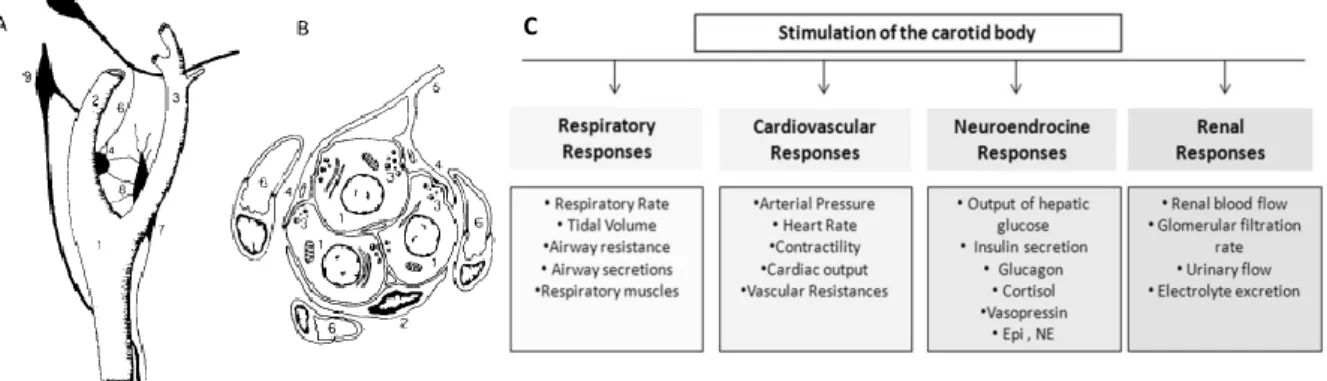
Figure 1.5- Carotid artery bifurcation (A), structured of a cellular cluster of the carotid body (B) and stimulation of carotid body produces several responses (C). A. The common carotid artery (1) splits in the internal (2) and external (3)
carotid arteries. The petrosal ganglion (5), via the carotid sinus nerve (6), provides the sensory innervation to the carotid body (4). Via the ganglioglomerular nerves (8), the superior cervical ganglion (7) can innervate the carotid sinus region. The nodose ganglion (9) is located externally to the carotid artery bifurcation. B. The cluster of cells is formed by chemoreceptor cells (1) and surrounded by sustencular cell (2). Chemoreceptor cells are in contact with sensory nerve endings (4) of the carotid sinus nerve (5). The clusters of cells are involved by a net of capillaries 53. C. The stimulation of the carotid body
produces respiratory, cardiovascular, neuroendocrine and renal responses 58.
As state in the previous paragraph, the CBs are the main peripheral oxygen sensors 55, being also able
to transduce other physical-chemical stimulus including, pH levels, temperature, osmolarity 52.
Additionally, recently the CBs has been proposed to be a glucose sensor, however this is not consensual 56. The type I cells, also known as glomus, are the key pieces in the peripheral oxygen
sensing 57. On the other hand, type II cells, or sustentacular cells, have been suggested to be an adult
neural stem cells sustaining neurogenesis, in vivo, in response to physiological stimuli 58 (see Figure
1.5). The NO has been proposed to be an inhibitor modulator of the CB chemosensory activity, by controlling the vascular tone and by modifying the excitability of glomus cells and petrosal neurons 59.
Recently, it was been demonstrated that insulin can trigger the peripheral chemoreceptors located at CB, suggesting that hyperinsulinemia may cause the CB overactivity seen in metabolic disorders, as metabolic syndrome and T2DM 60. In fact, Ribeiro et al., (2013) demonstrated that in models of
metabolic syndrome and prediabetes occurs an overactivation of the CB, that results in the development of IR and hypertension, they also displayed that the CSN chronic denervation prevents the development of IR and hypertension in hypercaloric animal models 60. Additionally, Sacramento et
al., (2017) showed that chronic bilateral CSN resection, in pre-existing metabolic diseases, restores insulin sensitivity and glucose tolerance as well as fasting plasma glucose, insulin levels and blood pressure, that were fully restored 61.
The involvement of the CB in the control of glucose homeostasis was supported by clinical data in T2DM patients, in where hyperbaric oxygen therapy, that functionally blocks of the CB, improve post-prandial glucose tolerance and reduced fasting glycaemia 61.
9
2. Aims
Knowing that endothelial dysfunction can result from and/or contribute to several disease processes, as occurs in hypertension and T2DM and that CB overactivation is associated with the development of such diseases, the general aim of the present thesis was to evaluate the impact of CSN denervation on endothelial function in the pulmonary artery and in the systemic vasculature.
The specific aims of this work were to investigate, in a model of IR, glucose intolerance and hypertension, the effect of CSN resection in the pulmonary artery and aorta on:
1. the contractile responses to an unspecific stimulus (high K+) and to PGF 2α
2. the vasodilation responses to ACh 3. the NO levels in plasma
10
3. Methods
3.1 Animals and experiments
Experiments were performed in 8 weeks old male Wistar rats (200-300g), obtained from the vivarium of NOVA Medical School, Faculdade de Ciências Médicas. Animals were housed in a controlled environment (21±1°C; 55±10% humidity) with a 12-hour light/dark cycle and free access to food and water. An early-phase type 2 diabetes model (combined IR, hyperinsulinemia and increased total fat mass 62) with hypertension was obtained by submitting animals to a high-fat and high-sucrose
(HFHSu) diet was used. The HFHSu model was obtained by a combination of a lipid-rich diet with 60% of energy from fat (34% fat plus 23% protein plus 5% fibres plus 5, 50% ash; Mucedola, Italy) and 35% sucrose in drinking water during 25 weeks. This animal model was compared with an age-matched control group (CTL), fed a standard diet (7.4% fat plus 75% carbohydrate [4% sugar] plus 17% protein, SDS diets RM1; Probiológica, Lisbon, Portugal). Body weight was weekly recorded meanwhile caloric and liquid intake were monitored daily in all groups of animals.
After 14 weeks of diet, IR was confirmed by an insulin tolerance test (ITT) and glucose tolerance through oral glucose tolerance test (OGTT). Subsequently, the HFHSu and CTL groups were randomly divided and half of the group of animals was submitted to a bilateral CSN resection under a mixture of ketamine (30mg/kg)/medetomidine (4mg/kg) anaesthesia and carprofen (5mg/kg), a non-steroidal anti-inflammatory drug. Atipamezole (2mg/kg) was used to reverse the effects of the sedative. One day post-surgery was administered buprenorphine (10µg/kg), an opioid agonist, and during the three days’ post-surgery carprofen (5mg/kg). After the surgery, the animals were kept under the respective HFHSu and standard diet. The experimental groups were compared with sham groups that were submitted to the same surgical procedure but without resection of the CSN.
Two weeks and eleven weeks post-CSN resection, insulin sensitivity and glucose tolerance have been evaluated and afterwards at the eleven weeks’ post-surgery, the rats were submitted to a terminal experiment in which the animals were anesthetized with pentobarbital (60mg/kg, i.p.). After anaesthesia, the femoral artery was catheterized and mean blood pressure (MBP) was recorded using a pressure transducer (-50, +300 mmHg, emka, Paris, France) and a pressure amplifier (emka, Paris, France). The MBP was analysed though the software IOX 2.9.5.73 (emka, Paris, France). Blood was collected though a cardiac puncture to EDTA-precoated tubes and then processed into plasma for measuring NO levels by chemiluminescence. The aorta and the pulmonary arteries were excised and dissected for vascular function studies (Myography) or stored for later analyses (Western Blot and NO quantification) at -80ºC. The contractile response of the arteries was evaluated in response to increasing doses of PGF2α by myography. When a later steady state tonic response was attained with
PGF2α, cumulative increasing concentrations of ACh were added to induce an endothelium-dependent
relaxation, obtaining a concentration–response curve (CRC) and therefore evaluating endothelial dysfunction. NO levels in the aorta and pulmonary artery were quantified after their homogenization by chemiluminescence, while the expression of eNOS, iNOS and PGF2α receptor (FP receptor) were
obtained by Western Blot.
All experiments and animal care were performed in accordance with the European Union Directive for Protection of Vertebrates Used for Experimental and Other Scientific Ends (2010/63/EU), and all the experimental protocols were approved by the ethics committee of the NOVA Medical School/Faculdade de Ciências Médicas.
3.1 Insulin Tolerance Test
The ITT assess insulin sensitivity in conscious animals and consist in the administration of a bolus of insulin in the tail vein (0.1 U/kg body weight), after an overnight fasting 12. The plasma glucose
11 glucose levels were measured with a glucometer (Precision Xtra Meter, Abbott Diabetes Care, Portugal) and test strips (Abbott Diabetes Care, Portugal) 62. The constant rate for plasma glucose
decline (KITT) was calculated through the product of 0.693 by the plasma glucose half-time (t1/2).
Glucose half-time was calculated from the gradient of the least-square analysis of plasma glucose concentrations during the linear decay phase 60.
3.2 Oral Glucose Tolerance Test
OGTT provides an evaluation of the insulin released and the sensitivity of the peripheral tissue toward the insulin action 12. After an overnight fast, all animals ingested a dose of glucose (2g/Kg) in sterile
saline (0.9% NaCl) by oral gavage and subsequently plasma glucose were measure before (0 min) and 15, 30, 60, 120 and 180 minutes after the administration of glucose 63. The glucose tolerance was
measured by the area under the curve (AUC) of glucose excursion curves 12. The procedures for
collecting blood and measuring the glucose levels were identical of the ITT test.
3.3 Evaluation of endothelial function
The physiological function of the arteries was studied using a small vessel wire myograph (DMT, Denmark), technique that allows ex vivo monitoring of isometric tension in response to different pathophysiological stimuli 64. The bath chambers for isolated organs were gassed with normoxia:
(21% O2 + 5% CO2) and the temperature maintained at 37oC. The pulmonary artery and aorta were
dissected in cold Krebs-Henseleit buffer (PSS) (in mM: 118 NaCl, 4 KCl, 1.8 CaCl2, 1 MgSO4
(anhydrous), 24 NaHCO3, 0.43 NaH2PO4 and 5.56 Glucose). Rings of aorta and pulmonary artery
(inner diameter: 0.5-1.0 mm) were dissected under a dissection microscope and were withdrawn of all adventitia and parenchyma. The arteries were connected to isometric force transducers to measure changes in isometric tension and then stretched to give a basal tension of 5-6mN. After stabilization, to check the viability of the vessels, three responses of physiological salt solution (KPSS) (in mM: 38 NaCl, 80 KCl, 1.8 CaCl2, 1 MgSO4 (anhydrous), 24 NaHCO3, 0.5 NaH2PO4 and 5.56 Glucose) were
performed, washing twice with Krebs-Henseleit buffer between them. To constrict the vessels increasing doses of PGF2α (0.03µM-10/30µM) were added to the chamber solution. Twenty minutes
after washing and on a stable PGF2α contraction, a cumulative CRC to ACh (0.03µM-30µM), an
endothelium-dependent vasorelaxant, was performed to determine endothelial integrity, washing twice afterwards.
3.4 Nitric Oxide Quantification
To quantify nitric oxide in aorta and pulmonary artery, the arteries were previously dissected and homogenized in a glass tissue homogenizer with buffer (25mM Tris HCL, 1mM EDTA, 1mM EGTA). Afterwards, the homogenates were centrifuged at 1300g (4oC) for 20 minutes and the supernatant
collected. To quantify NO in plasma, blood was collected though a cardiac puncture to EDTA-precoated tubes and centrifuged at 3000g (4oC) during 10 min. Samples deproteinization was
accomplished by diluting the plasma with ethanol absolute at 4oC (1:3), leaving it in ice for 30
minutes, centrifuged at 1200g (4oC) for 15 minutes and lastly collecting the supernatant. NO levels
were quantified using the Sievers Nitric Oxide Analyser (NOA 280i; Sievers Research Inc., Boulder Colorado, USA), which is a reliable detection system for assess NO levels and its metabolites in the liquid system (e.g., plasma), that allows the interaction between NO and ozone to elicit chemiluminescence 65. The preparation the NOA consists in turning the bath at 90oC, adding NaOH (1
M) until the filter is covered, then adding a vanadium solution (50 mM VaCl3 in 1 M HCl) through the injection port and waiting until the baseline is stable (10-15 mV). The vanadium starts to bubble when the cell press is adequate (5 - 7.4 Torr). All samples were injected with a Hamilton syringe (5µl). NO concentrations were calculated by comparison with an interpolation of a calibration curve made from increasing concentrations of sodium nitrate (1µM, 2µM, 5µM, 10µM, 20µM, 50µM).
12
3.5 Western Blot analyses of eNOS, iNOS, PGF2α R in aorta and pulmonary artery
For western blot analysis, pulmonary artery (from the large lobe of the left lung) and aorta were dissected and homogenized in liquid nitrogen and then placed in Zurich medium (10mM Tris–HCl; 1mM EDTA; 150 mM NaCl; 1% Triton X-100; 1% sodium cholate; 0.1% sodium dodecyl sulfate) containing aprotonin (1mg/ml), leupeptin (1mg/ml), pepstatin (1mg/ml), tripsin (1mg/ml), Na3VO4 (100mM) and PMSF (100mM). Protein concentrations of the homogenates were measured with a Micro-BCA Protein Assay Kit (Pierce, Madrid, Spain). Calculations were performed to use equal volumes in each well (protein + Zurich medium + sample buffer (50 % µl of sample buffer + 50 % µl of mercaptoethanol)). Denaturation of samples was done at 99oC for 5 minutes followed by a
centrifugation of 5 minutes at 8000 rpm (4oC). Proteins (20μg) and molecular weight marker
(Precision Plus Protein, BioRad, USA) were separated by electrophoresis in 10% sodium dodecylsulfate-polyacrylamide gel electrophoresis (SDS-PAGE), and afterwards a transferred to a nitrocellulose membrane (0.2 µM, BioRad, Germany). A Red Ponceau (0.1%) staining was performed for 5 min with agitation to verify the quality of the transfer. The membranes were blocked in I-Block solution (0.5%) (Applied Biosystems, Foster City, USA) for 1h with agitation at room temperature. A three-step Western blot protocol was used to enhance detection sensitivity 66. After blocking,
membranes were incubated overnight at 4°C with primary polyclonal rabbit anti-eNOS antibody (bands in the 140 kDa region, 1:500; Santa Cruz Biotechnology, Madrid, Spain), primary polyclonal rabbit anti-iNOS antibody (bands in the 130 kDa region, 1:200; Santa Cruz Biotechnology, Madrid, Spain) or, primary polyclonal rabbit anti-FP receptor antibody (bands in the 45 kDa region, 1:200; Santa Cruz Biotechnology, Madrid, Spain). Afterwards the membranes were incubated with biotin-conjugated goat anti-rabbit IgG (1:5000) in Tris-buffered saline with Tween 20 (TBST) (0.1%) for 2h and horseradish peroxidase-conjugated streptavidin (1:10000) in TBST (0.1%) for 30min at room temperature. Between incubations, the membranes were washed with TBST (0.02%) 4 times of 10 min. Chemiluminescence signals were developed with enhanced chemiluminescence reagent (Clarity Western ECL, Bio-Rad, United States), the signal detected in a Chemidoc Molecular Imager (Chemidoc; BioRad, Madrid, Spain) and quantified using the Quantity-One software (BioRad). The membranes were reprobed with polyclonal goat anti-calnexin (bands in the 90 kDa region, 1:1000; SicGen, Portugal) to compare and normalize the expression of proteins with the amount of protein loaded.
3.6 Statistical analysis
Data was evaluated using GraphPad Prism Software, version 6 (GraphPad Software Inc., San Diego, CA, USA) and was expressed as mean ± SEM. The significance of the differences between the means was calculated by one-way and two-way analysis of variance (ANOVA) with Bonferroni multiple comparison tests. Differences were considered significant at p≤0.05.
13
4. Results
4.1 Effect of HFHSu diet and CSN resection in insulin sensitivity
Figure 4.1 represents the effect of HFHSu diet and CSN resection on insulin sensitivity, determined by the ITT, before diet and at fourteen, sixteen and twenty-five weeks of diet. As it can be seen and expected (Figure 4.1), HFHSu diet decreased insulin sensitivity (KITT HFHSu baseline = 4.36±0.25;
KITT HFHSu 14 weeks diet = 1.67±0.5; KITT HFHSu 16 weeks diet = 1.93±0.59; KITT HFHSu 25
weeks of diet = 1.35±0.78 % glucose/min; KITT CTL baseline = 4.36±0.56; KITT CTL 14 weeks diet =
4.092±0.41; KITT CTL 16 weeks diet = 4.26±0.29; KITT CTL 25 weeks of diet = 4.21±0.52%
glucose/min). CSN resection did not affect significantly the insulin sensitivity in control animals (KITT
CTL 16 weeks’ diet with CSN resection= 3.46±0.87; KITT CTL 25 weeks of diet with CSN resection =
4.34±0.53 % glucose/min). After CSN resection in HFHSu animals, insulin sensitivity increased by 81% 2 weeks post-surgery (KITT = 3.87±0.61% glucose/min) and 111% 11-weeks post-surgery (KITT =
4.51±0.36% glucose/min) in comparison with the value of insulin sensitivity before surgery (KITT =
2.13±1.25% glucose/min).
Figure 4.1- Effect of HFHSu diet and of CSN resection in insulin sensitivity assessed by the ITT and expressed by the KITT, the constant obtained from the ITT. Bars represents mean ± SEM. Two-away ANOVA with Bonferroni multiple
comparisons tests; **** p<0.0001 vs CTL; #### p<0.0001 comparing values with HF HSu.
4.2 Effect of HFHSu diet and CSN resection on glucose tolerance
Figure 4.2 illustrates the effect of HFHSu diet and of CSN resection on glucose tolerance, expressed as the AUC of the glucose excursion curves obtained from the OGTT before diet and at fourteen, sixteen and twenty-five weeks of diet. The standard diet did not alter glucose tolerance throughout the weeks of diet, however as expected HFHSu diet increased significantly the AUC of the glucose excursion curves, suggesting the development of glucose intolerance (AUC HFHSu baseline = 21446±475; AUC HFHSu14 weeks diet = 24900±602; AUC HFHSu 16 weeks diet = 23425±518; AUC HFHSu 25 weeks of diet = 24334±722 mg/dl*min; AUC CTL baseline = 21459±735; AUC CTL 14 weeks diet = 20343±566; AUC CTL 16 weeks diet = 19951±682; AUC CTL 25 weeks of diet = 21897±715 % mg/dl*min). CSN resection at 14 weeks of diet did not alter glucose tolerance in CTL animals (AUC CTL 16 weeks diet with CSN resection = 19867±469; AUC CTL 25 weeks of diet with CSN resection = 19297±1283 mg/dl*min). At the fourteen weeks of diet, the animal’s HFHSu (24900±602 mg/dl*min) and HF HSu with CSN resection (23991±445 mg/dl*min) augmented the glucose intolerance by 22% and 18%, respectively, in relation to CTL AUC= 20343±566 mg/dl*min. After
14 twenty-five weeks of diet, the values of HFHSu with CSN resection (2214±928 mg/dl*min), were brought back to CTL levels AUC=21897±715 mg/dl*min.
Figure 4.2- Effect of HFHSu diet and of CSN resection on glucose tolerance, expressed as the area under the curve (AUC) obtained from the glucose excursion curves determined by the OGTT. Bars represents mean ± SEM.Two-away ANOVA with Bonferroni multiple comparisons tests; * p<0.05; ** p<0.01; ***p<0.001; **** p<0.0001 vs CTL.
4.3 Effect of HFHSu diet and of CSN resection on mean blood pressure
In the figure 4.3 is demonstrated the effect of HFHSu diet and of CSN resection on MBP. The HFHSu diet increases the MBP by 52% in relation to CTL diet (CTL = 80.9±4.3mmHg; HFHSu = 123.4±1.96mmHg). CSN resection did not alter the MBP in CTL animals, but in HFHSu rats it decreases significantly by 23% (CTL CSN resection = 78.9±2.9mmHg; HFHSu CSN resection = 95.2±3mmHg).
Figure 4.3-Effect of HFHSu diet and of CSN resection on mean blood pressure. Bars represents mean ± SEM.One-away ANOVA with Bonferroni multiple comparisons tests; * p<0.05; **** p<0.0001 vs CTL; #### p<0.0001 vs HFHSu.
4.4 Effect of HFHSU diet and of CSN resection on vasoconstrictor responses in pulmonary artery and aorta
The effect of HFHSU diet and of CSN resection on the contractile responses induced by KPSS (80mM) in the pulmonary artery and aorta is represented in the figure 4.4A and 4.4B respectively. HFHSu diet did not modify the contractile responses to the unspecific stimulus KPSS in both pulmonary artery and aorta (figure 4.4). CSN resection, decreased the contractile responses, in CTL
15 and HFHSu animals (figure 4.4), however this decrease was non-significant in the pulmonary artery (Contractile response KPSS CTL = 8.43±0.41mN; Contractile response KPSS CTL CSN resection = 6.74±0.49mN; Contractile response KPSS HFHSu = 8.95±0.54mN; Contractile response KPSS HFHSu CSN resection = 7.08±0.69mN). In the aorta, CSN resection reduced by 35% and by 26% the contractile responses to KPSS in CTL and HFHSu animals, respectively (Contractile response KPSS CTL aorta = 8.76±0.73mN; Contractile response KPSS CTL CSN resection aorta = 5.69±0.54mN; Contractile response KPSS HFHSu aorta = 9.25±0.82mN; Contractile response KPSS HFHSu CSN resection = 6.83±0.6mN).
Figure 4.4- Effect of HFHSu diet and of carotid sinus nerve (CSN) resection on vasoconstrictor responses to 80mM of K+ (KPSS) in the pulmonary artery (A) and aorta (B). Bars represents mean ± SEM. One-away ANOVA with Bonferroni
multiple comparisons tests; ** p<0.01 vs CTL; # p<0.05 vs HF HSu.
4.5 Effect of HFHSu diet and of CSN resection on endothelial function of pulmonary artery and aorta
Figure 4.5 shows the contractile responses to increasing doses of PGF2α (0.03µM-10/30µM) in the
pulmonary artery and aorta. Note, that HFHSu diet decreased significantly the contractile responses to PGF2α in the pulmonary artery (figure 4.5A). In fact, for the, highest concentration tested, 10μM, the
contractile responses of the HFHSu animals were decreased by 59%, in relation to CTL values (at 10μM: CTL = 9.5±1.23%; HFHSu = 3.9±0.55%). CSN resection did not modify significantly the contractile dose-response curve for PGF2α in the pulmonary artery however for the highest
concentration tested (10μM) it increased by 42% (P value = 0.0552) the contractile response (HFHSu = 3.9±0.55%; HFHSu with CSN resection = 5.5±0.52%). In contrast, in the aorta, the HFHSu presented a higher contractile response to PGF2α (figure 4.5B), and for the higher concentration tested,
10μM, HFHSu diet increased significantly the contractile response by 79% (contractile response to PGF2α CTL = 70.6±10.4%; contractile response to PGF2α HFHSu = 126.9±13.3%). CSN resection
increased the contractile dose-response curve for PGF2α, for the highest concentration tested (10μM),
by 32% and 10% in CTL and HFHSu respectively (contractile response to PGF2α CTL CSN resection
16
Figure 4.5- Concentration response curves for contractions to PGF2α in the pulmonary artery and aorta rings.
Contractile responses to PGF2α in pulmonary artery (A) and aorta (B), in CTL (black line ), CTL with CSN resection
(black dashed line ), HF HSu (blue line ) and HF HSu with CSN resection (blue dashed line ) groups. Two-away ANOVA with Bonferroni multiple comparisons tests; ** p<0.01; **** p<0.0001 vs CTL.
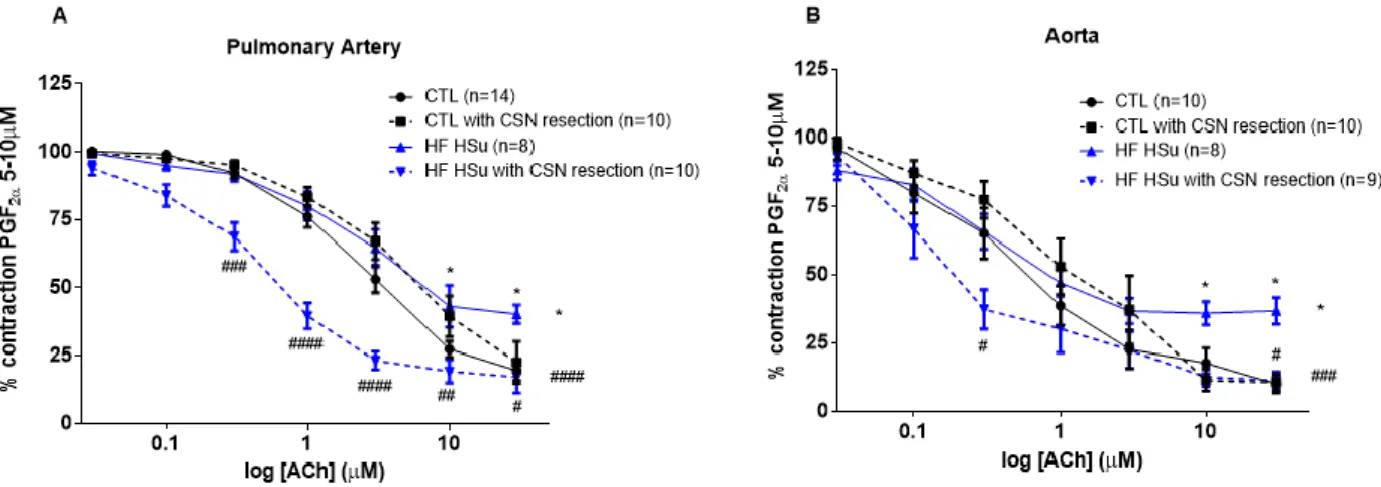
The figure 4.6 displays the evaluation of endothelial integrity, evaluated by CRC for relaxation to ACh, previously contracted with PGF2α in pulmonary artery (4.6A) and in aorta (4.6B). The HFHSu
diet decreased significantly the relaxation curve in both arteries. For the highest concentration tested, 30μM, the HFHSu diet decreased by 106% and 262% in the pulmonary artery and in the aorta, respectively (relaxation response to ACh at 30μM: CTL pulmonary artery = 19.5±2.65%; HFHSu pulmonary artery: 40.2±6.12%; CTL aorta = 10.1±3.19; HFHSu aorta = 36.7±4.41%). CSN resection did not modify significantly the CRC for relaxation in the CTL animals in both arteries (relaxation response to ACh at 30μM: CTL CSN resection pulmonary artery = 22.5±7%; CTL CSN resection aorta = 10.64±3.16%). However, for the highest concentration, 30μM, the CSN resection of the HFHSu animals increased by 57% and 69% in pulmonary artery and in aorta, respectively (relaxation response to ACh at 30μM: HFHSu CSN resection pulmonary artery = 17.2±5.86%; HFHSu CSN resection aorta = 11.2±1.84%).
17
4.6 Effect of HFHSU diet and of CSN resection on NO levels in plasma, aorta and pulmonary artery
The effect of HFHSu diet and of CSN resection in the NO levels in plasma is presented in figure 4.7. HFHSu diet increased significantly by 74% the NO levels in plasma (NO CTL =15.34±0.4 µM; NO HFHSu = 26.67±1.64 µM). CSN resection decreased by 16% NO levels in CTL animals (NO CTL with CSN resection = 12.85±0.5 µM) and 24% in HFHSu animals (NO HFHSu with CSN resection = 20.34±0.5 µM).
Figure 4.7- Effect of HFHSu diet and of CSN resection in NO levels in plasma. Bars represents mean ± SEM. One-away
ANOVA with Bonferroni multiple comparisons tests; ** p<0.01, **** p<0.0001 vs CTL; #### p<0.0001 comparing values with HF HSu.
Figure 4.8 displays the effect of HFHSu diet and of CSN resection in NO levels in the pulmonary artery and in the aorta. HFHSu diet decreased non-significantly the NO levels in the pulmonary artery by 15% (NO HFHSu pulmonary = 249±23.7 moles/g; NO CTL pulmonary = 292±15.3 moles/g), however in the aorta HFHSu diet decreased significantly NO levels by 43% (NO HFHSu aorta = 189±35.34 moles/g; NO CTL aorta = 334±17.1 moles/g). The levels of NO in the pulmonary artery, in the HFHSu with CSN resection decreased by 25% (218±15.1 moles/g) from the control value,
Figure 4.6- Concentration-responses curves for relaxation to ACh in pulmonary artery and aorta. Relaxation responses
to ACh, in pulmonary artery (A) and aorta (B), in CTL (black line ), CTL with CSN resection (black dashed line ), HF HSu (blue line ) and HF HSu with CSN resection (blue dashed line ) groups. Two-away ANOVA with Bonferroni multiple comparisons tests; * p<0.5 vs CTL; # p<0.5, ## p<0.01, ### p<0.001, #### p<0.0001 vs HF HSu.