The impact of acquisitions of small social enterprises by
giant multinational corporations on the consumers'
brand perception of the acquired firm – the case of
Ben & Jerry's
Silas Mei
Dissertation written under the supervision of Marta Bicho
Dissertation submitted in partial fulfilment of requirements for the MSc in Management with Major in Strategy & Entrepreneurship at the Universidade Católica Portuguesa, 28.03.2018.
II
Abstract
Title: The impact of acquisitions of small social enterprises by giant multinational
corpora-tions on the consumers' brand perception of the acquired firm – the case of Ben & Jerry's
Author: Silas Mei
This research examines the impact of acquisitions of small social enterprises by giant multina-tional corporations on the consumers' brand perception of the acquired firm.
The purpose of this study is to understand how consumers' brand perception of a small social enterprise is affected when acquired by a giant multinational corporation, and to provide in-sights into why consumers' brand perception is affected or not.
A qualitative study of the case Ben & Jerry's was conducted in the United States. Data were collected through interviews and analyzed using thematic analysis.
Our study demonstrates that acquisitions of small social enterprises by giant multinational corporations may have a negative effect on the consumers' brand perception of the acquired firm. More specifically, we argue that this negative effect may be reflected in the way con-sumers perceive the brand of the social enterprise when acquired by a multinational corpora-tion: as just one of many brands under the umbrella of the multinational corporation, as one that is going to lose its social commitment, as one that is going to lose its localness, and as one that has sold out. However, our findings suggest that pre-deal commitments may mitigate this effect.
Finally, our findings suggest that this negative effect may be due to consumers' negative per-ception of multinational corporations. Our findings further suggest that this negative percep-tion of multinapercep-tional corporapercep-tions might be explained not only by the distinctive nature of multinational corporations, but also by experiences consumers had with multinational corpo-rations when it came to acquisitions in general.
Keywords: Brand perception, mergers and acquisitions, social enterprises, multinational
III
Resumo
Título: O impacto das aquisições de pequenas empresas sociais por grandes multinacionais
sobre a perceção da marca pelos consumidores da empresa adquirida - o caso da Ben & Jerry's
Autor: Silas Mei
Esta dissertação analisa o impacto das aquisições de pequenas empresas sociais por multinacionais na perceção da marca pelo consumidor face à empresa adquirida.
O objetivo deste estudo é entender como é afetada a perceção da marca pelos consumidores de uma pequena empresa social, quando é adquirida por uma multinacional, bem como analisar aprofundadamente as causas da afetação ou não na perceção dos consumidores. Um estudo qualitativo do caso Ben & Jerry's foi realizado nos Estados Unidos da América. Os dados foram recolhidos através de entrevistas e analisados segundo uma análise temática. O nosso estudo demonstra que as aquisições de pequenas empresas sociais por multinacionais gigantes podem afetar negativamente, na perspetiva do consumidor, a perceção da marca da empresa adquirida. Em específico, argumentamos que esse efeito negativo pode-se refletir na forma como os consumidores percecionam a marca da empresa social quando é adquirida por uma multinacional: como uma das muitas marcas sob a alçada da multinacional, como uma empresa que poderá perder o seu compromisso social, a sua localidade ou que abdicou dos seus princípios. Porém, as nossas investigações sugerem que a existência de um compromisso pré-negociação pode mitigar esse efeito.
Finalmente, as nossas conclusões sugerem que esse efeito negativo pode derivar da perceção negativa dos consumidores face às multinacionais. Podemos ainda sugerir que essa perceção negativa das empresas multinacionais pode-se explicar não só pela natureza distintiva das corporações multinacionais, mas também pelas experiências que os consumidores tiveram com essas empresas, no que concerne às aquisições na generalidade.
Palavras-chave: Perceção da marca, fusões e aquisições, empresas sociais, empresas
IV
Acknowledgements
First of all, I would like to thank my great thesis supervisor, Marta Bicho, to whom I will al-ways be grateful for her incredible guidance and inspiration. I cannot thank her enough for the helpful feedback she gave me from the beginning. Her encouragement and patience helped me tremendously throughout the writing process.
Secondly, a special thanks to my mum and dad, Gabriele Zitzler-Mei and Siegmar Mei, who have supported me throughout my entire life, and who gave me the opportunity to study abroad at this excellent university. They always believed in me and supported me in every-thing I did.
I would also like to thank my brother, Julian Mei, and my sister, Valerie Mei, for their support and friendship.
A special acknowledgement to all the people who took part in my research as participants. Without their help, this research would not have been possible. They sacrificed their valuable time to help me with this thesis and to contribute to a better understanding of the impact of acquisitions of small social enterprises by giant multinational corporations on the consumers' brand perception. I would like to thank Joe Messingschlager, as a representative of all the participants. He was the first participant from Vermont who agreed to do an interview with me. I am truly honored to have spoken to these people, and hope that I will one day have the opportunity to visit Vermont and to thank them in person.
I would also like to thank all the people I spent time with and got to know in Lisbon for their support. I will never forget the great moments we shared in this unbelievable and beautiful city.
V
Index
Abstract ... II Resumo ... III Acknowledgements ... IV List of Tables ... VII Abbreviations ... VIII1 Introduction ... 1
1.1 Problem definition and relevance ... 1
1.2 Objective and research questions ... 2
1.3 Methodology and context ... 3
1.4 Thesis structure ... 4
2 Literature review ... 5
2.1.1 Hybrid organization ... 5
2.1.2 Social enterprise (SE) ... 5
2.1.3 Multinational corporation (MNC) ... 7
2.2 Mergers & Acquisitions (M&As) ... 8
2.2.1 Definitions and motives of M&As ... 8
2.2.2 Multinational corporations acquiring social enterprises ... 9
2.2.3 Consumers of social enterprises ... 10
2.3 Brand and brand image ... 11
2.3.1 Brand ... 11
2.3.2 Brand image ... 12
2.4 Consumer reactions to M&As ... 13
2.4.1 Consumer reactions to traditional M&As ... 13
2.4.2 Consumer reactions to acquisitions of social enterprises ... 15
3 The case of Ben & Jerry's ... 17
3.1 Company profiles before the acquisition ... 17
3.1.1 Ben & Jerry's... 17
3.1.2 Unilever ... 18
3.2 The takeover of Ben & Jerry's by Unilever and consumer reactions ... 19
4 Methodology ... 22
VI
6 Findings and Discussion ... 26
6.1.1 Brand under the multinational corporations umbrella ... 28
6.1.2 Lose its social commitment ... 29
6.1.3 Lose its localness ... 32
6.1.4 A brand that sold out ... 33
6.1.5 Pre-deal commitments ... 35
7 Conclusion ... 36
7.1 Contribution to theory and practice ... 37
7.2 Limitations and suggestions for further research ... 38
Appendix ... 41
VII
List of Tables
Table 1: Phases of thematic analysis ... 25 Table 2: The four key themes with illustrative quotations ... 26 Table 3: The four key themes and participants’ justifications, with illustrative quotations .... 27
VIII
Abbreviations
L3C - Low-profit limited liability corporations SE - Social enterprise
CSR - Corporate social responsibility WISEs - Work integration social enterprises MNC - Multinational corporation
MNE - Multinational enterprise
FMCG - Fast-moving consumer goods M&As - Mergers & Acquisitions
LOHAS - Lifestyle of health and sustainability AMA - American Marketing Association SVO - Social value orientation
1
1 Introduction
1.1 Problem definition and relevance
In recent years, giant multinational corporations have been acquiring small social enterprises that have attractive brand images and loyal customer bases (Zoi, Swain, & Bhattacharya, 2008). Unilever purchased Ben & Jerry's in 2000, Danone acquired Stonyfield Farm Yogurt in 2002, and in 2006 Colgate bought Tom's of Maine and L' Oréal became the parent of The Body Shop (Austin & Herman, 2008).
What often draws the attention of acquirers is the brand itself and the market position of the target firm (Maira, Fuchs, & Puntoni, 2016). In contrast to traditional acquisitions, when it comes to acquisitions of small social enterprises, the focus is on brands with high social con-tent (Austin & Herman, 2008).
The latter acquisitions are even more complicated, because both entities are characterized by different business models and different sets of values (Bachnik, 2013). In contrast to multina-tional corporations, social enterprises do not put profits first. They not only strive for profita-bility, but also aim to deal with some of humanity's most pressing environmental and social issues (Haigh & Hoffman, 2012).
Such acquisitions are widely debated by business analysts in terms of cultural and operational fit between the target firm and the acquirer (Zoi et al., 2008). However, the consumer per-spective has so far been largely ignored in the academic literature (Maira et al., 2016; Zoi et
al., 2008). This is surprising given the importance of brand assets in motivating acquisitions
(Maira et al., 2016).
Thus, from an academic perspective, we still do not have a good understanding of consumers' reactions to acquisitions of small social enterprises by giant multinational corporations (Zoi et
al., 2008), and the impact of such acquisitions on the consumers' brand perception of the
quired firm (Lee, Lee, & Wu, 2011). Consequently, we do not know whether or not the ac-quired brand – the very asset that motivated the acquisition – is damaged in the eyes of con-sumers after such an acquisition, or what the underlying reasons for this are (Maira et al., 2016).
2 It can be regarded as particularly urgent to study the consumer perspective nowadays, given the increasing number of such acquisitions (Austin & Herman, 2008; Bachnik, 2013) and to-day´s ease of access to information about acquisitions via the Internet, including social media (Maira et al., 2016).
Although a few studies have tried to explore the impact of acquisitions of social enterprises by multinationals on the consumers' brand perception of the acquired firm, these studies suf-fered from certain limitations – for example, the fact that most participants used for their re-search were not aware of the acquisition and/or did not know the acquired brand (e.g. Santos, 2012; Wacker, 2008).
In addition, these studies have mainly examined the impact of such acquisitions on the con-sumer-company identification, and not on the consumers' brand perception (e.g. Santos, 2012; Zoi, Swain, & Bhattacharya, 2008). The significant limitations that hindered these previous studies demonstrate the need for further research.
1.2 Objective and research questions
This research examines the impact of acquisitions of small social enterprises by giant multina-tional corporations on the consumers' brand perception of the acquired firm. The aim of this study is to understand whether or not the consumers' brand perception of a small social enter-prise is damaged when acquired by a multinational corporation, and the underlying reasons for this.
The purpose of this study is to explore these issues empirically by addressing the following research questions:
Research Question 1: How is the consumers' brand perception of a small social enterprise affected when acquired by a giant multinational corporation?
Research Question 2: Why is the consumers' brand perception affected or not?
The objective this research aims to achieve is important for two reasons. First, it will contrib-ute to a better understanding of consumers' reactions to acquisitions of small social enterprises by giant multinational corporations. Second, it will provide managers of both entities with insights into how to protect the acquired brand.
3
1.3 Methodology and context
The case of Ben & Jerry's was used with a view to answering these research questions. In ad-dition, a qualitative study was conducted in the United States with participants that fulfilled the requirements, in that they were already consumers of Ben & Jerry's before the acquisition, and knew that Ben & Jerry's was acquired. This was important against the background that we wanted to examine the impact of such acquisitions on the brand perception of consumers of small social enterprises when they knew that their brand was finally acquired by a giant mul-tinational corporation.
The study was conducted in the United States, where Ben & Jerry's was founded (Austin & Herman, 2008). This helped to ensure that participants met the requirements mentioned above.
The use of a qualitative method, specifically the use of the interview technique, was consid-ered appropriate not only to understand how consumers' perception of the Ben & Jerry's brand was affected when acquired by Unilever, but also to gain insights into why consumers' brand perception was affected or not.
The case of Ben & Jerry's is especially suitable for a number of reasons. First, this case is not a hypothetical example of an acquisition, but rather a case from real-world practice. Second, sustainable food producers are well-studied examples for social enterprises (Dees, 2001; Mair, 2010). Third, Ben & Jerry's was once recognized as “the darling of proponents of social enterprise and social entrepreneurship” (Page & Katz, 2010, p. 211), and was therefore ideally representative of social enterprises. Finally, the acquisition of Ben & Jerry's by Unilever was later viewed as a “successful marriage” (Gelles, 2015), and it was therefore assumed that this acquisition had little, no negative or perhaps even a positive impact on the consumers' percep-tion of Ben & Jerry's. The case of Ben & Jerry's could therefore be regarded as a best practice example.
4
1.4 Thesis structure
This thesis is organized into seven chapters. The current chapter introduces the subject of this dissertation, followed by the research questions that are intended to answer the problem statement. Chapter 2 provides a review of the existing literature on the topic of this disserta-tion. Chapter 3 introduces the case of Ben & Jerry's, outlining both company profiles before the acquisition, as well as the takeover of Ben & Jerry's by Unilever, including consumer re-actions. Chapter 4 describes the adopted methodology, and is followed in the Chapter 5 by a description of the analysis approach that was applied. Chapter 6 presents and discusses the findings from the qualitative data (interviews). Finally, the Chapter 7 draws conclusions based on the main findings of the study, outlines contributions made, points out the study's limita-tions, and provides suggestions for further research.
5
2 Literature review
2.1.1 Hybrid organization
For most of the last century, commercial businesses, public organizations and private charities embodied distinct forms associated with the private, public, and non-profit sectors, respective-ly. However, over the past thirty years the boundaries between these forms and their accom-panying sectors have become increasingly blurred, symbolized by the rise of hybrid organiza-tions (Battilana & Lee, 2014).
Hybrid organizations are defined as organizations that “combine the social logic of a non-profit with the commercial logic of a for-non-profit business” (Blanding, 2013, p. 1).
These organizations not only place a high value on the quality of goods and services, but also on the ability to create positive environmental and social change. They also have been called fourth sector, blended value, low-profit limited liability corporations (L3C), and for-benefit, mission-driven, values-driven or benefit corporations (Haigh & Hoffman, 2012).
While past research has focused more on tensions that threaten the sustainability of hybrid organizations than on generative possibilities, recent research focus on hybrids in organization theory has been on the so called social enterprises that Battilana and Lee (2014, p. 397) view as “an ideal type of hybrid organization”.
2.1.2 Social enterprise (SE)
Researchers have adopted a wide range of definitions of social enterprise. Some researchers see a social enterprise in any kind of social venture that promotes a social purpose, while oth-ers see it in social ventures that engage in commercial activities to sustain their operations. Others still view it as the identification, assessment, and exploitation of opportunities that bring a social return, or any innovative initiative that aims to address a social problem. The term “social enterprise” has therefore developed within academia as an “umbrella” construct, with wide range and ambiguous boundaries (Battilana & Lee, 2014; Battilana, Sengul, Pache, & Model, 2015).
6 However, Battilana and Lee (2014) make a very clear distinction between organizations in which both business and charity are part of the core, and those in which one of these two ele-ments is peripheral, that will be used for the purpose of this thesis.
The latter has already been widely addressed in the existing literature. Organizations in which business is core and charity is peripheral are well addressed by research on corporate social responsibility (CSR), in which activities in favor of social welfare are responsive to environ-mental demands and hence protect the core business (e.g. Carroll, 1999; McWilliams & Siegel, 2001). Similarly, research on non-profit organizations has for a long time studied businesses that substitute for shortfalls in charitable funding and thereby supplement dona-tions (e.g. Anheier, 2000; Weisbrod, 1998) (Battilana & Lee, 2014). Interestingly, Battilana and Lee (2014) discovered that the term “social enterprise” has often been used for these kinds of organizations in which one part – either the business or the charity part – is peripher-al.
By contrast, Battilana and Lee (2014) labeled organizations in which both business and chari-ty are part of the core as social enterprises. This definition is also in line with researchers who state that charity and business forms that have historically been considered distinct and often incompatible are both core to the functioning of social enterprises (Besharov & Smith, 2014; Galaskiewicz & Barringer, 2012). Furthermore, recent advances in research on hybrid organi-zations have also focused on social enterprises that combine aspects of the charity and busi-ness forms at their core (Battilana & Lee, 2014; Battilana et al., 2015; Jay, 2013; Mcmullen & Warnick, 2016; Pache & Santos, 2013). Based on the previous considerations regarding the different definitions of social enterprise, we use the term “social enterprise” to describe organ-izations that “combine the charity and business forms at their core” (Battilana & Lee, 2014, p. 409).
Well-studied examples of social enterprises include microfinance organizations, work integra-tion social enterprises (WISEs) and sustainable food producers (Dees, 2001; Mair, 2010). In recent years, it was not only sustainable food producers, such as Ben & Jerry's and Stony-field Farm, that were acquired by multinational corporations, but also other social enterprises such as The Body Shop and Tom's of Maine (Austin & Herman, 2008).
7 In the next section the term “multinational corporation” will be defined followed by an over-view of traditional mergers and acquisitions and of the special acquisition phenomenon where multinational corporations acquire social enterprises.
2.1.3 Multinational corporation (MNC)
The term “multinational corporation” (MNC) is a synonym for “multinational enterprise” (MNE), and is commonly used in the international business context. In the theoretical litera-ture one encounters primarily definitions of multinational enterprises (Daniels & Radebaugh, 1998). On the whole, these definitions of multinational enterprises can be regarded as quite similar.
Rugman and Hodgetts (2003) define a multinational enterprise as a company that is headquar-tered in one country, but also has operations in other countries. In line with this definition, Kogut (2001) defines a multinational corporation as a corporate organization whose activities are located in more than two countries, and adds that it is the form that defines foreign direct investment.
Daniels and Radebaugh (1998) point out, however, that there are also some narrower defini-tions of the term “multinational enterprise”. As an example, the authors mention the view held by some that in order to be regarded as a multinational enterprise, a company must have pro-duction plants in a minimum number of countries, or be of a certain size.
Most researchers today use the term “multinational enterprise” to include any company that has operations in more than one country (Daniels & Radebaugh, 1998). This is also the way the term is used in this thesis. However, the use of the term “giant multinational corporations” underlines that we are dealing with extreme cases of multinational corporations (in terms of the number of countries in which they operate and in terms of their size).
In the fast-moving consumer goods (FMCG) industry the size of these giant multinational corporations is also reflected in the enormous number of brands they control. In the food in-dustry, for example, one could say that the industry is controlled by 10 giant multinational corporations, including Unilever (for an overview of the 10 companies and their main brands see Appendix 1) (Kramer, 2014).
8 Moreover, although companies do not have to go public to be regarded as multinational en-terprises, most of them are publicly traded (Thompson, n.d.).
One of the most common ways of expanding worldwide operations and/or gaining an interna-tional foothold is through mergers and acquisitions (Rugman & Hodgetts, 2003).
2.2 Mergers & Acquisitions (M&As)
In this thesis M&As will largely be referred to as a single phenomenon, although mergers and acquisitions are in fact conceptually different (Santos, Ferreira, Reis, & Serra, 2011).
2.2.1 Definitions and motives of M&As
In general, there are two primary mechanisms by which ownership and control of a publicly traded corporation can change (Berk & DeMarzo, 2011).
The first mechanism is that by which one corporation or group of individuals acquires another firm (Berk & DeMarzo, 2011). Haspeslagh (1991) defines an acquisition as the purchase of one firm (the target firm) by another (the acquirer), which, in contrast to a merger, does not result in the formation of a new organization.
The second mechanism is that by which the target firm merges with another firm (Berk & DeMarzo, 2011). Ross, Westerfield, and Jaffe (1998), and Gaughan (1999) state that a merger involves a consolidation process and the creation of a new organization, with the dissolution of the original organizations.
Georgios and Georgios (2011) put it in a very simple and illustrative way by stating that in a merger, two or more firms team up to become a single firm, while in an acquisition, a large and financially healthy firm purchases a small firm. The latter definition applies very well to the subject of this study, as this thesis examines the acquisition of small social enterprises by giant multinational corporations.
Acquiring other firms is a usual way for companies to grow. Firms with strong brands and market positions are the particular focus of acquirers. Although acquirers often possess the resources to create new brands, they find it difficult and time consuming to build new ones with unique identities (Austin & Herman, 2008; Maira, Fuchs, & Puntoni, 2016).
9 Extensive research has been done on traditional M&As, both from a national as well as an international perspective. The majority of the studies focused on the pre- and post-acquisition performance of the parties involved (Santos, Ferreira, Reis, & Serra, 2011). In this thesis the term “traditional M&As” is used to refer to mergers and acquisitions that do not involve so-cial enterprises as target firms.
In strategic management, the post-acquisitions integration of the acquired firms has warranted particular research attention (Santos, Ferreira, Reis, & Serra, 2011). A substantive body of theory and research on M&As suggests that cultural differences can create major obstacles to achieving integration benefits, whereas the opposite view holds that differences in culture can be a source of value creation and learning – a view that has been empirically supported (Stahl & Voigt, 2008). To date, the existing literature on M&As has adopted a predominantly inter-nal perspective on traditiointer-nal acquisitions, and the subject has received little attention from an external perspective. Consequently, the consumer perspective has so far been largely ignored by the existing literature (Maira et al., 2016). This is true also in the case of multinational corporations acquiring social enterprises.
2.2.2 Multinational corporations acquiring social enterprises
Since 2000, many multinational corporations have acquired relatively small social enterprises that have socially progressive brands (Austin & Herman, 2008; Bachnik, 2013).
To the best of our knowledge, there is little academic literature on acquisitions of social en-terprises by multinational corporations (Austin & Herman, 2008). Thus, from an academic perspective we still do not have a good understanding of consumers' reactions to such an ac-quisition phenomenon (Zoi et al., 2008) and the impact of acac-quisitions of social enterprises by multinationals on the consumers' brand perception (Lee et al., 2011).
It is important to study the consumer perspective, because it provides us with the opportunity to establish whether or not the brand is damaged after such an acquisition and the underlying reasons for this (Maira et al., 2016).
A brand with a damaged image is expected to affect brand choice by making consumers less likely to consider the brand when making a buying decision in the category, and less likely to associate it with the desired attributes (Pullig, Simmons, & Netemeyer, 2006).
10 The next section provides a brief overview of consumers of social enterprises, followed by a literature review regarding relevant terminologies such as brand and brand image. The chapter concludes with a literature review regarding consumer reactions to M&As.
2.2.3 Consumers of social enterprises
Social enterprises do not only have attractive brand images, but also often enjoy loyal cus-tomers bases (Zoi et al., 2008). These enterprises are underpinned by a new and growing de-mographic of individuals who place a higher value on healthy living, ecological sustainability, and environmental and social justice in all aspects of their lives: in the products and services they purchase, the organizations in which they invest, the politicians and policies they sup-port, the organizations for which they work, and, finally, the lifestyles they lead (Haigh & Hoffman, 2012). This lifestyle is empirically defined as lifestyle of health and sustainability (LOHAS) (Choi & Feinberg, 2017).
These individuals are regarded as pacesetters in the establishment of markets for products and services that claim to be environmentally and socially responsible (Cohen, 2005). The latest figures indicate that they have changed the consumer market. In 2001, the LOHAS demo-graphic within the United States was estimated at 50 million people, and had grown to 68 mil-lion by 2003. The value of the LOHAS market for the United States was estimated at $209 billion in 2008. By 2011, that value had grown to $290 billion. The consumer market consti-tutes an estimated 30% of the approximately $300 billion spent by these individuals each year (Haigh & Hoffman, 2012).
11
2.3 Brand and brand image
2.3.1 Brand
The most common definition of a brand is given by the American Marketing Association (AMA). According to the AMA, a brand is:
“A name, term, sign, symbol, or design, or a combination of them, intended to identify goods and services of one seller or a group of sellers and to differentiate them from those of competition” (Keller, 2013, p. 30).
However, Keller (2013) makes a distinction here between the AMA’s definition of the term “brand” and the industry’s concept of the term. The author states that practicing managers often refer to a brand as constituting more than is contained in the AMA definition. Managers therefore refer to a brand as something that has created in the market place a certain level of awareness, reputation, and prominence, among other things.
Kotler and Pfoertsch (2006) add that a brand is much more than a product, a brand name, a symbol, or a logo, which are merely tangible components of a brand:
“A brand is a promise, the totality of perceptions – everything you see, hear, read, know, feel, think, etc. – about a product, service, or business. It holds a distinctive position in customer’s minds based on past experiences, associations and future expectations. It is a short-cut of attributes, benefits, beliefs and values that differentiate, reduce complexity, and simplify the decision-making process” (Kotler & Pfoertsch, 2006, p.12).
Since this thesis focuses on the impact of M&As on consumers' brand perception, the defini-tion given by Kotler and Pfoertsch (2006) is particularly suitable, since percepdefini-tions and the consumer's mind play a central role in their definition.
12
2.3.2 Brand image
In the literature, brand image is primarily defined from four perspectives: blanket definitions, messages and meanings, personification, and cognitive or psychological elements (see Ap-pendix 2 for a detailed overview of the different brand image concepts) (Zhang, 2015). Herzog (1963) defines brand image as “consumers' general perception and impression of a brand” and provides a useful broad definition of the term “brand image” for this thesis, since it places emphasis on the overall perception and impression of a brand (Zhang, 2015, p. 59). Keller (1993, p. 3) gives a similar but more narrow definition of brand image as “perceptions about a brand as reflected by the brand associations held in consumer memory”; and goes on to specify these brand associations as “the other informational nodes linked to the brand node in memory and contain the meaning of the brand for consumers”. Aaker (1991, p. 147) pro-vides a broader definition of the term “brand associations” as “anything that is linked in memory to a brand.” Thus, brand associations not only imply the impression of an individual brand itself, but also the image of the company that offers the product or service (Oh & Pizam, 2008).
The definition of the term “brand associations” by Aaker (1991) is especially useful for this study, because when referring to the consumers' perception of a brand such as Ben & Jerry's we not only imply the impression of the Ben & Jerry's brand that relates to the product itself, but also to the image of the Ben & Jerry's company. This, in turn, means that when we are talking about the Unilever brand, we imply the image of the Unilever company, as well as the impression of the Unilever brand, which stands for a broad variety of individual brands. Keller (1998) and Aaker (1991) posit that consumer perception of a brand is a multi-dimensional concept where different types of brand associations make up the brand image – for example, product-related or non-product-related attributes; experiential, functional, or symbolic benefits; and overall brand attitudes (Oh & Pizam, 2008). These associations, in turn, can vary depending on their strength (i.e. the strength of connection to the brand node), favorability (i.e. how favorably they are evaluated), and uniqueness (i.e. if they are shared with other competing brands) (Keller, 1993).
For the purpose of this study, we are interested primarily in gaining insights into the nature of brand associations, thus focusing on the different types of brand associations making up the brand image, rather than on the strength, favorability, and uniqueness of these associations.
13 High levels of brand awareness and a positive brand image (strong, favorable, and unique brand associations) are expected to increase the probability of brand choice, enable the oppor-tunity to charge premium prices, enhance consumer loyalty and positive word-of-mouth, and reduce vulnerability to competitors' marketing activities (Martenson, 2007; Oh & Pizam, 2008).
Having demonstrated the impact brand image has on consumer behavior, we turn to the ques-tion of the impact of acquisiques-tions of small social enterprises by multinaques-tional corporaques-tions on consumers' brand perception of the acquired firm.
2.4 Consumer reactions to M&As
As indicated earlier, it seems that up to now, little literature has been available relating to studies that evaluate the impact of M&As on consumers' brand perception.
However, there are a few studies that focus on consumer reactions to M&As. These studies, which are discussed in the next section, all display certain similarities to our research ques-tions; and their findings could therefore be useful for this study.
2.4.1 Consumer reactions to traditional M&As
Although, according to signal theory, consumers should interpret acquisitions as a quality sign with regard to the acquired firm and hence react positively to it, most studies that focus on consumer reactions to traditional M&As document the existence of negative effects of acqui-sitions – such as those mentioned by Maira et al. (2016). All these studies reveal negative effects of acquisitions on a series of consumer response measures (i.e. attitude towards the acquired brand, product choice, and online posting behavior).
One of the studies mentioned by the authors demonstrates that in product categories charac-terized by high identity relevance, participants preferred products sold by independent firms, in contrast to categories characterized by low identity relevance where they opted for products sold by acquired firms.
Another research documents negative effects of acquisitions on product choice in a real set-ting. When asked to choose between an acquired and a non-acquired chocolate brand, the
ma-14 jority of participants chose the non-acquired brand. In line with these findings, a study on user comments on online newspaper articles about craft beer indicates that user comments are more negative when the main subject of the news article is craft beer acquisitions, as against craft beer in general.
Moreover, one investigation documents that when consumers are informed that the former founders are still involved in the acquired firm after the acquisition, the negative effect of acquisition is mitigated.
Another study reveals that the identity of the acquired brand becomes weaker as a result of the acquisition, and thus results in a decrease in consumer attitudes.
Furthermore, another paper points out that consumers' reactions to acquisitions vary depend-ing on the positiondepend-ing of the acquired brand. An acquisition is especially harmful for a brand that leverages identity-related aspects (e.g. uniqueness) in its positioning (Maira et al., 2016). In summary, the studies referred to above support the hypothesis of Maira et al. (2016) that acquisitions lead to a decrease in attitudes towards products and brands of acquired compa-nies that operate in identity-relevant product categories.
Furthermore, research conducted by Lee et al. (2011) examines the impact of acquisitions on the acquirer´s brand equity, where the acquirer has a weak brand image, and the acquired company has a stronger brand image. The study examines how brand equity of an acquired brand changes after an acquisition. The results of this study reveal that the brand equity of the acquired brand significantly decreases after M&A the greater the perceived differences be-tween acquirers and acquired brands with brand association experiences a sharp decline. In contrast to the studies referred to above that focus mainly on consumer reactions to tradi-tional M&As, there are also a few studies that examine consumer reactions to acquisitions of small social enterprises by multinational corporations.
15
2.4.2 Consumer reactions to acquisitions of social enterprises
The study by Zoi et al. (2008) was an important contribution to the literature on consumer reactions to acquisitions of small social enterprises by multinational corporations. Their study finds heterogeneity in the reaction of consumers to these kinds of acquisitions. According to their study, this heterogeneity varies significantly with both company and consumer charac-teristics.
The study reveals, in particular, that the identification with the acquired company increases when the acquiring company has a high rather than a low CSR image, provided that ers attribute the acquiring company´s CSR activities to intrinsic motivations, i.e. that consum-ers believe that the company is primarily concerned with fulfilling its obligation to society. In contrast, when consumers attribute a company´s CSR activities to extrinsic motivations, it would imply that consumers believe that the company is primarily concerned with increasing its own welfare (Zoi et al., 2008).
The study further demonstrates that when consumers do not attribute strong intrinsic motives behind the acquiring company´s engagement in CSR, both proself as well as prosocial con-sumers identify less with the acquired company (Zoi et al., 2008).
According to the social value orientation (SVO) theory, proself individuals have a tendency to define social dilemmas as questions of intelligence, where people can make either strong or weak decisions, whereas prosocial individuals tend to regard social dilemmas as questions of morality, where people can make either good or bad choices (Zoi et al., 2008). Therefore, the authors suggest that prosocial individuals either perceive the acquisition as a sellout by the acquired firm or as an opportunity to do more societal good.
Nevertheless, one limitation of the study by Zoi et al. (2008) is that participants were merely informed about a hypothetical acquisition while reading a news story about the acquisition. Moreover, it is unclear whether or not participants were consumers of the acquired brand. These limitations were also present in other studies that tried to explore the impact of acquisi-tions of social enterprises by multinational corporaacquisi-tions on the consumers' brand perception of the acquired firm (e.g. Santos, 2012; Wacker, 2008).
Furthermore, these studies focus mainly on the acquisition´s consequences for the consumer-company identification, and not explicitly for the consumers' brand perception (Santos, 2012; Zoi, Swain, & Bhattacharya, 2008).
16 However, it is also important to mention the study conducted by Austin and Herman (2008) that also made an important contribution to the acquisition phenomenon where multinationals acquire social enterprises. Even though they do not explicitly adopt a consumer perspective, it can be expected that their contribution may play a role in this regard. The authors conducted in-depth interviews with managers and founders of both entities, and identified six activities that contribute to the effectiveness of M&As: aligning values, managing cultural sensitivities, preserving brand integrity, capturing synergies, providing reassurance, and engaging the so-cial entrepreneur. We expect that these activities, in turn, moderate potentially negative ef-fects of acquisitions on the consumers' brand perception of the acquired firm.
The following chapter introduces the case of the acquisition of Ben & Jerry's acquired by the giant multinational corporation Unilever.
17
3 The case of Ben & Jerry's
In this thesis, Ben & Jerry's serves as a representative of social enterprises, and Unilever as a representative of multinational corporations. For the purpose of this study we consider the time period until 2000, when Unilever finally acquired Ben & Jerry's.
3.1 Company profiles before the acquisition
3.1.1 Ben & Jerry's
Ben & Jerry's was founded in 1978 by Ben Cohen and Jerry Greenfield, both known for their commitment to social causes and their open, relaxed character (Austin & Herman, 2013; Austin & Quinn, 2007). Ben & Jerry's was a social enterprise that did not put profits first. Rather, it pursued a so called “double bottom line”, which the Ben & Jerry's founders called “double-dip” seeking to achieve social goals, while still yielding an acceptable financial re-turn at the same time (Page & Katz, 2010). The company operated with a three-part mission statement emphasizing product quality, economic reward and a commitment to the society and community (for a detailed overview of the Ben & Jerry's mission statement see Appendix
3) (Austin & Herman, 2008).
In 1984, Ben & Jerry's went public and issued shares to Vermont residents only (Page & Katz, 2010, 2012). The founders chose the public form instead of seeking venture capital because they feared that venture financing posed a greater risk to their control over the company. In addition, they thought that this could also create a bond between their customers and the com-pany, by giving those from the community the chance to invest in the company (Page & Katz, 2010).
Furthermore, industry observers highlighted the quality of the ice cream and acknowledged the personality of the company and its founders (Austin & Herman, 2008; Austin & Quinn, 2007).
Moreover, the company committed to a variety of social causes on a local as well as a large scale. The Ben & Jerry's Foundation was established in order to fund community-oriented projects. A total of 7,5% of the company´s annual pretax profits was pledged to fund the foundation (Austin & Herman, 2008; Austin & Quinn, 2007). Besides the foundation,
18 Ben & Jerry's installed community action teams (CATs) that decided on small grant requests – generally $100 to $1000 – for Vermont-based nonprofit organizations. This corporate giv-ing supported statewide nonprofit organizations and was accompanied by a gift program in which employees made donations to nonprofit organizations, and the company matched dol-lar-for-dollar up to $1000 per employee annually (for a detailed overview of these social and philanthropic disbursements see Appendix 4) (Austin & Quinn, 2007). Furthermore, Ben & Jerry's bought ingredients from suppliers who employed disadvantaged people (Page & Katz, 2010), and purchased milk and cream from local family farms, thus supporting the Vermont economy (Bachnik, 2013; Page & Katz, 2010). From the beginning, this commit-ment to Vermont was also emphasized by placing “Vermont´s Finest” on their packaging (Page & Katz, 2010).
Moreover, Ben & Jerry's helped establish the nonprofit initiative “1% For Peace”, with the intended objective to reroute 1% of the national defense budget to peace-promoting projects (Austin & Quinn, 2007; Page & Katz, 2010).
Consequently, Ben & Jerry's was once the darling of advocates of social enterprise. However, the adulation dropped off significantly when Ben & Jerry's was acquired by Unilever in 2000 (Page & Katz, 2010).
3.1.2 Unilever
The following section is based primarily on the case study of Austin and Quinn (2007). The authors selected quotes and data from Unilever annual reports.
Unilever was a leading publicly traded, multinational company headquartered in the United Kingdom, with branded businesses in the food industry, as well as in home and personal care. Its core product categories included tea, culinary, ice cream, skin care, and deodorants, with well-known brands such as Dove, Lipton, and Magnum (Austin & Quinn, 2007). In 1999, Unilever was doing business in more than 150 countries, and had 1,600 brands (Austin & Quinn, 2007; Özsomer & Altaras, 2008).
Like many other European companies, Unilever took pride in its corporate citizenship. “Envi-ronmental responsibility” as well as “responsible corporate behavior” were stated priorities within Unilever (Austin & Quinn, 2007).
19 On the environmental side, the company had completed environmental audits at 90% of its factories by 1999. In addition, Unilever run a program of “eco-efficiency”. It also incorpo-rated a complete screening of its fishery suppliers. The company was also involved in several clean-water initiatives (Austin & Quinn, 2007).
On the responsible behavior side, a Company Code of Business Principles was established (for more information see the Unilever Code of Business Principles in Appendix 5) (Austin & Quinn, 2007). In addition, Unilever committed to raising living standards in communities in which the company had operations, to developing both employees and business partners, and to working with public authorities and organizations to address important social, economic, and environmental challenges (Austin & Quinn, 2007).
3.2 The takeover of Ben & Jerry's by Unilever and consumer reactions
It was in January 2000 when first rumors emerged that Ben & Jerry's had received unsolicited takeover bids from a handful of giant multinational corporations. Potential acquirers included Dreyer´s Grand Ice Cream, Diageo, Nestle, Roncadin and Unilever. Many familiar with the Ben & Jerry's history and brand feared that joining forces with a giant multinational corpora-tion could compromise the company’s social mission. The business press reported that the news of a potential acquisition provoked cries of outrage from various Ben & Jerry's stake-holders. Ben & Jerry's fans and followers joined rallies outside company stores, and a “Save Ben & Jerry's” website was created (Austin & Quinn, 2007).
In March 2000, it then became known that Unilever was interested in acquiring Ben & Jerry's (Austin & Quinn, 2007). As the world’s biggest ice cream maker, Unilever identified the op-portunity to reduce costs and increase revenue by acquiring Ben & Jerry's, which was posi-tioned in the super premium segment with a distinctive social character and market appeal (Austin & Herman, 2008). Unilever was looking at a new market created by Ben & Jerry's and betting on brands with high social content (Austin & Quinn, 2007; Page & Katz, 2010). In April 2000, Unilever made its bid for Ben & Jerry's, which was a cash tender offer of $43.60 per share, with a 25% premium over the current stock price (Austin & Quinn, 2007). The Unilever leadership was well aware of Ben & Jerry's unique brand, and the company’s top management therefore made a number of pre-deal commitments.
20 First, Ben & Jerry's would keep its brand name. Second, Unilever promised to retain all of Ben & Jerry's employees for a minimum period of two years after the acquisition. Third, Uni-lever pledged to fund an initial $5 million to the Ben & Jerry's Foundation. In addition, the original formula of 7,5% of pretax profits was revised to specify a percentage of sales, with a minimum of $1.1 million for 10 years after the acquisition (Austin & Herman, 2008; Austin & Quinn, 2007). Fifth, Unilever would keep much of Ben & Jerry's operations separate (Page & Katz, 2010). Sixth, Unilever committed to create what they called an “external board”, which would include the founders of Ben & Jerry's (Austin & Quinn, 2007; Page & Katz, 2010).
With the creation of the “external board” in particular, Unilever made a move that was later considered unique in the world of corporate governance (Austin & Quinn, 2007). The stated role of the created “external board” was to assist Ben & Jerry's CEO with managing the brand and to provide leadership for the social mission (Austin & Quinn, 2007; Page & Katz, 2010). Thus, its relationship to the CEO of Ben & Jerry's was strictly advisory (Austin & Quinn, 2007). The “external board” was established in perpetuity and was meant to conduct business in a similar way to a company’s board of directors (Austin & Quinn, 2007).
In contrast to conventional boards, the “external board” did not report to any group outside of itself, such as shareholders or people from the Unilever management. In addition, the “exter-nal board” was empowered to file lawsuits in the event they believed that Unilever was not living up to the agreement. However, the “external board” was created to work in concert and not as a legal adversary (Austin & Herman, 2008; Austin & Quinn, 2007).
Ben & Jerry's board had two options – either accept the offer or make strong efforts to thwart it by testing anti-takeover defenses and other liability shields already in place (Austin & Quinn, 2007; Page & Katz, 2010).
On April 13, 2000, the deal was announced, having been approved by the board (Hays, 2000). The news of the acquisition “sent shudders and shivers through the socially responsible busi-ness community” (Page & Katz, 2010, p. 212) and caused considerable criticism, notwith-standing announcements by Ben & Jerry's and Unilever regarding the acquisition (Page & Katz, 2010).
21 Both companies issued press releases when the acquisition was announced, Ben & Jerry's asserting that:
“Shareholders will be rewarded for their investment; Ben & Jerry's employees will be protected; the current social mission of Ben & Jerry's will be encouraged and well-funded, which will lead to improved performance in this area; and an opportunity has been offered for Ben & Jerry's to contribute to Unilever's social practices worldwide” (Page & Katz, 2010, p. 242).
In its press release Unilever claimed that it was “in an ideal position to bring the Ben & Jerry's brand, values and socially responsible message to consumers worldwide” (Page & Katz, 2010, p. 226).
Many consumers were skeptical that Ben & Jerry's would remain a company for good. More-over, some consumers made endeavors “to educate Unilever about the importance of keeping the Ben & Jerry's social mission alive and creative”, which included an e-mail campaign and a boycott (Page & Katz, 2010, p. 227). Particularly interesting were the calls to “Tell Unilever that you want a CEO for Ben & Jerry's with a proven track record of social involvement” and “Tell Unilever you will not be loyal to a soulless brand” (for the full text of the Save Ben & Jerry´s website see Appendix 6) (“Save Ben & Jerry´s,” n.d.).
Interestingly, the major terms of the pre-deal commitments mentioned above were also men-tioned in a newspaper article published on 13 April, 2000 by the New York Times, one of the largest daily newspapers in the United States (Hays, 2000).
In September 2000, the acquisition was finalized at the agreed-upon price of $43.60 per share, and Unilever therefore paid $326 million for Ben & Jerry's (Austin & Herman, 2008; Austin & Quinn, 2007). However, contrary to the myth, the board was not legally required to sell Ben & Jerry's (Page & Katz, 2012).
After the acquisition, one of the key challenges was to maintain the distinctive brand image of Ben & Jerry's (Austin & Quinn, 2007).
22
4 Methodology
This research was conducted to examine the impact of acquisitions of small social enterprises by giant multinational corporations on consumers' brand perception of the acquired firm. Spe-cifically, we wanted to understand how consumers' brand perception of a small social enter-prise was affected when acquired by a giant multinational corporation and to provide insights into why consumers' brand perception was affected or not.
The case of Ben & Jerry's will be used to explore our research questions. This case is espe-cially suited, because it represents a practical case of such an acquisition phenomenon, and Ben & Jerry's serves as an ideal representative of social enterprises.
This study uses a qualitative method, because it helps us not only in gaining a better under-standing of how consumers' perception of the Ben & Jerry's brand was affected when ac-quired by Unilever, but also in gaining insights into why consumers' brand perception was affected or not.
Using a qualitative method provides us a way to explore changes, if any, in consumer brand perception, and to gain an in-depth understanding of the underlying reasons behind this (Boyce & Neale, 2006; Rosenthal, 2016). Moreover, the use of a qualitative research tech-nique was suggested by Keller (1993) with a view to gaining insights into the nature of brand associations.
We made use of in-depth interviews, because with this qualitative research technique one can gain an in-depth understanding of participants' perceptions, opinions, feelings, thoughts, and knowledge (Boyce & Neale, 2006; Rosenthal, 2016). One can therefore explore their perspec-tives on particular situations – for example, their perspective on the acquisition (Boyce & Neale, 2006).
Determining the appropriate sample size for in-depth interviews is an essential step in the research process (Rosenthal, 2016). Ketokivi and Mantere (2010) claim that there are no methodological requirements for the sample size in qualitative research, and that it is there-fore at the discretion of the researcher. However, many researchers in qualitative research generally use saturation as a methodological principle (Mason, 2010).
23 In terms of the saturation principle, data collection is discontinued when the collection of new data does not shed any further light on the issue under examination (Mason, 2010). Saturation is also the guiding principle we made use of during our data collection.
Due to our research questions we decided to use purposive sampling (i.e. specifically recruit-ing individuals that have the experience required for an investigation in terms of the research questions) as the sample approach (Anderson, 2010; Rosenthal, 2016). In addition, we used snowball sampling (i.e. asking interviewees to identify other participants who have similar experience), which is a sub-type of purposive sampling and especially useful in accessing populations that are difficult to reach (Patton, 2002; Rosenthal, 2016). With these sample ap-proaches we wanted to ensure that our participants had the requisite experience required for an investigation in terms of the research questions.
In order to achieve this, interviews were conducted only with participants that fulfilled the requirements that they were already consumers of Ben & Jerry's before the acquisition and knew that Ben & Jerry's had been acquired.
The study was conducted in the United States, since Ben & Jerry's originated in the United States (Austin & Herman, 2008). This setting was therefore regarded as appropriate for meet-ing our requirements mentioned above.
A total of 10 interviews – each lasting between 30 minutes and 60 minutes – were conducted in English, between 21 November, 2017 and 19 January, 2018, and were transcribed for anal-ysis. In order to prepare the data for analysis we worked with the data management programs NVivo and Excel.
Seven of the ten participants were from Vermont, where Ben & Jerry's was founded, and the majority of them had even met the founders, Ben Cohen and Jerry Greenfield. A table con-taining the respondents’ profiles can be found in Appendix 7.
The interview protocol was build on the basis of the following structure and topics.
The first part was aimed at obtaining a better understanding of the participant’s profile in terms of SVO and of how familiar the participant was with the Ben & Jerry's brand, and was later supplemented by the connection the participant had with the Ben & Jerry's brand before the acquisition. It should be remembered that the topic regarding the SVO was also used by Zoi et al. (2008), whose study was considered in detail before. Applying similar topics was considered appropriate, since it could be expected that these topics would help us to gain an
24 in-depth understanding of the consumers' brand perception as well as of the underlying rea-sons for this.
In the second part, we not only investigated the connection between the participant and the Ben & Jerry's brand before the acquisition, but also how the participant perceived the Ben & Jerry's brand before the acquisition. We also examined the extent to which the social benefits accompanying the Ben & Jerry's brand created a distinctive value proposition for the participant. The main objective of this second part was therefore to understand how the partic-ipant had perceived the Ben & Jerry's brand before the acquisition.
The third part examined the first thoughts the participants had when they first heard rumors that Ben & Jerry's had received unsolicited takeover bids from a handful of large multination-al corporations, such as Nestle and Unilever.
In the fourth part we captured the first thoughts the participants had when they heard that Uni-lever had finally acquired Ben & Jerry's, how they first heard about the acquisition, and whether they made any efforts to find additional information about the acquisition. In addi-tion, we examined how the participants perceived the Unilever brand, and the extent to which they attributed the CSR activities to intrinsic motivations. Again, the latter topic was also ad-dressed by Zoi et al. (2008).
Furthermore, as proposed by our research questions, we asked the participants what effect the acquisition had on their perception of the Ben & Jerry's brand and what the reasons behind this were when they knew that Unilever had finally acquired Ben & Jerry's in 2000.
In the fifth and last part, we wanted to know whether the participant was aware that the sale of Ben & Jerry's was not legally required, followed again by the questions about the effect the acquisition had on the participants' perception of the Ben & Jerry's brand and the reasons be-hind this. It was anticipated that this information would have a strong effect on the way the Ben & Jerry's brand was perceived.
25
5 Data analysis
We used a thematic analysis approach, as described by Braun and Clarke (2006). The authors define thematic analysis as “a method for identifying, analyzing and reporting patterns (themes) within data” (Braun & Clarke, 2006, p. 79). Thematic analysis is particularly useful for this study – not only can it summarize essential features of large data sets, and/or provide a “thick description” of the data set, but it can also produce unanticipated insights (Braun & Clarke, 2006). Such a thematic approach can therefore generate an insightful analysis that answers particular research questions such as those posed in this thesis (Braun & Clarke, 2006).
We followed the six phases of analysis outlined by Braun and Clarke (2006), as set out in Table 1 below.
Phase Description of the process
1. Familiarizing yourself with your data
Transcribing data (if necessary), reading and re-reading the data, noting down initial ideas.
2. Generating initial codes
Coding interesting features of the data in a systematic fashion across the entire data set, collating data relevant to each code. 3. Searching for themes Collating codes into potential themes, gathering all data
rele-vant to each potential theme.
4. Reviewing themes Checking if the themes work in relation to the coded extracts (Level 1) and the entire data set (Level 2), generating a themat-ic ‘map’ of the analysis.
5. Defining and naming themes
Ongoing analysis to refine the specifics of each theme, and the overall story the analysis tells, generating clear definitions and names for each theme.
6. Producing the report The final opportunity for analysis. Selection of vivid, compel-ling extract examples, final analysis of selected extracts, relat-ing back of the analysis to the research question and literature, producing a scholarly report of the analysis.
26
6 Findings and Discussion
The following section includes the thematic analysis report. The section is divided into key themes which are elementary to answer both research questions. We recall the research ques-tions:
Research Question 1: How is the consumers' brand perception of a small social enterprise affected when acquired by a giant multinational corporation?
Research Question 2: Why is the consumers' brand perception affected or not?
Thematic analysis revealed four key themes which show how (Research Question 1) the con-sumers' brand perception of Ben & Jerry's was affected when acquired by Unilever: Ben & Jerry's as just one of many brands under the Unilever umbrella, as a brand that is going to lose its social commitment, as a brand that is going to lose its localness, and as a brand that sold out. In most of the interviews these themes co-existed.
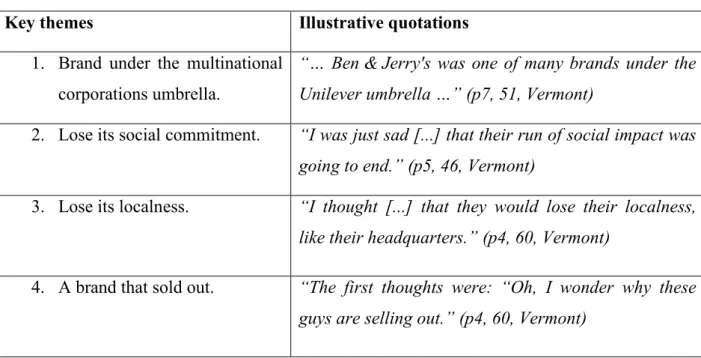
Table 2 below presents the four key themes, with illustrative quotations:
Key themes Illustrative quotations
1. Brand under the multinational corporations umbrella.
“… Ben & Jerry's was one of many brands under the Unilever umbrella …” (p7, 51, Vermont)
2. Lose its social commitment. “I was just sad [...] that their run of social impact was going to end.” (p5, 46, Vermont)
3. Lose its localness. “I thought [...] that they would lose their localness, like their headquarters.” (p4, 60, Vermont)
4. A brand that sold out. “The first thoughts were: “Oh, I wonder why these guys are selling out.” (p4, 60, Vermont)
Table 2: The four key themes with illustrative quotations
These themes emerged when talking about the first thoughts participants had when they heard that Unilever had finally acquired Ben & Jerry's, and when talking about the effect the acqui-sition had on their brand perception of Ben & Jerry's.
This negative depiction of the perception of the Ben & Jerry's brand ran throughout almost all the participant´s talk about the impact of the acquisition on their brand perception of
27 Ben & Jerry's, and therefore demonstrated an overall negative effect on the consumers' brand perception of Ben & Jerry's. However, our data also suggest that the pre-deal commitments made by Unilever might have mitigated this effect.
Our findings suggest that the underlying reason why (Research Question 2) consumers' brand perception of Ben & Jerry's was negatively affected may be due to participants' negative per-ception of multinational corporations. This negative perper-ception of multinational corporations was reflected not only in the discussions about the Unilever brand, but also in participants' justifications for why they perceived the Ben & Jerry's brand in this specific way when ac-quired by Unilever. Participants perceived Ben & Jerry's, for example, as a brand that is going to lose its social commitment with the justification that they assumed that Unilever, as a rep-resentative of multinational corporations, would not continue to pursue Ben & Jerry's social commitment.
Table 3 below presents again the four key themes, but now with typical justifications used by participants (illustrative quotations):
Key themes Participants’ justifications (Illustrative quotations)
1) Brand under the multinational corporations umbrella.
“… Ben & Jerry's was one of many brands under the Unilever umbrella; Ben & Jerry's was no longer spe-cial.” (p7, 51, Vermont)
2) Lose its social commitment. “I didn’t feel that Ben & Jerry’s social responsibility mission could be fulfilled in the context of ownership by a multinational corporation. They would have to answer to a different set of shareholders.” (p3, 55, Vermont)
3) Lose its localness. “Initially, my concern was that Unilever would force the Ben & Jerry's headquarters to move out of state.” (p5, 46, Vermont)
4) A brand that sold out. “How sad. Ben & Jerry's is selling out to a large con-glomerate.” (p7, 51, Vermont)
28 Our findings further suggest that this negative perception of multinational corporations might be explained not only by the distinctive nature of multinational corporations, but also by ex-periences participants had with multinational corporations when it came to acquisitions in general.
6.1.1 Brand under the multinational corporations umbrella
Perhaps unsurprisingly, when talking about the first thoughts they had upon hearing that Uni-lever had finally acquired Ben & Jerry's, and about the effect the acquisition had on their brand perception of Ben & Jerry's, the majority of the participants perceived the Ben & Jerry's brand as just one of many brands under the Unilever umbrella. Therefore they no longer viewed Ben & Jerry's as independent, and no longer as special. This can be illustrated on the basis of the following statements by participants:
“I felt like they were no longer own independent, but now they were just one of Unilever's many brands that they had.” (p9, 55, Wisconsin)
“At that time I thought they would [...] just become a name.” (p4, 60, Vermont)
“… Ben & Jerry's was one of many brands under the Unilever umbrella; Ben & Jerry's was no longer special.” (p7, 51, Vermont)
This effect might have been predicted by literature about consumer reactions to traditional M&As. Maira et al. (2016), for example, refer to one study that revealed that consumers pre-fer to buy non-acquired brands than acquired ones.
That participants perceived the Ben & Jerry's brand as just one of many brands under the Uni-lever umbrella could have been expected against the background that UniUni-lever had a portfolio of 1,600 brands at that time. Here it should be remembered that giant multinational corpora-tions control a wide variety of brands, especially in the FMCG industry, and this can therefore be regarded as part of their distinctive nature (Kramer, 2014).
29
6.1.2 Lose its social commitment
A second key theme depicts the perception of the Ben & Jerry's brand as a brand that is going to lose its social commitment. This was mentioned by the majority of the participants:
“I felt that it would be the end of the company’s ability to make a real difference in social responsibility aspects of its business.” (p3, 55, Vermont)
“I was just sad [...] that their run of social impact was going to end.” (p5, 46, Vermont)
One participant tried to explain why the social commitment would come to an end, and re-garded the culture and values of multinational corporations as the main reason behind it:
“Concern that this really unique socially progressive brand would be changed. Because sometimes big corporations buy these small brands and the things that make them special – you know, whether they use local ingredients or they want to go for organic, or provid-ing the extra social mission [...] all of that becomes just slip when it becomes part of a larger corporation culture …” (p8, 49, Vermont)
This view was shared by other participants who also regarded the culture and environment of multinational corporations as a threat:
“My first thoughts were: oh no, they´re going to kill the brand. Because I didn´t believe that a company like that and brand like that could survive in a big multinational corpora-tion environment.” (p9, 55, Wisconsin)
“So that was my first reaction is that there goes another local company because it just gets swallowed up in the culture of a big corporation.” (p4, 60, Vermont)
A similar explanation to the one given by the participant identified by (p8, 49, Vermont) above, as to why the social commitment would probably come to an end, was given by anoth-er participant who argued that companies that did not have a real commitment to CSR wanoth-ere unlikely to continue to pursue such a commitment:
“And any company that didn´t have a reputation or was already committed to sustaina-bility I thought was unlikely to continue to pursue the strategy and commitment that Ben & Jerry's already had.” (p1, 63, Vermont)