Universidade do Algarve
Faculdade de Ciências e Tecnologias
Effects of a fast growth microdiet on larval
development of gilthead seabream (Sparus aurata,
Linnaeus, 1758) and meagre (Argyrosomus regius,
Asso, 1801)
Sofia Isabel Martins Viegas
Dissertation for the degree of Master of
Aquaculture and Fisheries
Work performed on the orientation of: Pedro Pousão-Ferreira
Sofia Engrola
II
Universidade do Algarve
Faculdade de Ciências e Tecnologias
Effects of a fast growth microdiet on larval
development of gilthead seabream (Sparus aurata,
Linnaeus, 1758) and meagre (Argyrosomus regius,
Asso, 1801)
Sofia Isabel Martins Viegas
Dissertation for the degree of Master of
Aquaculture and Fisheries
Work performed on the orientation of: Pedro Pousão-Ferreira - IPMA Sofia Engrola - CCMAR
III
Title: Effects of a fast growth microdiet on larval development of
gilthead seabream
(Sparus aurata, Linnaeus, 1758)
and meagre
(Argyrosomus regius, Asso, 1801)
Declaração de autoria de trabalho
Declaro ser a autora deste trabalho, que é original e inédito. Autores e trabalhos consultados estão devidamente citados no texto e constam da listagem de referências incluída.
___________________________________________________
Copyright © Sofia Isabel Martins Viegas
Universidade do Algarve
Faculdade de Ciências e Tecnologias – Campus Gambelas 2016
___________________________________________________
A Universidade do Algarve têm o direito, perpétuo e sem limites geográficos, de arquivar e publicar este trabalho através de exemplares impressos reproduzidos em papel ou de forma digital, ou por qualquer outro meio conhecido ou que venha a ser inventado, de o divulgar através de repositórios científicos e de admitir a sua cópia e distribuição com objetivos educacionais ou de investigação, não comerciais, desde que seja dado crédito ao autor e editor.
IV
V
VI
Acknowledgements
Este trabalho não seria possível sem a preciosa ajuda de algumas pessoas, a quem estou profundamente agradecida.
- À minha orientadora interna, Sofia Engrola (CCMAR – Centro de Ciências do Mar), pela disponibilidade em ser minha orientadora;
- Ao meu orientador externo, Doutor Pedro Pousão (IPMA), que se mostrou disponível para me receber em Olhão, e que me acompanhou durante o meu percursso na EPPO;
- À Ana Candeia-Mendes (EPPO) pela ajuda constante que me forneceu durante ambos os ensaios e por tudo o que me ensinou.
- À Sara Castanho (EPPO) pela sua incansável assistência e por tudo o que me ensinou durante o meu percurso na EPPO.
- À Tânia Lourenço (EPPO) que me integrou na EPPO e me motivou para a realização desta tese.
- À Marta Santos (EPPO) pelo seu companheirismo, amizade e dedicação durante o meu percurso.
- À Dr. Florbela Soares e Dr. Laura Ribeiro (EPPO) pela forma que me acolheram e simpatia durante o meu período na EPPO.
- À Marisa Barata, Ana Balboa e Ana Medeiros (EPPO) pela disponibilidade em ajudar, principlamente durante as amostragens, e com a cadeia alimentar.
- Ao staff essencial ao funcionamento da EPPO, e que direta ou indiretamente, estiveram envolvidos nestes ensaios.
- Ao Luís Conceição (SPAROS), pela simpatia, interesse e disponibilização das rações utilizadas neste estudo.
- Ao Wilson Pinto e colaboradores da SPAROS que se disponibilizaram para ajudar durante as amostragens dos ensaios.
VII
- À Professora Elsa Cabrita (CCMAR), pela sua dedicação na coordenação e orientação do mestrado em Pescas e Aquacultura. Pela constante motivação e paixão demonstrada ao ensinar e por tudo o que faz.
- Aos meus colegas de faculdade, desde o primeiro ano de Licenciatura ao último ano de Mestrado, que me acompanharam neste percurso maravilhoso, e principalmente quero agradecer à Alexandra Pires, Davide Araujo e André Lopes por toda a amizade e momentos partilhados, que me deram força para continuar sempre em frente.
- Ao André Cavaco, meu amor, que me apoiou quando começava a perder o rumo e me deu força para a finalização desta tese.
- Finalmente, e não menos importante, à minha família, por me apoiarem nos bons e maus momentos e nunca me deixarem desistir. Agradeço especialmente ao meu pai, pelos seu sacrifício para que eu podesse frequentar a universidade, por ser meu amigo incondicional e me apoiar sempre que preciso.
Todo o trabalho prático necessário à elaboração desta tese de mestrado foi realizada na EPPO – Estação Piloto de Piscicultura de Olhão, parte integrante do IPMA – Instituto Português do Mar e da Atmosfera em Olhão e na sede do IPMA em Olhão, a quem eu agradeço toda a disponibilidade em me receber e tornar este trabalho possível.
VIII
Resumo
A produção de aquacultura Mundial continua em crescimento. O aumento da população humana, provoca um aumento na procura de produtos de origem animal e seus derivados sendo, por isso, importante continuar a sua expanção, melhorando técnicas de cultivo e aumentando o número de espécies cultivadas, uma vez que se prevê que a população atinja as 9 biliões de pessoas em 2050, e onde a aquacultura representa grande parte do fornecimento de alimento no Mundo.
A dourada, Sparus aurata é uma espécie produzida em aquacultura com elevado valor comercial, existindo práticas de cultivo bem estabelecidas e tecnicamente dominadas. Todavia esta espécie apresenta períodos críticos no seu desenvolvimento, nomeadamente a fase larvar.
A corvina, Argyrosomus regius, foi recentemente introduzida na aquacultura por apresentar características necessárias a uma produção sustentável: requisitos biológicos facilmente atingíveis (crescimento, fecundidade e rápida adaptação na criação em cativeiro) e requisitos de mercado (alto valor comercial e disponibilidade anual), que em conjunto com o custo de produção reduzido, podem competir com as espécies já cultivadas. É um peixe carnívoro, que, com a alimenação apropriada, consegue atingir 1kg em menos de um ano (cultivo em jaulas), pelo que um rácio de proteína:lipido apropriado será a resposta para esse elevado crescimento.
O aumento da produção em aquacultura e a possibilidade de cultivar novas espécies de alto valor comercial vai depender no sucesso de produção de larvas e juvenis em cativeiro de alta qualidade. Para isso, a nutrição é considerada crítica para promover o melhor desenvolvimento e qualidade das larvas, que deve ser analisada em diferentes espécies. Hoje em dia, a maior parte dos protocolos de cultivo das corvinas são baseados nos protocolos já existentes para douradas e outras espécies comerciais.
Para uma dieta apropriada, as rações necessitam de um valor ideal de proteina, lipidos, aminoácidos e ácidos gordos essenciais que permitem criar balançoes energéticos que irão sustentar o crescimento. Os ácidos gordos são inseridos nas rações através de óleos de peixe, que contêm ácidos gordos saturados, monoinsaturados e polinsaturados, sendo estes últimos aqueles que possuem efeitos benéficos para o ser humano – ómega-3.
IX
Os ácidos eicosapentaenóico (EPA) e docosahexaenóico (DHA) são os principais ácidos gordos fornecidos pelos óleos de peixe, e essenciais a todos os peixes. Os hidratos de carbono são utilizados na formulação das rações, servindo como uma fonte de uso limitada para a produção de energia, bem como para dar forma e estabilidade às rações. Os minerais e vitaminas também são introduzidos nas rações, para suplementar deficiências a esse nível.
Se a nutrição não for bem implementada desde os estados larvares, não só a qualidade dos peixes diminui como podem ocorrer malformações a nível osseo, levando a despesas desnecessárias na produção. Além disso, peixes com malformações na boca, barbatanas, ou coluna demonstram qualidades natatórias e de caça inferiores, tendo consequentemente baixas taxas de alimentação, crescimento e maior susceptibilidade ao stess e a agentes patogénicos que outros indivídous não deformados.
Tendo em mente os problemas mencionados acima, foram realizados dois ensaios: larvas de douradas durante 35 dias (desde os 23 ao 58 dias após a eclosão); e larvas de corvinas durante 26 dias (desde os 20 ao 46 dias após a eclosão). Os objectivos deste estudo são avaliar o impacto de duas novas microdietas em comparação com uma comercial (controlo), no crescimento, sobrevivência e qualidade na cultura de larvas de douradas e corvinas.
Para a avaliação do crescimento foi analisado o crescimento total, o peso seco e a taxa específica de crescimento em algumas amostragens. No final dos ensaios para avaliação da qualidade foi feita uma análise de malformações e a sobrevivência foi comparada entre os tratamentos.
Ambas as espécies (Sparus aurata e Argyrosomus regius) foram alimentadas com alimento vivo até ao inicio dos ensaios (rotíferos e artémia). Em ambos os ensaios foram testadas duas dietas de crescimento rápido, com variações nos níveis de poteina (61 e 64%) e lípidos (16 e 22%), sendo denominadas de FAST61/22 (dieta para crescimento larvar rápido com altos níveis de proteina/altos níveis de lipidos) e FAST64/16 (dieta para crescimento larvar rápido com altos níveis de proteina/baixos níveis de lipidos), em comparação com uma dieta comercial (COOM), normalmente utilizada em larvas de douradas e robalos.
X
No geral dos parâmetros analisados (comprimento total, peso seco e taxa específica de crescimento), pode-se concluir que a dieta FAST61/22 promoveu um melhor desenvolvimento e sobrevivência nas larvas de ambas as espécies. A análise de malformações não deu resultados estaticamente diferentes.
Em futuros estudos é recomendada a utilização da ração FAST61/22, uma vez que neste estudo fornece um melhor crescimento e desenvolvimento larvar. As corvinas podem necessitar de um conteúdo proteico e lipidico mais elevado, devido ao seu crescimento rápido, enquanto que para as douradas um conteúdo lipidico mais elevado pode ser suficiente para garantir o seu melhor desenvolvimento.
XI
Abstract
Word aquaculture production continues to grow. Nowadays, due to the huge increase in human population, demand for animal products and its derivates is increasing drastically, where aquaculture represents one of the most forms of supplying the world with food.
Gilthead seabream, Sparus aurata plays an important commercial role in fisheries and aquaculture in the Mediterranean Sea and north-eastern Atlantic Ocean. Meagre (Argyrosomus regius) have a high growth and food conversion rates, high marketable value, the quality of the fillet and resistance to diseases is considerably higher than those of seabream and seabass.
Fish feeding is one of the most important factors in intensive fish farming. Nutritional requirements to sustain survival and growth in marine fish larvae are slightly different from those of juveniles. In the larval rearing, the quality of food is essential for the larvae obtain necessary nutrients for normal development.
The aims of this study were to evaluate the impact of two new formulated microdiets, in comparison with a commercial diet (control), on the growth, survival and quality of gilthead seabream (Sparus aurata) and meagre (Argyrosomus regius) larvae.
To evaluate growth were performed (1) total length; (2) dry weight; and (3) specific growth rate analysis. At the end of the experiments, to evaluate quality were performed malformations analysis and the survival was compared between the different treatments.
For future studies is recommended the used of microdiet FAST61/22, since in these experiments gives to the larvae the best growth performance and larval development. While meagre seem to require higher dietary protein and lipid, due to their much fast growth, for gilthead seabream a higher dietary lipid may be sufficient to guarantee maximum performance.
1
Index
Acknowledgements ... VI Resumo ... VIII Abstract ... XI Index ... 1 Figure Index ... 3 Tables Index ... 7 Annexes Index ... 8Abreviations, Siglas and Simbols ... 9
1. Introduction ... 11
1.1. Aquaculture – present situation and trends ... 11
1.2. Sparus aurata specie ... 14
1.3. Argyrosomus regius specie ... 15
1.4. Nutritional requirements ... 17
1.5. Malformations considerations ... 21
1.6. Objectives ... 23
2. Materials and Methods ... 24
2.1. Experimental fish ... 24
2.2. Experimental trials ... 24
2.2.1. Sparus aurata trial ... 24
2.2.2. Argyrosomus regius trial ... 27
2.2.3. Live feed ... 30 2.3. Feeding regimes ... 31 2.4. Experimental Diets ... 32 2.5. Sampling methods ... 33 2.6. Analytical methods ... 34 2.6.1. Biometry ... 34
2.6.2. Water quality analysis ... 35
2.6.3. Malformations ... 35
2.6.3.1. Sparus aurata malformations protocol ... 35
2.6.3.2. Argyrosomus regius malformations protocol ... 36
2
3. Results ... 39
3.1. Sparus aurata rearing results ... 39
3.1.1. Growth performance ... 40
3.1.2. Dry weight ... 41
3.1.3. Survival ... 42
3.1.4. Feeding behavior ... 43
3.1.5. Water quality analysis ... 44
3.1.6. Malformations ... 45
3.2. Argyrosomus regius rearing results... 52
3.2.1. Growth performance ... 53
3.2.2. Dry weight ... 54
3.2.3. Survival ... 56
3.2.4. Feeding behavior ... 57
3.2.5. Water quality analysis ... 57
3.2.6. Malformations ... 58
4. Discussion and conclusions ... 66
3
Figure Index
Figure 1 - World capture by fisheries and aquaculture production by FAO, (2016). Figure 2 - World fish utilization and supply, by FAO, (2016).
Figure 3 - Gilthead seabream fish, by FAO. Figure 4 - Meagre fish, by FAO.
Figure 5 - Cylindroconical white tank of 200L. The letters correspond: a) automatic
feeder; b) aeration tube; c) water renewal tube; d) filter; and e) purge site.
Figure 6 - Blue tank of 300L. The letters correspond: a) automatic feeder; b) aeration
tube; c) water renewal tube; and d) purge site.
Figure 7 - Isochrysis galbana and Nannochloropsis oculata culture in different stages, at
IPMA facilities.
Figure 8 - Feeding regime of gilthead seabream (Sparus aurata), at ±20ºC. Figure 9 - Feeding regime of meagre (Argyrosomus regius), at ±20ºC. Figure 10 - Example of a dry meagre larva.
Figure 11 - Gilthead seabream (Sparus aurata) larvae with 23 DAH. Figure 12 - Gilthead seabream (Sparus aurata) larvae with 35 DAH. Figure 13 - Gilthead seabream (Sparus aurata) larvae with 58 DAH.
Figure 14 - Specific Growth Rate (in percentage) of gilthead seabream (Sparus aurata)
larvae fed with three different dietary treatments (COMM; FAST64/16; FAST61/22), since 23 DAH until 58 DAH. Standard deviations are represented by vertical bars.
Figure 15 - Total Length mean values, in millimeters, of gilthead seabream (Sparus
aurata) larvae fed with three different dietary treatments (COMM; FAST64/16; FAST61/22), at 23, 35, and 58 DAH. Letters mean that differ significantly (p<0.05), and standard deviations are represented by vertical bars.
4
Figure 16 - Dry weight mean values, in milligrams, of gilthead seabream (Sparus aurata)
larvae fed with three different dietary treatments (COMM; FAST64/16; FAST61/22), at 23, 35, and 58 DAH. Letters mean that differ significantly (p<0.05), and standard deviations are represented by vertical bars
Figure 17 - Survival mean values, in percentage, of gilthead seabream (Sparus aurata)
larvae fed with three different dietary treatments (COMM; FAST64/16; FAST61/22), since 23 DAH until 58 DAH. Letters mean that differ significantly (p<0.05), and standard deviations are represented by vertical bars.
Figure 18 - Variation of NH4+ (mg/L), NO3- (mg/L), NO2- (mg/L), Si(OH)4 (mg/L) and HPO4-2(mg/L) concentrations, at 27, 34, 39 and 46 DAH, during seabream (Sparus
Aurata) larvae rearing fed with three different dietary treatments (COMM; FAST64/16; FAST61/22).
Figure 19 – Gilthead seabream larva without malformations.
Figure 20 - Example of a lordosis pre-haemal, in a gilthead seabream larva. Figure 21 - Exemple of a caudal fusion, in a seabream larva.
Figure 22 - Malformed fish mean values, in percentage, of gilthead seabream (Sparus
aurata) larvae fed with three different dietary treatments (COMM; FAST64/16; FAST61/22), since 23 DAH until 58 DAH. Standard deviations are represented by vertical bars.
Figure 23 - Severity levels, in percentage, of the malformations in gilthead seabream
(Sparus aurata) larvae fed with three different dietary treatments (COMM; FAST64/16; FAST61/22), since 23 DAH until 58 DAH. Severity levels (Table VI), in this analysis according to Gavaia (Com Pess.), and standard deviations are represented by vertical bars.
Figure 24 - Mean percentage of malformed gilthead seabream (Sparus aurata) fish
depending if affects the phenotype or not, fed with three different dietary treatments (COMM; FAST64/16; FAST61/22), since 23 DAH until 58 DAH.
5
Figure 25 - Mean values of malformations per fish, in percentage, of gilthead seabream
(Sparus aurata) larvae fed with three different dietary treatments (COMM; FAST64/16; FAST61/22), since 23 DAH until 58 DAH. Standard deviations are represented by vertical bars.
Figure 26 - Percentage of the malformations per anatomic area in gilthead seabream
(Sparus aurata) fish depending if affects the cephalic, pre-haemal, haemal, or caudal area, fed with three different dietary treatments (COMM; FAST64/16; FAST61/22), since 23 DAH until 58 DAH.
Figure 27 - Meagre (Argyrosomus regius) larvae with 20 DAH. Figure 28 - Meagre (Argyrosomus regius) larvae with 31 DAH. Figure 29 - Meagre (Argyrosomus regius) larvae with 46 DAH.
Figure 30 - Specific Growth Rate (in percentage) of meagre (Argyrosomus regius) larvae
fed with three different dietary treatments (COMM; FAST64/16; FAST61/22), since 20 DAH until 46 DAH. Standard deviations are represented by vertical bars.
Figure 31 - Total Length mean values, in millimeters, of meagre (Argyrosomus regius)
larvae fed with three different dietary treatments (COMM; FAST64/16; FAST61/22), at 20, 31 and 46 DAH. Letters mean that differ significantly (p<0.05), and standard deviations are represented by vertical bars.
Figure 32 - Dry weight mean values, in milligrams, of meagre (Argyrosomus regius)
larvae fed with three different dietary treatments (COMM; FAST64/16; FAST61/22), at 20, 31 and 46 DAH. Letters mean that differ significantly (p<0.05), and standard deviations are represented by vertical bars.
Figure 33 - Survival mean values, in percentage, of meagre (Argyrosomus regius) larvae
fed with three different dietary treatments (COMM; FAST64/16; FAST61/22), since 20 DAH until 46 DAH. Letters mean that differ significantly (p<0.05), and standard deviations are represented by vertical bars.
Figure 34 - Variation of NH4+ (mg/L), NO3- (mg/L), NO2- (mg/L), Si(OH)4 (mg/L) and HPO4-2(mg/L) concentrations, at 27, 34, 39 and 46 DAH, during meagre (Argyrosomus
6
regius) larvae rearing fed with three different dietary treatments (COMM; FAST64/16; FAST61/22).
Figure 35 - Exemple of a meagre’s caudal fin without malformations. Figure 36 - Exemple of a lordosis in a caudal area of a meagre larva.
Figure 37 - Malformed fish mean values, in percentage, of meagre (Argyrosomus regius)
larvae fed with three different dietary treatments (COMM; FAST64/16; FAST61/22), since 20 DAH until 46 DAH. Standard deviations are represented by vertical bars.
Figure 38 - Severity levels, in percentage, of the malformations in meagre (Argyrosomus
regius) larvae fed with three different dietary treatments (COMM; FAST64/16; FAST61/22), since 20 DAH until 46 DAH. Severity levels (Table VI), in this analysis according to Gavaia (Com Pess.), and standard deviations are represented by vertical bars.
Figure 39 - Mean percentage of malformed meagre (Argyrosomus regius) fish depending
if affects the phenotype or not, fed with three different dietary treatments (COMM; FAST64/16; FAST61/22), since 20 DAH until 46 DAH.
Figure 40 - Mean values of malformations per fish, in percentage, of meagre
(Argyrosomus regius) larvae fed with three different dietary treatments (COMM; FAST64/16; FAST61/22), since 20 DAH until 46 DAH. Standard deviations are represented by vertical bars.
Figure 41 - Percentage of the malformations per anatomic area in meagre (Argyrosomus
regius) fish depending if affects the cephalic, pre-haemal, haemal, or caudal area, fed with three different dietary treatments (COMM; FAST64/16; FAST61/22), since 20 DAH until 46 DAH.
7
Tables Index
Table I - Average salinity (ppt), temperature (ºC), oxygen saturation (%) and photoperiod
(light:dark) in gilthead seabream rearing.
Table II - Water renewal, in percentage, according with the age of the larvae (DAH) in
gilthead seabream rearing.
Table III - Average salinity (ppt), temperature (ºC), oxygen saturation (%) and
photoperiod (light:dark) in meagre rearing.
Table IV - Water renewal, in percentage, according with the age of the larvae (DAH) in
meagre rearing.
Table V - Main ingredients, protein and lipid percentage of the three dietary treatments
(COOM; FAST64/16; FAST61/22), used in the trials of gilthead seabream and meagre.
Table VI - Severity levels for malformation analysis according and adapt from Gavaia
8
Annexes Index
Annex A - Concentrations (mg/L) of NH4, NO3, NO2, Si(OH)4, HPO42-, in gilthead seabream (Sparus aurata) rearing, between the different treatments (COMM, FAST64/16 and FAST61/22), at different ages (36, 43 and 46).
Annex B - Concentrations (mg/L) of NH4, NO3, NO2, Si(OH)4, HPO42-, in meagre (Argyrosomus regius) rearing, between the different treatments (COMM, FAST64/16 and FAST61/22), at different ages (27, 34, 39 and 46), in triplicate.
9
Abreviations, Siglas and Simbols
µg – Microgram; AA – Amino acids;
a.m. – “Ante Meridiem”, meaning before noon. B.C – Before Christ;
Cº - Degree Celsius;
COMM – Commercial microdiet; DAH – Days After Hatch;
DHA – Docosahexaenoic acid; DW – Dry weight;
E.g. – for example;
EPA – Eicosapentaenoic acid;
EPPO – Estação Piloto de Piscicultura de Olhão; FA – Fatty acids;
FAO – Food and Agriculture Organization;
FAST61/22 – Prototype feed for fast growing larvae with high protein/high lipid; FAST64/16 - Prototype feed for fast growing larvae with high protein/low lipid; FBW – Final Body Weight;
HCl – Hydrochloride acid;
HUFA – Highly unsaturated fatty acids; IBW – Initial Body Weight;
IPMA – Instituto Português do Mar e da Atmosfera; KOH – Potassium hydroxide;
10
mg – Milligram;
PBS – Phosphate-buffered saline solution; PUFA – Polyunsaturated fatty acids; S – Survival;
SGR – Specific Growth Rate; Spp. – Species;
SPSS – Statistical Package for the Social Sciences; T – Temperature;
TL – Total length;
UALG – Universidade do Algarve; UK – United Kingdom.
11
1. Introduction
1.1. Aquaculture – present situation and trends
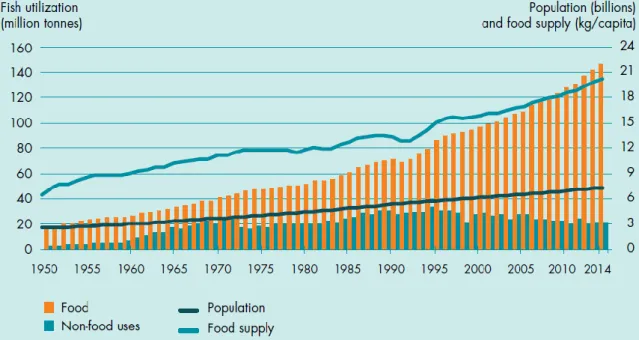
World aquaculture production continues to grow (Figure 1). According to the latest available statistics collected globally by Food and Agriculture Organization (FAO), world aquaculture production attained 73.8 million tonnes, in 2014, of a total of 167.2 million tonnes of world fish capture by fisheries and aquaculture production (FAO, 2016). The fish for human consumption achieve 146.3 million tonnes (Figure 2), where fish remains among the most traded food commodities worldwide (FAO, 2016). Besides, aquaculture is one of the most modern types of farming practiced in the world. It started around 2000-1000 B.C., with the Chinese being the first ones to put the knowledge into practice (Rabanal, 1988).
Figure 1 – World capture by fisheries and aquaculture production by FAO, (2016).
Nowadays, due to the huge increase in human population, demand for animal products and its derivates is increasing drastically, where aquaculture represents one of the most forms of supplying the world with food (Brugère and Ridler, 2004). In Europe, the main aquaculture producers are Norway, Spain, France, United Kingdom (UK) and Italy (FAO, 2014).
12
The rapid growth in inland aquaculture of finfish reflects the fact that it is a relatively easy-to-achieve type of aquaculture in developing countries when compared with mariculture (FAO, 2014), continuing a positive trend that has resulted in a 37 percent increase in the last decade. Sixteen countries have annual inland water catches exceeding 200 000 tonnes, and together they represent 80 percent of the world total (FAO, 2016).
Figure 2 – World fish utilization and supply, by FAO, (2016).
The extensive studied biology and optimized feeding protocols, allows the production of marine and diadromous fishes such as Atlantic salmon (Salmo spp.), rainbow trout (Oncorhynchus mykiss), gilthead seabream (Sparus aurata) and European seabass (Dicentrarchus labrax), besides this species also Atlantic cod and tilapia are between the most studied species (Karakatsouli, 2012). However, most of the species cultivated are produced in small quantities, the major production is of relatively small number of species, mostly because of economical issues, where fish prices are influenced by demand and supply factors, including the costs of production and transportation, but also of alternative commodities (e.g. meat and feeds) (FAO, 2014). In contrast, overall demand for fish meals continued to grow, pushing prices to historic highs until January 2013, with an increase of 206 percent between January 2005 and January 2013, however between January 2013 and January 2014, prices declined by 20 percent (FAO, 2014). Most likely due to increased consumption, since in 2012, aquaculture contributed about
13
49 percent of the fishery output for human consumption, impressive growth compared with its 5 percent in 1962, 37 percent in 2002 and 45.7% in 2008 (FAO, 2012; FAO, 2014).
The increase in aquaculture production and the possibility of cultivating new species of high economic value (Imsland et al., 2003) are dependent on the success in producing larvae and juveniles in captivity, healthy and high-quality (Piccinetti et al., 2014; Conceição et al., 2010b). Proper nutrition is considered critical to the promotion of a normal and healthy growth in fish.
Fish larvae often go through very complex processes of morphogenesis and differentiation during growth. Development of organs and changes in morphoanatomical characters occur in a stepwise fashion. Therefore, differential relative growth (allometry) of body parts is a common feature of fish development (Loy et al., 2001). Body structures develop according to their importance for primary living functions (Stoner and Livingston, 1984 In Russo et al., 2007; Sagnes et al., 1997). Owing to its small size and behavior, marine fish larvae, have specific nutritional needs, requiring for it to have available prey with movements compatible with their capture mechanisms and predation, and size appropriate to their size mouths, allowing its easy capture and ingestion (Pousão-Ferreira, 2009). Fish generally use one or more sensory systems for acquiring feed, such as visual detection, sound, water turbulence and chemical stimuli released by food (Pillay, 1990). In the larval stage is still necessary to provide not only small but also live prey in quantity, to facilitate their date and capture (Pousão-Ferreira, 2009).
Rural diets in many countries may not be particularly diverse and, thus, it is vital to have good food sources that can provide all essential nutrients in people’s diets. Micronutrient deficiencies affect hundreds of million people, particularly women and children in the developing world. More than 250 million children worldwide are at risk of vitamin A deficiency, 200 million people have goitre (with 20 million have learning difficulties as a result of iodine deficiency), 2 billion people (more than 30 percent of the world’s population) are iron deficient, and 800 000 child deaths per year are attributable to zinc deficiency (FAO, 2014). Fallowing this problem and according with Karakatsouli, (2012), nutritional treatments exceed by far all other experimental factors investigated accounting for 78.14% of the studies. Next in rank come the investigation of rearing conditions (e.g., density, temperature, stress etc.) and comparisons between farmed
14
species and their wild conspecifics. The majority of selected papers use juvenile fish, followed by larvae and fish of commercial size (Karakatsouli, 2012). So it is of most importance to carry on the study of nutrition and improve the quality of the fish food since the larval stage and in consequence the quality of the fish for human consumption.
1.2. Sparus aurata specie
Gilthead seabream, Sparus aurata (Linnaeus, 1758), (Figure 3) is one of the most important species in Mediterranean aquaculture (Monroig et al., 2006). The gilthead seabream is a perciform fish, belonging to the family Sparidae, common in the Mediterranean Sea, and present along the Eastern Atlantic coasts from Great Britain to Senegal (Moretti et al., 1999). Is a protandrous hermaphrodite with a breeding season ranging from October to December, being a functional male in the first two years and at over 30 cm in length becomes female. The planktonic larval stage lasts about 50 days at 17-18ºC.
Figure 3 Gilthead seabream fish, by FAO.
Recent data from European Aquaculture Production Report (FEAP, 2015), shows that, between 2005 and 2014, gilthead seabream production increase from 108.795 tonnes, in 2005, to 146.467 tonnes, in 2014. Also seabream juveniles production increase from 442.115 thousands, in 2005, to 599.972 thousands, in 2014 (total values from Turkey; Greece; France; Spain; Italy; Cyprus; Croatia; Portugal).
15
The gilthead seabream is an euryhaline and eurythermal species, being characterized by high trophic flexibility (Kraljević, M. and Dulčić, J. 1997; Parra and Yúfera, 2000; Mariani et al., 2002; Tancioni et al., 2003) and by remarkable anatomical changes (e.g. in dentition and in the gut) throughout its life history. Furthermore, this species is known to undergo ontogenetic shifts in feeding habits (Mariani et al., 2002; Tancioni et al., 2003).
It seems that for the practical range of application for gilthead seabream (first two years of life and sub-optimal (<25◦C) temperatures), growth is exponentially dependent on body size and linearly dependent on both temperature and feed ration. Apparently the availability of food is the limiting factor under these conditions (Seginer, 2016). According with Monroig et al., (2006), standard protocols have been established for gilthead seabream larval production and its availability makes this species an appropriate candidate to test new diets for larviculture.
For these reasons we attempt to increase the knowledge about microdiets and we choose gilthead seabream because is an important demersal commercial species, highly appreciated as food fish for its flesh (Crosetti et al., 2014).
1.3. Argyrosomus regius specie
Meagre (Argyrosomus regius) (Figure 4) is a teleost fish species that belongs to the Sciaenidae family, and has a wide distribution, being present in the Mediterranean and Black seas, Atlantic coast of Europe and west coast of Africa, living in inshore or coastal waters, close to the bottom or near the surface (range depths from 15 to 200m) (Cabral and Ohmert, 2001; Poli et al., 2003; El-Shebly et al., 2007). Is also a coastal species with high potential, as a candidate for marine finfish diversification on commercial aquaculture in Mediterranean and Eastern Atlantic coasts mainly related to their production performance (high growth and food conversion rates), high marketable value, the flesh quality and high nutritional value (regius for royal quality of flesh), and resistance to diseases is considerably higher than those of seabream and seabass (Poli et al., 2003; Piccolo et al., 2008; Monfort, 2010; Roo et al., 2010; Chatzifotiset et al., 2011; Mylonas et al., 2013; Vallés and Estévez, 2013). As an euryhaline species, meagre has a
16
high tolerance to salinity and therefore can be reared in different environments such as cages in the sea or earthen ponds in estuaries (Ribeiro et al., 2013). Is found in waters of the Mediterranean including Portugal, Spain, France, Italy, Greece and Turkey and it has become a commercially valuable marine fisheries product (Ermre et al., 2016).
Figure 4 Meagre fish, by FAO.
Adding to the characteristics already described, it’s a specie that tolerates wide ranges of salinity, temperature and can be reared in brackish water ponds (El-Shebly et al., 2007), being ideal for the aquaculture industry.
This species culture techniques are based on rearing of gilthead seabream (Sparus aurata) and European seabass (Dicentrarchus labrax), but the elevated growth rate of meagre let’s reach 1 kg in ten months of culture (Jiménez et al., 2005; Roo et al., 2010). Farmed meagre market size usually ranges between 1 and 2 kg (FAO, 2013), depending on the production and management systems (Ribeiro et al., 2013), but recently fish of smaller size (from 600g) have started being commercialised as well (Monfort, 2010; FAO, 2014), with a total production just over 14 000 tonnes, in 2011, produced in several Southern European countries. Also, recent data from European Aquaculture Production Report (FEAP, 2015), shows that meagre production increase from 907 tonnes, in 2005, to 5 021 tonnes, in 2014 [total values from Croatia; Cyprus; France; Italy; Portugal; Spain; and Turkey (only data in 2014)].
17
In recent years the research effort has been focused on identifying the best conditions for larval rearing, such as larval density, live prey feeding sequence (Roo et al. 2010), to standardize the culture protocols and then undertake studies on the nutritional requirements of the larva. Given the characteristics of meagre larva (high voracity, visual feeding in conditions of relatively high luminosity, and cannibalism) their nutritional requirements, in the form of protein or fat, will be very different from those of other marine fish species in culture (Vallés and Estévez, 2015). According with this information, we choose Argyrosomus regius specie to increase the knowledge about the larval development and quality rearing with different microdiets, formulated with different content of lipids and fatty acids, to increase growth performance, since optimization of growth is closely related to the knowledge of protein metabolism aiming for a supply of good quality protein in quantities fulfilling larval requirements (Conceição et al., 2003), and, at the moment, is the species with the highest potential for intensive farming in this region.
1.4. Nutritional requirements
Most information regarding nutritional requirements for fish are performed with seabream and other commercial species (Monroig et al., 2006; Guerreiro, et al., 2010; Piccinetti et al., 2014; Fernández-Díaz and Yúfera, 1997; Moyano et al., 1996; Peres et al., 1996; García-Meilán, et al., 2013; Russo et al., 2007; Yúfera et al., 2004; Zeytin et al., 2016). Fish feeding is one of the most important factors in intensive fish farming (Mílan et al., 2014), the nutritional requirements to sustain survival and growth in marine fish larvae are slightly different from those of juveniles (Cahu et al., 2003).
Since 50% of fish larval composition (in dry matter) is protein, growth optimisation is closely linked to the supply of dietary protein of appropriate quality and quantity (Conceição et al., 2003). Growth and food conversion efficiencies can be maximised by manipulating the composition of the dietary amino acids (AA). AA imbalances in the diet cause increased AA oxidation and lead to decreased food conversion efficiencies (Fauconneau et al., 1992 in Conceição, et al., 2003). AA losses have particular importance in fish larvae, which have a growth potential ranging from 10 to 50%/day (Houde, 1989). The requirement for dietary protein has two components: (1)
18
a need for indispensable AA that he fish cannot synthesize either at all or at a rate commensurate with its need for protein deposition or commensurate with the synthesis of a variety of other compounds with metabolic functions, and (2) a supply of either dispensable AA or sufficient amino nitrogen to enable the fish to synthesize them. Insofar as synthesis of dispensable AA requires expenditure of energy, feeding dietary proteins that most nearly meet the needs of fish for both indispensable and dispensable AA, will result in the most efficient growth by the fish (Thoman et al., 1999; Chatzifotis et al., 2011). Dietary protein constitutes one of the primary nutrient costs of the feed and is the initial source of nitrogen waste products entering a culture system.
The lipids present in teleost fish species may be divided into two major groups: the phospholipids and the triglycerides. Phospholipids make up the integral structure of the unit membranes in the cells, thus, they are often called structural lipids. The triglycerides are lipids used for storage of energy in fat depots, typically located in the subcutaneous tissue in the belly flap muscle and in the muscles moving the fins and tail (Huss, 1995). To best fulfill the needs in lipids for optimal development and growth, oils derived from fish that contains materials with valuable dietary and pharmaceutical properties as well as having physical properties, now used as a source of long-chain (n-3) fatty acids (FA) (Chatzifotis et al., 2010).
The main purpose of using processed feeds is to ensure that the animals under culture receive a balanced diet that meets their nutritional requirements (Pillay, 1990).
In the larval rearing, the quality of food is essential for the larvae obtain necessary nutrients for normal development. As the marine fish larvae have a high growth potential, also have specific nutritional needs (Ajiboye et al. 2011; Rønnestad et al. 1999; Van der Meeren et al. 2008), requiring the appropriate nutritional value of the food to each cultivated specie. Normally, it is necessary to use bioencapsulation techniques or nutritional enrichment allowing the production of prey with high nutritional requirements, especially in fatty acids of the n-3 highly unsaturated fatty acids (HUFA) and amino acids, essential for marine fish (Pousão-Ferreira, 2009; Monroig et al., 2006). During the last decade there is a gradual and steady increase of research papers concerning farmed fish fatty acids (FA), papers published in 4 years, that is, 2007–2010, representing 53.04% of selected studies. In about 50% of the 394 papers assessed, research took place in Europe, followed by Asia and North America (Karakatsouli, 2012). Fatty acid profile
19
may also play a role on flesh texture as a higher content of polyunsaturated fatty acids may decrease hardness due to higher fluidity of biological membranes (Palmeri et al., 2008; Saavedra et al., 2015b).
The step leading to DHA is usually the net result of two elongations, along with a few saturates and oleic acid, the (n-6) and (n-3) polyenes make up the fatty acids found in most plants, animals, and commodity oils and fats. The (n-3) long-chain, polyunsaturated fatty acids (PUFA) eicosapentaenoic acid (EPA), and docosahexaenoic acid (DHA), are important nutritionally and are mainly obtained from oily fish and fish oils where they are present at levels from 5 to 20% (Das, 2006). Maintaining high levels of (n-3) PUFA, as well as low levels of (n-6) FA, in farmed fish, is considered desirable to provide high value product for human consumption (Das, 2006; Martins et al., 2007).
The search for a food capable of supporting growth and larval development has increased its importance, with the main objective of maintaining the quality of fish for consumption and minimizing the need for living organisms, such as microalgae , rotifers and Artemia (Piccinetti et al., 2014; Guerreiro, et al., 2010; Yúfera et al., 2005). The formulation of appropriate diets has undergone several changes, driven by the increasing demands of farming and fish nutritional needs, and the suitability of an inert diet for larval fish depends on the characteristics of both diet and larvae, as well as the rearing system used (Fernández-Díaz and Yúfera, 1997). When balanced, these diets provided the nutrients required for proper physiological functioning and can positively influence the health of fish that feed upon it.
Studies on enzymatic development in larvae have contributed useful information concerning the proper time to introduce prepared feeds and whether the addition of exogenous enzymes is required. There is a relationship between larval age and digestive enzyme activity in marine fish (Moyano et al., 1996; Peres et al., 1996) and, consequently, the ability to digest and assimilate an inert diet (Fernández-Díaz and Yúfera, 1997). Furthermore, according to Russo et al., (2007) there is also a correspondence between shape changes and feeding shifts.
Digestion and absorption are key processes in the optimal use of a diet (García-Meilán et al., 2013). Digestion processes begin in the stomach, where hydrochloride acid (HCl) denatures protein and converts pepsinogen to active pepsin (Yúfera et al., 2004).
20
Absorption processes occur by diffusion, facilitated transport or active transport (Mailliard et al., 1995) and take place throughout the entire intestine, which differentiates fish from mammals (García-Meilán et al., 2013). When dietary composition changes, intestinal enzymatic activities and nutrient absorptive capacity may be modulated in fish. Voluntary feed intake may also change to improve feed use and assure growth performance (Karakatsouli, 2012).
The minerals, for instance, are required by all animals either in their elemental form or incorporated into specific compounds, for various biological functions such as the formation of skeletal tissue, respiration, digestion and osmoregulation (Pillay, 1990). The minerals are required in extremely small quantity in the diet, with excess supplementation through a continuous process can cause severe toxicity. In deficient condition, growth is retarded with abnormal metabolism in particular (Chanda et al., 2015). Fish can absorb part of the required minerals directly from the water through gills or even through their entire body surface, but this absorption from the water do not meet the total requirement and a certain supplementation through the diet is required whether in natural food or supplementary feed (Pillay, 1990; Chanda et al., 2015), so it is very important to achieve the right amounts of each mineral, proteins, amino acids, fatty acids, etc., to have a complete and balance diet for fish. The knowledge of feeding requirements allows better management of early larval rearing and also the introduction of new feeding methods (Papandroulakis et al., 2000).
Although considerable improvements in the quality of formulated diets were achieved in the last decades (Hamre et al., 2013), for larval fish (e.g., Fernandez-Diaz and Yufera, 1997; Cahu and Infante, 2001; Koven et al., 2001), current feeding protocols of marine fish larvae still depend on live feeds, especially in the first-feeding stages and early larval stages (Conceição et al., 2010a). Several studies have been evaluating the feeding behavior and digestive physiology of seabream larvae with regard to microdiet ingestion (Fernández-Díaz et al., 1994; Kolkovski et al., 1997; Parra and Yúfera, 2000). Nevertheless, there is little and inconclusive data available to determine the optimum feeding time and frequency for the different developmental stages of larvae under a feeding regime applying to microdiet (Zeytin et al., 2016).
21
Compound diets are now being formulated, usable from first feeding onwards in some marine fish larvae (Cahu et al., 2003). The major aim of the studies conducted now in larval nutrition is to improve larvae quality.
1.5. Malformations considerations
The presence of skeletal anomalies in farmed teleosts is a constant world-wide problem in aquaculture and it entails economic, biological and animal welfare issues (Boglione et al, 2013; Darias et al., 2011). The fact that an accurate study of skeletogenesis during larval development is of utmost importance for the recognition and identification of abnormalities in skeletal structures was suggested by the scientific community long ago, as can be seen in the statement of McMurrich (1883).
However, the problem persists and many hypotheses for the causes of skeletal anomalies are still being discussed today, because different causative factors can have a common symptomatology and frequently act synergistically. The present difficulties in separating the causes of the many genetic and non-genetic factors that interact in aquatic organisms remain an open problem (Boglione et al, 2013).
It is generally considered that four classes of mineralized tissues can be identified in vertebrates: bone, cartilage, dentine and enamel/enameloid. Teleost fish display a large range of intermediate skeletal tissues as part of their mature – pathological, non-regenerating – skeleton (Benjamin, 1990, In: Boglione et al, 2013).
Skeletal anomalies in reared fish can affect all skeletal tissues, but from a production related viewpoint, alterations of the notochord, cartilage and bone abnormalities are the most important. Anomalies of dermal skeletal elements, such as teeth, scales (and fin rays), are possibly indicative for the skeletal heath status of the animal (Persson et al. 1997, 2000); however, anomalies affecting teeth and scales are rarely studied (Boglione et al, 2013). The presence of deformed fish concerns also ethical issues: fish with a deformed mouth, fins or vertebral axis show impaired feeding and swimming performances, with consequent lower feeding rates, slower growth rates and a higher susceptibility to stress and pathogens than healthy nondeformed individuals. These
22
deformed fish cannot be considered to be in a proper welfare condition (Boglione et al, 2013), therefore, it is considered malformation analysis in gilthead seabream and meagre, at the end of the trials.
The vertebral column of gilthead seabream and meagre has 24 vertebrae distributed in four regions in anterior–posterior direction: cranial, pre-haemal, haemal and caudal (Boglione et al., 2001; Gisbert et al. 2012).
According to Boglione et al., (2013), pugheadness, cross-bite and lower jaw reduction or elongation are the main types of jaw abnormalities that can affect Mediterranean aquaculture reared finfish, but data from both experimental and reared fish demonstrate that pugheadness is the most frequent jaw abnormality in gilthead seabream. And according with Georgakopoulou et al., (2010) the involvement of the gill-cover in respiration function, could affect the survival of deformed larvae, directly and/or indirectly through a decrease of the growth rate and a subsequent increased sensitivity to cannibalism by the larger individuals of the population. The common response of gill-cover and caudal-fin deformities to water temperature could be explained by the fact that the elements of both structures develop during the early larval stage (Koumoundouros et al., 1997). Moreover, temperature might affect bone development indirectly, via modifications of the species nutritional optima, or via changes of the nutritional status of the planktonic organisms used for the larval feeding (Georgakopoulou et al., 2010). Also according with Cahu et al., (2003) nutrients also affect development and particularly skeletal formation.
Koumoundouros et al., (1997) affirms that the abnormality of the gilthead seabream yolk-sac larvae may not be lethal and the specimens continued developing, but seriously affecting the quality of the following larvae and juveniles, being very important to detect malformations at early live stages, to reduce costs of production.
23
1.6. Objectives
The aims of this study were to evaluate the impact of two new formulated microdiets, in comparison with a commercial diet (control), on the growth, survival and quality of gilthead seabream (Sparus aurata) and meagre (Argyrosomus regius) larvae.
To evaluate growth were performed (1) total length; (2) dry weight; and (3) specific growth rate analysis. At the end of the experiments, to evaluate quality were performed malformations analysis and the survival was compared between the different treatments.
24
2. Materials and Methods
The experiments take place at the Aquaculture Research Station (EPPO) of IPMA (Portuguese Institute for the Ocean and Atmosphere) in Olhão (Portugal). In these experiments two similar dry microdiets formulated by SPAROS, Lda. (Olhão, Portugal), were tested, with different lipid/ protein ratio, in comparison with a commercial diet (control), to observe the larval development with each diet. The same diets were tested in gilthead seabream (Sparus aurata) and meagre (Argyrosomus regius) larvae.
2.1. Experimental fish
Gilthead seabream (Sparus aurata) and meagre (Argyrosomus regius) larvae’s were obtain throw natural breeding of reproducers kept in captivity in IPMA’s - EPPO facilities. The eggs were incubated in 200L cylindroconical white tanks, with filtered salt water at 18ºC, for 2 days until hatch. After hatch was calculated the survival and hatching rate and reares in a 1500L tank until the beginning of the trial. At this age (23, and 20 DAH, respectively), the larvae were counted and distributed equally to the tanks of the trials.
2.2. Experimental trials
2.2.1. Sparus aurata trial
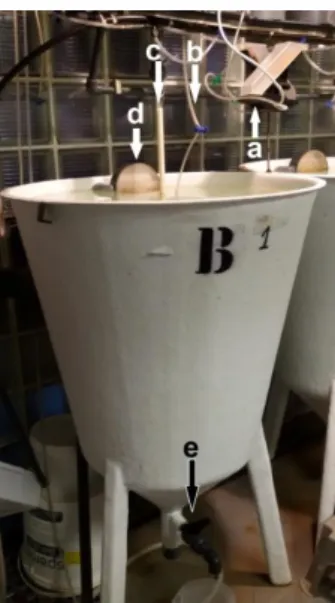
The trial was conducted at the Aquaculture Research Station of IPMA in Olhão (Portugal), from January 29th to March 4th (35 days), with gilthead seabream larvae bred in captivity at the station. The fish larvae were counted into nine cylindroconical white tanks of 200L (Figure 5), each treatment in triplicate, at an initial density of 5 larvae/L (1000 larvae/tank).
25
Figure 5 Cylindroconical white tank of 200L. The letters correspond: a) automatic feeder; b) aeration tube; c) water renewal tube; d) filter; and e) purge site.
These tanks are individually set with in a semi-closed system (partial recirculation), with continuous aeration, and physicochemical parameters were registered daily, until the end of the trial (Table I).
Table I Average salinity (ppt), temperature (ºC), oxygen saturation (%) and photoperiod (light:dark) in gilthead seabream rearing.
Salinity (ppt) Temperature (ºC) Oxygen saturation (%) Photoperiod (light:dark)
37 ± 1 21.6 ± 0.7 > 80 18:6
Temperature of the air was controlled by the use of an air conditioner (20 ± 0.5°C), and the temperature of the water by a thermostat (21 ± 1.0°C). From 0 to 22 DAH (days after hatch) the fish were cultured with a mixture of natural and halogen light lamps were used (halogen lights with an intensity of 1000-1200 lux) above the water surface, with a 16:8h light:dark photoperiod. The light intensity was measure using a Delta OHM Luxmeter HD 8366, on the first day of the trial, and all the tanks had similar values of light intensity. From 23 to 58 DAH were used only halogen light lamps with a 18:6 light:dark photoperiod, starting at 8 a.m.. The water renewal of the system was controlled
26
every day of the trial and adjusted to larvae behavior, progressively increased (Table II). Surface skimmers set at 3 DAH until 22 DAH and manual skimming if needed.
Table II Water renewal, in percentage, according with the age of the larvae (DAH) in gilthead seabream rearing.
Age (DAH) Water renewal (%) 22 – 30 20 30 – 37 30 37 – 38 35 38 – 39 40 39 – 42 45 42 – 50 55 50 – 58 60
Each morning the tanks were aspirated and purged twice a day, once in the morning and another in the afternoon, with the larval development and the increasing of meal administered was increased the number of purges for a greater water renewal. Every day, dead larvae were removed from the tanks and counted after cleaning the tanks and purge. The filters in the tanks were washed with fresh water twice or more times per day, as needed. From the start of the trial until 24 DAH were kept the 250μm filter during the day and the 350μm filter overnight to better water renewal. From this day until the end of the trial, with the increased size of the artemia and the amount of meal, was used only 500μm filters, both day and night.
Feeding until 22 DAH was entirely of rotifers and Artemia sp..Rotifers were grown on ω3Yeast 60 (Bernaqua, Belgium) and enriched with Red Pepper (Bernaqua, Belgium) according to manufacturer’s specifications. Artemia strain used was AF (INVE, Belgium) until 22 DAH and from 22 DAH until 34 DAH EG (INVE, Belgium), enriched with Red Pepper (Bernaqua, Belgium). Live preys were divided into 4-5 meals/day, with amount depending on number of preys in the tanks and water renovation. A mature
27
culture of Isochrysis aff. galbana and Nannochloropsis oculata was added 2-3 times/day (green water technique).
From 23 to 34 DAH seabream larvae were co-fed with enriched Artemia and dry microdiets using automatic feeders manually programmed to feed in a certain amount following the larval development (equal amount in all treatments). From 34 DAH larvae were feed dry microdiets alone until 58 DAH (Figure 8). Initial feeding time was set at 8 a.m. and lasted until 2 a.m. of the next day. Three microdiet were used: a commercial microdiet (COMM) widely used in seabream hatcheries; a prototype for fast growing larvae with high protein/high lipid (FAST61/22); and a prototype for fast growing larvae with high protein/low lipid (FAST64/16), and three different sizes were used following larval development: 100-200µm; 200-300/400µm; and 300/400-500/600µm.
At the end of the experiment all fish were counted for the calculation of the survival (S):
2.2.2. Argyrosomus regius trial
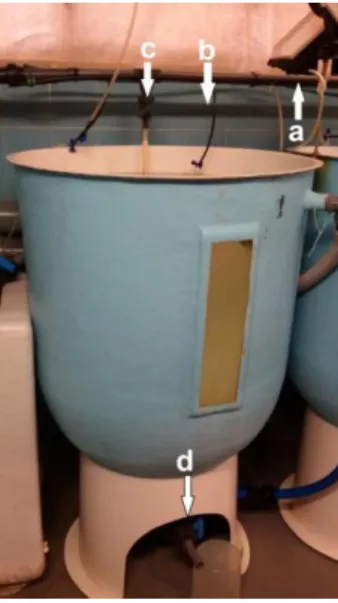
The trial was conducted at the Aquaculture Research Station of IPMA in Olhão (Portugal), from April 22nd to May 18th (26 days), with meagre larvae bred in captivity at the station. The fish larvae were counted into nine tanks of 300L, each treatment in triplicate (Figure 6), at an initial density of 15 larvae/L (4500 larvae/tank).
28
Figure 6 Blue tank of 300L. The letters correspond: a) automatic feeder; b) aeration tube; c) water renewal tube; and d) purge site.
These tanks are individually set with in a semi-closed system (partial recirculation), with continuous aeration, and physicochemical parameters were registered daily, until the end of the trial (Table III). Temperature of the air was controlled by the use of an air conditioner (20 ± 0.5°C), and the temperature of the water by a thermostat (21 ± 1.0°C).
Table III Average salinity (ppt), temperature (ºC), oxygen saturation (%) and photoperiod (light:dark) in meagre rearing.
Salinity (ppt) Temperature (ºC) Oxygen saturation (%) Photoperiod (light:dark)
37 ± 1 21 ± 1 > 80 18:6
From 0 to 20 DAH (days after hatch) the fish were cultured in a 1500L tank with a mixture of natural and halogen light lamps were used (halogen lights with an intensity of 1000-1200 lux) above the water surface and with a 16:8h light:dark photoperiod. The light intensity was measure using a Delta OHM Luxmeter HD 8366, on the first day of the trial, and all the tanks had similar values of light intensity. From 20 to 46 DAH were used only halogen light lamps with a 18:6h light:dark photoperiod, starting at 8.am.. The water temperature was controlled at an average of 18°C from 0 to 20 DAH, and ate an
29
average of 21±1ºC from 20 to 46 DAH as mentioned previously. The water renewal of the system was controlled every day of the trial and adjusted to larvae behavior, progressively increased (Table IV). Surface skimmers set at 6 DAH until 20 DAH and manual skimming if needed.
Table IV Water renewal, in percentage, according with the age of the larvae (DAH) in meagre rearing.
Age (DAH) Water renewal (%) 20 – 25 20
25 – 28 30 28 – 31 40 31 – 35 50 35 – 46 60
Each morning the tanks were aspirated and purged twice a day, once the morning and another in the afternoon, with the larval development and the increasing of meal administered was increased the number of purges for a greater water renewal. The dead larvae were counted daily after cleaning the tanks and purge. The filters in the tanks were washed with fresh water twice or more times per day, as needed. From the start of the trial until 25 DAH were kept the 250μm filter during the day and the 350μm filter overnight to better water renewal. From this day until the end of the trial, with the increased size of the artemia and the amount of meal, was used only 500μm filters, both day and night.
Feeding until 20 DAH was entirely of rotifers and Artemia sp..Rotifers were grown on ω3Yeast 60 (Bernaqua, Belgium) and enriched with Red Pepper (Bernaqua, Belgium) according to manufacturer’s specifications. Artemia strain used was AF (INVE, Belgium) until 19 DAH and from 20 DAH until 30 DAH EG (INVE, Belgium), enriched with Red Pepper (Bernaqua, Belgium). Live preys were divided into 4-5 meals/day, near 9h, 12h30, 14h30 and 18h, with amount depending on number of preys in the tanks and water renovation. A mature culture of Isochrysis aff. galbana and Nannochloropsis oculata was added 2-3 times/day (green water technique).
30
From 20 to 30 DAH meagre larvae were co-fed with enriched Artemia and dry microdiets using automatic feeders manually programmed to feed in a certain amount following the larval development (equal amount in all treatments). From 30 DAH larvae were feed dry microdiets alone until 46 DAH (Figure 9). Initial feeding time was set at 8 a.m. and lasted until 2a.m.. Three microdiet were used: a commercial microdiet (COMM) widely used in seabream hatcheries; a prototype for fast growing larvae with high protein/high lipid (FAST61/22); and a prototype for fast growing larvae with high protein/low lipid (FAST64/16), and three different sizes were used following larval development: 100-200µm; 200-300/400µm; and 300/400-500/600µm.
At the end of the trial all fish were counted to calculate the survival (S):
2.2.3. Live feed
Strains Brachionus spp. are selected from natural populations, whose life cycle is fully controlled in laboratory. In this assay Brachionus spp. were produced by the upscaling technique normally applied to this cultivation in the EPPO according Pousão-Ferreira (2009).
Artemia cysts are not produced in the EPPO and comes from commercial manufacturers. The strains used in this assay, strain A.F. (480 INVE Aquaculture, Ghent, Belgium) and strain EG (Artemia Systems SA, Ghent, Belgium) are decapsulated according to a known protocol and then incubated according to the needs and protocols currently used in the EPPO as described in Pousão-Ferreira (2009).
Both live foods are fortified with the assistance of commercial emulsions, such as Red Pepper (Bernaqua) rich in fatty acids and important nutrients often lacking in diets based on yeast or lipid emulsions. Its use was followed according to the manufacturer's instructions for both cultures.
31
The microalgaes used in this assay are, as previously mentioned, Isochrysis galbana and Nannochloropsis oculata, produced according to standard protocols. Large cultures were grown from pure microalgae stocks using the upscaling method and practices described in Pousão-Ferreira (2009).
Figure 7 Isochrysis galbana and Nannochloropsis oculata culture in different stages, at IPMA facilities.
2.3. Feeding regimes
The feeding regime used for gilthead seabream larvae before and during the trial, from 23 to 58 DAH, is represented in Figure 8, and the feeding regime used for meagre larvae before and during the trial, from 20 to 46 DAH, is represented in Figure 9.
Figure 8 Feeding regime of gilthead seabream (Sparus aurata), at ±20ºC.
32
Figure 9 Feeding regime of meagre (Argyrosomus regius), at ±20ºC.
The size of the inert food was increase conforming the larvae behaviour and growth.
2.4. Experimental Diets
A novel microdiet (FAST) with two different dietary lipid levels was formulated by SPAROS, Lda. (Olhão, Portugal), commercial feed company, using microencapsulation technologies to protect some nutrients, was compared with a current premium microdiet (COMM) for marine fish larvae, in a growth performance trial with seabream (Sparus aurata) and meagre larvae (Argyrosomus regius).
The commercial microdiet (COMM) widely used in seabream/seabass hatcheries, with 62% crude protein and 17% crude lipid, and where the main ingredients are fish, krill, fish roe, soybean lecithin, brewer’s yeast, microalgae, fish gelatine, squid meal, vegetable fat; a prototype for fast growing larvae with high protein/high lipid (FAST61/22), with 61% crude protein and 22% crude lipid; and a prototype for fast growing larvae with high protein/low lipid (FAST64/16), with 64% crude protein and 16% crude lipid (Table V). The main ingredients used in both prototypes were fishmeal, squid meal, shrimp meal, wheat gluten, fish solubles, fish oil and soy lecithin. The daily ration provided ad libitum, but was always equal for all 3 treatments.
33
Table V Main ingredients, protein and lipid percentage of the three dietary treatments (COOM; FAST64/16; FAST61/22), used in the trials of gilthead seabream and meagre.
Dietary
Treatments Protein Lipids Main ingredients
COOM 62 17 Fish krill, fish roe, lecithin, brewer’s yeast, microalgae, gelatin, squid meal and vegetable fat
FAST64/16 64 16 Fishmeal, squid meal, shrimp meal, wheat gluten, fish soluble, fish oil and lecithin
FAST61/22 61 22
2.5. Sampling methods
At the beginning of the seabream trial (23 DAH) were collected 20 larvae (initial pool) to measure initial total length and dry weight. At 35 DAH, when larvae stops eating live food, were collected 20 larvae from each tank (60 larvae/treatment) to measure total length and dry weight. At the end trial (58 DAH) were collected 40 larvae (120 larvae/treatment), to measure the final total length and dry weight, and 20 larvae from each tank for malformations analysis (60 larvae/treatment). To water quality analysis were collected water samples from the different treatments (COMM, FAST64/16 and FAST61/22) at 36, 43 and 46 DAH
At the beginning of the meagre trial (20 DAH) were collected 30 larvae (initial pool) to measure initial total length and dry weight. At 31 DAH, when larvae stops eating live food, were collected 40 larvae from each tank (120 larvae/treatment) to measure total length and dry weight. At 40 DAH, to observe the growth of the larvae in 9 days feeding just the microdiet, were collected 30 larvae (90 larvae/treatment), to measure total length and dry weight. At the end trial (46 DAH) were collected 30 larvae (90 larvae/treatment), to measure total length and dry weight, and 20 larvae from each tank for malformations analysis (60 larvae/treatment). To water quality analysis were collected, each week, water samples from the different treatments (COMM, FAST64/16 and FAST61/22) at 27, 34, 39 and 46 DAH.
34
2.6. Analytical methods
2.6.1. Biometry
In each sampling was measured the total length of each fish by micrometric magnifier glass Zeiss® Stemi 2000-C. With representative photographs of each sample record with the camera Cannon PowerShot® GS 5,0 MP, incorporated into the magnifying glass. The same larvae were then washed rapidly with distilled water to remove the salt, placed in 1.5 ml microtubes and frozen immediately in liquid nitrogen, where they remained stored until determination of dry weight. After lyophilization (to remove all the water from the fish), dry weight of larvae was determined by the balance Sartorius® Pro 11 with a precision of 1 μg.
Figure 10 Example of a dry meagre larva.
In both species was determined specific growth rate (SGR) using the formula: