UNIVERSIDADE DA BEIRA INTERIOR
Ciências da Saúde
Estrogens regulate the survival and death
communication between Sertoli and germ cells: a
clue for male infertility?
Mário Rui Castanheira Alves
Tese para obtenção do Grau de Mestre em
Ciências Biomédicas
(2º ciclo de estudos)
Orientador: Prof. Doutora Sílvia Socorro
Co-orientador: Prof. Doutor Pedro Oliveira
Agradecimentos
Quero aqui expressar os meus agradecimentos a todos aqueles que de alguma forma contribuíram para a realização desta tese de mestrado e que sem eles ela não seria a possível.
Em primeiro lugar, quero agradecer à minha orientadora Professora Doutora Sílvia Cristina da Cruz Marques Socorro pela orientação científica durante a realização deste trabalho, pelo apoio, motivação e disponibilidade demonstrados mas principalmente pela revisão crítica do texto, esclarecimentos, opiniões e sugestões, pelos oportunos conselhos.
Ao Professor Doutor Pedro Fontes Oliveira pelos seus sábios conselhos e recomendações. Aos meus amigos e colegas do laboratório pelos momentos de diversão e companhia e em especial à Sara por toda a ajuda e paciência.
À Nini pelo apoio, conselhos e sobretudo pela sua presença. Sem ela tudo seria mais complicado.
Por fim agradeço com carinho as pessoas mais importantes da minha vida, os meus pais, Eugénia Castanheira e Luís Alves por estarem sempre presentes e por serem o exemplo para a minha vida.
Resumo
Nas últimas décadas os estrogénios têm sido considerados hormonas masculinas, desempenhando um papel importante no controlo das funções reprodutivas masculinas. Contudo, o efeito dos estrogénios na regulação das funções testiculares ainda não está completamente abordado. As ações estrogénicas nos tecidos alvo, entre eles o testículo, são mediadas por interações hormonais com os recetores de estrogénios (ER e ER) clássicos e também através do recetor membranar associado à proteína-G (GPR30/GPER). Por fim, os estrogénios alteram a rede de expressão dos genes nas células e nos tecidos, modulando o seu funcionamento. A fertilidade masculina assenta numa espermatogénese bem sucedida, a qual é dependente do suporte das células de Sertoli (SCs), as células somáticas presentes nos túbulos seminíferos (SeT). A apoptose é o evento chave que mantem o ratio apropriado entre as células germinativas e as SCs e desta forma é crucial para manter a qualidade e quantidade do processo espermatogénico. Tem sido sugerido que as SCs desempenham um papel crucial no controlo do destino das células germinativas através da secreção de fatores de sobrevivência/morte, que atuam nos recetores nas células germinativas. Esses incluem o fator de sobrevivência Desert Hedgehog (Dhh), o Stem Cell Factor (SCF) e o seu receptor (c-kit), assim como os fatores de morte Fas Ligando (FasL) e o seu recetor (FasR). Tem sido demonstrado que os estrogénios regulam a expressão do Dhh, SCF, c-kit, FasL e FasR em diversos tecidos. Portanto colocou-se a hipótese de que os estrogénios podem influenciar a sobrevivência ou morte das células testiculares através do controlo da expressão dos referidos genes. Neste trabalho, SeT e SCs de rato foram colocados em cultura na presença ou ausência de 100nM de 17β-estradiol (E2), e a expressão dos fatores acima-citados foi estuda através das
técnicas de Real-Time PCR e Western Blot. Além disso, para elucidar qual o mecanismo molecular pelo qual o efeito dos estrogénios é conseguido, SCs foram colocadas em cultura na presença de 100 nM E2 ou 100nM de agonistas específicos para cada um dos recetores: G1,
DPN e PPT, respetivamente, agonistas para o GPER, ERα e ERβ. O E2 diminuiu a expressão do
c-kit enquanto por sua vez expressão do seu ligando SCF aumentou. Não houve diferenças na expressão do Dhh entre os diferentes grupos experimentais. A expressão do SCF e do FasL nas SCs foi muito aumentada pela estimulação com G1 indicando o envolvimento do GPER. Os nossos resultados demonstram que a estimulação com estrogénios pode moldar a apoptose das células germinativas tanto de uma forma directa como através da alteração da comunicação entre as SCs e as células germinativas, podendo isto ter um profundo impacto na fertilidade masculina em especial nos casos de hiperesteroidismo.
Palavras- Chave:
Espermatogénese, apoptose, estrogénios, células de Sertoli, túbulos seminíferos, SCF, Dhh, c-kit, FasL, FasR
Resumo Alargado
Nas últimas décadas os estrogénios têm deixado de ter uma conotação tipicamente feminina para serem igualmente considerados hormonas masculinas, desempenhando um papel importante no controlo das funções reprodutivas no homem. Uma das bases para esta ligação à fisiologia masculina conta é a presença dos recetores de estrogénios em vários tecidos e células do aparelho reprodutor masculino. No testículo, para além da presença dos recetores, há ainda a referir a sua capacidade de síntese de estrogénios, uma vez que a enzima aromatase, que converte o percursor testosterona a estradiol, está igualmente presente nos diferentes tipos de células no testículo. Contudo, o efeito dos estrogénios na regulação das funções testiculares ainda não está completamente abordado nem conhecido. As ações estrogénicas nos tecidos alvo, incluindo o testículo, são mediadas por interações hormonais com os recetores de estrogénios clássicos (ERα e ERβ) e também através do recetor associado à proteína-G (GPR30/GPER) alterando a rede de expressão dos genes nas células e nos tecidos, modulando o seu funcionamento e as suas funções no controlo dos processos para os quais estão destinados. A fertilidade masculina assenta numa espermatogénese bem sucedida, a qual é dependente do suporte das células de Sertoli (SCs), as células somáticas presentes nos túbulos seminíferos (SeT), que têm funções de suporte físico e bioquímico das células da linha germinativa. A regulação da espermatogénese é estreitamente assegurada por hormonas libertadas pela pituitária anterior, a FSH e a LH, que atuam, respetivamente, estimulando a função das SCs e a produção de androgénios pelas células de Leydig (LCs). Os níveis de FSH e LH são, por sua vez, regulados por feedbacks negativos pela inibina e testosterona presentes na circulação sanguínea, e também pela libertação de GnRH pelo hipotálamo. O desenvolvimento das células germinativas ocorre numa ligação intima com as SCs, apresentando uma distribuição dos diferentes estágios da diferenciação de uma forma não aleatória no epitélio seminífero. Esta distribuição é dependente da manutenção do número de células germinativas que cada SC pode suportar. A apoptose é o evento chave que mantem o ratio apropriado entre as células germinativas e as SCs e desta forma é crucial para manter a qualidade e quantidade do processo espermatogénico. A apoptose é ainda um processo natural usado para eliminar células germinativas deficientes ou em excesso. Tem sido sugerido que as SCs desempenham um papel crucial no controlo do destino das células germinativas pela secreção de fatores de sobrevivência/morte, que atuam nos recetores nas células germinativas, mas também por conferirem um suporte físico para o seu desenvolvimento. Os fatores de sobrevivência secretados pelas SCs incluem o Desert Hedgehog (Dhh) e o Stem Cell Factor (SCF). O Dhh está envolvido no controlo nas divisões meióticas e no funcionamento das LCs, ao passo que o SCF parece ser essencial para o desenvolvimento das células germinativas através da estimulação da migração das células germinativas primordiais, da proliferação e da sobrevivência das espermatogónias. O SCF secretado pelas SCs tem o seu recetor, o c-kit nas células germinativas. O c-kit tem um papel na regulação da espermatogénese no desenvolvimento das células germinativas antes e depois
do nascimento, desempenhando um papel importante na manutenção de um ratio saudável entre espermatogónias diferenciadas e em auto-renovação. Na ausência do c-kit tende a haver uma depleção do número de células germinativas no testículo. O sistema Fas, incluindo o Fas Ligando (FasL) e o seu recetor (FasR) são dois mediadores da morte celular programada, cuja ação determina a ativação das proteínas efetoras da apoptose. O FasL e o FasR têm sido apontados como estando envolvidos no controlo da apoptose das células germinativas por ação das SCs. Tem sido demonstrado que os estrogénios regulam a expressão do Dhh, SCF, c-kit, FasL e FasR em alguns outros tecidos onde eles desempenham a sua função. Deste modo, colocou-se a hipótese de que os estrogénios podem influenciar a sobrevivência ou morte das células testiculares através do controlo da expressão dos referidos genes. Assim neste trabalho, SeT e SCs de rato foram colocados em cultura na presença ou ausência de 17β-estradiol (E2), e a expressão dos fatores acima-citados foi estudada através das técnicas de
Real-Time PCR e Western Blot. Numa primeira fase, SeT foram postos em cultura com (100nM) ou sem E2 e o efeito na expressão de Dhh, SCF, c-kit, FasL e FasR foi determinado.
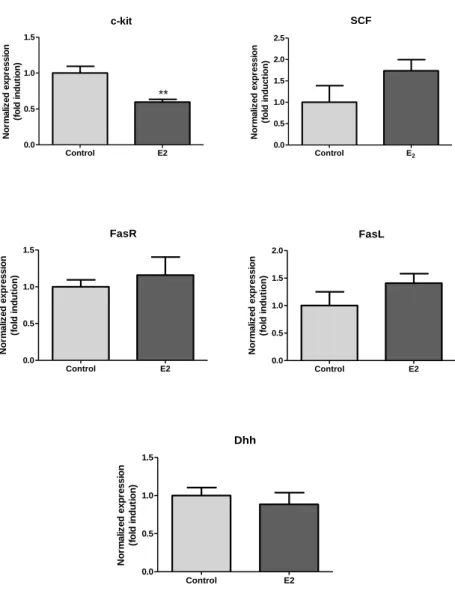
Além disso, para elucidar qual o mecanismo molecular pelo qual o efeito dos estrogénios é conseguido, SCs foram colocadas em cultura na presença (100nM) de agonistas específicos para cada um dos recetores: G1, DPN e PPT, respetivamente, agonistas para o GPER, ERα e ERβ. O E2 diminuiu a expressão do c-kit nos SeT, enquanto a expressão do seu ligando SCF
aumentou tanto em SeT como em SCs. Por sua vez, não houve diferenças na expressão do Dhh entre as condições com ou sem estimulação hormonal. A expressão do SCF e do FasL nas SCs foi muito aumentada pela estimulação por G1, o que indica o envolvimento do GPER. Os nossos resultados demonstram que a estimulação com estrogénios pode modular a apoptose das células germinativas tanto de uma forma direta, aumentando a expressão do FasR e diminuição da expressão do c-kit, assim como através da alteração da comunicação entre as SCs e as células germinativas através do aumento da expressão do FasL, podendo isto ter um profundo impacto na fertilidade masculina em especial nos casos de hiperesteroidismo.
Abstract
In the last decades estrogens have been regarded as “male hormones” playing an important role controlling male reproductive function. However, the effect of estrogens regulating testicular function and the spermatogenic process it is not fully addressed. Estrogenic actions in target tissues, including testis, are mediated by hormone interaction with the classical estrogens receptors (ER and ER) and also via the membrane G-protein coupled receptor (GPR30/GPER). Ultimately, the estrogens alter the gene expression network in cells and tissues modulating its functioning. Male fertility relies on a successful spermatogenesis, which is dependent from the support of Sertoli cells (SCs), the somatic cells within seminiferous tubules (SeT). Apoptosis is a key event strictly maintaining the appropriate ratio between germ cells and SCs and, thus, it is crucial to maintain the spermatogenic output. It has been suggested that SCs play a crucial role controlling germ cells fate, by secretion of survival and death factors, which act on receptors in germ cells. These include the survival factor desert hedgehog (Dhh), the stem cell factor (SCF) and its receptor the c-kit, as well as the death factors Fas-Ligand (FasL) and Fas-receptor (FasR). It has been shown that estrogens regulate Dhh, SCF, c-kit, FasL and FasR expression in several other tissues. Therefore, we hypothesize that estrogens may influence germ cell survival or death in testicular cells by governing the expression of SCF, c-kit, FasL, FasR. In the present work rat SeT and SCs were cultured in presence or absence of 100nM of 17β-estradiol (E2), and the expression of the aforementioned
factors was studied through real-time PCR and Western blot techniques. In addition, in order to start elucidating the molecular mechanisms by which the estrogenic effects are attained, SCs were cultured with E2 0,1nM and with 100nM of each ER specific agonist: G1, DPN and
PPT, respectively, agonists for GPER, ERand ER. E2 down-regulated the c-kit expression
while increasing expression of its ligand, SCF, both in SeT and SCs. The expression of Fas system, FasR and FasL was also increased in response to E2. No differences were found in Dhh
expression between experimental groups. The expression of SCF and FasL in SCs was strongly increased by G1 stimulation indicating the involvement of GPRER. Our results demonstrated that the estrogenic stimulation may modulate germ cell apoptosis in a direct way or through altering germ cell:SCs communication, which could have a profound impact in male fertility, particularly in cases of hyperestrogenism.
Keywords
Spermatogenesis, apoptosis, estrogens, Sertoli cells, seminiferous tubules, SCF, Dhh, c-kit, FasL, FasR
Table of Contents
Acknowledgments III Resumo V Resumo Alargado VII Abstract IX Table of Contents XI List of Figures XIII List of Tables XV Abbreviations XVII
I. Introduction 1
1. Brief overview of testicular anatomy 1
2. The Spermatogenic process 2
2.1. Cellular and hormonal factors 4
2.2. Importance of Sertoli cells in spermatogenesis 5
2.2.1. Survival and death factors secreted by Sertoli cells 7
3. Estrogen as apoptosis regulators in the testis 7
3.1. Estrogen receptors in testicular cells 9
3.2. Role of estrogens in spermatogenesis 10
3.2.1. Implication of estrogen on apoptosis 15
II. Aim of thesis 15
III. Material and methods 17
1. Ex vivo cultures of seminiferous tubules and hormonal treatment 17
2. Sertoli cells primary cultures and hormonal treatment 17
3. RNA extraction 18 4. cDNA synthesis 19 5. Real-time PCR 19 6. Protein extraction 21 7. Western blot 21 8. Statistics 21 IV. Results 23
2. Effect of E2 on the expression of Dhh, SCF/c-kit and Fas system in seminiferous
tubules cultured ex vivo 23
3. Effect of E2 on the expression of SCF and FasL in Sertoli cells cultured in vitro 26
V. Discussion 29
VI. Conclusion 34
VII. References 35
List of Figures
Figure I.1 Schematic representation of the organization of mammalian testis and
seminiferous tubule (SeT).
Figure I.2 Schematic representation of the hormonal regulation of spermatogenesis. Figure I.3 Structure of ERα and ERβ proteins showing percentages of homology in each
functional domain.
Figure I.4 ASchematic representation of apoptotic events.
Figure IV.1 Representative histological section showing morphology of rat seminiferous
tubules after 72h of ex vivo culture.
Figure IV.3. Effect of 100 nM E2 on c-kit, SCF, FasR and FasL protein expression in rat
seminiferous tubules cultured ex vivo (24 h) determined by Western Blot after normalization with β-actin housekeeping gene.
Figure IV.4 Immunohistochemistry analysis of Sertoli cells (SCs) in culture using a primary
antibody against vimentin, a SC specific marker.
Figure IV.5 Effect of E2 (0,1 nM (e2) and 100 nM (E2)), and selective ER agonists (G1, DPN
and PPT) on SCF and FasL mRNA expression in rat cultured Sertoli cells determined by qPCR after normalization with β-actin and GAPDH housekeeping genes.
Figure V.1 Role of E2 perturbing Sertoli cell:germ communication with induction of germ
List of Tables
Table I.1 Localization of ERs and Aromatase in Human Testicular Cells.
Table I.2 Role of EstrogensControlling Apoptosis of Rat Testicular Cells.
Table III.1 Volumes and reagents used in cDNA synthesis reaction mix.
Table III.2 Primers characterization: sequences, annealing temperature (AT) and size of
amplified fragment.
Table III.3 Composition of the qPCR reaction mix.
Formatada: Índice de ilustrações,
Justificado, Espaçamento entre linhas: 1,5 linhas, Tabulações: 14,98 cm, Direita,Carácter de preenchimento: …
Abbreviations
Apaf-1 – Apoptotic peptidase activating factor 1
BSA- Bovine serum albumin,
cDNA - Complementary Deoxyribonucleic Acid
CytoC – Cytochrome C
DMEM: Ham’s F12 - Dulbecco’s Modified Eagle Medium Ham’s Nutrient Mixture F12
DEPC - dietilpirocarbonato
E2 – 17β-Estradiol
EDTA - Ethylene Diamine Tetra Acetic acid
ERs – Estrogen receptors
ERα – Estrogen receptor α
ERαKO - Estrogen receptor α knockout
ERβ – Estrogen receptor β
ERβKO - Estrogen Receptor β Knock-out
EtOH – Ethanol
FSH – Follicle-stimulating hormone
GnRH - Gonadotropin releasing hormone
HBSS - Hank’s Balanced Salts Solution
HEPES- (4-(2-hydroxyethyl)-1-piperazineethanesulfonic acid
LCs – Leydig cells
LH – Luteinizing Hormone
mRNA - Messenger Ribonucleic Acid
PBS – Phosphate Buffered Saline
PCR – Polymerase Chain Reaction
PI3-K - Phosphatidylinositide 3-kinasesRIPA - Radio-Immunoprecipitation Assay
RNA - Ribonucleic Acid
RNAt - Total Ribonucleic Acid
SeT- Seminiferous tubules
SCs – Sertoli cells
SDS-PAGE-
sodium dodecyl sulfate polyacrylamide gel electrophoresisT - Testosterone
Introduction
1. Brief Overview of Testicular Anatomy
Testes are the central elements of the male reproductive tract having two main functions, steroid hormone synthesis and spermatozoa production [2]. Spermatogenesis is a multi-step process responsible by germ cell expansion and development, finishing with the release of spermatozoa [3]. Anatomically, testes are ovoid organs, suspended outside abdominal tissue, in the scrotum, which is internally divided into two sacs, one for each testis [4]. Testes are covered by a fibrous capsule called tunica albuginea, which emits extensions into the testis dividing it in lobules (Fig. I.1). Each lobule has between 3 and 10 convulated seminiferous tubules (SeT). Mammalian testes are composed of two main compartments (Fig.I.1): the interstitial space with androgens producing cells
(Leydig cells, LCs) and SeT
that contain germ cells in different stages of development and somatic Sertoli cells (SCs) [2]. This structural division also reflects the dual function of testes, with spermatogenesis occurring in the SeT and steroidogenesis happening essentially in the interstitium [5]. SeT are surrounded by mesenchymal cells and represent the majority of testicular mass, being considered the functional unit of the testis. Since they are the place where spermatogenesis occurs. The seminiferous epithelium (Fig. I.1) is composed by germ cells in various stages of development (spermatogonia, spermatocytes, spermatids and spermatozoa) and also SCs [6]. Besides LCs, the interstitium also contains blood and lymphatic vessels, connective tissue and other cell types, such as, fibroblasts, macrophages and leukocytes [7].Código de campo alterado Código de campo alterado Código de campo alterado
Código de campo alterado Código de campo alterado
Figure I.1 Schematic representation of the organization of mammalian testis and seminiferous tubule
(SeT). The testis is encased by two tissue layers, from the inside to the outside, tunica albuginea and tunica vaginalis. Various septum extending from the tunica albuginea divides testis in lobules where SeT are located. The seminiferous epithelium is composed of Sertoli and developing germ cells at different stages. Leydig cells and blood vessels are in the interstitium. Spermatogenesis produces male haploid germ cells from diploid spermatogonial stem cells. Spermatogonia type A divide and develop into spermatogonia type B, which differentiate into primary spermatocytes that undergo meiosis I to separate the homologous pairs of chromosomes and form the haploid secondary spermatocytes. Meiosis II yields four equalized spermatids that migrate towards the lumen where fully formed spermatozoa are finally released. Abbreviations: BTB, Blood-testis Barrier. Adapted from Rato [8] and Saladin [9].
2. The Spermatogenic Process
2.1
. Cellular and Hormonal Factors
Mammalian male fertility depends on successful generation of motile spermatozoa carrying an intact paternal genome and capable of fertilizing the egg [2]. Spermatogenesis is a cellular complex process controlled by a network of endocrine and other regulatory factors [10], where immature germ cells undergo division, differentiation, and meiosis giving rise to haploid spermatozoa [11]. Spermatogonial stem cells are maintained in a specialized microenvironment that is composed by germ cells, somatic support cells (SCs) and the extracellular matrix [12]. SCs play essential roles via paracrine pathways to control all aspects of development of germ cells in the testis, thereby regulating spermatogenesis [13]. In humans Spermatogenesis produce an average of 200×106 spermatozoa per day [14], which
begins by mitotic proliferation of type A and type B spermatogonia. Then type B spermatogonia divide by mitosis and differentiate forming spermatocytes. After prophase of
Código de campo alterado Código de campo alterado
Código de campo alterado Código de campo alterado Código de campo alterado Código de campo alterado Código de campo alterado Código de campo alterado
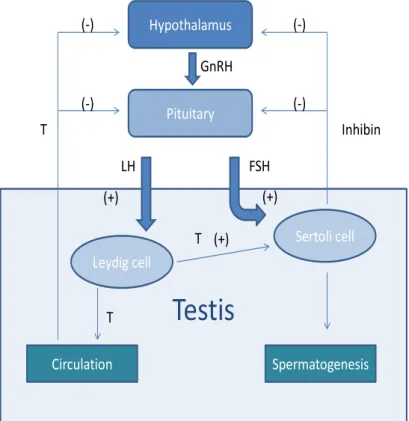
the first meiotic division, cell division process is completed and two subsequent divisions produce haploid round spermatids. Spermiogenesis is the last differentiation phase of spermatogenesis, where spermatids experience chromatin condensation and nuclear shaping, removal of excess cytoplasm, and the acrosome and sperm tail formation. Finally, fully developed spermatozoa are released into the lumen of SeT [15]. Although the spermatogonial differentiation starts in fetal life in humans, spermatogenesis only begins at puberty [16]. The classical male sex steroid hormone testosterone and follicle-stimulating hormone (FSH) are the principal hormones controlling spermatogenesis. LCs, derived from interstitial mesenchymal tissue between the tubules, are the main source of testosterone playing a crucial role in masculinization events, descent of the testes into the scrotum and initiation and maintenance of spermatogenesis [17, 18]. Hormonal secretion by somatic cells of the testis is under the master control of hypothalamus-pituitary, encompassing the so-called hyphotalamus-pituitary-testis axis (Fig. I.2). Gonadotrophin releasing hormone (GnRH) is an hypothalamic hormone that induces production and secretion of gonadotrophins, FSH and luteinizing hormone (LH), by gonadotroph cells in the anterior pituitary [19].
FSH acts in SCs through G-coupled receptors and controls the proliferation of SC during perinatal and pubertal periods [20]. FSH also established SCs functionality in adult life, being a major determinant of adult spermatogenic capacity [20]. In turn, LH regulates testosterone production by the LCs (Fig. I.2), which diffuses into the SeT where, together with FSH, stimulates SCs activity, germ cells maturation and sperm production [21].
The fine accurate regulation of spermatogenesis is achieved by negative feedback mechanisms exerted by testicular hormones at pituitary and hypothalamus (Fig. I.2). Testosterone inhibits LH secretion in two ways. It acts on the hypothalamus to decrease the frequency of GnRH bursts, resulting in a decreased amount of GnRH reaching the pituitary and less secretion of the gonadotropins, or acts directly on the anterior pituitary leading to a decreased LH secretion, in response to any given level of GnRH. Inhibin is a hormonal product of SCs secretion acting on the anterior pituitary decreasing the FSH levels, or on the hypothalamus, decreasing GnRH levels [22].
Código de campo alterado Código de campo alterado
Código de campo alterado Código de campo alterado
Código de campo alterado Código de campo alterado Código de campo alterado Código de campo alterado
Figure I.2 Schematic representation of the hormonal regulation of spermatogenesis. Hypothalamus
synthesizes the gonadotropin releasing hormone (GnRH), which in turn stimulates the anterior pituitary to produce the luteinizing hormone (LH) and follicle-stimulating hormone (FSH). FSH acts only on the Sertoli cells (SCs) leading to the stimulation of spermatogenesis, whereas LH acts only on the Leydig cells that produce testosterone. The secretion of FSH is inhibited mainly by Inhibin, a proteic hormone secreted by the SCs, and the secretion of LH is inhibited mainly by testosterone. (-) negative feedback; (+) positive feedback
2.2. Importance of Sertoli cells in Spermatogenesis
Sertoli cells are located within the SeT along the basement membrane in close contact with germ cells in different stages of germ cell development [23]. SCs have a complex structure, with numerous cupshaped processes surrounding and conferring physical support to all germ cell types. The various generations of germ cells, are not randomly distributed within the seminiferous epithelium, but are arranged in strictly defined cellular associations [24]. SCs establish Sertoli-Sertoli and Sertoli-germ cell interactions by means of tight, anchoring, and gap junctions which are continuously being re-structured allowing germ cell movement from basal to luminal side, with elongated spermatids close to the lumen, while, spermatogonia are restricted to the basal compartment (Fig. I.1) [25].
Sertoli cells also confer biochemical support to germ cells at different stages of development, secreting a number of locally produced autocrine and paracrine factors, namely growth factors, such as glial cell line-derived neurotrophic factors [26], basic fibroblast growth factor, and epidermal growth factor [27]. SCs sustain the proliferation and differentiation of
Testis
Hypothalamus
Pituitary
Leydig cell
Sertoli cell
T
T
T
GnRH
FSH
LH
Spermatogenesis
Inhibin
Circulation
(-)
(-)
(-)
(-)
(+)
(+)
(+)
Código de campo alterado Código de campo alterado
Código de campo alterado
Código de campo alterado Código de campo alterado
spermatogonial stem cells, and by this reason, are also known as “nurse cells”. In fact, they secrete metal ions, nutrients and several metabolic substrates ensuring the nutritional support of germ cells, their appropriate development and, thus, male fertility [28-30]. In addition, since germ cells do not contain receptors for testosterone and FSH, the endocrine factors regulating germ cells development, exert their biological effects on spermatogenesis via the receptors located in or on the plasma membrane of SCs [31]. Therefore, SCs are the major cellular target for the testosterone signaling and are required to support male germ cell development and survival [29]. Within the SeT, germ cell development is maintained by signals originated from SCs in absolutely dependence of androgens and FSH, as well as on their receptors signaling pathways [19]. Not surprisingly, suppression of FSH and androgen in rats, primates, and men disrupts spermatogenesis and release of mature sperm from SCs (the process of spermiation) [32]. Spermiation failure is characterized by the retention and subsequent phagocytosis of spermatozoa by SCs, involving functional changes in the adhesion junction present between germ cells and SCs [33].
Sertoli cells have a limited capacity for the number of cells they can support, providing an appropriate environment only to a certain amount of germ cells. For this reason, waves of massive germ cell death by apoptosis occur in the testis during early stages of spermatogenesis, serving as a mechanism to remove excessive cells that cannot be supported by SCs [34]. Spermatogenesis is maintained by the strict control of the fine balance between cell proliferation and apoptosis, which ensures the appropriate ratio of germ cell:SCs [35]. Therefore, germ cell apoptosis has been shown to play an important role in controlling sperm output in many species and has been linked to infertility inhumans[36].
In the last years, it has been assumed that SCs play a crucial role controlling germ cells fate, by secretion of a number of locally produced autocrine and paracrine factors, that can control germ cells death or survival, or through direct cell-to-cell membrane contacts[31].
2.2.1. Survival and Death Factors Secreted by Sertoli Cells
Survival or death factors are released by SCs or could be present at their plasma membranes [37]. In any case, germ cells have the receptors for SCs proteins being able to respond to SCs signals, surviving or undergoing apoptosis. SCs secrete the paracrine survival factor, the Desert hedgehog (Dhh) [38], and seem also to control germ cell survival by the expression of a membrane-bound germ cell survival factor, the Stem cell factor (SCF), which has tyrosine kinase receptors (c-kit) on the surface of adjacent germ cells [39]. SCs cells may also employ the Fas system and determine germ cell death, since they express the Fas-Ligand (FasL), while Fas-receptor (FasR) has been described on the surface of adjacent spermatogonia [40].
Código de campo alterado
Código de campo alterado Código de campo alterado Código de campo alterado Código de campo alterado Código de campo alterado
Código de campo alterado Código de campo alterado Código de campo alterado
Código de campo alterado
Código de campo alterado Código de campo alterado Código de campo alterado Código de campo alterado
Desert hedgehog, the testis-specific member of mammalian hedgehog (Hh) protein family, is one of the first genes expressed in the developing of male gonad [38]. It is expressed by SCs and a secreted factor to seminiferous tubules fluid. Blocking Hh signaling in the genetically or pharmacologically testis development drive to severe disruption in testicular histology resulting in a defective spermatogenesis and infertility [41]. In addition, low androgen levels leads to the disorganized seminiferous epithelium and disrupted spermatogenesis since Hh signaling is needed for the differentiation of fetal LCs [42] and to maintain the expression of steroidogenic enzymes [43]. The role of Hh signaling in spermatogenesis has remained unknown until recently. In the mouse, SC-derived Dhh binds patched (PTCH) receptor on the surface of primary spermatocytes decreasing smoothened (SMO) repression and activating glioma-associated oncogene homologue (GLI) transcription factors [38, 44]. Gli1 and Ptch1 are two of the first genes that are transcript in response to the activation of Hh signalling pathway [45]. Late primary spermatocytes, secondary spermatocytes, round spermatids and LCs express PTCH1 in the adult mouse testis. This would suggest that Dhh/PTCH1 signalling takes part in control of meiotic divisions and adult-type LC function [44].
c-kit receptor belongs to a growth factor receptors family with intrinsic tyrosine kinase activity that transduces growth regulatory signals [46]. c-kit has functions during spermatogenesis and throughout male germ cell development before and after birth [1], playing a important role in maintaining the self-renewal and differentiation of spermatogonia ratio [47]. In normal seminiferous epithelium, this ratio is maintained at 1.0, and changes up entail greater spermatogonia self-renewal leading to the appearance of c-kit positive tumor cells in the seminiferous epithelium [48]. On the contrary, changes down entail stem cell depletion resulting in SCs only syndrome, with absence of germ cell in the epithelium [49]. The “undifferentiated” and “differentiating” spermatogonia display different expression of c-kit [50]. Moreover, the passage of undifferentiated spermatogonia to differentiating stages coincides with the gain of c-kit expression. In fact, the presence of c-kit has been routinely used to identify differentiated spermatogonia [51]. c-kit continues to be expressed until meiotic phases and play essential roles in the survival of the c-kit-expressing germ cells [52]. SCF, the c-kit ligand, is expressed at SCs plasma membranes in contact with the germ cells, which express the c-kit receptor. c-kit is activated only after binding with SCF and this pathway is considered to be crucial for the proliferation, migration, survival and maturation of the germ cells [52, 53]. SCF is a cytokine essential for haematopoiesis, melanogenesis and development of germ cells. Actions of c-kit/SCF system include stimulation of primordial germ cell migration, enhancement of proliferation and anti-apoptosis of primordial germ cells/spermatogonia [54]. However, the down-stream signaling pathways involved on spermatogonia proliferation and anti-apoptosis seem to be different. SCF might contribute to construct the potential niche which stimulates stem cell divisions [55] and is able to increase the percentage of sperm undergoing acrosome reaction when cultured in vitro. In vitro
Código de campo alterado Código de campo alterado Código de campo alterado Código de campo alterado
Código de campo alterado Código de campo alterado Código de campo alterado Código de campo alterado Código de campo alterado Código de campo alterado Código de campo alterado Código de campo alterado Código de campo alterado Código de campo alterado Código de campo alterado Código de campo alterado
Código de campo alterado Código de campo alterado Código de campo alterado Código de campo alterado
addition of SCF leads to spermatogonia proliferation [56]. SCF was also detected in human seminal plasma, with levels significantly correlated with sperm counts [57]. Moreover, mutations in human SCF had a significant association with idiopathic male infertility [58], highlighting its relevance in spermatogenesis.
Fas receptor is a type I transmembrane protein belonging to the tumor necrosis factor receptor superfamily [59] and FasL is a member of the tumor necrosis factor family of proteins [60]. Both death mediators (FasR and FasL) are involved in apoptotic programmed cell death together with the effectors of apoptosis (caspases) as detailed in section 3.2.1. FasL is produced in SCs as a type II membrane protein and may be cleaved by a metalloproteinase to produce a soluble ligand [61]. FasR contain a cytoplasmic death domain that, upon activation, recruits other death domain-containing proteins, such as FADD/MORT1 [62] [62][62][62][61][61][61][61][61][61][61][61][61]and caspase 8 [63]. Self-activation of caspase 8 initiates activation of a cascade of other effector caspases, which results in rapid cell death [64]. In the testis, the Fas system has been implicated in maintaining the immune-privileged nature of this organ [65]. SCs expressing FasL eliminate Fas-positive activated T cells, thus protecting the germ cells against the immune system and preventing rejection reactions in the testicular environment. Recent studies in the rat and mouse testes have suggested another important function for the Fas system in the testis linking FasL and FasR with the regulation of testicular germ cell apoptosis [40].
3
.
Estrogens as Apoptosis Regulators in the Testis
3.1. Estrogen Receptors in Testicular Cells
Sex steroid hormones, androgens and estrogens, exert their effects mainly by the interaction with specific intracellular receptor proteins, which act regulating the expression of target genes and, thus, contribute to determine the cell protein network at any given time (reviewed by [66]). The steroid receptors (SRs) belong to the nuclear receptor superfamily that includes, among others, estrogen receptor (ER), progesterone receptor (PR) and androgen receptor (AR) [67]. SRs are hormone-activated nuclear transcription factors with distinct specificities for endogenous steroid hormones and exogenous substances [68]. The ER shares with other members of the nuclear receptor superfamily a common arrangement of five structural-functional domains, denoted A to F [69]. A key domain is the DNA-binding domain (DBD or C region) composed of two highly conserved zinc-fingers, which coordinate receptor interaction with specific DNA sequences known as hormone-response–elements present in the promoter region of target genes [70]. The ligand-binding domain (LBD or E region) is located in the C-terminal region and possesses the ability of hormone recognition ensuring both specificity and selectivity of the physiologic response [67]. The A/B domain
Código de campo alterado Código de campo alterado Código de campo alterado
Código de campo alterado Código de campo alterado Código de campo alterado Código de campo alterado Código de campo alterado Código de campo alterado Código de campo alterado Código de campo alterado Código de campo alterado Código de campo alterado Código de campo alterado Código de campo alterado Código de campo alterado Código de campo alterado Código de campo alterado Código de campo alterado Código de campo alterado Código de campo alterado Código de campo alterado Código de campo alterado
Código de campo alterado Código de campo alterado Código de campo alterado Código de campo alterado
Código de campo alterado Código de campo alterado
with a variable transactivation function encompasses the N-terminal region [67]. The F domain at the C-terminus is characteristic of ERs and its functions are not totally known yet (reviewed by [66]).
Two subtypes of ER receptors, ER alpha (ERα) and ER beta (ERβ), encoded by separate genes located on different chromosomes have been found along the evolutionary line of vertebrates [71-75]
In humans, ERα and ERβ genes are located, respectively, on chromosomes 6 [76] and 14 [77]. Even so, and depending on the species considered, ERα and ERβ proteins share 41%–65% of overall amino acid identity (Fig. I.3) [72]. The least conserved region is the hypervariable amino-terminal A/B domain and in contrast, the DBD is the most conserved with 96% of amino-acid identity. The LBD also is highly conserved (57%-60%) and both receptors bind the natural ligand 17β-estradiol [78], phytoestrogens and other natural and synthetic ligands [79]. However, selective agonists and antagonists for ER or ER have been identified helping to disclose their specific separate actions in a broad range of tissues [80].
The biological function assigned to the ERs in a tissue or organ is not only dependent of ligand nature itself but also of the cellular localization of receptors, as well as the balance between ERα and ERβ proteins levels [81-83]. ERs localization on the different cell types of the testis is species-specific and has been associated with the developmental stage of germ cells [11]. In rodents, ERα expression is more closely associated to LCs and peritubular cells whereas ERβ is found in multiple cell types like LCs, peritubular cells, SCs and spermatogonia, spermatocytes and spermatids [84]. In humans, the absence of consensus on the detection of ER by distinct independent studies [85-92], together with the reports of the wide expression of ER in testicular cells [85, 87-91], lead some authors to assume ER as the main mediator of estrogenic actions in human testis. Recently, using human testicular biopsies with distinct phenotypes of spermatogenic development, our research group demonstrated that both receptor subtypes are expressed in human testis [93], with ERα being detected in LCs, SCs, spermatogonia, spermatocytes, round spermatids and elongated spermatids/spermatozoa, which highlighted for a relevant role of ER in spermatogenesis. The importance of ER in testicular physiology is also supported by studies reporting associations of ER mutations and polymorphisms with male infertility [94-96]. Table I.1 summarizes the available information on the expression pattern of ERα and ERβ in human testicular cells ([93], see also a review by [97]).
Código de campo alterado Código de campo alterado
Código de campo alterado Código de campo alterado Código de campo alterado Código de campo alterado Código de campo alterado Código de campo alterado Código de campo alterado
Código de campo alterado Código de campo alterado Código de campo alterado Código de campo alterado Código de campo alterado Código de campo alterado Código de campo alterado
Figure I.3 Structure of ERα and ERβ proteins showing percentages of homology in each functional
domain. N-terminal region (A/B domain), the DNA binding domain (C domain), the hinge region (D domain), the ligand-binding domain (E domain), and the C-terminal region (F domain) are indicated. Grey intensity scale highlights for domain conservation, with the most conserved domain C in dark grey.
In addition to the α and β receptors, estrogens induce rapid non-genomic responses via membrane-associated receptors, such as growth factor receptors and G protein-coupled receptors [98]. A member of the 7-transmembrane G protein-coupled receptor family, GPR30, promotes estrogen actions in cells [99]. It has been shown that this receptor show has estrogen-binding affinity and mediates some estrogen-signal transduction events, as for example calcium mobilization, kinase activation [100] and rapid transcriptional activation of early genes [101]. GPR30 is now recognized as an estrogen receptor, known as G-protein coupled estrogen receptor GPER. In humans, GPER has been detected in heart, lung, liver, intestine, ovary, prostate, kidney, brain and testis [102, 103]. However, GPER signaling in human testes is poorly known [103].
Table I.1 Expression of ERs and Aromatase in Human Testicular Cells.
Cell type Aromatase ER ER References
Sertoli + + + [90, 93, 104-107] Leydig + + + [90, 92, 93, 104, 105] Spermatogonia - + + [87, 88, 90, 93, 107-109] Spermatocytes + + + [87-89, 93, 107, 108] Spermatids + + + [86-89, 93, 107, 108] Spermatozoa + + + [85-87, 108, 110, 111] + - positive, - negative.
3.2. Role of Estrogens in Spermatogenesis
Estrogen biosynthesis is catalyzed by a microsomal member of the cytochrome P450 superfamily, namely aromatase cytochrome P450. Aromatase is responsible for binding of the
Código de campo alterado Código de campo alterado Código de campo alterado Código de campo alterado Código de campo alterado Código de campo alterado Código de campo alterado
C19 androgenic steroid substrate and catalyzing the series of reactions leading to formation of the phenolic A ring characteristic of estrogens [112]. Besides being capable to respond to endocrine estrogenic stimuli, mammalian testis can also synthesize E2, since the presence of a
functional aromatase (Table I.1), converting testosterone to its estrogenic metabolite, E2, has
been detected in several cell types of the testis [105]. Curiously, E2 concentrations in semen,
rete testis fluid and spermatic vein [113-116] are in average 50 times higher than in peripheral plasma [117], which supports their physiological relevance in testicular physiology. The report of a man with a disruptive mutation of ER and reduced sperm viability [94, 118] and the association found between ER polymorphisms and oligozoospermia further accentuates the role of this ER subtype and estrogens in testicular physiology [118, 119]. Experimental data have been demonstrating that estrogens exert a feedback control over the hypothalamus-pituitary-gonadal axis, inhibiting testosterone production and balancing LH and testosterone levels [11]. Other reports have described the role of E2 on capacitation, loss of
acrosome and increased motility of spermatozoa [85].
However, the only definitive accepted role for E2 in male reproductive tract is the regulation
of fluid reabsorption in efferent ductules and rete testis [120], as demonstrated by the generation of knockout (KO) mice models. In ERα KO (αERKO) mice, testes are smaller than in wild-type and both sperm morphology and function are affected due to epididymal hypo-osmolality [121]. The lack of ability to absorb fluids in this mice model results in a generation of backpressure, which in turn affects the SeT architecture and consequently the testis function [122]. On the other hand, ERβ knockout mice (βERKO) were fertile, producing a sufficient number of sperm [123]. The double αβERKO mice appear to have a similar phenotype to αERKO mice with no major differences in spermatogenesis [123]. The role of estrogens in spermatogenesis was also highlighted by the observations of impaired fertility in aromatase KO mice, which displayed a progressive decrease in fertility with age in consequence of increased rate of germ cells apoptosis [124]. Thus, estrogens may be implicated in the regulation of testicular apoptosis.
3.2.1 Implication of Estrogens on Apoptosis
Apoptosis is one of the biological processes of programmed cell death, which is characterized by several hallmarks, such as: internucleosomal DNA fragmentation, caspase activation and externalization of phophatidyl serine on the plasma membrane [125].There are two major pathways involved in the apoptotic process (Fig. I.4): receptor-mediated (or extrinsic pathway) and the mitochondrial (or intrinsic pathway). Both pathways converge at the level of the specific serine-proteases proteases, the caspases, that are synthesized as inactive zymogens and become active upon death stimuli [125].The extrinsic pathway is initiated by activation of death receptors at plasma membrane, such as Fas (CD95/Apo-1) or tumor
Código de campo alterado Código de campo alterado Código de campo alterado Código de campo alterado Código de campo alterado Código de campo alterado Código de campo alterado Código de campo alterado Código de campo alterado Código de campo alterado Código de campo alterado Código de campo alterado Código de campo alterado Código de campo alterado Código de campo alterado Código de campo alterado Código de campo alterado Código de campo alterado Código de campo alterado Código de campo alterado
Código de campo alterado
necrosis factor receptor 1 (TNFR1). Trimerization of death receptors in response to ligand biding induces the activation of procaspase 8 in mice and caspase 10 in humans [125]. A cascade of effector caspases is then activated with cell commitment to apoptosis (Fig. I.4). The intrinsic pathway of apoptosis can be activated by different stimuli, such as radiation, DNA fragmentation, starvation, oxidative stress and autophagy [126]. This pathway is characterized by a decrease in mitochondria membrane potential by action of apoptotic members of the Bcl2 family proteins (BAX and Bid), with opening of the mitochondrial permeability pore and release of cytochrome C (CytoC) from the mitochondria. CytoC along with dATP, the cytosolic protein Apaf-1 and procaspase-9 assemble a complex termed apoptosome [127, 128], which is a catalytic multiprotein platform that activates caspase 9. Activated Caspase 9 then cleaves caspase 3, resulting in downstream events involved in cell death (Fig. I.4).
Caspase -3 Caspase -7
Extrinsic pathway
Intrinsic pathway
FasL FasR Caspase -8 or -10 Caspase -6 apoptosis Bax Bid Mitochondrion c c Apaf Procaspase -9 apoptosome Apaf caspase -9 caspase -3 Extracellular Intracellular
Figure I.4 ASchematic representation of molecular events leading to apoptosis. The two (extrinsic and intrinsic) pathways of apoptosis are indicated. Each pathway activates its own initiator caspase, which in turn will activate the executioner caspases. In extrinsic pathway death signals from extracellular space activate procaspases 8 and 10, which in turn activate, among others, caspase 3 promoting apoptosis. The intrinsic pathway, activated in response to cell stress, includes opening of mitochondrial pore, by actions of Bax and Bid proteins, with release of cytochrome C (c) and formation of the apoptosome. Apoptosome formation induces activation of caspases 9 and 3 and apoptosis. The execution of apoptosis results in characteristic cytomorphological features including cell shrinkage, chromatin condensation, formation of cytoplasmic blebs and apoptotic bodies and finally phagocytosis of the apoptotic bodies by adjacent parenchymal cells, neoplastic cells or macrophages.
Estrogens have been widely considered as a hormone that can both stimulate and inhibit cell apoptosis, which has been particularly evident in breast cancer cells, where E2 is a potent
Código de campo alterado
Código de campo alterado
Código de campo alterado Código de campo alterado
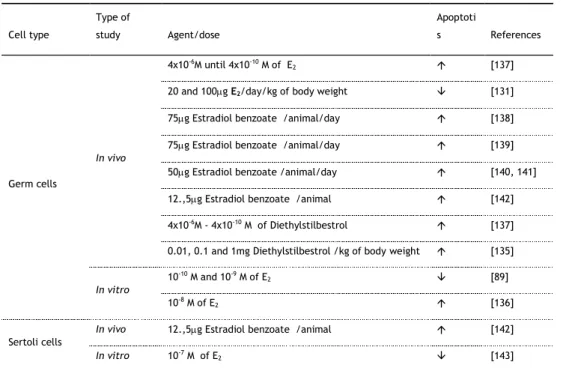
inhibitor of apoptosis regulating expression of several apoptotic proteins, but is also capable of inducing apoptosis [129]. Indeed, in vivo and in vitro studies using rat models produced many conflicting reports about the estrogenic control of apoptosis in the testis (Table I.2). E2 was described as a survival agent promoting germ cell survival and inhibiting apoptosis
during spermatogenesis. In vitro administration of E2 (10-10 M and 10-9 M) effectively inhibited
germ cell apoptosis [130]. Also, in vivo experiments found a decrease of apoptosis in germ cells following E2 treatment [131]. Moreover, in vitro studies with rat cultured SCs
demonstrated that E2 (10-7M) inhibits apoptosis of these somatic cells [132]. Studies from our
research group and others started elucidating the mechanisms underlying E2 inhibition of
testicular apoptosis. E2 at 100 nM dosage up-regulated the expression of the
apoptosis-inhibitor Aven being this response accompanied by a decrease in cleaved caspase 9 expression [133]. In rat cultured SCs, E2–treatment down-regulated the mRNA expression of p53, Bax,
caspase 9 and caspase 3 pro-apoptotic proteins [132]. Similar results were obtained by Royer [134], also using immature rat SCs cultures, with up-regulation of anti-apoptotic (BCL2 and BCL2L2) and down-regulation of pro-apoptotic (BAX) proteins.
However, it has also been reported that E2 leads to increased rates of apoptosis in the testis
and decreased sperm counts, based essentially on studies performed with E2 analogues,
namely, diethylstilbestrol (DES) (Table I.2) [135]. DES can mimic estrogen action by interfering with the functioning of the pituitary-gonadal axis, leading to the suppression of testosterone levels, which in turn results in increased spermatogenic cells apoptosis. In vivo exposure to 1 mg/kg body weight for 7 days induces apoptotic death in spermatogenic cells, which may be triggered by increased expression of Fas system. This process occurs by inducing the translocation of Bax from the cytosol to the mitochondria, followed by release of CytoC, which is accompanied by a loss of mitochondrial membrane potential, leading finally to the activation of caspases 9 and 3 [135]. In addition, increased intratesticular E2 levels
culminated in arrested spermatids at stages VII and VIII and consequent failure of spermiation [131]. On the other hand, when estrogen production is low, spermatogenesis was arrested primarily at early spermiogenic stages, being characterized by an increase in apoptosis, the appearance of multinucleated cells, and a significant reduction in round and elongated spermatids [124].
Also in vitro, a dose of 10-8 M of E
2 induced germ cells apoptosis with implication of Fas
system through mitochondrial pathway as a consequence of nitric oxid and superoxide generation [136].
Código de campo alterado
Código de campo alterado Código de campo alterado Código de campo alterado
Código de campo alterado Código de campo alterado Código de campo alterado
Código de campo alterado
Código de campo alterado Código de campo alterado
Código de campo alterado
Table I.2 Role of EstrogensControlling Apoptosis of Rat Testicular Cells. Cell type Type of study Agent/dose Apoptoti s References Germ cells In vivo 4x10⁻⁶M until 4x10⁻¹⁰ M of E 2 [137]
20 and 100g E2/day/kg of body weight [131] 75g Estradiol benzoate /animal/day [138] 75g Estradiol benzoate /animal/day [139] 50g Estradiol benzoate /animal/day [140, 141] 12.,5g Estradiol benzoate /animal [142] 4x10⁻⁶M - 4x10⁻¹⁰ M of Diethylstilbestrol [137]
0.01, 0.1 and 1mg Diethylstilbestrol /kg of body weight [135]
In vitro
10-10 M and 10-9 M of E
2 [89]
10-8 M of E
2 [136]
Sertoli cells In vivo 12.,5
g Estradiol benzoate /animal [142]
In vitro 10-7 M of E
2 [143]
I. Aim
Over the years, it has been described that SCs are able to control the fate of germ cells, determining its survival or death and, thus, establishing a proper ratio between germ cells and somatic support cells. This is achieved by the production and release of survival or apoptotic factors by SCs, which have their corresponding receptors in germ cells. Survival factors include the Dhh and the SCF, for which the c-kit receptor is present in germ cells. Also the apoptotic Fas system (FasL and FasR) has been implicated in the survival and death communication between SCs and germ cells.
Although several reports have pointed estrogens as important regulators of testicular apoptosis and demonstrated the E2 regulation of Dhh, SCF, c-kit, FasL and FasR expression in
several other tissues [38, 40, 50, 52, 65], the effect of these steroid hormones on the testicular expression of the mentioned factors remains poorly known.
We hypothesized that E2 disturbs SCs:germ cells communication by altering the expression of
apoptotic or survival controller genes. Therefore, the aim of the present study is to determine the effect of E2 on the expression of survival (Dhh and SCF/c-kit) and death factors
(Fas System) in SeT cultured ex vivo and in SCs primary cultures. In addition, the use of ERα, ERβ and GPER specific agonists will allow starting elucidating the mechanism by which the estrogenic effects are attained.
Código de campo alterado Código de campo alterado Código de campo alterado Código de campo alterado Código de campo alterado
II. Material and Methods
1. Ex vivo Culture of Rat Seminiferous Tubules
and Hormonal Treatment
Rat SeT were used for culture instead of individual cell types, since this model has been shown to be suitable to mimic the testicular cellular environment ex vivo by several groups [144, 145]. 90-day-old Wistar rats (Rattus norvegicus) were anesthetized with 100µL of a mixture containing 30% xilazine:70% ketamine per 100g of animal weight and euthanized by cervical dislocation. Testes were removed, trimmed free of fat, washed in cold PBS and placed in DMEM-F12 culture medium at 32C. DMEM-F12 medium was supplemented with 20 mg/l gentamicin sulfate, 0.1 mM 3-isobutyl-1- methylxanthine, and 1 mg/l BSA. Tunica was cut and peeled back to expose tubules. Ten SeT fragments of about 1 cm in 2 ml of culture medium were used per well (Nunclon D 12 well multidishes; Nunc, Roskilde, Denmark). Experimental groups (n=5) were: Control (culture medium only) and 100 nM E2 (culture
medium to which E2 was added). Under physiological conditions, intratesticular
concentrations of estrogens are considerably high relatively to plasma [113-116], in the range of 0,1-1 nM [89]. Moreover, increased E2 levels have been detected in the seminal plasma of
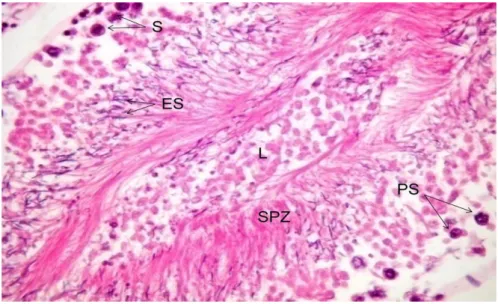
infertile men [114, 124]. Thus, we selected a pharmacological dose of 100 nM to study the estrogenic effects in SeT. Tubules were incubated under control and hormonal stimulation conditions for 24 h. SeT remain viable during the course of the experiment as assessed by morphological analysis of hematoxylin-and-eosin (H&E) stained tissue sections [146]. At the end of experiment, SeT were recovered from medium, snap–frozen in liquid nitrogen and stored at -80oC until RNA or protein isolation.
2. Sertoli Cells Primary Culture and Hormonal
Treatment
SCs were isolated by a method previously described by Oliveira et al [147] and Laurentino et al [148] with some modifications. Briefly, 20 days-old male Wistar rats were anesthetized with 100 µL of a mixture containing 30% xilazine:70% ketamine per 100g of animal weight and euthanized by cervical dislocation. Testes were excised in aseptic conditions and washed two times in a 50 mL conical tube with 30 mL of ice cold HBSS (potassium chloride 0,4 g/L, potassium phosphate monobasic anhydrous 0,06 g/L, sodium chloride 8 g/L, sodium phosphate dibasic 0,045 g/L, D-Glucose 1 g/L, Sodium bicarbonate 0,35 g/L) containing 10000 U/mL of penicillin, 10 mg/mL streptomycin and 25 μg/mL amphotericin B (pH 7,4). Testes were decapsulated in HBSS, and the exposed SeT were washed three times in HBSS. To remove residual peritubular cells, the tubules were dispersed in a Petri dish in HBSS with
Código de campo alterado Código de campo alterado
Código de campo alterado Código de campo alterado Código de campo alterado Código de campo alterado Código de campo alterado
Código de campo alterado Código de campo alterado
glycine (1M), EDTA (2 mM) , Soybean Trypsin Inhibitor (pH 7,2; 0,002% (w/v) and DNAse (0,5 mg/ml) during 10 minutes at room temperature. To disperse the tubules and release the interstitial cells, the dispersed tubules were forced to pass several times through a large-pore Pasteur pipette. Then, the pellet was digested during 15-20 minutes at room temperature with 0,225 mg/mL collagenase type I and 0,05 mg/mL DNase in HBSS. After the digestion step, disaggregated SeT were washed three times in HBSS and centrifuged 3 minutes at 300 g. The SC suspension was collected and resuspended in Sertoli culture medium which consisted of a 1:1 mixture of DMEM-F12 Ham, supplemented with 15 mM HEPES, 50 U/mL penicillin and 50 mg/mL streptomycin sulfate, 0,5 mg/mL fungizone, 50 μg/mL gentamicin and 10% heat inactivated FBS. In order to disaggregate large SC clusters, the cellular suspension was forced though a 20G needle. For cell culture, the concentration of the clusters on the cellular suspension obtained was adjusted to 5000 clusters/mL, plated on 25 cm2 culture flasks (Cell+;
Sarstedt), and incubated at 33ºC in an atmosphere of 5% CO2, 95% O2. The cultures were left
undisturbed until day 2, considering the day of plating day 0 of culture.
When the SCs cultures were 90-95% confluent, culture medium was replaced by serum-free medium supplemented ITS (DMEM-F12 plus ITS, pH 7,4) containing 0,1 nM or 100 nM of E2, or
100 nM of each ER specific agonist. Agonists were: G1 (Santa Cruz Biotechnology, California, USA), an agonist for GPER (GPR30); DPN (Santa Cruz Biotechnology), an agonist for ERα; PPT (Santa Cruz Biotechnology), an agonist for ERβ. E2 and receptor agonists were prepared in
0,025% ethanol (EtOH) and hormonal stimulation proceeded for 24hs. 0,1 nM E2 has been
indicated as the normal testicular E2 concentration in physiological conditions [89], while 100
nM represents a pharmacological dose as stated before.
3.RNA Extraction
Sertoli cells were removed from culture flasks using a trypsin-EDTA solution. To remove residual trypsin, detached cells were washed with 3 mL of phosphate buffered saline (PBS), by consecutive centrifugations of 5 minutes at 3000 g. SeT were collected from culture flasks and placed in centrifuge tubes. After centrifugation, SCs and SeT pellets were homogenized in 500 μL of TRI reagent (Sigma-Aldrich,St. Louis, MO, USA) using an Ultra-turax homogenizer (T25 basic, IKA). The samples were left to stand for 5 minutes at room temperature and then 100 μL of chloroform were added for phase separation, to ensure a complete dissociation of nucleoproteins complexes. The samples were shaken vigorously for 15 seconds, left to stand for 5 minutes at room temperature and centrifuged at 12000 g for 15 minutes at 4ºC, to separate the mixture into 3 phases: a colorless upper aqueous phase (containing total RNA, RNAt), an interphase (containing deoxyribonucleic acid (DNA)) and a red organic phase (containing proteins). To isolate RNAt, the aqueous phase was transferred to a fresh tube, 250 μL of 2-propanol were added to precipitate RNA, and the mixture was centrifuged at 12000 g for 10 minutes at 4ºC. The supernatant was discarded and the RNA pellet was washed with 500 μL of 75% cold-EtOH. This mixture was centrifuged at 7500 g for 5 minutes at 4ºC. This
washing step was repeated once more. The supernatant was discarded and the RNA pellet was air-dried for 5-10 minutes. The RNA pellet was dissolved in 10 μL of diethylpirocarbonate treated-water (DEPC-H2O). RNAt concentration and the absorbance ratio (A260/A280) were
spectrophotometrically determined (NanophotometerTM, Implen, Germany).
4.cDNA Synthesis
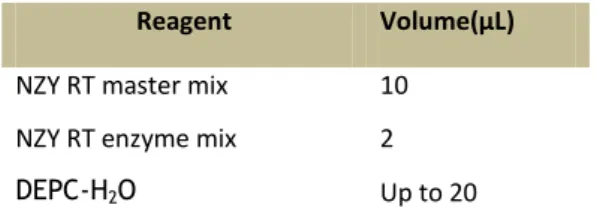
cDNA synthesis from SCs and SeT RNAt was performed using the NZY First strand cDNA synthesis kit (nzytech, Lisbon, Portugal) in a reaction mixture prepared as described in Table III.1. To the appropriate volume of RNA (1µg) was added 12µL of reaction mix and water to a final volume of 20 µL. RNA was reverse-transcribed by incubating samples at 25oC during 10
minutes, then 30 minutes at 50oC. Reaction was stopped by enzyme denaturation with an
incubation at 85oC during 5 minutes,. At the end, 1µL of Nzy RNase H (E. Coli) was added to
each sample of reverse-transcribed RNAt, which were incubated at 37oC for at least 20
minutes. One sample without RNA was reverse transcribed to be used as negative control in PCR reactions. cDNA was stored at -20oC until use.
Table III.1. Volumes and reagents used in cDNA synthesis reaction mix
Reagent
Volume(µL)
NZY RT master mix
10
NZY RT enzyme mix
2
DEPC-H
2O
Up to 20
5.Real-time PCR
Real-time PCR (qPCR) was used to analyze the expression of Dhh, c-kit/SCF and Fas System in SeT and in SCs in different experimental conditions. Characteristics of gene-specific primers, as well as housekeeping genes are indicated in Table III.2. GAPDH and β-actin housekeeping genes were used to normalize gene expression. Primer concentration and annealing temperature were optimized before each assay and specificity of the amplicons was determined by melting curve analysis. Efficiency of the reactions was determined for all primer sets using serial dilutions of cDNA samples (1:1, 1:10, and 1:100).
Amplification reactions were prepared in a final volume of 20 µl as described in Table III.3. SYBRgreen master mix was obtained from Fermentas Life Sciences (Ontario, Canada). Reaction mix was distributed to PCR-plate wells, and then the necessary volume of DNA was added. Reactions were carried out on a thermocycler (iCycler iQTM system, Biorad). After
initial denaturation at 95ºC for 5 min, the following cycling conditions were used (40 cycles): 95ºC for 10s, 55ºC, 58ºC or 60ºC for 30s and 72ºC during 10 s. The specificity of the amplified fragments was checked by melting curves analysis. For this reactions were heated from 55ºC to 95ºC with 10 s holds at each temperature. Samples were run in triplicate for each assay. Normalized expressions values of Dhh c-kit, SCF, FasR and FasL, were calculated according to a published mathematical model proposed by Vandesompele and collaborators [149].
Table III.2 Primers characterization: sequences, annealing temperature (AT) and size of amplified
fragment.
Gene Sequence AT
(ºC) Size (bp)
Dhh sense: 5’-TAA TGG TAG TCT ATC AGT AGT AG -3´ antisense: 5’- GAG CGT TCT TGT CCT TAC -3´
55 180 c-kit sense: 5’- CCG TCT CCA CCA TCC ATC C -3’
antisense:5’- TTC GCT CTG CTT ATT CTC AAT CC -3’
60 143 SCF sense: 5’- ATG GCT TGG GAA ATG TCT G -3’
antisense: 5’- GCT GAT GCT ACG GAG TTA C -3’
58 193 FasR sense: 5’- GCA ACA CCA AAT GCA AGA AA -3’
antisense: 5’-GGA TTC CAG ATT CAG GGT CA -3’
60 118 FasL Sense: 5’- GGT GGC TCT GGT TGG AAT GG -3’
Antisense: 5’- ATG ATA CTC TAA GGC TGT GGT TGG -3’
60 103 GAPDH Sense: 5’- GTT CAA CGG CAC AGT CAA -3’
Antisen:se 5’- CTC AGC ACC AGC ATC ACC -3’
60 177 β-actin Sense: 5’- ATG GTG GGT ATG ATG CAG -3’
Antisense: 5’- CAA TGC CGT GTT CAA TGG -3’
60 79
Table III.3 Composition of the qPCR reaction mix.
Reagent
Quantity
(µL)
SYBR green Mix
10
Gene-specific sense primer 5nM
aor 7,5nM
b0,8 or 1,2
Gene-specific antisense primer 5nM
aor 7,5 nM
b0,8 or 1,2
Sterile water
Up to 19
µL
a